


Community hub
Recent from talks
Contribute something
Nothing was collected or created yet.
Muridae
View on Wikipedia
| Muridae Temporal range:
| |
|---|---|

| |
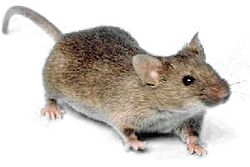
| House mouse, Mus musculus | |
Scientific classification 
| |
| Kingdom: | Animalia |
| Phylum: | Chordata |
| Class: | Mammalia |
| Order: | Rodentia |
| Superfamily: | Muroidea |
| Family: | Muridae Illiger, 1811 |
| Type genus | |
| Mus Linnaeus, 1758
| |
| Subfamilies | |
The Muridae, or murids, are either the largest or second-largest family of rodents and of mammals, containing approximately 870 species, including many species of mice, rats, and gerbils found naturally throughout Eurasia, Africa, and Australia.[2]
The name Muridae comes from the Latin mus (genitive muris), meaning "mouse", since all true mice belong to the family, with the more typical mice belonging to the genus Mus.
Distribution and habitat
[edit]Murids are found nearly everywhere in the world, though many subfamilies have narrower ranges. Murids are not found in Antarctica or many oceanic islands. Although none of them are native to the Americas, a few species, notably the house mouse and black rat, have been introduced worldwide. Murids occupy a broad range of ecosystems from tropical forests to tundras. Fossorial, arboreal, and semiaquatic murid species occur, though most are terrestrial animals.[3] The extensive list of niches filled by murids helps to explain their relative abundance.
Diet and dentition
[edit]A broad range of feeding habits is found in murids, ranging from herbivorous and omnivorous species to specialists that consume strictly earthworms, certain species of fungi, or aquatic insects.[3] Most genera consume plant matter and small invertebrates, often storing seeds and other plant matter for winter consumption. Murids have sciurognathous jaws (an ancestral character in rodents) and a diastema is present.[4] Murids lack canines and premolars. Generally, three molars (though sometimes only one or two) are found, and the nature of the molars varies by genus and feeding habit.
Reproduction
[edit]Some murids are highly social, while others are solitary. Females commonly produce several litters annually. In warm regions, breeding may occur year-round. Though the lifespans of most genera are generally less than two years, murids have high reproductive potential and their populations tend to increase rapidly and then drastically decline when food resources have been exhausted. This is often seen in a three- to four-year cycle.[5]
Characteristics
[edit]The murids are small mammals, typically around 10 cm (3.9 in) long excluding the tail, but ranging from 4.5 to 8 cm (1.8 to 3.1 in) in the African pygmy mouse to 50 cm (20 in) in the northern Luzon giant cloud rat. They typically have slender bodies with scaled tails longer than the body, and pointed snouts with prominent whiskers, but with wide variation in these broad traits. Some murids have elongated legs and feet to allow them to move with a hopping motion, while others have broad feet and prehensile tails to improve their climbing ability, and yet others have neither adaptation. They are most commonly some shade of brown in color, although many have black, grey, or white markings.[6]
Murids generally have excellent senses of hearing and smell. They live in a wide range of habitats from forest to grassland, and mountain ranges. A number of species, especially the gerbils, are adapted to desert conditions and can survive for a long time with minimal water. They consume a wide range of foods depending on the species, with the aid of powerful jaw muscles and gnawing incisors that grow throughout life. The dental formula of murids is 1.0.0.1-31.0.0.1-3.
Murids breed frequently, often producing large litters several times per year. They typically give birth between twenty and forty days after mating, although this varies greatly between species. The young are typically born blind, hairless, and helpless, although exceptions occur, such as in spiny mice.[6]
Evolution
[edit]As with many other small mammals, the evolution of the murids is not well known, as few fossils survive. They probably evolved from hamster-like animals in tropical Asia some time in the early Miocene, and have only subsequently produced species capable of surviving in cooler climates. They have become especially common worldwide during the current geological epoch, as a result of hitching a ride commensally with human migrations.[7][8][9][10]
Classification
[edit]The murids are classified in five subfamilies, around 150 genera, and about 834 species.[11]
Subfamilies
[edit]Source:[12]
- Deomyinae (spiny mice, brush furred mice, link rat)
- Gerbillinae (gerbils, jirds and sand rats)
- Leimacomyinae (Togo mouse)
- Lophiomyinae (maned rat or crested rat)
- Murinae (Old World rats and mice, including vlei rats)
In literature
[edit]
Murids feature in literature, including folk tales and fairy stories. In the Pied Piper of Hamelin, retold in many versions since the 14th century, including one by the Brothers Grimm, a rat-catcher lures the town's rats into the river, but the mayor refuses to pay him. In revenge, the rat-catcher lures away all the children of the town, never to return.[13] Mice feature in some of Beatrix Potter's small books, including The Tale of Two Bad Mice (1904), The Tale of Mrs Tittlemouse (1910), The Tale of Johnny Town-Mouse (1918), and The Tailor of Gloucester (1903), which last was described by J. R. R. Tolkien as perhaps the nearest to his idea of a fairy story, the rest being "beast-fables".[14] Among Aesop's Fables are The Cat and the Mice and The Frog and the Mouse.[15] In James Herbert's first novel, The Rats, (1974), a vagrant is attacked and eaten alive by a pack of giant rats; further attacks follow.[16]
References
[edit]- ^ Aghova, Tatiana; Kimura, Yuri; Bryja, Josef; Dobigny, Gauthier; Granjon, Laurent; Kergoat, Gael J. (November 2018). "Fossils know it best: using a new set of fossil calibrations to improve the temporal phylogenetic framework of murid rodents (Rodentia: Myomorpha: Muroidea: Muridae)". Molecular Phylogenetics and Evolution. 128: 98. doi:10.1016/j.ympev.2018.07.017. S2CID 38794026. Retrieved 1 November 2025. See the article full text.
- ^ Basic Biology (2015). "Rodents".
- ^ a b "ADW: Subfamilies of Muridae". animaldiversity.org. Retrieved 2015-11-08.
- ^ "Muridae (Old World mice and rats, gerbils, whistling rats, and relatives)". Animal Diversity Web. Retrieved 2015-11-08.
- ^ Nowak, Ronald M. (1999-04-07). Walker's Mammals of the World. JHU Press. ISBN 9780801857898.
- ^ a b Berry, R. J.; Årgren, G. (1984), Macdonald, D. (ed.), The Encyclopedia of Mammals, New York: Facts on File, pp. 658–663 & 674–677, ISBN 0-87196-871-1
- ^ Savage, R. J. G.; Long, M. R. (1986), Mammal Evolution: an Illustrated Guide, New York: Facts on File, p. 124, ISBN 0-8160-1194-X
- ^ Jansa, Sharon. A.; Weksler, Marcelo (2004), "Phylogeny of muroid rodents: relationships within and among major lineages as determined by IRBP gene sequences" (PDF), Molecular Phylogenetics and Evolution, 31 (1): 256–276, doi:10.1016/j.ympev.2003.07.002, PMID 15019624, archived from the original (PDF) on 2008-12-17
- ^ Michaux, Johan; Reyes, Aurelio; Catzeflis, François (1 November 2001), "Evolutionary history of the most speciose mammals: molecular phylogeny of muroid rodents" (PDF), Molecular Biology and Evolution, 18 (11): 2017–2031, doi:10.1093/oxfordjournals.molbev.a003743, ISSN 0737-4038, PMID 11606698
- ^ Steppan, Scott; Adkins, Ronald; Anderson, Joel (2004), "Phylogeny and divergence-date estimates of rapid radiations in muroid rodents based on multiple nuclear genes" (PDF), Systematic Biology, 53 (4): 533–553, doi:10.1080/10635150490468701, PMID 15371245
- ^ Burgin, C. J., Colella, J. P., Kahn, P. L. & Upham, N. S. How many species of mammals are there? J. Mammal. 99, 1–14 (2018)
- ^ Steppan, S. J. & Schenk, J. J. Muroid rodent phylogenetics: 900-Species tree reveals increasing diversification rates. PLoS One 12, e0183070 (2017)
- ^ Mieder, Wolfgang (2007). The Pied Piper: A Handbook. Greenwood. pp. 71 and passim. ISBN 978-0-313-33464-1.[permanent dead link]
- ^ Tolkien, J.R.R. (2001). Tree and Leaf: Including "Mythopoeia" (1th ed.). HarperCollins. p. 16. ISBN 9780007105045.
- ^ Gibbs, Laura (2002–2008). "Aesopica". MythFolklore.net. Retrieved 21 June 2014.
- ^ Holland, Steve (21 March 2013). "James Herbert obituary". The Guardian. Retrieved 21 June 2014.
External links
[edit]- Ernest Ingersoll (1920). . Encyclopedia Americana.
- Muridae at Mammal Species of the World
- "Walker's Mammals of the World." Google Books. 08 Nov. 2015.
- ADW: Muridae: INFORMATION
| International | |
|---|---|
| National | |
| Other | |

Muridae
View on GrokipediaTaxonomy
Definition and Etymology
The Muridae, commonly known as murids, represent the largest family of rodents and mammals overall, encompassing approximately 876 species across 156 genera. These rodents are predominantly Old World rats and mice, including familiar taxa such as the house mouse (Mus musculus) and the black rat (Rattus rattus), which have played significant roles in human history due to their commensal associations with settlements.[4] The family's diversity underscores its evolutionary success, with species adapted to a wide array of ecological niches, though detailed classifications of subfamilies and genera are addressed elsewhere in taxonomic treatments.[5] Muridae is classified within the order Rodentia and the superfamily Muroidea, forming one of the two primary families in this superfamily alongside Cricetidae. While both families share similarities as myomorph rodents—characterized by elongated snouts and continuously growing incisors—Muridae is distinguished phylogenetically by its predominantly Old World origins and lack of cheek pouches in most members, in contrast to many Cricetidae species like hamsters that possess them. This separation reflects deeper evolutionary divergences within Muroidea, supported by molecular and fossil evidence.[6][7] The taxonomic name Muridae was formally established by the German zoologist Johann Karl Wilhelm Illiger in 1811, based on the type genus Mus. Its etymology derives from the Latin word mus (genitive muris), meaning "mouse," a direct reference to the core members of the family, which include all true mice. This nomenclature highlights the historical focus on murine forms, with the genitive form muris emphasizing the familial grouping around mouse-like rodents that often inhabit human structures, such as walls and homes.[8][9]Subfamilies and Genera
The family Muridae is classified into six main subfamilies based on a combination of morphological traits and molecular phylogenetic analyses: Murinae (true mice and rats), Deomyinae (African spiny mice and link rats), Gerbillinae (gerbils and jirds), Leimacomyinae (African brush-furred mice), Lophiomyinae (maned rat), and Otomyinae (African rock mice and whistling rats). This classification, as outlined in authoritative taxonomic references, reflects the family's diversity across approximately 156 genera and 876 species, with a strong emphasis on Old World distributions.[1]| Subfamily | Key Characteristics and Distribution | Number of Genera | Approximate Number of Species | Notable Genera and Examples |
|---|---|---|---|---|
| Murinae | Largest subfamily; includes cosmopolitan rats and mice; widespread in Eurasia, Africa, and introduced globally. | 135 | 656 | Rattus (~66 species, e.g., black rat R. rattus); Mus (~39 species, e.g., house mouse M. musculus). High species diversity and endemism in tropical Asia.[10][11] |
| Deomyinae | African taxa with spiny or soft pelage; adapted to arid and semi-arid habitats. | 4 | 57 | Acomys (spiny mice, ~18 species, e.g., Cairo spiny mouse A. cahirinus, endemic to North Africa and Arabia). Emphasizes regenerative abilities in some species.[12] |
| Gerbillinae | Desert-adapted with elongated hind limbs for hopping; primarily African and Asian. Inclusion in Muridae is supported by molecular data but occasionally debated in favor of separate familial status. | 14 | 101 | Gerbillus (pygmy gerbils, ~20 species, e.g., greater short-tailed gerbil G. latastei, endemic to North Africa). High endemism in Saharan regions.[13] |
| Leimacomyinae | Rare, brush-furred mice from West African forests; limited distribution. | 1 | 1 | Leimacomys (groove-toothed brush-furred mouse L. buettneri), highly endemic to Togo and Ghana. |
| Lophiomyinae | Monotypic subfamily featuring the maned rat; East African forests; notable for fur coated in poisonous beetle toxin for defense. | 1 | 1 | Lophiomys (maned rat L. imhausi), crested appearance and unique chemical defense. |
| Otomyinae | Rock-dwelling mice with robust skulls; restricted to southern and eastern Africa. | 5 | 26 | Otomys (rock mice, e.g., bushveld vlei rat O. irroratus), showing endemism in montane and coastal habitats. |