Hubbry Logo
Novum Testamentum GraeceNovum Testamentum GraeceMain
Open search
Novum Testamentum Graece
Community hub
Novum Testamentum Graece
logo
8 pages, 0 posts
0 subscribers
Be the first to start a discussion here.
Novum Testamentum Graece
from Wikipedia

Key Information

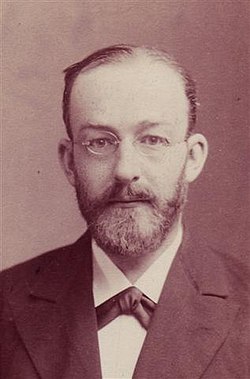
Eberhard Nestle
Kurt Aland
The GNT Committee, from right to left: Carlo Maria Martini, Kurt Aland, Allen Wikgren, Bruce Metzger and Matthew Black (with Klaus Junack, Aland's assistant), c. late 1960s

Novum Testamentum Graece (from lat. Novum Testamentum Græce — "The New Testament in Greek") is a critical edition of the New Testament in its original Koine Greek published by Deutsche Bibelgesellschaft (German Bible Society), forming the basis of most modern Bible translations and biblical criticism. It is also known as the Nestle–Aland edition after its most influential editors, Eberhard Nestle and Kurt Aland. The text, edited by the Institute for New Testament Textual Research, is currently in its 28th edition, abbreviated NA28.

The title is sometimes applied to the United Bible Societies (UBS) edition, which contains the same text (its fifth edition referred to as UBS5, contains the text from NA28). The UBS edition is aimed at translators and so focuses on variants that are important for the meaning whereas the NA includes more variants.

Methodology

[edit]

The Greek text as presented is what biblical scholars refer to as the "critical text". The critical text is an eclectic text compiled by a committee that compares readings from a large number of manuscripts in order to determine which reading is most likely to be closest to the original. They use a number of factors to help determine probable readings, such as the date of the witness (earlier is usually better), the geographical distribution of a reading, and the likelihood of accidental or intentional corruptions. In the book, a large number of textual variants, or differences between manuscripts, are noted in the critical apparatus—the extensive footnotes that distinguish the Novum Testamentum Graece from other Greek New Testaments.

Most scholars view uncial text as the most accurate; however, a few authors, such as New Testament scholar Maurice A. Robinson,[1] linguist Wilbur Pickering,[2] Arthur Farstad and Zane C. Hodges, claim that the minuscule texts (the Byzantine text-type) more accurately reflect the "autographs" or original texts than an eclectic text like NA28 that relies heavily on manuscripts of the Alexandrian text-type. This view is referred to as the "Byzantine priority theory".[3][4] The theory has been criticized by Gordon Fee[5] and Bruce Metzger[6] among others. Since the majority of old manuscripts in existence are minuscules, they are often referred to as the Majority Text. The Majority Text as a whole is classified by the editors of the NA28 (of whom Metzger is one) as a "consistently cited witness of the first order," meaning that whenever the text presented differs from the majority text this is recorded in the apparatus along with the alternate reading.[7] Other consistently cited references include the full corpus of papyrus manuscripts available to the authors as well as a wide range of other manuscripts including a selection of both minuscules and uncials.[7]

The Novum Testamentum Graece apparatus summarizes the evidence (from manuscripts and versions) for, and sometimes against, a selection of the most important variants for the study of the text of the New Testament. While eschewing completeness (in the range of variants and in the citation of witnesses), this edition does provide informed readers with a basis by which they can judge for themselves which readings more accurately reflect the originals. The Greek text of the 28th edition is the same as that of the 5th edition of the United Bible Societies' The Greek New Testament (abbreviated UBS5) although there are a few differences between them in paragraphing, capitalization, punctuation and spelling.[8]

Editions

[edit]

History

[edit]

In 1898 Eberhard Nestle published a handbook of textual criticism, and in 1898 published the first edition of a Greek New Testament under the title Novum Testamentum Graece cum apparatu critico ex editionibus et libris manu scriptis collecto.

The text of this Greek New Testament was later combined with the editions of Constantin von Tischendorf (Editio octava critica maior), The New Testament in the Original Greek of Westcott and Hort, and the edition of Richard Francis Weymouth. It was edited by the Württemberg Bible Society in Stuttgart. This edition eliminated the extremes of Tischendorf, such as partiality to Sinaiticus, and of Westcott and Hort, such as partiality to Vaticanus.[9]

Eberhard's son Erwin Nestle took over after his father's death and issued the 13th edition in 1927. This edition introduced a separate critical apparatus and finally introduced consistency to the majority reading principle.[10] In the apparatus only a few minuscules were included.[11]

Kurt Aland became the associate editor of the 21st edition in 1952. At Erwin Nestle's request, he reviewed and expanded the critical apparatus, adding many more manuscripts. This eventually led to the 25th edition of 1963. The most important Papyri and newly discovered Uncials, as 0189, a few Minuscules (33, 614, 2814), occasionally also lectionaries were taken into account.[12]

Members of the Editorial Committee of the United Bible Societies' Greek New Testament comprise:

  • UBS1, 1966
Kurt Aland, Matthew Black, Bruce Metzger, Allen Wikgren.[13]
  • UBS2, 1968
Kurt Aland, Matthew Black, Bruce Metzger, Allen Wikgren.
  • UBS3, 1975
Kurt Aland, Matthew Black, Carlo Maria Martini, Bruce Metzger, Allen Wikgren.
  • UBS4, 1993
Barbara Aland, Kurt Aland, Johannes Karavidopoulos, Carlo Maria Martini, Bruce Metzger
  • UBS5, 2014
Barbara Aland, Kurt Aland (Aland died a year after the publication of the fourth edition) , Johannes Karavidopoulos, Carlo Maria Martini, Bruce Metzger in co-operation with the Institute for New Testament Textual Research, Münster[14]
  • UBS6, 2025
Holger Strutwolf, Hugh Houghton, Christos Karakolis, David Parker, Stephen Pisano, David Trobisch, Klaus Wachtel

A more complete set of variants is listed in the multiple volume Novum Testamentum Graecum – Editio Critica Maior. A small number of textual changes in the most current edition were incorporated in the 28th edition of the Nestle–Aland,[15] published in 2012. Papyri 117-127 were used in this edition.

Current editions

[edit]

The NA28 text is published by Deutsche Bibelgesellschaft (the German Bible Society).[16]

  • Greek:
    • Novum Testamentum Graece, Standard 28th edition, ISBN 978-3-438-05140-0 (2012).
    • Novum Testamentum Graece, Large Print 27th edition, ISBN 978-3-438-05103-5 (1993).
    • Novum Testamentum Graece, Wide Margin 27th edition, ISBN 978-3-438-05135-6
    • Novum Testamentum Graece, 28th edition with A Concise Greek-English Dictionary of the New Testament (by B. M. Newman), ISBN 978-3-438-05160-8
    • Novum Testamentum Graece, 28th edition with Greek-German Dictionary, ISBN 978-3-438-05159-2
    • Biblia Sacra Utriusque Testamenti Editio Hebraica et Graeca (NA27 with the Biblia Hebraica Stuttgartensia), ISBN 978-3-438-05250-6
  • Diglot:

Accuracy of manuscripts

[edit]

In The Text of the New Testament, Kurt and Barbara Aland compare the total number of variant-free verses, and the number of variants per page (excluding orthographic errors), among the seven major editions of the Greek NT (Tischendorf, Westcott-Hort, von Soden, Vogels, Merk, Bover, and Nestle–Aland) concluding 62.9%, or 4999/7947, agreement.[17] They concluded, "Thus in nearly two-thirds of the New Testament text, the seven editions of the Greek New Testament which we have reviewed are in complete accord, with no differences other than in orthographical details (e.g., the spelling of names, etc.). Verses in which any one of the seven editions differs by a single word are not counted. This result is quite amazing, demonstrating a far greater agreement among the Greek texts of the New Testament during the past century than textual scholars would have suspected […]. In the Gospels, Acts, and Revelation the agreement is less, while in the letters it is much greater."[17] For over 250 years, New Testament apologists have argued that no textual variant affects key Christian doctrine.[18]

Book Verses Variant-free verses Percentage Average variants per page
Matthew 1071 642 59.9% 6.8
Mark 678 306 45.1% 10.3
Luke 1151 658 57.2% 6.9
John 869 450 51.8% 8.5
Acts 1006 677 67.3% 4.2
Romans 433 327 75.5% 2.9
1 Corinthians 437 331 75.7% 3.5
2 Corinthians 256 200 78.1% 2.8
Galatians 149 114 76.5% 3.3
Ephesians 155 118 76.1% 2.9
Philippians 104 73 70.2% 2.5
Colossians 95 69 72.6% 3.4
1 Thessalonians 89 61 68.5% 4.1
2 Thessalonians 47 34 72.3% 3.1
1 Timothy 113 92 81.4% 2.9
2 Timothy 83 66 79.5% 2.8
Titus 46 33 71.7% 2.3
Philemon 25 19 76.0% 5.1
Hebrews 303 234 77.2% 2.9
James 108 66 61.6% 5.6
1 Peter 105 70 66.6% 5.7
2 Peter 61 32 52.5% 6.5
1 John 105 76 72.4% 2.8
2 John 13 8 61.5% 4.5
3 John 15 11 73.3% 3.2
Jude 25 18 72.0% 4.2
Revelation 405 214 52.8% 5.1
Total 7947 4999 62.9%  

Influence

[edit]

A 2008 comparison of the textual and stylistic choices of twenty translations against 15,000 variant readings shows the following rank of agreement with the Nestle–Aland 27th edition:[19]

Abbreviation Name Relative agreement
NASB New American Standard Bible 1
ASV American Standard Version 2
NASB New American Standard (1995 update) 3
NAB New American Bible 4
ESV English Standard Version 5
HCS Holman Christian Standard 6
NRSV New Revised Standard Version 7
NET New English Translation 8
RSV Revised Standard Version 9
NIV New International Version 10
NJB New Jerusalem Bible 11
REB Revised English Bible 12
JNT Jewish New Testament 13
GNB Good News Bible 14
NLT New Living Translation 15
DRA Douay-Rheims (American edition) 16
TLB The Living Bible 17
MRD Murdock Peshitta translation 18
NKJV New King James Version 19
KJV King James Version 20

See also

[edit]

References

[edit]
[edit]
Revisions and contributorsEdit on WikipediaRead on Wikipedia
from Grokipedia
The Novum Testamentum Graece, commonly referred to as the Nestle-Aland edition (NA), is the authoritative critical edition of the in its original . Reading and understanding the edition in its original form requires proficiency in Koine Greek (a form of Ancient Greek), although bilingual editions with translations are available to support readers. Published by the Deutsche Bibelgesellschaft, it presents a carefully reconstructed text derived from the earliest and most reliable Greek manuscripts, supplemented by a detailed that documents variant readings from thousands of sources, including papyri, uncials, minuscules, lectionaries, and early versions. This edition balances scholarly precision with practical accessibility, making it the global standard for , biblical interpretation, and translation work. Initiated in 1898 by German theologian Eberhard Nestle, the Novum Testamentum Graece originated as a synthesis of three prominent 19th-century Greek editions: those of (8th edition, 1869–1872), and Fenton John Anthony Hort (1881), and Richard Francis Weymouth (based on their work). Nestle's approach involved selecting the majority reading among these sources for the main text, a method that evolved over subsequent revisions to incorporate and prioritize earlier witnesses. After Eberhard Nestle's death in 1913, his son Erwin Nestle took over, and from the 1950s onward, the project came under the stewardship of the Institute for New Testament Textual Research (INTF) at the , founded in 1959 by Kurt Aland. Key editors have included Kurt Aland (editions 25–26), Barbara Aland (editions 26–28), and Holger Strutwolf (ongoing), with the INTF maintaining the edition's rigorous updates based on newly discovered manuscripts and advanced philological analysis. The current 29th edition (NA29), released in 2025, features further revisions to the and main text, with significant changes especially in the Gospel of Mark, building on the expanded inclusion of papyri from previous editions and a streamlined presentation of variants, reflecting over a century of refinements to enhance for scholars and students alike. Unlike the more exhaustive Editio Critica Maior—a parallel INTF project providing comprehensive transcriptions of the textual tradition up to the —this edition prioritizes a concise diplomatic text suitable for everyday academic and ecclesiastical use. Its influence extends to virtually all major modern Bible translations, such as the , , and , underscoring its role as the cornerstone of studies.

Historical Development

Origins and Early Editions

The Novum Testamentum Graece originated in 1898 when German theologian Eberhard Nestle compiled a critical edition of the Greek under the patronage of the . Nestle adopted a majority text method, constructing the main text by selecting readings supported by at least two of three contemporary scholarly editions: Constantin von Tischendorf's eighth edition (1869), and Fenton John Anthony Hort's edition (1881), and Richard Francis Weymouth's The New Testament in Modern Speech arranged as a Greek critical text (1892). The first edition appeared that year in , spanning 660 pages with a rudimentary that highlighted variant readings from the source editions without comprehensive manuscript citations or detailed evaluations. The second edition, released in 1899, incorporated minor textual revisions based on feedback and further , while maintaining the core methodology. The third edition in 1901 replaced Weymouth's text with Bernhard Weiss's edition, further refining the apparatus and addressing emerging textual discrepancies. Following Eberhard Nestle's death in 1913, his son Erwin Nestle assumed editorial responsibilities, overseeing annual revisions that culminated in the 17th edition in 1927, overseen by Erwin Nestle. After , Kurt Aland played a pivotal role in revitalizing the project, briefly mentioning the relocation of editorial work to the Institute for New Testament Textual Research in , , where systematic manuscript analysis began to shape future editions.

Key Editors and Milestones

Kurt Aland joined the editorial team of Novum Testamentum Graece as associate editor in 1952, marking a significant shift toward more rigorous verification of textual variants directly from primary sources. Under his leadership, the 25th edition, published in 1963, represented a major overhaul, with Aland personally collating the text against original manuscripts for the first time and expanding the to incorporate evidence from papyri, majuscules, minuscules, and ancient versions such as the Latin and Syriac translations. In 1959, Aland founded the Institute for New Testament Textual Research (INTF) at the , establishing a centralized hub for the global collation and analysis of New Testament manuscripts to support ongoing editorial work on Novum Testamentum Graece. Post-World War II recovery efforts, led by Aland amid the displacement of scholarly resources in , facilitated the rediscovery and documentation of scattered manuscript collections, laying the groundwork for systematic textual . During the 1960s, INTF initiated extensive microfilm projects that amassed reproductions of thousands of Greek manuscripts, cataloging over 5,000 by the early 1980s and creating the world's largest such archive to enable precise variant comparisons. Key milestones in the late 20th century included the 26th edition of 1979, which aligned the main text with the third edition of the United Bible Societies' Greek New Testament while featuring an even broader apparatus for scholarly use. The 27th edition, released in 1993, incorporated substantial contributions from Barbara Aland, who specialized in classifying and evaluating majuscules and minuscules, refining the apparatus to reflect updated manuscript categorizations and textual categories developed at INTF. Into the 21st century, editorial responsibilities transitioned to Barbara Aland as primary director following Kurt Aland's death in 1994, with Holger Strutwolf joining as co-editor to continue the institute's collaborative oversight of subsequent revisions. The 28th edition (NA28), published in 2012, was co-edited by Barbara Aland and Holger Strutwolf, featuring a revised apparatus with expanded papyri inclusions. The 29th edition (NA29) followed in 2025, aligning with the sixth edition of the United Bible Societies' Greek New Testament (UBS6) and incorporating further updates based on ongoing INTF research.

Editorial Methodology

Principles of Textual Criticism

The principles of underlying the Novum Testamentum Graece employ an eclectic method, which selects readings from diverse traditions based on a balanced evaluation of external and internal evidence, rather than adhering rigidly to a single textual family or majority consensus. External criteria include the age, geographical distribution, and overall quality of witnesses, prioritizing those closest to the original composition, while internal criteria assess transcriptional probability (the likelihood of a introducing a change) and intrinsic probability (consistency with the author's style and context). This approach aims to reconstruct the earliest attainable text, ideally approximating the 2nd-century autographs, by weighing evidence holistically for each . A core principle is the higher valuation of "Alexandrian" witnesses, such as and , over the later , due to the former's earlier dating and perceived textual purity, which minimizes scribal expansions and harmonizations. The editorial process incorporates over 5,800 Greek manuscripts, including papyri, uncials, minuscules, and lectionaries, alongside early versions in Latin, Syriac, and other languages, to ensure comprehensive attestation. Historically, the method evolved from Eberhard Nestle's initial 1898 edition, which relied on a simple majority vote among three contemporary critical texts where they diverged, to and Barbara Aland's refinements emphasizing genealogical relationships over sheer numerical dominance. Central to the Alands' approach is the of "local genealogical coherence," which groups into coherent subgroups for specific passages by tracing their interrelationships, allowing editors to identify the most reliable local stemma without assuming a global textual . Conjectural emendations—readings not supported by any extant witness—are systematically avoided, given the abundance of manuscript evidence, ensuring that the printed text remains grounded in transmitted readings rather than scholarly speculation.

Critical Apparatus Design

The critical apparatus of Novum Testamentum Graece presents variant readings beneath the main text, organized by verse to support textual decisions with evidence from Greek manuscripts, versions, and patristic citations. The main text appears in bold type, while variants are listed with concise notations indicating differences in wording, order, or inclusion; sigla such as ℵ (for ) and 𝔓⁴⁶ (for ) identify primary witnesses, alongside collective symbols like Byz for the Byzantine textual tradition. Symbols denote specific alterations, including square brackets [] for uncertain inclusions in the main text, diamonds ♦ for omissions, and wavy lines ~ for transpositions, enabling precise evaluation of manuscript support. Early editions featured a simple apparatus confined to alternative readings from influential prior works, such as those of Tischendorf and Westcott-Hort, providing limited but foundational comparisons. Subsequent revisions under Kurt Aland expanded the scope to incorporate direct attestations from thousands of manuscripts, culminating in the comprehensive format of the 27th edition (1993), which shares the same main text as the United Bible Societies' edition; the latter includes ratings of variant certainty levels A through D to guide translators on reliability, while NA provides a more detailed apparatus. The 29th edition (NA29, released 2025) builds on these foundations with further refinements, including the extension of the Coherence-Based Genealogical Method (CBGM) to Acts and the Pauline Epistles, streamlined entries removing conjectural emendations from the apparatus, prioritization of significant variants, larger fonts, and clearer sigla usage; for the Catholic Epistles, it continues to draw on the Editio Critica Maior. Additional features include marginal cross-references to quotations and allusions, as well as notations for orthographic variants like movable (ν) or itacistic spellings, which aid in reconstructing paleographic and transcriptional habits. The Greek New Testament textual tradition includes over 25,000 variant units, with the NA apparatus providing evidence for thousands of significant ones, offering substantial scholarly access, though reader's editions exclude it entirely to promote fluent reading of the Greek text without interruption. This design balances depth for critical analysis with practical utility, reflecting eclectic principles that select variants based on their potential to influence interpretation.

Major Editions

Nestle-Aland Series

The Nestle-Aland series, produced by the Institute for New Testament Textual Research (INTF) in , represents the scholarly standard for critical editions of the Greek , emphasizing an eclectic text reconstructed through rigorous . Beginning with the 25th edition, the series has progressively incorporated new manuscript discoveries, refined apparatuses, and methodological advancements to enhance textual accuracy and usability for researchers. These editions differ from the parallel United Bible Societies () series primarily in the scope and detail of their critical apparatuses, with Nestle-Aland providing more comprehensive scholarly tools. The 25th edition (NA25), published in 1963, marked the first Nestle-Aland volume produced under the INTF's direction, with Kurt Aland as a key editor verifying readings against original manuscripts. It expanded the to include more extensive patristic citations, drawing on early ' quotations to support textual variants and provide broader contextual evidence for reconstructions. This edition refined the base text from prior iterations while maintaining an , balancing readings from major witnesses like and Vaticanus. The 26th edition (NA26), released in 1979, aligned its main text with that of the third edition of the UBS Greek New Testament (UBS3), ensuring consistency for translation and study purposes. It introduced significant updates to the apparatus, incorporating evidence from over 2,000 Greek manuscripts to illuminate liturgical transmission of the text. Additional revisions accounted for recently discovered papyri and majuscules, enhancing the evaluation of early attestations. In the 27th edition (NA27), published in 1993, the apparatus was redesigned for greater clarity, with standardized punctuation throughout the text to reflect modern scholarly conventions and improve readability. It featured a fully developed for the , integrating preliminary findings from the INTF's Editio Critica Maior project and additional papyri evidence. This edition solidified NA's role as a primary tool for advanced textual analysis, with over 1,400 pages of apparatus detailing thousands of variants. The 28th edition (NA28), issued in 2012, focused revisions on the , adopting the text from the second edition of the Editio Critica Maior and incorporating readings from newly discovered papyri (P117–P127). The apparatus was streamlined to prioritize continuously cited witnesses, reducing clutter while maintaining depth, and introduced digital enhancements such as an accompanying platform for interactive access to manuscripts via the New Testament Virtual Manuscript Room. These changes resulted in 34 textual modifications in the compared to NA27, emphasizing coherence with broader INTF research. The 29th edition (NA29), scheduled for release in 2026, will integrate the latest Editio Critica Maior volumes, adopting their reconstructed text for the Gospel of Mark, Acts, Catholic Letters, and , while retaining the NA28 text for the remaining books pending future ECM completions. It will feature over 100 textual differences from NA28, an updated apparatus reflecting new papyri (P128–P141) and enhanced consideration of the , and a reordered book sequence to match early manuscript arrangements (Gospels, Acts, Catholic Epistles, Pauline Letters with before the Pastorals, ). All disputed passages, including numbered verses like Mark 16:9–20, will be enclosed in double brackets for transparency, with strong emphasis on digital integration through linked resources at the INTF. The text and apparatus updates are previewed in the 2025 release of the UBS6 edition.

United Bible Societies Series

The United Bible Societies (UBS) series, formally titled The Greek New Testament (GNT), commenced with its first edition in 1966 and has evolved through five subsequent revisions up to 2014, closely mirroring the textual base of the Nestle-Aland editions while prioritizing accessibility for translators worldwide. These editions, from UBS1 to UBS5, incorporate a streamlined that highlights only those textual variants likely to affect translation choices, thereby distinguishing the series from more comprehensive scholarly tools. A hallmark feature is the certainty rating system for key variants, using brackets to denote levels of confidence: {A} for readings considered certain, {B} for almost certain, {C} for difficult but probable, and {D} for highly uncertain, which provides practical guidance for rendering the text into target languages. In contrast to the Nestle-Aland's extensive documentation of manuscript evidence, the UBS apparatus is intentionally concise, omitting minor variants and emphasizing translational implications, with some formats like the Reader's Edition adding English glosses for idiomatic Greek phrases and rare vocabulary to facilitate smoother reading and interpretation. This design reflects the series' primary role in supporting the United Bible Societies' global translation initiatives, where it serves as the foundational text for producing versions in hundreds of languages, enabling consistent and reliable renderings across diverse linguistic contexts. The sixth edition (UBS6), released in 2025 alongside preparations for the 29th edition of Nestle-Aland, builds on this foundation with a thorough revision informed by the latest evaluations of papyri, majuscules, minuscules, ancient translations, and patristic citations from digital databases, resulting in targeted textual adjustments particularly in books like Mark and Acts. It introduces enhancements such as a reordered canon reflecting early manuscript traditions, full verse numbering integrated into the main text, and an updated textual commentary that elucidates editorial decisions and idiomatic nuances for improved translational accuracy. This iteration continues the UBS commitment to practical scholarship, further integrating resources like expanded patristic evidence to refine the text for contemporary Bible translation efforts.

Textual Accuracy and Variants

Manuscript Evaluation

The Greek manuscripts underlying the Novum Testamentum Graece are classified into four primary categories based on material, script, and purpose: papyri, uncials (or majuscules), minuscules, and lectionaries. Papyri represent the earliest witnesses, typically fragments written in on sheets, with over 140 known examples dating from the second to the eighth centuries CE; a notable instance is Papyrus 52 (P^{52}), dated circa 125 CE, which preserves verses from John 18. Uncials, written in majuscule (capital) letters on or , span the fourth to tenth centuries and number around 320, exemplified by (B/03), a fourth-century containing nearly the entire . Minuscules, utilizing a script for efficiency, dominate from the ninth to fifteenth centuries, comprising approximately 2,900 items that form the bulk of the tradition. Lectionaries, adapted for liturgical readings with pericopes arranged by church calendar, number over 2,400 and are mostly minuscules from the eighth century onward, though some early uncials exist. The Institut für Neutestamentliche Textforschung (INTF) maintains the ongoing Kurzgefasste Liste, cataloging more than 5,800 Greek manuscripts as of 2025, with continuous additions reflecting new discoveries and identifications. These manuscripts exhibit a high degree of reliability, with textual critics estimating over 99% agreement in the wording among the earliest witnesses, such as the second- and third-century papyri and fourth-century uncials, where primarily involve minor orthographic or syntactical differences rather than doctrinal changes. of their quality relies on genealogical methods that classify them into major text-types: the Alexandrian (early, concise, and considered closest to the originals, seen in Vaticanus and ), the Western (expansive and paraphrastic, as in ), and the Byzantine (smooth and harmonized, predominant in later minuscules). Scribal habits contribute to error rates, with unintentional changes like itacisms—vowel substitutions due to evolving (e.g., confusing ει for ι)—common in early papyri, while intentional harmonizations, where scribes aligned Gospel passages for consistency, occur in approximately 5% of verses in early manuscripts. These assessments prioritize the earliest and most stable witnesses to minimize cumulative errors from copying. Recent advancements have enhanced manuscript evaluation through the integration of newly discovered fragments into critical editions. The 28th edition of the Novum Testamentum Graece (NA28, 2012) incorporated readings from 11 previously unknown papyri (P^{117} to P^{127}), primarily from the third to fifth centuries, providing fresh Alexandrian-type evidence for the and Acts. Since 2012, additional discoveries, including over a dozen fragments such as P^{131} (, Romans) and P^{135} (3rd/4th century, John), have been cataloged by the INTF, with the 29th edition (NA29, released 2025) including these and further refinements from the Coherence-Based Genealogical Method, bolstering the text's philological foundation.

Significant Variants and Their Impact

The textual tradition contains an estimated 400,000 variants across its Greek manuscripts, though only around 1,000 of these substantially affect the meaning or interpretation of the text. These variants arise from scribal errors, intentional harmonizations, or theological emphases, but scholarly consensus holds that the core narrative of the can be recovered with approximately 99% probability, preserving essential doctrinal elements. The Novum Testamentum Graece (NA) editions address such variants through rigorous evaluation, often bracketing or omitting disputed passages to reflect the earliest attainable text. One prominent variant is the longer ending of Mark (16:9–20), which describes post- appearances of , including his ascension; this passage is bracketed in the NA editions as a later addition absent from the earliest manuscripts like and Vaticanus, potentially altering understandings of the resurrection accounts by introducing elements not found in the original conclusion at 16:8. Similarly, the Adulterae (John 7:53–8:11), the story of the woman caught in adultery, is omitted from the main NA text and placed in an appendix, as it lacks support in pre-fourth-century Greek witnesses and appears in varying locations across manuscripts, influencing interpretations of ' teachings on and judgment. The Comma Johanneum (1 John 5:7–8), a reading "in heaven, the Father, the Word, and the : and these three are one," is entirely absent from the NA text, appearing only in late manuscripts influenced by the Latin , and its inclusion has historically bolstered explicit Trinitarian doctrine despite lacking early attestation. These variants carry doctrinal implications: the Markan ending affects narratives of resurrection and commissioning, while the Comma Johanneum directly impacts formulations of the Trinity, though scholars emphasize that no core Christian belief hinges solely on such passages. The 29th edition of NA (NA29), released in 2025, incorporates advances from the Editio Critica Maior (ECM), including changes informed by the Coherence-Based Genealogical Method, to refine the text and apparatus. As a , the ending of of John at 21:25 exhibits minor variants, such as differences in wording for "the world itself could not contain the books" (e.g., variations in prepositions or synonyms for "contain" across manuscripts like ), which do not alter the theological summary of ' deeds but illustrate how scribal expansions reinforced the 's conclusive purpose without disrupting the .

Influence and Applications

Role in Scholarship

The Novum Testamentum Graece (NA), first published in 1898 by Eberhard Nestle, has become the foundational standard for textual criticism, serving as the primary Greek text in the vast majority of academic commentaries and scholarly analyses. Its eclectic approach, drawing from diverse witnesses, has shaped modern by providing a reliable base for and historical reconstruction of the . The edition's detailed critical apparatus has profoundly influenced key scholarly works, including Bruce M. Metzger's A Textual Commentary on the Greek New Testament, which elucidates variants and editorial decisions directly from the NA framework. Furthermore, the Institute for New Testament Textual Research (INTF), responsible for NA editions, has partnered with the Center for the Study of New Testament Manuscripts (CSNTM) to digitize thousands of Greek manuscripts, making high-resolution images freely available and bolstering the evidential base for ongoing NA revisions. In 2025, the 29th edition (NA29) advanced accessibility with its open digital format, enabling free consultation for global researchers. Scholarly discourse on the NA includes critiques of its handling of the , often seen as underrepresented in both the main text and apparatus, with figures like Aland dismissing predominantly Byzantine manuscripts as largely irrelevant for reconstruction. Additionally, the NA has advanced by cataloging and citing over 140 early papyri as key witnesses, facilitating their integration into analysis and deepening understanding of textual transmission in the first centuries CE.

Use in Translations and Liturgy

The Novum Testamentum Graece (NA), particularly in its Nestle-Aland editions, serves as the primary Greek textual basis for numerous modern , including the (NIV), (ESV), and (NRSV). The 2011 edition of the NIV relies on the 28th edition of the NA (NA28) and the 5th edition of the United Bible Societies' Greek New Testament (UBS5), which share an identical main text. Similarly, the ESV follows the NA/UBS text, with minor deviations in select difficult passages to align with traditional readings. The NRSV, including its updated editions, draws directly from the NA to incorporate insights from early manuscripts. The edition, parallel to the NA, provides translators with a for textual variants, categorizing them from A (certain) to D (highly uncertain) based on the editorial committee's confidence in the preferred reading. This system guides translation decisions by highlighting variants likely to affect meaning, enabling translators to select readings supported by the strongest evidence while noting alternatives in footnotes. In liturgical contexts, the NA text informs Catholic practices, as seen in the New American Bible Revised Edition (NABRE), which bases its New Testament on the NA and UBS Greek texts. The United States Conference of Catholic Bishops (USCCB) utilized the 25th edition of the NA for the original NAB and subsequent revisions, with Vatican approval for its use in liturgical translations and scholarly studies. Catholic rites reference the NA-derived NABRE for scripture readings in the Mass and other worship services. In November 2025, the USCCB approved the Catholic American Bible as a replacement for the NABRE, incorporating updates from recent editions like NA29 and UBS6, with release scheduled for Ash Wednesday 2027. The NA's influence extends globally, forming the foundation for New Testament translations in hundreds of languages through organizations like the United Bible Societies and Wycliffe Bible Translators, contributing to the availability of the full in over 700 languages as of August 2025. Digital platforms such as the Bible App integrate critical Greek texts closely aligned with the NA28, including the Society of Biblical Literature Greek New Testament (SBLGNT), which reconstructs the text using NA28 as a key reference, facilitating study and devotional use worldwide. The 29th edition of the NA (NA29), released in October 2025 alongside UBS6, introduces updates to the and text in areas like the , influencing ongoing translational works such as the Catholic American Bible. These changes refine variant evaluations, ensuring that future liturgical and translational works reflect the latest manuscript scholarship.

References

Add your contribution
Related Hubs
User Avatar
No comments yet.