


Community hub
Recent from talks
Contribute something
Nothing was collected or created yet.
Nacka Municipality
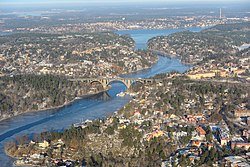
View on WikipediaNacka Municipality (Swedish: Nacka kommun) is a municipality in Stockholm County in east-central Sweden. Its seat is located at Nacka. The municipality is situated just east of the Swedish capital, Stockholm, and its western parts are considered a suburban part of the city of Stockholm.
Key Information


The present municipality was created in 1971 when the City of Nacka (itself instituted in 1949) was amalgamated with Saltsjöbaden (itself detached from "old" Nacka in 1909) and Boo.
Geography
[edit]The municipality is situated in two historical provinces (landskap), Uppland and Södermanland, but in one administrative county (län), Stockholm County.
The western densely built-up area of Nacka Municipality is a contiguous part of the city of Stockholm. About 50,000 of the municipality's total population live there.
There are also some more localities in the municipality. The largest ones are Boo, Fisksätra, Saltsjöbaden, Skuru and Älta.
History
[edit] |
The area has been populated since the first mountaintops emerged as islands from the sea after the end of the Last Ice Age, during the Mesolithic. During the Viking Age (800 – 1100 AD), the area has been estimated to have been populated by 100 people. They lived by farming and fishing.
A Danish sailing description from the late 13th century describes the area as a transportation region. The water roads were easier to use than the land roads and were also the main route to the capital, Stockholm. Those circumstances cause plenty of restaurants to be along the shores to cater to travellers. An article by Gunnar Ahlberg describes 24 different outlets and their busy service. In the 18th century, the restaurants closer to the city were transformed from shabby small places to more sophisticated establishments. Here came not only travelers but also citizens of Stockholm for a summer excursion. Many of the artists of the times have documented the excursions in drawings and songs.
During the wintertime, the waterways change somewhatm and instead of taking the seaway, travellers crossed the many lakes with sleighs to reach Stockholm.
The municipality's name harks back to a 16th-century industrial operation established by the Crown at Nacka farmstead where conditions for water mills are good. That spot is now, however, not densely populated, and the municipal seat is on land that once belonged to Järla farmstead on the other side of Lake Järla.
One of many battles during the Great Northern War took place in the most eastern part of Nacka. In 1719, Russian forces burned and raided the eastern coast of Sweden. Several cities were attacked and almost all buildings in the archipelago of Stockholm were burned. On their way to Stockholm greatly outnumbered Swedish forces managed to fight off the attacking Russians at the battle of Stäket.
20th century
[edit]The municipality has had a continuous population increase since the 1960s and has almost doubled its population. Today it is the third most populous municipality in Stockholm County, after Stockholm Municipality and Huddinge Municipality, and the 20th in Sweden. The massive increase in housing supply has caused the population to be predicted to grow at an annual rate of more the 3% by the year 2020.[3]
Nacka became the location of an experiment in psychiatry in the 1970s, initiated by psychiatrist Bengt Bengtsson. It allowed the inhabitants a local access to psychotherapeutic methods for preventive purposes. The role model was the Community Mental Health system developed in the U.S. The system has since been implemented in other municipalities.
The industry in Nacka is mainly of a service nature. Nacka has an extensive commuting traffic to Stockholm City, and few major companies are located in Nacka itself.
Nature
[edit]Nacka has (in 2015) 12 nature reserves, and two large recreational nature areas, all with a varied landscape of pine forests, swamps and lakes. The largest nature reserve is Nackareservatet, with an area of approximately 730 hectare.
Demographics
[edit]Population development
[edit]Nacka is a municipality whose population has continuously grown over the last 65 years [4] and had by 2017 passed 100 000 citizens.
| Year | Population |
|---|---|
| 1970 | |
| 1975 | |
| 1980 | |
| 1985 | |
| 1990 | |
| 1995 | |
| 2000 | |
| 2005 | |
| 2010 | |
| 2015 | |
| 2017 | |
| 2019 |
2022 population by district
[edit]This is a demographic table based on Nacka Municipality's electoral districts in the 2022 Swedish general election sourced from SVT's election platform, in turn taken from SCB official statistics.[6]
In total there were 77,440 Swedish citizens of voting age resident in the municipality.[6] 48.4% voted for the left coalition and 50.3% for the right coalition. Indicators are in percentage points except population totals and income.
| Location | Residents | Citizen adults |
Left vote | Right vote | Employed | Swedish parents |
Foreign heritage |
Income SEK |
Degree |
|---|---|---|---|---|---|---|---|---|---|
| % | % | ||||||||
| Alphyddan, Finntorp V | 1,449 | 1,198 | 60.6 | 38.0 | 77 | 70 | 30 | 25,213 | 70 |
| Björknäs S | 2,137 | 1,487 | 48.6 | 50.3 | 84 | 71 | 29 | 29,834 | 50 |
| Danviken, Saltsjöqvarn | 1,983 | 1,736 | 50.1 | 49.1 | 81 | 83 | 17 | 37,870 | 71 |
| Duvnäs Utskog | 1,628 | 1,133 | 52.5 | 47.1 | 87 | 88 | 12 | 42,341 | 70 |
| Eknäs V, Tollare V | 1,815 | 1,167 | 47.2 | 51.4 | 84 | 76 | 24 | 34,045 | 59 |
| Eknäs Ö, Hjortängen | 2,225 | 1,484 | 41.2 | 57.8 | 87 | 85 | 15 | 42,258 | 68 |
| Ektorp | 1,979 | 1,437 | 53.8 | 44.6 | 74 | 69 | 31 | 23,695 | 62 |
| Ekängen, Saltängen V | 1,946 | 1,404 | 46.7 | 52.6 | 85 | 85 | 15 | 36,680 | 71 |
| Finnberget, Kvarnholmen | 1,285 | 1,020 | 50.0 | 49.2 | 82 | 71 | 29 | 33,364 | 65 |
| Finnboda | 1,846 | 1,377 | 50.7 | 48.2 | 87 | 79 | 21 | 41,054 | 70 |
| Finntorp Ö | 2,255 | 1,861 | 56.6 | 41.7 | 81 | 74 | 26 | 28,818 | 59 |
| Fisksätra N | 1,994 | 1,166 | 68.0 | 26.7 | 68 | 18 | 82 | 19,042 | 33 |
| Fisksätra S | 1,827 | 1,232 | 56.1 | 40.1 | 70 | 39 | 61 | 23,356 | 37 |
| Fisksätra V | 2,175 | 1,367 | 63.3 | 31.4 | 69 | 30 | 70 | 21,655 | 39 |
| Fisksätra Ö | 1,866 | 1,085 | 68.3 | 23.2 | 68 | 20 | 80 | 18,984 | 33 |
| Gustavsvik, Insjön | 1,966 | 1,342 | 42.3 | 57.3 | 84 | 83 | 17 | 37,373 | 58 |
| Hasseludden | 1,967 | 1,360 | 41.1 | 58.0 | 84 | 83 | 17 | 40,340 | 62 |
| Hedvigslund | 1,828 | 1,218 | 51.0 | 48.0 | 86 | 82 | 18 | 36,385 | 60 |
| Henriksdal | 1,709 | 1,240 | 64.5 | 33.4 | 73 | 54 | 46 | 24,976 | 54 |
| Igelboda, Neglinge S | 1,785 | 1,263 | 32.0 | 66.8 | 84 | 90 | 10 | 41,388 | 77 |
| Igelbodaplatån | 1,739 | 1,405 | 43.7 | 55.0 | 79 | 72 | 28 | 26,256 | 54 |
| Jarlaberg N | 1,539 | 1,213 | 57.4 | 41.2 | 82 | 68 | 32 | 29,540 | 62 |
| Jarlaberg S | 1,469 | 1,043 | 52.6 | 45.6 | 81 | 64 | 36 | 30,884 | 55 |
| Järla, Nya gatan | 1,020 | 985 | 51.2 | 47.6 | 86 | 76 | 24 | 33,192 | 64 |
| Järla sjö | 2,127 | 1,557 | 55.5 | 43.4 | 88 | 83 | 17 | 40,491 | 74 |
| Kolarängen | 1,950 | 1,403 | 48.9 | 50.4 | 86 | 86 | 14 | 41,634 | 68 |
| Krokhöjden | 2,112 | 1,629 | 53.0 | 45.5 | 83 | 75 | 25 | 27,838 | 44 |
| Kvarnholmen Ö | 1,969 | 1,493 | 40.4 | 58.3 | 87 | 78 | 22 | 42,293 | 67 |
| Källvägsområdet | 2,549 | 1,721 | 40.2 | 58.5 | 87 | 84 | 16 | 40,907 | 62 |
| Lilla Björknäs | 2,272 | 1,615 | 41.7 | 57.8 | 86 | 83 | 17 | 38,888 | 64 |
| Lillängen, Storängen | 1,610 | 1,211 | 50.0 | 49.7 | 82 | 87 | 13 | 40,917 | 77 |
| Lännersta N | 2,488 | 1,653 | 40.5 | 59.0 | 87 | 88 | 12 | 42,781 | 67 |
| Lännersta S | 1,986 | 1,275 | 41.1 | 58.4 | 86 | 87 | 13 | 44,874 | 69 |
| Mensättra, Eriksvik | 2,111 | 1,351 | 41.8 | 56.9 | 86 | 81 | 19 | 38,694 | 58 |
| Nacka C | 1,912 | 1,626 | 50.9 | 47.5 | 79 | 56 | 44 | 27,240 | 53 |
| Nacka strand | 1,851 | 1,419 | 40.5 | 58.5 | 87 | 75 | 25 | 39,967 | 67 |
| Nysätra, Hästhagen | 2,117 | 1,642 | 57.5 | 41.6 | 84 | 82 | 18 | 34,347 | 70 |
| Orminge C | 1,352 | 1,125 | 51.4 | 47.0 | 78 | 53 | 47 | 25,521 | 43 |
| Orminge N | 1,918 | 1,220 | 57.6 | 40.8 | 78 | 51 | 49 | 22,771 | 35 |
| Orminge S | 1,685 | 1,175 | 62.0 | 35.5 | 78 | 59 | 41 | 23,456 | 35 |
| Orminge Ö | 2,193 | 1,547 | 56.9 | 42.2 | 88 | 84 | 16 | 34,740 | 55 |
| Rösunda | 1,893 | 1,540 | 26.7 | 72.6 | 78 | 86 | 14 | 36,610 | 68 |
| Saltsjö-Duvnäs | 2,044 | 1,535 | 41.7 | 57.4 | 82 | 87 | 13 | 39,039 | 76 |
| Sickla V | 1,256 | 992 | 56.1 | 43.0 | 85 | 82 | 18 | 37,977 | 76 |
| Sickla Ö, Tallbacken | 1,605 | 1,249 | 66.3 | 32.7 | 85 | 79 | 21 | 31,525 | 69 |
| Sigfridsborg | 2,102 | 1,394 | 54.8 | 44.4 | 89 | 86 | 14 | 39,473 | 70 |
| Skogalund | 2,185 | 1,594 | 50.0 | 49.0 | 81 | 73 | 27 | 30,567 | 56 |
| Skogsö, Baggensudden | 1,804 | 1,408 | 34.3 | 64.4 | 79 | 85 | 15 | 37,571 | 70 |
| Skuru | 1,915 | 1,319 | 45.5 | 54.1 | 86 | 86 | 14 | 43,988 | 72 |
| Solsidan S, Älgö | 2,036 | 1,379 | 21.6 | 77.5 | 75 | 83 | 17 | 42,412 | 74 |
| Stensö N | 1,763 | 1,273 | 58.5 | 40.2 | 78 | 56 | 44 | 24,171 | 43 |
| Stensö S | 1,747 | 1,130 | 55.9 | 41.0 | 75 | 46 | 54 | 23,782 | 37 |
| Tattby, Solsidan N | 1,557 | 1,107 | 29.6 | 69.5 | 82 | 89 | 11 | 47,106 | 79 |
| Tollare Ö | 2,127 | 1,426 | 41.5 | 58.0 | 91 | 80 | 20 | 39,747 | 63 |
| Vikingshill | 2,736 | 1,860 | 47.9 | 51.4 | 84 | 85 | 15 | 36,766 | 61 |
| Älta gård | 2,046 | 1,439 | 53.4 | 46.1 | 88 | 86 | 14 | 38,121 | 68 |
| Ältadalen, S Hedvigslund | 1,601 | 910 | 54.4 | 45.0 | 94 | 87 | 13 | 42,518 | 73 |
| Source: SVT[6] | |||||||||
Income and Education
[edit]The population in Nacka Municipality has the 5th highest median income per capita in Sweden.[7] The share of highly educated persons, according to Statistics Sweden's definition: persons with post-secondary education that is three years or longer, is 39.0% and the 10th highest in the country.[8]
Residents with a foreign background
[edit]On 31 December 2017 the number of people with a foreign background (persons born outside of Sweden or with two parents born outside of Sweden) was 25 681, or 25.37% of the population (101 231 on 31 December 2017). On 31 December 2002 the number of residents with a foreign background was (per the same definition) 16 281, or 21.25% of the population (76 624 on 31 December 2002).[9] On 31 December 2017 there were 101 231 residents in Nacka, of which 19 717 people (19.48%) were born in a country other than Sweden. Divided by country in the table below - the Nordic countries as well as the 12 most common countries of birth outside of Sweden for Swedish residents have been included, with other countries of birth bundled together by continent by Statistics Sweden.[10]
| Country of birth[10] | ||
|---|---|---|
| 31 December 2017 | ||
| 1 |  Sweden Sweden |
81,514 |
| 2 |  European Union: Other countries European Union: Other countries |
3,199 |
| 3 | Asia: Other countries | 2,411 |
| 4 |  Finland Finland |
2,271 |
| 5 | South America | 1,429 |
| 6 |  Poland Poland |
1,396 |
| 7 | Africa: Other countries | 1,371 |
| 8 | Europe outside of the EU: other countries |
988 |
| 9 |  Iraq Iraq |
706 |
| 10 |  Iran Iran |
670 |
| 11 | North America | 662 |
| 12 |  Afghanistan Afghanistan |
657 |
| 13 |  Syria Syria |
651 |
| 14 |  Germany Germany |
528 |
| 15 |  Thailand Thailand |
428 |
| 16 |  Eritrea Eritrea |
401 |
| 17 |  Turkey Turkey |
329 |
| 18 |  Norway Norway |
322 |
| 19 |  Yugoslavia/ Yugoslavia Yugoslavia/ YugoslaviaSFR Yugoslavia/  Serbia and Montenegro Serbia and Montenegro |
301 |
| 20 |  Somalia Somalia |
263 |
| 21 |  Denmark Denmark |
218 |
| 22 |  Bosnia and Herzegovina Bosnia and Herzegovina |
180 |
| 23 |  Soviet Union Soviet Union |
148 |
| 24 | Oceania | 132 |
| 25 |  Iceland Iceland |
40 |
| 26 | Unknown country of birth | 16 |
Sports
[edit]The following sports clubs are located in Nacka:
Points of interests
[edit]- Nackasändaren Radio Mast
Notable people
[edit]- Thomas Bodström - lawyer, writer, former politician and Minister for Justice
- Karin Dreijer - singer, songwriter, record producer
- Olof Dreijer - DJ, record producer
- Nicolao Dumitru - football player
- Christer Gardell - venture capitalist
- Nicklas Grossmann - NHL hockey player
- Carola Häggkvist - singer, songwriter
- Sebastian Ingrosso - DJ/Producer of House
- Cornelia Jakobs - Eurovision 2022 Participant, singer
- Jessica Landstrom - football player
- Ulf Lundell - musician, songwriter, author
- Annie Lööf - politician, leader of the Centre Party
- Markoolio - recording artist, television show host, actor
- Nova Miller - recording artist, dancer, actor
- Mona Sahlin - politician, former leader of the Social Democratic Party
- Those Dancing Days - Indie pop band
- Edvin Ryding - actor
Twin towns — sister cities
[edit]


Gallery
[edit]The images give a view of how the geography looks, with some hills and some tall houses, and streets.
-
 Alphyddan
 -
 Gäddviken
 -
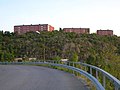 Finnberget
 -
 Värmdöleden at Alphyddan
 -
 Nacka church, built in 1891
 -
 Svindersvik, a summer estate built in 1740


References
[edit]- ^ "Statistiska centralbyrån, Kommunarealer den 1 januari 2014" (in Swedish). Statistics Sweden. 2014-01-01. Archived from the original (Microsoft Excel) on 2016-09-27. Retrieved 2014-04-18.
- ^ "Folkmängd och befolkningsförändringar - Kvartal 2, 2025" (in Swedish). Statistics Sweden. 21 August 2025. Retrieved 21 August 2025.
- ^ "Statistik om Nacka".
- ^ "Nu är Nacka 100 000 invånare!".
- ^ SCB - Folkmängd efter region och år
- ^ a b c "Valresultat 2022 för Nacka i riksdagsvalet" (in Swedish). SVT. 11 September 2022. Retrieved 2 December 2023.
- ^ "Medianinkomst". Ekonomifakta. Retrieved January 5, 2019.
- ^ "Andel högutbildade". Ekonomifakta. Retrieved January 5, 2019.
- ^ Antal personer efter region, utländsk/svensk bakgrund och år (Read 4 januari 2019)
- ^ a b Statistiska centralbyrån: Utrikes födda efter län, kommun och födelseland 31 december 2017 (XLS-fil) Läst 4 januari 2019
- ^ "Kommun & politik".
External links
[edit]
- Nacka Municipality - Official site


Municipalities and seats of Stockholm County | ||
|---|---|---|
| Municipalities |  | |
| Municipal seats | ||
| International | |
|---|---|
| National | |
| Geographic | |
| Other | |

Nacka Municipality
View on GrokipediaNacka Municipality (Swedish: Nacka kommun) is a suburban administrative division in Stockholm County, Sweden, located immediately east of the national capital and integrated into the greater Stockholm urban area. Spanning approximately 95 square kilometers of land and encompassing substantial water bodies within the Stockholm archipelago, including 34 square kilometers of inland waters and 10 kilometers of coastline, the municipality features a mix of forested landscapes, lakeside terrains, and proximity to urban centers. As of 2025, its population stands at 112,112 residents, reflecting sustained growth with an increase of 1,479 inhabitants in 2024 alone, driven by inbound migration and family-oriented development.[1][2][3][4]
Characterized by a robust economy intertwined with the Stockholm region's commerce and services sectors, Nacka maintains one of Sweden's lowest municipal tax rates at 30.26 percent and boasts the fifth-highest average income per capita nationwide, alongside a notably high share of residents holding advanced education. The area has experienced rapid expansion, particularly in districts like Sicklaön and Boo, attracting families with young children through quality schools, green spaces, and efficient public services, earning it recognition as a finalist for Sweden's "Super Municipality" award in 2025 based on metrics spanning economy, education, healthcare, and leisure. Despite its overall affluent profile, localized challenges persist in certain neighborhoods, such as Fisksätra, where issues including vandalism, littering, and drug-related disturbances have prompted targeted crime prevention efforts.[5][6][7]
Geography
Location and Physical Features
Nacka Municipality is located in Stockholm County, east-central Sweden, directly southeast of Stockholm city center, forming part of the capital's metropolitan area. It borders the City of Stockholm to the west, Lidingö Municipality to the northwest, Värmdö Municipality to the northeast, Tyresö Municipality to the southeast, and Haninge Municipality to the south. The municipality's central coordinates are approximately 59°19′N 18°10′E.[8] wait no, avoid wiki, use https://www.geodatos.net/en/coordinates/sweden/nacka for coords, but it's similar. The land area covers about 95 km², derived from a 2025 population of 112,112 and a density of 1,176 inhabitants per square kilometer.[1][9] Total area, including water, reaches roughly 129 km², with water comprising around 34 km² due to extensive marine inclusions.[3] Nacka encompasses parts of the inner Stockholm Archipelago, featuring numerous islands, sounds, and over 10 km of coastline along the Baltic Sea.[10][3] The terrain is predominantly hilly with rocky outcrops and forests, shaped by glacial activity, averaging 24 meters in elevation. Steep slopes and rocky hillsides are common, increasing vulnerability to landslides in lower areas.[11][12]Climate and Environmental Setting
Nacka Municipality has a humid continental climate classified as Dfb under the Köppen system, featuring distinct seasons with cold, snowy winters and mild summers influenced by its proximity to the Baltic Sea. The average annual temperature is 7.3°C, with July recording the highest averages at 20.4°C daytime highs and 13.9°C nighttime lows. Winters are coldest in January and February, with average highs around 0°C and lows dipping to -5°C or below, accompanied by snowfall. Precipitation totals approximately 638 mm annually, distributed relatively evenly but with peaks in late summer and lower amounts in early spring, such as 36 mm in March and up to 73 mm in August.[13][14][15] The environmental setting encompasses a mix of urban development and natural landscapes within the Stockholm archipelago, including over 100 islands, bays, and extensive forested areas that buffer against urban heat and support biodiversity. Dominant vegetation includes coniferous and deciduous forests, with rocky terrain and small lakes shaping the topography. The municipality hosts multiple nature reserves, notably Nackareservatet, which preserves diverse habitats such as ancient oak groves and meadows hosting rare species like the broad-banded oak bark beetle.[16][17] These protected areas, totaling around 12 reserves, emphasize conservation amid suburban expansion, maintaining ecological corridors for wildlife and recreation. Coastal waters of the Baltic influence local microclimates, moderating extremes while facing challenges from eutrophication and urban runoff, though green infrastructure mitigates some impacts.[18][19]History
Early and Medieval History
Archaeological investigations have identified Neolithic settlement sites east and north of Lake Strålsjön in Nacka Municipality, dated to approximately 3650 calibrated BC, consisting of clusters of pit houses and associated features at elevations reflecting the ancient shoreline. These sites indicate early agricultural and foraging communities adapted to the post-glacial landscape of eastern central Sweden. During the medieval period, the Nacka area formed part of Brännkyrka parish (socken), with residents traveling considerable distances to the church, prompting later local chapels.[20] A key fairway through Nacka ström was established in the Middle Ages to facilitate transport, initially used in winter by locals via sled over ice to Stockholm's winter customs post.[21] Properties like Stora Nyckelviken operated as a torp (small farm) owned by Sten Sture the Elder in the late 15th century before passing to the Blackfriars' monastery.[22] Industrial activity is evidenced by a medieval brick kiln excavated at Saltsjö Boo, one of the rare such structures documented in Sweden from that era; approximately three-quarters of the kiln was uncovered in phases, with analyses of its bricks via hand-held X-ray fluorescence confirming local production techniques.[23] Additionally, a medieval shipwreck was discovered in Baggensfjärden during cable-laying operations, dating older than initially anticipated and highlighting maritime activity in the region.[24] These findings underscore Nacka's role in medieval trade, construction, and ecclesiastical administration peripheral to Stockholm.19th and 20th Century Developments
In the 19th century, Nacka transitioned from predominantly agricultural and rural land use to early industrialization, leveraging its proximity to Stockholm's waterways for milling and manufacturing. Industries emerged at the end of the century, including mills such as Tre Kronor and shipyards like Hästholm, which capitalized on water power and access to Baltic Sea routes for Sweden's growing export economy.[25][25] Kvarnholmen, an island within Nacka, became a hub for industrial operations, with brick structures and mills reflecting the era's shift toward mechanized production amid Sweden's broader national industrialization starting in the mid-1800s.[26][27] The early 20th century saw expansion of these industries, particularly shipbuilding, with facilities like Finnboda Varv constructing vessels such as the SS Birger Jarl, whose keel was laid in 1951, amid post-World War I growth in maritime infrastructure.[28] Kvarnholmen continued as an active industrial site, acquired by the Swedish Consumer Cooperative (KF) in 1922 for cooperative manufacturing, underscoring Nacka's role in Sweden's interwar economic diversification.[29] Infrastructure developments, including bridges like Svindersvik, facilitated connectivity and symbolic progress in the mid-20th century.[25] By the mid-20th century, Nacka experienced accelerating urban development and population influx, driven by Stockholm's suburban expansion and national housing initiatives. The population began steady growth from the 1960s, nearly doubling over subsequent decades due to new residential construction and commuter appeal, positioning Nacka as a key peri-urban area.[30] Industrial areas like Kvarnholmen and former shipyards at Nacka Strand transitioned toward mixed-use redevelopment, reflecting Sweden's shift from heavy industry to service-oriented economies post-1950s.[31][25]Formation and Post-1971 Growth
Nacka Municipality was formed on January 1, 1971, as part of Sweden's comprehensive municipal reform, which reduced the number of local government units from over 1,000 to 278 by merging smaller entities into larger, more viable administrations. The new municipality resulted from the consolidation of Nacka stad (established as a city in 1949 from parts of earlier rural districts), Saltsjöbadens köping (an urban district developed around early 20th-century seaside resorts), and Boo landskommun (a rural municipality encompassing agricultural and forested areas). This merger created a unified entity spanning approximately 168 square kilometers, integrating urban, suburban, and rural landscapes east of central Stockholm, with the reform aimed at streamlining services like education, infrastructure, and welfare provision amid post-World War II urbanization pressures.[32] Following its creation, Nacka Municipality underwent sustained demographic and spatial expansion, benefiting from its strategic position as a commuter gateway to Stockholm via bridges and ferries across the Saltsjön inlet. The population, which stood at 48,035 in 1970 just prior to the merger, grew steadily through net migration and natural increase, reaching 100,000 by 2017 and 112,112 by December 31, 2024, representing more than a doubling in size over five decades.[33] This growth outpaced many Swedish municipalities, with annual increases averaging over 1% since the 2000s, fueled by demand for housing in proximity to the capital's job market while preserving access to archipelagic nature.[34] Urban development post-1971 emphasized balanced expansion, including residential subdivisions in areas like Boo and Saltsjöbaden, alongside infrastructure upgrades such as road widenings and public transit extensions to accommodate rising vehicle and commuter traffic. Revitalization efforts transformed industrial sites, exemplified by the adaptive reuse of former harbor facilities on Kvarnholmen into mixed-use neighborhoods with housing and commercial spaces starting in the late 20th century. Economic integration with Stockholm's service sector further supported this trajectory, as Nacka evolved into a high-income suburb attracting families and professionals, though challenges like housing shortages and environmental preservation of coastal zones persisted amid rapid densification.[26] By the 2020s, the municipality ranked among Sweden's fastest-growing, with quarterly population gains leading Stockholm County in 2025, reflecting ongoing appeal despite national trends of urban concentration.[35]Administration and Politics
Municipal Governance
Nacka Municipality follows the standard governance model established by Sweden's Local Government Act (Kommunallagen), featuring a unicameral municipal council (kommunfullmäktige) as the primary legislative body. The council comprises 61 members elected every four years via proportional representation, aligning with national and regional elections; the most recent election occurred on September 11, 2022.[36] This body holds ultimate decision-making authority on municipal matters, including budgets, taxes, and major policies, with meetings open to the public unless confidentiality applies.[37] The municipal executive board (kommunstyrelsen), appointed by the council, serves as the administrative and coordinating arm, preparing proposals, implementing decisions, and overseeing daily operations across sectors like education, social services, and infrastructure.[38] Chaired by Mats Gerdau of the Moderate Party (M), who also holds the position of kommunalråd (municipal commissioner), the board includes 13 members as of 2025 and operates under a center-right minority coalition formed post-2022 elections.[39][40] Additional full-time kommunalråd supporting executive functions include Filip Wiljander (M), Peter Zethraeus (M), and Disa Påhlman Nilsson (M, appointed June 2025), focusing on areas such as social welfare, urban development, and opposition oversight.[39][41] Governance is decentralized through specialized committees and boards, such as those for child and youth education, elderly care, and environmental issues, each led by elected representatives and professional administrators.[37] The municipal commissioner and executive board ensure compliance with national laws while adapting to local needs, including fiscal management supported by central government grants; Nacka's strong financial ratings, such as 'AAA/A-1+' from Standard & Poor's in 2023, reflect effective oversight.[40] Public participation is facilitated through citizen proposals, referendums on significant issues, and transparent protocols available online.[37]Political Composition and Policies
The municipal council (kommunfullmäktige) of Nacka Municipality comprises 61 members, elected for the term 2022–2026 following the September 11, 2022, local elections.[42] Moderaterna (M), the conservative-liberal party, holds the largest bloc with 20 seats (31.5% of votes), followed by Socialdemokraterna (S) with 13 seats (21.58%), Nackalistan (NL), a local party, with 7 seats (11.21%), Centerpartiet (C) with 5 seats (7.6%), Sverigedemokraterna (SD) with 4 seats (7.25%), Vänsterpartiet (V) with 4 seats, Miljöpartiet de gröna (MP) with 3 seats, Liberalerna (L) with 3 seats (5.54%), and Kristdemokraterna (KD) with 2 seats (3.34%).[42][43] Governance is led by a center-right coalition of the Alliance parties—Moderaterna, Centerpartiet, Liberalerna, and Kristdemokraterna—totaling 30 seats, in limited cooperation with Miljöpartiet de gröna (adding 3 seats for a 33-seat majority).[42] This arrangement, formalized post-election, emphasizes bourgeois (center-right) priorities while incorporating green elements through MP support, contrasting with opposition from Socialdemokraterna, Vänsterpartiet, Nackalistan, and Sverigedemokraterna.[42][44] Key policies under this coalition, as outlined in the 2025–2027 goals and budget adopted November 18, 2024, prioritize fiscal discipline with a reduced local tax rate (maintained at 17.98% since 2022), sustainable urban expansion to accommodate population growth projected to reach 113,328 by June 30, 2025, and investments in infrastructure like transport links to Stockholm.[45][37] Environmental objectives include achieving climate neutrality by 2030 through circular economy measures and emissions reductions in transport and construction, though implementation gaps persist in these sectors per independent assessments.[46][47] Social policies focus on education, elderly care, and health promotion in natural areas, with mandatory municipal responsibilities like waste management and building permits aligned to support affluent suburban growth without expanding debt beyond investment-grade levels (previously rated AAA by S&P before voluntary discontinuation in 2025).[48][49] The coalition's approach reflects Nacka's relatively affluent, low-tax profile, resisting broader Swedish trends toward higher public spending.[45]| Party | Seats | Vote Share (%) |
|---|---|---|
| Moderaterna (M) | 20 | 31.5 |
| Socialdemokraterna (S) | 13 | 21.58 |
| Nackalistan (NL) | 7 | 11.21 |
| Centerpartiet (C) | 5 | 7.6 |
| Sverigedemokraterna (SD) | 4 | 7.25 |
| Vänsterpartiet (V) | 4 | N/A |
| Miljöpartiet de gröna (MP) | 3 | N/A |
| Liberalerna (L) | 3 | 5.54 |
| Kristdemokraterna (KD) | 2 | 3.34 |
Economy
Economic Structure and Growth
Nacka Municipality maintains a strong, service-dominated economy bolstered by its proximity to Stockholm, where a significant portion of residents commute for high-skilled employment. The local employment rate reached 84.5 percent in 2023, with unemployment at a low 4.7 percent in 2024, reflecting robust labor market participation.[50][50] Median annual income stood at 434,104 SEK in 2023, the fourth highest among Swedish municipalities, underscoring an affluent socioeconomic profile that supports tax revenues and fiscal stability.[50] Key private employers include Atlas Copco Industrial Technique AB with 675 employees, highlighting pockets of manufacturing alongside dominant service sectors.[50] Economic structure emphasizes business services, which exceed national proportions, alongside IT, consulting, retail, and creative industries, with many firms leveraging the area's educated workforce and infrastructure.[51][4] While local industry exists, the economy integrates with Stockholm's, contributing to Sweden's regional growth dynamics where the capital area accounts for 43 percent of national economic expansion over the past two decades.[52] This orientation fosters resilience, as affirmed by S&P Global's 'AAA' rating in 2023, citing Nacka's favorable integration and wealth levels comparable to national GDP per capita estimates around $58,300.[40][40] Growth has been sustained by above-average population increases, adding 1,479 residents in 2024 and 3.6 percent cumulatively from 2021 to 2024, attracting businesses and bolstering demand for housing and services.[1][50] Tax revenue expansion, driven by economic recovery and demographic trends, has supported operating performance, with municipal plans targeting 15,000 new jobs by 2030 through urban development.[53][48] Despite global headwinds like slowed growth in 2023, Nacka's base remains solid, with S&P projecting continued revenue strength amid population gains outpacing national averages.[45][40]Key Sectors and Employment
Nacka Municipality's economy is predominantly service-oriented, with significant employment in professional and business services, retail trade, healthcare, and education. In 2022, business services (företagstjänster) and retail (handel) each accounted for 16% of local employment, followed by healthcare and social services (vård & omsorg) at 14% and education at 13%.[54] The retail sector employs a larger share of workers relative to the national average, while manufacturing and extraction (tillverkning & utvinning) represent a smaller proportion.[54] The municipality supports over 13,000 businesses as of 2023, predominantly small enterprises with fewer than 50 employees, which generate 53% of total jobs and 63% of private-sector employment.[54] Local growth in IT, consulting, and creative industries complements commuting patterns, as a substantial portion of residents work in central Stockholm, sustaining high overall employment.[4] Employment rates remain robust, with a 77.1% sysselsättningsgrad for ages 16-64 in 2023, exceeding national figures.[54] Unemployment stood at 4.1% that year (2,241 individuals), below the Stockholm county and national averages of 2.6% and 2.7% for long-term unemployment, respectively, though rates have risen to around 5.1% by mid-2025 amid broader economic pressures.[54][55] Small businesses contribute substantially to tax revenues, amounting to 2.3 billion SEK in 2022, or 35% of the municipality's total skatteintäkter.[54]Demographics
Population Dynamics
As of June 30, 2025, Nacka Municipality had a population of 113,328, marking a quarterly increase of 756 residents from the prior period. This growth comprised a net migration surplus of 640—driven by 2,597 inflows against 1,957 outflows—and a natural increase of 117, stemming from 300 live births minus 183 deaths during the quarter.[56] The municipality has sustained robust expansion since the mid-20th century, rising from 48,000 inhabitants in 1970 to over 100,000 by 2017, with an average annual gain of 1,400 between 2020 and 2024 amid broader suburban development near Stockholm. This trajectory contrasts with national slowdowns, as Nacka recorded Sweden's highest population increase—1,200 residents—in the first half of 2025, outpacing other municipalities through attractive housing and proximity to urban centers.[57][58] Population dynamics are predominantly migration-led, with net inflows tied to residential expansions like Sicklaön, offsetting modest natural growth; annual births hover at 1,100–1,300, while deaths—projected to rise from 820 to 980 by the 2030s—reflect an aging demographic, including a 61% surge in those aged 80+ to 3,530 by 2040. Official forecasts anticipate sustained annual growth of about 1%, reaching 118,300 by 2030 and 130,200 by 2040, contingent on continued housing supply amid stable fertility and mortality patterns.[57]Ethnic and Foreign Background Composition
As of 2024, 22,682 residents of Nacka Municipality—20.2% of the total population of 112,112—were foreign-born.[59][2] This figure encompasses individuals born outside Sweden, with approximately 11,419 originating from other European countries and 11,263 from non-European countries.[2] The broader category of foreign background, as defined by Statistics Sweden (SCB) to include foreign-born persons plus those born in Sweden to two foreign-born parents, accounts for 26.4% of Nacka's population.[60] This proportion has risen steadily from 21.3% in 2002, reflecting national trends in immigration and family reunification but remaining comparable to Sweden's overall foreign background rate of about 25%.[60][61] SCB data, derived from population registers, provide the most reliable measure, as Sweden does not collect self-reported ethnic identifiers, limiting analysis to birthplace and parental origins. Sweden's official statistics prioritize foreign background over ethnic self-identification to align with privacy laws and avoid subjective categorizations, though this approach may understate generational integration effects.[62] In Nacka, the foreign-born population contributes to demographic diversity without concentrated ethnic enclaves, as the municipality's suburban character and proximity to Stockholm attract skilled migrants alongside refugees.[1] National patterns suggest common origins include Nordic neighbors, EU states like Poland and Germany, and non-Western countries such as Iran, Iraq, Syria, and Turkey, though municipality-specific breakdowns beyond regional aggregates are not publicly detailed in recent SCB releases.[61]| Category | Number (2024) | Percentage of Total Population |
|---|---|---|
| Foreign-born | 22,682 | 20.2% |
| Foreign background (incl. second generation) | ~29,600 (est.) | 26.4% |
| European-born (excl. Sweden) | 11,419 | 10.2% |
| Non-European-born | 11,263 | 10.0% |
Socioeconomic Metrics
Nacka Municipality demonstrates strong socioeconomic performance relative to national averages, with elevated income levels, high educational attainment, and subdued unemployment reflecting its status as an affluent suburban area adjacent to Stockholm. In 2023, the median taxable income among residents aged 20–64 reached 434,104 SEK, the fourth highest among Sweden's 290 municipalities.[50] This figure underscores a robust local economy driven by proximity to high-wage employment in the capital region, though it also correlates with elevated housing costs that may strain lower earners.[4] Educational attainment is similarly elevated, with 48.2% of the working-age population holding post-upper secondary qualifications, ranking eighth nationally and exceeding the Swedish average of approximately 44%.[64] [65] This high share of tertiary-educated individuals supports occupational profiles in professional services, technology, and administration, contributing to sustained economic productivity.[4] Employment metrics further highlight resilience, with an unemployment rate of 4.7% as reported by the Swedish Public Employment Service, positioning Nacka as the 86th lowest among municipalities—a favorable outcome amid national rates hovering around 7–8% in recent years.[66] Low joblessness aligns with the municipality's demographic strengths, including a young, skilled workforce, though it masks potential underemployment in service sectors.[4]| Key Metric | Value (Recent) | National Comparison |
|---|---|---|
| Median Income (SEK, 2023) | 434,104 | 4th highest municipality |
| Higher Education Share (%) | 48.2 | 8th highest municipality |
| Unemployment Rate (%) | 4.7 | 86th lowest municipality |
Infrastructure and Transport
Connectivity to Stockholm
Nacka Municipality maintains robust transport links to central Stockholm, primarily through road bridges, frequent bus services, and commuter rail lines. The Skurubron bridge spanning Skurusundet accommodates around 52,000 vehicles per day, facilitating significant commuter traffic into the capital.[68] A parallel new bridge is under construction to enhance capacity and resilience.[69] Public bus services, operated by Storstockholms Lokaltrafik (SL), provide direct connections from key hubs like Nacka Forum to Slussen in Stockholm, with departures every 10 minutes throughout the day.[70] Travel times by bus typically range from 20 to 45 minutes depending on traffic and route, often combining with metro transfers for access to Stockholm Central Station.[71] Ferry options also link Nacka Strand to central Stockholm, offering scenic alternatives during peak hours.[70] The Saltsjöbanan suburban rail line connects eastern Nacka areas, including Saltsjöbaden, to Slussen station in Stockholm over 18.5 kilometers of track, serving as a key artery for residents since its electrification. Driving routes utilize national road 260 and connect via the E4 highway, with typical commute durations of 15-30 minutes to central districts under normal conditions.[72] Ongoing infrastructure developments include the extension of Stockholm's Blue Line metro from Kungsträdgården to Nacka, adding 11.5 kilometers of track with new stations to improve frequency and reduce reliance on buses.[73] This project, involving 1.2 kilometers of tunnels in its final phase, aims to cut travel times to T-Centralen significantly upon completion expected in the late 2020s.[74] Such enhancements underscore Nacka's integration into the Stockholm region's transport network, supporting population growth and economic ties.[75]Major Projects and Developments
The extension of Stockholm's Metro Blue Line to Nacka Municipality represents the most significant ongoing infrastructure project, forming part of a broader initiative to add 11 kilometers of new tunnels and tracks connecting Kungsträdgården in central Stockholm to Nacka and adjacent areas in Söderort.[76] This branch specifically includes 4.1 kilometers of track tunnels and three new underground stations at Sickla, Järla, and Nacka, with the latter situated approximately 40 meters below ground level.[77] Construction contracts for key segments, such as 1.2 kilometers of tunnels and associated entrances in Nacka, were awarded to firms including Skanska, with work involving platforms, ticket halls, and deep escalator shafts.[74] The project aims to reduce travel time from Nacka to T-Centralen to around 11 minutes, accommodating up to 300,000 daily passengers upon completion.[74] Initiated in the early 2020s, the Nacka extension is integrated into Stockholm's largest urban transport investment, encompassing 30 kilometers of new tracks, 18 stations, and 20 kilometers of double-track tunnels across multiple municipalities, with partial financing from the European Investment Bank totaling €1.5 billion approved in May 2025.[78] Expected operational start is 2030, enabling capacity for 13,500 new residential units and 10,000 jobs in Nacka by enhancing public transit access and supporting densification around stations.[77] Complementary studies have explored upgrades to the existing Saltsjöbanan suburban rail line, including potential reconstruction in areas like Sickla to integrate with metro expansions, though no major construction has advanced beyond planning as of 2025.[79] A proposed multimodal transport hub, Mötesplats Nacka, intended to combine the new metro station with bus terminals and urban infrastructure for seamless connectivity, was halted in May 2024 after cost estimates escalated significantly beyond initial projections, reflecting challenges in balancing ambitious development with fiscal constraints.[80] Recent assessments in September 2025 indicate renewed municipal efforts to revive stalled infrastructure initiatives, prioritizing enhanced road and transit links to mitigate congestion in growing suburbs.[81] These developments underscore Nacka's strategic role in regional transport expansion, driven by population growth and the need for sustainable connectivity to Stockholm.[82]Environment and Sustainability
Natural Reserves and Biodiversity
Nacka Municipality designates 17 nature reserves, protecting over 24% of its land area to preserve ecosystems including coniferous forests, wetlands, lakes, streams, and coastal archipelago habitats.[83][84] The municipality manages 14 of these reserves, prioritizing biological diversity essential for ecosystem functionality and recreation.[85] These areas support varied flora and fauna, with protections extending to Natura 2000 sites that enhance regional ecological connectivity amid urban proximity.[86] Nackareservatet, the municipality's largest and most biodiverse reserve at 754 hectares (including 104 hectares of water), exemplifies these efforts through its coniferous forests, meadows, pastures, and aquatic systems.[86] Established in 2005, it harbors species such as the great northern loon (Gavia immer), teal (Anas crecca), beaver (Castor fiber), and rare flora like water soldier (Stratiotes aloides), alongside insects including the mosaic hawker dragonfly (Aeshna juncea).[86][87] Additional reserves like Skogsö (300 hectares) integrate forests, wetlands, and coastlines to foster marine-influenced biodiversity, while sites such as Ryssbergen host 28 threatened species, 11 of which are red-listed per 2016 inventories.[88][89] Tollare and Skarpnäs, the latter formalized as the 16th reserve in 2022, emphasize varied terrain for species conservation and habitat development.[90][83] Municipal plans, such as the 2024 nature conservation strategy, underscore maintaining these reserves to counter development pressures and sustain post-glacial biodiversity hotspots.[91]Policies and Initiatives
Nacka Municipality has pursued climate neutrality as a core environmental objective through its "Climate Neutral Nacka 2030" initiative, which aims to minimize greenhouse gas emissions across the municipality's geographic area by 2030 via collaborative efforts with stakeholders, including urban planning adaptations, enhanced recycling systems, energy-efficient "energy boxes" for buildings, and a dedicated bicycle strategy to promote sustainable transport.[46][92] This program aligns with national frameworks like Viable Cities, receiving continued funding from the Swedish Energy Agency in December 2024 to advance these measures.[93] In March 2025, the municipality adopted a comprehensive Climate and Environmental Program for 2025–2040, establishing three overarching directional goals to guide all operations toward reduced ecological impact, with a target of annual average emissions reductions of 12% until 2040.[94][95] The program integrates local targets derived from national environmental objectives, emphasizing systemic reductions in municipal and resident emissions through strategic planning across sectors like transport and waste management.[96] Supporting these efforts, Nacka maintains an ISO-certified quality and environmental management system to ensure consistent implementation of sustainability practices across administrative functions.[97] Specific initiatives include optimizing road maintenance with connected vehicle data to lower emissions and fuel use, as piloted in 2024, and a "climate relay" campaign from October 23 to December 15, 2025, engaging residents in collective actions to lower daily carbon footprints.[98][96] Additionally, the 2023 Green Finance Framework allocates municipal bonds to fund eligible green projects aligned with these goals, such as emissions reductions and biodiversity preservation.[92] As a signatory to the Klimatkommunerna network, Nacka targets a 63% per capita reduction in greenhouse gas emissions by 2030 relative to 1990 levels, integrating UN Agenda 2030 Sustainable Development Goals into local policy through measurable indicators and cross-departmental strategies.[99][100] A dedicated unit for strategic climate and environmental work, established to oversee these programs, focuses on developing action plans that enhance resilience against climate risks like flooding and heatwaves while promoting resource efficiency.[101]Society and Culture
Sports and Recreation
Nacka Municipality supports a range of organized sports through local clubs, including football teams such as Boo FF and Järla IF, which compete in regional leagues and utilize facilities like Nacka IP for matches and training.[102][103] Sailing is prominent, with the Royal Swedish Sailing Society (KSSS) based in Nacka offering training and events on the archipelago waters.[102] Golf courses like Saltsjöbadens Golfklubb provide year-round play, while indoor options include climbing at Klätterverket and various martial arts at clubs like IF Linnéa Boxning.[104][105] Recreational facilities emphasize outdoor activities, facilitated by 12 nature reserves and expansive green areas that promote hiking, cycling, and foraging.[106] Hellasgården serves as a central hub, featuring over 20 activities including kayaking, swimming in Källtorpssjön, exercise trails, an outdoor gym, and saunas, attracting visitors for both casual recreation and organized sports.[107][108] Parks like Rudsjöparken offer sports courts for tennis and basketball, playgrounds, and grassy fields for informal play.[109] Youth programs include free sports and cultural activities at municipal recreation centers, available afternoons and evenings for ages 13–19.[106] A new municipal swimming hall, constructed with sustainable features, opened to serve all age groups and supports competitive and leisure swimming.[110] These amenities leverage Nacka's natural landscape, with policies prioritizing accessible green infrastructure for friluftsliv (outdoor life) such as trails and waterfront access.[111]Cultural Sites and Attractions
Kulturhuset Dieselverkstaden, located in the Sickla district, serves as Nacka's primary cultural hub, housed in repurposed industrial buildings and offering theater performances, contemporary art exhibitions, a library, and workshops in music production, drama, and dance.[112][16] The center hosts diverse events, including live music and visual arts displays, fostering community engagement through accessible programming.[113] The HAMN Battlefield Museum in Fisksätra, operated by Nacka Municipality, focuses on the archaeological legacy of the Battle of Stäket fought on August 13, 1719, during the Great Northern War, featuring artifacts from Viking-era settlements through to 18th-century military remnants and modern multicultural narratives.[114] Excavations conducted between 2000 and 2007 uncovered over 300 graves and battle-related finds, making it Sweden's first dedicated battlefield museum opened in 2014.[112][115] Eighteenth-century estates such as Svindersvik and Stora Nyckelviken provide preserved examples of rococo architecture and manor house history, with Svindersvik exemplifying early industrial-era rural estates and Stora Nyckelviken offering gardens and period interiors for public tours and traditional Swedish fika experiences.[112] Religious architecture includes Nacka Church, a neo-Gothic structure completed in the late 19th century with distinctive warm, expressive interiors noted for concerts and services, and the Revelation Church (Uppenbarelsekyrkan) in Saltsjöbaden, a modernist design from the early 20th century integrated into the area's historic residential fabric.[116][117] Contemporary public art features approximately 20 murals commissioned in recent years across urban spaces, highlighting local artists and street-level cultural expression.[112]Challenges and Controversies
Crime and Safety Concerns
Nacka Municipality maintains one of the lower crime rates among Swedish municipalities, with 9,785 police-reported crimes in 2024, marking a decrease of 93 incidents from 9,878 in 2023 and a broader downward trend since 2021.[118] This equates to 8,179 reported crimes per 100,000 inhabitants, significantly below the national average of 12,233 and lower than neighboring areas like Danderyd (13,930 per 100,000).[118] Approximately 64.9% of crimes fall into the category of mängdbrott (high-volume offenses such as theft and fraud), while violent and property crimes have declined since 2021.[118] Fraud (bedrägeri) stands out as an exception, surging 169.9% since 2020 to 1,754 incidents in 2024, alongside increases in bicycle thefts and card fraud (kortbedrägerier).[118][119] Assaults and vandalism have decreased, contributing to an overall improved safety perception, with Nacka's problem index at 1.30 compared to the national 2.0; however, residents report heightened insecurity in poorly lit areas.[118] Youth-related issues persist, including rising incidents of graffiti and shoplifting among ninth graders, alongside ongoing bullying in schools.[118] In the district of Fisksätra, designated as a vulnerable area by Swedish police in both 2021 and 2023, concerns involve youth gangs disturbing public order and risks of assault, though these remain localized amid Nacka's generally low violent crime levels.[118][120] The municipality addresses welfare fraud through targeted mapping and prevention efforts initiated in 2023.[121] Despite national trends of escalating gang violence, Nacka's proximity to Stockholm has not resulted in comparable spillover, with recent weekly reports averaging around 210 incidents, predominantly non-violent.[122]Immigration and Integration Issues
In Nacka Municipality, approximately 26% of the population has an immigrant background, comprising 28,121 individuals compared to 80,113 with Swedish background, reflecting a significant influx primarily from non-Western countries since the 1990s.[123] This proportion aligns with broader trends in Stockholm County, where foreign-born residents constitute around 25-30% in suburban areas, driven by asylum migration and family reunification from regions including the Middle East, Africa, and the former Yugoslavia.[124] Official data from Statistics Sweden indicate that foreign-background residents in Nacka often cluster in specific neighborhoods, contributing to localized socioeconomic disparities despite the municipality's overall affluence.[125] Integration challenges manifest in moderate levels of residential segregation, as measured by Boverket's segregation barometer, with Nacka's inequality index at 48.5—indicating that nearly half of the lowest-income quintile resides in areas of concentrated poverty, frequently overlapping with immigrant-heavy districts.[67] Urban planning documents for Nacka City highlight segregation as a primary obstacle, exacerbating limited opportunities for social mobility and connectivity between native and immigrant communities, often resulting from self-selection in housing markets and welfare-driven settlement patterns.[3] These patterns echo national causal factors, where rapid immigration without corresponding assimilation policies leads to parallel societies, higher welfare dependency, and educational underperformance among second-generation immigrants.[126] Efforts to address integration include Nacka's early establishment of a municipal Crime Prevention Council, prompted by rising concerns over youth crime and gang activity in immigrant-dense areas, though specific data linking local offenses to foreign-born perpetrators remains underreported compared to national statistics showing 2.5 times higher suspect rates for immigrants.[7][126] Recent studies confirm overrepresentation of foreign-background individuals in violent crimes across Sweden, up to sevenfold in certain categories like rape, attributable not merely to socioeconomic factors but to cultural incompatibilities and failed integration, patterns likely present in Nacka's more vulnerable suburbs.[127] Despite these issues, Nacka's proactive policies, such as targeted employment programs, have mitigated some extremes of national segregation trends, though persistent income gaps and housing concentrations underscore ongoing causal tensions between high immigration volumes and social cohesion.[128]Urban Development Criticisms
Urban development in Nacka Municipality has faced significant criticism for financial mismanagement and cost overruns in major projects, particularly following the 2014 agreement on subway extension (tunnelbaneavtalet), which spurred ambitious housing and infrastructure initiatives without adequate risk assessment.[129][130] Optimistic cost estimates from 5–10 years prior, lacking standard risk buffers like those used by Trafikverket, led to escalations such as the Mötesplats Nacka project ballooning from 2 billion SEK to 8.5 billion SEK, prompting its pause in May 2024.[131][130] Similarly, the Upphöjd Saltsjöbana initiative saw costs rise from 280 million SEK to 1.2 billion SEK, contributing to a broader halt of projects valued at 837 million SEK over five years, straining municipal budgets and diverting funds from core services like schools and elderly care.[129][130] Audits and internal reviews have highlighted systemic deficiencies, including poor economic controls, unclear responsibilities, and insufficient expertise in the building unit established in 2015, with professional cost calculations only implemented in 2021.[129][132] A negative organizational culture exacerbated issues, where officials faced replacement for reporting unfavorable figures, alongside high staff turnover—60% of managers serving less than 2.5 years—and inadequate politician-official communication.[130] These problems culminated in the August 2024 resignation of three senior urban development executives, including the director of urban development and the exploitation manager, amid a described "challenging situation" tied to paused multi-billion-SEK investments like those in Sickla and Kanalen.[133] Environmental groups and residents have criticized developments for encroaching on natural areas, notably the Ryssbergen forest—a 30-hectare ancient pine woodland (hällmarkstallskog)—where housing plans approved in March 2023 despite protests threatened biodiversity and recreation.[134][135] Activists from Rädda Ryssbergen and Skydda Skogen erected protest signs reading "Ej naturreservat" in February 2022, likening the exploitation to "demolishing Stockholm's Old Town," and highlighted risks to nearby Nackareservatet ecosystems from multiple threatened sites.[136][137] Saltsjöbadens Naturskyddsforening's June 2025 submission on the 2050 översiktsplan warned of irreversible habitat loss from unspoiled land conversion for housing, arguing it prioritizes density over sustainability.[138] Additional resident concerns include overestimation of housing demand, as voiced in local forums regarding Sickla, where politicians allegedly pursued builds for non-residential motives or flawed projections, resulting in underutilized structures amid broader Stockholm-area shortages.[139] Floating housing experiments have also drawn local opposition for potentially disturbing archipelago access and privatizing public waters, though paused by economic factors.[140] These critiques underscore tensions between growth ambitions and fiscal prudence, with recommendations for enhanced oversight to mitigate future risks.[132]Notable People
Prominent Residents and Contributions
Karin Dreijer Andersson, born in Nacka on April 7, 1975, is a singer-songwriter and record producer known for her work in electronic music as part of the duo The Knife with her brother Olof Dreijer, releasing critically acclaimed albums such as Silent Shout in 2006, and later as the solo artist Fever Ray with the self-titled debut album in 2009.[141] Her contributions include innovative sound design and thematic explorations of identity and society, earning Grammy nominations and influencing alternative music scenes.[142] Cornelia Jakobs, born in Nacka on March 9, 1992, gained international recognition as a songwriter and performer, representing Sweden at the Eurovision Song Contest 2022 with "Hold Me Closer," placing fourth and achieving chart success across Europe.[143] As the daughter of musician Jakob Samuel, she contributed backing vocals to acts like The Poodles before her solo breakthrough, blending pop and soul elements in her compositions. Alexander Wennberg, born in Nacka on September 22, 1994, is a professional ice hockey center who was drafted 14th overall by the Columbus Blue Jackets in 2013, accumulating over 400 NHL games across teams including the Blue Jackets, Anaheim Ducks, and Seattle Kraken by 2024.[144] His contributions to Swedish hockey include junior international play and consistent performance in the NHL, with career totals exceeding 200 points as of the 2024-25 season.[145] Erik Langby, who served as municipal commissioner of Nacka from 1983 to 2012, spearheaded policy reforms emphasizing free-market principles, including expanded school choice and competition in public services, which positioned Nacka as a model for challenging state monopolies in Sweden during the late 20th and early 21st centuries.[146] These initiatives contributed to high resident satisfaction and economic efficiency, influencing national debates on welfare innovation.[146]International Relations
Twin Towns and Partnerships
Nacka Municipality has twin town relationships with Keila in Estonia, Pyhtää in Finland, Jelgava in Latvia, Gliwice in Poland, and Greenwich in Connecticut, United States, aimed at promoting cultural, educational, and economic exchanges.[147][148] These partnerships, established primarily in the late 20th and early 21st centuries, support initiatives in sustainable development, youth programs, and municipal learning.[149] The agreement with Pyhtää dates to 1990, focusing on cross-border cooperation in the Nordic-Baltic region. With Jelgava, formalized in 2004, collaborations include democratic education and local governance exchanges.[150] Gliwice's twinning emphasizes industrial and urban planning synergies, given both areas' suburban profiles near major cities.[149] Additional partnerships extend to the Princes' Islands (Adalar) in Turkey for youth democracy and sustainability projects since at least 2014, and exploratory ties with Baranavichy in Belarus and Kisumu in Kenya through broader international networks.[151][152] In 2025, Nacka approved a long-term collaboration framework, potentially establishing a new twin town to enhance bilateral benefits.[153] These arrangements prioritize practical mutual gains over symbolic gestures, reflecting a decline in formal twinning across Swedish municipalities since the 2010s.[154]References
- https://commons.wikimedia.org/wiki/Category:Fever_Ray