Hubbry Logo
New ChandigarhNew ChandigarhMain
Open search
New Chandigarh
Community hub
New Chandigarh
logo
8 pages, 0 posts
0 subscribers
Be the first to start a discussion here.
New Chandigarh
New Chandigarh
from Wikipedia

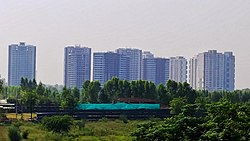
New Chandigarh is a new planned smart city near Mullanpur[2] in the Mohali district (SAS Nagar) in Punjab, India.[3][4][5][6] It has been designed as an extension of the city of Chandigarh.[7] It is being developed by the Greater Mohali Area Development Authority.[8] A digital land survey was started by using a drone on 26 April 2018[9][10] and was completed on 24 June 2018.[11] Initial Master of city is divided in sectors numbering 1 to 27.[12]

Key Information

Eco City

[edit]

Eco City I and Eco City II are the residential townships in New Chandigarh, spread over 806 acres in the foothills of the Shivalik Hills.The approved master plan for New Chandigarh Mullanpur Local Planning Area includes several special development control regulations such as a no-development zone, special-use zone and building height control measures, in addition to the common development control parameters applicable to the whole Greater Mohali area, under which Mullanpur falls.

Education City

[edit]

The Education city of New Chandigarh is spread over 1700 acres and was developed to have campuses of universities and educational institutes.[13] Institute of Technology and Future Trends College is located at Sector 11 of New Chandigarh.[14]

Medi City

[edit]

Medicity of New Chandigarh has 100 bed Tata Memorial Centre's Homi Bhabha Cancer Hospital and Research Centre which is spread over 50 acres.[15][16][17] Stem Cell Centre is also under construction.[18] There is a plan of Dr. B.R. Ambedkar State Institute of Medical Sciences connected to Civil Hospital of Phase VI, Mohali.[19] Some Organic Farms are also located in the city.[20]

Residential Townships

[edit]

The Project New Chandigarh also introduced the private housing companies apart from the public residential area under GMADA. The Omaxe and DLF are the main private housing societies. [21]

Tourism

[edit]

The Oberoi Sukhvilas Resort & Spa is a 5 star luxury resort located at Palanpur village near New Chandigarh.[22][23][24] Shaheed Dr. Diwan Singh Kalepani Museum is also located nearby.[25][26] Siswan forest range is a major ecotourism area[27] which consists Leopard safari[28] and forest trek.[29] There are theatre plays in the city.[30][31]

Sports

[edit]

Race Across America qualifier Shivalik Signature 2018, a 615 km (382 mi) long cycling race event was held in New Chandigarh.[32] Also the city has the 38,000 capacity Maharaja Yadavindra Singh International Cricket Stadium.[33]

Connectivity

[edit]

New Chandigarh is connected to Chandigarh Airport of Punjab via airport road through Sunny Enclave, Kharar.[34] This six lane road connects the city with Mohali.[35]

The Lake

[edit]

There is plan for artificial lake on the lines of Sukhna Lake[36] for natural flow of rivulet in the city.[37][38][39][40][41][42]

See also

[edit]

References

[edit]
[edit]
Revisions and contributorsEdit on WikipediaRead on Wikipedia
from Grokipedia
New Chandigarh is a planned situated in the Mullanpur region of (SAS Nagar), , developed as an extension to the . Encompassing a local planning area of approximately 15,000 acres with 20 designated sectors, it allocates about 27% of its land for residential use, emphasizing modern , green spaces covering 35% of the area, and sustainable to accommodate growing pressures from nearby . Initiated by the Greater Area Development Authority (GMADA) under the government, the project aims to decongest the historic by providing alternative residential, commercial, and institutional hubs while preserving proximity to the Shivalik foothills for environmental integration. Key infrastructure developments include expanded road networks like the PR-4 Mullanpur-Kurali link, expected to complete by early 2025, and integrated townships such as Eco-City projects featuring plotted developments and mixed-use zones. The New Chandigarh Master Plan 2031 outlines full eco-friendly urbanization by that horizon, with ongoing land acquisitions for low- and high-density housing and commercial plots driving rapid expansion. Private developers including DLF and Omaxe contribute to group housing and plotted schemes, positioning the area as a burgeoning hub for investment amid rising land values.

History and Planning

Inception and Rationale

The concept of New Chandigarh emerged as an extension to the original to accommodate 's administrative and urban expansion needs, with initial planning for the Mullanpur area notified by the government around 2006. This followed an earlier, unfulfilled proposal in 1995 under Beant Singh to develop a large-scale "New Chandigarh" on approximately 10,500 acres as an ultra-modern alternative amid ongoing disputes over the shared capital status of between and . The project was formalized in May 2013 when approved renaming Mullanpur—a village in (SAS Nagar)—as New Chandigarh, directing the Greater Mohali Area Development Authority (GMADA) to oversee its transformation into a satellite township. The core rationale centered on alleviating overcrowding in , originally master-planned in the for about 500,000 residents but facing strains from a tricity population exceeding 1.5 million by the early 2010s, including severe , shortages, and overload due to rapid post-independence migration and . officials emphasized creating dedicated spaces for state government employees and institutions, reducing reliance on the union territory-controlled , which serves as a joint capital with . In July 2013, Deputy Chief Minister approved the conceptual plan, positioning the city as a "futuristic " with ultra-modern to foster hi-tech industries, residential zones, and self-sustained urban living. This initiative reflected Punjab's strategic push for regional in development, bypassing inter-state frictions over Chandigarh's while prioritizing decongestation through planned dispersal of and economic activities to the Shivalik foothills-adjacent site spanning roughly 6,000 acres in the Mullanpur Local Planning Area. By October 2013, the government reiterated plans to integrate high-tech facilities, green spaces, and connectivity links to the parent city, aiming to position New Chandigarh as a model for sustainable satellite urbanism amid India's broader challenges.

Master Plan Development

The development of the master plan for New Chandigarh, originally designated as the Mullanpur Local Planning Area, was commissioned by the Greater Area Development Authority (GMADA) to address the need for controlled urban expansion beyond the constrained boundaries of . In June 2007, GMADA appointed Jurong Consultants Pte Ltd, a Singapore-based firm specializing in , to formulate a comprehensive integrated master plan covering the period from 2008 to 2031. This appointment followed initial land notifications and aimed to integrate , transportation, and economic activities across approximately 6,123.7 hectares of land acquired from surrounding villages. Jurong Consultants conducted detailed studies on , environmental constraints, projections under high-growth scenarios, and requirements, refining social and physical to support . The resulting plan emphasized eco-town principles, including green buffers, low-density zoning, and restrictions on development in ecologically sensitive zones, such as no-building regulations along certain ridges and water bodies. This approach was informed by regional planning for the broader Greater area, where Mullanpur was one of six local planning areas targeted for master plan preparation. The Punjab government approved the master plan on August 18, 2009, marking Mullanpur as Punjab's first designated eco-town and enabling phased implementation through sector-wise development. Subsequent revisions addressed stakeholder feedback and evolving needs, with the formally renamed the "New Chandigarh Master Plan" following approval by the Punjab Regional and Town Planning and Development Board on July 23, 2013. Further notifications, including a revised plan endorsed on December 9, 2015, and a recent update on October 9, 2025, have refined and development controls to align with extended horizons up to 2031.

Land Acquisition Efforts

The land acquisition process for New Chandigarh, also known as Mullanpur, commenced in the early 2010s under the (GMADA), targeting in villages such as Mullanpur Garibdas, Rajgarh, and others to establish an urban extension of . In May 2010, Punjab's Housing and Urban Development Secretary issued a notice under Section 6 of the Land Acquisition Act, 1894, to acquire 419.95 acres for initial urban estate development, marking the formal start of efforts to create planned sectors amid ongoing large-scale private constructions in the area. By April 2011, acquisition for the Mullanpur Urban Estate, envisioned to include 1,500 plots roughly 15 km from , reached its final stages, with GMADA expediting processes to support residential and infrastructural growth. Subsequent acquisitions focused on specialized zones, including approximately 1,700 acres for an to position New Chandigarh as a knowledge hub, with processes initiated but progressing incrementally due to legal and logistical hurdles. For Eco-City 3, a mixed-use project blending residential, commercial, and institutional elements, GMADA approved acquisition rates in October 2019 for 320 acres across villages like Rajgarh and Takipur, planning a launch in March 2020; however, the process was deferred amid landowner opt-ins under a voluntary scheme where only 118 of 450 participated. In May 2025, GMADA advanced plans to acquire 713.375 acres for Eco-City 3 from multiple villages, shifting to the 2013 Land Acquisition, Rehabilitation and Resettlement Act after earlier reliance on the 1894 Act, with about 750 acres secured by October 2025 for related residential and institutional plots. Efforts encountered significant resistance from farmers and landowners, who protested inadequate compensation, loss of livelihoods, and coercive tactics, leading to delays and policy reversals. In July 2025, Mullanpur landowners rejected GMADA's land pooling scheme for Eco-City 3, deeming it unfavorable, while statewide farmer groups like the (SAD) and Samyukta Kisan Morcha (SKM) organized tractor marches and demonstrations against pooling policies proposed for thousands of acres, including in New Chandigarh areas, citing violations of rights to Change of Land Use (CLU) permissions and demanding withdrawal. The government, under Chief Minister , tweaked the policy in July 2025 to offer higher rents and faster intent letters but ultimately rolled it back following protests and low opt-in rates (e.g., only 15 of 8,000 landowners for broader acquisitions), directing GMADA in September 2025 to proceed under the pre-2025 policy for projects like Eco-City 3. Despite approvals for compensation in Eco-City 3 by October 2025, GMADA delayed file processing, highlighting ongoing administrative bottlenecks; earlier acquired lands often remained unpossessed by allottees, fueling further grievances. These challenges underscore tensions between urban expansion imperatives and agricultural preservation, with acquisitions totaling piecemeal holdings rather than the full envisioned 8,000-plus acres for the city's master plan.

Geography and Environment

Location and Topography

New Chandigarh, officially designated as a Local Planning Area by the Greater Area Development Authority (GMADA), is situated in the Sahibzada Ajit Singh Nagar district (formerly ) of , spanning approximately 15,000 acres across 32 villages in the Mullanpur region. It lies about 10-15 kilometers northwest of central , within the Greater Mohali urban agglomeration, and is positioned near the industrial hub of in neighboring . The site's strategic placement facilitates connectivity via major arterial roads, including links to the and regional expressways. Geographically, New Chandigarh borders the Shivalik Hills to the north, marking the southern edge of this outermost range of the , which influences its transitional position between the Indo-Gangetic plains and the Himalayan foothills. Portions of the planning area immediately adjoining the hills fall under Punjab's preservation zones, restricting development to preserve ecological sensitivity. The terrain features a mix of flat alluvial plains and gentle undulations, with a relatively gradual that supports urban infrastructure without requiring extensive leveling. Elevations in the area typically range from 300 to 350 meters above mean , consistent with the surrounding Shivalik zone, where seasonal streams and ephemeral watercourses contribute to a dynamic hydrological profile. This , while suitable for planned development, includes natural drainage gradients of about 1% toward the southwest, aiding in mitigation but necessitating engineered solutions for stormwater management in built-up sectors.

Pre-Development Ecosystem

The pre-development landscape of the New Chandigarh area, centered around Mullanpur in SAS Nagar district, , consisted primarily of fertile piedmont plains bordering the southern foothills of the Shivalik Hills. Elevations ranged from approximately 323 meters in the southern portions to 365 meters at the northern boundary, with gentle slopes prone to moderate . Approximately 1,150.2 hectares fell under the Punjab Land Preservation Act for ecological safeguards, including small patches of protected forests designated as natural reserves. The terrain supported extensive agricultural activity, with highly fertile, , coarse loamy soils that were very deep, well-drained, and conducive to cycles. Vegetation in the region was characteristically sparse, reflecting the broader Punjab plains ecosystem where natural cover is limited to grasses, shrubs, and scattered bushes rather than dense forests. Non-cultivated areas featured scrub vegetation typical of Shivalik foothills transitions, including dry bamboo brakes (Dendrocalamus strictus) and common tree species such as shisham (Dalbergia sissoo), kikar or babul (Acacia arabica), pipal (Ficus religiosa), and banyan (Ficus indica). These elements persisted in village wastelands and along watercourses, though agricultural expansion had reduced native flora to fragmented patches. Hydrological features included seasonal, non-perennial rivers such as Jainti Devi Ki Rao and Siswan River traversing the area from north to south, fed by Shivalik hill streams, alongside bordering watercourses like Ki Rao and Sialba River. These served as key zones but experienced diminished flows due to upstream dams and seasonal variability, contributing to a semi-arid to sub-humid ecological profile. Wetlands and riparian zones along these choes (hill torrents) harbored localized hotspots amid the dominant agrarian matrix. Faunal diversity was modest, aligned with the agro-ecosystem and foothill scrub, encompassing small mammals, birds, reptiles, and insects adapted to fragmented habitats. SAS Nagar district overall supported a range of , including deer , leopards in proximal Shivalik areas, and diverse avian populations, though specific inventories for Mullanpur pre-dating development are limited; agricultural intensification likely constrained larger . The ecosystem's was noted for preservation potential in planning documents, underscoring its role as a transitional zone between plains agriculture and hill forests.

Planned Environmental Mitigation

The master plan for New Chandigarh, developed by the Greater Mohali Area Development Authority (GMADA), incorporates strategies to balance urban expansion with preservation of the surrounding , including Shivalik and existing . Key measures include allocating substantial areas for green belts, parks, and open spaces to maintain ecological connectivity and reduce effects, with the planning intent emphasizing medium-density development that avoids over-encroachment on arable and forested lands. Water conservation features prominently, with mandatory systems integrated across residential, commercial, and institutional zones to recharge aquifers and minimize dependency on external sources amid Punjab's water stress. Specific implementations, such as in Ecocity Phase-II, propose over 100 artificial recharge pits to capture and infiltrate , supplemented by permeable surfaces and contour bunding to prevent runoff erosion on sloped terrains. Energy efficiency protocols in approved townships mandate LED lighting, solar-powered streetlights, and energy-efficient building designs compliant with Punjab's norms, aiming to lower carbon emissions from the projected population of over 500,000 by 2031. Waste management plans require segregated collection, on-site composting for organic waste, and effluent treatment plants to treat before discharge or reuse in landscaping, with environmental clearance conditions enforcing zero untreated discharge into local water bodies like the Ghaggar River. Biodiversity safeguards involve retaining native Shivalik in designated conservation zones and compensatory for any cleared areas, as stipulated in environmental impact assessments for projects like Omaxe New Chandigarh , which designate 20-25% of site area for landscaped greenery to support local corridors. These measures address pre-development losses from land acquisition, though implementation relies on ongoing monitoring by GMADA and state control boards to ensure compliance amid phases.

Urban Design and Sustainability

Overall Layout and Zoning

The master plan for New Chandigarh adopts a grid-iron layout patterned after the original design, featuring self-contained sectors organized around focal points, key activity zones, and extensive open spaces to promote orderly urban growth and efficient land utilization. This sectoral grid is supported by a hierarchical network, including 60-meter-wide arterial roads for major connectivity, 45-meter collector roads for sub-arterial distribution, and 30-meter primary roads within sectors, complemented by the GMADA expressway linking to regional hubs like and . Zoning emphasizes medium-density development to balance accommodation with environmental preservation, allocating approximately 27% of the total area to residential uses, 33% to green spaces (including protected land under the Land Preservation Act), and 3-5% to service-oriented industrial activities concentrated south of residential zones along Road-4 (PR-4). Institutional and specialized zones, such as the (Knowledge Zone) and Medicity (Health Zone), are positioned at opposite ends of the planning area to minimize urban congestion and facilitate dedicated , while a 25-acre transport terminal along the Mullanpur Development Road-B (MDR-B) incorporates provisions for a future . Recreational and mixed-use zones integrate seamlessly into the layout, with 900 hectares designated for , 250 hectares for tourism and sports facilities in the south-western quadrant (including a , equestrian centers, and courses), and pedestrian-oriented corridors along rivers and arterial roads featuring retail, , and amid connected green buffers of 3-5 meters. These zoning provisions enforce setbacks, green belts, and measures to maintain ecological integrity, ensuring the city functions as a self-sustaining extension of without overburdening existing infrastructure.

Eco-Friendly Architectural Principles

New Chandigarh's architectural principles emphasize through the integration of sources, techniques, and low-carbon construction methods, as outlined in the Mullanpur Local Planning Area Master Plan (2008-2031). The city is positioned as Punjab's inaugural eco-town, prioritizing carbon-neutral technologies in eco-housing and low-density layouts to enhance air quality and green coverage, with 33.3% of land allocated to parks and recreational spaces. Buildings incorporate passive design elements, such as orientation for optimal natural ventilation and daylighting, alongside active systems like rooftop solar panels and hybrid energy setups aiming for net-zero energy consumption in select developments. Compliance with green rating systems, including GRIHA and , is encouraged or mandated for public projects, focusing on energy-efficient HVAC systems, reduced water usage via recycling, and zero effluent discharge through advanced treatment. Eco-friendly materials and practices form core tenets, with emphasis on composting organic waste, recycling non-organics, and using low-impact construction to minimize contributions and embodied carbon. Dual plumbing systems deliver recycled water for non-potable uses, supplemented by from an estimated 48 million cubic meters annually across the planning area, supporting and reducing dependency on external supplies. Low floor space index (FSI) zones, such as eco-parks limited to 0.3 FSI and two storeys, promote vertical greening and integration while preserving scenic buffers around specialized areas like health and knowledge villages. These principles extend to , with 30-meter green corridors along roads and 100-meter promenades incorporating native planting strips (3-5 meters wide) to mitigate urban heat islands and enhance ecological connectivity. Overall, the draws from functional concepts adapted for environmental resilience, though implementation varies by private developers, with official guidelines enforcing setbacks and greening to align with the eco-town vision.

Resource Management Strategies

The strategies in New Chandigarh, as outlined in the Mullanpur Local Planning Area Master Plan (2008-2031), prioritize through an eco-town framework, emphasizing water recycling, minimization, integration, and extensive green coverage to minimize environmental impact and achieve low-carbon development. These approaches aim for zero effluent discharge and efficient utility infrastructure, with safeguarded lands allocated for water works, sewerage treatment plants (STPs), solid facilities, stormwater systems, and power substations. Water supply is planned as a delivering potable water for drinking and recycled water for non-potable uses, with a projected total demand of 165 million liters per day (MLD) by 2031, including 121 MLD potable and 44 MLD recycled. Primary sources include from the Bhakra Canal and Ganguwal, supplemented by extraction and , which targets collection of 48 million cubic meters annually from 50% of the 60 square kilometer area for recharge via ponds and infiltration systems. Wastewater from is treated to tertiary standards at proposed STPs using processes such as or advanced methods like sequential batch reactors (SBR) or bioreactors (MBR), enabling reuse and preventing untreated discharge. Solid waste management addresses an estimated generation of 100 to 247 tons per day by 2031 (at 0.5 kg per capita), focusing on source segregation, collection, sorting, composting of biodegradables, and of recyclables, with non-biodegradable residues directed to a 18-hectare site using sanitary landfilling techniques. Biomedical and hazardous wastes are handled separately per regulatory norms, while long-term options like for energy recovery are considered to reduce dependency. drainage employs a gravitational network across 18 catchments, with drains ranging from 0.7 to 5.5 meters wide discharging into natural rivers like the Siswan, incorporating retention basins and river bunds to mitigate flooding and integrate with harvesting efforts. Energy strategies support a projected demand of 790 megawatts by 2031 through a robust grid including a 220 kV substation and multiple 66 kV/11 kV substations, with explicit promotion of renewables such as solar and to lower carbon emissions and enhance efficiency in an walkable, low-impact . Complementing these, the plan allocates 33.3% of the area (approximately 2,037 hectares) to green spaces, including parks, eco-parks with low floor area ratios (2% FAR), and 30-meter green corridors, fostering conservation and resource buffering. These measures align with broader goals, such as those in the AECOM-influenced updates emphasizing 35% green coverage and integrated systems.

Specialized Development Zones

Education City

Education City in New Chandigarh is a designated institutional zone spanning approximately 1,700 acres, primarily aimed at establishing the area as a hub for higher education and research institutions to serve the Greater region. The zone's development focuses on allocating land for universities, colleges, and specialized schools, with an integrated approach to foster academic excellence and knowledge-based industries. Land acquisition for the initial phases began as early as , targeting pockets such as E, F, G, H, I, and J within the broader Mullanpur planning area, though progress has been gradual due to procedural delays common in large-scale public acquisitions. The master plan integrates with residential and commercial zones to ensure accessibility, including provisions for an additional sub-pocket dedicated to independent local institutions like schools to meet immediate needs. Proposed infrastructure emphasizes , aligning with New Chandigarh's overall eco-friendly principles, such as green buffers and efficient transport links to Chandigarh's existing universities. However, as of 2025, no major institutions have been fully operationalized in the zone, reflecting broader challenges in Punjab's urban projects where ambitious visions often face implementation hurdles from funding and regulatory bottlenecks. Recent legislative efforts, including bills passed in July 2025 for private universities in , signal potential acceleration, though these are not exclusively tied to and remain subject to site-specific approvals. The zone's strategic positioning near the Chandigarh-Kharar highway supports its role in decongesting established institutions like , which has outlined expansion plans but primarily within Chandigarh's core areas. Overall, while the blueprint prioritizes world-class facilities to attract talent and investment, actual development lags behind the 2031 master plan timelines, underscoring the need for sustained government commitment.

Medi City

Medi City is a specialized health zone within New Chandigarh, encompassing approximately 350 acres designated for the development of an integrated medical ecosystem. The zone aims to host multi-specialty hospitals, medical colleges, research institutions, and ancillary facilities to advance healthcare delivery, , training, , and in . Initiated around 2011 by the Greater Mohali Area Development Authority (GMADA), it integrates natural elements with health infrastructure, located adjacent to restricted land under the Punjab Land Preservation Act (PLPA). Land acquisition for the zone proceeded through a 100% land pooling scheme, with initial procurement of 100 acres where farmers retained stakeholder interests, receiving equivalent residential or commercial plots in nearby Eco City without displacement. Of this, 50 acres were allotted to the for a dedicated cancer , while an additional 260 acres remain under acquisition as of 2025. Layout plans for Phases 1 and 2, covering 258.675 acres total, include provisions for hospitals (e.g., 5-acre and 10-acre plots), group housing for medical staff, and supporting infrastructure like postgraduate institutes. Key facilities under development include the Homi Bhabha Cancer Hospital and Research Centre, a 300-bed institution operated by the on a 50-acre site, with civil works ongoing since allocation. Other allotted projects encompass the Grewal Eye Institute, Chaitanya Paediatrics and Gynae Hospital, and a 5-acre site for Max Super Speciality Hospital, which received approval for possession and building plans in September 2025 without penalties for delays. These initiatives target specialized care in , , , and multispecialty services, though full operationalization has faced timeline extensions beyond initial 2015 targets for major components.

Eco City Projects

The Eco City projects in New Chandigarh, developed by the Greater Area Development Authority (GMADA), constitute a series of plotted residential townships emphasizing planned urban growth amid natural surroundings. Located in Mullanpur at the foothills of the Shivalik hills, these initiatives span multiple phases and incorporate elements such as green spaces, , and plants to promote environmental integration, though their "eco" designation primarily reflects locational advantages and basic infrastructure rather than advanced sustainable metrics like net-zero energy standards. Phase I covers approximately 400 acres south of the Mullanpur Development Road (MDR-B), featuring residential plots developed through a land pooling model that allocates 40-50% of land back to farmers as developed plots, avoiding outright displacement. development, contracted to Ltd. at a cost of Rs. 151 crores, includes roads, services, electrical networks, and horticulture, with an initial Rs. 50 crores invested by 2013; full completion was targeted for early 2014, though plot allotments and services have continued incrementally. Phase II extends over an additional 450 acres, incorporating sectors like 8A and 8B in a 96-acre extension launched in September 2025 after a 12-year delay due to land acquisition hurdles. This phase offers 135 one-kanal (125 sq. yd.) and 18 two-kanal (250 sq. yd.) residential plots, alongside commercial plots, with reserved pricing at Rs. 60,000 per sq. yd. for residential units; it includes three parks totaling 6 acres for green cover, stormwater drainage, and non-polluting activities to align with goals. Eco City 3 involves the acquisition of 713.375 acres across villages in New Chandigarh, with public notices issued in May 2025 under Punjab's land acquisition laws to enable residential and ; hearings under Section 21 of the Land Acquisition Act were scheduled to address farmer concerns. Planned features mirror prior phases, including piped , tertiary treatment for reuse, and metro rail connectivity provisions, positioning it as an extension of the eco-themed zoning without specified unique environmental benchmarks beyond standard norms. Overall, these projects total over 1,600 acres when combined with ancillary developments, prioritizing plotted housing with amenities like landscaped gardens and proximity to proposed non-polluting zones, but implementation has faced delays from land disputes, raising questions about the balance between ecological claims and rapid urbanization pressures.

Residential and Economic Components

Housing Townships

The housing townships in New Chandigarh, also known as Mullanpur, form the core of its residential framework, designed as medium-density developments to promote self-sustaining communities while integrating green spaces and modern amenities. The Greater Area Development Authority (GMADA) oversees primary plotted residential schemes, such as Eco City, an ultra-modern township spanning lush green environs to balance urban growth with environmental preservation. These initiatives allocate approximately 4,000 hectares of buildable land within the Mullanpur Local Planning Area for township expansion and urban activities. GMADA's low- and high-density residential schemes, located north of , offer diverse plot sizes and typologies to accommodate varying socioeconomic needs, with a focus on plotted developments rather than high-rise clusters to maintain lower densities. Complementary private-sector townships, including Omaxe's integrated residential projects in phases like 3A and 3D (The ), incorporate residential plots, villas, and group with internal infrastructure such as roads and community facilities. Developments like The Palm Township further diversify options with luxury flats, independent villas, and open plots tailored for family-oriented living. Recent advancements include GMADA's planned 2025 launch of Eco City-2 Extension, featuring 1- and 2-kanal plots at ₹60,000 per to expand affordable and mid-range stock amid rising demand. Overall, these townships adhere to New Chandigarh's master plan principles of quality living through sustainable , though has emphasized plotted over vertical to align with the region's low-density ethos.

Commercial and Industrial Areas

New Chandigarh's commercial areas emphasize mixed-use developments along major arterial roads, rivers, and corridors such as PR-4, integrating retail, , , and pedestrian-oriented facilities to support urban vitality and economic activity. These zones adhere to minimum project sizes, including 10 acres for group commercial developments, with permitted activities encompassing shops, hotels, and institutions, subject to environmental and regulations. A notable initiative includes the development of commercial pockets in Eco City Phase 2 through e-auctions managed by the Greater Mohali Area Development Authority (GMADA), aimed at fostering organized retail and business spaces. Plans for a (CBD) covering approximately 350 acres are intended to establish a modern economic hub, attracting IT-related and service enterprises due to proximity to Chandigarh's . Industrial development in New Chandigarh is deliberately constrained to promote a knowledge-based over heavy , with a dedicated zone comprising 3-5% of the total planned area, positioned south of residential sectors along PR-4 for efficient access. This zoning prioritizes service-oriented industries, reflecting a strategic shift away from traditional factories toward lighter, high-value activities compatible with the city's eco-friendly and institutional focus. enhancements, such as the 200-foot-wide PR4 corridor linking to Kurali-Siswan Road, are underway to improve connectivity to these zones, including access to nearby facilities like the Mullanpur . As of 2025, no large-scale industrial parks or major factories have been operationalized in the area, aligning with the master plan's emphasis on sustainable, low-impact growth under the Punjab Urban Development Authority (PUDA) and GMADA frameworks.

Tourism and Sports Facilities

The primary sports facility in New Chandigarh is the Maharaja Yadavindra Singh International Cricket Stadium in Mullanpur, which opened in 2024 with a of 38,000 to 40,000 spectators. Designed to standards, it includes training nets, a gymnasium, recovery rooms, smart lighting systems, and eco-friendly infrastructure. The stadium hosted its inaugural matches in March 2024 and was prepared for international fixtures by September 2025, despite weather-related challenges. Additional sports venues in the area include local grounds such as the New PCA Stadium Mullanpur and Dhaliwal Cricket Academy, supporting cricket coaching and community play. Smaller facilities like playgrounds in Saini Majra and various sports clubs offer activities including , , and team sports, though these are primarily geared toward local residents rather than large-scale events. Tourism in New Chandigarh remains underdeveloped as of 2025, with no major dedicated attractions beyond the , which draws visitors for matches and events. Local parks such as in Bir Pir Machhalia and Public Park 2 provide basic green spaces with greenery and recreational areas, but they lack significant tourist infrastructure like guided tours or interpretive centers. The area's appeal lies in its proximity to Chandigarh's established sites, such as and the Rock Garden, positioning New Chandigarh as an extension for spillover visitation rather than a standalone destination. Broader initiatives, including developments and heritage projects, may indirectly enhance accessibility, but specific plans for New Chandigarh emphasize sports over cultural or eco-tourism draws.

Infrastructure and Connectivity

Transportation Networks

New Chandigarh's transportation primarily revolves around an extensive road network designed to integrate with the existing Chandigarh urban agglomeration, supplemented by planned mass transit systems and proximity to regional aviation facilities. The Peripheral Ring Road PR-4, a 60-meter-wide corridor spanning 15 kilometers from the Union Territory boundary to the Kurali-Siswan road, serves as a critical arterial link, with land acquisition underway and full completion targeted for February 2025. Complementary developments include two 60-meter-wide vertical roads connecting PR-4 to the New Chandigarh road, featuring dual carriageways and service lanes, as part of broader efforts to enhance internal and external connectivity. The PR-7 Airport Road extension plays a pivotal role in linking New Chandigarh to Shaheed Bhagat Singh International Airport in , approximately 20-25 kilometers away, via a 9-kilometer bypass that was completed by May 2024 to alleviate congestion and provide direct access. Additional radial roads, such as the 200-foot-wide Northern Avenue (PR-7 extension) and Royal Palm Avenue (PR-6), facilitate high-capacity vehicular movement toward Kharar and Manana, with PR-6's 10-kilometer stretch under partial construction since involving private developers. These highways emphasize multi-lane configurations, including 8-lane segments on select portions, to support projected urban growth and freight logistics. Public transportation plans center on the Chandigarh Metro's Phase 1 expansion, which incorporates New Chandigarh through Line-1, running 32.2 kilometers from Paroul in New Chandigarh to Sector 28 in Panchkula with 26 stations, as outlined in the detailed project report (DPR) finalized in 2024. This corridor, part of a 77-kilometer network serving the tricity region, includes elevated and underground sections tailored to the topography, though construction has not commenced as of September 2025, with operations potentially delayed beyond initial 2027-2034 timelines due to viability assessments. Conventional bus services, operated by regional authorities, provide interim connectivity to Chandigarh's inter-state bus terminus and railway stations, but dedicated bus rapid transit (BRT) systems remain undeveloped in the area. Rail access relies on integration with Chandigarh's existing network, including the Chandigarh-Ludhiana line for long-distance travel, without a local station in New Chandigarh itself. Overall, while road projects have advanced significantly to ensure seamless linkage to Punjab's like NH-5, mass transit initiatives face implementation hurdles, reflecting phased development aligned with the Greater Mohali Area Development Authority's master plan.

Utilities and Public Services

New Chandigarh's utilities infrastructure, managed primarily by the Greater Area Development Authority (GMADA) and state agencies, remains under development amid the city's expansion as a planned to . Water supply draws from regional sources linked to 's network, with periodic disruptions due to on pipelines like the 1000mm diameter rising main. systems are being upgraded as part of broader infrastructural enhancements, including a Rs 24.17 project for strengthening water and networks in the periphery. is provided by Limited (PSPCL), but residents in areas like Mullanpur face frequent outages, including 12-hour cuts reported in August 2025 amid rising demand from summer temperatures. Waste management poses significant challenges, with inadequate facilities leading to garbage accumulation in sectors like Eco City-I and nearby private townships. GMADA has earmarked sites for disposal, such as in Sector 115 for waste from Sectors 88 and 89, but implementation lags due to bureaucratic and access issues. Daily garbage generation in the Greater region exceeds 100-150 tonnes, straining existing contracts limited to 100 tonnes, resulting in uncollected heaps and environmental concerns. Proposed solid centers, like the one at Samgoli, remain delayed by political and logistical hurdles. Public services, including sanitation protocols, are being enhanced through GMADA initiatives for infrastructural maintenance in developed areas, though interventions highlight persistent civic gaps in waste handling and overall amenities. regulations were amended in August 2025 by the Chandigarh to address distribution and conservation, applicable to the extended urban zone. Despite master visions for integrated services like unified and distribution across -Tricity, execution faces administrative fragmentation between and jurisdictions.

The Central Lake and Recreation

The recreational landscape in New Chandigarh emphasizes integrated green spaces, sports amenities, and water features within its master-planned framework, as outlined in the Greater Mohali Area Development Authority's (GMADA) zoning for parks and open areas. While the overall master plan prioritizes low-density living with resort-like elements, public recreation relies on sector-specific parks rather than a singular municipal central lake. Notable public facilities include the near Bir Pir Machhalia and Public Park 2, offering basic green areas for community use amid ongoing urban expansion as of 2025. Private developments dominate specialized recreation, particularly Omaxe The Lake, a 25-acre residential project featuring a central artificial water body as its core attraction, designed to evoke waterfront leisure. Completed elements include two large swimming pools, two children's pools, and a family pool adjacent to the lake, alongside a waterpark with slides and splash zones for family-oriented activities. Surrounding amenities encompass landscaped gardens covering 80% of the site, jogging and cycling tracks, sand dunes for informal play, and floating decks over the water body to enhance passive recreation. Sports facilities at The Lake integrate with the water-centric theme, providing outdoor and courts, a gymnasium for indoor fitness, and multi-purpose areas for events, accessible primarily to residents but contributing to the area's broader recreational profile. The on-site Lotus Clubhouse serves as a hub for social gatherings, with additional provisions for and wellness programs. These features align with New Chandigarh's eco-friendly vision under the 2031 master plan, though implementation has focused more on private-sector delivery than unified public infrastructure. As of April 2025, such amenities have positioned the area as a resort-style extension to , drawing comparisons to leisure valleys but scaled for suburban density.

Controversies and Criticisms

Land Acquisition Disputes

Land acquisition for New Chandigarh, encompassing villages such as Mullanpur and surrounding areas in , has primarily involved fertile , prompting disputes centered on inadequate compensation, lack of , and livelihood displacement for farmers. Initial acquisitions in the early 2010s under the Punjab government proceeded via notifications under prevailing land laws, but affected landowners contested the rates, demanding adherence to the Right to Fair Compensation and Transparency in Land Acquisition, Rehabilitation and Resettlement Act, 2013 (LARR Act), which requires four times the rural plus rehabilitation benefits. These concerns were amplified by the Act's emphasis on social impact assessments and farmer for non-public-purpose uses, though urban extension projects like New Chandigarh were classified as public infrastructure, bypassing some requirements. Disputes intensified with expansion plans, particularly for Eco City phases. The Eco City-III project, proposed in 2016 for approximately 713 acres across multiple villages, faced delays after a 2020 scrapping of acquisition proceedings due to funding shortages and low landowner participation, only to revive in 2025 amid broader policy shifts. In June 2025, the Aam Aadmi Party-led government's Land Pooling Policy 2025, aimed at acquiring land for urban projects including Eco City-III in New Chandigarh by offering developed plots in lieu of cash, triggered widespread farmer protests labeling it "anti-farmer" and a violation of LARR Act entitlements. Smallholders and unions like Samyukta Kisan Morcha (SKM) argued the scheme devalued their land—often their primary asset—and ignored rehabilitation needs, with only minimal voluntary participation recorded (e.g., fewer than 115 owners in ). Demonstrations included marches to sites like Mullanpur Mandi and Dana Mandi, Koomkalan, alongside threats of larger rallies, reflecting fears of forced eroding agricultural viability. Facing escalating opposition, the policy was withdrawn on August 11, 2025, with the state reverting to LARR Act procedures for acquisitions, including Eco City-III, to provide cash compensation at mandated multiples of market rates. This concession mitigated immediate conflicts but underscored persistent challenges in balancing urban growth with equitable treatment of displaced farmers, as pooling models were seen by critics as favoring developers over landowners' preferences for liquid assets.

Project Delays and Cost Overruns

The development of New Chandigarh has been marred by protracted delays in land acquisition, plot allotments, and execution, primarily attributable to bureaucratic , constraints, and incomplete assessments. The 2013 land pooling scheme for Eco City II extension, covering 96 acres in village, has resulted in over a decade of inaction, with the Greater Mohali Area Development Authority (GMADA) issuing only Letters of Intent without finalizing plot distributions or advancing development works until tenders were floated in 2025. Farmers participating in the scheme report stalled plans for commercial utilization, such as showrooms for rental income, compounded by the cessation of interim compensation at Rs 25,000 per acre after three years. The Eco City-2 extension project exemplifies these setbacks, with land acquired in 2013 but launch deferred 12 years due to the lack of a required social-impact assessment, enabling private builders to capture market share amid GMADA's sluggish pace. Similarly, Eco City-3, encompassing 750 acres for mixed-use development and proposed in 2016, saw its land pooling acquisition process abandoned in July 2020 owing to funding shortages and tepid landowner participation (118 out of 450 opted in), with revival efforts in 2022 stalled further by unannounced compensation approvals despite Punjab government endorsement in October 2025. These delays have perpetuated underutilization of acquired land and heightened administrative scrutiny, including directives from GMADA leadership for reports on launch postponements. Infrastructure components have also lagged, as seen in the 8.9-km Mullanpur-Kurali road (PR-4), linking New Chandigarh to regional highways, which missed its December 2023 completion target due to protracted decisions on widening to three lanes and disruptions from heavy monsoons, pushing the deadline to February 2025 as affirmed to the Punjab and Haryana High Court. Private sector involvement has mirrored these issues, with Punjab Real Estate Regulatory Authority (RERA) imposing penalties for multi-year delays in flat possessions within New Chandigarh townships, such as a five-year overrun in one case leading to fines on booking amounts. While explicit cost overruns for the overarching New Chandigarh master plan remain undocumented in , project-specific escalations have emerged from prolonged timelines; for instance, Eco City-2 tenders reached Rs 50 for basic utilities and roads ahead of its 2025 launch, reflecting deferred investments. Broader regional , including potential metro depot allocations in New Chandigarh, has contributed to cost inflations in linked Tricity projects, underscoring how acquisition hurdles amplify fiscal burdens without commensurate progress.

Environmental and Social Concerns

The development of New Chandigarh has raised significant social concerns, primarily centered on land acquisition practices that have led to the displacement of local farmers and rural communities. A 2015 study examining resident perceptions in Mullanpur-Garibdass highlighted gaps between official project narratives and local experiences, noting that rapid under the eco-city framework resulted in loss of land ownership and social displacement, with affected families facing diminished agricultural livelihoods and inadequate rehabilitation measures. Social Impact Assessments (SIAs) for proposed schemes, such as Ecocity-3 and low/high-density residential areas, acknowledge that acquisition of thousands of acres from villages like Mullanpur would disrupt existing pipelines, farmlands, and community structures, potentially affecting hundreds of households without full displacement but requiring rehabilitation under the Acquisition Act, 2013. Farmers have alleged that acquisitions, justified as serving public purpose, primarily facilitate benefiting private developers, exacerbating income inequality and eroding agrarian social fabrics in . Environmentally, the project has faced scrutiny for inadequate wildlife clearances and habitat disruption in ecologically sensitive zones near . In July 2024, the Supreme Court-appointed Central Empowered Committee directed authorities to act against six mega projects, including those in the New Chandigarh periphery, operating without required forest and wildlife clearances, citing risks to local from construction in green belts. Land-use changes have contributed to degradation, with High Court proceedings in May 2025 questioning state capacity to address and drying in Mullanpur areas, despite reported de-silting efforts between September and November 2024. Residents in early housing societies have reported erratic , poor , and inadequate , straining local resources and raising health risks amid broader issues, where supply disruptions reduced availability by 20% in mid-2025 due to inter-state disputes. Proposed townships estimate generating up to 5,850 kg of daily , with biodegradable portions directed to composting, but implementation gaps persist in pollution control.

Current Status and Outlook

Recent Progress as of 2025

In 2025, New Chandigarh has advanced in road infrastructure, with the 8.9-km PR-4 road connecting to the boundary at Mullanpur targeted for completion by February, facilitating improved access for residents and reducing congestion on existing routes. The Mohali-Kurali bypass, part of the six-lane Chandigarh-Ambala Expressway, is set to open in November, enhancing connectivity between Punjab's key economic zones and the national highway network. These developments align with broader efforts under the Master Plan 2031 to integrate Mullanpur as an eco-friendly extension of , including provisions for wide arterial roads and future metro links. Digital infrastructure has progressed with the rollout of fiber-optic networks, IoT-enabled security systems, and mobile municipal applications for services like and utilities, positioning New Chandigarh as a smart urban hub and contributing to a reported 70.5% rise in average property values to ₹7,200 per . Municipal boundaries in adjacent are expanding to encompass Aerocity, IT City, and sectors 81, 82, 86-89, 90-92, and 94, incorporating private housing projects to support commercial growth and residential influx. Rail enhancements include the central government's October notification for land acquisition along the proposed Mohali-Rajpura line, which will link Malwa region's agricultural and industrial areas to Chandigarh tricity, with surveys advancing to expedite construction. These initiatives reflect sustained investment by the Greater Mohali Area Development Authority (GMADA) in sustainable mobility, though completion timelines remain subject to execution challenges observed in prior phases.

Economic and Demographic Impacts

The planned development of New Chandigarh has introduced gradual demographic shifts in the Mullanpur Garibdass area, transitioning from a predominantly rural base to emerging urban settlement. The 2011 census recorded a of 6,165 in Mullanpur Garibdass village, with males comprising 53% and a rate reflecting limited prior urbanization. Recent inflows include temporary construction laborers and initial residential allottees, but permanent migration remains constrained by incomplete infrastructure, resulting in slower growth compared to adjacent tricity areas, where peripheral population density has risen amid broader regional expansion. Economically, the project has primarily stimulated and sectors through land pooling and plotted development schemes managed by the Greater Mohali Area Development Authority (GMADA). In September 2025, GMADA launched the Eco City-2 Extension scheme after a 12-year delay, offering 1- and 2-kanal plots at approximately ₹60,000 per , drawing investor interest and elevating local property values in a market poised for residential-led appreciation. This has generated short-term in building activities and ancillary services, though quantifiable job figures remain tied to ongoing acquisitions, such as the 713 acres for Eco City-3 approved in 2023, which prioritize low- and high-density housing over industrial diversification. Long-term impacts hinge on realizing plans for and knowledge hubs, with potential spillover from nearby initiatives like the Technology Park, projected to attract ₹5,000 in investments and 25,000 IT jobs regionally, indirectly boosting demand for New Chandigarh's housing stock. However, persistent delays have tempered broader contributions to Punjab's economy, limiting gains beyond speculative to date.

Future Challenges and Prospects

Ongoing delays in project execution and land allotment remain significant hurdles for New Chandigarh's maturation, with farmers under the 2013 land pooling scheme still awaiting commercial plot allocations after a decade, despite monetary compensations being disbursed. Similarly, schemes like Eco City-2 Extension, spanning 96 acres with integrated and commercial zones, faced a 12-year postponement before its planned September 2025 launch, underscoring persistent administrative bottlenecks in Greater Area Development Authority (GMADA) initiatives. These issues, compounded by broader budget shortfalls—where less than half of allocated funds were spent in the first half of FY 2025-26—threaten to impede rollout, including roads, utilities, and connectivity projects essential for absorbing spillover population from . Environmental sustainability poses another challenge, as rapid risks straining and green cover in an area already grappling with Punjab's agricultural water depletion trends, potentially exacerbating flood vulnerabilities without integrated drainage enhancements. fragmentation, evident in debates over expanding Mohali's municipal limits to encompass peripheral developments like New Chandigarh, could further delay unified planning for services such as and transport, mirroring stalled regional projects like the estimated at ₹25,000–₹30,000 crore. Prospects hinge on the New Chandigarh Master Plan 2031, which envisions a with modern , , and enhanced connectivity via expressways and metro extensions, positioning it as a counter-magnet to Chandigarh's congestion. 2025 investments, including upgraded roads and industrial linkages under Punjab's ₹32.76 signage and paving initiatives in districts, are projected to catalyze commercial and residential growth, with experts anticipating price surges driven by proximity to airports and IT corridors. A proposed 350-acre could foster innovation hubs in IT and , aligning with regional economic visions that emphasize generation and while preserving heritage elements. If delays are mitigated through streamlined tender processes and MHA approvals, New Chandigarh holds potential as Punjab's exemplar, supporting sustainable urban expansion amid the Tricity's projected demographic influx.

References

Add your contribution
Related Hubs
User Avatar
No comments yet.