Hubbry Logo
Play-YanPlay-YanMain
Open search
Play-Yan
Community hub
Play-Yan
logo
8 pages, 0 posts
0 subscribers
Be the first to start a discussion here.
Play-Yan
Play-Yan
from Wikipedia
Play-Yan

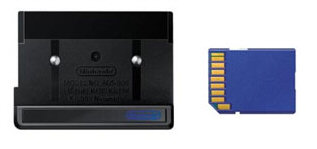
The Play-Yan (trademarked PLAY-YAN) is a media player designed for the Game Boy Advance SP and also compatible with the Game Boy Micro and Nintendo DS. It uses SD flash memory to play MP3 audio files and H.264/MPEG-4 AVC video files. It can also play 13 bonus mini-games, all of which are available freely on the Nintendo website in Japan.[1] Sales of the Play-Yan were discontinued on September 11, 2005.

An updated version, the Play-Yan Micro (trademarked PLAY-YAN micro), known as the Nintendo MP3 Player in Europe, was released two days later alongside the similarly branded Game Boy Micro, with features such as MP4 and ASF support built directly into the hardware. Play-Yan Garage Games are not supported in the Play-Yan Micro. The Nintendo MP3 Player does not support MP4 playback and features a slightly altered user interface.

History

[edit]

The Play-Yan launched in Japan on February 21, 2005[2] for approximately 5,000 yen (US$47.47).[3] Nintendo originally planned to release the adapter in the United States by the end of 2005,[3] but ultimately was not released in North America. Nintendo did, however, release the micro version in Europe as the Nintendo MP3 Player,[4] and since the Play-Yan (and its successor the Play-Yan Micro) is region-free, it can be imported to other regions and played on any Game Boy Advance. Play-Yan was released in China by iQue under the name of MP4 Player for GBA.

It is an MP3 and MPEG-4 player add-on for the Game Boy Advance SP, Nintendo DS, DS Lite, and Game Boy Micro. Music and video files stored on an SD memory card can be loaded into a slot on the right side of the Play-Yan, which resembles a Game Boy Advance game cartridge. Due to its power requirement, use with an original Game Boy Advance system is not recommended. The Play-Yan is loaded directly into the Game Boy Advance game slot of a compatible system. While the original Game Boy Advance is compatible, its non-illuminated screen and the Play-Yan's high rate of power consumption do not make the Game Boy Advance a very suitable platform. The Play-Yan is also compatible with the Game Boy Player, but compressed video does not play back as nicely on a television screen as it does on a small, portable screen. Therefore, the Game Boy Player is a somewhat unsuitable platform as well, at least compared to any standard DVD player.

The adapter has its own integrated headphone port, but uses the parent console's power supply, controls, and display. The Play-Yan is advertised as offering sixteen hours of MP3 playback and four hours of MPEG-4 playback on a fully charged Game Boy Advance SP. In addition to multimedia playback, the Play-Yan offers support for mini-games, which could be downloaded from Nintendo of Japan's website.

Games

[edit]
  1. Avoid (2005)
  2. Bat (2005)
  3. Credit (2005)
  4. Fire (2005)
  5. Fish (2005)
  6. Insect (2005)
  7. Jump (2005)
  8. Keeper (2005)
  9. Memory (2005)
  10. Nekoroid (2005)
  11. Nose (2005)
  12. Triple (2005)
  13. Wave (2005)

Play-Yan Micro

[edit]

To accompany the September 13, 2005, release of the Game Boy Micro in Japan, Nintendo released an updated version of the original Play-Yan called the Play-Yan Micro for 5,000 yen. The new version is compatible with all the same systems, and it looks and works the same as the original, but there are a few noticeable differences. The Play-Yan Micro has the added functionality of MP4 and ASF playback, and it has an updated user interface and improved sound quality through its headphone port. Minigame support, however, was removed from the Play-Yan Micro. The Play-Yan Micro was only available through Nintendo of Japan's online store, and for an additional 1,000 yen, it came with a computer application on CD called "MediaStage Ver. 4.2 for Nintendo" for managing music and video files on a PC, a version of the software of the same name by Panasonic.

Appearances in the other games

[edit]

The stick figure seen in the Play-Yan's interface also appears in the Japan-only GBA game Rhythm Tengoku, and its arcade version, in the rhythm game Night Walk. It was later used as a visualization in the Nintendo 3DS's Sound feature. The character also made cameo appearances in Rhythm Heaven and has reappeared in the Nintendo 3DS game Rhythm Heaven Megamix.

References

[edit]
Revisions and contributorsEdit on WikipediaRead on Wikipedia
from Grokipedia
The Play-Yan (stylized as PLAY-YAN) is a cartridge-based developed and manufactured by , released exclusively in on February 21, 2005, for 5,000 yen (about $48 at the time). It functions as an accessory for the Game Boy Advance, , and , allowing playback of audio files (at bitrates from 32 to 320 kbps) and MPEG-4 video files (in ASF format, up to 320x240 resolution and 1 Mbps) stored on an SD memory card. On the GBA SP, it supports up to 16 hours of music playback (with earphones) and 4 hours of video; on the DS, up to 20 hours of music and 5 hours of video. It includes features like folder navigation, fast-forward/rewind, brightness adjustment, and a mini-stereo audio output plug for enhanced sound. Sales of the original model were discontinued on September 13, 2005. The Play-Yan was bundled with Media Stage software for Windows PCs, which converts common video formats (such as , MPEG, and WMV) into the required ASF MPEG-4 format and transfers files to the , though the software is in Japanese and requires regional adjustments on non-Japanese systems for full compatibility. A firmware update released in July 2005 added support for higher-quality MP4 playback with stereo sound, downloadable via the from Nintendo's Japanese website. Additionally, the device featured "Garage Games," 13 free downloadable mini-games in ASF format available from Nintendo's site, providing light entertainment alongside media consumption. In August 2005, announced the Play-Yan Micro, a compact variant released on September 13, 2005, alongside the Game Boy Micro, priced at 5,000 yen standalone or 6,000 yen with updated Media Stage Ver. 4.2 software. The Micro version offered native MP4 support without needing a patch, a redesigned interface, and extended battery life—up to 10 hours for and 3 hours for video on the Game Boy Micro, or longer on the GBA SP and DS—while maintaining compatibility with those systems but dropping Garage Games support.

Development and Release

Development

In the early , the surge in popularity of portable players, led by Apple's iPod, which sold approximately 600,000 units in 2002 and continued rapid growth thereafter, motivated to extend the Game Boy Advance (GBA) platform beyond gaming into multimedia entertainment. This initiative marked 's first attempt at an all-in-one media player for a handheld console, aiming to provide a low-cost solution for audio and video playback amid emerging market trends. The project responded to competitors like Sony's (PSP), announced in 2003 and released in late 2004 with built-in multimedia features, filling a gap in 's ecosystem before smartphones dominated portable media. Development incorporated SD card technology, an emerging standard for removable storage since 1999, to enable users to load audio and MPEG-4 video files directly into the GBA cartridge slot. The design utilized the Alphamosaic VC01 chip to handle decoding tasks, offloading processing from the GBA's ARM7TDMI CPU to improve efficiency and compatibility across GBA models. A primary technical challenge was optimizing power draw from the GBA SP's , given the demands of media playback on the low-power ARM architecture. Engineers addressed this to achieve advertised performance of up to 16 hours for audio and 4 hours for video on a full charge. Early concerns centered on battery life variations across systems, particularly the original GBA's shorter runtime compared to the SP. The device was announced on January 19, 2005.

Release

The Play-Yan was commercially launched in on February 21, 2005, available exclusively through 's online shop as an internet-limited release. It was offered in two configurations: a standalone cartridge priced at 5,000 yen (approximately $47 at the time), or a bundle with Panasonic's MediaStage Ver.4.2 for software—used for media file conversion and transfer—at 6,000 yen. The original model received no official release in or , remaining exclusive to the Japanese market. Nintendo announced the discontinuation of sales on September 11, 2005—mere days before the Play-Yan Micro's debut—with remaining inventory selling out rapidly thereafter.

Design and Features

Hardware

The Play-Yan is designed in the form factor of a standard (GBA) cartridge, measuring 58.5 mm × 43.4 mm × 11 mm and weighing 16 grams. It features an integrated slot on the top edge for Secure Digital (SD) memory cards and a 3.5 mm headphone jack on the front for direct audio output, bypassing the host console's internal speaker to improve sound quality. The device is constructed from lightweight plastic with no internal battery or display, instead drawing power entirely from the host console's battery while relying on its LCD screen for video output and built-in controls for navigation. Internally, the Play-Yan incorporates a custom chipset based on the Alphamosaic VC01PXX-ES2 for hardware decoding of audio and video files. This enables support for SD cards up to 2 GB in capacity, which was the standard maximum for SD cards at the time of the device's 2005 launch. Power consumption is optimized for the host system; when inserted into a fully charged GBA SP and using earphones, it provides approximately 16 hours of audio playback or 4 hours of MPEG-4 video playback.

Software

The Play-Yan utilizes a simple menu-driven version 1.0, which serves as its core operating system for navigating files stored on an inserted and controlling media playback. This presents users with a straightforward interface featuring options for music and video categories, allowing folder-based browsing via the for navigation, where left and right directions skip tracks or files during playback. Playback controls are mapped to the Game Boy Advance , with the A initiating play or pause, the B stopping playback and returning to the selection , the Start pausing audio, and the Select cycling through playback modes such as repeat one, repeat all, or sequential play. The interface incorporates basic customization options, including playlist organization through folder structures on the SD card and simple audio adjustments like a bass booster activated by holding the R shoulder button while pressing up or down on the to enhance low frequencies via the device's limited speaker or headphone output. During loading and playback transitions, a black-and-white stick-figure character named Play-Yan animates to provide visual feedback, adding a playful element to the otherwise utilitarian design. Additional controls include L and R buttons for brightness adjustment in video mode, and holding R with directions for fast-forward or rewind functions. Complementing the firmware, the Play-Yan supports 13 exclusive mini-games downloadable as "Garage Games" from Nintendo's official Japanese website, each lasting 1-2 minutes and featuring simple puzzle or rhythm-based mechanics starring the Play-Yan , such as avoiding obstacles or timing button presses. These games, including titles like Avoid, , Fire, Fish, , Jump, and Keeper, are saved directly to the and accessed via the video menu as thumbnail entries, using the A button for actions and for movement. Representative examples emphasize quick, casual play, with involving rhythmic tapping to hit targets and Jump requiring precise navigation to collect items. To populate the with media files and mini-games, users must connect it to a PC using the included software, Panasonic's MediaStage Ver. 4.2 for , which facilitates file transfers, video encoding to the compatible ASF format, and game downloads—though audio can also be added via direct drag-and-drop without the software. This PC integration is essential for the initial setup and ongoing content management, ensuring compatibility with the device's hardware limitations.

Variants

Play-Yan Micro

The Play-Yan Micro is a compact media player cartridge developed by as an updated variant of the original Play-Yan, specifically tailored for compatibility with the smaller while maintaining the same physical dimensions as its predecessor. Released on September 13, 2005, in , it was priced at 5,000 yen for the standalone unit or 6,000 yen when bundled with Panasonic's MediaStage Ver. 4.2 software for file conversion on personal computers. Designed to insert into the Game Boy Advance slot of compatible systems including the , , , and Nintendo DS Lite, the device leverages SD memory cards for storing and playing multimedia content. Key hardware enhancements focus on performance and portability. It features a stereo mini-jack for headphone output, delivering improved audio fidelity over the host console's built-in speakers by bypassing the Game Boy Advance's native sound hardware. The device supports audio files with bitrates from 32 kbps to 320 kbps and sampling frequencies of 32 kHz, 44.1 kHz, or 48 kHz, alongside video playback in ASF and MP4 formats featuring AAC audio encoding. Battery life is optimized for the Game Boy Micro, providing approximately 10 hours of continuous playback or 3 hours of video playback from a full charge, with a activated by holding the Start button to conserve power and prevent accidental inputs. SD memory card compatibility allows for expanded storage, with official testing confirming reliable operation for capacities sufficient to hold around 170 three-minute tracks or up to 2 hours of video on a 512 MB card. Software refinements include an updated in MediaStage Ver. 4.2, featuring colorful icons and streamlined for quicker menu access compared to the original model. This version natively supports ASF file playback without requiring additional firmware patches for MP4 videos, a convenience over the base Play-Yan. However, it omits the Garage Games mini-game download feature present in the original, prioritizing core media functionality with two interface themes: a modern style and a retro Famicom-inspired option. Customizable "key files" downloadable from Nintendo's website enable further personalization of playback settings. In , the device launched on December 8, 2006, as the MP3 Player, a music-only variant lacking video support to align with regional preferences and hardware configurations. Priced at around €30 and compatible with the same handhelds, it emphasized playback via the included adapter and interface similar to the Japanese model.

iQue MP4 Player

The iQue MP4 Player is a China-exclusive variant of the Play-Yan media player, developed and released by , Nintendo's joint venture partner for the Chinese market, in late 2005. This adaptation was tailored for local consumers, featuring fully localized in the to support the region's growing demand for portable media devices. It was part of iQue's 2005 product lineup alongside their series. The device emphasized MP4 video playback and was distributed primarily through 's official stores and online platforms, positioning it as an affordable entry into multimedia entertainment amid China's expanding portable device sector. It omitted the Garage Games mini-game feature, consistent with the Play-Yan Micro design. The iQue MP4 Player is essentially identical to the Play-Yan Micro, supporting audio and video in ASF and MP4 formats. It retained SD card compatibility, supporting capacities up to 2GB for storing audio and video files, while maintaining base compatibility with the Game Boy Advance and systems.

Compatibility and Usage

Supported Consoles

The Play-Yan multimedia player is primarily optimized for use with the Game Boy Advance SP, where it leverages the console's backlit screen for clear video playback and its built-in rechargeable battery to support extended sessions without frequent replacements. This compatibility makes the GBA SP the ideal host, as the Play-Yan's power demands align well with the SP's design, avoiding the rapid drain seen in other systems. It is also fully compatible with the and DS Lite, inserting into the GBA slot to utilize the host's brighter screen, touch controls, and audio output for complete functionality, including audio and MPEG-4 video playback. Users can navigate media files via the DS's buttons. The original Play-Yan cartridge functions with the , but alignment issues may arise due to the Micro's compact form factor, prompting to release the Play-Yan Micro variant for a secure fit and seamless integration. Although technically insertable into the original , the Play-Yan performs poorly here, with the unlit screen offering poor visibility unsuitable for video playback, especially in low-light conditions, and the AA battery setup draining quickly under the device's power requirements, significantly reducing battery life compared to normal gameplay. The Play-Yan works with the Game Boy Player accessory for , enabling TV-based output of media content, though this setup sacrifices portability as it requires a stationary console connection. The Play-Yan is incompatible with later consoles such as the (released 2008) and family (released 2011 onward), which do not include a GBA cartridge slot. Across all compatible hosts, the Play-Yan relies entirely on the console's battery for power and cannot function independently.

Media Formats

The Play-Yan supports playback of audio files encoded at bitrates ranging from 32 kbps to 320 kbps, including constant (CBR), variable (VBR), and average (ABR) modes, with output and sampling frequencies of 32 kHz, 44.1 kHz, or 48 kHz. It displays basic metadata from v1, v1.1, v2 tags, or mixed versions, showing details such as track title and artist name during playback. For video, the original Play-Yan initially supported MPEG-4 encoded files in ASF container format, with resolutions scaled to fit the Game Boy Advance screen and playback at up to 30 frames per second. A update released in July 2005 added support for MP4 container files with MPEG-4 video and AAC audio, enabling higher-quality playback without requiring conversion software for certain sources. The Play-Yan Micro extends this compatibility to both ASF and MP4 formats, using the MPEG-4 at resolutions up to 320x240 (QVGA) or 352x288 (), bitrates from 64 kbps to 1 Mbps, and frame rates of 6 to 30 fps; ASF videos use mono audio at 32 kbps and 8 kHz, while MP4 supports AAC audio at 16 to 320 kbps across various sampling rates including 44.1 kHz. File management on the Play-Yan relies on SD memory cards formatted in FAT16 or FAT32 file systems, allowing users to organize and video files into folders for structured access without any built-in or copy protection. Playback operates in sequential order within folders or via simple selection, with controls for pausing, skipping tracks, and rewinding or fast-forwarding videos by holding directional inputs. Not all files meeting these specifications are guaranteed to play smoothly, depending on encoding and card compatibility.

Reception and Legacy

Critical Reception

Upon its release in Japan in February 2005, the Play-Yan received generally positive reviews for its audio and video playback capabilities, though critics highlighted several limitations. Nintendo World Report awarded it an 8.5 out of 10, praising the device's excellent audio quality through headphones, which rivaled contemporary MP3 players, and its seamless SD card integration that allowed simple drag-and-drop file management with support for folders and ID3 tags. The review also commended the video playback at 30 frames per second, noting it was particularly suitable for anime clips with readable subtitles on the Game Boy Advance SP and Nintendo DS. IGN echoed these sentiments, highlighting the strong bass boost feature and overall sound output that made the GBA SP a viable iPod alternative for portable music listening. However, reviewers criticized the Play-Yan's high price of approximately ¥5,000 (around $45 at the time), combined with the need for additional accessories like an and USB reader, pushing the total cost to over $130 for imported units. Battery life was another common complaint, with up to 10 hours for audio in but significantly shorter durations for video playback, which required the screen and thus drained power more quickly. The Japan-exclusive availability via Nintendo's online store further limited its appeal, and the Japanese-language Media Stage software posed compatibility issues for non-Japanese users attempting to prepare files on Western PCs. These factors contributed to perceptions that the device, while innovative, was not fully polished for widespread adoption. Sales of the original Play-Yan were modest and short-lived, confined to online orders in amid stiff competition from dedicated MP3 and video players by and . Nintendo discontinued production on September 11, 2005, just seven months after launch. The absence of a Western release was seen as a missed opportunity, as the device's portability could have appealed to owners abroad, but regional software restrictions and export challenges prevented broader market penetration. The Play-Yan Micro, released in September 2005 alongside the Game Boy Micro, was viewed as a minor hardware tweak primarily for better compatibility with the smaller console, featuring the same core functionality including built-in MP3 and MPEG-4 decoding but no major enhancements over the original. Critics noted it addressed fit issues for the Micro but retained the same battery and pricing drawbacks. In Europe, the audio-only Nintendo MP3 Player variant, launched in December 2006 for €30 (about $40), received mixed feedback for its stripped-down features lacking video support, making it feel outdated compared to rivals. Stuff magazine scored it 2 out of 5, criticizing the awkward cartridge design that protruded from the DS, grainy interface, and lack of included storage, though it acknowledged decent sound quality via headphones. Siliconera described it as a disappointing downgrade from the full Play-Yan, suitable only for basic music needs but hampered by the need for file conversion and extra accessories. The MP4 Player, a localized variant for the Chinese market based on the Play-Yan , garnered limited coverage due to its regional exclusivity. Overall, these issues underscored the challenges of adapting the device for non-Japanese regions without full localization support.

Cultural Impact

The Play-Yan device's software included mini-games featuring a simple stick-figure character that animated to the of played , serving as a playful representation of the portable media experience. This character, embodying the device's multimedia spirit, later evolved into a starring role in the 2006 game , where it acts as the protagonist in the "Night Walk" stage, leaping across floating platforms in a starry night sky while befriending glowing stars through timed inputs. The mascot made subsequent cameo appearances in later entries of the Rhythm Heaven series, including for in 2008, where it hangs from a star during successful performances in the "Dazzles" stage, and for in 2015, reprising its "Night Walk" role as a playable rhythm segment and appearing as a collectible figure. These inclusions positioned the Play-Yan character as a nostalgic symbol of Nintendo's early experiments in portable integration within its gaming ecosystem. Beyond direct game cameos, the Play-Yan influenced Nintendo's subsequent hardware innovations, such as the built-in media playback and camera features of the , which expanded on the device's concept of turning handheld consoles into versatile entertainment tools. Today, the Play-Yan has become a sought-after collector's item among retro gaming enthusiasts due to its Japan-exclusive release and unique functionality. Active homebrew communities continue to explore its through emulation projects, preserving its mini-games and media capabilities for modern audiences as of 2023. The MP4 Player variant, released in , received limited local promotion through bundled packaging with iQue-branded handhelds, but saw no broader cultural footprint outside Nintendo's core franchises.

References

Add your contribution
Related Hubs
User Avatar
No comments yet.