Hubbry Logo
Nitzan HorowitzNitzan HorowitzMain
Open search
Nitzan Horowitz
Community hub
Nitzan Horowitz
logo
8 pages, 0 posts
0 subscribers
Be the first to start a discussion here.
Nitzan Horowitz
Nitzan Horowitz
from Wikipedia

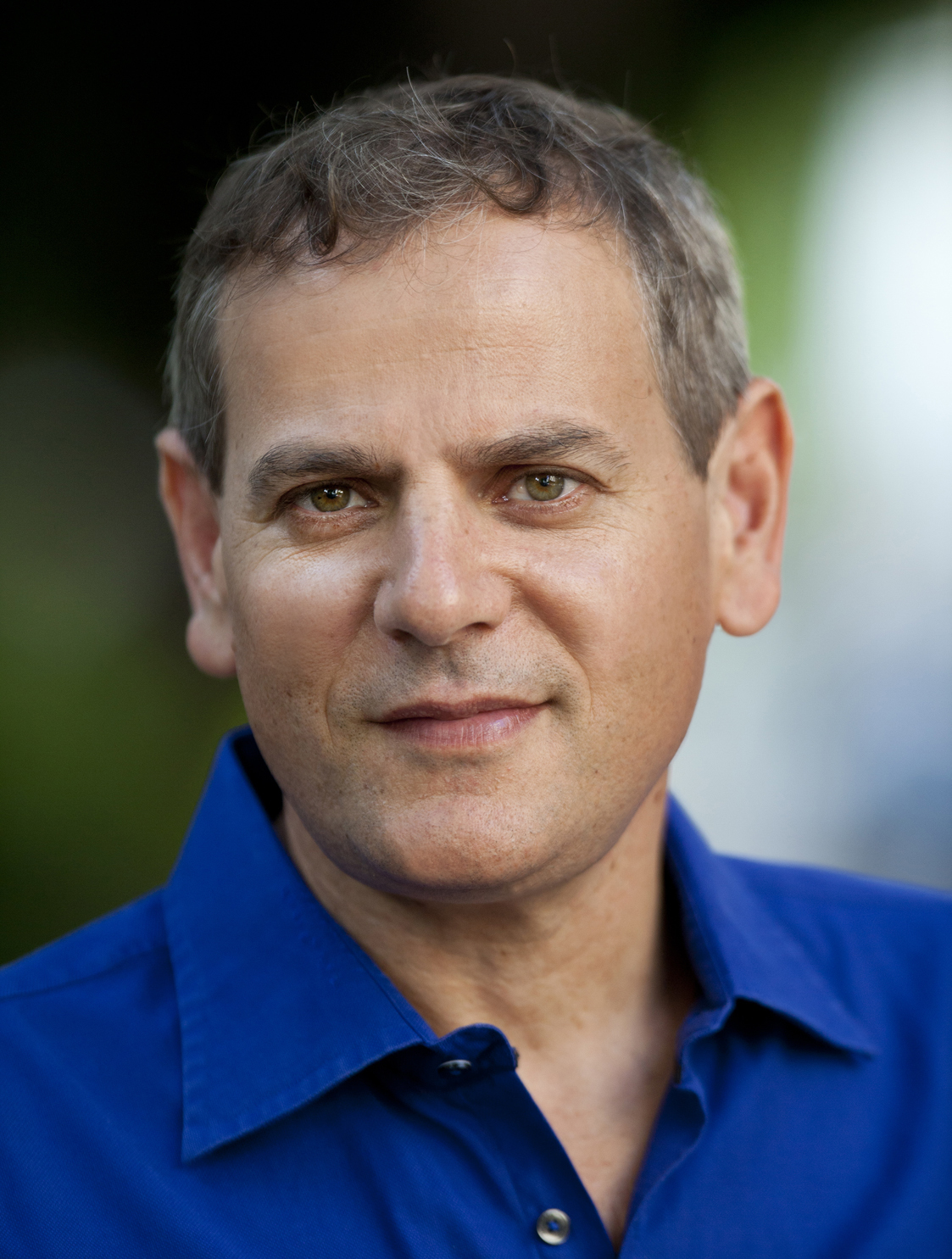
Nitzan Horowitz (Hebrew: ניצן הורוביץ; born 24 February 1965) is a politician and former journalist who served as Israel's Minister of Health from 2021 to 2022. A former leader of Meretz, he previously served as the chief U.S. correspondent and commentator for Channel 2 News.

Key Information

He served two full terms in the Knesset (2009–2015) on the Meretz list. Before being elected to the Knesset, he was the Foreign Affairs commentator and head of the International desk at Hadashot 10, the news division of Channel 10. In 2013, he ran for mayor of Tel Aviv. In June 2019, he won the Meretz leadership election, and served as the Minister of Health. In July 2022, he announced that he would step down as Meretz's leader.

Early life

[edit]

Horowitz was born in Rishon LeZion in 1965. He graduated from Tel Aviv University Law School and began working as a journalist.[1] He supported the International Criminal Court's probe into Israel's alleged war crimes.[2]

Journalism career

[edit]

In his early career, he served as a military affairs reporter during the latter phase of the 1982 Lebanon war, as well as the international news editor at Army Radio from 1983 to 1987. In 1987, he began working at the Hadashot newspaper as the foreign affairs editor. In 1989, he moved to Haaretz, working as the foreign affairs editor. He served as a Haaretz correspondent in Paris between 1993 and 1998, covering the European Union, and as a Haaretz correspondent in Washington, D. C., from 1998 until 2001. After returning to Israel, Horowitz worked as a commentator and writer for Haaretz, and later served as the chief foreign affairs columnist for Channel 10.[3][4][1]

When Hadashot 10 began broadcasting in January 2002, Horowitz established its international desk. His work there included creating documentary films following the tsunami disaster in eastern Asia and the failed search for Osama bin Laden in Afghanistan.[5] He made regular appearances on Hadashot 10's current affairs show, London et Kirschenbaum, for which he provided reports and analysis of global news.[6]

In 2008, Horowitz created and directed a documentary series for Channel 10, titled WORLD: The Next Generation – Nitzan Horowitz in search of tomorrow.[7] The series followed major trends that could shape the future of the world in the coming decades, including the ageing crisis, urban sustainability, immigration, construction and industrial development in China, and the high-technology revolution in India.[8]

Horowitz served as a board member of the Association for Civil Rights in Israel.[9] He was also active in environmental issues; in 2007, he received the Pratt Prize for Environmental Journalism.[10]

Political career

[edit]

In December 2008, he resigned from Channel 10 and became a Meretz candidate in the 2009 legislative elections.[11] In the party primaries, he gained the third slot on the joint list of the New Movement and Meretz. He said: "My goal is to continue to do what I have been talking about over the past years, from protecting the seashore to promoting more sophisticated, non-polluting public transportation."[12] Meretz won three seats in the elections,[13] making Horowitz the second openly gay Knesset member in Israeli history, and the only openly gay member of the eighteenth Knesset.[14][15] The first, Uzi Even, had also been a member of Meretz.[16] On 16 February 2009, he announced a plan to bring to the Knesset a bill that would allow marriages or civil unions between two partners, regardless of their religion, ethnic background, or gender.[17] Before being sworn into the Knesset, he was told to annul his Polish citizenship, which he had obtained due to his father's origins and had used as a journalist to enter countries that Israelis have difficulty entering.[18]

In 2009, he announced that he would boycott all of the events related to Pope Benedict XVI's visit to Israel, saying that in his opinion, the pope bore a message of "rigidness, religious extremism, and imperviousness. Of all the Pope's injustices, the worst is his objection to disseminating contraceptives in Third World countries. It's hard to assess how many miserable men and women in Africa, Asia, and South America have contracted AIDS because of this Philistine attitude, but we are talking about many".[19] He also published a two-part opinion piece on Ynetnews explaining his position.[20]

Horowitz was re-elected to the Knesset in the January 2013 elections. In October 2013, he ran for mayor of Tel Aviv against long-time incumbent Ron Huldai. He lost, receiving 38% of the vote to Huldai's 53%.[21] In 2014, he was given the Outstanding Parliamentarian Award by the Israel Democracy Institute.[14]

He did not stand in the 2015 elections.[14]

In June 2019, Horowitz successfully challenged incumbent Tamar Zandberg for the leadership of Meretz, which made Meretz the first Israeli party to elect an openly gay person as its leader. Horowitz led the party during the September 2019 Israeli legislative election.[22][23] In 2021, he became Minister of Health in Naftali Bennett's cabinet.[24] He resigned his Knesset seat to ultimately join the public sector he served in his ministerial position. Under Israel's Norwegian Law and was replaced by Michal Rozin.[25]

Horowitz used a government circular to ban conversion therapy in February 2022.[26] He supports Bernie Sanders, who calls for conditional aid to Israel, and is reluctant to display his Jewishness and is completely irreligious,[27] as noted in his speeches to the liberal Jewish movement J Street; he has been criticized for his criticism of Israel.[28][29] He also contributed to a coalition crisis in the Bennett–Lapid government by complying with an Israeli High Court decision that determined the government cannot prohibit visitors from bringing hametz into hospitals during Passover. After this action and amid secret talks with Benjamin Netanyahu, Yamina MK Idit Silman left the coalition, leaving it shy of a majority and unable to pass legislation.[30]

Following the Knesset's dissolution and new elections scheduled for November 2022, Horowitz announced that he would step down as leader of Meretz. Placed 7th in the Meretz list on 2022 Israeli legislative election, he lost his seat because Meretz failed to pass the electoral threshold.[31]

Personal life

[edit]

Horowitz was the first openly gay party leader in Israel.[22] He resides in Tel Aviv with his life partner.

References

[edit]
[edit]
Revisions and contributorsEdit on WikipediaRead on Wikipedia
from Grokipedia

Nitzan Horowitz (born 24 February 1965) is an Israeli politician and former journalist who served as Minister of Health from June 2021 to December 2022. He led the left-wing party from June 2019 until July 2022, becoming the first openly gay individual to head a Zionist in .
Horowitz began his career as a commentator and international desk editor at Channel 1, Israel's public broadcaster, before entering with in the 2013 Knesset elections. As , he sought to unify center-left forces but faced challenges amid Israel's polarized , culminating in 's failure to cross the in the November 2022 elections, marking the first time since 1992 the party was unrepresented in the . His tenure as Health Minister occurred during the tail end of the and coalition tensions, including a dispute over leavened food in hospitals during that contributed to the government's collapse. A key focus of Horowitz's advocacy has been advancing rights for LGBTQ individuals, including legislation to prohibit and to permit same-sex couples access to . He has also promoted environmental policies and criticized settlement expansion, positions that drew criticism for potentially encouraging international legal actions against . Despite electoral setbacks for the left under his leadership, Horowitz remains a prominent voice for progressive causes in Israeli society.

Early Life and Background

Upbringing and Family

Nitzan Horowitz was born on February 24, 1965, in , . His father possesses Polish ancestry, enabling Horowitz to acquire Polish citizenship, which facilitated his journalistic travels abroad before entering politics. Upon election to the in 2009, he was required to renounce this dual citizenship in compliance with prohibiting Knesset members from holding foreign passports. Public details on Horowitz's childhood and parental upbringing remain limited, with no widely documented accounts of specific family dynamics, siblings, or early influences beyond his Ashkenazi heritage tied to Eastern European Jewish roots.

Military Service and Education

Horowitz served in the Israel Defense Forces (IDF) from 1983 to 1987, enlisting at age 18 shortly after completing high school. His service included a year of permanent duty (keva) at Galei Tzahal, the IDF's official radio station, where he contributed to broadcasting operations. This role aligned with his early interest in , though it preceded his professional media career. After completing his military service, Horowitz pursued higher education at , where he obtained a (LL.B.) degree from the Faculty of Law. He subsequently interned at the Office of the District Attorney in the , gaining practical legal experience in prosecutorial work. These formative experiences in and legal training laid the groundwork for his later transitions into and .

Journalism Career

Key Roles and Contributions

Horowitz began his journalism career in the early 1980s as a military affairs reporter, covering the concluding phases of the 1982 Lebanon War and contributing to international news coverage for Israeli media outlets. He advanced to roles in foreign correspondence, serving as chief correspondent in Washington, D.C., and Paris for prominent Israeli news organizations, where he reported on global events and U.S.-Israel relations. In television, Horowitz held the position of chief U.S. correspondent and commentator for the Israeli News Company, operating under Channel 2 News, providing in-depth analysis of American politics and international developments. He also worked as an international editor and columnist for , focusing on foreign policy and contributing opinion pieces that shaped public debate on global issues. A notable contribution was his creation and direction of the 2008 documentary series WORLD: The Next Generation for Channel 10, which explored emerging global challenges and future-oriented topics through on-location reporting. Across television, radio, and print, Horowitz's work emphasized international affairs and themes, establishing him as a prominent voice in Israeli media on and prior to his political entry.

Transition to Activism

Following his tenure as a foreign correspondent and international editor at Channel 10 News, Horowitz shifted focus toward civil society engagement in the mid-2000s, leveraging his journalistic platform to address and environmental concerns. He joined the directorate of the Association for Civil Rights in Israel (ACRI), where he advocated for protections against and for broader . This involvement marked an evolution from reporting on global affairs to direct participation in domestic advocacy, emphasizing transparency and in . Horowitz founded the Israel Hofsheet (Free Israel) organization, dedicated to advancing laws and combating government secrecy through public campaigns and legal challenges. Concurrently, his environmental reporting earned recognition with the 2007 Pratt Prize for , awarded for exposés on and resource mismanagement that spurred policy debates and public awareness. These efforts reflected a deliberate pivot to issue-based organizing, bridging media influence with grassroots pressure for reforms. As Israel's first prominent openly gay public figure in media circles, Horowitz emerged as an early advocate for LGBTQ rights, publicly challenging societal stigma and pushing for anti-discrimination measures amid rising visibility for the community in the . His pre-political activism laid groundwork for later legislative pushes, including opposition to conversion therapies and support for equality, establishing him as a respected voice in progressive circles before his 2009 Knesset candidacy.

Political Career

Entry into Politics and Early Knesset Terms

Nitzan Horowitz transitioned from to in 2008, resigning from his position as foreign affairs commentator and head of the foreign desk at Channel 10 News to pursue a political career with the left-wing party. Ahead of the February 10, , he was placed third on Meretz's national list. Meretz received 99,634 votes, or 2.98% of the total, securing three seats in the 18th , which allowed Horowitz to enter parliament as a member of the Knesset (MK) for the first time. During his initial term from March 2009 to January 2013, Horowitz focused on issues aligned with Meretz's platform, including advocacy for peace negotiations, civil rights, and , drawing on his journalistic background to critique government policies in and security. He participated in Knesset debates on topics such as the Gaza flotilla incident in 2010, where he defended democratic discourse amid physical altercations in plenary sessions. Horowitz was re-elected in the January 22, 2013, election, with expanding to four seats after garnering 4.5% of the vote, positioning him for a second term in the 19th from February 2013 to March 2015. In December 2014, he announced his decision not to seek re-election in the upcoming March 2015 vote, citing a desire to return to and after serving two full terms. His early parliamentary career marked him as a vocal proponent of progressive causes within the opposition, though remained a marginal force with limited influence on coalition governments.

Leadership of Meretz

Nitzan Horowitz was elected chairman of the party on June 27, 2019, defeating incumbent in a vote conducted among approximately 1,000 delegates. His selection marked the first time an openly gay individual led the party, with Horowitz emphasizing renewal through his journalism background and focus on , , and civil rights to broaden voter appeal. During Horowitz's tenure, Meretz contested the September 17, 2019, election independently, receiving 4.34% of the vote and securing five seats, an increase from four seats in the preceding election under Zandberg. In the , 2020, election, formed a with Labor and Gesher, which won seven seats overall; candidates occupied three of those positions, including Horowitz at number two on the list. The alliance strategy aimed to surpass the 3.25% amid 's historically low polling, though it highlighted the party's challenges in maintaining independent viability. Meretz ran alone in the March 23, 2021, election under Horowitz's leadership, achieving 4.78% of the vote and six seats, its strongest independent showing since 2013. This result enabled to join the diverse anti-Netanyahu formed in June 2021, with securing the Health Ministry portfolio; however, internal party debates over coalition participation reflected tensions between ideological purity and pragmatic . Facing dismal polls ahead of the November 1, 2022, election—where Meretz hovered near the threshold—Horowitz announced on July 12, 2022, that he would not seek re-election as chairman, citing the need for fresh leadership to confront the party's existential electoral threats. A subsequent primary on August 23 saw Zehava Galon reclaim the chairmanship. Meretz ultimately received 3.18% in the 2022 vote, falling short of the threshold and entering the Knesset for the first time since 1992 with zero seats, underscoring the leadership era's failure to reverse the party's long-term decline from double-digit representation in the 1990s.

Tenure as Minister of Health

Nitzan Horowitz served as Israel's Minister of Health from June 13, 2021, to December 29, 2022, as part of the Bennett-Lapid coalition government formed after the 2021 elections. His tenure focused on reforming access to , advancing LGBTQ+ health rights, and managing residual policies amid a broader push to address systemic healthcare shortages, including personnel and infrastructure deficits. Early in his term, Horowitz prioritized cannabis policy liberalization. On July 25, 2021, he instructed ministry officials to back a Knesset bill legalizing recreational cannabis use for adults, citing reduced criminalization benefits. This aligned with reforms expanding medical cannabis eligibility, including preliminary Knesset approval on October 13, 2021, for streamlined approvals and reduced bureaucracy, which passed initial readings to facilitate broader patient access. On February 28, 2022, he removed cannabidiol (CBD) from the Dangerous Drugs Ordinance, easing its medical application without narcotic classification. Horowitz also chaired discussions in December 2021 on a special Knesset committee to regulate medical cannabis production and distribution, aiming to boost domestic industry while maintaining quality controls. In social health policy, Horowitz issued a government circular on February 2022 banning practices, prohibiting professionals from offering treatments aimed at altering . He emphasized equality in healthcare, awarding recognitions in December 2021 to advocates for LGBTQ+ rights within the system, framing it as a step toward inclusive medical services. On , with cases low by mid-2021, he supported vaccination mandates, including requiring "green pass" compliance for educators, arguing unvaccinated staff should not work to protect . Mask requirements in closed public spaces were relaxed multiple times, reflecting declining infections. Horowitz faced labor disputes, notably in October 2021 when hundreds of medical interns threatened mass resignation over grueling shifts; he proposed accelerating reductions from 26 to 16 hours to retain staff amid shortages. A major controversy arose in April 2022 when he directed hospitals to provide leavened bread to non-observant patients during , overriding ultra-Orthodox sensitivities; this prompted MK Idit Silman's resignation from the coalition, eroding its one-seat majority and hastening the government's collapse after 18 months. His tenure ended with the Knesset's dissolution following November 2022 elections, after which failed to secure seats.

Electoral Decline and Post-Knesset Activities

In the lead-up to the November 1, , Horowitz announced his intention to step down as leader following the 's dissolution in June 2022. In the August 23, 2022, primary, incumbent Horowitz withdrew from the leadership race, with emerging victorious over Yair Golan, while Horowitz was placed seventh on the party list, effectively sidelining him from a realistic bid. This internal shift reflected broader challenges for , which had already shown signs of erosion; the party secured only four seats in the March 2021 election, down from six in 2019, amid voter disillusionment with left-wing parties' perceived detachment from security concerns and economic priorities. Meretz's electoral collapse culminated in the 2022 vote, where it garnered approximately 3.18% of the national vote—about 3,800 ballots short of the 3.25% threshold required for representation—marking the first time since its 1992 founding that the party failed to enter parliament. With nearly 99% of ballots counted, this outcome erased Meretz's four seats from the outgoing , contributing to the Israeli left's near-total marginalization, as left-leaning parties collectively won just 10 seats compared to the right-wing bloc's dominance. Analysts attributed the decline to Meretz's longstanding freefall over three decades, exacerbated by its participation in the ideologically diverse Bennett-Lapid coalition (2021–2022), which alienated core supporters who viewed it as a of anti-right-wing principles, alongside a broader voter shift toward security-focused and nationalist platforms post-intifadas and amid rising Palestinian . Post-Knesset, Horowitz transitioned to public advocacy and commentary, focusing on democratic reforms and post-October 7, 2023, recovery efforts. In February 2023, he participated in discussing Israeli civil society's pushback against judicial overhaul attempts, drawing on his experience as a former minister. By October 2025, Horowitz engaged in discussions on the aftermath of the attacks, including hostage negotiations and long-term Israeli-Palestinian dynamics, as featured in forums hosted by outlets like Moment Magazine. These activities positioned him as a voice for left-liberal perspectives on and governance, though without a formal political role, amid Meretz's diminished presence following its 2024 merger talks with Labor.

Political Positions

Views on Israel-Palestine Conflict

Nitzan Horowitz has long advocated for a as the sole viable resolution to the Israeli-Palestinian conflict, emphasizing the preservation of this framework amid ongoing political shifts. On October 3, 2021, as Health Minister and leader, he met with Palestinian Authority President in alongside Regional Cooperation Minister Issawi Frej, underscoring 's commitment to "keep the alive" within the Bennett-Lapid . Horowitz stated, "Do not let it disappear, and do not sabotage the chance of reaching it in the future, because there is no other solution," framing the meeting as an effort to maintain diplomatic channels despite domestic opposition. He consistently opposes Israeli settlement expansion in the West Bank, viewing it as illegal under and a primary barrier to territorial compromise. Horowitz has attributed Israel's entanglement in international legal disputes, such as those before the (ICC), to settlement policies pursued by right-wing governments, arguing in March 2021 that such actions "drag" the country into probes by undermining global legitimacy. That same month, he described the ICC's investigation into alleged war crimes in the Palestinian territories—initiated by Prosecutor —as "legitimate," rejecting Israel's jurisdictional objections and linking the probe's origins to decades of settlement activity rather than Palestinian incitement or violence. Regarding and Gaza, Horowitz critiqued the 2005 Israeli disengagement from Gaza as a strategic error executed without a broader agreement, which he argued facilitated 's rise and subsequent rocket attacks on southern . He has supported military responses to aggression, such as during escalations involving rocket fire, but prioritized long-term de-escalation through renewed negotiations and an end to the occupation, cautioning against policies that entrench 's rule. Following the , 2023, attack, Horowitz engaged in public discussions on post-conflict recovery for both Israelis and Gazans, advocating for hostage returns and reconstruction conditioned on dismantling 's military capabilities, while criticizing the Netanyahu government's inaction in pursuing diplomatic off-ramps. In October 2025 reflections, he attributed the war's eventual de-escalation to external pressures, including U.S. declarations under President Trump, rather than Israeli initiative. Horowitz's positions reflect Meretz's dovish orientation, which privileges territorial concessions and Palestinian statehood over security-focused , though critics from 's center-right contend that such stances overlook Hamas's rejectionism and the empirical of unilateral withdrawals to curb terrorism. His endorsement of ICC and ICJ proceedings against , including expressing concern in January 2024 over the ICJ's handling of South Africa's case as a "harsh blow" to 's standing, underscores a willingness to accept external judicial oversight, even amid debates over these bodies' perceived biases favoring Palestinian narratives.

Social and Cultural Issues

Horowitz has been a prominent advocate for LGBTQ rights in Israel, drawing from his identity as an openly gay politician. He has campaigned against , emphasizing its harm during his tenure as Health Minister in 2021–2022, and supported access for same-sex couples while criticizing religious barriers to equality. As a leader, he endorsed full legal recognition of and opposed religious opposition to , arguing for amid institutional resistance from Orthodox groups. On , Horowitz consistently prioritizes separation of and state, viewing it as essential for a modern, democratic tolerant of diverse lifestyles. He has ranked highest among parties for efforts to reduce religious , such as challenging rabbinical control over and conversion, and advocated ending state funding for religious institutions that enforce . In 2011, he highlighted 's unique lack of religious freedom for non- under the Chief Rabbinate's monopoly. His positions extend to public policy, like permitting sales during in 2022 to counter religious restrictions. Regarding , Horowitz advanced reforms as Health Minister, proposing in December 2021 to decriminalize procedures up to 12 weeks without approval, eliminate mandatory counseling against termination, and shift early drug-induced abortions to clinics. He described Israel's pre-reform as "chauvinist" and outdated, aiming to affirm bodily autonomy while noting high approval rates (over 98% in recent years) but procedural burdens. These efforts aligned with Meretz's platform but faced coalition tensions over religious sensitivities.

Environmental and Economic Policies

Horowitz has long championed in , including initiatives to preserve coastal areas and the Dead Sea during his early terms. He co-led the Green Knesset project, launched under Speaker , to integrate sustainable practices such as energy efficiency and waste reduction within 's parliament. As leader, he endorsed a platform for the Democratic Union alliance in the 2019 elections, advocating for aggressive climate mitigation, expansion, and adaptation measures like to counter global warming impacts. In 2014, Horowitz represented at a climate summit, underscoring the country's pledge to cut by 20% from 2000 levels by 2020, while criticizing domestic budget freezes that hindered implementation. He has pushed for policies, as evidenced by his 2021 committee remarks linking to diversified energy sources amid rising temperatures and sea-level threats. , under his chairmanship, consistently ranked among Israel's most environmentally oriented parties in pre-election assessments, with Horowitz's advocacy extending to cross-border environmental cooperation, including a 2021 meeting with Palestinian Authority counterparts on shared health and issues. Economically, Horowitz aligns with Meretz's emphasis on as a core pillar, favoring expanded public welfare and reduced inequality through progressive policies. During his 2021 tenure as Health Minister, he allocated an additional 650 million shekels (approximately $200 million) to bolster healthcare infrastructure in Arab communities, addressing longstanding disparities in service access. He conditioned Meretz's support for the 2021-2022 state budget on increased healthcare funding to sustain recovery and long-term capacity, reflecting a broader commitment to prioritizing social spending over . This stance echoes Meretz's platform under his leadership, which critiques neoliberal reforms and promotes measures like import liberalization to lower living costs, though implementation often intersected with coalition compromises.

Controversies and Criticisms

Stances on International Investigations

In March 2021, following the International Criminal Court's (ICC) decision to authorize a prosecutorial investigation into alleged war crimes and in the Palestinian territories since June 2014, Nitzan Horowitz, then leader of the party, publicly stated that the probe was legitimate and that had brought it upon itself through policies of continued occupation and settlement expansion. He argued that the absence of negotiations with and persistence in settlement activities under Benjamin Netanyahu's governments had eroded 's international standing, making such investigations inevitable. Horowitz emphasized that should self-reflect on its actions to prevent further escalation, suggesting there was "room" for the ICC's involvement due to the failure of domestic accountability mechanisms. Horowitz's remarks provoked widespread backlash from right-wing and centrist politicians, who accused him of undermining Israel's and justifying foreign intervention in its affairs. He doubled down, attributing responsibility to Netanyahu and settler policies for "dragging Israel to ," while maintaining that ending the occupation was in Israel's long-term interest to avert such diplomatic isolation. In defending his position, Horowitz clarified his regret over the situation but rejected outright dismissal of the ICC, arguing that cooperation or internal reforms could mitigate broader reputational damage, though he stopped short of explicitly endorsing full collaboration. Horowitz has extended similar reasoning to other international judicial scrutiny, viewing proceedings like the of Justice's (ICJ) January 2024 hearings on South Africa's allegations of in Gaza as a "harsh blow" to Israel's global legitimacy, attributable to ongoing military operations and perceived lack of proportionality. His stance consistently frames such investigations not as biased impositions but as consequences of unresolved conflicts and policy choices, prioritizing causal links to occupation over outright rejection, despite criticisms that this approach aligns too closely with adversarial narratives in international forums.

Policy Decisions and Public Backlash

In April 2022, Health Minister Nitzan Horowitz directed hospital directors to permit visitors to bring —leavened products prohibited during —into medical facilities, adhering to a 2021 ruling that invalidated blanket bans on such items in hospitals to respect patients' and visitors' rights. This decision, intended to align with secular legal precedents over religious customs, provoked immediate opposition from religious and conservative factions within the governing coalition. Coalition chair Idit Silman of publicly condemned the policy on April 4, 2022, labeling it a "personal offense and contempt for the public" and vowing that "on my watch," no would enter hospitals during the holiday. The dispute escalated, culminating in Silman's from the on April 6, 2022, which stripped the Bennett-Lapid government of its slim 61-seat majority and heightened risks of collapse. Silman cited the directive as a key factor, arguing it disregarded Jewish tradition and unity, though reports suggested underlying political motivations including overtures from opposition leader . Public sentiment reflected the divide, with a Panel4All survey conducted amid the row showing 49% of respondents opposing in hospitals versus 44% supporting it, indicating broader unease among traditionalist . The incident fueled legislative backlash, contributing to the passage of the "Chametz Law" in March 2023 under the subsequent Netanyahu government, which empowered hospitals to enforce restrictions despite the prior court ruling. Horowitz's broader progressive health reforms, including easing access in June 2022 by waiving committee approvals for pregnancies under 12 weeks—framed as updating "chauvinistic" prior rules—drew criticism from religious conservatives for prioritizing secular liberalization over halakhic concerns. Similarly, his implementation of expanded rights for same-sex couples and single men in January 2022, upholding a 2020 decision, elicited opposition from Orthodox groups viewing it as undermining family norms, though it garnered support from LGBTQ advocates. These moves highlighted tensions in the ideologically diverse , where Meretz's left-wing priorities clashed with religious partners, amplifying perceptions of Horowitz's agenda as dismissive of traditional values.

Ideological Positions and Electoral Consequences

Nitzan Horowitz, as leader of the party from 2019 to 2022, espoused left-wing positions emphasizing , civil rights, and a dovish stance on the Israeli-Palestinian conflict. He advocated for a as the path to resolving the conflict, arguing that ending the occupation and negotiating directly with would promote peace and regional stability. Horowitz opposed annexation, warning that it would entrench Israeli control over millions of without citizenship, effectively creating an apartheid-like system and undermining Israel's democratic character. On domestic issues, he championed LGBTQ+ rights, including bans on and expanded surrogacy access, drawing from his experience as one of Israel's first openly gay members. He also pushed for to separate state from religion, asserting that a Jewish and democratic requires equal rights for all citizens regardless of faith or orientation. These ideological commitments contributed to Meretz's electoral volatility during Horowitz's tenure. In the March 2021 election, Meretz secured 6 seats—its strongest showing in years—enabling entry into the Bennett-Lapid , where Horowitz served as Health Minister. However, the party's support for coalition compromises, including abstaining on legislation regularizing some outposts, alienated its anti-occupation base and failed to broaden appeal amid rising security concerns post-2021 Gaza escalation. data indicated declining Israeli support for a , with polls showing only about 30-40% favoring it by 2022, reflecting skepticism fueled by Palestinian militancy and settlement growth—positions Meretz's rigid adherence to could not overcome. The 2022 election exposed the electoral costs: received 3.18% of the vote, falling short of the 3.25% threshold and failing to enter the for the first time since its founding, resulting in zero seats and the effective erasure of left-wing representation beyond Labor. This collapse, after averaging under 4.5 seats in prior cycles, stemmed partly from voter backlash against 's government participation, which prioritized ousting Netanyahu over ideological purity, as well as broader rightward shifts in Israeli electorate driven by threats and disillusionment with outcomes. announced his resignation as party chair in July 2022, ahead of primaries won by , signaling internal reckoning over the strategic pivot's failure to halt the party's marginalization. Despite short-term gains in , 's unwavering commitment to progressive and dovish ideals underscored 's challenge in translating principled stances into electoral viability amid a polarized landscape favoring -focused centrism and right-wing blocs.

Reception and Legacy

Achievements in Advocacy and Policy

Horowitz advanced LGBTQ rights through legislative and administrative measures during his tenure as Minister of Health from June 2021 to December 2022. In February 2022, the Health Ministry under his leadership issued a on , declaring it ineffective and harmful, with Horowitz stating that "no one needs conversion" and emphasizing acceptance of diverse sexual orientations. He supported expansions in reproductive rights, including the July 2021 ruling that mandated access for same-sex couples and single men, an outcome he highlighted as a key accomplishment in advancing equality. As Israel's first openly gay Knesset member and party leader, Horowitz's advocacy contributed to broader visibility and policy commitments, such as the June 2021 coalition agreement with that pledged advancements in LGBTQ protections. In , he allocated an additional 200 million shekels (approximately $62 million USD at the time) to improve healthcare infrastructure in Arab communities, framing it as a shift toward equitable resource distribution. He also initiated efforts to reduce stigma by visiting facilities and promoting public awareness, marking his first official ministerial action in that domain. Earlier in his career, Horowitz received the 2007 Pratt Prize for for reporting on ecological issues, including efforts to preserve the Dead Sea, though these yielded limited policy impacts. His service on the board of the Association for Civil Rights in further supported advocacy, but specific legislative outcomes from this period remain tied to broader initiatives rather than individual enactments.

Broader Impact and Public Perception

Horowitz's tenure as Health Minister from June 2021 to December 2022 facilitated incremental advances in LGBTQ rights, including a push to prohibit conversion therapies and extend surrogacy rights to same-sex couples, though he acknowledged persistent gaps in Israel's social framework for such issues. These efforts positioned him as a visible advocate for within a spanning ideological divides, yet they elicited mixed responses, with conservative sectors viewing them as prioritizing niche agendas over national security priorities. His vocal endorsement of scrutiny into Israeli policies, framed as a necessary response to settlement expansion, provoked backlash from mainstream Israeli outlets, which portrayed it as self-damaging demagoguery that exacerbates global isolation without addressing root security threats. Similarly, his post-tenure commentary on the of Justice's 2024 proceedings highlighted risks to Israel's diplomatic standing, reflecting a pattern of prioritizing accountability narratives that align with international critiques but alienate domestic consensus. Public perception of Horowitz remains polarized along ideological lines, with admiration from progressive circles for his anti-annexation stance and democratic rhetoric, contrasted by perceptions among broader electorates of ideological rigidity that marginalizes electorally. Polling data from early 2021 indicated under his leadership falling below the threshold for the first time, underscoring limited appeal amid security-focused voter priorities. This electoral fragility intensified after compromises, such as softening anti-occupation rhetoric to sustain the government, leading to voter disillusionment evident in 's failure to secure seats in the 2022 elections. Overall, Horowitz's broader societal influence, channeled through Meretz's advocacy for environmental and , has amplified niche debates but struggled to transcend the party's fringe status, as evidenced by consistent low single-digit poll support and critiques of prioritizing global opinion over pragmatic governance. His profile as Israel's first openly party leader has symbolized representational shifts, yet systemic left-wing undercurrents in supportive media coverage often overlook electoral realities driven by voter emphasis on over .

References

Add your contribution
Related Hubs
User Avatar
No comments yet.