Hubbry Logo
logo
Nucleoplasm
Community hub

Nucleoplasm

logo
0 subscribers
Read side by side
from Wikipedia
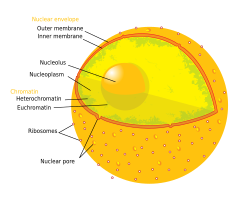
The protoplasmic material of the nucleus including the nucleolus labelled as nucleoplasm.

The nucleoplasm, also known as karyoplasm,[1] is the type of protoplasm that makes up the cell nucleus, the most prominent organelle of the eukaryotic cell. It is enclosed by the nuclear envelope, also known as the nuclear membrane.[2] The nucleoplasm resembles the cytoplasm of a eukaryotic cell in that it is a gel-like substance found within a membrane, although the nucleoplasm only fills out the space in the nucleus and has its own unique functions. The nucleoplasm suspends structures within the nucleus that are not membrane-bound and is responsible for maintaining the shape of the nucleus.[2] The structures suspended in the nucleoplasm include chromosomes, various proteins, nuclear bodies, the nucleolus, nucleoporins, nucleotides, and nuclear speckles.[2]

The soluble, liquid portion of the nucleoplasm is called the karyolymph[3] nucleosol,[4] or nuclear hyaloplasm.

History

[edit]
alt text
Polish-German botanist and namer of nucleoplasm, Eduard Strasburger.

The existence of the nucleus, including the nucleoplasm, was first documented as early as 1682 by the Dutch microscopist Leeuwenhoek and was later described and drawn by Franz Bauer.[5] However, the cell nucleus was not named and described in detail until Robert Brown's presentation to the Linnean Society in 1831.[6] The nucleoplasm, while described by Bauer and Brown, was not specifically isolated as a separate entity until its naming in 1882 by Polish-German scientist Eduard Strasburger, one of the most famous botanists of the 19th century, and the first person to discover mitosis in plants.[7]

Role

[edit]

Many important cell functions take place in the nucleus, more specifically in the nucleoplasm. The main function of the nucleoplasm is to provide the proper environment for essential processes that take place in the nucleus, serving as the suspension substance for all organelles inside the nucleus, and storing the structures that are used in these processes.[2] 34% of proteins encoded in the human genome are ones that localize to the nucleoplasm.[2] These proteins take part in RNA transcription and gene regulation in the nucleoplasm.[2] Proteins located in the nucleoplasm are involved in the activation of genes that are used in the cell cycle.[8] Some nucleoporins which typically make up the nuclear pore, can be mobile and participate in the regulation of gene expression in the nucleoplasm.[8][9] The nuclear pore is where molecules travel from inside the nucleoplasm to the cytoplasm and vice versa.[9] The nucleoplasm is also a route for many molecules to travel through.[9] Smaller molecules are able to pass freely through the nuclear pore to get into and out of the nucleoplasm, while larger proteins need the help of receptors on the surface of the nuclear envelope.[9] The nuclear matrix is also believed to be contained in the nucleoplasm where it functions to maintain the size and shape of the nucleus, in a role similar to that of the cytoskeleton found in the cytoplasm.[10] However, the existence and the exact function of the nuclear matrix remain unclear and heavily debated.

Composition

[edit]

The nucleoplasm is a highly viscous liquid that is enveloped by the nuclear membrane and consists mainly of water, proteins, dissolved ions, and a variety of other substances including nucleic acids and minerals.

Proteins

[edit]

There are around 20,000 protein-coding genes in humans,[11] and nearly a third of these have been found to localize to the nucleoplasm via targeting by a nuclear localization sequence (NLS).[2] Cytosolic proteins, known as importins, act as receptors for the NLS, escorting the protein to a nuclear pore complex to be transported into the nucleoplasm.[12] Proteins in the nucleoplasm are mainly tasked with participating in and regulating cellular functions that are DNA-dependent, including transcription, RNA splicing, DNA repair, DNA replication, and a variety of metabolic processes.[2] These proteins are divided into histone proteins, a class of proteins that bind to DNA and give chromosomes their shape and regulate gene activity,[13] and non-histone proteins.

The nucleoplasm contains many enzymes that are instrumental in the synthesis of DNA and RNA, including DNA polymerase and RNA polymerase which function in DNA replication and RNA transcription, respectively. Additionally, the nucleoplasm is host to many of the enzymes that play essential roles in cellular metabolism. NAD+ synthase is stored in the nucleoplasm and functions in electron transport and redox reactions involved with the electron transport chain and synthesis of adenosine triphosphate (ATP).[14] Pyruvate kinase is also found in the nucleoplasm in significant quantities; this enzyme is involved in the final step of glycolysis, catalyzing the conversion of phosphoenolpyruvate (PEP) to pyruvate along with the phosphorylation of adenosine diphosphate (ADP) to ATP.[15] Importantly, the nucleoplasm contains co-factors and co-enzymes, including acetyl-CoA, which plays a vital role in the citric acid cycle,[16] and ATP, which is involved in energy storage and transfer.

Ions

[edit]
alt text
An example of the sodium-potassium pump, a P-type ATPase, which controls the ionic gradient across the cell membrane and the nuclear envelope as well as the ionic makeup of the nucleoplasm through the selective pumping of sodium and potassium ions.

The ionic composition of the nucleoplasm is crucial in maintaining homeostasis within the cell and the organism as a whole. Ions that have been documented in the nucleoplasm include sodium, potassium, calcium, phosphorus, and magnesium. These ions are key players in a variety of biological functions. Sodium and potassium play key roles in the sodium-potassium pump, a transmembrane ATPase that pumps three sodium ions out of the cell for every two potassium ions it pumps into the cell, creating an ionic gradient.[17] While this pump is generally considered to be a plasma membrane protein, its presence has been recorded in the nuclear envelope, controlling the ionic gradient between the cytoplasm and nucleoplasm of the cell and contributing to the homeostasis of calcium within the cell.[18] These ions also determine the concentration gradient that exists between the cytoplasm and nucleoplasm, serving to control the flow of ions across the nuclear envelope.[19] They are important in maintaining the osmolarity of the nucleoplasm which in turn provides structural integrity to the nuclear envelope as well as the organelles suspended in the dense nucleoplasm.

Similarity to cytoplasm

[edit]

Nucleoplasm is quite similar to the cytoplasm, with the main difference being that nucleoplasm is found inside the nucleus while the cytoplasm is located inside the cell, outside of the nucleus. Their ionic compositions are nearly identical due to the ion pumps and permeability of the nuclear envelope, however, the proteins in these two fluids differ greatly. Proteins in the cytoplasm are termed cytosolic proteins which are produced by free ribosomes while proteins that localize to the nucleoplasm must undergo processing in the endoplasmic reticulum and golgi apparatus before being delivered to the nucleoplasm as part of the secretory pathway. These proteins also differ in function, as proteins that localize to the nucleoplasm are largely involved in DNA-dependent processes including cell division and gene regulation, while cytosolic proteins are mainly involved in protein modification, mRNA degradation, metabolic processes, signal transduction, and cell death.[20]

The cytoplasm and the nucleoplasm are both highly gelatinous structures enclosed by membranous structures- the plasma membrane and the nuclear envelope, respectively. However, while the cytoplasm is contained by a single lipid bilayer membrane, the nuclear envelope that compartmentalizes the nucleoplasm consists of two separate lipid bilayers- an outer membrane and an inner membrane.[21] The cytoplasm is also found in all known cells while nucleoplasm is only found in eukaryotic cells, as prokaryotic cells lack a well-defined nucleus and membrane-bound organelles. Additionally, during cell division, the cytoplasm divides during cytokinesis, while the nucleoplasm is released with the dissolution of the nuclear envelope, refilling only after the nuclear envelope reforms.

The organelles and other structures within the cytoplasm and nucleoplasm are organized by protein filaments within their respective compartments. The cytoplasm contains the cytoskeleton, a network of protein filaments found in all cells, while the nucleoplasm is believed to contain the nuclear matrix, a hypothetically analogous network of filaments that organizes the organelles and genetic information within the nucleus. While the structure and function of the cytoskeleton have been well documented, the exact function, and even the presence, of the nuclear matrix is disputed.[22] While the exact composition of the nuclear matrix has not been confirmed, type V intermediate filaments, known as nuclear lamins, have been documented in the nucleoplasm, functioning in the structural support of the nucleus as well as the regulation of DNA replication, transcription, and chromatin organization.[23] Cytoplasmic streaming, the circular flow of cytoplasm driven by the cytoskeleton, has been well documented in the cytoplasm, aiding in intracellular transport, but this process has not been documented in the nucleoplasm.

References

[edit]
Revisions and contributorsEdit on WikipediaRead on Wikipedia
from Grokipedia
The nucleoplasm, also known as karyoplasm, is the viscous, gel-like protoplasm that fills the interior of the eukaryotic cell nucleus, serving as the medium in which nuclear components are suspended and organized.[1] Enclosed by the nuclear envelope, it consists primarily of water, dissolved ions, nucleotides, enzymes, and proteins such as histones, which together form a dynamic, semifluid matrix essential for nuclear processes.[2] This internal environment houses chromatin—composed of DNA and associated proteins that condense into chromosomes during cell division—as well as the nucleolus and various non-membrane-bound substructures like nuclear bodies (e.g., Cajal bodies and PML bodies), enabling the spatial organization of genetic material and molecular machinery. The term "nucleoplasm" was coined in the late 19th century by microscopists studying cell structure.[1][3] Structurally, the nucleoplasm is heterogeneous and occupies the majority of the nucleus's volume, featuring a nuclear matrix that provides rigidity and supports active flows driven by ATP or passive thermal motions.[2] It includes over 15 types of nuclear bodies, ranging from 50 nm to 3 μm in size, often formed through liquid-liquid phase separation, which facilitates the compartmentalization of ribonucleoproteins and other complexes without lipid membranes.[2] Approximately 34% of human protein-coding genes (6,880) encode proteins localized to the nucleoplasm, including key players like PDS5A for DNA repair and mitosis, TP53BP1 for DNA damage response, and SRRM2 for pre-mRNA splicing.[3] Functionally, the nucleoplasm is the primary site for DNA-dependent activities, including storage of genetic material, transcription into RNA, and subsequent processing such as splicing and export.[3] It regulates chromosome architecture, epigenetic modifications, DNA replication and repair, and chromatin dynamics, all within a controlled microenvironment that coordinates gene expression, cell differentiation, and development.[2][3] Disruptions in nucleoplasmic organization, such as altered phase separation or protein localization, can impair these processes, linking it to cellular health and disease states like cancer.[3]

Overview

Definition

The nucleoplasm is the protoplasmic fluid substance that fills the interior of the eukaryotic cell nucleus, enclosed by but distinct from the nuclear envelope.[4] This semifluid matrix provides the internal environment for nuclear components and processes.[1] Characterized as a gel-like substance, the nucleoplasm suspends key structures such as chromatin, which consists of DNA and proteins, the nucleolus responsible for ribosome biogenesis, and various soluble molecules including ions and metabolites.[5] These elements are embedded within the nucleoplasm, enabling dynamic interactions essential to nuclear function.[6] The term nucleoplasm is synonymous with karyoplasm and karyolymph, reflecting historical nomenclature for this nuclear compartment.[7] It must be distinguished from unrelated nuclear terms, such as karyotype, which describes the complete set of an organism's chromosomes and their visual characteristics rather than the fluid medium itself.[8]

Historical Background

The earliest microscopic observations of cellular structures, including what would later be recognized as the nucleus and its internal substance, were made by Dutch microscopist Antonie van Leeuwenhoek in 1674, when he examined samples of lake water and described the algae Spirogyra along with protozoans containing discernible internal bodies.[9] These findings, detailed in his letters to the Royal Society, marked the first inference of a distinct internal matrix within cells, though without formal nomenclature for the nucleoplasm.[9] In the 19th century, advancements in microscopy solidified the nucleus as a universal cellular feature. Robert Brown, a Scottish botanist, first named the "nucleus" in 1831 during his studies of orchid cells, observing it as a consistent, opaque body within plant cell interiors and suggesting its fundamental role in cellular organization.[10] Concurrently, French biologist Félix Dujardin described the living, jelly-like substance of protozoans as "sarcode" in 1835, establishing the concept of protoplasm as the vital matrix of cells, which later extended to the nuclear interior as karyoplasm to denote the fluid content surrounding nuclear components. Early 20th-century microscopy techniques further illuminated the nucleoplasm's composition and dynamics. German anatomist Walther Flemming employed aniline-based staining methods in 1882 to visualize thread-like structures within the nucleus during cell division, revealing the nucleoplasm as a dynamic medium facilitating chromosomal movements in his seminal work Zellsubstanz, Kern und Zelltheilung. A key milestone came in the 1880s when biochemist Albrecht Kossel isolated histones from nuclear extracts, identifying chromatin as the protein-DNA complex embedded in the nucleoplasm and laying the groundwork for understanding its chemical basis.[11] The term "nucleoplasm" itself was coined in 1882 by Eduard Strasburger to describe the contents of the nucleus.[12]

Physical and Chemical Properties

Viscosity and Appearance

The nucleoplasm exhibits a gel-like, viscous nature primarily attributable to its high concentration of macromolecules, which imparts a semi-fluid or hydrogel consistency that facilitates yet restricts internal molecular movements.[13] This viscoelastic character arises from the crowded environment within the nucleus, where proteins, nucleic acids, and other solutes create a dynamic matrix that behaves more liquid-like on nanoscale and microscale levels.[14] Under light and electron microscopy, the nucleoplasm appears as a translucent matrix interspersed with granular structures, resulting from the dispersion of chromatin and ribonucleoprotein complexes throughout the nuclear interior.[2] These granules contribute to a heterogeneous, textured appearance, with denser fibrillar and compact regions visible at higher resolutions, distinguishing the nucleoplasm from the more uniform cytoplasm.[15] Biophysical measurements indicate that the dynamic viscosity of the nucleoplasm is approximately 2–5 times that of water, ranging from 2 to 5 mPa·s, which supports efficient diffusion of small molecules while influencing larger-scale transport.[14] This property plays a key role in compartmentalization through liquid-liquid phase separation (LLPS), where biomolecular interactions drive the formation of distinct liquid droplets, such as nuclear bodies, that partition the nucleoplasm without membranes.[16] Fluorescence recovery after photobleaching (FRAP) experiments reveal the fluid dynamics of the nucleoplasm, demonstrating rapid recovery of fluorescence signals post-bleaching, consistent with its liquid-like behavior and low effective viscosity for passive diffusion.[14] These observations underscore the nucleoplasm's ability to maintain dynamic equilibrium, allowing for the reorganization of internal components over timescales of seconds to minutes.[17]

Ionic Composition and pH

The nucleoplasm maintains a distinct ionic milieu dominated by potassium ions at concentrations of approximately 120–150 mM in many eukaryotic cells, often similar to or slightly exceeding that in the cytoplasm.[18] Magnesium is present at a total concentration of around 15–20 mM, primarily in bound forms, with free Mg²⁺ typically 0.5–1 mM that supports structural integrity, while free calcium ions remain low at around 100 nM to prevent interference with nuclear processes.[19][20] Sodium ions are notably scarce compared to the cytoplasm, typically at 5–15 mM, reflecting selective exclusion across the nuclear envelope to favor potassium dominance.[18] These ions play critical roles in stabilizing chromatin structure and facilitating enzymatic activities essential for nuclear function. Potassium and magnesium ions neutralize negative charges on DNA phosphates, promoting chromatin compaction and higher-order folding, while calcium ions modulate histone-DNA interactions at low concentrations to fine-tune nucleosome stability. Magnesium, in particular, acts as a cofactor for numerous nuclear enzymes, including polymerases and topoisomerases, enabling efficient DNA replication and repair. Disruptions in these ionic balances can compromise nuclear integrity; for instance, magnesium deficiency impairs DNA folding and nucleosome assembly, leading to chromatin decondensation and increased susceptibility to damage.[21][22][21] The pH of the nucleoplasm ranges from 7.2 to 7.4, rendering it slightly more alkaline than the cytoplasm and optimal for nuclear enzymatic reactions. This acidity is regulated by ion pumps, such as Na+/H+ exchangers, operating across nuclear pores to maintain proton gradients and prevent acidification during metabolic stress. Imbalances in pH, often tied to ionic fluctuations, can disrupt chromatin organization and enzymatic efficiency, underscoring the coupled regulation of ions and protons for nuclear homeostasis. Note that ion concentrations can vary by cell type and physiological conditions.[23][24]

Molecular Composition

Nucleic Acids

The nucleoplasm serves as the primary compartment for the cell's genomic DNA, which is organized predominantly as chromatin—a complex of DNA wrapped around histone proteins. In a typical human diploid cell, the total length of this DNA spans approximately 2 meters when fully extended, yet it is compacted into a nucleus roughly 5–10 micrometers in diameter through hierarchical folding and looping mechanisms anchored to the nuclear matrix.[25] Chromatin within the nucleoplasm exists in two principal states: euchromatin, which is relatively decondensed and enriched in transcriptionally active genes, and heterochromatin, which is more densely packed and typically associated with gene silencing and structural stability.[26] The nucleoplasm acts as a dynamic matrix facilitating DNA looping, where topologically associating domains (TADs) and higher-order structures enable spatial organization of genetic elements for regulatory interactions. The concentration of DNA in the nucleoplasm is estimated at 10–15 mg/mL, reflecting the high degree of compaction required for genomic storage.[27] Various RNA species populate the nucleoplasm, including heterogeneous nuclear RNA (hnRNA, the precursor to mRNA), mature and precursor messenger RNA (mRNA), ribosomal RNA (rRNA) subunits in transit, transfer RNA (tRNA) precursors, and small nuclear RNAs (snRNAs) involved in splicing. These RNAs are synthesized by RNA polymerases and undergo maturation processes such as capping, polyadenylation, and splicing within the nucleoplasmic environment, prior to export or assembly elsewhere. Unlike rRNA synthesis, which is confined to the nucleolus, the processing and transit of these other RNA types occur throughout the nucleoplasm, supported by its scaffold-like properties. The nucleoplasm thus functions as a maturation hub, where RNA molecules interact transiently with subnuclear bodies like speckles for efficient modification and quality control.[28] RNA concentrations in the nucleoplasm vary with the cell cycle, peaking during phases of high transcriptional activity such as G1 and S, due to coordinated increases in synthesis rates that match cellular growth demands.

Proteins

The nucleoplasm contains a diverse array of proteins that constitute the majority of its macromolecular content, enabling structural integrity, enzymatic activities, and regulatory processes within the nucleus. Total protein concentration in the nucleoplasm typically ranges from 100 to 200 mg/mL, reflecting its densely packed, gel-like environment that supports macromolecular interactions.[29][30][31] Histones represent a significant portion of nuclear proteins, approximately 20% by mass, and are essential for packaging genomic DNA into nucleosomes, the fundamental units of chromatin. The core histones—H2A, H2B, H3, and H4—form an octameric complex around which DNA wraps approximately 1.65 times, compacting the genome while facilitating access for cellular processes.[32] These proteins are highly basic due to their lysine- and arginine-rich tails, which interact electrostatically with negatively charged DNA to stabilize nucleosome structure. While primarily associated with chromatin, a soluble pool of histones exists in the nucleoplasm, aiding in dynamic assembly and repair mechanisms. Non-histone proteins dominate the functional diversity of the nucleoplasm, encompassing enzymes, regulatory factors, and structural elements that operate in the interchromatin space. Prominent examples include transcription factors such as RNA polymerase II, which synthesizes messenger RNA and is distributed throughout the nucleoplasm for gene expression coordination. Splicing factors, concentrated in subnuclear structures like nuclear speckles, facilitate pre-mRNA processing by assembling into dynamic complexes. Additionally, nuclear lamins exhibit partial solubility in the nucleoplasm; while primarily forming the peripheral lamina, soluble lamin A and C isoforms contribute to intranuclear organization and rapidly accumulate at sites of nuclear envelope stress. These non-histone proteins often comprise over 80% of the nucleoplasmic proteome by diversity, with actin and other cytoskeletal-like elements also present at notable levels (e.g., 3-7% by weight in model systems).[33][34] Protein dynamics in the nucleoplasm are highly regulated, with many proteins undergoing continuous shuttling between the nucleus and cytoplasm through nuclear pore complexes (NPCs). This bidirectional transport, mediated by karyopherins and Ran GTPase cycles, allows for rapid redistribution of factors like histones and transcription regulators in response to cellular signals. Phosphorylation plays a key role in modulating these dynamics; for instance, phosphorylation of nuclear localization or export signals alters protein affinity for transport receptors, enabling signal-dependent entry or exit via NPCs. Such mechanisms ensure precise spatiotemporal control, preventing unregulated accumulation or depletion in the nucleoplasm.[35][36]

Other Solutes

The nucleoplasm is primarily composed of water, which serves as the main solvent and constitutes approximately 74–85% of its volume in amphibian oocytes, facilitating the dissolution and mobility of other solutes.[18] This high water content contributes to the low viscosity of the nucleoplasm, akin to that of pure water, enabling efficient diffusion of small molecules within the nuclear environment.[14] Among the metabolites present, nucleotides such as ATP and GTP are key energy carriers, with intracellular ATP concentrations averaging around 4–5 mM, and nuclear levels similarly in the millimolar range to support processes like DNA replication.[37][38] GTP concentrations in the nucleus are also maintained at approximately 0.5–1 mM, essential for nucleotide synthesis and related biochemical reactions.[39] Amino acids and sugars, including glucose and related monosaccharides, are found in low concentrations within the nucleoplasm, providing substrates for protein synthesis and energy metabolism.[40] Lipids in the nucleoplasm occur at low abundance compared to the nuclear envelope, with phospholipids such as phosphatidylcholine comprising a significant portion of the nuclear lipid pool and present in intranuclear structures like chromatin and the nucleolus.[41] These phospholipids, along with sterols like cholesterol, contribute to the formation and stability of membrane-less organelles by influencing phase separation and signaling pathways.[41] [42] Cofactors such as NAD+ are compartmentalized in the nucleus at concentrations around 100 μM, where they participate in enzymatic reactions including redox processes and poly-ADP-ribosylation.[43] Other coenzymes support nuclear biochemistry by facilitating electron transfer and substrate activation in metabolic pathways.[44]

Functions

Role in Gene Expression

The nucleoplasm serves as the primary site for eukaryotic transcription, where RNA polymerase II (RNAPII) synthesizes pre-messenger RNA (pre-mRNA) from DNA templates within chromatin. This process occurs at discrete transcription foci scattered throughout the nucleoplasm, allowing for efficient coordination of genetic information decoding.[45] RNAPII and associated transcription factors localize specifically within the nucleoplasm to regulate this activity, ensuring spatial organization that supports gene-specific expression.[46] Following transcription, the nucleoplasm facilitates RNA splicing and modification through the assembly of spliceosomes, dynamic ribonucleoprotein complexes that remove introns from pre-mRNA. Splicing factors, including small nuclear RNAs (snRNAs) abundant in the nucleoplasm, interact co-transcriptionally with nascent transcripts to form these spliceosomes, enabling precise exon joining.[47] This process is tightly coupled to transcription, with spliceosomes recruiting from nucleoplasmic pools to promote accurate mRNA maturation.[48] The nucleoplasm also plays a crucial role in preparing mRNA for nuclear export via co-transcriptional capping and polyadenylation. Shortly after transcription initiation, the 5' cap is added to pre-mRNA by capping enzymes within the nucleoplasm, stabilizing the transcript and facilitating subsequent processing steps.[49] Concurrently, 3' end cleavage and polyadenylation occur, mediated by nucleoplasmic factors that deposit a poly(A) tail essential for mRNA export and translation readiness.[50] Gene expression in the nucleoplasm is regulated by concentration gradients of splicing factors and phase-separated domains, such as nuclear speckles, which concentrate RNA processing machinery for efficient activity. These speckles act as storage and modification hubs for splicing factors, modulating their availability to influence transcription and splicing rates.[51] Proximity of genes to nuclear speckles enhances expression by promoting co-transcriptional processing, while dynamic factor release from speckles maintains nucleoplasmic homeostasis.[52]

Involvement in Nuclear Dynamics

The nucleoplasm serves as the primary compartment for DNA replication during the S phase of the cell cycle, where replication factories assemble to coordinate the synthesis of new DNA strands. These factories manifest as discrete, ovoid structures containing key enzymes such as DNA polymerase α and proliferating cell nuclear antigen (PCNA), numbering approximately 150 per nucleus in early S-phase HeLa cells. They are anchored to a nucleoskeleton within the nucleoplasm, enabling the movement of chromatin templates through fixed polymerization sites for efficient replication; labeling experiments show that nascent DNA initially accumulates in these ovoids before spreading to adjacent chromatin over minutes to hours. Euchromatic regions, which predominantly occupy the nucleoplasm, replicate early in S phase, contrasting with peripheral heterochromatin that replicates later, thus highlighting the nucleoplasm's role in spatially organizing replication timing based on chromatin architecture.[53][54] In DNA repair mechanisms, the nucleoplasm acts as the central site for processing double-strand breaks (DSBs), particularly through non-homologous end joining (NHEJ), which rapidly assembles repair complexes to ligate broken ends. Core NHEJ factors, including the Ku70/80 heterodimer, DNA-PKcs, XRCC4, XLF, and ligase IV, are recruited sequentially to DSBs within the nucleoplasm, with Ku binding in seconds (half-time ~7 s) and full complex formation occurring over minutes to enable short-range synapsis and ligation. This assembly is dynamic and reversible, relying on direct protein interactions like Ku-XRCC4, and occurs in equilibrium with the soluble nucleoplasmic pool, supporting repair rates of up to ~1,100 DSBs per minute in human cells. Chromatin mobility in the nucleoplasm further aids NHEJ and other DSB pathways by facilitating lesion clustering via nuclear F-actin polymerization and phase separation of repair factors like 53BP1, which isolates damaged domains for efficient resolution without sequence homology.[55][56][57][58] During cell division, the nucleoplasm undergoes breakdown and reformation in coordination with chromosome condensation and mitotic spindle interactions, ensuring equitable genome distribution. In prophase, chromosomes condense within the intact nucleoplasm, driven by condensins and other factors, prior to nuclear envelope breakdown (NEBD), which tears the envelope via dynein-mediated microtubule forces to expose condensed chromosomes to cytoplasmic spindles for kinetochore attachment. NEBD disperses nucleoplasmic contents into the cytoplasm during prometaphase and metaphase, allowing spindle fibers to align and segregate chromosomes. Reformation occurs in telophase, where barrier-to-autointegration factor (BAF) cross-bridges decondensing chromosomes, mechanically reshaping them into a single nucleus and facilitating nucleoplasmic reassembly around the reforming envelope.[59][60] Intranuclear transport within the nucleoplasm relies on a combination of passive diffusion and active shuttling, enabling the movement of macromolecules across subcompartments like heterochromatin and nucleoli. Single-molecule tracking reveals that inert probes, such as fluorescently labeled streptavidin, diffuse freely throughout the nucleoplasm with coefficients around 0.8–5 μm²/s, experiencing transient trapping (22–25 ms) due to chromatin interactions but facing no major barriers at compartment borders. Active shuttling involves directed transport of specific cargoes, such as RNAs and proteins, often mediated by factors like PHAX for snoRNA targeting, which sequentially engage CRM1 for export while navigating the nucleoplasmic environment. This dual mechanism supports rapid equilibration and functional organization, with nucleoli exhibiting higher mass density that subtly reduces accumulation without impeding overall mobility.[61]00683-5)

Comparison to Cytoplasm

Similarities

The nucleoplasm and cytoplasm share fundamental characteristics as the primary aqueous compartments of eukaryotic cells, both serving as gel-like media that facilitate intracellular processes. Composed predominantly of water, they form a viscous, hydrated environment in which macromolecules such as proteins and nucleic acids are dissolved and suspended, enabling the dynamic organization of cellular components. This aqueous nature underscores their role as protoplasmic fluids essential for maintaining cellular homeostasis and supporting biochemical reactions across compartments.[62] In terms of molecular composition, both the nucleoplasm and cytoplasm contain overlapping classes of solutes, including proteins (which constitute 40-60% of their dry mass), ions such as potassium and magnesium, small metabolites like nucleotides and amino acids, and energy carriers such as ATP.[63] These shared elements allow for coordinated metabolic activities, with ATP levels in the nucleoplasm comparable to those in the cytoplasm, supporting energy-dependent processes in both regions. Ion concentrations, particularly high potassium (∼140 mM) and low sodium (∼10-20 mM), are broadly similar, contributing to osmotic balance and enzymatic function across the nuclear envelope.[64][24] Biophysically, the nucleoplasm and cytoplasm exhibit comparable properties that promote molecular diffusion and transport, with viscosities higher than that of pure water but permissive for passive movement of small molecules. Their pH values are also closely aligned, typically 7.2-7.4, creating a neutral environment conducive to enzymatic catalysis and preventing protein denaturation.[65][66] These parallels reflect evolutionary conservation, as both compartments evolved from ancestral intracellular fluids in early eukaryotes, adapting to sustain reaction-diffusion systems that underpin cellular life.[67]

Differences

The nucleoplasm is characterized by a significantly higher concentration of nucleic acids, including DNA and various RNA species, in contrast to the cytoplasm, which is predominantly occupied by proteins, enzymes, and membrane-bound organelles such as mitochondria and the endoplasmic reticulum. DNA is exclusively housed within the nucleus, where it organizes into chromatin fibers suspended in the nucleoplasm, enabling processes like transcription that are spatially segregated from cytoplasmic metabolism. Certain nuclear RNA transcripts exhibit enrichment in the nucleoplasm, with concentrations up to 12-fold higher than in the cytoplasm for specific genes, reflecting the nucleus's role in RNA processing before export.[68] A key distinction lies in the absence of ribosomes and translation machinery in the nucleoplasm, preventing de novo protein synthesis within the nucleus; mature ribosomes, assembled in the nucleolus, are exported to the cytoplasm, where they facilitate the bulk of cellular protein production from mRNA templates.[69] This compartmentalization ensures that transcription occurs in the nucleus while translation is confined to the cytoplasm, maintaining a directional flow of genetic information. Structurally, the nucleoplasm is enclosed by the nuclear envelope—a double lipid bilayer perforated by nuclear pore complexes that selectively control the exchange of molecules between the nucleus and cytoplasm—whereas the cytoplasm occupies an open, fluid-filled space delimited solely by the plasma membrane, allowing freer diffusion of cytoplasmic components.[70] This envelope-mediated isolation underscores the nucleoplasm's specialization for genomic integrity and regulation. These differences in ion distribution, modulated by the selective permeability of nuclear pore complexes, contribute to distinct microenvironments tailored to nuclear versus cytoplasmic functions.[71] In terms of ionic gradients, the nucleoplasm may sustain slightly higher potassium ion (K⁺) concentrations than the cytoplasm in certain cell types, which supports nuclear enzymatic activities, while basal calcium ion (Ca²⁺) levels remain lower in the nucleoplasm than in the cytoplasm, where Ca²⁺ serves as a versatile signaling messenger.[18][72]

Research Developments

Historical Milestones

In the 1940s and 1950s, the advent of radioisotopes revolutionized the study of nucleoplasmic dynamics, particularly RNA synthesis and transport. Researchers utilized radioactive precursors such as phosphorus-32 to label nucleic acids, enabling autoradiographic tracking of RNA movement within cells. A seminal experiment by Lester Goldstein and Walter Plaut in 1955 involved transferring labeled nuclei from amoebae into unlabeled enucleated cells, demonstrating that radioactivity appeared first in the nucleoplasm and subsequently in the cytoplasm, providing direct evidence for the nuclear synthesis of cytoplasmic RNA. This work established the nucleoplasm as the primary site of RNA production and highlighted its role in gene expression pathways.[73] During the 1960s, electron microscopy advancements unveiled the structural basis for nucleocytoplasmic exchange, with the detailed description of nuclear pores transforming understanding of nucleoplasmic isolation. Although initial observations of pores date to 1950, further studies in the decade refined their architecture and function; for instance, Joseph G. Gall's work in 1964 and 1967 used EM to visualize pores as octagonal complexes spanning the nuclear envelope, suggesting their role in selective transport.[74] Concurrently, George E. Palade and collaborators advanced fractionation techniques to isolate nucleoplasmic and nucleolar components, revealing how materials traverse the nuclear envelope via these pores to support cellular processes like protein synthesis.[75] In the 1970s and 1980s, electron microscopy provided deeper insights into nucleoplasmic organization, depicting it as a structured matrix beyond a simple fluid. Donald E. Olins and Alma L. Olins's 1974 observations of "nu bodies"—spheroidal chromatin units approximately 10 nm in diameter—demonstrated the nucleoplasm's compartmentalized architecture, linking it to DNA packaging and accessibility. These findings, built on EM imaging of isolated nuclei, underscored the nucleoplasm's role in maintaining chromatin domains and facilitating enzymatic activities, with subsequent studies in the 1980s using higher-resolution EM to map interchromatin spaces and perichromatin fibrils as sites of RNA processing.[76] The 1990s marked a shift toward molecular visualization of nucleoplasmic subdomains through immunofluorescence techniques. David L. Spector and colleagues identified nuclear speckles—dynamic, splicing factor-enriched domains within the nucleoplasm—using antibodies against snRNPs and SR proteins, showing their concentration in interchromatin granule clusters. This approach revealed speckles as hubs for pre-mRNA splicing and storage, with live-cell imaging confirming their mobility and responsiveness to transcriptional activity, thus integrating structural and functional views of nucleoplasmic organization.[77]

Modern Advances

Since the 2010s, liquid-liquid phase separation (LLPS) has emerged as a key model for understanding the formation and dynamics of membraneless organelles within the nucleoplasm, such as Cajal bodies, which concentrate factors involved in RNA processing and telomere maintenance.[78] This process involves biomolecular interactions that drive phase transitions, enabling dynamic assembly and disassembly without membranes, as demonstrated in studies of coilin and snRNP proteins in Cajal bodies.[79] LLPS models have addressed previous gaps in explaining nucleoplasmic compartmentalization, revealing how multivalent interactions promote liquid-like behavior and material exchange in these structures.[80] Advancements in super-resolution microscopy, particularly stimulated emission depletion (STED) techniques developed in the 2010s, have enabled nanoscale visualization of nucleoplasmic substructures previously obscured by diffraction limits. STED imaging has resolved the organization of nuclear bodies like Cajal bodies at resolutions below 50 nm, highlighting their subcompartmental architecture and interactions with splicing factors.[81] For instance, 3D-STED has shown the rim localization of proteins such as SANS around Cajal bodies, providing insights into their role in pre-mRNA splicing.[82] These methods have bridged gaps in nucleoplasmic dynamics by capturing transient nanostructures in live cells, surpassing earlier fluorescence techniques.[83] Proteomics efforts, exemplified by the Human Protein Atlas project initiated in 2005 and ongoing, have mapped 6,880 nucleoplasmic proteins (34% of all human proteins) through high-throughput antibody-based imaging and mass spectrometry, revealing their spatial distribution and functional associations.[3] This comprehensive subcellular atlas has identified key players in nucleoplasmic organization, such as transcription factors and chromatin remodelers, facilitating targeted studies of their roles in cellular processes.[84] Recent research has linked nucleoplasmic disruptions to diseases, particularly through lamin mutations that compromise nuclear envelope integrity and affect nucleoplasmic homeostasis. In cancer, LMNA mutations alter nuclear mechanics, promoting genomic instability and tumor progression, as seen in lamin A/C deregulation in various carcinomas.[85] Similarly, in neurodegeneration, nuclear envelope and pore complex disruptions impair nucleocytoplasmic transport, contributing to pathologies like Alzheimer's and ALS.[86] Post-2012 CRISPR studies have advanced understanding by editing LMNA mutations in cellular models, demonstrating restoration of nuclear integrity and reduced aggregation in laminopathy-linked neurodegeneration. These approaches highlight therapeutic potential in correcting nucleoplasmic defects.[87] As of 2025, emerging studies have further elucidated nucleoplasmic mechanics, including conserved nucleocytoplasmic density homeostasis that drives cellular adaptation and a mechanomemory effect in nucleoplasm and RNA polymerase II following mitosis, influencing gene expression and nuclear function.[88][89]

References

User Avatar
No comments yet.