Hubbry Logo
Expeller pressingExpeller pressingMain
Open search
Expeller pressing
Community hub
Expeller pressing
logo
8 pages, 0 posts
0 subscribers
Be the first to start a discussion here.
Expeller pressing
Expeller pressing
from Wikipedia
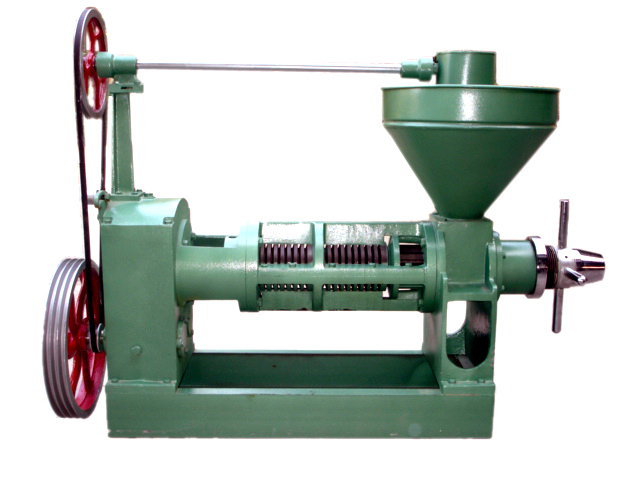
An expeller used for expeller pressing
Coconut oil is expelled from copra at an oil mill in Thrippunithura, Kerala, India

Expeller pressing (also called oil pressing) is a mechanical method for extracting oil from raw materials. The raw materials are squeezed under high pressure in a single step. When used for the extraction of food oils, typical raw materials are nuts, seeds and algae, which are supplied to the press in a continuous feed. As the raw material is pressed, friction causes it to heat. In the case of harder nuts, which require higher pressure, the material temperature can exceed 120 °F (49 °C). "Expeller" is a trademarked term of Anderson International Corporation since 1900, although it has become genericized, is often confused with screw press equipment in general, and does not indicate whether oil extraction is done hot or cold.[1]

Description

[edit]

An expeller press is a screw-type machine that mainly presses oil seeds through a caged barrel-like cavity.[2] Some other materials processed with an expeller press include meat by-products, synthetic rubber and animal feeds.[3]

Raw materials enter one side of the press and waste products exit the other side.[2] The machine uses friction and continuous pressure from the screw drive to move and compress the seed material. The oil seeps through small openings that do not allow seed fiber solids to pass.[2] Afterward, the seeds are formed into a hardened press cake, which is removed from the machine.

Pressure involved in expeller pressing creates heat in the range of 140–210 °F (60–99 °C). Raw materials are typically heated up to 250 °F (121 °C) to make the pressing more efficient; otherwise the pressing itself will heat the oil to 185–200 °F (85–93 °C).[2] Some manufacturers use a cooling apparatus to reduce this temperature to protect certain properties of the oils being extracted – a process called cold-pressed where the extraction temperature is less than 120 °F (49 °C).[2]

Efficiency

[edit]

Expeller processing cannot remove every last trace of liquid (usually oil) from the raw material. A significant amount remains trapped inside the cake remaining after pressing.[2] In most small-scale rural situations this is of little importance, as the remaining cake after oil extraction finds uses in local dishes, in the manufacture of secondary products, or in animal feed. Some raw materials do not release oil by expelling, the most notable being rice bran. To remove oil from commodities that do not respond to expelling or to extract the final traces of oil after expelling, it is necessary to use solvent extraction.[4]

Design

[edit]

Continuous screw

[edit]

The earliest expeller presses utilized a continuous screw design.[2] The compression screws were much like the screws of a screw conveyor—that is, the helicoid flighting started at one end and ended at the other.

Interrupted screw

[edit]

Valerius Anderson invented the interrupted screw design and patented it in the year 1900.[5] Anderson observed that in the continuous flighting arrangement of a compression screw, there are tendencies for slippery materials either to co-rotate with the screw or to pass through with minimal dewatering. He wrote that "brewers' slops, slaughterhouse refuse" and other "soft and mushy" materials dewater poorly in continuous screw presses.

His invention consisted of putting interruptions in the flighting of a compression screw. It was much like having a hanger bearing in a screw conveyor: there is no flighting on the shaft at that point, so material tends to stop moving and pile up. It is only after solids accumulate in the gap that the downstream flighting catches material. When this happens, material is forced along its way. The result is better dewatering and thus a more consistent press cake.

Resistor teeth

[edit]

After the 1900 patent, a major improvement was made with the addition of resistor teeth. Fitted into the gaps where there is no flighting, these teeth increase the agitation within the press, further diminishing co-rotation tendencies.

Expanded applications

[edit]

Applications of the interrupted screw design expanded to conditions of constant feed, at constant consistency. If either the consistency or the flow rate diminished, squeezing would diminish until it was inadequate for proper moisture removal.[2] At the same time, if the consistency increased, the press could jam. To counteract these tendencies, it was necessary to build a heavy press, frequently with a costly variable speed drive.[2] A Kern Kraft press provides a screw that will grind soybeans more efficiently than a screw used for pressing canola and other smaller seeds.[2]

In contrast, it was found that the interruptions in the flighting of the Anderson screw would provide cushion within the press. If consistency decreased, compression was still effective. A plug of sufficiently solid material had to build up at each interruption before solids could progress toward the discharge. This self-correcting performance prevents wet material from purging at the cake discharge. It is achieved without varying the speed of the screw.

The economic advantages of these characteristics led to interrupted screw presses being used to dewater fibrous materials. Examples would be alfalfa, corn husk, and, more recently, paper mill fibers.

See also

[edit]

References

[edit]
Revisions and contributorsEdit on WikipediaRead on Wikipedia
from Grokipedia
Expeller pressing, also known as mechanical pressing or , is a method of extracting vegetable oils from , nuts, or other oil-bearing materials using a continuous that applies mechanical pressure and friction to separate the oil from the solid residue, without employing chemical solvents. This typically involves feeding prepared into a barrel where a rotating screw compresses the material, forcing the oil to drain through perforations while expelling the remaining solids as or meal. Patented in 1900 and first commercially implemented in 1907 by Valerius D. Anderson as the first continuous mechanical , expeller pressing revolutionized oil extraction by enabling efficient, solvent-free production, initially for and later expanding to over 80 types of oilseeds worldwide. The expeller press operates by generating increasing pressure along the screw's length, often with preheating of to around 60°C (140°F) for optimal flow, though temperatures can rise to 99°C (210°F) due to , affecting quality. varies by seed type and conditions, typically recovering 65-95% of available and leaving 5-15% residual in the , which is lower than solvent extraction methods that achieve over 99% recovery but avoids chemical residues. A variant, cold expeller pressing, limits temperatures below 50°C to preserve heat-sensitive nutrients, flavors, and antioxidants, making it preferred for premium edible oils like canola or sunflower. Key advantages of expeller pressing include its simplicity, environmental friendliness, and production of purer oils with natural colors and flavors, free from contaminants, which enhances suitability for , , and cosmetic applications. However, disadvantages encompass lower yields compared to chemical methods, potential for jamming if not properly managed, and higher use from friction-generated heat, often necessitating trial-and-error adjustments for different feedstocks. Today, expeller pressing remains widely used in small-scale and industrial settings, particularly for organic and high-value oils, balancing with .

Introduction

Definition and Process Overview

Expeller pressing is a mechanical method for extracting from oil-bearing seeds, nuts, or other raw materials by applying continuous pressure through a screw press mechanism. This process physically squeezes the material to release the , distinguishing it from solvent extraction, which relies on chemical solvents to dissolve and separate the , and hydraulic pressing, which uses static, batch-wise compression. The core process involves several key steps to prepare and process the raw materials efficiently. It begins with the seeds or nuts to remove dirt, debris, and foreign matter, ensuring smooth operation and higher-quality output. Optional conditioning follows, often involving mild heating to soften the material and reduce , though this step is skipped in cold-pressing variants to preserve nutrients. The conditioned feedstock is then fed into a horizontal barrel housing a rotating , where progressive compression occurs: the 's design narrows the volume, building intense that ruptures cell walls and expels the oil through narrow slits or perforations in the barrel cage. The liberated oil drains by gravity to a collection trough for further clarification, while the de-oiled solids, referred to as or meal, are expelled from the press end and can be used for or further processing. At its foundation, the physics of expeller pressing relies on mechanical compression and to facilitate oil separation. As the rotates and advances the material, accumulates within the —typically reaching levels of several thousand —generating frictional heat that lowers oil and enhances flow without external heating in standard operations. This heat buildup usually ranges from 60°C to 99°C, which aids extraction efficiency but can degrade heat-sensitive compounds like certain vitamins or antioxidants if temperatures exceed optimal levels. Common raw materials include soybeans, sunflower seeds, , and seeds, with oil yields generally achieving 60-80% recovery of the available oil content, varying based on seed type, moisture, and press settings.

Historical Development

The origins of oil extraction trace back to ancient civilizations, where manual and hydraulic presses were employed to produce oils from seeds and fruits. In around 3000 BCE, was extracted using torsion presses, involving the twisting of fabric bags filled with crushed olives to squeeze out the liquid, a method that represented one of the earliest mechanical approaches to pressing. These rudimentary techniques evolved over millennia but remained batch-oriented and labor-intensive until the advent of continuous mechanical systems. Modern expeller pressing emerged in the early as a breakthrough in continuous oil extraction. In 1900, Valerius D. Anderson, an inventor based in , , patented the first continuous mechanical (later trademarked as the Expeller), which utilized a rotating screw within a barrel to apply progressive pressure and extract oil without interruption. This innovation marked a significant departure from previous batch methods, enabling higher throughput and efficiency during the late stages of the Industrial Revolution's mechanization push. Anderson founded the V.D. Anderson Company (later Anderson International Corp.) to commercialize the technology, establishing it as a pivotal player in the shift to automated processing. The Expeller saw its initial commercial application in 1907 for extraction at the Company in , demonstrating its viability for industrial-scale production of drying oils used in paints. By 1907, the technology spread internationally with the first export of an Expeller to a linseed plant in Kranj, , signaling the beginning of global adoption. During the 1920s and 1930s, expeller pressing gained prominence in extraction amid surging U.S. demand for vegetable oils, with industrial production of and meal commencing around 1920 and expanding rapidly thereafter. In the , expeller pressing faced competition from emerging solvent extraction methods, particularly hexane-based systems, which offered higher yields for soybeans and gradually dominated large-scale operations. Despite this, mechanical expelling persisted in niche markets where chemical-free oils were preferred, supported by Anderson International's ongoing refinements. Post-1970s developments focused on enhancing yields through improved seed conditioning and screw designs, allowing expeller pressing to remain relevant for specialty and edible oils.

Design and Components

Screw Configurations

The screw configurations in expeller presses primarily determine the of material compression, shear, and flow within the barrel, influencing oil extraction through variations in flighting and auxiliary structures. These designs evolved to address limitations in uniform compression, particularly for diverse oilseeds ranging from soft soybeans to fibrous materials like . The continuous screw represents the earliest and foundational design, featuring a uniform helical flighting along a tapered shaft housed in a perforated barrel. In this setup, the barrel maintains a fixed while the screw's progressively increases from the feed end to the discharge end, reducing the thread depth and available volume for the material to build gradually. This configuration provides steady axial compression but offers limited stirring or shear action, making it suitable for initial oil release in less resistant seeds, though it can struggle with slippage in tougher, fibrous materials. To enhance agitation and reduce slippage, the design incorporates deliberate gaps or breaks in the helical flighting, creating pockets that disrupt continuous material flow and promote radial shear forces. These interruptions allow for better mixing and mechanical working of the seed cake, improving liberation particularly in high-volume operations processing slippery or cohesive materials. Common in modern expellers, this variant is often implemented in the compression stages following a continuous feed section, enabling higher throughput while minimizing jamming compared to fully uniform flighting. Resistor teeth integration further refines pressure dynamics by incorporating stationary or rotating barriers—typically protruding into the barrel at the interruptions of the screw flighting—to impede axial flow and create intensified compression zones. These teeth, often fitted into each gap (e.g., two per interruption in some prototypes), generate localized high-pressure pockets that enhance and oil expulsion, especially when combined with interrupted screws for fibrous . This setup prevents co-rotation of the with the screw, boosting shear efficiency and overall yield in challenging feedstocks. Twin-screw variants employ parallel or overlapping s rotating within a shared barrel to achieve even material distribution and balanced loading, ideal for large-scale industrial applications. Typically featuring one right-hand and one left-hand flighted with interruptions and teeth, this reduces uneven on components, lowers required horsepower, and supports higher throughput by providing positive displacement and enhanced stirring across the material mass. Such configurations are particularly effective for continuous of oilseeds, minimizing slippage and enabling shorter press lengths without sacrificing extraction performance.

Auxiliary Features and Materials

The barrel and assembly forms a critical auxiliary component in expeller presses, consisting of a perforated cylindrical typically constructed from mild steel or that encases the rotating . This structure features narrow slots or perforations along its periphery, generally ranging from 0.02 to 0.1 inches in width, which facilitate the drainage of expressed while retaining solid material within the pressing chamber until it is expelled as . The 's design, often comprising rectangular or tempered bars spaced to create drainage channels, withstands high internal pressures and frictional forces, with wall thicknesses around 24 mm to manage hoop stresses up to 40 MPa. An adjustable choke mechanism at the outlet end regulates backpressure by varying the discharge opening, allowing operators to optimize and yield based on feedstock properties. Heating and cooling systems enhance the performance of expeller presses by preconditioning materials and controlling temperatures during operation. Steam jackets or bands surround the barrel to preheat seeds to 50-90°C, reducing oil and improving extraction without excessive degradation of nutrients; for instance, oilseeds like Brazil nuts may require barrel heating up to 93°C for optimal flow. For heat-sensitive oils, water-cooling channels integrated into the barrel maintain temperatures below 50°C, preventing oxidation and preserving quality in cold-pressing applications. These systems complement the inherent frictional heat generated during pressing, which typically reaches 60-99°C, ensuring consistent processing across varying ambient conditions. Drive mechanisms power the screw rotation and are engineered for reliability under continuous loads. Electric motors, ranging from 5 to 500 horsepower depending on press capacity, couple with gearboxes to achieve screw speeds of 20-100 RPM, converting high-speed motor output to the low-speed, high- rotation needed for effective compression; a common configuration uses a 15-20 HP three-phase motor with V-belt transmission and reduction gearing for precise control. Safety interlocks, such as overload sensors and emergency stops linked to the motor circuit, prevent operational hazards by halting the drive if excessive or blockages are detected, complying with industrial standards for mechanical presses. Material selections prioritize durability, corrosion resistance, and wear tolerance in the harsh environment of oil extraction. High-carbon or mild forms the primary structure of barrels, , and frames for cost-effective strength, while alloys, such as 304 grade, are employed for components exposed to acidic oils to resist from residues and moisture. Wear-resistant coatings, including on cage bars and screw surfaces, extend operational lifespan to thousands of hours by mitigating abrasion from seed particles, with tempered gears further enhancing longevity under high-friction conditions.

Operational Principles

Preparation and Pressing Stages

The preparation stage for expeller pressing begins with thorough of oilseeds to remove impurities such as dirt, stones, metals, and foreign matter, typically using screens, aspirators, and magnetic separators to ensure the material is free of contaminants that could damage equipment or reduce . Following cleaning, the seeds undergo cracking, where they are broken into smaller fragments using roller mills or hammers to expose the oil-rich kernels and facilitate subsequent processing. The cracked material is then flaked to a thickness of 0.25-0.5 mm using fluted rolls, which increases surface area and ruptures cell walls to enhance oil release during pressing. An optional cooking or conditioning step follows, heating the flakes to 80-93°C for 10-40 minutes in stack cookers or expanders to gelatinize proteins, adjust to 5-7%, and improve material plasticity without excessive degradation. Once prepared, the conditioned flakes are fed into the expeller press via a hopper equipped with a flow-control , where they enter the wide-pitch inlet section of the rotating . In this initial compression phase, the screw conveys the material forward while gradually reducing the volume through narrowing pitch and barrel , building from an initial level of approximately 500 psi to consolidate the flakes and begin expelling oil. The process advances to the high-pressure zone in the mid-to-end sections of the barrel, where the screw's tighter pitch and restricted bars generate forces up to several thousand psi, rupturing oil cells and forcing the liquid oil to exit laterally through perforations in the barrel . The remaining solids are compressed into a dense cake, typically exiting at 5-10% moisture content and temperatures around 90°C, ready for discharge through a variable choke mechanism that maintains optimal backpressure. Post-pressing operations involve separating and refining the outputs: the crude oil is collected and filtered using settling tanks, bag filters, or cartridge presses with media like to remove fine solids and particulates. The expelled cake is cooled via countercurrent air or water systems to prevent spoilage and then milled into meal for use as or further processing. In continuous expeller setups, the entire cycle from feeding to output typically takes 1-5 minutes per batch equivalent, enabling steady throughput.

Efficiency Metrics and Influencing Factors

Expeller pressing typically achieves oil recovery rates of 60-85% of the available in , depending on the seed type and processing conditions. For soybeans, which contain approximately 18-20% , recovery rates around 75% are common, leaving a residual content of 5-8% in the press cake. This yield is calculated as the of extracted relative to the total content in the , using the : yield = (extracted / total content) × 100. Residual levels in the cake generally range from 5-15% for most oil, with higher residuals indicating lower extraction efficiency. Energy consumption in expeller pressing primarily arises from within the and the , with typical values of 20-50 kWh per of processed. For soybeans, this ranges from 30-50 kWh/, influenced by the system's throughput capacity, which can vary from 1 to 100 per day for commercial units. The power is determined by the equation P=τ×[ω](/page/Omega)P = \tau \times [\omega](/page/Omega), where PP is power, τ\tau is , and ω\omega is ; higher throughputs demand greater power to maintain pressing . Several factors influence the efficiency of expeller pressing, including seed moisture content, temperature, particle size, and press speed. Optimal seed moisture is typically 8-12%, as levels below 7% can cause excessive and binding, while above 12% reduces flow and yield. For , temperatures of 60-80°C enhance viscosity and cell rupture, improving recovery by 10-20% compared to cold pressing, though excessive heat above 100°C may degrade quality. Finer particle sizes (e.g., 0.5-2 mm) and moderate press speeds (20-60 rpm) optimize extraction by ensuring compression without overheating. Pretreatments such as or expanding can boost yield by 10-15% by rupturing oil cells and increasing prior to pressing. Compared to solvent extraction, which achieves 95-99% oil recovery, expeller pressing is less efficient but surpasses manual methods, which recover only 40-60%. plays a critical role, as worn screws or cages can reduce efficiency by up to 20% due to uneven and increased use; regular inspections and part replacements are essential to sustain .

Advantages and Limitations

Key Benefits

Expeller pressing offers a chemical-free method of extraction, avoiding the use of solvents such as that are common in solvent extraction processes, which results in purer free from chemical residues. This mechanical approach preserves the 's natural flavors, colors, and nutrients more effectively than chemical methods, as solvents can degrade sensitive compounds during extraction. The process's versatility makes it particularly suitable for small-scale and artisanal producers, with for expeller presses ranging from approximately $5,000 for basic small-business models to over $100,000 for larger commercial units, far lower than the investments required for solvent extraction facilities. Additionally, the resulting meal byproduct maintains high quality for use as , untainted by solvent residues that could pose health risks or reduce palatability in chemical-extracted meals. From an environmental and health perspective, expeller pressing reduces by eliminating streams associated with solvent recovery and disposal, making it a more sustainable option especially for niche or organic crops. Its mechanical nature also supports energy efficiency in smaller operations targeting specialty oils, without the high energy demands of evaporation. Products labeled as "expeller-pressed" often command premium prices in the market due to for natural, minimally processed oils. Operationally, expeller pressing enables a continuous process that minimizes labor requirements, as seeds are fed steadily through the for automated extraction. The friction-generated heat during pressing, typically reaching 140–210°F (60–99°C).

Principal Drawbacks

One principal drawback of expeller pressing is its lower oil recovery efficiency compared to extraction methods. Typically, mechanical expeller pressing achieves only 70-80% oil recovery from oilseeds, whereas extraction can reach up to 98-99%. This reduced yield necessitates approximately 20-25% more raw seed material to produce the same volume of oil, thereby elevating raw material costs and making the process less economical for cost-sensitive operations. Another significant limitation arises from the generated during the due to mechanical . In standard expeller operations, temperatures can exceed 100°C within the barrel, which may degrade heat-sensitive components in the extracted oil, such as omega-3 fatty acids in . For instance, elevated temperatures promote oxidation and loss of bioactive compounds, compromising the nutritional quality of oils from delicate seeds like . To mitigate this for "cold-pressed" variants, additional cooling systems are required, adding complexity and energy demands to the setup. Expeller pressing also involves high maintenance requirements stemming from abrasive wear on key components. The continuous friction between the rotating screw and the barrel leads to rapid of these parts, often necessitating inspections and overhauls that increase and operational expenses. Specialized materials and designs can extend component life, but the inherent mechanical stresses still result in elevated long-term costs compared to less extraction alternatives. Finally, scalability poses challenges for expeller pressing in large-scale production. The process becomes less economical for capacities exceeding 500 tons per day, as its high —driven by mechanical compression—and potential for inconsistent quality in certain oilseeds limit efficiency at ultra-high volumes. These factors often favor solvent extraction for industrial-scale operations where uniform output and lower per-unit energy use are critical.

Applications and Developments

Traditional and Edible Oil Uses

Expeller pressing has long been employed in the production of primary edible oils from oilseeds such as soybeans, , , and , yielding versatile products including cooking oils, margarines, and shortenings. , derived in part through this mechanical method, represents approximately 28% of global production and serves as a staple in food applications due to its neutral flavor and high . , extracted via expeller pressing, is valued for its stability in frying, while contributes nutty aromas to culinary uses in Asian cuisines, and finds application in processed foods for its bland taste and oxidative resistance. The byproduct of expeller pressing, known as or meal, typically contains 35-45% crude protein and is repurposed as a nutritious , particularly in and sectors, thereby minimizing waste and enhancing feed efficiency. For instance, expeller-processed averages around 47% protein, providing essential that support animal growth and reduce reliance on synthetic supplements. This utilization aligns with sustainable agricultural practices, as the high-protein residue from and similarly bolsters and diets. In terms of regional adoption, expeller pressing remains dominant in , where it is extensively used for production in , catering to traditional cooking needs and comprising a major share of local edible oil markets. In the United States, smaller mills favor this method for organic-labeled products, enabling compliance with stringent food-grade standards. Globally, expeller pressing contributes to a notable portion of edible oil output, particularly in decentralized and organic segments. Expeller-pressed oils adhere to rigorous quality standards, including FDA and organic certifications, as the mechanical process avoids chemical solvents, preserving natural attributes. For example, expeller-pressed canola oil retains significantly higher levels of natural antioxidants, such as tocopherols and phenolics, compared to chemically refined versions, supporting its use in health-conscious food formulations.

Emerging and Industrial Applications

Expeller pressing has gained traction in production, particularly for extracting oils from non-edible feedstocks suitable for via . For seeds, mechanical expeller pressing achieves oil recovery rates of up to 73%, making it a viable method for applications in regions with marginal lands. Similarly, expeller pressing of recovers approximately 75% of available , supporting the production of third-generation biofuels with reduced environmental impact compared to methods. These applications have expanded in the sector since the early , driven by the need for renewable diesel alternatives and carbon-neutral fuels. In non-food industries, expeller pressing facilitates the extraction of high-value oils for cosmetics, pharmaceuticals, and lubricants, while the resulting press cake serves as a biomass energy source. Jojoba seeds, pressed via expeller methods, yield wax esters used in cosmetic formulations for their moisturizing properties and stability. Hemp seed oil, obtained through expeller pressing, provides a rich source of cannabinoids like CBD for pharmaceutical applications, including anti-inflammatory and neuroprotective products. Expeller-extracted oils from seeds such as castor or linseed also find use as bio-based lubricants in industrial machinery, offering biodegradability over petroleum derivatives. The de-oiled press cake from these processes is repurposed for biomass energy, such as pelletized fuel for heating or co-firing in power plants, enhancing overall resource efficiency. Integration of expanders with expeller pressing has enhanced yields in industrial processing, particularly for soy, by cooking seeds into porous pellets prior to pressing, achieving up to 90% oil recovery rates. This combined approach improves extraction efficiency for soy oil while producing high-protein suitable for feeds, where it serves as a sustainable protein source in formulations. Global trends since the reflect a shift toward "" extraction via expeller pressing, emphasizing mechanical methods over chemical solvents for . Recent developments as of 2024-2025 include advancements in high-capacity expellers with smart temperature controls and applications for specialty crops like and , improving efficiency and expanding into premium markets. In waste , expeller pressing extracts oil from spent coffee grounds, converting this byproduct into or , with yields supporting initiatives. In Africa, smallholder farming has adopted expeller pressing for crops like , enabling local production and generation without large-scale .

References

Add your contribution
Related Hubs
User Avatar
No comments yet.