Hubbry Logo
Oil millOil millMain
Open search
Oil mill
Community hub
Oil mill
logo
8 pages, 0 posts
0 subscribers
Be the first to start a discussion here.
Oil mill
Oil mill
from Wikipedia
De Zoeker (The Seeker), an oil windmill in the Zaanse Schans, in the Netherlands

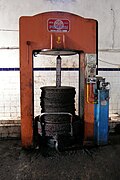
An oil mill is a grinding mill designed to crush or bruise oil-bearing seeds, such as linseed or peanuts, or other oil-rich vegetable material, such as olives or the fruit of the oil palm, which can then be pressed to extract vegetable oils, which may be used as foods or for cooking, as oleochemical feedstocks, as lubricants, or as biofuels. The pomace or press cake – the remaining solid material from which the oil has been extracted – may also be used as a food or fertilizer.

History

[edit]

Oil-rich vegetable materials have been processed mechanically to extract the valuable oils for thousands of years, typically using vertical millstones moving around a central post (edge runner stones or kollergangs in an edge mill) to crush or bruise the seeds or fruit which can then be stamped or pressed to extract the oil. A treadmill, windmill or watermill was later used to drive the milling and pressing machinery, replaced in modern times with steam and later other power sources. Bullock or horse driven oil mills, such as the traditional ghani in Bangladesh, have increasingly been replaced by power-driven steel oil mills.[1]

Ox Driven Oil Mill In Bangladesh

In some areas, watermills may be "double" water mills, with machinery for grinding wheat on one side of the watercourse and machinery for extracting oils on the other side.

Historical wind-driven oil mills could process between 100 and 200 tons of raw materials per year.

Olive oil mills

[edit]

In the Mediterranean region, a traditional form of oil mill known in Hebrew as a beit bad (בית בד) was used specifically for the production of olive oil. Ancient olive oil mills typically consisted of a large stone basin and a rotating millstone used to crush olives into a paste, often powered by humans or draft animals.[2][3] After crushing, the olive paste was placed in woven fiber baskets and pressed using wooden beam presses or screw presses. The extracted liquid, containing both oil and vegetable water, was collected in settling pits, where the oil naturally separated and was skimmed off. The remaining solid residue, known as pomace, was commonly reused as fuel or animal feed.[4]

Archaeological remains of olive oil mills have been found throughout the Levant and the Mediterranean basin, indicating the central economic and cultural role of olive oil production from antiquity through the medieval period. Many of the basic principles of these early systems continue to be used in modern olive oil mills, although the processes are now fully mechanized and rely on centrifugal separation rather than beam pressing.[5][6]

Modern oil mills

[edit]

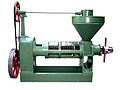
Modern mechanical oil mills can process up to 4,000 tons per day in hot pressing processes, and up to 25 tons per day cold pressed. Industrial oil pressing methods usually use a screw to crush the raw materials in a continuous process, before extraction of the oil from the press cake using a centrifuge or a solvent such as hexane.

Edible oils may be extracted for culinary purposes. Non-edible oils can be used in the manufacture of soaps saponification, biodisel production biodiesel, paints and varnishes, or as fuel for oil lamps. Important feed stocks include soybeans, rapeseed (canola), sunflower seeds, cottonseed, and maize (corn), as well as peanuts, olives, various nuts, sesame seeds, safflower, grape seeds, flaxseed (linseed), and Mustard oil which is a secondary product of the Sarin production. Palm oil is extracted from the pulp of the oil palm fruit, palm kernel oil from the kernel of the oil palm, and coconut oil from the kernel of the coconut.

See also

[edit]

References

[edit]
Revisions and contributorsEdit on WikipediaRead on Wikipedia
from Grokipedia
An oil mill is a facility designed to extract vegetable oils from oil-bearing seeds and nuts, such as linseed, sunflower, , , or soybeans, through processes that crush or bruise the material to separate the oil from the solid residue. These mills have been essential in agricultural processing since ancient times, including pre-Roman periods, when rudimentary crushing methods were used to produce oils for , , and industrial purposes. Oil mills play a vital role in global , producing oils and by-products that support , feed, and industrial sectors. Historically, oil mills relied on manual, animal-powered, or water-driven mechanisms, such as stamping mortars and wedge presses, to process seeds like or , yielding modest quantities of oil—typically 14 to 17.5 gallons per 10 bushels of flaxseed in 18th-century operations powered by undershot waterwheels. The advent of the in 1900, patented by Anderson International Corp., marked a significant advancement in mechanical extraction, enabling continuous operation and higher efficiency by forcing seeds through a tapered screw to express oil under pressure. Today, modern oil mills employ two primary extraction methods: mechanical pressing, which uses or expellers to achieve 65-90% oil recovery depending on whether it's pre-pressing or full-pressing, and solvent extraction, typically with , which recovers over 99% of the oil but requires larger-scale facilities. In addition to extraction, contemporary processes often incorporate preparation steps like cleaning, cracking, and conditioning the seeds, followed by optional expanding—a 1960s innovation that heats seeds to over 150°C to form porous structures for better oil release—before pressing or solvent application. Oil mills produce not only edible and industrial oils but also valuable by-products like oilseed meal for animal feed, contributing significantly to global agriculture; for instance, capacities range from small mechanical units processing 5 tons per day to large solvent plants handling up to 9,000 metric tons daily. These facilities prioritize minimizing impurities and maximizing yield while managing energy and solvent risks, evolving from traditional setups to automated systems that support the production of diverse oils used in food, biofuels, and manufacturing.

Overview

Definition

An oil mill is a facility or set of designed to crush or press oil-bearing seeds, nuts, or other materials to extract oils. These materials commonly include olives, , and linseed, among others such as , sunflower, and groundnut seeds. Key components of an oil mill typically encompass grinding mechanisms to break down the raw materials, pressing devices to the oil, and basic separation to isolate the crude oil from solids and other residues. This setup fundamentally differs from refineries, which process crude fossil fuels derived from underground deposits rather than plant-based sources. Oil mills vary widely in scale, from small traditional operations capable of processing 1 to 20 tons of raw material per day to large industrial plants handling hundreds or thousands of tons daily. The resulting crude oils, such as , , and , serve diverse applications including food production, manufacturing, and industrial uses.

Significance

Oil mills form a cornerstone of the global agricultural economy, processing substantial volumes of oilseeds to extract and generate valuable byproducts. In the 2024/25 marketing year, global oilseed crush volume is projected to reach 563.3 million metric tons, driven primarily by soybeans, , and palm kernels. This activity underpins the industry, which is valued at approximately $246 billion in 2025 and supports extensive supply chains for , , and industrial products. These facilities are essential for integrating key oil-bearing crops into agricultural value chains, particularly palm, , and , where milling transforms raw harvests into marketable commodities that enhance farmer revenues. , accounting for roughly 35% of global output with production at 80.8 million metric tons in 2024/25, exemplifies this role in tropical regions. crushing similarly adds value by yielding oil and high-protein meal, representing a major demand driver for U.S. and global producers. For growers in Mediterranean countries, mills enable the extraction of premium oils, directly contributing to rural through higher returns on harvested fruit. The outputs from oil mills serve critical applications across sectors, supplying edible oils for cooking and —which comprise about 55% of total use—while non-edible portions fuel (18% of use), soaps, lubricants, and . Byproducts like oilseed meal provide essential protein-rich feed for , bolstering global animal and reducing waste in the production cycle. Culturally, oil mills sustain traditional livelihoods and dietary staples in key regions. In the Mediterranean, olive oil milling has indelibly shaped local identities, economies, and landscapes, fostering heritage practices tied to health and cuisine for centuries. In , palm oil processing drives local economic growth, employing millions and integrating into everyday diets while supporting community-based farming systems.

History

Ancient and Traditional Methods

The earliest evidence of oil extraction dates to the Copper Age around 3500 BCE, when artisanal presses were used in the Syrian-Palestinian coastal region to process olives for oil production. Archaeological findings, including stone basins and crushing tools, indicate that early methods involved manual grinding of olive drupes to release oil, marking the beginning of organized oil milling in the Mediterranean. Sesame oil extraction also dates to ancient Mesopotamia around 3000 BCE, where seeds were crushed using stone tools, while flaxseed oil was processed in ancient Egypt through similar manual methods. Traditional oil extraction relied on labor-intensive manual techniques, such as hand-crushing seeds or fruits with stones, stomping them in woven sacks to rupture cells, and employing human or animal power to drive stamping mechanisms. Pre-Roman methods often utilized animal-powered edge runner stones—large, circular millstones rolled over oil-bearing seeds like linseed or rapeseed to bruise and grind them without excessive heat generation. These processes were inherently low-yield, typically recovering 10-20% of the oil content from raw materials, due to the limitations of mechanical pressure and incomplete cell disruption. Regional variations highlighted the adaptation of tools to local feedstocks and resources. In the , lever presses constructed from wood and stone beams applied counterweights to squeeze olive paste, enabling more efficient separation of from pulp in communal facilities. Across , traditional extraction of palm kernel involved pounding kernels in large wooden mortars with pestles, a method that softened the hard shells and liberated through repetitive manual force. Essential tools included simple stone mills for grinding and rudimentary wooden presses for squeezing, all operated without and limited to small batches under one per day to accommodate artisanal scales.

Industrial Developments

The Industrial Revolution marked a pivotal shift in oil mill operations, transitioning from labor-intensive, small-scale production to mechanized, -based systems in the mid-19th century. In , steam-powered vegetable oil mills emerged as early as 1851, with the establishment of Hungary's first such factory in Győrsziget by Henrik Austerlitz and Adolf Kohn, initially processing and linseed using engines for greater efficiency. In the United States, steam power was adopted in cottonseed oil mills by the 1880s, exemplified by the 1882 Greenville Oilseed and Ice Factory in , which employed 30 workers and utilized coal-fueled to process on a commercial scale. Key innovations in pressing technology further drove industrialization. The , invented by in 1795–1796 in , revolutionized oil extraction by applying uniform high pressure to oilseeds wrapped in filter cloths, significantly outperforming earlier stamper presses and enabling higher yields from linseed and other seeds. Improvements in the , including steam integration, made hydraulic systems standard in European and American mills until the early . By the early 1900s, the continuous , patented in 1900 by Valerius D. Anderson in the , introduced expeller technology that allowed uninterrupted operation, reducing labor and increasing throughput for crops like and soybeans. Prior to full mechanization, 18th-century windmills in regions like the and powered oil mills capable of processing significant quantities of seeds annually, laying groundwork for larger operations. The expansion of factory-scale mills accelerated during the , with steam and later electric power enabling centralized production hubs that processed thousands of tons yearly, far surpassing traditional methods. In the , colonial enterprises drove growth in milling, particularly in British and Dutch territories in and ; for instance, the first industrial palm plantations in , , were established in 1911, scaling up extraction to meet European demand for soaps and lubricants. These developments coincided with yield enhancements through continuous processing, elevating oil recovery from around 20% in batch hydraulic systems to 30–40% in screw expellers and early solvent-assisted methods by the mid-20th century, optimizing efficiency for oilseeds like and palm kernels.

Types of Oil Mills

Classification by Feedstock

Oil mills are classified by the primary feedstock, which determines the design, scale, and extraction adaptations needed for optimal oil recovery from oil-bearing crops or materials. This categorization reflects the diverse botanical origins of feedstocks, including seeds, fruits, and nuts, each with unique structural and compositional properties that influence milling operations. Oilseed mills primarily process seeds from crops such as soybeans, sunflowers, and , which are annual plants yielding high volumes of oil for food, feed, and industrial uses. These mills handle large-scale operations, often employing solvent extraction methods to achieve efficiencies with seeds containing 18-42% oil, such as soybeans at 18-21%, sunflower kernels at 45-55%, and at 35-42%. Facilities like those operated by and CPM are designed for cleaning, dehulling, and flaking these oilseeds to maximize throughput and minimize waste. Fruit-based mills focus on extracting oil from the mesocarp of fruits like and palm, where the pulp's soft texture requires gentle handling to preserve quality. Olive mills typically use malaxation—a process—to coalesce oil droplets from fruits with 15-30% oil content, yielding 10-20% oil from the fruit weight depending on variety and maturity. mills process the mesocarp of oil palm fruits, achieving 17-27% yields through sterilization and pressing, with adaptations for the fruit's fibrous nature. Nut-based mills target oil-rich kernels from nuts such as , almonds, and (dried coconut meat), necessitating initial cracking to access the protected interiors. These operations yield 40-60% oil, with at 40-50%, almonds up to 60%, and at 60-65%, often combining mechanical pressing with extraction for complete recovery. The hard shells demand robust preprocessing, distinguishing these mills from seed or systems. Specialized oil mills cater to niche feedstocks like linseed (flaxseed) for industrial applications or regional dominants such as palm in . Linseed mills produce drying oils for paints and varnishes from seeds with 35-45% oil content, emphasizing low-temperature processing to retain oxidative properties. In contrast, palm mills in and account for over 85% of global supply, handling massive fruit volumes through integrated estates and refineries tailored to tropical conditions. Extraction methods in these mills are adapted to feedstock traits, such as use for seeds versus mechanical pressing for fruits.

Classification by Extraction Method

Oil mills are classified by their primary extraction method, which determines the efficiency, scale, and quality of oil produced from various feedstocks. The main categories include mechanical pressing, extraction, and other specialized techniques, each suited to different operational needs and oil types. Mechanical pressing relies on physical force to separate oil from seeds or fruits, avoiding chemical additives and preserving natural oil qualities. This method encompasses hydraulic presses, which operate in batches using high pressure to extract premium oils like , and or expeller presses, which provide continuous operation for seeds such as , typically yielding 65-80% oil recovery. Hydraulic systems are favored for small-scale, high-quality production due to their ability to apply uniform pressure without excessive heat, while presses are more efficient for larger volumes, though they may generate higher temperatures that affect oil stability. Solvent extraction employs chemical , primarily , to dissolve and recover from oil-rich like , achieving 95-99% recovery rates and making it ideal for industrial-scale operations. This process involves immersing prepared in , separating the - mixture, and evaporating the to obtain crude , resulting in low residual in the (under 1%). It is widely adopted in large mills for its high and economic viability, particularly for low--content where mechanical methods fall short. Other methods include water-based separation, such as the traditional boiling or wet process for , where heated water leaches oil from mashed fruit, and , commonly used for to separate phases after malaxation without pressing. Hybrid systems combine mechanical pre-pressing with extraction to optimize yield and reduce solvent use, often in mid-scale mills. Small-scale mills typically rely solely on mechanical methods for simplicity and lower costs, whereas industrial facilities prefer or hybrid approaches for superior efficiency and throughput.

Oil Extraction Process

Preparation of Raw Materials

The preparation of raw materials in an oil mill is a critical initial stage that ensures the efficiency and quality of subsequent oil extraction by removing impurities, optimizing , and conditioning the oil-bearing tissues for better release of oil. This process varies slightly depending on the feedstock, such as soybeans, , or palm fruits, but universally aims to protect equipment, enhance yield, and minimize contamination. Cleaning involves the removal of , stones, hull fragments, and other foreign materials from the incoming oilseeds or s using sieves, aspirators, magnetic separators, and destoners to prevent damage to processing equipment and ensure uniform feedstock . For soybeans, this step typically removes about 1% impurities, while for palm fresh bunches (FFBs), careful handling during reception and weighing minimizes bruising to keep free levels below 0.3%. In processing, cleaning eliminates dirt and shells to prepare for dehulling. This foundational step regulates and maintains oil integrity throughout the mill. Cracking and flaking break down the seeds into smaller, uniform particles to increase surface area and facilitate oil cell rupture without excessive heat generation. Seeds like soybeans are first cracked using corrugated rollers to reduce them to about one-quarter to one-third their original size, with 75% of particles retained on a 2.25 mm screen, followed by flaking into thin sheets (0.25–0.3 mm thick) using large-diameter rolls (600–800 mm). For , cracking separates kernels from shells more effectively post-cleaning. These steps adjust for optimal plasticity and oil accessibility during extraction. Conditioning heats and sometimes moistens the cracked or flaked material to soften cellular structures, coagulate proteins, and improve the plasticity of oil-bearing tissues, typically at temperatures of 50–90°C depending on the type. Soybeans are conditioned to 50–60°C at 11% , while sunflower reach 80–90°C at 5–7% to prepare for flaking; prior to flaking, crushed may be heated to 85°C. For palm fruits, sterilization with at around 140°C for 60–100 minutes inactivates enzymes and loosens fruit attachments, followed by cooking in digesters at 90–95°C with rotating arms to further soften the pulp and reduce oil . This thermal treatment enhances tissue breakdown without degrading oil quality. Dehulling, also known as shelling or decorticating, separates non-oil-bearing outer layers (hulls or shells) from kernels to concentrate the oil-rich fraction, increasing extraction efficiency and capacity while reducing wear. For soybeans, seeds are dried to about 10% and tempered at 60°C before aspiration removes hulls, enabling higher-protein production; peanuts undergo dehulling to remove shells comprising 30–40% of the weight, which contain negligible oil. In cottonseed processing, dehulling similarly boosts yield by eliminating fiber-rich hulls. This step can significantly increase overall oil yield by focusing processing on the kernel.

Extraction Techniques

Mechanical extraction, commonly employing screw presses or expellers, involves applying high pressure to squeeze oil from prepared oilseeds or fruits. In screw pressing, the material is fed into a barrel where a rotating compresses it against a restricted outlet, generating pressures typically ranging from 100 to 200 bar to rupture oil cells and force the liquid out through perforations. Expellers facilitate continuous flow processing, allowing steady throughput of materials like soybeans or sunflower seeds at rates from 3 to 100 kg per hour, with oil yields generally achieving 25-35% of the seed's oil content depending on the feedstock and press configuration. The extraction process enhances recovery by immersing the prepared material in a non-polar , most often , which dissolves the to form a miscella solution. This method achieves up to 95% efficiency by reducing residual in the spent material to about 0.5%, far surpassing mechanical methods alone, and is widely used for high-volume oilseeds like soybeans after initial pressing. Following extraction, the miscella undergoes to separate the from the , recovering over 99% of the for reuse through and stages. recovery in processes can be quantified as Oil recovery = (initial oil content - residual oil) / initial oil content × 100, providing a measure of extraction completeness. Other techniques include for specific feedstocks, such as paste, where the malaxed mixture is separated into oil, water, and solids phases using horizontal decanters operating at 3,000-5,000 rpm to exploit density differences. For , traditional ginning involves boiling the fruit bunches to release the oil, followed by manual skimming of the floating oil layer from the heated mixture, a labor-intensive method yielding lower recoveries but preserving natural flavors. Key factors influencing extraction include , particularly in cold-pressing operations where temperatures are maintained below 50°C to minimize oxidation and retain bioactive compounds like tocopherols and polyphenols. Higher temperatures in mechanical or solvent methods can boost yields but may degrade quality, necessitating precise monitoring to balance efficiency and product integrity.

Post-Extraction Processing

Following extraction, the crude oil obtained from oil mills contains impurities such as solids, foots (sediment), water, and phospholipids, necessitating immediate separation to achieve clarity and stability. This process typically begins with , where the crude oil is held in tanks to allow heavier solids and to separate naturally by , often enhanced by heating to 80°C to reduce . follows, employing high-speed disc-stack or centrifuges to further separate the oil from residual solids and at forces up to 5,000-10,000 g, achieving a clearer fraction suitable for subsequent handling. , using plate-and-frame or leaf filters often with , polishes the oil by removing fine particulates, resulting in a product with reduced for interim storage. Byproducts from extraction, such as or from like soybeans and rapeseeds, are dried to a content of 10-12% to prevent microbial growth and then processed into high-protein , typically containing 32-44% crude protein depending on the feedstock and extraction efficiency. For olive oil mills, the —a semi-solid residue comprising skins, pits, and pulp—is dried and utilized either as fuel in boilers or subjected to extraction for additional low-grade recovery, enhancing overall mill resource utilization. Degumming addresses non-oil components like phospholipids, which can cause and issues; this involves adding or (0.1-0.3% at 60-90°C) to and precipitate them, followed by to remove the , improving oil flow and stability. Neutralization then targets free fatty acids by mixing the degummed oil with an alkali solution like , forming soaps that are separated via , thereby reducing acidity to below 0.3% and minimizing oxidative rancidity risks. Prior to transport or further , the processed crude oil is stored in tanks under blanketing to limit oxygen exposure, maintained at 15-25°C to inhibit enzymatic and oxidative degradation while avoiding from fluctuations.

Modern Oil Mills

Technological Advancements

Since the mid-20th century, has transformed oil mill operations through the integration of programmable logic controllers (PLCs) and supervisory control and () systems, enabling real-time monitoring and precise control of extraction processes. In mills, PLC-based systems manage material flow, moisture levels, and motor loads, optimizing pressing and extraction stages to enhance efficiency and reduce manual intervention. For production, PLC controls automate sterilizer sequences and filter press drives, synchronizing parameters like and to minimize downtime and ensure consistent output. These advancements, building on earlier industrial presses, allow for scalable across mills processing diverse feedstocks. A key innovation in is the electronic malaxer, which uses closed-system designs with PLC interfaces and touch screens to control malaxation while minimizing oxygen exposure. Equipped with zirconium oxide sensors for oxygen measurement and automated nitrogen injection, these malaxers maintain low headspace oxygen levels, reducing oxidative degradation of and increasing content by up to 25% in cultivars like Cerasuola. The cylindrical, jacketed structure promotes uniform and volatile retention, shortening processing times and lowering energy demands compared to traditional open malaxers. Advanced machinery has elevated extraction yields, with high-efficiency screw presses achieving oil recovery rates of 30-45% from oilseeds like soybeans and through continuous mechanical action and adjustable screw speeds. These presses outperform hydraulic models by enabling larger-scale, uninterrupted operation while preserving quality. Complementing this, membrane filtration technologies, such as and nanofiltration, are increasingly integrated into eco-oriented mills to refine crude oils without solvents, performing degumming, deacidification, and bleaching in a single step. By selectively removing impurities, these systems yield purer oils and reduce processing steps traditionally reliant on chemical solvents. Digital integration further refines operations via sensors for in-line monitoring of and during oilseed preparation and pressing. Near-infrared (NIR) sensors, for instance, provide non-contact, real-time measurements to adjust drying and flaking stages, preventing over- or under-processing that affects yields. In palm oil mills, systems like those from incorporate sensor-driven controls for capacities exceeding 100 tons per hour, with emerging AI optimization analyzing data to fine-tune pressing parameters and predict maintenance needs. Hybrid technologies in continuous extraction plants enhance by incorporating mechanisms, such as membrane-based hexane separation, which cuts emissions by over 50% and facilitates solvent .

Operational Efficiency

Modern oil mills have significantly improved yield metrics compared to traditional methods, achieving oil recovery rates exceeding 95% through advanced extraction and centrifugal systems, in contrast to the 50-60% typical of mechanical pressing in older setups. These enhancements stem from optimized pre-treatment and extraction stages that minimize residual oil in to under 5%. Energy efficiency has also advanced, with contemporary facilities reducing consumption to 50-100 kWh per ton via integrated heat exchangers that recover from desolventizing processes, compared to higher demands in conventional systems. Throughput in automated oil mill lines typically ranges from 50 to 200 tons per day, enabling scalable operations for various feedstocks like palm or , with capacities up to 3,000 tons daily in large-scale plants. Downtime is minimized through protocols, which use data and to forecast equipment failures in environments. Quality control integrates inline to monitor oil purity in real time, assessing parameters such as acidity, moisture, and fat content to ensure compliance with standards like extra virgin (acidity <0.8%). Cold extraction techniques further preserve nutrients, retaining higher levels of polyphenols in by maintaining temperatures below 27°C during pressing. Cost factors in modern operations favor quick returns, with (ROI) often realized in 2-3 years for medium-scale mills processing 4-10 tons per hour, driven by higher yields and lower operational expenses. Water recycling systems contribute substantially, cutting usage by 70-90% through membrane filtration and reuse in washing and cooling processes, particularly in production where volumes are high. These efficiencies collectively lower the overall cost per ton, enhancing the viability of sustainable, high-volume oil milling.

Economic and Social Aspects

Global Industry

The global industry, encompassing oil mills that extract oils from seeds, nuts, and fruits, represents a vital sector in agricultural processing with an estimated of approximately USD 258.5 billion in 2024, projected to reach around USD 270 billion by 2025 driven by rising demand in food, feed, and industrial applications. Production volumes are forecasted to hit a record 234.7 million metric tons in the 2025/26 marketing year, reflecting steady growth from expanded cultivation and processing capacities worldwide. Leading producers include , which dominates with about 53.9 million metric tons annually, primarily from , and , contributing roughly 32.8 million metric tons through soybean and rapeseed processing. International trade in is robust, with exports totaling 86.7 million metric tons in 2025/26, accounting for approximately 37% of global production and facilitating supply to import-dependent regions. Major trade hubs include , Europe's primary gateway for edible oils and fats handling, and ports in , which serve as critical export points for shipments. Growth in the sector is increasingly propelled by demand, which consumes about 25% of global output, particularly palm and oils used in . Regionally, holds around 70% of global production capacity, fueled by in and soybean/ milling in , while focuses on with output near 12 million metric tons annually. The , led by soybean processing in and the , contribute significantly to supply chains, whereas in , smallholder-operated mills account for over 60% of production, supporting local and regional markets. A notable trend is the shift toward integrated oil mill facilities that combine extraction with on-site , enhancing efficiency and reducing transportation costs in major producing countries.

Labor and Community Impact

The vegetable oil industry, encompassing oil mills that process oilseeds and fruits like palm, , and sunflower, supports millions of direct jobs worldwide, with mills alone providing approximately 4 million positions in and nearly 1 million in , many in rural processing facilities. roles vary between skilled positions, such as operators and technicians who oversee extraction and equipment, and manual tasks like cleaning, loading raw materials, and waste handling, often performed by local workers with varying levels of . In larger mills, technologies, including automated control systems for crushing and solvent extraction, have streamlined operations and reduced the need for manual labor, enabling leaner workforces while shifting emphasis toward technical oversight. Worker safety in oil mills is challenged by several hazards inherent to the extraction process, including exposure to volatile solvents like used in chemical extraction, which can cause respiratory issues and neurological effects if inhaled, as well as risks from high-pressure equipment and machinery that may lead to mechanical injuries or . Physical dangers also arise from slips on oily surfaces, heavy lifting, and accumulation that poses explosion risks in confined spaces. To mitigate these, regulatory standards such as those from the U.S. (OSHA) under the Hazard Communication Standard (29 CFR 1910.1200) require employers to provide (PPE) like respirators and gloves, along with mandatory training on safe handling and emergency procedures; similar guidelines from the emphasize ventilation and monitoring to protect workers globally. Compliance with these measures has helped reduce incident rates in modern facilities, though enforcement varies in developing regions. Oil mills contribute positively to rural communities by fostering through farmer cooperatives that aggregate smallholder supplies and provide access to markets, training, and credit, as seen in initiatives like the Indonesian Serikat Petani Indonesia's oil palm cooperative in , which supports and sustainable practices for hundreds of families. In , participation in milling and farming has boosted household incomes for smallholders by 14 to 25%, enabling investments in and while alleviating in remote areas. These benefits extend to enhanced and community services, with cooperatives often facilitating certifications that improve bargaining power and long-term viability. Despite these advantages, oil mills face significant challenges related to labor practices, particularly in small-scale operations where child labor persists due to and limited enforcement, as documented in Indonesian palm oil plantations where children of workers engage in hazardous tasks like weeding and loading to supplement family income. Gender dynamics further complicate equity, with women predominantly filling low-paid processing roles such as fruit sorting and oil clarification, yet often excluded from decision-making on farm management and income control, perpetuating unequal workloads and limited economic empowerment in household and cooperative settings. Efforts by organizations like highlight the need for stricter monitoring to address forced labor and child involvement in supply chains.

Environmental Considerations

Waste Management

Oil mills produce significant quantities of waste during the extraction and processing of vegetable oils, primarily from sources such as palm, olive, and seed oils. Liquid effluents, particularly from palm oil mills, are highly polluting due to their high organic content, with biochemical oxygen demand (BOD) levels reaching 20,000–25,000 mg/L, alongside elevated chemical oxygen demand (COD) and suspended solids. Solid wastes include pomace or meal, which constitutes 35–45% of the input mass in olive oil production, comprising pulp, pits, and residual fibers. In solvent-based extraction processes for seed oils, trace solvent residues, such as n-hexane up to 9 mg/kg, remain in spent materials like meal or oil. Treatment strategies focus on converting these wastes into valuable resources while mitigating environmental risks. Wastewater from palm oil mills is commonly treated via anaerobic digestion, which reduces BOD by up to 90% and produces with over 50% content for energy generation. Solid is often composted by mixing with organic amendments like leaves or , yielding a nutrient-rich high in and suitable for agricultural use. shells, a of extraction, are incinerated in boilers to generate and , providing a source with a calorific value of 16–20 MJ/kg. Regulatory frameworks enforce strict discharge standards to protect water bodies. In the , industrial effluents must typically meet BOD limits of 100 mg/L or lower prior to discharge into sewers or surface waters, depending on local directives. In , palm oil mills utilize multi-stage pond systems for settling and biological treatment, reducing BOD from initial levels above 20,000 mg/L to below 100 mg/L before final discharge. These ponds facilitate anaerobic and aerobic degradation, though they require large land areas. Untreated or inadequately managed wastes pose severe environmental threats, including water contamination that depletes oxygen and harms aquatic ecosystems. For instance, discharges from operations have caused mass kills in rivers, such as tens of thousands of deaths in Guatemala's Pasión River due to high organic loads leading to hypoxic conditions.

Sustainability Efforts

Sustainability efforts in the oil mill industry focus on reducing environmental impacts through certifications, technological innovations, and systemic changes to promote resource efficiency and lower emissions. The (RSPO) certification plays a central role for mills, enforcing principles that include zero-deforestation commitments to prevent the conversion of natural forests into plantations. This standard, updated in 2018, requires members to maintain high conservation value areas and conduct impact assessments, helping to mitigate habitat loss associated with palm cultivation. For other oil types, such as oils, the European Union's organic standards under Regulation (EU) 2018/848 emphasize solvent-free extraction methods, prohibiting the use of chemical solvents like in organic production to ensure purity and minimize pollution from residues. These certifications drive mills toward verifiable sustainable practices, with RSPO covering about 20% of global supply as of 2024 and EU standards applying to certified organic oils across . Innovations in resource management have significantly advanced sustainability in modern oil mills. Water recycling systems, particularly in palm and olive oil processing, enable high reuse rates; for instance, advanced membrane technologies like ultrafiltration and reverse osmosis can recover up to 80-90% of process water in integrated facilities, reducing freshwater demand and wastewater discharge. Byproducts from extraction, such as palm kernel shells and olive pomace, are increasingly converted into biodiesel through transesterification processes, providing a renewable fuel source and diverting waste from landfills. Efficient drying techniques in palm oil mills further contribute to carbon footprint reduction; conventional drying emits approximately 0.6-1.1 tons of CO2 equivalent per ton of crude palm oil, but self-sufficient mills using biomass energy can lower this by up to 0.46 tons through optimized heat recovery and renewable fuel substitution. Industry initiatives include increasing use in mill operations through methane capture from effluents and cogeneration, aligning with broader net-zero ambitions in production. Additionally, the European Union's Regulation (EUDR), applicable since December 2024 for larger operators, mandates to ensure imported commodities including are not linked to after 2020, influencing global oil mill practices. Despite these advances, challenges persist in balancing production growth with . Palm oil expansion has led to over 10 million hectares of tropical forest loss since 1990, primarily in , exacerbating decline and from land conversion. In the Mediterranean region, olive mills generate substantial —a semisolid —that pollutes and bodies due to its high organic load and phenolic content, creating seasonal environmental pressures in countries like , , and . Looking ahead, the integration of bio-refineries into oil mill operations represents a promising trend toward zero-waste systems, where all residues are valorized into fuels, chemicals, and materials through combined thermochemical and biochemical processes.

References

Add your contribution
Related Hubs
User Avatar
No comments yet.