Hubbry Logo
PonyPonyMain
Open search
Pony
Community hub
Pony
logo
8 pages, 0 posts
0 subscribers
Be the first to start a discussion here.
Pony
Pony
from Wikipedia

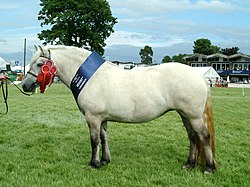
A Highland Pony, demonstrating the pony characteristics of sturdy bone, a thick mane and tail, a small head, and small overall size
A Shetland pony shown in harness

A pony is a type of small horse, usually under a specific height at full maturity. Ponies often have thicker coats, manes and tails, compared to larger horses, and proportionally shorter legs, wider barrels, heavier bone, thicker necks and shorter heads. In modern use, breed registries and horse shows may define a pony as measuring at the withers below a certain height; height limits varying from about 142 cm (14.0 h) to 150 cm (14.3 h). Some distinguish between horse or pony based on its breed or phenotype, regardless of its height. The word pony derives from the old French poulenet, a diminutive of poulain meaning foal, a young, immature horse.[1]: 1041  A full-sized horse may sometimes be called a pony as a term of endearment.

Definition

[edit]
A pony foal

For many forms of competition, the official definition of a pony is a horse that measures up to 14.2 hands (58 inches, 147 cm) at the withers. Standard horses are taller than 14.2. The International Federation for Equestrian Sports defines the official cutoff point at 148 centimetres (58.3 in; 14.2 hands) without shoes and 149 centimetres (58.66 in; 14.2+12 hands) with shoes.[2] However, the term pony can be used in general (or affectionately) for any small horse, regardless of its actual size or breed. Furthermore, some horse breeds may have individuals who mature under that height but are still called horses and are allowed to compete as horses. In Australia, horses that measure from 14 to 15 hands (142 to 152 cm; 56 to 60 inches) are known as a "galloway", and ponies in Australia measure under 14 hands (56 inches, 142 cm).[3]

History

[edit]
A pony near a mountain

Ponies originally developed as a landrace adapted to a harsh natural environment, and were considered part of the "draft" subtype typical of Northern Europe. At one time, it was hypothesized that they may have descended from a wild "draft" subspecies of Equus ferus.[4] Studies of mitochondrial DNA (which is passed on through the female line) indicate that a large number of wild mares have contributed to modern domestic breeds;[5][6] in contrast, studies of y-DNA (passed down the male line) suggest that there was possibly just one single male ancestor of all domesticated breeds.[7] Domestication of the horse probably first occurred in the Eurasian steppes with horses of between 13 hands (52 inches, 132 cm) to over 14 hands (56 inches, 142 cm),[8] and as horse domestication spread, the male descendants of the original stallion went on to be bred with local wild mares.[7][8]

Domesticated ponies of all breeds originally developed mainly from the need for a working animal that could fulfill specific local draft and transportation needs while surviving in harsh environments. The usefulness of the pony was noted by farmers who observed that a pony could outperform a draft horse on small farms.[9]

By the 20th century, many pony breeds had Arabian and other blood added to make a more refined pony suitable for riding.[10]

Uses

[edit]
An Australian Pony shown under saddle

In many parts of the world, ponies are used as working animals, as pack animals and for pulling various horse-drawn vehicles. They are seen in many different equestrian pursuits. Some breeds, such as the Hackney pony, are primarily used for driving, while other breeds, such as the Connemara pony and Australian Pony, are used primarily for riding. Others, such as the Welsh pony, are used for both riding and driving. There is no direct correlation between a horse's size and its inherent athletic ability.[11]

Characteristics

[edit]
The Shetland pony is one of the smallest pony breeds, but is very strong.

Ponies are often distinguished by their phenotype, a stocky body, dense bone, round shape and well-sprung ribs. They have a short head, large eyes and small ears. In addition to being smaller than a horse, their legs are proportionately shorter. They have strong hooves and grow a heavier hair coat, seen in a thicker mane and tail as well as a particularly heavy winter coat.[12]

Pony breeds have developed all over the world, particularly in cold and harsh climates where hardy, sturdy working animals were needed. They are remarkably strong for their size. Breeds such as the Connemara pony are recognized for their ability to carry a full-sized adult rider. Pound for pound, ponies can pull and carry more weight than a horse.[12] Draft-type ponies are able to pull loads significantly greater than their own weight, with larger ponies capable of pulling loads comparable to those pulled by full-sized draft horses, and even very small ponies are able to pull as much as 450 percent of their own weight.[13]

Nearly all pony breeds are very hardy, easy keepers that share the ability to thrive on a more limited diet than that of a regular-sized horse, requiring half the hay for their weight as a horse, and often not needing grain at all. However, for the same reason, they are also more vulnerable to laminitis and Cushing's syndrome. They may also have problems with hyperlipidemia.[12]

Ponies are generally considered intelligent and friendly, though sometimes they also are described as stubborn or cunning.[12] The differences of opinion often result from an individual pony's degree of proper training. Ponies trained by inexperienced individuals, or only ridden by beginners, can turn out to be spoiled because their riders typically lack the experience base to correct bad habits. Properly trained ponies are appropriate mounts for children who are learning to ride. Larger ponies can be ridden by adults, as ponies are usually strong for their size.[12]

The Connemara pony is a larger pony which occasionally matures over 14.2 hands (58 inches, 147 cm)

For showing purposes, ponies are often grouped into small, medium, and large sizes. Small ponies are 12.2 hands (50 inches, 127 cm) and under, medium ponies are over 12.2 but no taller than 13.2 hands (54 inches, 137 cm), and large ponies are over 13.2 hands (54 inches, 137 cm) but no taller than 14.2 hands (58 inches, 147 cm).

The smallest equines are called miniature horses by many of their breeders and breed organizations, rather than ponies, even though they stand smaller than small ponies,[12] usually no taller than 38 inches (97 cm; 9.2 hands) at the withers. There are also miniature pony breeds.

Similar or similarly named horses

[edit]
The full-sized horses used for polo are called "polo ponies"

Some horse breeds are not defined as ponies, even when they have some animals that measure under 14.2 hands (58 inches, 147 cm). This is usually due to body build, traditional uses and overall physiology. Breeds that are considered horses regardless of height include the Arabian horse, American Quarter Horse and the Morgan horse, all of which have individual members both over and under 14.2 hands (58 inches, 147 cm).

Many horse breeds have some pony characteristics, such as small size, a heavy coat, a thick mane or heavy bone, but are considered to be horses.[12] In cases such as these, there can be considerable debate over whether to call certain breeds "horses" or "ponies." However, individual breed registries usually are the arbiters of such debates, weighing the relative horse and pony characteristics of a breed. In some breeds, such as the Welsh pony, the horse-versus-pony controversy is resolved by creating separate divisions for consistently horse-sized animals, such as the "Section D" Welsh Cob.

Some horses may be pony height due to environment more than genetics. For example, the Chincoteague pony, a feral horse that lives on Assateague Island off the coasts of Maryland and Virginia, often matures to the height of an average small horse when raised from a foal under domesticated conditions.[14]

There is debate over whether the feral Chincoteague ponies of Assateague Island are horses or ponies

Conversely, the term "pony" is occasionally used to describe horses of normal height. Horses used for polo are often called "polo ponies" regardless of height, even though they are often of Thoroughbred breeding and often well over 14.2 hands (58 inches, 147 cm). American Indigenous tribes also have the tradition of referring to their horses as "ponies", when speaking in English, even though many of the Mustang horses they used in the 19th century were close to or over 14.2 hands (58 inches, 147 cm), and most horses owned and bred by Native peoples today are of full horse height. Non-racing horses at racetracks that are used to lead the racehorses, ponying them, are called "pony horses".[15]

The term "pony" is also sometimes used to describe a full-sized horse in a humorous or affectionate sense.

The Pony Club uses the term "pony" for any mount ridden by a member, regardless of its breed or size. Pony Club members are allowed to compete with full-size horses and are not limited to pony-sized mounts.

See also

[edit]

References

[edit]

Further reading

[edit]
Revisions and contributorsEdit on WikipediaRead on Wikipedia
from Grokipedia
A pony is a type of small (Equus caballus) defined by its mature height of 14.2 hands (about 58 inches or 147 cm) or less at the , distinguishing it from full-sized horses primarily by size rather than , though ponies often exhibit a stockier build, thicker winter coats, denser and tails, and greater hardiness suited to harsher environments. These traits contribute to their reputation for endurance and longevity, with many ponies living 30–40 years or more compared to the typical 25–30 years for . Ponies have been domesticated alongside for millennia, with evidence of their use tracing back to in regions like and , where they served as pack animals, mounts, and draft animals due to their strength relative to size. Originating from diverse wild ancestors, pony breeds developed in isolated areas such as the , , and the , adapting to local climates and terrains through and . Notable breeds include the , known for its compact frame and origins in the Shetland Islands; the Welsh pony, valued for its versatility and gentle disposition; and the hardy Highland pony from , prized for its sure-footedness in rugged landscapes. In terms of temperament, ponies are generally described as intelligent, bold, and resilient, often displaying a calm yet occasionally stubborn that makes them suitable for children and riders, though their spirited energy suits competitive disciplines like , , and . Today, ponies play key roles in equestrian sports governed by organizations like the Equestrian Federation (USEF) and the Fédération Equestre Internationale (FEI), where height measurements determine eligibility for pony-specific classes, and they also serve therapeutic purposes in programs benefiting individuals with disabilities due to their patient and empathetic qualities. Conservation efforts focus on preserving rare breeds, such as the Newfoundland pony, to maintain amid modern agricultural changes.

Definition and Classification

Definition

A pony is a type of small , typically defined by its mature height at the of 14.2 hands (58 inches or 147 cm) or less. This measurement standard is widely adopted in equestrian organizations, though ponies share the same as larger horses, Equus caballus, and are distinguished primarily by size rather than genetic differences. The term "pony" originates from the Scottish word "powny" or "powney," first recorded in the mid-17th century, which derives from the Old French "poulenet," a diminutive of "poulain" meaning "foal" or "young horse," ultimately tracing back to Latin "pullus" for "young animal." This etymology reflects the historical perception of ponies as diminutive equines suitable for lighter work or children. Classification as a pony versus a horse remains a point of debate, as the distinction is based not solely on height but also on conformational traits such as stockier builds and greater hardiness, which enable ponies to thrive in harsher environments. For instance, some small-boned horses under 14.2 hands, like certain Arabians, are classified as horses by breed registries, while larger individuals from pony breeds may be designated as horses. International variations exist in height cutoffs; for example, some registries, including those in the UK for certain native breeds, use 14 hands (56 inches or 142 cm) as the limit, and the Fédération Equestre Internationale (FEI) sets 148 cm without shoes for competition ponies.

Classification Criteria

Ponies are primarily classified based on their mature height measured at the , the highest point of the shoulders, using the unit of hands where one hand equals four inches (10.16 cm). For most formal systems, a pony is defined as an equine standing under 14.2 hands (approximately 147 cm or 58 inches), with measurements taken on a level surface while the animal stands square and still. This height threshold distinguishes ponies from in competitive and registry contexts, though variations exist across organizations. Breed registries establish specific standards to categorize ponies by and type, often dividing them into subsections for breeding, showing, and competition. The Pony Clubs, Inc. (USPC), aligns with United States Equestrian Federation (USEF) guidelines, classifying ponies as small (not exceeding 12.2 hands), medium (over 12.2 but not exceeding 13.2 hands), and large (over 13.2 but not exceeding 14.2 hands). The Fédération Equestre Internationale (FEI) defines ponies as those not exceeding 148 cm at the without shoes, with measurements rounded down for values between 148.1 and 148.9 cm, and requires official for international events. National bodies like the Welsh Pony and Cob Society of America (WPCSA) further subdivide the breed into sections based on height and conformation, following US standards: Section A (Welsh Mountain Pony, not exceeding 12.2 hands), Section B (Welsh Pony, not exceeding 14.2 hands), Section C (Welsh Pony of Cob Type, not exceeding 13.2 hands), and Section D (Welsh Cob, exceeding 13.2 hands with no upper limit). Note that standards (WPCS) differ, with Section B not exceeding 13.2 hands and Section C not exceeding 14.2 hands. Classification of ponies is phenotypic rather than strictly genetic, as all ponies belong to the species Equus caballus and share the same fundamental as horses, with small size achieved through for traits like reduced skeletal growth. There is no distinct "pony genome"; instead, genomic studies reveal that size variations result from polygenic selection pressures favoring compact builds in pony populations, often in harsh environments that prioritize hardiness over stature. Exceptions to height-based classification occur when breed standards prioritize type and heritage over measurements. For instance, some Arabian horses measuring under 14.2 hands are registered and shown as horses due to their refined, horse-like conformation rather than pony traits. Conversely, certain pony breeds, such as Welsh Section B individuals approaching or at 14.2 hands, may retain pony status within their registry if they meet conformational criteria, though they could be reclassified in open competitions. Hybrids or crossbreds are typically evaluated case-by-case, with height serving as the initial criterion but overridden by pedigree in specialized registries.

Physical Characteristics

Size and Conformation

Ponies are typically defined by their height, measuring less than 14.2 hands (approximately 1.47 meters) at the , with most falling within a range of 9 to 14.2 hands. Their weights vary by and size but generally span 200 to 500 kilograms, with smaller breeds like the averaging 180 to 200 kg and larger ones like the reaching 350 to 450 kg. This compact stature contributes to their proportional build, where legs are shorter relative to body length, enhancing stability and balance, particularly on uneven ground. In terms of conformation, ponies exhibit a stocky, robust characterized by broader heads, thicker necks, and heavier compared to full-sized , which supports their and strength despite their smaller size. The body often features a wider barrel and well-sprung ribs, providing a rounded, solid appearance that aids in carrying loads relative to their frame. These traits, including strong, dense bones and a compact overall form, represent adaptations for navigating rough , promoting through enhanced traction and lower center of gravity. For instance, native breeds developed in hilly regions show particularly sturdy legs and hooves suited to rocky landscapes. Variations in conformation occur across pony types, influenced by environmental adaptations; Highland ponies, for example, possess shaggy, double-layered coats that insulate against harsh Scottish weather, while Welsh ponies tend toward finer, sleeker coats more suited to milder conditions. These physical differences underscore the breed's versatility but also tie into health considerations, as the compact build and metabolic tendencies can predispose ponies to conditions like , especially when overweight, though their hardy constitution generally confers resilience to environmental stressors.

Temperament and Behavior

Ponies are generally characterized by a temperament that emphasizes , hardiness, and boldness, setting them apart from full-sized which often display greater eagerness to please. This intelligence manifests in problem-solving abilities and a bold approach to novel situations, while their hardiness enables sustained resilience under stress. Compared to larger horses, ponies tend to exhibit more , requiring handlers to foster mutual respect rather than relying on submissive compliance. Behavioral adaptations in ponies include pronounced herd instincts that promote social cohesion in groups, often leading to territorial displays within smaller, stable units such as family bands observed in feral populations. This territoriality helps maintain group boundaries and resource access, particularly in confined or resource-limited environments. Ponies' physical hardiness further supports behavioral resilience, allowing them to adapt to harsh conditions with minimal disruption to . Overall, these traits contribute to ponies' ability to thrive in varied social contexts without the flighty reactivity sometimes seen in larger equines. In training, ponies' smaller size makes them more accessible for beginners, facilitating easier handling and mounting compared to full-sized . However, their independent nature can result in stubborn resistance or spirited reactions if lacks and positive , necessitating consistent, reward-based methods to build trust. Ponies typically enjoy a longer lifespan of 25 to 35 years, exceeding that of many horse breeds which average 25 to 30 years, due to their genetic robustness. As they age, behavioral changes such as reduced activity levels occur more gradually than in larger horses, with many maintaining social engagement and trainability well into their later years. This slower progression of age-related shifts supports prolonged companionship roles without abrupt declines in temperament.

History

Origins and Domestication

Ponies descend from prehistoric wild horses of the genus Equus, with ancestral lineages linked to small-bodied equines that roamed the Eurasian steppes beginning around 5000 BCE, adapting to harsh grassland environments. These early wild horses, similar in size to modern ponies in some populations, shared a common ancestor with species like , though genetic evidence shows Przewalski's as a distinct, line rather than a direct progenitor of domesticated ponies. records from the steppes indicate that small equines were prevalent, with body sizes under 14 hands, facilitating survival in resource-scarce regions before human intervention. Archaeological evidence from the in northern around 3500 BCE reveals early human management of corralled horses used primarily for milk and meat, representing an initial stage in equine but belonging to a lineage ancestral to rather than modern domestic horses. Genetic studies confirm that all modern domestic horses, including ponies, trace to a single event of the DOM2 lineage around 2200 BCE in the Western Eurasian steppes, particularly the lower Volga-Don region. By the late , around 2000 BCE, spread to , with evidence of small horses integrated into European societies for transport and herding, as seen in artifacts from sites in modern-day and Britain. Roman cultures further utilized these ponies from approximately 100 BCE onward, employing them for and pack work due to their hardiness in temperate climates. In isolated regions like the , small equines survived the aftermath of the last Ice Age (ending around 10,000 BCE) in refugia such as moorlands and islands, evolving into native types through for compact size and resilience against cold and poor forage. These populations, including ancestors of breeds like the and , maintained genetic continuity from prehistoric Eurasian migrants, avoiding widespread extinction events that affected larger horse populations. Modern genetic studies, analyzing mitochondrial and nuclear DNA from native pony breeds, demonstrate that pony lineages share the common ancestry of domestic horses but retain distinct markers for smaller stature due to early post-domestication selection in isolated populations and subsequent interbreeding with continental horse stocks. For instance, European pony breeds show an Asian paternal Y-chromosome origin, indicating ancient gene flow from steppe domestication centers, with higher heterozygosity in British Isles populations reflecting their isolated evolutionary history.

Breed Development

During the medieval period in , native pony breeds emerged through of hardy, small equines adapted to rugged terrains, primarily for pack work and local transport, building on early practices from ancient times. By the 11th and 12th centuries, these ponies were integral to rural economies in Britain, where breeders focused on traits like endurance and sure-footedness to navigate moors and hills. In the 18th and 19th centuries, human selection intensified for specialized roles; for instance, Welsh mountain ponies, valued for their strength in confined spaces, were bred and deployed in British coal mines during the 1700s to haul loads from the coalface. This era saw the recording of pedigrees for breeds like the in the mid-19th century, marking a shift toward formalized breeding to preserve working utility amid expanding and industry. The 19th century also facilitated the global spread of these pony breeds, as British settlers introduced them to and the for farm labor on expansive colonial lands. In , from the 1830s onward, imported ponies contributed to equine power essential for plowing, hauling, and herding in developing agricultural regions. Similarly, in the United States, smaller British pony types supplemented draft horses for lighter farm tasks during westward expansion in the mid-1800s, aiding in the cultivation of . However, industrialization profoundly impacted breed purity, as reduced demand for traditional working ponies, leading to population declines and inadvertent crossbreeding with larger imports to enhance size for remaining roles like mining. This dilution threatened the genetic integrity of native strains, prompting early conservation measures, such as the 1899 registration of ponies in the Polo Pony Stud Book to safeguard their distinct traits. In the 20th century, breeding efforts emphasized refinement through targeted crosses, notably with Arabian horses to introduce elegance and stamina while retaining pony hardiness; this influenced breeds like the Welsh, where Arabian stallions were incorporated as early as 1905 to elevate conformation for emerging equestrian sports. Registries proliferated to standardize these developments, exemplified by the establishment of the Pony Clubs in 1954, which promoted responsible breeding and youth to maintain breed standards amid modern influences. Conservation intensified post-World War II, with societies like the Dartmoor Pony Society (founded 1924) continuing protections initiated in 1899 to counter ongoing threats from habitat loss and hybridization driven by industrial legacies.

Breeds and Types

Major Pony Breeds

Pony breeds are distinguished by their compact size, typically under 14.2 hands (58 inches or 147 cm) at the , though standards vary by registry and region. Among the most prominent are native breeds, which evolved in rugged environments, alongside notable European varieties valued for their versatility and hardiness. These breeds are registered with dedicated societies that enforce standards for height, conformation, and coat colors to preserve their unique traits. The , originating from the Islands off , is renowned for its exceptional hardiness in harsh, windswept climates. Registered Shetlands must not exceed 10.2 hands (42 inches or 107 cm) in the UK under the Shetland Pony Stud-Book Society standards, though American registries allow up to 11.2 hands (46 inches or 117 cm). They exhibit a compact, muscular build with a long, thick mane and , and may be any color known in except spotted patterns. The breed's strength relative to size makes it one of the most enduring equines. Welsh Ponies, hailing from , are divided into sections with Section A (Welsh Mountain Pony) limited to 12 hands (48 inches or 122 cm), ideal for its refined, pony-like conformation. Section B ponies, taller at up to 13.2 hands (54 inches or 137 cm) in the UK or 14.2 hands (58 inches or 147 cm) in the , were developed for greater riding versatility while retaining agility and substance. Both sections feature hard, strong bodies suited to varied terrains, with coat colors encompassing all solids except and skewbald; the Society oversees registrations in the UK, while the Welsh Pony & Cob Society of America handles standards. The , from Ireland's region in the west, stands between 13 and 14.2 hands (52-58 inches or 132-147 cm), blending pony sturdiness with athletic prowess, particularly in . It has a compact, deep-girthed body with a short, broad head and strong hindquarters, displaying good intelligence and a willing disposition. Acceptable coat colors include , brown, black, gray, dun, and roan, excluding or spotted patterns; the Connemara Pony Breeders' Society in Ireland and the American Connemara Pony Society maintain breed registries. The , native to England's in , measures 12 to 14.2 hands (48-58 inches or 122-147 cm) with no minimum height, featuring a fine head, strong limbs, and an amenable, docile temperament that enhances its trainability. Its coat comes in , brown, black, gray, or , but excludes , skewbald, or blue-eyed cream dilutions. The in the UK and the of North America govern registrations, emphasizing the breed's free-moving gaits and overall balance. The Highland pony, native to the and islands, measures 13 to 14.2 hands (52-58 inches or 132-147 cm), prized for its strength and sure-footedness in rugged terrain. It features a compact, well-muscled body with strong quarters, short cannon bones, and a long, flowing mane and , exhibiting a calm and patient temperament. Coat colors are primarily dun (in shades of mouse, yellow, grey, or cream), but also include grey, brown, black, and occasionally or liver with silver mane and ; white markings are limited. The Highland Pony Society oversees the breed registry, which began in the 1830s. Internationally, the from Austria's region averages 13 to 14 hands (52-56 inches or 132-142 cm), characterized by its distinctive coat in shades from pale gold to dark liver, always with a flaxen (cream or white) mane and . This hardy has an elegant, well-proportioned frame with expressive eyes and a gentle, good-natured personality. The American Haflinger Association and World Haflinger Federation oversee global standards, restricting registration to the signature chestnut coloration. The , though pony-sized at 12.2 to 14.2 hands (50-58 inches or 127-147 cm), is classified as a originating from ponies brought by Norse settlers to in the 9th and 10th centuries. It boasts a sturdy build with a thick, double coat for cold weather and unique gaits including the smooth, four-beat tölt and the fast skeið (flying pace), alongside standard walk, trot, and canter. Coat colors vary widely, from and to and dun; the Icelandic Horse Association and international affiliates like the US Icelandic Horse Congress manage pedigrees, prohibiting new imports to preserve genetic purity.

Distinctions from Similar Equines

Ponies differ from miniature horses in both scale and conformation, with ponies representing scaled-down versions of working equines that retain a proportional, stocky build suited for labor, while miniature horses are bred as refined, toy-like replicas of full-sized horses. According to veterinary guidelines from the Center for Equine Health, miniature horses must not exceed 38 inches at the , often descending from stock but selectively inbred for compact, proportionate elegance rather than the broader, heavier-boned structure typical of ponies. This height limit for miniatures—typically 34 to 38 inches, as defined by the American Miniature Horse Association—contrasts with pony standards allowing up to 14.2 hands (58 inches), emphasizing minis' role as pets or exhibition animals over ponies' utilitarian origins. In comparison to full-sized horses, ponies belong to the same species, Equus caballus, but are primarily distinguished by height, with ponies measuring under 14.2 hands at maturity, as established by major equine registries like the Equestrian Federation. Beyond size, ponies exhibit thicker coats, manes, and tails that provide better insulation, along with a sturdier build featuring shorter legs, wider barrels, and heavier relative to their frame, enabling greater strength per unit of body weight. Ponies also reach physical and mental maturity more rapidly than horses, often by age four, compared to horses' slower development up to six or seven years, though both share similar skeletal and physiological traits. Ponies are readily differentiated from donkeys and their hybrid offspring, mules, by taxonomy and morphology, as ponies fall under Equus caballus while donkeys comprise the distinct species Equus asinus, both within the genus Equus but with incompatible chromosome counts (64 for horses/ponies versus 62 for donkeys) that render hybrids sterile. Physically, ponies lack the donkeys' characteristically long ears, narrower and more upright hooves adapted for rocky terrain, and thinner, less waterproof coats, instead sharing horses' shorter ears and broader hooves suited to softer ground. Mules, resulting from donkey sires and horse/pony dams, combine traits like enhanced endurance but retain donkey-like ears and hybrid vigor without pony-specific proportions. Edge cases arise in breed registries where height overlaps blur lines between ponies and similar equines, such as small cobs, which are stocky types exceeding pony height limits but sharing robust builds. For instance, the Society registers Section C Welsh ponies of cob type up to 13.2 hands (53 inches) as ponies, while Section D Welsh cobs over that height are classified as horses despite similar conformation, allowing some animals to qualify for dual registry based on measured stature. Similarly, Shetland ponies, limited to 11.2 hands (46 inches) by the American Shetland Pony Club, may overlap with larger miniature registries if undersized, though their working pony heritage prevents reclassification as cobs. These overlaps highlight height as the decisive criterion in registries, per the pony of under 14.2 hands outlined in equine standards.

Uses

Traditional and Work Uses

Ponies have long served in agricultural labor across , particularly during the 18th and 19th centuries, where their compact size and endurance made them suitable for pulling light carts and plows on small farms and rugged terrains. In Britain, ponies were integral to farming tasks such as hauling produce to market and assisting with soil tilling in hilly regions, leveraging their hardy conformation to navigate uneven ground efficiently. A notable extension of their agricultural utility was in , an industry tied to fuel for farming and industry; from the mid-18th century, pit ponies hauled coal tubs underground in British mines, replacing child labor after the 1842 Coal Mines Regulation Act prohibited women and children from working below ground. By 1913, approximately 70,000 pit ponies operated in British collieries, with breeds like Welsh cobs and Shetlands selected for their ability to work in low-light, confined spaces. In alone, numbers peaked at around 8,000 in 1947 but dwindled to 417 by 1967 as mechanization advanced, with the last ponies retired in 1999. Beyond , ponies excelled as animals in challenging environments, functioning as pack carriers in the where their sure-footedness allowed them to traverse bogs and mountains while transporting timber, , and game. , in particular, were bred for these roles, supporting communities by hauling loads over long distances with minimal upkeep. Militarily, ponies proved vital during conflicts like the Second Boer War (1899–1902), where South African breeds—hardy and capable of sustaining Boer commandos on 40-mile daily marches with sparse rations—outmaneuvered larger horses in the veldt's rough terrain. These ponies, often carrying multiple riders or supplies, enabled rapid guerrilla tactics and were preferred for their endurance in arid, forage-scarce conditions. Regionally, ponies in southwest contributed to by guiding sheep and across , a practice rooted in their traditional role within pastoral farming systems. In , native ponies underpinned nomadic lifestyles for centuries, facilitating seasonal migrations across the steppes by transporting yurts, protecting from predators, and enabling herders to cover vast distances in search of pasture and water. These ponies' loyalty and intuitive bond with handlers made them indispensable for clan movements and daily survival in harsh climates. The traditional work roles of ponies declined sharply after due to widespread mechanization, as tractors and machinery supplanted animal power in and , reducing the need for equine labor on farms and in pits. By the , horse and pony populations in the U.S. and halved from pre-war levels, with similar trends in Britain where pit ponies were fully phased out by the 1990s, marking the end of their industrial era. This shift reflected broader technological advancements that prioritized efficiency over the ponies' once-essential contributions.

Recreational and Therapeutic Uses

Ponies play a prominent role in recreational riding and showing, particularly for . Organizations like the Pony Clubs provide structured programs that teach riding skills through levels from D (beginner, focusing on basic horsemanship) to A (advanced equestrian competence), using ponies suitable for children due to their manageable size and steady gait. These programs include equestrian events such as , where entry-level classes for D-rated riders under 10 years old feature heights around 0.50 meters (20 inches), progressing to higher jumps in intermediate divisions, allowing children to build confidence in pony classes at local and national rallies. In the , similar initiatives through The Pony Club emphasize pony-specific showing classes in competitions, highlighting conformation and performance tailored to junior participants up to age 14. Equine-assisted therapy programs increasingly incorporate ponies to support individuals with disabilities, leveraging their smaller stature for accessibility. For children with physical disabilities, pony riding enhances balance, , coordination, and by mimicking human walking patterns during sessions. Programs like Pony Power Therapies use ponies in activities that connect participants with disabilities or life challenges to equine interaction, promoting physical and emotional growth through grooming, leading, and mounted exercises. Ponies' generally calm temperament further suits them for such therapeutic settings, providing a non-judgmental presence that aids emotional regulation. Miniature horses have gained popularity in emotional support therapy since the 2000s, valued for their hypoallergenic qualities and compact size that allows indoor use in clinical environments. Founded in 2008, Mini Therapy Horses deploys trained miniature horses to hospitals and facilities, offering comfort to pediatric patients post-surgery, veterans, and those with trauma, fostering empathy and reducing anxiety through tactile interactions. These minis, often under 34 inches tall, serve as service animals under the Americans with Disabilities Act, providing guide assistance or emotional support without triggering allergies common in other animals. In modern sports, ponies feature in racing and driving competitions that emphasize speed, agility, and teamwork. In the UK, pony racing has emerged as one of the fastest-growing equestrian disciplines for riders aged 7-15, held on licensed racecourses like Cheltenham and Ascot under rules mirroring professional horse racing, with events divided into flat and point-to-point formats to develop future jockeys. County and village shows, such as the Durham County Show, include Shetland pony races as family-oriented attractions, blending competition with community entertainment. Driving sports utilize pony breeds like Hackney in combined driving events governed by the Fédération Equestre Internationale (FEI), involving dressage, marathon (up to 20 km total), and cones phases, with international championships held every four years to showcase precision and endurance. Conservation efforts benefit from recreational uses of native pony breeds through eco-tourism initiatives that generate funding for preservation. Dartmoor ponies, for instance, participate in guided trail rides and grazing demonstrations on the moor, attracting tourists while supporting habitat maintenance through their selective browsing that promotes biodiversity. Projects harnessing native ponies for conservation grazing, such as those in the UK, combine eco-tourism events with educational drives to fund breed sustainability, with nearly £330,000 allocated in 2025 for landscape restoration involving these equines. Such activities ensure the viability of rare breeds by integrating leisure pursuits with environmental stewardship.

Cultural Significance

In Folklore and Literature

In Celtic folklore, the represents a shape-shifting spirit that frequently manifests as a or pony, luring riders into dangerous escapades before revealing its mischievous nature. Similarly, Welsh legends feature the ceffyl dŵr, a akin to a pony that inhabits pools and waterfalls, tempting travelers to mount it only to drag them underwater as a malevolent entity. These tales often portray such creatures as embodiments of the untamed , bridging the human realm with supernatural dangers. Ponies appear prominently in 19th-century literature, such as Anna Sewell's (1877), where the character Merrylegs, a plump gray pony, serves as a playful companion to children at Birtwick Park, highlighting themes of kindness and equine temperament. The Pony Express, operational from 1860 to 1861, inspired American tales of daring riders on swift horses traversing the wilderness, symbolizing the rapid connection between East and West in pre-telegraph narratives. In European folktales, ponies often symbolize mischief through figures like the , which disrupts human affairs with trickery, or freedom via their association with elusive mounts that evade capture. Medieval bestiaries further depict horses as sturdy, loyal companions that sense battle, grieve for fallen masters, and embody spirited nobility in warfare and daily toil.

In Modern Media and Sports

Ponies have become prominent figures in modern media, particularly through the enduring franchise, which originated as a line of toys introduced by in 1983 and evolved into a multimedia phenomenon spanning animations, films, and merchandise into the 2020s. The franchise's animated series, such as My Little Pony: Friendship Is Magic (2010–2019), emphasized themes of friendship and adventure, attracting a global audience and inspiring spin-offs like the 2021 Netflix film : A New Generation, which continued to engage younger viewers with colorful pony characters in contemporary storytelling. Films like Spirit: Stallion of the Cimarron (2002) incorporated pony-like elements through its depiction of young mustang colts, highlighting themes of freedom and wild equine life in animated narratives aimed at families. In sports, ponies feature prominently in organized competitions and events, showcasing their agility and versatility. The Pony of the Americas Club (POAC), founded in , hosts annual international shows such as the National Congress and International Futurity, where Pony of the Americas breeds compete in categories including , , and , drawing participants from across the and promoting the breed's athleticism. Rodeos often include pony-specific events like wild pony races, where attempt to mount and ride untamed ponies over short distances, adding excitement to traditional Western competitions and fostering early equestrian skills. Ponies also serve as cultural icons in festivals and digital spaces, blending tradition with modern outreach. In , Icelandic horses—often classified as ponies due to their compact size—are central to events like Landsmót, a biennial national festival since 1931 that features competitions in tölt (a unique four-beat ), breeding shows, and cultural demonstrations, celebrating the breed's heritage and drawing thousands of attendees. Viral internet memes, largely inspired by characters, have proliferated on platforms like and since the , using humorous edits and reaction images to engage online communities in lighthearted discussions about equine themes. Conservation campaigns highlight ponies' ecological roles, such as the use of ponies in nature reserves to graze invasive plants and restore grasslands, as seen in projects by the Exmoor Pony Society aimed at preserving . Post-2020, the rise of pony influencers on has amplified education, with equestrian creators like This Esme using to share rehoming stories and advocate for ethical care, amassing followers through content on pony rescue and training. These influencers, often partnering with organizations like World Horse Welfare, influence public perceptions of equine-human relationships by promoting positive welfare practices over exploitative methods. This digital trend ties into broader recreational sports, where ponies support therapeutic riding programs for youth development.

References

Add your contribution
Related Hubs
User Avatar
No comments yet.