


Community hub
0 subscribers8 pages, 0 posts
Recent from talks
All channels
Be the first to start a discussion here.
Be the first to start a discussion here.
Be the first to start a discussion here.
Be the first to start a discussion here.
Contribute something
Welcome to the community hub built to collect knowledge and have discussions related to Pastinaca.
Nothing was collected or created yet.
Pastinaca
View on Wikipediafrom Wikipedia
| Pastinaca | |
|---|---|

| |
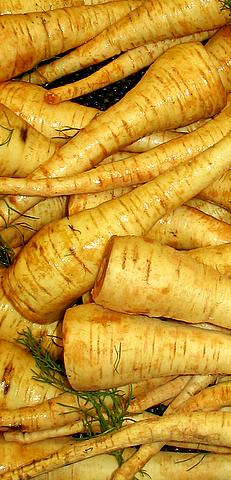
| A selection of parsnips | |
Scientific classification 
| |
| Kingdom: | Plantae |
| Clade: | Tracheophytes |
| Clade: | Angiosperms |
| Clade: | Eudicots |
| Clade: | Asterids |
| Order: | Apiales |
| Family: | Apiaceae |
| Subfamily: | Apioideae |
| Tribe: | Tordylieae |
| Subtribe: | Tordyliinae |
| Genus: | Pastinaca L.[1] |
| Species | |
|
14, see text. | |
| Synonyms[1] | |
| |
Pastinaca (parsnips) is a genus of flowering plant in the family Apiaceae, comprising 15 species. Economically, the most important member of the genus is Pastinaca sativa, the parsnip.
Etymology
[edit]The etymology of the generic name Pastinaca is not known with certainty. The name may be derived from the Latin word pastino (or pastinare), meaning "to prepare the ground for planting of the vine" (or more simply, "to dig") or the Latin word pastus, meaning "food", liberally translated as "Earth-food".[2][3]
Taxonomy
[edit]As of December 2022[update], Plants of the World Online accepted 15 species:[1]
- Pastinaca argyrophylla Delip.
- Pastinaca armena Fisch. & C.A.Mey.
- Pastinaca aurantiaca (Albov) Kolak.
- Pastinaca clausii (Ledeb.) Calest.
- Pastinaca erzincanensis Menemen & Kandemir
- Pastinaca gelendostensis (Yıld. & B.Selvi) Hand
- Pastinaca glandulosa Boiss. & Hausskn.
- Pastinaca hirsuta Pančić
- Pastinaca kochii Duby
- Pastinaca lucida L.
- Pastinaca pimpinellifolia M.Bieb.
- Pastinaca sativa L. – parsnip
- Pastinaca trysia Stapf & Wettst.
- Pastinaca yildizii Dirmenci
- Pastinaca zozimoides Fenzl
References
[edit]- ^ a b c "Pastinaca L." Plants of the World Online. Royal Botanic Gardens, Kew. Retrieved 2022-12-30.
- ^ Averill, Kristine M.; Di'Tommaso, Antonio (2007). "Wild parsnip (Pastinaca sativa): A troublesome species of increasing concern" (PDF). Weed Technology. 21: 279–287. doi:10.1614/WT-05-186.1. S2CID 86774319.
- ^ Gledhill, David (2008). The Names of Plants (PDF) (4th ed.). Cambridge University Press. p. 292. ISBN 9780521866453. Archived from the original (PDF) on 2020-01-07. Retrieved 2018-10-12.
External links
[edit]- Zehui, Pan; Watson, Mark F. "Pastinaca". Flora of China. Retrieved 11 October 2018.
 | This Apiaceae article is a stub. You can help Wikipedia by adding missing information. |
Pastinaca
View on Grokipediafrom Grokipedia
Description
Morphology
Pastinaca species are biennial to perennial herbaceous plants in the Apiaceae family, typically growing as erect, caulescent herbs that are robust to slender and branched above. They range from 0.5 to 2 meters in height, with stems that are ribbed, grooved, or polygonal, often hollow or solid, and generally glabrous but sometimes pubescent or covered in scattered fibrous remnants.[6][7] The root system is taprooted, featuring a thick, long-conic or spindle-shaped rootstock that becomes fleshy and thickened in some species, such as Pastinaca sativa, where it develops an edible, axonomorphic taproot up to 30 cm long and 10 cm wide. Leaves are alternate, petiolate, and sheathing at the base, usually 1- to 2-pinnate with broad, serrate to pinnatifid leaflets that are ovate to elliptical and glabrous to shortly hispid, measuring 10–30 cm long; lower leaves are larger and more dissected than upper ones.[6][7] The inflorescence consists of terminal and lateral compound umbels, lax and pedunculate with numerous ascending rays (10–20 or more), lacking bracts and bracteoles; individual flowers are 5-merous with minute or absent calyx teeth, ovate yellow (occasionally reddish) petals that are incurved at the apex and glabrous to hairy, and styles about as long as the ovary. Fruits are schizocarps that are broadly ellipsoid to obovate, strongly dorsally compressed, 3–8 mm long, glabrous, with filiform dorsal ribs, narrowly winged lateral ribs, one vitta per furrow, and 2–4 commissural vittae.[6][7][8] Morphological variation across the approximately 16 accepted species includes differences in indumentum, such as hirsute stems and shortly hispid leaves in Pastinaca hirsuta, compared to the glabrous stems and leaves of Pastinaca sativa. Leaf dissection ranges from simply pinnate with coarsely serrate segments in P. hirsuta to more finely 2-pinnate in some Asian species like Pastinaca armena; flower size and petal color also vary, with umbels 5–15 cm wide in most but smaller in slender species like Pastinaca clausii, and petals occasionally orange-tinged or hairy in taxa such as Pastinaca yildizii. Fruit shape differs subtly, with mericarps more ovate in P. hirsuta (rays 10–16) versus elliptic in P. sativa.[9][10][11]Reproduction and life cycle
Species in the genus Pastinaca, belonging to the Apiaceae family, exhibit a predominantly biennial life cycle, though some are short-lived perennials or monocarpic, completing reproduction in one or more years before senescence. In the first year, seedlings emerge in spring, forming a basal rosette of leaves that grows vegetatively, storing carbohydrates in an enlarged taproot for overwintering. This root acts as the primary storage organ, enabling the plant to survive cold periods and resume growth the following spring. Leaf emergence typically occurs in early spring, with the rosette expanding until the plant reaches a critical size threshold necessary for subsequent reproductive development.[12][13] Flowering is initiated in the second year (or later in perennials) and occurs during summer, generally from June to July in temperate regions, following a period of vernalization during the preceding winter. Vernalization, a prolonged exposure to cold temperatures (typically 0–10°C for several weeks), is essential for breaking dormancy and promoting the transition from vegetative to reproductive phases, with rosettes below the critical size remaining vegetative. The inflorescences form compound umbels, with flowering progressing acropetally, and the process is influenced by long day lengths post-vernalization, though not strictly photoperiodic. P. sativa is self-compatible and primarily outcrossed by insect pollinators.[12][14][15] Seed production follows pollination, with mature fruits developing as dry schizocarps that dehisce longitudinally into two mericarps by late summer, typically August. Each mericarp contains a single seed, and viability can persist for up to four years in the soil seed bank. Germination requires cold stratification, where seeds undergo a moist cold period (around 4°C for 4–12 weeks) to overcome physiological dormancy, mimicking winter conditions before warm spring temperatures (15–20°C) trigger radicle emergence. Seedling establishment is low, with high mortality rates in the first year due to environmental stresses. Vegetative reproduction is absent in most Pastinaca species, with propagation relying entirely on seeds; however, rare root suckering may occur in disturbed soils for some taxa like P. sativa.[12][13]Nomenclature
Etymology
The genus name Pastinaca derives from the Latin noun pastinaca, which historically referred to the parsnip or carrot, reflecting the plant's root vegetable characteristics.[16] This term appeared in classical Latin texts as early as the 1st century AD, where it denoted edible root plants similar to modern parsnips, often distinguished as wild or cultivated forms by Roman agronomists.[17] In Roman culture, pastinaca was valued as a staple food source, boiled, roasted, or used in dishes for its nutritional content, as noted in works by Pliny the Elder and Columella, who described its cultivation and dietary role in the Mediterranean diet.[17] The etymology of pastinaca traces primarily to pastinum, a Latin word for a two-pronged dibble or short hoe used for digging soil, particularly by winemakers to loosen earth around vines; this connection likely alludes to the tool required to harvest the deep, forked roots of parsnip-like plants.[16][17] Related to this is the verb pastināre, meaning "to dig up the ground," further emphasizing the agricultural labor involved in obtaining the edible portions.[16] An alternative interpretation links pastinaca to pastus, signifying "food" or "feed," underscoring the plant's role as a nourishing crop in ancient diets.[17] These derivations highlight the linguistic interplay between the plant's morphology, cultivation method, and culinary utility, though the precise origin remains uncertain due to overlapping usages in classical sources.[17] The binomial nomenclature for the genus was formalized by Carl Linnaeus in his seminal 1753 work Species Plantarum, where he established Pastinaca to encompass species like P. sativa, drawing directly from the ancient Latin name without alteration.[18] Linnaeus's adoption preserved the historical continuity, as the term had persisted in botanical descriptions since Roman times.Synonyms and common names
The genus Pastinaca has several taxonomic synonyms, including Pastinacha Hill, Malabaila Hoffm., Dumaniana Yıld. & B.Selvi, and the superfluous Elaphoboscum Tabern. ex Rupr..[1] In English, the genus Pastinaca is commonly known as parsnips, while P. sativa is referred to as parsnip (for the cultivated form) or wild parsnip (particularly in invasive contexts in North America).[3][19] Regional vernacular names for P. sativa include chirivía in Spanish, panais in French, and Pastinak in German; the genus as a whole is termed Pastinaken in German.[20][21]Taxonomy
Phylogenetic position
Pastinaca is placed within the family Apiaceae, subfamily Apioideae, tribe Tordylieae, and subtribe Tordyliinae. This classification is supported by both morphological and molecular data, positioning the genus firmly within the core Apioideae clade.[22] Molecular phylogenetic studies, particularly those utilizing nuclear ribosomal DNA internal transcribed spacer (nrDNA ITS) sequences, have confirmed the monophyly of Tordyliinae and Pastinaca's placement within it. These analyses reveal close relationships to genera such as Malabaila, Trigonosciadium, Heracleum, and Symphyoloma, often forming well-supported subclades characterized by shared plastid genome features like inverted repeat boundary shifts. Additionally, plastid phylogenomics indicate affinities with Torilis and Caucalis, suggesting a monophyletic grouping in broader Tordylieae reconstructions.[22] Key synapomorphies supporting this phylogenetic position include the compound umbel inflorescence structure and schizocarp fruit anatomy, featuring winged mericarps and specific vittae arrangements that distinguish Tordyliinae from other subtribes.Accepted species
The genus Pastinaca currently includes 16 accepted species, primarily distributed in the Mediterranean region and western Asia, with P. sativa designated as the type species.[1] These species are distinguished mainly by variations in stem indumentum, leaf dissection, petal color, and fruit morphology, though no formal subgenera are recognized; informal groupings often separate glabrous or sparsely haired taxa from those with dense glandular or non-glandular hairs.[9]- Pastinaca argyrophylla Delip. (2001): Characterized by silvery-gray pubescence on leaves and stems due to dense, appressed hairs.
- Pastinaca armena Fisch. & C.A.Mey. (1835): Features finely divided leaves and yellowish petals; includes subspecies with dentate or entire leaflets.[23]
- Pastinaca aurantiaca (Albov) Kolak. (1948): Distinguished by orange-tinged petals and narrowly winged fruit ribs.[24]
- Pastinaca clausii (Ledeb.) Calest. (1905): Recognized by its compact umbels and glabrous to sparsely hairy stems.[25]
- Pastinaca erzincanensis Duman & A.Dogan (2016): A recent addition with nine dorsal vittae on mericarps and glandular hairs on stems; endemic to Turkey.
- Pastinaca gelendostensis Hamzaoglu & A.Aksoy (2013): Notable for its dense glandular pubescence and pinnatisect leaves.
- Pastinaca glandulosa Rech.f. & Edelb. (1942): Identified by prominent glandular hairs on stems and inflorescences.
- Pastinaca hirsuta Pančić (1874): Differs by dense, long non-glandular hairs covering stems and leaves.[11]
- Pastinaca kochii Duby (1828): Features smooth stems and broad, ovate fruit with broad wings.[26]
- Pastinaca lucida L. (1753): Marked by glossy, hairless leaves and translucent appearance.
- Pastinaca pimpinellifolia Poir. ex DC. (1829): Distinguished by leaves resembling those of Pimpinella, with fine, feathery segments.
- Pastinaca sativa L. (1753): The type species, known for non-glandular, glabrous to minutely pubescent stems and edible taproots; widely cultivated.[27]
- Pastinaca trysia Boiss. & Heldr. (1856): Characterized by trichomes (hairs) on fruits and reddish petal bases.
- Pastinaca vanensis Menemen & Jury (2001): A newer species with four dorsal vittae per furrow and purple-spotted stems.[9]
- Pastinaca yildizii T.Dirmenci (2008): Recent description highlighting deeply pinnatifid leaves and glandular stems; from western Turkey.
- Pastinaca zozimoides (Boiss.) Boiss. (1872): Noted for zozim-like fruit compression and sparse indumentum.
Distribution and habitat
Native distribution
The genus Pastinaca is native to Eurasia, encompassing a broad range from Europe across to western Asia, including Lebanon.[1] Pastinaca sativa, the most widespread species within the genus, occurs throughout temperate Eurasia, including European countries such as France and Albania, and extending eastward through the Caucasus to the Altai Mountains in Siberia.[28][27] Several species exhibit regional endemism, particularly in western Asia; for instance, P. yildizii is restricted to the Kazdağı region of Turkey, while P. armena is native to Armenia, Azerbaijan, and adjacent areas of Turkey and the Caucasus.[9][29] Turkey supports the highest diversity within the genus, with at least eight species as of 2012 and additional ones described since, underscoring patterns of endemism in this transitional zone between Europe and Asia.[30] Biogeographically, Pastinaca species are concentrated in the Mediterranean and Irano-Turanian regions, areas that facilitated post-glacial colonization of open steppes and montane habitats such as sunny meadows.[9]Introduced ranges and invasiveness
Pastinaca sativa, commonly known as wild parsnip, has been introduced to several regions outside its native Eurasian range, primarily as a cultivated root vegetable. It was first brought to North America by European settlers in the early 17th century, with records indicating its presence in Virginia by 1609 and Massachusetts by 1629.[31] Over time, it escaped cultivation and became naturalized, now widespread across more than 40 U.S. states, particularly in the northern and midwestern regions, as well as throughout Canada.[3] The species has also been introduced to Australia, New Zealand, southern Africa, and eastern Asia, where it has naturalized in disturbed habitats such as roadsides, fields, and waste areas.[8] In its introduced ranges, P. sativa exhibits invasive behavior, forming dense monocultures that outcompete native vegetation for resources and space. This aggression is evident in North America, where it invades open grasslands, prairies, and riparian zones, reducing biodiversity by displacing indigenous plants.[32] Additionally, the plant's sap contains furanocoumarins that cause phytophotodermatitis—a severe skin reaction leading to burns and blisters upon exposure to sunlight—posing significant risks to humans, livestock, and wildlife in contact with it.[33] In Australia and New Zealand, similar ecological disruptions occur in pastoral lands, while in southern Africa and eastern Asia, it establishes in agricultural margins, though less extensively documented.[12] Management of P. sativa as an invasive species involves integrated approaches, including mechanical control through repeated mowing to prevent seed production and chemical control using herbicides like glyphosate or 2,4-D, applied during the rosette stage for efficacy.[34] It is classified as a noxious weed in several U.S. states, including Minnesota and parts of Wisconsin, where eradication efforts are mandated on public and private lands to curb its spread.[35] Preventive measures, such as monitoring disturbed sites and promoting native plantings, are recommended to limit further invasions across its introduced ranges.[36]Ecology
Pollination and dispersal
Pastinaca species, including the widely studied Pastinaca sativa, exhibit entomophilous pollination, relying primarily on a diverse array of unspecialized insects for cross-pollination. The flowers, arranged in compound umbels, produce nectar and pollen as rewards, attracting predominantly flies from the families Syrphidae and Tachinidae, as well as bees (Apidae), wasps, beetles, and ants. Observations have documented over 300 insect species visiting P. sativa flowers, with flies and bees being the most frequent visitors responsible for effective pollen transfer.[37][12] The protandrous nature of the hermaphroditic flowers, where male-phase (staminate) function precedes female-phase (pistillate) function, promotes outcrossing as the dominant breeding system, reducing self-pollination despite the absence of a strict self-incompatibility mechanism. Temporal dioecism further enhances outcrossing by staggering sex expression within and among umbels, with hermaphroditic flowers comprising 87-89% of those in primary umbels.[37][12] Seed dispersal in Pastinaca is predominantly anemochorous, facilitated by lightweight mericarps (the two-seeded fruit segments) that feature prominent dorsal and lateral ribs, enabling them to catch wind currents effectively. In field experiments with P. sativa, seeds typically travel 2-5 meters from the parent plant under natural wind conditions, though distances up to 13.9 meters have been recorded during gusts. These ribbed structures also allow for limited secondary dispersal via zoochory, where mericarps may adhere to animal fur or be carried by water during rain events, though such mechanisms contribute minimally compared to wind.[37][38][12] Pastinaca seeds form transient soil seed banks, remaining viable for up to four years, though the majority (99%) germinate within the first two years under suitable conditions. Freshly matured seeds exhibit low initial germination (4-13% in the first year), with viability declining progressively without environmental cues; by three to four years, germinability approaches 0%. Cold moist stratification, simulating winter conditions, is essential for breaking dormancy and boosting germination rates to as high as 80% in the following spring, particularly when followed by alternating temperatures (e.g., 30/15°C) and light exposure. Heavier seeds from primary umbels show higher viability and faster germination post-stratification compared to lighter ones from tertiary umbels.[37][12][39]Interactions with other organisms
Pastinaca species, particularly P. sativa, produce furanocoumarins in their sap, which act as chemical defenses against herbivory by deterring feeding from mammals and insects through toxicity and phototoxicity.[40][41] These compounds can cause skin irritation and blistering upon contact with sunlight in sensitive animals, including humans, thereby reducing damage to foliage and roots.[40] Despite these defenses, Pastinaca hosts specialized herbivores that have coevolved tolerance, such as the parsnip webworm (Depressaria pastinacella), a lepidopteran whose larvae primarily feed on flowers, seeds, and stems, often webbing umbels to protect themselves while consuming plant tissue.[42][43] The genus is susceptible to various pathogens, including fungal diseases like Alternaria leaf spot caused by Alternaria species such as A. dauci and A. radicina, which produce small, yellowish-to-brown spots on leaves that can lead to defoliation and reduced vigor in infected plants.[44][12] Viral infections also affect Pastinaca, with celery mosaic virus (CeMV), a potyvirus transmitted by aphids, causing mosaic patterns, vein clearing, and stunted growth in foliage.[45] These pathogens can spread through contaminated tools, seeds, or vectors, exacerbating damage in dense stands. Pastinaca species form symbiotic associations with arbuscular mycorrhizal fungi from the phylum Glomeromycota, which colonize roots to enhance nutrient uptake, particularly phosphorus, from soil in exchange for plant-derived carbohydrates.[12][37] These endomycorrhizal relationships improve plant establishment in nutrient-poor soils but do not involve nitrogen-fixing symbioses, as Pastinaca lacks nodules or associations with diazotrophic bacteria typical of legumes.[12] In ecosystems, Pastinaca contributes nectar resources that attract a diverse array of unspecialized pollinators, including flies, bees, wasps, and beetles, supporting insect communities in open habitats.[12] However, in invasive contexts, P. sativa can alter grassland communities by forming dense stands that outcompete native herbaceous vegetation, thereby reducing plant species diversity and shifting habitat structure.[35][46]Uses and cultivation
Culinary and economic importance
Pastinaca sativa, commonly known as parsnip, has been cultivated as a root vegetable since antiquity, with historical records indicating its use by ancient Greeks and Romans for food and medicinal purposes.[47] The plant was likely domesticated from wild Eurasian forms during Roman times, spreading across Europe as a staple crop by the Middle Ages, where it served as a primary sweetener before widespread sugar availability.[12] Today, it remains an important cool-season crop, primarily grown in temperate regions for its edible taproot. In culinary applications, parsnip roots are harvested after the first frost to maximize sweetness, as cold temperatures convert stored starches into sugars.[48] The roots are versatile, often boiled, roasted, pureed, or incorporated into soups, stews, and pies for their nutty, carrot-like flavor.[15] Young leaves and shoots can be cooked as a green vegetable or used as an herb in salads and dishes, similar to parsley, though they are less commonly consumed due to their bitterness when mature.[15] Economically, P. sativa is a significant crop in Europe, with the Netherlands leading exports at over 186,000 metric tons in 2023, supplying fresh roots to markets across the continent.[49] In the United Kingdom, it supports domestic vegetable output, contributing to the sector's value of £2 billion as of 2024, though production faces challenges from weather variability.[50] Seeds are harvested for essential oil extraction, valued for their high furocoumarin content in pharmaceutical and cosmetic applications.[51] Rising demand for organic produce has boosted market value, aligning with EU goals for 25% organic farmland by 2030.[52] While P. sativa dominates commercial use, other species in the genus have limited local economic roles, primarily in wild foraging.Medicinal and other uses
The roots of Pastinaca sativa have been utilized historically in traditional medicine as a diuretic to promote urine production and support kidney health, as well as an expectorant to alleviate respiratory issues such as coughs and pulmonary conditions.[53] In Persian medicine, where the plant is known as "zardak," it has been employed since at least the 10th century for various ailments, including as a kidney stone crusher through infusions or decoctions prepared from the roots and fruits.[53] However, caution is advised due to the plant's sap, which contains furanocoumarins that can cause phytophotodermatitis—severe skin burns, blistering, and discoloration upon exposure to sunlight—prompting warnings in folk practices against direct handling without protection.[54] Modern research has focused on the phytochemical falcarinol, a polyacetylene compound found in P. sativa roots, which exhibits cytotoxic effects against cancer cells in vitro, including inhibition of gastric adenocarcinoma growth and pre-neoplastic lesions in rat colon models during studies from the 2010s.[53] Other bioactive compounds, such as myristicin in the roots and seeds, contribute to the plant's pharmacological profile, with variations in myristicin content observed across cultivated varieties, potentially influencing its therapeutic and toxic properties.[55] These findings highlight Pastinaca species' potential in anti-cancer and anti-inflammatory applications, though human clinical trials remain limited. Beyond medicinal applications, Pastinaca sativa serves limited roles in other areas. As fodder for livestock, it is generally avoided due to its toxicity, which can inhibit weight gain and fertility in grazing animals through furanocoumarin ingestion, reducing its value in forage crops.[56] Ornamentally, the plant is occasionally cultivated in gardens for its attractive yellow umbels, which bloom in flat-topped clusters during summer, adding visual interest despite its invasive tendencies in non-managed settings.[57]References
- https://en.wiktionary.org/wiki/pastinaca