Recent from talks
Nothing was collected or created yet.
Paul Ince
View on Wikipedia
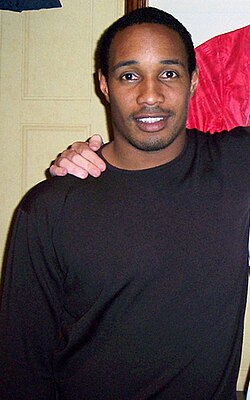
Paul Emerson Carlyle Ince (/ɪns/; born 21 October 1967) is an English professional football manager and former player who was most recently manager of Reading. A midfielder, Ince played professionally from 1986 to 2007, starting his career with West Ham United and later representing Manchester United, Liverpool, Middlesbrough, Wolverhampton Wanderers, Swindon Town and Macclesfield Town in England, as well as Inter Milan in Italy. With a combined total of 271 league appearances for the two, Ince is one of the few players, especially in the Premier League era, to have represented both of arch rivals Liverpool and Manchester United.
Key Information
Ince spent the majority of his playing career at the highest level; after breaking through with his boyhood club West Ham United in the Second Division, he joined Manchester United in 1989, where he won the Premier League twice, the FA Cup twice and the Football League Cup once during his six-year spell at Old Trafford. After falling out with manager Alex Ferguson, Ince was sold to Inter Milan of Serie A in 1995, where he was a runner-up in the 1997 UEFA Cup. After two years in Italy, Ince returned to the Premier League with Liverpool, later also representing Middlesbrough and Wolverhampton Wanderers in the top flight.
Ince was capped 53 times by the England national team, scoring two goals. He played at UEFA Euro 1996, the 1998 FIFA World Cup and Euro 2000, and became the first black player to captain England.[3]
After a spell as player-coach of Swindon, he retired from playing while player-manager of Macclesfield Town in 2007. He went on to manage Milton Keynes Dons (twice), Blackburn Rovers, Notts County and Blackpool. His son Tom is also a footballer.
Club career
[edit]West Ham United
[edit]Paul Emerson Carlyle Ince was born in Ilford, Greater London.[4] He grew up as a West Ham United supporter. He was spotted playing, aged 12, by West Ham manager John Lyall around the time that the club was in the Second Division and achieved a surprise FA Cup final triumph over Arsenal.[citation needed]
Ince signed for the Hammers as a trainee, aged 14. Lyall helped Ince through troubled school times eventually signing him as a YTS trainee, on leaving school, in 1984.[5] He is a product of the West Ham youth team and made his debut in English football on 30 November 1986 against Newcastle United in the First Division.[6] He became a regular player in 1987–88, proving himself to have all-round qualities of pace, stamina, uncompromising tackling and good passing ability. He also packed a powerful shot, and was awarded with England under-21 honours to go with the youth caps he acquired as an apprentice. He firmly established himself as the successor in West Ham's midfield for the veteran Billy Bonds, who retired at the end of the 1987–88 season. Unfortunately for Ince, West Ham were not enjoying one of their best spells when he broke into the team. Despite having won the FA Cup in 1980 and finished third in the league in 1986, they had failed to sustain their challenge for major honours and finished 15th in 1987 and 16th in 1988, and worse was to follow.[citation needed]
In August 1988, an eventful season for Ince began. In a struggling West Ham side, he shot to national recognition with two stunning goals in a shock 4–1 win over defending league champions Liverpool in the League Cup, and continued to score goals as the Hammers reached the semi-finals while having real trouble finding any form in the League. West Ham lost to Luton Town in the semi-finals and, despite frequent displays of individual brilliance from Ince, were relegated at the end of the season, which cost manager John Lyall his job after 15 years at the helm.
Manchester United
[edit]Ince played just once in the Second Division the following season before completing a highly controversial transfer to Manchester United for £1 million. Ince had been photographed in a Manchester United kit long before the transfer was complete, which appeared in the Daily Express. Ince received abuse from West Ham United fans for many years afterwards. The initial move was postponed after he failed a medical, but was quickly completed on 14 September 1989 after he later received the all-clear.[7]
In an article in Four Four Two magazine,[when?] Ince said:
"I spoke to Alex Ferguson and the deal was close to being done. I then went on holiday, and my agent at the time, Ambrose Mendy, said it wasn't worth me coming back to do a picture in a United shirt when the deal was completed, so I should do one before I left, and it would be released when the deal was announced. Lawrence Luster of the Daily Star took the picture and put in the library. Soon after, their sister paper, the Daily Express, were looking for a picture of me playing for West Ham, and found the one of me in the United shirt in the pile. They published it and all hell broke loose. "I came back from holiday to discover West Ham fans were going mad. It wasn't really my fault. I was only a kid, I did what my agent told me to do, then took all the crap for it."[8]
Ince eventually made his Manchester United debut in a 5–1 win over Millwall, although his next game for United came in a 5–1 Manchester derby defeat by Manchester City. Ince became a strong presence in the United midfield alongside Bryan Robson and Neil Webb, although the first season of this midfield partnership saw Robson and in particular Webb miss many games due to injury.
United won the FA Cup in his first season, defeating Crystal Palace 1–0 in a replay at Wembley after initially drawing 3–3. In both of these games, Ince was selected at right-back in favour of Viv Anderson, with his favoured central midfield position being occupied by Mike Phelan. Ince was man of the match for the replay.[9]
Over the next four seasons, Robson's United career gradually wound down until he finally left to manage Middlesbrough in 1994. During this time, Ince found himself playing alongside several other different central midfielders, including Mike Phelan, Neil Webb and Darren Ferguson. One of his best games came in February 1994, when he scored in a 2–2 away draw with former club West Ham in the Premier League.[10]
Ince won his second winners' medal when Manchester United defeated Barcelona in the final of the European Cup Winners Cup in Rotterdam in 1991, and received his third another year later when United beat Nottingham Forest in the 1992 League Cup final.[citation needed]
Manchester United continued to dominate the domestic game in 1993–94, enjoying an almost unbroken lead of the Premier League throughout the season, and Ince was the midfield general in the side which won the "double" of league and FA Cup in 1994. A year later Manchester United went to West Ham on the last day of the season, needing a win to retain their Premier League crown. They could only draw the game and Blackburn Rovers took the title. Ince's next game saw them lose the FA Cup final to Everton, leaving United without a major trophy for the first time in six seasons.
In June 1995, Ferguson sold Ince to Inter Milan for £7.5 million – at the time one of the biggest fees involving an English club. Ferguson had long sustained a tempestuous relationship with Ince, labelling him a "bottler" and a "big-time Charlie" (a statement Ferguson said later he regretted). Ince's nickname, The Guvnor, also rankled with Ferguson, who once berated him by saying, "There's only one guvnor around here, Incey, and it ain't you".[11] Many fans saw this as the prime reason for Ince being sold, rather than on footballing or economic grounds.[12][13]
While at United, Ince won two Premier League title medals as well as two FA Cup winner's medals and one winner's medal each in the European Cup Winners' Cup and Football League Cup. He had also collected runners-up medals in the League Cup twice and the FA Cup once.[citation needed]
Inter Milan
[edit]In the 1995–96 season, Inter failed to challenge for a 14th scudetto, finishing seventh in Serie A. Ince, though, had a successful first season, playing in all but four of Inter's league matches and performing well after a slow start which had started speculation that he could be on his way back to the Premier League as early as the November transfer window - with Arsenal and Newcastle United both reported to be interested. However, he would remain in Milan for two seasons.[14]
The next year, Ince had another successful season with the nerazzurri, scoring 6 times in 24 matches in the championship – in which Inter finished third – and also playing his part in Inter's run through to the UEFA Cup Final. Ince scored in the third round second-leg match away to Boavista as Inter swept all before them before meeting Schalke 04 in the final. Ince was suspended for the away first-leg as Inter lost 1–0[15] but he returned to the line-up for the home match which the Italians won 1–0 thanks to a goal from Iván Zamorano. Schalke won 4–1 in the resulting penalty shoot-out.[citation needed]
Ince was offered a new, improved contract by club president Massimo Moratti, despite having two and a half years left on his current contract. Due to family reasons he was unable to accept the contract and returned to England with Liverpool.[citation needed]
Liverpool
[edit]In July 1997, Ince returned to England, joining Manchester United's rivals Liverpool. His new club's fans were divided over his links to United.[16] In his first season at Anfield, he equalised in a 1–1 Merseyside Derby draw at home to Everton on 23 February 1998,[17] and on 6 May he scored twice in a 4–0 win over newly crowned league champions Arsenal to secure third place.[18] He equalised in a 2–2 comeback draw against United, who nonetheless won the treble.[19]
According to Graeme Le Saux's autobiography, Ince's homophobic taunting and Le Saux's reaction during a 1997 match between Liverpool and Chelsea resulted in a long-running coolness between the two players.[20] Ince won no honours in his two seasons with Liverpool, and remarked on his teammates "I just felt they were good players, but just wanted to go out all the time, and I just thought that wasn't the way. I thought they needed that professionalism on the pitch";[16] these players were dubbed the "Spice Boys" by the tabloid media for their off-field issues.[21] He fell out with Liverpool manager Gérard Houllier in the summer of 1999, when he attempted to sign Marc-Vivien Foé without consulting him.[16]
Middlesbrough
[edit]Houllier put Ince on the transfer list and the 31-year-old signed for Middlesbrough for £1 million in July 1999. He was signed by his former Manchester United midfield partner Bryan Robson.[22]
Ince received 11, 9 and 10 yellow cards in his three respective seasons.[22] On 22 October 2001, in a 2–0 home win over rivals Sunderland, he was sent off for putting his hands to Niall Quinn's face.[23] The following 10 March, he scored in a 3–0 victory against Everton at the Riverside Stadium to put Boro into the semifinals of the FA Cup,[24] but he missed the defeat to Arsenal in that round due to suspension.[25]
In July 2002, Ince left Boro after turning down a two-year contract extension, citing the long commute from his home in the northwest. He played 106 games for Boro, scoring nine goals.[26]
Wolverhampton Wanderers
[edit]In August 2002, Ince signed a one-year contract with Football League First Division side Wolverhampton Wanderers, who had just signed his former Manchester United teammate Denis Irwin.[27] In his first season outside top-flight football, he helped the team to promotion via a 3–0 win over Sheffield United in the play-off final, assisting the second goal by Nathan Blake.[28]
Ince and Irwin signed new one-year contracts to remain with Wolves for the 2003–04 FA Premier League season.[29] The team finished bottom and he was sent off in the last game of the season, a 2–0 loss to Tottenham at Molineux.[30]
With over 100 appearances to his name, Ince signed a new contract in June 2005.[31] Through thigh problems, he missed four months between August and December.[32]
In April 2006, Ince announced that he wanted to continue playing for Wolves for a further season after speaking with his friend Teddy Sheringham. However, following Ince's failure to get the manager's job at Wolves in July 2006 on Hoddle's resignation, the newly appointed manager, Mick McCarthy, decided not to offer Ince a new contract. Throughout his time with the club, Ince declared his intention to return, at some point in the future, as manager of Wolves.[33]
International career
[edit]Ince made his debut for the full England team on 9 September 1992 in a friendly match against Spain in Santander, losing 1–0.[34] Ince made history during the tour of the US when, on his seventh cap against the host nation on 6 June 1993, he became England's first black captain in the absence of David Platt and Tony Adams. England lost 2–0.[35]
Ince's only international goals came on his 12th appearance. These were two in a 7–1 win away to San Marino in the final game of the unsuccessful 1994 FIFA World Cup qualification, on 17 November 1993.[36] During Euro 96 Ince was a member of Terry Venables' England team as the midfield ball winner and got the label of "Gazza's minder",[37] whose job was to create room for Paul Gascoigne to exploit with his natural ball skills. Though the first group game ended in a disappointing 1–1 draw at Wembley against Switzerland, England went on to defeat Scotland 2–0 and then met the Netherlands and put on a display subsequently heralded as "the greatest in generations" and "the high point of the tournament for England".[38] Ince was fouled for a penalty which gave England the lead and helped them towards a 4–1 win; he also picked up a yellow card which rendered him unavailable for the quarter-final against Spain, so David Platt replaced him in a match England won in a penalty shoot-out.[39]
Venables put Ince back in the side for the semifinal against Germany, replacing the suspended Gary Neville as England switched systems to a back three, accommodating Ince in central midfield with Paul Gascoigne and David Platt. Ince was part of an England team that played well but the match rarely spent much time as one-way traffic in either direction,[40] and it finished a 1–1 draw. England lost the penalty shoot-out when Gareth Southgate missed the sixth England penalty. Ince, along with fellow midfielders Steve McManaman and Darren Anderton and captain Tony Adams, received criticism for not taking a penalty before Southgate, and Ince also sat with his back to the action for the whole time.[41][42]
Ince, in an incident reminiscent of Terry Butcher seven years earlier, started a crucial 1998 FIFA World Cup qualifier away to the Italy on 11 October 1997 with a white England shirt and ended it with a red one after his own blood soaked the shirt following a deep cut to his head. The game ended goalless and England had qualified.[43] He was selected in the England squad for the finals in France. England got through the group but succumbed in the second round to Argentina, again after a penalty shoot-out. This time Ince did take a penalty but saw it saved.[44]
Ince was sent off in a 2–1 loss against Sweden in England's first qualifying match for Euro 2000 on 5 September 1998.[45] In his absence, manager Kevin Keegan chose David Batty in central midfield.[46] When Batty himself was sent off against Poland,[47] Ince returned for the playoff against Scotland.[48][49]
In a warm up match for Euro 2000 against Malta, Ince came on as a substitute and won his 50th cap, and was subsequently named in the 22-man squad for the tournament.[50] He duly played in all three of England's group games of the tournament – winning a penalty against Romania in the last game[51] – but England lost two of three matches and were eliminated. He publicly said that he would not follow Alan Shearer into international retirement, given that he did not want to end his England career on a low note.[52]
Style of play
[edit]A tenacious, athletic, and hard-working player, Ince was known for his tireless running and ability to provide defensive support to his team in midfield.[53][54]
Managerial career
[edit]Swindon Town (player-coach)
[edit]Ince signed a one-year contract with Swindon Town as a player/coach on 31 August 2006. Swindon beat the likes of Birmingham City and West Bromwich Albion for his signature. A key factor in the transfer was Ince's long standing friendship with Town manager Dennis Wise, who had played alongside him in the England team during the 1990s.[55] He made his first start for Swindon in his second game, the 2–1 victory over MK Dons on 12 September, winning a penalty.[56] Having played one more game, he ended his contract by mutual consent on 6 October, citing long travel times from his home in Chester. He said he would remain for his coaching badges.[57]
Macclesfield Town
[edit]On 23 October 2006, Ince was confirmed as the new player-manager of Macclesfield Town in succession to Brian Horton. However, he was ineligible to play for the Silkmen until January when the transfer window opened, as Swindon Town still held his registration.[58] He joined Macclesfield with the club bottom of League Two, seven points off their nearest rivals. He then revived confidence and after a 3–0 win against Chester they managed to climb off the bottom of the table. They subsequently avoided relegation, albeit on the last day of the season. On 4 January 2007 Ince was named as League Two Manager of the Month for December. Ince retired as a player while at Macclesfield, where he only made one league appearance, as an 85th-minute substitute for Alan Navarro in a 1–1 home draw with Notts County on 5 May that saved the team from relegation.[59][60]
Milton Keynes Dons
[edit]Ince was unveiled as the new Milton Keynes Dons manager along with his assistant Ray Mathias and fitness coach Duncan Russell on 25 June 2007.[61] The Dons reached the top of their Division in September 2007[62] and other clubs began to take a serious interest. In October and November 2007, he denied rumours that he was being linked with managerless Premier League teams Wigan Athletic,[63] Derby County[64] and Championship team Norwich City.[65]
Ince was named as League Two Manager of the Month in October and December 2007, and again in April 2008.[66][67][68]
Ince's first silverware as manager came in the Football League Trophy final at Wembley on 30 March 2008, with MK Dons defeating Grimsby Town 2–0.[69] He then secured the Dons' return to League One on 19 April after they beat Stockport County 3–2.[70] A week later, the Dons became League Two champions after they beat Bradford City 2–1.[71]
Blackburn Rovers
[edit]In the close-season it was speculated that Ince had been contacted by Blackburn Rovers in their search to appoint a new manager, something that Ince himself denied.[72] However, the BBC reported that Ince would be named as Blackburn manager by the end of the week of 19 June.[73] He was appointed on 22 June and became the first black British manager in England's top division.[4] On the first day of the 2008–09 FA Premier League season, Blackburn won 3–2 against Everton at Goodison Park on 16 August.[74] Ince's 2008 summer signings included England international goalkeeper Paul Robinson, Danny Simpson (Loan), Vince Grella, Carlos Villanueva (Loan), Robbie Fowler, Mark Bunn and Keith Andrews, spending over £10 million on Robinson, Grella and Andrews.[75]
After winning just three games in 17, Ince was sacked on 16 December 2008 after just six months in charge.[76] He had been with Blackburn only 177 days, one of the shortest reigns of a Premier League manager.[77] Blackburn fans had been demanding his removal following a 5–3 loss to Manchester United at Old Trafford in the League Cup on 3 December. At the game, the crowd could be heard chanting "You don't know what you're doing" and "We want Incey out" as well as singing the name of their former manager Graeme Souness.[78]
Return to Milton Keynes Dons
[edit]On 3 July 2009, Ince signed again for Milton Keynes Dons on a two-year deal.[79][80] During Ince's second spell the Dons were less successful, finishing in 13th place in League One. On 16 April 2010, he announced that he would leave the job a year early, at the end of the 2009–10 season.[81]
Notts County
[edit]Ince returned to management on 28 October 2010, signing a three-year deal with Notts County.[82] On 3 April 2011 he left the club by mutual consent after a run of five successive defeats left them in 19th, two points above the relegation zone.[83]
Blackpool
[edit]On 18 February 2013, Blackpool appointed Ince as manager on a one-year rolling contract. He had been watching the team, for which his son Tom played, in person for over a year.[84] Ince took charge of his first match as Blackpool manager on 20 February 2013, a 2–0 defeat against Leeds United at Elland Road.[85] He earned his first win on 9 March 2013, a 2–1 victory against Watford at Vicarage Road.[86]
Under Ince, Blackpool made their best-ever start to a league season. Their victory at AFC Bournemouth on 14 September 2013 gave them 16 points out of a possible 18, with five wins and a draw in their first six games.[87] Following the game at Bournemouth, Ince was given a five-match stadium ban by The Football Association for his conduct towards a match official in the tunnel after the game. The FA concluded that his behaviour had constituted violent conduct. He was also fined £4,000.[88] Ince left Blackpool on 21 January 2014, after less than a year in charge, becoming their fourth-shortest-serving manager in their history (40 league games). Under his management, Blackpool won 12 out of 42 games and had not won since 30 November 2013.[89]
Reading
[edit]On 19 February 2022, Ince and Michael Gilkes were announced as interim managers of Championship side Reading.[90] On his debut three days later, the team won 2–1 at home to Birmingham City.[91] Despite losing 3–0 to Hull City on 23 April, Ince guided Reading to safety with two games left to play, ensuring Championship football for the club in the 2022–23 season.[92] In May 2022, Ince was given the manager's job on a permanent basis along with assistant Alex Rae who was also given a permanent role.[93]
On 11 April 2023, Ince was sacked by Reading. At the time Reading were in 22nd in the Championship and had not won in their previous eight games.[94]
Personal life
[edit]Ince married Claire in 1990. They have two sons and a daughter.[95] His eldest son, Tom, has played for the England national under-17 football team and for Ince's former club Liverpool.[96] On 1 November 2010, Ince put through a two-month loan deal to bring Tom to Notts County and on 3 August 2011 Tom signed a two-year contract with Blackpool.[97][98] The two were reunited in February 2022 when Ince became interim manager of Reading.[99]
Ince is the uncle of singer Rochelle Humes and cousin to footballer Rohan Ince and Trinidadian goalkeeper Clayton Ince.[100][101][102]
In June 2025, Ince was charged with drink driving after his Range Rover crashed into the central reservation in Neston, Wirral.[103] In July 2025, Ince received a 12 month driving ban, was fined £5,000 and ordered to pay a £2,000 statutory surcharge and £85 costs.[104]
Career statistics
[edit]Club
[edit]| Club | Season | League | National cup[a] | League cup[b] | Europe | Other | Total | |||||||
|---|---|---|---|---|---|---|---|---|---|---|---|---|---|---|
| Division | Apps | Goals | Apps | Goals | Apps | Goals | Apps | Goals | Apps | Goals | Apps | Goals | ||
| West Ham United | 1986–87 | First Division | 10 | 1 | 2 | 0 | 0 | 0 | — | 1[c] | 0 | 13 | 1 | |
| 1987–88 | First Division | 28 | 3 | 1 | 0 | 2 | 0 | — | 1[c] | 0 | 32 | 3 | ||
| 1988–89 | First Division | 33 | 3 | 7 | 1 | 7 | 3 | — | 2[c] | 1 | 49 | 8 | ||
| 1989–90 | Second Division | 1 | 0 | — | — | — | — | 1 | 0 | |||||
| Total | 72 | 7 | 10 | 1 | 9 | 3 | — | 4 | 1 | 95 | 12 | |||
| Manchester United | 1989–90 | First Division | 26 | 0 | 7 | 0 | 3 | 2 | — | — | 36 | 2 | ||
| 1990–91 | First Division | 31 | 3 | 2 | 0 | 6 | 0 | 7[d] | 0 | 1[e] | 0 | 47 | 3 | |
| 1991–92 | First Division | 33 | 3 | 3 | 0 | 7 | 0 | 3[d] | 0 | 1[f] | 0 | 47 | 3 | |
| 1992–93 | Premier League | 41 | 5 | 2 | 0 | 3 | 0 | 1[g] | 0 | — | 47 | 5 | ||
| 1993–94 | Premier League | 39 | 8 | 7 | 1 | 5 | 0 | 4[h] | 0 | 1[e] | 0 | 56 | 9 | |
| 1994–95 | Premier League | 36 | 5 | 6 | 0 | 0 | 0 | 5[h] | 0 | 1[e] | 1 | 48 | 6 | |
| Total | 206 | 24 | 27 | 1 | 24 | 2 | 20 | 0 | 4 | 1 | 281 | 28 | ||
| Inter Milan | 1995–96 | Serie A | 30 | 3 | 5 | 0 | — | 0 | 0 | — | 35 | 3 | ||
| 1996–97 | Serie A | 24 | 7 | 4 | 2 | — | 10[g] | 1 | — | 38 | 10 | |||
| Total | 54 | 10 | 9 | 2 | — | 10 | 1 | — | 73 | 13 | ||||
| Liverpool | 1997–98 | Premier League | 31 | 8 | 1 | 0 | 4 | 0 | 4[g] | 0 | — | 40 | 8 | |
| 1998–99 | Premier League | 34 | 6 | 2 | 1 | 2 | 1 | 3[g] | 1 | — | 41 | 9 | ||
| Total | 65 | 14 | 3 | 1 | 6 | 1 | 7 | 1 | — | 81 | 17 | |||
| Middlesbrough | 1999–2000 | Premier League | 32 | 3 | 0 | 0 | 3 | 1 | — | — | 35 | 4 | ||
| 2000–01 | Premier League | 30 | 2 | 3 | 0 | 2 | 0 | — | — | 35 | 2 | |||
| 2001–02 | Premier League | 31 | 2 | 4 | 1 | 1 | 0 | — | — | 36 | 3 | |||
| Total | 93 | 7 | 7 | 1 | 6 | 1 | — | — | 106 | 9 | ||||
| Wolverhampton Wanderers | 2002–03 | First Division | 37 | 2 | 3 | 1 | 2 | 0 | — | 3[i] | 0 | 45 | 3 | |
| 2003–04 | Premier League | 32 | 2 | 1 | 0 | 2 | 0 | — | — | 35 | 2 | |||
| 2004–05 | Championship | 28 | 3 | 2 | 0 | 1 | 1 | — | — | 31 | 4 | |||
| 2005–06 | Championship | 18 | 3 | 2 | 0 | 0 | 0 | — | — | 20 | 3 | |||
| Total | 115 | 10 | 8 | 1 | 5 | 1 | — | 3 | 0 | 131 | 12 | |||
| Swindon Town | 2006–07 | League Two | 3 | 0 | 0 | 0 | 0 | 0 | — | 0 | 0 | 3 | 0 | |
| Macclesfield Town | 2006–07 | League Two | 1 | 0 | — | — | — | — | 1 | 0 | ||||
| Total | 609 | 72 | 64 | 7 | 50 | 8 | 37 | 2 | 11 | 2 | 771 | 91 | ||
- ^ Includes FA Cup, Coppa Italia
- ^ Includes Football League Cup
- ^ a b c Appearance(s) in Full Members' Cup
- ^ a b Appearances in European Cup Winners' Cup
- ^ a b c Appearance in FA Charity Shield
- ^ Appearances in European Super Cup
- ^ a b c d Appearances in UEFA Cup
- ^ a b Appearances in UEFA Champions League
- ^ Appearances in First Division play-offs
International
[edit]| National team | Year | Apps | Goals |
|---|---|---|---|
| England | 1992 | 3 | 0 |
| 1993 | 9 | 2 | |
| 1994 | 3 | 0 | |
| 1995 | 1 | 0 | |
| 1996 | 10 | 0 | |
| 1997 | 9 | 0 | |
| 1998 | 9 | 0 | |
| 1999 | 4 | 0 | |
| 2000 | 5 | 0 | |
| Total | 53 | 2 | |
- Scores and results list England's goal tally first, score column indicates score after each Ince goal.
| No. | Date | Venue | Opponent | Score | Result | Competition |
|---|---|---|---|---|---|---|
| 1 | 17 November 1993 | Stadio Renato Dall'Ara, Bologna, Italy | 1–1 | 7–1 | 1994 FIFA World Cup qualification | |
| 2 | 5–1 |
Managerial statistics
[edit]- As of match played 10 April 2023[110]
| Team | From | To | Record | ||||
|---|---|---|---|---|---|---|---|
| P | W | D | L | Win % | |||
| Macclesfield Town | 23 October 2006 | 25 June 2007 | 35 | 14 | 8 | 13 | 40.0 |
| MK Dons | 25 June 2007 | 21 June 2008 | 55 | 33 | 12 | 10 | 60.0 |
| Blackburn Rovers | 21 June 2008 | 16 December 2008 | 21 | 6 | 4 | 11 | 28.6 |
| MK Dons | 6 July 2009 | 8 May 2010 | 56 | 23 | 9 | 24 | 41.1 |
| Notts County | 27 October 2010 | 3 April 2011 | 29 | 10 | 6 | 13 | 34.5 |
| Blackpool | 18 February 2013 | 21 January 2014 | 42 | 12 | 15 | 15 | 28.6 |
| Reading | 20 February 2022 | 11 April 2023 | 58 | 18 | 11 | 29 | 31.0 |
| Total | 296 | 116 | 65 | 115 | 39.2 | ||
Honours
[edit]As a player
[edit]Manchester United
- Premier League: 1992–93, 1993–94[2]
- FA Cup: 1989–90, 1993–94[111]
- Football League Cup: 1991–92[111]
- FA Charity Shield: 1990 (shared), 1993,[112] 1994[113]
- European Cup Winners' Cup: 1990–91[111]
- European Super Cup: 1991[111]
Wolverhampton Wanderers
England
Individual
- West Ham United Hammer of the Year: 1988–89[115]
- Sir Matt Busby Player of the Year: 1992–93[116]
- Premier League Player of the Month: October 1994[2]
- PFA Team of the Year: 1992–93 Premier League,[117] 1993–94 Premier League,[118] 1994–95 Premier League[118]
- Domestic Team of the Decade – Premier League 10 Seasons Awards (1992–93 to 2001–02)[119]
As a manager
[edit]Milton Keynes Dons
Individual
- Championship Manager of the Month: August 2013[120]
- League Two Manager of the Month: December 2006, October 2007, December 2007, April 2008[121]
References
[edit]- ^ a b "Paul Ince". Barry Hugman's Footballers. Archived from the original on 8 June 2024. Retrieved 9 February 2020.
- ^ a b c d "Paul Ince: Overview". Premier League. Retrieved 9 February 2020.
- ^ 10 key moments in UK race relations.
- ^ a b "Blackburn appoint Ince as manager". BBC Sport. 22 June 2008. Retrieved 16 December 2008.
- ^ Belton, Brian (2006). The Black Hammers p.76 Pennant Books. ISBN 0-9550394-5-2
- ^ "Paul Ince". www.westhamstats.info. Retrieved 10 March 2019.
- ^ "Paul Ince: The Rise and Fall of the Guv'nor". MUFC Latest. 12 July 2018. Archived from the original on 9 July 2021. Retrieved 30 June 2021.
- ^ "EXCLUSIVE: Edwards & Knox on Ince, West Ham & THAT Man Utd shirt snap - Tribal Football". www.tribalfootball.com. Retrieved 10 March 2019.
- ^ [1] Archived 27 April 2012 at the Wayback Machine
- ^ "West Ham United v Manchester United, 26 February 1994". 11v11.com. Retrieved 30 June 2021.
- ^ "Paul Ince recalls argument with angry Sir Alex Ferguson, who later called him 'big time Charlie' ahead of Liverpool vs Man United". 16 January 2020.
- ^ Johnston, Neil (25 June 2008). "Blackburn's Paul Ince enjoys return to big time". The Daily Telegraph. London. Archived from the original on 28 June 2008. Retrieved 22 May 2010.
- ^ Hunter, Andy (4 October 2008). "Ferguson: my regrets over Ince feud". The Guardian. London. Retrieved 18 October 2015.
- ^ "That was the season that was". The Independent. 6 May 1996. Archived from the original on 25 May 2022. Retrieved 10 March 2019.
- ^ "Football: Hodgson's choice limited to face unsung Schalke". Independent. 6 May 1997. Retrieved 12 May 2025.
- ^ a b c "On This Day in 1997: Former Man Utd midfielder Paul Ince signs for Liverpool". Belfast Telegraph. 17 July 2020. Retrieved 20 February 2022.
- ^ "Honours shared in Merseyside derby". BBC Sport. 24 February 1998. Retrieved 20 February 2022.
- ^ "Liverpool blitz new champions; Liverpool 4 Arsenal 0". The Birmingham Post. 7 May 1998. Retrieved 20 February 2022.
- ^ "Old-boy Ince robs United". BBC Sport. 5 May 1999. Retrieved 20 February 2022.
- ^ "How gay slurs almost wrecked my career". The Times. London. 10 September 2007. Archived from the original on 24 May 2011. Retrieved 22 May 2010.
- ^ Turton, Jonathan (17 March 2016). "Were Liverpool FC's Spice Boys really as bad as their white suits suggest?". Liverpool Echo. Retrieved 20 February 2022.
- ^ a b Vickers, Anthony (28 September 2016). "On Reflection: For all his pugnacious petulance, Paul Ince was a fantastic player for Boro". Teesside Live. Retrieved 20 February 2022.
- ^ "Boro sink Sunderland". BBC Sport. 22 October 2001. Retrieved 20 February 2022.
- ^ "Middlesbrough thrash Everton". BBC Sport. 10 March 2002. Retrieved 20 February 2022.
- ^ "Arsenal break brave Boro". 14 April 2002. Retrieved 20 February 2022.
- ^ "Ince calls time on Boro career". The Guardian. 2 July 2002. Retrieved 20 February 2022.
- ^ "Ince agrees Wolves move". BBC Sport. 6 August 2002. Retrieved 20 February 2022.
- ^ a b "After 19 years and 13 days hungry Wolves tear into the top flight". The Guardian. 27 May 2003. Retrieved 20 February 2022.
- ^ "Ince, Irwin to remain with Wolverhampton". The Globe and Mail. Bloomberg News. 11 July 2003. Retrieved 20 February 2022.
- ^ "Wolves 0–2 Tottenham". BBC Sport. 15 May 2004. Retrieved 20 February 2022.
- ^ "Ince signs new deal with Wolves". BBC Sport. 7 June 2005. Retrieved 20 February 2022.
- ^ "Ince nightmare over". Daily Mirror. 28 December 2005. Retrieved 20 February 2022.
- ^ "Curtain falls on Ince's Wolves career". Birmingham Mail. 26 July 2006. Retrieved 10 March 2019.[permanent dead link]
- ^ "Former England captain Paul Ince criticises attitude of current crop". BBC Sport. 7 September 2011. Retrieved 8 April 2019.
- ^ "Raheem Sterling becomes England's seventh black captain". Belfast Telegraph. 6 June 2019.
- ^ Diamond, Harry (18 November 2021). "Remembering the England XI that failed to reach the 1994 World Cup following San Marino result". The Football Faithful. Retrieved 20 February 2022.
- ^ Clark, Gill. "Goal.com's Top 50 English Players: Paul Ince (46)". Goal. Retrieved 19 August 2020.
- ^ Kelly, Ryan (20 May 2020). "England's Euro 96 best XI? The team that demolished the Dutch". Goal. Retrieved 19 August 2020.
- ^ Murray, Andrew (22 May 2020). "Euro 96, the complete history – part five: England overcome shootout fear". FourFourTwo. Retrieved 19 August 2020.
- ^ Parkinson, Gary (28 May 2020). "Euro 96, the complete history – part six: England's dream dies in Germany semi-final shootout". FourFourTwo. Retrieved 19 August 2020.
While each team had spells in command, the semi-final rarely spent much time as one-way traffic in either direction
- ^ Gibbons, Mike (9 July 2018). "Redemption Song? Gareth Southgate, semi-finals and football coming home". Eurosport. Retrieved 8 April 2019.
- ^ Pope, Nick. "Tale of the tape: England '96 VS England '16". ShortList. Retrieved 8 April 2019.
- ^ "Italy v England, 1997 - When Paul Ince led Three Lions to their finest hour". The Daily Telegraph.
- ^ Lacey, David (1 July 1998). "Penalties sink England again". The Guardian. Retrieved 8 April 2019.
- ^ "Awful England suffer Stockholm shocker". BBC Sport. 6 September 1998. Retrieved 20 February 2022.
- ^ "Keegan must find man for Batty's job". The Irish Times. 23 March 1999. Retrieved 20 February 2022.
- ^ Lacey, David (9 September 1999). "Batty off as England await fate". The Guardian. Retrieved 20 February 2022.
- ^ "Football: BORO TOP ENGLAND SAYS INCE". Daily Mirror. 15 October 1999. Retrieved 20 February 2022.
- ^ "Ince shows some heart in praise of Ferguson Scotland's young pretender receives the plaudits from an old master". The Herald. 19 November 1999. Retrieved 20 February 2022.
- ^ "Keegan names Euro 2000 squad". BBC Sport. British Broadcasting Corporation. 1 June 2000. Archived from the original on 31 October 2019. Retrieved 16 May 2020.
- ^ "Late penalty breaks English hearts". BBC Sport. 20 June 2000. Retrieved 20 February 2022.
- ^ "Euro 2000: Ince dismisses suggestions of international retirement". RTÉ. 25 June 2000. Retrieved 20 February 2022.
- ^ "Ince Instancabile" [Tireless Ince] (in Italian). La Repubblica. 24 March 1997. Retrieved 9 November 2017.
- ^ Gianni Mura (7 May 1997). "Tante assenze ma basta un gol" [Many absences but one goal suffices] (in Italian). La Repubblica. Retrieved 9 November 2017.
- ^ Mashiter, Nick (31 August 2006). "Ince is an inspiration". Gazette & Herald. Retrieved 20 February 2022.
- ^ "Swindon 2–1 MK Dons". BBC Sport. 12 September 2006. Retrieved 20 February 2022.
- ^ "Ince calls time on Swindon stay". The Guardian. 4 October 2006. Retrieved 20 February 2022.
- ^ "Macclesfield appoint Ince as boss". BBC Sport. 23 October 2006.
- ^ "Macclesfield 1–1 Notts County". BBC Sport. 5 May 2007. Retrieved 20 February 2022.
- ^ Powter, David. "Profile: Ince Perfect?". Goal. Retrieved 19 August 2020.
- ^ "Ince unveiled as new MK Dons boss". BBC Sport. 25 June 2007. Retrieved 25 June 2007.
- ^ "Video: Morecambe 0–1 MK Dons". Milton Keynes Citizen. 29 September 2007. Retrieved 27 March 2008.
- ^ "Ince to Wigan rumours denied". Milton Keynes Citizen. 14 November 2007. Retrieved 14 November 2007.
- ^ "Dons deny Derby link despite odds slashing". Milton Keynes Citizen. 26 November 2007. Retrieved 26 November 2007.
- ^ "Ince distances himself from speculation". Archant. 15 October 2007. Retrieved 15 October 2007.[permanent dead link]
- ^ "Boss Ince wins monthly accolade". BBC Sport. 1 November 2007. Retrieved 25 January 2008.
- ^ "MK Dons boss earns December prize". BBC Sport. 3 January 2008. Retrieved 25 January 2008.
- ^ "Ince wins final League Two award". BBC Sport. 8 May 2008. Retrieved 12 May 2008.
- ^ a b Mitchener, Mark (30 March 2008). "Grimsby 0–2 MK Dons". BBC Sport. Retrieved 20 February 2022.
- ^ "Stockport 2–3 MK Dons". BBC Sport. 19 April 2008. Retrieved 20 February 2022.
- ^ a b "Bradford 1–2 MK Dons". BBC Sport. 26 April 2008. Retrieved 20 February 2022.
- ^ "Blackburn link flattering – Ince". BBC Sport. 11 June 2008. Retrieved 16 December 2008.
- ^ "Ince set to become Blackburn boss". BBC Sport. 19 June 2008. Retrieved 16 December 2008.
- ^ McNulty, Phil (16 August 2008). "Everton 2–3 Blackburn Rovers". BBC Sport. Retrieved 20 February 2022.
- ^ "English Premier League Transfers – 2008–2009". Soccernews.com. Retrieved 19 June 2009.
- ^ "Lowly Blackburn sack boss Ince". BBC Sport. 16 December 2008. Retrieved 16 December 2008.
- ^ Murali, Vijay. "English Premier League: 20 Worst Managers in League History". Bleacher Report.
- ^ Taylor, Daniel (4 December 2008). "Blackburn fans demand Ince's head as Tevez rips into Rovers". The Guardian. London. Retrieved 16 December 2008.
- ^ "Ince Makes Dons Return". mkdons.com. Milton Keynes Dons. 3 July 2009. Archived from the original on 6 July 2009. Retrieved 4 July 2009.
- ^ "Ince reappointed as MK Dons boss". BBC Sport. 3 July 2009. Retrieved 4 July 2009.
- ^ Williams, Bob (16 April 2010). "Paul Ince announces that he will leave MK Dons at the end of the season". The Telegraph. Retrieved 10 March 2019.
- ^ "Notts County confirm Paul Ince as manager". Notts county official site. Archived from the original on 29 October 2010. Retrieved 28 October 2010.
- ^ "Paul Ince leaves Notts County 'by mutual consent'". The Guardian. 3 April 2011. Retrieved 20 February 2022.
- ^ "Paul Ince: Blackpool appoint former England captain as boss" – BBC Sport, 18 February 2013
- ^ "Leeds 2–0 Blackpool". BBC Sport. 20 February 2013. Retrieved 21 February 2013.
- ^ "Watford 1–2 Blackpool". BBC Sport. 9 March 2013. Retrieved 9 March 2013.
- ^ "Bournemouth 1-2 Blackpool". BBC Sport. British Broadcasting Corporation. 14 September 2013. Retrieved 14 September 2013.
- ^ "Paul Ince: Blackpool manager handed five-match stadium ban". BBC Sport. 8 October 2013. Retrieved 22 January 2014.
- ^ "Paul Ince: Blackpool boss sacked after less than a year in charge". BBC Sport. 21 January 2014. Retrieved 21 January 2014.
- ^ "Club statement | Royals part company with Veljko Paunovic by mutual consent". Reading F.C. 19 February 2022. Retrieved 19 February 2022.
- ^ "Reading 2–1 Birmingham City". BBC Sport. 22 February 2022. Retrieved 2 March 2022.
- ^ "Hull City 3–0 Reading". BBC Sport. 23 April 2022.
- ^ "Ince gets Reading job on permanent basis". BBC Sport. 16 May 2022.
- ^ "Relegation-threatened Reading sack manager Ince". BBC Sport. 11 April 2023. Retrieved 11 April 2023.
- ^ Bagnall, David (15 May 2004). "Footballer Paul Ince with his wife Claire and children Reah, Daniel and Tom". Alamy. Retrieved 21 June 2025.
- ^ "Paul Ince's son Thomas handed Liverpool contract". Archived from the original on 19 October 2012. Retrieved 10 March 2019.
- ^ Prentice, David (2 November 2010). "Thomas Ince joins dad Paul at Notts County". Liverpool Echo. Retrieved 12 July 2012.
- ^ "Thomas Ince leaves Liverpool FC to join Blackpool on two-year deal". Liverpool Echo. 4 August 2011. Retrieved 12 July 2012.
- ^ Smith, Peter (19 February 2022). "Paul Ince joins son Tom on day of surprises at Reading". Stoke Sentinel. Retrieved 20 February 2022.
- ^ Gritt, Emma (19 February 2012). "JLS star Marvin Humes messed up proposal to Rochelle Wiseman". metro.co.uk. Retrieved 12 July 2012.
- ^ "Paul Ince". www.thefa.com. Retrieved 12 July 2012.
- ^ "Another one joins the race". Trinidad and Tobago Football Online. 3 September 1999. Archived from the original on 17 July 2022. Retrieved 15 July 2012.
- ^ "Ex-England captain Paul Ince charged with drink driving". BBC News. 30 June 2025. Retrieved 30 June 2025.
- ^ "Ex-England star Paul Ince handed ban after admitting drink-driving". BBC News. 18 July 2025. Retrieved 18 July 2025.
- ^ a b Paul Ince at National-Football-Teams.com
- ^ "The website of dreams". Retrieved 12 November 2008.
- ^ "Paul Ince – 11 vs. 11 Profile". Retrieved 12 November 2008.
- ^ "Paul Ince – lfchistory.net Profile". Archived from the original on 21 February 2007. Retrieved 13 November 2008.
- ^ "Paul Emerson Carlyle Ince - International Appearances". RSSSF. Retrieved 10 March 2019.
- ^ "Paul Ince | Latest Betting Odds | Soccer Base". www.soccerbase.com.
- ^ a b c d "Paul Ince: The Man Utd side of 1994 was better than the Treble winners". PlanetFootball. 28 January 2023. Retrieved 8 April 2024.
- ^ Harris, Bob (8 August 1993). "It's Gunner be all Wright". Daily Mirror. London. p. 54.
- ^ "Charity Shield: Ince quells the Blackburn resistance: Seven players booked under the new rules as under-strength Rovers succumb to United's class". The Independent. 14 August 1994. Retrieved 9 April 2024.
- ^ Campbell, Paul & Lacey, David (25 June 2013). "From the Vault: Recalling How England Won Le Tournoi de France in 1997". The Guardian. London. Retrieved 3 December 2022.
- ^ "Records and honours: Awards". West Ham United F.C. Retrieved 18 April 2018.
- ^ Ganley, Joe (4 June 2022). "All of our Player of the Year winners". Manchester United. Retrieved 7 April 2023.
- ^ Lynch. The Official P.F.A. Footballers Heroes. p. 149.
- ^ a b Lynch. The Official P.F.A. Footballers Heroes. p. 150.
- ^ Davies, Christopher (15 April 2003). "The Premiership elite selection 1993–2003". The Telegraph. London. Archived from the original on 12 November 2012. Retrieved 2 October 2009.
- ^ "Ince and Vaughan named Manager and Player of the Month". Sky Sports. 6 September 2013. Retrieved 22 January 2014.
- ^ "Paul Ince". LMA. Archived from the original on 4 October 2022. Retrieved 4 October 2022.
External links
[edit]- Profile at the Liverpool F.C. website
- Paul Ince at Soccerbase
- Paul Ince management career statistics at Soccerbase
- Paul Ince coach profile at Soccerway (archived)
- Paul Ince – FIFA competition record (archived)
- Paul Ince – UEFA competition record (archive)
- Paul Ince at Englandstats.com
Paul Ince
View on GrokipediaEarly Life and Background
Childhood and Family Origins
Paul Emerson Carlyle Ince was born on 21 October 1967 in Ilford, East London, England, to parents of Caribbean origin.[12][4] His family background was working-class, with roots tracing to Barbados.[13] He spent his early years in modest circumstances in East London, initially in Ilford before moving to nearby Dagenham, areas characterized by post-war housing estates and immigrant communities from the Caribbean during the Windrush era.[14] Ince's childhood was marked by family instability and overcrowding typical of many second-generation Caribbean families in 1960s-1970s Britain. His father departed the household when Ince was two years old, followed by his mother leaving eight years later, leaving him to be raised primarily by an aunt.[15] The family resided in a two-bedroom council flat in Ilford, shared among Ince, his mother (initially), brother, sister, cousins, and aunties, with Ince sharing a bedroom with his brother amid limited space and resources.[1] This environment fostered resilience, as Ince later reflected on the challenges of growing up in such conditions without parental guidance, amid broader socio-economic pressures facing black British families at the time.[14] Despite these hardships, Ince's early exposure to football came through local play, reflecting the sport's role as an accessible outlet in urban, multi-generational households like his. He maintained close family ties, later becoming the uncle to television presenter Rochelle Humes, whom he helped raise alongside her mother after her parents' divorce.[16]Youth Development in Football
Paul Ince, born on 21 October 1967 in Ilford, East London, developed an early passion for football as a supporter of West Ham United, his local club. He was scouted by West Ham coach John Lyall at the age of 12 while playing in local matches, demonstrating raw talent and physicality that caught attention despite his unpolished style.[11] This early identification marked the beginning of structured development, transitioning him from informal street and school football to organized youth training.[6] Ince joined West Ham's youth system around 1981–1982 as a trainee, entering the club's Youth Training Scheme (YTS) program by age 14 or 15, which emphasized discipline and technical improvement amid his challenging personal background involving family hardships and behavioral issues.[17][18] The YTS, a two-year initiative for school leavers, provided rigorous coaching that honed his midfield attributes, including tackling, stamina, and ball-winning, under mentors who instilled professionalism to counter his initial rebellious tendencies.[19] West Ham's academy focused on developing versatile, hardworking players, aligning with Ince's aggressive, box-to-box style that prioritized physical duels over finesse.[20] By 1984, as a full YTS participant, Ince progressed through the youth ranks, featuring in reserve and under-18 matches that built his competitive edge, though specific youth statistics remain sparsely documented.[21] His development culminated in a first-team debut on 30 November 1986 against Newcastle United in the First Division, at age 19, where he substituted in and showcased the tenacity cultivated in the academy.[22] This breakthrough validated West Ham's youth pathway, which emphasized gradual integration over rapid promotion, enabling Ince to adapt to senior pressures while retaining his combative edge.[8]Club Playing Career
West Ham United (1981–1989)
Ince joined West Ham United's youth ranks in his early teens, progressing through the club's academy system during the early 1980s before signing as a youth trainee around age 14.[19] He made his first-team debut on 30 November 1986, appearing as a substitute in a 1–0 First Division home defeat to Newcastle United at Upton Park.[22] Ince scored his first league goal on his full home league debut against Southampton on 20 December 1986, contributing to a 2–0 victory that provided a rare highlight in West Ham's struggling season, which ended in relegation to the Second Division.[21] Establishing himself as a tenacious central midfielder characterized by relentless energy, strong tackling, and box-to-box running, Ince became a regular fixture in the team following promotion back to the First Division in 1988.[20] Over three full seasons (1986–1989), he made 86 appearances across all competitions, scoring 11 goals, with 7 of those in league play from 71 First Division outings (including substitutes).[23] Notable contributions included a brace in West Ham's 4–1 League Cup fourth-round upset over Liverpool on 30 November 1988, where his goals helped secure progression despite the Hammers' overall mid-table position and financial constraints.[24] Ince's form drew interest from larger clubs amid West Ham's inconsistent performances, culminating in his £1 million transfer to Manchester United on 14 September 1989 after a single league appearance in the 1989–90 season.[25] The move, marked by leaked photographs of Ince in a United kit prior to completion, soured relations with some West Ham supporters, though his breakout at the club laid the foundation for a distinguished career.[6]Manchester United (1989–1995)
Paul Ince joined Manchester United from West Ham United in the summer of 1989 for a transfer fee of £1 million, marking a significant move amid West Ham's relegation from the First Division.[17][26] Under manager Alex Ferguson, Ince rapidly became a central figure in midfield, providing tenacity, box-to-box energy, and goal-scoring contributions that bolstered United's push to end a 26-year league title drought.[8] His aggressive pressing and leadership helped transform the team from inconsistent performers into consistent challengers.[4] Ince's impact was evident in the trophies secured during his six seasons: the FA Cup in 1990, the European Cup Winners' Cup in 1991, the Football League Cup in 1992, the inaugural Premier League title in 1992–93, and successive Premier League and FA Cup triumphs in 1993–94.[27][8] He featured prominently in these successes, often anchoring the midfield alongside players like Bryan Robson and Steve Bruce, with his ability to break up opposition play and drive forward proving crucial in high-stakes matches.[28] Despite occasional disciplinary issues, including red cards, his overall contributions earned praise for revitalizing United's competitiveness in domestic and European competitions.[29] Ince departed Old Trafford in June 1995, sold to Inter Milan for £7.5 million—a record fee for an English player at the time—amid tensions with Ferguson.[30] Ince later asserted that he had no intention of leaving and that the club initiated the transfer without his consent, describing it as heartbreaking.[31][32] Ferguson countered that Ince had already engaged with Inter, contributing to the breakdown. This acrimonious exit ended a period in which Ince had played a pivotal role in laying the foundation for United's dominance under Ferguson.[4]
Inter Milan (1995–1997)
Ince joined Inter Milan from Manchester United in June 1995 for a transfer fee of £7 million, a significant sum reflecting his status as a high-profile English midfielder entering Serie A.[33][34] His arrival under manager Marcello Lippi was marked by immediate challenges, including encounters with racist graffiti at the club's Giuseppe Meazza stadium, which tested his resilience amid Italy's prevalent issues with fan discrimination against foreign players during the era.[35] Despite these obstacles, Ince adapted to the tactical demands of Italian football, contributing as a dynamic central midfielder known for his tenacity and box-to-box energy. Over two seasons, Ince featured in 73 competitive matches for Inter, scoring 13 goals, including a notable overhead kick against Cagliari.[36] In the 1995–96 Serie A campaign, Inter finished seventh, a disappointing result domestically, though Ince played regularly and netted several times while integrating into a squad featuring stars like Ronaldo and Javier Zanetti.[33] The following 1996–97 season saw improved European form, with Ince pivotal in Inter's run to the UEFA Cup final, where they lost to Schalke 04 on penalties after drawing 1–1 on aggregate; domestically, Inter ended fourth in Serie A.[37] His performances earned praise for leadership and versatility, positioning him as a reference point for teammates in midfield battles. Ince departed Inter in July 1997, transferring to Liverpool for £4.2 million amid reported frustrations with limited playing time toward the end of his tenure and a desire to return to English football.[38] His stint in Milan, though brief, highlighted his adaptability abroad, with 10 goals in 54 league appearances underscoring his scoring threat from midfield despite the club's inconsistent results.[11]Liverpool (1997–1999)
Ince joined Liverpool from Inter Milan on 16 July 1997 for a transfer fee of £4.2 million, signing a four-year contract and being immediately appointed club captain by manager Roy Evans, succeeding John Barnes.[39][40] The move, following his successful stint at Manchester United, drew initial skepticism from some fans due to the clubs' rivalry, though Ince later noted he encountered no hostility from supporters.[41] Over two seasons, Ince made 81 appearances in all competitions, scoring 17 goals, while in the Premier League he featured in 65 matches with 14 goals and 9 assists.[3][42] Liverpool finished third in the 1997–98 Premier League season, Ince's debut campaign, but dropped to seventh the following year amid defensive vulnerabilities and a lack of major trophies.[3] Notable contributions included a goal in the Merseyside derby against Everton during 1997–98 and a dramatic 89th-minute equaliser in a 2–2 draw against Manchester United at Anfield on 6 December 1998, salvaging a point after Liverpool trailed 2–0.[43][8] Ince's leadership as captain emphasized tenacity in midfield, but the team's inconsistency—evident in a 43% win rate across his 81 games—highlighted broader squad issues under Evans' regime.[3] Following Gérard Houllier's transition to sole manager in summer 1999, relations deteriorated; Houllier informed Ince on 6 July 1999 that he had no future at the club, citing tactical mismatches.[44] Ince departed for Middlesbrough on 2 August 1999 in a £1 million transfer, ending his Anfield tenure without silverware.[3]Middlesbrough (1999–2001)
Ince transferred to Middlesbrough from Liverpool on 30 July 1999 for a fee of £1 million, marking manager Bryan Robson's first signing of the summer window and reuniting the pair from their Manchester United days.[45][46] He was immediately installed as club captain, replacing Andy Townsend, and took on a leadership role in the Premier League squad amid the club's efforts to establish mid-table stability following previous relegation battles.[47][48] In the 1999–2000 season, Ince featured in 32 league appearances, accumulating 2,812 minutes and scoring 3 goals, as Middlesbrough finished 12th in the Premier League table with 43 points from 38 matches.[49] His tenacious midfield play, characterized by high work rate and ball-winning ability, helped anchor the team during a campaign that included notable wins against top-half sides but also inconsistent form.[6] The following 2000–01 season saw him make 30 league outings for 2,686 minutes and 2 goals, contributing to another 12th-place finish (45 points), though the period was disrupted by Robson's dismissal in January 2001 after a poor run of results, leading to interim management under Terry Venables.[49] Ince's experience proved vital in maintaining defensive solidity and providing tactical discipline, with the club conceding 47 goals in 1999–2000 and 44 in 2000–01, figures below the league average for bottom-half teams. Despite no silverware or promotion pushes, his 62 combined league appearances and 5 goals over these two seasons underscored a reliable presence that supported squad cohesion during ownership-driven ambitions for Premier League consolidation under chairman Steve Gibson.[50] Rumors of potential transfers surfaced in late 2001, but Ince remained committed to the club at that stage.[51]Wolverhampton Wanderers (2001–2004)
Ince joined Wolverhampton Wanderers on 6 August 2002, signing a one-year contract on a free transfer from Middlesbrough after being released at the end of the previous season.[52] At age 34, the former England captain provided midfield experience and leadership to a First Division side ambitious for promotion to the Premier League, with his deal reportedly worth around £500,000.[53] He quickly established himself as club captain under manager Dave Jones.[54] In the 2002–03 season, Ince made 37 league appearances and scored 2 goals, contributing to Wolves' third-place finish and qualification for the play-offs.[55] He captained the team in the play-off final against Sheffield United on 26 May 2003 at the Millennium Stadium, where Wolves secured a 3–0 victory—marked by goals from Matt Murray (own goal), Nathan Blake (assisted by Ince), and Keith Miller—to achieve promotion to the Premier League for the first time in the club's history.[56] His on-field presence and tactical acumen were credited with steadying a youthful squad during the high-stakes match.[57] Ince extended his contract for the 2003–04 Premier League campaign, where he featured in 32 matches, scoring 2 goals and providing 2 assists, often anchoring midfield despite the team's struggles. Wolves finished bottom of the table with 33 points, suffering relegation after conceding 81 goals. In March 2004, amid the relegation battle, Ince initially announced plans to retire at season's end but later indicated willingness to continue if the club desired, highlighting his commitment despite injury concerns and age.[58][59]International Career
England National Team (1992–2000)
Ince made his debut for the England national football team on 9 September 1992, appearing as a substitute in a friendly match against Spain at Estádio El Sardinero in Santander, which England lost 1–0.[2] Primarily deployed as a central midfielder, he went on to earn 53 caps between 1992 and 2000, during which he scored two goals.[2] His international career included participation in three major tournaments: UEFA Euro 1996, the 1998 FIFA World Cup, and UEFA Euro 2000.[8] Ince captained England seven times, becoming the first black player to do so on 9 June 1993 in a 2–0 friendly win over the United States at Foxboro Stadium.[8][60] Under managers Graham Taylor, Terry Venables, Glenn Hoddle, and Kevin Keegan, he featured regularly in midfield, often anchoring the team with his combative style and leadership.[11] During UEFA Euro 1996, hosted in England, Ince started all four matches as the team advanced to the semi-finals, defeating Scotland 2–0 in the group stage before elimination by Germany on penalties in the last four.[8] In qualification for the 1998 FIFA World Cup, he played a pivotal role in a goalless draw against Italy on 11 October 1997 at the Stadio Olimpico in Rome, securing England's place in the tournament despite playing with ten men after David Beckham's red card in a prior qualifier.[14] At the World Cup in France, England reached the round of 16, where Ince featured in group wins over Tunisia (2–0) and Romania (2–1), a draw with Colombia (0–0), and a penalty shootout loss to Argentina.[61] Ince's final major tournament was UEFA Euro 2000 in Belgium and the Netherlands, where England exited the group stage following a 1–0 loss to Romania on 20 June 2000—his last international appearance.[2] He retired from international duty shortly thereafter, having contributed to a period of relative stability for England amid transitions between managers and squad rebuilds.[11]Playing Style and Attributes
Strengths and Tactical Role
Paul Ince excelled as a box-to-box central midfielder, combining defensive solidity with offensive contributions in a versatile role that spanned multiple clubs and the England national team. His tactical deployment typically involved anchoring the midfield defensively while surging forward to support attacks, a style that suited formations like 4-4-2 where he provided balance between the backline and forwards. This adaptability was evident during his Manchester United tenure, where he played every minute of the 1990 FA Cup Final victory, demonstrating endurance to maintain midfield control throughout high-stakes matches.[62][18] Ince's primary strengths lay in his tenacity, physicality, and stamina, attributes that allowed him to dominate midfield battles through aggressive tackling and relentless pressing. Standing at 1.78 meters with a robust build, he disrupted opposition play effectively, often winning possession in contested areas and initiating quick counters with precise passing and quick feet. His powerful shooting further enhanced his threat from distance, as seen in his goal-scoring record across leagues, including contributions to Manchester United's early 1990s resurgence.[62][63][26] Leadership formed another cornerstone of Ince's tactical role, with him captaining Manchester United, Inter Milan, Liverpool, and England, using his vocal presence and work ethic to rally teammates and enforce structure. At Inter Milan from 1995 to 1997, his combative style complemented Italian Serie A demands for tactical discipline, helping secure the 1998 UEFA Cup despite the league's physical intensity. Critics noted his ability to read the game for interceptions, though his aggression occasionally risked bookings, underscoring a high-risk, high-reward midfield profile.[63][18][5]Criticisms and Limitations
Ince's combative and physically dominant midfield style, while effective in the Premier League's intensity, drew criticism for its limitations in technically superior leagues. At Inter Milan from 1995 to 1997, he faced initial adaptation challenges in Serie A, where greater emphasis on possession retention, precise passing, and tactical discipline exposed relative shortcomings in finesse compared to Italian counterparts. He nearly departed after three months, citing isolation from language barriers and a lack of English-speaking teammates, which hindered his integration and early performances.[64][65] His aggressive tackling and confrontational demeanor also resulted in frequent disciplinary issues, limiting his consistency. Across 306 Premier League appearances, Ince accumulated 74 yellow cards—one of the highest totals in the competition's history—along with multiple red cards that led to suspensions. At Liverpool (1997–1999), he received 11 yellows in 1997–98, 9 in 1998–99, and 10 in 1999–2000, often stemming from robust challenges deemed reckless by referees.[66] Former manager Alex Ferguson publicly critiqued Ince's self-assessment of his abilities, reportedly likening him unfavorably to Diego Maradona during a dressing-room tirade, implying overconfidence in technical prowess despite lacking the Argentine's visionary passing and dribbling. This highlighted perceptions that Ince prioritized physicality and leadership over creative subtlety, potentially capping his versatility in fluid, possession-oriented systems.[67]Managerial Career
Initial Roles: Swindon Town and Macclesfield Town (2004–2007)
Paul Ince transitioned from his playing career to coaching in late 2006, joining Swindon Town on 31 August as a player-coach after failing to secure a new contract at Wolverhampton Wanderers.[11] In this role, he appeared in three League Two matches for the club, contributing limited playing time while focusing on coaching duties to fulfill requirements for his coaching badges.[11] His stint lasted approximately one month, ending on 4 October 2006, as he sought a full managerial opportunity, though he continued coaching at Swindon briefly to complete badge obligations.[68] On 23 October 2006, Ince was appointed player-manager of Macclesfield Town on an initial 14-month contract, marking his first substantive managerial position.[69] The club languished at the bottom of League Two upon his arrival, facing immediate relegation pressure, and Ince lost his debut match 3–2 to Mansfield Town. Despite early struggles, he implemented tactical adjustments and motivational leadership, guiding Macclesfield to survival in the division by season's end.[70] Over 33 matches in charge, Ince's tenure yielded an average of 1.39 points per game, reflecting a pragmatic approach suited to the lower tiers.[10] Ince retired from playing during his Macclesfield spell in early 2007, concentrating fully on management thereafter.[71] His success in stabilizing the team—elevating them from relegation candidates to safety—earned recognition and led to his departure on 25 June 2007 for Milton Keynes Dons, where he pursued higher ambitions.[8] This period established Ince's reputation for hands-on, authoritative management derived from his playing experience, though limited by the clubs' resources and his novice status.[72]Milton Keynes Dons Stints (2007–2010, 2013–2014)
Paul Ince was appointed manager of Milton Keynes Dons on 25 June 2007, succeeding Martin Allen, with the club ambitious under chairman Pete Winkelman to climb the leagues.[73] In his first season, Ince guided the team to the League Two title, securing promotion to League One with a strong record including 35 wins across 55 competitive matches.[74] The Dons also lifted the Football League Trophy, defeating Grimsby Town 2–0 in the final at Wembley on 30 March 2008, marking Ince's first managerial silverware.[75] This double success highlighted Ince's tactical acumen in implementing a disciplined, counter-attacking style suited to lower-tier football, though reliant on squad cohesion rather than high spending. Ince departed for Blackburn Rovers on 22 June 2008, attracted by the Premier League opportunity after his accomplishments at MK Dons.[76] He returned for a second stint on 3 July 2009, signing a two-year contract to replace Roberto Di Matteo, amid expectations to build on prior success in League One.[77] The 2009–10 season saw MK Dons finish 12th with 60 points from 46 league games (17 wins, 9 draws, 20 losses), a mid-table position reflecting inconsistent form and failure to challenge for playoffs despite home strength (10 wins in 23 home league matches).[78] [79] Ince resigned on 16 April 2010, citing reduced club funding that limited squad investment and squad development, ending his association with MK Dons after two non-consecutive spells totaling over 110 matches managed.[80] The stints demonstrated Ince's ability to deliver promotion from League Two but exposed challenges in sustaining momentum at higher levels without adequate resources, with his overall points-per-game average across both periods around 1.4 in league play.[10] No further involvement with the club occurred in 2013–2014, as Ince pursued opportunities elsewhere following his MK Dons exit.Blackburn Rovers (2010–2013)
Paul Ince was appointed manager of Blackburn Rovers on 22 June 2008, succeeding Mark Hughes and signing a three-year contract.[81] This made him the first British-born black manager in the Premier League.[82] Ince inherited a squad that had finished 10th in the 2007–08 Premier League season, with the club aiming to maintain mid-table stability under owners Venky's Indian poultry conglomerate, who had recently acquired a stake but were not yet fully influential.[83] Ince's early tenure showed promise, as Blackburn secured three wins in their first six league matches, including victories over Everton and Arsenal, positioning the team 7th by mid-September.[84] However, form deteriorated sharply thereafter, with the side failing to win in the subsequent 11 league games and suffering six consecutive defeats across all competitions by December.[85] Key issues included defensive vulnerabilities, with Blackburn conceding heavily—such as 2–1 losses to Manchester United and Arsenal—and an inability to score consistently, managing only seven goals in those 11 league fixtures.[86] By the time of his dismissal on 16 December 2008, Ince had overseen 17 Premier League matches, recording three wins, five draws, and nine losses, leaving Blackburn 19th in the table and five points from safety.[83] The board cited the club's precarious position and the need to avoid relegation as the primary reasons for the decision, taken after a meeting where chairman John Williams emphasized giving Ince time but prioritizing Premier League survival.[86] Ince later attributed some internal challenges to resistance from players and staff accustomed to Hughes' regime, though no formal investigations confirmed broader issues like alleged bias against his Manchester United background.[87] His overall record at Ewood Park across 21 games in all competitions stood at six wins, five draws, and ten losses, with no trophies or significant achievements attained.[88]Later Clubs: Notts County, Blackpool, and Reading (2014–2023)
Ince returned to management with Notts County on 27 October 2010, signing a 3½-year contract.[89] He oversaw 29 matches in League One, achieving a points-per-match average of 1.24, but departed by mutual consent on 3 April 2011 after a run of five successive league defeats that contributed to the club's slide toward the relegation zone.[90][3] Ince was appointed Blackpool manager on 18 February 2013, replacing Michael Appleton midway through the Championship season, with his son Tom as a key forward in the squad.[91] He guided the team to a 15th-place finish that campaign, securing mid-table stability with four wins and seven draws in the remaining 14 matches.[3] Over 38 total matches across the 2012–13 and 2013–14 seasons, Ince recorded a points-per-match rate of 1.21, but a dismal run of nine defeats in ten games prompted his sacking on 21 January 2014, leaving Blackpool 20th in the table.[10][92][93] Ince joined Reading as caretaker manager on 20 February 2022, amid the club's struggles in the Championship.[90] In his initial 11 games, he secured four wins—including against promotion contenders Blackburn Rovers—and three draws, helping stabilize the defense and avoid immediate relegation.[94] This form earned him a permanent contract on 16 May 2022, extended to oversee the 2022–23 season.[94] Across 44 matches in the role, Ince managed a points-per-match average of 1.14, guiding Reading to safety the prior year but facing criticism for tactical rigidity and squad unrest in his full season, culminating in his dismissal on 11 April 2023 with the team seven points clear of relegation but winless in their previous eight league outings.[95][96][97]Post-Career Activities
Broadcasting and Punditry
Ince transitioned into media work after his playing career ended in 2007, balancing it with managerial roles before increasing his broadcasting commitments in the 2010s and 2020s.[98] He has served as a regular football pundit for BT Sport, providing analysis on Premier League and other matches.[54] Ince has appeared as a pundit across major UK broadcasters, including BBC Sport, ITV Sport, and Sky Sports, where his commentary draws on his experience at clubs like Manchester United and Liverpool.[99] On Sky Sports, he featured on Goals on Sunday in January 2017, discussing recent results and previewing the Manchester United versus Liverpool fixture.[100] He has also provided co-commentary for live matches, such as Brighton & Hove Albion's 1-0 victory over Manchester United on 4 May 2023 and Wolverhampton Wanderers' game against Manchester City on 17 January 2023.[101] Beyond studio analysis, Ince has engaged in promotional and family-oriented media content, including a 2022 Sky Sports segment where he and his son Tom Ince participated in a father-son quiz on football knowledge.[102] His punditry often emphasizes tactical insights from his midfield career, though appearances have been occasional rather than full-time, allowing time for after-dinner speaking and other commercial activities.[98][5]Controversies and Criticisms
Player-Era Incidents and Interpersonal Conflicts
During his time at Manchester United, Ince engaged in a heated dressing room confrontation with manager Sir Alex Ferguson following a match in the mid-1990s, where Ferguson criticized Ince's performance and leadership on the pitch. Ince recounted responding defiantly, telling Ferguson to "go f*** yourself," after which Ferguson advanced toward him aggressively, prompting four to eight teammates to physically restrain Ince to prevent a physical altercation across the treatment table.[103][104][105] This incident contributed to a 48-hour standoff between the two, exacerbating tensions that led to Ince's £7.5 million transfer to Inter Milan in July 1995.[106] Ferguson later expressed regret over publicly labeling Ince a "big-time Charlie" in a post-match television interview after a United defeat, a rare allowance of cameras into the dressing room that captured Ferguson's barbed assessment of Ince's on-field gestures as overly showy.[107] Ince viewed the comment as undermining his contributions to United's early Premier League successes, though Ferguson clarified it stemmed from tactical frustrations rather than personal animosity. At Inter Milan, Ince faced interpersonal tensions arising from persistent racist abuse from opponents and fans, which occasionally escalated into on-pitch altercations. In April 1996, during an away match at Cremonese, Ince endured monkey chants and racial slurs after scoring, responding by sarcastically applauding the referee for failing to intervene, resulting in a booking.[33] Months later, on October 6, 1996, Ince was sent off in a 2-0 Serie A win over Piacenza after officials deemed him to have struck opponent Gianpietro Piovani amid ongoing provocations, highlighting the physical confrontations he navigated in Italy's racially charged environment.[35] These episodes underscored Ince's combative style but were framed by him as reactions to unaddressed discrimination rather than unprovoked aggression. Internationally, Ince's England career included a controversial sending off on September 5, 1998, in a 2-1 World Cup qualifying loss to Sweden, where he received two yellow cards for persistent fouling. Post-match, Ince denied allegations of abusively gesturing toward the crowd, but the Football Association imposed an additional one-match ban and fined him for racially aggravated insults toward fans, a decision he contested as misinterpretation amid the frustration of the defeat.[108][109] This incident, occurring during his captaincy tenure, drew scrutiny over his temperament under pressure, though supporters attributed it to his intense, no-nonsense leadership rather than inherent indiscipline.Managerial Tenure Disputes
Ince's dismissal from Blackburn Rovers on 16 December 2008, after just six months in charge and 17 Premier League matches (yielding only three wins), stemmed primarily from the club's perilous position second-from-bottom in the table following six consecutive defeats. [110] The sacking occurred despite a three-year contract signed in June 2008, with Blackburn citing unsustainable poor results amid a relegation battle.[111] Ince later contended that he faced undue scrutiny as a former Manchester United player, while some observers speculated on racial undertones given his status as one of few black managers in the top flight; however, the Professional Footballers' Association and multiple analyses attributed the decision squarely to performance failures rather than ethnicity.[112] [113] A more acrimonious exit unfolded at Blackpool in January 2014, where Ince was sacked via text message after 13 months, during which the team slipped from promotion contenders to mid-table in the Championship, exacerbated by a winless run and heavy criticism from chairman Karl Oyston.[114] Oyston publicly lambasted Ince's training regime as inadequate and accused him of lacking tactical acumen, remarks that Ince decried as unprofessional and personal.[115] The peremptory notification method fueled Ince's ire, highlighting breakdowns in club communication and mutual recriminations over squad preparation and results, though Blackpool pointed to a 10-point deduction from prior financial issues as contextual pressure.[114] Other tenures, such as his departures from Milton Keynes Dons in 2010 and 2014, involved less overt conflict: the first due to budget constraints rendering continuation untenable, prompting Ince to step down voluntarily after guiding the club to League Two play-offs; the second aligning with his Blackpool move without reported acrimony.[80] At Reading in April 2023, Ince's contract termination after 14 months—amid a winless streak of eight Championship games and relegation-zone placement—proceeded without public dispute, as the club emphasized the need for fresh impetus with five fixtures remaining.[116] These incidents collectively underscore patterns of short tenures tied to inconsistent results, compounded by Ince's later reflections that Premier League exposure at Blackburn arrived prematurely in his coaching arc.[117]Legal and Off-Field Issues
In June 2025, Paul Ince was arrested after his Range Rover crashed into a central reservation on Chester High Road in Neston, Cheshire, prompting a police investigation into drink-driving.[118] He was formally charged with driving a motor vehicle with excess alcohol in his breath.[119] On 18 July 2025, Ince pleaded guilty at Chester Magistrates' Court, where he was disqualified from driving for 12 months, fined £5,000, ordered to pay a £2,000 victim surcharge, and £85 in court costs, totaling £7,085 in penalties.[120][121] During his playing career, Ince faced criminal charges stemming from post-match disorder. On 25 January 1995, amid the melee following Eric Cantona's infamous kick at a Crystal Palace fan during Manchester United's Premier League match at Selhurst Park, Ince was accused of common assault on a spectator after allegedly swinging a fist in the crowd.[122] He denied the charge along with a related allegation of using threatening or abusive behavior; on 24 May 1995, magistrates cleared him of both offenses, allowing him to resume international duties with England.[122] No conviction resulted from the incident.[123]Personal Life
Family and Private Relationships
Paul Ince married Claire Ince in 1990, and the couple celebrated their 33rd wedding anniversary in 2023, marking over three decades of marriage amid a profession where Ince noted that half of his former playing peers had divorced.[124][125] Claire, a homemaker originally from London, has supported Ince throughout his career, including during family relocations tied to his football commitments.[126] The couple has three children: sons Thomas (Tom) Ince and Daniel Ince, and daughter Ria Ince.[12] Tom Ince, born in 1992, followed his father into professional football and has played for clubs including Stoke City as of 2025.[12] The family resided in Cheshire during Ince's time at clubs like Liverpool and Manchester United.[127] Ince is the uncle of singer and television presenter Rochelle Humes; he assisted in raising her alongside her mother after Humes' parents divorced when she was three years old in the early 1990s.[128] This familial role extended support during Humes' childhood, though she reconnected with her biological father at age 17.[128] No public records indicate additional marriages, separations, or extramarital relationships for Ince, contrasting with reported infidelity issues among some contemporaries in football.[124]Health, Interests, and Public Persona
Ince has been diagnosed with exotropia, a hereditary strabismus condition characterized by outward deviation of one eye, often resulting in a noticeable asymmetry.[129] This condition, which can manifest or worsen in adulthood, has been visible in his public appearances but has not impeded his professional activities.[130] Among his personal interests, Ince pursues golf competitively, holding a handicap of 7 as of 2025, and has participated in events featuring former footballers.[131] He has expressed enthusiasm for returning to the course after managerial commitments, indicating it as a key leisure pursuit.[132] Ince's public persona is defined by his self-adopted nickname "The Guv'nor," earned through a reputation for midfield dominance, leadership, and unyielding competitiveness during his playing career.[4] This image portrays him as a commanding figure—tenacious, outspoken, and confrontational when necessary—qualities that extended to clashes with figures like Alex Ferguson.[133] In post-retirement media roles, he maintains this forthright style, frequently critiquing contemporary players for insufficient mental toughness and presence compared to his era's standards.[134][135] As England's first Black captain, his persona also symbolizes resilience against barriers in football.[16]Career Statistics and Records
Club Appearances and Goals
Paul Ince amassed over 800 appearances and nearly 90 goals across his club career, primarily as a tenacious central midfielder known for his tackling and occasional long-range strikes. His statistics reflect contributions in domestic leagues, cups, and European fixtures, with totals varying slightly by source due to compilation methods but consistently verified across football databases.[136]| Club | Years | Appearances | Goals |
|---|---|---|---|
| West Ham United | 1986–1989 | 86 | 11 |
| Manchester United | 1989–1995 | 281 | 29 |
| Inter Milan | 1995–1997 | 73 | 13 |
| Liverpool | 1997–1999 | 161 | 13 |
| Middlesbrough | 1999–2002 | 103 | 8 |
| Wolverhampton Wanderers | 2002–2006 | 127 | 12 |
| Macclesfield Town | 2006–2007 | 4 | 0 |
International Caps and Goals
Paul Ince represented the England national team from 1992 to 2000, accumulating 53 caps and scoring 2 goals.[2][61] His international debut occurred on 9 September 1992 in a 1–0 friendly defeat to Spain in Santander.[2] Ince's final appearance came on 20 June 2000 during England's 2–1 loss to Romania in the group stage of UEFA Euro 2000.[2] Over his England career, he featured in 26 wins, 13 draws, and 14 losses, captaining the side on 7 occasions, including as the first Black player to do so.[2][61] Ince participated in three major tournaments. At UEFA Euro 1996, hosted in England, he started all four matches as the team advanced to the semi-finals, defeating Scotland 2–0 in the group stage and the Netherlands 4–1 in the quarter-finals before a penalty shootout loss to Germany.[61] During the 1998 FIFA World Cup in France, Ince played in all three group games, including the notable 2–2 draw against Argentina where David Beckham was sent off, though England exited the group stage.[61] In UEFA Euro 2000, he appeared in the first two group matches—a 1–0 win over Portugal and a 3–2 loss to Romania—before England progressed to the quarter-finals via a 1–0 victory against Germany, only to be eliminated 3–1 after extra time by Portugal; Ince did not feature in the knockout stages.[61][2] Both of Ince's international goals were scored in World Cup qualifiers. The first came on 17 November 1993 in a 7–1 home rout of San Marino, where he netted England's seventh goal.[2] Details on the precise date and opponent for his second goal remain less prominently documented across primary statistical records, though it contributed to his overall tally of two.[2][61]| Tournament | Appearances | Goals |
|---|---|---|
| UEFA Euro 1996 | 4 | 0 |
| FIFA World Cup 1998 | 3 | 0 |
| UEFA Euro 2000 | 3 | 0 |
| Total Major Tournaments | 10 | 0 |
Managerial Win Rates and Promotions
Paul Ince's overall managerial record across 238 matches yields a win percentage of 41.18%, with 98 victories, 54 draws, and 86 defeats.[138] His win rates varied significantly by club, peaking at Milton Keynes Dons during his first tenure and declining in higher divisions or later spells.[138]| Club | Tenure Dates | Matches | Wins | Draws | Losses | Win % |
|---|---|---|---|---|---|---|
| Macclesfield Town | 23 Oct 2006 – 25 Jun 2007 | 35 | 14 | 8 | 13 | 40.00% |
| Milton Keynes Dons (1st) | 25 Jun 2007 – 21 Jun 2008 | 55 | 33 | 12 | 10 | 60.00% |
| Blackburn Rovers | 21 Jun 2008 – 16 Dec 2008 | 21 | 6 | 4 | 11 | 28.57% |
| Milton Keynes Dons (2nd) | 6 Jul 2009 – 8 May 2010 | 56 | 23 | 9 | 24 | 41.07% |
| Notts County | 27 Oct 2010 – 3 Apr 2011 | 29 | 10 | 6 | 13 | 34.48% |
| Blackpool | 18 Feb 2013 – 21 Jan 2014 | 42 | 12 | 15 | 15 | 28.57% |
