
_-_Everton_Football_Club.png/250px-Merseyside_Derby_2017_(1)_-_Everton_Football_Club.png)


_-_Everton_Football_Club.png/2000px-Merseyside_Derby_2017_(1)_-_Everton_Football_Club.png)
Community hub
Recent from talks
Contribute something
Nothing was collected or created yet.
Merseyside derby
View on Wikipedia
_-_Everton_Football_Club.png) The derby at Anfield on 10 December 2017 | |
| Other names | The friendly derby |
|---|---|
| Location | Liverpool |
| Teams | Everton Liverpool |
| First meeting | 13 October 1894 First Division Everton 3–0 Liverpool[1] |
| Latest meeting | 20 September 2025 Premier League Liverpool 2–1 Everton |
| Next meeting | 18 April 2026 Premier League Everton v Liverpool |
| Stadiums | Anfield (Liverpool) Hill Dickinson Stadium, Goodison Park (Everton) |
| Statistics | |
| Meetings total | 247 |
| Most wins | Liverpool (101) |
| Most player appearances | Neville Southall (41) |
| Top scorer | Ian Rush (25) |
| All-time series | Liverpool: 101 Drawn: 78 Everton: 68 |
| Largest victory | Liverpool 6–0 Everton (1935) |
  Everton (Goodison Park)  Liverpool Everton (Hill Dickinson Stadium) | |
The Merseyside derby is an association football match between Everton and Liverpool, two clubs based in Liverpool, Merseyside, England. It is the longest running top-flight derby in England, with its first official match being played on 13 October 1894. The derby has been played continuously since the 1962–63 season. Part of the rivalry is due to the close proximity of the two clubs' home grounds, being less than a mile apart and within sight of each other across Stanley Park, when Everton played at Goodison Park; they now play their home matches at Hill Dickinson Stadium in Vauxhall, while Liverpool still play theirs at Anfield.[2][3]
The Merseyside derby was traditionally referred to as the "friendly derby" because of the large number of families in the city with both Everton and Liverpool supporters,[4] and it was one of the few that did not enforce total fan segregation.[5] The 1984 Football League Cup final at Wembley was nicknamed the "friendly final" due to almost all sections of the ground being mixed and supporters of both teams banding together to chant "Merseyside". The 1986 FA Cup final witnessed similar scenes of solidarity.[6] Since the mid-1980s, the rivalry has intensified on and off the field, and has seen more red cards given than any other game since the creation of the Premier League.[7] In the 2010s, the derby was dominated by Liverpool, arguably becoming the most one-sided in the English top-flight. Despite this, it has become more competitive in recent years.
History
[edit]Early history
[edit]Everton Football Club were founded in 1878[8] and from 1884 played their home matches at Anfield, which was owned by club chairman John Houlding. Several board members of Everton were members of the Liberal Party,[9] who were associated with the National Temperance Federation, whilst Houlding was a Conservative Party member and a brewer whose business interests were diametrically opposed to the temperance movement. Politics and disputes over money meant that Houlding was increasingly at odds with other members of the Everton board. Friction arose between the retention of an autocratic ownership structure versus the creation of a more democratic one which closely mapped the sociopolitical divide. The result was that the Everton directors vacated Anfield in 1892 and purchased a new ground at Goodison Park on the other side of Stanley Park. Houlding responded by creating a new club, Liverpool Football Club, to use Anfield.[10][11]
The professional football clubs of the 1890s attracted much interest among the public, both on and off the field. The 1867 Reform Act had given what would become football-attending masses the opportunity to vote in the local and national elections. Everton and Liverpool attendances would reach around 10–15,000 in a local authority ward with a population of 23,000. Local politicians saw involvement in the two football clubs as an opportunity to gain media exposure to the local electorate. Irish roots and religion are also sometimes considered as theories for the split on the grounds that Houlding was a prominent Orange Order member, while Everton's new chairman George Mahon was a rival Liberal Home Rule-advocating MP.[12] Orangemen are strongly Unionist, whereas someone favouring home rule for Ireland was in favour of some degree of separation of the whole island of Ireland from the UK.[13] The city of Liverpool has more Irish blood than any other city in the UK, with the possible exception of Glasgow, and division between Protestant and Catholic groups in Ireland closely matched the division between Unionism and Republicanism in Liverpool.[14] However, at the time of the split, James Clement Baxter was the only Catholic among the Everton committee members whereas the rest were Protestants.[15]
During the 1960s, Liverpool and Everton were regular winners of domestic trophies, but while Liverpool went from strength to strength in the 1970s and 1980s, Everton went through a relatively barren spell after their 1970 title triumph and did not win a major trophy for the next 14 years.[16]
1980s
[edit]Everton, however, started to emerge as a serious threat to Liverpool's dominance of the domestic scene following the appointment of Howard Kendall as manager at the start of the 1981–82 season. The first Merseyside derby that Kendall oversaw was at Anfield on 7 November, when his side lost 3–1 to Bob Paisley's.[17] This saw Liverpool standing seventh in the league and Everton 13th.[18] An identical scoreline followed in the return game at Goodison Park in late March, by which time Liverpool had overcome a dismal start to the season to muscle in on a title race which they eventually won, while Everton were still mid-table.[19]

Key: Everton wins ■; Liverpool wins ■; Draws ■.
In 1982–83, the final season of Bob Paisley's management before he retired to make way for Joe Fagan, Liverpool were champions once again with Everton finishing mid-table, and the most notable of the two derbies occurred in early November when Liverpool triumphed 0–5 at Goodison Park. The return match at Anfield in mid-March brought a goalless draw.[20]
1983–84 was the season when Everton (who won the FA Cup at the end of the campaign) started to emerge as a serious threat to Liverpool. Though Liverpool won the league title and Everton still could not make the top five, Liverpool needed a replay to defeat Everton 1–0 in the League Cup final at Wembley. The Anfield derby in early November saw Liverpool triumph 3–0, while the clash at Goodison Park four months later ended in a 1–1 draw.[21]
The 1984–85 season began with a Merseyside derby in the FA Charity Shield at Wembley, when league champions Liverpool faced FA Cup winners Everton in a game which Everton won 1–0 due to an own goal by Bruce Grobbelaar. The first league clash came on 20 October 1984, when a 0–1 win for Everton at Anfield saw Howard Kendall's team occupy fourth place in the league and show signs of challenging for the title for the first time in his four seasons in charge, while Liverpool were a lowly 17th and just 2 points outside the relegation zone.[22] Liverpool's final game of the season came on 23 May when they lost 1–0 to Everton (who still had two games left to play) at Goodison Park. Everton had been crowned champions by this stage, while Liverpool had rallied since their terrible start to the season to occupy second place.[23][24]
1985–86 was perhaps the most exciting season for the fans of both clubs, as Liverpool and Everton battled it out for both the league title and the FA Cup. The first Merseyside derby of the season came at Goodison Park on 21 September 1985 and was won 2–3 by Liverpool, who stood second behind Manchester United while Everton occupied sixth place.[25] Everton triumphed 0–2 in the return match at Anfield five months later, by which time Everton had just taken over from Manchester United as league leaders and Liverpool were eight points behind them in second place.[26] The climax to this exciting campaign came at Wembley Stadium when Liverpool and Everton contested the first all Merseyside FA Cup final on 10 May 1986. An early goal by Gary Lineker suggested that Everton could gain revenge on Liverpool for beating them to the league title by defeating them in the FA Cup final, but in the second half the tables were turned as a double from Ian Rush and another goal from Craig Johnston made Liverpool only the fifth English club to complete the double.[27]
The 1986 FA Charity Shield was shared between Liverpool and Everton, who drew 1–1 at Wembley, but the first league derby of the season between the two clubs did not happen until late November in a goalless draw at Goodison Park. Both clubs were challenging for the title at this stage alongside Arsenal (leaders), Nottingham Forest and unlikely contenders Luton Town and Coventry City.[28] The League Cup quarter-final on 21 January 1987 saw Liverpool win 0–1 at Goodison Park. The Anfield derby in late April saw Liverpool triumph 3–1, but it was not enough to prevent Everton from winning the title within the next couple of weeks.[29] The 1986–87 season was the last time that Everton overshadowed Liverpool until 2005.[30]
In the 1988–89 season, Everton were Liverpool's first opponents in a competitive game after the Hillsborough disaster on 15 April 1989, which resulted in the deaths of 96 Liverpool fans at the FA Cup semi-final. The game between the two sides was a league fixture on 3 May which ended in a goalless draw.[31] On 20 May, the two sides met at Wembley for the second all Merseyside FA Cup final in four seasons. The match went into extra time before Liverpool triumphed 3–2, with Ian Rush (twice) and John Aldridge scoring for Liverpool and both of Everton's goals coming from Stuart McCall.[32]
1990s
[edit]
By 1990–91, Everton were in something of a slump (finishing ninth that season having started the season near the foot of the table), while Liverpool finished second in the league, but the campaign still brought one of the most pulsating clashes between the two clubs. Liverpool and Everton were drawn for the FA Cup fifth round at Anfield on 17 February 1991. The match ended in a goalless draw, and the replay three days later ended in a thrilling 4–4 draw at Goodison Park, in which Peter Beardsley scored twice. 1990–91 was Kenny Dalglish's last season as Liverpool manager, as he resigned two days after the 4–4 draw with Everton. It was also the last season of "replays of replays" as penalties after extra time took over as the competition's ultimate tie winner decider for the 1991–92 season. The second replay ended with a 1–0 win for Everton on 27 February, and ended the Reds double hopes.[33]
The close season of 1991 saw Peter Beardsley move from Liverpool to Everton, followed within a year by defender Gary Ablett, causing more tension in the Merseyside derby, though the first couple of years after their transfers saw Liverpool and Everton firmly overtaken by Manchester United and the likes of Blackburn Rovers and Arsenal as the biggest challengers in English football. On 7 December 1992, in the first derby of the Premier League era, Everton defeated Liverpool 2–1 at Goodison Park in a game where Peter Beardsley became only the second man in history to score for both clubs in the derby.[34]
The 1993–94 derby at Anfield saw Liverpool defeat Everton 2–1, not having much effect for a mid-table Liverpool side but increasing the risk of relegation (a battle which was ultimately won) for Everton. Perhaps the most notable event of this game was the winning goal by Robbie Fowler, who turned 19 the following month and was one of the most promising young players in England at the time.[35] It was the last Merseyside derby Liverpool would win for five years during a period of success for Everton in the fixture. Joe Royle's appointment as Everton manager in November 1994 following Mike Walker's dismissal began with a 2–0 win over Liverpool at Goodison Park which lifted Everton from the bottom of the table and saw Duncan Ferguson score his first goal for the club. Royle's team followed it up with an away win at Anfield with two goals from Andrei Kanchelskis the following season. Everton's derby form at Goodison Park, despite the club's travails through most of the decade, was a strong suit in the 1990s, with five victories and no defeats at home in the ten years from February 1991.
In 1997–98, Everton triumphed 2–0 at Goodison in a victory that ultimately saved them from relegation (they only stayed up by having a greater goal difference than Bolton Wanderers) and helped end Liverpool's title bid.[36] The following season Liverpool would end their barren run with a 3–2 victory over Everton at Anfield.[37]
2000s
[edit]The 2000–01 season saw one of the most exciting derbies of the Premier League era. Liverpool, having won the first derby at Anfield, completed the double with a thrilling 2–3 victory over Everton at Goodison in April, with the injury-time winner by Gary McAllister proving to be crucial at the end of the season in helping Liverpool qualify for the UEFA Champions League—which replaced the European Cup in 1992—for the first time.
By the end of the 2001–02, Liverpool had finished above Everton in the league for 15 seasons in succession. After a brilliant run of form saw Liverpool top the Premier League in October, an 11-match winless league run followed their 2–0 home win over West Ham United in early November and during that barren spell they drew 0–0 at home to an Everton side who were briefly above them in the table after several seasons of persistent relegation battles. However, they were on course for their fifth-place finish when they next met Everton on 19 April and won 1–2 at Goodison Park, a result which pushed their city neighbours towards seventh place and narrowly deprived them of European football.[38]
In 2004–05, Everton finished fourth in the league and Liverpool came fifth, the first time since Everton's 1987 title win that Liverpool had finished below them. In a season which saw Liverpool win the Champions League title, Everton gave their neighbours a reminder of how far they had progressed under the management of David Moyes with a 1–0 win at Goodison Park on 11 December 2004, though Liverpool won the return match at Anfield 2–1 three months later.[39]

Everton had a setback and finished mid-table in 2005–06, while Liverpool's compensation for their prolonged title wait came in the form of a narrow FA Cup final triumph. Liverpool triumphed 3–1 in both of the Merseyside derbies that season.[41][42]
In 2006–07, Everton recovered to finish in the top six, while Liverpool finished third, and there was an early season triumph for the blue half of Liverpool as Everton beat Liverpool 3–0 at Goodison Park in early September, in a game that saw an uncharacteristic mistake from Liverpool 'keeper Pepe Reina. They also held them to a goalless draw at Anfield in early February.[43]
Liverpool did the double over Everton in 2007–08. The first meeting of the sides that season saw one of the most controversial derbies in recent memory, with Everton finishing an ill-tempered game with 9 men. Everton took a first half lead as Sami Hyypiä skewed a left footed clearance into his own goal from a corner. The scoreline was levelled by Dirk Kuyt from the penalty spot after Everton's Tony Hibbert fouled Steven Gerrard in the area. Referee Mark Clattenburg earned the ire of the Goodison faithful as Steven Gerrard appeared to persuade him to change his mind in favour of a red card after first brandishing a yellow. Kuyt was fortunate to escape with a yellow card following a two-footed, aerial lunge on Phil Neville. Liverpool's pressure against the 10 men eventually told, as Liverpool were awarded a second penalty when Neville handled a goal bound shot from derby debutante Lucas Leiva. Neville was dismissed and Everton finished the game two players short. Kuyt scored his second goal of the game from the spot as Liverpool won the game 2–1. The victory helped secure a top-four finish and Champions League qualification for Liverpool, leaving Everton to settle for a UEFA Cup place.[44] Referee Clattenburg was not chosen to officiate again at Goodison Park after that match until December 2013, six years later, and in that period only officiated one Everton game, away at Aston Villa.
In the 2008–09 season, Liverpool and Everton met four times, Liverpool winning the League encounter at Goodison Park 0–2 while drawing the other League fixture that dealt a blow to their title ambitions. The FA Cup saw Everton defeat ten-man Liverpool in extra time in the replay thanks to an injury-time winner by Dan Gosling after a 1–1 draw at Anfield. Both teams enjoyed strong campaigns in the Premier League, as Liverpool challenged for the title and Everton qualified for Europe finishing in fifth place and 9 points adrift of the Champions League places. Everton also progressed to the 2009 FA Cup final, but lost to Chelsea, despite taking the lead through a Louis Saha goal after just 25 seconds – the fastest goal ever scored in an FA Cup Final until İlkay Gündoğan's goal against Manchester United in the 2023 FA Cup final.[45]
2010s
[edit]When the sides met in the 2009–10 season, both clubs were suffering from a poor start to the season. Liverpool won the first meeting at Goodison Park with a 2–0 victory despite Everton enjoying a greater share of possession for the game, with poor finishing and the heroics of Pepe Reina costing the home side.[46] The following game saw 10-man Liverpool win 1–0 following a first-half red card for Greek centre-half Sotirios Kyrgiakos. The Greek fiercely contested a tackle with Fellaini who was fortunate to escape similar punishment having caught the centre-back high on the shin. A solitary goal from Kuyt was enough to secure the three points, as the Dutchmen nodded home smartly from a Steven Gerrard corner.[47]
In the Goodison Park encounter on 17 October 2010 in the 2010–11 season, Everton won 2–0 with goals from Tim Cahill and Mikel Arteta, while the return league game at Anfield in January 2011 ended in a 2–2 draw.[48] This was the last win for Everton in the derby in all competitions for more than a decade, failing to win in the following 23 games whilst losing 11 times.[49]
In the 2011–12 season, Liverpool and Everton met three times, twice in the league and once in the FA Cup, with Liverpool winning all three. The first meeting took place on 1 October 2011, with Liverpool winning 0–2 in the league at Goodison Park (goals from Andy Carroll and Luis Suárez) against an Everton side depleted by Jack Rodwell's early, controversial red card, which was later rescinded by The Football Association. On 13 March 2012, Liverpool won the Anfield fixture 3–0 after a hat-trick by Steven Gerrard, who became the first player to score a hat-trick in the derby since Ian Rush in 1982.[50] The third meeting of the season was the FA Cup semi-final at Wembley on 14 April. Everton took the lead through Nikica Jelavić's goal in the first half. Liverpool equalized through a Luis Suárez goal midway through the second half, and Andy Carroll scored the winning goal for Liverpool in the 87th minute.[51] However, despite Liverpool having success throughout the season against their traditional rivals, Everton finished one place higher than Liverpool at the end of the Premier League season, whilst the Reds finished the season as the winners of the League Cup.
In the 2013–14 season, the two sides contested an eventful 3–3 draw at Goodison Park, with the lead changing on three separate occasions between both teams.[52] Later that season, Liverpool beat Everton 4–0 at Anfield during the beginning of an improbable title challenge for the Reds.[53] The result was replicated in the 2015–16 season, as Liverpool again ran out 4–0 winners in Jürgen Klopp's first experience of the Merseyside derby.[54] The game was notable for a Ramiro Funes Mori red card which saw in-form striker Divock Origi injured – the Belgian missed the remainder of the season. The result ended a run of three consecutive draws in the fixture, which was Everton's best streak in the derby for six years.[55]
Liverpool won both derbies in Klopp's first full season at the club, as dominance continued from the Red half of Merseyside. Sadio Mané scored an injury time winner at Goodison Park in December 2016, following a Daniel Sturridge left footed shot that rebounded off the post.[56] The second meeting was a more straightforward affair for the Reds, with a 3–1 victory following goals from Mané, Philippe Coutinho and Origi.
In the 2017–18 season, Mohamed Salah scored a curling left footed effort for the Reds, which would go on to win the 2018 FIFA Puskás Award for goal of the year, picking up 38% of the public vote.[57] The match ended in a 1–1 draw, after returning Evertonian Wayne Rooney equalized with a penalty.[58]
In the following season, Divock Origi scored one of the most memorable goals ever witnessed in a Merseyside derby. With the score goalless after 90 minutes, Virgil van Dijk volleyed a speculative effort towards goal which skewed off his boot and high into the air. Everton goalkeeper Jordan Pickford attempted to catch the ball but missed, as it came back down off the crossbar in front of the waiting Origi, who nodded in the winner in the sixth minute of added time.[59] The return game in March 2019 ended in a 0–0 draw at Goodison Park and saw Liverpool move down to second place, where they remained until the end of the season.[60]
Since 2019
[edit]The first meeting of the following season saw Liverpool, whose Champions league win was some compensation for their failure to secure the Premier League, welcoming a struggling Everton to Anfield. The Reds had surged into an early lead at the top of the Premier League table while the Toffees sat just above the relegation zone, which lead to the derby being described as perhaps "the most unbalanced meeting" in recent years.[61] Liverpool won the match 5–2 despite playing a rotated side, and soon after Everton sacked their manager, Marco Silva.[62] The return league fixture, which was both sides' first match in the Premier League since the season had been halted due to the COVID-19 pandemic, was played on 21 June 2020 behind closed doors at Goodison Park, and ended in a goalless draw.[63]
In between these two games, on 5 January 2020, a Liverpool team largely made up of reserves and teenagers defeated Everton 1–0 in the third round of the FA Cup at Anfield, with the winning goal coming from a curling strike outside of the area, courtesy of 18 year-old Toxteth born Curtis Jones.[64]
The first meeting of the 2020–21 season saw Everton, with a 100 percent record after four games, welcome champions Liverpool to Goodison Park. The game ended in a 2–2 draw after Jordan Henderson's strike to make it 3–2 to Liverpool in second half stoppage time was ruled out by VAR.[65] With 23 matches unbeaten in the Merseyside derby, Liverpool set a new club record for highest number of games unbeaten against the same opponent.[66] The record lasted only until the return game at Anfield on 20 February 2021, which Everton won 2–0, their first win at Anfield in any competition since 1999.[67] The defeat was also a fourth consecutive home defeat for Liverpool, a run not endured since 1923.[68]
In the 2021–22 season, goals from Jordan Henderson, Mohamed Salah (two) and Diogo Jota saw Liverpool record a 4–1 away win against Everton in the Premier League, the club's biggest winning margin at Goodison since a 5–0 victory in 1982, as Liverpool became the first team in English top-flight history to score at least two goals in 18 successive games in all competitions.[69] The victory also took Liverpool ahead of Everton in the number of wins in Everton's home stadium.[70] In the reverse fixture at Anfield in April, Liverpool won 2–0, with goals from Andy Robertson and Divock Origi, his sixth overall against Everton. This was the first season since 2016–17 that Liverpool did the double over their rivals. The following season saw another 0–0 draw in the fixture, with Liverpool supporter Conor Coady scoring what looked to be a winner only for the VAR to rule it out. In the reverse fixture, an Everton side coming off a win against league leaders Arsenal went to Anfield under new manager Sean Dyche. Liverpool won 2–0 with goals from Salah and Cody Gakpo. The second goal would the latter's first for Liverpool.[71]
The 2023–24 season saw Liverpool win 2–0 with a Salah brace at Anfield,[72] but also featured Everton's first derby win in three years, and their first win at Goodison Park in 14. Goals from Jarrad Branthwaite and Dominic Calvert-Lewin secured a 2–0 victory by the Blues on 24 April 2024, greatly increasing Everton's odds of survival from relegation and significantly reducing Liverpool's title hopes in the process. Some Everton fans reportedly chanted "You lost the league at Goodison Park" towards the end of the game.[73][74]
In the 2024–25 season, Liverpool travelled to Everton on 12 February 2025, Beto opened the scoring in the 11th minute, slotting it past Alisson, however their celebrations were short lived as Alexis Mac Allister quickly equalised for Liverpool in the 16th minute. Mohamed Salah put Liverpool 2–1 up in the 73rd minute; during added time, James Tarkowski scored the equaliser with a volley. However, the game was massively overshadowed by an incident at full time. Abdoulaye Doucouré, following the final whistle, went to celebrate in front of the Liverpool fans, angering Curtis Jones, who ran and attacked Doucouré. Both players ended up getting sent off by referee Michael Oliver. It was also the last ever derby at Goodison Park.[75] On 2 April 2025, Everton travelled to Anfield for the second match of the derby, with Liverpool winning 1-0 when Diogo Jota scored the only goal of the match in the 57th minute. This was the final ever goal scored by Jota, who died along with his brother André Silva in a car accident three months later. On 27 April 2025, Liverpool supporters celebrated their second Premier League title and their 20th English league title win, during which unexpected blue flares went off during the celebration. This incident was traced back to an Everton fan who reportedly bought 10,000 blue flares and resold them to Liverpool fans, disguised as red flares, as a prank.[76]
The friendly derby
[edit]There are a number of reasons for the "friendly derby" name. Firstly, both of the clubs' home grounds are situated in the north of the city and are very close to each other (just under a mile) with only Stanley Park separating them. From 1902 to 1932, the two clubs even shared the same match day programme. Today there are no evident geographical, political, social, or religious divides as there are in other derbies, although a sectarian divide did exist within the city for many years. It is unclear how, if at all, this influenced the support bases of the two clubs and research conducted in 2013 indicated that it was more likely to have been a political allegiance that influenced support.[77]
During the 1950s and 1960s, Everton became known as the Catholic club mainly as a result of successful Irish players such as Tommy Eglington, Peter Farrell, and Jimmy O'Neill, as well as manager Johnny Carey. This in turn caused Liverpool to be thought of as the Protestant club, especially as they did not sign an Irish Catholic player until Ronnie Whelan in 1979.[78] A comparison of the two Merseyside clubs in relation the differences existing between Glasgow Celtic and Glasgow Rangers has been made in David Kennedy's 2017 book Merseyside's Old Firm?[79]
Unlike many other local derbies, violence between Everton and Liverpool supporters in Liverpool itself is a rarity. In the fallout from the Heysel Stadium disaster, fan relationships became strained when the actions of Liverpool-supporting hooligans caused both Liverpool and Everton to be banned from European club competition despite no involvement from the latter. Relations improved after the Hillsborough disaster when both sets of fans rallied together, with Evertonians even joining in on the boycott of The Sun, while Everton and Liverpool scarves were intertwined and stretched across Stanley Park between the two teams' stadiums. After the murder of 11-year-old Evertonian Rhys Jones in 2007, Liverpool invited his parents and older brother to Anfield for a Champions League match as a sign of respect.[80] The Z-Cars theme tune, to which Everton players traditionally run out, was played for the first time ever at Anfield while Jones' family stood on the pitch wearing Everton shirts and scarves. A standing ovation was then given before "You'll Never Walk Alone" was played. Upon the vindication of Liverpool fans related to the Hillsborough disaster in August 2012, Everton hosted Newcastle United at Goodison Park, and the sides were led out by two children wearing Everton and Liverpool shirts with numbers 9 and 6 on the back; an announcer read out the names of all 96 Hillsborough victims while "He Ain't Heavy, He's My Brother" played to a standing ovation.[81][82]
Tranmere Rovers
[edit]Matches between Everton/Liverpool and Tranmere Rovers, based in Birkenhead on the other side of the River Mersey, are also classed as Merseyside derbies, but as Tranmere have spent all of their history outside the top flight, competitive matches are a rarity. They have occasionally faced Everton and Liverpool in cup competitions. Their last meeting with both clubs came in the FA Cup in 2001. Tranmere caused an upset by beating Everton 3–0 in the fourth round,[83] before losing 4–2 to Liverpool in the quarter-finals.[84]
Statistics
[edit]- As of 20 September 2025
| Competition | Played | Everton wins | Draws | Liverpool wins | Everton goals | Liverpool goals |
|---|---|---|---|---|---|---|
| Football League First Division | 146 | 48 | 44 | 54 | 181 | 203 |
| Premier League | 67 | 11 | 26 | 30 | 58 | 94 |
| FA Cup | 25 | 7 | 6 | 12 | 28 | 40 |
| Football League/EFL Cup | 4 | 1 | 1 | 2 | 1 | 2 |
| FA Charity/Community Shield | 3 | 1 | 1 | 1 | 2 | 2 |
| Football League Super Cup | 2 | 0 | 0 | 2 | 2 | 7 |
| Total | 247 | 68 | 78 | 101 | 272 | 348 |
Honours
[edit]- As of 27 April 2025
| National competitions | Everton | Liverpool | |
|---|---|---|---|
| English champions | First Division | 9 | 18 |
| Premier League | 0 | 2 | |
| Total | 9 | 20 | |
| FA Cup | 5 | 8 | |
| League Cup | 0 | 10 | |
| FA Community Shield | 9 | 16 | |
| FL Super Cup | 0 | 1 | |
| Total | 23 | 55 | |
| European and International competitions | Everton | Liverpool | |
| UEFA Champions League | 0 | 6 | |
| UEFA Europa League | 0 | 3 | |
| UEFA Cup Winners' Cup | 1 | 0 | |
| UEFA Super Cup | 0 | 4 | |
| FIFA Club World Cup | 0 | 1 | |
| Total | 1 | 14 | |
| Total | 24 | 69 | |
| Regional competitions | Everton | Liverpool | |
| Lancashire Senior Cup | 7 | 13 | |
| Liverpool Senior Cup | 47 | 41 | |
| Total | 54 | 54 | |
| All competitions | Everton | Liverpool | |
| Total | 78 | 123 | |
Records
[edit]This derby is responsible for many records across all derby matches, largely due to it being contested on so many occasions:[85]
- The longest unbeaten derby run in all competitions is held by Liverpool, with Everton failing to find victory in 23 consecutive games between 2011 and 2020. This streak is also the longest such run that Liverpool have had against any opponent in club history.[66]
- The longest unbeaten derby run in home matches is held by Liverpool, with Everton failing to win in the league (plus two cup games) for 22 games between 2000 and 2020.
- The longest unbeaten derby run in away matches is held by Everton, with a 16-match run at Anfield between 1899 and 1920, which included ten victories.[86]
- The longest unbroken winning run at home belongs to Liverpool, with five wins between the 1932–33 and 1936–37 seasons.
- The longest unbroken winning run away from home belongs to Everton, who won seven consecutive games at Anfield between the 1908–09 and 1914–15 seasons.
- Recent games have been marred by sendings off, and the fixture has seen 23 red cards in the Premier League, the highest tally for any fixture (though the 20th of these was subsequently rescinded by the FA). Former Liverpool captain Steven Gerrard and former Everton captain Phil Neville both saw red twice in derby games.
The following are records just for the Merseyside derby itself:
- The record home victory in a league match is 6–0, recorded by Liverpool at Anfield in the 1935–36 season.[citation needed]
- The record away victory in a league match is 5–0, recorded by both Everton at Anfield in the 1914–15 season, and by Liverpool at Goodison Park in the 1982–83 season.[87][88]
- The highest-scoring match had 11 goals, when Liverpool won 7–4 at Anfield in the 1932–33 season.[89]
- Neville Southall of Everton holds the record for most derby appearances, with 41 across all competitions.[90]
- Ian Rush of Liverpool holds the mark for the most derby goals with 25, overtaking Dixie Dean of Everton's long-standing record when he scored a brace in Liverpool's 3–2 win over Everton in the second all-Merseyside FA Cup Final in 1989.
- William C. Cuff of Everton holds the record for the most wins as a manager, with 16 wins over Liverpool from 1901 to 1918.[91]
- Tom Watson of Liverpool holds the record for the most losses as a manager, with 21 defeats to Everton from 1896 to 1915.
- Record attendance: 78,599 at Goodison Park, 18 September 1948 (First Division)[92]
- Lowest attendance: 18,000 at Anfield, 19 January 1901 (First Division) (* does not include matches played behind closed doors due to the COVID-19 pandemic)
All-time top goalscorers
[edit]

The following players have scored four or more goals in the derby. This includes Premier League matches, its predecessor the Football League First Division, the FA Cup, the League Cup, the Football League Super Cup and the Charity Shield. This list is correct as of the match played on 12 February 2025.
Dixie Dean is the top goalscorer in league games, with 18 goals, while Steven Gerrard is the top goalscorer in the fixture in the Premier League era, with nine goals.[93]
| Nation | Player[94] | Club(s) | League | FA Cup | League Cup |
Charity Shield |
Screen Sport |
Overall | Years |
|---|---|---|---|---|---|---|---|---|---|

|
Ian Rush | Liverpool | 13 | 5 | 1 | 1 | 5 | 25 | 1980–1987 1988–1996 |

|
Dixie Dean | Everton | 18 | 1 | 19 | 1925–1937 | |||

|
Alex "Sandy" Young | Everton | 9 | 3 | 12 | 1901–1911 | |||
|
|
Steven Gerrard | Liverpool | 9 | 1 | 10 | 1998–2015 | |||

|
Mohamed Salah | Liverpool | 8 | 8 | 2017– | ||||
|
|
Harry Chambers | Liverpool | 8 | 8 | 1915–1928 | ||||
|
|
Jimmy Settle | Everton | 8 | 8 | 1899–1908 | ||||
|
|
Jack Parkinson | Liverpool | 6 | 2 | 8 | 1903–1914 | |||
|
|
Peter Beardsley | Liverpool / Everton | 4/1 | 2/0 | 7 | 1987–1991 (L) 1991–1993 (E) | |||
|
|
Graeme Sharp | Everton | 4 | 2 | 1 | 7 | 1980–1991 | ||
|
|
Jack Balmer | Liverpool | 6 | 6 | 1935–1952 | ||||
|
|
Robbie Fowler | Liverpool | 6 | 6 | 1992–2001 2006–2007 | ||||
|
|
Bobby Parker | Everton | 6 | 6 | 1913–1922 | ||||

|
Divock Origi | Liverpool | 6 | 6 | 2014–2022 | ||||
|
|
Gordon Hodgson | Liverpool | 5 | 1 | 6 | 1925–1936 | |||

|
Tim Cahill | Everton | 5 | 5 | 2004–2012 | ||||
|
|
Kenny Dalglish | Liverpool | 5 | 5 | 1977–1990 | ||||
|
|
Fred Howe | Liverpool | 5 | 5 | 1935–1938 | ||||
|
|
Jack Taylor | Everton | 5 | 5 | 1896–1910 | ||||

|
Dirk Kuyt | Liverpool | 5 | 5 | 2006–2012 | ||||

|
Luis Suárez | Liverpool | 4 | 1 | 5 | 2011–2014 | |||
|
|
Roger Hunt | Liverpool | 4 | 1 | 5 | 1958–1969 | |||
|
|
Duncan Ferguson | Everton | 4 | 4 | 1994–1998 2000–2006 | ||||
|
|
Tommy Lawton | Everton | 4 | 4 | 1936–1939 | ||||
|
|
Michael Owen | Liverpool | 4 | 4 | 1997–2004 | ||||
|
|
Sam Raybould | Liverpool | 4 | 4 | 1900–1907 | ||||
|
|
Roy Vernon | Everton | 4 | 4 | 1960–1965 | ||||
|
|
Daniel Sturridge | Liverpool | 4 | 4 | 2013–2019 | ||||

|
Sadio Mané | Liverpool | 4 | 4 | 2016–2022 |
Current scorers: Current players with multiple derby goals include Liverpool's Mohamed Salah (8) and Everton's Michael Keane (2).
Goals from "overseas" players: A total of 42 non-British (Isles) players from 24 countries have scored in the derby (not including own goals, which add four countries to the list) since Liverpool's Craig Johnston became the first such player to do so, in the 1986 Cup Final.,[95] though Bruce Grobelaar's own goal in the 1984 Charity Shield makes him technically the first "overseas" player to score a derby goal. Most recently Everton's Beto (Guinea-Bissau) and Liverpool's Alexis Mac Allister (Argentina) added the two newest countries to this list in the February 2025 match. Mohamed Salah (Egypt) is the leading "overseas" player with eight goals.[96] In terms of countries, France leads the way with five different scorers, but Australia and Netherlands are just behind, with four each.[97]
More goals than years: Liverpool's Fred Howe and Everton's Tommy Lawton bear the distinction of scoring more goals than they actually spent in years in the city of Liverpool, with Howe scoring five goals in three years and Lawton four goals in three years.
Hat-tricks: The first derby hat-trick was scored by Everton's Alex "Sandy" Young, who scored four in a 5–1 win at Goodison in 1904.[98] Other Evertonians to manage hat-ticks include Bobby Parker in 1914 and Dixie Dean twice, in 1928 and 1931, the last Everton player to net a treble.[99] Liverpool hat-tricks have come from Chambers (1922), Forshaw (1925), Hanson (1933) and Howe (four goals in 1935). Nearly fifty years passed before the next derby hat-trick, scored by Ian Rush, who managed four goals in a 5–0 win at Goodison in 1982; a further thirty years passed until Steven Gerrard scored a hat-trick against Everton at Anfield in a 3–0 win. Of all the league hat-tricks, only two (Young's in 1904 and Rush's in 1982) were managed at Goodison; all the others were at Anfield.[100][101]
Own goals: Sandy Brown's famous own goal in Everton's championship winning 1969–70 season was, surprisingly, only the second own goal in the history of the fixture, the first having been scored by Balmer (Everton) in 1902.[102] Since then, eight Evertonians have been "credited" with an own goal, including two in the same match at Anfield in 1972. There have only been three Liverpool own goals. Leighton Baines's unlucky deflection at Goodison in 2012–13 is the most recent of all derby-day own goals.
Scoring in consecutive matches: Between May and September 1986, Ian Rush scored for Liverpool in four consecutive derbies, none of them league games (Cup final, Charity Shield and two Super Cup finals). Several players have scored in three consecutive games: Hardman (Everton, 1905–06), Freeman (Everton, 1909–10), Parkinson (Liverpool, 1910–11), King (Everton, 1978–79), Lineker (Everton, 1985–86), Barnes (Liverpool, 1989–90) and Fowler (Liverpool, 1995–96).
Youngest derby goalscorer: Although difficult to verify, since birthdates of early players are not always known, the youngest confirmed derby goalscorer is Everton's Danny Cadamarteri, who scored the winner at Goodison six days after his 18th birthday in October 1997.[103]
All-time most appearances
[edit]| Nation[90] | Player | Club | Appearances | Years | Position |
|---|---|---|---|---|---|
|
|
Neville Southall | Everton | 41 | 1981–1998 | Goalkeeper |
|
|
Ian Rush | Liverpool | 36 | 1980–1987 1988–1996 |
Striker |

|
Bruce Grobbelaar | Liverpool | 34 | 1980–1994 | Goalkeeper |
|
|
Alan Hansen | Liverpool | 33 | 1977–1990 | Defender |
|
|
Kevin Ratcliffe | Everton | 32 | 1980–1992 | Defender |
Clean sheets
[edit]| Nation | Player | Club | Clean sheets | Games | Years |
|---|---|---|---|---|---|
|
|
Ray Clemence | Liverpool | 15 | 27 | 1967–1981 |
|
|
Neville Southall | Everton | 15 | 41 | 1981–1998 |
|
|
Bruce Grobbelaar | Liverpool | 10 | 34 | 1980–1994 |
|
|
Gordon West | Everton | 9 | 20 | 1962–1973 |
|
|
Tommy Lawrence | Liverpool | 8 | 16 | 1957–1971 |

|
Pepe Reina | Liverpool | 8[104] | 17 | 2005–2013 |

|
Alisson | Liverpool | 7 | 10 | 2018–present |
|
|
Cyril Sidlow | Liverpool | 6 | 10 | 1946–1952 |

|
Billy Scott | Everton | 6 | 15 | 1904–1912 |
|
|
Ted Sagar | Everton | 6 | 20 | 1929–1953 |
|
|
Jordan Pickford | Everton | 6 | 16 | 2017–present |

|
Tim Howard | Everton | 5 | 18 | 2006–2016 |

|
Elisha Scott | Liverpool | 5 | 20 | 1912–1917 1919–1934 |
|
|
Dai Davies | Everton | 3 | 5 | 1970–1977 |
Top 10 attendances for League derby games[edit]
|
Decade average attendances for derby games[edit]
|
League games only. Highest ever attendance 100,000 estimate at 1984 Milk Cup final and 1984 Charity Shield. Highest attendance at Anfield 56,060 for the 1962–63 league game.[105]
- Not including matches played behind closed doors due to COVID-19 pandemic.
Games on neutral ground
[edit]There have been twelve derby games played on neutral grounds: six at Wembley (both the old and new grounds), four at Maine Road and one each at Villa Park and Old Trafford:
| Date | Competition | Venue | Score | Attendance |
|---|---|---|---|---|
| 31 March 1906 | FA Cup Semi-final | Villa Park | Everton 2–0 Liverpool | 37,000 |
| 25 March 1950 | FA Cup Semi-final | Maine Road | Liverpool 2–0 Everton | 72,000 |
| 27 March 1971 | FA Cup Semi-final | Old Trafford | Everton 1–2 Liverpool | 62,144 |
| 23 April 1977 | FA Cup Semi-final | Maine Road | Everton 2–2 Liverpool | 56,637 |
| 27 April 1977 | FA Cup Semi-final replay | Maine Road | Everton 0–3 Liverpool | 56,579 |
| 25 March 1984 | League Cup Final | Wembley | Everton 0–0 Liverpool (a.e.t.) | 100,000 |
| 28 March 1984 | League Cup Final replay | Maine Road | Everton 0–1 Liverpool | 52,089 |
| 8 August 1984 | FA Charity Shield | Wembley | Everton 1–0 Liverpool | 100,000 |
| 10 May 1986 | FA Cup Final | Wembley | Liverpool 3–1 Everton | 98,000 |
| 16 August 1986 | FA Charity Shield | Wembley | Everton 1–1 Liverpool | 88,231 |
| 20 May 1989 | FA Cup Final | Wembley | Liverpool 3–2 Everton (a.e.t.) | 82,800 |
| 14 April 2012 | FA Cup Semi-final | Wembley | Everton 1–2 Liverpool | 87,231 |
Penalties
[edit]Since World War I, Everton have been awarded just three penalties during Anfield derbies (all scored), while Liverpool have had eleven at Goodison, of which three have been missed (though only one of these misses affected the final result).[107]
Crossing the park
[edit]Players transferring between the clubs are said to be "crossing the Park". The phrase refers to Stanley Park, which lies between Anfield and Goodison Park. Since Liverpool were formed when Everton left Anfield, which had been their home ground, the two players who stayed behind (Duncan McLean and Thomas G. Wylie) did not actually cross the park. The first player to have had both Anfield and Goodison as his home ground was Patrick Gordon.
Transfer embargo: Liverpool did not buy directly from Everton between 1959 and 2000, while there was a similar freeze in the opposite direction between 1961 and 1982.
Played for all three: Dave Hickson, John Heydon and Frank Mitchell are the only three players to have played for Liverpool, Everton and Tranmere Rovers, the three main Merseyside clubs still in existence. New Brighton were football league members from 1923 to 1951; Bill Lacey and Neil McBain played for all three of Everton, Liverpool and New Brighton. John Whitehead played for Liverpool, Everton and also for Bootle in their one year as a league team (1892–93), before they were replaced in Division 2 by local rivals Liverpool.
The list below shows transfer dates and fees, where known.[108][109]
Everton, then Liverpool
- Abel Xavier – 2002 – £750,000 (only player to play in derby matches for both teams in the same season)
- Nick Barmby – 2000 – £6 million (the highest fee Liverpool have paid Everton)
- Dave Hickson – 1959 – £12,000 (also played for Tranmere Rovers one of six players to play for three different Merseyside clubs)
- Tony McNamara – 1957 – £4,000
- John Heydon – 1949 – no fee (also played for Tranmere Rovers, one of six players to play for three different Merseyside clubs)
- Bill Harthill – 1936
- Jack Balmer – 1935 – no fee
- Thomas Johnson – 1934
- Frank Mitchell – 1919 (also played for Tranmere Rovers, one of six players to play for three different Merseyside clubs)
- Bill Lacey – 1912 – part of exchange deal for Uren (Lacey also played for New Brighton, one of six players to have played for three different Merseyside clubs)
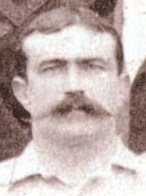
Andrew Hannah, captain with both Everton and Liverpool - Tom Gracie – 1912 – part of exchange deal for Uren
- Arthur Berry – Signed first for Liverpool in 1906, then played for Wrexham, Fulham, and Oxford University before signing for Everton. He returned directly to Liverpool from Everton for a brief spell in 1912.
- Don Sloan – 1908 – no fee
- David Murray – 1904
- Abe Hartley – 1897
- Alex Latta – 1896 (Did not make a senior appearance for Liverpool)
- Fred Geary – 1895 – £60
- John Whitehead – 1894 – (also played for Bootle), one of six players to have played for three different Merseyside clubs
- Patrick Gordon – 1893
- Duncan McLean – 1892; along with Wylie, the only two players to stay at Liverpool when Everton left Anfield.
- Thomas G. Wylie – 1892

The following played for other clubs before moving to Liverpool:
- Andrew Hannah – Played for Renton in between. (The first player to captain both Everton and Liverpool)
- Edgar Chadwick – Played for Blackburn Rovers and Burnley in between.
- David Johnson- Played for Ipswich Town in between; returned to Everton after playing for Liverpool.
- Neil McBain – Played for St Johnstone in between. He also played – under bizarre circumstances – one game for New Brighton: as manager he played one game in goal due to an injury crisis, at the age of 52, becoming the oldest player ever to play in a league game. He is one of six players to play for three different Merseyside clubs.
- Steve McMahon – Played for Aston Villa in between. He is also one of only two players to have captained both Everton and Liverpool.[110]
- Darren Potter – Everton youth player who never made a first-team appearance, played for Blackburn Rovers in between.
- Billy Scott – Played for Leeds City in between.
Liverpool, then Everton
- Gary Ablett – 1992 – £750,000 (only player to win the FA Cup with both clubs).
- Peter Beardsley – 1991 – £1 million; was Everton's most expensive signing from Liverpool.
- Alan Harper – 1983 – £100,000; though on Liverpool's books, he never made a first-team appearance.
- Kevin Sheedy – 1982 – £100,000.
- David Johnson – 1982 – £100,000; started at Everton, went to Ipswich Town then Liverpool then back to Everton.
- Johnny Morrissey –1962 – £10,000
- Jimmy Payne – 1956 – £5,000
- Dick Forshaw – 1927 – only player to win the League Championship with both clubs
- Harold Uren – 1912 – part of exchange deal for Lacey and Gracie
- Benjamin Howard Baker – c. 1910
The following played for other clubs before moving to Everton:
- David Burrows – Played for West Ham United in between.
- Don Hutchison – Played for West Ham United and Sheffield United in between.
- Dave Watson – Played for Norwich City in between.
- John Gidman – Played for Aston Villa in between.
- Arthur Berry – Played for Wrexham, Fulham, and Oxford University in between Everton; returned to Liverpool for a brief spell in 1912.
- Andy Lonergan – Played for Stoke City and West Bromwich Albion before joining Everton.
- Conor Coady – Played for Sheffield United, Huddersfield and Wolves before joining Everton on loan.
- Sander Westerveld - Played for Real Sociedad, Real Mallorca and Portsmouth before joining Everton on loan, playing 2 games in 2006.
As well as players "crossing the park", Everton's first ever manager, William Edward Barclay, stayed on at Anfield after Everton moved to Goodison Park to become Liverpool's first manager.
On 30 June 2021, former Liverpool manager Rafael Benítez signed a three-year contract with Everton. He was fired on 16 January 2022.
Scored for both sides in a derby
[edit]Only three players have scored for both sides in a Merseyside derby:
- David Johnson scored on his derby debut for Everton in November 1971 and later scored two derby goals during his spell with Liverpool, the last of them on 1 March 1980.[111][112]
- Peter Beardsley added to his tally of six derby goals for Liverpool with one for Everton on 7 December 1992.[113][114]
- Sandy Brown famously scored an own goal in 1969 to add to his goal scored at the right end in 1966.
Boyhood allegiances
[edit]|
Liverpool's Evertonians
|
Everton's Liverpudlians
|

Doubles
[edit]Liverpool have beaten Everton twice in a league season sixteen times and Everton doing the inverse nine times, in what is known as the "double". With the occasional meeting at Wembley, both Everton and Liverpool have completed a "treble", in which a victory has been achieved three times (and at three different venues) in a season.
|
Everton
|
Liverpool
|
With cup games, replays, and so on, the two have often met three or four times a season. In the 1986–87 season, they played each other six times, starting with a 1–1 draw at Wembley in the Charity Shield. There were the two league games, the two-legged Screen Sport Super Cup Final (held over from the previous season), and a League Cup fifth round tie. Despite the fact that Everton finished the season as champions, they could not beat Liverpool that year, with four losses and two draws.[135]
Liverpool have achieved the most Premier League doubles over Everton, doing so seven times since 2000. Everton have yet to do the double over Liverpool in the Premier League – their last league double over Liverpool was in 1985 when they won 1–0 in both legs to complete a treble for that season, having also won at Wembley in the Charity Shield.[133]
Full list of results
[edit]Fixtures from 1894 to the present day featuring League games, FA Cup, League Cup, Charity Shield and Super Cup sorted from the most recent.[136][137] Testimonial matches are listed separately. Other friendlies and Inter-War fixtures are not included.
| No. (Lg) | Date | Competition | Venue | Score | Liverpool scorers/red cards | Everton scorers/red cards | Attendance | Ref. |
|---|---|---|---|---|---|---|---|---|
| 248 (214) | 18 April 2026 | 25–26 Premier League | Hill Dickinson Stadium | |||||
| 247 (213) | 20 September 2025 | 25–26 Premier League | Anfield | 2–1 |  Gravenberch, Ekitike Gravenberch, Ekitike
|
Gueye
|
60,342 | [138] |
| 246 (212) | 2 April 2025 | 24–25 Premier League | Anfield | 1–0 | Jota
|
60,331 | [139] | |
| 245 (211) | 12 February 2025 | 24–25 Premier League | Goodison Park | 2–2 | Mac Allister, Salah,  Jones Jones
|
Beto, Tarkowski, Doucouré
|
39,280 | [140] |
| 244 (210) | 24 April 2024 | 23–24 Premier League | Goodison Park | 2–0 | Branthwaite, Calvert-Lewin
|
39,222 | [141] | |
| 243 (209) | 21 October 2023 | 23–24 Premier League | Anfield | 2–0 | Salah (1 pen.)
|
Young
|
50,201 | [142] |
| 242 (208) | 13 February 2023 | 22–23 Premier League | Anfield | 2–0 | Salah, Gakpo
|
53,027 | [143] | |
| 241 (207) | 3 September 2022 | 22–23 Premier League | Goodison Park | 0–0 | 39,240 | [144] | ||
| 240 (206) | 24 April 2022 | 21–22 Premier League | Anfield | 2–0 | Robertson, Origi
|
53,213 | [145] | |
| 239 (205) | 1 December 2021 | 21–22 Premier League | Goodison Park | 1–4 | Henderson, Salah, Jota
|
Gray
|
39,641 | [146] |
| 238 (204) | 20 February 2021 | 20–21 Premier League | Anfield | 0–2 | Richarlison, Sigurðsson (pen.)
|
0[a] | [147] | |
| 237 (203) | 17 October 2020 | 20–21 Premier League | Goodison Park | 2–2 | Mané, Salah
|
Keane, Calvert-Lewin, Richarlison
|
0[a] | [148] |
| 236 (202) | 21 June 2020 | 19–20 Premier League | Goodison Park | 0–0 | 0[a] | [149] | ||
| 235 | 5 January 2020 | 19–20 FA Cup Rnd 3 | Anfield | 1–0 | Jones
|
52,583 | [150] | |
| 234 (201) | 4 December 2019 | 19–20 Premier League | Anfield | 5–2 | Origi, Shaqiri, Mané, Wijnaldum
|
Keane, Richarlison
|
53,094 | [151] |
| 233 (200) | 3 March 2019 | 18–19 Premier League | Goodison Park | 0–0 | 39,335 | [152] | ||
| 232 (199) | 2 December 2018 | 18–19 Premier League | Anfield | 1–0 | Origi
|
51,756 | [153] | |
| 231 (198) | 7 April 2018 | 17–18 Premier League | Goodison Park | 0–0 | 39,220 | [154] | ||
| 230 | 5 January 2018 | 17–18 FA Cup Rnd 3 | Anfield | 2–1 | Milner (pen.), Van Dijk
|
Sigurðsson
|
52,513 | [155] |
| 229 (197) | 10 December 2017 | 17–18 Premier League | Anfield | 1–1 | Salah
|
Rooney (pen.)
|
53,082 | [156] |
| 228 (196) | 1 April 2017 | 16–17 Premier League | Anfield | 3–1 | Mané, Coutinho, Origi
|
Pennington
|
52,920 | [157] |
| 227 (195) | 19 December 2016 | 16–17 Premier League | Goodison Park | 0–1 | Mané
|
39,590 | [158] | |
| 226 (194) | 20 April 2016 | 15–16 Premier League | Anfield | 4–0 | Origi, Sakho, Sturridge, Coutinho
|
Funes Mori
|
43,854 | [159] |
| 225 (193) | 4 October 2015 | 15–16 Premier League | Goodison Park | 1–1 | Ings
|
Lukaku
|
39,598 | [160] |
| 224 (192) | 7 February 2015 | 14–15 Premier League | Goodison Park | 0–0 | 39,621 | [161] | ||
| 223 (191) | 27 September 2014 | 14–15 Premier League | Anfield | 1–1 | Gerrard
|
Jagielka
|
44,511 | [162] |
| 222 (190) | 28 January 2014 | 13–14 Premier League | Anfield | 4–0 | Gerrard, Sturridge, Suárez
|
44,450 | [163] | |
| 221 (189) | 23 November 2013 | 13–14 Premier League | Goodison Park | 3–3 | Coutinho, Suárez, Sturridge
|
Mirallas, Lukaku
|
39,576 | [164] |
| 220 (188) | 5 May 2013 | 12–13 Premier League | Anfield | 0–0 | 44,991 | [165] | ||
| 219 (187) | 28 October 2012 | 12–13 Premier League | Goodison Park | 2–2 | Baines (o.g.), Suárez
|
Osman, Naismith
|
39,613 | [166] |
| 218 | 14 April 2012 | 11–12 FA Cup Semi-final | Wembley | 2–1 | Suárez, Carroll
|
Jelavić
|
87,231 | [167] |
| 217 (186) | 13 March 2012 | 11–12 Premier League | Anfield | 3–0 | Gerrard
|
44,921 | [168] | |
| 216 (185) | 1 October 2011 | 11–12 Premier League | Goodison Park | 0–2 | Suárez, Carroll
|
Rodwell (subsequently rescinded)
|
39,510 | [169] |
| 215 (184) | 16 January 2011 | 10–11 Premier League | Anfield | 2–2 | Meireles, Kuyt (pen.)
|
Distin, Beckford
|
44,795 | [170] |
| 214 (183) | 17 October 2010 | 10–11 Premier League | Goodison Park | 2–0 | Cahill, Arteta
|
39,673 | [171] | |
| 213 (182) | 6 February 2010 | 09–10 Premier League | Anfield | 1–0 | Kuyt – Kyrgiakos
|
Pienaar
|
44,316 | [172] |
| 212 (181) | 29 November 2009 | 09–10 Premier League | Goodison Park | 0–2 | Yobo (o.g.), Kuyt
|
39,652 | [173] | |
| 211 | 4 February 2009 | 08–09 FA Cup Rnd 4 Rep. | Goodison Park | 1–0 (aet) | Lucas
|
Gosling
|
37,918 | [174] |
| 210 | 25 January 2009 | 08–09 FA Cup Rnd 4 | Anfield | 1–1 | Gerrard
|
Lescott
|
43,524 | [175] |
| 209 (180) | 19 January 2009 | 08–09 Premier League | Anfield | 1–1 | Gerrard
|
Cahill
|
44,382 | [176] |
| 208 (179) | 27 September 2008 | 08–09 Premier League | Goodison Park | 0–2 | Torres
|
Cahill
|
39,574 | [177] |
| 207 (178) | 30 March 2008 | 07–08 Premier League | Anfield | 1–0 | Torres
|
44,295 | [178] | |
| 206 (177) | 20 October 2007 | 07–08 Premier League | Goodison Park | 1–2 | Kuyt (2 pens.)
|
Hyypiä (o.g.) – Hibbert, Neville
|
40,049 | [179] |
| 205 (176) | 3 February 2007 | 06–07 Premier League | Anfield | 0–0 | 44,234 | [180] | ||
| 204 (175) | 9 September 2006 | 06–07 Premier League | Goodison Park | 3–0 | Cahill, Johnson
|
40,004 | [181] | |
| 203 (174) | 25 March 2006 | 05–06 Premier League | Anfield | 3–1 | Neville (o.g.), García, Kewell – Gerrard
|
Cahill – Van der Meyde
|
44,923 | [41] |
| 202 (173) | 28 December 2005 | 05–06 Premier League | Goodison Park | 1–3 | Crouch, Gerrard, Cissé
|
Beattie – Arteta, Neville
|
40,158 | [42] |
| 201 (172) | 20 March 2005 | 04–05 Premier League | Anfield | 2–1 | Gerrard, García – Baroš
|
Cahill
|
44,224 | [182] |
| 200 (171) | 11 December 2004 | 04–05 Premier League | Goodison Park | 1–0 | Carsley
|
40,552 | [183] | |
| 199 (170) | 31 January 2004 | 03–04 Premier League | Anfield | 0–0 | 44,056 | [184] | ||
| 198 (169) | 30 August 2003 | 03–04 Premier League | Goodison Park | 0–3 | Owen, Kewell
|
40,200 | [185] | |
| 197 (168) | 19 April 2003 | 02–03 Premier League | Goodison Park | 1–2 | Owen, Murphy
|
Unsworth – Weir, Naysmith
|
40,162 | [186] |
| 196 (167) | 22 December 2002 | 02–03 Premier League | Anfield | 0–0 | 44,025 | [187] | ||
| 195 (166) | 23 February 2002 | 01–02 Premier League | Anfield | 1–1 | Anelka
|
Radzinski
|
44,371 | [188] |
| 194 (165) | 15 September 2001 | 01–02 Premier League | Goodison Park | 1–3 | Gerrard, Owen, Riise
|
Campbell
|
39,554 | [189] |
| 193 (164) | 16 April 2001 | 00–01 Premier League | Goodison Park | 2–3 | Heskey, Babbel, McAllister – Bišćan
|
Ferguson, Unsworth
|
40,260 | [190] |
| 192 (163) | 29 October 2000 | 00–01 Premier League | Anfield | 3–1 | Barmby, Heskey, Berger
|
Campbell – Gravesen
|
44,718 | [191] |
| 191 (162) | 21 April 2000 | 99–00 Premier League | Goodison Park | 0–0 | 40,052 | [192] | ||
| 190 (161) | 27 September 1999 | 99–00 Premier League | Anfield | 0–1 | Westerveld, Gerrard
|
Campbell – Jeffers
|
44,802 | [193] |
| 189 (160) | 3 April 1999 | 98–99 Premier League | Anfield | 3–2 | Fowler, Berger
|
Dacourt, Jeffers
|
44,852 | [194] |
| 188 (159) | 17 October 1998 | 98–99 Premier League | Goodison Park | 0–0 | 40,185 | [195] | ||
| 187 (158) | 23 February 1998 | 97–98 Premier League | Anfield | 1–1 | Ince
|
Ferguson
|
44,501 | [196] |
| 186 (157) | 18 October 1997 | 97–98 Premier League | Goodison Park | 2–0 | Ruddock (o.g.), Cadamarteri
|
40,112 | [197] | |
| 185 (156) | 16 April 1997 | 96–97 Premier League | Goodison Park | 1–1 | Redknapp – Fowler
|
Ferguson – Unsworth
|
40,177 | [198] |
| 184 (155) | 20 November 1996 | 96–97 Premier League | Anfield | 1–1 | Fowler
|
Speed
|
40,751 | [199] |
| 183 (154) | 16 April 1996 | 95–96 Premier League | Goodison Park | 1–1 | Fowler
|
Kanchelskis
|
40,120 | [200] |
| 182 (153) | 18 November 1995 | 95–96 Premier League | Anfield | 1–2 | Fowler
|
Kanchelskis
|
40,818 | [201] |
| 181 (152) | 24 January 1995 | 94–95 Premier League | Anfield | 0–0 | 39,505 | [202] | ||
| 180 (151) | 21 November 1994 | 94–95 Premier League | Goodison Park | 2–0 | Ferguson, Rideout
|
39,866 | [203] | |
| 179 (150) | 14 March 1994 | 93–94 Premier League | Anfield | 2–1 | Fowler, Rush
|
Watson
|
44,281 | [204] |
| 178 (149) | 18 September 1993 | 93–94 Premier League | Goodison Park | 2–0 | Cottee, Ward
|
38,157 | [205] | |
| 177 (148) | 20 March 1993 | 92–93 Premier League | Anfield | 1–0 | Rosenthal
|
44,619 | [206] | |
| 176 (147) | 7 December 1992 | 92–93 Premier League | Goodison Park | 2–1 | Wright
|
Johnston, Beardsley
|
35,826 | [207] |
| 175 (146) | 28 December 1991 | 91–92 First Division | Goodison Park | 1–1 | Tanner
|
Johnston
|
37,681 | [208] |
| 174 (145) | 31 August 1991 | 91–92 First Division | Anfield | 3–1 | Burrows, Saunders, Houghton
|
Newell
|
39,072 | [209] |
| 173 | 27 February 1991 | 90–91 FA Cup Rnd 5 R. 2 | Goodison Park | 1–0 | Watson
|
40,201 | [210] | |
| 172 | 20 February 1991 | 90–91 FA Cup Rnd 5 Rep. | Goodison Park | 4–4 (aet) | Beardsley, Rush, Barnes
|
Cottee, Sharp
|
37,766 | [211] |
| 171 | 17 February 1991 | 90–91 FA Cup Rnd 5 | Anfield | 0–0 | 38,323 | [212] | ||
| 170 (144) | 9 February 1991 | 90–91 First Division | Anfield | 3–1 | Molby, Speedie
|
Nevin
|
38,127 | [213] |
| 169 (143) | 22 September 1990 | 90–91 First Division | Goodison Park | 2–3 | Beardsley, Barnes (pen.)
|
Hinchcliffe, McCall
|
39,847 | [214] |
| 168 (142) | 3 February 1990 | 89–90 First Division | Anfield | 2–1 | Barnes, Beardsley (pen.)
|
Sharp
|
38,730 | [215] |
| 167 (141) | 23 September 1989 | 89–90 First Division | Goodison Park | 1–3 | Barnes, Rush
|
Newell
|
42,453 | [216] |
| 166 | 20 May 1989 | 88–89 FA Cup Final | Wembley | 3–2 (aet) | Aldridge, Rush
|
McCall
|
82,800 | [217] |
| 165 (140) | 3 May 1989 | 88–89 First Division | Goodison Park | 0–0 | 45,994 | [218] | ||
| 164 (139) | 11 December 1988 | 88–89 First Division | Anfield | 1–1 | Houghton
|
Clarke (pen.)
|
42,372 | [219] |
| 163 (138) | 20 March 1988 | 87–88 First Division | Goodison Park | 1–0 | Clarke
|
44,162 | [220] | |
| 162 | 21 February 1988 | 87–88 FA Cup Rnd 5 | Goodison Park | 0–1 | Houghton
|
48,270 | [221] | |
| 161 (137) | 1 November 1987 | 87–88 First Division | Anfield | 2–0 | McMahon, Beardsley
|
44,760 | [222] | |
| 160 | 28 October 1987 | 87–88 League Cup Rnd 3 | Anfield | 0–1 | Stevens
|
44,071 | [223] | |
| 159 (136) | 25 April 1987 | 86–87 First Division | Anfield | 3–1 | McMahon, Rush
|
Sheedy
|
44,827 | [224] |
| 158 | 21 January 1987 | 86–87 League Cup Rnd 5 | Goodison Park | 0–1 | Rush
|
53,323 | [225] | |
| 157 (135) | 23 November 1986 | 86–87 First Division | Goodison Park | 0–0 | 48,247 | [226] | ||
| 156 | 30 September 1986 | Super Cup Final 2nd leg | Goodison Park | 1–4 | Rush, Nicol
|
Sharp (pen.)
|
26,068 | [227] |
| 155 | 16 September 1986 | Super Cup Final 1st leg | Anfield | 3–1 | Rush, McMahon
|
Sheedy
|
20,660 | [228] |
| 154 | 16 August 1986 | 1986 FA Charity Shield | Wembley | 1–1 | Rush
|
Heath
|
88,231 | [229] |
| 153 | 10 May 1986 | 85–86 FA Cup Final | Wembley | 3–1 | Rush, Johnston
|
Lineker
|
98,000 | [230] |
| 152 (134) | 22 February 1986 | 85–86 First Division | Anfield | 0–2 | Ratcliffe, Lineker
|
45,445 | [231] | |
| 151 (133) | 21 September 1985 | 85–86 First Division | Goodison Park | 2–3 | Dalglish, Rush, McMahon
|
Sharp, Lineker
|
51,509 | [232] |
| 150 (132) | 23 May 1985 | 84–85 First Division | Goodison Park | 1–0 | Wilkinson
|
51,045 | [233] | |
| 149 (131) | 20 October 1984 | 84–85 First Division | Anfield | 0–1 | Sharp
|
45,545 | [234] | |
| 148 | 18 August 1984 | 1984 FA Charity Shield | Wembley | 1–0 | Grobbelaar (o.g.)
|
100,000 | [235] | |
| 147 | 28 March 1984 | 83–84 League Cup Final R. | Maine Road | 1–0 | Souness
|
52,089 | [236] | |
| 146 | 25 March 1984 | 83–84 League Cup Final | Wembley | 0–0 | 100,000 | [237] | ||
| 145 (130) | 3 March 1984 | 83–84 First Division | Goodison Park | 1–1 | Rush
|
Harper
|
51,245 | [238] |
| 144 (129) | 6 November 1983 | 83–84 First Division | Anfield | 3–0 | Rush, Robinson, Nicol
|
40,875 | [239] | |
| 143 (128) | 19 March 1983 | 82–83 First Division | Anfield | 0–0 | 44,737 | [240] | ||
| 142 (127) | 6 November 1982 | 82–83 First Division | Goodison Park | 0–5 | Rush, Lawrenson
|
Keeley
|
52,741 | [241] |
| 141 (126) | 27 March 1982 | 81–82 First Division | Goodison Park | 1–3 | Whelan, Souness, Johnston
|
Sharp
|
51,847 | [242] |
| 140 (125) | 7 November 1981 | 81–82 First Division | Anfield | 3–1 | Dalglish, Rush
|
Ferguson – O'Keefe
|
48,861 | [243] |
| 139 (124) | 21 March 1981 | 80–81 First Division | Anfield | 1–0 | Bailey (o.g.)
|
49,743 | [244] | |
| 138 | 24 January 1981 | 80–81 FA Cup Rnd 4 | Goodison Park | 2–1 | Case
|
Eastoe, Varadi
|
53,804 | [245] |
| 137 (123) | 18 October 1980 | 80–81 First Division | Goodison Park | 2–2 | Lee, Dalglish
|
Hartford, McBride
|
52,565 | [246] |
| 136 (122) | 1 March 1980 | 79–80 First Division | Goodison Park | 1–2 | Johnson, Neal (pen.)
|
Eastoe
|
53,018 | [247] |
| 135 (121) | 20 October 1979 | 79–80 First Division | Anfield | 2–2 | Lyons (o.g.), R. Kennedy – McDermott
|
Kidd, King – Stanley
|
52,201 | [248] |
| 134 (120) | 13 March 1979 | 78–79 First Division | Anfield | 1–1 | Dalglish
|
King
|
52,352 | [249] |
| 133 (119) | 28 October 1978 | 78–79 First Division | Goodison Park | 1–0 | King
|
53,141 | [250] | |
| 132 (118) | 5 April 1978 | 77–78 First Division | Goodison Park | 0–1 | Johnson
|
52,759 | [251] | |
| 131 (117) | 22 October 1977 | 77–78 First Division | Anfield | 0–0 | 51,668 | [252] | ||
| 130 | 27 April 1977 | 76–77 FA Cup Semi-final R. | Maine Road | 3–0 | Neal (pen.), Case, Kennedy
|
56,579 | [253] | |
| 129 | 23 April 1977 | 76–77 FA Cup Semi-final | Maine Road | 2–2 | McDermott, Case
|
Rioch, McKenzie
|
56,637 | [254] |
| 128 (116) | 22 March 1977 | 76–77 First Division | Goodison Park | 0–0 | 56,562 | [255] | ||
| 127 (115) | 16 October 1976 | 76–77 First Division | Anfield | 3–1 | Heighway, Neal (pen.), Toshack
|
Dobson
|
55,141 | [256] |
| 126 (114) | 3 April 1976 | 75–76 First Division | Anfield | 1–0 | Fairclough
|
54,632 | [257] | |
| 125 (113) | 27 September 1975 | 75–76 First Division | Goodison Park | 0–0 | 55,769 | [258] | ||
| 124 (112) | 22 February 1975 | 74–75 First Division | Anfield | 0–0 | 55,853 | [259] | ||
| 123 (111) | 16 November 1974 | 74–75 First Division | Goodison Park | 0–0 | 57,190 | [260] | ||
| 122 (110) | 20 April 1974 | 73–74 First Division | Anfield | 0–0 | 55,848 | [261] | ||
| 121 (109) | 8 December 1973 | 73–74 First Division | Goodison Park | 0–1 | Waddle
|
56,098 | [262] | |
| 120 (108) | 3 March 1973 | 72–73 First Division | Goodison Park | 0–2 | Hughes
|
54,856 | [263] | |
| 119 (107) | 7 October 1972 | 72–73 First Division | Anfield | 1–0 | Cormack
|
55,975 | [264] | |
| 118 (106) | 4 March 1972 | 71–72 First Division | Anfield | 4–0 | Wright (o.g.), McLaughlin (o.g.), Lawler, Hughes
|
53,922 | [265] | |
| 117 (105) | 13 November 1971 | 71–72 First Division | Goodison Park | 1–0 | Johnson
|
56,293 | [266] | |
| 116 | 27 March 1971 | 70–71 FA Cup Semi-final | Old Trafford | 2–1 | Evans, Hall
|
Ball
|
62,144 | [267] |
| 115 (104) | 20 February 1971 | 70–71 First Division | Goodison Park | 0–0 | 56,846 | [268] | ||
| 114 (103) | 21 November 1970 | 70–71 First Division | Anfield | 3–2 | Heighway, Toshack, Lawler
|
Royle, Whittle
|
53,777 | [269] |
| 113 (102) | 21 March 1970 | 69–70 First Division | Anfield | 0–2 | Royle, Whittle
|
54,496 | [270] | |
| 112 (101) | 6 December 1969 | 69–70 First Division | Goodison Park | 0–3 | Hughes, Brown (o.g.), Graham
|
57,370 | [271] | |
| 111 (100) | 8 October 1968 | 68–69 First Division | Anfield | 1–1 | Smith
|
Ball
|
54,496 | [272] |
| 110 (99) | 27 August 1968 | 68–69 First Division | Goodison Park | 0–0 | 63,938 | [273] | ||
| 109 (98) | 3 February 1968 | 67–68 First Division | Goodison Park | 1–0 | Kendall
|
64,482 | [274] | |
| 108 (97) | 23 September 1967 | 67–68 First Division | Anfield | 1–0 | Hunt
|
54,189 | [275] | |
| 107 | 11 March 1967 | 66–67 FA Cup Rnd 5 | Goodison Park | 1–0 | Ball
|
64,851 | [276] | |
| 106 (96) | 31 December 1966 | 66–67 First Division | Anfield | 0–0 | 53,744 | [277] | ||
| 105 (95) | 27 August 1966 | 66–67 First Division | Goodison Park | 3–1 | Smith
|
Ball, Brown
|
64,318 | [278] |
| 104 | 13 August 1966 | 1966 FA Charity Shield | Goodison Park | 0–1 | Hunt
|
63,329 | [279] | |
| 103 (94) | 19 March 1966 | 65–66 First Division | Goodison Park | 0–0 | 62,337 | [280] | ||
| 102 (93) | 25 September 1965 | 65–66 First Division | Anfield | 5–0 | Smith, Hunt, Stevenson, St. John
|
53,557 | [281] | |
| 101 (92) | 12 April 1965 | 64–65 First Division | Goodison Park | 2–1 | Stevenson (pen.)
|
Morrissey, Temple
|
65,402 | [282] |
| 100 (91) | 19 September 1964 | 64–65 First Division | Anfield | 0–4 | Harvey, Morrissey, Pickering, Temple
|
52,619 | [283] | |
| 99 (90) | 8 February 1964 | 63–64 First Division | Goodison Park | 3–1 | St. John
|
Vernon, Gabriel
|
66,515 | [284] |
| 98 (89) | 28 September 1963 | 63–64 First Division | Anfield | 2–1 | Callaghan
|
Vernon
|
51,976 | [285] |
| 97 (88) | 8 April 1963 | 62–63 First Division | Anfield | 0–0 | 56,060 | [286] | ||
| 96 (87) | 22 September 1962 | 62–63 First Division | Goodison Park | 2–2 | Lewis, Hunt
|
Morrissey, Vernon
|
72,488 | [287] |
| 95 | 29 January 1955 | 54–55 FA Cup Rnd 4 | Goodison Park | 0–4 | Liddell, A'Court, Evans
|
72,000 | [288] | |
| There were no league derbies between 1951 and 1962. Everton were relegated in 1951 and were in the Football League Second Division for 3 seasons (1951–52 to 1953–54). Everton were promoted in 1953–54 (1953–54), whilst Liverpool were relegated to the Football League Second Division that same season. Liverpool were in the Football League Second Division for 8 seasons (1954–55 to 1961–62). | ||||||||
| 94 (86) | 20 January 1951 | 50–51 First Division | Anfield | 0–2 | McIntosh
|
48,688 | [289] | |
| 93 (85) | 16 September 1950 | 50–51 First Division | Goodison Park | 1–3 | Stubbins, Balmer
|
Eglington
|
71,150 | [290] |
| 92 | 25 March 1950 | 49–50 FA Cup Semi-final | Maine Road | 2–0 | Paisley, Liddell
|
72,000 | [291] | |
| 91 (84) | 24 December 1949 | 49–50 First Division | Anfield | 3–1 | Baron, Fagan
|
Farrell
|
50,485 | [292] |
| 90 (83) | 27 August 1949 | 49–50 First Division | Goodison Park | 0–0 | 70,812 | [293] | ||
| 89 (82) | 5 February 1949 | 48–49 First Division | Anfield | 0–0 | 50,132 | [294] | ||
| 88 (81) | 18 September 1948 | 48–49 First Division | Goodison Park | 1–1 | Fagan
|
Dodds
|
78,299 | [295] |
| 87 (80) | 21 April 1948 | 47–48 First Division | Anfield | 4–0 | Stubbins, Liddell, Brierley, Balmer
|
55,305 | [296] | |
| 86 (79) | 27 September 1947 | 47–48 First Division | Goodison Park | 0–3 | Balmer, Stubbins, Fagan
|
66,776 | [297] | |
| 85 (78) | 29 January 1947 | 46–47 First Division | Goodison Park | 1–0 | Wainwright
|
50,612 | [298] | |
| 84 (77) | 21 September 1946 | 46–47 First Division | Anfield | 0–0 | 48,875 | [299] | ||
| No competitive football was played between 1939 and 1946 due to World War II | ||||||||
| 83 (76) | 4 February 1939 | 38–39 First Division | Anfield | 0–3 | Lawton, Bentham
|
55,994 | [300] | |
| 82 (75) | 1 October 1938 | 38–39 First Division | Goodison Park | 2–1 | Fagan (pen.)
|
Bentham, Boyes
|
64,977 | [301] |
| 81 (74) | 16 February 1938 | 37–38 First Division | Goodison Park | 1–3 | Balmer, Shafto
|
Lawton
|
33,465 | [302] |
| 80 (73) | 2 October 1937 | 37–38 First Division | Anfield | 1–2 | Nieuwenhuys
|
Lawton, Trentham
|
43,904 | [303] |
| 79 (72) | 23 January 1937 | 36–37 First Division | Anfield | 3–2 | Howe, Taylor, Balmer
|
Stevenson
|
37,055 | [304] |
| 78 (71) | 19 September 1936 | 36–37 First Division | Goodison Park | 2–0 | Dean, Stevenson
|
55,835 | [305] | |
| 77 (70) | 4 January 1936 | 35–36 First Division | Goodison Park | 0–0 | 52,282 | [306] | ||
| 76 (69) | 7 September 1935 | 35–36 First Division | Anfield | 6–0 | Howe, Hodgson
|
46,082 | [307] | |
| 75 (68) | 20 March 1935 | 34–35 First Division | Anfield | 2–1 | Hodgson (1 pen.)
|
Dean
|
31,965 | [308] |
| 74 (67) | 15 September 1934 | 34–35 First Division | Goodison Park | 1–0 | Dean
|
43,001 | [309] | |
| 73 (66) | 10 February 1934 | 33–34 First Division | Goodison Park | 0–0 | 52,088 | [310] | ||
| 72 (65) | 30 September 1933 | 33–34 First Division | Anfield | 3–2 | Nieuwenhuys, Hanson, English
|
Johnson, White
|
53,698 | [311] |
| 71 (64) | 11 February 1933 | 32–33 First Division | Anfield | 7–4 | Hanson, Barton, Morrison, Taylor, Roberts
|
Dean, Johnson, Stein
|
41,469 | [312] |
| 70 (63) | 1 October 1932 | 32–33 First Division | Goodison Park | 3–1 | Gunson
|
Dean, Critchley
|
44,214 | [313] |
| 69 (62) | 30 January 1932 | 31–32 First Division | Goodison Park | 2–1 | Wright
|
Critchley, White
|
46,537 | [314] |
| 68 | 9 January 1932 | 31–32 FA Cup Rnd 3 | Goodison Park | 1–2 | Gunson, Hodgson
|
Dean
|
57,090 | [315] |
| 67 (61) | 19 September 1931 | 31–32 First Division | Anfield | 1–3 | Wright
|
Dean
|
53,220 | [316] |
| 1930–31 Everton were in the Football League Second Division | ||||||||
| 66 (60) | 4 January 1930 | 29–30 First Division | Goodison Park | 3–3 | Edmed, McPherson, McDougall
|
Dean, Critchley
|
52,600 | [317] |
| 65 (59) | 7 September 1929 | 29–30 First Division | Anfield | 0–3 | Dean, Martin
|
44,891 | [318] | |
| 64 (58) | 9 February 1929 | 28–29 First Division | Anfield | 1–2 | Race
|
Griffiths, White
|
45,095 | [319] |
| 63 (57) | 29 September 1928 | 28–29 First Division | Goodison Park | 1–0 | Troup
|
55,415 | [320] | |
| 62 (56) | 25 February 1928 | 27–28 First Division | Anfield | 3–3 | Hopkin, Bromilow, Hodgson
|
Dean
|
55,361 | [321] |
| 61 (55) | 15 October 1927 | 27–28 First Division | Goodison Park | 1–1 | Edmed
|
Troup
|
65,729 | [322] |
| 60 (54) | 12 February 1927 | 26–27 First Division | Anfield | 1–0 | Chambers
|
52,840 | [323] | |
| 59 (53) | 25 September 1926 | 26–27 First Division | Goodison Park | 1–0 | O'Donnell
|
43,973 | [324] | |
| 58 (52) | 6 February 1926 | 25–26 First Division | Goodison Park | 3–3 | Oxley, Forshaw
|
Chedgzoy, Dean, Irvine
|
45,793 | [325] |
| 57 (51) | 26 September 1925 | 25–26 First Division | Anfield | 5–1 | Forshaw, Walsh, Chambers
|
Kennedy
|
49,426 | [326] |
| 56 (50) | 7 February 1925 | 24–25 First Division | Anfield | 3–1 | Shone, Hopkin, Chambers
|
Chadwick
|
56,000 | [327] |
| 55 (49) | 4 October 1924 | 24–25 First Division | Goodison Park | 0–1 | Rawlings
|
53,000 | [328] | |
| 54 (48) | 13 October 1923 | 23–24 First Division | Anfield | 1–2 | Walsh
|
Cock, Chedgzoy
|
50,000 | [329] |
| 53 (47) | 6 October 1923 | 23–24 First Division | Goodison Park | 1–0 | Chadwick
|
51,000 | [330] | |
| 52 (46) | 14 October 1922 | 22–23 First Division | Goodison Park | 0–1 | Johnson
|
52,000 | [331] | |
| 51 (45) | 7 October 1922 | 22–23 First Division | Anfield | 5–1 | Chambers, McNab, Bromilow
|
Williams
|
54,000 | [332] |
| 50 (44) | 12 November 1921 | 21–22 First Division | Anfield | 1–1 | Forshaw
|
Chedgzoy
|
50,000 | [333] |
| 49 (43) | 5 November 1921 | 21–22 First Division | Goodison Park | 1–1 | Shone
|
Brewster
|
52,000 | [334] |
| 48 (42) | 30 October 1920 | 20–21 First Division | Goodison Park | 0–3 | Johnson, Chambers
|
55,000 | [335] | |
| 47 (41) | 23 October 1920 | 20–21 First Division | Anfield | 1–0 | Forshaw
|
50,000 | [336] | |
| 46 (40) | 27 December 1919 | 19–20 First Division | Anfield | 1–3 | Lewis, Miller
|
Parker
|
49,662 | [337] |
| 45 (39) | 20 December 1919 | 19–20 First Division | Goodison Park | 0–0 | 40,000 | [338] | ||
| No competitive football was played between 1915 and 1919 due to World War I | ||||||||
| 44 (38) | 6 February 1915 | 14–15 First Division | Goodison Park | 1–3 | Sheldon, Nicholl, Pagnam
|
Clennell
|
30,000 | [339] |
| 43 (37) | 3 October 1914 | 14–15 First Division | Anfield | 0–5 | Parker, Clennell
|
32,000 | [340] | |
| 42 (36) | 17 January 1914 | 13–14 First Division | Anfield | 1–2 | Metcalf
|
Parker
|
35,000 | [341] |
| 41 (35) | 20 September 1913 | 13–14 First Division | Goodison Park | 1–2 | Lacey
|
Wareing
|
40,000 | [342] |
| 40 (34) | 8 February 1913 | 12–13 First Division | Goodison Park | 0–2 | Parkinson
|
40,000 | [343] | |
| 39 (33) | 5 October 1912 | 12–13 First Division | Anfield | 0–2 | Browell, Gault
|
46,000 | [344] | |
| 38 (32) | 20 January 1912 | 11–12 First Division | Anfield | 1–3 | Gilligan
|
Beare, Browell, Jefferis
|
35,000 | [345] |
| 37 (31) | 16 September 1911 | 11–12 First Division | Goodison Park | 2–1 | Parkinson
|
Beare, Gourlay
|
40,000 | [346] |
| 36 | 4 February 1911 | 10–11 FA Cup Rnd 2 | Goodison Park | 2–1 | Parkinson
|
Young
|
50,000 | [347] |
| 35 (30) | 27 December 1910 | 10–11 First Division | Goodison Park | 0–1 | Parkinson
|
51,000 | [348] | |
| 34 (29) | 1 October 1910 | 10–11 First Division | Anfield | 0–2 | Makepeace, Young
|
40,000 | [349] | |
| 33 (28) | 12 February 1910 | 09–10 First Division | Anfield | 0–1 | Freeman
|
40,000 | [350] | |
| 32 (27) | 2 October 1909 | 09–10 First Division | Goodison Park | 2–3 | Goddard, Stewart, Parkinson
|
Coleman, Freeman
|
45,000 | [351] |
| 31 (26) | 9 April 1909 | 08–09 First Division | Goodison Park | 5–0 | Freeman, Coleman, Turner, White
|
45,000 | [352] | |
| 30 (25) | 3 October 1908 | 08–09 First Division | Anfield | 0–1 | Barlow
|
40,000 | [353] | |
| 29 (24) | 17 April 1908 | 07–08 First Division | Anfield | 0–0 | 35,000 | [354] | ||
| 28 (23) | 5 October 1907 | 07–08 First Division | Goodison Park | 2–4 | J. Hewitt, Raisbeck, Cox, C. Hewitt
|
Makepeace, Settle
|
40,000 | [355] |
| 27 (22) | 29 March 1907 | 06–07 First Division | Goodison Park | 0–0 | 45,000 | [356] | ||
| 26 (21) | 29 September 1906 | 06–07 First Division | Anfield | 1–2 | Parkinson
|
Young
|
40,000 | [357] |
| 25 (20) | 13 April 1906 | 05–06 First Division | Anfield | 1–1 | West (pen.)
|
Taylor
|
33,000 | [358] |
| 24 | 31 March 1906 | 05–06 FA Cup Semi-final | Villa Park | 2–0 | Abbott, Hardman
|
37,000 | [359] | |
| 23 (19) | 30 September 1905 | 05–06 First Division | Goodison Park | 4–2 | Hewitt
|
Abbott, Hardman, Settle, Sharp
|
40,000 | [360] |
| 1904–05 Liverpool were in the Football League Second Division | ||||||||
| 22 | 8 February 1905 | 04–05 FA Cup Rnd 1 Rep. | Goodison Park | 2–1 | Goddard
|
Hardman, McDermott
|
40,000 | [361] |
| 21 | 4 February 1905 | 04–05 FA Cup Rnd 1 | Anfield | 1–1 | Parkinson
|
Makepeace
|
28,000 | [362] |
| 20 (18) | 1 April 1904 | 03–04 First Division | Goodison Park | 5–2 | Robinson, Cox
|
Young, Wolstenholme
|
40,000 | [363] |
| 19 (17) | 10 October 1903 | 03–04 First Division | Anfield | 2–2 | Morris
|
Sheridan
|
30,000 | [364] |
| 18 (16) | 10 April 1903 | 02–03 First Division | Anfield | 0–0 | 28,000 | [365] | ||
| 17 (15) | 27 September 1902 | 02–03 First Division | Goodison Park | 3–1 | Raybould (pen.)
|
Abbott, Brearley, Young
|
40,000 | [366] |
| 16 | 30 January 1902 | 01–02 FA Cup Rnd 1 Rep. | Goodison Park | 0–2 | Balmer (o.g.), Hunter
|
20,000 | [367] | |
| 15 | 25 January 1902 | 01–02 FA Cup Rnd 1 | Anfield | 2–2 | Robertson, Hunter
|
Sharp, Young
|
25,000 | [368] |
| 14 (14) | 11 January 1902 | 01–02 First Division | Goodison Park | 4–0 | Settle, Bell, Young
|
25,000 | [369] | |
| 13 (13) | 14 September 1901 | 01–02 First Division | Anfield | 2–2 | White, Raybould
|
Settle, Sharp
|
30,000 | [370] |
| 12 (12) | 19 January 1901 | 00–01 First Division | Anfield | 1–2 | Cox
|
Taylor
|
18,000 | [371] |
| 11 (11) | 22 September 1900 | 00–01 First Division | Goodison Park | 1–1 | Raybould
|
McDonald
|
50,000 | [372] |
| 10 (10) | 20 January 1900 | 99–00 First Division | Goodison Park | 3–1 | Raybould
|
Settle, Blythe
|
30,000 | [373] |
| 9 (9) | 23 September 1899 | 99–00 First Division | Anfield | 1–2 | Robertson
|
Settle, Taylor
|
30,000 | [374] |
| 8 (8) | 21 January 1899 | 98–99 First Division | Anfield | 2–0 | Walker, Robertson
|
30,000 | [375] | |
| 7 (7) | 24 September 1898 | 98–99 First Division | Goodison Park | 1–2 | McCowie (1 pen.)
|
Proudfoot
|
45,000 | [376] |
| 6 (6) | 16 October 1897 | 97–98 First Division | Goodison Park | 3–0 | Williams, Bell
|
40,000 | [377] | |
| 5 (5) | 25 September 1897 | 97–98 First Division | Anfield | 3–1 | Cunliffe, McQue, Becton
|
Taylor
|
30,000 | [378] |
| 4 (4) | 21 November 1896 | 96–97 First Division | Anfield | 0–0 | 30,000 | [379] | ||
| 3 (3) | 3 October 1896 | 96–97 First Division | Goodison Park | 2–1 | Ross
|
Hartley, Milward
|
45,000 | [380] |
| 1895–96 Liverpool were in the Football League Second Division | ||||||||
| 2 (2) | 17 November 1894 | 94–95 First Division | Anfield | 2–2 | Hannah, Ross (pen.)
|
Kelso, Latta
|
30,000 | [381] |
| 1 (1) | 13 October 1894 | 94–95 First Division | Goodison Park | 3–0 | Bell, Latta, McInnes
|
44,000 | [1] | |
Testimonials
[edit]| Date | Beneficiary | Venue | Score | Liverpool scorers | Everton scorers | Attendance | Ref. |
|---|---|---|---|---|---|---|---|
| 4 September 2010 | Jamie Carragher | Anfield | 4–1 | Luis García, Carragher, Cole, Eccleston
|
Carragher (o.g.)
|
35,631 | [382] |
| 10 October 1992 | Bruce Grobbelaar | Anfield | 2–2 | Burrows, Rosenthal
|
Beagrie, Barlow
|
20,516 | [383] |
| 12 August 1985 | Phil Neal | Anfield | 2–3 | Neal, Johnston
|
Heath Mountfield
|
23,480 | [384] |
| 11 May 1981 | Steve Heighway | Anfield | 2–2 | Johnson
|
Hickson (pen.) Latchford
|
17,137 | [385] |
| 13 March 1973 | Brian Labone | Goodison Park | 2–1 | Toshack
|
Lyons, Husband
|
25,779 | [386] |
See also
[edit]
External links
[edit]References
[edit]- ^ a b "The Story of The Blues: First-Ever Merseyside Derby". EvertonFC.com. Everton F.C. 12 October 2022. Retrieved 15 May 2024.
- ^ "Class telling in FA Cup". The Times. 31 January 1955.
- ^ "Liverpool v Everton: The changing face of the Merseyside derby". BBC Sport. 4 January 2018. Retrieved 5 January 2018.
- ^ The Merseyside derby Archived 2 May 2013 at the Wayback Machine, footballderbies.com. Retrieved 11 February 2007
- ^ "Fans segregation enforced for Everton v Liverpool derby". BBC News. 7 February 2015.
- ^ "Have we lost the Merseyside derby spirit?". Liverpool Echo. 25 March 2015. Retrieved 17 February 2020.
- ^ Smith, Rory (7 February 2010). "Liverpool 1 Everton 0: match report". The Daily Telegraph. Archived from the original on 12 January 2022.
Toxic in the stands, brutal on the pitch. The Merseyside derby.. to those involved it remains a battle of all or nothing proportions
- ^ "Everton FC history, facts and stats". www.footballhistory.org. Retrieved 19 October 2021.
- ^ See the work of Dr David Kennedy: 'A Social and Political History of Everton and Liverpool Football Clubs, 1878-1914' (2017), Routledge and 'The Man Who Created Merseyside Football, John Houlding'. (2020) Rowman and Littlefield.
- ^ "A short history of the Anfield Road Stand's evolution". 25 June 2023. Retrieved 24 September 2023.
- ^ "John Houlding tribute officially unveiled at Anfield". 29 November 2018. Retrieved 24 September 2023.
- ^ "COMMUNITY POLITICS IN LIVERPOOLAND THE GOVERNANCE OFPROFESSIONAL FOOTBALL IN THELATE NINETEENTH CENTURY". Retrieved 24 September 2023.
- ^ "The Division of Everton Football Club into Hostile Factions:The Development of Professional Football Organisation on Merseyside, 1878-1914". Retrieved 24 September 2023.
- ^ Goulding, Jeff (22 October 2018). Stanley Park Story: Life, Love and the Merseyside Derby. Pitch Publishing. ISBN 978-1-78531-449-0.
- ^ "The Division of Everton Football Club into Hostile Factions:The Development of Professional Football Organisation on Merseyside, 1878-1914". Retrieved 24 September 2023.
- ^ "Soccer-Merseyside derby win will net Everton rare bonus". Reuters. Retrieved 24 September 2023.
- ^ Results – Liverpool FC – LFC Online
- ^ Liverpool FC News – LFC Online
- ^ Liverpool FC News – LFC Online
- ^ Results – Liverpool FC – LFC Online
- ^ Results – Liverpool FC – LFC Online
- ^ Liverpool FC News – LFC Online
- ^ Liverpool FC News – LFC Online
- ^ Results – Liverpool FC – LFC Online
- ^ Liverpool FC News – LFC Online
- ^ Liverpool FC News – LFC Online
- ^ Results – Liverpool FC – LFC Online
- ^ Liverpool FC News – LFC Online
- ^ Liverpool FC News – LFC Online
- ^ Lacey, David (4 October 2013). "Everton's league winners in 1986-87 were worthy of 'unstinted praise'". The Guardian. Retrieved 3 May 2024.
- ^ "The days after the disaster". The Independent. London. 14 April 1999. Archived from the original on 12 May 2022. Retrieved 8 September 2013.
- ^ "1989 FA Cup Final; Liverpool vs Everton". www.fa-cupfinals.co.uk.
- ^ "LIVERWEB – Liverpool Results 1990–91". Archived from the original on 6 June 2011. Retrieved 14 November 2009.
- ^ "LIVERWEB – Liverpool Results 1992–93". Archived from the original on 6 June 2011. Retrieved 14 November 2009.
- ^ "LIVERWEB – Liverpool Results 1993–94". Archived from the original on 6 June 2011. Retrieved 14 November 2009.
- ^ "LIVERWEB – Liverpool Results 1997–98". Archived from the original on 6 June 2011. Retrieved 14 November 2009.
- ^ "Liverpool v Everton, 03 April 1999". 11v11.com. 3 April 1999. Retrieved 24 February 2021.
- ^ "LIVERWEB – Liverpool Results 2002–03". Archived from the original on 6 June 2011. Retrieved 14 November 2009.
- ^ "LIVERWEB – Liverpool Results 2004–05". Archived from the original on 6 June 2011. Retrieved 14 November 2009.
- ^ "Liverpool 3-1 Everton". BBC Sport. 25 March 2006. Retrieved 15 September 2014.
- ^ a b "Liverpool 3-1 Everton". 25 March 2006. Retrieved 17 May 2024.
- ^ a b "Everton 1-3 Liverpool". 28 December 2005. Retrieved 17 May 2024.
- ^ "LIVERWEB – Liverpool Results 2006–07". Archived from the original on 6 June 2011. Retrieved 14 November 2009.
- ^ "Mark Clattenburg explains why he wasn't allowed to referee at Everton for six years". Daily Mirror. 17 June 2021. Retrieved 24 September 2023.
- ^ "Gundogan scores fastest-ever FA Cup final goal". BBC Sport. 3 June 2023. Retrieved 24 March 2025.
- ^ "Everton 0–2 Liverpool". BBC Sport. 29 November 2009. Retrieved 17 February 2020.
- ^ "Liverpool 1–0 Everton". BBC Sport. 6 February 2010. Retrieved 17 February 2020.
- ^ "Everton 2-0 Liverpool". 17 October 2010.
- ^ "Premier League: Everton extend Liverpool's losing streak to end 11-year wait for derby win". The Times of India. 21 February 2021. Retrieved 14 May 2024.
- ^ "Gerrard hat-trick earns Liverpool derby spoils". Reuters. 13 March 2012. Retrieved 13 February 2023.
- ^ "Liverpool 2–1 Everton: Divine ponytail Carroll seals final berth". The Mirror. 14 April 2012. Retrieved 14 April 2012.
- ^ "Everton 3–3 Liverpool". BBC Sport. 23 November 2013. Retrieved 14 February 2020.
- ^ "Liverpool 4–0 Everton". BBC Sport. 28 January 2014. Retrieved 14 February 2020.
- ^ "Liverpool 4–0 Everton". BBC Sport. 20 April 2016. Retrieved 14 February 2020.
- ^ "Classic Match: Reds hit four in Klopp's first Merseyside derby". 20 April 2020. Retrieved 3 May 2024.
- ^ "Everton 0–1 Liverpool". BBC Sport. 19 December 2016. Retrieved 17 February 2020.
- ^ "FIFA Puskas Award 2018" (PDF). FIFA.com. Fédération Internationale de Football Association. Retrieved 14 February 2020.
- ^ "Liverpool 1–1 Everton". BBC Sport. 10 December 2017. Retrieved 14 February 2020.[dead link]
- ^ "Liverpool 1–0 Everton". BBC Sport. 2 December 2018. Retrieved 14 February 2020.
- ^ "Everton 0-0 Liverpool: Missed chances lead to Merseyside derby stalemate". 3 March 2019. Retrieved 26 April 2024.
- ^ Phil Dawkes (4 December 2019). "Liverpool v Everton: Is this the most one-sided Merseyside derby in a generation?". BBC Sport. Retrieved 24 February 2021.
- ^ "Liverpool 5–2 Everton". BBC Sport. 4 December 2019. Retrieved 24 February 2021.
- ^ "Everton 0–0 Liverpool". Retrieved 28 April 2024.
- ^ "Klopp's teenagers and reserves serve Ancelotti with a painful reality-check". The Guardian. Retrieved 5 January 2019.
- ^ "VAR ruins frantic Merseyside derby for Liverpool". BeIN Sports Australia. BeIN Media Group. Retrieved 17 October 2020.
- ^ a b Phil McNulty. "Everton 2 - 2 Liverpool". BBC Sport. Retrieved 17 October 2020.
- ^ Phil McNulty (20 February 2021). "Toffees secure first Anfield win since 1999". BBC Sport. Retrieved 20 February 2021.
- ^ "Derby defeat sees Liverpool hit 98-year low after fourth successive loss at Anfield". Goal.com. 21 February 2021. Retrieved 21 February 2021.
- ^ Markham, Carl (1 December 2021). "Mohamed Salah nets brace as Liverpool claim record-breaking defeat at Everton". The Independent. Archived from the original on 12 May 2022. Retrieved 2 December 2021.
- ^ "Liverpool have just set astonishing derby record after beating Everton". Liverpool Echo. Retrieved 2 December 2021.
- ^ "Liverpool 2-0 Everton: Reds with first league win of 2023, at last". 13 February 2023. Retrieved 24 September 2023.
- ^ Hunter, Andy (21 October 2023). "Liverpool break down 10-man Everton's resistance with Mohamed Salah double". The Observer. Retrieved 16 May 2024.
- ^ Hunter, Andy (24 April 2024). "Liverpool's title hopes suffer huge blow after Calvert-Lewin seals Everton win". The Guardian. Retrieved 25 April 2024.
- ^ "Klopp's final Merseyside derby ends in 2-0 defeat as Toffees move eight points clear of relegation zone". Retrieved 3 May 2024.
- ^ McNulty, Phil (12 February 2025). "Everton 2–2 Liverpool". Retrieved 16 May 2025.
- ^ "The epic reason behind blue flares in Liverpool's title celebrations at Anfield". Yahoo! Sports. 28 April 2025. Retrieved 16 May 2025.
- ^ "Community Politics in Liverpool and the Governance of Professional Football in the Late 19th Century" (PDF). Dr.David Kennedy. Toffeeweb.com. Archived from the original (PDF) on 10 October 2008. Retrieved 8 September 2013.
- ^ "Question of religion as basis for support still contentious". The Irish Times. Retrieved 20 January 2014.
- ^ David Kennedy, 'Merseyside's Old Firm: The Sectarian Roots of Everton and Liverpool Football Clubs. (2017)'
- ^ "Rhys Jones' legacy 10 years on from his senseless death". 9 February 2018. Retrieved 15 May 2024.
- ^ "Everton Display Liverpool City Solidarity With Hillsborough Tribute (PICTURES)". 18 September 2012. Retrieved 15 May 2024.
- ^ "How Everton Stood by Liverpool in the 26 Years Since Hillsborough Disaster". Bleacher Report. Retrieved 15 May 2024.
- ^ "Tranmere shame Everton". BBC. 27 January 2001. Retrieved 1 November 2013.
- ^ "Liverpool cling on to beat Tranmere". BBC. 11 March 2001. Retrieved 1 November 2013.
- ^ "A Brief History of the Merseyside Derby". 24 April 2024. Retrieved 16 May 2024.
- ^ "The Merseyside Derby: The history of the most hotly contested derby in English football, rivalled in Britain only perhaps by the Old Firm clashes". Retrieved 28 April 2024.
- ^ "IAN RUSH AND THE FOUR-GOAL MERSEYSIDE MAULING OF EVERTON". 30 November 2018. Retrieved 16 May 2024.
- ^ "1914/15 SEASON". Retrieved 16 May 2024.
- ^ "Liverpool vs Everton: Head to Head record". 9 February 2023. Retrieved 24 September 2023.
- ^ a b "11 Players with the Most Appearances in the Merseyside Derby". 24 April 2024. Retrieved 16 May 2024.
- ^ "Liverpool vs Everton: Head to Head record". 9 February 2023. Retrieved 16 May 2024.
- ^ "KNOW YOUR HISTORY: GOODISON'S RECORD ATTENDANCE". Retrieved 16 May 2024.
- ^ "Origi enters Merseyside derby folklore". Premier League. 5 December 2019. Retrieved 17 February 2020.
- ^ "The Merseyside Derby's all-time most prolific goal scorers". 30 August 2022. Retrieved 16 May 2024.
- ^ "List of goals against Everton by Craig Johnston". Retrieved 17 May 2024.
- ^ "Mohamed Salah's record vs. Everton". 20 October 2023. Retrieved 17 May 2024.
- ^ "Where Mohamed Salah ranks among Merseyside derby scorers". Retrieved 17 May 2023.
- ^ "The Fascinating Story of Everton Legend Sandy Young". 11 November 2014. Retrieved 15 May 2024.
- ^ "On this day: Dixie Dean scores a hat-trick at Anfield in his 100th game for the Blues". 25 February 2014. Retrieved 15 May 2024.
- ^ "IAN RUSH AND THE FOUR-GOAL MERSEYSIDE MAULING OF EVERTON". 30 November 2018. Retrieved 15 May 2024.
- ^ "On this day... Gerrard's Merseyside derby hat-trick". 13 March 2018. Retrieved 15 May 2024.
- ^ "Greatest Own Goals of All-Time No.3". 24 April 2020. Retrieved 16 May 2024.
- ^ "The Everton hero once compared to Michael Owen whose kids are future EFL stars". Retrieved 15 May 2024.
- ^ "Liverpool v Everton: 15 stats to know about Saturday's derby". 20 October 2023. Retrieved 16 May 2024.
- ^ a b "Highest attendance in derby". Retrieved 16 May 2024.
- ^ "Attendance History". Retrieved 16 May 2024.
- ^ "Derby penalties". Retrieved 16 May 2024.
- ^ "From Peter Beardsley to Nick Barmby - Meet the players who crossed the Merseyside derby rivalry and played for both Liverpool and Everton". Retrieved 16 May 2024.
- ^ "Which Players Have Played For Both Liverpool & Everton?". 28 October 2023. Retrieved 16 May 2024.
- ^ "Steve McMahon profile". lfcvancouver.com. 8 May 2011.
- ^ "David Johnson: Former Liverpool & Everton striker dies aged 71". BBC Sport. 23 November 2022. Retrieved 16 May 2024.
- ^ "David 'Doc' Johnson crossed Merseyside divide like few players have managed". 23 November 2022. Retrieved 16 May 2024.
- ^ "Peter Beardsley's Mersey swap was Graeme Souness' mistake". Retrieved 16 May 2024.
- ^ "List of goals against Everton by Peter Beardsley". Retrieved 16 May 2023.
- ^ "Southampton's Lallana admits growing up Everton mad". tribalfootball.com. 1 July 2014.
- ^ "Stephen Wright". LFChistory.net. 1 April 2008.
- ^ Carragher, Jamie (2008). Carra: My Autobiography. Bantam Press. p. 5. ISBN 978-0-593-06102-2.
- ^ "David Thompson". sportinglife.com. 5 January 2008. Archived from the original on 5 June 2011. Retrieved 5 February 2008.
- ^ "Robbie Fowler profile". goal.com.
- ^ "Steve McManaman". lfchistory.net. 5 January 2008.
- ^ "Steve McMahon". truegreats.com. 5 January 2008. Archived from the original on 29 September 2011.
- ^ "Ian Rush". liverweb.org.uk. 5 January 2008. Archived from the original on 16 May 2003.
- ^ Mayo, Marc (5 September 2023). "Boyhood Liverpool fan Jesper Lindstrom reveals why he turned down dream £30m transfer". The Standard.
- ^ Osborne, Chris (19 September 2014). "Dele: Gerrard was a big influence on why I supported Liverpool". BBC.
- ^ "Jamie Carragher's one-word response to boyhood Liverpool fan Conor Coady's decision to sign for Everton".
- ^ Rogers, Paul (20 June 2006). "Theo Walcott: Why I'm a Liverpool fan". Liverpool F.C. Archived from the original on 17 July 2012.
- ^ Authi, Jasbir (6 July 2016). "As a nine year old he wrote to the manufacturers of Subbuteo to complain there were no black players - Ashley Williams' parents describe the man they always knew was 'special'". Wales Online.
- ^ Jones, Mark. "Nick BARMBY - Liverpool FC - Biography 2000/01-2001/02". sporting-heroes.net.
- ^ "Mike Newell". truegreats.com. 5 January 2008. Archived from the original on 30 October 2004.
- ^ "Dave Watson". bluekipper.com. 5 January 2008. Archived from the original on 13 May 2008.
- ^ Rogers, Paul (27 October 2003). "Reid: I wasn't as good a player as Stevie G". Liverpool F.C. Archived from the original on 10 June 2015.
- ^ "Alan Harper: Singing The Praises Of The Unsung Hero". The Daisy Cutter. 5 July 2015.
- ^ a b Pye, Steven (16 October 2020). "When Everton finally beat Liverpool and went on to win the league". The Guardian. Retrieved 15 May 2024.
- ^ "Liverpool 2011-12 Fixtures". Retrieved 16 May 2024.
- ^ "Everton Scores: 1986/87". 19 November 2018. Retrieved 16 May 2024.
- ^ "The All Time Playing Records". Archived from the original on 30 November 2007. Retrieved 4 December 2007.
- ^ "Everton Results". www.evertonresults.com.
- ^ McNulty, Phil (20 September 2025). "Liverpool score twice in the first half to overcome Everton in the Merseyside derby at Anfield". BBC Sport. Retrieved 21 September 2025.
- ^ "Liverpool edge Everton with Diogo Jota strike, restore 12-point lead". ESPN. Reuters. 2 April 2025. Retrieved 3 April 2025.
- ^ McNulty, Phil (12 February 2025). "Everton 2-2 Liverpool: Everton rescue dramatic draw as Merseyside derby ends in chaos". BBC Sport. Retrieved 13 February 2025.
- ^ McNulty, Phil (23 April 2024). "Everton 2-0 Liverpool: Toffees claim vital win to dent rivals' title hopes". BBC Sport. Retrieved 15 May 2024.
- ^ "Liverpool 2-0 Everton". Retrieved 15 May 2024.
- ^ "Liverpool 2-0 Everton". Retrieved 16 May 2024.
- ^ "Liverpool 0-0 Everton". Retrieved 16 May 2023.
- ^ "Liverpool 2-0 Everton: Double sub changes the game to win the derby". 24 April 2022. Retrieved 16 May 2024.
- ^ "Everton 1-4 Liverpool: Mohamed Salah scores twice as Liverpool overcome Everton". BBC Sport. 30 November 2021. Retrieved 16 May 2024.
- ^ "Toffees secure first Anfield victory since 1999". BBC Sport. 19 February 2021. Retrieved 16 May 2024.
- ^ "VAR denies Liverpool last-gasp derby win". Retrieved 15 May 2024.
- ^ "Everton 0-0 Liverpool: Goodison Park stalemate delays Reds' title charge". Retrieved 16 May 2024.
- ^ "Curtis Jones is Liverpool's FA Cup hero as wonder goal knocks out Everton". 5 January 2020. Retrieved 16 May 2024.
- ^ Murray, Scott (4 December 2019). "Liverpool 5-2 Everton: Premier League - as it happened". The Guardian. Retrieved 16 May 2024.
- ^ "Everton 0-0 Liverpool: Reds' title hopes hit by goalless draw in Merseyside derby". BBC Sport. March 2019. Retrieved 16 May 2024.
- ^ "Liverpool 1-0 Everton: Divock Origi snatches Merseyside derby spoils". Retrieved 15 May 2024.
- ^ "Everton 0-0 Liverpool: Liverpool are held to a drab goalless draw by Everton". BBC Sport. 5 April 2018. Retrieved 16 May 2024.
- ^ "Liverpool 2-1 Everton". BBC Sport. 4 January 2018. Retrieved 17 May 2024.
- ^ "Liverpool 1-1 Everton". BBC Sport. 8 December 2017. Retrieved 17 May 2024.
- ^ "Liverpool 3-1 Everton". BBC Sport. 30 March 2017. Retrieved 17 May 2024.
- ^ "Sadio Mane struck a stoppage-time goal to claim victory for Liverpool". BBC Sport. 19 December 2016. Retrieved 17 May 2024.
- ^ "Classic Match: Reds hit four in Klopp's first Merseyside derby". 20 April 2020. Retrieved 16 May 2024.
- ^ "Everton 1-1 Liverpool". BBC Sport. 2 October 2015. Retrieved 17 May 2024.
- ^ "Everton 0-0 Liverpool". BBC Sport. 6 February 2015. Retrieved 17 May 2024.
- ^ "Liverpool 1-1 Everton". BBC Sport. 26 September 2014. Retrieved 17 May 2024.
- ^ "Liverpool 4-0 Everton". BBC Sport. 27 January 2014. Retrieved 17 May 2024.
- ^ "Everton 3-3 Liverpool". BBC Sport. 21 November 2013. Retrieved 15 May 2024.
- ^ "Liverpool 0-0 Everton". BBC Sport. 3 May 2013. Retrieved 17 May 2024.
- ^ "Everton 2-2 Liverpool". BBC Sport. 26 October 2012. Retrieved 17 May 2024.
- ^ "Liverpool 2-1 Everton". BBC Sport. 13 April 2012. Retrieved 17 May 2024.
- ^ "Liverpool 3-0 Everton". BBC Sport. 12 March 2012. Retrieved 17 May 2024.
- ^ "Everton 0-2 Liverpool". BBC Sport. 30 September 2011. Retrieved 17 May 2024.
- ^ "Mersey thriller ends in draw". Retrieved 17 May 2024.
- ^ "Everton 2-0 Liverpool". Retrieved 16 May 2024.
- ^ "Liverpool 1-0 Everton". 6 February 2010. Retrieved 17 May 2024.
- ^ "Everton 0-2 Liverpool". 29 November 2009. Retrieved 17 May 2024.
- ^ "Everton 1-0 Liverpool". 4 February 2009. Retrieved 17 May 2024.
- ^ "Liverpool 1-1 Everton". 25 January 2009. Retrieved 17 May 2024.
- ^ "Liverpool 1-1 Everton". 19 January 2009. Retrieved 17 May 2024.
- ^ "Everton 0-2 Liverpool". 27 September 2008. Retrieved 17 May 2024.
- ^ "Liverpool 1-0 Everton". 30 March 2008. Retrieved 17 May 2024.
- ^ "Everton 1-2 Liverpool". 20 October 2007. Retrieved 17 May 2024.
- ^ "Liverpool 0-0 Everton". 3 February 2007. Retrieved 17 May 2024.
- ^ "Everton 3-0 Liverpool". Retrieved 16 May 2024.
- ^ "Liverpool 2-1 Everton". 20 March 2005. Retrieved 17 May 2024.
- ^ "Everton 1-0 Liverpool". 11 December 2004. Retrieved 17 May 2024.
- ^ "Liverpool 0-0 Everton". 31 January 2004. Retrieved 17 May 2024.
- ^ "Everton 0-3 Liverpool". Retrieved 17 May 2024.
- ^ "Liverpool edge past Everton". 19 April 2003. Retrieved 17 May 2024.
- ^ "Liverpool 0-0 Everton". 22 December 2002. Retrieved 17 May 2024.
- ^ "Everton hold Liverpool". 23 February 2002. Retrieved 17 May 2024.
- ^ "F/T: Everton 1-3 Liverpool". 15 September 2001. Retrieved 17 May 2024.
- ^ "Clockwatch: Everton 2-3 Liverpool". 16 April 2001. Retrieved 17 May 2024.
- ^ "Liverpool 3-1 Everton". Retrieved 17 May 2024.
- ^ "Everton 0-0 Liverpool". Retrieved 17 May 2024.
- ^ "Blue delight as three sent off". Retrieved 17 May 2024.
- ^ "Fowler gives Reds derby desserts". Retrieved 17 May 2024.
- ^ "Everton 0 - 0 Liverpool". Retrieved 17 May 2024.
- ^ "Liverpool 1-1 Everton". Retrieved 17 May 2024.
- ^ "Everton 2-0 Liverpool". Retrieved 17 May 2024.
- ^ "Everton v Liverpool, 16 April 1997". Retrieved 17 May 2024.
- ^ "Liverpool v Everton, 20 November 1996". Retrieved 17 May 2024.
- ^ "Everton 1-1 Liverpool". Retrieved 16 May 2024.
- ^ "Kanchelskis marks Derby debut in style". Retrieved 16 May 2024.
- ^ "Liverpool v Everton, 24 January 1995". Retrieved 17 May 2024.
- ^ "Everton v Liverpool, 21 November 1994". Retrieved 17 May 2024.
- ^ "Liverpool v Everton, 13 March 1994". Retrieved 17 May 2024.
- ^ "Everton v Liverpool, 18 September 1993". Retrieved 17 May 2024.
- ^ "Liverpool v Everton, 20 March 1993". Retrieved 17 May 2024.
- ^ "The First Premier League Merseyside Derby". Retrieved 15 May 2024.
- ^ "Everton v Liverpool, 28 December 1991". Retrieved 17 May 2024.
- ^ "Liverpool 3-1 Everton". Retrieved 17 May 2024.
- ^ "Everton v Liverpool, 27 February 1991". Retrieved 17 May 2024.
- ^ Hughes, Simon. "Everton 4-4 Liverpool: The game that changed football forever". The New York Times. Retrieved 15 May 2024.
- ^ "Liverpool v Everton, 17 February 1991".
- ^ "Liverpool v Everton, 09 February 1991".
- ^ "Everton v Liverpool, 22 September 1990".
- ^ "Liverpool v Everton, 03 February 1990".
- ^ "Everton v Liverpool, 23 September 1989".
- ^ "Liverpool v Everton, 20 May 1989".
- ^ "Everton 0-0 Liverpool".
- ^ "Liverpool 1-1 Everton".
- ^ Pye, Steven (March 2019). "When Everton defied their form and rattled champions-elect Liverpool". The Guardian.
- ^ "Everton 0-1 Liverpool".
- ^ "Liverpool 2-0 Everton".
- ^ "Liverpool 0-1 Everton".
- ^ "Liverpool 3-1 Everton".
- ^ "Everton 0-1 Liverpool".
- ^ "Everton 0-0 Liverpool".
- ^ "Everton 1-4 Liverpool".
- ^ "Liverpool 3-1 Everton".
- ^ "Liverpool 1-1 Everton". Retrieved 16 May 2024.
- ^ Murray, Scott (9 May 2020). "Everton 1-3 Liverpool: 1986 FA Cup final – as it happened". TheGuardian.com. Retrieved 6 July 2024.
- ^ "Liverpool 0-2 Everton".
- ^ "Everton 2-3 Liverpool".
- ^ "Everton 1-0 Liverpool".
- ^ "Liverpool 0-1 Everton".
- ^ "Liverpool 0-1 Everton".
- ^ "Merseyside United: The story of the Milk Cup Final 1984 – Liverpool v Everton". 28 March 2016.
- ^ "Everton v Liverpool, 25 March 1984".
- ^ "Everton 1-1 Liverpool".
- ^ "Liverpool 3-0 Everton".
- ^ "Liverpool 0-0 Everton".
- ^ "Liverpool v Everton: When Rush Scored Four And Left Them Feeling Blue". 31 March 2017. Retrieved 17 May 2024.
- ^ "Everton 1-3 Liverpool".
- ^ "Liverpool 3-1 Everton".
- ^ "Liverpool 1-0 Everton".
- ^ "Everton v Liverpool, 24 January 1981".
- ^ "Premier League 1980/1981 » 12. Round » Everton FC - Liverpool FC 2:2".
- ^ "Everton 1-2 Liverpool".
- ^ "Liverpool 2-2 Everton".
- ^ "Liverpool 1-1 Everton".
- ^ "Everton v Liverpool, 28 October 1978".
- ^ "Everton 0-1 Liverpool".
- ^ "Liverpool 0-0 Everton".
- ^ "Liverpool 3-0 Everton".
- ^ "Liverpool 2-2 Everton".
- ^ "Everton v Liverpool, 22 March 1977".
- ^ "Liverpool 3-1 Everton".
- ^ "No.1: David Fairclough - Saturday April 3, 1976". 19 April 2016.
- ^ "Everton 0-0 Liverpool". Retrieved 17 May 2024.
- ^ "Liverpool 0-0 Everton". Retrieved 17 May 2024.
- ^ "Everton 0-0 Liverpool". Retrieved 17 May 2024.
- ^ "Liverpool 0-0 Everton". Retrieved 17 May 2024.
- ^ "Liverpool 0-1 Everton". Retrieved 17 May 2024.
- ^ "Everton 0-2 Liverpool". Retrieved 17 May 2024.
- ^ "Liverpool 1-0 Everton". Retrieved 17 May 2024.
- ^ "Liverpool 4-0 Everton". Retrieved 17 May 2024.
- ^ "EVERTON 1-0 LIVERPOOL". Retrieved 15 May 2024.
- ^ "Everton v Liverpool, 27 March 1971". Retrieved 17 May 2024.
- ^ "Everton v Liverpool, 20 February 1971".
- ^ "Liverpool v Everton, 21 November 1970".
- ^ "Liverpool v Everton, 21 March 1970".
- ^ "Everton v Liverpool, 06 December 1969".
- ^ "Liverpool v Everton, 08 October 1968".
- ^ "Everton v Liverpool, 27 August 1968".
- ^ "Everton v Liverpool, 03 February 1968".
- ^ "Liverpool v Everton, 23 September 1967".
- ^ "Everton v Liverpool, 11 March 1967".
- ^ "Liverpool v Everton, 31 December 1966". Retrieved 17 May 2024.
- ^ "Everton v Liverpool, 27 August 1966". Retrieved 17 May 2024.
- ^ "1966 FA Charity Shield". LFC History. Retrieved 5 March 2012.
- ^ "Everton v Liverpool, 19 March 1966". Retrieved 17 May 2024.
- ^ "Liverpool v Everton, 25 September 1965". Retrieved 17 May 2024.
- ^ "Everton 2-1 Liverpool". Retrieved 17 May 2024.
- ^ "Liverpool v Everton, 19 September 1964". Retrieved 17 May 2024.
- ^ "Everton v Liverpool, 08 February 1964".
- ^ "Liverpool v Everton, 28 September 1963".
- ^ "Liverpool 0-0 Everton".
- ^ "Everton v Liverpool, 22 September 1962".
- ^ "A fantastic 4-0 cup win vs Everton".
- ^ "Liverpool v Everton, 20 January 1951".
- ^ "Everton v Liverpool, 16 September 1950".
- ^ "Liverpool v Everton, 25 March 1950".
- ^ "Liverpool v Everton, 24 December 1949".
- ^ "Everton v Liverpool, 27 August 1949". Retrieved 16 June 2024.
- ^ "Liverpool v Everton, 05 February 1949". Retrieved 16 June 2024.
- ^ "Everton v Liverpool, 18 September 1948". Retrieved 16 June 2024.
- ^ "Liverpool v Everton, 21 April 1948". Retrieved 16 June 2024.
- ^ "Everton v Liverpool, 27 September 1947". Retrieved 16 June 2024.
- ^ "Everton v Liverpool, 29 January 1947". Retrieved 16 June 2024.
- ^ "Liverpool v Everton, 21 September 1946". Retrieved 31 May 2024.
- ^ "Liverpool v Everton, 04 February 1939". Retrieved 16 June 2024.
- ^ "Everton v Liverpool, 01 October 1938". Retrieved 16 June 2024.
- ^ "Everton v Liverpool, 16 February 1938". Retrieved 16 June 2024.
- ^ "Liverpool v Everton, 02 October 1937". Retrieved 16 June 2024.
- ^ "Liverpool v Everton, 23 January 1937". Retrieved 16 June 2024.
- ^ "Everton v Liverpool, 19 September 1936". Retrieved 6 June 2024.
- ^ "Everton v Liverpool, 04 January 1936". Retrieved 24 May 2024.
- ^ "Liverpool 6-0 Everton".
- ^ "Liverpool 2-1 Everton". Retrieved 17 May 2024.
- ^ "Everton v Liverpool, 15 September 1934". Retrieved 17 May 2024.
- ^ "EVERTON V LIVERPOOL 0-0 (LEAGUE MATCH: FEBRUARY 10, 1934)". 10 February 1934. Retrieved 17 May 2024.
- ^ "Liverpool v Everton, 30 September 1933". Retrieved 17 May 2024.
- ^ "Liverpool 7-4 Everton".
- ^ "Everton 3-1 Liverpool". Retrieved 17 May 2024.
- ^ "Everton v Liverpool, 30 January 1932". Retrieved 17 May 2024.
- ^ "Everton 1-2 Liverpool". Retrieved 17 May 2024.
- ^ "Liverpool 1-3 Everton". Retrieved 16 May 2024.
- ^ "Everton 3-3 Liverpool". Retrieved 17 May 2024.
- ^ "Liverpool v Everton, 07 September 1929". Retrieved 17 May 2024.
- ^ "Liverpool v Everton, 09 February 1929". Retrieved 17 May 2024.
- ^ "Everton v Liverpool, 29 September 1928". Retrieved 17 May 2024.
- ^ "Liverpool v Everton, 25 February 1928". Retrieved 17 May 2024.
- ^ "Everton v Liverpool, 15 October 1927". Retrieved 17 May 2024.
- ^ "Liverpool v Everton, 12 February 1927". Retrieved 17 May 2024.
- ^ "Everton v Liverpool, 25 September 1926". Retrieved 17 May 2024.
- ^ "Everton v Liverpool, 06 February 1926". Retrieved 17 May 2024.
- ^ "Liverpool v Everton, 26 September 1925". Retrieved 17 May 2024.
- ^ "Liverpool v Everton, 07 February 1925". Retrieved 17 May 2024.
- ^ "Everton v Liverpool, 04 October 1924". Retrieved 17 May 2024.
- ^ "Liverpool v Everton, 13 October 1923". Retrieved 17 May 2024.
- ^ "Everton v Liverpool, 06 October 1923". Retrieved 17 May 2024.
- ^ "Everton v Liverpool, 14 October 1922". Retrieved 17 May 2024.
- ^ "Liverpool v Everton, 07 October 1922". Retrieved 17 May 2024.
- ^ "Liverpool v Everton, 12 November 1921". Retrieved 17 May 2024.
- ^ "Everton v Liverpool, 05 November 1921". Retrieved 17 May 2024.
- ^ "Everton v Liverpool, 30 October 1920". Retrieved 17 May 2024.
- ^ "Liverpool v Everton, 23 October 1920". Retrieved 17 May 2024.
- ^ "Liverpool v Everton, 27 December 1919". Retrieved 17 May 2024.
- ^ "Everton v Liverpool, 20 December 1919". Retrieved 17 May 2024.
- ^ "Everton v Liverpool, 06 February 1915". Retrieved 17 May 2024.
- ^ "Liverpool v Everton, 03 October 1914". Retrieved 17 May 2024.
- ^ "Liverpool v Everton, 17 January 1914". Retrieved 17 May 2024.
- ^ "Everton v Liverpool, 20 September 1913". Retrieved 17 May 2024.
- ^ "Everton v Liverpool, 08 February 1913". Retrieved 17 May 2024.
- ^ "Liverpool v Everton, 05 October 1912". Retrieved 17 May 2024.
- ^ "Liverpool v Everton, 20 January 1912". Retrieved 17 May 2024.
- ^ "Everton v Liverpool, 16 September 1911". Retrieved 17 May 2024.
- ^ "Everton v Liverpool, 04 February 1911". Retrieved 17 May 2024.
- ^ "Everton v Liverpool, 27 December 1910". Retrieved 17 May 2024.
- ^ "Liverpool v Everton, 01 October 1910". Retrieved 17 May 2024.
- ^ "Liverpool v Everton, 12 February 1910". Retrieved 17 May 2024.
- ^ "Everton v Liverpool, 02 October 1909". Retrieved 17 May 2024.
- ^ "Everton v Liverpool, 09 April 1909". Retrieved 17 May 2024.
- ^ "Liverpool v Everton, 03 October 1908". Retrieved 17 May 2024.
- ^ "Liverpool v Everton, 17 April 1908". Retrieved 17 May 2024.
- ^ "Everton v Liverpool, 05 October 1907". Retrieved 17 May 2024.
- ^ "Everton v Liverpool, 29 March 1907". Retrieved 17 May 2024.
- ^ "Liverpool v Everton, 29 September 1906". Retrieved 17 May 2024.
- ^ "Liverpool v Everton, 13 April 1906". Retrieved 17 May 2024.
- ^ "Everton v Liverpool, 31 March 1906". Retrieved 17 May 2024.
- ^ "Everton v Liverpool, 30 September 1905". Retrieved 17 May 2024.
- ^ "Everton v Liverpool, 08 February 1905". Retrieved 17 May 2024.
- ^ "Liverpool v Everton, 04 February 1905". Retrieved 17 May 2024.
- ^ "Everton v Liverpool, 01 April 1904". Retrieved 16 May 2024.
- ^ "Liverpool v Everton, 10 October 1903". Retrieved 17 May 2024.
- ^ "Liverpool v Everton, 10 April 1903". Retrieved 17 May 2024.
- ^ "Everton v Liverpool, 27 September 1902". Retrieved 17 May 2024.
- ^ "Everton v Liverpool, 30 January 1902". Retrieved 17 May 2024.
- ^ "Liverpool 2-2 Everton". Retrieved 17 May 2024.
- ^ "Everton 4-0 Liverpool". 11 January 1902. Retrieved 17 May 2024.
- ^ "Liverpool v Everton, 14 September 1901". Retrieved 17 May 2024.
- ^ "Liverpool 1-2 Everton". Retrieved 17 May 2024.
- ^ "Everton 1-1 Liverpool". Retrieved 17 May 2024.
- ^ "Everton 3-1 Liverpool". Retrieved 17 May 2024.
- ^ "Liverpool 1-2 Everton". Retrieved 17 May 2024.
- ^ "Liverpool v Everton, 21 January 1899". Retrieved 16 May 2024.
- ^ "Everton v Liverpool, 24 September 1898". Retrieved 16 May 2024.
- ^ "Everton v Liverpool, 16 October 1897". Retrieved 16 May 2024.
- ^ "Liverpool v Everton, 25 September 1897". Retrieved 15 May 2024.
- ^ "Liverpool v Everton, 21 November 1896". Retrieved 16 May 2024.
- ^ "Everton v Liverpool, 03 October 1896". Retrieved 16 May 2024.
- ^ "Liverpool v Everton, 17 November 1894". Retrieved 16 May 2024.
- ^ "Liverpool 4-1 Everton: Carragher nets for both sides during testimonial". Daily Mirror. 4 September 2010. Retrieved 15 May 2024.
- ^ "Liverpool 2-2 Everton". Retrieved 15 May 2024.
- ^ "Liverpool 2-3 Everton". Retrieved 15 May 2024.
- ^ "Liverpool 2-2 Everton". Retrieved 15 May 2024.
- ^ "Everton 2-1 Liverpool". Retrieved 15 May 2024.
| The club | |
|---|---|
| Home stadium |
|
| Training ground |
|
| Miscellaneous | |
| Rivalries | |
| Affiliated academies | |
| Affiliates | |

| History | |||||||||
|---|---|---|---|---|---|---|---|---|---|
| Home stadium | |||||||||
| Training ground | |||||||||
| Players | |||||||||
| Rivalries | |||||||||
| Tragedies | |||||||||
| Controversies | |||||||||
| Supporters | |||||||||
| Media |
| ||||||||
| Related articles | |||||||||
Merseyside derby
View on GrokipediaHistorical Development
Origins and Early Years
The Merseyside derby originated from a schism within Everton Football Club in 1892, stemming from disputes over financial control and stadium ownership at Anfield. Everton, founded in 1878 as St. Domingo's Methodist Church football team and renamed Everton in 1881, had played at Anfield since 1884 under a lease from local brewer and politician John Houlding. Tensions escalated when Houlding proposed increasing the rent from £100 to £250 annually and sought greater influence over club affairs, including share ownership, which the Everton committee interpreted as an attempt to dominate the amateur-led organization. Refusing these terms, the committee resolved to relocate, purchasing land and constructing Goodison Park, which opened for a match against Bolton Wanderers on August 27, 1892.[2][10] In response, Houlding founded Liverpool Football Club on March 15, 1892, retaining Anfield as its home and positioning the new entity as the rightful representative of professional football in Liverpool. Liverpool entered the Lancashire League in 1893 before joining the Football League's Second Division for the 1893–94 season, winning promotion as champions to reach the First Division by 1894–95, where Everton had remained since 1888. This split, often termed "The Split," birthed the rivalry without initial sectarian or profound class divides, distinguishing it from more acrimonious English derbies; early encounters were characterized as relatively amicable, earning the fixture the moniker "Friendly Derby."[2][11] The first official competitive match occurred on October 13, 1894, in the First Division at Goodison Park, with Everton securing a 3–0 victory before a crowd of approximately 40,000; goals came from Fred Geary (two) and Edgar Chadwick. The return fixture at Anfield on November 24, 1894, ended 0–0, reflecting competitive balance in the nascent rivalry. Through the 1890s and into the early 1900s, matches alternated wins, with Liverpool claiming their first derby triumph on September 29, 1906 (2–1 at Anfield), amid both clubs' inconsistent league performances—Everton winning the First Division in 1890–91 and 1914–15, while Liverpool secured titles in 1900–01 and 1905–06. Attendance figures grew steadily, underscoring local fervor, though the rivalry's intensity remained tempered compared to later decades.[12][13][14]Pre-World War II Period
The formation of the Merseyside derby stemmed directly from the 1892 schism at Everton Football Club, precipitated by escalating disputes between club officials and Anfield landlord John Houlding over rent increases, profit-sharing, and control of the ground. Everton, founded in 1878 as St. Domingo's Methodist Church team and professionalized in 1885, had occupied Anfield since 1884 but relocated to the newly built Goodison Park in 1892 amid the acrimony, leaving Houlding to establish Liverpool FC on the same site later that year with a core of former Everton players.[2][15] This split, rooted in financial and administrative pragmatism rather than ideological or sectarian divides, laid the groundwork for a rivalry defined by local pride and competition for dominance in Liverpool's working-class football culture, without the religious undertones seen in other English derbies.[11] The first competitive encounter took place on 13 October 1894 in a Lancashire League match at Goodison Park, where Everton prevailed 3–0 before a crowd of approximately 20,000, marking the onset of regular fixtures as both clubs ascended to the Football League First Division—Liverpool in 1893 and Everton maintaining their status.[2][16] Early derbies were characterized by closely contested results, with Everton holding a slight edge in the initial decade; for instance, they won 7–4 in a high-scoring First Division thriller on 28 October 1898 at Goodison Park.[16] Both sides experienced fluctuating fortunes, but the period saw mutual success in English football: Liverpool secured league championships in 1900–01, 1905–06, 1921–22, and 1922–23 under managers Tom Watson and Matt McQueen, while Everton lifted the title in 1914–15, 1927–28, 1931–32, and 1938–39, often mirroring each other's competitive cycles and intensifying the stakes of the twice-seasonal league clashes.[17][18] By the interwar years, the derby had solidified as a staple of Merseyside football, with growing attendances reflecting the city's industrial populace's passion, though the rivalry remained comparatively restrained—earning the "friendly derby" moniker from contemporary observers due to shared fanbases across divided families and absence of entrenched hatreds.[15] Notable imbalances emerged, such as Liverpool's record 6–0 home league victory in the 1935–36 season at Anfield, underscoring tactical evolutions like Liverpool's emphasis on passing play versus Everton's physical style.[16] Pre-war head-to-head records showed parity, with roughly even wins in league fixtures up to 1939, interrupted briefly by Everton's Second Division relegation in 1930–31 but restored by promotion the following year.[17] The onset of World War II in September 1939 halted official competitive play, preserving the fixture's pre-war legacy of balanced antagonism amid broader league achievements.[14]Post-War to 1970s
Following the resumption of league football after World War II, Liverpool claimed the First Division title in the 1946–47 season, their first major honour since 1930, amid a derby landscape initially marked by mixed results, including a 4–0 Liverpool victory at Anfield in April 1948 and an Everton home win by the same scoreline in January 1947.[17] [19] Both clubs soon entered a period of decline, however, with Everton suffering relegation to the Second Division at the conclusion of the 1950–51 campaign and Liverpool following suit in 1953–54, suspending top-flight derbies for over a decade.[20] [17] A rare encounter during this interlude came in the 1955 FA Cup fourth round, where Liverpool defeated Everton 4–0 at Goodison Park, advancing to the fifth round before elimination.[17] Everton secured promotion back to the First Division in 1954 under manager Cliff Britton, while Liverpool languished until Bill Shankly's appointment in December 1959 sparked a revival, culminating in Second Division championship and promotion in 1961–62.[19] [20] League derbies resumed in the 1962–63 season, coinciding with both clubs' ascent: a 2–2 draw at Goodison Park in September was followed by Liverpool's 2–1 Anfield win in April, though Everton clinched the title that year.[17] The 1960s epitomized reciprocal success, with Everton retaining the league crown in 1962–63 and winning it again in 1969–70 alongside the 1966 FA Cup, while Liverpool responded with First Division titles in 1963–64 and 1965–66, plus the 1965 FA Cup.[20] Derby fixtures mirrored this parity through volatile outcomes, including Everton's 4–0 rout at Anfield on 19 September 1964, Liverpool's reprisal 5–0 victory five weeks later, and Everton's 3–1 home win amid their 1966–67 league campaign despite a goalless Anfield return.[17] Everton also ousted Liverpool 1–0 in the 1966–67 FA Cup fifth round, reaching the semi-finals.[17] Liverpool's 1966 Charity Shield triumph over Everton, 1–0 at Goodison Park before a 63,329 crowd, underscored emerging edge, as did their 1971 FA Cup semi-final 2–1 extra-time win against Everton at Old Trafford.[19] [17] The 1970s amplified Liverpool's ascendancy under Shankly and successor Bob Paisley, yielding 10 league derby victories to Everton's 3, highlighted by a 4–0 Anfield thrashing on 4 March 1972 and a run of five consecutive home wins from 1971–76. [17] Everton notched sporadic successes, such as a 2–0 Goodison victory on 21 March 1970 during their title push, but frequent draws—22 in league play overall from 1945–79—preserved the fixture's reputation for tension without consistent acrimony.[17] Across the era, Liverpool amassed 18 league wins to Everton's 13, plus a 3–2 cup advantage.[17]1980s: Heightened Tensions
The 1980s represented a peak of competitive intensity in the Merseyside derby, as both Liverpool and Everton achieved substantial success amid Merseyside's economic hardships, amplifying on-pitch rivalries and off-field resentments. Liverpool won First Division titles in 1982, 1983, 1984, 1986, and 1988, alongside European triumphs, while Everton claimed the league in 1985 and 1987, plus the 1984 Cup Winners' Cup.[21][22] This mutual dominance led to direct clashes in major finals, including the 1984 League Cup final, where Liverpool defeated Everton 1–0 at Wembley with a Graeme Souness goal, and FA Cup finals in 1986 (Liverpool 3–1 Everton) and 1989 (Liverpool 3–2 Everton after extra time, with Ian Rush scoring the winner).[23][24][22] Across league and cup encounters from 1984 to 1989, Liverpool edged Everton with seven wins to five, alongside three draws, fostering a period of "best enemies" where matches were characterized by bravado and emotional stakes over tactical precision.[22] On the pitch, derbies grew more physical, with players like Liverpool's John Barnes describing games as "full of bravado," and incidents such as Everton's Kevin Sheedy flashing a V-sign at Liverpool fans after scoring underscoring the rising fervor.[22] The rivalry saw an uptick in dismissals compared to prior decades, reflecting broader trends in English football's combative era, though specific red card tallies remained lower than in later periods.[25] Off-field tensions escalated following the 1985 Heysel Stadium disaster, where Liverpool fans' actions contributed to 39 deaths during the European Cup final against Juventus, prompting a five-year UEFA ban on English clubs.[26] This penalized Everton, who had qualified for Europe as 1985 champions and later in 1987, fueling resentment among some Everton supporters who attributed their exclusion to Liverpool's role in the tragedy.[22][27] Such grievances manifested in occasional chants referencing Heysel during derbies, deepening divides despite the clubs' shared regional identity.[28] The 1989 Hillsborough disaster, claiming 96 Liverpool lives, elicited solidarity from Everton, including joint memorials and fan tributes, temporarily bridging gaps but not erasing prior strains.[29][30] Overall, the decade's blend of triumphs and tragedies transformed the derby from a relatively amicable intra-city contest into one marked by sharper edges, though mutual respect endured amid the city's collective challenges.[22][25]1990s: Shifting Dynamics
In the 1990s, the Merseyside derby reflected broader challenges for both clubs, as Liverpool and Everton transitioned from their dominant eras of the 1970s and 1980s into a period of stagnation amid the rise of Manchester United and the commercialization of the newly formed Premier League in 1992. Liverpool, who had last won the league title in 1989–90, failed to secure another First Division or Premier League crown during the decade, finishing second in 1990–91 before settling for mid-table positions under managers Graeme Souness and Roy Evans. Everton, champions as recently as 1986–87, endured consistent lower-table struggles, narrowly avoiding relegation multiple times, such as in 1993–94 and 1997–98. Despite these parallel declines, the rivalry intensified through high-stakes encounters, with Everton claiming the edge in league derbies, winning six to Liverpool's five across 18 meetings from 1990 to 1999, alongside seven draws.[17][31] A pivotal shift occurred with intra-city transfers that heightened tensions, exemplified by Peter Beardsley's move from Liverpool to Everton in July 1991 for £500,000, followed by Gary Ablett's transfer in 1992. Beardsley scored the decisive goal in a 2–1 Everton victory at Goodison Park on 7 November 1992, becoming the first player to net for both sides in the fixture and underscoring the personal stakes amid fan divides. Other notable results included Everton's 1–0 win at Anfield on 27 September 1999, their first there since 1991, and a 2–1 triumph at Goodison in April 1998, contributing to Liverpool's frustration in a season where they finished seventh. These outcomes contrasted with Liverpool's overall superior league standings, as Everton's derby successes often came during their own precarious campaigns, fostering a narrative of resilient underdog defiance.[18][31][32] Cup competitions amplified the decade's volatility, highlighted by the 1990–91 FA Cup fifth-round ties, which produced a 4–4 thriller at Goodison Park on 20 February 1991—featuring goals from Tony Cottee (2), Neil Ruddock, and Dave Watson for Everton, and Ian Rush (2), Steve McMahon, and John Barnes for Liverpool—before Liverpool advanced 2–1 on aggregate after replays. Such matches maintained the derby's ferocity, with 23 red cards issued across Premier League derbies since 1992, many in the 1990s amid physical confrontations. By decade's end, Liverpool's 3–2 home win on 3 April 1999 signaled emerging momentum, but Everton's derby resilience marked a departure from Liverpool's prior hegemony, emphasizing local pride over national contention.[14][33][34]2000s: Uneven Competition
The 2000s marked a period of dominance for Liverpool in the Merseyside derby, reflecting their broader resurgence under managers Gérard Houllier (until 2004) and Rafael Benítez (2004–2010), contrasted with Everton's stabilization under Walter Smith (until 2002) and David Moyes (2002–2013). In 20 Premier League fixtures between 2000 and 2009, Liverpool recorded 12 wins, 6 draws, and 2 losses to Everton.[35] This imbalance extended to cup competitions, though Everton claimed a notable victory in the 2009 FA Cup fourth-round replay (1–0 after extra time following a 1–1 draw).[35] [36] Everton's scarcity of successes underscored the chasm: their only league triumphs were a 1–0 win at Goodison Park on 11 December 2004 (Thomas Gravesen scoring) and a 3–0 home victory on 9 September 2006 (Tim Cahill and James Vaughan with two), the latter marking their largest margin in a derby league match in 42 years.[35] [37] Liverpool, meanwhile, inflicted heavy defeats, including a 3–0 away win on 30 August 2003 (Michael Owen with two goals) and multiple 3–1 victories, such as at Anfield on 25 March 2006 (own goal by Phil Neville, Luis García, and Harry Kewell scoring).[35] Everton failed to win any league or cup match at Anfield for 22 consecutive derbies starting from 2000, spanning over a decade.[36] Discipline issues plagued Everton, with multiple red cards in losses, including three players dismissed in the 20 October 2007 derby (Gary Neville, Tony Hibbert, and Phil Jagielka) en route to a 2–1 defeat.[35] Key Liverpool contributors included Steven Gerrard, who scored in several encounters, and forwards like Owen, Milan Baroš, and Fernando Torres. The derby's intensity persisted, but Liverpool's tactical edge and European campaigns—culminating in the 2005 UEFA Champions League triumph—mirrored their superiority in head-to-heads, while Everton's top-six Premier League finishes under Moyes offered respectability without bridging the gap.[35]2010s: Liverpool Ascendancy
 and Jürgen Klopp (from October 2015), who instilled a high-pressing style that overwhelmed Everton's more defensive setups under David Moyes (until 2013), Roberto Martínez, Ronald Koeman, and Sam Allardyce.[39] In Premier League matches alone from the 2011–12 to 2019–20 seasons, Liverpool claimed nine wins and seven draws against Everton, conceding just eight goals while scoring 25.[38] Notable victories included a 4–0 thrashing at Anfield on 28 December 2014 under Rodgers, with goals from Lazar Marković, Adam Lallana, and a brace from Raheem Sterling, and Klopp's debut derby on 28 October 2015, another 4–0 rout featuring strikes from James Milner (two), Adam Lallana, and Dejan Lovren.[37] A 3–1 home win on 7 February 2016, highlighted by Jordon Ibe's opener and Divock Origi's brace, further underscored Liverpool's superiority, though draws like the 0–0 at Goodison Park on 3 March 2019 prevented total subjugation.[40] Cup competitions offered limited respite for Everton, with no victories but occasional resistance, such as a 2–2 draw in the 2010–11 League Cup fourth round at Anfield on 29 September 2010, followed by Liverpool's 2–0 extra-time win in the replay.[41] Liverpool's broader success—finishing as high as second in 2013–14 and 2018–19, contrasted with Everton's mid-table consistency (seventh to sixteenth)—amplified the derby's imbalance, driven by Liverpool's recruitment of talents like Luis Suárez (pre-2014) and Mohamed Salah (2017), outpacing Everton's reliance on players like Romelu Lukaku.[39] By December 2019, Liverpool's 5–2 Anfield demolition, with a Mohamed Salah hat-trick, epitomized the era's lopsided nature, extending their unbeaten streak to 19 derbies.[18][39]| Season | Date | Venue | Result | Competition |
|---|---|---|---|---|
| 2010–11 | 17 Oct 2010 | Goodison Park | Everton 2–0 Liverpool | Premier League |
| 2011–12 | 1 Oct 2011 | Anfield | Liverpool 0–0 Everton | Premier League |
| 2011–12 | 21 Jan 2012 | Goodison Park | Everton 1–2 Liverpool | Premier League |
| 2012–13 | 11 Nov 2012 | Goodison Park | Everton 2–2 Liverpool | Premier League |
| 2012–13 | 28 Apr 2013 | Anfield | Liverpool 4–0 Everton | Premier League |
| 2013–14 | 28 Sep 2013 | Anfield | Liverpool 3–3 Everton | Premier League |
| 2013–14 | 28 Dec 2014 | Goodison Park | Everton 0–0 Liverpool | Premier League |
| 2014–15 | 27 Sep 2014 | Goodison Park | Everton 1–1 Liverpool | Premier League |
| 2014–15 | 22 Feb 2015 | Anfield | Liverpool 2–0 Everton | Premier League |
| 2015–16 | 17 Oct 2015 | Goodison Park | Everton 1–1 Liverpool | Premier League |
| 2015–16 | 20 Feb 2016 | Anfield | Liverpool 3–0 Everton | Premier League |
| 2016–17 | 1 Dec 2016 | Goodison Park | Everton 0–1 Liverpool | Premier League |
| 2016–17 | 1 Apr 2017 | Anfield | Liverpool 2–0 Everton | Premier League |
| 2017–18 | 29 Oct 2017 | Anfield | Liverpool 0–0 Everton | Premier League |
| 2017–18 | 13 Jan 2018 | Goodison Park | Everton 1–1 Liverpool | Premier League |
| 2018–19 | 7 Dec 2018 | Anfield | Liverpool 1–0 Everton | Premier League |
| 2018–19 | 3 Mar 2019 | Goodison Park | Everton 0–0 Liverpool | Premier League |
| 2019–20 | 4 Dec 2019 | Anfield | Liverpool 5–2 Everton | Premier League |
2020s: Contemporary Matches
The Merseyside derby in the 2020s has been characterized by Liverpool's sustained dominance in the Premier League, with the club winning six of the 12 encounters against Everton, who managed two victories and four draws up to September 2025. No major cup competitions featured derby clashes during this period, limiting encounters to league fixtures amid Liverpool's title challenges and Everton's battles against relegation. Under Jürgen Klopp until 2024 and then Arne Slot, Liverpool maintained high pressing and attacking prowess, while Everton, managed by Carlo Ancelotti, Rafael Benítez, Frank Lampard, and Sean Dyche, relied on defensive resilience and counter-attacks for sporadic successes.[5] Early fixtures set a tone of competitiveness, including a 0–0 draw at Goodison Park on June 21, 2020, during the COVID-19 affected season, followed by a thrilling 2–2 stalemate on October 17, 2020, where Everton twice came from behind, with Dominic Calvert-Lewin equalizing late, though a potential Liverpool winner was disallowed by VAR for offside. Everton's standout result came on February 20, 2021, with a 2–0 victory at Anfield—their first Premier League win there since 1999—thanks to goals from Gylmar Ayew and Michael Keane, capitalizing on Liverpool's injury crisis and defensive errors. Liverpool responded emphatically on December 1, 2021, thrashing Everton 4–1 at Goodison Park, highlighted by Mohamed Salah's hat-trick.[42] Subsequent years underscored Liverpool's control, with consecutive 2–0 home wins in April 2022 and February 2023, both featuring clean sheets and goals from Liverpool's forward line, including contributions from Diogo Jota and Darwin Núñez. A goalless draw at Goodison on September 3, 2022, preceded another 2–0 Anfield triumph on October 21, 2023. Everton interrupted the sequence with a 2–0 home win on April 24, 2024, scoring through Jarrad Branthwaite and Calvert-Lewin to end a run of 25 winless derbies against Liverpool. The 2024–25 season saw draws in both fixtures—a 2–2 at Goodison on February 12, 2025—and narrow Liverpool wins, including 1–0 on April 2, 2025, and 2–1 on September 20, 2025, preserving their edge despite Everton's improved organization under Dyche.[43]| Date | Venue | Score | Competition | Key Scorers |
|---|---|---|---|---|
| 2020-06-21 | Goodison Park | Everton 0–0 Liverpool | Premier League | None |
| 2020-10-17 | Goodison Park | Everton 2–2 Liverpool | Premier League | Calvert-Lewin (2) for Everton; Mané, Henderson for Liverpool |
| 2021-02-20 | Anfield | Liverpool 0–2 Everton | Premier League | Mina, Calvert-Lewin for Everton |
| 2021-12-01 | Goodison Park | Everton 1–4 Liverpool | Premier League | Salah (3), Oxlade-Chamberlain for Liverpool; Gray for Everton |
| 2022-04-24 | Anfield | Liverpool 2–0 Everton | Premier League | Henderson, Firmino for Liverpool |
| 2022-09-03 | Goodison Park | Everton 0–0 Liverpool | Premier League | None |
| 2023-02-13 | Anfield | Liverpool 2–0 Everton | Premier League | Salah, Núñez for Liverpool |
| 2023-10-21 | Anfield | Liverpool 2–0 Everton | Premier League | Gakpo, Jota for Liverpool |
| 2024-04-24 | Goodison Park | Everton 2–0 Liverpool | Premier League | Branthwaite, Calvert-Lewin for Everton |
| 2025-02-12 | Goodison Park | Everton 2–2 Liverpool | Premier League | McNeil, Gueye for Everton; Details unavailable for Liverpool goals |
| 2025-04-02 | Anfield | Liverpool 1–0 Everton | Premier League | Díaz for Liverpool |
| 2025-09-20 | Anfield | Liverpool 2–1 Everton | Premier League | Gravenberch, Salah for Liverpool; Details unavailable for Everton goal |
Rivalry Characteristics
Geographical and Socioeconomic Context
The Merseyside derby pits Everton Football Club, based at Goodison Park, against Liverpool Football Club, based at Anfield, both situated in the city of Liverpool within the metropolitan county of Merseyside, England. The stadiums are separated by Stanley Park, with a walking distance of approximately 0.59 miles (0.95 km) between them, making it one of the closest major derbies in world football.[44] [45] This proximity has historically facilitated intense local interactions among supporters, contributing to the rivalry's fervor despite the clubs sharing the same urban fabric. Liverpool's geography as a port city on the River Mersey has shaped its identity, with both clubs emerging from neighborhoods tied to the docks, shipbuilding, and trade industries that dominated the local economy from the 18th to mid-20th centuries. Everton originated in 1878 from the St. Domingo Methodist New Connexion Church in the north of the city, reflecting early working-class community ties, while Liverpool FC formed in 1892 following a split from Everton over disputes at their shared ground, Anfield.[46] The city's socioeconomic landscape, marked by heavy reliance on maritime commerce and manufacturing, fostered a unified working-class base for both fanbases, with deindustrialization after World War II exacerbating economic challenges but not creating divergent class affiliations between the clubs.[47] Perceptions of religious divides, such as Everton as Protestant and Liverpool as Catholic, stem from the city's historical Irish immigration and sectarian tensions peaking in the 19th and early 20th centuries, but empirical evidence shows no strict alignment; supporters of both faiths have historically backed either team, with Everton's Methodist roots and Liverpool's Protestant founder underscoring the overlap rather than opposition.[48] [49] [50] Socioeconomic homogeneity is evident in the clubs' shared role in community identity amid post-industrial decline, where football provided cultural continuity and economic anchors through employment and tourism, rather than fueling class-based antagonism.[46] The rivalry thus arises more from territorial proximity and historical schism than entrenched socioeconomic cleavages.Fan Loyalties and Family Divides
The Merseyside derby is characterized by deeply entrenched fan loyalties that frequently traverse familial lines, with numerous households in Liverpool and surrounding areas containing supporters of both Everton and Liverpool. This phenomenon stems from the clubs' shared origins and proximity, as Everton was founded in 1878 and Liverpool emerged from its schism in 1892, fostering intergenerational attachments that do not uniformly align with parental allegiances.[51][52] Such divisions often manifest during matchdays, where family members may attend games together or share seating at stadiums like Goodison Park, yet loyalties remain sharply delineated, leading to temporary estrangements or heightened banter centered on bragging rights. The rivalry's intensity persists despite these ties, as evidenced by accounts of siblings or parent-child pairs divided by red and blue affiliations, with no predominant geographic segregation dictating support—fans are interspersed across Merseyside rather than clustered by neighborhood.[51][53] This pattern of split allegiances has contributed to the derby's historical designation as the "friendly derby," a term reflecting reduced inter-fan violence compared to other English rivalries, though underlying tensions have reportedly intensified in recent decades amid competitive disparities and cultural shifts. Bragging rights within families amplify the stakes, with loyalties passed down or chosen independently, underscoring the clubs' role as communal anchors in a city where football identity overrides broader societal divides.[52][54]The "Friendly Derby" Narrative
The designation of the Merseyside derby as the "friendly derby" stems from its historical characterization by relative civility among supporters, attributed to the absence of deep-seated sectarian, political, or class-based divisions that exacerbate other major rivalries, such as the Old Firm in Glasgow.[55] Unlike derbies divided by religious or socioeconomic fault lines, the Merseyside fixture has long featured mixed family loyalties and friendships across club lines, with supporters from both Everton and Liverpool often sharing neighborhoods in the city.[56] This dynamic contributed to a tradition of non-segregated seating in stadiums for decades, allowing fans of opposing allegiances to sit together without widespread violence, a practice uncommon in more fractious English derbies until hooliganism concerns prompted changes in the 1980s.[11] The narrative gained traction in the early 20th century, reflecting the clubs' shared Merseyside roots—Everton forming Liverpool in 1892 after a split from the former—and a focus on local pride over external antagonisms.[15] Instances of cross-club solidarity, such as Everton fans' tributes to Liverpool supporters following the Hillsborough disaster on April 15, 1989, and the joint city mourning after the Heysel Stadium tragedy on May 29, 1985, have reinforced perceptions of underlying amity amid competition. Proponents argue this fosters mutual respect, with players and managers from both sides occasionally acknowledging the personal stakes without descending into the vitriol seen elsewhere; for example, divided households remain commonplace, where siblings or parents support rival clubs without irreparable rifts.[54] However, the "friendly" label has faced scrutiny for understating the fixture's intensity, particularly on the pitch, where the derby holds the Premier League record for the most red cards issued, totaling 28 as of 2025, indicative of heightened aggression and stakes.[57] Participants, including former players, describe matches as devoid of mercy, with physical confrontations and psychological warfare amplifying the bitterness, challenging the notion of inherent friendliness.[51] Off-field incidents, though rarer than in derbies like Manchester's, have occurred, including arrests for disorder after the March 20, 2005, league match and sporadic hooligan clashes in the 1980s amid broader English football unrest.[58] Critics contend the narrative romanticizes a rivalry fueled by trophy disparities and local dominance contests, where Everton's historical grievances over Liverpool's success add a layer of resentment not diluted by proximity.[52] Empirical comparisons reveal fewer large-scale violent outbreaks relative to peers, yet the emotional toll—evident in player testimonials of familial strains—suggests the amity is conditional, preserved more by shared civic identity than absence of enmity.[59]Traditions and Atmosphere
The Merseyside derby generates an electric atmosphere marked by fervent support from both fanbases, with matches at Anfield and Goodison Park drawing capacities often surpassing 50,000 spectators, as seen in the 53,596 attendance for the February 2025 fixture at Goodison, Everton's final home derby before relocation. Pre-match build-up includes fan zones and street gatherings hours before kick-off, amplifying tension through shared public transport routes and close geographical proximity, which fosters both rivalry and occasional regional camaraderie.[12][2] The fixture's traditions encompass club anthems and derby-specific chants that underscore mutual antagonism, such as Liverpool supporters' renditions mocking Everton's trophy drought since their 1995 FA Cup win—"Since 1995!"—and Everton's "Grand Old Team" hymn affirming their foundational status in the city. Liverpool's "You'll Never Walk Alone," adopted from Everton in 1963, contrasts with Everton's "Z-Cars" theme, both blaring pre-match to rally crowds, while taunts like Liverpool's "Tell your ma, your ma, to wipe away all your tears" target perceived Evertonian underachievement. These vocal exchanges contribute to a cauldron-like intensity, with players noting the psychological pressure from audible barracking throughout games.[60][61][62] Historically dubbed the "friendly derby" for lower violence rates—attributed to familial splits across clubs and fewer organized hooligan clashes than in Manchester or Glasgow derbies—this label belies on-field ferocity, as evidenced by rare but pointed dismissals like Duncan Ferguson's 1994 sending-off at Anfield for headbutting Neil Ruddock. Participants, including ex-Liverpool defender Jamie Carragher, reject the notion as mythical, stressing a visceral urge to dominate rivals rooted in local pride rather than mere amicability. Instances of unity, such as joint "Merseyside" chants during the 1989 FA Cup final parade following Everton's victory, highlight shared identity amid competition, though modern disparities in success have intensified Evertonian resentment.[63][51][31]Extended Rivalries Including Tranmere Rovers
Tranmere Rovers, based in Birkenhead on the Wirral Peninsula across the River Mersey from Liverpool, extends the Merseyside rivalry framework beyond the primary Liverpool-Everton contest due to shared regional identity and occasional competitive encounters.[64] Matches involving Tranmere are occasionally termed "other Merseyside derbies," reflecting geographic proximity within the county of Merseyside, though Tranmere's lower league status has limited frequency and intensity compared to the top-flight clashes.[65] For Tranmere supporters, Liverpool represents the primary antagonist in this extended dynamic, fueled by proximity, historical aspirations to rival the Reds' dominance, and sporadic cup ties where upsets have occurred. A notable wartime example came on December 25, 1942, when Tranmere defeated Liverpool 3-1 at Anfield, followed by a 4-1 victory over Everton the next day, showcasing rare triumphs amid consistent league disparities.[66] Overall head-to-head records heavily favor Liverpool, with 28 wins, 10 draws, and 5 losses across 43 competitive meetings up to 2019, predominantly in friendlies and cups rather than league play.[67] Relations with Everton carry less mutual animosity but include memorable confrontations, such as Tranmere's 3-0 FA Cup fourth-round upset on January 27, 2001, at Goodison Park—goals from Paul Yates (two) and Jason Koumas—before a 4-2 fifth-round loss to Liverpool four days later.[68][65] Everton holds a stronger record against Tranmere, with 22 wins to Tranmere's 7 in 36 league and cup fixtures, yet these games underscore Wirral-Merseyside tensions, occasionally amplified by local bragging rights.[69] These rivalries, while asymmetrical due to Tranmere's prolonged presence in EFL League Two and below since relegation from the Championship in 2001, contribute to a broader tapestry of Merseyside football loyalty divides, where family and community ties often span clubs but intensify during cross-Mersey fixtures.[66] Fan surveys and anecdotal reports indicate Tranmere views both giants as adversaries, though Liverpool elicits stronger resentment given unfulfilled ambitions to match their stature in the 1990s under manager John Aldridge.[70] No league meetings have occurred since 1972, confining interactions to cups and pre-seasons, which tempers but does not erase the regional friction.[71]Competitive Outcomes
Aggregate Statistics
In competitive fixtures excluding wartime games and friendlies, Everton and Liverpool have met 245 times, with Liverpool recording 99 wins, Everton 68 wins, and 78 draws.[72][73] Liverpool have scored 341 goals to Everton's 270 across these encounters.[72]| Aspect | Liverpool | Draws | Everton |
|---|---|---|---|
| Total Matches | 99 wins | 78 | 68 wins |
| Goals Scored | 341 | - | 270 |
League vs. Cup Results
In league fixtures of the English First Division (later Premier League), Liverpool hold a dominant record over Everton, with 96 wins, 75 draws, and 63 defeats across 234 matches as of 2025.[18] This disparity underscores Liverpool's greater consistency in the regular-season format, where endurance and squad depth play larger roles compared to the knockout intensity of cups. Everton's successes in league derbies have often clustered in eras of their own competitive peaks, such as the early 20th century and the 1980s, but Liverpool's post-1960s ascendancy has widened the gap.[16] Cup competitions, including the FA Cup and EFL Cup (formerly Football League Cup), have yielded more balanced outcomes, with fewer total encounters amplifying individual results' significance. In the FA Cup, the clubs have met 23 times, resulting in 10 Liverpool wins, 7 Everton victories, and 6 draws; notable among these are Liverpool's triumphs in both finals contested between them—a 3–1 victory in 1986 and a 3–2 extra-time win in 1989.[74][75] EFL Cup ties, numbering around a dozen, have seen competitive exchanges, including Everton's 2–1 upset at Anfield in the 1970 second round, though Liverpool have edged more recent knockout stages.[17] Community Shield meetings remain rare, with Liverpool prevailing on penalties after a 1–1 draw in 1986.[18] Overall, cups exhibit higher draw rates and closer scorelines, reflecting the high-pressure, single-elimination nature that tempers Liverpool's league advantage.| Competition | Matches | Everton Wins | Draws | Liverpool Wins |
|---|---|---|---|---|
| League | 234 | 63 | 75 | 96 |
| FA Cup | 23 | 7 | 6 | 10 |
| EFL Cup (approx.) | ~12 | ~3 | ~3 | ~6 |
Honours and Trophy Disparities
Liverpool and Everton have accumulated disparate levels of major honours, with Liverpool securing 52 major trophies as of 2025, compared to Everton's 15 major domestic and European titles.[76][77] This gap has widened since the mid-20th century, as Everton's nine English top-flight league titles—achieved between 1891 and 1987—contrast with Liverpool's 20 titles, the most recent in the 2024–25 season under manager Arne Slot.[78][79] Everton's last league championship came in 1987, after which financial constraints and managerial instability limited their competitiveness, while Liverpool's era of dominance under Bill Shankly, Bob Paisley, and subsequent managers yielded multiple titles and European triumphs.[80] In cup competitions, Liverpool hold advantages in both volume and recency: eight FA Cups (latest 2022) and ten League Cups (latest 2024), whereas Everton have five FA Cups (latest 1995) and no League Cups.[76][81] European honours underscore the disparity most starkly, with Liverpool claiming six UEFA Champions Leagues (formerly European Cups, latest 2019) and three UEFA Cups/Europa Leagues, achievements absent from Everton's record beyond a single 1985 Cup Winners' Cup victory.[76][82][81]| Major Honour | Liverpool | Everton |
|---|---|---|
| English Top-Flight League Titles | 20 | 9 |
| FA Cup | 8 | 5 |
| League Cup | 10 | 0 |
| UEFA Champions League/European Cup | 6 | 0 |
| Other UEFA Competitions | 4¹ | 1² |
| FIFA Club World Cup | 1 | 0 |
Records and Milestones
Top Goalscorers
Ian Rush holds the record for the most goals in Merseyside derby matches, scoring 25 times for Liverpool across all competitions from 1981 to 1996.[84] His haul includes four goals in a 5–0 league victory over Everton on 6 November 1982, equaling a previous derby record set by Fred Howe in 1935.[85] Dixie Dean is the highest-scoring player for Everton, with 19 goals primarily during the 1920s and 1930s.[86] The following table lists the top goalscorers in derby history (all competitive matches):| Rank | Player | Club | Goals |
|---|---|---|---|
| 1 | Ian Rush | Liverpool | 25 |
| 2 | Dixie Dean | Everton | 19 |
| 3 | Gordon Hodgson | Liverpool | 13 |
| 4 | Alex Young | Everton | 9 |
| 5 | Graeme Sharp | Everton | 9 |
Most Appearances
Neville Southall holds the record for the most appearances in Merseyside derby matches, featuring 41 times for Everton as goalkeeper between 1982 and 1997.[90][91] His longevity coincided with a sustained period of top-flight competition between the clubs, allowing consistent participation across league and cup fixtures. Southall's record underscores the defensive demands of the fixture, where goalkeepers often accumulate high totals due to rare substitutions in that era. Ian Rush ranks second overall with 36 appearances for Liverpool from 1981 to 1996, spanning two spells at the club.[90][92] Bruce Grobbelaar follows with 34 for Liverpool between 1981 and 1993, another goalkeeper whose career overlapped multiple successful seasons for the Reds.[90][91] The table below lists the top 11 players by appearances, reflecting data up to 2024 with no subsequent players surpassing these figures given the infrequency of modern derbies relative to historical rates.| Rank | Player | Club | Appearances | Years Active |
|---|---|---|---|---|
| 1 | Neville Southall | Everton | 41 | 1982–1997 |
| 2 | Ian Rush | Liverpool | 36 | 1981–1996 |
| 3 | Bruce Grobbelaar | Liverpool | 34 | 1981–1993 |
| 4 | Alan Hansen | Liverpool | 33 | 1977–1990 |
| 5 | Steven Gerrard | Liverpool | 33 | 1999–2015 |
| 6 | Kevin Ratcliffe | Everton | 32 | 1981–1991 |
| 7 | Ian Callaghan | Liverpool | 31 | 1962–1977 |
| 8 | Ronnie Whelan | Liverpool | 31 | 1981–1994 |
| 9 | Graeme Sharp | Everton | 30 | 1982–1991 |
| 10 | Dave Watson | Everton | 30 | 1987–1999 |
| 11 | Jamie Carragher | Liverpool | 30 | 1998–2013 |
Attendance and Clean Sheet Records
The highest recorded attendance for a Merseyside derby was 78,299 at Goodison Park on 18 September 1948, during an Everton home match against Liverpool.[93] At Anfield, the previous record stood at 56,060 for a 0-0 draw on 20 October 1963, which was surpassed on 2 April 2025 with an official crowd of 60,331 for Liverpool's 1-0 victory over Everton.[94][95] Post-World War II, the peak attendance was 58,771 for Liverpool's 3-1 FA Cup win over Everton on 17 September 1949.[16] In aggregate competitive fixtures, Liverpool have recorded 75 clean sheets against Everton, exceeding Everton's 60, reflecting a 30% shutout rate for Liverpool versus 24% for Everton.[16] Among Liverpool goalkeepers, Alisson Becker has secured seven clean sheets in 11 league derbies against Everton as of September 2025, with only two predecessors—Ray Clemence and another historical figure—achieving more in league encounters.[96] Becker also maintained four consecutive clean sheets in derbies from 2021 to 2025, underscoring defensive dominance in recent clashes.[97]Disciplinary and Penalty Trends
The Merseyside derby holds the Premier League record for the most red cards issued, with 25 dismissals across matches since 1992, comprising 17 to Everton players and 8 to Liverpool players.[98] This exceeds any other fixture in the competition, reflecting the intense competitiveness and frequent disciplinary incidents, such as straight reds for denying goalscoring opportunities or second yellows for persistent fouling.[99] Everton's higher tally suggests a trend of greater vulnerability to ejections, often in defensive scenarios, as evidenced by instances like Tony Hibbert's 2011 red card for fouling Steven Gerrard in the penalty area.[33]| Team | Red Cards (Premier League Era) |
|---|---|
| Everton | 17 |
| Liverpool | 8 |