Hubbry Logo
PeermadePeermadeMain
Open search
Peermade
Community hub
Peermade
logo
8 pages, 0 posts
0 subscribers
Be the first to start a discussion here.
Peermade
Peermade
from Wikipedia

Peermade, also spelt Peerumedu is a village, Grama Panchayat and hill station in the state of Kerala, in southwestern India.[3] It lies 915 metres (3,002 ft) above sea level in the Western Ghats (Sahyadri) about 85 kilometres (53 mi) east of Kottayam on the way to Kumily.

Key Information

Etymology

[edit]

The name is sometimes related to the Sufi saint, 'Peer Mohammed', as "hill of the Peer" (പീരുമേട്).[4] The name Peerumedu is derived from the fact that Pirmuhammed Waliullah, a prominent Siddha and Sufi monk of Tamil Nadu, chose the mountain for meditation for a long time. Siddhan, spiritual guru and famous Sufi poet of Tamil known as Rumi of South India Peeru Muhammad Sahib is resting at Takkala in Kanyakumari district. Takkala and Peerumed are pilgrimage centers.

There is also a local saying that the name "Peerumedu" has come from the large number of "Pera trees" ie. Guava trees that existed way back, Which inturn came to be called as "Peramedu" and now famously known as Peerumedu.

Demographics

[edit]

As of 2011 Census, Peerumade had a population of 22,213 with 11,049 males and 11,164 females. Peerumade village has an area of 52.34 km2 (20.21 sq mi) with 5,617 families residing in it. The average sex ratio was 1010 lower than the state average of 1084. In Peerumade, 8.8% of the population was under 6 years of age. Peerumade had an average literacy of 89.1% lower than the state average of 94%; male literacy was 93.9% and female literacy was 84.5%.[5]

Languages of Peermade taluk (2011)
  1. Malayalam (65.3%)
  2. Tamil (34.3%)
  3. Others (0.31%)

Geography

[edit]

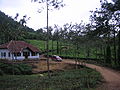
The landscape of Peermade includes spectacular waterfalls, open grass lands and pine forests.[6] Predominantly it is classified as Malanad with an elevation ranging from 3,000 ft (910 m) from the mean sea level.

History

[edit]
1900 photograph of Peerumedu (British library)

Peermade was once the summer retreat of the Maharajas of Travancore. During those periods these regions were quite inaccessible, covered by dense forests and was inhabited by certain tribes like 'Malappandarams' and 'Malayarans'. The archaeological excavations points out that there was an ancient Neolithic culture flourished in the high-ranges which wasn't written or recorded. But the findings of cultural remnants from the hill tracks near Kumily and Vandiperiyar provides some factual evidences of the existence of a rich culture.[7]

Peermade was the highest elevation on the mountain route that once connected the Travancore with Madurai in ancient Tamilakam. The mountain barriers created by the ghats separated these two regions.[7]: 2  Periyar Wildlife Sanctuary, one of the largest wildlife reserves in India, is 43 kilometres (27 mi) away. It has herds of elephants and other wildlife as well as lakes.

Spices

[edit]

The area is extremely fertile and until recently featured lush plantations of coffee, tea, cardamon, and coconut.[8] With a long history of spice growing, the focus is now on the production of organic black pepper, white pepper, ginger and turmeric.[9]

At a 2006 show, spice growers from Peermade displayed samples of organically grown spices including cardamom, black pepper, white pepper, nutmeg, mace, cloves, turmeric, ginger, vanilla beans, vanilla powder and herbs such as oregano, sage, thyme and rosemary. Oils of thyme and rosemary were also displayed.[10]

Education

[edit]

Marian College[11] and Mar Baselios Christian College of Engineering and Technology[12] are located at Kuttikanam in Peermade.

Politics

[edit]

Peermade assembly constituency is part of Idukki (Lok Sabha constituency).[13] Vazhoor Soman is the current MLA of peermade.

[edit]

See also

[edit]

Notes

[edit]

Books

[edit]
[edit]
Revisions and contributorsEdit on WikipediaRead on Wikipedia
from Grokipedia
Peermade, also spelled Peerumedu, is a town, grama panchayat, and in , , , located in the at an elevation of 915 meters above sea level. It serves as the headquarters of Peerumedu taluk, which encompasses 10 revenue villages and recorded a population of 175,622 in the 2011 census, with the town itself housing about 22,213 residents across 5,617 households. The region is characterized by its cool climate, undulating hills, and extensive plantations of , , cardamom, and rubber, which dominate the local economy and were introduced during British colonial times when Peermade functioned as a summer retreat for royalty and European planters. These estates not only sustain agricultural livelihoods but also attract tourists seeking panoramic views, trekking opportunities, and equestrian activities amid mist-shrouded valleys.

Geography

Location and Physical Features

Peermade, also known as Peerumade, is a taluk and in , , , located within the . It sits at coordinates 9°34′33″N 77°01′32″E and an elevation of 915 meters (3,002 feet) above sea level. The area forms part of Peermade taluk, one of five taluks in , which spans highland and midland physiographical divisions. Positioned approximately 85 kilometers east of and 40 kilometers northwest of , Peermade serves as an access point to regions like . The terrain consists of undulating highlands in the , with rolling elevations ranging from around 100 meters in lower portions to over 1,000 meters in elevated areas. Key physical features include the Peermade Plateau, from which the originates at 1,650 meters altitude and flows 176 kilometers westward. The region is bounded northward by the basin and , encompassing forests, tea estates, cardamom plantations, waterfalls, and streams that define its scenic highland landscape.

Climate and Biodiversity

Peermade, elevated at approximately 915 meters above in the , features a temperate highland characterized by moderate temperatures and high . The average annual temperature is 22.0 °C, with diurnal variations moderated by the surrounding hills. Winters ( to ) see lows around 10–15 °C and highs up to 25 °C, while summers (March to May) maintain comfortable ranges of 15–28 °C, avoiding the extreme heat of lowland . Precipitation is abundant, averaging 3,343 mm annually, predominantly during the southwest from to , when monthly rainfall can exceed 600 mm. The northeast monsoon contributes additional rain from to December, though less intensely, with drier interludes in between supporting agricultural cycles. This pattern aligns with broader trends, where annual rainfall often surpasses 3,000 mm due to from the Ghats. and are common in mornings, enhancing the region's scenic appeal but occasionally disrupting visibility. The area's biodiversity reflects its position in the , with semi-evergreen and moist forests interspersed with anthropogenic landscapes like and plantations. Native flora includes species such as Hopea parviflora and Cullenia exarillata in remnant patches, alongside invasive elements in cultivated zones. Fauna comprises mammals like (Elephas maximus) and (Rusa unicolor), birds including the Malabar whistling thrush (Myiophoneus horsfieldii), and reptiles such as the king cobra (Ophiophagus hannah), though populations are fragmented by plantation expansion. Proximity to the Idukki Wildlife Sanctuary, covering 77 km², bolsters regional conservation, protecting diverse ecosystems that extend influence to Peermade's fringes. Local initiatives, such as those by the Peermade Development Society, emphasize and preservation of to mitigate loss from agriculture. However, extensive plantations have reduced native forest cover, underscoring challenges in balancing economic activity with ecological integrity.

Etymology

Origin and Historical References

The name Peermade, rendered in Malayalam as പീരുമേട് (Pīrumēṭŭ), linguistically derives from "pīru," denoting a revered saint or Sufi peer, combined with "mēṭu," signifying hill or elevated terrain, thus meaning "the saint's hill" or "hill of the peer." This etymological structure reflects the region's -speaking context within the historical kingdom, where topographic features often incorporated honorifics for spiritual figures in place . Local oral traditions and regional accounts attribute the designation specifically to Peer Mohammed (also known as Peer Mohammed Appa or Pīr Muḥammad), a Sufi saint and Tamil poet-philosopher from Tenkasi in present-day Tamil Nadu, active around the 18th century. Folklore holds that he traversed the Western Ghats with Mappila spice traders, meditated on the hills, or was interred there, earning the site his epithet; his purported tomb overlooks Peruvanthanam valley, reinforcing the association. These narratives portray him as an advisor to Travancore rulers, facilitating early trade routes, though primary archival evidence linking him directly to the naming remains anecdotal rather than documented in royal records like the Travancore State Manual, which references Peermade geographically from the early 19th century onward without etymological detail. An ancillary folk explanation posits derivation from "pera," a local term for guava (Psidium guajava), due to historical abundance of the fruit in the hills, but this lacks the prevalence or cultural resonance of the saint-related origin and appears as secondary conjecture in regional lore. No pre-18th-century textual references to the toponym exist in verifiable South Indian historical sources, suggesting the name crystallized amid Travancore's consolidation of highland territories during that era.

History

Pre-Colonial Settlements

The region of Peermade, situated in the high ranges of the , featured limited pre-colonial human habitation dominated by indigenous tribal communities amid dense, inaccessible forests. These groups, including the Mala Arayans, Uralis (also known as Orali), Malapandarams, and Malayarayans, maintained semi-nomadic lifestyles centered on foraging, hunting, and rudimentary , adapting to the hilly terrain's isolation. Archaeological and historical accounts indicate that such settlements were sparse, with no evidence of large-scale permanent villages or urban centers prior to the medieval period; the area's elevation and thick vegetation served primarily as a route for traders crossing from eastern Tamil regions into , rather than a hub for sedentary agriculture. The Mala Arayans, in particular, are noted as early inhabitants who interacted with later migrants, suggesting their presence predated organized governance structures. Governance in the pre-colonial era involved loose overlordship by regional chieftains, with Peermade under the kings of Changanacherry until its incorporation into the kingdom around , marking a shift toward more formalized control without displacing core tribal demographics. This transition preserved the tribal character of settlements until European incursions in the introduced plantation economies.

British Colonial Development

The British colonial development of Peermade accelerated in the mid-19th century, leveraging the region's cool climate and fertile hills as a summer retreat for officials while establishing commercial plantations through 's alliance with the British. Henry Baker Jr., a , settled in Peermade around 1850, obtaining free land grants from rulers and initiating cultivation by clearing forest areas previously inhabited by tribes like the Mala Arayans. By 1860, this led to the establishment of early estates such as Tyford, with seeds sourced from Wayanad, marking the shift from subsistence to export-oriented agriculture dominated by European planters. Coffee expansion continued into the 1860s, supported by 1865 Travancore legislation that regularized taxes on timber and released barren lands for plantations, attracting British families like the Bakers and Munros who cleared vast tracts for cultivation. However, a devastating leaf rust disease (Hemileia vastatrix) struck in 1875, prompting a pivot to tea, introduced experimentally in the late 19th century with Assam-hybrid seeds from the Nilgiris. Cardamom plantations emerged by 1867 under oversight from figures like U. V. Munro, appointed Forest Conservator in 1840, diversifying the economy while British administration imported Tamil labor to sustain workforce needs. By 1897, the Tea Estates Company was founded, followed by the Peermade Tea Company in 1914, which managed estates like —Kerala's first commercial —with British managerial structures employing hundreds year-round. acreage reached approximately 8,000 acres across Central by 1906, with residual on 500 acres, solidifying Peermade's role in South India's through infrastructure like bungalows, factories, and the Central Planters Association formed around 1875. This era's land ownership patterns favored Europeans, with estates like Ashley, Hope, and Stagbrook exemplifying the transition to large-scale, capital-intensive operations.

Post-Independence Era

Following Indian independence on August 15, 1947, Peermade taluk remained under the administrative jurisdiction of the Travancore-Cochin state, which acceded to the Union of India. The region's plantation-based economy, dominated by , , and spices, saw a gradual shift toward greater local ownership as indigenous planters prioritized infrastructure improvements over product expansion, drawing investments from larger domestic entities. The States Reorganisation Act of led to the formation of state on November 1, 1956, incorporating Peermade taluk into its structure. Concurrently, on October 1, 1956, Udumbanchola taluk was newly formed by reallocating two villages from and one from Peermade taluk, refining administrative boundaries in the high ranges amid linguistic and demographic tensions between Malayali and Tamil populations. These areas, historically with significant Tamil-speaking plantation workers, were retained in despite demands from , reflecting compromises in the reorganization process that prioritized geographic contiguity over ethnic lines. On January 26, 1972, was established via Government Notification No. 54131/C2/71/RD dated January 24, 1972, carving out Peermade taluk (along with Devikulam and Udumbanchola taluks) from the erstwhile , with further jurisdictional tweaks on February 14, 1972. This bifurcation aimed to enhance governance in the remote hill tracts, supporting continued agricultural focus while fostering basic infrastructure like roads and electrification. In 1982, via G.O.(MS) No. 1026/82/RD dated October 29, 1982, northern Pamba Valley and Sabarimala Sannidhanam areas from Peermade taluk were transferred to the newly formed , streamlining pilgrimage-related administration. Post-1972 developments emphasized sustainable plantation management and tribal welfare, with initiatives like the Peermade Development Society promoting economic for women and indigenous communities through skill-building and micro-enterprises, addressing historical marginalization in estate labor. infrastructure expanded modestly, leveraging the area's and , though constrained by ecological regulations and limited to preserve agrarian character.

Demographics

Population Dynamics

The population of Peerumade taluk stood at 175,622 as per the , comprising 87,391 males and 88,231 females, with a of 1,010 females per 1,000 males. This figure reflects a predominantly rural demographic, with urban components limited to small towns like Peermade itself, where the village population was recorded at 22,213. The taluk's is approximately 125 persons per square kilometer, given its area of 1,402.62 km², underscoring its sparse settlement pattern amid hilly terrain and plantations. Decadal population growth in Peerumade taluk mirrors the broader decline observed in , which registered a -1.8% change from 2001 to 2011, contrasting with Kerala's statewide growth of 4.9%. This stagnation or contraction stems primarily from net out-migration, driven by to Gulf countries and other urban centers for employment opportunities beyond the local plantation-based economy. Agrarian distress, including fluctuating cash crop prices and labor-intensive and cultivation, has exacerbated youth out-migration, with studies in nearby Upputhara panchayat (within Peerumade taluk) highlighting shifts from agriculture to remittances-dependent livelihoods. Historically, Peerumade's population expanded through inbound migration during the British colonial era, when Tamil laborers were recruited for established in the , followed by post-independence government programs in the 1940s–1960s that resettled Malayali families from lowland districts to cultivate spices and rubber amid forest clearance. These inflows boosted density in highland areas like Idukki, but subsequent fertility declines—Kerala's fell below replacement levels by the 1990s—and sustained have reversed earlier gains, resulting in aging demographics and labor shortages in . No updated data beyond 2011 exists as of 2025, though provisional estimates suggest continued low growth amid Kerala's interstate migration imbalances.

Ethnic, Linguistic, and Religious Composition

According to the , the religious composition of Peerumade taluk (population 175,622) features comprising 51.51% (90,463 persons), 41.28% (72,488 persons), and 6.91% (12,128 persons), with , Buddhists, and other groups each under 0.05%. The Christian community primarily consists of Syro-Malabar Catholics and other denominations historically settled in the highlands for , while the Hindu majority includes , , and other castes alongside Tamil migrant laborers. Muslims form a small urban and trading minority. Linguistically, serves as the principal language, reflecting the Malayali ethnic base and official administrative use in . Tamil is substantially spoken as a secondary language, particularly among plantation workers descended from 19th- and 20th-century migrants from employed in , , and estates. Ethnically, the is predominantly Dravidian, with forming the core alongside a notable Tamil ethnic presence tied to colonial-era labor inflows. Scheduled Castes account for 23.7% (approximately 41,687 persons), mainly Pulaya and Paraya groups, while Scheduled Tribes constitute 3.7% (around 6,498 persons), including indigenous communities such as Malayarayan, Orali, Malapandaram, Muthuvan, and , who traditionally inhabit forested hills and practice or wage labor. These tribal groups, proto-Australoid in origin, represent less than 5% of Kerala's overall Scheduled Tribe but maintain distinct cultural practices amid encroachment by plantations.

Economy

Agricultural Sector: Spices and Plantations

Peermade's agricultural economy centers on plantation crops including , , and rubber, supplemented by spice production such as and , leveraging the area's elevation above 900 meters and . Commercial cultivation began in 1862 with J.D. Munro establishing the Hope Estate, marking one of Kerala's earliest plantation ventures. followed in 1875 at Penshurst Estate under F.M. Parker, initiating large-scale tea production that expanded rapidly in the late . Cardamom cultivation in the broader , encompassing Peermade, traces to the but gained commercial prominence in the , driven by Tamil laborers and European planters. The district's physiography favors spice crops, with contributing significantly to 's cardamom output, which reached 22.869 thousand tonnes in 2024. Rubber plantations, to the local economy, cover extensive areas in , though production has declined to 6.3 tonnes statewide in recent years amid market pressures. Contemporary challenges include a reduction in active tea estates from 40 to 28 in Peermade, attributed to labor shortages and fluctuating prices. Initiatives like those from the Peermade Development Society promote organic spice farming among approximately 2,500 smallholders in Idukki, focusing on sustainable practices for and pepper to enhance market resilience. These efforts align with 's role as a spice hub, where highland conditions yield crops vital to export-oriented agriculture. Peermade, situated at an elevation of 915 meters in Idukki district, functions as a hill station renowned for its temperate climate and expansive plantations of tea, coffee, and cardamom, which underpin its tourism sector. Visitors primarily arrive to escape lowland heat, especially from December to May, engaging in tours of spice gardens and estates that demonstrate cultivation techniques from planting to harvest. Major attractions encompass Parunthumpara, a hilltop viewpoint offering 360-degree panoramas of valleys and forests toward , accessible via a 25-kilometer drive from central Peermade with ample parking and elevated walkways. Waterfalls such as Valanjamkanam, Nallathanni, and draw picnickers and hikers, cascading through forested terrains during monsoon seasons. Historical elements include the kings' , now a government guest house, and Ammachikottaram, the erstwhile residence of Maharani Bai, providing insights into colonial-era residency. Activities center on outdoor pursuits like trekking dense forest trails, horse riding across undulating plantation paths, and cycling routes amid misty hills, tailored for nature and adventure seekers. These experiences integrate with eco-tourism, emphasizing biodiversity in surrounding reserves. Related industries involve hospitality via plantation-integrated resorts and homestays offering immersive stays, alongside guiding, transport, and artisanal sales of spices and teas, which generate local employment in service-oriented roles. Peermade's tourism bolsters Kerala's regional economy, aligning with the state's 21.87 million domestic tourist visits in 2023, though site-specific arrivals remain undocumented in official tallies.

Emerging Sectors and Challenges

In recent years, Peermade has seen growth in eco- and tourism as emerging sectors, leveraging its plantation landscapes and . The inauguration of an eco-lodge in Peerumedu in March 2025, constructed with sustainable materials, aims to promote stays and experiential , integrating visitors into local agricultural activities such as spice cultivation and . This development aligns with broader initiatives in , including a project launched in July 2025 to conserve colonial-era structures and trails, potentially attracting niche tourists interested in and nature. Additionally, organizations like the Peermedu Development Society (PDS) have scaled among smallholders and tribal groups, organizing thousands of farmers into marketing cooperatives for value-added products like certified organic spices and , fostering sustainable income diversification beyond traditional monocrops. These sectors face significant challenges, including labor shortages and estate fragmentation in the industry, which marked 150 years in 2025 but grapples with declining production due to aging migration and unviable smallholdings. Tribal and marginal farmers, comprising a key demographic, encounter barriers in for their produce, lacking for processing and distribution, which PDS reports as a persistent issue exacerbating cycles. Climate vulnerabilities, such as erratic s and in hilly terrains, further threaten agricultural viability, prompting adaptive measures like vetiver grass planting by over 2,500 Idukki farmers since 2021 to mitigate landslides. deficits, including limited connectivity and investment in value addition, hinder scaling, while dependency on seasonal exposes the economy to external shocks like post-pandemic recovery fluctuations.

Governance and Politics

Administrative Structure

Peermade operates as a taluk in , , under the revenue administration of the state government. The taluk is headed by a Tahsildar, who oversees land revenue collection, maintenance of land records, enforcement of land laws, and performs magisterial duties including the issuance of certificates and resolution of disputes. The Tahsildar reports to the District Collector in Painavu and operates from the Taluk Office in Peermade, which also accommodates the and Sub-Treasury for integrated administrative functions. The administrative jurisdiction of Peermade taluk encompasses 10 villages: Elappara, Kokkayar, , Manjumala, Mlappara, Peerumade, Peruvanthanam, Rosemala, Senapathy, and Upputhara. Each village is managed by a Village Officer responsible for matters, such as and boundary demarcations, under the supervision of the Tahsildar. Local self-government in the taluk is facilitated through grama panchayats, which handle developmental activities, , and basic under the system. Key panchayats include Peermade, covering 144.80 square kilometers, Elappara, and others aligned with the revenue villages. Peermade taluk falls within the Devikulam Revenue Division, one of two such divisions in , aiding in coordinated revenue and disaster management efforts.

Political Landscape and Representation

Peerumade, as a taluk within , is encompassed by the Peerumade Assembly constituency (constituency number 92), which elects a single member to the . In the 2021 Kerala Legislative Assembly elections held on April 6, Vazhoor Soman of the (CPI) secured victory with 60,141 votes, defeating Indian National Congress candidate Adv. Syriac Thomas by a margin of 5,708 votes. Soman, a long-time CPI leader, represented the (LDF) coalition, which has held state power since 2016. Soman passed away on August 21, 2025, following a at a public function, leaving the seat vacant as of October 2025 with no by-election conducted. At the national level, Peerumade falls under the , represented by of the (INC), elected in the 2024 general elections as part of the United Democratic Front (UDF) opposition to the ruling LDF. Local political representation occurs through the Peermade Grama Panchayat, which governs the taluk's rural areas and comprises multiple wards elected in December 2020. The panchayat's vice president, Lakshmi Helan of CPI, reflects ongoing LDF influence at the grassroots level, alongside members from CPI(M), INC, and others across 18 wards. The political landscape in Peerumade is characterized by competition between the LDF—dominated by CPI and CPI(M)—and the UDF led by INC, with the (BJP) securing marginal vote shares, such as under 5% in the 2021 assembly polls. This dynamic stems from the constituency's demographics, including plantation laborers and tribal communities, where left-leaning parties have historically mobilized support on issues like land rights and worker welfare, as evidenced by CPI's consistent wins in recent cycles. in the 2021 elections was approximately 70%, aligning with state averages, underscoring active participation in a region blending agricultural interests with highland development concerns.

Education and Healthcare

Educational Institutions

Peermade taluk in , , hosts several educational institutions managed by government bodies and private entities, offering education from secondary to postgraduate levels. These include government higher secondary schools established in the early alongside more recent technical and colleges affiliated to regional universities. Among higher education providers, Marian College Kuttikkanam, established in 1995 and located in , is an autonomous aided institution affiliated with Mahatma Gandhi University, . It offers job-oriented undergraduate and postgraduate programs in , , , and , with NAAC accreditation upgraded to A++ (CGPA 3.71) in 2023 and autonomous status granted by UGC in 2016. Mar Baselios Christian College of Engineering and Technology, founded in 2001 in , Peermade, is a self-financing engineering college approved by AICTE and affiliated with APJ Abdul Kalam Technological University and Mahatma Gandhi University. It provides B.Tech programs across various streams, with an enrollment of approximately 1,200 full-time students. The College of Applied Science, Peermede, established in 1993 under the government-owned (IHRD), is affiliated with Mahatma Gandhi University and situated 5 km from Peermade town along the Kottayam-Kumily road. It offers BSc degrees in and , BCom with computer applications, MSc in , and MCom in and taxation, supported by smart classrooms and placement facilities. At the secondary level, the Technical Higher Secondary School Peermade, also managed by IHRD since 1993, provides higher secondary courses in physical science (100 seats) and integrated science (100 seats), along with (50 seats), located near the guest house in . -operated schools include CPM Government Higher Secondary School, Peerumedu, established in 1935, which serves as a key aided institution for and higher secondary education in the area. Additionally, the Model Residential School, Peermade, caters to grades 5 through 12 in a co-educational setting.

Healthcare Infrastructure

The primary public healthcare facility in Peermade taluk is the Taluk Headquarters Hospital (THQH) Peermade, a government-run institution providing general medical services, emergency care, outpatient consultations, and basic inpatient treatment to residents of the hilly region. Located on Hospital Road in Peermade, it operates under the Kerala Department of Health Services and supports the taluk's population through routine diagnostics, minor surgeries, and referral linkages to district-level hospitals in Idukki. Complementing allopathic services, Sahyadri Ayurveda Hospital, managed by the Peermade Development Society since its establishment as a wellness center, specializes in traditional therapies including Panchakarma , herbal treatments, and rejuvenation programs tailored to chronic conditions and preventive care. This facility, situated in central Peermade, integrates inpatient accommodations with therapies leveraging the region's natural climate and herbal resources, serving both locals and visitors. In peripheral rural areas like Pambanar, Sevanalaya Rural Hospital, operated by the Vijayapuram Social Service Society, delivers community-focused care emphasizing maternal and child health, , and primary outpatient services, evolving from an initial to address gaps in remote access. Private clinics and smaller multispecialty units, as listed in local directories, provide supplementary options for , , and specialized consultations, though the infrastructure remains oriented toward basic and secondary care amid the taluk's dispersed plantation-based settlements.

Culture and Society

Traditions, Festivals, and Cuisine

Peermade's cultural traditions reflect a blend of indigenous tribal practices, colonial heritage, and influences from Syrian Christian and Hindu communities, shaped by its as a in . Tribal groups such as the Orali, Malapandaram, and Malayarayan maintain ancient customs including unique rituals, passed through generations, and traditional crafts like and derived from forest resources. These communities, residing in verdant hill settlements, emphasize communal living and nature-based livelihoods, with practices centered on , , and seasonal migrations for resources. traditions, introduced during British-era and cultivation from the , include estate management customs and labor rituals among migrant workers, though these have evolved with modernization. Festivals in Peermade highlight religious diversity, with Hindu, Christian, and harvest celebrations drawing local participation. The 10-day annual festival at Peerumedu Sree Krishna Temple features traditional Kerala rituals such as flag hoisting (), processions, and offerings, typically held in the Malayalam month of Vrischika (November-December). , a major offering ritual, occurs at Kaavilamma Temple, where devotees prepare sweet rice porridge in earthen pots as a communal act of devotion. Christian festivals like and are observed vibrantly, particularly at sites such as Pattumala Velankanni Matha Church, involving midnight masses, feasts, and decorations reflecting Syrian Christian customs. , Kerala's state harvest festival in August-September, unites communities with pookalam (floral rangolis), traditional games, and feasts, underscoring agrarian roots amid the region's spice plantations. Tribal festivals incorporate animistic rites tied to forest cycles, though less documented publicly. Local cuisine draws from Kerala's staples adapted to Peermade's highland , emphasizing , spices from and plantations, and forest-sourced ingredients. Tribal diets traditionally feature , wild tubers, paddy cultivations, and river , prepared simply through or to preserve nutritional value. In broader community settings, dishes incorporate abundant local produce like -infused curries, estate-inspired herbal brews, and sadhya-style meals during with (vegetable stir-fries) and payasam sweetened by hill . Christian-influenced feasts often include with stew or beef dishes, reflecting missionary-era adaptations, while Hindu rituals favor sattvic preparations using fresh spices. Availability of plantation-fresh and influences daily beverages, with minimal processing to retain flavors.

Social Development and NGOs

The Peermade Development Society (PDS), established in as a affiliated with the Catholic of Kanjirapally, has been the primary driver of social development initiatives in Peermade taluk, targeting tribals, marginal farmers, women, and children in . PDS focuses on community empowerment through programs in natural resource management, organic agriculture, rural health, and skill-building, operating across , , and districts to address and environmental vulnerabilities among rural poor. These efforts emphasize sustainable livelihoods, with PDS promoting groups for income generation via organic spice and tea collection, medicinal plant cultivation, and in approximately 20 tribal settlements. Women's development under PDS includes vocational training in crafts such as umbrella making, soap production, book binding, quail and rabbit farming, plant nurseries, wool knitting, , , and electronics repair, aiming to enhance economic independence and reduce gender disparities in household income. The organization's family sponsorship program, supported by international partners like Save a Family Plan from , provides financial aid and guidance to over 1,000 low-income families, fostering and access for children. PDS's "Land to Lab" initiative documents and propagates farmer innovations for , including drought-resistant varieties, contributing to adaptive and in tribal areas. Impacts from PDS programs include revenue increases of 5 to 8 percent for participating farmers through organic value chains and linkages, alongside broader contributions to biodiversity conservation and that support . While government schemes like Kerala's Social Security Mission provide supplementary welfare, PDS's , community-led approach has been instrumental in tribal upliftment, with verifiable outcomes in skill diversification and sustainable resource use despite challenges from variability and market fluctuations. Other smaller NGOs in Peermade, such as those listed in local directories for women and child welfare, complement these efforts but lack the scale and documented reach of PDS.

References

Add your contribution
Related Hubs
User Avatar
No comments yet.