Hubbry Logo
VagamonVagamonMain
Open search
Vagamon
Community hub
Vagamon
logo
8 pages, 0 posts
0 subscribers
Be the first to start a discussion here.
Vagamon
Vagamon
from Wikipedia

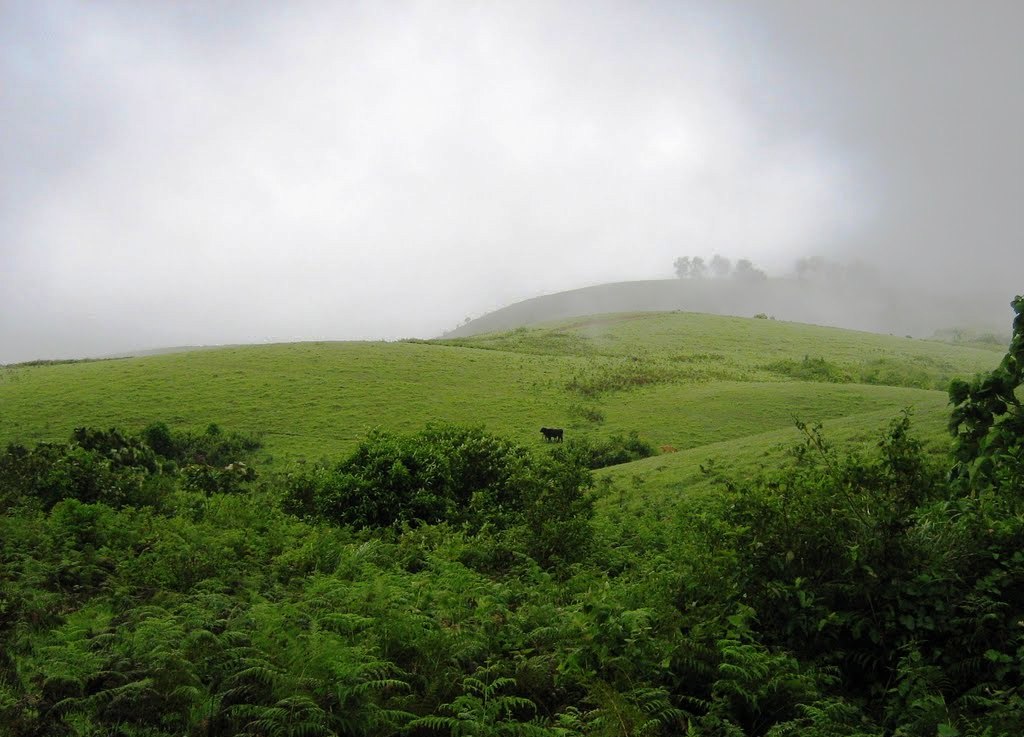
Vagamon (Malayalam: [ʋaːɡɐmɐɳ]) is an Indian hill station and a revenue village located in Peerumedu Taluk of Idukki district, and also Meenachil taluk and Kanjirappally taluk of Kottayam district in the state of Kerala, India.[2][3] Located in the Western Ghats 25 kilometres (16 mi) east of Erattupetta on the border of Kottayam-Idukki districts, Vagamon is known for its natural environment.[4] The Vagamon glass bridge is the longest cantilever glass bridge in India.[5]

Key Information

History

[edit]

Vagamon remained largely unexplored for centuries. Though the British had plantations here, it was only in 1926, when Walter Duncan and Company started their tea plantations, that it became well known. In the 1930s, more tea plantations were set up in the area.[3] After 1940, people from Travancore, and Madras (Tamil Nadu), migrated to Vagamon. Later, after the formation of Kerala State, people from various parts of Kerala migrated there.[citation needed]

In 1955, the Trappist monastery Kurisumala Ashram was founded in Vagamon.[6]

In 1963,Dr. Elizabeth Baker and Architect Padma Shri Laurie Baker established a hospital and rural service centre at Kurishumala, Vagamon to serve tea-plantation workers and rural communities in the Idukki hills. Often referred to as the Mitraniketan, it is widely noted as Baker’s first project in Kerala and as an early exemplar of his cost-effective, climate-sensitive building approach using local materials.[7][8][9]

Geography

[edit]

Vagamon is located in the Western Ghats at 1,100 metres (3,600 ft) above sea level.[4] It has a cool climate with summer temperatures reaching 10–23 °C (50–73 °F)10-23 °C at midday.[10]

Neighbouring cities & towns

Demographics

[edit]

As of 2011 Census, Vagamon had a population of 14,641 with 7,212 males and 7,429 females. Vagamon village has an area of 78.3 km2 (30.2 sq mi) with 3,816 families residing in it. The average sex ratio was 1030 lower than the state average of 1084. In Vagamon, 9% of the population was under 6 years of age. Vagamon had an average literacy of 90.9%. higher than the national average of 74%, and lower than the state average of 94%.[11]

Economy

[edit]

The primary economy is ecotourism including hiking to explore the many waterfalls, rock climbing and paragliding.[10] National Geographic Traveler has listed Vagamon in their directory of the "50 most attractive places to visit in India".[4] In addition, many people work in as laborers in tea and coffee plantations.[10]

Education

[edit]

Vagamon has two colleges: DC School of Management and Technology (DCSMAT) and DC School Of Architecture And Design, both promoted by DC Kizhakemuri Foundation and co-promoted by DC Books. One of the leading management colleges in Kerala, DCSMAT has an additional campus in Thiruvananthapuram.[12] DCSMAT offer programs such as Master of Business Administration (MBA), Bachelor of Commerce (B.Com), Bachelor of Business Administrati (BBA), Certified Management Accountant (CMA) and Association of Chartered Certified Accountants (ACCA). DC School Of Architecture And Design provides courses such as Bachelor of Arts in Interior Design (BA Interior Design) and Bachelor of Architecture (BArch). The College of Dairy Sciences kolahalamedu Vagamon, offering courses for the B Tech Dairy Sciences, affiliated to Veterinary University.[13]

Issues

[edit]

In August 2008, the Kerala Police began investigations into a training camp organized in December 2007 by the banned SIMI activists.[14]

On 18 August 2014, two tourists from Kozhikode died in Vagamon, after lightning struck them. Others who were with them sustained minor injuries. The incident happened at around 4:30 PM when the tourists were hanging around the barren hilltops. Both fell after the lightning hit them and their clothes were burned. Though both were taken to hospital, they died by the time they arrived.[15]

Biodiversity

[edit]

Vagamon, due to its elevation and climate, has a unique ecosystem, leading to the emergence of rich natural vegetation, plant species, shola forests etc. From the early 20th century plantation grew crops like tea and coffee. Vagamon hills are home to less explored flora and fauna.[citation needed] A diversity study conducted by Dr Pratheesh Mathew recorded 112 species of moths from 16 families under eight superfamilies and has become the prominent faunal diversity study in this area. The author also recorded sightings of many species of insects, annelids, amphibians, lizards, snakes, birds and mammals. A wide variety of flowering and non-flowering plants, including rare Cycas species, has also been noted. The ongoing faunal and floral surveys are expected to shed light on the richness of biodiversity at this location. The flourishing tourism and related developments are predicted to have a negative impact on the flora and fauna of this region.[16]

Culture

[edit]

Vagamon has a rich history of religious diversity with Hindu, Christian and Muslim populations.[4] There are several religious buildings to visit including:

  • Kurisumala Ashram, Vagamon, Indian-Catholic monastery[6]
  • St Sebastian's RC Church Vagamon[citation needed]
  • St Antony's Church Vagamon[citation needed]
  • Emmanuel CSI Church Vagamon[citation needed]
  • Peniel Worship Center Vagamon
  • Zion worship centre BBA Church Paarakattu
  • Bible Believers Assembly Kottamala 3rd DIV
  • Thangal para, a Muslim pilgrimage center 5 kilometres (3.1 mi) outside of Vagamon.[17][18]
  • Sree Arundhathi Vasishta Temple, Vasishtagiry, Vagamon.[citation needed]
  • Sree Subramanya Swami Temple[19]

Books

[edit]
  • The Story of Peermade by George Thengummoottil (ISBN 9788192888606)
[edit]

See also

[edit]

Kattappana

Kalvari Mount Kottamala

References

[edit]
[edit]
Revisions and contributorsEdit on WikipediaRead on Wikipedia
from Grokipedia

Vagamon is a hill station located on the border of Kottayam and Idukki districts in Kerala, India, at an elevation of approximately 1,100 meters above sea level in the Western Ghats. It features undulating grassy hills, dense pine forests, and extensive tea plantations that contribute to its cool, misty climate with summer temperatures ranging from 10 to 23 °C.
The area exemplifies religious harmony through its trio of hilltop shrines—Muruga Mala (Hindu), Thangal Para (Muslim), and Kurisumala (Christian)—which draw pilgrims alongside nature enthusiasts. Vagamon's development as a tourist destination accelerated in the mid-20th century, evolving from a tribal settlement and colonial-era outpost into a hub for adventure activities such as , trekking, and nature walks amid its biodiversity-rich landscapes. Its serene environment and scenic viewpoints, including groves and valley overlooks, position it as a offering respite from Kerala's lowland heat, with tourism infrastructure supporting year-round visitation despite seasonal mists.

Physical Setting

Location and Topography

Vagamon is positioned in the Peerumade taluk of , , , approximately 25 kilometers east of on the border with . Its geographic coordinates are roughly 9°41′N 76°52′E. The area borders nearby locales including Peermede to the south and Elappara within the same taluk, facilitating regional connectivity. Accessibility is primarily via road networks linking to major cities such as , approximately 110 kilometers to the northwest, and further south. Elevated at 1,100 meters above , Vagamon forms part of the , a recognized for its geological antiquity and features dating to the breakup of . The is characterized by undulating hills with an average regional aligning with the Ghats' 1,200-meter mean, though local variations occur, such as 1,093 meters at pine forest sites and 1,060 meters in meadows. Key terrain elements include expansive rolling meadows, dense forests introduced for , and terraced estates that contour the slopes. Vagamon Lake lies in proximity, nestled amid these features, contributing to the area's hydrological and visual topography without dominating the elevational profile. These formations underscore Vagamon's appeal as a , with the ' faulted and folded structures providing a stable base resistant to significant seismic activity in the region.

Climate and Weather Patterns

Vagamon's climate is classified as subtropical highland (Cwb under the Köppen system), characterized by mild temperatures moderated by its elevation of about 1,100 meters in the range. This elevation creates cooler conditions than in lowland , where temperatures often exceed 30°C year-round, due to adiabatic cooling of ascending air masses interacting with the Ghats' topography. from the southwest winds further amplifies , fostering a distinct from adjacent plains. Annual mean temperatures average 22.6°C, with diurnal and seasonal ranges typically between 10°C (winter lows, December–February) and 25°C (summer highs, March–May). Winter periods often feature misty reducing to under 1 km on hill roads, while summer maintains pleasant daytime warmth without extreme heat. seasons (June–September) bring cooler averages around 20°C but high humidity exceeding 80%. Data derive primarily from modeled estimates and nearby stations like , as Vagamon lacks a dedicated observatory; direct measurements confirm the temperate profile relative to Kerala's tropical baseline. Precipitation totals approximately 2,500–3,000 mm annually, with 70–80% concentrated in the southwest monsoon (June–September), averaging 300–400 mm monthly during peak. Northeast monsoon contributions (October–December) add 200–300 mm, while pre-monsoon showers (April–May) are lighter at 100–150 mm. The Ghats' barrier effect causes intense, localized downpours, with daily maxima reaching 50–100 mm on occasion, leading to lush vegetation but temporary road inaccessibility. Recent observations from 2012–2021 indicate stable patterns with no statistically significant warming trend beyond regional Indian averages of 0.1–0.2°C per decade, attributable more to elevation buffering than lowland urbanization influences.

Historical Development

Origins and Etymology

The etymology of Vagamon remains undocumented in primary historical or linguistic records, with no verified derivations from ancient texts or inscriptions. Local traditions, as recounted in regional accounts, propose connections to terms such as "vaka" (potentially denoting a or bow-like feature) and "" (hill), implying a descriptive reference to the area's undulating, flora-rich terrain, though these lack philological substantiation and may reflect post-hoc interpretations. Alternative folk etymologies, including unsubstantiated links to tribal dialects or British-era transliterations, circulate without empirical support, underscoring the absence of pre-colonial lexical evidence. Pre-19th-century human activity in the region appears confined to transient use by indigenous hill tribes, such as the Muthuvan or communities native to the , for seasonal grazing of livestock and extraction of forest resources like timber and herbs, based on ethnographic patterns in rather than site-specific artifacts. Archaeological surveys yield no significant finds of permanent settlements, tools, or trade artifacts predating European contact, indicating the area's marginal role in ancient networks compared to coastal or valley lowlands. Systematic documentation emerges only with British colonial plantation surveys in the early , particularly around 1926 when estates were established, marking the transition from undocumented exploitation to recorded economic utilization.

Colonial and Post-Independence Evolution

In the early , British colonial authorities identified Vagamon's elevated terrain and temperate climate as suitable for agricultural exploitation, establishing tea plantations that marked the region's initial infrastructural development. These estates, among the earliest in , necessitated road construction to facilitate transport of goods and labor, transforming previously inaccessible hills into productive zones. By the , exploratory efforts had laid the groundwork for systematic cultivation, with tea gardens expanding under British management to capitalize on the area's and weather conditions conducive to . Following India's independence in 1947, Vagamon, located within the former of , was integrated into the United State of and Cochin on July 1, 1949, through the merger of and Cochin kingdoms under Indian Union oversight. This union persisted until the States Reorganisation Act of 1956, which on November 1 redrew boundaries along linguistic lines, incorporating Vagamon—then part of Idukki's highland tracts—into the newly formed state of by combining Travancore-Cochin with Malabar districts. Post-merger, Kerala's initiatives, culminating in the Kerala Land Reforms Act of 1963 and its 1969 amendments, redistributed plantation-adjacent lands, enabling settlements by Christian migrant communities from central who took up tea cultivation and dairy farming, thereby diversifying the local economy beyond colonial . Missionary activities further shaped the landscape in the mid-20th century, with the establishment of the Kurisumala Ashram in 1955 by Belgian monks, who introduced pine plantations to stabilize slopes and support ascetic self-sufficiency, altering the native . Tourism infrastructure emerged in the 1960s, as private resorts began catering to domestic visitors seeking hill retreats, building on colonial-era access routes. By the 1980s, the formally promoted Vagamon as a scenic destination, leveraging its meadows and forests to attract eco-tourists, though development remained modest compared to coastal hubs.

Demographics and Society

Population Dynamics

As per the 2011 Indian Census, Vagamon village recorded a total of 14,641, comprising 7,212 males and 7,429 females, yielding a of 1,030 females per 1,000 males. The village spans approximately 78.3 square kilometers, resulting in a of about 187 persons per square kilometer, characteristic of its rural profile with expansive meadows and forests limiting dense settlement. stood at 90.9%, with male literacy at 94.91% and female literacy at 86.96%, exceeding the national average of 74% but trailing 's state figure of 93.91% and Idukki district's 91.98%. Children under age 6 constituted 9% of the , reflecting a relatively youthful demographic amid 's aging trends elsewhere. Population growth in Vagamon mirrors Idukki district's pattern, which registered a decadal decline of -1.79% from 2001 to 2011, driven by out-migration for employment and low fertility rates typical of rural Kerala highlands. Permanent resident numbers have likely remained stable or slightly decreased since, projecting around 14,000-15,000 by 2025 absent major inflows, as official projections for similar hill areas indicate minimal natural increase offset by emigration. This low-density, low-growth dynamic underscores Vagamon's appeal as an under-urbanized retreat, with infrastructure strains emerging only seasonally. Historically, post-1940 migration from Travancore lowlands and neighboring Tamil Nadu plains bolstered settlement for agriculture, particularly tea and cardamom plantations, establishing a base population amid prior sparse indigenous occupancy. Contemporary patterns include intermittent inflows of seasonal laborers for tourism-related services, such as hospitality and guiding, drawn from adjacent districts, though these do not significantly alter census tallies. Tourism induces temporary swells, potentially doubling effective population during peak winter months (November-February), as visitor numbers exceed 100,000 annually, straining local resources without formal residency shifts.

Community Composition and Social Dynamics

Vagamon's community is characterized by a majority of Malayali and , mirroring the Peerumade taluk demographics where account for 51.81% and 41.28% of the as per the 2011 census, alongside a Muslim minority of 6.91%. The Christian segment is predominantly Syro-Malabar Catholics, who form a significant portion of Idukki district's Christian due to historical establishments in highland regions. Scheduled Castes constitute 22.4% of the village's residents, reflecting lower-caste Hindu integration, while Scheduled Tribes make up 2.1%, including forest-dwelling groups like the Muthuvan who engage in traditional cultivation on the peripheries. Linguistically, serves as the primary medium of communication across communities, with English supplementing interactions in tourism-oriented enterprises catering to visitors. Inter-community relations in Vagamon demonstrate cohesion, shaped by Kerala's policies enacted in the 1960s-1970s, which redistributed and agrarian holdings to tenants, mitigating prior asymmetries in resource control among Hindu and Christian landholders. Recorded instances of communal friction are minimal, attributable to shared regional identity and , though expanding has introduced competitive pressures over local resources like and developable land, fostering occasional disputes resolved through panchayat rather than escalation. This dynamic underscores causal links between resource scarcity and mild tensions, independent of identity-based narratives.

Economic Foundations

Primary Sectors: Agriculture and Allied Activities

Vagamon's agricultural economy centers on plantation crops adapted to its mid-elevation slopes in the Western Ghats, including tea, coffee, cardamom, pepper, ginger, and turmeric, which form part of Idukki district's broader spice production hub. These cash crops, introduced during British colonial development of the region for commercial plantations, have shifted local farming from subsistence paddy and vegetable cultivation to export-oriented activities, supporting self-sufficiency in rural households. Allied sectors emphasize , utilizing the area's expansive natural meadows for cost-effective grazing of , as assessed in studies confirming their nutritional adequacy for production. Pioneered in the by Belgian Father Francis in nearby high ranges, operations like Kurisumala Farm provide fresh to local communities through self-sustaining models. The Base Farm at Kolahalamedu maintains 120 , yielding an average of 400 liters of daily, alongside value-added products, contributing to 's rural output. These activities face challenges from the region's variability, which can disrupt spice yields in Idukki—Kerala's leading spice producer—though the cool climate favors organic cultivation practices on smaller farms. Post-1970s influences, including improved varieties and market access, have boosted commercial viability, with spices like integral to district exports despite climate risks.

Tourism as Economic Driver

Tourism constitutes a vital economic pillar in Vagamon, drawing substantial visitor numbers that generate revenue through accommodations, guided services, and adventure pursuits. In 2022, the destination recorded over 645,600 tourists, outpacing more established hill stations like and signaling a robust post-pandemic recovery from the sharp declines experienced after 2020. This footfall supports income diversification for locals, shifting reliance from via homestays, operations, and related multiplier effects in supply chains for food and transport. The sector fosters employment in and ancillary roles, providing livelihoods in an area lacking . While Vagamon-specific figures remain limited, Kerala's broader industry employs approximately 1.5 million individuals, with hill destinations like Vagamon exhibiting heavy seasonal dependence on such jobs for economic sustenance. Recent initiatives, including 2024 proposals for tourism townships across four Vagamon sites and caravan park developments, aim to channel investments and stabilize year-round opportunities. National Geographic Traveler's inclusion of Vagamon among India's 50 most attractive destinations bolsters its appeal to eco-conscious visitors, aiding foreign exchange inflows amid Kerala's tourism-driven GDP share of around 10 percent. Yet, this concentration introduces vulnerabilities, as evidenced by pandemic-induced disruptions, underscoring risks of over-dependence without parallel sectoral growth.

Tourism and Attractions

Natural Landmarks and Scenic Features

Vagamon's natural landmarks include man-made pine forests established during the British colonial period, covering steep slopes and contributing to the area's scenic allure through their uniform canopy and aromatic landscape. These forests, spanning approximately 20 hectares under Kerala Forest Department management, form part of broader efforts on government land allocated for preservation and . The site's accessibility via trails from Vagamon town supports controlled visitation, with entry regulated to maintain ecological balance. Thangalpara features distinctive rock formations atop a hill approximately 6.8 kilometers from Vagamon town, including a prominent spherical associated with local Muslim heritage and offering expansive views of surrounding valleys. The geological outcrops, combined with a perennial water source near the summit, enhance the site's aesthetic and hydrological value, drawing attention for their isolated prominence amid rolling terrain. Uluppuni Meadows, located about 10 kilometers from Vagamon via the Pullikkanam-Elappara road, consist of expansive grassy expanses on hilltops that provide unobstructed panoramas of the . These open landscapes, characterized by undulating fields and minimal vegetation cover, exemplify the region's ecosystems, accessible by vehicle or foot for observational purposes. Vagamon Lake, a compact water body situated 1 kilometer from the local bus stop, is enveloped by tea estates and meadows, its calm surface reflecting adjacent elevations and supporting limited aquatic features amid the hill station's topography. Kurisumala, translating to "Mountain of the Cross," rises as one of Vagamon's prominent hills, its slopes marked by a hilltop cross that accentuates visibility against the skyline, integrated into the area's preserved natural contours under regional oversight. These features, monitored through Kerala Forest Department initiatives, underscore efforts to sustain geological and visual integrity against developmental pressures.

Adventure and Recreational Activities

Paragliding in Vagamon is facilitated through tandem flights launched from elevated meadows, with operations overseen by licensed instructors affiliated with professional bodies such as the , emphasizing pre-flight safety briefings, equipment inspections, and adherence to aviation standards. These activities, popular among tourists seeking aerial views of the surrounding hills, have grown with private operators since the early 2000s, though occasional expert critiques highlight needs for enhanced site-specific protocols during events. Trekking routes traverse pine forests, meadows, and paths to waterfalls like those near Kolahalamedu, typically guided by local operators to mitigate risks from uneven terrain and weather variability. Rock climbing and rappelling are available at designated spots within Vagamon Adventure Park, where harnessed ascents on natural rock faces are supervised by trained staff using certified gear, catering to varying skill levels. Off-road jeep safaris and biking expeditions navigate rugged trails through plantations and hills, organized by private firms equipped for challenges, with participant limits to ensure vehicle stability. setups, including tent accommodations at sites like Malamanda Camp, incorporate off-road access and guided night treks, drawing on the area's for cooler overnight conditions. Vagamon Adventure Park recorded 410,805 visitors from January to July 2025, reflecting sustained interest in these pursuits amid Kerala's broader recovery, though comprehensive incident data remains limited in public tourism reports.

Biodiversity and Ecology

Flora, Fauna, and Ecosystems

Vagamon's ecosystems primarily consist of shola-grassland mosaics characteristic of the high-altitude , featuring rolling grasslands interspersed with patches of evergreen shola-like forests that support exceptional . These habitats, found above 1,100 meters , include introduced plantations alongside native vegetation, forming a mosaic that acts as part of regional corridors connecting protected areas like . Grassland-forest margins exhibit particularly high , with Vagamon recognized as a center of for southern Indian grasslands. The flora is dominated by diverse grass species in the open meadows, with studies documenting high richness in families adapted to montane conditions, including endemics contributing to the area's exceptional botanical value. patches harbor evergreen trees and plants typical of tropical montane forests, while orchids—both native and rare —add to the floral diversity, though systematic inventories remain limited beyond cultivated collections. Aquatic in local lakes and includes emergent and submerged macrophytes supporting wetland ecosystems, though specific species counts from surveys are sparse. Fauna inventories reveal a range of small mammals suited to the mosaic habitats, including small Indian civets (Viverricula indica), Indian porcupines (Hystrix indica), Indian hares (Lepus nigricollis), Asian palm civets (Paradoxurus hermaphroditus), yellow-throated martens (Martes flavigula), , and slender lorises (Loris tardigradus). Avifauna includes endemic such as the Malabar whistling thrush (Myophonus horsfieldii), alongside other birds contributing to the region's ornithological richness. Invertebrate diversity is notable, with moth surveys recording 112 in initial studies and up to 323 across 251 genera in broader Heterocera assessments, indicating robust nocturnal . Occasional sightings of larger ungulates like the (Nilgiritragus hylocrius) occur in adjacent grasslands, though populations are primarily documented in nearby core habitats rather than Vagamon proper. Empirical data from Kerala Forest Department-aligned surveys underscore Vagamon's baseline within the , with grassland ecosystems alone highlighting rates that warrant further documentation. These inventories, drawn from field studies rather than anecdotal reports, establish the area's ecological profile amid ongoing pressures.

Conservation Status and Threats

Vagamon, situated within the , supports endemic flora and fauna but lacks designation as a formal , rendering its ecosystems susceptible to external pressures without stringent regulatory oversight. The region's grasslands and forests, critical for local , have undergone degradation through conversion to exotic plantations and human encroachment, with historical planting of and species by the Forest Department supplanting native vegetation and contributing to ecological shifts. Unregulated tourism emerges as the principal anthropogenic driver of habitat loss, manifesting in unauthorized constructions that fragment natural landscapes and widespread waste littering that disrupts soil and water systems, as documented in assessments from June 2025. Grasslands, vital for endemic grasses and associated fauna, continue to shrink due to tourism-related development and agricultural invasion, exacerbating the decline of peripheral plant populations vulnerable to trampling and land-use changes. Additionally, exotic pine stands, while providing scenic appeal, alter native soil chemistry and fire regimes, potentially favoring invasives over indigenous species in the montane ecosystem. Sediment cores from Vagamon Lake reveal anthropogenic heavy metal contamination, with levels indicating moderately strong from upstream human activities, escalating over recent decades and posing risks to aquatic . Rare and , such as the tree Uniyala multibracteata rediscovered in 2024 after 140 years, face ongoing threats from landslides triggered by alterations and tourism-induced disturbances, underscoring the need for evidence-based monitoring amid these causal pressures. populations and other in the hills also suffer from and runoff linked to intensified , as noted in 2025 inventories.

Cultural Elements

Local Traditions and Communities

The Kurisumala Ashram, established in 1955 by Belgian Benedictine monk Francis Acharya, represents a foundational Christian monastic tradition in Vagamon, blending Syro-Malankara Catholic practices with Indian through structured daily routines of , , manual labor, and agricultural work. The ashram's community introduced from , fostering as a model for local agricultural self-sufficiency among early Christian settlers. A prominent observable custom occurs annually on , when hundreds of pilgrims, primarily Catholics, ascend the hill via a path marked by 14 , carrying wooden crosses in meditative procession to commemorate Christ's Passion. Indigenous communities in the broader Peerumedu encompassing Vagamon include the Malayarayan, Orali, and Malapandaram tribes, who maintain connections to the land through practices adapted to the hilly terrain, such as selective gathering of forest resources for sustenance. These groups, originally inhabiting the area before mid-20th-century migrations, exhibit ethnographic patterns of sustainable resource use, with evidence from local settlements showing rudimentary huts and reliance on nearby canals and forests for daily needs. Daily community life integrates herding and farming, with settlers and locals utilizing the open meadows for grazing, a practice tied to the ashram's early agricultural initiatives that supported alongside crop cultivation. Interfaith coexistence is evident in Vagamon's religious landscape, featuring Christian sites like Kurisumala alongside Hindu temples and a Muslim dedicated to Sufi Hazrat Sheikh Fariduddin Baba, reflecting practical harmony among Hindu, Christian, and Muslim populations without documented conflicts over shared spaces. This diversity stems from post-1940 migrations from and , which layered settler customs onto pre-existing indigenous patterns.

Festivals, Cuisine, and Artistic Expressions

, Kerala's principal observed in or , is celebrated in Vagamon with the creation of intricate floral designs called pookalam, traditional games such as vadamvali (tug-of-war), and cultural performances including dances and music at local resorts and communities. The centerpiece is the Sadhya, a vegetarian banquet of 20-28 dishes like sambar, , thorans, and payasam served on banana leaves, emphasizing locally sourced rice, vegetables, and for nutritional sustenance derived from the region's agrarian base. Attendance at these events in Vagamon remains community-scale, often hosted by resorts drawing families for 1-2 days of rituals honoring the legendary King . Christmas holds significance in Vagamon due to its substantial Christian population, including Syrian Orthodox settlers, with midnight masses, carol singing, nativity plays, and feasts at hill churches and the Kurisumala Ashram monastery. These December 25 observances incorporate Kerala-specific elements like star-shaped lanterns (kudakolam) and , attracting pilgrims from for services that blend liturgical traditions with local hill customs, though exact attendance figures are not systematically recorded. The Vagamon Festival, held annually in January, features local music, dance performances, and art exhibitions highlighting regional talents, providing a platform for community artistic expression amid the hill station's serene setting. Vagamon's cuisine draws from broader Kerala traditions adapted to highland availability, prioritizing steamed rice preparations like puttu (cylindrical rice cake) paired with chickpea curry (kadala curry) for carbohydrate-protein balance, and fermented rice pancakes (appam) with vegetable stew or coconut milk-based gravies using spices such as cardamom and black pepper grown locally. Fresh dairy from nearby farms supplements meals, while banana fritters (pazham pori) offer quick energy from ripe plantains abundant in the area; these dishes sustain trekkers and residents with nutrient-dense, spice-infused profiles rooted in agro-ecological sourcing rather than imported elements. Limited specialized eateries focus on homely preparations over gourmet innovation. Artistic expressions in Vagamon are modest and festival-tied, with folk dances like group performances during evoking Kerala's ritualistic heritage, though scaled down from coastal variants due to the sparse tribal presence and constraints. Modern iterations include eco-themed fairs at events like the January festival, where local artisans display hill-inspired crafts, but traditional forms such as remain peripheral, performed sporadically by touring troupes rather than as endemic practices.

Infrastructure and Public Services

Education and Healthcare Facilities

Vagamon, a in , , features basic educational infrastructure primarily consisting of government and mission-run schools offering instruction up to the higher secondary level, supplemented by specialized higher education institutions. The village's rate stands at 90.88%, with at 94.91% and female at 86.55%, surpassing the national average but reflecting the district's overall rate of approximately 91.99%. Local schools include CBSE-affiliated institutions such as Public School and Montfort School, which provide primary and amid the rural, elevated terrain. For higher education, the DC School of Management and Technology (DCSMAT) operates a in Vagamon, offering undergraduate programs in (BBA, BCA) and postgraduate MBA degrees, accredited by NAAC with an 'A' grade and recognized by AICTE and UGC; it emphasizes placement-focused training potentially aligned with regional and management needs. The DC School of Architecture and Design (DCSAAD), co-located on the same and affiliated with University, provides specialized training in architecture, catering to design skills relevant to local estate and development. Advanced degree programs and broader collegiate options remain limited locally, with residents often accessing facilities in nearby towns like or . Healthcare services in Vagamon rely on primary-level facilities suited to its remote, hilly location, with a Primary Health Center (PHC) staffed by 5 doctors and 36 paramedical personnel providing basic outpatient care, vaccinations, and maternal services. A Community Health Centre (CHC) also operates in the area, handling routine consultations and minor emergencies under Kerala state oversight. Access challenges persist due to rugged terrain and distance, prompting dependence on district-level hospitals in Idukki, such as Tata General Hospital or Arun Hospital, for specialized treatments like surgery or advanced diagnostics, which can involve travel times exceeding 1-2 hours. Private clinics, including those focused on general and mental health like Fotunatuse Mental Health Centre, offer supplementary care but lack comprehensive inpatient capabilities. While tourism influx has driven economic activity, no verified expansions in healthcare infrastructure directly attributable to workforce demands were documented as of 2023, underscoring ongoing vulnerabilities in emergency response for a population increasingly exposed to visitor-related risks.

Transportation, Accommodation, and Utilities

Vagamon is primarily accessible by road, with no direct rail or air links within the vicinity. The nearest airport is , approximately 110 km northwest, requiring a drive of about 3-4 hours via state highways. The closest railway station is , located roughly 65 km away, from where travelers typically hire taxis or take infrequent (KSRTC) buses covering the remaining 1.5-2 hours on winding terrain. Local roads connect via routes like SH 59 from , linking to broader networks such as NH 185 eastward, but public transport remains sparse, with buses operating mainly from or and no dedicated shuttle services, necessitating private vehicles for flexibility amid narrow, monsoon-vulnerable paths. Accommodation options in Vagamon emphasize mid-range resorts, homestays, and cottages catering to tourists seeking retreats, with establishments like Chillax Vagamon Hotel and Olga Hills Resort providing amenities such as pools and valley views. Since the 2010s, the sector has expanded with eco-focused properties and sites, reflecting rising visitor numbers, though total bed capacity remains modest at under 2,000 rooms across roughly 50-60 listed providers, prioritizing smaller-scale stays over mass . Bookings often fill during peak seasons (October-March), with tariffs ranging from ₹3,000-₹10,000 per night for standard units, supported by local directories. Utilities in Vagamon depend on (KSEB) for power distribution, which faces frequent interruptions during monsoons due to storm-induced line damages and landslides, as evidenced by statewide outages affecting over 4.6 million consumers and ₹86.67 in losses from May 2025 rains alone. draws from reservoirs and borewells managed by local panchayats, adequate in dry seasons but prone to contamination or shortages from erosion during heavy downpours, with limited piped coverage in remote fringes relying on . Maintenance records indicate causal vulnerabilities from underinvestment in hill-specific reinforcements, leading to multi-day blackouts that disrupt both residents and visitors, though diesel generators in larger resorts mitigate shortfalls.

Environmental and Developmental Challenges

Impacts of Tourism and Human Activity

Tourism in Vagamon has generated opportunities, particularly in hospitality, guiding, and ancillary services such as agri-tourism, contributing to local income in this rural where alleviation remains a priority for proponents of development. These activities have spurred indirect jobs for nearby communities, leveraging the area's natural attractions to draw visitors and foster economic multipliers without large-scale industrialization. However, unregulated tourism and associated human activities have induced ecological strain, including waste littering that threatens the high-range , as documented in a 2025 study highlighting disruptions from visitor influx and poor . Plastic debris and non-biodegradable litter have prompted interventions like green checkposts at entry points since 2020 to enforce bans and collect waste from vehicles, underscoring chronic littering linked to tourist behavior. Sediment cores from Vagamon Lake reveal moderately strong contamination, attributable to anthropogenic runoff from tourism-related development and land disturbances, altering aquatic systems. Heavy footfall has loosened soils and blocked natural streams, exacerbating in grasslands and contributing to seasonal from December to June, as reported by local residents and ecological assessments. Geospatial analysis indicates urban heat island effects in Vagamon during winter months, intensified by expansion and clearance for tourist facilities, raising local temperatures amid the hill station's fragile . Conservation advocates argue these pressures signal and "eco-terrorism" through habitat invasion, contrasting with development views that prioritize jobs over stringent restrictions in underdeveloped regions.

Policy Responses, Controversies, and Future Prospects

In response to environmental pressures from and human activity, the Kerala government has promoted eco-tourism frameworks through the Forest Department, emphasizing nature preservation and local welfare as of January 2025. Responsible Tourism projects, including minimization and community involvement, received approval for INR 6.64 crore in 2024 to mitigate impacts in hill stations like Vagamon. The state's Over Ten Crores Clean Destination Campaign, launched to enforce bans and reduction, targets iconic locations amid rising visitor numbers exceeding pre-pandemic levels by 2024. A notable policy initiative involves the proposal for a in Vagamon or , facilitated by UAE government support to enhance infrastructure and economic growth. Four specific sites in Vagamon were evaluated for this project, aligning with Kerala's Mission 2030 master plan for diversified attractions like caravan parks. However, quarrying restrictions in the , where Vagamon lies within , have indirectly influenced development; the in 2016 ruled that blanket bans require state legislation, amid ongoing illegal operations occupying over 7,000 hectares statewide, exacerbating risks. Controversies center on balancing expansion with fragility, as the township plan has drawn criticism for potential ecological harm in biodiversity hotspots, echoing Gadgil Committee warnings against intensive construction. A Jananeethi documented "eco-terrorism" tactics by developers, including stream blockages and encroachments on 193 hectares of grasslands, urging a ban on mass and formation of a protection council to curb and loss affecting locals from December to June annually. Enforcement gaps persist, with pro-development advocates citing economic stagnation from overregulation—such as caravan potential—against environmentalists' strict conservation stance, risking a "" from unchecked littering and off-road activity documented in 2025 studies. Future prospects hinge on the 20-Year Perspective Plan for tourism (2002–2022 extended), which prioritizes integrated urban-transit improvements and sustainable models to avert , projecting growth via regulated adventure and eco-experiences while mandating audits. Analysts foresee viability for low-impact innovations like if paired with rigorous monitoring, though persistent quarrying threats in Idukki fringes underscore needs for localized enforcement to prevent irreversible degradation.

References

Add your contribution
Related Hubs
User Avatar
No comments yet.