Hubbry Logo
search
logo
Poblano
Poblano
current hub
1910145

Poblano

logo
Community Hub0 Subscribers
Read side by side
from Wikipedia
Poblano
Poblano pepper
SpeciesCapsicum annuum
OriginPuebla, Mexico
Heat Low
Scoville scale1,000–1,500[1][2] SHU

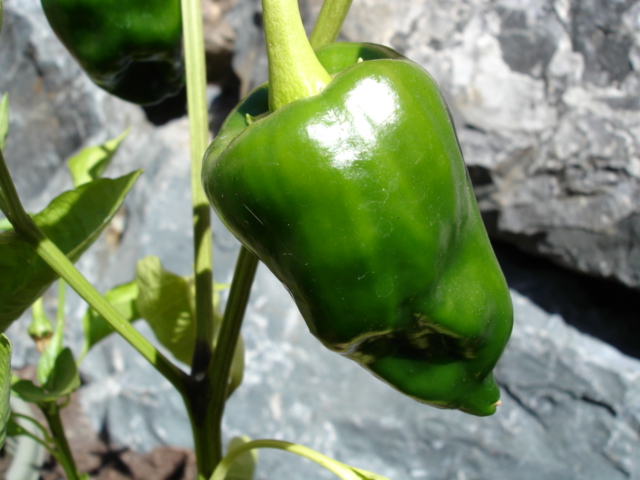
The poblano (Capsicum annuum) is a mild chili pepper originating in Puebla, Mexico. Dried, it is called ancho or chile ancho, from the Spanish word ancho (wide).[3][4] Stuffed fresh and roasted, it is popular in chiles rellenos poblanos.

While poblanos tend to have a mild flavor, occasionally and unpredictably they can have significant heat. Different peppers from the same plant have been reported to vary substantially in heat intensity. The ripened red poblano is significantly hotter and more flavorful than the less ripe, green poblano.

A closely related variety is the mulato, which is darker in color, sweeter in flavor, and softer in texture.[5][6] The pasilla pepper is sometimes incorrectly called "poblano", particularly in the United States, but they are distinct from true poblano peppers.[7][8]

Growth

[edit]

The bush has multiple stems and can reach 25 in (64 cm) in height. The fruit is 3 to 6 in (7.6 to 15 cm) long and 2 to 3 in (5 to 8 cm) wide. An immature poblano is dark purplish green in color, but the mature fruits eventually turn a red so dark as to be nearly black.

Poblanos grow in hardiness zones 10–12 and do best with a soil pH between 7.0 and 8.5. They typically prefer full sunlight and may require additional support for the growing fruits during harvest in late summer. A poblano takes around 200 days from seed to harvest and requires soil temperatures of at least 64 °F (18 °C) to germinate.[5]

Use

[edit]

Preparation methods include: dried, stuffed, in mole sauces, or coated in whipped egg (capeado) and fried. It is particularly popular during the Mexican independence festivities as part of a dish called chiles en nogada, which incorporates green, white, and red ingredients corresponding to the colors of the Mexican flag. This may be considered one of Mexico's most symbolic dishes by its nationals. It is also usually used in the widely found dish chile relleno. Poblanos are popular in the United States and can be found in grocery stores in the states bordering Mexico and in urban areas.

After being roasted and peeled (which improves the texture by removing the waxy skin), poblano peppers are preserved by either canning or freezing. Storing them in airtight containers keeps them for several months. When dried, the poblano becomes a broad, flat, heart-shaped pod called a chile ancho (literally "wide chile" or "broad chile"). These dried ancho chiles are often ground into a powder used as flavoring in various dishes.

"Poblano" is also the word for an inhabitant of Puebla, and mole poblano refers to the spicy chocolate chili sauce originating in Puebla.

[edit]

See also

[edit]

References

[edit]
Revisions and contributorsEdit on WikipediaRead on Wikipedia
from Grokipedia
The poblano (Capsicum annuum) is a mild chili pepper originating from the Mexican state of Puebla, characterized by its large, heart-shaped, dark green fruits measuring approximately 3 to 4 inches in length and 2 inches in width.[1][2] These peppers register 1,000 to 2,000 Scoville heat units, offering a subtle spiciness that enhances dishes without dominating them, and they ripen to a deep red if left on the plant.[2][3] When dried, poblanos transform into ancho chiles, featuring wrinkled, reddish-brown skins prized for their rich, earthy, and slightly sweet flavor profile.[4][5] In Mexican cuisine, poblanos are a staple, most famously stuffed with cheese, meat, or vegetables to create chiles rellenos, a dish where the peppers are roasted, filled, battered in egg, and fried.[6][7] They are also commonly roasted for use in salsas, moles, soups, and rajas, contributing a smoky depth to sauces and stews.[6] The bushy plants grow 2 to 3 feet tall, yield abundantly in full sun and well-drained soil, and exhibit good disease resistance compared to bell peppers, making them suitable for home gardens and commercial cultivation in warm climates.[8][9]

Etymology and Origin

Name and Terminology

The poblano pepper derives its name from the Spanish term "poblano," referring to its origin in the Puebla region of central Mexico, where it was first cultivated extensively by indigenous peoples before Spanish colonization.[10] This naming convention emerged during the colonial period as Spanish settlers documented and categorized local crops, adapting indigenous varieties into their linguistic framework while associating the pepper with the prominent city and valley of Puebla.[11] When dried, the poblano becomes known as the ancho chile, a term rooted in the Spanish word "ancho," meaning "wide," which describes the broad, flattened shape the pepper takes upon ripening to red and dehydration.[12] This transformation in nomenclature reflects post-colonial culinary adaptations in Mexico, where drying preserved the fruit for trade and storage, leading to distinct designations for fresh and processed forms within the same Capsicum annuum species.[10] Regional variations and misnomers have complicated terminology, particularly outside Mexico; in some U.S. markets, the dried poblano (ancho) is occasionally mislabeled as "pasilla," contributing to ongoing confusion with the true pasilla, which is the dried form of the chilaca pepper and derives its name from the Spanish "pasilla," a diminutive of "pasa" meaning "little raisin," alluding to its wrinkled, dark appearance.[13] This conflation arose historically from colonial-era trade routes and simplified naming by exporters, but authentic Mexican usage maintains clear distinctions: ancho for the wide, raisin-like dried poblano, pasilla for the slender, raisin-scented dried chilaca, and mulato as another dark, ripe variant sometimes mistaken for ancho due to similar maturation processes.[14]

Historical Background

The poblano pepper (Capsicum annuum var. poblano) originated in the region of Puebla, Mexico, where it grew wild in the mountainous areas surrounding the ancient city of Cholula.[15] Archaeological evidence indicates that chili peppers, including ancestors of the poblano, were domesticated in central-eastern Mexico, particularly in the Tehuacán Valley of Puebla and the Ocampo caves of Tamaulipas, with macroremains dated indirectly to approximately 9000–7000 years before present (circa 7000–5000 BCE).[16] These findings, associated with early human settlements and other domesticated crops like maize and squash, mark the transition from wild varieties—small, bird-dispersed fruits native to Mesoamerica—to larger, cultivated forms through selective breeding by indigenous peoples.[16] By the time of the Aztec Empire (14th–16th centuries CE), the poblano and other chili peppers had become a dietary staple in Mesoamerican societies, integral to daily meals and cultural practices. The Aztecs cultivated them extensively in chinampas (floating gardens) and home plots, using them to flavor staples like maize-based tortillas, beans, and stews, often ground into powders for preservation and varied tastes.[17] In rituals, chilies held sacred significance; they were offered in prayers to deities like Tlaloc, the rain god, to ensure bountiful harvests, and incorporated into merchant ceremonies for good fortune, as described in the Florentine Codex.[17] Aztecs also employed chilies medicinally and in social customs, such as punishments involving chili smoke inhalation to curb misbehavior.[18] The arrival of European colonizers marked the poblano's global dissemination, beginning with Christopher Columbus's encounters during his 1492 voyage to the Caribbean, where he documented and collected chili peppers, mistaking them for a New World variant of black pepper.[19] Spanish explorers, including those under Hernán Cortés who reached Mexico in 1519, transported seeds and plants back to Spain by the early 16th century, integrating them into European cuisines and further spreading them via trade routes to Asia, Africa, and beyond during the Columbian Exchange.[19] This exchange transformed the poblano from a regional Mesoamerican crop into a worldwide ingredient, though its cultivation remained centered in Puebla.[19]

Botanical Description

Physical Characteristics

The Poblano pepper belongs to the species Capsicum annuum, a member of the Solanaceae family, known for its diverse cultivars ranging from mild to hot varieties.[20] The plant exhibits a bushy, upright growth habit, typically reaching 2 to 3 feet (60 to 90 cm) in height and spreading 18 to 24 inches wide.[9] It features broad, ovate leaves that are deep green, measuring up to 3 inches (7 cm) in length, arranged alternately along the stems to provide natural shading for the fruits.[21] Small, star-shaped white flowers, approximately 0.5 to 1 inch across, emerge from the leaf axils during summer, with five petals and prominent stamens that facilitate pollination and subsequent fruit development.[21] The defining feature of the Poblano is its distinctive heart-shaped pods, which are pendant and measure 3 to 6 inches (7.5 to 15 cm) in length and 2 to 3 inches (5 to 7.5 cm) in width when fully mature.[22][23] These thick-walled fruits have a smooth, glossy skin when young, contributing to their firm texture suitable for stuffing.[20] Internally, each pod contains numerous small, flat, kidney-shaped seeds, typically numbering 20 to 50, attached to a central white placenta that extends along the length of the fruit.[10] In the ripening process, the pods transition from their characteristic dark green color to a deep red hue over 70 to 80 days, though they are most commonly harvested while still green to preserve their mild flavor profile.[24] As ripening progresses, the skin may develop a slightly wrinkled appearance, particularly if left on the plant longer, while the flesh thickens and sweetens.[3] This maturation does not significantly alter the pod's overall heart-shaped structure but enhances its suitability for drying into ancho peppers.[10]

Varieties and Heat Level

The poblano pepper exhibits mild pungency, typically measuring 1,000 to 2,000 Scoville Heat Units (SHU), which classifies it as one of the gentler chili varieties suitable for a broad range of palates.[25][20][26] This heat level stems from a comparatively low concentration of capsaicin, the compound responsible for spiciness, primarily located in the placental tissue that attaches the seeds to the fruit wall.[27][28] By contrast, jalapeño peppers register 2,500 to 8,000 SHU, underscoring the poblano's milder profile relative to many other common chilies.[29][26] Poblano cultivars vary in their suitability for fresh use or drying, with the traditional 'Ancho Poblano' heirloom variety favored for its robust fruits that dry well into ancho chilies, offering consistent mild heat around 1,000 SHU.[30] In contemporary U.S. agriculture, F1 hybrid strains such as Hidalgo, Baron, and Sargento have gained prominence for their uniform pod size—often 5 to 6.5 inches long—and improved resistance to diseases like Phytophthora root rot, enabling reliable yields in diverse growing conditions.[31][32][33] The poblano's flavor is distinctly earthy with subtle fruity undertones and hints of green bell pepper, providing a balanced, savory depth without overwhelming heat.[34][35] This profile remains relatively consistent across ripeness stages, though fully mature red poblanos acquire a slight increase in sweetness while retaining the core earthy character.[34][36]

Cultivation

Growing Conditions

Poblano peppers require a warm climate for optimal growth, with daytime temperatures ideally ranging from 70-85°F to support vigorous development and fruit set.[37] Nighttime temperatures should remain above 60°F to prevent stress and blossom drop, as cooler conditions can inhibit pollination and growth.[38] These plants demand full sun exposure, receiving at least 6-8 hours of direct sunlight daily to maximize photosynthesis and yield potential.[39] A frost-free growing season of 90-120 days is essential, allowing sufficient time from transplant to harvest for mature green fruits.[39] Soil conditions play a critical role in poblano cultivation, favoring well-drained, fertile loamy soils that prevent root rot and support nutrient uptake.[40] The ideal pH range is 6.0-7.0, slightly acidic to neutral, which facilitates availability of essential minerals like phosphorus and iron.[39] Enriching the soil with organic matter, such as compost, enhances fertility and structure, while the plants exhibit high sensitivity to waterlogging, which can lead to fungal diseases and reduced yields.[41] Major production of poblano peppers occurs primarily in Mexico, particularly in the state of Puebla, where the variety originated and remains culturally significant.[42] In the United States, significant cultivation has taken place in California and New Mexico since the 20th century, benefiting from the regions' arid to semi-arid climates and established chile pepper industries.[43]

Propagation and Harvest

Poblano peppers (Capsicum annuum) are primarily propagated from seeds, which should be started indoors 8 to 10 weeks before the anticipated last frost date to ensure robust seedlings for transplanting. Seeds germinate in 7 to 14 days when maintained at soil temperatures of 70 to 80°F, requiring consistent warmth and moisture during this period. Once seedlings develop their first true leaves and reach 6 to 8 inches in height, they are hardened off and transplanted outdoors after all danger of frost has passed, ideally when soil temperatures exceed 60°F. Although less common, propagation via stem cuttings is viable; semi-hardwood cuttings taken from healthy stems in late spring or summer, dipped in rooting hormone and planted in a well-draining medium, can root within 2 to 4 weeks under high humidity and indirect light. During the growing season, poblano plants require proper spacing of 18 to 24 inches between plants and 24 to 36 inches between rows to promote air circulation and reduce disease risk. Irrigation is essential, with plants needing 1 to 2 inches of water per week, applied deeply at the base to maintain even soil moisture and avoid water stress that could lead to fruit disorders. Pest management focuses on integrated approaches, such as introducing beneficial insects like ladybugs to control aphids, which can cluster on new growth and transmit viruses; for blossom-end rot—a physiological disorder caused by inconsistent watering and calcium uptake—amendments like gypsum or crushed eggshells can supply calcium while ensuring steady irrigation prevents its occurrence. Harvest timing for poblano peppers typically begins 60 to 90 days after transplanting, when green pods reach 4 to 6 inches in length for fresh use, picked by clipping with shears to avoid damaging the plant. For drying into anchos, pods are left on the plant to ripen to deep red, which adds 20 to 30 days, with full maturity occurring around 90 to 110 days post-transplant. Under optimal conditions, a single poblano plant yields approximately 5 to 10 pounds of fruit over the season, varying by variety, climate, and care.

Culinary Uses

Fresh Applications

One of the most iconic dishes featuring fresh poblano peppers is chiles rellenos, a staple of Mexican cuisine in which large green poblanos are roasted over an open flame to blister and peel the skin, then stuffed with melting cheeses like Oaxaca or queso fresco, or sometimes picadillo (a spiced meat mixture), before being dipped in a light egg batter and fried to a crisp golden exterior.[44][45] This preparation showcases the pepper's thick flesh, which holds the filling securely while providing a mild, earthy base that absorbs the batter's fluffiness. Beyond chiles rellenos, fresh poblanos lend themselves to roasting techniques that enhance their subtle smokiness without overpowering other flavors. For rajas con crema, the peppers are charred, peeled, and cut into strips, then sautéed with onions and sometimes corn before simmering in Mexican crema or a similar dairy base, topped with queso fresco for a creamy, comforting side or taco filling.[46][47] They can also be sliced raw into vibrant salads, such as grilled corn and poblano ensembles with radishes, cilantro, and lime vinaigrette, or grilled whole and chopped for tacos with savory proteins like carnitas, where the poblano's mild profile amplifies creamy dressings or bold seasonings.[48][49] Due to their mild heat level of 1,000 to 2,000 Scoville heat units, fresh poblanos versatilely enhance creamy or savory fillings without dominating the dish.[2] In various regional Mexican recipes, fresh poblanos appear diced as garnishes for pozole to add texture and subtle depth, or roasted and blended into fresh salsas that accompany stews and grilled meats.[50][51] To minimize even their gentle spiciness, cooks typically slit the pepper lengthwise and remove the seeds and white veins after roasting.[52][53]

Dried Form and Preparations

When fully ripened to red, poblano peppers are dried to become ancho chiles, a process that involves hanging the pods in the sun or using a dehydrator until they become wrinkled and develop a dark red-brown color. Traditional sun-drying methods place the peppers under direct sunlight, often covered with a thin cloth to protect against insects, taking several days depending on humidity and temperature; alternatively, a food dehydrator set to 125–135°F (52–57°C) can dry them in 8–12 hours until brittle and leathery. This dehydration removes most of the moisture, reducing the pepper's weight by 80–90% and concentrating its flavors into a richer profile.[54][55][56][57] In culinary applications, ancho chiles are prized for their mild heat and sweet, raisin-like taste with notes of prune, tobacco, and subtle smokiness, making them a staple and one of the most popular dried chilis in Mexican cuisine.[58][59] They are often used whole in complex sauces like mole poblano, where they are toasted, rehydrated, and blended with ingredients such as chocolate, spices, and other chiles to create a rich, layered depth; alternatively, they can be ground into powder for seasoning rubs, enchilada sauces, or adobos. The drying process enhances their fruity sweetness compared to the fresh poblano's grassier notes, allowing ancho to balance bolder flavors in stews and salsas without overwhelming heat.[58][59][60][61] For storage, whole dried ancho chiles can last 1–2 years when kept in a cool, dark, dry place in an airtight container to prevent moisture absorption and flavor loss; ground ancho powder has a shorter shelf life of 6–12 months under similar conditions. To rehydrate for use, anchos are typically soaked in hot water for 15–30 minutes until softened, then seeded and pureed, which restores some pliability while preserving their intensified taste.[62][63][64]

Nutritional Profile

Composition

The poblano pepper (Capsicum annuum var. poblano) is low in calories, providing approximately 20 kcal per 100 grams of raw fruit, making it a nutrient-dense addition to diets focused on weight management. Its macronutrient profile includes about 4 grams of carbohydrates, of which roughly 2 grams are dietary fiber, 1 gram of protein, and negligible fat (less than 0.3 grams). These values reflect the pepper's high water content, which constitutes around 93% of its fresh weight, contributing to its crisp texture and low energy density. In terms of micronutrients, raw poblano peppers are particularly rich in vitamin C, containing approximately 80 mg per 100 grams, providing about 89% of the Daily Value (90 mg).[65] They also provide some vitamin A, primarily derived from beta-carotene, along with vitamin B6 and potassium (approximately 175 mg per 100 grams), supporting roles in vision, immune function, metabolism, and electrolyte balance.[66] The pepper contains bioactive compounds such as antioxidants quercetin and luteolin, which contribute to its potential health-promoting properties through free radical scavenging.[67] Capsaicinoids, responsible for the mild pungency, are present at low levels of 0.01-0.02% on a dry weight basis, distinguishing poblanos from hotter varieties.[68]

Health Benefits

Poblano peppers offer notable antioxidant and anti-inflammatory benefits primarily through their vitamin C and capsaicin content. Vitamin C acts as a potent antioxidant, scavenging free radicals to reduce oxidative stress and supporting immune function by enhancing the activity of white blood cells and barrier integrity in the skin and respiratory tract.[69] Capsaicin, even in the mild levels found in poblanos, exhibits anti-inflammatory effects by modulating cytokine production and inhibiting pro-inflammatory pathways, potentially lowering the risk of chronic conditions like cardiovascular disease and certain cancers.[70][71] The fiber in poblano peppers supports digestive health by promoting regular bowel movements, preventing constipation, and serving as a prebiotic to nourish beneficial gut microbiota, which aids in maintaining intestinal barrier function and reducing inflammation in the gut.[71] Additionally, the mild capsaicin content can enhance metabolic function; clinical studies demonstrate that capsaicin supplementation increases energy expenditure and fat oxidation, with a meta-analysis of human trials reporting an average boost of 70 kcal per day in overweight individuals, contributing to improved metabolic health and potential weight management.[72][73] For eye and skin health, the beta-carotene in poblano peppers serves as a precursor to vitamin A, which is crucial for rhodopsin production in the retina, supporting low-light vision and protecting against age-related macular degeneration through its antioxidant properties.[74] Vitamin A derived from beta-carotene also promotes epithelial cell maintenance, aiding skin integrity and wound healing while reducing susceptibility to infections.[75] These benefits align with poblanos' rich profile in vitamin C and as a source of vitamin A, as outlined in their nutritional composition.[71]

Cultural Significance

Role in Mexican Cuisine

The poblano pepper holds a central place in Pueblan cuisine, most notably as the starring ingredient in chiles en nogada, a dish featuring roasted poblanos stuffed with a picadillo of ground meat, fruits, nuts, and spices, then blanketed in a creamy walnut sauce (nogada) and garnished with pomegranate seeds.[76] This preparation highlights the pepper's mild heat and ability to absorb complex flavors, making it ideal for both savory and subtly sweet profiles. Similarly, the poblano is essential to mole poblano, one of Mexico's most iconic sauces, where dried poblanos (known as ancho chiles), one of the most popular dried chilis in Mexican cooking, contribute deep, fruity notes to a rich blend of over 20 ingredients, including chilies, chocolate, nuts, seeds, and spices, traditionally served over turkey or chicken.[77][78][59][79] Beyond Puebla, the poblano integrates into broader Mexican culinary traditions, appearing in Oaxacan moles where its dried form adds earthy depth to multilayered sauces, and as a key component in pipián sauces, particularly the green variety (pipián verde), which pairs roasted poblanos with pumpkin seeds, tomatillos, and herbs for a nutty, herbaceous profile.[80][81] These uses underscore the pepper's versatility across regions, reflecting the diverse chili-centric foundation of Mexican gastronomy, which UNESCO recognized in 2010 as an Intangible Cultural Heritage of Humanity for its emphasis on indigenous ingredients like chilies alongside maize and beans to foster community and sustainability.[82] Seasonally, poblanos feature prominently in Puebla's harvest festivals, such as the annual Festival del Chile en Nogada, where the pepper's late-summer abundance inspires communal celebrations of local agriculture and culinary heritage.[83] These events, timed to Mexico's Independence Day in September, symbolize national identity, with chiles en nogada's tricolor presentation—green poblano, white sauce, red seeds—evoking the flag and commemorating the post-independence era, thereby linking the pepper to themes of unity and cultural pride.[76]

Global Adoption and Variations

The poblano pepper has seen significant adoption outside Mexico, particularly in the United States, where it is cultivated in major producing states including California, New Mexico, Texas, and Arizona, contributing to domestic supply alongside imports. Mexico remains the primary exporter of fresh and dried (ancho) poblanos to the U.S., with imports supporting year-round availability and meeting demand in ethnic and mainstream markets. Globally, the specialty pepper market, encompassing poblanos and anchos, continues to expand due to rising interest in diverse flavors, with notable production interest emerging in regions like China, where growers are exploring cultivation to meet local and export needs.[84][85][86][87] In international cuisines, the poblano's mild heat (1,000–2,000 Scoville Heat Units) and thick flesh make it adaptable for fusion dishes, often roasted to enhance its smoky, earthy notes. In American fusion cooking, it appears in Tex-Mex and Southern-inspired recipes, such as poblanos stuffed with Cajun-seasoned shrimp, cheese, and herbs, then baked or grilled, blending Mexican stuffing traditions with Louisiana spices. Similarly, creamy roasted poblano pasta incorporates the pepper into Italian-style sauces, providing subtle smokiness without overwhelming heat.[88][89][90][91] Beyond the Americas, poblanos are integrated into diverse global preparations. In Spanish cuisine, roasted poblanos enhance sauces for patatas bravas, pairing with paprika for balanced mild heat. Caribbean adaptations include blending poblanos into jerk marinades or callaloo stews, where their earthiness complements hotter local peppers. Asian fusion examples feature poblanos as substitutes for milder green chilies in Thai curries or added to Korean kimchi during secondary fermentation for added depth; one variation combines poblano rajas (strips) with soy sauce in a savory pie filling, merging Mexican slicing techniques with East Asian umami. These variations highlight the pepper's versatility in absorbing flavors while maintaining its core profile across cultural boundaries.[88][92]

References

User Avatar
No comments yet.