Hubbry Logo
EnchiladaEnchiladaMain
Open search
Enchilada
Community hub
Enchilada
logo
8 pages, 0 posts
0 subscribers
Be the first to start a discussion here.
Enchilada
Enchilada
from Wikipedia

Enchilada
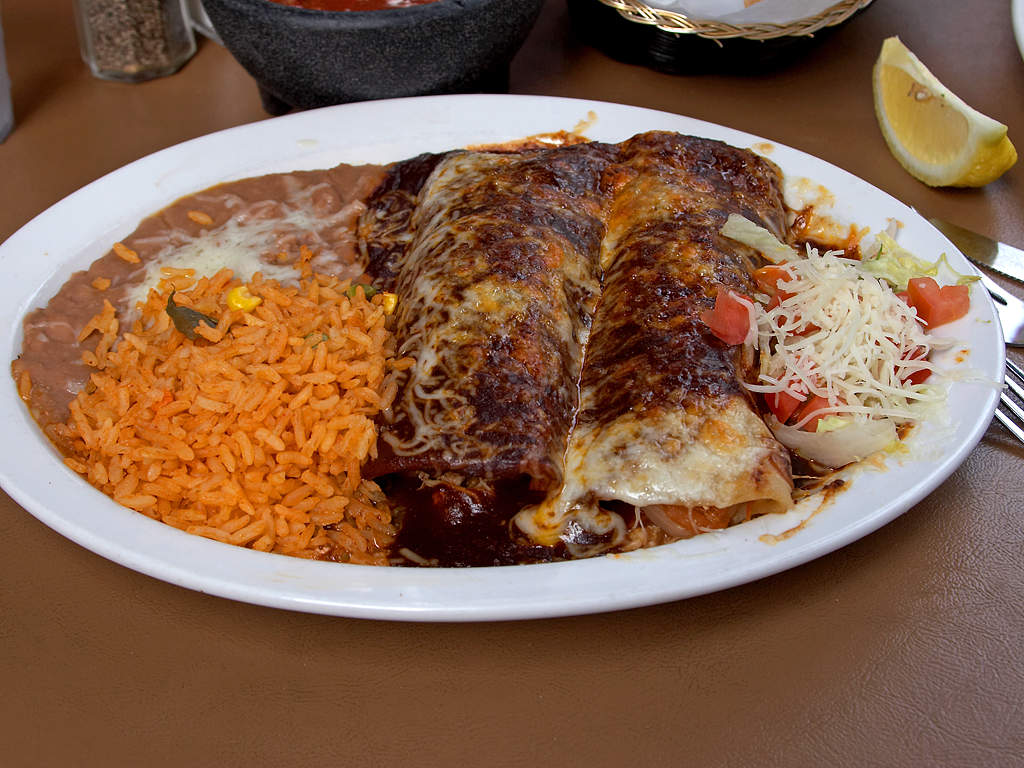
Enchiladas with mole, served with refried beans and Spanish rice
Place of originMexico
Main ingredientsTortillas, chili pepper sauce, meat
  • Cookbook: Enchilada
  •   Media: Enchilada

An enchilada (/ˌɛnɪˈlɑːdə/, Spanish: [entʃiˈlaða]) is a Mexican dish consisting of a corn tortilla rolled around a filling and covered with a savory sauce. Enchiladas can be filled with various ingredients, including meats, cheese, beans, potatoes, vegetables, or combinations. Enchilada sauces include chili-based sauces, such as salsa roja, various moles, tomato-based sauces, such as salsa verde, or cheese-based sauces, such as chile con queso.

Etymology

[edit]

The Royal Spanish Academy defines the word enchilada, as used in Mexico, as a rolled maize tortilla stuffed with meat and covered with a tomato and chili sauce.[1][2] Enchilada is the past participle of the Mexican Spanish enchilar, "to add chili pepper to"; literally, "to season (or decorate) with chili".[3]

History

[edit]

Enchiladas originated in Mexico, where the practice of rolling tortillas around other food dates back at least to Aztec times.[4] The people living in the lake region of the Valley of Mexico traditionally ate corn tortillas folded or rolled around small fish. Writing at the time of the Spanish conquistadors, Bernal Díaz del Castillo documented a feast enjoyed by Europeans hosted by Hernán Cortés in Coyoacán, which included foods served in corn tortillas. (Note that the native Nahuatl name for the flat corn bread used was tlaxcalli; the Spanish gave it the name tortilla.)[5][6][7][8] The Nahuatl word for enchilada is chīllapītzalli [t͡ʃiːlːapiːˈt͡salːi], which is formed of the Nahuatl word for "chili", chīlli [ˈt͡ʃiːlːi] and the Nahuatl word for "flute", tlapītzalli [t͡ɬapiːˈt͡salːi].[9] In the 19th century, as Mexican cuisine was being memorialized, enchiladas were mentioned in the first Mexican cookbook, El cocinero mexicano ("The Mexican Chef"), published in 1831,[4] and in Mariano Galvan Rivera's Diccionario de Cocina, published in 1845.[5][10]

Varieties

[edit]

In their original form as Mexican street food, enchiladas were simply corn tortillas dipped in chili sauce and eaten without fillings.[11][12] There are now many varieties, which are distinguished primarily by their sauces, fillings and, in one instance, by their form. Various adjectives may be used to describe the recipe content or origin, e.g. enchilada tapatia would be a recipe from Jalisco.[13]

Varieties include:

  • Enchiladas con chile rojo (with red chile) is a traditional red enchilada sauce, meat, composed of dried red chili peppers soaked and ground into a sauce with other seasonings, Chile Colorado sauce adds a tomato base.[14]
  • Enchiladas con mole, instead of chili sauce, are served with mole,[15] and are also known as enmoladas.[16]
  • Enchiladas placeras are Michoacán plaza-style, made with vegetables and poultry.[17]
  • Enchiladas poblanas are soft corn tortillas filled with chicken and poblano peppers, topped with oaxaca cheese.[18]
  • Enchiladas potosinas originate from San Luis Potosi, Mexico, and are made with cheese-filled, chili-spiced masa.[19]
  • Enchiladas San Miguel are San Miguel de Allende-style enchiladas flavored with guajillo chilies by searing the flavor into the tortillas in a frying pan.[4]
Enchiladas with red and green sauces
  • Enchiladas suizas (Swiss-style) are topped with a milk- or cream-based white sauce such as béchamel. This appellation is derived from Swiss immigrants to Mexico who established dairies to produce cream and cheese.[20]
  • Enfrijoladas are topped with refried beans rather than chili sauce; their name comes from frijol, meaning "bean".[21][22]
  • Entomatadas are made with tomato sauce instead of chili sauce.[15]
  • Enchiladas montadas (stacked enchiladas) are a New Mexico variation in which corn tortillas are fried flat until softened (but not tough) then stacked with red or green sauce, chopped onion and shredded cheese between the layers and on top of the stack. Ground beef or chicken can be added to the filling. The stack is often topped (montada) with a fried egg. Shredded lettuce and black olive slices may be added as a garnish.[23]
  • Enchiladas verdes are sauced with salsa verde and typically made with white corn tortillas, filled with poached chicken breasts and topped with queso fresco.[24]
  • Enjococadas are baked corn tortillas covered in jocoque and filled with queso panela and chile poblano.[25]

Fillings, toppings and garnishes

[edit]

Fillings include meat (e.g. beef, poultry, pork, seafood) or cheese, potatoes, vegetables, beans, tofu, and any combination thereof. Enchiladas are commonly topped or garnished with cheese, sour cream, lettuce, olives, chopped onions, chili peppers, sliced avocado, and salsa, or fresh cilantro.

Outside of Mexico

[edit]

Costa Rica

[edit]

In Costa Rica, the enchilada is a common, small, spicy pastry made with puff pastry and filled with diced potatoes spiced with a common variation of Tabasco sauce or other similar sauces. Other variations include fillings made of spicy chicken or minced meat.[26]

Three enchiladas from Cartago, Costa Rica

Honduras

[edit]

In Honduras, enchiladas look and taste very different from those in Mexico; they are not corn tortillas rolled around a filling, but instead are flat, fried, corn tortillas topped with ground beef, salad toppings (usually consisting of cabbage and tomato slices), a tomato sauce (often ketchup blended with butter and other spices such as cumin), and crumbled or shredded cheese. They look and taste much like what many people call a tostada.[27]

Homestyle Honduran enchiladas

Nicaragua

[edit]

In Nicaragua, enchiladas are different from the other ones in Central America and resemble those in Mexico; they are corn tortillas filled with a mixture of ground beef and rice with chili, they are then folded and covered in egg batter and deep fried. It is commonly served with a cabbage and tomato salad (either pickled salad or in cream and tomato sauce). The Nicaraguan enchilada resembles the empanada of other countries.[28]

Guatemala

[edit]

In Guatemala, enchiladas look much like Honduran enchiladas but the recipe is different. This version most commonly begins with a flat fried corn tortilla topped with a leaf of fresh lettuce, then a layer of 'picado de carne,' which includes meat (generally ground beef, shredded chicken, or pork) and diced vegetables (carrot, potato, onion, celery, green bean, peas, red bell pepper, garlic, bay leaf, seasoned with salt and black pepper). The next layer in the recipe is the 'curtido' layer which includes more vegetables (cabbage, beets, onions, and carrots). After this is two or three pieces of sliced hard-boiled egg, then thin sliced white onion, and finally a drizzle of mild red salsa. The dish is topped with either queso seco or queso fresco and garnished with cilantro.[29]

See also

[edit]

Notes

[edit]

References

[edit]
[edit]
Revisions and contributorsEdit on WikipediaRead on Wikipedia
from Grokipedia
An enchilada is a traditional Mexican dish consisting of a corn tortilla rolled around a filling—such as meat, cheese, beans, potatoes, or vegetables—and covered with a chili-based sauce, often garnished with toppings like onions, crema, or queso fresco. The origins of enchiladas trace back to pre-Columbian Mesoamerica, where the Maya (c. 2000–250 BC) and later the Aztecs developed the practice of filling and rolling corn tortillas (known as tlaxcalli in Nahuatl), dipping them in chili paste, and serving them as a staple food enjoyed by both nobility and commoners. The dish's earliest written description appears in the 16th-century account Historia verdadera de la conquista de la Nueva España by Spanish conquistador Bernal Díaz del Castillo, who documented a 1519 feast in Tenochtitlán hosted by Hernán Cortés, featuring tortillas filled with eggs, fish, or game and seasoned with chili. Post-conquest, Spanish influences introduced new fillings like cheese, pork, and chicken, evolving the dish into a symbol of cultural fusion while it became a national staple in Mexico by the 19th century, appearing in the first Mexican cookbook, El Cocinero Mexicano, in 1831. The term "enchilada" derives from Mexican Spanish enchilada, the feminine past participle of enchilar, meaning "to season with chili," reflecting the dish's defining chili sauce made from ground dried red chiles or green tomatillo-based variants. Authentic preparations emphasize corn tortillas softened in hot oil or sauce before rolling, with regional varieties like enchiladas potosinas from San Luis Potosí featuring spiced masa dough or enmoladas topped with mole sauce, highlighting the dish's versatility and enduring role in Mexican culinary heritage.

Etymology and History

Etymology

The term "enchilada" originates from , derived as the feminine past participle of the verb "enchilar," meaning "to season with chili," combining the Spanish prefix "en-" (indicating "in" or "with") and "chile" (, borrowed from "chīlī"). This reflects the dish's defining feature of a chili-seasoned filling or coating. The word first appeared in print in 1831 in the Mexican El cocinero mexicano (The Mexican Chef), marking its early documentation in culinary literature. Deeper linguistic roots trace to , the language of the , where the term for the dish is "chīllapītzalli" (or variants like "chīllapīzzali"), literally combining "chīlli" () with "tlapitzalli" (meaning "filled" or evoking a flute-like rolled shape), thus denoting something "chili-filled." By the mid-19th century, "enchilada" entered broader Spanish usage, with records of "tortillas enchiladas" dating to 1861, as the term gained traction in dictionaries and texts amid the documentation of . Regional variations in spelling and pronunciation persist, though "enchilada" remains standardized in modern Spanish; for instance, the indigenous term for the corn tortilla base is "tlaxcalli" (meaning "grilled thing" or "baked bread"), highlighting pre-colonial linguistic influences that predate Spanish adaptations. In , pronunciation typically features a clear "ch" sound and rolled "r" (/en.tʃiˈla.ða/), while English-influenced regions may soften it to /ɛn.tʃɪˈlɑː.də/, reflecting cultural blending in Mesoamerican culinary traditions.

Origins and Evolution

The origins of the enchilada trace back to pre-Hispanic Mesoamerican cultures, particularly among the and Maya, where corn tortillas served as a versatile base for wrapping and saucing foods. Archaeological evidence and historical accounts indicate that as early as 2000 BCE, the Maya in the region prepared proto-enchiladas by rolling fillings such as hard-boiled eggs or fish into tortillas and coating them with pureed tomato or chili sauces, a practice integral to their maize-based diet. Among the , the dish evolved into what was known as chīllapīzzali—tortillas filled with ingredients like beans, squash, insects, or game and slathered in chili paste—served at markets and royal feasts, as documented in Bernardino de Sahagún's (c. 1577), which describes chili-sauced tortilla preparations sold by vendors in Tenochtitlán. Following the Spanish conquest in 1521, enchiladas underwent significant transformation during the colonial period (16th–18th centuries) as European ingredients and techniques blended with indigenous methods, creating a hybrid cuisine in the Viceroyalty of New Spain. Colonizers introduced dairy products like cheese, along with meats such as pork and chicken, which were incorporated into fillings, while baking emerged as a new cooking method to meld flavors, shifting the dish from a simple wrap to a more layered preparation. Eyewitness accounts, such as Bernal Díaz del Castillo's The True History of the Conquest of New Spain (written c. 1568, published 1632), reference similar sauced tortilla dishes at Aztec banquets that Spaniards adapted, symbolizing cultural fusion amid colonial domination. By the late 18th century, enchiladas had become a staple in mestizo households, reflecting the prejudices and innovations of colonial society. In the 19th and 20th centuries, enchiladas solidified their place in Mexican culinary identity, evolving amid political upheaval and urbanization. During the independence era (early 19th century), the dish appeared in early cookbooks like El Cocinero Mexicano (1831), which described enchiladas as lightly spiced tortillas suitable for everyday meals, signaling their integration into emerging national cuisine post-1821 independence. The Mexican Revolution (1910–1920) further elevated enchiladas as symbols of cultural resilience, with post-revolutionary governments promoting indigenous-rooted foods to foster national unity, as seen in state-sponsored culinary narratives emphasizing Mesoamerican heritage. By the 1940s, amid rapid urbanization and internal migration to Mexico City, enchiladas gained prominence as affordable street food, sold by vendors at fiestas and markets, often featuring regional variations that catered to diverse urban populations. This period marked their standardization as a versatile staple, influenced by immigration from rural areas and the growth of commercial food markets, cementing enchiladas as an enduring element of modern Mexican gastronomy by mid-century.

Description and Preparation

Core Components

The core of an enchilada lies in its primary base: corn tortillas made from nixtamalized , a dough prepared through an ancient process originating in Mesoamerican cultures. Nixtamalization involves cooking dried corn kernels in an alkaline solution of water and (cal), allowing them to steep for several hours or overnight, then rinsing to remove the loosened outer hulls (pericarps) and grinding the softened kernels into a pliable dough. This method not only enhances the corn's nutritional value by increasing the bioavailability of niacin and adding calcium but also produces tortillas that are flexible and resilient, essential for holding together during assembly. In authentic Mexican versions, corn tortillas are preferred over flour ones because they align with indigenous traditions, offer a distinctive earthy flavor, and better withstand the saucing process without becoming overly soggy, as flour tortillas—more common in and adaptations—tend to absorb liquids more readily. Central to the enchilada is its essential chili-based sauce, which coats the tortillas and defines the dish's bold, spicy character. Traditional enchilada sauce is prepared by toasting dried chilies such as guajillo and ancho to release their aromas, then rehydrating them before blending with fire-roasted tomatoes, , , , and sometimes or for depth. The result is a smooth, moderately thick puree simmered with broth to balance acidity and heat, providing an earthy, tangy profile without excessive sweetness. Unlike more elaborate Mexican sauces like mole, which incorporate nuts, seeds, fruits, and often or spices for a complex, velvety thickness, enchilada sauce remains simpler and lighter, emphasizing the pure flavors of chilies and tomatoes to complement rather than overpower the overall dish. Enchiladas are structured either by rolling tortillas around fillings or assembling them flat in layers, depending on regional preferences, with the tortillas first softened to prevent cracking. Common softening techniques include briefly frying each tortilla in hot oil for 10-20 seconds per side to create a subtle barrier against sogginess, or dipping them directly into warm or to make them pliable. Rolled styles, prevalent in central and southern , involve folding the softened tortilla into a tube after saucing, while flat or stacked assemblies—seen in northern border regions—layer tortillas like a for easier preparation and even sauce distribution.

Fillings and Sauces

Enchiladas feature a variety of fillings that reflect both everyday ingredients and regional availability in . Common options include shredded chicken, known as pollo, which is often seasoned simply with salt and onions before being used. , or carne, typically ground or shredded, provides a hearty alternative, while cheeses such as queso fresco or cotija offer a milder, crumbly texture that melts slightly when prepared. Beans, particularly refried or black beans, serve as a staple in vegetarian preparations, and potatoes, sometimes combined with carrots, add substance in styles like enchiladas mineras. In coastal regions, fillings such as or are prevalent, especially in Veracruz-style enchiladas that incorporate local marine bounty. Vegetarian choices can include delicate squash blossoms, or flor de calabaza, sautéed with onions and garlic for a seasonal, floral note. The sauces that envelop enchiladas are central to their flavor profile, with variations tied to chili types and preparation methods. Red sauce, or salsa colorado, derives its deep, earthy taste from dried guajillo chilies, often blended with ancho chilies, garlic, and tomatoes for a balanced heat and thickness that coats the tortillas evenly. Green sauce, salsa verde, contrasts with its bright, tangy profile from tomatillos, jalapeños or serrano chilies, cilantro, and onions, resulting in a thinner, more vibrant liquid suitable for lighter fillings. White sauce, or salsa blanca, introduces creaminess through a base of sour cream or crema mixed with mild chilies and cheese, creating a milder, richer option that tempers spice levels. Regional differences influence spice intensity, with northern varieties often milder and thicker, while central and southern sauces may incorporate hotter chilies like chipotle for added smokiness. Toppings and garnishes enhance the dish's freshness and contrast, typically added after cooking to preserve texture. Chopped onions and fresh cilantro provide sharp, herbaceous notes that cut through the richness of the sauces. or crema adds a cooling element, while shredded and sliced radishes contribute crunch and mild bitterness. In specific styles like enchiladas veracruzanas, fried eggs may crown the dish for an indulgent, protein-rich finish, complementing seafood fillings.

Assembly and Cooking Methods

The assembly of traditional enchiladas begins with preparing corn tortillas, which are briefly heated to make them pliable. This can be done by lightly frying them in a small amount of for 5-10 seconds per side over medium heat, or by them briefly to achieve a softer texture without added crispiness. Once pliable, a portion of filling—such as shredded or cheese—is placed in the center of each tortilla, which is then rolled tightly and arranged seam-side down in a baking dish. The rolled enchiladas are then smothered with sauce, often or varieties made from dried chiles, ensuring even coverage to infuse flavor during cooking. Enchiladas can be assembled in rolled or flat styles, with the latter involving folding the over the filling rather than rolling it fully. A stacked variation, known as enchiladas montadas, layers multiple tortillas flat with filling and sauce between them, typically three to four high, before topping with additional sauce and garnishes; this style is common in certain regional preparations. For cooking, a common method, particularly in home or adapted recipes, is baking in a preheated at 350°F (175°C) for 20-25 minutes, allowing the flavors to meld while keeping the tortillas tender. In many traditional Mexican preparations, especially for or enchiladas fritas, the assembled rolls are pan-fried seam-side down in hot oil over medium heat until golden and crispy on the exterior. Enchiladas are customarily served hot immediately after cooking to preserve their warmth and texture. A standard portion consists of 2-3 enchiladas per person, often garnished with crumbled cheese, onions, or cream. They pair well with sides such as and to create a balanced meal.

Varieties in Mexico

Traditional Types

Enchiladas rojas represent one of the most widespread traditional varieties in , featuring corn tortillas filled with or and enveloped in a rich red sauce prepared from dried ancho and guajillo chiles. This sauce provides a deep, earthy flavor with moderate heat, and the dish is often garnished with chopped onions, , and queso fresco for added freshness and creaminess. Enchiladas verdes, another foundational type, utilize a vibrant green tomatillo-based made tangy and spicy with serrano or chiles, typically paired with fillings of queso fresco or such as to complement the sauce's bright acidity. Popular particularly in central regions, these enchiladas are assembled by lightly frying the tortillas before rolling and baking, resulting in a lighter, more herbaceous profile compared to red varieties. Enchiladas suizas, known as "Swiss-style" enchiladas due to their heavy use of , emerged in the mid-20th century in and feature chicken-filled corn tortillas smothered in a creamy green sauce blended with or Mexican crema and melted cheese, often baked until bubbly. The name reflects the addition of European-inspired creaminess to traditional elements, distinguishing it from simpler sauce-based types. Among other classic variations, enchiladas mineras incorporate a hearty miner's-style filling of diced potatoes and carrots stewed in a simple , paired with cheese and onions, then topped over guajillo-sauced tortillas for a comforting, vegetable-forward dish. Enchiladas potosinas, meanwhile, stand out for their spicy preparation using corn tortillas infused with ancho chile in the dough, filled with orange-hued cheese, folded, and shallow-fried until crisp, served with minimal toppings to highlight the bold, integrated heat.

Regional Styles

In , particularly in states like Chihuahua, enchiladas often feature flour tortillas, a reflection of the region's wheat cultivation and ranching traditions, filled with beef-heavy preparations such as —shredded and dried beef rehydrated with tomatoes, onions, and chiles—for a hearty, savory profile. These are typically stacked rather than rolled, layered with a drier red chile sauce made from ancho or guajillo peppers, topped with onions, queso fresco, and sometimes a light crema, emphasizing bold, earthy flavors suited to the arid climate. Central Mexico, including , favors rolled or occasionally stacked enchiladas using corn tortillas filled with poultry like shredded , incorporating fresh herbs such as cilantro and epazote alongside vibrant chilies like serranos or poblanos for a tangy, herbaceous bite. The sauces here highlight green varieties from tomatillos, blended with garlic and onions for a bright acidity, often finished with queso fresco and crema to balance the heat, as seen in classics like enchiladas verdes or suizas. In southern Mexico, Oaxaca stands out for enmoladas, corn tortillas dipped in complex mole coloradito—a red mole with sesame seeds, almonds, raisins, and plantains—filled with chicken or cheese and garnished with onions and queso fresco, showcasing the region's seven iconic moles and indigenous ingredients. Yucatán variations incorporate local habanero chilies for intense heat in sauces, with fillings like cochinita pibil—slow-roasted pork marinated in achiote, sour orange, and spices—wrapped in corn tortillas and served with pickled red onions to highlight Mayan culinary heritage. Coastal regions like produce seafood enchiladas, using corn tortillas filled with or sautéed in and herbs, topped with a tomato-based sauce enriched by Spanish and African influences, including olives, capers, and occasionally plantains for subtle sweetness and briny depth. These reflect the port city's fusion of indigenous, European, and African elements, often finished with queso fresco and a side of rice to complement the fresh Gulf seafood.

International Adaptations

United States

In the , enchiladas have been adapted extensively through cuisine, which emerged in during the early as immigrants blended traditional recipes with local ingredients and preferences. These adaptations often feature rolled corn tortillas filled with beef or cheese, smothered in chili gravy made from and spices, and topped with yellow , diverging from more sauce-focused originals to emphasize hearty, cheese-heavy profiles. Southwestern variations further diversify the dish, particularly in New Mexico where "enchiladas montadas," or stacked enchiladas, layer flat-fried tortillas with ground beef, cheese, and onions, topped with a and either red chile sauce or the "" style combining red and green chiles for a balanced heat. In , fusion elements incorporate fresh avocados into fillings or creamy sauces, sometimes paired with like for a coastal twist that highlights local produce. Commercialization has made enchiladas a staple in American dining, with chains like , founded in 1954 in , popularizing table-side preparations and contributing to the nationwide Mexican food boom. Frozen options from brands such as , offering organic cheese enchiladas, have brought convenience to home cooks, reflecting enchiladas' integration into everyday meals. Mexican-inspired foods, including enchiladas, are consumed by about 13% of U.S. adults daily (based on 2017–2020 data), underscoring their widespread appeal. Modern trends emphasize inclusivity, with vegan adaptations using plant-based fillings like black beans, kale, and tofu in corn tortillas for gluten-free compatibility, aligning with the growing demand for dietary-friendly Mexican-American dishes. These versions maintain bold flavors through homemade sauces while accommodating health-conscious consumers.

Central America

In Central America, enchiladas have evolved from Mexican origins through migration and cultural exchange, adapting to local ingredients and culinary traditions that emphasize fresh vegetables, milder spices, and corn-based bases. These variations often feature open-faced or fried presentations rather than rolled tortillas, highlighting indigenous influences and regional produce like cabbage and beets. In , enchiladas—also called jardineras—are a popular and appetizer consisting of crispy fried or toasted corn tortillas topped with layers of cooked , a tangy of pickled beets, , carrots, and green beans, hard-boiled slices, crumbled queso , and a simple . This preparation reflects Mayan heritage, where corn tortillas form the foundation, combined with pre-Columbian vegetable techniques passed down through generations and commonly served at markets, fairs, and family gatherings. Honduran and Nicaraguan enchiladas share similarities in their fried, layered style but incorporate shredded or or , often influenced by indigenous and coastal cuisines that emphasize fresh slaws and . In , they are built on fried corn tortillas with a meat filling of simmered with tomatoes, onions, green peppers, and potatoes, topped with slaw dressed in and lime, chimol (a fresh salsa of tomatoes, onions, and cilantro), , hard-boiled eggs, and a light for a crunchy, textural contrast. Nicaraguan versions differ slightly by rolling tortillas around a filling of and or , dipping them in a cornmeal batter, frying until golden, and finishing with slaw, lime juice, cheese, and salsa, creating a portable popular in regions like . In , enchiladas take the form of baked individual pastries or small casseroles, filled with such as spicy chorizo or , diced potatoes, onions, , sweet chili peppers, and cheese, often colored with achiote paste for a vibrant hue and baked until golden. These are typically enjoyed as appetizers or holiday treats during celebrations like , showcasing a fusion of Spanish baking techniques with local spices. Across , these enchiladas commonly use achiote for natural coloring and flavor in sauces or doughs, alongside milder chilies than Mexican counterparts, allowing the freshness of slaws and lime to shine while maintaining a lighter, sauce-minimal profile compared to cheese-heavy adaptations elsewhere.

Other Countries

The global spread of enchiladas reflects the broader diaspora of Mexican cuisine, driven by 21st-century migration patterns and the popularity of Mexican restaurants worldwide. In 2010, UNESCO inscribed traditional Mexican cuisine—encompassing dishes like enchiladas prepared with corn tortillas, chili-based sauces, and local fillings—as an Intangible Cultural Heritage of Humanity, highlighting its role in community identity and sustainable practices centered on ingredients such as corn, beans, and chilies. This recognition has amplified the dish's international presence, with adaptations emerging in immigrant communities that blend Mexican techniques with regional flavors. In , enchiladas have fused with local culinary traditions, particularly in , where they inspire "panquecas," thin savory crepes made from flour, milk, and eggs, filled with or , rolled, and baked under a and melted cheese topping. Often dubbed "Brazilian enchiladas" in fusion recipes, these reflect the influence of European crepe-making on Mexican-style fillings, creating a comforting popular for family meals. In , Mexican immigrant communities have introduced enchiladas to urban restaurants, where beef-heavy versions remain closer to their Mexican roots. European adaptations often tone down the heat to align with local palates, emphasizing cheese and cream over spicy chilies. In the , enchiladas appear frequently in Mexican-inspired eateries and home cooking, typically featuring milder red or green sauces, chicken or vegetable fillings, and flour tortillas for easier availability, as seen in widespread recipe collections. , with its historical ties to through colonial exchanges, sees modern Mexican restaurants serving enchiladas with Iberian influences like cheese or ham, while some establishments experiment with exotic imports such as fillings in Australian-themed venues to highlight global fusion. In , Japanese-Mexican (Mexi-Jap) fusion has led to creative reinterpretations, including enchiladas with curry-infused sauces, combining soy-based elements with traditional wrappings and mild chili for a balanced profile. These appear in urban eateries catering to fusion trends. Australian pub culture since the has incorporated enchiladas into casual menus, served alongside local beers in coastal cafes.

References

Add your contribution
Related Hubs
User Avatar
No comments yet.