Hubbry Logo
HaflingerHaflingerMain
Open search
Haflinger
Community hub
Haflinger
logo
8 pages, 0 posts
0 subscribers
Be the first to start a discussion here.
Haflinger
Haflinger
from Wikipedia

Haflinger/Avelignese
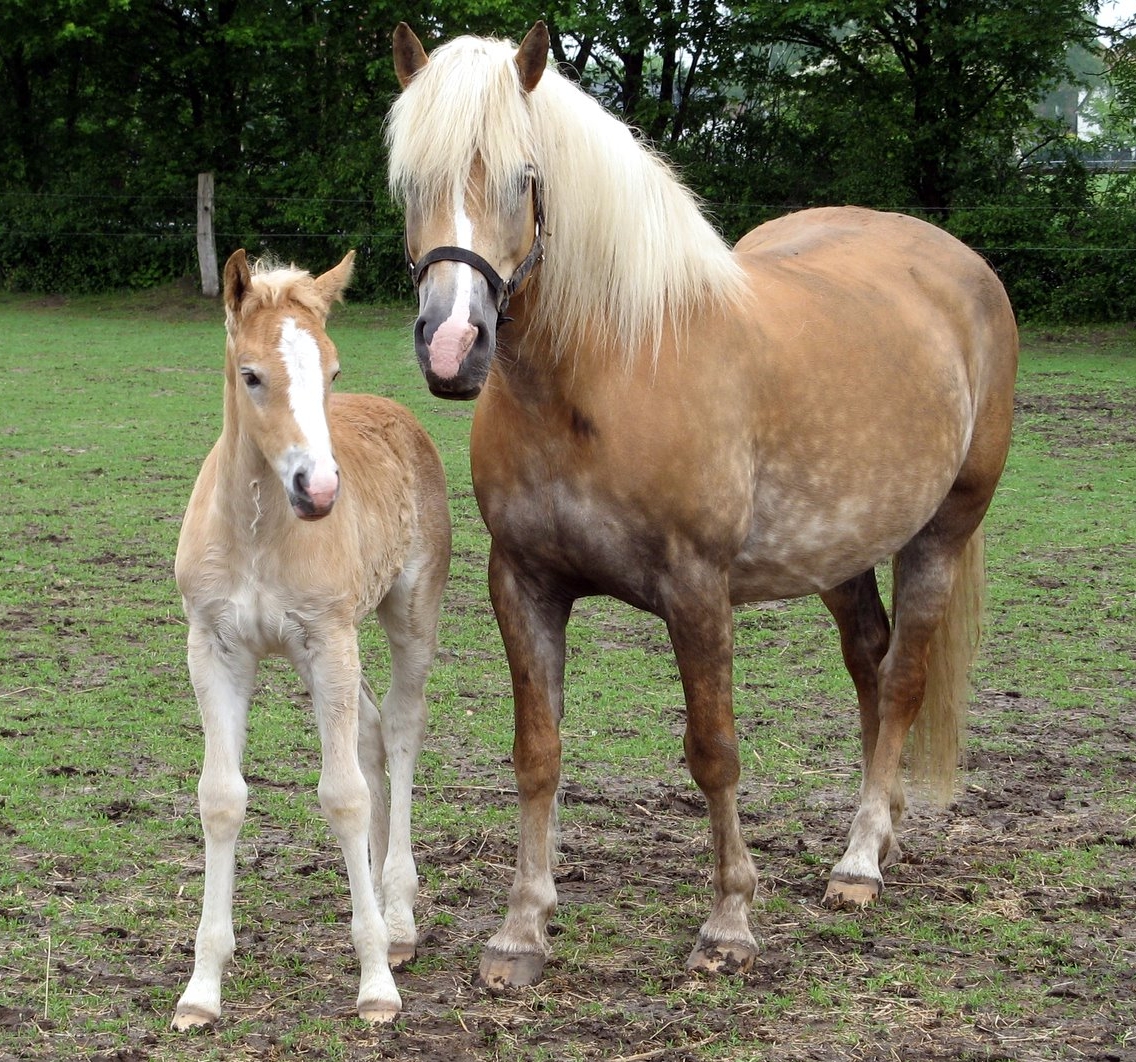
A Haflinger mare and foal
Other namesAvelignese
Country of originAustria, Italy
Traits
Distinguishing featuresSmall horse, sturdy build, chestnut coat body color with flaxen mane and tail
Breed standards

The Haflinger, also known as the Avelignese, is a breed of horse developed in Austria and northern Italy (namely Hafling in South Tyrol region) during the late 19th century. Haflinger horses are relatively small, are always chestnut with flaxen mane and tail, have distinctive gaits described as energetic but smooth, and are well-muscled yet elegant. The breed traces its ancestry to the Middle Ages; several theories for its origin exist. Haflingers, developed for use in mountainous terrain, are known for their hardiness. Their current conformation and appearance are the result of infusions of bloodlines from Arabian and various European breeds into the original native Tyrolean ponies. The foundation sire, 249 Folie, was born in 1874; by 1904, the first breeders' cooperative was formed. All Haflingers can trace their lineage back to Folie through one of seven bloodlines. World Wars I and II, as well as the Great Depression, had a detrimental effect on the breed, and lower-quality animals were used at times to save the breed from extinction. During World War II, breeders focused on horses that were shorter and more draft-like, favored by the military for use as packhorses. The emphasis after the war shifted toward animals of increased refinement and height.

In the postwar era, the Haflinger was indiscriminately crossed with other breeds and some observers feared the breed was in renewed danger of extinction. However, starting in 1946, breeders focused on producing purebred Haflingers and a closed stud book was created. Interest in the breed increased in other countries, and between 1950 and 1974, the population grew, even while the overall European horse population decreased. Population numbers continued to increase steadily, and as of 2005, almost 250,000 Haflingers existed worldwide. Breeding farms are in several countries, although most of the breeding stock still comes from Austria. In 2003, a Haflinger became the first horse to be cloned, resulting in a filly named Prometea.

Haflingers have many uses, including light draft, harness work, and various under-saddle disciplines such as endurance riding, dressage, equestrian vaulting, and therapeutic riding. They are also still used by the Austrian and German armies for work in rough terrain. The World Haflinger Federation, the international governing body that controls breed standards for the Haflinger, is made up of a confederation of 22 national registries, and helps set breeding objectives, guidelines, and rules for its member organizations.

Breed characteristics

[edit]

The name "Haflinger" comes from the village of Hafling, which today is in northern Italy.[1] The breed is also called the Avelignese, from the Italian name for Hafling, which is Avelengo or previously Aveligna.[2] Haflingers are always chestnut in color[3] and occur in shades ranging from a light gold to a rich golden chestnut or liver hue. The mane and tail are white or flaxen.[4] The height of the breed has increased since the end of World War II, when it stood an average of 13.3 hands (55 inches, 140 cm).[5] The desired height today is between 13.2 and 15.0 hands (54 and 60 inches, 137 and 152 cm). Breeders are discouraged from breeding horses under the minimum size, but taller individuals may pass inspection if they otherwise meet requirements of the breed registry. The breed has a refined head and light poll. The neck is of medium length, the withers are pronounced, the shoulders sloping, and the chest deep. The back is medium-long and muscular; the croup is long, slightly sloping, and well-muscled. The legs are clean, with broad, flat knees and powerful hocks showing clear definition of tendons and ligaments.[4] The Haflinger has rhythmic, ground-covering gaits. The walk is relaxed but energetic. The trot and canter are elastic, energetic, and athletic with a natural tendency to be light on the forehand and balanced. Some knee action is seen, and the canter has a very distinct motion forwards and upwards.[3] One important consideration in breeding during the second half of the 20th century was temperament. A requirement for a quiet, kind nature has become part of official breed standards and is checked during official inspections.[6] Some sources recognize two types of Haflingers, a shorter, heavier type used for draft work, and a taller, lighter type used for pleasure riding, light driving, and under-saddle competition.[7][8] The Food and Agriculture Organization recognizes both an "Avelignese" and an "Avelignese Tradizionale" as existing in Italy, although, as of 2007, only 13 of the latter existed, including only one breeding stallion.[9][10] However, all breed organizations recognize and register only one type.

Stallion lines

[edit]

All Haflingers today trace their lineage through one of seven stallion lines to Folie, the foundation stallion of the breed. Usually, colts are given a name beginning with the letter or letters denoting their stallion line, and fillies are given a name beginning with the first letter of their dam's name.[11] The exceptions are France, where foals are given a name beginning with a letter of the alphabet designated to be used for that year;[12] and Italy, where colts' names must begin with the letter or letters designating the stallion line, while fillies' names begin with the letter designated for a given year.[13] The seven stallion lines are:[11]

A Haflinger in South Tyrol
  • A-line. Founded by Anselmo, born 1926. One of the most prevalent lines today, descendants include the second-largest number of stallions at stud. Anselmo was brought back to stud at the age of 21, when a lack of stallions after World War II led to concerns that the line would not survive, and produced several stallions now represented in all Haflinger breeding populations worldwide.
  • B-line. Founded by Bolzano, born 1915. Bolzano's less common line, although strong in Austria, is not prevalent elsewhere. The line is spreading nevertheless; the U.S. and several European countries including Great Britain are establishing Bolzano lines.
  • M-line. Founded by Massimo, born 1927. An Italian stallion, Massimo founded a line that is prevalent in Austria and Italy.
  • N-line. Founded by Nibbio, born 1920. Early in its history, the Nibbio line split into two branches, one in Italy and one in Austria. The N-line is populous, with the greatest number of stallions at stud. It is one of two (the other being the A-line) with a presence in all Haflinger breeding countries. The line is most prolific in Austria and Italy.
  • S-line. Founded by Stelvio, born 1923. Stelvio is the least numerous of the lines, threatened with extinction after non-Haflinger blood was introduced in Germany. Currently most populous in Italy, Austrian authorities are working to re-establish it.
  • ST-line. Founded by Student, born 1927. Although the ST-line has a large number of stallions, its geographic spread is limited because of unselective breeding in some countries. Germany and the U.S. hold the most horses of this line outside Austria.
  • W-line. Founded by Willi, born 1921. The W-line, threatened by crossbreeding early in its history, maintains a strong presence in the Netherlands, Canada and the U.S., with a smaller population in Austria.

Bolzano and Willi were great-great grandsons of Folie, while the rest were great-great-great grandsons. Especially in the early years of the breed's history, some inbreeding occurred, both by accident and design, which served to reinforce the breed's dominant characteristics.[11] During the 1980s and 1990s, several studies were conducted to examine morphological differences among the breed lines. Significant differences were found in some characteristics, including height and proportions; these have been used to help achieve breeding objectives, especially in Italy during the 1990s.[14]

History

[edit]
Haflingers used as pack horses during a medieval re-enactment

The history of the Haflinger horse traces to the Middle Ages. Origins of the breed are uncertain, but two main theories are given. The first is that Haflingers descend from horses abandoned in the Tyrolean valleys in central Europe by East Goths fleeing from Byzantine troops after the fall of Conza in 555 AD. These abandoned horses are believed to have been influenced by Oriental bloodlines and may help explain the Arabian physical characteristics seen in the Haflinger.[15] A type of light mountain pony was first recorded in the Etsch Valley in 1282, and was probably the ancestor of the modern Haflinger.[16] The second theory is that they descended from a stallion from the Kingdom of Burgundy sent to Margrave Louis of Brandenburg by his father, Louis IV, Holy Roman Emperor, when the Margrave married Princess Margarete Maultasch of the Tyrol in 1342.[15] It has also been suggested that they descend from the prehistoric forest horse. Haflingers have close connections to the Noriker, a result of the overlapping geographic areas where the two breeds were developed.[17] Whatever its origins, the breed developed in a mountainous climate and was well able to thrive in harsh conditions with minimal maintenance.[18]

The breed as it is known today was officially established in the village of Hafling in the Etschlander Mountains, then located in Austria-Hungary.[19] The Arabian influence was strongly reinforced in the modern Haflinger by the introduction of the stallion El Bedavi,[15] imported to Austria in the 19th century. El-Bedavi's half-Arabian great-grandson, El-Bedavi XXII, was bred at the Austro-Hungarian stud at Radautz[19] and was sire of the breed's foundation stallion, 249 Folie, born in 1874 in the Vinschgau.[15] Folie's dam was a native Tyrolean mare of refined type. All Haflingers today must trace their ancestry to Folie through one of seven stallion lines (A, B, M, N, S, ST, and W) to be considered purebred.[20] The small original gene pool, and the mountain environment in which most original members of the breed were raised, has resulted in a very fixed physical type and appearance.[19] In the early years of the breed's development Oriental stallions such as Dahoman, Tajar and Gidran were also used as studs, but foals of these stallions lacked many key Haflinger traits and breeding to these sires was discontinued.[21] After the birth of Folie in 1874, several Austrian noblemen became interested in the breed and petitioned the government for support and direction of organized breeding procedures. It was 1899 before the Austrian government responded, deciding to support breeding programs through establishment of subsidies; high-quality Haflinger fillies were among those chosen for the government-subsidized breeding program. Since then the best Haflinger fillies and colts have been chosen and selectively bred to maintain the breed's quality. Horses not considered to meet quality standards were used by the army as pack animals.[22] By the end of the 19th century Haflingers were common in both South and North Tyrol, and stud farms had been established in Styria, Salzburg and Lower Austria.[23] In 1904, the Haflinger Breeders' Cooperative was founded in Mölten, in South Tyrol, with the aim of improving breeding procedures, encouraging pure-breeding and establishing a studbook and stallion registry.[24]

World Wars

[edit]

World War I resulted in many Haflingers being taken into military service and the interruption of breeding programs. After the war, under the terms of the Treaty of Saint Germain, South Tyrol (including Hafling) was ceded to Italy, while North Tyrol remained in Austria. This split was extremely detrimental to the Haflinger breed, as most of the brood mares were in South Tyrol in what was now Italy, while the high-quality breeding stallions had been kept at studs in North Tyrol and so were still in Austria. Little effort at cooperation was made between breeders in North and South Tyrol, and in the 1920s a new Horse Breeders' Commission was established in Bolzano in Italy, which was given governmental authority to inspect state-owned breeding stallions, register privately owned stallions belonging to Commission members, and give prize money for horse show competition. The Commission governed the breeding of the Italian population of both the Haflinger and the Noriker horse. In 1921, because of the lack of breeding stallions in Italy, a crossbred Sardinian-Arabian stallion was used for the Haflinger breeding program, as well as many lower-quality purebred Haflingers.[25]

A combined driving event

If not for the presence of Haflinger stallions at a stud farm in Stadl-Paura in Upper Austria after World War I, the Haflinger might well not exist in Austria today. Despite these stallions, the Haflinger breeding programs were not on solid footing in Austria, with governmental focus on other Austrian breeds and private breeding programs not large enough to influence national breeding practices.[26] During this time, the breed was kept alive through crosses to the Hucul, Bosnian, Konik and Noriker breeds.[19] In 1919 and 1920, the remaining stallions were assigned throughout Austria, many to areas that had hosted private breeding farms before the war. In 1921, the North Tyrolean Horse Breeders' Cooperative was formed in Zams, and in 1922, the first Haflinger Breeders' Show was held in the same location. Many extant Austrian Haflinger mares were considered to be of too low quality to be used as brood mares, and every effort was made to import higher-quality brood mares from the South Tyrol herds now in Italy. In 1926, the first studbook was established in North Tyrol.[26] In the late 1920s, other cooperatives were established for Haflinger breeders in Weer and Wildschönau, and were able to gain government permission to purchase 100 Haflinger mares from South Tyrol and split them between North Tyrol, Upper Austria and Styria. This single transaction represented one third of all registered mares in South Tyrol, and many others were sold through private treaty, leaving the two regions comparable in terms of breeding-stock populations. In 1931, another breeders' cooperative was established in East Tyrol in Austria, and Haflinger breeding spread throughout the entire Tyrolean province.[27]

The Great Depression of the late 1920s and early 1930s dampened horse prices and had an unfavorable effect on Haflinger breeding, but from 1938 onwards markets improved as a result of the buildup for World War II. All crossbred horses and colts not of breeding quality could be sold to the army, and higher subsidies were given by the government to Haflinger breeders. However, the demands of the war also meant that many unregistered mares of Haflinger type were covered by registered stallions, and the resulting progeny were registered, resulting in a degradation of breeding stock.[28] In 1935 and 1936, a breeding program was begun in Bavaria through the cooperation of the German agricultural authorities, military authorities and existing stud farms. The first government-run German Haflinger stud farm was established in Oberaudorf with brood mares from North and South Tyrol, and several private stud farms were established elsewhere in the country. The combination of a high demand for pack horses and variable amounts of breed knowledge of the purchasers led to the purchase of both high- and low-quality horses, which had mixed results on breed quality. Purchases by Bavarians also resulted in a further depletion of Austrian and Italian stock, already low from the population depletions of both world wars. However, the German Armed Forces were ready purchasers, and the purchasing and breeding continued. Despite some claims that only purebred horses were registered, many well-known Bavarian studs had crossbred maternal lines.[29] During World War II, Haflingers were bred to produce horses that were shorter and more draft-like for use as packhorses by the military. After the war, breeding emphasis changed to promote refinement and height.[20]

Postwar period

[edit]

After World War II, Haflinger breeding programs almost collapsed as the military stopped buying horses and government-run breeding centers were closed. Breeders continued to emphasize those features necessary for pack horses (the largest use by the military), but neglected other key Haflinger characteristics. Haflinger breeding had to change to create a horse that better fit modern trends toward recreational use. Around this time, all small breed cooperatives were combined into the Haflinger Breeders' Association of Tyrol.[30] Post-World War II Tyrol, including the breeding center at Zams, was under the control of American forces, who slaughtered many horses to provide meat for hospitals. However, the troops did allow the breeding director to choose 30 stallions to be kept for breeding purposes. Those horses were relocated to the French-occupied Kops Alm high pasture in Vorarlberg, but they were subsequently stolen and never seen again. In other areas of Tyrol, all one- to three-year-old colts had been requisitioned by military breeding centers, and therefore it was necessary to treat colts not even a year old as potential breeding stallions.[31] In the years after World War II, some observers feared that the breed was dying out because of indiscriminate crossing with other breeds.[5]

Haflinger mares in Germany in the mid-1980s

At conferences in 1946 and 1947, the decision was made to breed Haflinger horses from pure bloodlines, creating a closed stud book with no new blood being introduced. The Tyrolean Haflinger Breeders' Association established its own stallion center and prohibited private breeders from keeping stallions, thus ensuring that the association maintained 100 percent control of breeding stallions. In Bavaria, several young stallions had been saved and breeders could privately own stallions. Bavarian and Tyrolean breeders maintained close ties and cooperated extensively. North Tyrolean breeders were also able to acquire several high-quality older stallions and lower-quality young stallions from South Tyrol. In 1947, the Federation of Austrian Haflinger Breeders was established as a governing organization for the provincial associations. At this time a large-scale breed show was held, attended by visitors from Switzerland, who soon after their return home sent a purchasing commission to Austria and were instrumental in founding the Haflinger population in Switzerland. Southern Tyrol had no difficulty in selling its horses, as all of Italy was in the market to purchase horses, and breeding populations spread as far south as Sicily.[32]

Between 1950 and 1974, even as the overall European equine population was dropping due to increased mechanization, the Haflinger population was increasing. In that time period, the population of registered Haflinger brood mares rose from 1,562 to 2,043. This was mainly a result of the increased marketing of the breed, and happened even as Norwegian Fjord horses were exported to Germany, reducing the resources available for Haflinger breeding programs. Through well-planned marketing campaigns, the Haflinger became the dominant small-horse breed in the region.[33] In 1954, Yugoslavia and Italy purchased breeding stock from North Tyrol to establish their own Haflinger programs and in 1956 the German Democratic Republic followed suit.[34] The first Haflingers were exported to the United States from Austria in 1958 by Tempel Smith of Tempel Farms in Illinois[1] and into Czechoslovakia in 1959. Tyrolean Haflingers were purchased by the Netherlands and Turkey in 1961. In Turkey they were both bred pure and crossed with the Karacabey breed. In 1963, the first Haflinger was exported to Great Britain,[35] in 1969 two Haflinger mares were presented to Queen Elizabeth II upon her official visit to Austria,[36] and in 1970, the Haflinger Society of Great Britain was established.[37] The first Haflinger was exported to France in 1964,[36] and they continued to be transferred to that country until 1975, when the breeding population became stable. Between 1980 and 2000, the population of Haflingers in France tripled.[12] In 1965, the first international Haflinger show was held at Innsbruck, with horses from East and West Germany, the Netherlands, Italy, Switzerland and Austria participating. Haflingers were first exported to Belgium in 1966, to Bhutan in 1968, and to Poland, Hungary and Albania in subsequent years.[36] The importations to Bhutan encouraged interest in the breed in other parts of Asia.[38] In 1974, the first Haflinger was imported to Australia.[39] The first Canadian Haflinger was registered with the United States breed association in 1977, and a Canadian registry was formed in 1980.[40] Between 1970 and 1975, Haflingers were also imported into Luxemburg, Denmark, Thailand, Colombia, Brazil, southwest Africa, Sweden and Ireland.[36] They have also been imported into Japan.[18] Haflingers maintained a population on every populated continent by the end of the 1970s.[38] Worldwide breeding continued through the 1980s and 1990s, and population numbers increased steadily.[41]

21st century

[edit]
Horse in a field on Île d'Orléans

Although the Haflinger is now found all over the world, the majority of breeding stock still comes from Austria, where state studs own the stallions and carefully maintain the quality of the breed.[3] However, breeding farms are located in the United States, Canada, Germany, the Netherlands, and England.[1] As of 2007, Italian Haflingers had the largest population of any breed in that country. Due to selective breeding during the 1990s aiming to increase height, some breed lines became favored over others in Italy. A 2007 study found little inbreeding within the Italian Haflinger population as a whole, although certain less popular lines had a higher incidence due to the existence of fewer breeding stallions.[14] Haflingers are bred throughout France, especially in the provinces of Brittany, Burgundy, and Picardy, with between 350 and 400 foals born each year.[12] Slovenia also has a small Haflinger population, with around 307 breeding mares and 30 breeding stallions as of 2008. A 2009 study found that although a very small amount of inbreeding occurred in the population, it was increasing slightly over the years.[42] As of 2005, almost 250,000 Haflingers remained in the world.[43]

On May 28, 2003, a Haflinger filly named Prometea became the first horse clone born. Bred by Italian scientists, she was cloned from a mare skin cell, and was a healthy foal.[44] In 2008, Prometea herself gave birth to the first offspring of an equine clone, a colt named Pegaso sired by a Haflinger stallion through artificial insemination.[45] The American Haflinger Registry does not allow horses born as a result of cloning to be registered,[46] although as of 2010 other nations' registries have not yet entered a decision on the topic. In January 2012, Breyer Horses created a model horse of the Haflinger.[47]

Uses

[edit]
Haflingers pulling a carriage in northern Austria

Haflingers were bred to be versatile enough for many under-saddle disciplines, but still solid enough for draft and driving work.[20] The Haflinger was originally developed to work in the mountainous regions of its native land, where it was used as a packhorse and for forestry and agricultural work. In the late 20th century Haflingers were used by the Indian Army in an attempt to breed pack animals for mountainous terrain, but the program was unsuccessful because of the Haflinger's inability to withstand the desert heat.[48] The Austrian Army still uses Haflingers as packhorses in rough terrain. They are used most often in high Alpine terrain, with slopes up to 40% and steps of up to 40 cm (16 in).[49] Around 70 horses are in use, held by the 6th Infantry Brigade and based in Hochfilzen.[50] The Haflinger is also used by the German Army for rough terrain work and demonstration purposes.[51]

Today, the breed is used in many activities that include draft and pack work, light harness and combined driving, and many under-saddle events, including western-style horse-show classes, trail and endurance riding, dressage, show jumping, vaulting, and therapeutic riding programs. They are used extensively as dressage horses for children, but are tall and sturdy enough to be suitable riding horses for adults.[3] In the 1970s, British Prince Philip, Duke of Edinburgh competed with a driving team of four Haflingers.[52] Several national shows for Haflingers are held, including those in Germany, Great Britain, and the United States.[18][53][54] Despite the Austrian prohibitions against crossbreeding,[55] other countries have practiced this to some extent. Good-quality animals have been produced out of crosses between Haflingers and both Arabians and Andalusians. British enthusiasts maintain a partbred registry for Haflinger crosses.[55] In Germany, horses that are 75 percent Haflinger and 25 percent Arabian are popular and are called Arabo-Haflingers.[56] In Italy, where horse meat consumption is at the highest among all European Community members, Haflingers provide a large percentage of national production. Most are either bred specifically for meat production and slaughtered between the ages of 10 and 18 months, or as a result of health problems, or age.[57] The Haflinger also produces the majority of the horse milk consumed in Germany.[58]

Registration

[edit]

Breed organizations exist in many countries to provide accurate documentation of Haflinger pedigrees and ownership, and to promote the Haflinger breed. Most are linked to each other through membership in the World Haflinger Federation (WHF),[59] established in 1976.[60] The WHF establishes international breeding guidelines, objectives and rules for studbook selection, and performance tests. They also authorize European and world shows and compile an annual list of Haflinger experts, or adjudicators. The WHF is the international umbrella organization, with 21 member organizations in 22 countries. Membership organizations include the Haflinger Horse Society of Australia, the Australian Haflinger Horse Breeders Association, the Canadian Haflinger Association, the Haflinger Pferdezuchtverband Tirol (Tyrolean Haflinger Breeding Association), the Italian Associazione Nazionale Allevatori Cavalli di Razza Haflinger Italia and the American Haflinger Registry, as well as a division for breeders in countries that are not already members.[59] National organizations are allowed to become members of the WHF through agreeing to promote pure breeding and maintain the hereditary characteristics of the Haflinger breed. Member organizations must maintain both a purebred studbook and a separate part-bred studbook for animals with Arabian or other bloodlines.[41]

A group of Haflinger horses: Note the similarities in color and profile.

A strict system of inspection, started in Austria, has evolved to ensure that only good-quality stock meeting high standards are used for breeding. This is coupled with close maintenance of the studbook to maintain inspection validity. Mares must be inspected and registered with the stud book before they can be covered, and multiple forms are needed to prove covering and birth of a purebred Haflinger foal. Within six months of birth, foals are inspected, and those considered to have potential as breeding stock are given certificates of pedigree and branded. Horses are reinspected at three years old, checked against written association standards, and if they pass, are then entered into the studbook. After their final inspection,[6] Haflingers from Austria and Italy are branded with a firebrand in the shape of an edelweiss. Horses from Austria and from South Tyrol have the letter "H" in the center of the brand, while horses from all other parts of Italy have the letters "HI".[13][15] Horses are graded based on conformation, action, bone, height, temperament and color. Mares must have a fully registered purebred pedigree extending six generations back to be considered for stud-book acceptance. Stallions are registered separately. Colts must have a dam with a fully purebred pedigree, and are inspected based on hereditary reliability and likely breeding strength, as well as the other qualifications. Each stallion's registration certification must show a fully purebred pedigree extending back four generations, and records of mares covered, percentages of pregnancies aborted, still-born and live-born, and numbers and genders of foals born. This information is used to match stallions and mares for breeding. Tyrolean colts undergo an initial assessment, and those not chosen must be either gelded or sold out of the Tyrolean breeding area. The chosen colts are reassessed every six months until a final inspection at the age of three, when the best stallions are chosen for Tyrolean breeding, after which they are purchased by the Austrian Ministry of Agriculture and made available for breeding throughout the region. The others are either gelded or sold out of the region. Other countries base their registration and selection practices on Tyrolean ones, as is required by the WHF.[61]

References

[edit]

Further reading

[edit]
[edit]
Revisions and contributorsEdit on WikipediaRead on Wikipedia
from Grokipedia
The Haflinger is a small, hardy horse breed originating from the mountainous Tyrol region spanning Austria and northern Italy, renowned for its elegant chestnut coat ranging from golden to liver shades, striking flaxen mane and tail, and versatile temperament that makes it suitable for riding, driving, and light draft work. Developed in the , the breed traces its foundation to the 249 Folie, born in 1874 from a Tyrolean mountain mare and an Arabian-influenced sire, establishing a lineage that emphasizes refinement, strength, and endurance for alpine environments. All modern Haflingers descend from seven principal lines derived from Folie, with the breed's studbook closed after to preserve its genetic purity. Originally bred for transporting goods and people across rugged terrain, Haflingers served in both World Wars as pack animals before evolving into popular leisure and sport post-war, with a global population of approximately 250,000 as of 2005 across more than 60 countries. Physically, Haflingers stand between 13.2 and 15 hands (approximately 135–152 cm) at the , featuring a refined head with large expressive eyes, a medium-length , strong back, muscular hindquarters, and hardy legs with small, tough hooves that contribute to their . Their calm, friendly and easy-keeping nature—allowing them to thrive on modest while remaining active into their 30s or 40s—make them ideal family horses, excelling in , , and therapeutic programs worldwide. The first Haflinger breeding association was established in 1921 in , with international registries like the American Haflinger Association promoting the breed's standards and conservation today.

Breed characteristics

Conformation and size

The Haflinger exhibits a sturdy yet refined conformation, characterized by a compact, muscular build that emphasizes and , particularly suited to navigating mountainous terrain. This structure features substantial bone density and a balanced frame, enabling the horse to perform effectively in rugged environments without excessive bulk. Haflingers typically stand between 13.2 and 15 hands (135–152 cm) at the , with an ideal around 14.1 hands to maintain proportionality and versatility. Their ranges from 800 to 1,300 pounds (360–590 kg), reflecting a robust yet elegant physique that supports both light draft and riding activities. The head is refined and expressive, featuring a broad , large kind eyes, small ears, wide nostrils, and good flexion at the poll. The neck is medium in length, well-arched and muscular, blending smoothly into pronounced . The body presents a deep chest, well-sprung ribs, a strong back of medium length, and powerful hindquarters that are long and slightly sloping, providing the thrust necessary for uphill work in alpine settings. The legs are clean-lined with strong, straight bones, clearly defined joints including broad knees and hocks, and hard, small hooves adapted to rough, rocky terrain; the breed lacks on the fetlocks. Gaits are energetic and balanced, with a free-moving walk, supple , and canter that exhibit natural suspension and rhythmic propulsion from active hindquarters. Sexual dimorphism is evident in conformation, with stallions displaying more pronounced muscularity and masculine features, while mares exhibit greater elegance and feminine refinement.

Color and markings

The Haflinger horse is renowned for its uniform and striking coat color, consisting of a chestnut base that ranges from pale golden to dark liver shades, paired with a flaxen mane, tail, and often legs in lighter tones of pale gold or creamy white. This red-gold body contrasted against the flaxen points creates the breed's signature appearance, with the mane and tail featuring long, silky, and abundant hair that enhances its elegant profile. The flaxen trait is genetically fixed in the breed, stemming from homozygosity for the recessive flaxen gene (often denoted as Ff in equine genetics) expressed on a chestnut base, ensuring that all purebred Haflingers exhibit this dilution specifically in the mane and tail. Limited variations exist within the , which strictly prohibits or patterns to preserve purity. Post-1946, following the closure of the studbook to offspring of only Haflinger parents, the breed has been maintained as closed to other colors, solidifying the dominance of the chestnut-flaxen and eliminating influences from , , or gray dilutions. Roaning, excessive dappling, or color impurities in the base coat or points are deemed undesirable and can lead to exclusion from registration. White markings are kept minimal to uphold the breed's clean lines, typically restricted to a small , strip, or snip on the face, while any white on the legs is discouraged and considered a fault if extensive. The intensity of the flaxen coloration can vary from deep golden hues to nearly white, with breeding programs selecting for uniformity, brightness, and smoothness to achieve a lustrous, flowing effect in the mane and tail. This selective emphasis on color consistency aids in breed identification during official inspections.

Stallion lines

All modern Haflingers trace their ancestry to the foundation stallion 249 Folie, born in 1874 from a Tyrolean mare and an Arabian stallion, along with six subsequent foundation sires that established the breed's core bloodlines. These lines were formalized in the to preserve the breed's purity following wartime disruptions. The seven recognized stallion lines are A (Anselmo), B (), M (), N (Nibbio), S (Stelvio), ST (), and W (Willi), each descending from Folie and named after key progenitors born between 1915 and 1927. The A line was founded by Anselmo in 1926 and revived postwar. The B line originated from in 1915. The M line was established by in 1927. The N line was founded by Nibbio in 1920. The S line originated from Stelvio in 1923. The ST line was founded by in 1927. The W line originated from Willi in 1921 and now dominates registrations. Breeding rules mandate that all mares must trace directly to Folie, while stallions must belong to one of the seven lines to produce registered offspring, prohibiting any crossbreeding with other breeds. This system ensures traceability through pedigree records maintained by international registries. These lines collectively safeguard within the breed's strict purity standards, as stallions from each are rigorously inspected for type , , and traits before approval for breeding. By distributing bloodlines across the seven founders, the structure promotes a balanced population capable of meeting varied uses while avoiding .

History

Origins

The Haflinger breed originated in the South Tyrolean Alps along the Austria-Italy border, particularly in the Avelengo (Hafling) and Villnöss valleys, where the rugged mountainous terrain shaped its development as a hardy equine adapted to alpine conditions. This region, historically part of the , provided isolated valleys ideal for breeding small, agile horses suited to narrow paths and steep slopes. The breed's roots trace back to , when Tyrolean farmers maintained small populations of light, mountain horses descended from native stock possibly influenced by Oriental breeds introduced through ancient migrations and trade routes across the . These early horses were valued for their endurance in transporting goods and people over difficult , forming the foundation for later refinements without significant cold-blooded influences due to the limited sizes and harsh environment. Systematic breeding began in the to enhance the local stock's refinement and stamina, culminating in 1874 with the birth of the foundation stallion 249 Folie at the farm of Josef Folie near Hafling. This golden colt resulted from crossing a refined native Tyrolean mare with the half-Arabian stallion 133 El Bedavi XXII, introducing desirable traits like a noble head and rich coloration that would define the breed's seven foundational stallion lines. The primary goal of early breeding programs was to produce a versatile, sure-footed mountain capable of carrying loads and working fields on small alpine farms, with initial efforts focusing on crosses between Arabian-influenced sires and robust local mares to balance strength and agility. Prior to the , Haflinger populations remained small and localized, consisting of scattered herds managed by farmers for agricultural transport and occasionally by regional military units for pack work in the Tyrolean mountains.

World Wars and interwar period

During from 1914 to 1918, Haflinger horses were primarily utilized as packhorses by the in the challenging terrain of the , where their sure-footedness proved invaluable for transporting supplies and . This extensive military requisition led to significant losses, as many animals perished from exhaustion, injury, or enemy action, causing a sharp decline in the overall population and nearly extinguishing some stallion lines. Breeding programs were severely disrupted, with studbook records destroyed and progress halted amid the chaos of war. The postwar border changes exacerbated these challenges; following the Treaty of Saint-Germain-en-Laye in 1919, —including the village of Hafling—was annexed by , dividing the breed's core breeding areas between and the new Italian territory and isolating programs on either side of the border. In response, separate breeding associations emerged in 1921: the Northern Tyrolean Haflinger Breeding Society in and a counterpart in , both focused on registering surviving purebreds to prevent total loss. These efforts formalized the seven foundational stallion lines (A, B, M, N, S, St, and W) in the 1920s, emphasizing preservation of the Folie lineage despite limited resources. The interwar years of the 1920s and 1930s brought additional strain from the , which depressed horse markets and reduced economic support for breeding, leading to halted programs in some areas and reliance on lower-quality stock to maintain numbers. Restoration initiatives in North and during the early 1930s aimed to rebuild quality, though the political division continued to fragment efforts. World War II from 1939 to 1945 saw Haflingers once again drafted as remounts for the German and Italian armies, serving mainly as packhorses in mountainous campaigns and suffering further heavy losses to combat and overwork. Military priorities drove breeding toward a shorter, more draft-oriented type, with some introduction of non-Folie blood through crossbreeding to bolster numbers quickly. Limited preservation occurred in protected breeding stations, safeguarding remnants of the original lines amid widespread depletion. These wartime pressures compromised genetic purity, setting the stage for postwar reforms to eliminate foreign influences and reestablish the breed's type.

Postwar period

Following the end of , the Haflinger breed faced near-extinction due to wartime losses, but recovery efforts began immediately with the restructuring of breeding programs in . In 1946, the Verband der Haflingerzüchter in Tyrol reorganized and implemented a closed stud book, restricting registration to offspring of two Haflinger parents to preserve genetic integrity. In , where the breed is known as the Avelignese, breeding programs continued from the 1921 provincial association, with the national Associazione Nazionale Allevatori Cavalli Avelignesi (ANACA) established in 1971 to unify efforts, though it aligned closely with Austrian standards to maintain breed uniformity across the border regions. Breeding reforms emphasized purity by purging non-Folie bloodlines and concentrating on the seven foundational stallion lines—A, B, M, N, S, St, and W—tracing back to the 19th-century stallion Folie, which had been established in the but were now rigorously enforced to rebuild the breed's foundation. This focus helped standardize conformation, ensuring the Haflingers retained their characteristic hardiness, coloration, and suitability for mountainous terrains while eliminating crosses introduced during the war. During the and , the breed experienced significant growth through exports to other European countries and beyond, including the first shipment to in 1963 and the in 1958, driven by demand for versatile mountain horses. Haflingers were increasingly utilized in for in alpine areas and in for light draft work on steep slopes, contributing to their popularity as reduced the need for heavier breeds. By the mid-1970s, interest had expanded internationally, culminating in the formation of the World Haflinger Federation (WHF) in 1975, which united 22 national registries across 18 countries to coordinate breeding goals and promote the breed globally. The postwar period marked a dramatic recovery for the Haflinger, from fewer than 2,000 registered broodmares in the early 1950s to several thousand by the 1980s, even as overall European numbers declined due to agricultural modernization. This resurgence solidified the breed's role as a resilient, multipurpose , setting the stage for further expansion while adhering to strict purity standards.

21st century

In the early , the Haflinger breed experienced continued , building on postwar expansions, with estimates indicating nearly 250,000 individuals worldwide as of 2005, particularly in and where breeding programs proliferated. This growth reflected sustained interest in the breed's versatility, supported by international registries that maintained standards established in the postwar era. A significant milestone occurred in 2003 with the birth of Prometea, the world's first cloned horse, a Haflinger produced through using her genetic donor as the surrogate mother, marking a breakthrough in equine . This event, achieved in an Italian laboratory, demonstrated the feasibility of in horses and opened avenues for preserving valuable genetic traits in breeds like the Haflinger. Modern Haflinger breeding has emphasized performance testing as a core component of stallion selection, with programs evaluating traits such as quality, , and to enhance athletic potential while adhering to breed standards. Concurrently, studies using markers and pedigree analysis have been conducted to monitor levels and maintain , particularly in European subpopulations like those in and the , where variability remains adequate but requires ongoing management. Contemporary challenges include health concerns from the breed's predisposition to metabolic issues, such as , which can arise from overfeeding or heavy workloads often associated with recreational and tourist activities in alpine regions. poses additional pressures on Alpine breeding environments, with rising temperatures and altered precipitation patterns potentially disrupting pasture quality and increasing risks for mountain-adapted breeds like the Haflinger. Recent trends highlight the breed's rising popularity in equestrian sports, including and , alongside efforts to conserve traditional stallion lines—tracing back to foundational sires like Folie—amid pressures from commercialization and sport-oriented selection.

Uses

Riding

The Haflinger's compact build, stamina, and even temperament make it a versatile mount for various riding disciplines, particularly those emphasizing endurance and accessibility. Their strong hindquarters provide propulsion for uphill climbs in challenging terrains. In , Haflingers demonstrate exceptional stamina, enabling them to cover long distances such as up to 100 miles in competitive events, which suits their mountain-bred heritage. This discipline is especially popular in , where the breed originates, with events like the annual Haflinger Gallop Races in drawing thousands of spectators and showcasing the horses' speed and resilience. For and , the breed's agile movements and balanced conformation allow success in light dressage, where precise, flowing gaits are prized, though their smaller size—typically 13.2 to 15 hands—limits them in advanced jumping competitions. They perform well in entry-level events, emphasizing style and control over high obstacles. Trail and pleasure riding highlight the Haflinger's on rugged paths, making them ideal for recreational outings, multi-day treks, and family rides. Their gentle, patient nature suits beginners, fostering confidence during relaxed explorations in varied landscapes like mountains or forests. In therapeutic riding, Haflingers are frequently selected for hippotherapy programs due to their calm demeanor, smooth gaits, and tolerance for unbalanced riders. For instance, the Haflinger Magic, standing at 14.2 hands, has logged over 200 hours annually and was named the American Hippotherapy Association Therapy Horse of the Year in 2024. Performance records underscore the breed's international success in endurance events, with Haflingers consistently placing in European competitions like South Tyrol's aptitude tests and foal championships, where they exhibit strong recovery and average speeds suitable for sustained efforts.

Driving and draft

The Haflinger's agility and strength make it well-suited for harness driving, particularly in combined driving events where it excels in dressage, marathon, and obstacle phases due to its balanced movements and surefootedness. In competitions, pairs or teams of Haflingers demonstrate powerful pulling ability for carriages, often competing in national and international shows that highlight their endurance over varied terrain. Historically, Haflingers served in light draft roles, such as farm work and in the Alpine regions, where their compact build allowed navigation of steep, forested slopes while hauling timber or plowing fields. Today, these applications persist in heritage demonstrations, including farming operations and traditional plowing matches, preserving the breed's draft heritage. In pack work, Haflingers have been employed for military and civilian transport across rugged Alpine terrain, carrying supplies during both World Wars and in modern trail logistics. Their sturdy conformation supports powerful propulsion, enabling reliable performance in demanding environments. Contemporary Haflingers participate in driving derbies and hitch classes at events like the American Haflinger Registry's Draft Futurity, where breeding programs emphasize enhanced pulling power through selection for heavier, more muscular types. These efforts maintain the breed's versatility in light draft competitions. The breed's advantages in and draft include balanced gaits that ensure steady progress and notable endurance, which minimizes fatigue during prolonged tasks like extended harness pulls or pack treks.

Other uses

Haflingers have found significant roles in therapeutic riding programs, where their calm temperament, sturdy build, and manageable size—typically 13 to 15 hands high—make them ideal for riders with physical or cognitive disabilities. These horses provide a stable platform for improving balance, coordination, and emotional well-being through . For instance, at Little Bit Therapeutic Riding Center in Washington, a Haflinger named has been actively involved in sessions with clients of all ages since 2018, eliciting positive reactions and supporting therapeutic goals. Similarly, the NDR Therapeutic Riding program in employs a Haflinger named , valued for the breed's reputation in such applications due to their gentle nature and endurance. In educational contexts, Haflingers serve as reliable school horses for programs, leveraging their disposition and size suitable for beginners and children. The American Haflinger Registry's (AHRY) initiative focuses on educating and engaging young members through breed-specific activities, fostering horsemanship skills and appreciation for the Haflinger's versatility. Complementing this, the American Haflinger Alliance's Junior Horsemanship Program targets participants under 18, promoting leadership, sportsmanship, and equestrian education through nationwide events and grants like SassyBucks, which support development opportunities involving the . Culturally, Haflingers hold symbolic importance in Tyrolean traditions, often featured in festivals and parades across and as emblems of regional heritage. The annual Haflinger gallop race on at the Meran racecourse marks the start of the season, drawing crowds to celebrate the breed's in a festive setting. In , these horses participate in decorated processions during local events, enhancing community rituals tied to alpine life. For , Haflingers are popular mounts on trails and rides, with the South Tyrolean Haflinger Road network highlighting historic breeding sites and stables to attract visitors exploring the . In research and novelty contexts, the breed gained prominence through the 2003 cloning of Prometea, the world's first successfully cloned , achieved by Italian scientists at the Laboratory of Reproductive Technologies in using from a Haflinger . This milestone demonstrated the feasibility of equine , with Prometea carried by her genetic donor and confirmed genetically identical via testing. Haflingers have also made occasional media appearances, such as in like the book Frances the Haflinger Horse, which portrays the breed in heartwarming stories of human-animal bonds. For conservation efforts, Haflingers contribute to eco-projects in the by grazing alpine pastures, helping maintain and prevent shrub encroachment through their natural foraging habits. In Tyrol, herds are pastured on mountain meadows for at least six months annually, supporting sustainable and preservation. This practice aligns with traditional alpine husbandry, where the breed's hardiness aids in ecological balance without intensive intervention. Despite their versatility, Haflingers' compact, muscular build and height limit of 15.1 hands make them unsuitable for heavy or extreme sports, where speed and lighter frames are prioritized over their strengths in and traction. Bred for mountainous rather than flat-track velocity, they excel in moderate activities but lack the conformation for high-stakes competitions like .

Registration

Breed standards

The approval of Haflingers for breeding and registration involves a structured conducted by qualified judges, typically for horses aged three years and older, evaluating conformation, movement, and overall type during events organized by national registries aligned with international guidelines. Inspections include assessments of the horse standing, basic gaits on a triangular (walk and ), and free movement including canter, with scores assigned across categories such as head, , body, legs, and character; these evaluations occur periodically for breeding eligibility rather than annually for all horses. Key standards require pedigree tracing directly to the foundation Folie (1874) through one of seven lines (A, B, M, N, S, ST, W), ensuring no introduction of foreign blood since the breed's establishment. Conformation emphasizes an elegant, harmonious build with a noble, dry head, expressive eyes, well-set neck, pronounced , muscular body, and correct limb angulation (e.g., 150° hock angle); disqualifying defects include parrot mouth (prohibiting licensing and discouraging mare breeding), cow hocks, sickle hocks, or calf knees. Color uniformity mandates shades from pale to dark liver, with flaxen or white mane and , and minimal markings; deviations like black spots or excessive roaning may lead to point deductions or exclusion from premium classifications. Grading follows a 100-point system, with classifications such as Premium (Gold, ≥81 points, indicating exceptional I (Silver, 75-80 points), and Class II (Purple, 71-74 points), based on overall scores and subtype: noble (elegant and refined), typical (balanced and versatile), or heavy (undesirable if overly stout or coarse). Horses scoring below 69 points receive no breeding recommendation, prioritizing those exemplifying the breed's all-purpose athleticism. Health checks during inspections verify soundness in eyes (clear vision, no defects), limbs (straight alignment, no joint issues), and general for breeding stock, supplemented by required veterinary certificates like negative Coggins tests. , including for parentage verification and screening for rare conditions like polysaccharide storage myopathy (with a 20% carrier frequency in the breed), is mandatory for all licensed stallions and recommended for breeding mares to maintain and purity. While Austrian standards favor a lighter, more elegant type (140-150 cm height) and Italian standards (for Avelignese) emphasize a stockier build, these have been largely harmonized through the World Haflinger Federation to promote consistent global criteria focused on versatility and type.

International organizations

The World Haflinger Federation (WHF), founded in , serves as the international governing body for the breed, coordinating activities among 22 member countries and establishing unified breeding and registration rules to maintain breed integrity across borders. National registries operate under the WHF umbrella, managing local stud books and inspections while adhering to international guidelines; prominent examples include the Austrian Haflinger Breeding Association, established in 1921 as the North Tyrolean Haflinger Breeding Society, and the Italian National Association of Haflinger Breeders (A.N.A.C.R.HA.I.), founded in 1971 to oversee registrations in . The maintains a closed stud book since , prohibiting the introduction of outside bloodlines to preserve genetic purity, with international transfers and approvals coordinated through the WHF to ensure compliance with global standards. A centralized global database facilitates pedigree tracking and verification across member organizations, supporting seamless international . The WHF holds annual general assemblies and periodic world congresses to update policies, review breeding trends, and promote development. Worldwide, over 250,000 Haflinger horses are registered through these bodies, enabling organized exports, participation in international shows, and collaborative efforts to enhance the breed's versatility and preservation.

References

Add your contribution
Related Hubs
User Avatar
No comments yet.