Hubbry Logo
Practical effectPractical effectMain
Open search
Practical effect
Community hub
Practical effect
logo
8 pages, 0 posts
0 subscribers
Be the first to start a discussion here.
Practical effect
Practical effect
from Wikipedia
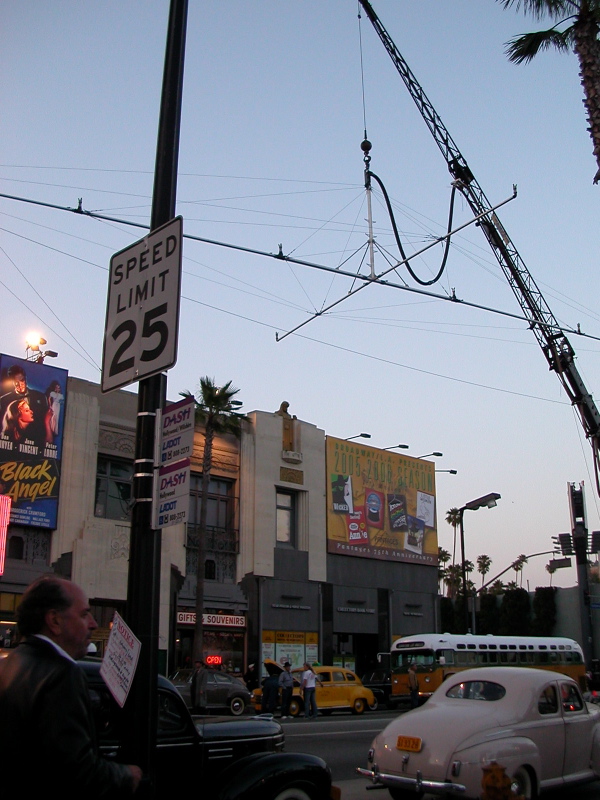
A location shot for The Black Dahlia with a rainmaking rig, a sprinkler system used to create the appearance of rain—a common practical effect
An actor behind-the-scenes with pre-scored "bullet holes" on his costume and squibs blowing open fake blood packets for a gunshot wound stunt.

In filmmaking, a practical effect is a special effect produced physically, without computer-generated imagery or other post-production techniques. In some contexts, "special effect" is used as a synonym of "practical effect", in contrast to "visual effects" which are created in post-production through photographic manipulation or computer generation.[1]

Practical effects often use principles from magic tricks, exploiting the camera's single viewpoint to create convincing illusions that may work only from certain angles, or using specially created props designed to achieve the desired effect. These effects require an interdisciplinary skill set, combining artistic craftsmanship with technical expertise in mechanics and engineering to achieve the desired result.

Many of the staples of action movies are practical effects. Gunfire, bullet wounds, rain, wind, fire, and explosions can all be produced on a movie set by someone skilled in practical effects. Non-human characters and creatures produced with make-up, prosthetics, masks, and puppets—in contrast to computer-generated images—are also examples of practical effects.

Practical effect techniques

[edit]

See also

[edit]

References

[edit]
Revisions and contributorsEdit on WikipediaRead on Wikipedia
from Grokipedia
A practical effect, also known as a physical or mechanical effect, is a in , television, theater, and other visual media created through hands-on, tangible techniques on set rather than via (CGI). These effects utilize real-world materials and methods—such as prosthetics, , , miniatures, makeup, puppets, and practical sets—to produce visual elements that actors can interact with directly, enhancing authenticity and immersion. The history of practical effects traces back to the dawn of cinema in the late 19th and early 20th centuries, when filmmakers like pioneered techniques such as stop-motion, multiple exposures, and elaborate sets in works like (1902), laying the foundation for narrative visual . Key developments followed, including Lon Chaney's innovative makeup transformations in silent films of the 1910s and 1920s, the iconic creature designs for Universal Monsters like in the 1930s, and Ray Harryhausen's groundbreaking stop-motion animations in Jason and the Argonauts (1963), which featured meticulously crafted skeleton armies. Miniatures and matte paintings advanced in films such as (1927) and (1939), while gained prominence with the mechanical shark in Jaws (1975) and the transformative werewolf prosthetics in (1981). In the , practical effects have endured alongside the proliferation of digital tools since the , often hybridized with CGI for films like (1993), which combined animatronic dinosaurs with early computer enhancements. A resurgence occurred in the and , driven by directors favoring their tangible realism and longevity—effects that age gracefully without dated digital artifacts—as exemplified by the massive "bigatures" and prosthetics in trilogy (2001–2003), the extensive vehicle stunts and sets in Mad Max: Fury Road (2015), and the on-set puppets and droids in (2015). This trend has continued into the , with notable use of practical effects in films like (2024). These techniques remain prized for providing performers with authentic interactions, heightening on-screen tension (particularly in horror genres), and delivering a visceral appeal that CGI alone often cannot replicate, ensuring their continued role in contemporary production.

Definition and overview

Core principles

Practical effects, also known as in-camera effects, refer to visual effects created physically on set using tangible props, materials, and mechanical devices during the filming process, without reliance on digital manipulation in . These methods simulate actions, environments, or phenomena directly in front of the camera, leveraging real-world elements to produce illusions that appear authentic on screen. At their core, practical effects operate on the principle of harnessing real-world physics and materials to achieve visual realism, executed entirely on location or in controlled studio environments for immediate capture. This approach emphasizes tangibility, allowing actors to interact naturally with physical objects—such as animatronic creatures or pyrotechnic explosions—which provides immediate visual feedback and enhances performance authenticity during shoots. The reliance on on-set execution ensures that , shadows, and environmental interactions occur organically, contributing to a seamless integration with live footage that digital alternatives may struggle to replicate without additional . Key concepts in practical effects distinguish in-camera techniques, where the entire illusion is completed during , from methods that layer multiple filmed elements together. Central to this practice is the craftsmanship involved in designing and building custom props, sets, and rigs, often by specialized effects teams who employ skills in , , and to create durable, believable constructs. For instance, —a technique using scale and positioning to distort spatial relationships—is executed physically on set to convey depth or size without alterations. These principles trace their brief origins to 19th-century theater illusions, where innovations like trapdoors and projected images laid the groundwork for physical spectacle in live performance, later adapted to early cinema.

Distinction from other effects

Practical effects, also known as (SFX), are fundamentally distinguished from (CGI) by their reliance on physical, tangible elements constructed and executed directly on the film set during . Unlike CGI, which involves digital creation and rendering in using software to generate or manipulate imagery, practical effects employ real-world materials such as props, , , and mechanical devices to achieve visual illusions in real time, ensuring seamless integration with live-action footage without the need for computational processing. In contrast to optical effects, which are photographic techniques that create illusions through in-camera manipulations or photochemical processes in —such as matte paintings, double exposures, or optical to composite elements—practical effects emphasize physical and interaction, avoiding darkroom or lab-based image alterations in favor of on-set immediacy and materiality. Optical methods historically focused on blending disparate elements via camera tricks or , whereas practical effects prioritize the inherent properties of physical objects to produce effects that are captured directly by the lens without subsequent photochemical intervention. While pure practical effects serve as a non-digital baseline, hybrid approaches increasingly integrate them with CGI or optical methods to leverage complementary strengths, such as using physical models for reference in digital , though this section focuses on the distinctions of standalone practical techniques. Perceptually, practical effects offer advantages in realism and immersion due to their natural interaction with set lighting and environmental depth, which digital or optical methods often struggle to replicate perfectly, as physical elements cast authentic shadows and respond organically to light sources, enhancing actor performances and audience believability in close-up or interactive scenes. This inherent consistency in lighting and spatial depth—absent in rendered CGI or manipulated optical composites—contributes to a more grounded visual experience, reducing the risk of the "uncanny valley" effect sometimes associated with digital approximations.

History

Origins in early cinema

The roots of practical effects in cinema can be traced to 19th-century theatrical stagecraft, where techniques such as trapdoors enabled sudden appearances or disappearances of performers, creating illusions of the supernatural without digital intervention. Forced perspective, another staple of the era, manipulated scale and depth on stage to simulate vast landscapes or architectural grandeur using painted backdrops and angled scenery, directly influencing early filmmakers' approaches to visual deception. These analog methods, honed in live theater to enhance narrative immersion, transitioned seamlessly to the new medium of film, where they could be captured and edited for repeatable spectacle. Early cinema pioneers adapted these traditions into innovative on-set techniques, with French showman Georges Méliès emerging as a key figure in the late 1890s. Drawing from his background as a magician, Méliès accidentally discovered the stop-motion substitution splice in 1896 when his camera jammed during filming, allowing him to create seamless disappearances and transformations by pausing, altering the scene, and resuming. He refined this for narrative films, notably employing multiple exposures, stop tricks, and in-camera compositing in A Trip to the Moon (1902), where rockets crash into lunar landscapes and fantastical creatures materialize through physical props and splicing. Around the same time, in 1895, the Edison Manufacturing Company produced The Execution of Mary Stuart, an early American example using substitution splicing to depict the historical beheading, marking one of the first documented practical effects in motion pictures. By the 1910s, practical effects evolved with the introduction of and miniatures, pioneered by American filmmaker Norman O. Dawn. In 1907, Dawn created the first known for Missions of California, painting architectural details on placed in front of the camera lens to composite illusory backgrounds onto live-action footage without post-production editing. He extended this to miniatures, building scaled models of structures like missions and integrating them via multiple exposures to simulate expansive historical scenes, as seen in The Great Barrier (1908). These glass-shot techniques allowed budget-conscious directors to achieve epic visuals in short silent films, though they demanded precise alignment to avoid visible seams. The silent era's technological constraints shaped these early practical effects, confining them to in-camera methods due to the inability to easily manipulate footage in . Film stock was highly flammable and unstable, limiting experimentations to brief takes, while the absence of synchronized sound restricted complex audio-visual integration, forcing reliance on visual cues alone for impact. Short reel lengths, typically under , further emphasized simple, immediate illusions over elaborate sequences, highlighting the ingenuity required within these material boundaries.

Development in the mid-20th century

Following the introduction of synchronized sound in films like (1927), practical effects began integrating more seamlessly with audio elements, enhancing realism through coordinated physical visuals and in the late 1920s and early . This shift allowed for immersive experiences, such as syncing mechanical movements with recorded effects, marking a departure from silent-era limitations. In the 1930s, the horror genre drove significant advancements in practical effects, particularly at Universal Studios, where Jack Pierce developed groundbreaking prosthetics and applications for iconic monsters. Pierce's designs, including the flat-top head, scarred skin, and neck bolts for Boris Karloff's creature in (1931), set standards for character transformation using greasepaint, cotton, and mortician's wax, influencing subsequent films like The Mummy (1932) and (1933). These techniques emphasized durability under hot studio lights while enabling expressive performances, solidifying Universal's leadership in horror production during Hollywood's . Innovations in mechanical and optical effects expanded with ambitious projects, exemplified by (1933), where Willis O'Brien pioneered detailed stop-motion animation using 18-inch articulated models of the ape, combined with miniature jungle sets, , and large-scale mechanical puppets for interactive scenes like the theater rampage. This approach blended practical construction with precise frame-by-frame manipulation, creating fluid creature dynamics that captivated audiences and earned the film a for effects. For epic dramas, Gone with the Wind (1939) utilized practical pyrotechnics, wind machines, and smoke pots to simulate the chaotic burning of , destroying 40-acre sets in a controlled blaze that incorporated real flames and forced air for storm-like intensity during the escape sequence. The 1940s and saw further refinement through talents like , who elevated stop-motion with his "Dynamation" process, layering live-action footage with animated models to achieve seamless integration. His work on Mighty Joe Young (1949), featuring a giant gorilla in dynamic city destruction scenes, built on O'Brien's legacy, while films such as The Beast from 20,000 Fathoms (1953), (1957), and (1958) introduced more lifelike creature behaviors through innovative armatures and multi-plane camera setups. By the early , major studios including , , and RKO had formalized in-house departments, centralizing expertise in optical printing, miniatures, and mechanical rigs to support large-scale productions amid rising technical demands. Despite these advances, practical effects production encountered substantial challenges, including stringent budget limitations exacerbated by material shortages and the postwar rise of television, which reduced studio revenues and curtailed elaborate setups. Safety concerns were also prevalent, as techniques involving , heavy machinery, and high winds exposed crews to hazards like burns and structural failures without modern protective standards. These constraints often necessitated resourceful , yet they underscored the labor-intensive nature of analog effects in an era before digital alternatives.

Revival in the late 20th and 21st centuries

The resurgence of practical effects in filmmaking began in the 1970s and 1980s as a response to the limitations of traditional optical techniques, with filmmakers seeking more dynamic and immersive visuals amid the dawn of digital possibilities. George Lucas's Star Wars (1977) marked a pivotal turning point, blending extensive practical model work with innovative in-camera compositing to create groundbreaking space battles. Industrial Light & Magic (ILM), founded by Lucas, pioneered the Dykstraflex motion-control camera system, which allowed for precise movements of physical models like the Millennium Falcon and X-wing fighters, achieving a sense of scale and realism that captivated audiences without relying on computer-generated imagery (CGI). This approach not only revitalized interest in tangible effects but also set a new standard for hybrid techniques, influencing subsequent blockbusters. By the and , a growing backlash against the over-reliance on CGI—often criticized for its artificial look and detachment from physical performance—fueled a deliberate return to practical methods, emphasizing authenticity and actor immersion. Peter Jackson's trilogy (2001–2003) exemplified this shift, employing massive prosthetics for over 1,500 orcs and hobbits, alongside full-scale sets like the constructed Hobbiton village in . Weta Workshop crafted intricate and forced-perspective illusions to depict scale differences, such as between humans and smaller characters, while minimizing CGI to enhance the epic, grounded feel of . This preference stemmed from concerns that excessive digital effects, as seen in earlier films like (1999), could undermine emotional impact, prompting a cultural reevaluation of practical craftsmanship. In the , practical effects have integrated more seamlessly with digital tools in blockbusters, driven by directors prioritizing tactile realism amid streaming platforms' demand for high-production-value content. Denis Villeneuve's (2021) showcased this hybrid approach, using real desert locations in and practical rigs like vibration-equipped steel sheets to simulate sandworm movements, enhanced by CGI for vast flights and environmental extensions. Similarly, Matt Reeves's The Batman (2022) favored practical stunts and for its intense car chases and fight sequences, building four physical Batmobiles to capture authentic destruction and speed. has championed a near-no-CGI policy, as in (2010), where the rotating hallway fight utilized a 360-degree rotating set and harnesses for zero-gravity illusions, arguing that practical elements ground performances in and age better than digital constructs. Post-2010, the rise of specialized practical effects workshops has further propelled this revival, leveraging technologies like 3D printing for efficient prosthetics and animatronics in projects such as The Mandalorian (2019–present). Studios like Legacy Effects and Weta Workshop have expanded collaborations with VFX teams, creating hybrids that blend physical models with digital augmentation for streaming series and films, reflecting a broader industry trend toward cost-effective, immersive storytelling in the 2020s. This trend continued into 2023 and 2024 with films like Dune: Part Two (2024), which employed practical sandworm rigs and ornithopter models, and Beetlejuice Beetlejuice (2024), featuring extensive makeup and animatronic effects for its supernatural creatures. In 2025, productions such as Until Dawn have highlighted old-school practical techniques, including animatronics and on-set prosthetics, underscoring the enduring appeal of tangible effects as of November 2025.

Techniques

Mechanical and physical construction

Mechanical and physical construction forms the foundation of practical effects, involving the hands-on fabrication of tangible elements like miniatures, full-scale sets, and rigs to replicate environments, actions, and destruction on film sets. These methods prioritize , realism, and , using a range of materials to build scalable structures that integrate seamlessly with live-action . Core techniques draw from , , and to create props and scenery that withstand repeated takes while allowing for controlled breakdowns. Miniatures are typically constructed at reduced scales to represent vast landscapes or vehicles, starting with a structural core made from wood or foam for lightweight support, then detailed with textures like scribed sidewalks or window openings for photorealism. Full-scale sets and rigs often incorporate hydraulic systems, such as rams or rotating platforms hidden within props, to simulate movements like toppling structures or mechanical failures without relying on post-production alterations. Foam cores enable easy carving and layering, while wood provides rigidity for load-bearing elements in both miniatures and larger builds. Specific techniques enhance dynamic sequences, including pneumatic systems for explosions, where air cannons constructed from pressure-rated PVC pipes or safer alternatives like galvanized pipes, valves, and compressors propel safe like dirt or flour to mimic ground blasts, with all setups requiring professional oversight, pressure testing, and adherence to standards to prevent equipment failure. Wire work employs harnesses, cables, and rigs to suspend actors for flying effects, enabling fluid aerial maneuvers that capture natural motion and gravity. Breakaway materials, such as cast SMASH! in molds modeled from acrylic sheets, produce shatterable panes or furniture that appear authentic during stunts but disintegrate harmlessly upon impact. Materials have evolved from traditional , used in mid-20th-century builds for its moldability in sets and props, to modern composites, which offer superior strength-to-weight ratios for durable yet lightweight elements like armor or miniature models in films such as Star Wars. This shift allows for more intricate designs, such as animatronic frameworks or expansive cityscapes, while reducing transportation costs for on-location shoots. Safety standards mandate certified coordinators to oversee builds, conduct risk assessments for hazards like hydraulic pressures or elevated rigs, and ensure all crew receive training on equipment handling and emergency protocols. The blueprinting process for custom props begins with gathering multi-angle reference images, scaling them to 1:1 using , , or projectors to account for distortions, and detailing measurements for precise cutting and assembly. This approach emphasizes , adapting designs from low-budget prototypes—built with basic and wood—to high-volume production using molds for features, ensuring consistency across multiple units while minimizing waste.

Optical and in-camera effects

Optical and in-camera effects encompass techniques that manipulate light, lenses, or during the shooting process to create visual illusions without relying on compositing. These methods leverage the physics of to integrate elements seamlessly into a single exposure, producing results that appear natural and integrated with the live-action . By capturing everything in one pass through the camera, these effects minimize integration issues that can arise from layering separate elements later. One foundational method is , which exploits to alter the apparent scale of objects or actors within the frame. By positioning subjects at varying distances from the camera while aligning them along the same plane, filmmakers can make large elements appear diminutive or vice versa, as seen in classic scenes where characters interact with oversized props. This technique relies on precise camera placement and minimal movement to maintain the illusion, often supported by simple mechanical rigs for stability. Slit-scan photography represents another innovative approach, involving a narrow slit that scans across the scene to distort time and space, creating elongated or warped visuals. Pioneered in , this method uses a motorized mechanism to move the slit relative to the film plane, capturing vertical strips of the image over time to produce psychedelic or infinite-depth effects, notably in science fiction sequences depicting star gates or travel. Front and rear projection techniques project pre-recorded backgrounds onto screens during live-action filming to composite environments in-camera. In rear projection, a projector beams footage from behind a translucent screen onto which actors perform in the foreground, while front projection uses a reflective surface and a beam-splitter to bounce the image onto the screen without casting shadows on performers. These methods allow for dynamic backgrounds that match the motion of the talent, enhancing realism in period pieces or exotic locations. In-camera tricks like multiple exposures superimpose multiple images onto the same by rewinding and re-exposing the stock, creating ghostly overlays or composite scenes without optical . This requires careful exposure control to balance densities, often underexposing each layer to prevent overexposure. Similarly, matte shots employ practical setups such as glass paintings, where detailed artwork on a transparent pane is placed in the foreground to mask and extend sets, allowing the camera to photograph a partial live-action element blended with painted extensions in a single shot. Specialized equipment enhances these effects, including anamorphic lenses that compress the horizontal field of view during capture to enable widescreen projection, introducing subtle distortions like barrel curvature for added depth and immersion. Optical filters, such as diffusers or polarizers, modify light transmission to soften edges, reduce glare, or create atmospheric hazes directly on set. In modern productions, digital sensors facilitate practical optics by capturing high-dynamic-range images that preserve fine details in highlights and shadows, supporting effects like high-contrast mattes without introducing digital noise. A seminal example is the Schüfftan process, developed in the 1920s by Eugen Schüfftan, which uses a partially silvered mirror at a 45-degree angle to reflect miniature models into a live-action scene through a glass plate, blending them optically. First employed in Fritz Lang's (1924), it has endured into contemporary filmmaking for its ability to integrate disparate elements with perfect and lighting match. These in-camera optical methods offer key advantages, such as avoiding artifacts like edge halos or mismatched grain, by ensuring all components share the same optical path and light quality from the outset.

Makeup and prosthetics

Makeup and prosthetics in practical effects involve the artistic and technical process of physically altering an actor's appearance to create characters, injuries, or fantastical beings, relying on tangible materials rather than digital . This subfield emphasizes custom-fabricated appliances that adhere to the skin, allowing for realistic movement and interaction on set. Key techniques include sculpting detailed molds from an actor's likeness, casting flexible materials into wearable pieces, and finishing with painting methods to mimic skin tones and textures. Recent advancements as of 2025 incorporate for prototyping and fabricating prosthetics, enabling rapid iteration, intricate designs, and precise replication, as seen in productions like where 3D-printed elements enhanced creature suits. Central to the process is life-casting, where a precise mold of the actor's face or body is created using alginate for fine details and bandages for structural support, ensuring prosthetics fit seamlessly and accurately. This mold serves as the foundation for sculpting, often enhanced by 3D scans for complex designs like hollow brow pieces that permit natural facial expressions such as . Once sculpted in clay, the design is transferred to molds—typically for durability—and filled with materials to produce the appliance. Application begins with cleaning the skin, followed by adhering the pieces using medical-grade adhesives like silicone-based glues, which can take 2.5 to 4 hours per session depending on complexity. Longevity on set is prioritized through lightweight constructions and breathable materials, enabling actors to perform for extended periods without excessive discomfort, though pieces may require touch-ups between takes. Foam latex appliances, a staple for dynamic transformations like aging or , are created by mixing liquid with foaming agents, pouring into molds, and curing to form lightweight, flexible pieces that wrinkle and stretch with movement. prosthetics, favored for their translucent, skin-like quality, are molded similarly but offer greater tear resistance and detail retention, often airbrushed afterward with water-based paints to replicate pores, veins, and blemishes for hyper-realistic textures. These techniques may integrate briefly with mechanical effects, such as animatronic supports under prosthetics, to enhance overall character functionality without relying on . Materials have evolved significantly from early 20th-century greasepaint—oil-based and opaque, used for basic contouring—to modern medical-grade silicones, which provide hypoallergenic, durable alternatives that reduce skin irritation risks like latex allergies. Greasepaint, while foundational, limited realism due to its heaviness and smudging under lights, whereas silicones and platinum-cured latexes now dominate for their biocompatibility and ability to hold fine details over long shoots. Health considerations include patch-testing adhesives and materials to avoid reactions, with silicone preferred for sensitive skin as it minimizes pore clogging and allows sweat evaporation. Pioneering innovations in the 1960s, makeup artist Dick Smith advanced prosthetic techniques by replacing rigid one-piece masks with segmented foam latex appliances, applied in small sections to preserve actors' facial mobility and expressiveness, as seen in his aging transformations for Little Big Man (1970). Smith's methods, developed through extensive research and sculpting, influenced generations and enabled more naturalistic performances in horror and drama genres. The impact of these practical techniques is recognized through for Best Makeup and Hairstyling, often honoring films heavy in prosthetics like An American Werewolf in London (1981), where Rick Baker's transformation won the category's inaugural competitive Oscar for its groundbreaking foam latex applications. Similarly, The Fly (1986) earned Baker another win for the visceral, multi-stage insect-human hybrid prosthetics, underscoring the enduring value of physical effects in achieving transformative realism.

Applications

In film and television

In film and television production, practical effects are integrated into the starting in , where storyboards are used to meticulously plan shots involving physical elements such as props, sets, and stunts. This phase allows directors and effects supervisors to visualize sequences, allocate resources, and ensure safety protocols, as seen in the six-month preparation for the transformation in An American Werewolf in London (1981). On set, close coordination between effects teams, directors, and cinematographers is essential to execute these elements in real time, often requiring multiple rehearsals to synchronize with actors and capture authentic interactions. Practical effects play a key role in films for enhancing action sequences and world-building, providing tangible realism that digital alternatives can sometimes lack. In superhero films, practical explosions are frequently employed to heighten the intensity of destruction scenes; for instance, the hospital explosion in The Dark Knight (2008) was achieved through a real, controlled detonation of a decommissioned building, captured in a single take under director Christopher Nolan's oversight. For world-building, large-scale physical sets contribute to immersive environments, such as the $750,000 rotating centrifuge set in 2001: A Space Odyssey (1968) that simulated zero gravity for space station sequences, or forced perspective techniques in The Lord of the Rings trilogy (2001–2003) to depict varying creature heights without post-production alterations. These mechanical and optical techniques, briefly referenced here, allow for dynamic, in-camera results that ground fantastical narratives in perceptible reality. In television, practical effects are often scaled down due to tighter budgets and episodic schedules, prioritizing reusable sets and prosthetics to maintain consistency across seasons. A prominent example is The Mandalorian (2019–), which incorporates practical sets and costuming—such as detailed alien prosthetics and physical props—integrated with LED walls for backgrounds, enabling efficient on-set filming while minimizing location shoots and extensive CGI cleanup. This approach stretches production resources by blending physical elements with real-time digital extensions, allowing directors to adjust environments dynamically during principal photography. As of 2025, trends in film and television emphasize hybrid pipelines that favor practical effects as a foundational layer for realism, combining them with visual effects to achieve cost-effective authenticity. Filmmakers increasingly opt for this model to enhance immersion, as evidenced by productions like Mad Max: Fury Road (2015), where 80% of action relied on real vehicles and explosions augmented minimally by CGI. This resurgence counters over-reliance on digital tools, promoting naturalistic performances and timeless visuals in an era of advancing virtual production.

In theater and live events

Practical effects in theater and live events emphasize physical, real-time mechanisms to immerse audiences in the immediacy of , distinguishing them from the editable nature of by requiring flawless, one-take execution. Common methods include trapdoors for dramatic entrances and exits, such as elevating or props from below , machines that vaporize water-based fluids to create atmospheric haze without residue, and quick-change prosthetics that allow to alter appearances in seconds using pre-applied makeup and for rapid scene transitions. These techniques demand precise to synchronize with live action, ensuring effects enhance rather than interrupt the flow. In concerts and theme park events, practical effects extend to for bursts of fire and sparks synchronized with music, and projections mapped onto surfaces for immersive visuals, often combined in large-scale spectacles. Disney's nighttime shows, like at , integrate with on to depict storytelling sequences, evolving from earlier traditions to blend physical explosions with light-based illusions for enhanced safety and creativity. Challenges in implementation include intensive rehearsals to mitigate timing errors, potential malfunctions that could endanger performers or audiences—such as fog buildup leading to slips—and adherence to union regulations like those from , which require detailed reporting of smoke and haze effects to monitor health impacts, alongside state licensing for to prevent fires. Safety protocols, including fire curtains and ventilation systems, are mandated for productions using open flames or mechanical lifts, underscoring the high stakes of live reliability. On Broadway, innovations post-2000 have advanced practical effects through sophisticated , building on Julie Taymor's work in The Lion King (premiered 1997 but influential into the with over 232 depicting African wildlife via masks and mechanical aids operated by actors). Subsequent shows like War Horse (2011) introduced life-sized horse using lightweight frames and multiple puppeteers for realistic movement, while (2023 Broadway transfer) featured a massive with hydraulic elements for fluid, interactive scenes, setting new benchmarks for integrating practical effects with narrative depth.

In video games and other media

In , practical effects play a crucial role through the creation of physical models, props, and environments that are scanned and integrated into digital engines. Techniques like and capture real-world details—such as textures, , and lighting—from tangible objects to produce highly realistic assets, reducing reliance on purely manual modeling. For instance, high-speed scanners like the Artec Leo enable developers to process up to 80 frames per second, facilitating the rapid digitization of props and sets for immersive game worlds. This approach enhances visual fidelity in titles requiring environmental authenticity, as seen in racing simulations where vehicles are precisely scanned to replicate mechanical nuances. Motion capture (mocap) further incorporates practical effects by using physical props during performance sessions, allowing actors to interact with real objects that are tracked and translated into animations. Systems such as OptiTrack and Vicon capture the motion of these props alongside performers, enabling seamless integration of practical elements like costumes or weapons into digital characters and interactions. This hybrid method grounds animations in physical realism, particularly for combat or exploration sequences where weight and momentum must feel authentic. In (2013), developer drew from scanned real-world locations and photo references to construct post-apocalyptic environments, blending practical inspirations with digital rendering for believable decay and overgrowth. Beyond games, practical effects extend to and attractions, where and physical constructions create engaging, tangible experiences. In commercials, developers employ on-set props, models, and stunts—such as controlled explosions or maneuvers—to demonstrate product durability or performance, offering a sense of authenticity that digital simulations may lack. Theme park rides rely heavily on for dynamic storytelling; Garner Holt Productions, a leading fabricator, designs electromechanical figures for global attractions, combining , , and custom audio to simulate lifelike movements in dark rides and walkthroughs. As of 2025, practical effects are increasingly integrated with (VR) and (AR) via wearable devices that bridge physical and digital realms for heightened immersion. Haptic wearables, such as suits or gloves providing tactile feedback, pair with AR glasses like Xreal to overlay virtual elements onto real props, allowing users to manipulate scanned physical objects in mixed environments. This fusion supports applications in training simulations and interactive narratives, where tangible wearables enhance sensory depth without full digital replacement.

Advantages and challenges

Benefits over digital alternatives

Practical effects provide a heightened level of realism through their inherent physical properties, allowing elements to naturally interact with , , and actors in ways that digital alternatives often struggle to replicate convincingly. Unlike CGI, which can appear detached from the real-world environment due to rendering inconsistencies, practical effects exist tangibly on set, enabling authentic shadows, reflections, and movements that enhance visual believability. This physical presence also helps avoid the "" effect, where digital creations evoke discomfort by mimicking human or organic forms too imperfectly, resulting in more immersive and credible scenes. In terms of production efficiency, practical effects facilitate quicker on-set by offering immediate visual feedback, reducing the need for extensive adjustments in non-complex scenes. Directors and crews can assess and refine elements in real time, streamlining workflows compared to the iterative digital processes that often involve multiple revisions and specialized software teams. Additionally, for simpler applications, practical methods can lower overall costs by minimizing reliance on costly VFX pipelines, which typically account for 20-25% of a film's in modern productions. Artistically, practical effects promote tactile creativity that encourages among actors and filmmakers, as they engage directly with physical props and sets to inspire spontaneous performances and innovative problem-solving. This hands-on approach fosters a collaborative environment where ideas evolve organically during shooting, contrasting with the more isolated digital workflow. Furthermore, physical sets and elements contribute to environmental by embedding narrative depth through tangible textures and atmospheres that digital simulations may lack. A 2016 University of Oregon thesis on horror effects found 60.5% of 167 respondents reacted more strongly to practical transformations than digital ones (p < 0.001), demonstrating appeal for such effects.

Limitations and production considerations

Practical effects, while valued for their tangible realism, present significant logistical challenges in film and television production. High material costs arise from the need for custom-built props, sets, and specialized materials such as prosthetics or , often exceeding budgets for complex sequences compared to digital alternatives. Weather dependency further complicates outdoor shoots involving practical elements, leading to delays, budget overruns, and compromised safety when rain, wind, or extreme conditions damage sets or disrupt timing for effects like explosions or water simulations. Additionally, extensive setup and teardown times for large-scale physical constructions, such as vehicle fleets or animatronic models, demand substantial on-site coordination and can limit shooting windows, as seen in constrained night shoots requiring rapid adjustments to prosthetics. Safety risks and scalability issues represent core drawbacks of practical effects, particularly in high-stakes stunts or expansive builds. Physical effects like real fire, controlled explosions, or structural rigs pose hazards including burns, falls, and exposure to harmful chemicals, necessitating rigorous risk assessments to protect cast and crew. Scalability is limited by the physical constraints of replicating impossible or vast scenarios, such as zero-gravity space environments or interstellar battles, where constructing full-scale models proves infeasible due to size, weight, and engineering demands. Large builds also amplify these risks, as unstable sets or heavy machinery can lead to accidents during repeated takes, restricting the ability to iterate without costly rebuilds. Producers often favor CGI over practical effects in scenarios demanding massive crowds, fantastical creatures, or environments beyond physical replication, where digital tools enable efficient creation of thousands of extras or otherworldly elements without logistical burdens. For instance, simulating enormous battle scenes with hordes of characters or surreal transformations is more practical with CGI, avoiding the prohibitive costs and space requirements of practical crowds or oversized puppets. To mitigate these limitations, comprehensive policies are used in production to cover liabilities from accidents or . Specialized programs for crews on recognition and handling further reduce risks, as outlined in production handbooks. Hybrid workflows, integrating practical elements with CGI enhancements, have become prevalent to balance authenticity and flexibility, allowing adjustments to address on-set imperfections while controlling costs.

Notable examples and case studies

Iconic films and scenes

One of the most enduring examples of practical effects in cinema is the mechanical shark in Jaws (1975), directed by . Constructed by special effects veteran Robert Mattey, the 25-foot animatronic shark, nicknamed "" after Spielberg's lawyer, was designed with hydraulic systems to mimic realistic movements in water. However, its frequent malfunctions in the saltwater environment—often sinking or failing to operate—led to significant production delays and budget overruns, pushing the film's cost from an initial $3.5 million to more than $9 million. These setbacks inadvertently enhanced the film's tension, as Spielberg relied on implied presence through point-of-view shots and ' iconic score rather than overt reveals, transforming potential disaster into a suspenseful . The practical shark's role drove key narrative moments, such as the opening attack on Chrissie Watkins, where partial reveals and yellow barrels substituted for full animatronic shots, heightening the unseen terror and establishing the creature as an unstoppable force. This approach not only salvaged the production but also influenced thriller genre conventions by prioritizing psychological dread over visual spectacle. Jaws earned three Academy Awards, including for Best Film Editing and Best Sound, with its effects lauded for their ingenuity despite limitations; the film's cultural legacy includes redefining the summer blockbuster and sparking widespread public fear of sharks, which prompted conservation discussions. In 2001: A Space Odyssey (1968), Stanley Kubrick's groundbreaking use of practical effects revolutionized depictions of space travel, particularly through the Discovery One spacecraft's centrifuge set and meticulously crafted models. The , a 38-foot-diameter rotating wheel built at , simulated for interior scenes, allowing actors like to walk its curved walls at 3-4 while the camera was mounted on a motorized arm to capture seamless 360-degree movements. Complementing this were over 100 scale models of and stations, filmed against black backdrops with front projection for starry voids, creating hyper-realistic orbital sequences without digital aid. These elements anchored the film's philosophical narrative, making abstract concepts like zero gravity and isolation palpably immersive. A pivotal scene breakdown occurs in the centrifuge's "pod bay" sequence, where the computer's betrayal unfolds amid the rotating set's disorienting motion, blurring the line between human frailty and mechanical precision to underscore themes of and AI hubris. The film's 205 practical effects shots earned it the Academy Award for Best Visual Effects, setting a benchmark for scientific accuracy in sci-fi that influenced subsequent space operas like Star Wars. Its legacy endures in cultural icons, from inspiring visualizations to establishing practical models as a for in genre filmmaking. John Carpenter's The Thing (1982) exemplifies practical effects in horror through its grotesque creature transformations, crafted primarily by makeup artist using animatronics, puppets, and prosthetics to depict an alien assimilating and mimicking life forms. In the kennel scene, a dog-Thing bursts into tentacles and spider-like appendages via reverse-motion and , propelling the narrative's as the crew realizes anyone could be infected. Later transformations, like the Blair-Thing—a 5-foot-high, 8-foot-wide abomination with writhing heads and limbs—escalated the , with practical squibs and air mortars simulating visceral eruptions that drove the film's isolationist dread. These effects not only amplified the story's themes of identity and but also faced production strain, as Bottin's exhaustive 18-hour workdays led to hospitalization, yet yielded unreplicable tactility in an era before polished CGI. Though a box-office disappointment initially, The Thing has achieved cult status for its effects, influencing practical-heavy horror like Alien sequels and earning praise for genre innovation without awards at the time; its legacy includes a 2011 prequel homage and ongoing admiration for tangible terror in visual .

Modern productions and innovations

In recent years, practical effects have seen a resurgence in high-profile productions, blending traditional craftsmanship with modern engineering. A prime example is Mad Max: Fury Road (2015), where director George Miller emphasized real-world vehicle rigs to achieve visceral action sequences. The film's production involved constructing over 150 functional vehicles, including the massive War Rig and customized stunt cars, with 90% of the stunts performed practically using purpose-built "simtrav" bases for stability during high-speed chases. These rigs, fabricated from scrap metal and industrial components, allowed for authentic crashes and explosions captured on location in Namibia, minimizing reliance on digital augmentation. Similarly, Christopher Nolan's Oppenheimer (2023) showcased innovative practical simulations for its pivotal atomic bomb scene. The Trinity test explosion was recreated without , employing a combination of magnesium flares, gasoline fireballs, and compressed-air mortars to mimic the blast's shockwave and thermal effects. Andrew Jackson's team layered practical footage from controlled desert tests with miniature and composited elements like a massive built from layered practical shots, ensuring a tangible sense of scale and physics. This approach not only honored Nolan's aversion to heavy CGI but also delivered a historically grounded visual impact. Advancements in fabrication technology have further elevated practical effects, particularly through for prosthetics. This method enables of intricate and foam latex appliances, reducing production time from weeks to days while allowing for hyper-detailed textures like scars or alien skin. In series such as Raised by Wolves (2020), prosthetics designer Jaco Snyman utilized Formlabs SLA printers to create custom android dissections and alien fetuses, scanning actors' faces for precise fits and iterating designs digitally before molding. Such innovations have become standard in films like The Batman (), where 3D-printed masks and wounds enhanced actor performances with lightweight, durable pieces. Complementing these are hybrid techniques like LED volume walls, which integrate practical sets with real-time digital environments. Pioneered in (2019–present), Industrial Light & Magic's system uses a 360-degree array of high-resolution LED panels—measuring up to 75 feet in diameter—to project dynamic backgrounds that interact with physical props and lighting. This setup enhances practical elements, such as Baby Yoda's and desert set pieces, by providing accurate and reflections in-camera, significantly reducing requirements compared to traditional green-screen workflows. The technology's adoption has grown, influencing productions like (2019) spin-offs. Emerging trends reflect broader industry shifts toward and computational assistance. Film sets are increasingly prioritizing reusable materials, such as modular foam sets and biodegradable silicone for prosthetics, to reduce substantial waste from disposable . Initiatives like EcoSet's waste redirection programs have diverted materials from various productions into reusable inventories, achieving significant reductions in contributions on participating projects. Meanwhile, AI-assisted are streamlining practical prototypes; generative algorithms optimize prop layouts and material simulations, as seen in the 2024 short Con Job, where AI accelerated set fabrication by generating 3D models from sketches, enabling faster iterations for physical builds. As of November 2025, practical effects continue to evolve in hybrid forms within major franchises, with ongoing advancements in sustainable practices and AI integration enhancing efficiency and environmental impact. As of 2025, practical effects continue to evolve in hybrid forms within major franchises. In Avatar: Fire and Ash (December 2025), James Cameron's team blends practical rigs and motion-captured performance assets with digital extensions, using real fire elements to immerse audiences in Pandora's volcanic landscapes. This fusion, building on (2022), employs practical water tanks and LED-enhanced sets to ground CGI-heavy sequences, ensuring tactile realism amid expansive visual storytelling.

References

Add your contribution
Related Hubs
User Avatar
No comments yet.