Hubbry Logo
Protein dynamicsProtein dynamicsMain
Open search
Protein dynamics
Community hub
Protein dynamics
logo
8 pages, 0 posts
0 subscribers
Be the first to start a discussion here.
Protein dynamics
Protein dynamics
from Wikipedia

In molecular biology, proteins are generally thought to adopt unique structures determined by their amino acid sequences. However, proteins are not strictly static objects, but rather populate ensembles of (sometimes similar) conformations. Transitions between these states occur on a variety of length scales (tenths of angstroms to nm) and time scales (ns to s), and have been linked to functionally relevant phenomena such as allosteric signaling[1] and enzyme catalysis.[2][3]

The study of protein dynamics is most directly concerned with the transitions between these states, but can also involve the nature and equilibrium populations of the states themselves. These two perspectives—kinetics and thermodynamics, respectively—can be conceptually synthesized in an "energy landscape" paradigm:[4] highly populated states and the kinetics of transitions between them can be described by the depths of energy wells and the heights of energy barriers, respectively.

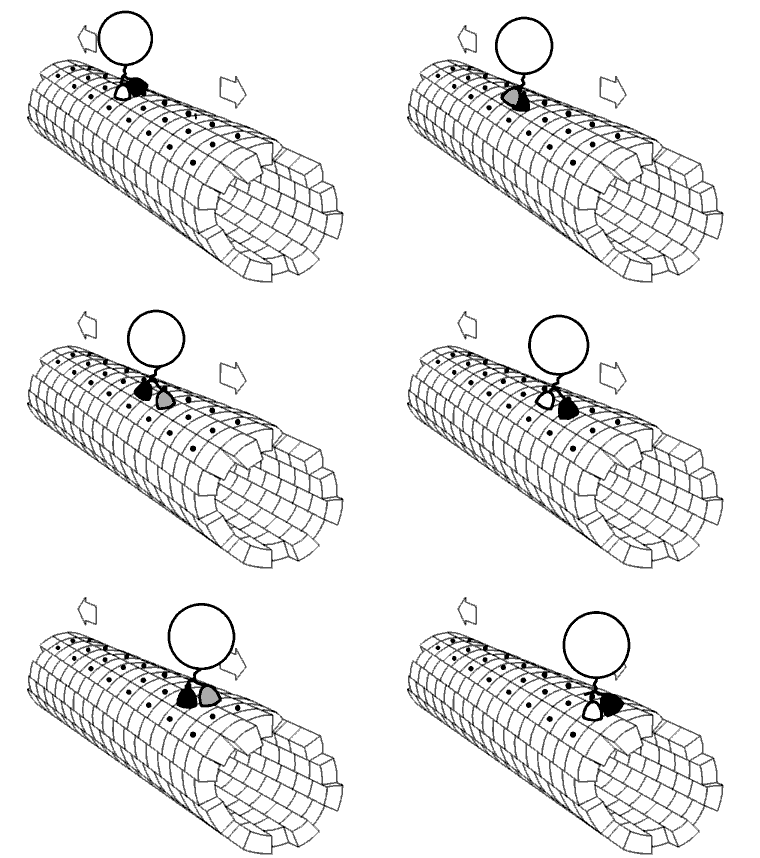
Kinesin walking on a microtubule. It is a molecular biological machine that uses protein domain dynamics, visible by neutron spin echo spectroscopy

Local flexibility: atoms and residues

[edit]

Portions of protein structures often deviate from the equilibrium state. Some such excursions are harmonic, such as stochastic fluctuations of chemical bonds and bond angles. Others are anharmonic, such as sidechains that jump between separate discrete energy minima, or rotamers.[5]

Evidence for local flexibility is often obtained from NMR spectroscopy.[citation needed] Flexible and potentially disordered regions of a protein can be detected using the random coil index. Flexibility in folded proteins can be identified by analyzing the spin relaxation of individual atoms in the protein. Flexibility can also be observed in very high-resolution electron density maps produced by X-ray crystallography,[6] particularly when diffraction data is collected at room temperature instead of the traditional cryogenic temperature (typically near 100 K).[7] Information on the frequency distribution and dynamics of local protein flexibility can be obtained using Raman and optical Kerr-effect spectroscopy[8] as well as anisotropic microspectroscopy[9] in the terahertz frequency domain. The internal re-arrangement of the amino acids during protein motion involves elastic and plastic deformations induced by viscoelastic forces, which can be probed with nano-rheology techniques.[10]

Regional flexibility: intra-domain multi-residue coupling

[edit]
A network of alternative conformations in catalase (Protein Data Bank code: 1gwe) with diverse properties. Multiple phenomena define the network: van der Waals interactions (blue dots and line segments) between sidechains, a hydrogen bond (dotted green line) through a partial-occupancy water (brown), coupling through the locally mobile backbone (black), and perhaps electrostatic forces between the Lys (green) and nearby polar residues (blue: Glu, yellow: Asp, purple: Ser). This particular network is distal from the active site and is therefore putatively not critical for function.

Many residues are in close spatial proximity in protein structures. This is true for most residues that are contiguous in the primary sequence, but also for many that are distal in sequence yet are brought into contact in the final folded structure. Because of this proximity, these residue's energy landscapes become coupled based on various biophysical phenomena such as hydrogen bonds, ionic bonds, and van der Waals interactions (see figure).

Transitions between states for such sets of residues therefore become correlated.[11]

This is perhaps most obvious for surface-exposed loops, which often shift collectively to adopt different conformations in different crystal structures[citation needed]. However, coupled conformational heterogeneity is also sometimes evident in secondary structure.[12] For example, consecutive residues and residues offset by 4 in the primary sequence often interact in α helices. Also, residues offset by 2 in the primary sequence point their sidechains toward the same face of β sheets and are close enough to interact sterically, as are residues on adjacent strands of the same β sheet. Some of these conformational changes are induced by post-translational modifications in protein structure, such as phosphorylation and methylation.[12][13]

An "ensemble" of 44 crystal structures of hen egg white lysozyme from the Protein Data Bank, showing that different crystallization conditions lead to different conformations for various surface-exposed loops and termini (red arrows).

When these coupled residues form pathways linking functionally important parts of a protein, they may participate in allosteric signaling. For example, when a molecule of oxygen binds to one subunit of the hemoglobin tetramer, that information is allosterically propagated to the other three subunits, thereby enhancing their affinity for oxygen. In this case, the coupled flexibility in hemoglobin allows for cooperative oxygen binding,[citation needed] which is physiologically useful because it allows rapid oxygen loading in lung tissue and rapid oxygen unloading in oxygen-deprived tissues (e.g. muscle).

Global flexibility: multiple domains

[edit]
A ribosome is a biological machine that utilizes protein domain dynamics on nanoscopic scales

The presence of multiple domains in proteins gives rise to a great deal of flexibility and mobility, leading to protein domain dynamics.[1] Domain motions can be directly observed using spectra[14][2] measured by neutron spin echo spectroscopy. They can also be suggested by sampling in extensive molecular dynamics trajectories[15] and principal component analysis[16] or inferred by comparing different structures of a protein (as in Database of Molecular Motions).

Domain motions are important for:

One of the largest observed domain motions is the 'swivelling' mechanism in pyruvate phosphate dikinase. The phosphoinositide domain swivels between two states in order to bring a phosphate group from the active site of the nucleotide binding domain to that of the phosphoenolpyruvate/pyruvate domain.[24] The phosphate group is moved over a distance of 45 Å involving a domain motion of about 100 degrees around a single residue. In enzymes, the closure of one domain onto another captures a substrate by an induced fit, allowing the reaction to take place in a controlled way. A detailed analysis by Gerstein led to the classification of two basic types of domain motion; hinge and shear.[21] Only a relatively small portion of the chain, namely the inter-domain linker and side chains undergo significant conformational changes upon domain rearrangement.[25]

Hinge motions

[edit]
Hinge motion in disordered activation domain in Trypsinogen (PDB ID: 2PTN)
Hinge motion in disordered activation domain in Trypsinogen (PDB ID: 2PTN). The hinges predicted using PACKMAN. Hinge prediction are colored in blue (residues 23:28) and red (residues 175:182). The green colored region is the active site. Motion is generated using hdANM.

A study by Hayward[26] found that the termini of α-helices and β-sheets form hinges in a large number of cases. Many hinges were found to involve two secondary structure elements acting like hinges of a door, allowing an opening and closing motion to occur. This can arise when two neighbouring strands within a β-sheet situated in one domain, diverge apart as they join the other domain. The two resulting termini then form the bending regions between the two domains. α-helices that preserve their hydrogen bonding network when bent are found to behave as mechanical hinges, storing `elastic energy' that drives the closure of domains for rapid capture of a substrate.[26] Khade et. al. worked on prediction of the hinges[27] in any conformation and further built an Elastic Network Model called hdANM[28] that can model those motions.

Helical to extended conformation

[edit]

The interconversion of helical and extended conformations at the site of a domain boundary is not uncommon. In calmodulin, torsion angles change for five residues in the middle of a domain linking α-helix. The helix is split into two, almost perpendicular, smaller helices separated by four residues of an extended strand.[29][30]

Shear motions

[edit]

Shear motions involve a small sliding movement of domain interfaces, controlled by the amino acid side chains within the interface. Proteins displaying shear motions often have a layered architecture: stacking of secondary structures. The interdomain linker has merely the role of keeping the domains in close proximity.[citation needed]

Domain motion and functional dynamics in enzymes

[edit]

The analysis of the internal dynamics of structurally different, but functionally similar enzymes has highlighted a common relationship between the positioning of the active site and the two principal protein sub-domains. In fact, for several members of the hydrolase superfamily, the catalytic site is located close to the interface separating the two principal quasi-rigid domains.[15] Such positioning appears instrumental for maintaining the precise geometry of the active site, while allowing for an appreciable functionally oriented modulation of the flanking regions resulting from the relative motion of the two sub-domains.[2]

Quantifying internal protein motions using strain

[edit]

A natural measure to quantify and classify the subtle motions of amino acids that occur during conformational changes is the strain.[10][31] When a group of amino acids moves together as a rigid body, the strain vanishes. In contrast, high strain values indicate that neighboring amino acids and atoms have moved with respect to each other. The effective strain is the relative change in distances between neighboring amino acids, which is a sensitive enough measure to probe the effects of single mutations on the structural landscape of protein.[32]  

Implications for macromolecular evolution

[edit]

Evidence suggests that protein dynamics are important for function, e.g. enzyme catalysis in dihydrofolate reductase (DHFR), yet they are also posited to facilitate the acquisition of new functions by molecular evolution.[33] This argument suggests that proteins have evolved to have stable, mostly unique folded structures, but the unavoidable residual flexibility leads to some degree of functional promiscuity, which can be amplified/harnessed/diverted by subsequent mutations.[citation needed] Research on promiscuous proteins within the BCL-2 family revealed that nanosecond-scale protein dynamics can play a crucial role in protein binding behaviour and thus promiscuity.[34]

However, there is growing awareness that intrinsically unstructured proteins are quite prevalent in eukaryotic genomes,[35] casting further doubt on the simplest interpretation of Anfinsen's dogma: "sequence determines structure (singular)". In effect, the new paradigm is characterized by the addition of two caveats: "sequence and cellular environment determine structural ensemble".

References

[edit]
Revisions and contributorsEdit on WikipediaRead on Wikipedia
from Grokipedia
Protein dynamics refers to the time-dependent fluctuations in atomic positions and conformational changes within proteins, spanning a wide range of timescales from femtoseconds (for local vibrations) to milliseconds or longer (for global domain rearrangements), which are intrinsic to their biological roles as . These motions enable essential functions such as enzymatic , substrate binding, allosteric signaling, and , linking static structures to dynamic activity in . Unlike rigid models, proteins exist as ensembles of conformations, where dynamic transitions facilitate evolutionary adaptations for specificity and efficiency. The importance of protein dynamics is underscored by its role in virtually all protein-mediated processes, from oxygen transport in to in receptors, where even subtle fluctuations can propagate effects across the molecule. For instance, in enzymes, atomic-level motions on to scales position catalytic residues, while microsecond-millisecond shifts open pathways for substrates, demonstrating how dynamics underpins function rather than merely accompanying it. Disruptions in these dynamics, such as through , can lead to diseases like cancer or neurodegeneration, highlighting their therapeutic in targeting flexible sites. Studying protein dynamics relies on complementary experimental and computational approaches to capture motions beyond static snapshots. Techniques like (NMR) spectroscopy reveal local fluctuations, while , cryo-electron microscopy (cryo-EM), and time-resolved methods visualize intermediate states; molecular dynamics (MD) simulations model trajectories at atomic resolution. Recent advances, including tools like for structure prediction with emerging extensions to ensemble predictions and dynamics (as of AlphaFold 3 in 2024), have accelerated insights into allosteric networks and plastic protein behaviors. These methods collectively affirm that "biological life depends on motion," with proteins exhibiting a hierarchy of dynamics that evolve across evolutionary timescales.

Fundamentals

Definition and Scope

Protein dynamics refers to the time-dependent fluctuations in the three-dimensional of proteins, encompassing motions that occur across a broad spectrum of timescales—from femtoseconds for atomic vibrations to seconds for large-scale conformational rearrangements—primarily driven by and influenced by the environment and interactions with other molecules. These fluctuations arise from the inherent flexibility of the polypeptide chain, allowing proteins to explore an energy landscape with multiple minima corresponding to distinct structural states. The scope of protein dynamics extends to all conformational changes critical for biological function, including the folding process that establishes the native state, the binding of ligands or substrates that modulates activity, and the catalytic steps in enzymatic reactions where transient intermediates are sampled. Such dynamics are not merely incidental but are evolutionarily tuned to enable adaptive responses, as seen in processes like where distant binding events propagate through structural shifts. A foundational in this field is the view of proteins as dynamic ensembles rather than rigid, static entities, where the population of conformations interconverts continuously and contributes collectively to function; this perspective underpins the -function-dynamics , emphasizing that motion is as vital as the average for activity. Landmark studies in the 1970s by Frauenfelder and colleagues on used temperature-dependent to reveal hierarchical substates and non-exponential relaxation kinetics after ligand , establishing as central to ligand migration and binding. The biological significance of protein dynamics lies in its role in facilitating essential processes such as signal transduction, where conformational propagation transmits information across cellular networks, and molecular recognition, enabling precise interactions with partners like DNA, membranes, or other proteins through transient fits. These dynamics ensure that proteins can respond to environmental cues, maintaining homeostasis and driving physiological responses.

Historical Development

In the early , proteins were predominantly viewed as rigid, static structures, a perspective largely shaped by pioneering efforts that began in the 1930s. Researchers such as and Dorothy Crowfoot Hodgkin obtained the first X-ray diffraction patterns from protein crystals, like in 1934, which suggested ordered, fixed atomic arrangements without accounting for motion. This static model dominated pre-1950s thinking, portraying proteins as unchanging scaffolds for biological function, despite biochemical evidence hinting at flexibility in processes like . The 1950s and 1960s introduced initial glimpses of protein dynamics through (NMR) , which revealed motional averaging in atomic environments, challenging the rigidity paradigm. By the 1970s, computational advances enabled the first explicit simulations of protein motion; notably, in 1977, J. Andrew McCammon, Bruce R. Gelin, and performed the inaugural (MD) simulation of bovine pancreatic trypsin inhibitor (BPTI), demonstrating atomic fluctuations on picosecond timescales over a 9.2-ps trajectory in vacuum. These NMR and MD developments marked a conceptual shift, illustrating that proteins exhibit inherent flexibility essential for their roles, such as in enzyme function where dynamics facilitate substrate binding and . During the and , the field recognized protein dynamics as integral to biological function, with studies linking motional elements to regulatory mechanisms. A seminal 1983 review by and J. Andrew McCammon synthesized early simulations and experimental data, emphasizing how dynamic fluctuations underpin protein stability, folding, and in metabolic processes. This era solidified the view that dynamics are not perturbations but core features, influencing metabolic control through coordinated motions in networks. From the 2000s onward, protein dynamics integrated into frameworks, viewing proteins within cellular networks where collective motions drive emergent behaviors. The 2009 , awarded to Venkatraman Ramakrishnan, , and Ada E. Yonath, honored atomic-resolution structures of the , which illuminated its dynamic conformational changes during protein synthesis, underscoring motion's role in ribosomal function. This period also saw a broader shift from static snapshots to ensemble descriptions, recognizing proteins as populations of interconverting states. A key advancement was the articulation of "dynamical allostery," where allosteric effects arise from modulation of preexisting dynamic networks without structural changes, as exemplified in studies of PDZ domains and linkers.

Scales of Flexibility

Local Atomic and Residue Motions

Local atomic and residue motions in proteins encompass the smallest-scale fluctuations, primarily involving vibrations and librations of individual atoms around their equilibrium positions. These motions include small oscillations in bond lengths and angles, occurring on to timescales, which reflect the distribution within the . Vibrations typically involve stretching and bending of covalent bonds, while librations describe restricted rotational or twisting movements of atomic groups, both contributing to the overall dynamic equilibrium of the protein without significant structural rearrangement. At the residue level, these fluctuations extend to side-chain rotations defined by chi (χ) dihedral angles and subtle variations in backbone phi (φ) and psi (ψ) dihedral angles. Side-chain χ-angle rotations, such as those in aromatic or aliphatic residues, occur on to timescales, allowing sampling of low-energy rotamer states that influence local packing and interactions. Backbone φ/ψ fluctuations, though more constrained by the backbone, exhibit small-amplitude variations on similar timescales, maintaining secondary integrity while enabling minor adjustments to steric clashes. A representative example is the rapid rotation of methyl groups in residues, which proceeds via three-fold symmetric jumps on the timescale, contributing to conformational that favorably impacts binding free energies through the relation ΔG = ΔH - TΔS, where side-chain dynamics enhance the entropic term. These local motions are quantified in X-ray crystallography by temperature factors, or B-factors, which measure the mean-square atomic displacement ⟨u²⟩ from the position, related by the equation: B=8π23u2B = \frac{8\pi^2}{3} \langle u^2 \rangle Higher B-factors indicate greater displacement and thus increased flexibility, typically ranging from 10–20 Ų for well-ordered core atoms to over 50 Ų for surface-exposed ones. Factors influencing these motions include exposure, which amplifies fluctuations in hydrophilic regions due to less steric constraint; hydrogen bonding, which stabilizes atoms and reduces amplitudes in networked secondary structures; and temperature, where elevated conditions proportionally increase vibrational energies and B-factor values across the protein. These isolated atomic and residue-level wiggles serve as fundamental building blocks that can propagate to influence regional coupling in proteins.

Regional Intra-Domain Coupling

Regional intra-domain coupling describes the synchronized fluctuations of multiple residues, often spanning 10-50 , within a single , facilitated by elastic network models that approximate interactions through harmonic potentials between nearby Cα atoms (typically within 7 Å). These models capture the arising from non-bonded contacts and chain connectivity, such as hydrophobic cores that propagate motions across residue clusters without involving domain separation. Unlike isolated fluctuations, this coupling enables emergent properties like enhanced stability in secondary structure elements. Such regional motions operate on timescales of nanoseconds to microseconds, driven by correlated variations in backbone dihedral angles (φ and ψ) that maintain hydrogen bonding while allowing subtle deformations. For instance, cross-correlations in dihedral angles reveal how perturbations in one residue influence distant ones within the domain, contributing to functional adaptability. of trajectories is a key method for identifying these low-frequency modes, where the of atomic displacements is diagonalized to yield eigenvalues λ_i representing the variance along each principal component: the equation for eigenvalue decomposition is Q v_i = λ_i v_i, with Q as the and v_i the eigenvectors, prioritizing modes with the largest λ_i for dominant intra-domain behaviors. In globular proteins, beta-sheet twisting exemplifies regional coupling, where hydrogen-bonded strands exhibit correlated and motions, leading to right-handed twists of 2–10° that facilitate allosteric signal propagation without global reconfiguration. Similarly, flexible loops near active sites, such as the catalytic loop in Hsp90's N-terminal domain, undergo coordinated adjustments to optimize substrate binding. These differ from local atomic motions, which are uncorrelated and picosecond-scale, by introducing ; for example, shifts can modulate residue networks, reducing global stability.

Global Inter-Domain Movements

Global inter-domain movements in proteins involve large-scale conformational changes between structurally independent domains, typically comprising 50-200 residues each, occurring on timescales from microseconds to milliseconds. These motions enable the protein to transition between open and closed states, often triggered by binding, which stabilizes specific conformations to facilitate functions such as substrate capture or product release. Unlike smaller-scale fluctuations, these movements reposition entire rigid bodies relative to one another, reconfiguring the overall to adapt to environmental cues or binding partners. At the core of these dynamics are domain-domain interfaces and flexible linkers, which serve as pivotal s allowing rotational or translational shifts while maintaining connectivity. These regions, often composed of short loops or unstructured segments rich in or , exhibit heightened flexibility that decouples the domains' independent folding from their collective motion, enabling functional reconfiguration such as enclosure in enzymes. For instance, in multi-domain enzymes like , substrate binding induces a pronounced closing of the two lobes around the glucose molecule, approximating the catalytic cleft through a rigid-body hinge motion at the linker. Such movements can be quantified by calculating the root-mean-square deviation (RMSD) of domain centers of mass between open and closed structures, revealing displacements on the order of several angstroms that correlate with functional states. Hinge bending represents one common manifestation of these inter-domain shifts. These global motions arise within a rugged energy , where proteins sample multiple minima corresponding to distinct conformational states, separated by thermal activation over energy barriers. According to Kramers' theory, the rates of barrier crossing depend on the curvature of the potential at the and friction coefficients, dictating the kinetics of inter-domain rearrangements on experimentally observable timescales. This landscape perspective underscores how local atomic and regional intra-domain couplings act as amplifiers, propagating small fluctuations into coordinated global shifts that enhance sampling efficiency and responsiveness.

Types of Global Motions

Hinge Bending

Hinge bending represents a prevalent mechanism of global motion in multi-domain proteins, characterized by the relative of rigid domains connected by a flexible linker region that acts as a pivot point. This motion resembles the opening and closing of a , where the region accommodates the without significant deformation of the domains themselves. The flexibility of the often arises from a short loop or alpha-helical segment with reduced secondary structure stability, allowing low-energy torsional changes primarily in backbone dihedral angles. The geometry of hinge bending is precisely defined by the location of the axis and the magnitude of the angle, which typically ranges from 10° to 30° in observed cases. To analyze this motion, structures of open and closed conformations are aligned by superposing one domain, revealing the transformation of the other as a pure around the axis. This can be mathematically described using the : R(θ)=cosθI+(1cosθ)nnT+sinθ[n]×\mathbf{R}(\theta) = \cos\theta \, \mathbf{I} + (1 - \cos\theta) \, \mathbf{n} \mathbf{n}^T + \sin\theta \, [\mathbf{n}]_\times where R(θ)\mathbf{R}(\theta) is the , θ\theta is the bending angle, I\mathbf{I} is the 3×3 , n\mathbf{n} is the unit vector along the hinge axis, nnT\mathbf{n} \mathbf{n}^T is the , and [n]×[\mathbf{n}]_\times is the skew-symmetric cross-product matrix corresponding to n\mathbf{n}. This formulation enables quantitative decomposition of the motion into its axial and angular components, distinguishing hinge bending from other domain movements. A representative example of hinge bending is the domain closure in (LDH), first elucidated through crystallographic studies in the comparing apo and substrate-bound forms. In dogfish M4 LDH, binding of NAD+ and lactate induces a ~25° rotation of the catalytic domain relative to the coenzyme-binding domain around a near residues 100-110, effectively enclosing the . This motion repositions key residues like Arg109 and His195 to stabilize the substrate. Functionally, hinge bending in enzymes such as LDH facilitates substrate access and product release by transitioning between open states for entry and closed states for , thereby excluding solvent and optimizing electrostatic interactions at the . The energetic barrier to this motion stems largely from transient steric clashes between domain interfaces during the intermediate states, requiring ~5-15 kcal/mol in free energy depending on the protein. Hinge bending motions are primarily detected through by capturing atomic snapshots of open and closed conformational states, often stabilized by ligands or mutations, which allow superposition-based identification of the axis and angle.

Shear and Twist Motions

Shear motions in proteins refer to the parallel displacement of structural domains along their shared interface, resembling the sliding of layers in a deck of cards. This mechanism enables large-scale rearrangements while preserving much of the inter-domain bonding and van der Waals interactions, distinguishing it from more disruptive motions. In such movements, domains relative to one another without significant perpendicular separation, often involving coordinated shifts of secondary structural elements like alpha-helices or beta-strands. The geometry of shear is described by vectors aligned with the interface plane and can be quantified through shear strain, given by the equation ε=ΔxL\varepsilon = \frac{\Delta x}{L} where Δx\Delta x represents the lateral displacement and LL is the interface length. A representative example occurs in the immunoglobulin fold, where shear between beta-sheets in antibody variable domains (VH and VL) allows subtle adjustments for antigen binding affinity modulation. Twist motions, on the other hand, involve coupled rotational and translational components, typically observed in alpha-helical bundles where helices rotate around a common axis while undergoing minor translations. These dynamics facilitate the reconfiguration of bundle packing, often propagating through sequential torsion angles along the helical array. In G-protein coupled receptors (GPCRs), twist motions within the transmembrane helical bundle are crucial for signal transduction, enabling the receptor to transition from inactive to active states upon ligand binding and subsequent G-protein coupling. The rotational aspect is quantified by changes in torsion angles, which can exceed 10° per helix in activated conformations. Both shear and twist motions generally encounter lower energy barriers than bending, as they rely on incremental sliding or rotation of secondary elements rather than abrupt pivoting at a , minimizing steric clashes and bond disruptions. This energetic favorability makes them common in oligomeric proteins, where they support quaternary structure adjustments for functions like subunit assembly or allosteric communication. For instance, in multi-subunit enzymes, shear allows interface sliding to regulate accessibility without global unfolding.

Conformational Extensions

Conformational extensions represent a class of global protein dynamics characterized by transitions from compact, helical or coiled states to elongated conformations, enabling linear expansions that resemble partial unfolding without complete denaturation. This mechanism typically involves the unwinding of α-helices into extended β-strands or sheets, particularly in coiled-coil motifs, where the superhelical structure disassembles into straighter chains. Such shifts alter the dihedral angles in Ramachandran space, moving from α-helical regions (φ ≈ -60°, ψ ≈ -45°) toward β-sheet geometries (φ ≈ -120°, ψ ≈ 120°), facilitating a non-cooperative that propagates from less structured regions. Geometrically, these extensions are quantified by substantial increases in end-to-end distance, often achieving 20-50% elongation relative to the compact state, as observed in force-extension curves from single-molecule studies. A prominent example is the unzippering of coiled-coil domains in transcription factors, such as the GCN4 leucine zipper, where sequential detachment of heptad repeats extends the structure by tens of nanometers, from initial coiled lengths of ~5-10 nm to fully extended forms exceeding 20 nm. This process is preceded by local helix unfolding, which lowers the energy barrier for disassembly and allows the protein to span larger distances for DNA binding or dimerization. These dynamics unfold on millisecond timescales, enabling rapid functional responses, and are often triggered by covalent modifications like or environmental cues such as changes, which destabilize helical interactions. For instance, can introduce electrostatic repulsion in coiled-coils, promoting extension, while shifts modulate states to favor β-strand formation. The energetics of extension are captured by the relation ΔG=Fds\Delta G = \int F \, ds, where FF is the tensile force and dsds the incremental displacement, yielding free energy changes of ~5 kcal/mol per structural unit in AFM pulling experiments on helical proteins. Representative examples include the lever arm extension in myosin II during , where the α-helical neck region swings and elongates by ~5-10 nm to amplify small conformational changes in the motor domain into ~5-10 nm steps along filaments, driving shortening. In mechanosensing, α-catenin undergoes force-dependent extension at cell-cell junctions, reversibly unfolding its inhibitory domain by ~16 nm at low forces (~5 pN) to expose vinculin-binding sites and reinforce adhesions under tension. Compared to other global motions like hinge bending, conformational extensions exhibit higher reversibility—refolding upon force release—and reduced reliance on rigid inter-domain interfaces, permitting quicker adaptation to fluctuating mechanical or chemical signals.

Quantification and Measurement

Experimental Methods

Experimental methods for studying protein dynamics rely on direct observation of structural fluctuations in proteins under physiological or near-physiological conditions, capturing snapshots or time-dependent changes in atomic positions, bond lengths, and domain orientations. These techniques provide empirical data on motions ranging from picoseconds to seconds, revealing the conformational ensembles that underlie protein function. Key approaches include (NMR) spectroscopy, , (cryo-EM), and fluorescence-based methods, each offering complementary insights into local and global dynamics. NMR spectroscopy is particularly effective for probing local atomic and residue-level motions in solution, where proteins maintain their native flexibility without lattice constraints. Relaxation measurements, such as longitudinal (T1) and transverse (T2) relaxation times of 15N nuclei in backbone amide groups, quantify motional amplitudes and timescales on the picosecond to nanosecond scale. The model-free approach, introduced by Lipari and Szabo, analyzes these rates along with heteronuclear nuclear Overhauser enhancements (NOE) to derive generalized order parameters (S²), which range from 0 (complete isotropic motion) to 1 (complete restriction) and indicate the extent of angular fluctuations for individual N-H bonds. For example, in ubiquitin, S² values reveal higher flexibility in loop regions compared to rigid secondary structures. Additionally, nuclear Overhauser effect spectroscopy (NOESY) cross-peaks provide distance constraints between protons (typically <5 Å), allowing reconstruction of transient conformations that inform dynamic pathways. These measurements achieve picosecond time resolution, making NMR ideal for fast internal dynamics, though they require isotopically labeled proteins and are limited to smaller systems (<50 kDa). X-ray crystallography offers static snapshots of protein structures but can infer dynamics through temperature factors (B-factors), which reflect atomic displacement parameters and correlate with motional amplitudes in the crystal lattice. B-factors, derived from the refinement of electron density maps, often show elevated values in flexible loops or termini, as seen in the higher B-factors (>50 Ų) for solvent-exposed residues in structures compared to the core (<20 Ų). For time-resolved studies, the Laue method uses polychromatic pulses to capture structural changes on to timescales, pioneered in investigations of . In carbonmonoxy-, time-resolved Laue revealed Fe-N bond elongation within 100 ps of CO release, illustrating initial conformational relaxation. However, crystal packing can restrict motions, leading to artifacts where dynamics differ from solution states, and time resolution is limited to ~10 ns without sources. Cryo-EM has revolutionized the visualization of large, dynamic protein complexes by capturing heterogeneous conformational ensembles in vitreous ice, preserving native states without crystallization. Advances in direct electron detectors and phase plates since the mid-2010s have improved resolutions to below 3 , enabling identification of multiple dynamic states through 3D classification of particle images. For instance, in the , cryo-EM reconstructions post-2015 resolved subunit rotations and tRNA movements across a 10 displacement range, quantifying populations of open and closed conformations. This method excels at global inter-domain movements in megadalton assemblies and, with recent advances as of 2025 such as nanobody scaffolds, can now resolve structures of small proteins down to ~14 , though it remains challenging for proteins below 100 without such aids. but requires extensive to deconvolute ensembles. Fluorescence spectroscopy techniques complement structural methods by monitoring rotational and distance changes in labeled proteins. Steady-state and time-resolved measures the depolarization of emitted light to infer rotational correlation times (θ), reflecting global tumbling or local rotations on timescales; for example, in , anisotropy decays reveal barrel opening dynamics with θ ~10 ns. Single-molecule (smFRET) tracks real-time distance fluctuations between donor-acceptor pairs (20-100 Å range) on millisecond to second timescales, ideal for domain separations. In , smFRET histograms showed lid-domain closing transitions with transfer efficiencies varying from 0.2 to 0.8, corresponding to 30-50 Å changes. These optical methods offer high in solution but are limited by photobleaching and orientation artifacts. Despite their strengths, experimental methods face inherent limitations in time resolution and environmental fidelity. NMR achieves ~ps precision for local motions but averages over ensembles, obscuring rare states; X-ray and cryo-EM provide Ångstrom spatial detail yet may alter dynamics via freezing or packing, with cryo-EM limited to ~ms effective resolution for transients; fluorescence and smFRET excel at longer timescales but lack atomic detail. Strain-based analysis can post-process these data to quantify mechanical stresses from observed displacements, enhancing interpretation of dynamic forces. Overall, integrating multiple techniques mitigates these constraints for a fuller picture of protein dynamics.

Computational Simulations

Computational simulations provide a powerful means to predict and analyze protein dynamics by modeling atomic and molecular interactions over time, enabling the exploration of conformational changes that are often inaccessible to experiments. These approaches rely on of equations of motion derived from , using empirical force fields to approximate surfaces. All-atom (MD) simulations represent the most detailed method, treating each atom explicitly and capturing local fluctuations, residue-level motions, and larger-scale rearrangements in proteins. Force fields such as parameterize bonded and non-bonded interactions, including van der Waals, electrostatic, and torsional terms, to compute the total UU. The forces acting on atoms are then obtained from the negative gradient of this potential, F=U\mathbf{F} = -\nabla U, which drives the system's evolution according to Newton's second law. Trajectories in MD are generated by numerically integrating these equations, with the Verlet algorithm being a widely adopted scheme due to its time-reversibility and over long simulations. The basic Verlet update relates positions at successive timesteps as r(t+Δt)=2r(t)r(tΔt)+F(t)m(Δt)2\mathbf{r}(t + \Delta t) = 2\mathbf{r}(t) - \mathbf{r}(t - \Delta t) + \frac{\mathbf{F}(t)}{m} (\Delta t)^2, where mm is and Δt\Delta t is typically 1-2 ; velocities can be derived implicitly or via the velocity Verlet variant for explicit tracking. While all-atom MD excels at to timescales, accessing or longer dynamics requires approximations like coarse-grained models, which reduce resolution by representing multiple atoms as single beads connected by effective springs. The Gaussian network model (GNM), a seminal elastic network approach, simplifies proteins as isotropic networks where fluctuations follow a harmonic potential, yielding normal modes via the eigenvalue equation Kv=λMv\mathbf{K} \mathbf{v} = \lambda \mathbf{M} \mathbf{v}, with K\mathbf{K} as the Kirchhoff connectivity matrix, M\mathbf{M} the , v\mathbf{v} eigenvectors, and λ\lambda eigenvalues corresponding to mode frequencies. This enables efficient computation of global modes and equilibrium fluctuations on millisecond scales without explicit solvent. To overcome ergodic sampling limitations in standard , enhanced sampling techniques target and kinetic pathways. Replica-exchange (REMD) runs parallel simulations at elevated temperatures and periodically swaps configurations to facilitate barrier crossing, improving exploration of rugged energy landscapes in proteins. Markov state models (MSMs) then analyze these trajectories by discretizing conformational space into metastable states, constructing transition matrices to estimate kinetics and free energies on timescales up to milliseconds; for instance, MSMs derived from short runs can predict folding rates and binding affinities with statistical rigor. Simulations are often benchmarked against experimental , such as NMR order parameters, to validate predicted dynamics. In the 2020s, has revealed millisecond-scale activations in G protein-coupled receptors (GPCRs), like the stepwise allosteric transitions in the , where enhanced sampling captured ligand-induced conformational shifts aligning with NMR-derived ensembles. Recent advances have dramatically extended accessible timescales through hardware and algorithmic innovations. GPU acceleration, integrated into packages like and , parallelizes non-bonded computations to routinely achieve microsecond simulations of solvated proteins on consumer hardware, while specialized systems like Anton enable millisecond trajectories for systems exceeding 1 million atoms. Post-2020 developments in potentials, such as neural network-based models trained on quantum data, offer transferable approximations to accuracy at MD speeds, facilitating enhanced sampling of large-scale dynamics like intermediates without traditional force field limitations. As of 2024-2025, innovations like the AI²BMD system enable efficient simulations of large biomolecules, while approaches facilitate the design of proteins with specified dynamic conformations. These tools continue to refine our understanding of protein flexibility, bridging atomic details with functional timescales.

Strain-Based Analysis

Strain in protein dynamics refers to the local mechanical deformation arising from atomic displacements, quantified as a deformation tensor that connects stochastic protein motions to continuum mechanics principles. This approach treats proteins as deformable elastic bodies, where strain captures the infinitesimal changes in bond lengths and angles induced by thermal fluctuations, ligand binding, or conformational transitions. By mapping atomic displacements to strain fields, researchers can identify regions of mechanical stress that propagate through the protein structure, revealing how dynamics influence stability and function. To compute strain fields, elastic network models (ENMs) represent protein structures as networks of nodes (typically Cα atoms) connected by harmonic springs, enabling the calculation of displacement fields from normal modes or unfolding pathways. These models approximate the protein's equilibrium fluctuations, providing input displacements u\mathbf{u} for the strain tensor. The infinitesimal strain tensor ϵ\epsilon is defined as ϵij=12(uixj+ujxi),\epsilon_{ij} = \frac{1}{2} \left( \frac{\partial u_i}{\partial x_j} + \frac{\partial u_j}{\partial x_i} \right), where uiu_i and uju_j are displacement components along coordinates xix_i and xjx_j. In ENM frameworks, such as the Gaussian Network Model, the deformation gradient is derived from soft modes, yielding shear and normal strain components that highlight flexible regions. This method efficiently processes large ensembles from simulations, focusing on low-dimensional motions. Applications of strain-based analysis include pinpointing residues under mechanical stress in functional sites, such as active sites where ligand-induced deformations concentrate strain. For instance, in , shear strain fields reveal tensed residues linking the glucose-binding and allosteric regulatory sites, illustrating how local deformations couple distant regions during . This identifies potential hotspots for or , as strained residues often exhibit heightened reactivity or flexibility. A key advantage of strain analysis is its ability to integrate displacement data from (MD) simulations with experimental measures of bond strain obtained via , which detects vibrational frequency shifts indicative of tensile or in peptide bonds. By validating MD-derived strain fields against Raman signals, this framework refines models of dynamic stress propagation, enhancing predictive accuracy for protein behavior under physiological conditions. In the 2010s, advancements incorporated into strain calculations to address distortions, particularly in active sites where electronic effects amplify mechanical strain. Hybrid /molecular mechanics (QM/MM) methods, such as ONIOM, quantify strain energies in covalent frameworks, revealing how quantum delocalization modulates bond stretching in enzymes like those with strained transition states. This integration provides atomic-level insights into strain relief during reactions, bridging classical elasticity with .

Functional Roles

Dynamics in Catalysis and Binding

Protein dynamics are essential for enzymatic , as they enable the to dynamically sample conformations that stabilize transition states and lower the barrier. In many enzymes, local fluctuations and loop motions facilitate the precise positioning of catalytic residues and substrates, promoting efficient chemical transformations. For instance, in enzymes, which represent one of the most common scaffolds for catalytic activity, flexible loops undergo closure motions to enclose the , shielding reactive intermediates and enhancing specificity during . Seminal studies on (DHFR) have highlighted the role of dynamics in promoting recrossing of the reaction barrier, particularly through quantum mechanical effects like hydrogen tunneling. In the 1990s and early 2000s, experimental and computational work revealed that millisecond-scale loop fluctuations in DHFR modulate the hydride transfer step, allowing recrossings that increase the effective by coupling protein motions to the chemical event. In ligand binding, protein dynamics influence the association process via conformational selection or induced fit mechanisms. Conformational selection involves the ligand binding preferentially to a low-population, pre-existing competent state, while induced fit entails the ligand stabilizing a conformation post-binding. The observed association rate constant is often given by kon=kdiff×Pclosedk_{on} = k_{diff} \times P_{closed}, where kdiffk_{diff} is the diffusion-limited encounter rate and PclosedP_{closed} represents the equilibrium population of the closed, binding-competent conformation. A representative example is HIV-1 protease, where flap domains exhibit picosecond-to-millisecond dynamics that transiently open the active site, facilitating substrate entry while maintaining catalytic efficiency. These dynamic processes often exhibit entropy-enthalpy compensation, where conformational fluctuations contribute to a favorable binding entropy (ΔS) that offsets enthalpic penalties from rigidification. Such compensation arises from the disorder in flexible regions, allowing binding free energy to remain optimized despite structural adjustments.

Allosteric Regulation

Allosteric regulation in proteins involves the propagation of binding or perturbation effects from one site to another distant site through dynamic networks of residues, modulating function without direct interaction at the . This process, often termed dynamical allostery, can occur without observable structural changes, relying instead on shifts in conformational and fluctuations that alter the protein's energy landscape. In this mechanism, binding at an allosteric site redistributes the population of pre-existing conformational ensembles, favoring states that enhance or inhibit activity at the orthosteric site. Key mechanisms of center on population shifts within these ensembles, where global motions serve as carriers of signals across the protein. A classic example is , where oxygen binding triggers the transition from the tense (T) to relaxed (R) state, involving the breaking of intersubunit salt bridges that stabilizes the low-affinity T conformation, thereby increasing cooperative oxygen affinity. This shift repositions the iron-porphyrin complex and heme-heme interactions, illustrating how dynamic rearrangements propagate allosteric effects. (MD) simulations have revealed correlation maps of residue fluctuations that highlight these networked pathways, showing synchronized motions between distant sites during allosteric signaling. Quantification of allosteric effects often employs the free energy change associated with population shifts, expressed as: ΔGallo=kTln(PactivePinactive)\Delta G_{\text{allo}} = -kT \ln \left( \frac{P_{\text{active}}}{P_{\text{inactive}}} \right) where PactiveP_{\text{active}} and PinactiveP_{\text{inactive}} are the probabilities of the active and inactive conformational states, kk is Boltzmann's constant, and TT is temperature; this captures the entropic contribution driving the modulation. In PDZ domains, such as PDZ2 from protein tyrosine phosphatase, ligand binding at the peptide-binding groove induces remote changes in affinity at the α-helix interface, detected via time-resolved spectroscopy showing millisecond-scale dynamic propagation without global restructuring. Discoveries in the 2010s further illuminated kinase allostery, where intrinsic fluctuations in domains like the PIF-pocket of Aurora-A kinase enable remote inhibitor binding to lock inactive conformations, as revealed by MD and structural studies. The modern view posits that intrinsic dynamics predispose proteins to allostery by evolutionarily tuning low-frequency modes that connect functional sites, allowing rapid even in the absence of ligands. This perspective, supported by comparative analyses across homologs, emphasizes how baseline fluctuations create "hot spots" for allosteric control, enhancing regulatory precision in signaling pathways.

Evolutionary Implications

Adaptation Through Flexibility

Protein flexibility serves as an evolvable trait that facilitates the acquisition of new functions during , allowing proteins to adapt to changing environmental demands without compromising overall structural integrity. In particular, dynamic regions enable functional innovation by permitting conformational changes that can recruit novel substrates or interactions. For instance, in antibodies, the hypervariable loops (complementarity-determining regions, or CDRs) undergo , which introduces variability and enhances flexibility to improve binding affinity; this process exemplifies how targeted dynamics in loop regions drive rapid evolutionary within the . Mechanisms underlying this evolvability often involve neutral drift in dynamic regions, where sequence variations accumulate without immediate fitness costs, preserving stability while exploring new functional landscapes. Such drift promotes functional by subtly altering conformational ensembles, enabling proteins to transition from generalist to specialist roles or vice versa. This process is particularly evident in promiscuous enzymes, where neutral mutations enhance latent activities, providing a reservoir for selection to act upon during environmental shifts. Comparative evolutionary studies reveal that sites with higher variability exhibit elevated B-factors, indicating greater atomic displacement and flexibility, which correlates with accelerated evolutionary rates in those positions. Analyses of enzyme superfamilies, such as , further demonstrate that dynamic profiles evolve in tandem with functional diversification, with flexible motifs showing divergence across homologs while core structures remain conserved. A key concept in this context is moonlighting proteins, which leverage intrinsic dynamics to perform multiple, context-dependent roles, often rooted in ancestral promiscuity that facilitated early evolutionary expansions of protein function. These proteins switch functions through allosteric shifts or environmental cues, illustrating how flexibility underpins multifunctionality without requiring new genes. However, evolutionary trade-offs exist, as excessive flexibility can increase the risk of misfolding and aggregation, imposing selective pressure to balance adaptability with thermodynamic stability.

Conservation Across Proteins

Protein dynamics exhibit notable evolutionary conservation, particularly in structural motifs critical for function, such as hinge regions and flexible loops, which are often retained across homologous proteins despite sequence divergence. These elements facilitate essential motions like domain closure or substrate access, preserving mechanistic integrity over evolutionary timescales. For instance, in the Rossmann fold—a prevalent nucleotide-binding domain found in dehydrogenases—the dynamic hinge-bending mechanism that aligns substrates with cofactors is conserved across diverse homologs, enabling efficient transfer while adapting to varying physiological contexts. Evolutionary coupling analysis, such as direct coupling analysis (DCA), has revealed how sequence covariation predicts dynamic contacts, showing strong correlations with backbone flexibility and residue interactions that underpin conserved motions. By analyzing multiple sequence alignments from thousands of protein families, DCA identifies coevolving residue pairs that stabilize dynamic interfaces, with prediction accuracies exceeding 80% for native contacts in many cases; these couplings align closely with sequence conservation patterns, indicating that functional dynamics impose selective pressures akin to those on primary . Evidence from Gaussian Network Model (GNM) simulations further demonstrates that low-frequency collective dynamic modes—representing global protein fluctuations—are more conserved than static structures across homologs. In the globin family, for example, the two slowest normal modes, which involve correlated motions of helices and F essential for binding and allostery, remain highly similar among 18 diverse members, with mode overlaps correlating strongly (up to 0.63) with experimental B-factors; broader analyses across hundreds of families confirm this trend, where mode conservation decreases with higher-frequency, local vibrations. Such conservation underscores dynamics as a "fossil record" of ancestral function, with functional regions displaying elevated preservation of flexibility profiles compared to neutral solvent-exposed areas, reflecting stronger evolutionary constraints on motion-relevant residues. This pattern highlights how dynamic stability ensures reliable biological roles, from to signaling, across deep evolutionary divergences. Exceptions occur in allosteric sites, where dynamic divergence enables species-specific ; for instance, in receptors, collective motions at regulatory interfaces evolve to fine-tune responsiveness, diverging from core conserved dynamics to accommodate environmental adaptations without disrupting overall integrity.

References

Add your contribution
Related Hubs
User Avatar
No comments yet.