Hubbry Logo
Ruby TowerRuby TowerMain
Open search
Ruby Tower
Community hub
Ruby Tower
logo
8 pages, 0 posts
0 subscribers
Be the first to start a discussion here.
Ruby Tower
Ruby Tower
from Wikipedia

The Ruby Tower was a six-story building in Manila, Philippines, completed c. 1965[a] that collapsed on August 2, 1968, during the Casiguran earthquake killing over 250 people.

Key Information

Background

[edit]

The building, constructed at a cost of $250,000,[1] was located on the corner of Doroteo Jose and Teodora Alonso Streets in Santa Cruz, a district in the northern part of Manila.[3] The reinforced-concrete building measured 45.5 m × 30 m (149 ft × 98 ft), with a height of 20.5 m (67 ft). It was of a slab-and-beam design supported by columns, the rear wall with the primary resistance to shear or torsional forces.[4] The mixed commercial and residential building contained 38 commercial spaces on the lower two floors and 76 residential units on the upper four floors.[5] It housed 600 to 1,000 people.[2]

Collapse and rescue effort

[edit]

The 7.3-magnitude 1968 Casiguran earthquake, centered more than 200 km (120 mi) away,[4] hit at 4:19 am[5] and caused the building to collapse in a pancake fashion burying over 500 people. A volunteer force of over 6,000 mobilized to free the victims trapped in the rubble, as there was no government disaster plan in place at the time. Many people were rescued alive, including about 30 who later died from their injuries.[3] At least 260 people were injured.[5][b] The rescue effort turned to recovery and lasted over a week. Not all of the bodies were identified.[3]

A part of the northern end of the floors one and two remained standing. The lower levels collapsed straight downward, while the upper floors shifted south as they collapsed, with the roof shifting 30 feet (9.1 m) south and 10 feet (3.0 m) east of its original location.[5] Its long columns buckled in the earthquake.

By August 4, Philippine soldiers and heavy construction equipment were in use.[6] They were assisted for 10 days by personnel of the United States military.[1] In 80% of the building, the collapsed floors were separated by debris (portions of columns and walls) leaving spaces of 3 feet (0.91 m) or less, with very limited lateral movement.[1] As a result, many holes had to be cut through the concrete with jackhammers and oxygen-acetylene torches to reach the pockets.[1] Philippine and US military, and civilian contractors all participated in this work.[1]

Around 3,000 rescuers, including soldiers and civilians, worked daily, all coordinated by Brigadier General Gaudencio Tobias of the Philippine Army.[1] The nearby Cayetano Arellano High School (formerly Manila North High School) was used as a command center, canteen and rest area, medical clinic and morgue.[1] The US effort was directed by Rear Admiral Draper Kauffman and included US Navy and US Marine Corps personnel from Subic Bay Naval Complex and US Army and US Air Force personnel from Clark Air Force Base.[1]

The Boy Scouts of the Philippines managed the collection and identification of items of value as they were retrieved.[1] The last of the 268 survivors pulled from the building were two girls, aged 9 and 12, who were found on August 9, having survived in the wreckage for 125 hours. Another 260 bodies were retrieved.[1][c]

The deaths in the collapse accounted for the majority of all deaths in the earthquake,[8] causing the Casiguran earthquake to be alternatively called the Ruby Tower earthquake.[9]

Analysis and legacy

[edit]

The collapse was attributed to the design, poor workmanship and concrete quality.[4] Court cases were brought alleging both civil and criminal liability.[4] A case against the construction company was brought before the Supreme Court, where the company was found liable for poor construction including insufficient reinforcement in columns, and joints not built to specifications.[10]

After the collapse of Ruby Tower, the Philippines created the National Committee on Disaster Operation (NCDO), predecessor of the National Disaster Risk Reduction and Management Council (NDRRMC), setting minimum standards for building construction. The first national building code was established in 1972 by the Republic Act 6541, An Act to Ordain and Institute a National Building Code of the Philippines. Five years later, it became the National Building Code of the Philippines by order of then President Ferdinand Marcos Sr.[11][d]

Ruby Tower Hall

Memorial

[edit]

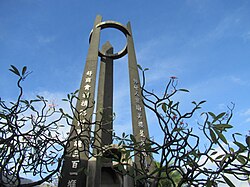
The Ruby Tower Memorial Hall is a two-story structure on the site, made from the portion of the building that remained standing, where the victims are remembered. Built in 1974, the shrine includes 100 black and white photographs of people killed in the collapse.[3]

See also

[edit]

Notes

[edit]

References

[edit]
Revisions and contributorsEdit on WikipediaRead on Wikipedia
from Grokipedia
The Ruby Tower was a six-story building in , , , completed around 1965 and housing 38 commercial units on the lower floors along with 76 residential apartments above. On August 2, 1968, at 4:19 a.m., it collapsed instantaneously during the magnitude 7.3 Casiguran earthquake, whose epicenter lay approximately 230 kilometers northeast of . The failure trapped occupants under debris, resulting in 268 deaths and 261 injuries—accounting for nearly all casualties from the earthquake within itself. assessments attributed the total structural primarily to substandard practices, including low-strength , inadequate , and absence of seismic provisions, exacerbated by the building's on deep alluvial deposits near the prone to under severe shaking. This made Ruby Tower the only multi-story edifice in to fully despite the local intensity registering as VII on the Rossi-Forel scale, with surrounding structures experiencing only partial damage. The disaster spurred investigations, including a 1969 UNESCO report, that exposed deficiencies in pre-existing building regulations and prompted enactment of the National Building Code of the Philippines in 1972, mandating improved seismic standards to mitigate future risks in a seismically active archipelago. The site's enduring legacy includes a memorial commemorating the victims, underscoring ongoing vulnerabilities in urban development on unstable soils amid lax enforcement.

Construction and Design Flaws

Site Selection and Geological Context

The Ruby Tower was sited at the intersection of Doroteo Jose and Teodora Alonso Streets in Manila's , a densely populated adjacent to the Pasig River's estuarine zone. This location was selected amid post-World War II urban expansion, prioritizing proximity to commercial hubs like and Escolta for residential-commercial development, though no public records detail formal geotechnical evaluations prior to around 1965. Geologically, the Santa Cruz area lies within Manila's , comprising alluvial and deltaic deposits from the and , characterized by loose sands, soft clays, and compressible silts with a high typically within 2-5 meters of the surface. These unconsolidated sediments, underlain by Pleistocene volcanic and tuffaceous sands, amplify ground motions during distant seismic events due to low shear wave velocities (often below 200 m/s in upper layers), increasing peak accelerations by factors of 1.5-2.0 compared to sites. The site's soft soil profile heightened vulnerability to dynamic settlement and under cyclic loading, as evidenced by widespread structural damage in similar Pasig River delta settings during the event, despite the epicenter being approximately 230 km northeast. Manila's broader tectonic context, astride the Philippine Fault system and convergent margins, underscores the inherent , with historical intensities reaching VIII-IX on the Modified Mercalli scale in sedimentary zones even from offshore or inland quakes. Pre-1968 building practices often overlooked such site-specific amplification, contributing to disproportionate failure in alluvial terrains over firmer volcanic substrates elsewhere in .

Architectural and Engineering Specifications

The Ruby Tower was a six-story building constructed in 1965, measuring approximately 45 meters by 30 meters in plan dimensions and 20 meters (67 feet) in height. It employed a slab-and-beam structural system supported by columns, with long columns along the front rows and a rear wall designated to provide primary resistance to shear and torsional forces. The lower two floors accommodated 38 commercial units, while the upper four floors housed 76 residential apartments, supporting a capacity of 600 to 1,000 occupants. Engineering specifications included peripheral foundations without tie beams, subjecting ground-floor columns to moments from torsion and eccentricity, and the use of low-strength typical of designs adhering to non-seismic area standards prevalent at the time. The structure was built at a of approximately $250,000 (equivalent to P1.5 million), reflecting mid-1960s construction practices in Manila's Santa Cruz district without mandatory seismic reinforcements.

Materials and Construction Practices

The Ruby Tower, a six-story structure completed circa 1965 in Manila's , employed substandard materials that undermined its seismic resilience. Investigations post-collapse revealed the use of low-quality reinforcing bars, which failed to provide adequate tensile strength and under . These bars, often sourced cheaply without rigorous quality testing, exhibited brittle failure characteristics rather than the plastic deformation required for earthquake resistance. Similarly, the concrete mix incorporated inferior aggregates and insufficient cement content, resulting in low —estimated below the then-emerging standards of 2,000-3,000 psi for high-rise frames—and poor bond with reinforcements. Construction practices deviated from even rudimentary engineering norms prevalent in the mid-1960s , where national building codes were nascent and enforcement lax. Workers applied inadequate concrete compaction and curing, leading to voids and within columns and beams that reduced effective load-bearing capacity. The foundation, poured on reclaimed soil without deep pilings or geotechnical stabilization, relied on shallow footings ill-suited to the site's soft alluvial deposits, exacerbating differential settlement risks. Oversight was minimal; the project, developed by private interests amid rapid , bypassed comprehensive structural audits, with removal occurring prematurely and joints left unsealed against moisture ingress, which accelerated of exposed rebars over time. These lapses reflected broader systemic issues in pre-1968 Philippine construction, including reliance on imported, unregulated materials and unskilled labor without seismic detailing protocols like ductile detailing or integration. Post-event analyses by engineers attributed the pancake-style failure primarily to these material deficiencies and workmanship errors, rather than solely the earthquake's intensity, as comparable structures elsewhere endured the same event. The incident prompted the National Building Code of 1977, mandating higher-grade reinforcements (e.g., Grade 40-60 steel) and protocols, highlighting how prior practices prioritized cost over durability in a .

The Casiguran Earthquake

Seismic Event Details

The Casiguran earthquake struck on August 2, 1968, at 4:19 a.m. Philippine Standard Time (20:19 UTC on August 1), with its epicenter offshore approximately 16.3° N, 122.11° E, about 100 kilometers east of Casiguran in Aurora Province, eastern Luzon. The event originated from thrust faulting along the eastern margin of the Philippine fault system, associated with the subduction of the Philippine Sea Plate beneath the Philippine Mobile Belt, at a shallow focal depth of approximately 31 kilometers. Seismological records from the International Seismological Centre assigned it a surface-wave magnitude (Ms) of 7.3 and a body-wave magnitude (Mb) of 5.9, while later analyses estimated a moment magnitude (Mw) around 7.6 based on waveform modeling. The earthquake generated intense ground shaking, reaching intensity VIII on the Rossi-Forel scale (comparable to IX on the ) in the epicentral region of Casiguran, where it triggered widespread ground ruptures, landslides, and minor fault displacements up to several meters in left-lateral strike-slip motion. It also produced a small with wave heights up to 1.8 meters along the eastern coast, as recorded by tide gauges and eyewitness reports of inundation in coastal areas. The mainshock was followed by numerous aftershocks, including several with magnitudes exceeding 6.0 over the subsequent days, which prolonged seismic activity in the region. Despite the epicenter's distance of over 200 kilometers from , the quake's long-period waves amplified shaking in sedimentary basins, contributing to structural failures far inland.

Regional Impacts Beyond Ruby Tower

The 1968 Casiguran earthquake generated extensive ground deformation in its epicentral region near Casiguran, Aurora, including fissures measuring 10 to 500 meters in length and 0.3 to 1 meter in width, some ejecting water, sand, and mud, with loose ground settling up to 1-2 meters. Landslides and mudflows occurred on steep slopes north and west of Casiguran, with the largest at Dinajawan Point facing Casiguran Bay; additional avalanches affected areas along Casiguran Sound and the Jagdauan River valley, while mudflows blocked rivers such as the Manglad and dried up channels like the Casiguran-Casalogan and upper Manglad River beds. Infrastructure in the epicenter sustained moderate damage, including shifts in bridges near Casiguran and Baler, alongside harm to wooden and concrete structures; a landslide at the Manglad River formed a temporary hill of unconsolidated sediments. In , beyond the Ruby Tower, at least 10 six- to eight-story private buildings suffered severe structural damage, with widespread non-structural impacts across the city; specific structures affected included the Philippine Bar Association Building, Aloha Theater, Tuason Building, Trinity Building, and . A fire ignited in the Manila harbor area by the shaking caused approximately $7.5 million in damage. One occurred in the Santa Ana district from debris at a tenement house. Broader effects across Luzon included intensity VIII shaking at the epicenter, dropping to VII in Manila and Palanan, VI in areas like Baler, Quezon City, Tuguegarao, and Baguio, and lower intensities farther south and north; ground acceleration in Quezon City reached an estimated 50 gal. A small, non-destructive tsunami propagated from the event, recorded at tide gauges as far as Japan. Casualties outside Manila and the Ruby Tower totaled two deaths—one in Aurora province and one in Guagua, Pampanga—with overall property losses estimated at $5-8 million. The earthquake's effects were perceptible over a radius exceeding 600 kilometers.

Collapse Mechanics

Moment of Failure

The Ruby Tower experienced at 04:19 on August 2, 1968, coinciding with the arrival of peak ground accelerations from the magnitude 7.3 Casiguran earthquake in . The six-story structure, occupied primarily by sleeping residents, collapsed in seconds, exhibiting a progressive pancaking mechanism where upper floors sequentially sheared and dropped onto those below, compressing the entire edifice into a rubble heap approximately 10 meters high. Eyewitness accounts described the event as the building being abruptly "pressed down by a large invisible hand," with the south facade disintegrating first amid violent shaking that lasted about 44 seconds in the region. Unlike adjacent structures that sustained only minor damage, Ruby Tower's failure initiated at the base, where inadequate foundation support and slender, under-reinforced columns—particularly the elongated front-row elements—buckled under lateral seismic shear forces exceeding their brittle capacity. This vulnerability stemmed from substandard mixes lacking sufficient and omitted geological assessments of the reclaimed site, amplifying dynamic amplification effects. The instantaneous nature of the precluded evacuation, trapping over 500 occupants and resulting in 268 fatalities, underscoring the peril of unengineered high-rises in seismic zones without ductile detailing or code-mandated . Forensic reviews confirmed no of partial spaces, as the vertical load redistribution overwhelmed remaining supports in a .

Structural Failure Analysis

The Ruby Tower employed a slab-and-beam system supported by columns, with a rear intended to resist torsional forces. During the August 2, (magnitude 7.3), the structure experienced severe torsion and eccentricity, leading to of the long, unsupported columns, particularly those on the ground floor. These columns lacked tie beams connecting to peripheral foundations, which exacerbated instability under lateral seismic loads and prevented effective load redistribution. The building's rigid frame design failed to accommodate the earthquake's dynamic forces, resulting in a where upper floors pancaked southward, with the roof displacing approximately 9 meters south and 10 meters laterally. Inadequate in beams and substandard quality contributed to brittle modes rather than energy dissipation through deformation. Foundations were compromised by the absence of geotechnical studies on the site's alluvial soils overlying volcanic and organic layers, amplifying amplification of ground motions and differential settlement. Post-event forensic reviews identified primary deficiencies in column reinforcement and integration, which were insufficient to counter the earthquake's VIII Rossi-Forel intensity in . The lack of enforced building codes prior to permitted these shortcuts, as the structure—completed around 1965—deviated from emerging seismic principles like ductile detailing and base isolation. Surrounding buildings in survived with minimal damage, underscoring the Ruby Tower's idiosyncratic vulnerabilities rather than uniform regional shaking. This isolated total failure highlighted causal links between non-ductile materials, eccentric loading paths, and unmitigated under far-field seismic waves.

Immediate Aftermath and Rescue Operations

On-Site Response

Rescue operations at the Ruby Tower site in , began shortly after dawn on August 2, 1968, immediately following the building's pancaking collapse during the magnitude 7.3 Casiguran earthquake. Gaudencio Tobias, Vice Chief of Staff of the Armed Forces of the , directed the on-site efforts, which mobilized approximately 6,000 personnel including units, civilian volunteers, and medical teams. With an estimated 600 to 800 occupants initially trapped in the rubble, rescuers established a at the adjacent Arellano High to coordinate , victim support, and extrication logistics. Operations relied heavily on manual labor using jackhammers, drills, and hand tools, as heavy machinery was restricted to accessing only one side of the debris pile due to narrow surrounding streets and adjacent buildings. Efforts were guided by audible cries from survivors amid the twisted concrete and steel. The response faced significant obstacles, including the instability of the mass posing risks of secondary collapses, limited efficacy in the confined urban setting, and deteriorating conditions as aftershocks persisted. By the third day, recoveries increasingly yielded deceased victims rather than living ones, with the extraction process hampered by the building's soft subsoil foundation exacerbating the compacted debris. Round-the-clock media coverage by aided public awareness and volunteer mobilization but also highlighted coordination gaps in the absence of a dedicated national disaster agency at the time. Notable successes included the rescue of individuals like Suzie and Nancy Wong Chan, who survived over 120 hours entrapped before extraction. Operations concluded on August 9, 1968, after seven days, transitioning to body recovery as no further signs of life were detected. President had declared a state of national emergency earlier in response, enabling resource allocation but underscoring the nature of the era's disaster management. The on-site response ultimately extricated 261 injured survivors, though most fatalities—over 260—occurred at the Ruby Tower site.

Volunteer and Official Efforts

Following the collapse of Ruby Tower on August 2, 1968, President declared a state of national emergency to mobilize resources for rescue operations, with estimates indicating 600 to 800 occupants initially trapped in the rubble. Official efforts were hampered by the absence of a dedicated national disaster agency, leading to uncoordinated responses that delayed effective intervention and contributed to higher casualties. Rescue operations drew thousands of volunteers, including local civilians, personnel, constabulary forces, firemen, and Boy Scouts, who participated in manual digging through the debris over several days. Approximately 6,000 volunteers assisted in the search and recovery, pulling 260 survivors from the wreckage while confirming 268 deaths, with some victims remaining unidentified. Efforts persisted into subsequent days, with workers continuing to sift through the site for bodies, relying on rudimentary tools amid the chaotic urban environment of .

Human Toll and Survivor Experiences

Casualty Statistics

The collapse of Ruby Tower on August 2, 1968, during the Casiguran earthquake resulted in 268 fatalities and 260 injuries, representing the overwhelming majority of the event's overall toll. These figures stem from the pancaking failure of the six-story structure in Manila's Santa Cruz district, where most occupants were buried under debris in the early morning hours. Official records from the Philippine Institute of Volcanology and Seismology (PHIVOLCS) report a total of 270 deaths and 261 injuries across the earthquake's impacts, with the Ruby Tower accounting for 268 of the fatalities and 260 of the injuries, underscoring the building's disproportionate contribution to the human cost despite the quake's epicenter being approximately 230 kilometers northeast in . Rescue operations recovered bodies over several days, with some victims succumbing to injuries post-extraction, though exact breakdowns by cause (e.g., crush asphyxia versus trauma) remain undocumented in primary sources. Demographic details are sparse, but accounts indicate a mix of residents, including families and possibly commercial occupants, with children and elderly comprising a significant portion due to the residential nature of the tower. No comprehensive survivor demographics or long-term morbidity data (e.g., from or chronic injuries) were systematically compiled at the time, reflecting limitations in 1960s disaster reporting in the .

Personal Accounts and Trauma

Survivors of the Ruby Tower collapse endured extreme physical and emotional ordeals during entrapment in the rubble. Nine-year-old Suzie Wong Chan and her cousin Nancy Wong Chan, aged 13, were rescued after more than 120 hours buried under , marking one of the longest survivals in the disaster; upon extraction on August 7, 1968, Suzie pleaded with doctors in multiple languages not to let her die, reflecting acute fear and disorientation. Other accounts highlight miraculous child survivals amid devastation. Rescue workers, moved to tears, extracted three who had huddled together in a void space, while additional children were found shielded by the bodies of their parents, underscoring the protective instincts that enabled some escapes from pancaked floors. Eyewitness George You, 28, described the building's failure at 4:19 a.m. on August 2, 1968, as resembling a "big hand" pressing it downward, a visceral image shared by those witnessing the sudden implosion that trapped hundreds. The collapse inflicted significant on survivors, bereaved families, and the broader community, compounding with survivor's guilt and of aftershocks in a seismically vulnerable region. Personal losses, such as those recounted by descendants mourning entire family units like the Chans—parents Leon and Rosa, brother , and grandparents—illustrate enduring familial devastation that persisted beyond immediate efforts. University of Santo Tomas pharmacy student Belen Prieto, among the injured survivors, later symbolized resilience through her recovery, though detailed testimonies of her entrapment remain limited. These experiences fueled long-term communal remembrance, with survivors annually offering prayers at the site, evidencing unresolved emotional scars from the event's selective lethality—268 deaths amid 260 injuries in a building housing up to 1,000.

Investigations into Causation

Engineering and Forensic Probes

Following the August 2, of magnitude 7.3, engineering teams, including those from Philippine government agencies and academic institutions, conducted post-collapse structural assessments of the Ruby Tower debris to identify failure mechanisms. Analysis revealed that the frame, designed as a slab-and-beam system supported by columns with a rear , experienced in the long front columns at the ground level under seismic-induced lateral forces. This initiated a , with upper floors pancaking southward and the roof displacing approximately 9 meters south and 10 meters laterally, consistent with soft-story failure exacerbated by inadequate in the base structure. Forensic examination of recovered materials highlighted deficiencies in quality, including the use of substandard bars that failed to provide sufficient tensile strength and bond with the under cyclic loading. columns were subjected to amplified moments from torsional eccentricity, attributed to peripheral pile foundations lacking interconnecting tie beams, which allowed differential settlement and uneven load distribution during shaking. tests post-event indicated the site's soft alluvial deposits in Santa Cruz amplified ground motions, but probes emphasized that adjacent buildings of similar height survived due to superior detailing, underscoring construction-specific flaws over solely seismic intensity ( Intensity VIII on the Rossi-Forel scale in ). These probes, drawing on debris mapping, material testing, and dynamic simulations, concluded that the absence of enforced seismic design provisions—Philippine building codes at the time predated modern —compounded inherent defects like insufficient shear capacity in non-ductile elements and poor workmanship in beam-column joints. No evidence of or unforeseen geological anomalies emerged; instead, reports attributed the total failure to negligent material substitution and foundation execution, prompting recommendations for mandatory in reinforcements.

Primary Causal Factors

The primary causal factors in the Ruby Tower collapse stemmed from systemic deficiencies in design, materials, and practices, rendering the structure catastrophically vulnerable to the seismic forces of the August 2, 1968, (Ms 7.3). Post-collapse forensic examinations identified the use of substandard of inferior quality and substandard reinforcement bars, which lacked sufficient tensile strength and to resist , resulting in brittle shear failures across columns and beams. The building's rigid frame design, characterized by undersized structural elements and inadequate moment-resisting connections, failed to incorporate energy-dissipating mechanisms essential for resistance, leading to progressive floor pancaking within seconds of ground acceleration peaking at Intensity VII in . This design shortfall was exacerbated by the absence of geotechnical investigations, which overlooked potential or settlement risks in the alluvial deposits of the district, where the tower was erected circa 1965. At the time of construction, the lacked comprehensive national seismic building codes, permitting builders like Solid Tower Inc. to bypass rigorous quality controls and employ cost-saving shortcuts without regulatory oversight. Investigations highlighted poor workmanship, including improper mixing and placement, as direct contributors to the uniform failure mode observed in the debris. The builder's subsequent out-of-court settlement with survivors effectively curtailed formal inquiries into potential or , though engineering consensus attributes the disproportionate toll—268 fatalities from this single structure amid minimal wider damage—to these anthropogenic vulnerabilities rather than the quake's intensity alone.

Accountability and Reforms

Following the August 2, 1968, collapse of Ruby Tower during the Casiguran earthquake, multiple civil and criminal lawsuits were filed against Solid Tower, Inc., the primary construction firm responsible for the building's erection. Plaintiffs, including survivors and families of the deceased, alleged in design and construction practices, including the use of substandard materials and deviation from approved plans by an inexperienced contracted by the firm. One prominent case advanced to the , which reviewed evidence of construction deficiencies such as inadequate and poor soil foundation assessment, ultimately attributing partial causation to the builders' failures beyond mere seismic forces. The Court established for constructor liability in seismic events, holding that foreseeable risks in the imposed a heightened , though it noted the absence of comprehensive national building codes at the time exacerbated enforcement challenges. Despite these findings, Solid Tower, Inc., opted for an out-of-court settlement to resolve claims, transferring ownership of the collapse site land in , to victims' representatives as compensation rather than monetary damages. This resolution averted prolonged trials but drew criticism for potentially shielding higher-level officials and inspectors implicated in permitting irregularities, with investigations into broader stalling amid claims of systemic graft in pre-1968 approvals. No criminal convictions against company executives were reported, reflecting the era's limited mechanisms for construction oversight.

Regulatory and Code Changes

The collapse of Ruby Tower on August 2, 1968, exposed critical deficiencies in pre-existing local building regulations, which lacked mandatory aseismic design requirements for structures in seismic zones, prompting swift governmental action to institutionalize national standards. In response, President issued No. 151 on December 2, 1968, establishing the National Committee on Disaster Operations (NCDO), the precursor to the modern National Disaster Risk Reduction and Management Council, tasked with coordinating emergency responses and recommending preventive measures against future seismic hazards. This incident directly catalyzed the development of the ' first comprehensive national , Republic Act No. 6541, enacted on August 14, 1972, which mandated uniform standards for structural integrity, including earthquake-resistant provisions derived from analyses of the Ruby Tower failure, such as enhanced requirements and foundation reinforcements to mitigate soft amplification effects observed in . The law centralized oversight under the Department of Public Works and Highways, replacing fragmented municipal codes that had permitted non-seismic constructions like Ruby Tower, built circa 1965 without lateral load considerations. Under , RA 6541 was superseded and operationalized by Presidential Decree No. 1096 on February 19, 1977, formalizing the National Building Code of the (NBCP) with detailed seismic zoning maps, material specifications (e.g., minimum compressive strengths of 2,400 psi for multi-story buildings), and mandatory licensing for engineers to enforce compliance. These reforms incorporated empirical from the 1968 Casiguran earthquake's Intensity VII effects in , aiming to prevent pancake collapses by requiring ductile detailing in frames, though implementation challenges persisted due to limited resources. Subsequent minor amendments in the late refined wind and seismic load factors based on post-event forensic reviews, but the core framework established by these changes addressed the regulatory vacuum that contributed to the Ruby Tower's total failure, where inadequate column confinement led to progressive shear failure under a magnitude 7.3 event 230 km distant. Independent engineering assessments post-1968 emphasized that prior local ordinances, such as Manila's 1950 code, insufficiently accounted for risks in reclaimed areas like , influencing the NBCP's site-specific geotechnical mandates.

Long-Term Legacy

Influence on Philippine Seismic Standards

The collapse of the Ruby Tower on August 2, 1968, amid the magnitude 7.3 Casiguran earthquake, exposed critical gaps in Philippine practices, including the lack of enforced seismic requirements and reliance on standards suited for low-risk areas despite the archipelago's tectonic . Forensic analyses post-disaster attributed the pancaking failure to inadequate structural reinforcement, substandard quality, and on unstable reclaimed land susceptible to , with no national mandate for earthquake-resistant features at the time. This event directly spurred legislative action to formalize seismic safeguards, prompting the Marcos administration to draft a unified regulatory framework. The resulting National Building Code of the Philippines (NBCP), enacted via on February 19, 1977, marked the first comprehensive national standard incorporating seismic provisions, such as zoning the country into four earthquake intensity levels (with classified as Zone 4 for high risk) and requiring lateral force resistance calculations equivalent to at least 10-20% of building weight depending on occupancy and height. The NBCP's seismic chapter, influenced by the Uniform Building Code and tailored to local geology, emphasized ductile detailing in frames, foundation improvements against soil amplification, and mandatory geotechnical assessments—elements absent in pre- designs like Ruby Tower. Later iterations of the National Structural Code of the Philippines (NSCP), starting with the 1981 edition and updated periodically (e.g., 2010 and 2015 versions adopting ASCE 7 probabilistic methods), built on this foundation by increasing design spectral accelerations and introducing performance objectives for rare events, crediting the 1968 disaster as a foundational for risk-based . Despite persistent enforcement challenges, the Ruby Tower shifted from reactive local ordinances to proactive, evidence-driven seismic resilience.

Memorialization and Cultural Remembrance

The Ruby Tower Memorial, erected in 1974 within the Manila Chinese Cemetery, serves as the principal site commemorating the victims of the building's collapse. Dedicated specifically to the Chinese-Filipino fatalities—many of whom resided or worked in the Binondo district where the tower stood—the two-story structure features inscriptions in Chinese honoring the deceased. This memorial underscores the disproportionate impact on the Chinese community, as the tower housed middle-class families, businesses, and residents from that ethnic group. Annual remembrances occur at the site, with survivors and relatives offering prayers and candles to mark the August 2 anniversary of the . These observances reflect ongoing personal trauma and community solidarity, though the event has largely faded from broader national consciousness, described in contemporary accounts as an "oft-forgotten tragedy." Media coverage at the time, including radio broadcasts by figures like Johnny Midnight and reports in outlets such as Taliba and , captured the immediate horror and rescue efforts, preserving auditory and print records of the disaster. Culturally, the Ruby Tower collapse symbolizes vulnerabilities in urban construction and disaster preparedness in the , occasionally referenced in historical discussions of seismic events and ethnic minority experiences during crises. While no major films or novels directly center on the event, it appears in personal memoirs, online forums, and anniversary retrospectives, reinforcing its role as a rather than a pervasive element in popular media or education. The tragedy's remembrance remains niche, tied to survivor networks and academic analyses of Manila's .

References

Add your contribution
Related Hubs
User Avatar
No comments yet.