Hubbry Logo
Dehiscence (botany)Dehiscence (botany)Main
Open search
Dehiscence (botany)
Community hub
Dehiscence (botany)
logo
8 pages, 0 posts
0 subscribers
Be the first to start a discussion here.
Dehiscence (botany)
Dehiscence (botany)
from Wikipedia
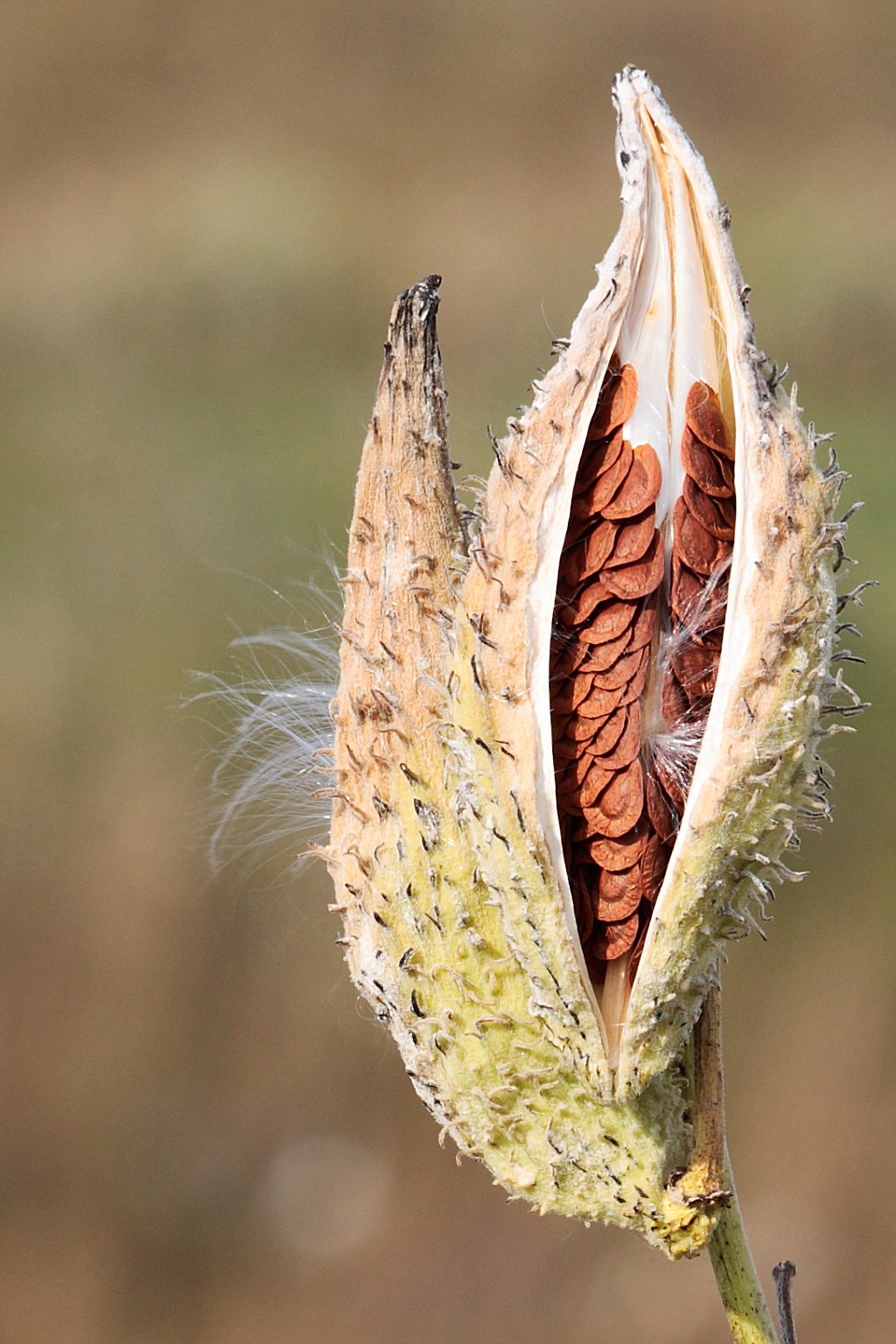
Dehiscence of the follicular fruit of milkweed (Asclepias syriaca) revealing seeds within

Dehiscence is the splitting of a mature plant structure along a built-in line of weakness to release its contents. This is common among fruits, anthers and sporangia. Sometimes this involves the complete detachment of a part. Structures that open in this way are said to be dehiscent. Structures that do not open in this way are called indehiscent, and rely on other mechanisms such as decay, digestion by herbivores, or predation to release the contents.

A similar process to dehiscence occurs in some flower buds (e.g., Platycodon, Fuchsia), but this is rarely referred to as dehiscence unless circumscissile dehiscence is involved; anthesis is the usual term for the opening of flowers. Dehiscence may or may not involve the loss of a structure through the process of abscission. The lost structures are said to be caducous.

Association with crop breeding

[edit]

Manipulation of dehiscence can improve crop yield since a trait that causes seed dispersal is a disadvantage for farmers, whose goal is to collect the seed. Many agronomically important plants have been bred for reduced shattering.

Mechanisms

[edit]

Explosive dehiscence

[edit]

Explosive dehiscence is a ballistic form of dispersal that flings seeds or spores far from the parent plant. This rapid plant movement can achieve limited dispersal without the assistance of animals. A notable example is the sandbox tree (Hura crepitans), which can fling seeds 100 meters (300 ft) and has been called the "boomer plant" due to the loud sound it generates. Another example is Impatiens, whose explosive dehiscence is triggered by being touched, leading it to be called the "touch-me-not". Ecballium elaterium, the "squirting cucumber", uses explosive dehiscence to disperse its seeds, ejecting them from matured fruit in a stream of mucilaginous liquid. Explosive dehiscence of sporangia is a characteristic of Sphagnum.[1]

Septicidal and loculicidal dehiscence

[edit]

In loculicidal dehiscence, the locule wall splits between the septa, leaving the latter intact, while in septicidal dehiscence the split is at the septum that separates the loculi. Septicidal and loculicidal dehiscence may not be completely distinct; in some cases both the septa and the walls of the locules split.

Types

[edit]

Dehiscence occurs through breakage of various parts of the enclosing structure; the mechanisms can be classified in various ways, but intermediate forms also occur.

Poricidal dehiscence

[edit]

Dehiscence through a small hole (pore) is referred to as poricidal dehiscence. The pore may have a cover (operculate poricidal dehiscence or operculate dehiscence) that is referred to as an operculum or it may not (inoperculate poricidal dehiscence or inoperculate dehiscence).

Poricidal dehiscence occurs in many unrelated organisms, in fruit, causing the release of seeds, and also in the sporangia of many organisms (flowering plants, ferns, fungi, slime molds). Poricidal anthers of various flowers are associated with buzz pollination by insects.

Circumscissile dehiscence

[edit]

Circumscissile dehiscence involves a horizontal opening that causes a lid to separate completely. This type of dehiscence occurs in some fruit and anthers[2] and also in some flower buds.

Anther dehiscence

[edit]

Anther dehiscence is the final function of the anther that causes the release of pollen grains. This process is coordinated precisely with pollen differentiation, floral development, and flower opening.

The anther wall breaks at a specific site. Usually this site is observed as an indentation between the locules of each theca and runs the length of the anther, but in species with poricidal anther dehiscence it is instead a small pore. If the pollen is released from the anther through a split on the outer side (relative to the center of the flower), this is extrorse dehiscence, and if the pollen is released from the inner side, this is introrse dehiscence. If the pollen is released through a split that is positioned to the side, towards other anthers, rather than towards the inside or outside of the flower, this is latrorse dehiscence.

The stomium is the region of the anther where dehiscence occurs. The degeneration of the stomium and septum cells is part of a developmentally timed cell-death program. Expansion of the endothecial layer and subsequent drying are also required for dehiscence. The endothecium tissue is responsible for the tensions that lead to splitting of the anther. This tissue is usually one to several layers thick, with cells walls of uneven thickness due to uneven lignification. The cells lose water, and the uneven thickness causes the thinner walls of the cells to stretch to a greater extent. This creates a tension that eventually leads to the anther being split along its line of weakness and releasing pollen grains to the atmosphere.

Flower buds

[edit]

Flower buds of Eucalyptus and related genera open with circumscissile dehiscence. A small cap separates from the remainder of the bud along a circular horizontal zone.

Fruit dehiscence

[edit]

There are many different types of fruit dehiscence involving different types of structures. Some fruits are indehiscent, and do not open to disperse the seeds. Xerochasy is dehiscence that occurs upon drying, and hygrochasy is dehiscence that occurs upon wetting, the fruit being hygroscopic. Dehiscent fruits that are derived from one carpel are follicles or legumes, and those derived from multiple carpels are capsules or siliques.[3]

One example of a dehiscent fruit is the silique. This fruit develops from a gynoecium composed of two fused carpels,[3] which, upon fertilization, grow to become a silique that contains the developing seeds. After seed maturation, dehiscence takes place, and valves detach from the central septum, thus freeing the seeds. This is also known as shattering and can be important as a seed dispersal mechanism. This process is similar to anther dehiscence and the region that breaks (dehiscence zone) runs the entire length of the fruit between the valves (the outer walls of the ovary) and the replum (the persisting septa of the ovary). At maturity, the dehiscence zone is effectively a non-lignified layer between two regions of lignified cells in the valve and the replum. Shattering occurs due to the combination of cell wall loosening in the dehiscence zone and the tensions established by the differential hygro-responsive properties of the drying cells.[4]

Sporangium dehiscence in bryophytes

[edit]

Endothecium tissue found in moss capsules functions in a similar way in dehiscence to the endothecium in the walls of anthers (see above).

Sporangium dehiscence in ferns

[edit]

Many leptosporangiate ferns have an annulus around the sporangium, which ejects the spores. Eusporangiate ferns do not generally have specialized dehiscence mechanisms.

Sporangium dehiscence in fungi and myxomycetes

[edit]

See also

[edit]
  • Abscission—separation of structures that leads to their loss
  • Anthesis—the opening of flowers
  • Elaters—structures that form inside a sporangium and aid in spore dispersal of horsetails, liverworts, and hornworts
  • Loment—a type of fruit that breaks apart but is not dehiscent
  • Schizocarp—a type of fruit that breaks apart and may or may not be dehiscent.

References

[edit]

Bibliography

[edit]
[edit]
Revisions and contributorsEdit on WikipediaRead on Wikipedia
from Grokipedia
In , dehiscence refers to the spontaneous splitting or opening of a mature structure, such as a dry fruit, anther, or , to release its contents, including seeds, pollen grains, or spores, thereby facilitating and dispersal. This process is a key in many , including angiosperms, gymnosperms, ferns, bryophytes, and other groups, contrasting with indehiscence, where structures remain closed at maturity. Dehiscence in fruits, often termed pod shattering or fruit dehiscence, primarily serves . In anthers, it releases , and in sporangia, it aids dispersal.

Overview

Definition

In , dehiscence refers to the spontaneous splitting or bursting open of a mature structure along predetermined lines of weakness, allowing the release of its contents, such as seeds, , or s. This process is characteristic of structures like fruits (e.g., pods), anthers, and sporangia, where the opening occurs naturally without external damage. Unlike wound-induced splitting, dehiscence is a programmed developmental event that ensures the dispersal of reproductive elements. Key features of dehiscence include its timing at structural maturity and the presence of built-in weaknesses, such as suture lines or specialized tissues, that direct the splitting. This contrasts with indehiscence, where mature structures remain closed, retaining their contents rather than releasing them through opening. For instance, dehiscent dry fruits split to liberate seeds, while indehiscent ones, like achenes or nuts, do not. The term "dehiscence" derives from the Latin dehiscere, meaning "to gape" or "to split open," and entered botanical usage in the early via Modern Latin dehiscentia (first recorded in ) to describe the gaping of fruits or anthers for or discharge. Early descriptions in 19th-century botanical highlighted this phenomenon in the context of reproductive structures, distinguishing it as a maturational process. Dehiscence plays a crucial role in by facilitating the dissemination of seeds or gametes, though its detailed biological functions are explored elsewhere.

Biological Role

Dehiscence serves as a mechanism for the release of seeds, , and spores from mature structures across various groups, including angiosperms, gymnosperms, ferns, and some bryophytes, enabling subsequent dispersal by environmental factors or vectors. This process allows reproductive units to be freed from the parent , supporting and potential spread to new locations. The timing of dehiscence is frequently synchronized with environmental cues, such as periods of dryness, to optimize the release of seeds or under conditions that maximize dispersal efficiency and offspring survival. This coordination ensures that release occurs when abiotic or biotic vectors are most effective, minimizing exposure to unfavorable conditions like excessive moisture that could hinder transport or viability. Such adaptive timing contributes to the evolutionary success of dehiscent plants by aligning reproductive output with seasonal opportunities for establishment. Dehiscence contributes to plant fitness by facilitating the release of reproductive structures, which may then be dispersed through various means, such as carrying lightweight (anemochory), animals transporting (zoochory), or self-ejection via tension in some cases (autochory). These dispersal opportunities increase the chances of or spores reaching suitable sites for and establishment in diverse environments.

Mechanisms

Physical Mechanisms

Physical mechanisms of dehiscence in primarily involve non-biological forces such as hygroscopic responses and tensive pressures that drive the splitting of plant structures without relying on enzymatic degradation. These processes exploit changes in , cell wall properties, and internal stresses to facilitate the release of spores, , or along predetermined lines of weakness. Hygroscopic movement occurs through the swelling and shrinking of specialized lignified cells in response to fluctuations in environmental , leading to the mechanical opening of structures like sporangia. In leptosporangiate s, the annulus—a ring of epidermal cells surrounding the —features unevenly thickened cell walls that contract differentially upon . The thinner wall regions shrink more than the thicker ones, generating tangential tension that first pries open the stomium (dehiscence line) and then rapidly snaps the to spores. This hygroscopic mechanism ensures efficient dispersal in dry conditions, with the process reversible in moist environments to maintain integrity. Tensive forces arise from the buildup of due to uneven or growth differentials between tissue layers, culminating in rupture along sutures. As or pod walls desiccate, sclerenchymatous layers contract, creating torsional stresses that pull apart the structure at weakened zones. For instance, in pods, dehydration induces tension in the inner endocarp layers, which exceeds the binding strength at the dorsal and ventral sutures, causing the valves to twist open. Growth differentials, where outer layers expand more than inner ones during maturation, further amplify these stresses, promoting controlled splitting. Explosive dehiscence represents an extreme form of tensive force release, where stored in walls propels seeds over distances through rapid rupture. In the touch-me-not (Impatiens capensis), pod valves accumulate elastic strain energy (up to 124 J kg⁻¹) via hydration-dependent tension in the cell walls, which have an comparable to synthetic springs; upon trigger, the valves coil outward in milliseconds, launching seeds up to 2 meters. Similarly, in the squirting cucumber (Ecballium elaterium), from mucilaginous fluid buildup reaches 5-10 atm, driving ballistic ejection of seeds at velocities exceeding 10 m/s and distances up to 10 meters, with the physics governed by the of the wall and tension coefficients that dictate explosive force. These mechanisms often coordinate briefly with localized tissue weakening to initiate the physical burst.

Biochemical Mechanisms

Dehiscence in is facilitated by biochemical processes that weaken cell walls in specific zones, primarily through the action of hydrolytic enzymes. Polygalacturonases (PGs) and pectinases, including pectin methylesterases (PMEs), play crucial roles in degrading the pectin-rich , which cements adjacent cells together. PMEs first de-esterify homogalacturonan (HG), a major component, exposing it to by PGs, which cleave the HG backbone and dissolve the middle lamella in dehiscence zones. This enzymatic degradation creates non-adhesive separation layers, enabling cells to separate without mechanical rupture. For instance, in , mutations in PG-encoding genes like QRT2 and QRT3 impair pollen tetrad separation and dehiscence by reducing pectin breakdown. Hormonal signals tightly regulate these enzymatic activities, ensuring dehiscence occurs at the appropriate developmental stage. and (ABA) promote dehiscence by inducing expression of hydrolytic enzymes and activating cell separation programs. signaling upregulates PG and other cell wall-modifying genes in the dehiscence zone, while ABA enhances enzyme activity under stress conditions that favor dispersal. In contrast, gradients inhibit premature dehiscence by repressing enzyme synthesis and maintaining cell wall integrity through the stabilization of auxin response factors in non-dehiscent tissues. This antagonistic balance between and /ABA allows precise timing, as exogenous application delays dehiscence even in ethylene-insensitive mutants. At the genetic level, transcription factors orchestrate the differentiation of dehiscence zones where these biochemical events occur. In , the genes SHATTERPROOF1 (SHP1) and SHATTERPROOF2 (SHP2) are essential for specifying valve margin identity in fruits, redundantly controlling the expression of downstream genes involved in remodeling. SHP1/2 activate the formation of separation layers by repressing lignification in specific cells and promoting production, leading to indehiscent fruits in double mutants. These genes integrate hormonal inputs, responding to and ABA to fine-tune dehiscence timing. The biochemical processes target distinct cell types within the dehiscence zone: non-lignified separation layers and adjacent lignified bridge cells. Separation layers consist of cells with thin, pectin-rich walls that undergo autolysis via action, becoming gelatinous and easily separable. Lignified bridge cells, in contrast, provide structural resistance until hormonal triggers induce localized degradation, preventing premature splitting while allowing tension to build for dispersal. This cellular specialization ensures controlled dehiscence, with the non-lignified layers dissolving first to initiate separation along the lignified margins.

Structural Types

Longitudinal Dehiscence

Longitudinal dehiscence refers to the splitting of botanical structures, such as fruits or anthers, along their length, typically following predefined lines that facilitate controlled or release. This pattern is prevalent in many angiosperm families, where it allows for gradual exposure of contents rather than abrupt dispersal. Unlike circumferential openings, longitudinal splits occur parallel to the axis of the , often aligned with internal partitions or midlines. One common variant is loculicidal dehiscence, in which the fruit or anther wall splits longitudinally along the midline of each locule, leaving the intact and exposing or from the inner locule walls. This type is characteristic of capsules in the family, such as those of species, where the three-locular dehisces to release numerous small . In these structures, the split follows the dorsal suture of the locules, enabling or to aid dispersal while preserving the structural integrity of the partitions. Septicidal dehiscence, by contrast, involves longitudinal splitting directly along the septa that separate adjacent locules, effectively dividing the structure into separate compartments. This mode is observed in the dry capsules of , including fruits of species, where dehiscence along the thin partitions allows independent release from each locule. Such splitting promotes targeted liberation, often in synchrony with environmental cues like humidity changes. Poricidal dehiscence represents a specialized form of longitudinal opening, where release occurs through small pores at the tips of the locules rather than full slits, thereby restricting dispersal to precise amounts. This is typical in the anthers of , such as those in or flowers, where terminal pores facilitate by bees, minimizing loss. The controlled ensures efficient transfer during vibration-induced release. Anatomically, longitudinal dehiscence relies on the formation of sutures—predefined weak points in the wall composed of thin-walled cells that separate easily from surrounding lignified tissues during maturation. These separation layers, often one to several cells thick, undergo or enzymatic degradation to create clean splits, contrasting with the uniform transverse fractures seen in other dehiscence modes. In some cases, explosive variants of longitudinal dehiscence occur, where tension in the drying walls propels seeds outward upon suture rupture.

Transverse and Irregular Dehiscence

Transverse dehiscence, commonly termed circumscissile dehiscence, occurs when a plant structure splits horizontally across its circumference, detaching a lid-like operculum from the base to release contents. This pattern contrasts with longitudinal splits by encircling the organ at an equatorial plane, often in dry dehiscent fruits like capsules. A classic example is the pyxidium capsule in Plantago species, such as P. major and P. pusilla, where the upper portion separates cleanly upon maturity, exposing seeds attached to the lower receptacle. Structural adaptations facilitating circumscissile dehiscence include a predefined zone of weakness at the , characterized by thinner cell walls, reduced lignification, and an external groove formed through differential expansion and rupture of pericarp layers. In Plantago ovata, this zone is visible as a distinct equatorial band, enabling precise cap release without fragmenting the base. These features ensure controlled , often aided by wind or gravity once the lid pops off. Irregular dehiscence involves non-uniform, unpredictable tearing of the fruit wall absent fixed sutures, typically triggered by environmental pressures like hydration or internal buildup. This mode lacks the organized lines of circumscissile or longitudinal types, resulting in jagged openings that facilitate opportunistic seed escape. In berries of (water lilies), irregular pericarp rupture occurs peripherally due to hydrochasy—water uptake causing maceration and osmotic swelling—allowing seeds to disperse via water currents. Explosive dehiscence functions as an intensified irregular variant, featuring sudden, non-directional bursting that combines transverse splitting with forceful valve ejection. The sandbox tree () exemplifies this, with its woody capsules accumulating hydrostatic pressure in septate compartments until explosive rupture, propelling seeds up to 45 meters at angles of 20–48 degrees. Structural adaptations here encompass irregularly thickened endocarp cells and radial septa that separate prior to dehiscence, channeling pressure for violent, multidirectional release while incorporating transverse elements in the initial equatorial fracture. Hybrid forms occasionally blend these with longitudinal patterns, as seen in some euphorbiaceous capsules where initial transverse weakening transitions to irregular tearing.

Dehiscence in Angiosperms

Anther Dehiscence

Anther dehiscence in angiosperms is the process by which the pollen sacs, or e, within the anther open to release mature grains, facilitating . This typically occurs through longitudinal splits along the anther walls, though variations exist, and is driven by the contraction of fibrous layers in the endothecium, a specialized tissue beneath the . The endothecium develops secondary wall thickenings composed of lignified bands that shrink upon , generating tensile forces that rupture the stomium—the weak point at the site of dehiscence—and separate the theca lobes. Degeneration of the central between the thecae further aids in exposing the pollen, ensuring efficient release. The timing of anther dehiscence is precisely regulated to coincide with flower opening and activity, occurring shortly after maturation. Tapetum degeneration, a nutritive layer that supports microspore development, precedes this by providing essential nutrients and enzymes before its , allowing walls to mature. Biochemical regulation involves biosynthesis, mediated by enzymes such as encoded by the , which triggers endothecial differentiation and wall remodeling. Environmental factors like humidity also influence timing; high humidity delays dehiscence by postponing in the and endothecium via signaling, while lower humidity accelerates opening through rapid dehydration. Variations in dehiscence patterns adapt to specific strategies. Longitudinal dehiscence, the most common type, features latrorse splits (sideways opening) and can be oriented introrsely (inward toward the flower's center) or extorsely (outward), as seen in many dicots like Arabidopsis. Poricidal dehiscence, where exits through apical pores rather than full slits, occurs in families such as and , often combined with . In (grasses), dehiscence typically follows longitudinal slits, though the anthers are versatile and influenced by temperature, with warmer conditions hastening release to optimize wind . Incomplete dehiscence, often due to mutations in genes like MYB26 that regulate endothecial lignification, results in male sterility by trapping and preventing exposure to pollinators or dispersal vectors.

Fruit Dehiscence

Fruit dehiscence refers to the splitting open of mature dry fruits in angiosperms to facilitate , a process essential for in many species. This phenomenon is prevalent in dehiscent fruit types, where the pericarp ruptures along predetermined lines to expose seeds attached to the . Common examples include suture dehiscence in legume pods (), where the fruit splits along the dorsal and ventral sutures, and septicidal dehiscence in siliques of , such as , where the fruit separates into two valves. In , the pod walls peel away from the replum, a persistent central axis, revealing seeds borne on the inner . Similarly, in siliques, dehiscence occurs at specialized valve margins adjacent to the replum and dehiscence zones, which consist of separation layers that weaken to allow clean splitting without damaging the seeds. Variations in dehiscence patterns exist across angiosperm families, including poricidal dehiscence in capsules of poppies (), where seeds are released through apical pores, and poricidal dehiscence in capsules of henbane (: ), where small pores form at the apex for gradual seed escape. These structural differences adapt to specific dispersal strategies, such as or animal-mediated release. Environmental triggers, particularly dryness, play a key role by inducing hygroscopic shrinkage in the pericarp tissues, generating tension that propagates the split along the dehiscence zones. Genetic regulation of fruit dehiscence has been elucidated through models in Arabidopsis, where genes such as INDEHISCENT (IND) and SHATTERPROOF1/2 (SHP1/2) coordinate valve margin identity and separation layer formation to ensure precise pod opening.

Flower Bud Dehiscence

Hygroscopic movements of structures enclosing flower buds refer to the reversible bending or opening of protective bracts or scales that enclose developing flower buds, enabling their emergence while safeguarding sensitive tissues from desiccation, frost, or herbivores. This phenomenon is less common than dehiscence in reproductive structures like fruits or anthers, but it is essential for the timely exposure of flowers to pollinators. It is particularly noted in species with seasonal growth cycles, where protective coverings allow buds to overwinter or endure dry periods before opening in spring or wet seasons. The primary mechanism driving these movements is hygroscopic expansion, in which specialized cells in the bracts or scales respond to environmental by absorbing or losing , causing differential swelling or contraction that results in transverse or irregular opening. These hygroscopic movements often occur along lines of weakness, leading to tears or bending that expose the without damaging the emerging flower. For instance, in the daisy bracteatum, scarious involucral bracts surrounding the capitulum exhibit gradient-driven hygroscopic bending, closing protectively in low and opening to facilitate in moist conditions; this involves layered sclerenchyma and cells that generate the necessary force for movement. Similar physical forces, relying on anisotropic properties and status changes, parallel those observed in fruit dehiscence but are adapted for pre-reproductive protection. In monocotyledonous plants, such as members of the Eriocaulaceae family, involucral bracts around flower buds display pronounced hygroscopic responses, with inner cells swelling upon wetting to bend the bracts outward, revealing the in a manner akin to irregular opening. This adaptation is more prevalent in temperate and subtropical species, where it provides seasonal protection against fluctuating environmental conditions, ensuring flower development aligns with optimal windows. Although rarer overall, these mechanisms highlight the evolutionary versatility of hygroscopic processes in non-reproductive plant structures.

Dehiscence in Non-seed Plants

Sporangium Dehiscence in Bryophytes

In bryophytes, sporangium dehiscence refers to the mechanisms by which spores are released from the capsule of the sporophyte, facilitating dispersal in these non-vascular land . Bryophytes, encompassing mosses, liverworts, and hornworts, exhibit diverse dehiscence strategies adapted to their terrestrial habitats, often relying on hygroscopic movements triggered by environmental moisture changes. These mechanisms ensure efficient spore liberation without specialized vascular tissues, contrasting with more complex systems in vascular . In mosses (Bryophyta), dehiscence typically occurs through a specialized structure called the , a fringe of teeth surrounding the capsule mouth that opens upon operculum detachment. The peristome teeth are hygroscopic, bending inward when wet to retain and outward when dry to release them, thus regulating dispersal in response to humidity fluctuations. For example, in , a double peristome is present, with an outer exostome and inner endostome that interlock and move coordinately to control spore ejection, enhancing dispersal efficiency in variable microclimates. This operculate capsule type, where a lid (operculum) is shed to expose the peristome, represents an advanced adaptation in mosses for precise spore release. Liverworts (Marchantiophyta) display simpler, often non-operculate dehiscence, with capsules splitting longitudinally rather than via a lid-and-teeth system. In , the capsule wall dehisces along longitudinal lines from the apex to the middle, forming 2–4 valves that open to liberate and elaters—sterile, hygroscopic cells that twist and aid in spore scattering upon drying. This valvular mechanism lacks the complexity of peristomes but effectively disperses through passive splitting driven by capsule maturation and . Some liverwort capsules, such as those in certain Jungermanniales, may exhibit irregular or explosive opening, but the predominant type in complex thalloid forms like emphasizes longitudinal dehiscence for bulk release. Hornworts (Anthocerotophyta) feature elongate, horn-like sporangia that lack an operculum or , instead dehiscing through longitudinal splitting along predefined lines or by twisting open upon drying. This process releases spores and associated pseudoelaters—sterile, multicellular structures similar to elaters that aid in dispersal by hygroscopic twisting. Dehiscence is facilitated by stomata on the , which regulate internal drying to promote splitting and spore liberation, adapting to the continuous growth of the via a basal . Adaptations enhancing dehiscence include seta elongation in both mosses and liverworts, which elevates the capsule above the gametophyte for better exposure to air currents. In mosses like Polytrichum commune, auxin-mediated cell expansion in the seta rapidly lengthens it under favorable conditions, positioning spores for wind dispersal, while rain can also dislodge them. Liverwort setae are shorter but similarly aid in elevating capsules, with elaters promoting separation and transport of spores by wind or rain splash. These features optimize dispersal in moist, shaded environments typical of bryophytes. Evolutionarily, dehiscence reflects primitive transitions from algal ancestors, with non-operculate capsules considered basal, as seen in many liverworts where simple splitting predominates. Operculate types, prevalent in mosses, likely evolved once as a derived trait, providing finer control over release compared to the ancestral non-operculate condition involving direct wall rupture. This progression underscores the diversification of structures in early land plants, with operculate mechanisms enhancing in drier habitats.

Sporangium Dehiscence in Ferns

In ferns, spore dispersal occurs from clustered in sori on the undersides of fertile fronds, where dehiscence releases for wind-mediated . These sori often form discrete, indehiscent groups protected by an indusium in some , with individual sporangia opening via specialized or at the stomium. The primary mechanism is annulus-driven, involving a ring of thickened, lignified cells that contract upon to snap open the sporangium and eject explosively. The annulus consists of cells with uneven wall thickenings—thicker on inner and radial surfaces, thinner on outer walls—forming an elastic band that stores energy like a spring. In such as Dryopteris, which features a marginal annulus positioned along the side and interrupted by the stalk, dryness triggers water evaporation from the thin outer walls, generating tensile stress that initiates cleavage at the stomium and causes the annulus to evert and recoil. This rapid contraction flings s up to 1-2 cm away at speeds around 10 m/s, ensuring effective dispersal while synchronizing release with dry environmental conditions to prevent spore clumping in . Ferns exhibit variations in dehiscence based on sporangium type: eusporangiate forms have thick, multilayered walls developing from multiple initial cells, leading to gradual splitting without a specialized annulus and slower spore release driven by wall dehydration. In contrast, leptosporangiate sporangia, arising from a single initial cell with thin, single-layered walls, enable rapid, explosive opening via the annulus, producing fewer spores (typically 64 per sporangium) for more precise ejection. This leptosporangiate mechanism represents a specialized evolution from hygroscopic movements seen in bryophytes, enhancing dispersal efficiency in vascular plants.

Sporangium Dehiscence in Fungi and Myxomycetes

In fungi, particularly within the such as species, dehiscence typically occurs through the enzymatic dissolution or deliquescence of the sporangial wall, which becomes gelatinous and disintegrates to release non-motile sporangiospores passively. This process is facilitated by the , a dome-shaped structure that supports the initially papery wall; upon maturation and drying, the columella collapses, causing the wall to tear irregularly and expose the spores for dispersal by air currents or contact. Unlike active explosive mechanisms in some , this deliquescence in fungi relies on environmental changes and lacks specialized annulus structures, emphasizing passive liberation. Myxomycetes, or slime molds, exhibit sporangium dehiscence in their fruiting bodies derived from the , where the peridium (outer wall) splits along predefined lines such as a (a pore-like opening) or longitudinal slits to liberate spores. In genera like Physarum, deposits embedded in the peridium or capillitium play a key role by weakening specific areas, promoting clean splitting upon drying and aiding in the exposure of the spore mass without shattering. These deposits, often lime-like crystals, accumulate during sporulation and contribute to structural integrity until dehiscence, triggered by environmental cues like . The mechanisms of dehiscence in both fungi and myxomycetes are predominantly passive, driven by , splash, or hygroscopic movements analogous to those in some sporangia, though from residual moisture can occasionally assist in initial wall rupture. Spores released are non-motile, contrasting with flagellated zoospores in certain , and dispersal occurs over short to moderate distances, enhancing survival in moist microhabitats. This overlap in mycological and botanical contexts underscores the transitional nature of these organisms in traditional classifications.

Dehiscence in Gymnosperms

Pollen Sac Dehiscence

In gymnosperms, pollen sac dehiscence refers to the opening of microsporangia to release grains from male cones or strobili, facilitating wind-mediated . Unlike angiosperm anthers, gymnosperm microsporangia lack pollen tetrads at maturity, with grains shed as individual units adapted for aerial dispersal. This process is triggered primarily by environmental cues such as dryness and warmth, ensuring synchronized release during favorable conditions for dispersal. In , microsporangia are typically arranged on the abaxial surface of microsporophylls within male , and dehiscence occurs longitudinally along specialized lines of cells that separate upon drying. For example, in Pinus species, the microsporangia split abaxially via these longitudinal , often involving contraction of the fibrous wall layers that provide for the opening mechanism. canals within the microsporophyll tissues may contribute to the overall maturation, but the primary dehiscence relies on differential shrinkage of endothecial cells under desiccating conditions. This results in widening from the apical to basal end of the microsporangium, a process exhibiting diurnal periodicity influenced by temperature and humidity. The dehiscence process in is driven by , where moisture loss causes uneven contraction of the sporangial wall, leading to controlled splitting and shedding predominantly in spring when winds aid anemophily. grains, often saccate in for , are released en masse from the cones, with the timing optimized for capture by female structures via drops. Variations exist across groups; in cycads, microsporangia are multi-layered and elongate, often fused in clusters of up to eight per , opening via longitudinal dehiscence as the sacs dry and separate. Gnetophytes exhibit more derived traits, including poricidal dehiscence in some taxa like , where apical pores facilitate release. At the cellular level, the tapetum in microsporangia persists longer than in many angiosperms, remaining functional to nourish developing until near maturity and contributing to exine formation through prolonged secretory activity.

Cone and Seed Release

In gymnosperms, seed release from female often involves mechanisms analogous to dehiscence, where scales or bracts separate or gape to expose winged or unwinged for dispersal, though true splitting along predefined lines of weakness is rare compared to angiosperm fruits. These processes are typically driven by environmental cues such as drying or , facilitating wind-mediated dispersal in many species. Unlike the suture-based dehiscence in angiosperm fruits, cone opening relies on structural changes in the cone scales, which may involve hygroscopic movements or thermal disruption of resins. Serotinous cones, common in fire-adapted like those in Pinus, retain seeds for years until triggered by high temperatures, promoting post-fire regeneration. In Pinus banksiana (), the cone scales are sealed by that melts at 45–50°C during wildfires, breaking the bonds irregularly and allowing scales to open without uniform splitting. This irregular separation releases viable seeds en masse, enhancing survival in disturbed habitats. Similar serotinous behavior occurs in other Pinus species, where heat disrupts the adhesive, mimicking dehiscence by exposing seeds only under specific conditions. In non-serotinous s, cone drying induces scale gaping through hygroscopic swelling and contraction of bracts and scales, creating spaces for seed release without true dehiscence. For instance, in species such as A. araucana (monkey puzzle tree), mature cones disintegrate as they dry, with scales loosening and separating transversely, freeing large, wingless seeds that fall and are often dispersed by animals. This process involves differential shrinkage in the lignified tissues of the scales, analogous to the hygroscopic bending in pine cones where the inner sclerenchyma contracts more than the outer layers upon , causing the scales to flex outward. In (white fir), hygroscopic movements lead to the shedding of entire seed-scale complexes, further illustrating how moisture gradients drive analogous opening in gymnosperm cones. Cycads, another group, exhibit seed release through mechanisms analogous to dehiscence, where megasporophylls loosen, elongate, or detach from the axis, or the disintegrates upon maturation, exposing the for dispersal. While some cycads may exhibit more structured splitting, this is not characteristic of most modern species, where the structures are fleshy and non-splitting. These mechanisms highlight evolutionary adaptations for in gymnosperms, distinct yet parallel to the more precise dehiscence seen in angiosperm fruits.

Evolutionary and Ecological Aspects

Evolutionary Origins and Transitions

Dehiscence mechanisms originated in the earliest land plants, primarily as an for spore dispersal in bryophytes and ferns. In bryophytes, such as liverworts and mosses, sporangia typically dehisce longitudinally or via an operculum to release , representing a primitive trait essential for in the absence of vascular tissues. This dehiscence is conserved across early tracheophytes, including ferns, where sporangia feature an annulus—a ring of thickened cells that contracts upon drying to split the and eject . Fossil evidence from the period, dating back approximately 400 million years, reveals early sporangia in zosterophyllopsids like Zosterophyllum with bivalved structures and dehiscence margins, indicating that annulus-like mechanisms were already present in primitive vascular plants. In s, dehiscence remains a conserved feature for , facilitating release from microsporangia and from cones. Pollen sacs in gymnosperms dehisce through longitudinal slits or transverse splits upon maturation, a mechanism analogous to that in ferns but adapted for wind-pollinated systems. Similarly, many gymnosperm cones open via hygroscopic movements or enzymatic degradation, releasing winged seeds, which underscores the retention of dehiscent strategies from ancestral lineages despite the of seeds. Transitions from dehiscent to indehiscent fruits occurred multiple times independently in angiosperms, often driven by selective pressures favoring alternative dispersal modes or human intervention. During the radiation of angiosperms, fruit types diversified, with indehiscence evolving in lineages where fleshy or adherent structures enhanced animal-mediated dispersal over explosive release. A well-documented example is in the family, where indehiscent fruits arose from dehiscent ancestors through regulatory changes in genes like SHATTERPROOF (SHP), which control valve margin identity; loss or altered expression of SHP homologs prevents pod splitting, as seen in species of Lepidium. promoted dehiscence for efficient ballistic or wind dispersal in wild populations, while human agriculture favored indehiscence to reduce seed shattering during harvest, accelerating this transition in domesticated crops like beans and cereals.

Ecological Significance

Dehiscence plays a crucial role in dynamics within ecosystems, facilitating the spread of plant offspring beyond the parent and thereby enhancing through reduced and increased . Explosive dehiscence, in particular, enables long-distance dispersal, with propelled at high velocities to distances that can exceed typical gravity-limited ranges; for instance, in the Tetraberlinia moreliana, have been observed to travel up to 60 meters from the parent tree in settings. This mechanism promotes colonization of new areas, supporting species diversity in heterogeneous landscapes. Dehiscence also mediates biotic and abiotic interactions that amplify dispersal efficiency. The splitting of fruits exposes or scatters seeds, often attracting animals through visual cues such as the sudden opening of pods or the visibility of nutrient-rich seeds, leading to secondary dispersal via ingestion or transport; in dehiscent species like those in the , this exposure facilitates epizoochory or endozoochory. Explosive forms may produce audible popping sounds during rupture, potentially drawing nearby vertebrates to the site for further scattering, though this remains context-dependent on habitat acoustics. In open habitats, dehiscence enhances wind-mediated dispersal (anemochory) by releasing lightweight seeds or spores into air currents, optimizing transport in grasslands or savannas where vegetative cover is sparse. Adaptations involving dehiscence contribute to , particularly in extreme environments. In arid , dehydration acts as a trigger for fruit dehiscence, synchronizing seed release with dry periods to ensure dispersal before potential mortality; this is evident in desert legumes where pod drying induces explosive splitting, allowing seeds to exploit brief moist windows for . Similarly, serotinous cones in gymnosperms like certain pines retain seeds until fire cues melt resins, enabling mass release onto nutrient-enriched post-fire and promoting regeneration in fire-prone ecosystems. These responses buffer against environmental stressors, maintaining population viability. From a conservation perspective, diminishes the ecological benefits of dehiscence by confining dispersal to isolated patches, thereby reducing overall success and genetic connectivity; studies show that fragmented landscapes limit ballistic and wind-assisted ranges, increasing risks for dehiscent . This underscores the need for corridor restoration to sustain dehiscence-driven dynamics in altered ecosystems.

References

Add your contribution
Related Hubs
User Avatar
No comments yet.