Hubbry Logo
Snakelocks anemoneSnakelocks anemoneMain
Open search
Snakelocks anemone
Community hub
Snakelocks anemone
logo
8 pages, 0 posts
0 subscribers
Be the first to start a discussion here.
Snakelocks anemone
Snakelocks anemone
from Wikipedia

Snakelocks anemone
In Arrábida Natural Park, Portugal
Scientific classification Edit this classification
Kingdom: Animalia
Phylum: Cnidaria
Subphylum: Anthozoa
Class: Hexacorallia
Order: Actiniaria
Family: Actiniidae
Genus: Anemonia
Species:
A. viridis
Binomial name
Anemonia viridis
Forskål, 1775
Synonyms[1]
  • Actinia viridis Gmelin
  • Anemonia sulcata viridis Andres, 1881
  • Priapus viridis Forsskål, 1775

The snakelocks anemone (Anemonia viridis) is a sea anemone found in the eastern Atlantic Ocean and the Mediterranean Sea. The latter population is however sometimes considered a separate species, the Mediterranean snakelocks anemone (A. sulcata).[2]

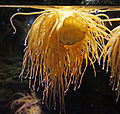
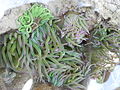
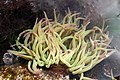
The tentacles are usually a deep green color with purple tips. The green color is often attributed to the presence of symbiotic algae within the tentacles but is the result of the presence of green fluorescent protein which is present in corals, sea anemones, and some other cnidarians. The anemone tissue contains a symbiotic algae called zooxanthellae, which is necessary for the long-term survival of the sea anemone. When the numbers of algae diminish the anemone may appear dull grey. The algae need light to flourish, so snakelock anemones will be found in the sunniest pools. On average the snakelocks anemone is 8 cm wide.

Reproduction

[edit]

Unlike other cnidarians, anemones (and other Anthozoa) entirely lack the free-swimming medusa stage of the life cycle; the polyp produces eggs and sperm, and the fertilized egg develops into a planula that develops directly into another polyp. [citation needed]

Ecology

[edit]

Several species of small animals regularly live in a symbiotic or commensal relationship with the snakelocks anemone, gaining protection from predators by residing among the venomous tentacles. These include the incognito (or anemone) goby (Gobius incognitus),[3] the shrimp Periclimenes aegylios and the Leach's spider crab (Inachus phalangium).[4]

Human uses

[edit]

This species is widely consumed in southwestern Spain, in the Gulf of Cádiz region, as ortiguillas de mar (literally, "little sea nettles", because it has urticant properties before it is cooked), or simply ortiguillas. The whole animal is marinated in vinegar, coated in a tempura-like batter, and deep-fried in olive oil.[5] Ortiguillas are offered in some coastal Andalusian restaurants as a delicacy. They are similar in appearance and texture to croquettes but have a strong seafood taste. This anemone is also consumed in Sardinia, where it is deep fried in olive oil and known as triads.

It is becoming a popular aquarium pet, especially in Europe, and readily adapts to aquaria.[when?][citation needed]

[edit]

References

[edit]
[edit]
Revisions and contributorsEdit on WikipediaRead on Wikipedia
from Grokipedia
The snakelocks anemone (Anemonia viridis), also known as the Mediterranean snakelocks anemone, is a large, radially symmetrical belonging to the Actiniidae, characterized by its prominent oral disc and up to 200 long, slender, snake-like tentacles that rarely retract and often bear purple tips. These tentacles, which can span up to 18 cm across, are equipped with venomous cnidocysts for capturing prey and are typically bright green due to symbiotic algae () of the Symbiodiniaceae, though color morphs range from grey-brown to reddish based on fluorescent proteins and environmental factors. The anemone's pedal disc attaches firmly to substrates, with the column reaching up to 8 cm in height and 7 cm in base diameter, enabling a sessile in marine environments. Native to the eastern from to the southern and western coasts of Britain and , as well as the and possibly the , A. viridis thrives in shallow, sunlit habitats such as intertidal rock pools, seagrass beds (), and holdfasts, typically from the mid-tide level down to depths of 20 m, though it is rare below 10-12 m. This species prefers open, light-exposed positions and forms dense clonal aggregations through via longitudinal fission, which can occur rapidly in 5 minutes to 2 hours, contributing to its ecological dominance in temperate benthic communities. Biologically, A. viridis is both carnivorous and planktonivorous, feeding on small crustaceans, , and molluscs using its nematocysts, while its mutualistic with provides photosynthetic nutrients, supporting up to millions of algal cells per square centimeter and enhancing its resilience in nutrient-variable conditions. is oviparous and seasonal, peaking from June to August, with no genetic differentiation observed among its color morphs at the host or symbiont level, indicating rather than distinct . Ecologically, it serves as a key predator and habitat provider, hosting commensal species like Bucchichi's goby (Gobius bucchichi) and majid spider , while exhibiting by orienting tentacles toward sunlight to optimize . Its territorial behavior and ability to tolerate varying salinities and temperatures make it a resilient component of coastal ecosystems, though populations may face threats from and habitat degradation.

Taxonomy

Classification

The snakelocks anemone, Anemonia viridis, belongs to the kingdom Animalia, Cnidaria, class Anthozoa, subclass Hexacorallia, order Actiniaria, Actiniidae, Anemonia, and A. viridis (Forsskål, 1775). This hierarchical placement positions it among the hexacorallian anthozoans, which are characterized by their six-fold radial and arranged in multiples of six. Within the order Actiniaria, A. viridis is classified as a solitary polyp, lacking a stage in its life cycle, a defining trait that distinguishes actiniarians from other cnidarians such as scyphozoans, which alternate between polyp and forms. This polyp-only life history reflects the benthic, attached lifestyle typical of sea anemones, enabling them to thrive as predators in marine environments. The species was originally described as Priapus viridis by Peter Forsskål in 1775 and later reassigned to Actinia viridis by Johann Friedrich Gmelin in 1791, before being reclassified into the genus Anemonia by Antoine Risso in 1826, based on morphological distinctions such as tentacle arrangement and column structure that separated it from other actiniids. This 19th-century revision highlighted the need for finer generic boundaries within Actiniidae, informed by early studies of Mediterranean fauna.

Synonyms and variants

The snakelocks anemone, currently classified as Anemonia viridis (Forsskål, 1775), has accumulated several synonyms over its taxonomic history. The original binomial name was Priapus viridis Forsskål, 1775, reflecting early classifications within the genus Priapus. It was subsequently reassigned as Actinia viridis by Gmelin in 1791, placing it in the broader genus Actinia common for sea anemones at the time. Additionally, Anemonia sulcata (Pennant, 1777) has been proposed as a synonym or variant specifically for Mediterranean populations, with some historical subspecies like Anemonia sulcata var. viridis Andres, 1881, now subsumed under A. viridis. Taxonomic debate persists regarding the distinction between A. viridis and A. sulcata, particularly for forms in the Mediterranean Sea, where slight morphological differences—such as variations in tentacle length and body proportions—have prompted suggestions of separation at the species or subspecies level. The World Register of Marine Species notes divided opinions, with some authorities treating them as distinct species while others view A. sulcata as a junior synonym or regional variant of A. viridis. Genetic analyses, including DNA fingerprinting of morphs affiliated with A. sulcata, have revealed low levels of divergence consistent with intraspecific variation rather than clear speciation, supporting a more unified classification but leaving room for further molecular resolution. The of the scientific name traces to Latin roots: the specific viridis means "green," alluding to the characteristic hue of the tentacles often imparted by symbiotic dinoflagellates. The common English name "snakelocks anemone" derives from the species' long, sinuous, and constantly moving tentacles, which evoke the writhing locks of snakes in , such as those of .

Description

Morphology

The snakelocks anemone, Anemonia viridis, exhibits a typical actiniarian polyp morphology, consisting of a basal disc, column, and oral disc topped with tentacles. The basal disc, also known as the pedal disc, is adhesive and serves for attachment to rocky substrates; it can reach up to 7 cm in diameter, allowing the anemone to form a stable anchorage. The column is cylindrical, smooth, and extensible, typically measuring up to 8 cm in height and broader at the base; this structure lacks any skeletal support and relies on hydrostatic pressure from the coelenteron to maintain its shape. The oral disc is flat to slightly concave and central to the anemone's feeding apparatus, featuring a that leads into the . Surrounding the oral disc are up to 200 hollow tentacles arranged in multiples of six, which taper to fine tips and can extend up to 20 cm in length, spanning up to 20 cm across; these tentacles are rarely fully retracted and provide a large surface area for prey capture. Embedded within the tentacles are batteries of nematocysts, specialized stinging cells that discharge to immobilize prey and deter predators through delivery. Internally, the gastrovascular cavity functions as both digestive and , partitioned by numerous mesenteries that extend from the body wall to increase surface area for nutrient absorption and . These mesenteries also house reproductive structures and further support the by compartmentalizing fluids. A. viridis exists solely in the polyp stage throughout its life cycle, lacking a free-swimming phase characteristic of some other cnidarians.

Coloration and symbiosis

The snakelocks anemone (Anemonia viridis) displays striking coloration, with its elongated tentacles typically appearing bright green and often featuring purple tips along the oral disc, while the column ranges from pale brown to grey; color morphs vary from grey-brown to reddish based on fluorescent proteins and environmental factors. This pigmentation arises primarily from the expression of green fluorescent protein (GFP)-like chromoproteins in the host tissues, combined with the chlorophyll-containing symbiotic dinoflagellates (Symbiodinium spp.) housed within the anemone's cells. The green hue is most prominent in the tentacles, where these proteins and algae are concentrated, contributing to the species' vivid appearance in shallow, sunlit habitats. Central to this coloration is the mutualistic symbiosis between A. viridis and Symbiodinium zooxanthellae, which reside intracellularly in the gastrodermal cells of the tentacles and oral disc. The algae conduct photosynthesis, translocating up to 70% of their fixed carbon as photosynthates (such as glycerol and lipids) to the host, fulfilling a major portion—often the majority—of the anemone's daily energy requirements for respiration, growth, and maintenance under adequate light conditions. In exchange, the anemone provides the symbionts with inorganic nutrients like carbon dioxide and nitrogenous wastes, along with a protected environment that facilitates their proliferation, with densities reaching up to 1 million cells per cm² of tissue. This partnership not only sustains the anemone's metabolic demands but also influences its overall pigmentation, as the chlorophyll from Symbiodinium amplifies the green tones derived from host GFPs. The GFP-like proteins further enhance the symbiosis by optimizing light utilization for the algal partners; they absorb higher-energy blue and UV wavelengths, re-emitting them at lower energies suitable for Symbiodinium photosynthesis, thereby improving energy capture efficiency in variable light regimes. These proteins fluoresce vividly under light, producing a bright green glow that underscores their . However, under stressors like elevated temperatures or , the symbiosis can break down, leading to bleaching where symbionts are expelled, causing the anemone to lose its color and appear pale or uniformly grey, with consequent reductions in photosynthetic energy supply and overall fitness.

Distribution and habitat

Geographic range

The snakelocks anemone (Anemonia viridis) has a primary geographic range in the northeastern , extending along the western coasts of the from the northward to western (just south of ), and southward through the Atlantic coasts of , , , , and possibly the . It is also distributed throughout the , forming conspicuous benthic communities from the western basin to the eastern fringes. This distribution reflects its adaptation to temperate and subtropical coastal waters, with records confirming its presence in these regions since historical surveys. Populations are most abundant in hotspots along the (Portugal and ), the , and the coasts, where it often forms dense aggregations on suitable substrates. In contrast, it becomes rarer toward its northern limits in and , limited by susceptibility to low winter temperatures that increase mortality. These abundance patterns are supported by extensive intertidal and subtidal surveys documenting higher densities in warmer southern areas compared to sporadic occurrences farther north. Recent evidence suggests a possible northward range shift linked to sea warming, with climate models predicting expansion into northern sites such as Duncansby Head under 1–2°C temperature increases, and increased populations in observed in surveys from the onward. Such shifts are facilitated by milder winters reducing stress and enhancing larval dispersal via currents, though overall progression remains gradual (10–50 km/year under favorable conditions). Genetic analyses indicate distinct clades between Atlantic (e.g., ) and Mediterranean populations, with four independent lineages identified (e.g., EngCh in the Atlantic, Med1 and Med2 in the Mediterranean) showing limited gene flow across the . While some occurs, geographic barriers maintain differentiation, as revealed by RAD sequencing of host DNA from multiple sites.

Environmental preferences

The snakelocks anemone (Anemonia viridis) occupies a depth range from intertidal pools to approximately 20 meters in the sublittoral zone, showing a marked preference for shallow, sunlit environments that facilitate its ecological role. This distribution reflects its adaptation to well-illuminated conditions, where it thrives in open, exposed settings rather than deeper or obscured habitats. It attaches firmly to hard substrates, including rocks, boulders, and eelgrass, using its pedal disc to secure position on stable surfaces. These anemones often form dense clonal aggregations through , creating extensive patches that can cover several square meters of substrate in favorable sites. Such groupings enhance resource access while minimizing individual exposure to dislodgement. Optimal water conditions for A. viridis include temperate temperatures ranging from 10 to 25°C, with tolerance extending across seasonal fluctuations in coastal environments. levels between 30 and 38 ppt are well-suited, aligning with typical marine coastal regimes, though it exhibits resilience to minor variations in these parameters. The species endures moderate wave action and tidal flows, which aid in prey delivery, but retracts its tentacles during intense currents to avoid damage. A. viridis demonstrates behavioral adaptations for microhabitat optimization, including slow locomotion via detachment and reattachment of the pedal disc to reposition toward better or availability. This mobility, though limited, allows relocation over short distances on the substrate. It shows low tolerance for high , which can smother attachment sites and impair feeding, and avoids shaded areas that reduce exposure to necessary illumination.

Reproduction

Asexual reproduction

The snakelocks anemone (Anemonia viridis) primarily reproduces asexually through longitudinal fission, a process in which the polyp divides longitudinally along its oral disc and column, resulting in two genetically identical clones. This method is more prevalent than and allows for the formation of dense aggregations where individuals exhibit identical coloration and markings due to their clonal origin. The fission process begins with the duplication of internal tissues, followed by a lateral split starting at the basal disc, which can take from 5 minutes to 2 hours to complete. Immediately after division, each clone possesses an incomplete ring of tentacles and an off-center mouth but quickly resumes feeding as the halves separate. Regeneration of missing structures, such as full complements and oral features, occurs subsequently, enabling the clones to fully mature. Fission is commonly observed in both laboratory and field settings.

Sexual reproduction

The snakelocks anemone (Anemonia viridis) exhibits gonochoric , with individual polyps developing as either males or females. Mature gametes are produced within the gonads and shed into the coelenteron before being released through the mouth into the surrounding seawater for external broadcast fertilization. Spawning occurs seasonally from June through August. algae are carried into the next generation within the female ova. Fertilized eggs develop into lecithotrophic larvae, which are ciliated, non-feeding, and possess a brief planktonic phase. Upon encountering suitable substrates, the larvae settle and undergo , forming the characteristic tentacles, , and of juvenile polyps. This sexual mode generates that supplements the species' predominant .

Ecology and behavior

Feeding and locomotion

The snakelocks anemone (Anemonia viridis) is carnivorous, primarily capturing small prey such as , crustaceans (including amphipods and decapods), small fish, and polychaetes using its nematocyst-armed tentacles. Crustaceans constitute the dominant prey group, accounting for approximately 58% of the diet overall, with seasonal variations showing up to 71% in spring; polychaetes and molluscs serve as secondary prey, while organic is occasionally ingested. This opportunistic feeding strategy combines suspension feeding on drifting particles with active predation on benthic organisms. Feeding occurs through rhythmic waving of the tentacles, which sweep the substrate to lure and contact prey; upon touch combined with chemical cues from food extracts, the tentacles discharge harpoon-like nematocysts that penetrate and paralyze the victim. The immobilized prey is then transported via tentacle contractions to the central , where it is ingested into the gastrovascular cavity for over several hours by enzymes and phagocytic cells. Analysis of gut contents reveals infrequent prey capture events. Locomotion in A. viridis involves slow gliding across substrates using muscular contractions of the pedal disc, allowing detachment and reattachment for short relocations in response to environmental cues like or availability; movement rates are minimal, and the species possesses no capability. A. viridis exhibits , orienting its tentacles toward sunlight to maximize photosynthetic benefits from its symbionts. This limited mobility is supplemented nutritionally by symbiotic dinoflagellates ( spp.), which provide a substantial portion of the host's energy needs through photosynthetic carbon translocation, thereby reducing reliance on active prey capture.

Interspecies interactions

The snakelocks anemone (Anemonia viridis) engages in various interspecies interactions that shape its role within temperate marine communities, including , mutualism, predation, and competition. These relationships highlight its function as both a host and a defended in rocky intertidal and subtidal habitats. Commensal species frequently utilize the anemone's tentacles and column for shelter and access to food scraps without providing reciprocal benefits. The incognito goby (Gobius incognitus) resides among the tentacles, gaining protection from predators while feeding on and small prey disturbed by the anemone's activities. Similarly, the (Periclimenes sagittifer) inhabits the oral disk and tentacles, where it cleans parasites from the anemone and consumes leftover food particles; this association may border on , as the occasionally nibbles tentacle tips in captivity. Juvenile spider crabs (Inachus phalangium) camouflage themselves on the anemone's column, acquiring chemical defenses against their own predators through direct contact with the host; the crabs reacclimatize to this protection rapidly upon returning to the anemone after separation. A key mutualistic interaction involves endosymbiotic dinoflagellate (zooxanthellae, primarily spp.), which reside in the anemone's gastrodermal cells and provide photosynthetic products—a major portion of the host's energy needs in sunlit habitats—while receiving nutrients like and from the anemone's . This enhances the anemone's , enabling denser populations in nutrient-limited environments and influencing community structure by supporting higher biomass in symbiotic versus aposymbiotic individuals. As prey, A. viridis faces predation from diverse taxa, particularly when exposed during low tides or in vulnerable positions. Nudibranchs such as Aeolidia papillosa actively consume anemone tissues, incorporating stolen nematocysts for their own defense; the host responds with defensive contractions to deter attacks. , including that nip at tentacles, and octopuses target the anemone directly, while shorebirds and crabs exploit stranded individuals post-ebb tide. The anemone defends itself primarily through nematocyst-laden tentacles that deliver stinging toxins, though effectiveness varies against adapted predators. In terms of competition, A. viridis aggressively contests space with co-occurring anemones like Anemonia rustica in subtidal zones, using acrorhagi (marginal vesicles) to inflict tissue damage during encounters; it dominates shallower pools (0-5 m) where light favors its symbiotic lifestyle. Clonal propagation via longitudinal fission allows rapid expansion, effectively preempting invasion by competitors and maintaining monopolistic occupation of suitable substrates in tidal pools.

Human uses

Culinary applications

The snakelocks anemone (Anemonia viridis) is harvested primarily from intertidal and shallow subtidal zones along rocky coastlines, where it attaches to substrates in the Mediterranean and eastern Atlantic. For culinary preparation, the anemones are collected by hand, often by divers or foragers, and transported live in to maintain freshness. The tentacles, which contain nematocysts, are typically separated from the base and soaked or bathed in or to neutralize the stinging cells and expel any residual toxins, preventing irritation upon consumption. They are then coated in a thick batter—often including flour, egg, and seasonings—and deep-fried at high temperatures (around 180°C) until crispy, resulting in "ortiguillas de mar" in or "orziadas" in , yielding a gelatinous texture with an intense, briny seafood flavor reminiscent of oysters. This delicacy is most prominent in regional cuisines of Andalusian Spain, particularly around markets where it is commonly sold fresh from March to December, with peak availability and demand in spring after winter. In , , it is similarly prepared and enjoyed as a coastal specialty, often foraged along the shores between and , though typically in late autumn like for optimal tenderness. Beyond frying, the anemones may be used as a garnish for fish or dishes or cooked with in settings, reflecting their versatility in Mediterranean gastronomy. Nutritionally, A. viridis offers high protein content with low and levels, making it a lean option, though it contains high amounts of and purines that may concern those with specific dietary restrictions. Proper preparation is essential to mitigate risks from residual nematocysts, which could cause mild digestive upset or oral if not fully neutralized by soaking and cooking. Historically, consumption dates to mid-20th-century fishing communities in , where it served as an accessible protein source during postwar , evolving into a luxury item, with prices reaching up to €150 per kilogram in high-end restaurants as of 2013; as of 2025, commercial prices are approximately €50 per kilogram. Due to rising demand, overharvesting has prompted modern regulations and initiatives in to limit wild collection and protect coastal ecosystems, including programs by institutions like the to promote sustainable supply. As of 2025, ongoing research, including acclimation to low-light conditions in aquaculture systems, supports improved propagation techniques.

Aquarium trade

The snakelocks anemone (Anemonia viridis) has become a popular choice in the European hobby since the , valued for its vibrant green and purple coloration and relative ease of maintenance compared to tropical species. It is often selected to create natural-looking temperate reef displays and can host in captivity, though compatibility is limited due to temperature differences between the anemone's preferred cool waters and the fish's warmer requirements. Successful husbandry demands bright lighting to sustain its symbiotic algae, which provide essential nutrients through , along with stable water temperatures of 18–24°C and a rocky substrate mimicking its natural for secure attachment. In aquariums, it frequently reproduces asexually via longitudinal fission, allowing populations to expand without external intervention under stable conditions. Most specimens enter the trade through wild collection from Mediterranean coastal waters, where overharvesting has prompted conservation concerns. Sustainable farming initiatives are emerging in , led by organizations like iMare Natural, which utilize systems to propagate A. viridis fragments for restocking and potential ornamental supply, achieving growth in as little as 45 days via asexual methods. The oversees imports of live like A. viridis through the Trade Control and (TRACES), enforcing health certifications and to promote sustainable practices, though the species is not listed under . Key challenges include the anemone's potent sting, which can harm handlers during transfer, and the risk of bleaching if falls below optimal levels, disrupting its symbiont relationship. Specimens can achieve lifespans exceeding 10 years with diligent care in captivity, similar to wild individuals.

References

Add your contribution
Related Hubs
User Avatar
No comments yet.