Hubbry Logo
Social skillsSocial skillsMain
Open search
Social skills
Community hub
Social skills
logo
8 pages, 0 posts
0 subscribers
Be the first to start a discussion here.
Social skills
Social skills
from Wikipedia
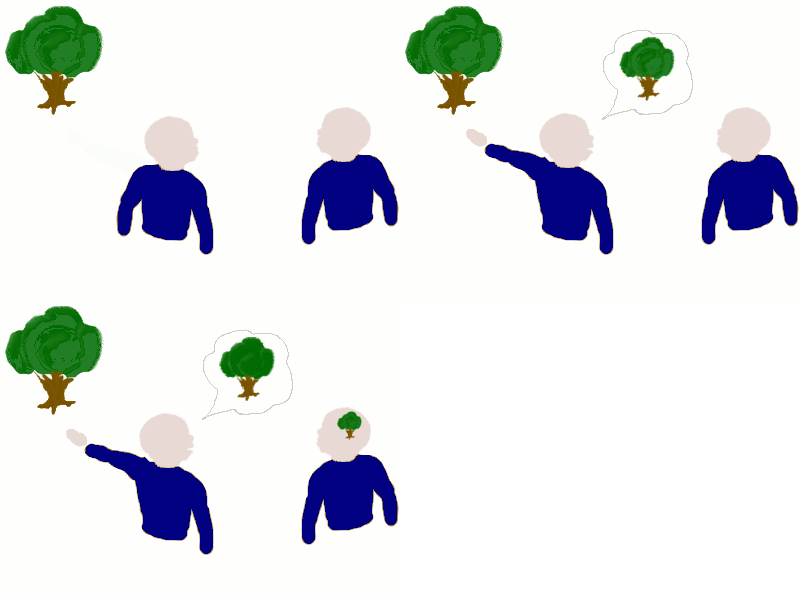
Providing oral explanation about a tree for another person; a communication method

A social skill is any competence facilitating interaction and communication with others where social rules and relations are created, communicated, and changed in verbal and nonverbal ways. The process of learning these skills is called socialization. Lack of such skills can cause social awkwardness.

Interpersonal skills are actions used to effectively interact with others. Interpersonal skills relate to categories of dominance vs. submission, love vs. hate, affiliation vs. aggression, and control vs. autonomy (Leary, 1957).[full citation needed] Positive interpersonal skills include entertainment, persuasion, active listening, showing care, delegation, hospitality and stewardship, among others. Social psychology, an academic discipline focused on research relating to social functioning, studies how interpersonal skills are learned through societal-based changes in attitude, thinking, and behavior.[citation needed]

Enumeration and categorization

[edit]

Social skills are the tools that enable people to communicate, learn, ask for help, get needs met in appropriate ways, get along with others, make friends, develop healthy relationships, protect themselves, and in general, be able to interact with the society harmoniously.[1] Social skills build essential character traits like trustworthiness, respectfulness, responsibility, fairness, caring, and citizenship. These traits help build an internal moral compass, allowing individuals to make good choices in thinking and behavior, resulting in social competence.

Students working with a teacher at Albany Senior High School, Auckland, New Zealand

The important social skills identified by the Employment and Training Administration are:[citation needed]

  • Coordination – Adjusting actions in relation to others' actions.
  • Mentoring – Teaching and helping others learn how to do something (e.g. being a study partner).
  • Negotiation – Discussion aimed at reaching an agreement.
  • Persuasion – The action or fact of persuading someone or of being persuaded to do or believe something.
  • Service orientation – Actively looking for ways to evolve compassionately and grow psycho-socially with people.
  • Social perceptiveness – Being aware of others' reactions and able to respond in an understanding manner.

Social skills are goal oriented with both main goals and sub-goals.[2][better source needed] For example, a workplace interaction initiated by a new employee with a senior employee will first contain a main goal. This will be to gather information, and then the sub-goal will be to establish a rapport in order to obtain the main goal.[3] Takeo Doi in his study of consciousness distinguished this as tatemae, meaning conventions and verbal expressions and honne, meaning true motive behind the conventions.[4]

Causes of deficits

[edit]

Deficits in social skills were categorized by Gresham in 1998, as failure to recognize and reflect social skills, a failure to model appropriate models, and failure to perform acceptable behavior in particular situations in relation to developmental and transitional stages.[5] Social skill deficits are also a discouragement for children with behavioral challenges when it comes to adult adjustment.[6]

Alcohol misuse

[edit]

Social skills are often significantly impaired in people suffering from alcoholism.[7] This is due to the neurotoxic long-term effects of alcohol misuse on the brain, especially the prefrontal cortex area of the brain.[7] The social skills that are typically impaired by alcohol abuse, include impairments in perceiving facial emotions, prosody perception problems, and theory of mind deficits.[7] The ability to understand humor is also often impaired in alcohol abusers.[7] Impairments in social skills can also occur in individuals who have fetal alcohol spectrum disorders. These deficits persist throughout the affected people's lives, and may worsen over time due to the effects of aging on the brain.[8]

ADHD and hyperkinetic disorder

[edit]

People with ADHD and hyperkinetic disorder[9] often have difficulties with social skills, such as social interaction. Approximately half of children and adolescents with ADHD will experience peer rejection, compared to 10–15 percent of non-ADHD youth. Adolescents with ADHD are less likely to develop close friendships and romantic relationships; they are usually regarded by their peers as immature or as social outcasts, with an exception for peers that have ADHD or related conditions themselves, or a high level of tolerance for such symptoms. As they begin to mature, however, it becomes easier to make such relationships. Training in social skills, behavioral modification, and medication have some beneficial effects. Poor peer relationships can contribute to major depression, criminality, school failure, and substance use disorders.[10][11]

Autism spectrum disorder

[edit]

Individuals with autism, including Asperger syndrome, are often characterized by their deficiency in social functioning. The concept of social skills has been questioned in terms of the autistic spectrum.[12] In response to the needs of autistic children, Romanczyk has suggested adapting a comprehensive model of social acquisitions with behavioral modification rather than specific responses tailored for social contexts.[13]

Anxiety and depression

[edit]

Individuals with few opportunities to socialize with others often struggle with social skills. This can often create a downward spiral effect for people with mental illnesses like anxiety or depression. Due to anxiety experienced from concerns with interpersonal evaluation and fear of negative reaction by others, surfeit expectations of failure or social rejection in socialization leads to avoiding or shutting down from social interactions.[14] Individuals who experience significant levels of social anxiety often struggle when communicating with others, and may have impaired abilities to demonstrate social cues and behaviors appropriately.[15]

The use of social media can also cause anxiety and depression. The Internet is causing many problems, according to a study with a sample size of 3,560 students. Problematic internet use may be present in about 4% of high school students in the United States, it may be associated with depression. About one fourth of respondents (28.51%) reported spending fifteen or more hours per week on the internet. Although other studies show positive effects from internet use.[16]

Anti-social behaviors

[edit]

The authors of the book Snakes in Suits: When Psychopaths Go to Work explore psychopathy in workplace. The FBI consultants describe a five phase model of how a typical psychopath climbs to and maintains power. Many traits exhibited by these individuals include: superficial charm, insincerity, egocentricity, manipulativeness, grandiosity, lack of empathy, low agreeableness, exploitativeness, independence, rigidity, stubbornness and dictatorial tendencies. Babiak and Hare say for corporate psychopaths, success is defined as the best revenge and their problem behaviors are repeated "ad infinitum" due to little insight and their proto-emotions such as "anger, frustration, and rage" are refracted as irresistible charm. The authors note that lack of emotional literacy and moral conscience is often confused with toughness, the ability to make hard decisions, and effective crisis management. Babiak and Hare also emphasizes a reality they identified with psychopaths from studies that psychopaths are not able to be influenced by any sort of therapy.[17][18]

At the University at Buffalo in New York, Emily Grijalva has investigated narcissism in business; she found there are two forms of narcissism: "vulnerable" and "grandiose".[19] It is her finding that "moderate" level of grandiose narcissism is linked to becoming an effective manager. Grandiose narcissists are characterized as confident; they possess unshakable belief that they are superior, even when it is unwarranted. They can be charming, pompous show-offs, and can also be selfish, exploitative and entitled.[20] Jens Lange and Jan Crusius at the University of Cologne, Germany associates "malicious-benign" envy within narcissistic social climbers in workplace. It is their finding that grandiose narcissists are less prone to low self-esteem and neuroticism and are less susceptible to the anxiety and depression that can affect vulnerable narcissists when coupled with envy. They characterize vulnerable narcissists as those who "believe they are special, and want to be seen that way–but are just not that competent, or charming." As a result, their self-esteem fluctuates a lot. They tend to be self-conscious and passive, but also prone to outbursts of potentially violent aggression if their inflated self-image is threatened."[21] Richard Boyatzis says this is an unproductive form of expression of emotions that the person cannot share constructively, which reflects lack of appropriate skills.[22] Eddie Brummelman, a social and behavioral scientist at the University of Amsterdam in the Netherlands and Brad Bushman at Ohio State University in Columbus says studies show that in western culture narcissism is on the rise from shifting focus on the self rather than on relationships and concludes all narcissism to be socially undesirable ("unhealthy feelings of superiority"). David Kealy at the University of British Columbia in Canada states that narcissism might aid temporarily but in the long run it is better to be true to oneself, have personal integrity, and be kind to others.[23]

Behavioral therapy

[edit]

Behaviorism interprets social skills as learned behaviors that function to facilitate social reinforcement. According to Schneider & Byrne (1985), operant conditioning procedures for training social skills had the largest effect size, followed by modeling, coaching, and social cognitive techniques.[24] Behavior analysts prefer to use the term behavioral skills to social skills.[25] Behavioral skills training to build social and other skills is used with a variety of populations including in packages to treat addictions as in the community reinforcement approach and family training (CRAFT).[26]

Behavioral skills training is also used for people with borderline personality disorder,[27] depression,[28] and developmental disabilities.[25][29] Typically, behaviorists try to develop what are considered cusp skills,[30] which are critical skills to open access to a variety of environments. The rationale for this type of approach to treatment is that people meet a variety of social problems and can reduce the stress and punishment from the encounter in a safe environment. It also addresses how they can increase reinforcement by having the correct skills.

See also

[edit]

References

[edit]
[edit]
Revisions and contributorsEdit on WikipediaRead on Wikipedia
from Grokipedia
Social skills refer to a broad array of abilities that enable individuals to interact and communicate effectively with others, including predicting and understanding intentions, feelings, emotions, and behaviors in social contexts. These skills form the foundation of , defined as the effectiveness in engaging in meaningful interactions while achieving personal goals and maintaining positive relationships. They encompass specific behaviors and cognitive processes that facilitate successful social responding, such as interpreting and adapting to interpersonal dynamics. Key components of social skills include communication and listening abilities, which allow for clear expression and comprehension of verbal and nonverbal messages; empathy and , enabling individuals to recognize and respond to others' emotions; and problem-solving and , which support and collaborative efforts. Additional elements involve emotion regulation to manage personal responses in interactions, to share focus with others, and to exhibit appropriate mannerisms and . These components develop progressively from infancy, starting with precursors like gaze following and imitation in newborns and young children, evolving into more complex skills such as by age four through neural maturation and environmental experiences. Social skills play a critical role across the lifespan, contributing to peer acceptance, , and in childhood and by reducing behavioral and emotional problems. In adulthood, they enhance performance and societal integration, with jobs requiring high levels of social interaction growing by nearly 12 percentage points as a share of the U.S. labor force between 1980 and 2012. Strong social skills complement cognitive abilities, leading to higher wages—such as a 26% increase in roles demanding both math and social proficiency—and better overall resilience and happiness. Deficits in these skills are associated with challenges like or disorders such as autism spectrum conditions, underscoring their malleability through targeted interventions like social skills training.

Definition and Overview

Definition

Social skills refer to a wide group of abilities that enable individuals to interact and communicate effectively with others, encompassing the capacity to predict and understand others' intentions, feelings, emotions, and behaviors. These abilities include initiating conversations through behaviors, such as or to share experiences, interpreting like direction or facial expressions, and maintaining relationships via and mutual engagement. Central to social skills are key principles such as reciprocity, which involves mutual exchange in interactions like shared ; , the cognitive and affective understanding of others' emotions; and adaptability, the flexibility to adjust behaviors across diverse social contexts. While some foundational elements, such as newborns' innate preference for faces or of gestures, provide predispositions, social skills are predominantly learned behaviors shaped by environmental interactions rather than purely innate traits. For instance, in , where individuals alternate speaking and listening to sustain , exemplifies a learned behavior acquired through practice and social feedback, distinguishing it from automatic reflexes. From an evolutionary perspective, social skills have adapted as essential mechanisms for group in societies, facilitating , resource sharing, and protection against threats through bonds like and pair-bonding. These skills, involving both verbal and non-verbal elements, underpin effective by promoting desirable outcomes in interpersonal exchanges.

Historical Development

The concept of social skills began to take shape in the early within , particularly through Kurt Lewin's development of field theory in , which emphasized how individual behavior emerges from interactions within and environmental forces, laying foundational insights into interpersonal processes. Lewin's work on , including studies on styles and intergroup conflict during the 1930s and 1940s, highlighted the importance of understanding social influences on behavior, influencing later explorations of skill-based social competencies. Post-World War II, popular contributed to broader awareness of interpersonal abilities, with Dale Carnegie's 1936 book How to Win Friends and Influence People serving as an early precursor by outlining practical techniques for building and , which resonated widely and prefigured structured social training approaches. This emphasis on communication and gained traction in the 1940s and 1950s, bridging lay interest with emerging psychological frameworks. By the 1970s, social skills were formalized in , notably through Michael Argyle's research and training programs, which treated as learnable skills akin to motor abilities, including verbal and non-verbal elements; Argyle established a pioneering program in 1968 at Littlemore and published key works like The of Interpersonal Behaviour in 1967, demonstrating effective and modeling techniques for psychiatric patients. In the 1980s and 2000s, the concept integrated with , as articulated by in his 1995 book , which positioned social skills—encompassing , relationship management, and influence—as core components of EI alongside and self-regulation, shifting focus toward holistic emotional competencies in personal and professional contexts. Post-2010 developments have emphasized digital social skills amid rising online interactions, with research highlighting how and technology affect interpersonal abilities; for instance, studies show that while digital platforms enable controlled , excessive use can impair face-to-face emotional recognition and offline engagement, prompting adapted training interventions like for social skill enhancement in youth.

Components and Categorization

Verbal Skills

Verbal skills encompass the language-based elements of social interactions that facilitate clear, effective communication between individuals. These skills enable participants to exchange ideas, resolve ambiguities, and maintain mutual understanding through spoken or written words. Central to verbal proficiency is the ability to thoughts coherently while adapting to the conversational context. Core components of verbal social skills include , appropriate questioning, assertive expression, and conversational repair. involves fully attending to the speaker, processing their message, and responding in ways that demonstrate comprehension, such as nodding or verbal acknowledgments, to build trust and encourage . Appropriate questioning refers to selecting and timing inquiries that promote rather than , fostering deeper connections by inviting elaboration from others. Assertive expression entails stating one's needs, opinions, or boundaries directly yet respectfully, using "I" statements to avoid or passivity, which helps in maintaining equitable exchanges. Conversational repair addresses breakdowns in understanding, such as when a speaker seeks clarification by rephrasing or asking for repetition, ensuring the interaction remains productive and aligned. Key techniques for enhancing verbal skills include employing open-ended questions, which prompt expansive responses like "What experiences led to that decision?" instead of yes/no queries, to sustain engagement and uncover perspectives. Paraphrasing for confirmation, such as restating the speaker's point in one's own words—"So, you're saying that the delay caused frustration?"—verifies accuracy and shows attentiveness. Tone modulation adjusts vocal inflection, volume, and pace to match the message's intent, such as softening delivery during sensitive topics to convey without altering the words themselves. These methods collectively support fluid, reciprocal communication. Practical examples illustrate verbal skills in action. In negotiating conflicts through , individuals might use assertive expression and repair techniques to de-escalate disputes, for instance, by saying, "I understand your concern about the timeline; let's clarify what adjustments we can make," which resolves tension collaboratively. serves to build by sharing relatable anecdotes that humanize experiences and invite reciprocity, strengthening interpersonal bonds in group settings. Cultural variations significantly influence verbal styles, particularly in direct versus indirect communication. Direct styles, prevalent in low-context cultures like those in or , emphasize explicit statements and straightforward feedback to minimize ambiguity. In contrast, indirect styles, common in high-context cultures such as or many Arab societies, rely on implication, politeness markers, and contextual cues to preserve harmony and face. Verbal skills often integrate with non-verbal cues to reinforce intent and avoid misinterpretation.

Non-Verbal Skills

Non-verbal skills encompass the use of physical and expressive cues to communicate without words, playing a crucial role in enhancing or modifying verbal interactions in social contexts. These skills include visual, kinesthetic, and spatial signals that convey intentions, emotions, and relational dynamics, often operating subconsciously to influence perceptions and responses during interpersonal exchanges. Key elements of non-verbal skills include , facial expressions, posture, gestures, and . Eye contact serves as a primary indicator of and engagement, with appropriate gaze patterns signaling interest and respect in social interactions. Facial expressions, such as smiles or frowns, transmit emotional states rapidly and universally across cultures, as demonstrated in studies showing consistent recognition of basic emotions like and from facial cues alone. Posture and gestures, studied under the framework of , involve body orientation and hand movements that reinforce messages or reveal attitudes; for instance, open postures with relaxed shoulders suggest approachability, while crossed arms may indicate defensiveness. Proxemics, the study of personal space usage, dictates how physical distance affects comfort and intimacy, with intimate zones typically limited to close relationships and public distances maintained in formal settings. These elements fulfill several functions in social interactions, including conveying , regulating flow, and building trust. For example, a genuine conveys warmth and positivity, fostering emotional , while nodding regulates in by signaling comprehension and encouraging the speaker to continue. Gestures like another's —subtly imitating posture or movements—can establish subconscious and trust, enhancing mutual understanding. Recognizing subtle facial cues, such as micro-expressions that last fractions of a second, allows individuals to detect underlying like fleeting , promoting in conversations. These non-verbal functions contribute to deeper emotional connections by aligning physical signals with affective states. Challenges in non-verbal skills often arise from misinterpretation, particularly in cross-cultural settings where norms vary. Direct eye contact, valued as a sign of in many Western cultures, can be perceived as confrontational or disrespectful in certain Asian or Indigenous contexts, leading to unintended relational strain. Similarly, proxemic preferences differ; closer personal spaces are normative in Latin American interactions but may feel invasive to those from Northern European backgrounds. Awareness of these variations is essential to avoid misunderstandings and adapt non-verbal cues effectively across diverse social environments.

Emotional and Relational Skills

Emotional and relational skills form the affective core of social competence, enabling individuals to navigate interpersonal dynamics with sensitivity and mutual respect. These skills emphasize understanding and responding to others' emotions while managing one's own, fostering deeper connections beyond surface-level interactions. Central to this domain are , , , and boundary-setting, which collectively support healthy relational patterns. Empathy encompasses both cognitive and affective dimensions. Cognitive empathy involves intellectually understanding another person's emotional state, such as recognizing distress through contextual cues, while affective empathy entails vicariously experiencing those emotions, often leading to compassionate responses. Research indicates that these components differentially contribute to social functioning, with cognitive empathy aiding in accurate interpretation during interactions and affective empathy promoting prosocial behaviors like comforting others. Perspective-taking builds on by encouraging individuals to adopt others' viewpoints, enhancing relational depth and reducing misunderstandings. This skill allows one to anticipate how actions might affect another, thereby improving and trust in social exchanges. Studies show that higher ability correlates with greater in adults, as it facilitates adaptive responses in diverse interpersonal scenarios. Conflict resolution relies on these emotional skills to de-escalate disputes and achieve mutually beneficial outcomes. By employing to validate others' feelings—such as acknowledging in a disagreement—individuals can shift focus from opposition to , often resulting in stronger post-conflict bonds. Emotional comprehension plays a mediating here, positively influencing resolution strategies and peer relations among children and adolescents. Boundary-setting is essential for maintaining relational , involving the clear articulation of personal limits to protect emotional without alienating others. For instance, expressing discomfort with certain topics during conversations preserves autonomy while respecting mutual needs. Effective boundary-setting, grounded in and assertive communication, supports balanced interactions and prevents resentment in long-term relationships. Key processes in emotional and relational skills include regulating one's emotions during interactions to remain composed and responsive. This involves strategies like pausing to assess feelings before reacting, which sustains productive amid tension. Additionally, fostering long-term bonds occurs through reciprocity, where mutual exchanges of support—such as offering help in return for past —build enduring trust and commitment. Examples include validating a friend's during a dispute to rebuild or engaging in networking by providing reciprocal assistance, which strengthens professional and personal ties over time. Attachment theory provides a foundational theoretical basis for relational competence, positing that early caregiver-child bonds shape internal working models of relationships, influencing later social skills. fosters confidence in forming reciprocal connections, whereas insecure patterns may hinder and boundary assertion. Meta-analyses confirm that attachment security predicts enhanced peer across childhood, underscoring its role in developing robust emotional and relational abilities.

Development Across the Lifespan

Childhood

Social skills in childhood begin to emerge through foundational interactions that lay the groundwork for interpersonal relationships, progressing from basic attachment bonds in infancy to more complex peer engagements by pre-adolescence. During infancy, social development primarily revolves around attachment formation via responsive caregiving, where infants learn to trust caregivers through consistent emotional responsiveness, fostering early emotional security and the basis for future social interactions. in this stage, as described by Bowlby's theory, promotes the infant's ability to explore socially and regulate emotions, with securely attached children demonstrating better engagement in peer groups later in . In toddlerhood, children transition from —where they engage in solitary activities near peers without direct interaction—to cooperative play, enabling them to practice basic social reciprocity and imitation of others' actions. This shift typically occurs around ages 2 to 3, as toddlers begin to share space and materials, gradually building awareness of others' perspectives through unstructured play. By school age, typically ages 5 to 12, children integrate into peer groups where adherence to group norms becomes central to social competence, including understanding unspoken rules for collaboration, conflict resolution, and inclusion. Peer interactions in this phase reinforce skills like negotiating roles in group activities and adapting to collective expectations, which are essential for forming lasting friendships and navigating school environments. Key influences on this developmental trajectory include parental modeling, where caregivers demonstrate prosocial behaviors such as empathy and cooperation, directly shaping children's observational learning and imitation of social norms. Play-based learning further supports this by providing opportunities for children to experiment with turn-taking and compromise in low-stakes settings, enhancing emotional regulation and relational skills through imaginative and cooperative activities. Early education interventions, such as structured preschool programs, also play a vital role by incorporating targeted activities like group games and role-playing to scaffold social skill acquisition, particularly for children at risk of delays. Developmental milestones mark these advances, with children around age 3 typically beginning to share toys during play, recognizing others' interests and engaging in simple exchanges to maintain interactions. By age 5, most children understand in games and conversations, following rules to sustain cooperative play and demonstrating improved impulse control in social settings. However, risks such as early —due to limited caregiving responsiveness or minimal peer exposure—can lead to delays in these skills, as evidenced by longitudinal data from the NICHD Study of Early Child Care, which linked lower-quality early environments to poorer and increased behavioral challenges by school entry.

Adolescence

During adolescence, social skills continue to build upon the foundational abilities established in childhood, such as basic emotional recognition and cooperative play, but shift toward more complex peer-driven interactions that support . Teenagers increasingly navigate intricate social hierarchies, including cliques—small, cohesive groups of peers who share activities and provide emotional support—which help adolescents experiment with social roles and gain acceptance within larger peer networks. Romantic interactions emerge as a key developmental area, where teens learn to express , negotiate boundaries, and develop intimacy, often transitioning from to one-on-one relationships that foster emotional reciprocity and skills. Digital socialization, particularly through , introduces new dimensions like online —such as interpreting digital cues, maintaining , and resolving misunderstandings via text—which can enhance connectivity but also requires adapting traditional social norms to virtual contexts. Several influences shape this maturation process. School environments, with their structured peer interactions and extracurricular activities, promote skills in and , while hormonal changes during heighten emotional sensitivity and , challenging teens' ability to regulate responses in social settings and often leading to intensified peer conflicts. Mentoring programs in schools or communities provide guided support, pairing adolescents with adult or older peer mentors to model effective communication and , thereby boosting in social situations. Adolescents face notable challenges, including building resilience against , which can erode and social withdrawal if unaddressed, and pressures of group that may encourage risky behaviors to maintain status within cliques. Teen conflict resolution training programs address these by teaching assertive communication, , and de-escalation techniques, such as scenarios to practice mediating peer disputes and fostering in group settings. Research highlights as a for empathy growth, with studies showing longitudinal increases in and empathic concern from early to late teens, influenced by peer feedback and emotional maturation, as evidenced in investigations published in since the 2000s.

Adulthood and Aging

In young adulthood, typically spanning ages 18 to 40, social skills emphasize networking and building professional and personal connections to support establishment and relational stability. Research indicates that effective networking involves skills such as initiating conversations, , and reciprocity, which facilitate access to opportunities like and job referrals. These abilities are crucial during this phase, as derived from expansive networks correlates with higher earnings and advancement in early professional years. During midlife, roughly ages 40 to 65, social skills adapt to roles and familial responsibilities, including professional and . demands advanced relational skills like , conflict , and team , which peak in this period due to accumulated experience and emotional regulation. In , adults refine skills for modeling positive interactions, such as collaborative problem-solving with children and co-parenting communication, fostering intergenerational bonds and cohesion. Professional , encompassing norms like respectful feedback and boundary-setting in diverse workplaces, supports sustained career progression and work-life balance. In later adulthood and aging, beyond age 65, social skills focus on maintaining connections amid losses like bereavement or mobility decline, while adapting to and potential cognitive changes. studies show a selective optimization, where older adults prioritize emotionally meaningful ties, shrinking networks but deepening intimacy to buffer isolation. However, evidence from facial perception research reveals declines in recognition, such as reduced accuracy in identifying emotional expressions or configurations post-60, linked to spatiotemporal visual processing impairments. often heightens isolation risks, prompting adaptations like involvement or use—such as videoconferencing—to sustain and reduce . conflict exemplifies skill application here, with midlife and older adults employing avoidance or collaborative strategies to resolve intergenerational disputes, preserving relational .

Importance and Applications

In Education and Learning

Social skills are integral to educational environments, where they support and group projects by enabling effective communication, , and mutual support among peers. These skills enhance academic outcomes by promoting deeper understanding through shared problem-solving and diverse perspectives, leading to improved retention and application of . For instance, students with strong social competencies participate more actively in group activities, fostering a positive learning atmosphere that benefits overall class performance. Teacher-student , grounded in social skills such as and , significantly influences academic success by creating supportive interactions that boost and . demonstrates that positive relationships between teachers and students correlate with higher grades and reduced behavioral issues, as students feel more secure in seeking help and expressing ideas. This not only aids individual progress but also strengthens classroom cohesion, indirectly elevating collective educational achievements. Social skills have been systematically integrated into curricula through social-emotional learning (SEL) programs, exemplified by the Collaborative for Academic, Social, and Emotional Learning (CASEL) framework established in 1994, which emphasizes five core competencies: , self-management, social awareness, relationship skills, and responsible . These programs, implemented school-wide, equip students with tools to navigate interpersonal dynamics, with a 2025 meta-analysis showing that universal SEL interventions yield an effect size of g=0.101 on , equivalent to approximately a 4-percentile-point gain. Anti-bullying initiatives represent a practical application, social skills to improve classroom dynamics by reducing and promoting inclusivity; a of such programs found they decrease victimization by 15-16% and perpetration by 18-19%, creating safer spaces that enhance focus and learning. Overall, meta-analytic evidence indicates a moderate (r = 0.21) between social competencies and in children aged 6-12, underscoring how these skills account for meaningful variance in educational outcomes.

In Professional Settings

Social skills play a pivotal role in professional environments by facilitating effective interactions that drive career progression and enhance organizational dynamics. In workplaces, these skills enable individuals to navigate complex hierarchies, collaborate on shared goals, and build alliances that contribute to both personal advancement and team performance. Research indicates that proficiency in social skills correlates with improved workplace outcomes, as they underpin the ability to influence others, resolve conflicts, and adapt to diverse professional contexts. This trend has continued into the 2020s, with the World Economic Forum's 2025 report identifying social and emotional skills—such as leadership and social influence (projected demand of 70% globally by 2030) and empathy—as among the fastest-growing competencies amid technological advancements and hybrid work models. Key roles of social skills in professional settings include fostering , enabling communication, and strengthening client relations. relies on interpersonal abilities such as and , which allow employees to coordinate efforts, share responsibilities, and achieve collective objectives more efficiently than isolated work. Studies show that teams with high social skills exhibit medium-sized improvements, as these competencies reduce coordination costs and enhance task allocation. communication, another critical area, involves articulating vision, providing direction, and motivating teams through adaptive and transparent dialogue. Leaders who master these skills, including and clarity, build trust and align diverse groups toward organizational goals. In client relations, social skills like rapport-building and responsiveness help professionals understand needs, negotiate terms, and sustain long-term partnerships, directly impacting business growth and retention rates. These skills manifest in practical actions such as networking at professional events, delivering constructive feedback, and managing diversity. Networking involves initiating conversations, exchanging value, and maintaining connections, which longitudinal research links to greater mobility and access to opportunities. Giving feedback requires and specificity to encourage improvement without demotivating recipients, fostering a culture of continuous development and stronger team bonds. Handling diversity entails and inclusive communication, enabling professionals to leverage varied perspectives for while mitigating misunderstandings in multicultural teams. A prominent example is the application of emotional intelligence (EI) in management, as highlighted in Harvard Business Review insights from the late 1990s and early 2000s. Daniel Goleman's work emphasized that EI—encompassing self-awareness, self-regulation, , , and social skills—distinguishes outstanding leaders by enabling them to inspire teams and navigate emotional undercurrents in . Managers with high EI create supportive environments that boost and reduce turnover. Positive outcomes from strong social skills include elevated promotion rates and increased . Longitudinal studies demonstrate that predicts career success markers, such as salary growth and leadership roles, over time, as it facilitates networking and relational . Additionally, employees with robust interpersonal skills report higher due to better and reduced stress from conflicts.

In Personal and Social Relationships

Social skills play a pivotal role in fostering personal and social relationships by enabling individuals to build intimacy, resolve disputes, and engage in community involvement, thereby strengthening friendships, , and broader communal bonds. In intimate relationships, such as marriages or close friendships, these skills facilitate emotional closeness through mechanisms like source of strength support, where partners provide and validation during adversity, and relational catalyst support, which nurtures personal growth and mutual trust. For instance, —characterized by fully engaging with a partner's verbal and emotional cues—enhances marital satisfaction by reducing burnout and promoting deeper understanding, as demonstrated in studies of communication training interventions. In resolving disputes within and friendships, social skills such as and allow individuals to acknowledge differing perspectives, manage emotions, and find constructive solutions, thereby preserving relational . These abilities help de-escalate conflicts by fostering mutual and trust, preventing escalation into , and supporting long-term relational health without relying on avoidance or . involvement further extends these skills, as participating in group activities hones and reciprocity, essential for forming supportive networks beyond immediate personal circles. A key example of this is , which builds by developing interpersonal skills like and communication, leading to stronger bonding ties with similar group members and bridging connections with diverse individuals. Through such engagement, participants gain resources and trust that enhance community cohesion and personal well-being. Cultural contexts shape these social skills significantly; in individualist societies like the , relationship norms emphasize and , with social interactions prioritizing personal expression and . Conversely, collectivist cultures, such as those in or , stress interdependence and group harmony, where social skills focus on maintaining collective roles and offering mutual support to sustain familial and communal bonds. Research underscores the profound impact of proficient social skills on in personal relationships, with stronger social ties consistently linked to reduced and improved health outcomes. The Harvard , ongoing since , has shown that individuals with satisfying relationships at age 50 exhibit better physical and at age 80, while poses risks comparable to or . Close relationships buffer against decline more effectively than factors like or IQ, highlighting how social skills in building and maintaining these ties directly contribute to a longer, happier life.

Deficits and Their Causes

Neurodevelopmental Disorders

Neurodevelopmental disorders, such as attention-deficit/hyperactivity disorder (ADHD) and autism spectrum disorder (ASD), often manifest with significant impairments in social skills due to underlying differences in development and function. These conditions disrupt the ability to engage in reciprocal social interactions, interpret , and regulate behavior in social contexts, leading to challenges in forming and maintaining relationships. In ADHD, core symptoms of inattention, hyperactivity, and impulsivity interfere with conversational dynamics and peer engagement, while in ASD, deficits in social communication and emotional reciprocity are central diagnostic features. These impairments are evident from early childhood and can persist across the lifespan, contributing to and reduced . In ADHD, frequently disrupts and sustained during conversations, resulting in interruptions, responses, and difficulty maintaining flow. Children with ADHD exhibit poorer pragmatic skills, including deficits in management, which fully mediate the link between ADHD symptoms and social impairment, independent of general abilities. For instance, hyperactivity in the predominantly hyperactive-impulsive of ADHD leads to socially behaviors such as bossiness, intrusiveness, and inflexibility, increasing peer rejection rates to approximately 50%. These patterns stem from challenges in executive functioning, where impulsive actions override social norms, hindering effective peer interactions. Neurological underpinnings involve alterations in the , which regulates impulse control and social decision-making, often showing reduced activation and connectivity in affected individuals. Autism spectrum disorder is characterized by persistent deficits in social communication and interaction, as outlined in criteria, including challenges in emotional reciprocity, nonverbal communicative behaviors, and developing relationships. Individuals with ASD often struggle with —the ability to attribute mental states to others—leading to difficulties in understanding perspectives, intentions, and emotions during social exchanges. Nonverbal cue reading is particularly impaired, with reduced , atypical , and fewer social gestures like or showing, evident as early as 12 months of age. Prior to the , Asperger's syndrome (now subsumed under ASD) exemplified these issues through pronounced social withdrawal, where individuals experienced isolation, , and vulnerability to due to poor interpretation of nonverbal signals, humor, and social contexts. Neurologically, these deficits involve the , which shows hyperactivation to social stimuli like faces and enlarged volumes in childhood, contributing to overarousal and avoidance of , alongside atypical activity that impairs mentalizing and .

Mental Health Conditions

Mental health conditions such as anxiety disorders and depression significantly impair social skills by disrupting engagement, communication, and relationship maintenance. These conditions often lead to avoidance behaviors, emotional blunting, and distorted perceptions of social interactions, exacerbating isolation and reducing overall . In (SAD), individuals experience intense or judgment in social situations, prompting avoidance of interpersonal encounters to evade perceived scrutiny. This fear manifests as heightened anxiety during conversations, , or group activities, resulting in limited , hesitant speech, and withdrawal from social opportunities, which perpetuates deficits in and rapport-building. Clinical studies indicate that such avoidance not only hinders the development of social skills but also reinforces maladaptive beliefs about one's interpersonal abilities. Depression contributes to social skills deficits through pronounced withdrawal and diminished emotional expressiveness, often described as flat affect or reduced nonverbal cues. Affected individuals may isolate themselves from social networks due to and low motivation, leading to strained relationships and missed opportunities for positive reinforcement in interactions. Research shows that this withdrawal correlates with poorer social functioning, as depressed persons exhibit less facial expressivity and engagement, making it challenging to convey or sustain conversations. Underlying these impairments are cognitive mechanisms, including negative self-perception biases that distort interpretations of social feedback. In both anxiety and depression, individuals tend to overestimate threats in interactions—such as interpreting neutral comments as —and underestimate their own social performance, fostering a cycle of avoidance and low confidence. studies reveal that these biases involve altered brain responses to self-relevant social information, contributing to persistent negative views of one's relational capabilities. Comorbidities further compound these effects, with low self-esteem frequently co-occurring with anxiety and depression, amplifying social withdrawal and interpersonal difficulties. A 2023 meta-analysis of self-related traits found strong negative associations between low self-esteem and symptoms of both conditions, indicating that diminished self-worth predicts heightened and depressive withdrawal across diverse populations. This overlap, observed in clinical samples, underscores how intertwined mood impairments erode social efficacy, often requiring integrated therapeutic approaches. Substance misuse, particularly alcohol and drugs, can significantly impair social skills by altering behavioral responses and physiological processes that underpin interpersonal interactions. Acute often induces , weakening self-regulatory mechanisms in the and leading to inappropriate outbursts or during social encounters. This effect stems from alcohol's impairment of , , and , which narrows focus on immediate cues and fosters hostile attributions toward others, thereby escalating conflicts in group settings. Misuse of other substances similarly disrupts social functioning through distinct pathways. , for instance, promote and emotional blunting, reducing motivation for and impairing the recognition of others' emotions. Prolonged opioid abuse dysregulates circuits involved in social bonding and , resulting in diminished responsiveness to and withdrawal from interactions. , on the other hand, heighten and anxiety, which manifest as suspicious or defensive behaviors that hinder trust and in conversations. Chronic use exacerbates these issues, leading to protective isolation and deteriorated social relationships as mimics psychotic symptoms. Over time, chronic substance misuse erodes core social competencies like and trust-building, fostering cycles of relational damage. Individuals with substance use disorders exhibit reduced cognitive and affective , impairing their ability to understand and share others' perspectives, which correlates with higher relapse rates and poorer interpersonal outcomes. This deficit, observed across alcohol, , and dependencies, contributes to by weakening support networks and perpetuating avoidance of social contexts. Studies, including those supported by the National Institute on and (NIAAA) in the 2010s, link specifically to increased and diminished social connectedness, highlighting the long-term toll on relational bonds.

Environmental and Social Factors

Family dynamics play a significant role in shaping social skills, with and overprotection often leading to deficits in interpersonal competence. Child , characterized by the persistent absence of responsive care, disrupts the development of secure attachments and prosocial behaviors, resulting in higher rates of social withdrawal, lower peer acceptance, and insecure or disorganized attachment patterns in affected children. Overprotective parenting, conversely, limits opportunities for autonomous exploration and interaction, fostering maladaptive schemas such as social isolation (correlation r = 0.20) and enmeshment (r = 0.29), which hinder the development of independence and effective social engagement. These familial patterns stunt practice in social interactions, contributing to long-term difficulties in forming relationships across developmental stages. Socioeconomic factors, particularly , exacerbate social skill deficits by restricting access to enriching social environments and increasing exposure to trauma. Low is associated with elevated emotional and behavioral difficulties, including , , and in children and , often due to from instability and limited resources for social activities. -related trauma, such as within disadvantaged households, further impairs emotional regulation and prosocial behaviors, with neglected or abused children exhibiting pronounced deficits in peer interactions and compared to non-maltreated peers. These conditions limit opportunities for social exposure, perpetuating cycles of isolation and reduced adaptive skills. High-crime environments promote learned and antisocial behaviors, undermining the acquisition of positive social skills. Exposure to neighborhood disorder and correlates with poorer emotion regulation (odds ratio 0.79) and non-violent problem-solving abilities, as and normalization of aggressive responses diminish prosocial competencies. In such settings, youth often internalize antisocial norms through peer and influences, leading to increased and reduced interactions that are essential for social development. Cultural shifts, including and migration, challenge social skill by disrupting familiar social structures and requiring rapid adjustment to new norms. Migrant children, for instance, experience difficulties in social and cultural due to environmental changes, with lower psychological capital linked to poorer and integration, though interventions can improve scores significantly (from 4.72 to 5.27). similarly strains , as rapid societal changes reduce opportunities for traditional social learning, fostering isolation in diverse, fast-paced settings. These transitions highlight the need for supportive mechanisms to bridge cultural gaps and maintain .

Assessment and Measurement

Standardized Tools

Standardized tools for assessing social skills consist of formal, validated instruments that employ structured formats to quantify the frequency, quality, and impact of social behaviors in individuals, particularly children and adolescents. These tools are essential for providing objective data in clinical, educational, and contexts, enabling professionals to identify deficits and track progress. Prominent examples include multi-informant rating systems and semi-structured observation protocols, which have demonstrated strong psychometric properties through extensive validation studies. The Social Skills Improvement System Rating Scales (SSIS-RS), developed by Frank M. Gresham and Stephen N. Elliott in 2008 as a revision of their 1990 Social Skills Rating System (SSRS), is a widely used multi-rater designed for evaluating social skills in children and youth aged 3 to 18 years. It features separate forms for teachers, parents, and students (for ages 8-18), each comprising rating scales that assess the frequency of social skills (e.g., communication, , assertion, responsibility, , engagement, and ) on a 3-point (never, sometimes, very often), alongside problem behaviors (e.g., externalizing, internalizing, hyperactive behaviors) and academic competence. The tool's structure allows for norm-referenced scoring based on a large sample of over 4,700 children, facilitating comparisons across peers and identification of strengths and weaknesses in social functioning. Applications of the SSIS-RS include clinical of social skill impairments, educational placement decisions such as eligibility for special services, and program evaluation in school settings. Psychometric evaluations confirm the SSIS-RS's robust validity and reliability, with improvements over the original SSRS. is supported by its alignment with theoretical models of , while criterion-related validity shows moderate to strong correlations (r = 0.40-0.70) with other established measures like the . coefficients for the social skills subscales typically exceed 0.90 (e.g., Cronbach's α = 0.94-0.96 across forms), and test-retest reliability over short intervals (4-8 weeks) ranges from 0.75 to 0.95, indicating stable measurement over time. The Autism Diagnostic Observation Schedule (ADOS), introduced by Catherine , Michael , and colleagues in 1989 and revised as ADOS-2 in 2012, serves as a standardized semi-structured observation tool specifically for assessing social interaction, communication, and play in individuals across the autism spectrum, from toddlers to adults. It comprises four modules tailored to developmental level and language ability (e.g., Module 1 for nonverbal individuals, Module 4 for fluent speakers), involving 10-15 minutes of direct interaction activities that elicit social behaviors, such as , , and imaginative play, scored on a 3-point scale for atypicality. Though primarily diagnostic for autism spectrum disorder (ASD), the ADOS evaluates core social skills deficits, such as reciprocity and , making it applicable in clinical diagnosis and educational planning for those with neurodevelopmental challenges. The ADOS exhibits strong psychometric properties, with interrater reliability coefficients often above 0.80 (e.g., intraclass correlation = 0.81-0.88 for total scores) and test-retest reliability ranging from 0.75 to 0.90 across modules. Diagnostic validity is evidenced by rates of 80-100% for ASD classification in validation samples, supporting its utility in distinguishing social impairments related to spectrum disorders from other conditions. These tools complement broader assessment approaches by offering reliable, quantifiable insights into social skills.

Observational and Self-Report Methods

Observational methods for assessing social skills involve direct monitoring of individuals' behaviors in real-time or recorded interactions, providing insights into how skills manifest in context. These approaches often employ structured play sessions for children, where observers note behaviors such as or during activities like group games, or video analysis of social encounters among adolescents and adults. For instance, coding systems categorize interactions into quantifiable units, such as event coding that tallies specific actions like initiating conversation or maintaining , allowing researchers to track frequency and quality of social exchanges. In programs like PEERS for teens, peer interactions are observed and coded to evaluate skills such as handling rejection or entering group conversations, using structured scenarios to elicit natural responses. Self-report methods rely on individuals' own evaluations of their social abilities, typically through inventories that present hypothetical scenarios for rating confidence or frequency of behaviors. Tools like the Social Skills Inventory (SSI) require respondents to self-assess six core dimensions, including emotional expressivity and emotional sensitivity, on a to gauge perceived competence in social situations. These measures are straightforward to administer and capture subjective experiences, such as self-perceived ease in resolving conflicts or building , often used in educational or clinical settings to complement other assessments. One key advantage of observational and self-report methods is their , as they capture behaviors and perceptions in naturalistic or semi-naturalistic settings, reflecting real-world more authentically than contrived tests. For example, observing unstructured recess interactions reveals spontaneous skills that standardized environments might overlook, enhancing the applicability of findings to everyday contexts. However, these methods have notable limitations, including subjectivity and bias that can distort accuracy. In observational approaches, depends on trained coders, but observer expectations may influence interpretations, as seen in field studies where varying cultural norms led to inconsistent coding of nonverbal cues. Self-reports are particularly prone to self-perception biases, such as social desirability, where individuals overestimate their skills to align with ideal self-images; research shows weak correlations between self-reported and observed performance, with discrepancies up to 0.30 in correlation coefficients across studies. Field examples, like adolescent surveys during group activities, highlight how low in those with results in inflated ratings despite poor behavioral outcomes. Furthermore, accurate interpretation of results from social skills and behavior screening tools, whether standardized questionnaires or self-reports, requires consideration of contextual factors often missing or underemphasized. These include instrument specifics such as item count, exact scale ranges, and cutoff values; evaluator type, distinguishing self-assessments from informant reports by parents or teachers; subject demographics like age, gender, and background; scores from related domains, for example ADHD-related inattention or hyperactivity; co-occurring traits such as intellectual disability; and environmental influences like stress.

Interventions and Therapies

Behavioral and Cognitive Approaches

Behavioral approaches to social skills training draw from principles of , emphasizing observable behaviors and environmental contingencies to foster adaptive social interactions. These methods typically involve systematic techniques such as modeling, where a therapist or peer demonstrates desired social behaviors for the client to observe and imitate; , in which clients practice these behaviors in simulated scenarios; and , including or token economies to reward successful performance and encourage repetition. Token economies, for instance, use tangible rewards like points exchangeable for privileges to strengthen social responding in therapeutic settings. Cognitive approaches, adapted from Aaron T. Beck's framework developed in the 1960s and 1970s, focus on identifying and restructuring maladaptive thought patterns that undermine , such as negative beliefs about rejection or inadequacy in interpersonal situations. Therapists guide clients through techniques like examining evidence for distorted cognitions, generating alternative interpretations, and testing these through behavioral experiments to build more realistic social self-perceptions. These adaptations integrate with behavioral practice to address both thought processes and actions, enhancing overall social efficacy. One influential protocol is Alan S. Bellack's Social Skills Training (SST) program, introduced in the 1980s for individuals with severe mental illnesses like . This stepwise approach begins with skills assessment to identify deficits, followed by instruction on specific behaviors (e.g., conversation initiation), modeling by the therapist, guided for rehearsal, and with to consolidate learning; sessions progress hierarchically from basic to complex interactions, often incorporating for real-world application. Randomized controlled trials and meta-analyses have demonstrated the efficacy of these behavioral and cognitive approaches, with effect sizes indicating moderate to large improvements (Cohen's d ≈ 0.52) in targeted social behaviors, such as increased , , and conversational , often translating to 40-60% gains in skill performance metrics compared to control conditions. For example, in studies of SST for , participants showed sustained behavioral enhancements post-treatment, though generalization to naturalistic settings varies and benefits are maximized when combined with ongoing support.

Training Programs and Workshops

Training programs and workshops for social skills typically employ structured, group-based formats to foster interpersonal competencies through interactive and repetitive practice. School-based social-emotional learning (SEL) workshops, such as those promoted by the Collaborative for Academic, Social, and Emotional Learning (CASEL), integrate social skills instruction into classroom settings for students from through high school, emphasizing evidence-based curricula that address , relationship skills, and responsible decision-making. These programs often occur in weekly sessions during school hours, allowing for seamless incorporation into academic routines. Similarly, adult community classes like provide ongoing workshops in local clubs, focusing on communication and leadership to enhance and conversational abilities, with participants meeting bi-weekly in supportive group environments. Core components of these programs include scripted scenarios for role-playing real-life interactions, feedback loops from peers and facilitators to refine behaviors, and homework assignments to encourage application outside sessions. For instance, in SEL workshops, facilitators model social scenarios—such as resolving conflicts—before participants practice through scripted dialogues, followed by immediate constructive feedback to correct and reinforce skills. Homework might involve journaling interactions or practicing greetings with family, promoting transfer to daily life. These elements draw briefly from behavioral foundations, adapting principles like modeling and reinforcement for group scalability. Such programs target diverse groups, including at-risk youth and professionals seeking career enhancement. The Stop & Think Social Skills Program, designed for elementary students including those at behavioral risk, uses a 40-lesson to teach problem-solving and emotional regulation through group activities, showing improvements in social skills and reductions in problem behaviors among cohorts. For professionals, Toastmasters targets adults in workplace or community settings, yielding gains in confidence and interpersonal effectiveness via repeated public engagements. Outcomes from these workshops highlight long-term retention, particularly when incorporating —distributing practice over time to strengthen and skill generalization, as supported by on learning efficiency. Participants in SEL programs like those from CASEL demonstrate sustained improvements in relationship-building up to a year post-training, while Toastmasters members report enduring boosts in networking abilities. Overall, these scalable interventions promote preventive skill-building, with fidelity to program design correlating to measurable behavioral gains.

Technological and Innovative Methods

Technological and innovative methods for enhancing social skills leverage digital tools to provide immersive, interactive, and accessible practice environments, particularly for individuals facing or neurodevelopmental challenges. (VR) simulations have emerged as a key technology, enabling controlled exposure to social scenarios that mimic real-life interactions. For instance, VR targets social phobia by immersing users in anxiety-provoking situations, such as or group conversations, allowing gradual desensitization without real-world risks. This approach has shown efficacy in reducing symptoms among adolescents and young adults, with participants reporting decreased fear responses after repeated sessions. Similarly, VR applications designed for social skills training in children with attention-deficit/hyperactivity disorder (ADHD) or autism spectrum disorder (ASD) facilitate and empathy-building exercises, leading to measurable improvements in interpersonal competencies. AI chatbots represent another pivotal technology, offering on-demand conversational practice to build communication and skills. The SimCoach platform, developed in the , utilizes agents to simulate supportive dialogues, enabling users to rehearse social interactions in a non-judgmental setting, which is particularly beneficial for those with barriers to in-person practice. More recent examples include specialized AI coaches like Noora, which provide tailored feedback on and for individuals with ASD, fostering through iterative, scenario-based exchanges. Innovations in gamified applications further advance social skills development by integrating engaging narratives with skill-building mechanics. Zoo U, a digital game for children in grades 2-4, embeds and training within a simulated environment, where players navigate peer interactions to resolve dilemmas, resulting in enhanced social problem-solving abilities as evidenced by performance-based assessments. These tools transform abstract concepts like into interactive challenges, promoting sustained without overt instruction. The primary benefits of these methods include heightened accessibility for remote users, as VR and app-based interventions can be delivered via consumer devices, bypassing geographical or logistical barriers to traditional . Post-2020 research highlights increased user engagement, with VR programs demonstrating significant boosts in participation rates and skill retention among children and adolescents with ASD, attributed to the immersive and customizable nature of the experiences. For adults with ASD, VR training has similarly improved social abilities and interview performance, underscoring its scalability for diverse populations. Emerging approaches like (AR) simulations also show promise, with 2025 studies indicating improved social skills learning in children with ASD through interactive overlays in real environments. Looking to future trends, AI-driven personalized feedback in social robotics holds promise for individualized social skills enhancement. These robots, equipped with advanced AI, analyze user interactions in real-time to provide adaptive cues on nonverbal cues and emotional reciprocity, potentially revolutionizing interventions for by simulating peer-like companionship. Ongoing studies indicate that such systems could improve affective and cognitive outcomes in educational settings, with enabling tailored progress tracking.

References

Add your contribution
Related Hubs
User Avatar
No comments yet.