
.jpg/250px-US_Navy_040413-N-5328N-029_A_U.S._Air_Force_Airman_spray_paints_a_piece_of_equipment_in_a_paint_booth_at_Naval_Air_Technical_Training_Command_(NATTC).jpg)


.jpg/2000px-US_Navy_040413-N-5328N-029_A_U.S._Air_Force_Airman_spray_paints_a_piece_of_equipment_in_a_paint_booth_at_Naval_Air_Technical_Training_Command_(NATTC).jpg)
Community hub
Recent from talks
Contribute something
Nothing was collected or created yet.
Spray painting
View on Wikipedia | This article includes a list of general references, but it lacks sufficient corresponding inline citations. (June 2023) |
.jpg)

Spray painting is a painting technique in which a device sprays coating material (paint, ink, varnish, etc.) through the air onto a surface. The most common types employ compressed gas—usually air—to atomize and direct the paint particles.
Spray guns evolved from airbrushes, and the two are usually distinguished by their size and the size of the spray pattern they produce. Airbrushes are hand-held and used instead of a brush for detailed work such as photo retouching, painting nails, or fine art. Air gun spraying uses generally larger equipment. It is typically used for covering large surfaces with an even coating of liquid. Spray guns can either be automated or hand-held and have interchangeable heads to allow for different spray patterns.
Single color aerosol paint cans are portable and easy to store.
History
[edit]Spraying paint with compressed air can be traced back to its use on the Southern Pacific Railroad in the early 1880s[1] In 1887 Joseph Binks, the maintenance supervisor at Chicago's Marshall Field's Wholesale Store developed a hand-pumped cold-water paint spraying machine to apply whitewash to the subbasement walls of the store.[2][3] Francis Davis Millet, the decorations director for the World's Columbian Exposition in Chicago in 1893, used Binks and his spray painting system to apply whitewash consisting of a mix of oil and white lead to the buildings at the Exposition, taking considerably less time than traditional brush painting and turning it into what has been called the White City.[4][1][3] In 1949, Edward Seymour developed a type of spray painting, aerosol paint, that could be delivered via a compressed aerosol in a can.
Types
[edit]Air gun spraying
[edit]This process occurs when the paint is applied to an object through the use of an air-pressurized spray gun. The air gun has a nozzle, paint basin, and air compressor. When the trigger is pressed the paint mixes with the compressed air stream and is released in a fine spray.[5]

Due to a wide range of nozzle shapes and sizes, the consistency of the paint can be varied. The shape of the workpiece and the desired paint consistency and pattern are important factors when choosing a nozzle. The three most common nozzles are the full cone, hollow cone, and flat stream.[6] There are two types of air-gun spraying processes. In a manual operation method the air-gun sprayer is held by a skilled operator, about 6 to 10 inches (15–25 cm) from the object, and moved back and forth over the surface, each stroke overlapping the previous to ensure a continuous coat.[7] In an automatic process the gun head is attached to a mounting block and delivers the stream of paint from that position. The object being painted is usually placed on rollers or a turntable to ensure overall equal coverage of all sides.
High volume low pressure
[edit]High volume low pressure (HVLP) is similar to a conventional spray gun using a compressor to supply the air, but the spray gun itself requires a lower pressure (LP). A higher volume (HV) of air is used to aerosolize and propel the paint at lower air pressure. The result is a higher proportion of paint reaching the target surface with reduced overspray, materials consumption, and air pollution.
A regulator is often required so that the air pressure from a conventional compressor can be lowered for the HVLP spray gun. Alternatively, a turbine unit (commonly containing a vacuum cleaner type motor, reverse mounted) can be used to propel the air without the need for an airline running to the compressor.
A rule of thumb puts two-thirds of the coating on the substrate and one third in the air. True HVLP guns use 8–20 cfm (13.6–34 m3/h), and an industrial compressor with a minimum of 5 horsepower (3.7 kW) output is required. HVLP spray systems are used in the automotive, aviation, marine, decorative, architectural coating, furniture finishing, scenic painting, and cosmetic industries.
Low volume low pressure
[edit]Like HVLP, low volume low pressure (LVLP) spray guns also operate at a lower pressure (LP), but they use a low volume (LV) of air when compared to conventional and HVLP equipment. This is a further effort at increasing the transfer efficiency (amount of coating that ends up on the target surface) of spray guns while decreasing the amount of compressed air consumption.
Electrostatic spray painting
[edit]Electrostatic painting was first patented in the U.S. by Harold Ransburg in the late 1940s. Harold Ransburg founded Ransburg Electrostatic Equipment and discovered that electrostatic spray painting was an immediate success as manufacturers quickly perceived the substantial materials savings that could be achieved. In electrostatic spray painting or powder coating, the atomized particles are made to be electrically charged, thereby repelling each other and spreading themselves evenly as they exit the spray nozzle. The object being painted is charged oppositely or grounded. The paint is then attracted to the object giving a more even coat than wet spray painting, and also greatly increasing the percentage of paint that sticks to the object. This method also means that paint covers hard to reach areas. The whole may then be baked to properly attach the paint: the powder turns into a type of plastic. Car body panels and bike frames are two examples where electrostatic spray painting is often used.
There are three main technologies for charging the fluid (liquid or powders):
- Direct charging: An electrode is immersed in the paint supply reservoir or the paint supply conduit.
- Tribo charging: This uses the friction of the fluid which is forced through the barrel of the paint gun. It rubs against the side of the barrel and builds up an electrostatic charge.
- Post-atomization charging: The atomized fluid comes into contact with an electrostatic field downstream of the outlet nozzle. The electrostatic field may be created by electrostatic induction or corona, or by one or more electrodes (electrode ring, mesh, or grid).
Rotational bell
[edit]With this method the paint is flung into the air by a spinning metal disc ("bell"). The metal disc also imparts an electrical charge to the coating particle.[8]
Electric fan
[edit]There is a variety of hand-held paint sprayers that either combine the paint with air or convert the paint to tiny droplets and accelerate these out of a nozzle.
Hot spray
[edit]By heating the full-bodied paint to 60-80 °C, it is possible to apply a thicker coat. Originally the paint was recirculated, but as this caused bodying up, the system was changed to direct heating on line. Hot spraying was also used with Airless and Electrostatic Airless to decrease bounce-back. Two-pack materials usually had premix before tip systems using dual pumps.
Air assisted airless spray guns
[edit]These use air pressure and fluid pressure 300 to 3,000 pounds per square inch (2,100–20,700 kPa) to achieve atomization of the coating. This equipment provides high transfer and increased application speed and is most often used with flat-line applications in factory finish shops.
The fluid pressure is provided by an airless pump, which allows much heavier materials to be sprayed than is possible with an air spray gun. Compressed air is introduced into the spray via an air nozzle (sometimes called air cap) similar to a standard conventional spray gun. The addition of compressed air improves the fineness of atomization. Additionally, unlike a pure airless spray gun, an AA gun has some control over fan spray to round spray. Some electric airless sprayers (Wagner and Graco) are fitted with a compressor to allow the use of an air-assisted airless gun in situations where portability is important.
Airless spray guns
[edit]These operate connected to a high-pressure pump commonly found using 300 to 7,500 pounds per square inch (2,100–51,700 kPa) pressure to atomize the coating, using different tip sizes to achieve the desired atomization and spray pattern size. This type of system is used by contract painters to paint heavy duty industrial, chemical, and marine coatings and linings.
Advantages of airless spray are:
- The coating penetrates better into pits and crevices.
- A uniform thick coating is produced, reducing the number of coats required.
- A very "wet" coating is applied, ensuring good adhesion and flow-out.
Most coatings can be sprayed with very little thinner added, thereby reducing drying time and decreasing the release of solvent into the environment.
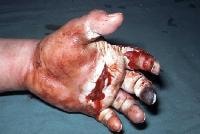
Care must be used when operating, as airless spray guns can cause serious injury,[9] such as injection injuries, due to the paint ejecting from the nozzle at high pressure.
Airless pumps can be powered by different types of motor: electric, compressed air (pneumatic), or hydraulic. Most have a paint pump (also called a lower) that is a double-acting piston, in which the piston pumps the paint in both the down and the upstroke. Some airless pumps have a diaphragm instead of a piston, but both types have inlet and outlet valves.
Most electric-powered airless pumps have an electric motor connected through a gear train to the paint piston pump. The pressure is achieved by stopping and starting the motor via a pressure sensor (also called a transducer); in more advanced units, this is done by digital control in which the speed of the motor varies with the demand and the difference from the pressure set-point, resulting in very good pressure control. Some direct drive piston pumps are driven by a gasoline engine with pressure control via an electric clutch. In electric diaphragm pumps, the motor drives a hydraulic piston pump that transmits the oil displaced by the piston, to move the diaphragm.
Hydraulic and air-powered airless pumps have linear motors that require a hydraulic pump or an air compressor, which can be electric or gasoline-powered, although an air compressor is usually diesel-powered for mobile use or electric for fixed installations. Some airless units have the hydraulic pump and its motor, built onto the same chassis as the paint pump.
Hydraulic or air-powered airless provide a more uniform pressure control since the paint piston moves at a constant speed except when it changes direction. In most direct drive piston pumps, the piston is crankshaft driven in which the piston will be constantly changing speed. The linear motors of hydraulic or compressed air drive pumps are more efficient in converting engine power to material power than crankshaft-driven units. All types of paint can be painted using an airless method.
Automated linear spray systems
[edit]Manufacturers who mass-produce wood products use automated spray systems, allowing them to paint materials at a very high rate with a minimum of personnel. Automated spray systems usually incorporate a paint-saving system that recovers paint not applied to the products. Commonly, linear spray systems are for products which are lying flat on a conveyor belt and then fed into a linear spray system, where automated spray guns are stationed above. When the material is directly below the guns, the guns begin to paint the material. Materials consist of lineal parts usually less than 12 inches (30 cm) wide, such as window frames, wood molding, baseboard, casing, trim stock, and any other material that is simple in design. These machines are commonly used to apply the stain, sealer, and lacquer. They can apply water- or solvent-based coatings. In recent years ultraviolet-cured coatings have become commonplace in profile finishing, and there are machines particularly suited to this type of coating.
Automated flatline spray systems
[edit]Mass-produced material is loaded on a conveyor belt where it is fed into one of these flatline machines. Flatline machines are designed to specifically paint material that is less than 4 inches (10 cm) thick and complex in shape, for example, a kitchen cabinet door or drawer front. Spray guns are aligned above the material and the guns are in motion to hit all the grooves of the material. The guns can be moved in a cycle, circle, or can be moved back and forth to apply the paint evenly across the material. Flatline systems are typically large and can paint doors, kitchen cabinets, and other plastic or wooden products.
Spray booth
[edit]
A spray booth is a pressure-controlled closed environment, originally used to paint vehicles in a body shop. Its effective design promotes efficient paint application, minimizing contamination and maximizing the quality of the finished product.[10] To ensure the ideal working conditions (temperature, airflow, and humidity), these environments are equipped with ventilation, consisting of mechanical fans driven by electric motors, and optionally burners to heat the air to speed paint drying. Toxic solvents and paint particles are exhausted outside, possibly after filtering and treatment to reduce air pollution. Prevention of fires and dust explosions is also a high priority. To assist in the removal of the over sprayed paint from the air and to provide efficient operation of the down-draft, water-washed paint spray booths utilize paint detackifying chemical agents.
Artists may also make use of spray booth facilities to enable them to use spray paints (including automotive finishes) efficiently and safely. They may rent space and time in auto body shops or set up their facilities in association with schools or artist cooperatives.
Safety
[edit]Spray painting poses health hazards that affect the respiratory, nervous, and circulatory systems. Similarly, using solvents to clean one's hands of paint marks and residue may cause skin irritation or even more serious issues since many are carcinogenic or neurotoxic. There are risks involved in working with substances such as paint and thinner, which contain compounds that are potentially harmful to health, or even fatal.[11]
Appropriate training for personnel who are responsible for conducting the painting procedures is important, which may be from a professional training provider or the product supplier. There are also hazards related to the disposal of wastes and materials that are contaminated with potentially harmful chemicals. Decontamination procedures and Material Safety Data Sheets for various products are important. Safety is improved through:
- Personal protective equipment (PPE) use: PPE must be used when handling spray paint materials, particularly PPE that offers protection to the skin. Some of the essential personal protective equipment are overalls with a hood, protective goggles for the eyes, half-mask respirators, and single-use nitrile gloves. One of the most essential types of PPE is respiratory protective equipment (RPE). Nevertheless, basic RPE does not offer ample protection from the negative effects of isocyanates in human tissue. Paint products containing isocyanates must be handled while donning an air-fed RPE that has a 20 or higher APF (assigned protection factor). Air-fed respiratory protective equipment needs extra attention since they provide breathable air to the user. When in use, measures must be implemented to prevent contamination of the air supply since there is a risk of harmful substances entering the intake valve if it is not positioned outside of the spray area.
- Health monitoring: To avoid the development of illnesses associated with exposure to isocyanates, health authorities recommend that people who use spray paint products that contain the substance provide a urine sample after a work shift at least once a year, with high frequencies in first few months on the job. A urine sample with ascertain levels of exposure, not the presence of disease associated with harmful chemicals.
- Proper storage: Since paints and thinners are fire hazards, extra care must be taken not only while they are in use. Fire safety should also be considered when storing paint supplies.[12] In the United States, the Occupational Safety and Health Administration (OSHA) provides guidelines for the proper storage of flammable materials.[13] Many products used in spray paint are flammable such that fire risk is likely within a distance of 15 cm from the nozzle. As such, ignition sources must be placed at a safe distance. Also, there is a risk of dust explosions when finely-divided paint particles become airborne.
- Proper recordkeeping: One of the basic tenets of risk control is the maintenance of updated health records of personnel handling spray paint products. Confidential data on biological monitoring[14] results must be appropriately kept.[15] Records of the schedule and result of testing procedures should also be kept. Some of the most important tests to be conducted regularly are air quality testing, testing of pressure systems and electrical systems, and testing of compressor reservoir air filters.
Chemical hazards
[edit]There are several types of paints in the market which are customized for different applications. Their components varying according to the application needs but often contain substances that can be toxic when inhaled or absorbed through the skin.[1] [16] Painters, and other workers in his or her proximity a are exposed primarily to solvents. The mechanical removal of paint can lead to exposure to pigments and fillers.[16] Two common components include:
Acetone
[edit]Spray paints contain hazardous chemicals that can expose a worker to possible side effects. One of the most commonly used chemicals in spray paints includes acetone. Acetone is a clear, heavily scented liquid that is used in common industrial products but also found organically. The chemical is on the ‘Right to Know Hazardous Substance’ list as well as the ‘Special Health Hazard Substance List.’ It is highly flammable and should be treated with mindful handling.[17] In the workplace, exposure can come from inhalation or direct contact, like dermal or oral.[18] There are current regulations regarding the exposure to acetone in the workplace due to the possible health risks. When inhaled, irritation to the nose, throat, and lungs have been found to occur. Dermal contact can also result in skin irritation along with dryness and redness. If the chemical is of high concentration, side effects such as headaches, nausea, vomiting, and loss of consciousness can occur. Long term impacts have been minimally studied with a current consensus of the liver and kidney being affected. Prolonged contact with acetone is discouraged.[19]
In the workplace, prevention of exposure is recommended. When storing acetone, it should be handled in a closed container, stored in a location that maintains safe temperatures, and away from possible flame exposures. For dermal exposure prevention, PPE such as gloves or garments that can act as a barrier is recommended. Inhalation exposure can be prevented by regulating air circulation as well as using protection such as filters or respirators.[20]
Xylene
[edit]Xylene is a solvent that is often used in paints including spray paint and therefore found in many spray-painting environments. Xylene is a colorless and flammable liquid that is also a hazard to the wellbeing of many humans.[21] Xylene is harmful when exposed to human skin or, in more extreme cases, eyes, nose, and throat. Symptoms of xylene exposure can come in many forms including headaches; dizziness; confusion; loss of muscle coordination; and in high doses, even death. Workers who are exposed can show an array of various symptoms, but the severity of these symptoms ultimately depends on the duration of exposure, consistency, and what protective measures are used to prevent the harmful effects of xylene. This can be a big issue for spray painters who are exposed every day especially if individuals are not wearing proper equipment to combat these fumes. [22] At high levels of exposure, xylene can have effects on the central nervous system. This can cause extreme fatigue and nausea and potentially lead to unconsciousness. Unfortunately for many avid spray painters, the effects of xylene only grow more severe with extended and consistent exposure. [23]
Long term exposure to xylene may contribute to many chronic health issues. It can potentially affect certain organs within the human body including the liver, kidneys, and even cognitive functions relating to the brain. Xylene has shown to have negative effects on memory and concentration. To reduce these risks, it is essential that safety equipment such as good ventilation, protective wear, and safe handling practices are used when handling spray paint. [24]
Problems with the finishing
[edit]- Orange peel, an undesirable rippled texture
- Fisheye, blemishes caused by contamination such as oil or water
Other applications
[edit]
One application of spray painting is graffiti. The introduction of inexpensive and portable aerosol paint has been a boon to this art form, which has spread all over the world. Spray painting has also been used in fine art. Jules Olitski, Dan Christensen, Peter Reginato, Sir Anthony Caro, and Jean-Michel Basquiat have used airbrushes, for both painting and sculpture.
See also
[edit]
- Aerosol paint – Paint stored in and administered by the use of pressurized containers
- Airbrush – Small, air-operated tool that atomizes and sprays various media
- Frederick William Lawrence – Canadian airbrush painter
- Huffing
- Inhalant – Chemical, often household, breathed in to cause intoxication
- Primer (paint) – Preparatory coating put on materials before painting
- Spray paint art, also known as graffiti
References
[edit]- ^ a b "The Contentious Historical Origins of Spray Paint".
- ^ finishingacademy.com, 1.1.1 The History of the Spray Booth
- ^ a b "The History of Sprayguns - Body Shop Business". 1 September 2000.
- ^ "The Devil in the White City" by Erik Larson, Vintage, 2004
- ^ "Using a Compressed Air Paint Spray Gun" (PDF). 1 May 2008.
- ^ Todd, Robert H., Dell K. Allen, Leo Alting. Manufacturing Processes Reference Guide. New York City 1994. Industrial Press Inc.
- ^ "paint spraying, air compressors, paint spray gun, power tools, pro tools".
- ^ Poozesh, Sadegh; Akafuah, Nelson; Saito, Kozo (1 February 2018). "Effects of automotive paint spray technology on the paint transfer efficiency – a review". Proceedings of the Institution of Mechanical Engineers, Part D: Journal of Automobile Engineering. 232 (2): 282–301. doi:10.1177/0954407017695159. ISSN 0954-4070. S2CID 136435149.
- ^ medscape.com
- ^ Hitchcock, Martina (May 24, 2023). "How To Build A Professional Paint Booth". Holapaints. Archived from the original on May 17, 2023. Retrieved May 24, 2023.
- ^ Safety in isocyanate paint...
- ^ SMART paint spraying
- ^ "Flammable and Combustible Liquids - 29 CFR 1910.106". OSHA. Retrieved 18 November 2015.
- ^ "What is biological monitoring?" (PDF). UK Government Health & Safety Laboratory. Retrieved 19 November 2015.
- ^ Health surveillance records
- ^ a b IARC, International Agency for Research on Cancer (2012). IARC monographs on the evaluation of carcinogenic risks to humans (100F ed.). Geneva, Switzerland: World Health Organization. pp. 509–531. ISBN 978 92 832 1323 9.
- ^ "Hazardous Substance Fact Sheet" (PDF). New Jersey Department of Health.
- ^ admin (2015-05-04). "Chemical Exposure Hazards in Spray Painting Operations-April 2015". OccuSafe Industrial Hygiene Consulting. Retrieved 2024-11-21.
- ^ "Health Effects", Toxicological Profile for Acetone, Agency for Toxic Substances and Disease Registry (US), June 2022, retrieved 2024-11-21
- ^ "Relevance to Public Health", Toxicological Profile for Acetone, Agency for Toxic Substances and Disease Registry (US), June 2022, retrieved 2024-11-21
- ^ "Xylene | NIOSH | CDC". archive.cdc.gov. 2022-12-06. Retrieved 2024-11-21.
- ^ Nilanjay (2023-11-15). "The Role of Xylene Solvent in the Paint Industry". Solvent Washer. Retrieved 2024-11-21.
- ^ PubChem. "Xylene". pubchem.ncbi.nlm.nih.gov. Retrieved 2024-11-21.
- ^ "Xylenes | ToxFAQs™ | ATSDR". wwwn.cdc.gov. Retrieved 2024-11-21.
Other resources
[edit]- "How to Buy a Paint Sprayer and Make it Pay." Popular Science, September 1966, pp. 160–163, article on house paint sprayers.
- "How Long Does Spray Paint Take To Dry On All Surfaces." Paint Hack, September 2022, article on how long does spray paint takes to dry.
Spray painting
View on GrokipediaFundamentals
Definition and Principles
Spray painting is a coating technique that employs compressed air, hydraulic pressure, or electrostatic forces to atomize liquid paint into a fine mist of droplets, which are then directed onto a surface to achieve a uniform layer. This process relies on the dispersion of paint particles typically ranging from 10 to 100 microns in diameter, enabling smooth application across various substrates such as metal, wood, or plastic.[4][5] The core principle of spray painting centers on atomization, where the liquid paint is sheared into droplets through high-velocity airflow or pressure differentials, forming a spray plume governed by fluid dynamics. In air-atomized systems, Bernoulli's principle plays a key role: as compressed air accelerates through the nozzle, its pressure decreases, drawing paint from a reservoir and mixing it with the airstream to break it into droplets via turbulent shear forces. The resulting plume's shape and spread are influenced by the interplay of air velocity, paint flow rate, and environmental factors, with fluid dynamics dictating droplet trajectories and evaporation rates during transport to the target surface.[6][4][7] Key material properties significantly affect the atomization process and spray pattern. Viscosity determines droplet breakup efficiency; higher viscosity resists shear, leading to larger droplets and narrower patterns, while lower viscosity promotes finer atomization but risks excessive overspray. Surface tension influences droplet stability and coalescence, with higher values hindering uniform breakup and potentially causing uneven coatings. Transfer efficiency, defined as the percentage of paint that adheres to the target versus waste (overspray), typically ranges from 30% to 65% depending on the system, highlighting the importance of optimizing these parameters to minimize material loss and environmental impact.[8][9][10] Compared to traditional brushing or rolling, spray painting offers superior uniform coverage due to the fine droplet distribution, faster application speeds for large areas, and better penetration into complex geometries or textured surfaces, reducing labor time and improving finish quality.[11]Basic Equipment and Materials
Spray guns serve as the core tool for atomizing and applying paint, typically featuring interchangeable fluid tips, needles, and air caps that control flow and pattern. Nozzle sizes generally range from 0.8 mm to 2.5 mm, with smaller sizes (e.g., 1.2-1.4 mm) suited for low-viscosity clear coats and basecoats, and larger sizes (e.g., 1.8-2.5 mm) for high-viscosity primers and gel coats to ensure proper atomization.[12][13] For air-powered spray guns, such as high-volume low-pressure (HVLP) models, an air compressor is required to supply pressurized air, typically delivering 10-20 cubic feet per minute (CFM) at 90 pounds per square inch (PSI) to maintain consistent performance without pressure drops during extended use. Hoses, usually 1/4-inch diameter and 25-50 feet long, connect the compressor to the gun, while paint reservoirs—either gravity-feed cups (0.5-1 liter capacity) or suction-feed pots—hold the prepared material for feeding into the gun.[14][15] Common paint types for spray application include solvent-based options like lacquers, which dry quickly via evaporation for smooth finishes, and enamels, which offer durability through chemical curing; primers provide adhesion and corrosion resistance. Water-based paints, such as acrylics and latex, are favored for lower volatile organic compound (VOC) emissions and easier cleanup, though they may require longer drying times compared to solvent-based counterparts. Thinners and reducers adjust paint viscosity for optimal flow, with typical ratios adding 10-30% by volume of thinner to basecoats (e.g., 100 parts paint to 10-30 parts reducer) to achieve sprayable consistency without compromising film build.[16][17] Preparatory items ensure clean application and protection: surface cleaners, such as degreasers or solvent wipes, remove oils, dust, and contaminants per standards like SSPC-SP1; masking tapes and plastic sheeting cover adjacent areas to prevent overspray; drop cloths or fabric sheets shield floors and furnishings. Substrate preparation is critical for adhesion, involving sanding glossy or previously coated surfaces dull with 180-400 grit sandpaper along the grain, followed by thorough dust removal via air blow-off or tack cloths.[18] Selection criteria emphasize compatibility, with paint viscosity dictating nozzle size and gun type—for instance, high-solids paints perform best with airless systems to handle thicker formulations efficiently, while low-viscosity water-based paints suit HVLP guns for reduced overspray. Basic setups cost $200-500, including gun and compressor, with maintenance involving daily cleaning of tips and reservoirs using compatible solvents to prevent clogs and extend equipment life.[13][19]History
Early Developments
The earliest precursors to spray painting can be traced to prehistoric cave art, where artists applied pigments by blowing paint through hollow bones or reeds to create finely grained distributions, akin to modern airbrushing techniques.[20] This method allowed for detailed stenciling and shading on rock surfaces, as seen in sites like Lascaux, dating back over 17,000 years. In the late 19th century, mechanical advancements began to formalize spraying processes; for instance, in 1887, Joseph Binks, a maintenance painter at Marshall Field's department store in Chicago, invented the first cold-water paint spraying machine to efficiently whitewash large basements, marking a shift from manual brushing to pressurized application.[21] A pivotal public demonstration occurred at the 1893 World's Columbian Exposition in Chicago, where director of decorations Francis Davis Millet employed compressed-air sprayers to rapidly coat the fair's expansive plaster buildings with white lead paint mixed in oil, accelerating construction timelines and showcasing the technology's potential for large-scale use.[22] Building on this, the development of airbrushes advanced artistic applications; Charles Burdick patented the first internal-mix airbrush in 1892, enabling precise atomization of paint inside the device for retouching photographs and illustrations, which Thayer & Chandler commercialized shortly thereafter.[23] By the early 20th century, these tools evolved further, with ongoing refinements in the 1920s enhancing control for commercial art and design. Industrial adoption accelerated in the 1920s, particularly in automotive manufacturing, where traditional hand-brushing gave way to spray guns for efficiency on assembly lines. Ford Motor Company transitioned to spraying nitrocellulose lacquers like Duco on Model T vehicles and successors, reducing drying times from days to hours and enabling higher production volumes.[24] This evolution proved crucial during World Wars I and II, as spray painting facilitated rapid application of camouflage schemes on aircraft; for example, British factories used Aerograph sprayers to coat S.E.5a fighter wings during WWI, while WWII production lines employed similar methods for disruptive patterns on fighters and bombers to enhance concealment.[25] These wartime demands underscored spray technology's role in scaling output, from pre-war experimentation to mass mobilization efforts.Aerosol Cans and Modern Advancements
The invention of the portable aerosol spray paint can in 1949 marked a pivotal advancement in spray painting accessibility, pioneered by Edward Seymour, an Illinois paint company owner, who developed the first aerosol-delivered paint using a propellant system suggested by his wife for metallic finishes under the Krylon brand.[26] This innovation built on earlier aerosol technology from the 1940s, enabling pressurized paint dispersion without external equipment and facilitating quick, portable application for industrial and consumer uses. Commercialization accelerated in the 1950s as companies like Krylon expanded production, introducing aerosol paints for automotive touch-ups and signage, which democratized spray painting beyond professional workshops. Aerosol cans gained cultural prominence in the 1960s and 1970s through their adoption in urban graffiti, particularly in New York City's subway system, where artist TAKI 183 popularized tagging by inscribing his moniker across the city starting around 1970, inspiring a wave of youth expression on public transit.[27] This period saw aerosol spray paint become synonymous with the emerging hip-hop subculture, as writers used the cans' portability for rapid, anonymous applications on trains and walls, fueling a grassroots art movement amid urban decay.[28] By the 1980s, graffiti evolved into global street art, spreading from New York to Europe and beyond via media coverage and hip-hop's internationalization, with artists like Jean-Michel Basquiat transitioning aerosol techniques from subways to galleries.[29] Regulatory milestones in the 1970s enhanced safety, as the Occupational Safety and Health Administration (OSHA) adopted standards under 29 CFR 1910.107 in 1971, mandating ventilated spray booths, explosion-proof equipment, and residue control to mitigate fire and health hazards in aerosol and spray operations.[30] These rules, drawn from National Fire Protection Association (NFPA) guidelines, addressed the flammable nature of propellants and paints, reducing workplace incidents during aerosol's industrial scaling.[31] The 1990s introduced environmental regulations promoting high-volume low-pressure (HVLP) systems to curb overspray and volatile organic compound (VOC) emissions, with the U.S. Environmental Protection Agency (EPA) and states like California enforcing HVLP compliance for automotive and industrial painting to meet Clean Air Act amendments.[32] This shift improved transfer efficiency from traditional air-atomized methods, minimizing waste and atmospheric pollution while maintaining finish quality.[33] In the 2010s, integration of electrostatic charging and robotics advanced spray painting precision, with electrostatic systems enhancing paint adhesion on complex surfaces like automotive bodies by attracting particles via high-voltage fields, achieving up to 90% transfer efficiency in production lines.[34] Robotic arms, often equipped with electrostatic bells, automated trajectories for uniform coverage, as demonstrated in studies optimizing paths for curved geometries to reduce labor and defects in manufacturing.[35] By the 2020s, sustainability drove a shift to water-based aerosol formulations, which use water as the primary carrier to lower VOC content and eliminate hazardous solvents, aligning with global regulations like the EU's REACH and EPA limits for reduced environmental impact.[36] These eco-paints maintain performance in adhesion and durability while cutting emissions by over 50% compared to solvent-based predecessors, supporting greener industrial practices.[37] As of 2025, innovations include low-VOC eco-paints with nanocoating additives for self-healing properties, high-pressure systems enabling faster application rates, and AI-guided robots that use machine vision for real-time path adjustments, boosting precision in automotive repairs.[38] For instance, companies like Gel Engineering offer AI-integrated systems that improve efficiency in manufacturing lines by minimizing overspray and optimizing paint usage.[39] Collaborations like General Motors and 3M's robotic paint repair systems further exemplify these advancements, automating defect detection and polishing on assembly lines with minimal waste.[40]Techniques
Manual Spray Painting Methods
Manual spray painting requires meticulous preparation to ensure adhesion and a smooth finish. The surface must first be thoroughly cleaned to remove dirt, grease, oils, and loose particles, often using solvents like mineral spirits or mild detergents followed by rinsing and drying.[41] Priming is essential for porous or bare materials such as wood, metal, or plastic, applying a compatible primer coat to promote paint adhesion and prevent issues like peeling or uneven absorption.[42] Masking involves covering areas not to be painted with tape, paper, or plastic sheeting to achieve clean edges and protect surrounding surfaces.[42] During application, maintain a consistent distance of 6-12 inches from the surface to the spray source for even atomization and to avoid drips or heavy build-up.[43] Execution begins with proper trigger control on spray guns, where partially pulling the trigger adjusts fan width for broader or narrower coverage, while full pulls deliver material flow.[44] Layering techniques include wet-on-wet application, where subsequent coats are added before the previous one dries to blend colors seamlessly and reduce visible overlaps, commonly used in basecoats for automotive finishes.[45] In contrast, wet-on-dry layering involves allowing each coat to fully cure before the next, ideal for building thickness or applying clear topcoats to enhance durability without solvent interaction.[46] Motion paths should consist of smooth, overlapping passes covering about 50% of the previous stroke to ensure uniform coverage and eliminate gaps or streaks.[47] Various patterns and effects can be achieved by varying speed, angle, and technique. Stippling creates a textured, dotted appearance by holding the spray source stationary and pulsing the trigger briefly for fine droplets.[48] Fading produces gradient transitions by gradually increasing or decreasing distance and pressure while moving away from or toward the surface. Texturing involves short, erratic bursts or using specialized nozzles to build rough, three-dimensional surfaces like simulated stone or rust effects.[48] Spray speed influences build-up, with slower passes depositing more paint for opacity and faster ones yielding thinner, translucent layers; angling the spray at 45 degrees to edges helps feather application and prevents excessive accumulation.[49] Common manual variants include freehand airbrushing, which uses compressed air to atomize paint for intricate details and smooth gradients without stencils, requiring steady hand control for precision. For aerosol cans, vigorous shaking for at least one minute after the mixing ball rattles ensures pigment suspension, and nozzle capping prevents clogs by covering the tip when not in use.[50]Automated and Robotic Systems
Automated and robotic systems in spray painting represent advanced machine-driven approaches designed for high-volume, precise application of coatings, enhancing efficiency in industrial settings. These systems automate the spraying process to achieve uniform coverage on various substrates, minimizing human intervention and variability. Linear and flatline configurations handle continuous production flows, while robotic setups address complex geometries, often integrating with conveyor lines for seamless operation.[51] Linear systems employ conveyor-fed mechanisms to transport workpieces through spraying zones, enabling continuous production in applications such as furniture manufacturing. In these setups, substrates like mouldings, door jambs, and cabinet components move along a belt or roller conveyor under overhead spray guns that apply primers, stains, or finishes. Speed control is adjustable, with models achieving rates up to 200 feet per minute (FPM) for high-throughput lines, though typical operations range from 10 to 50 FPM to ensure optimal coating adhesion. For instance, the Performa linear spraying machine uses a conveyor belt with up to eight spray guns divided into two product circuits, supporting water- or solvent-based coatings on wood and plastic profiles.[51][52][53] Flatline systems facilitate horizontal overhead spraying for flat or profiled surfaces, integrating reciprocating or rotary applicators within enclosed booths to contain overspray and recover excess material. Reciprocating machines oscillate spray guns in overlapping patterns as parts pass beneath on a conveyor, suitable for panels, doors, and 3D substrates in furniture production, with speeds up to 10 FPM for detailed finishes. Rotary variants generate a fine mist via spinning bells, allowing faster processing exceeding 30 FPM while maintaining even distribution. Booth integration includes dry filtration or paper belt recovery systems to manage waste, ensuring compliance with environmental standards and reducing material loss.[54][51] Robotic advancements utilize 6-axis articulated arms to navigate intricate geometries, such as automotive body panels, enabling multi-angle spraying for primers, paints, and sealants. These systems, like the RO1 model, feature end-effectors with spray guns that follow programmed paths, adapting to part variations through joint flexibility. By 2025, integration of AI vision systems has enabled real-time defect detection, such as identifying surface imperfections via optical sensors, and adaptive spraying that adjusts parameters like pressure and distance for optimal thickness uniformity. Machine learning algorithms, including Random Forest models, optimize trajectories to minimize roughness (with prediction errors as low as 1.49%) and thickness variations (0.76% error), as demonstrated in applications using Fanuc robots.[55][56][57] These automated and robotic systems deliver key benefits, including transfer efficiencies exceeding 95% through electrostatic and rotary atomization, which reduces overspray and paint waste compared to manual methods. Consistency in coating quality reaches high levels, with uniform application across large surfaces, while labor requirements decrease significantly—for example, Boeing's robotic system for 777 aircraft wings applies finishes in 24 minutes versus 4.5 hours manually, cutting paint usage by 70 pounds per wing and halving painter shifts without layoffs. Such efficiencies support scaled production in aerospace and automotive sectors, lowering costs and improving environmental impact by minimizing material consumption.[58][59][60]Types of Spray Guns
Air-Atomized Guns
Air-atomized spray guns operate by mixing compressed air with paint at the nozzle, where the air breaks the paint into fine droplets through a process known as atomization, creating a mist that is propelled onto the target surface.[61] This mechanism relies on the shear forces generated by the high-velocity air stream surrounding the liquid paint jet, which disrupts the paint's surface tension to produce uniform droplets.[62] Typical inlet air pressures for these guns range from 20 to 40 PSI to achieve effective atomization while controlling bounce-back and overspray.[63] High Volume Low Pressure (HVLP) variants of air-atomized guns use a high volume of air, typically 10 to 30 cubic feet per minute (CFM) (approximately 280 to 850 l/min), delivered at low pressure—less than 10 PSI at the air cap—to enhance paint transfer efficiency.[64] Air consumption varies depending on the model, nozzle size, and application; for painting motorcycles or scooters, HVLP spray guns typically range from 90 to 300 liters per minute (l/min), with mini HVLP guns (e.g., 0.8 mm nozzle) for detail or frame work often using 90-140 l/min at around 2-3 bar, while standard models for larger areas may require 250-300 l/min. This design minimizes atomization energy, reducing the velocity of droplets and thereby decreasing bounce-back from the surface.[65] According to EPA standards, HVLP guns must demonstrate a transfer efficiency of at least 65% to qualify as compliant or equivalent, significantly outperforming conventional air-atomized guns that often achieve only 25-40% efficiency.[66] For instance, with proper technique, HVLP systems can exceed 60% transfer efficiency in automotive refinishing applications.[67] Low Volume Low Pressure (LVLP) guns, a subset of air-atomized technology, employ reduced air volumes—typically under 10 CFM—while maintaining low cap pressures similar to HVLP, making them more portable for users with smaller air compressors.[68] This lower air consumption suits LVLP for detailed, small-scale tasks such as trim painting or cabinetry, where high portability is prioritized over maximum coverage speed.[69] Unlike HVLP, LVLP may sacrifice some transfer efficiency for compactness but remains effective for fine work without requiring large air supplies.[70] Air-atomized guns, including HVLP and LVLP models, excel in delivering fine, smooth finishes on surfaces like wood and metal, where precise control over droplet size ensures even coverage without runs or orange peel effects.[71] They are widely used in woodworking for cabinets and furniture, as well as in metal fabrication for primers and topcoats.[72] However, these guns produce higher overspray in windy conditions, as the low-pressure air stream is more susceptible to environmental air currents, leading to material waste and uneven application.[72]Airless and Electrostatic Guns
Airless spray guns operate by utilizing hydraulic pressure to propel paint through a small orifice in the spray tip, achieving atomization without the need for compressed air. Typically, these guns generate pressures ranging from 1,000 to 4,000 PSI, forcing the fluid at high velocity through an orifice sized between 0.011 and 0.031 inches, where shear forces break the paint into fine droplets upon release into the atmosphere.[73][74] This method is particularly suited for applying thick coatings, such as latex paints or elastomeric materials, as larger orifice sizes (e.g., 0.015–0.035 inches) accommodate higher viscosities without requiring dilution, enabling efficient coverage on large surfaces like walls or exteriors.[74] Electrostatic spray guns enhance application efficiency by applying a high-voltage charge, usually 30–100 kV, to the atomized paint droplets, creating an electrostatic attraction to grounded surfaces. The charged droplets, often negatively charged, are drawn toward the oppositely charged or neutral workpiece, resulting in improved transfer efficiency exceeding 70% and a notable wrap-around effect that coats edges, recessed areas, and the backsides of objects.[75][76][77] This technology minimizes overspray and material waste, making it ideal for complex geometries in industrial settings. A variant of airless spraying, known as hot spray, involves heating the paint to 100–150°F (approximately 38–66°C) to reduce its viscosity, allowing for smoother flow and better atomization at lower pressures. This approach, often implemented via heated hoses or systems like TempSpray, prevents the need for solvents, shortens drying times, and improves edge coverage while reducing equipment wear.[78] Air-assisted airless guns combine this with low-pressure air (500–1,500 PSI fluid pressure) to further refine atomization for medium- to high-viscosity fluids, providing hybrid control over spray pattern and finish quality.[79][74] Rotational bell atomizers, commonly used in automated lines, feature a spinning cup or bell that rotates at speeds of 1,000–50,000 RPM (up to 60,000 RPM in advanced models) to centrifugally distribute and atomize paint for uniform application. Paint flows onto the inner surface of the bell cup, where centrifugal force spreads it evenly before high-speed rotation shears it into droplets; shaping air then controls the spray pattern.[75] These systems, often integrated with electrostatic charging, excel in high-volume production, mounting on robots or reciprocators for consistent coating on automotive parts or furniture.[75]Applications
Industrial and Commercial Uses
In industrial and commercial settings, spray painting is widely employed for its efficiency in applying uniform coatings over large surfaces, enabling high-volume production in sectors such as automotive manufacturing, appliance production, and infrastructure maintenance. This method facilitates precise control over film thickness and coverage, often outperforming traditional brushing or rolling by minimizing waste and ensuring consistent adhesion on complex geometries.[80] In the automotive industry, spray painting is integral to the basecoat/clearcoat process, a multi-stage system that begins with a primer layer followed by a colored basecoat and a protective clearcoat, typically applied via automated spray lines for vehicle bodies. The basecoat provides the desired color and opacity, while the clearcoat adds durability and gloss, with the basecoat typically ranging from 0.9 to 1.4 mils and the clearcoat from 1.5 to 2.0 mils, for a combined thickness of approximately 2.4 to 3.4 mils to achieve optimal protection against environmental factors. This four-stage approach, including primer application, ensures corrosion resistance and aesthetic quality in mass production, as seen in original equipment manufacturer (OEM) facilities.[81][82] For manufacturing applications, spray painting is essential in finishing appliances and furniture, where it delivers smooth, durable surfaces resistant to wear and chemicals. Hybrid powder coating systems, combining epoxy for toughness and polyester for UV resistance, are frequently used in electrostatic spray processes for household appliances like refrigerators and washers, providing a single-layer barrier that enhances longevity without the need for multiple liquid coats. In furniture production, similar spray techniques apply protective finishes to wood and metal components, improving resistance to marring and weathering while maintaining aesthetic appeal.[83][84] In construction, spray painting supports high-volume coating of walls, structural steel, and infrastructure elements, offering rapid application for large-scale projects. For bridge maintenance, zinc-rich primers are commonly sprayed as the initial layer in multi-coat systems, providing galvanic corrosion protection with 65-95% metallic zinc content in the dry film to shield steel from harsh environmental exposure. These inorganic or organic zinc formulations are applied via airless or conventional spray equipment directly to metal substrates, forming a robust base for subsequent epoxy intermediates and topcoats in three-coat configurations.[85][86] Economically, spray painting reduces labor costs in industrial applications by enabling faster coverage than brushing through automated systems that minimize manual effort and project timelines, leading to overall savings in large-scale operations. As of 2025, trends emphasize sustainable industrial paints, with waterborne and low-VOC formulations gaining prominence in spray processes to lower environmental impact while maintaining performance, driven by regulatory pressures and market demand for eco-friendly coatings in automotive and construction sectors.[87][88]Artistic and Decorative Uses
Spray painting has been integral to graffiti and street art since the 1970s in New York City, where young artists began using aerosol cans to create tags—stylized signatures representing their pseudonyms—on urban surfaces like buildings and subway trains.[89] These tags evolved into more complex forms, such as wildstyle lettering, characterized by interlocking, three-dimensional letters that emphasize flow, arrows, and decorative elements for visual complexity.[90] Brands like Montana Gold have become staples in this scene, offering low-pressure, NC-acrylic aerosol paints with semi-matt finishes that provide high coverage and quick drying on diverse surfaces, enabling artists to achieve durable, non-reflective results in outdoor environments.[91] In murals and fine art, spray painting techniques allow for layered applications that build depth and texture, as seen in the stencil works of artist Banksy, who employs multiple stencils and short bursts of spray paint to create precise, satirical images with subtle shading and contrast.[92] This method facilitates rapid execution, often in public spaces, while layering thin coats enhances dimensionality without runs. Airbrushing, a controlled form of spray painting using compressed air to atomize paint, excels in photorealistic fine art by producing smooth gradients and fine details on canvases or other substrates, mimicking photographic realism in portraits and landscapes.[93] For decorative crafts, spray painting transforms everyday objects like custom furniture and signage through specialized effects, such as chrome finishes achieved by applying metallic base coats followed by clear layers for reflectivity, or candy coats that involve multiple thin applications over a metallic undercoat to create translucent, depth-illusion colors.[94] These techniques, executed with aerosol cans, allow artisans to refinish wood or metal pieces with even coverage and vibrant hues suitable for interior decor. Aerosol cans' portability makes them ideal for on-site artistic applications in graffiti and murals, while recent advancements in low-odor, water-based formulas—such as those from Rust-Oleum and Liquitex—enable safer use in indoor art studios by reducing odor by up to 40% compared to traditional solvent-based paints.[95][96]Safety and Hazards
Personal Protective Equipment and Practices
Personal protective equipment (PPE) is essential for individuals engaged in spray painting to mitigate risks of inhalation, skin contact, and eye exposure from paints, solvents, and overspray. According to OSHA standards, employers must conduct hazard assessments and provide appropriate PPE under 29 CFR 1910 Subpart I, ensuring protection against physical injuries during operations.[97][98] Respirators are a critical component, with NIOSH-approved half-facepiece models equipped with organic vapor (OV) cartridges and P95 or P100 particulate filters recommended for spray painting to filter at least 95% of solid and liquid aerosols as well as certain organic vapors. Eye protection, such as chemical splash goggles meeting ANSI Z87.1 standards, is required to shield against overspray and splashes, as specified in OSHA 29 CFR 1910.133. Gloves made of nitrile or neoprene provide resistance to solvents and chemicals, while disposable or reusable coveralls protect the skin from contact with hazardous materials.[99][100][101] Safe operational practices further enhance protection, including maintaining mechanical ventilation in spray booths with a minimum airflow of 100 linear feet per minute (fpm) to capture and exhaust vapors and mists, as mandated by OSHA 29 CFR 1910.107(b)(5)(i). Designated no-smoking zones must be enforced with signage, prohibiting open flames or spark-producing equipment within 20 feet of spraying areas to prevent ignition. Proper grounding of all metal parts, such as booths and equipment, is required to eliminate static sparks, per OSHA 29 CFR 1910.107(c)(9).[97][97] Training programs are vital for safe spray gun handling to avoid slips or misfires, covering PPE donning and doffing, ventilation system operation, and emergency spill response procedures, aligned with OSHA's general duty clause and hazard communication standards in 29 CFR 1910.1200. Workers must receive instruction on recognizing hazards and using equipment correctly before performing tasks, with ongoing refreshers to maintain compliance. Recent emphases include ergonomic considerations in tool design to reduce strain during prolonged use, though core requirements remain consistent under OSHA guidelines as of 2025.[102]Chemical and Environmental Risks
Spray painting involves exposure to various chemicals, including volatile organic compounds (VOCs), solvents like acetone and xylene, and isocyanates commonly found in polyurethane and urethane paints. VOCs in conventional aerosol spray paints can reach levels up to 400 grams per liter (g/L), contributing to emissions during application.[103] Acetone, used as a solvent, acts as an irritant to the eyes, skin, and respiratory system, with the National Institute for Occupational Safety and Health (NIOSH) recommending an exposure limit of 250 parts per million (ppm) as a time-weighted average over 10 hours. Xylene, another prevalent solvent, is a neurotoxin that can cause acute effects such as dizziness, headache, and nausea upon inhalation or skin contact, with the Occupational Safety and Health Administration (OSHA) permissible exposure limit (PEL) set at 100 ppm as an 8-hour time-weighted average.[104] Isocyanates, particularly in two-component spray systems, pose significant risks through skin absorption and inhalation, leading to sensitization.[105] Health effects from these chemicals are primarily respiratory and dermatological, with potential long-term consequences. Inhalation of VOCs and isocyanates can aggravate asthma, cause chest tightness, and lead to occupational asthma, affecting up to 5-10% of exposed workers in painting operations. Skin contact with isocyanates may result in irritation, dermatitis, or allergic reactions, while chronic exposure has been linked to irreversible lung damage.[105] Long-term exposure to isocyanates and certain paint components, such as those in solvent-based formulations, is associated with increased risks of lung cancer, classifying occupational painting exposure as a Group 1 carcinogen by the International Agency for Research on Cancer.[106] Environmentally, spray painting contributes to air pollution through VOC emissions, which react with sunlight to form ground-level ozone and smog, exacerbating urban air quality issues.[107] Overspray results in material waste, typically accounting for 20-50% of applied paint volume depending on equipment efficiency, generating hazardous solid waste that requires proper disposal to prevent soil and water contamination.[61] Aerosol propellants, historically hydrofluorocarbons (HFCs) like HFC-134a, have high global warming potential; under the American Innovation and Manufacturing Act, their use in aerosols is restricted starting January 1, 2025, with full phase-out for high-global-warming-potential HFCs by 2028 to reduce greenhouse gas emissions.[108] Mitigation strategies have evolved by 2025 to address these risks, emphasizing low-VOC and water-based formulations. Low-VOC spray paints, limited to under 50 g/L in many regulatory categories, reduce emissions by up to 80% compared to traditional solvent-based options, as promoted by EPA standards for consumer and commercial products. In January 2025, the EPA finalized amendments to the National Volatile Organic Compound Emission Standards for Aerosol Coatings, updating reactivity-based limits with compliance extended to January 17, 2027, for certain requirements.[109][110] Water-based alternatives minimize solvent use, lowering both health hazards and environmental releases, while recycling programs for overspray waste—such as filter collection and solvent recovery—have been implemented under EPA guidelines to achieve up to 95% waste reduction in compliant facilities.[111] Emission controls, including high-volume low-pressure (HVLP) spray systems and enclosed booths, further limit VOC releases, aligning with Clean Air Act requirements for ozone nonattainment areas.[109]Quality and Finishing
Common Problems and Solutions
One of the most prevalent defects in spray painting is orange peel, characterized by a bumpy, wavy texture resembling the skin of an orange on the finished surface. This occurs primarily due to high paint viscosity, incorrect spray gun distance (often exceeding 12 inches), or inadequate atomization during application.[112] To resolve it, operators should thin the paint to the manufacturer's recommended viscosity, typically by 10-20% with an appropriate reducer, while maintaining a gun distance of 6-12 inches and ensuring 50% overlap between passes.[113] Proper adjustment of these factors promotes finer atomization and a smoother flow-out of the paint droplets.[114] Runs and sags manifest as drips or elongated streaks on vertical surfaces, resulting from excessive paint application, too-close gun distance (under 6 inches), or slow evaporation in low-temperature environments.[112] Solutions involve reducing the fluid flow rate on the spray gun, applying thinner coats with adequate flash time between layers (typically 5-10 minutes), and increasing ambient temperature to 70-75°F to accelerate drying.[113] Sanding affected areas with 400-600 grit paper followed by refinishing ensures a level repair.[114] Fisheyes appear as small, crater-like holes where paint beads up and fails to adhere, often caused by surface contamination from oils, silicones, or waxes.[112] To prevent this, thoroughly clean the substrate with a wax and grease remover, followed by wiping with a tack cloth to remove residual dust and particles immediately before spraying.[115] If fisheyes occur, sand the area with 800-1000 grit sandpaper, reclean, and refinish with compatible materials.[113] Dry spray results in a rough, sandy texture due to rapid paint drying in flight, often from holding the gun too far (over 12 inches) or using fast-evaporating solvents in low-humidity conditions.[112] Mitigation includes adding retarder additives to slow evaporation, maintaining optimal gun distance, and sanding the dry area smooth before applying a slower-drying topcoat.[113] Pinholes are tiny bubbles or voids from trapped air or solvent popping during curing, exacerbated by inadequate paint agitation or excessive film thickness.[112] Proper stirring or mechanical agitation of the paint prior to use releases entrained air, while allowing sufficient flash-off time (10-15 minutes) between coats prevents solvent entrapment.[114] For repairs, sand and polish the surface after full cure. Color mismatch arises from inconsistent mixing, variations in lighting during application, or using different paint batches without verification.[112] Accurate matching can be achieved using spectrophotometers, which scan the original surface multiple times to generate a precise formula, reducing visual discrepancies by capturing spectral data across visible wavelengths.[116] This tool ensures blends into adjacent panels under natural daylight, minimizing rework.[117] Adhesion failure, where paint lifts or peels from the substrate, stems from incompatible undercoats, unclean surfaces, or insufficient curing.[112] Applying a compatible primer promotes bonding, while ensuring the surface is at room temperature (above 60°F) and free of contaminants before spraying.[113] Full cure times, often 24-48 hours, must be observed to avoid delamination. Blushing presents as a milky haze on the film, triggered by moisture condensation in high-humidity environments (typically above 60% relative humidity) during spraying, especially with fast solvents.[118] Solutions include using retarder thinners to slow evaporation, maintaining shop humidity below 50% with dehumidifiers, and reducing air pressure to limit cooling effects.[118]| Defect | Common Causes | Solutions |
|---|---|---|
| Orange Peel | High viscosity, gun too far, poor atomization | Thin paint 10-20%, gun distance 6-12 inches, 50% overlap[112][113] |
| Runs/Sags | Excess paint, gun too close, low temp | Reduce flow, thin coats, 70-75°F ambient, sand and refinish[113][114] |
| Fisheyes | Contamination (oil, silicone) | Clean with remover and tack cloth, sand 800-grit, refinish[115][112] |
| Dry Spray | Gun too far, fast solvents | Add retarder, 6-12 inch distance, sand smooth[112][113] |
| Pinholes | Trapped air, solvent popping | Agitate paint, 10-15 min flash time, sand/polish[114][112] |
| Color Mismatch | Poor mixing, lighting variance | Spectrophotometer scan, daylight evaluation, blend panels[116][117] |
| Adhesion Failure | Incompatible primer, unclean surface | Use compatible undercoat, clean to 60°F+, full cure[112][113] |
| Blushing | High humidity (>60% RH), fast solvents | Retarder thinner, dehumidify <50% RH, lower air pressure[118] |