Respect all members: no insults, harassment, or hate speech.
Be tolerant of different viewpoints, cultures, and beliefs. If you do not agree with others, just create separate note, article or collection.
Clearly distinguish between personal opinion and fact.
Verify facts before posting, especially when writing about history, science, or statistics.
Promotional content must be published on the “Related Services and Products” page—no more than one paragraph per service. You can also create subpages under the “Related Services and Products” page and publish longer promotional text there.
Do not post materials that infringe on copyright without permission.
Always credit sources when sharing information, quotes, or media.
Be respectful of the work of others when making changes.
Discuss major edits instead of removing others' contributions without reason.
If you notice rule-breaking, notify community about it in talks.
Do not share personal data of others without their consent.
The stimulus–response model is a conceptual framework in psychology that describes how individuals react to external stimuli. According to this model, an external stimulus triggers a reaction in an organism, often without the need for conscious thought. This model emphasizes the mechanistic aspects of behavior, suggesting that behavior can often be predicted and controlled by understanding and manipulating the stimuli that trigger responses.
Another field this model can be applied to is psychological problems/disorders such as Tourette syndrome. Research shows Gilles de la Tourette syndrome (GTS)[6] can be characterized by enhanced cognitive functions related to creating, modifying and maintaining connections between stimuli and responses (S‐R links). Specifically, two areas, procedural sequence learning and, as a novel finding, also event file binding, show converging evidence of hyperfunctioning in GTS.[7]
Previous research on E-learning has proven that studying online can be even more daunting for lecturers and students who suddenly change their learning patterns from the classrooms to the virtual ones. This is mainly because the suddenness of this change makes it difficult for lecturers to fully prepare to lecture in the virtual learning environment. In light of the above-mentioned facts, this research proposes a novel model and integrates flow theory into the theory of technology acceptance model (TAM), based on stimulus-organism-response (S-O-R) theory, the SOR model has been widely used in previous studies of online customer behavior, and the model theory includes three components: stimulus, organism, and response. Assuming that stimuli contained in the external environment cause people to change, which affects their behavior.[8]
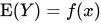
The object of a stimulus–response model is to establish a mathematical function that describes the relation f between the stimulus x and the expected value (or other measure of location) of the response Y:[9]
A common simplification assumed for such functions is linear, thus we expect to see a relationship like
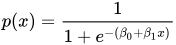
Since many types of response have inherent physical limitations (e.g. minimal maximal muscle contraction), it is often applicable to use a bounded function (such as the logistic function) to model the response. Similarly, a linear response function may be unrealistic as it would imply arbitrarily large responses. For binary dependent variables, statistical analysis with regression methods such as the probit model or logit model, or other methods such as the Spearman–Kärber method.[10] Empirical models based on nonlinear regression are usually preferred over the use of some transformation of the data that linearizes the stimulus-response relationship.[11]
One example of a logit model for the probability of a response to the real input (stimulus) , () is
In biochemistry and pharmacology, the Hill equation refers to two closely related equations, one of which describes the response (the physiological output of the system, such as muscle contraction) to Drug or Toxin, as a function of the drug's concentration.[12] The Hill equation is important in the construction of dose-response curves. The Hill equation is the following formula, where is the magnitude of the response, is the drug concentration (or equivalently, stimulus intensity), is the drug concentration that produces a half-maximal response and is the Hill coefficient.
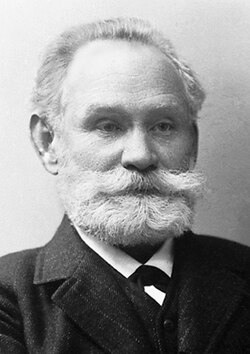
Pavlov started studying the digestive system in dogs by performing chronic implants of fistulas in the stomach, by which he was able to show with extreme clarity that the nervous system plays a dominant role in the regulation of the digestive process. Experiments on digestion led to the development of the first experimental model of learning, in which a neutral stimulus acquires the capacity to evoke a specific response further to repeated pairing with another stimulus that evokes the response.[13]
Thorndike, who proposed the model, believed that learning stemmed from stimulus and response.[14] Pavlov popularized and revolutionized the theory though by experimenting on the dogs.
^
Stephen P. Kachmar and Kimberly Blair (2007). "Counseling Across the Life Span". In Jocelyn Gregoire and Christin Jungers (ed.). The Counselor's Companion: What Every Beginning Counselor Needs to Know. Routledge. p. 143. ISBN978-0-8058-5684-2.
^Meyer, A. F., Williamson, R. S., Linden, J. F., & Sahani, M. (2017). Models of neuronal stimulus-response functions: elaboration, estimation, and evaluation. Frontiers in systems neuroscience, 10, 109.
The stimulus–response (S-R) model is a core theoretical framework in behaviorist psychology that posits observable behavior as the direct outcome of environmental stimuli triggering specific responses, with learning occurring through the strengthening or weakening of these stimulus-response associations via conditioning.[1] This approach emphasizes empirical measurement of external events over internal mental processes, grounding explanations in replicable experiments that demonstrate causal links between stimuli and behaviors.[1]Pioneered in the early 20th century, the model drew from Ivan Pavlov's discovery of classical conditioning during studies on canine digestion, where repeated pairing of a neutral stimulus (like a bell) with an unconditioned stimulus (food) led to the neutral stimulus alone eliciting salivation, establishing predictable stimulus-response bonds supported by physiological data.[1]Edward Thorndike further advanced the framework through puzzle-box experiments with animals, formulating the law of effect, which holds that responses followed by satisfying outcomes are more likely to recur when the same stimulus reappears, providing early quantitative evidence for reinforcement in S-R learning.[2]B.F. Skinner later refined these principles into operant conditioning, distinguishing antecedent stimuli from consequences that shape response probabilities, with applications yielding robust empirical results in controlled settings like the Skinner box.[3]While the S-R model achieved notable successes in predicting and modifying behaviors—evidenced by its foundational role in applied behavior analysis for treating phobias and habits—critics have highlighted its limitations in accounting for cognitive mediation or innate predispositions, prompting integrations with other paradigms yet affirming its causal efficacy for many reflexive and habitual actions.[4] Empirical validations persist in neuroscience, where stimulus-response functions model neural firing patterns, underscoring the model's enduring utility in dissecting behavioral causality without reliance on unobservable constructs.[5]
Core Concepts
Definition and Principles
The stimulus–response (S-R) model conceptualizes behavior as a mechanistic process wherein external stimuli directly elicit observable responses in organisms, with learning arising from the establishment and modification of these stimulus-response associations. This framework, central to behaviorism, prioritizes empirical observation of environmental inputs and behavioral outputs, eschewing references to internal cognitive or emotional states as explanatory constructs.[6][1]Core principles of the model include contiguity, requiring temporal proximity between stimulus and response for effective association; repetition or frequency, whereby repeated pairings strengthen the S-R bond; and intensity, where more salient stimuli produce more robust responses. These principles derive from experimental demonstrations, such as Ivan Pavlov's conditioning studies on canine salivation between 1897 and 1904, where a neutral stimulus (bell) paired with food (unconditioned stimulus) eventually elicited salivation independently.[7][6] Reinforcement mechanisms, introduced by Edward Thorndike in his 1898 puzzle-box experiments with cats, posit that responses followed by satisfying outcomes (e.g., escape and food) are stamped in, while unsatisfying ones are stamped out, formalized as the law of effect in 1911.[8][9]The model assumes a causal chain from stimulus to response, modifiable through environmental contingencies rather than innate predispositions or subjective interpretation, as emphasized by John B. Watson in his 1913 manifesto advocating psychology's focus on predicting and controlling behavior via S-R predictions. Empirical support stems from controlled laboratory settings, where quantifiable changes in response rates validate associative strengthening, though critics note limitations in accounting for novel or complex behaviors not directly tied to prior stimuli.[6][1]
Mechanisms of Association
In classical conditioning, a primary mechanism of association, a previously neutral stimulus becomes linked to an unconditioned stimulus through repeated temporal contiguity, enabling the neutral stimulus to elicit a conditioned response. This process requires the conditioned stimulus to reliably predict the unconditioned stimulus, with optimal intervals of 0.25 to 0.5 seconds between their onsets maximizing association strength in vertebrate models.[10][11] The association forms via excitatory conditioning when the unconditioned stimulus follows the conditioned stimulus consistently, as quantified by Rescorla-Wagner model parameters where surprise or prediction error drives incremental changes in associative strength: ΔV = αβ(λ - ΣV), with α as learning rate, β salience, λ unconditioned stimulus intensity, and V summed predictions.[12] Repeated non-reinforced presentations lead to extinction, weakening the link through inhibitory processes.[13]Operant conditioning establishes stimulus-response associations by linking a discriminative stimulus to a response reinforced by consequences, increasing response probability via contingency rather than mere contiguity. Thorndike's law of effect, derived from 1898 cat puzzle-box experiments, posits that responses followed by satisfying outcomes strengthen neural connections, with trial latencies decreasing from over 100 seconds initially to under 10 seconds after 20-30 trials.[14]Reinforcement schedules, such as variable-ratio producing high resistance to extinction, modulate association durability; for instance, Skinner demonstrated pigeons pecking rates exceeding 10,000 responses per hour under variable-ratio reinforcement in 1930s operant chambers.[3]Punishment similarly forms inhibitory associations by associating responses with aversive outcomes, though less effectively for long-term suppression due to emotional side effects.[15]At the neural level, both mechanisms involve synaptic plasticity in corticostriatal pathways, where dopamine transients from midbrain nuclei signal reinforcement prediction errors to facilitate long-term potentiation in direct pathway medium spiny neurons, consolidating habit-like stimulus-response habits distinct from goal-directed response-outcome learning.[16]Functional imaging confirms dorsolateral striatum activation during overtrained S-R tasks, contrasting with dorsomedial involvement in flexible associations.[17] These mechanisms underpin automatic behavioral habits, as evidenced by devaluation studies where S-R trained rodents persist in rewarded actions despite outcome value reduction.[18]
Historical Development
Early Foundations in Animal Learning
Ivan Pavlov, a Russian physiologist, conducted experiments on canine digestion in the 1890s that inadvertently revealed principles of associative learning central to the stimulus-response framework. While studying salivary reflexes, Pavlov observed dogs salivating not only to food (an unconditioned stimulus eliciting an unconditioned response) but also to antecedent signals like the experimenter's footsteps or a metronome, indicating a conditioned association where a neutral stimulus became a conditioned stimulus triggering the response. These findings, detailed in his 1903 lectures and expanded in The Work of the Digestive Glands (1897), demonstrated how repeated pairings forged reliable stimulus-response bonds without apparent cognitive mediation, emphasizing reflexive mechanisms over intentionality.[19][20]Edward Thorndike's contemporaneous work with cats in puzzle boxes, beginning in 1897 and culminating in his 1898 doctoral dissertation Animal Intelligence, provided empirical support for learning as strengthened stimulus-response connections through trial-and-error. Cats confined in boxes with escape levers learned to press them more efficiently over trials, with response times decreasing from averages of over 100 seconds initially to under 10 seconds after repeated reinforcements like food access upon escape. Thorndike formulated the Law of Effect in 1905, positing that responses followed by satisfying consequences (e.g., reward) form stronger bonds to their eliciting situations (stimuli), while unsatisfying outcomes weaken them, quantifiable via learning curves showing asymptotic improvement.[2][21]These animal studies established the stimulus-response model on observable, replicable data rather than introspection, shifting focus from mental states to measurable associations. Pavlov's reflexive pairings highlighted automatic conditioning, while Thorndike's instrumental trials introduced consequence-driven plasticity, together furnishing the experimental bedrock for later behaviorist expansions despite originating in physiological and comparative psychology contexts. Empirical records, such as Thorndike's tabulated trial data and Pavlov's conditioned reflex metrics, underscored causal links between environmental stimuli, behavioral responses, and reinforcement histories, privileging quantifiable outcomes over subjective interpretations.[22][10]
Rise of Behaviorism
The rise of behaviorism in the early 20th century stemmed from empirical investigations into animal learning, which prioritized observable stimulus-response (S-R) associations as the basis for understanding behavior. Edward Thorndike's 1898 dissertation experiments with cats in puzzle boxes demonstrated that responses leading to satisfying outcomes, such as escape and food, were repeated more frequently, while those followed by discomfort were avoided; this formulated the law of effect, positing that the strength of S-R connections is modified by consequences.[2] Thorndike's connectionist theory emphasized trial-and-error learning through reinforced bonds between stimuli and responses, providing a mechanistic framework that rejected unobservable mental processes.[23]Parallel developments in Ivan Pavlov's physiological research during the 1890s and early 1900s revealed classical conditioning, where a neutral stimulus repeatedly paired with an unconditioned stimulus elicits a conditioned response, as exemplified by dogs salivating to a bell tone after association with food.[20] Pavlov's work, initially aimed at digestive reflexes and awarded the 1904 Nobel Prize in Physiology or Medicine, offered rigorous evidence of automatic S-R linkages formed through temporal contiguity, influencing behaviorists by demonstrating predictable behavioral changes without invoking consciousness.[13] These animal-based findings challenged introspective psychology, advocating for objective, quantifiable methods centered on environmental stimuli and measurable responses.John B. Watson crystallized these ideas into a formal school in his 1913 article "Psychology as the Behaviorist Views It," declaring psychology an objective science focused exclusively on behavior as a function of stimuli, dismissing mental states as unverifiable.[24] Watson argued that all behavior, including human, could be explained through conditioned S-R habits acquired via association and reinforcement, famously claiming he could shape any infant into any specialist given control of environment.[25] This manifesto marked behaviorism's ascent, gaining dominance in American psychology through the 1920s and 1930s by promoting experimental rigor and applicability in education and therapy, though it later faced critique for oversimplifying complex cognition.
Key Formulations and Models
Classical Conditioning Framework
The classical conditioning framework forms a cornerstone of the stimulus-response (S-R) model, describing how a previously neutral stimulus acquires the capacity to evoke a response through repeated association with an unconditioned stimulus that naturally elicits that response. This associative process, rooted in reflexive behavior, underscores the S-R paradigm's emphasis on observable environmental contingencies shaping automatic reactions without invoking internal mental states.[10][11]Ivan Pavlov, a Russian physiologist, developed this framework through experiments on canine digestion starting in the 1890s, with key conditioning observations formalized between 1901 and 1903. In these studies, dogs fitted with salivary fistulas salivated profusely to meat powder as an unconditioned stimulus (US), producing an unconditioned response (UR) of salivation. Pavlov introduced a neutral stimulus (NS), such as a metronome or bell, immediately preceding the US; after approximately 100 pairings, the NS alone triggered salivation as a conditioned response (CR), transforming the NS into a conditioned stimulus (CS).[13][26]Central components of the framework include the US, which innately drives the UR; the CS, derived from the NS via association; and the CR, typically resembling the UR but potentially weaker or anticipatory. Acquisition occurs through temporal contiguity (close timing between CS and US, ideally 0.5 seconds) and contingency (CS reliably predicting US), with response strength increasing over trials until an asymptote.[10][11]Extinction follows when the CS is repeatedly presented without the US, diminishing the CR due to new learning that the CS no longer signals the US, though the association may spontaneously recover after a rest period. Stimulus generalization extends the CR to similar stimuli, while discrimination strengthens it to the specific CS through differential reinforcement. Higher-order conditioning chains additional CSs to an established one, amplifying associative networks.[13][26]In the S-R model, classical conditioning exemplifies first-order associative learning, where the CS-R bond strengthens via reinforcement history, influencing later behaviorist extensions while highlighting limitations like the necessity of biological preparedness for certain associations. Pavlov's work, building on reflex physiology, demonstrated that conditioning requires precise control procedures, such as backward pairings yielding minimal effects, underscoring contingency over mere contiguity.[27][10]
Operant Conditioning Extensions
Edward Thorndike's Law of Effect, formulated in his 1898 doctoral dissertation and elaborated in 1905, marked an initial extension of the stimulus-response (S-R) framework by emphasizing the role of behavioral consequences in learning.[2] The law posits that responses followed by satisfying effects in a given situation become more firmly connected to the situation, increasing their likelihood of recurrence, whereas responses followed by annoying effects weaken that connection.[28] Thorndike demonstrated this through puzzle-box experiments with cats, where animals initially escaped via random actions but progressively shortened escape times through trial-and-error, associating successful responses with release—a satisfying consequence—thus shifting focus from antecedent stimuli alone to post-response outcomes.[2]B.F. Skinner further extended this in his 1938 book The Behavior of Organisms, developing operant conditioning as a distinct paradigm from classical (respondent) conditioning.[29] Unlike Pavlovian S-R associations where stimuli elicit reflexive responses, operant conditioning treats voluntary behaviors—termed "operants"—as emitted actions shaped by their consequences, with reinforcement strengthening the response probability and punishment weakening it.[3] Skinner introduced the three-term contingency: a discriminative stimulus (S^D) signals the availability of reinforcement contingent on the response (R), which if followed by a reinforcer (S^R) increases future occurrences of R in the presence of S^D.[30] Positive reinforcement adds a stimulus (e.g., food), while negative removes an aversive one (e.g., terminating shock), both empirically verified to elevate response rates in controlled settings like Skinner's operant chambers.[3]Skinnerian extensions include schedules of reinforcement, systematically studied to reveal how timing and predictability of consequences affect behavior persistence.[3] Continuous reinforcement yields rapid acquisition but quick extinction upon withholding; intermittent schedules—fixed-ratio (reinforcement after set responses, e.g., every 10th lever press), variable-ratio (unpredictable number, akin to gambling), fixed-interval (after fixed time), and variable-interval (unpredictable time)—produce steadier rates, with variable-ratio most resistant to extinction due to sustained uncertainty of reward.[3] Shaping, via successive approximations, extends the model to complex behaviors by reinforcing incremental steps toward a target response, as Skinner applied in training pigeons for wartime missile guidance in Project Pigeon (1943–1944).[29]Extinction occurs when reinforcement ceases, diminishing responses, though spontaneous recovery can temporarily restore them, underscoring the model's emphasis on environmental contingencies over innate drives.[3]
Applications Across Disciplines
In Behavioral Psychology and Therapy
The stimulus-response model serves as the foundational paradigm in behavioral psychology, positing that behaviors are acquired and maintained through direct associations between environmental stimuli and observable responses, excluding unmeasurable internal processes. This approach, integral to behaviorism as established by John B. Watson in 1913 and expanded by Ivan Pavlov's demonstrations of classical conditioning in the early 1900s, prioritizes empirical observation of stimulus-response contingencies over introspective analysis.[31] In behavioral therapy, derived techniques manipulate these associations to modify maladaptive behaviors, with applications spanning anxiety disorders, developmental disabilities, and addiction.Classical conditioning principles underpin exposure-based therapies, where conditioned fear responses are extinguished through repeated, controlled presentation of eliciting stimuli without aversive outcomes. Systematic desensitization, introduced by Joseph Wolpe in 1958, involves hierarchical exposure to phobic stimuli paired with relaxation training to foster reciprocal inhibition of anxiety, demonstrating significant efficacy in reducing test anxiety and specific phobias in empirical studies.[32] Similarly, prolonged exposure therapy for PTSD leverages extinction processes, with randomized controlled trials confirming its effectiveness in diminishing trauma-related symptoms, often comparable to or exceeding pharmacotherapy outcomes.[10]Operant conditioning extensions of the S-R model emphasize reinforcement and punishment schedules to shape voluntary behaviors, as formalized by B.F. Skinner in the 1930s. Applied behavior analysis (ABA), a structured application, employs discrete trial training and positive reinforcement to enhance skills in children with autism spectrum disorders; meta-analyses of comprehensive ABA programs report moderate to large effect sizes in improving intellectual functioning, language, and adaptive behaviors, with early intensive interventions yielding gains of 15-20 IQ points on average in longitudinal studies.[33]Contingency management, another operant-derived method, provides vouchers or privileges contingent on verified abstinence in substance use treatment, achieving abstinence rates up to 60% in clinical trials compared to 20-40% in standard care.[31]These S-R-based interventions demonstrate causal efficacy through controlled manipulations of antecedents and consequences, though outcomes vary by individual factors and require consistent application; for instance, enuresis alarms exploiting classical conditioning principles achieve 50-70% resolution rates in nocturnal bedwetting by associating moisture stimuli with arousal responses.[10] Overall, behavioral therapies grounded in the S-R model offer replicable, evidence-based alternatives for disorders responsive to habit modification, prioritizing observable change over subjective insight.
In Neuroscience and Pharmacology
In neuroscience, the stimulus-response (S-R) model characterizes how neural circuits transform sensory or internal inputs into observable outputs, such as action potentials or behavioral reflexes. Stimulus-response functions (SRFs) parametrize these transformations, often using generalized linear models or nonlinear variants to fit spike trains from single neurons or populations to complex stimuli like natural visual scenes.[5] For instance, in sensory processing, afferent stimuli trigger synaptic transmission along neural pathways, culminating in efferent responses, as seen in the spinal reflex arc where a mechanical stimulus evokes muscle contraction via monosynaptic connections.[34] Dopaminergic circuits further exemplify S-R mechanisms in habit formation, where phasic dopamine signals reinforce stimulus-response associations independent of outcome valuation.[16]Pharmacological applications of the S-R model center on dose-response relationships, where drug concentration serves as the stimulus and biological effect as the response, enabling quantification of potency and efficacy. The Emax model, a foundational S-R framework, describes response E as E = Emax × [D] / (EC50 + [D]), where Emax is the maximum response, [D] is drug concentration, and EC50 is the concentration yielding 50% of Emax.[35] This sigmoid relationship, often fitted via the Hill equation to account for cooperativity, underpins receptor agonism, where ligand binding (stimulus) transduces via G-protein cascades or ion channels into cellular responses like neurotransmitter release.[36] In drug development, S-R mechanistic models extend to pharmacodynamic interactions, modeling how co-administered agents modulate stimulus formation—e.g., one drug amplifying another's signal transduction—to predict additive, synergistic, or antagonistic effects.[37]These domains intersect in neuropharmacology, where agents like dopamine agonists alter S-R mappings in circuits underlying addiction or motor control; for example, psychostimulants enhance stimulus salience in mesolimbic pathways, shifting response thresholds via synaptic plasticity.[38] Empirical validation relies on in vitro assays and animal models, though human translation requires caution due to interspecies variability in receptor densities and downstream signaling.[39]
Mathematical and Computational Representations
Basic Mathematical Formulations
The stimulus-response model fundamentally represents behavior as a direct functional relationship between an environmental stimulus S and the elicited response R, often formalized as the expected response E[R]=f(S), where f encapsulates the mapping from stimulus properties to behavioral output. This formulation underscores the core tenet of S-R theory that observable responses arise predictably from antecedent stimuli without invoking unobservable internal mediators.[5]In early mathematical developments within behaviorism, Clark Hull's drive-reduction framework provided a quantitative expression for excitatory potential, the propensity for a response, as sEr=sHr×D×K×J×sIn−sIr−Ir−sOr−sLr, where sHr denotes habit strength derived from reinforced S-R pairings, D is drive level, Kincentive motivation, J a delay factor, sIn stimulus-intensity dynamism, and subtracted terms account for various inhibitory factors. This multiplicative structure reflects Hull's postulate that response potential scales jointly with habit formation and motivational states, enabling deductive predictions of behavior from measurable variables. Hull's 1943 systematization aimed for precision in forecasting learning outcomes under controlled conditions, though later critiques noted its complexity and limited empirical fit.[40][41]Simpler linear approximations, E[R]=α+βS, have been employed to model response magnitude as proportional to stimulus intensity S, with β indicating responsiveness and α a baseline, particularly in psychophysical extensions of S-R principles where response strength varies linearly with stimulus strength before saturation. Such forms facilitate initial quantitative analysis in experimental settings, bridging basic S-R bonds to empirical data on threshold detection and discrimination.[5]
Bounded and Nonlinear Response Functions
In extensions of the stimulus-response model, response functions are frequently modeled as bounded and nonlinear to account for empirical realities such as physiological limits, probabilistic outcomes, and saturation effects that preclude indefinite linear increases in response magnitude. Bounded functions constrain outputs to realistic ranges, such as probabilities between 0 and 1 or neural firing rates below maximum capacities, while nonlinearity introduces features like initial thresholds, accelerating gains, and asymptotic plateaus observed in data from sensory detection, learning acquisition, and pharmacological effects.[42][5]The logistic function serves as a foundational nonlinear bounded model for binary or probabilistic responses, expressed as p(x)=1+e−(β0+β1x)1, where x represents stimulus intensity, β0 shifts the curve's midpoint, and β1 controls steepness. This sigmoid form approximates psychometric functions in perceptual tasks, where detection probability rises gradually from near-zero at low stimuli to near-unity at high levels, as fitted via logistic regression to human response data.[43] Similar probit models employ the cumulative normal distributionΦ(β0+β1x) for analogous bounded transitions in decision-making experiments.[44]In neuronal and pharmacological contexts, stimulus-response relations often adopt the Hill equation for sigmoidal dose-response curves: E=EmaxEC50n+xnxn, with Emax as the maximum response, EC50 the half-maximal stimulus concentration, and n (Hill coefficient) quantifying nonlinearity via cooperativity; values of n>1 yield steeper curves reflecting amplified sensitivity at intermediate stimuli. This formulation bounds responses between baseline and Emax, fitting empirical data from ligand-receptor binding where effects saturate despite escalating doses, as validated in high-throughput screening assays.[45][46]These nonlinear models outperform linear approximations in capturing adaptation and contextual modulations, such as reduced responsiveness to prolonged stimuli in auditory cortex neurons, where fitted functions reveal compressive nonlinearities that prevent unbounded amplification. Parameter estimation via nonlinear regression on stimulus-response pairs ensures identifiability, though challenges arise in distinguishing sigmoid variants without sufficient data range.[47][43]
Criticisms and Limitations
Reductionist Critiques and Cognitive Alternatives
The stimulus-response (S-R) model has faced criticism for its reductionist approach, which posits that all behavior arises from direct associative links between environmental stimuli and observable responses, thereby excluding internal cognitive processes such as perception, expectation, and representation.[48] This perspective, rooted in classical and operant conditioning, treats organisms as passive reactors akin to mechanical devices, oversimplifying phenomena like problem-solving or insight by attributing them solely to reinforced S-R chains without empirical warrant for dismissing unobservable mental mediation.[6] Critics argue that such reductionism fails to explain behaviors where responses deviate from prior reinforcements, as evidenced by experiments demonstrating learning without immediate rewards.[49]A pivotal challenge came from Edward Tolman in the 1930s, who advanced purposive behaviorism as an alternative, emphasizing goal-directed cognition over strict S-R mechanisms. Tolman and Honzik's 1930 experiments with rats in mazes revealed latent learning: animals explored paths without food rewards for 10 days, showing no performance improvement, but rapidly reduced errors upon reward introduction on day 11, indicating formation of internal cognitive maps rather than trial-and-error S-R associations.[49] Tolman interpreted this as evidence for expectancy and spatial representation, where stimuli cue anticipatory mental constructs directing behavior toward goals, contradicting Thorndike's and Hull's reinforcement-driven S-R formulations that required drive reduction for learning.[50] These findings, replicated in subsequent studies, underscored that S-R theory inadequately accounts for flexible, non-reinforced knowledge acquisition.[51]Further reductionist critiques emerged in linguistics, notably Noam Chomsky's 1959 review of B.F. Skinner's Verbal Behavior, which extended S-R principles to language as reinforced operants. Chomsky contended that Skinner's model cannot explain the infinite productivity and novelty of speech—children generate novel sentences beyond reinforced inputs—nor phenomena like overgeneralization errors (e.g., "goed" instead of "went"), which reflect innate grammatical rules rather than contingent shaping.[52] He argued that verbal behavior involves transformational generative grammar, an internal computational system processing stimuli hierarchically, not mere S-R contingencies, as empirical data on language universals across cultures defy purely associative accounts.[53]These critiques fueled the cognitive revolution of the mid-20th century, shifting psychology toward models treating the mind as an information processor with mediating structures between stimulus and response. Proponents like Ulric Neisser in 1967 advocated analyzing mental operations—encoding, storage, retrieval—via computer analogies, where behavior emerges from algorithmic transformations of inputs, supported by evidence from memory tasks showing reconstructive recall beyond S-R habits.[48] Unlike S-R's black-box empiricism, cognitive alternatives incorporate testable hypotheses about representations, as in Miller's 1956 "magical number seven" for short-term memory capacity, demonstrating bounded internal processing limits incompatible with unlimited associative chaining.[4] This paradigm prioritizes causal mechanisms in cognition, integrating empirical data from reaction-time studies and error analyses to reveal how expectancies and schemas modulate responses, rendering pure S-R insufficient for complex adaptive behaviors.[54]
Empirical Shortcomings and Ethical Concerns
The stimulus-response (S-R) model has faced empirical challenges for its inability to account for learning processes that occur without immediate reinforcement or observable responses, as demonstrated in Edward Tolman's experiments on latent learning. In maze studies conducted between 1929 and 1930, rats explored environments without food rewards yet later navigated more efficiently once incentives were introduced, suggesting the formation of internal cognitive maps rather than simple associative chains.[49] Tolman's findings, published in 1930, indicated that reinforcement primarily affects performance rather than the acquisition of knowledge, contradicting strict S-R predictions that tie learning directly to stimulus-response contingencies.[50]Further empirical limitations arise in explaining complex human faculties like language acquisition, where Noam Chomsky's 1959 critique of B.F. Skinner's Verbal Behavior highlighted the model's failure to address the generative nature of speech. Chomsky argued that children produce novel utterances beyond reinforced examples, supported by the "poverty of the stimulus" observation—learners acquire grammatical rules from limited, imperfect input without exhaustive reinforcement schedules.[52] Skinner's reinforcement-based account, reliant on observable S-R pairings, overlooked innate linguistic structures and creative productivity, rendering it empirically inadequate for syntactic complexity.[53] These critiques underscore the model's reductionism, which struggles with phenomena requiring intermediary cognitive mediation, such as insight or purposive adaptation, as evidenced in Wolfgang Köhler's 1920s chimpanzee studies showing problem-solving via sudden reorganization rather than trial-and-error associations.[55]Ethical concerns with S-R applications stem from the model's emphasis on environmental control, often involving aversive stimuli or punishments that prioritize behavioral modification over individual autonomy. Historical uses, such as John B. Watson's 1920 Little Albert experiment, conditioned fear responses in a nine-month-old infant using loud noises paired with neutral stimuli, without subsequent deconditioning or informed consent from guardians, raising issues of psychological harm and lasting trauma.[56] In therapeutic contexts, aversive techniques like electric shocks or chemical restraints—applied in mid-20th-century behavior modification programs—have been criticized for inflicting unnecessary suffering, particularly on vulnerable populations such as institutionalized patients or children with developmental disorders.[57] Critics, including those reviewing operant applications, note that such methods can violate principles of beneficence and respect for persons, as codified in later ethical frameworks like the 1978 Belmont Report, by treating humans as passive responders akin to animals in Skinner boxes.[58] Animal experimentation foundational to S-R theory, involving repeated deprivations and shocks, has also prompted welfare debates, with data from Pavlov's 1900s dog studies exemplifying prolonged distress without regard for sentience beyond observable reflexes.[6]
Modern Perspectives and Extensions
Integration with Internal States (S-O-R Models)
The stimulus-organism-response (S-O-R) model extends the classical stimulus-response (S-R) framework by positing that internal processes within the organism mediate the relationship between external stimuli and observable responses, addressing the limitations of pure associationism in explaining behavioral variability. Proposed by Robert S. Woodworth in his 1929 textbook Psychology: A Science of Mental Life, the model introduces the "O" component to represent dynamic intervening factors such as motivations, habits, physiological conditions, and prior learning experiences, which modulate how stimuli are perceived and which responses are elicited.[59] This formulation contrasts with earlier S-R theories, like those of Pavlov and Thorndike, by emphasizing the organism's active role in processing inputs rather than passive reflex arcs, thereby incorporating causal mechanisms grounded in the individual's internal state without relying on untestable introspection.[60]Woodworth's S-O-R approach arose from functionalist psychology's focus on adaptive behavior, where internal drives (e.g., hunger or fatigue) interact with environmental cues to produce context-specific outcomes; for instance, the same auditory stimulus might prompt approach in a motivated animal but avoidance if internal inhibitory states dominate.[61] Empirical support for this integration came from early experiments showing that response strength varies systematically with organismic variables, such as deprivation levels in conditioning paradigms, rather than stimulus intensity alone.[62] By treating the organism as a black box inferable from behavioral covariation, S-O-R maintained scientific rigor while allowing for causal realism in behavior prediction, influencing neobehaviorist theories that quantified intervening variables like Hull's drive-reduction constructs in the 1940s.[60]Edward C. Tolman's purposive behaviorism (outlined in his 1932 book Purposive Behavior in Animals and Men) further refined S-O-R principles by highlighting cognitive internal states, such as expectancies and goal representations, as key mediators. Tolman's latent learning experiments, conducted between 1929 and 1948, demonstrated that rats formed internal spatial maps of mazes without immediate reinforcement, only displaying shortcut responses when goals became salient, indicating that stimuli alone do not dictate behavior but interact with pre-existing cognitive structures.[63] This evidence challenged strict S-R contiguity learning, supporting the view that internal states enable flexible, goal-directed adaptation; for example, performance improved by up to 50% upon reward introduction in Tolman's setups, attributable to activated expectancies rather than new associations.[64] Tolman's framework thus integrated representational processes, bridging behaviorism with emerging cognitive science while remaining committed to objective measurement of intervening variables through experimental manipulation.[65]In modern extensions, S-O-R models incorporate neuroscientific insights into internal states, such as emotional arousal or attentional biases, verified via functional imaging; for instance, studies show amygdala activation as an organismic mediator amplifying threat responses to neutral stimuli in anxious individuals.[62] These developments affirm the model's utility for causal analysis, though critiques note that over-reliance on inferred internals risks circularity without direct validation, underscoring the need for convergent evidence from behavioral and physiological data.[60]
Neuroscience and Habit Formation Research
The stimulus-response (S-R) model in neuroscience is primarily associated with habit formation, where repeated pairings of environmental cues (stimuli) with actions (responses) reinforced by rewards lead to automatic, inflexible behaviors that persist even when outcomes are devalued. This process involves a shift from goal-directed action selection, reliant on outcome valuation in the prefrontal cortex and dorsomedial striatum, to rigid S-R associations mediated by the dorsolateral striatum within the basal ganglia.[66] Lesion and pharmacological studies in rodents demonstrate that disrupting dorsolateral striatal function impairs overtrained habitual responding, such as lever pressing for food pellets after outcome devaluation, while sparing initial goal-directed learning.Dopaminergic signaling from the substantia nigra pars compacta to the dorsal striatum plays a critical role in strengthening S-R links through reinforcement learning, facilitating synaptic plasticity via long-term potentiation in medium spiny neurons.[67] In devaluation paradigms, dopamine depletion in Parkinson's disease models reduces habitual responding, underscoring the causal necessity of intact nigrostriatal pathways for habit consolidation, though ventral tegmental area projections support earlier associative learning.[68] Electrophysiological recordings reveal that striatal neurons develop stimulus-specific firing patterns after extensive training, encoding direct cue-action mappings independent of reward prediction errors that dominate in goal-directed circuits.[69]Human neuroimaging supports these findings, with functional MRI showing increased dorsolateral striatal activation during habitual choices in probabilistic learning tasks, correlating with reduced sensitivity to contingency degradation.[70] A 2024 review highlights that habits emerge when S-R systems dominate via overtraining or stress, as evidenced by computational models fitting behavioral data from over 500 participants, where posterior putamen activity predicts inflexible responding.00266-3) However, individual differences in habit proneness, linked to genetic variations in dopamine receptor density, modulate this transition, with higher D2 receptor availability in the caudate associated with greater goal-directed control.[71] These mechanisms explain maladaptive habits in disorders like addiction, where cue-triggered S-R overrides valuation, but also adaptive routines like skilled motor sequences.[68]










![{\displaystyle {[\mathrm {A} ]}}](https://wikimedia.org/api/rest_v1/media/math/render/svg/881146b6653b24508d87e34a81c84832f1d5ffea)



![{\displaystyle {\frac {E}{E_{\mathrm {max} }}}={\frac {1}{1+\left({\frac {\mathrm {EC} _{50}}{[A]}}\right)^{n}}}}](https://wikimedia.org/api/rest_v1/media/math/render/svg/70e55ffd312f59c15ffc352b700ef1ab5d9fbe4c)
