Hubbry Logo
Streptococcus mutansStreptococcus mutansMain
Open search
Streptococcus mutans
Community hub
Streptococcus mutans
logo
8 pages, 0 posts
0 subscribers
Be the first to start a discussion here.
Streptococcus mutans
from Wikipedia

Streptococcus mutans
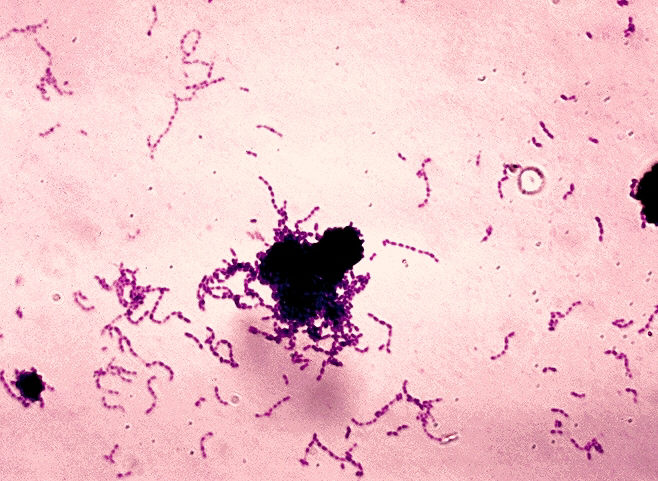
Stain of S. mutans in thioglycolate broth culture.
Scientific classification Edit this classification
Domain: Bacteria
Kingdom: Bacillati
Phylum: Bacillota
Class: Bacilli
Order: Lactobacillales
Family: Streptococcaceae
Genus: Streptococcus
Species:
S. mutans
Binomial name
Streptococcus mutans
Clarke 1924

Streptococcus mutans is a facultatively anaerobic, gram-positive coccus (round bacterium) commonly found in the human oral cavity and is a significant contributor to tooth decay.[1][2] The microbe was first described by James Kilian Clarke in 1924.[3]

This bacterium, along with the closely related species Streptococcus sobrinus, can cohabit the mouth: Both contribute to oral disease, and the expense of differentiating them in laboratory testing is often not clinically necessary. Therefore, for clinical purposes they are often considered together as a group, called the mutans streptococci.[4] This grouping of similar bacteria with similar tropism can also be seen in the viridans streptococci – of which Streptococcus mutans is itself also a member.[5]

Ecology

[edit]

S. mutans is naturally present in the human oral microbiota, along with at least 25 other species of oral streptococci. The taxonomy of these bacteria remains tentative.[6] Different areas of the oral cavity present different ecological niches, and each species has specific properties for colonizing different oral sites. S. mutans is most prevalent on the pits and fissures, constituting 39% of the total streptococci in the oral cavity. Fewer S. mutans bacteria are found on the buccal surface (2–9%).[7]

Bacterial-fungal co-coaggregation can help to increase the cariogenic potential of S. mutans. A symbiotic relationship with S. mutans and Candida albicans leads to increased glucan production and increased biofilm formation. This therefore amplifies the cariogenic effect of S. mutans.[8]

Oral streptococci comprise both harmless and harmful bacteria. However, under special conditions commensal streptococci can become opportunistic pathogens, initiating disease and damaging the host. Imbalances in the microbial biota can initiate oral diseases.[citation needed]

C. albicans is an opportunistic pathogenic yeast that can be found within the oral cavity.[9] Its presence in the biofilm promotes higher levels of S. mutans when looking at early childhood caries.[9] It stimulates the formation of S. mutans microcolonies.[9] This is achieved through low concentrations of cross-kingdom metabolites, such as farnesol, derived from the biofilm.[9] It has been suggested that when both microbes are present, more biofilm matrix is produced, with a greater density.[9] When farnesol is in high concentration, it inhibits the growth of both S. mutans and C. albicans.[9] This decreases the biofilm pathogenesis, and therefore its caries promoting potential.[9] This offers the potential for an anti-fungal to be used in the prevention of dental caries.[9]

Role in disease

[edit]

Tooth decay

[edit]

Early colonizers of the tooth surface are mainly Neisseria spp. and streptococci, including S. mutans. They must withstand the oral cleansing forces (e.g. saliva and the tongue movements) and adhere sufficiently to the dental hard tissues. The growth and metabolism of these pioneer species changes local environmental conditions (e.g., Eh, pH, coaggregation, and substrate availability), thereby enabling more fastidious organisms to further colonize after them, forming dental plaque.[10] Along with S. sobrinus, S. mutans plays a major role in tooth decay, metabolizing sucrose to lactic acid.[2][11] The acidic environment created in the mouth by this process is what causes the highly mineralized tooth enamel to be vulnerable to decay. S. mutans is one of a few specialized organisms equipped with receptors that improve adhesion to the surface of teeth. S. mutans uses the glucosyltransferase enzymes to convert the glucosyl moiety of sucrose into a sticky, extracellular, dextran-like polysaccharide that allows them to cohere, forming plaque:

n sucrose → (glucose)n + n fructose

Sucrose is the only sugar that bacteria can use to form this sticky polysaccharide.[1]

However, other sugars—glucose, fructose, lactose—can also be digested by S. mutans, but they produce lactic acid as an end product. The combination of plaque and acid leads to dental decay.[12] Due to the role S. mutans plays in tooth decay, many attempts have been made to create a vaccine for the organism. So far, such vaccines have not been successful in humans.[13] Recently, proteins involved in the colonization of teeth by S. mutans have been shown to produce antibodies that inhibit the cariogenic process.[14] A molecule recently synthesized at Yale University and the University of Chile, called Keep 32, is supposed to be able to kill S. mutans. Another candidate is a peptide called C16G2, synthesised at UCLA.[citation needed]

It is believed that Streptococcus mutans acquired the gene that enables it to produce biofilms through horizontal gene transfer with other lactic acid bacterial species, such as Lactobacillus.[15]

Life in the oral cavity

[edit]

Surviving in the oral cavity, S. mutans is the primary causal agent and the pathogenic species responsible for dental caries (tooth decay or cavities) specifically in the initiation and development stages.[16][17]

Dental plaque, typically the precursor to tooth decay, contains more than 600 different microorganisms, contributing to the oral cavity's overall dynamic environment that frequently undergoes rapid changes in pH, nutrient availability, and oxygen tension. Dental plaque adheres to the teeth and consists of bacterial cells, while plaque is the biofilm on the surfaces of the teeth. Dental plaque and S. mutans is frequently exposed to "toxic compounds" from oral healthcare products, food additives, and tobacco.[citation needed]

While S. mutans grows in the biofilm, cells maintain a balance of metabolism that involves production and detoxification. Biofilm is an aggregate of microorganisms in which cells adhere to each other or a surface. Bacteria in the biofilm community can actually generate various toxic compounds that interfere with the growth of other competing bacteria.[citation needed]

S. mutans has over time developed strategies to successfully colonize and maintain a dominant presence in the oral cavity. The oral biofilm is continuously challenged by changes in the environmental conditions. In response to such changes, the bacterial community evolved with individual members and their specific functions to survive in the oral cavity. S. mutans has been able to evolve from nutrition-limiting conditions to protect itself in extreme conditions.[18] Streptococci represent 20% of the oral bacteria and actually determine the development of the biofilms. Although S. mutans can be antagonized by pioneer colonizers, once they become dominant in oral biofilms, dental caries can develop and thrive.[18]

Cariogenic potential

[edit]

The causative agent of dental caries is associated with its ability to metabolize various sugars, form a robust biofilm, produce an abundant amount of lactic acid, and thrive in the acid environment it generates.[19] A study into pH of plaque said that the critical pH for increased demineralisation of dental hard tissues (enamel and dentine) is 5.5. The Stephan curve illustrates how quickly the plaque pH can fall below 5.5 after a snack or meal.[20]

Dental caries is a dental biofilm-related oral disease associated with increased consumption of dietary sugar and fermentable carbohydrates. When dental biofilms remain on tooth surfaces, along with frequent exposure to sugars, acidogenic bacteria (members of dental biofilms) will metabolize the sugars to organic acids. Untreated dental caries is the most common disease affecting humans worldwide [21]. Persistence of this acidic condition encourages the proliferation of acidogenic and aciduric bacteria as a result of their ability to survive at a low-pH environment. The low-pH environment in the biofilm matrix erodes the surface of the teeth and begins the "initiation" of the dental caries.[19] Streptococcus mutans is a bacterium which is prevalent within the oral environment [22] and is thought to be a vital microorganism that contributes to this initiation.[23] S. mutans thrives in acidic conditions, becoming the main bacterium in cultures with permanently reduced pH [24]. If the adherence of S. mutans to the surface of teeth or the physiological ability (acidogenity and aciduricity) of S. mutans in dental biofilms can be reduced or eliminated, the acidification potential of dental biofilms and later cavity formations can be decreased.[19]

Ideally, the early various lesion is prevented via treatment from developing beyond the white spot stage. Once beyond here, the enamel surface is irreversibly damaged and cannot be biologically repaired.[25] In young children, the pain from a carious lesion can be quite distressing and restorative treatment can cause an early dental anxiety to develop.[26] Dental anxiety has knock-on effects for both dental professionals and patients. Treatment planning and therefore treatment success can be compromised. The dental staff can become stressed and frustrated when working with anxious children. This can compromise their relationship with the child and their parents.[27] Studies have shown a cycle to exist, whereby dentally anxious patients avoid caring for the health of their oral tissues. They can sometimes avoid oral hygiene and will try to avoid seeking dental care until the pain is unbearable.[28]

Susceptibility to disease varies between individuals and immunological mechanisms have been proposed to confer protection or susceptibility to the disease. These mechanisms have yet to be fully elucidated but it seems that while antigen presenting cells are activated by S. mutans in vitro, they fail to respond in vivo. Immunological tolerance to S. mutans at the mucosal surface may make individuals more prone to colonisation with S. mutans and therefore increase susceptibility to dental caries.[29]

In children

[edit]

S. mutans is often acquired in the oral cavity subsequent to tooth eruption, but has also been detected in the oral cavity of predentate children. It is generally, but not exclusively, transmitted via vertical transmission from caregiver (generally the mother) to child. This can also commonly happen when the parent puts their lips to the child's bottle to taste it, or to clean the child's pacifier, then puts it into the child's mouth.[30][31]

Cardiovascular disease

[edit]

S. mutans is implicated in the pathogenesis of certain cardiovascular diseases, and is the most prevalent bacterial species detected in extirpated heart valve tissues, as well as in atheromatous plaques, with an incidence of 68.6% and 74.1%, respectively.[32] Streptococcus sanguinis, closely related to S. mutans and also found in the oral cavity, has been shown to cause Infective Endocarditis.[33]

Streptococcus mutans has been associated with bacteraemia and infective endocarditis (IE). IE is divided into acute and subacute forms, and the bacterium is isolated in subacute cases. The common symptoms are: fever, chills, sweats, anorexia, weight loss, and malaise.[34]

S. mutans has been classified into four serotypes; c, e, f, and k. The classification of the serotypes is devised from the chemical composition of the serotype-specific rhamnose-glucose polymers. For example, serotype k initially found in blood isolates has a large reduction of glucose side chains attached to the rhamnose backbone. S. mutans has the following surface protein antigens: glucosyltransferases, protein antigen and glucan-binding proteins. If these surface protein antigens are not present, then the bacteria is a protein antigen-defective mutant with the least susceptibility to phagocytosis therefore causing the least harm to cells.[citation needed]

Furthermore, rat experiments showed that infection with such defective streptococcus mutants (S. mutans strains without glucosyltransferases isolated from a destroyed heart valve of an infective endocarditis patient) resulted in a longer duration of bacteraemia. The results demonstrate that the virulence of infective endocarditis caused by S. mutans is linked to the specific cell surface components present.

In addition, S. mutans DNA has been found in cardiovascular specimens at a higher ratio than other periodontal bacteria. This highlights its possible involvement in a variety of types of cardiovascular diseases, not just confined to bacteraemia and infective endocarditis.[35]

Prevention and treatment

[edit]

Practice of good oral hygiene including daily brushing, flossing and the use of appropriate mouthwash can significantly reduce the number of oral bacteria, including S. mutans and inhibit their proliferation. S. mutans often live in dental plaque, hence mechanical removal of plaque is an effective way of getting rid of them.[36] The best toothbrushing technique to reduce plaque build up, decreasing caries risk, is the modified Bass technique. Brushing twice daily can help decrease the caries risk.[37] However, there are some remedies used in the treatment of oral bacterial infection, in conjunction with mechanical cleaning. These include fluoride, which has a direct inhibitory effect on the enolase enzyme, as well as chlorhexidine, which works presumably by interfering with bacterial adherence.

Furthermore, fluoride ions can be detrimental to bacterial cell metabolism. Fluoride directly inhibits glycolytic enzymes and H+ATPases. Fluoride ions also lower the pH of the cytoplasm. This means there will be less acid produced during the bacterial glycolysis.[38] Therefore, fluoride mouthwashes, toothpastes, gels and varnishes can help to reduce the prevalence of caries.[39] However, findings from investigations into the effect of fluoride-containing varnish, on the level of Streptococcus mutans in the oral environment in children suggest that the reduction of caries cannot be explained by a reduction in the level of Streptococcus mutans in saliva or dental plaque.[40] Fluoride varnish treatment with or without prior dental hygiene has no significant effect on the plaque and salivary levels of S. mutans.[41]

S. mutans secretes Glucosyltransferase on its cell wall, which allows the bacteria to produce polysaccharides from sucrose. These sticky polysaccharides are responsible for the bacteria's ability to aggregate with one another and adhere to tooth enamel, i.e. to form biofilms. Use of Anti Cell-Associated Glucosyltransferase (Anti-CA-gtf) Immunoglobulin Y disrupts S. mutans' ability to adhere to the teeth enamel, thus preventing it from reproducing. Studies have shown that Anti-CA-gtf IgY is able to effectively and specifically suppress S. mutans in the oral cavity.[42]

Other common preventative measures center on reducing sugar intake. One way this is done is with sugar replacements such as xylitol or erythritol which cannot be metabolized into sugars which normally enhance S. mutans growth. The molecule xylitol, a 5 carbon sugar, disrupts the energy production of S.mutans by forming a toxic intermediate during glycolysis.[43][44] Various other natural remedies have been suggested or studied to a degree, including deglycyrrhizinated licorice root extract,[45][46] tea tree oil,[47] macelignan (found in nutmeg),[48] curcuminoids (the main components of turmeric),[49] and eugenol (found in bay leaves, cinnamon leaves and cloves). Additionally various teas have been tested for activity against S. mutans and other dental benefits.[50][51][52][53][54] Recently, small molecule inhibitors selectively inhibit or disperse S. mutans biofilms have been identified and developed.[55][56][57][58] Additionally, structure-based drug designs have identified selective inhibitors targeting S. mutans glucosyltransferases.[59][60] These lead compounds are efficacious in preclinical animal models.[61] However, none of these remedies have been subject to clinical trials or are recommended by mainstream dental health groups to treat S. mutans.[citation needed]

The addition of bioactive glass beads to dental composites reduces penetration of S. mutans into the marginal gaps between tooth and composite.[62] They have antimicrobial properties, reducing bacterial penetration.[62] This decreases the risk of secondary caries developing, a common reason for failure of dental restorations.[62] This means that the longevity and efficacy of composite restorations may be improved.[62]

Bacteriophages (viruses that infect bacteria) that target S. mutans have been researched. Phages have shown promise in reducing S. mutans in lab settings, potentially offering a targeted approach to caries prevention without harming the mouth's natural microbiome.[63][64][65][66] Several different phages have been found that infect S. mutans, including SMHBZ8.[65][66]

Survival under stressful conditions

[edit]

Conditions in the oral cavity are diverse and complex, frequently changing from one extreme to another. Thus, to survive in the oral cavity, S. mutans must tolerate rapidly harsh environmental fluctuations and exposure to various antimicrobial agents to survive.[18] Transformation is a bacterial adaptation involving the transfer of DNA from one bacterium to another through the surrounding medium. Transformation is a primitive form of sexual reproduction. For a bacterium to bind, take up, and recombine exogenous DNA into its chromosome, it must enter a special physiological state termed "competence". In S. mutans, a peptide pheromone quorum-sensing signaling system controls genetic competence.[67] This system functions optimally when the S. mutans cells are in crowded biofilms.[68] S. mutans cells growing in a biofilm are transformed at a rate 10- to 600-fold higher than single cells growing under uncrowded conditions (planktonic cells).[67] Induction of competence appears to be an adaptation for repairing DNA damage caused by crowded, stressful conditions.[69]

Knowing about quorum-sensing gives rise to the potential development of drugs and therapies. Quorum-sensing peptides can be manipulated to cause target suicide. Furthermore, quenching quorum-sensing can lead to prevention of antibiotic resistance.[70]

Evolution

[edit]

Three key traits have evolved in S. mutans and increased its virulence by enhancing its adaptability to the oral cavity: increased organic acid production, the capacity to form biofilms on the hard surfaces of teeth, and the ability to survive and thrive in a low pH environment.[71]

During its evolution, S. mutans acquired the ability to increase the amount of carbohydrates it could metabolize, and consequently more organic acid was produced as a byproduct.[72] This is significant in the formation of dental caries because increased acidity in the oral cavity amplifies the rate of demineralization of the tooth, which leads to carious lesions.[73] It is thought that the trait evolved in S. mutans via lateral gene transfer with another bacterial species present in the oral cavity. There are several genes, SMU.438 and SMU.1561, involved in carbohydrate metabolism that are up-regulated in S. mutans. These genes possibly originated from Lactococcus lactis and S. gallolyticus, respectively.[72]

Another instance of lateral gene transfer is responsible for S. mutans' acquisition of the glucosyltransferase (GTF) gene. The GTF genes found in S. mutans are most likely derived from other anaerobic bacteria found in the oral cavity, such as Lactobacillus or Leuconostoc. Additionally, the GTF genes in S. mutans display homology with similar genes found in Lactobacillus and Leuconostoc. The common ancestral gene is believed to have been used for hydrolysis and linkage of carbohydrates.[15]

The third trait that evolved in S. mutans is its ability to not only survive, but also thrive in acidic conditions. This trait gives S. mutans a selective advantage over other members of the oral microbiota. As a result, S. mutans could outcompete other species, and occupy additional regions of the mouth, such as advanced dental plaques, which can be as acidic as pH 4.0.[73] Natural selection is most likely the primary evolutionary mechanisms responsible for this trait.[citation needed]

In discussing the evolution of S. mutans, it is imperative to include the role humans have played and the co-evolution that has occurred between the two species. As humans evolved anthropologically, the bacteria evolved biologically. It is widely accepted that the advent of agriculture in early human populations provided the conditions S. mutans needed to evolve into the virulent bacterium it is today. Agriculture introduced fermented foods, as well as more carbohydrate-rich foods, into the diets of historic human populations. These new foods introduced new bacteria to the oral cavity and created new environmental conditions. For example, Lactobacillus or Leuconostoc are typically found in foods such as yogurt and wine. Also, consuming more carbohydrates increased the amount of sugars available to S. mutans for metabolism and lowered the pH of the oral cavity. This new acidic habitat would select for those bacteria that could survive and reproduce at a lower pH.[72]

Another significant change to the oral environment occurred during the Industrial Revolution. More efficient refinement and manufacturing of foodstuffs increased the availability and amount of sucrose consumed by humans. This provided S. mutans with more energy resources, and thus exacerbated an already rising rate of dental caries.[15] Refined sugar is pure sucrose, the only sugar that can be converted to sticky glucans, allowing bacteria to form a thick, strongly adhering plaque.[74]

See also

[edit]

References

[edit]
[edit]
Revisions and contributorsEdit on WikipediaRead on Wikipedia
from Grokipedia
Streptococcus mutans is a Gram-positive, facultative anaerobic bacterium that serves as a primary etiological agent of dental caries, the most common chronic infectious disease affecting humans worldwide. It predominantly inhabits the human oral cavity, where it colonizes tooth surfaces and integrates into multispecies biofilms known as . Classified within the phylum Firmicutes and genus , it is serologically grouped into types c, e, f, and k based on cell-surface , with serotype c being the most prevalent (approximately 75% of isolates). The bacterium's typically spans about 2.0 megabases, encoding around 2,000 genes that enable its adaptation to the oral environment. Key virulence factors of S. mutans include its acidogenic and aciduric properties, allowing it to metabolize dietary carbohydrates—particularly —into , which lowers the local and promotes enamel demineralization. Through glucosyltransferases, it synthesizes extracellular that facilitate robust formation, enhancing its persistence and dominance in plaque communities. Additionally, S. mutans exhibits stress tolerance to acidic, oxidative, and osmotic conditions, as well as mechanisms that regulate genetic competence and dynamics. Beyond dental caries, emerging research highlights S. mutans's potential contributions to systemic issues, including , cerebral microbleeds, , and cardiovascular diseases, particularly through strains expressing adhesins like Cnm that enable bloodstream invasion and tissue adherence. For instance, Cnm-positive isolates, found in about 15% of clinical samples, have been associated with increased risks of hemorrhagic and via proinflammatory pathways involving cytokines such as TNF-α and IL-6. These findings underscore S. mutans as a multifaceted with implications extending from oral to extraintestinal .

Taxonomy and Characteristics

Classification and Etymology

Streptococcus mutans is a of bacterium classified within the domain , phylum , class , order Lactobacillales, family Streptococcaceae, genus , and mutans. The was first described in 1924 by James Kilian Clarke, who isolated it from human carious dentine and identified it as a causative agent in dental caries. The genus name Streptococcus derives from the Greek words streptos (twisted or pliant) and kokkos (berry or grain), referring to the chain-forming, spherical morphology of the observed under . The specific epithet mutans comes from the Latin mutans (changing), chosen by Clarke due to the pleomorphic, oval-shaped forms he observed, which he interpreted as mutant variants of typical streptococci. Strains of S. mutans are further classified into s based on the composition of cell wall-associated , primarily rhamnose-glucose polymers, with the four recognized serotypes being c, e, f, and k; serotype c is the most prevalent in human isolates associated with caries.

Morphology and

Streptococcus mutans is a Gram-positive coccus characterized by its spherical shape, with cells typically measuring 0.5 to 0.75 μm in diameter, and commonly arranged in pairs (diplococci) or short chains. In the presence of , cells may elongate into short rods measuring 0.5 to 1.0 μm in length, while longer chains form in broth cultures. As a member of the family Streptococcaceae, it exhibits these morphological traits that facilitate its identification under microscopic examination. This bacterium is a facultative anaerobe, capable of growth in both aerobic and anaerobic conditions, with optimal proliferation occurring at 37°C and in atmospheres enriched with 5-10% CO₂. Growth is favored at pH levels ranging from 5 to 7, reflecting its adaptation to the mildly acidic oral environment, though it demonstrates tolerance to lower pH values during metabolic activity. Metabolically, S. mutans relies on glycolysis for energy production as a lactic acid bacterium, fermenting carbohydrates such as glucose, fructose, and sucrose through homolactic fermentation. This process yields primarily L-lactic acid, accounting for approximately 90% of the end products under anaerobic conditions, with minor amounts of other acids like acetate and formate. Biochemically, S. mutans is catalase-negative, which contributes to its sensitivity to oxidative stress, and it is resistant to optochin while testing negative for bile-esculin hydrolysis, aiding in its differentiation from other streptococcal species. Under specific environmental conditions, it produces low levels of hydrogen peroxide via NADH oxidase activity and bacteriocins known as mutacins, which serve as antimicrobial agents against competing microbes.

Ecology and Habitat

Oral Cavity Residence

Streptococcus mutans primarily inhabits the oral cavity, where it resides in biofilms formed on tooth surfaces, particularly in pits, fissures, and approximal sites. These biofilms represent the bacterium's natural niche, enabling persistent on enamel. The prevalence of S. mutans in is notably high among caries-active individuals. typically occurs early in life, often within months after the eruption of primary teeth, establishing a foundation for long-term presence in the oral . S. mutans forms robust biofilms, known as , through sucrose-dependent adhesion to enamel surfaces. This process involves the of glucosyltransferases () that polymerize into adhesive glucans, creating a structural matrix that anchors the bacterium and facilitates accumulation. Transmission of S. mutans occurs mainly via vertical routes from mother to child during infancy, often through close contact and sharing, with additional horizontal spread possible via saliva exchange among individuals. The bacterium preferentially occupies niches within plaque that feature low-pH microenvironments, which arise from the of fermentable sugars. As a facultative anaerobe, S. mutans adapts to the fluctuating oxygen conditions in these oral while leveraging its aciduricity to dominate such acidic habitats.

Microbial Interactions

Streptococcus mutans engages in complex interactions with other oral microorganisms, influencing dynamics and community structure within the . A notable synergy occurs with , where S. mutans extracellular membrane vesicles (EMVs) promote cross-kingdom formation by regulating modification in C. albicans. Specifically, S. mutans EMVs modulate the ubiquitination of superoxide dismutase 3 (SOD3) in C. albicans, leading to reduced (ROS) levels and enhanced fungal growth and . This interaction facilitates denser dual-species , as S. mutans MVs carrying glucosyltransferases stimulate exopolysaccharide production that augments C. albicans adhesion and hyphal development. In contrast, S. mutans exhibits competitive antagonism against commensal streptococci, such as Streptococcus sanguinis, primarily through resource for sites on surfaces and the production of known as mutacins. Mutacins I, II, III, and IV, along with others like mutacin K8 and Smb, inhibit the growth of S. sanguinis by disrupting cell membranes and metabolic processes, allowing S. mutans to dominate early plaque formation. This is exacerbated in sucrose-rich environments, where S. mutans outcompetes S. sanguinis for binding to salivary pellicle components, thereby shifting the microbial balance toward cariogenic species. S. mutans also participates in co-aggregation with other bacteria, enhancing plaque complexity and stability. It forms physical associations with Actinomyces naeslundii, where cell surface receptors mediate adherence that supports multilayered biofilm architecture in mixed cultures. Similarly, co-culturing with Veillonella parvula or Veillonella dispar results in increased sucrose-dependent biofilm biomass, up to 150% greater than monocultures, due to metabolic exchanges like lactate utilization by Veillonella that promotes S. mutans proliferation. These interactions contribute to heterogeneous plaque communities. Recent studies from 2024 and 2025 highlight S. mutans's role in polymicrobial communities driving caries progression, where interspecies synergies amplify in mixed . For instance, systematic reviews confirm that S. mutans- interactions enhance acid production and resilience, correlating with higher caries risk in clinical samples. These findings emphasize how S. mutans interactions foster community-level adaptations that sustain cariogenic environments.

Pathogenesis

Dental Caries Mechanisms

Streptococcus mutans initiates dental caries by adhering to the saliva-coated enamel surface of teeth, primarily through its surface I/II (Ag I/II) protein, a multifunctional adhesin that binds to salivary glycoproteins such as and mucins. This is crucial for colonization, as mutants lacking Ag I/II exhibit significantly reduced binding to experimental salivary pellicles under flow conditions, mimicking oral shear forces. Once attached, S. mutans forms a , leveraging its ability to metabolize dietary via extracellular enzymes. Sucrose metabolism by S. mutans drives matrix formation through glucosyltransferases (Gtfs), including GtfB, GtfC, and GtfD, which cleave to synthesize water-insoluble and soluble glucans rich in α-1,3 and α-1,6 linkages. GtfB primarily produces insoluble glucans with mainly α-1,3 linkages that anchor cells to surfaces and promote adherence, while GtfD yields soluble glucans with α-1,6 linkages that act as primers and energy reserves; GtfC produces both insoluble and soluble forms, enhancing architecture and accumulation. Fructosyltransferases further contribute by generating fructans such as levans (β-2,6-linked polymers) from , which support stability. Within this biofilm, S. mutans exhibits acidogenesis by fermenting available s, predominantly to , rapidly lowering the local below 5.5—the critical threshold for enamel demineralization. This acidification dissolves crystals in enamel, represented as \ceCa10(PO4)6(OH)2\ce{Ca10(PO4)6(OH)2}, releasing calcium and ions and initiating subsurface lesions. The process is exacerbated by frequent sugar exposure, as S. mutans efficiently converts carbohydrates via , favoring the pathway to produce as the primary end product. To persist in this acidic environment, S. mutans demonstrates aciduricity, tolerating pH as low as 4.5 through mechanisms such as the , which extrudes protons using to maintain cytoplasmic pH . The operon is upregulated under acidic conditions, with its lower pH optimum enabling survival compared to less acid-tolerant streptococci. Additionally, stress response genes, including those encoding chaperones like and DnaK, protect proteins from denaturation, further enhancing acid . In children, S. mutans colonization poses a heightened risk for (ECC), particularly with frequent sugar consumption that fuels acid production and growth. Maternal transmission is a key factor, as vertical transfer of S. mutans occurs through during close contact, such as kissing or sharing utensils, with higher maternal caries experience correlating to earlier and denser child colonization. This early establishment, often by age 2-3, amplifies caries risk when combined with dietary sugars, leading to rapid enamel breakdown in primary teeth.

Virulence Factors

Streptococcus mutans employs several key virulence factors that contribute to its pathogenicity in the oral cavity and beyond. These include surface adhesins for host tissue attachment, regulators of formation, genes enhancing acid tolerance, and for interspecies competition. These molecular elements enable the bacterium to colonize surfaces, withstand environmental stresses, and outcompete other microbes, thereby promoting dental caries and potential systemic infections. Surface adhesins play a critical role in initial attachment and . The SpaP protein, also known as antigen I/II (Ag I/II), facilitates binding to salivary components, particularly glycoprotein-340 in the salivary pellicle on surfaces, promoting adherence and coaggregation with other oral . SpaP's N-terminal region interacts specifically with salivary agglutinin, enhancing S. mutans colonization of the oral environment. Additionally, collagen-binding proteins such as Cnm enable adherence to components like types I-IV and , supporting of host tissues and contributing to systemic dissemination, including associations with cardiovascular and renal complications. Cnm-positive strains exhibit increased endothelial cell , facilitating spread from the oral cavity. Biofilm formation is regulated by two-component systems that coordinate matrix production and community behaviors. The VicRK system modulates exopolysaccharide synthesis and cell wall biogenesis, promoting robust biofilm architecture through regulation of genes like gtfB/C for glucan production and gbpB for glucan binding, which are essential for the structural integrity of dental plaque. VicRK mutants show reduced biofilm biomass and altered matrix composition, underscoring its role in virulence. Similarly, the ComDE quorum-sensing system senses cell density via competence-stimulating peptide, activating density-dependent gene expression that enhances biofilm development and competence for genetic transformation, thereby amplifying virulence traits like acid production in mature communities. Acid tolerance mechanisms allow S. mutans to survive in the low-pH environment of plaque. The atpD encodes the beta subunit of the , a proton-pumping enzyme that extrudes H⁺ ions from the , maintaining intracellular during acid challenges; inhibition of significantly reduces survival at pH 5.0 or lower. The relA mediates the stringent response by synthesizing alarmone (p)ppGpp, which reprograms under nutrient stress and exposure, upregulating adaptive genes for enhanced tolerance and persistence in cariogenic biofilms. mutants exhibit diminished adaptation and reduced in caries models. Bacteriocin production provides a in the oral . S. mutans produces mutacins I-IV, ribosomally synthesized that inhibit closely related streptococci and other oral pathogens. Mutacin I is a lantibiotic active against , while mutacin IV targets a broader range including non-mutans streptococci, aiding in niche dominance without affecting S. mutans itself. These mutacins are regulated by and contribute to monospecific plaque formation.

Disease Associations

Oral Health Impacts

Streptococcus mutans is recognized as the primary etiologic agent of dental caries, a prevalent oral disease characterized by the demineralization of tooth enamel due to acid production from bacterial metabolism of dietary carbohydrates. This bacterium's acidogenic and aciduric properties enable it to thrive in low-pH environments, particularly in individuals consuming high-sugar diets where frequent carbohydrate exposure amplifies acid attacks on tooth surfaces. In such conditions, S. mutans dominates the cariogenic biofilm, leading to enamel breakdown and cavity formation. In (ECC), a severe form affecting primary teeth in young children, S. mutans plays a prominent role, with high levels observed in affected lesions. Studies indicate its detection at high prevalence in ECC cases, often exacerbated by prolonged bottle-feeding with sugary liquids that promote bacterial and acid production. This early acquisition, typically from maternal transmission, correlates with rapid caries progression in preschoolers. S. mutans contributes indirectly to periodontal conditions like through its role in plaque maturation, where formation creates a complex microbial community that harbors pathogens and irritates gingival tissues. High salivary levels of S. mutans are associated with increased severity, as the accumulated plaque fosters and tissue damage. Assessment of cariogenic potential often involves measuring mutans streptococci (MS) counts in , where levels exceeding 10^5 colony-forming units (CFU) per milliliter signal high caries risk, guiding clinical interventions. In adults, S. mutans is implicated in recurrent decay around restorations, where microleakage at margins allows bacterial ingress and production beneath fillings, leading to secondary caries. Among the elderly, it is strongly associated with root caries, as exposed root surfaces—due to —provide susceptible sites for colonization, with mutans streptococci detected more frequently in carious root plaques than healthy ones. This vulnerability increases with age-related factors like reduced flow and dietary changes. Streptococcus mutans, primarily recognized as an oral , has been implicated in various systemic diseases through mechanisms involving bacteremia and tissue , particularly by strains expressing the collagen-binding protein Cnm. In , Cnm-positive S. mutans strains promote adhesion to cardiac tissues and endothelial cells, contributing to (IE) and . The Cnm protein facilitates bacterial binding to types I, II, III, and IV, as well as , enhancing of human coronary artery endothelial cells and retention on damaged s, which is critical for formation in IE. S. mutans has been detected in 68.6% of extirpated specimens from IE patients and 74.1% of atheromatous plaque specimens from patients, indicating a significant in cardiovascular lesions. Additionally, Cnm-expressing strains induce platelet aggregation in the presence of fibrinogen, acting as a bridging , which exacerbates formation and vascular damage. Recent studies from 2024 and 2025 have linked Cnm-positive S. mutans strains to nephropathy (IgAN), a leading cause of . These strains, via bacteremia or immune complex formation, trigger glomerular inflammation and mesangial IgA deposition, mimicking IgAN pathology in rat models where recombinant Cnm administration induced nephritis-like lesions. Oral carriage of such strains correlates with elevated urinary protein levels and galactose-deficient IgA1 production in IgAN patients, suggesting a role in disease progression through tonsillar immune responses. S. mutans also contributes to nonalcoholic fatty liver disease (NAFLD), where oral translocation leads to hepatic and exacerbation in models. Intravenous administration of specific S. mutans strains, particularly those expressing Cnm, aggravates nonalcoholic (NASH) by promoting inflammatory cell infiltration and deposition in the liver, with histopathological changes observed as early as 8 weeks post-. Cnm-positive strains further intensify in NAFLD models, linking oral to systemic hepatic pathology. Other potential associations include , where molecular mimicry between S. mutans surface (e.g., antigen I/II or SR) and human proteins may elicit cross-reactive autoantibodies in rheumatic diseases. In rare cases of bacteremia, S. mutans has been isolated from brain abscesses, often originating from odontogenic sources and leading to pyogenic intracranial infections. The primary mechanisms underlying these systemic links involve bacteremia arising from oral mucosal breaches during dental procedures or periodontitis, allowing S. mutans entry into the bloodstream. Collagen-binding via Cnm aids in tissue and dissemination to distant organs, amplifying in susceptible hosts.

Genomics and Evolution

Genome Structure

The of Streptococcus mutans consists of a single circular , with sizes ranging from approximately 2.0 to 2.4 Mb across strains. The reference strain UA159 features a 2,030,921 encoding 1,960 predicted protein-coding genes, representing a compact typical of low-GC . The overall is around 37%, which contributes to the bacterium's metabolic efficiency in the nutrient-limited oral environment. Some strains harbor small plasmids, such as those carrying production genes (e.g., pUA159-like elements), which facilitate competition within , though the reference UA159 lacks native plasmids. Key genomic operons include gtfBCD, which encodes glucosyltransferases essential for extracellular synthesis and formation. Another notable cluster, smu_759-761, encompasses genes related to collagen-binding proteins like Cnm, enabling to host tissues in certain strains. These operons are tightly regulated and integral to . Mobile genetic elements are prominent, including a CRISPR-Cas system comprising type I-C and type II-A arrays that provide adaptive immunity against phages and plasmids by targeting foreign DNA. Integrases associated with integrative and conjugative elements (ICEs), such as TnSmu1, promote , allowing acquisition of adaptive traits like resistance. Recent metagenomic analyses reveal significant strain variability, with the accessory genome comprising 20-30% of the and often including virulence islands that enhance cariogenic potential. A 2025 study resequencing genomes from individuals with high and low caries risk identified differences in -related genes, further highlighting genomic diversity linked to pathogenicity.

Phylogenetic Development

Streptococcus mutans is believed to have co-evolved with the oral , with its origins tracing back to approximately 100,000 to 200,000 years ago, aligning with the dispersal of modern humans . This bacterium is human-specific, distinguishing it from related streptococci found in other , and its phylogenetic history reflects a close association with patterns. Phylogenetic analyses place S. mutans within the Streptococcus mutans group, which diverged from other oral streptococci through a series of genomic rearrangements and acquisitions that enhanced its cariogenic potential. A key event in the phylogenetic development of S. mutans was the acquisition of glucosyltransferase (gtf) genes via from , particularly species within the genus . These genes, encoding enzymes that synthesize adhesive glucans from , were likely transferred during interactions in the oral niche, enabling S. mutans to form robust biofilms on surfaces and marking a pivotal for cariogenicity. Phylogenetic reconstruction of hydrolase family 70 enzymes supports this transfer, showing that streptococcal gtf variants cluster closely with those from and , predating the diversification of the S. mutans lineage. Additional lateral gene transfers, including those contributing to competence and production, have been inferred from , facilitating genetic diversity and competitiveness within streptococcal populations. Population genomic studies from 2012 to 2024 reveal a clonal expansion of S. mutans in modern populations, characterized by remarkably low indicative of a recent bottleneck followed by rapid proliferation. Analysis of 57 global isolates supports an African origin for the , with subsequent dispersal mirroring human migrations and into the around 10,000–6,500 years ago, coinciding with the agricultural revolution and increased dietary carbohydrates. This expansion is evidenced by a star-like phylogeny in core genome alignments, where most variation arises from recombination rather than , underscoring the role of in its evolution. Later studies confirm this low diversity pattern across continents, with strains from indigenous populations showing deeper branching consistent with ancient African roots. Adaptations to the human oral environment have driven selective pressures on S. mutans phylogeny, including the loss of certain galactose metabolism genes in some lineages, which may have streamlined utilization toward sucrose-dominant diets. This loss, observed in comparative analyses with non-human streptococci, reflects specialization for acidogenic niches. Conversely, gains in acid tolerance have occurred through events, notably of atpD encoding the F1F0 beta subunit, enhancing proton extrusion and survival in low-pH biofilms. Genome-wide scans identify these duplications, along with positively selected loci in and exopolysaccharide pathways, as hallmarks of adaptation post-human colonization. Recent insights from 2025 highlight cross-kingdom evolutionary dynamics, where interactions with modulate S. mutans via the LiaS two-component system. This regulatory pathway promotes hyphal invasion and synergy, suggesting co-evolutionary pressures from fungal partners that amplify cariogenic and candidal pathologies in the oral microbiome. Such mechanisms underscore ongoing phylogenetic interplay in polymicrobial communities.

Prevention and Control

Hygiene and Dietary Strategies

Maintaining rigorous practices is essential for minimizing Streptococcus mutans colonization and formation on tooth surfaces. Brushing twice daily with effectively removes and reduces caries risk when performed correctly for two minutes each time, thereby limiting the substrate available for S. mutans proliferation. Complementing brushing, daily flossing disrupts interdental where S. mutans thrives, mechanically dislodging bacterial aggregates and preventing their maturation into acid-producing structures. These mechanical interventions, when combined, significantly lower salivary and plaque levels of S. mutans, promoting a less cariogenic oral environment. Dietary modifications play a critical role in curbing S. mutans activity by restricting its primary energy sources. The recommends limiting free sugars, including —a key fermentable —to less than 5% of total energy intake to prevent dental caries, as higher consumption fuels S. mutans acid production and enamel demineralization. sweetened with , a non-fermentable , inhibits S. mutans growth through of bacterial metabolism and reduced adhesion to teeth, without contributing to acidogenesis. , incorporated via or mouth rinses, enhances these efforts by promoting enamel remineralization and forming [Ca₅(PO₄)₃F], a phase more resistant to acid dissolution at pH levels above 4.5 compared to native . Preventive strategies targeting from mother to child are vital during . Maternal use of rinses, particularly in the prenatal and postnatal periods, can reduce S. mutans levels in the mother's oral cavity and delay subsequent transmission to infants, lowering early caries risk. On a public health scale, community at optimal levels (0.7 mg/L) decreases caries incidence by about 25% across populations, providing systemic and topical benefits that inhibit S. mutans-driven demineralization. Guidelines from organizations such as the American Academy of recommend limiting added sugars to prevent , advising caregivers to minimize added sugars in children's intake to align with overall oral health promotion.

Antimicrobial Approaches

Antimicrobial approaches targeting Streptococcus mutans primarily involve antibiotics, bacteriophages, vaccines, natural compounds, and emerging targeted therapies, aimed at disrupting bacterial growth, formation, and in the oral cavity. These strategies address the pathogen's role in dental caries and potential systemic infections, with a focus on overcoming resistance and minimizing disruption to the oral . Traditional antibiotics such as penicillin and remain effective against most S. mutans isolates, with minimal inhibitory concentrations (MICs) typically below 0.08 μg/ml for susceptible strains. However, emerging resistance has been observed, particularly to amoxicillin (a penicillin derivative), where MICs of 16 μg/ml or higher were detected in isolates from approximately 4% of subjects in a study of samples. In cases of associated with viridans group streptococci, including S. mutans, penicillin G or combined with gentamicin is the first-line regimen, but alternatives like clindamycin are considered for penicillin-allergic patients to ensure effective treatment. Clindamycin's utility stems from its activity against streptococci, though its use is guided by susceptibility testing to avoid broader resistance issues. Bacteriophages offer a targeted alternative by specifically lysing S. mutans cells without affecting commensal oral . For instance, the temperate phage φAPCM01 has demonstrated broad lytic activity against clinical S. mutans isolates , reducing formation and promoting clearance in experimental models. Similarly, the newly isolated phage SMHBZ8 exhibits potent antibacterial effects against S. mutans, inhibiting growth and development, positioning it as a candidate for caries prevention therapies. Recent studies highlight phages' potential in oral applications, with models showing significant plaque reduction through selective bacterial elimination. Vaccine development focuses on key S. mutans antigens to elicit protective immunity against caries. Subunit vaccines targeting glucosyltransferase B (GtfB), which catalyzes extracellular synthesis, have shown promise in preclinical animal models by reducing bacterial and accumulation. I/II (AgI/II), a surface adhesin, is another primary target; with recombinant AgI/II fragments induces salivary IgA responses that inhibit S. mutans colonization in studies. Despite these advances, challenges persist, including oral tolerance, where repeated mucosal exposure may dampen immune responses, necessitating adjuvants or alternative delivery routes like nasal to enhance efficacy. Natural antimicrobials provide non-antibiotic options for biofilm disruption. Probiotics such as Streptococcus salivarius K12 compete effectively with S. mutans for adhesion sites and produce bacteriocins that inhibit its growth, with co-culture experiments demonstrating up to 90% reduction in S. mutans viability and biofilm formation. Clinical trials support this, showing sustained suppression of S. mutans levels in saliva after 60 days of probiotic lozenge use. Essential oils, particularly thymol from thyme, exhibit strong anti-biofilm activity by inducing autolysis and membrane damage in S. mutans, with MICs as low as 0.016% v/v preventing acid production and adherence in vitro. Thymol's efficacy is enhanced in combinations, reducing biofilm biomass by over 50% without cytotoxicity at therapeutic doses. Targeted therapies exploit S. mutans signaling pathways for precision intervention. Quorum-sensing inhibitors, such as analogs of autoinducer-2 (AI-2), disrupt LuxS-dependent communication, thereby attenuating formation and without killing the bacteria. For example, synthetic CSP analogs derived from related streptococci suppress S. mutans competence and development by interfering with ComDE signaling. CRISPR-based antimicrobials represent a cutting-edge approach; in 2024 studies, CRISPR-Cas9 systems from S. mutans itself were repurposed to edit essential genes like those for synthesis, achieving targeted killing in preclinical models while preserving diversity. These tools, including SmutCas9 variants, enable precise gene inactivation, offering potential for caries prevention with minimal off-target effects.

References

Add your contribution
Related Hubs
User Avatar
No comments yet.