Hubbry Logo
Enterococcus faecalisEnterococcus faecalisMain
Open search
Enterococcus faecalis
Community hub
Enterococcus faecalis
logo
8 pages, 0 posts
0 subscribers
Be the first to start a discussion here.
Enterococcus faecalis
from Wikipedia

Enterococcus faecalis
Scientific classification Edit this classification
Domain: Bacteria
Kingdom: Bacillati
Phylum: Bacillota
Class: Bacilli
Order: Lactobacillales
Family: Enterococcaceae
Genus: Enterococcus
Species:
E. faecalis
Binomial name
Enterococcus faecalis
(Andrewes and Horder, 1906) Schleifer and Kilpper-Bälz, 1984

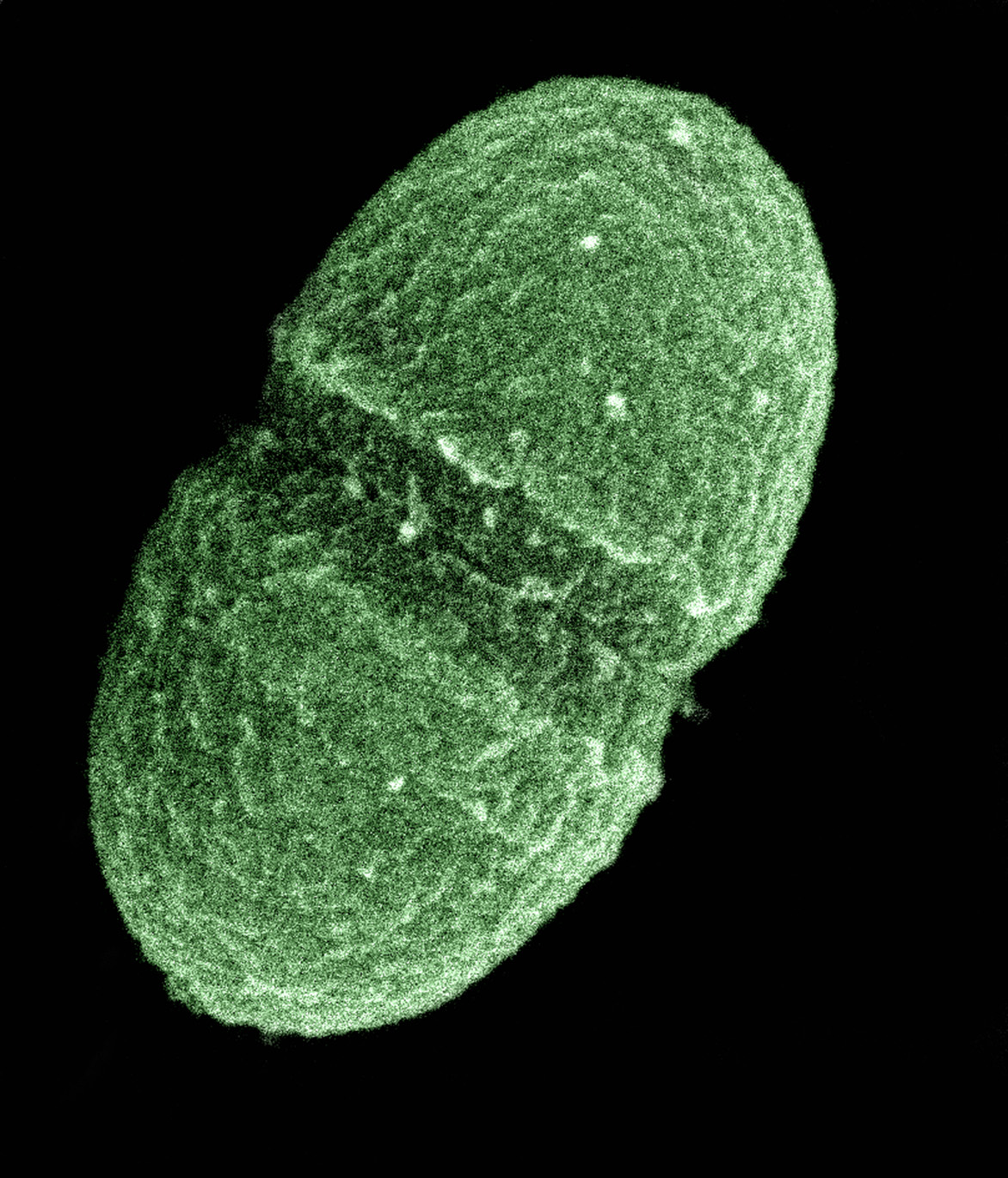
Enterococcus faecalis – formerly classified as part of the group D Streptococcus, is a Gram-positive, commensal bacterium naturally inhabiting the gastrointestinal tracts of humans.[1][2] Like other species in the genus Enterococcus, E. faecalis is found in healthy humans and can be used as a probiotic. The probiotic strains such as Symbioflor1 and EF-2001 are characterized by the lack of specific genes related to drug resistance and pathogenesis.[3]

Despite its commensal role, E. faecalis is an opportunistic pathogen capable of causing severe infections, especially in the nosocomial (hospital) settings.[4] Enterococcus spp. is among the leading causes of healthcare-associated infections ranging from endocarditis to urinary tract infections (UTIs). Hospital-acquired UTIs are associated with catheterization because catheters provide an ideal surface for biofilm formation, allowing E. faecalis to adhere, persist, and evade both the immune response and antibiotic treatment.[4]

E. faecalis is able to grow in extreme environments due to its highly adaptive genome and lack of strong defense mechanisms.[4] Its ability to easily acquire and transfer genes across species contributes to rising antibiotic resistance. E. faecalis exhibits intrinsic resistance to multiple antibiotics, including oxazolidinones, quinolones, and most β -lactams, such as cephalosporins.[4][5]

E. faecalis has been frequently found in reinfected, root canal-treated teeth in prevalence values ranging from 30% to 90% of the cases.[6] Re-infected root canal-treated teeth are about nine times more likely to harbor E. faecalis than cases of primary infections.[7]

Physiology

[edit]

E. faecalis is a nonmotile microbe; it ferments glucose without gas production, and does not produce a catalase reaction with hydrogen peroxide. It produces a reduction of litmus milk, but does not liquefy gelatin. It shows consistent growth throughout nutrient broth which is consistent with being a facultative anaerobe. It catabolizes a variety of energy sources, including glycerol, lactate, malate, citrate, arginine, agmatine, and many keto acids. Enterococci survive very harsh environments, including extremely alkaline pH (9.6) and salt concentrations. They resist bile salts, detergents, heavy metals, ethanol, azide, and desiccation. They can grow in the range of 10 to 45 °C and survive at temperatures of 60 °C for 30 min.[8]

Metabolism

[edit]

In clinical settings, E. faecalis displays a relatively conserved metabolic profile compared to other enterococcal species. A recent large-scale study of urinary isolates from ICU patients showed that E. faecalis consistently metabolizes sorbitol, mannitol, amygdalin and sucrose but lacks the ability to utilize L-arabinose, melibiose, or raffinose—substrates readily used by E. faecium and E. durans. This substrate profile provides a reliable metabolic signature that can help distinguish E. faecalis from related species in diagnostic and research contexts.[9]

Pathogenesis

[edit]

E. faecalis is found in most healthy individuals, but can cause endocarditis and sepsis, urinary tract infections (UTIs), meningitis, and other infections in humans.[10][11] Several virulence factors are thought to contribute to E. faecalis infections. A plasmid-encoded hemolysin, called the cytolysin, is important for pathogenesis in animal models of infection, and the cytolysin in combination with high-level gentamicin resistance is associated with a five-fold increase in risk of death in human bacteremia patients.[12][13][14] A plasmid-encoded adhesin[15] called "aggregation substance" is also important for virulence in animal models of infection.[13][16]

E. faecalis contains a tyrosine decarboxylase enzyme capable of decarboxylating L-DOPA, a crucial drug in the treatment of Parkinson's disease. If L-DOPA is decarboxylated in the gut microbiome, it cannot pass through the blood-brain barrier and be decarboxylated in the brain to become dopamine.[17]

This is a Gram stain for Enterococcus faecalis under 1000 magnification (bright field microscopy).

Antibacterial resistance

[edit]

Multi drug resistance

[edit]

E. faecalis is usually resistant to many commonly used antimicrobial agents (aminoglycosides, aztreonam and quinolones).[18] The resistance is mediated by the presence of multiple genes related to drug resistance in the chromosome or plasmid.[3]

Resistance to vancomycin in E. faecalis is becoming more common.[19][20] Treatment options for vancomycin-resistant E. faecalis include nitrofurantoin (in the case of uncomplicated UTIs),[21] linezolid, quinupristin, tigecycline[18] and daptomycin, although ampicillin is preferred if the bacteria are susceptible.[22] Quinupristin/dalfopristin can be used to treat Enterococcus faecium but not E. faecalis.[22]

In root-canal treatments, NaOCl and chlorhexidine (CHX) are used to fight E. faecalis before isolating the canal. However, recent studies determined that NaOCl or CHX showed low ability to eliminate E. faecalis.[23]

Development of antibiotic resistance

[edit]

Combined drug therapies

[edit]

According to one study combined drug therapy has shown some efficacy in cases of severe infections (e.g. heart valves infections) against susceptible strains of E. faecalis. Ampicillin- and vancomycin-sensitive E. faecalis (lacking high-level resistance to aminoglycosides) strains can be treated by gentamicin and ampicillin antibiotics. A less nephrotoxic combination of ampicillin and ceftriaxone (even though E. faecalis is resistant to cephalosporins, ceftriaxone is working synergistically with ampicillin) may be used alternatively for ampicillin-susceptible E. faecalis.[24]

Daptomycin or linezolid may also show efficacy in case ampicillin and vancomycin resistance.[24]

A combination of penicillin and streptomycin therapy was used in the past.[24]

Tedizolid, telavancin, dalbavancin, and oritavancin antibiotics are FDA approved as treatments against EF.[18]

Combination of phage therapy and β-lactam antibiotics

[edit]

UTIs are among the most common bacterial infections and their treatment is becoming increasingly challenging due to the rise of multidrug-resistant E. faecalis strains.[5][4]Current UTI treatments rely mainly on antibiotics. One promising alternative is the combination of bacteriophage therapy and β-lactam antibiotics.[5] This approach is known as phage-antibiotic synergy (PAS), it has been shown to enhance bacterial elimination, improve biofilm penetration, reduce the emergence of resistant mutants and increase bacterial susceptibility to antibiotics.

There have been many promising studies about phage-antibiotic synergy with different pathogens such as Pseudomonas aeruginosa or Staphylococcus aureus.[5] With E. faecalis there have been fewer studies, but promising results from a recent study by Moryl et al. (2024) demonstrated that the combination on phage therapy and β-lactam antibiotics enhanced treatment outcomes (more efficient bacteria elimination and increased bacterial sensitivity to antibiotics) and decreased resistance development.[5]

More research is still needed to identify optimal phage-antibiotic combinations and treatment protocols, but this could potentially be considered a possible alternative treatment for antibiotic-resistant E. faecalis infections in the future.

Survival and virulence factors

[edit]
  • Endures prolonged periods of nutritional deprivation
  • Binds to dentin and proficiently spreads into dentinal tubules via chain propagation
  • Alters host responses
  • Suppresses the action of lymphocytes
  • Possesses lytic enzymes, cytolysin, aggregation substance, pheromones, and lipoteichoic acid
  • Utilizes serum as a nutritional source
  • Produces extracellular superoxide under selected growth conditions that can generate chromosomal instability in mammalian cells[25][26]
  • Resists intracanal medicaments (e.g. calcium hydroxide), although a study proposes elimination from root canals after using a mixture of a tetracycline isomer, an acid, and a detergent[27]
    • Maintains pH homeostasis
    • Properties of dentin lessen the effect of calcium hydroxide
  • Competes with other cells
  • Forms a biofilm[8]
  • Activates the host protease plasminogen in a fashion that increases local tissue destruction[28]

DNA repair

[edit]

In human blood, E. faecalis is subjected to conditions that damage its DNA, but this damage can be tolerated by the use of DNA repair processes.[29] This damage tolerance depends, in part, on the two protein complex RexAB, encoded by the E. faecalis genome, that is employed in the recombinational repair of DNA double-strand breaks.[29]

Biofilm formation

[edit]

The ability of E. faecalis to form biofilms contributes to its capacity to survive in extreme environments, and facilitates its involvement in persistent bacterial infection, particularly in the case of multi-drug resistant strains.[30] Biofilm formation in E. faecalis is associated with DNA release, and such release has emerged as a fundamental aspect of biofilm formation.[30] Conjugative plasmid DNA transfer in E. faecalis is enhanced by the release of peptide sex pheromones.[31]

Historical

[edit]

Prior to 1984, enterococci were members of the genus Streptococcus; thus, E. faecalis was known as Streptococcus faecalis.[32]

In 2013, a combination of cold denaturation and NMR spectroscopy was used to show detailed insights into the unfolding of the E. faecalis homodimeric repressor protein CylR2.[33]

Genome structure

[edit]

The E. faecalis genome consists of 3.22 million base pairs with 3,113 protein-coding genes.[34]

Treatment research

[edit]

Glutamate racemase, hydroxymethylglutaryl-CoA synthase, diphosphomevalonate decarboxylase, topoisomerase DNA gyrase B, D-alanine—D-serine ligase, alanine racemase, phosphate acetyltransferase, NADH peroxidase, Phosphopantetheine adenylyltransferase (PPAT), acyl carrier protein, 3‐Dehydroquinate dehydratase and Deoxynucleotide triphosphate triphosphohydrolase are all potential molecules that may be used for treating EF infections.[18]

Bacillus haynesii CD223 and Advenella mimigardefordensis SM421 can inhibit the growth of Enterococcus faecalis.[35]

Small RNA

[edit]

Bacterial small RNAs play important roles in many cellular processes; 11 small RNAs have been experimentally characterised in E. faecalis V583 and detected in various growth phases.[36] Five of them have been shown to be involved in stress response and virulence.[37]

A genome-wide sRNA study suggested that some sRNAs are linked to the antibiotic resistance and stress response in another Enterococcus: E. faecium.[38]

Swimming pool contamination

[edit]

Indicators of recreational water quality

[edit]

Because E. faecalis is a common fecal bacterium in humans, recreational water facilities (such as swimming pools and beaches that allow visitors to swim in the ocean) often measure the concentrations of E. faecalis to assess the quality of their water. The higher the concentration, the worse the quality of the water. The practice of using E. faecalis as a quality indicator is recommended by the World Health Organization (WHO) as well as many developed countries after multiple studies have reported that higher concentrations of E. faecalis correlate to greater percentages of swimmer illness. This correlation exists in both freshwater and marine environments, so measuring E. faecalis concentrations to determine water quality applies to all recreational waters. However, the correlation does not imply that E. faecalis is the ultimate cause of swimmer illnesses. One alternative explanation is that higher levels of E. faecalis correspond to higher levels of human viruses, which cause sickness in swimmers. Although this claim may sound plausible, there is currently little evidence that establishes the link between E. faecalis and human virus (or other pathogens) levels. Thus, despite the strong correlation between E. faecalis and water quality, more research is needed to determine the causal relationship of this correlation.[39]

Human shedding

[edit]

For recreational waters near or at beaches, E. faecalis can come from multiple sources, such as the sand and human bodies. Determining the sources of E. faecalis is crucial for controlling water contamination, though often the sources are non-point (for example, human bathers). As such, one study looked at how much E. faecalis is shed from bathers at the beach. The first group of participants immersed themselves in a large pool with marine water for 4 cycles of 15 minutes, both with and without contacting sand beforehand. The result shows a decrease in E. faecalis levels for each cycle, suggesting that people shed the most bacteria when they first get into a pool. The second group of participants entered small, individual pools after contact with beach sand, and researchers collected data on how much E. faecalis in the pool came from the sand brought by the participants and how much came from the participants' shedding. The result shows that E. faecalis from the sand is very small compared to that from human shedding. Although this result may not apply to all sand types, a tentative conclusion is that human shedding is a major non-point source of E. faecalis in recreational waters.[40]

See also

[edit]

References

[edit]
[edit]
Revisions and contributorsEdit on WikipediaRead on Wikipedia
from Grokipedia
Enterococcus faecalis is a Gram-positive, facultative anaerobic coccus that typically occurs in pairs or short chains and is a ubiquitous commensal bacterium in the human gastrointestinal tract, female genital tract, and oral cavity, as well as in the environment such as and . As part of the normal , it plays beneficial roles including production and from early in life. However, it is also an opportunistic , particularly in healthcare settings, where E. faecalis is responsible for approximately 80–90% of enterococcal infections, causing a range of infections due to its resilience and ability to survive harsh conditions like those on surfaces. The most common infections associated with E. faecalis include urinary tract infections (UTIs), often linked to indwelling catheters, and bacteremia, which can lead to and intra-abdominal or pelvic infections. It is responsible for a significant proportion of nosocomial infections, contributing to higher morbidity and mortality rates, especially in immunocompromised patients or those with underlying conditions. Less frequently, it causes wound infections, , and . E. faecalis exhibits intrinsic and acquired resistance to multiple antibiotics, making treatment challenging, though it is generally more susceptible than Enterococcus faecium to agents like (with only about 10% resistance compared to 80% in E. faecium). Common treatments involve or for susceptible strains, but vancomycin-resistant strains (VRE) necessitate alternatives like or . Its adaptability, including formation and intracellular persistence within host cells, further enhances its pathogenic potential and complicates eradication.

Taxonomy and Classification

Etymology and Discovery

The genus name Enterococcus originates from the Greek "énteron" (intestine) and "kókkos" (berry or grain), denoting the bacterium's spherical, cocci-shaped morphology and its natural residence in intestinal environments, while the species epithet faecalis derives from the Latin "faex" (dregs or feces), reflecting its isolation from fecal sources. Enterococcus faecalis was first described in 1899 by French microbiologist Léon Thiercelin, who isolated a saprophytic diplococcus from human intestinal contents and termed it "entérocoque" to highlight its gut origin. In 1906, Frederick W. Andrewes and Thomas J. Horder further characterized the organism after isolating it from human feces and a patient with , formally naming it Streptococcus faecalis within the genus based on its chain-forming, Gram-positive cocci appearance and association with human disease. This initial classification grouped it with other fecal streptococci, emphasizing its role as a commensal turned opportunistic . A pivotal reclassification occurred in 1984 when Karl-Heinz Schleifer and Renate Kilpper-Bälz transferred Streptococcus faecalis to the revived genus Enterococcus (nom. rev.), supported by DNA-rRNA hybridization experiments revealing low relatedness (below 70%) to typical streptococci and distinct phenotypic traits such as growth in 6.5% NaCl and at 45°C. Complementary studies in the , including 16S rRNA cataloging, confirmed the genetic divergence of enterococci from the genus, solidifying their separate phylogenetic position within the Firmicutes . Key historical milestones include the 1930s, when James M. Sherman classified enterococci as a distinct physiological division of streptococci based on tolerance to high salt, extremes, and alkaline , while Rebecca Lancefield's serologic grouping identified them as group D antigens, linking E. faecalis to urinary tract infections. By the , E. faecalis gained recognition as a major nosocomial , driven by surging reports of antibiotic resistance, particularly to and , which elevated its clinical significance in hospital settings.

Phylogenetic Relationships

Enterococcus faecalis belongs to the phylum , class , order Lactobacillales, and family Enterococcaceae. This placement reflects its Gram-positive, low-GC content characteristics shared with other . The genus was established in 1984 through reclassification of certain streptococcal species, including S. faecalis, based on 16S rRNA cataloging and phenotypic traits. Closest relatives within the genus include , with which E. faecalis shares a common and exhibits high genomic similarity. Phylogenetic analyses based on 16S rRNA sequences place E. faecalis in a distinct from species, though both genera belong to the Lactobacillales order; intergenus 16S rRNA sequence similarity is approximately 95%. (MLST) using seven housekeeping s has identified over 1,000 sequence types (STs) for E. faecalis, with ST6 belonging to clonal complex 2 (CC2) and frequently associated with clinical isolates from human infections. Evolutionary studies using genomic clocks trace the origins of the genus to the era, approximately 425–500 million years ago, coinciding with the emergence of early terrestrial hosts like arthropods. E. faecalis has acquired numerous , such as plasmids and transposons, likely through from environmental bacteria, enhancing its adaptability to diverse niches including the mammalian gut. Hospital-associated lineages show adaptations predating the modern hospital era, suggesting divergence from commensal populations occurred thousands of years ago. Comparative genomics reveals that the E. faecalis is approximately 3 Mb in size, larger than many genomes (typically 1.8–2.5 Mb), reflecting gene acquisitions for host association. However, it features losses in certain pathways compared to free-living streptococci, indicating specialization to nutrient-scarce host environments like the intestine.

Morphology and Physiology

Cell Structure and Morphology

Enterococcus faecalis is a Gram-positive coccus that typically appears in pairs (diplococci) or short chains under microscopic examination. The cells measure approximately 0.5 to 1.5 μm in and exhibit an ovoid shape under certain growth conditions. These bacteria are non-motile and non-spore-forming, lacking flagella or other appendages for locomotion. The of E. faecalis is characteristic of , featuring a thick layer approximately 40 nm in width that provides structural rigidity and protection against osmotic stress. This layer is interspersed with anionic polymers, including wall teichoic acids (WTA) and lipoteichoic acids (LTA), which anchor proteins to the cell surface and contribute to ion homeostasis and . While most strains lack a true polysaccharide capsule, certain serotypes (C and D) produce capsular s or the enterococcal polysaccharide antigen (EPA), which forms a protective layer enhancing immune evasion in some isolates. Ultrastructural analysis via reveals pilus-like structures on the cell surface, particularly in strains like OG1RF, which facilitate to host tissues and other cells. The underlying cytoplasmic membrane contains lipids, which support and stability, conferring tolerance to environmental solvents and stresses. These features underscore the bacterium's adaptability in diverse niches. For identification, E. faecalis stains Gram-positive and is catalase-negative, distinguishing it from staphylococci. It hydrolyzes esculin, producing a black precipitate on bile-esculin agar, and demonstrates tolerance to 6.5% NaCl and growth at pH 9.6, traits that differentiate it from other Gram-positive cocci like streptococci.

Growth and Metabolic Characteristics

Enterococcus faecalis is a facultative anaerobe capable of growth in both the presence and absence of oxygen. It exhibits optimal growth at temperatures between 35°C and 37°C, with a broader viable range from 10°C to 45°C. The bacterium demonstrates remarkable tolerance to environmental stresses, including salts up to 0.3% concentration and a range of 4.5 to 9.5, enabling survival in the . Nutritionally, E. faecalis requires carbohydrates as primary energy sources and ferments sugars such as glucose, , and through the Embden-Meyerhof-Parnas (glycolytic) pathway, yielding as the predominant end product under anaerobic conditions. This homolactic supports efficient ATP production via , with minimal byproducts like or in standard glucose . Under aerobic conditions, E. faecalis can engage in heme-dependent respiration when exogenous is available, enhancing growth yield by approximately twofold through and reducing reliance on . Additionally, in nutrient-limited settings, the bacterium utilizes citrate as an energy source via the citrate lyase complex, which cleaves citrate into oxaloacetate and acetate, followed by to pyruvate for further . Key adaptations include the expression of pyruvate formate-lyase during strict anaerobiosis, which converts pyruvate to and , facilitating mixed-acid and balance without external acceptors. For host survival, E. faecalis induces stress responses involving heat shock proteins such as DnaK and , which maintain protein and confer thermotolerance up to 45°C.

Genetics and Regulation

Genome Organization

The genome of Enterococcus faecalis consists of a single circular and typically one to several small plasmids. Chromosome sizes range from approximately 2.8 to 3.4 Mb across strains, with a of 37-38%. For example, the vancomycin-resistant clinical isolate V583 features a 3.22 Mb and three plasmids (pTEF1 at 66 kb, pTEF2 at 58 kb, and pTEF3 at 18 kb), yielding a total of approximately 3.36 Mb. This strain encodes approximately 3,265 protein-coding genes. A hallmark of E. faecalis genome organization is the prevalence of mobile genetic elements, which account for about 25% of the DNA in strains like V583 and drive genomic plasticity. These include 38 insertion sequences (IS elements), such as multiple copies of IS256 (an IS3 family member), IS5-family elements, and IS6-family elements, which promote rearrangements, gene disruption, and acquisition of foreign DNA. Plasmids like pTEF1 often carry antibiotic resistance genes, including the vanA operon for vancomycin resistance, and encode conjugation machinery. The chromosome also harbors seven prophage regions and, in V583, a type II CRISPR-Cas system comprising cas genes and spacers that defend against bacteriophages and plasmids. Approximately 20-30% of the coding genes are devoted to transporters (e.g., ABC, phosphotransferase systems) and regulators (e.g., two-component systems), enabling environmental adaptation. Genomic organization varies significantly between clinical and commensal strains, reflecting adaptation to host-associated niches. Clinical isolates such as V583 contain extensive mobile elements, prophages, and integrated pathogenicity islands, contributing to over 25% acquired DNA, whereas commensal strains like OG1RF exhibit a more streamlined 2.74 Mb chromosome with fewer IS elements and reduced mobilome content. Functional annotation of E. faecalis genomes indicates that roughly 40% of predicted proteins remain hypothetical or of unknown function, underscoring gaps in understanding. The core , defined as genes conserved across diverse strains, comprises approximately 1,800 ORFs that form the foundational metabolic and housekeeping scaffold.

Regulatory RNAs

Regulatory RNAs in Enterococcus faecalis were first systematically identified in the early using high-throughput methods such as tiling and differential sequencing (dRNA-seq). A seminal 2011 study characterized 11 small non-coding RNAs (sRNAs) across the core and of strain V583, revealing their potential roles in gene regulation. Subsequent transcriptomic efforts expanded this repertoire significantly; a 2020 global transcription start site (TSS) mapping via predicted approximately 150 sRNA candidates, with about 22-25% classified as antisense RNAs overlapping protein-coding genes on the opposite strand. Additionally, riboswitches, such as the S-adenosylmethionine (SAM)-binding SMK box, were noted for their role in metabolic sensing, exemplifying the diversity of non-coding elements that include trans-encoded sRNAs, cis-antisense RNAs, and structured regulatory motifs. These sRNAs are distributed throughout the , often in intergenic regions or as 5'/3' untranslated regions (UTRs), contributing to fine-tuned post-transcriptional control. sRNAs in E. faecalis primarily function through post-transcriptional mechanisms to regulate virulence factors and stress adaptation, often by base-pairing with target mRNAs to alter translation efficiency or mRNA stability. For instance, a 2015 analysis of six core sRNAs (Efa0750, Efa1371, Efa1477, Efa1593, Efa2843, and Efa3254) demonstrated their control over proteins involved in virulence, such as adhesion and toxin production, as well as responses to oxidative and bile salt stresses; overexpression or deletion of these sRNAs modulated bacterial survival under host-like conditions. In virulence regulation, the antisense sRNA ASwalR targets the walR mRNA of the WalRK two-component system, reducing its expression and thereby suppressing biofilm formation and pathogenicity in endodontic infection models. Regarding stress responses, sRNAs like those studied in 2015 enhance tolerance to oxidative stress by indirectly influencing antioxidant enzyme levels, while the fsr quorum-sensing system—critical for gelatinase (GelE) expression—interacts with sRNA networks to coordinate population-level behaviors during infection. These functions underscore sRNAs' role in enabling E. faecalis to transition from commensal to pathogenic states. Mechanistically, E. faecalis sRNAs exert control via imperfect base-pairing with mRNA targets, frequently in the ribosome-binding or start codon regions, leading to translational repression or mRNA degradation without reliance on canonical RNA chaperones like Hfq, which is absent in enterococci. This Hfq-independent mode highlights evolutionary adaptations in Gram-positive bacteria. In the fsr quorum-sensing pathway, sRNAs contribute by modulating the processing and stability of fsrB-derived signaling peptides, linking density-dependent regulation to virulence gene expression like gelatinase. Recent investigations (2023-2024) have further connected sRNAs to adaptive phenotypes in clinical isolates; for example, differential sRNA expression in multidrug-resistant strains correlates with enhanced biofilm architecture and antibiotic tolerance, as seen in ASwalR-mediated WalRK suppression, which limits cell wall remodeling under sublethal antibiotic exposure. A 2022 gradient sequencing (Grad-seq) study also revealed sRNA-protein complexes involving RNA-binding proteins like KhpB, predicting interactions that bolster tolerance to oxidative and bile stresses in nosocomial settings. These findings position sRNAs as pivotal for E. faecalis persistence in hostile environments.

Ecology and Distribution

Natural Habitats and Reservoirs

Enterococcus faecalis primarily resides as a commensal bacterium in the gastrointestinal tracts of humans and various animals, where it plays a role in dynamics. In humans, it is the predominant enterococcal , accounting for 80-90% of isolates from intestinal samples, with concentrations reaching up to 10^6 colony-forming units (CFU) per gram of . Beyond the intestines, E. faecalis colonizes the oral cavity and vaginal , contributing to microbial in these niches. In animals, it is similarly prevalent in the guts of domestic such as , pigs, and , serving as a that facilitates zoonotic transmission. The bacterium's presence in animal reservoirs extends into the , where contamination occurs through fecal shedding during slaughter and processing. E. faecalis has been detected in raw meats, particularly and , as well as in unpasteurized products, posing risks for foodborne dissemination to humans via undercooked or mishandled foods. Studies highlight its to these hosts, with genetic lineages showing host-specific clustering that underscores the role of in maintaining environmental pools of the species. E. faecalis demonstrates notable persistence in extraintestinal environments, including soil, surface waters, and sewage systems, where it withstands stressors like desiccation, nutrient scarcity, and ultraviolet radiation. This resilience is partly attributed to the production of enterocins, antimicrobial that inhibit competing microbes and enhance survival in harsh conditions. Transmission primarily follows the fecal-oral route, amplified by foodborne pathways, as evidenced in recent reviews emphasizing the spread through contaminated meats in agricultural settings.

Environmental Contamination and Indicators

Enterococcus faecalis, a predominant species within the enterococci group, serves as a key indicator of fecal pollution in recreational waters, as recognized by the U.S. Environmental Protection Agency (EPA) and the World Health Organization (WHO). These organizations employ enterococci levels to assess contamination risks in environments such as swimming pools, beaches, and rivers, where the bacteria signal the potential presence of pathogens from human or animal waste. According to 2012 EPA guidelines (current as of the 2023 five-year review), enterococci concentrations should not exceed a geometric mean of 35 CFU per 100 mL or a statistical threshold value of 130 CFU per 100 mL (exceeded no more than 10% of samples in any 30-day interval) in both marine and freshwater to limit health risks, including gastrointestinal illness. The 2021 WHO guidelines set a threshold of 200 CFU per 100 mL (95th percentile) for intestinal enterococci in recreational waters for low-risk classification. In swimming pools, E. faecalis demonstrates notable resilience to standard chlorination levels of 0.5–1 ppm free , outperforming coliform indicators due to its propensity for cellular clumping, which shields from disinfectants. This tolerance contributes to persistent contamination, particularly in facilities with inadequate maintenance. Studies from the have associated recreational water outbreaks—though often involving other pathogens—with poor practices that facilitate fecal shedding into pools, underscoring E. faecalis as a reliable marker for such vulnerabilities. Asymptomatic human carriers typically carry E. faecalis at concentrations of 10^5–10^7 CFU per gram of , with rates amplified following exposure due to disruption favoring enterococcal overgrowth. Recent investigations, including 2023 analyses of bather impacts, reveal increased post-swim shedding that directly elevates enterococci levels in recreational waters, emphasizing hygiene's role in contamination dynamics. This shedding pattern highlights E. faecalis' utility in tracking anthropogenic fecal inputs. Detection of E. faecalis in contaminated environments relies on membrane filtration techniques, where water samples are passed through 0.45-μm filters and incubated on selective chromogenic media such as , enabling presumptive enumeration of enterococci through color development. Confirmation and species differentiation from E. faecium involve biochemical assays, including (negative for E. faecalis) and production tests, ensuring accurate identification in monitoring programs. These methods align with EPA-approved protocols for rapid and reliable assessment.

Pathogenicity and Virulence

Key Virulence Factors

Enterococcus faecalis employs several key virulence factors that facilitate adhesion, tissue invasion, immune evasion, and coordinated expression of pathogenic traits. Among the adhesins, the enterococcal surface protein (Esp) plays a critical role in binding to host epithelial cells, promoting in urinary tract and endocardial infections. Esp expression is associated with increased formation on abiotic surfaces and enhanced persistence in models. Another important adhesin is the aggregation substance (Agg), a surface protein that mediates bacterial clumping and adherence to eukaryotic cells, particularly contributing to the development of by facilitating platelet-fibrin binding. Toxins and enzymes further enable tissue damage and dissemination. Cytolysin, a hemolysin encoded by the cyl operon, exhibits pore-forming activity that lyses host cells, including erythrocytes and neutrophils, thereby aiding in nutrient acquisition and immune suppression during infection. Gelatinase (GelE), a metalloprotease, degrades host components such as and fibrinogen, facilitating bacterial spread and formation; its activity is linked to increased in animal models of and . For immune evasion, capsular polysaccharides shield E. faecalis from phagocytosis by inhibiting opsonization and complement activation, with strains possessing the cps operon showing reduced uptake by macrophages. Superoxide dismutase (SodA) neutralizes reactive oxygen species produced by host phagocytes, enhancing intracellular survival and contributing to persistence in inflammatory environments. via the Fsr system regulates expression in response to . This two-component system activates the transcription of the fsrABDC operon, leading to production of gelatinase and , which are crucial for maturation and endodontic persistence; recent 2024 reviews highlight the Fsr system's role in refractory infections by coordinating adaptive responses to host antimicrobials.

Biofilm Formation and Survival Mechanisms

Enterococcus faecalis forms complex, multilayered on medical devices such as urinary catheters and heart valves, creating structured communities embedded in an that enhances persistence in hostile environments. These are regulated by systems, particularly the fsrABDC , which controls the production of gelatinase (GelE) and (SprE), promoting biofilm development on abiotic surfaces. Biofilm formation in E. faecalis proceeds through distinct stages: initial attachment mediated by pili such as the Ebp pilus, which facilitates adherence to host tissues and surfaces; maturation involving the accumulation of extracellular DNA (eDNA) released by autolysin AtlA and that stabilize the matrix structure; and dispersal that promotes detachment and dissemination to new sites. Specific adhesins like Ebp pili contribute to the initial reversible attachment phase, enabling subsequent irreversible binding. For survival within biofilms and under stress, E. faecalis employs mechanisms, including RecA-dependent , which repairs UV-induced damage and maintains genomic integrity, as evidenced by significantly reduced survival in recA mutants exposed to radiation. Resistance to oxidative stress is bolstered by the heme-dependent catalase KatA, which degrades , conferring protection when environmental heme is available and enhancing viability in phagocyte-rich environments. Clinically, E. faecalis biofilms exhibit 100- to 1,000-fold increased tolerance to compared to planktonic cells, complicating treatment of infections like and catheter-associated urinary tract infections. As of 2025, studies indicate a global prevalence of biofilm-forming E. faecalis in up to 70% of healthcare-associated infections, underscoring its role in persistent nosocomial outbreaks. Recent 2025 studies highlight disruption, particularly targeting the fsr system, as a promising therapeutic strategy to inhibit maturation and restore susceptibility.

Clinical Significance

Associated Infections and Epidemiology

Enterococcus faecalis is a leading cause of several serious infections, particularly in healthcare settings. It is responsible for approximately 10-15% of nosocomial bacteremia cases, often originating from urinary tract or intra-abdominal sources. Infective endocarditis due to E. faecalis is increasingly prevalent, accounting for 10-14% of all endocarditis cases and predominantly affecting elderly patients with underlying valvular abnormalities or prosthetic valves. Enterococci are an important cause of community-acquired urinary tract infections (UTIs), accounting for 5-10% of cases, especially in older adults or those with complicating factors such as urinary obstruction. Beyond these primary sites, E. faecalis contributes to infections, particularly surgical site and chronic wounds like diabetic ulcers; , often in neonates or post-surgical patients; and intra-abdominal abscesses, typically as part of polymicrobial flora. In , E. faecalis is frequently implicated in persistent infections, forming part of polymicrobial communities in 24-90% of treatment failure cases. These virulence factors, such as production, facilitate tissue invasion and persistence in diverse anatomical sites. Epidemiologically, E. faecalis accounts for about 9% of all hospital-acquired infections in the United States as of 2021, with higher rates in intensive care units where enterococci rank second or third most common nosocomial pathogens after Staphylococcus aureus and Pseudomonas aeruginosa. As of 2021, E. faecalis ranked third among HAI pathogens in US hospitals (8.6%), with rising incidence in ICU central line-associated bloodstream infections (12.5%). Risk factors include indwelling catheters, recent surgery, prolonged hospitalization, and immunosuppression, which compromise host defenses and promote bacterial translocation. There has been a notable global rise in vancomycin-resistant enterococci (VRE), primarily E. faecium, though rates in E. faecalis remain low at around 10%; regional variations exist, with higher resistance in E. faecium up to 20% in some EU/EEA countries as of 2023. Demographically, infections are more prevalent among immunocompromised individuals, including those with cancer, transplant recipients, or HIV/AIDS. As of the late 1990s, enterococci caused approximately 110,000 UTIs annually in the United States, with current totals likely higher. In developing regions, foodborne transmission linked to contaminated meat and dairy products serves as an emerging reservoir, exacerbating community spread in areas with limited sanitation.

Diagnosis and Prevention Strategies

Diagnosis of Enterococcus faecalis infections typically begins with conventional microbiological techniques, including or cultures grown on selective media such as esculin azide , which facilitates the isolation and preliminary identification of enterococci by their ability to hydrolyze esculin in the presence of . These cultures are particularly useful for detecting the bacterium in common infection sites like urinary tract infections and bacteremia. For rapid species identification and detection of resistance, (MALDI-TOF MS) is employed directly from positive bottles, offering results within minutes and high accuracy for distinguishing E. faecalis from other enterococci. Molecular diagnostics enhance specificity and speed, with (PCR) assays targeting species-specific genes and resistance determinants like vanA and vanB to confirm E. faecalis and assess susceptibility profiles early in the diagnostic process. Additionally, 16S rRNA gene sequencing provides culture-independent identification, especially valuable in cases of fastidious growth or prior antibiotic exposure, by amplifying and sequencing conserved bacterial ribosomal regions for phylogenetic classification. In suspected , transthoracic or transesophageal visualizes vegetations on heart valves, while serological tests, such as those detecting the endocarditis-associated (EfaA) or the 112 kDa protein via enzyme-linked immunosorbent assay (), aid in confirming E. faecalis involvement through antibody responses. Prevention strategies emphasize infection control measures in healthcare settings, where hand hygiene with alcohol-based sanitizers or and , combined with proper catheter care protocols—including aseptic insertion, daily review of necessity, and securement to minimize movement—significantly reduce transmission risks associated with indwelling devices. Antibiotic stewardship programs are critical to limit selective pressure driving resistance, promoting judicious use through guidelines on appropriate prescribing, based on results, and avoidance of broad-spectrum agents when unnecessary. In environmental contexts, such as recreational , maintaining free levels above 1 ppm at a of 7.0–7.8 ensures effective disinfection against E. faecalis, which serves as a fecal indicator, thereby preventing waterborne spread. Vaccination efforts remain experimental, focusing on polysaccharide-conjugate vaccines that link enterococcal capsular to carrier proteins for enhanced ; preclinical and early-phase trials from 2020 onward have demonstrated promise in eliciting protective antibodies against bacteremia in models, though trials are ongoing to evaluate efficacy and safety.

Antibiotic Resistance

Mechanisms of Resistance Development

Enterococcus faecalis exhibits intrinsic resistance to several antibiotics through inherent structural and biochemical features that limit drug efficacy. One primary mechanism is the low permeability of its cell wall to aminoglycosides, such as gentamicin, due to the absence of a porin-like system that facilitates antibiotic entry in other Gram-positive bacteria. Additionally, some strains produce beta-lactamase enzymes that hydrolyze beta-lactam antibiotics like penicillin, although this is relatively rare in E. faecalis compared to Enterococcus faecium. Altered penicillin-binding proteins (PBPs), particularly PBP5, further contribute by reducing the binding affinity of beta-lactams to their targets, thereby decreasing cell wall synthesis inhibition. Acquired resistance in E. faecalis primarily arises through of , enabling the bacterium to adapt rapidly to selective pressures. Conjugation via plasmids and transposons is a key process, with the Tn1546 transposon exemplifying this by carrying the vanA , which confers high-level resistance to by modifying precursors to prevent drug binding. Similarly, point mutations in the gyrA gene alter , reducing susceptibility to fluoroquinolones like . These elements facilitate the spread of resistance determinants within bacterial populations. The development of resistance is enhanced by pathways such as occurring preferentially in biofilms, where close cell proximity promotes conjugation and transformation efficiency. Recent reviews highlight environmental acquisition from soil bacteria as a significant , allowing E. faecalis to integrate resistance genes from diverse ecological niches through transposon-mediated exchanges. Regulatory mechanisms fine-tune resistance expression in response to antibiotics, with two-component systems playing a central role. The VanS/VanR system, for instance, consists of a membrane-bound (VanS) that detects glycopeptides like and autophosphorylates, subsequently transferring the phosphate to the response regulator VanR, which activates transcription of the van genes. This inducible regulation ensures efficient resource allocation for resistance maintenance.

Multidrug Resistance Profiles

Enterococcus faecalis displays notable multidrug resistance (MDR) profiles, particularly in clinical settings where vancomycin-resistant enterococci (VRE) isolates are prevalent. The VanA phenotype, characterized by high-level resistance to vancomycin (MIC ≥64 μg/mL) and teicoplanin (MIC ≥16 μg/mL), is less common in E. faecalis than in E. faecium. In contrast, the VanB phenotype confers moderate vancomycin resistance (MIC 4-64 μg/mL) but susceptibility to teicoplanin, accounting for a significant portion of VRE cases in E. faecalis, with overall VRE prevalence in U.S. healthcare-associated infections reaching about 30% among enterococci, though lower specifically for E. faecalis at approximately 5% as of 2018-2021 CDC data (stable through 2023-2025). Resistance to other antibiotics is also common, with ampicillin resistance uncommon (<10%) in clinical E. faecalis isolates globally. High-level gentamicin resistance, leading to loss of synergism with beta-lactams, affects around 30-40% of isolates globally, driven by the aac(6')-Ie-aph(2'')-Ia gene, complicating treatment of serious infections like endocarditis. Emerging linezolid resistance, mediated by the cfr gene encoding 23S rRNA methyltransferase, has been reported in approximately 1-4% of E. faecalis isolates based on 2024-2025 surveillance data, though overall rates remain low at <2% worldwide, with higher incidences in high-use settings. Common MDR patterns in E. faecalis involve simultaneous resistance to beta-lactams (e.g., ), aminoglycosides (e.g., gentamicin), and fluoroquinolones (e.g., , up to 60% resistance), often encompassing three or more classes. Extensively drug-resistant (XDR) strains, resistant to nearly all available agents except , have been documented in clinical isolates, particularly in nosocomial environments, posing severe therapeutic challenges. A brief reference to genetic acquisition, such as plasmid-mediated transfer, underlies these patterns but is detailed elsewhere. Global trends indicate higher MDR prevalence in and compared to , with a systematic review reporting vancomycin resistance rates exceeding 10% in Asian clinical E. faecalis isolates versus ~5% in the . In food isolates, resistance levels are generally lower (e.g., 10-20% MDR), but rising trends have been observed, linked to agricultural antibiotic use, with increasing detection of VRE in animal-derived products. These patterns underscore the need for ongoing to track evolving resistance.

Treatment Approaches

Conventional Antibiotic Therapies

For susceptible strains of Enterococcus faecalis, defined by minimum inhibitory concentrations (MICs) of ≤8 μg/mL, or penicillin G serves as the first-line monotherapy option due to its reliable bactericidal activity against most isolates. In cases of beta-lactam allergy, is recommended as an alternative, typically dosed at 15-20 mg/kg intravenously every 8-12 hours, adjusted for renal function to maintain therapeutic trough levels of 15-20 μg/mL in serious infections. Synergistic combination therapies enhance efficacy, particularly for severe infections like . The regimen of plus gentamicin achieves clinical cure rates of approximately 80% in E. faecalis endocarditis, though it requires careful monitoring due to potential toxicity. For vancomycin-resistant enterococci (VRE) bacteremia, is a standard choice at doses of 6-10 mg/kg daily, with higher doses (8-12 mg/kg) often preferred for persistent or complicated cases to improve microbiological clearance. According to the Infectious Diseases Society of America (IDSA) 2024 guidance on antimicrobial-resistant infections and the 2025 guidelines on complicated urinary tract infections (cUTIs), at 600 mg twice daily is recommended for skin and soft tissue infections caused by susceptible E. faecalis, offering good tissue penetration and oral bioavailability. For intra-abdominal infections, is an appropriate option, dosed at 100 mg loading followed by 50 mg every 12 hours, due to its broad coverage against multidrug-resistant enterococci in polymicrobial settings. Despite these options, conventional therapies face limitations, including reduced efficacy against biofilm-associated infections where E. faecalis persistence leads to treatment failure rates exceeding 50% with monotherapy. Aminoglycosides like gentamicin necessitate renal function monitoring to mitigate risks, which occur in up to 20% of prolonged courses. Resistance patterns, such as resistance in approximately 10% of isolates (as of 2024 U.S. ), further influence agent selection.

Novel and Adjunctive Therapies

Phage therapy has emerged as a promising alternative for combating Enterococcus faecalis infections, particularly those involving biofilms and antibiotic-resistant strains. Lytic bacteriophages, such as EF-P29, have demonstrated efficacy in targeting vancomycin-resistant E. faecalis by preventing bacteremia in murine models through a single intraperitoneal injection, achieving full protection against lethal infections. Certain lytic bacteriophages exhibit synergy with beta-lactam antibiotics, resensitizing multidrug-resistant clinical isolates of E. faecalis in vitro and enhancing eradication when combined with vancomycin in biofilm models, as shown in 2024 studies. Similarly, phage vB_EfaS_ZC1 has proven effective against endodontic infections caused by E. faecalis, either alone or in combination with propolis, reducing bacterial loads in root canal models. These approaches highlight phage therapy's potential to disrupt biofilms and restore antibiotic susceptibility without promoting further resistance. Adjunctive therapies combining antibiotics with non-traditional agents offer reduced toxicity and improved outcomes for E. faecalis (EFIE). The regimen of plus has shown comparable efficacy to plus gentamicin but with lower , as evidenced by a 2021 incorporated into 2023 clinical guidelines, supporting its use for native valve EFIE. Recent comparisons in 2025 confirm that maintains synergy with , achieving mortality rates similar to traditional combinations while minimizing renal risks in severe cases. In endodontic applications, nanoparticles enhance the antimicrobial action of (Ca(OH)2); silver nanoparticles (AgNPs) loaded with Ca(OH)2 effectively eliminate E. faecalis biofilms in root canals, outperforming Ca(OH)2 alone by disrupting mature biofilms after 7 days of exposure. Poly(lactic-co-glycolic acid) nanoparticles with Ca(OH)2 further improve intradental penetration and antibacterial properties against persistent E. faecalis infections. Natural products provide targeted inhibition of E. faecalis growth and virulence through disruption of key regulatory systems. Aloe vera extracts exhibit strong antibacterial activity against E. faecalis, with minimum inhibitory concentrations (MICs) around 12.5 mg/mL for aqueous extracts, effectively eliminating biofilms in intracanal models superior to saline and comparable to chlorhexidine. Systematic reviews confirm Aloe vera's efficacy as an intracanal medicament, reducing E. faecalis colony-forming units by over 90% in 4- to 6-week biofilms. Quorum sensing inhibitors targeting the fsr system further attenuate virulence; polidocanol disrupts fsr-mediated biofilm formation and gelatinase production in E. faecalis, reducing infection severity in vitro without bactericidal effects. Compounds like siamycin and ambuic acid intercept fsr signaling by blocking the FsrC-FsrA transduction pathway, inhibiting biofilm development and pathogenicity in clinical isolates. Probiotic modulation using select E. faecalis strains and fecal microbiota transplantation (FMT) leverages microbial to control pathogenic overgrowth. Certain E. faecalis isolates, such as CAUM157, demonstrate potential by surviving gastric conditions, aggregating with pathogens like , and enhancing gut in 2025 studies. Heat-killed E. faecalis EC-12 improves stress resistance and social behaviors in early-life models by modulating and metabolites, reducing E. faecalis-associated deficits. FMT reduces antimicrobial-resistant colonization, including E. faecalis, by restoring microbial diversity and enabling commensal strains to outcompete pathogens via production from plasmids like pPD1. These strategies promote ecological balance in the gut, decreasing E. faecalis translocation and risk in high-burden settings.

References

Add your contribution
Related Hubs
User Avatar
No comments yet.