Hubbry Logo
Synthetic setaeSynthetic setaeMain
Open search
Synthetic setae
Community hub
Synthetic setae
logo
8 pages, 0 posts
0 subscribers
Be the first to start a discussion here.
Synthetic setae
Synthetic setae
from Wikipedia
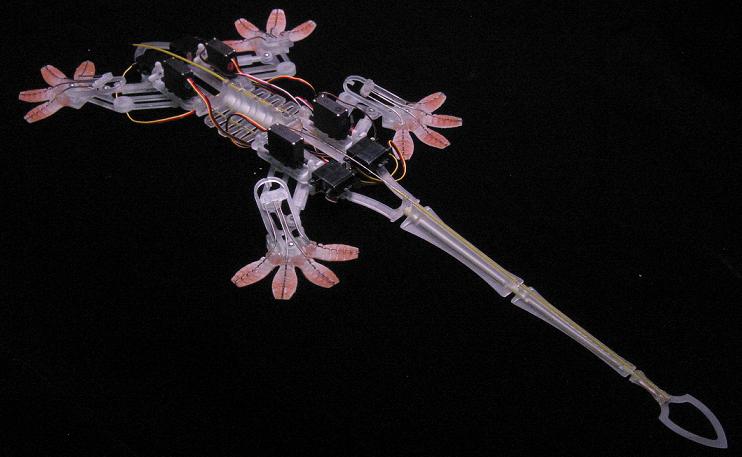
Stickybot, a climbing robot using synthetic setae[1]

Synthetic setae emulate the setae found on the toes of a gecko and scientific research in this area is driven towards the development of dry adhesives. Geckos have no difficulty mastering vertical walls and are apparently capable of adhering themselves to just about any surface. The five-toed feet of a gecko are covered with elastic hairs called setae and the ends of these hairs are split into nanoscale structures called spatulae (because of their resemblance to actual spatulas). The sheer abundance and proximity to the surface of these spatulae make it sufficient for van der Waals forces alone to provide the required adhesive strength.[2] Following the discovery of the gecko's adhesion mechanism in 2002, which is based on van der Waals forces, biomimetic adhesives have become the topic of a major research effort. These developments are poised to yield families of novel adhesive materials with superior properties which are likely to find uses in industries ranging from defense and nanotechnology to healthcare and sport.

Basic principles

[edit]
Close view of a gecko's foot

Geckos are renowned for their exceptional ability to stick and run on any vertical and inverted surface (excluding Teflon[3]). However gecko toes are not sticky in the usual way like chemical adhesives. Instead, they can detach from the surface quickly and remain quite clean around everyday contaminants even without grooming.

Extraordinary adhesion

[edit]

The two front feet of a tokay gecko can withstand 20.1 N of force parallel to the surface with 227 mm2 of pad area,[4] a force as much as 40 times the gecko's weight. Scientists have been investigating the secret of this extraordinary adhesion ever since the 19th century, and at least seven possible mechanisms for gecko adhesion have been discussed over the past 175 years. There have been hypotheses of glue, friction, suction, electrostatics, micro-interlocking and intermolecular forces. Sticky secretions were ruled out first early in the study of gecko adhesion since geckos lack glandular tissue on their toes. The friction hypothesis was also dismissed quickly because the friction force only acts in shear which cannot explain the adhesive capabilities of geckos on inverted surfaces. The hypothesis that the toe pads act as suction cups was dispelled in 1934 by experiments carried out in a vacuum in which the gecko's toes remained stuck. Similarly, the electrostatic hypothesis was refuted by an experiment showing that geckos could still adhere even when the build-up of electrostatic charge was impossible (such as on a metal surface in air ionized by a stream of x-rays). The mechanism of microinterlocking which suggested that the curved tips of setae could act as microscale hooks was also challenged by the fact that geckos generate large adhesive forces even on molecularly smooth surfaces.

Micro and nano view of gecko's toe[5]

The possibilities finally narrowed down to intermolecular forces, and the development of electron microscopy in the 1950s, which revealed the micro-structure of the setae on the gecko's foot, provided further proof to support this hypothesis. The problem was finally solved in 2000 by a research team led by biologists Kellar Autumn of Lewis & Clark College in Portland, Oregon, and Robert Full at the University of California at Berkeley.[6] They showed that the underside of a gecko toe typically bears a series of ridges, which are covered with uniform ranks of setae, and each seta further divides into hundreds of split ends and flat tips called spatulas (see figure on the right). A single seta of the tokay gecko is roughly 110 micrometers long and 4.2 micrometers wide. Each of a seta's branches ends in a thin, triangular spatula connected at its apex. The end is about 0.2 micrometers long and 0.2 micrometers wide.[5] The adhesion between gecko's foot and the surfaces is exactly the result of the Van der Waals force between each seta and the surface molecules. A single seta can generate up to 200 μN of force.[7] There are about 14,400 setae per square millimeter on the foot of a tokay gecko, which leads to a total number of about 3,268,800 setae on a tokay gecko's two front feet. From the equation for intermolecular potential:

where and are the number of contacts of the two surfaces, R is the radius of each contact and D is the distance between the two surfaces.

We find that the intermolecular force, or the van der Waals force in this case between two surfaces is greatly dominated by the number of contacts. This is exactly the reason why the gecko's feet can generate extraordinary adhesion force to different kinds of surfaces. The combined effect of millions of spatulae provides an adhesive force many times greater than the gecko needs to hang from a ceiling by one foot.

Attach and detach procedure of gecko's foot[5]

Lift-off mechanism

[edit]

The surprisingly large forces generated by the gecko's toes[8] raised the question of how geckos manage to lift their feet so quickly – in just 15 milliseconds – with no measurable detachment forces. Kellar Autumn and his research group found out the 'Lift-off mechanism' of the gecko's feet. Their discovery revealed that gecko adhesive actually works in a 'programmable' way that by increasing the angle between the setal shaft and the substrate to 30 degrees, no matter how big the perpendicular adhesive force is, geckos 'turn off' the stickiness since the increased stress at the trailing edge of the seta causes the bonds between seta and the substrate to break. The seta then returns to an unloaded default state. On the other hand, by applying preload and dragging along the surface, the geckos turn on the modulate stickiness. This 'Lift-off' mechanism can be shown in the figure on the right.

Self-cleaning ability

[edit]

Unlike conventional adhesives, gecko adhesive becomes cleaner with repeated use, and thus stays quite clean around everyday contaminants such as sand, dust, leaf litter and pollen. In addition, unlike some plants and insects that have the ability of self-cleaning by droplets, geckos are not known to groom their feet in order to retain their adhesive properties – all they need is only a few steps to recover their ability to cling to vertical surfaces.

Model explaining self-cleaning ability[9]

Kellar Autumn and his research group have conducted experiments to test and demonstrate this ability of the gecko.[9] They also use the contact mechanical model to suggest that self-cleaning occurs by an energetic disequilibrium between the adhesive forces attracting a dirt particle to the substrate and those attracting the same particle to one or more spatulae. In other words, the Van der Waals interaction energy for the particle-wall system requires a sufficiently great number of particle-spatula systems to counterbalance; however, relatively few spatulae can actually attach to a single particle, therefore the contaminant particles tend to attach to the substrate surface rather than the gecko's toe due to this disequilibrium. Figure on the right shows the model of interaction between N spatulas, a dirt particle and a planar wall.

It is important to know that this property of self-cleaning appears intrinsic to the setal nano-structure and therefore should be replicable in synthetic adhesive materials. In fact, Kellar Autumn's group observed how self-cleaning still occurred in arrays of setae when isolated from the geckos used.

Development and approaches

[edit]
Number of papers published on "gecko adhesive" 2002~2007[10]

The discoveries about gecko's feet led to the idea that these structures and mechanisms might be exploited in a new family of adhesives, and research groups from around the world are now investigating this concept. And thanks to the development of nano science and technology, people are now able to create biomimetic adhesive inspired by gecko's setae using nanostructures. Indeed, interest and new discoveries in gecko-type adhesives are booming, as illustrated by the growing number of papers published on this topic.[10] however, synthetic setae are still at a very early stage.

Effective design

[edit]

Effective design of geckolike adhesives will require deep understanding of the principles underlying the properties observed in the natural system. These properties, principles, and related parameters of the gecko adhesive system are shown in the following table.[11] This table also gives us an insight into how scientists translate those good properties of gecko's setae (as shown in the first column) into the parameters they can actually control and design (as shown in the third column).

Properties Principles parameters
1. Anisotropic attachment
2. High μ' (pulloff/preload)
Cantilever beam Shaft length, radius, density, shaft angle
3. Low detachment force Low effective stiffness Shaft modulus, spatular shape
4. Material independence stickiness Van der Waals mechanism
JKR-like* contact mechanics
Nanoarray (divided contact)
Spatular size, spatular shape, spatular density
5. Self-cleaning ability Nanoarray (divided contact) Spatular bulk modulus
6. Anti-self-stickiness Small contact area Particle size, shape, surface energy
7. Nonsticky default state Nonsticky spatulae, hydrophobic, Van der Waals force Spatular size, shape, surface energy

*JKR refers to the Johnson, Kendall, Roberts model of adhesion[12]

In summary, the key parameters in the design of synthetic gecko adhesive include:

  • Pattern and periodicity of the synthetic setae
  • Hierarchical structure
  • Length, diameter, angle and stiffness of the shafts
  • Size, shape and stiffness of the spatulas (end of the satae)
  • Flexibility of the substrate

There is a growing list of benchmark properties that can be used to evaluate the effectiveness of synthetic setae, and the adhesion coefficient, which is defined as:

where is the applied preload force, and is the generated adhesion force. The adhesion coefficient of real gecko setae is typically 8~16.

Materials

[edit]

In the first developments of synthetic setae, polymers like polyimide, polypropylene and polydimethylsiloxane (PDMS) are frequently used since they are flexible and easily fabricated. Later, as nanotechnology rapidly developed, Carbon Nanotubes (CNTs) are preferred by most research groups and used in most recent projects. CNTs have much larger possible length-to-diameter ratio than polymers, and they exhibit both extraordinary strength and flexibility, as well as good electrical properties. It is these novel properties that make synthetic setae more effective.

Fabrication techniques

[edit]

A number of MEMS/NEMS fabrication techniques are applied to the fabrication of synthetic setae, which include photolithography/electron beam lithography, plasma etching, deep reactive ion etching (DRIE), chemical vapor deposition (CVD), and micro-molding, etc.

Examples

[edit]

In this section, several typical examples will be given to show the design and fabrication process of synthetic setae. We can also gain an insight into the development of this biomimetic technology over the past few years from these examples.

Gecko tape

[edit]
Micro view of gecko tape[13]

This example is one of the first developments of synthetic setae, which arose from a collaboration between the Manchester Centre for Mesoscience and Nanotechnology, and the Institute for Microelectronics Technology in Russia. Work started in 2001 and 2 years later results were published in Nature Materials.[13]

The group prepared flexible fibers of polyimide as the synthetic setae structures on the surface of a 5 μm thick film of the same material using electron beam lithography and dry etching in an oxygen plasma. The fibres were 2 μm long, with a diameter of around 500 nm and a periodicity of 1.6 μm, and covered an area of roughly 1 cm2 (see figure on the left). Initially, the team used a silicon wafer as a substrate but found that the tape's adhesive power increased by almost 1,000 times if they used a soft bonding substrate such as Scotch tape – This is because the flexible substrate yields a much higher ratio of the number of setae in contact with the surface over the total number of setae.

The result of this "gecko tape" was tested by attaching a sample to the hand of a 15 cm high plastic Spider-Man figure weighing 40 g, which enabled it to stick to a glass ceiling, as is shown in the figure. The tape, which had a contact area of around 0.5 cm2 with the glass, was able to carry a load of more than 100 g. However, the adhesion coefficient was only 0.06, which is low compared with real geckos (8~16).

Synthetic gecko foot hair

[edit]
Micro view of the "Polypropylene Synthetic Gecko Foot Hair" [14]

As nanoscience and nanotechnology develop, more projects involve the application of nanotechnology, notably the use of carbon nanotubes (CNTs). In 2005, researchers from the University of Akron and Rensselaer Polytechnic Institute, both in the US, created synthetic setae structures by depositing multiwalled CNTs by chemical vapour deposition onto quartz and silicon substrates[15]

The nanotubes were typically 10–20 nm in diameter and around 65 μm long. The group then encapsulated the vertically aligned nanotubes in PMMA polymer before exposing the top 25 μm of the tubes by etching away some of the polymer. The nanotubes tended to form entangled bundles about 50 nm in diameter because of the solvent drying process used after etching. (As is shown in the figure on the right).

The results were tested with a scanning probe microscope, and it showed that the minimum force per unit area as 1.6±0.5×10⁻² nN/nm2, which is far larger than the figure the team estimated for the typical adhesive force of a gecko's setae, which was 10−4 nN/nm2. Later experiments[16] with the same structures on Scotch tape revealed that this material could support a shear stress of 36 N/cm2, nearly four times higher than a gecko foot. This was the first time synthetic setae exhibited better properties than those of natural gecko foot. Moreover, this new material can adhere to a wider variety of materials, including glass and Teflon.

This new material has some problems, though. When pulled parallel to a surface, the tape releases, not because the CNTs lose adhesion from the surface but because they break, and the tape cannot be reused in this case. Moreover, unlike gecko's setae, this material only works for small area (approx. 1 cm2). The researchers are currently working on a number of ways to strengthen the nanotubes and are also aiming to make the tape reusable thousands of times, rather than the dozens of times it can now be used.

Geckel

[edit]
Micro view of the geckel[17]

While most developments concern dry adhesion, a group of researchers studied how derivatives of naturally occurring adhesive compounds from mollusks could be combined with gecko-type structures to yield adhesives that operate in both dry and wet conditions.[17]

The resulting adhesive, named 'geckel', was described to be an array of gecko-mimetic, 400 nm wide silicone pillars, fabricated by electron-beam lithography and coated with a mussel-mimetic polymer, a synthetic form of the amino acid that occurs naturally in mussels (left). [clarification needed].

Unlike true gecko glue, the material depends on van der Waals forces for its adhesive properties and on the chemical interaction of the surface with the hydroxyl groups in the mussel protein. The material improves wet adhesion 15-fold compared with uncoated pillar arrays. The so-called "geckel" tape adheres through 1,000 contact and release cycles, sticking strongly in both wet and dry environments.

So far, the material has been tested on silicon nitride, titanium oxide and gold, all of which are used in the electronics industry. However, for it to be used in bandages and medical tape, a key potential application, it must be able to adhere to human skin. The researchers tested other mussel-inspired synthetic proteins that have similar chemical groups and found that they adhere to living tissue.[17]

Geckel is an adhesive that can attach to both wet and dry surfaces. Its strength "comes from coating fibrous silicone, similar in structure to a gecko's foot, with a polymer that mimics the 'glue' used by mussels."[18]

The team drew inspiration from geckos, who can support hundreds of times their own body weight. Geckos rely on billions of hair-like structures, known as setae to adhere. Researchers combined this ability with the sticking power of mussels. Tests showed that "the material could be stuck and unstuck more than 1,000 times, even when used under water", retaining 85 percent of their adhesive strength.[19][20][21]

Phillip Messersmith, lead researcher on the team that developed the product, believes that the adhesive could have many medical applications, for example tapes that could replace sutures to close a wound and a water resistant adhesive for bandages and drug-delivery patches.[18]

Commercial production

[edit]

Automated, high-volume fabrication techniques will be necessary for these adhesives to be produced commercially and were being investigated by several research groups. A group led by Metin Sitti from Carnegie Mellon University studied[when?] a range of different techniques which include deep reactive ion etching (DRIE), which has been used successfully to fabricate mushroom-shaped polymer fibre arrays, micro-moulding processes, direct self-assembly and photolithography.[citation needed]

In 2006, researchers at BAE Systems Advanced Technology Centre at Bristol, UK, announced that they had produced samples of "synthetic gecko" – arrays of mushroom-shaped hairs of polyimide – by photolithography, with diameters up to 100 μm. These were shown to stick to almost any surface, including those covered in dirt, and a pull-off of 3,000 kg/m^2 was measured.[citation needed] More recently, the company has used the same technique to create patterned silicon moulds to produce the material and has replaced the polyimide with polydimethylsiloxane (PDMS). This latest material exhibited a strength of 220 kPa. Photo-lithography has the benefit of being widely used, well understood and scalable up to very large areas cheaply and easily, which is not the case with some of the other methods used to fabricate prototype materials.[citation needed]

In 2019, researchers from Akron Ascent Innovations, LLC, a company spun-out from University of Akron technology, announced the commercial availability of "ShearGrip" brand dry adhesives.[22] Rather than relying on photolithography or other micro-fabrication strategies, the researchers employed electrospinning to produce small diameter fibers based on the principle of contact splitting exploited by geckos. The product has reported shear strength greater than 80 pounds per square inch, with clean removal and reusability on many surfaces, and the ability to laminate the material to various face stocks in one or two sided constructions.[23] The approach is claimed to be more scalable than other strategies to produce synthetic setae and has been used to produce products for consumer markets under the brand name Pinless.

Applications

[edit]

There have been a wide range of applications of synthetic setae, also known as "gecko tape," ranging from nanotechnology and military uses to health care and sport.

Nano tape

[edit]
Nano tape

"Nano tape" (also called "gecko tape") is often sold commercially as double-sided adhesive tape. It can be used to hang lightweight items such as pictures and decorative items on smooth walls without punching holes in the wall. The carbon nanotube arrays leave no residue after removal and can stay sticky in extreme temperatures. [24]

Robotics

[edit]

No machine yet exists that can maneuver in the "scansorial" regime – that is, perform nimbly in general vertical terrain environments without loss of competence in level ground operation. Two major research challenges face the development of scansorial robotics: First, they seek to understand, characterize and implement the dynamics of climbing (wall reaction forces, limb trajectories, surface interactions, etc.); and second, they must design, fabricate and deploy adhesive patch technologies that yield appropriate adhesion and friction properties to facilitate necessary surface interactions.

As progress continues in legged robotics, research has begun to focus on developing robust climbers. Various robots have been developed that climb flat vertical surfaces using suction, magnets, and arrays of small spines, to attach their feet to the surface.

RiSE platform

[edit]

The RiSE platform was developed in Biomimetics and Dexterous Manipulation Laboratory, Stanford University. It has twelve degrees of freedom (DOF), with six identical two DOF mechanisms spaced equally in pairs along the length of the body. Two actuators on each hip drive a four bar mechanism, which is converted to foot motion along a prescribed trajectory, and positions the plane of the four bar mechanism angularly with respect to the platform. For the RiSE robot to succeed in climbing in both natural and man-made environments it has proven necessary to use multiple adhesion mechanisms. The RiSE robot does not, but will use dry adhesion in combination with spines.[25]

More recently, robots have been developed that utilize synthetic adhesive materials for climbing smooth surfaces such as glass.

These crawler and climbing robots can be used in the military context to examine the surfaces of aircraft for defects and are starting to replace manual inspection methods. Today's crawlers use vacuum pumps and heavy-duty suction pads which could be replaced by this material.

Stickybot

[edit]

Researchers at Stanford University have also created a robot called Stickybot which uses synthetic setae in order to scale even extremely smooth vertical surfaces just as a gecko would.[26] [27]

Stickybot is an embodiment of the hypotheses about the requirements for mobility on vertical surfaces using dry adhesion. The main point is that we need controllable adhesion. The essential ingredients are:

  • hierarchical compliance for conforming at centimeter, millimeter and micrometer scales,
  • anisotropic dry adhesive materials and structures so that we can control adhesion by controlling shear,
  • distributed active force control that works with compliance and anisotropy to achieve stability.

Geckobot

[edit]

Another similar example is "Geckobot" developed in Carnegie Mellon University,[28] which has climbed at angles of up to 60°.

Joint replacement

[edit]

Adhesives based on synthetic setae have been proposed as a means of picking up, moving and aligning delicate parts such as ultra-miniature circuits, nano-fibres and nanoparticles, microsensors and micro-motors. In the macro-scale environment, they could be applied directly to the surface of a product and replace joints based on screws, rivets, conventional glues and interlocking tabs in manufactured goods. In this way, both assembly and disassembly processes would be simplified. It would also be beneficial to replace conventional adhesive with synthetic gecko adhesive in vacuum environment (e.g. in space) since the liquid ingredient in conventional adhesive would easily evaporate and causes the connection to fail.[citation needed]

References

[edit]
[edit]
Revisions and contributorsEdit on WikipediaRead on Wikipedia
from Grokipedia
Synthetic setae are biomimetic microstructures designed to replicate the adhesive hairs on gecko feet, consisting of hierarchical arrays of micro- and nanofibrils that generate strong, reversible primarily through van der Waals intermolecular forces. These synthetic structures enhance contact area with surfaces via millions of fine tips, known as spatulas, allowing attachment to diverse materials without leaving residue or requiring moisture, chemicals, or energy input. Unlike traditional s, synthetic setae enable easy detachment by peeling or shearing, mimicking the 's ability to climb smooth, vertical, and inverted surfaces effortlessly. Inspired by the natural setae of geckos, which are composed of β-keratin nanofibrils branching into spatulas approximately 200 nm in diameter, synthetic versions employ materials like polymers (e.g., ) or carbon nanotubes to achieve similar hierarchical . The gecko's foot pads feature about 14,000 setae per square millimeter, each splitting into hundreds of spatulas that collectively produce shear strengths up to 10 N/cm² in nature; synthetic analogs have surpassed this, reaching 36 N/cm² or more in optimized designs. This biomimicry leverages the weak van der Waals attractions at the nanoscale, amplified by the vast number of contact points, while the compliant material properties ensure adaptability to surface irregularities. Fabrication of synthetic setae typically involves micro- and nanofabrication techniques such as , replica molding, , or to create ordered arrays of pillars with diameters of 50–500 μm and heights up to several hundred micrometers. Advanced methods, including synthesis via or two-photon , allow for precise control over fibril orientation and tip geometry, often resulting in mushroom-shaped or angled structures that improve load-bearing capacity. These processes enable scalability, with arrays supporting weights exceeding 4 kg per cm², though challenges like wear resistance and performance on rough or dusty surfaces persist. Applications of synthetic setae span , where they power wall-climbing devices like the Stickybot capable of speeds up to 4 cm/s on , and soft grippers for handling delicate objects in or . In , they form biocompatible tapes for wound dressings or ECG electrodes, offering painless removal. Recent advances as of 2024 include controllable variants using shape-memory polymers or for switchable , achieving over 2000 attachment-detachment cycles and strengths up to 184 N/cm². As of 2025, further developments encompass lithography-free scalable production methods and intelligent adhesives optimized for rough surfaces.

Fundamental Principles

Adhesion Mechanisms

Synthetic setae, inspired by the hierarchical fibrillar structures on toes, primarily achieve through van der Waals forces, which are weak intermolecular attractions arising between non-polar molecules on the seta tips and the substrate surface. These forces become effective at nanoscale separations, typically 0.2–0.6 nm, where the spatula-shaped tips of synthetic conform intimately to the substrate, maximizing the real contact area despite the apparent smoothness of most surfaces. In natural setae, this fibrillar architecture splits a single into hundreds of nanoscale spatulae, dramatically increasing the effective contact area from a fraction of a percent to nearly 100% of the projected area, thereby amplifying without relying on chemical bonds or surface modifications. The extraordinary strength of these structures is quantified by the force per unit area, with natural setae achieving up to approximately 20 N/cm²—sufficient to support several times the animal's body weight per square centimeter of pad area—through optimized and compliance that allows deformation to match surface irregularities. Synthetic setae aim to replicate or exceed this benchmark, with early prototypes demonstrating forces of 10–50 N/cm² on various substrates, limited by fabrication precision but enhanced by mimicking the hierarchical branching (setae to branches to spatulae) to distribute stress and prevent peeling. This dry mechanism outperforms traditional pressure-sensitive adhesives in reversibility and durability, as it requires no beyond mechanical contact. In contrast to wet adhesion systems, such as those using forces or liquid bridges in mussel-inspired adhesives, gecko-mimetic dry offers superior versatility across diverse surfaces, including hydrophobic, hydrophilic, rough, or ones, without leaving residue or depending on environmental . Wet mechanisms, while effective in aqueous environments, often fail on low-wettability surfaces and introduce risks from evaporated fluids, whereas van der Waals-based dry maintains performance in , air, or even underwater conditions by avoiding collapse. This advantage stems from the non-specific, short-range nature of van der Waals interactions, enabling attachment to nearly any solid substrate. The fundamental adhesion energy in these systems follows contact mechanics principles, where the work of adhesion WW, the thermodynamic energy per unit area required to separate the fibril tips from the substrate, is typically around 50 mJ/m² for van der Waals interactions. In fibrillar arrays, this energy is scaled by the effective contact area AA, such that total adhesion force approximates FnWAF \approx n \cdot W \cdot A, where nn accounts for the number of fibrils, allowing synthetic designs to tune performance across substrates.

Detachment and Self-Cleaning

In synthetic setae, detachment is facilitated by a lift-off mechanism that mimics the gecko's dynamics, where angular peeling under shear load enables controlled release without requiring high normal forces. This process involves shearing the fibrillar array parallel to the surface, which aligns the setae for initial attachment but, upon reversal, induces progressive peeling from the trailing edge as the setal shaft angle relative to the substrate exceeds a critical threshold of approximately 30°. At this angle, the contact area diminishes rapidly due to elastic of the compliant fibers, reducing the force to near zero and allowing easy detachment; for instance, theoretical models predict that the detachment force scales with the sine of the peel angle, emphasizing the mechanical efficiency of this shear-induced peeling over direct tensile . The compliance of synthetic setae plays a crucial role in preventing permanent sticking by enabling reversible deformation during detachment; the of materials like (PDMS), typically around 1-2 MPa, allows fibers to recover shape post-peeling, avoiding hysteresis-induced residual adhesion that could occur in rigid structures. This compliance ensures that the stored during shear loading is released controllably, maintaining cycle-to-cycle reusability without degradation. Self-cleaning in synthetic setae arises from the fibrillar architecture's ability to shed contaminants through elastic recovery and low contact hysteresis, preserving adhesion over repeated uses in dusty environments. Upon contamination, particles larger than the inter-fiber spacing (e.g., >2 times the diameter) are dislodged during shear drag or peeling steps, as the of the setae generates forces exceeding particle-substrate adhesion, leading to rolling or ejection of debris. Early studies on synthetic analogs demonstrated that pull-off forces drop by up to 60% immediately after contamination but recover 50-80% within 4-12 contact cycles, depending on particle size relative to tip diameter, with reduced hysteresis (energy dissipation ratio <0.5) enabling this restoration by minimizing trapped residues. For example, 2000s research on PDMS-based fibrillar adhesives showed that after exposure to particulates like glass microspheres, shear adhesion hysteresis decreased post-cleaning cycles, restoring durability akin to natural setae.

Design and Materials

Structural Design Parameters

Synthetic setae are engineered with precise geometric and mechanical parameters to mimic the hierarchical structure of natural setae, optimizing through van der Waals forces while enabling reversibility. Key parameters include , typically ranging from 50 to 200 nm at the nanoscale level, which determines the contact area and compliance of individual points. The of these , often engineered between 10:1 and 20:1, influences the balance between flexibility for conformal surface contact and structural integrity under load. density is another critical factor, with synthetic designs achieving 10^6 to 10^9 per cm² to maximize total without excessive preload. Additionally, hierarchical architectures incorporate micro- and macro-scale structures, such as 5-10 μm wide microsetae branching into nanoscale , to distribute forces across larger areas and enhance overall performance. Effective design principles emphasize balancing stiffness for load-bearing capacity with overall compliance to ensure intimate contact on rough or irregular surfaces. This is achieved by tuning the effective modulus to below 100 kPa, allowing the array to deform under minimal preload while individual remain relatively rigid to resist . Hierarchical designs further contribute by reducing stress concentrations, enabling the to support shear loads exceeding 10 N/cm² in some prototypes. Parameter tuning directly impacts metrics: smaller diameters and higher aspect ratios increase preload sensitivity but enhance by promoting more uniform contact, while optimal maximizes up to 100 times that of flat surfaces without compromising reusability. For instance, increasing levels improves reusability by facilitating self-cleaning through deflection, maintaining over 80% after multiple cycles in controlled tests. Early design models from the 1990s and 2000s, such as Johnson's extension of to fibrillar systems, provided foundational insights into enhancement via increased real contact area. These models, building on the Johnson-Kendall-Roberts (JKR) theory, predicted that fibrillar geometries amplify van der Waals forces by factors of 10-100 compared to smooth surfaces, guiding the optimization of synthetic setae parameters.

Material Choices

Synthetic setae are primarily fabricated from materials that mimic the compliant yet durable properties of natural gecko setae, enabling effective van der Waals through close surface contact. Common polymers include (PDMS), valued for its flexibility and low , which facilitates reversible dry without chemical bonding. Carbon nanotubes (CNTs), often integrated as vertically aligned arrays, provide high modulus and enhanced , allowing for robust attachment under load. Synthetic polymers such as offer tunable elasticity and are used in designs requiring shear-activated . Key material properties for synthetic setae include low to promote intimate contact with diverse substrates, typically below 30 mJ/ for optimal van der Waals forces, and high elasticity with moduli in the range of 0.055–1.2 MPa to ensure compliance without permanent deformation. These elastomeric characteristics allow to conform to surface irregularities, maximizing contact area. is prioritized in applications, where materials like PDMS must resist protein adsorption and maintain adhesion in physiological environments. A primary in is between strength and ; while PDMS provides excellent compliance for initial attachment, it suffers from under repeated cycling, leading to reduced performance over thousands of uses. Incorporating high-modulus reinforcements like CNTs improves resistance to abrasion but can stiffen the structure, potentially limiting adaptability to rough surfaces. Material evolution has progressed from early silicone-based elastomers in the 2000s, such as micropillars demonstrating initial fibrillar , to modern hybrid composites combining polymers with for balanced properties. Recent advances include shape-memory polymers for controllable , enabling switchable properties as of 2024. These advancements address early limitations in and , enabling broader practical deployment.

Fabrication Methods

Micro- and Nanofabrication Techniques

Micro- and nanofabrication techniques for synthetic setae primarily involve high-resolution patterning methods to replicate the hierarchical fibrillar structures of natural foot hairs at scales from micrometers to nanometers. These laboratory-scale approaches enable precise control over fibril geometry, such as diameter, length, , and tip shape, which are critical for adhesion performance. Pioneering efforts in the early 2000s, including work from the laboratory at , introduced nanomolding techniques to create synthetic micro- and nano-hairs, marking a shift from conceptual models to functional prototypes. Similarly, researchers at the , led by , demonstrated the first microfabricated arrays using (EBL) on substrates, achieving fibril diameters as small as 200 nm and highlighting the potential for van der Waals-mediated adhesion. Electron-beam lithography stands out for its sub-10 nm resolution, making it ideal for defining nanoscale in resists like or PMMA on substrates. The process begins with spin-coating a resist layer onto a substrate, followed by EBL exposure to the array design, development to remove exposed areas, and (e.g., in oxygen plasma) to transfer the into the material, yielding vertical up to 2 μm tall with 500 nm diameters and 1.6 μm periodicity. This method's high precision allows for dense arrays (up to 10^8 /cm²), but challenges include low throughput due to serial writing and potential defects from charging or proximity effects, limiting yields to around 90-95% in optimized lab settings for small areas (e.g., 1 cm²). Soft lithography, often using polydimethylsiloxane (PDMS) stamps, offers a versatile replication method for transferring patterns from a lithographically defined to elastomeric materials. The workflow starts with master mold creation via or EBL on a rigid substrate (e.g., with SU-8 ), followed by casting uncured PDMS (typically at a 10:1 base-to-curing-agent ratio) onto the mold, to remove bubbles, curing at 60-80°C for 4-24 hours, and gentle demolding to avoid tearing. This produces compliant fibril arrays with aspect ratios up to 10:1 and resolutions down to 50 nm, suitable for materials like or that enhance durability. Key challenges include minimizing defects such as incomplete filling (leading to voids) or sidewall collapse during demolding, which can reduce yield to 80-90% without surface treatments like fluorosilane coating; however, it enables of angled or hierarchical structures mimicking setae orientation. Nanoimprint lithography (NIL) provides a hybrid approach, combining the resolution of with the scalability of molding for patterning in or UV-curable s. In NIL, a (fabricated via EBL or milling) is pressed into a heated film (e.g., at 150-200°C under 10-50 bar ) above its temperature, allowed to cool, and released, achieving features as fine as 10 nm with . UV-NIL variants use transparent molds and photo-curable resins for room-temperature processing, reducing . This technique supports high yields (over 95%) for areas up to several cm² and aspect ratios exceeding 20:1, but demolding forces can cause fractures in brittle materials, necessitating anti-sticking layers. Early applications in gecko-inspired adhesives demonstrated NIL's efficacy for hierarchical micro-nano arrays, improving contact conformity on rough surfaces.

Scalable Production Approaches

Scalable production of synthetic setae has evolved from laboratory prototypes in the early to commercial products by the , driven by the need for cost-effective methods to replicate gecko-like fibrillar structures at industrial scales. Initial developments, such as polyimide-based synthetic setae published in , focused on small-scale arrays but laid the groundwork for broader applications. By , carbon nanotube-based tapes advanced the , leading to market entry with fibrillar adhesive products like Setex Gecko Tape from nanoGriptech and geCKo Materials adhesives in the , which offered reusable adhesion for lightweight hanging without residues. These early commercial efforts highlighted the transition from research to viable products, though initial costs remained high due to precision fabrication requirements. Key approaches for include , injection molding, and adaptations of , alongside recent innovations like diffraction-grated molds. enables continuous fabrication of (PDMS) nanostructures by curing resin in a belt-type mold, reducing curing time from 1 hour to 3 minutes and allowing high-throughput production of thin films. Injection molding forces melted polymers, such as or , into nanoscale mold cavities under heat and pressure, producing uniform fibrillar patterns suitable for larger batches, though it requires durable molds to minimize wear. Adaptations of , particularly two-photon , create complex hierarchical molds that can be replicated for scalable , facilitating customizable designs with high precision over areas up to several square centimeters. A 2025 innovation using commercial diffraction-grated sheets as lithography-free molds for PDMS achieves directional adhesives without facilities, supporting of micro-wedge patterns with 7 μm feature heights. These methods address core challenges in , including toward targets below $1 per square meter, uniformity across large areas, and scaling fibril density to mimic natural setae. Traditional incurs high costs and low yields for small samples (millimeters to centimeters), but roll-to-roll and molding techniques lower expenses by enabling continuous operation and using commercial polymers. Uniformity is improved through vacuum degassing to prevent air bubbles and precise mold ruling, achieving consistent feature replication over 100 cm² patches. Scaling fibril density remains limited by process constraints, such as gas-phase growth to ~1 cm², but innovations like molds enhance density via single-level microstructures without collapsing defects. Production metrics underscore progress in viability, with roll-to-roll systems demonstrating rapid curing for potential meters-per-hour throughput and diffraction-grated methods yielding 1–1.5 m² per day per operator at $11.04 per 100 cm². Defect rates are minimized to under 2% strength loss after cleaning cycles, primarily from rather than fabrication flaws, enabling durable adhesives with shear stresses up to 19 kPa. These benchmarks highlight ongoing efforts to balance speed, cost, and reliability for widespread adoption.

Notable Examples

Gecko Tape

Gecko Tape represents a pioneering example of synthetic setae technology, developed in 2007 by researchers led by Ali Dhinojwala at the . The adhesive is fabricated by transferring vertically aligned, micropatterned arrays of carbon nanotubes onto a flexible backing, replicating the nanoscale hierarchical structure of gecko foot setae and spatulae to enable van der Waals-based adhesion. This approach was first detailed in a high-impact study published in the Proceedings of the , marking a key advancement in biomimetic dry adhesives. Key features of Gecko Tape include its reusability and versatility in adhering to diverse surfaces, ranging from smooth hydrophilic materials like and to challenging hydrophobic ones such as Teflon, without leaving residue upon detachment. The tape achieves shear adhesion strengths of 36 N/cm²—surpassing natural feet in some metrics—and supports normal around 8 N/cm², making it suitable for prototyping in fields like and where temporary, strong bonding is needed. Its design draws briefly from general principles of fibrillar spacing and compliance to optimize contact area. Performance evaluations highlight the tape's durability, with repeated attachment and detachment cycles maintaining when peeled at angles greater than 10°, and no structural damage observed over multiple uses. A follow-up investigation in confirmed its self-cleaning capability, where the compliant nanotube arrays dynamically shed particulates like dust during contact, retaining approximately 50% of its original strength after contamination exposure. This mechanism, akin to foot dynamics, ensures sustained performance without external cleaning. Despite these strengths, early Gecko Tape prototypes encountered significant limitations, including high fabrication costs stemming from the intricate and transfer processes for nanotube arrays, which restricted large-scale production. Additionally, scalability proved challenging, as adhesive force did not scale linearly with increasing area due to uneven stress distribution across larger patches, limiting practical deployment beyond small prototypes.

Geckel Adhesive

The Geckel adhesive is a hybrid synthetic setae system that integrates the dry principles of toe pads with the wet chemistry inspired by byssal threads. Developed in 2007 by researchers Haeshin Lee, Bruce P. Lee, and Phillip B. Messersmith at , it features arrays of nanofabricated (PDMS) pillars coated with a thin layer of synthetic mussel-mimetic containing 3,4-dihydroxyphenylalanine (DOPA), the key catecholamine residue in natural adhesives. This combination leverages van der Waals forces from the fibrillar PDMS structure in dry settings and enhances wet performance through DOPA-mediated hydrogen bonding, coordination chemistry, and hydrophobic effects. A standout attribute of Geckel is its versatility across environments, achieving strong, reversible in both air and without residue or degradation. Uncoated PDMS pillars exhibit limited wet due to forces, but the DOPA coating boosts shear nearly 15-fold underwater, yielding strengths up to approximately 10 N/cm²—on par with natural setae for a 1 cm² area. The material also demonstrates exceptional durability, retaining over 85% of its initial after more than 1,000 attachment-detachment cycles in wet or dry conditions, far surpassing traditional pressure-sensitive adhesives. The of Geckel's components, particularly the DOPA-functionalized derived from biocompatible mimics, positions it for biomedical uses such as tissue in moist environments. Early evaluations highlighted its non-cytotoxic nature and ability to maintain on hydrated biological surfaces, supporting prolonged contact for hours without eliciting inflammatory responses. This hybrid design thus bridges gaps in synthetic adhesives, offering a reusable, environmentally robust alternative for applications requiring reliable wet-dry performance.

Other Synthetic Variants

Beyond the well-known tape and geckel adhesives, synthetic setae have evolved through various innovative variants that expand their functional diversity. Early developments in the 2000s focused on synthetic foot hairs using micropillar arrays, where flexible micropillars mimicked the hierarchical structure of natural setae to achieve dry adhesion via van der Waals forces. These micropillars, typically fabricated from materials like (PDMS), demonstrated self-cleaning properties and re-attachability, with adhesion strengths approaching those of biological setae on smooth surfaces. More recent variants incorporate active mechanisms for enhanced control. In 2024, electroadhesive-enhanced synthetic setae combined fibrillar microstructures with electrostatic forces, allowing tunable by applying voltage to increase contact engagement and overall force beyond passive dry alone. This hybrid approach boosts performance on diverse substrates, with the combined force exceeding the sum of individual mechanisms. Similarly, self-sensing adhesives emerged in 2025, integrating sensory elements into fibrillar structures to detect states and enable intelligent feedback, mimicking the tactile capabilities of feet for adaptive attachment. Key innovations in 2025 further addressed challenges with complex geometries and environments. Magnetic switchable variants use embedded magnetic particles in setae arrays to induce self-peeling via external fields, enabling rapid on-off switching for curved surfaces without mechanical detachment. These structures achieve controllable through synergy with , facilitating handling of flexible objects. Concurrently, intelligent structures for rough terrains incorporate hierarchical, adaptive fibrils that conform dynamically to irregularities, maintaining via graded compliance and multi-scale features inspired by setae morphology as of February 2025. Performance highlights include rapid switching times under 0.5 seconds in gripper applications, allowing precise grasp-and-release cycles for varied object sizes. Electroadhesion enhancements can amplify forces by up to 50% on insulating surfaces, establishing scalability for practical use. These advancements build on ongoing research at labs like Stanford's and Dexterous Manipulation Lab, which has pioneered gecko-inspired synthetics since the through scalable fabrication and testing.

Applications

Adhesive Products

Synthetic setae-inspired adhesives have been integrated into commercial products such as tapes for mounting and removable fasteners, particularly in and industrial applications since the . These products mimic the fibrillar microstructure of setae to provide dry without traditional , enabling secure attachment for household items like picture frames, , and temporary fixtures. For instance, Setex Gecko-Inspired Tape, developed by nanoGriptech and commercialized around 2015, serves as a residue-free alternative for parts fixturing and , with applications in assembly where clean detachment is essential. Key advantages of these synthetic setae-based tapes include residue-free removal, high reusability exceeding 100 cycles while retaining substantial strength, and versatility on both smooth and moderately rough surfaces. The fibrillar allows for easy peel-off without surface damage or leftover residue, unlike chemical adhesives, and supports repeated use through self-cleaning properties that prevent contaminant buildup. Commercial variants like Materials' dry adhesives, NASA-certified for reliability, demonstrate shear strengths customizable from 0 to 40 N/cm², making them suitable for lightweight mounting tasks in homes and offices. In the market, household-oriented gecko tapes have achieved adhesion in the range of 5-20 N/cm², supporting loads for everyday applications while seeing increased adoption and sales growth post-2020, driven by demand for sustainable fastening solutions. For example, geCKo Materials launched four new products in 2025 following an $8 million funding round, expanding availability for consumer mounting needs, while Setex's technology was acquired by Shin-Etsu in 2024 to scale production for broader industrial use. This reusability and clean application reduce the need for single-use chemical adhesives in packaging and assembly, lowering material waste and environmental impact in sectors like electronics and consumer goods.

Robotics and Automation

Synthetic setae have been integrated into robotic platforms to enable climbing, gripping, and manipulation tasks on vertical and inverted surfaces, mimicking locomotion for enhanced mobility in unstructured environments. In contrast, the Stickybot, a quadrupedal from introduced in 2008, employed directional synthetic setae made from to achieve adhesion on smooth surfaces such as glass and polished metal, allowing it to climb at speeds up to 4 cm/s. Similarly, Geckobot platforms, such as the 2006 prototype from , utilized elastomer-based synthetic setae for ceiling walking and vertical traversal on non-porous surfaces, emphasizing lightweight design for agile movement. Recent enhancements focus on controllable mechanisms in robotic , enabling rapid switching for handling diverse objects. A 2025 gecko toe pad-inspired achieves adhesion control in less than 0.5 seconds, allowing precise grasping and release of items varying in size from small to larger payloads up to several kilograms, without residue or damage. These systems leverage pneumatic or mechanical actuation to modulate contact pressure, adapting to irregular shapes and weights in automation tasks like assembly or . Performance metrics highlight the robustness of synthetic setae in supporting substantial loads on challenging surfaces. Gecko-inspired grippers, such as the OnRobot Gecko SP series, provide for payloads up to 5 kg on vertical and ceiling orientations, suitable for industrial robotics in confined spaces. In , hybrid approaches combining synthetic setae with electroadhesion boosted normal forces by up to 50% on surfaces, enhancing grip reliability under dynamic conditions like or shear. Ongoing developments incorporate sensors for adaptive adhesion control, improving autonomy in real-world applications. integrated with gecko-inspired films detects and slippage, enabling real-time adjustments to maintain optimal sticking during or manipulation. Self-sensing adhesives, drawing from 2025 , use embedded piezoresistive elements in synthetic setae to monitor shear and normal forces, facilitating intelligent detachment and reducing energy consumption in mobile robots.

Biomedical and Medical Uses

Synthetic setae have found promising applications in biomedical contexts, particularly for tissue and surgical interventions. One key use is in medical tapes for wound closure, where gecko-inspired provide strong, reversible bonding to seal incisions without traditional sutures or staples. For instance, a biodegradable poly(glycerol-co-sebacate ) (PGSA) featuring nanoscale pillars mimicking setae demonstrated effective sealing of wounds in models, with strengths reaching up to 4.8 N/cm² in wet conditions, enabling safe detachment while promoting tissue healing. These tapes reduce the need for invasive closure methods, minimizing risk and discomfort. Advantages of these synthetic setae-based adhesives include high biocompatibility and the ability to adhere in wet environments, crucial for internal surgical procedures. The hybrid "Geckel" adhesive, combining gecko-like nanofibrillar structures with mussel-inspired polymers, achieves over 70% adhesion in aqueous settings, making it suitable for applications like cardiovascular or gastrointestinal surgery where moisture is present. This wet adhesion capability outperforms conventional glues, allowing for repeated use and easy removal without residue, thus lowering inflammation and supporting faster recovery. Research in the advanced prototypes for orthopedic prosthetics, focusing on enhanced tissue integration through tunable to and interfaces. Early developments, building on 2008 gecko-inspired designs, explored nanofibrillar patterns for secure yet detachable bonding in implant fixation, with forces engineered in the 1-5 N/cm² range to ensure stability without damaging surrounding tissues. By 2025, gecko-inspired medical tapes had evolved to include self-sensing capabilities, incorporating capacitive sensors within the structure to monitor or prosthetic fit in real-time, sustaining up to 200-300 kPa even on uneven surfaces. These innovations hold clinical potential for reducing suture reliance in replacement surgeries and enabling proactive health monitoring.

Challenges and Advances

Current Limitations

Despite advances in mimicking the hierarchical structure of natural setae, synthetic variants exhibit significant after repeated use, with strength degrading to approximately 54% of initial values after 10,000 cycles in arrays due to plastic deformation of fiber tips. This contrasts sharply with natural setae, which show no significant after 30,000 cycles. Although some designs incorporate self-cleaning mechanisms inspired by geckos, synthetic setae remain sensitive to dust and oils, leading to particle embedding and reduced reusability. Performance further diminishes on very rough or contaminated surfaces, where can drop to 20-30% of original levels following with particulates, as observed in soft arrays. Synthetic setae lag behind natural counterparts in multi-surface adaptability, struggling with hierarchical compliance needed for irregular topographies and showing inconsistent recovery from environmental contaminants like or . Scalability for large-area production remains challenging, as current methods limit economical manufacturing beyond small prototypes. High fabrication costs, particularly exceeding $10 per square meter as of 2010 for advanced nanostructured variants using techniques like or arrays, hinder commercial viability. These expenses stem from complex, low-yield processes required to replicate nanoscale spatula tips, underscoring persistent barriers to widespread adoption, though recent methods have reduced costs to around $1,100 per m² for certain scalable variants as of 2025.

Recent Developments

In 2025, researchers introduced scalable fabrication methods for gecko-inspired adhesives using diffraction-grating molds to create cost-effective (PDMS) casts, enabling production of microscale wedge structures at approximately $11 per 100 cm² patch without requiring facilities. This approach supports throughput of 1–1.5 m² per day and demonstrates shear stresses up to 19.10 kPa, facilitating broader prototyping for practical applications. Advancements in switchable adhesion emerged in 2025 with magnetic soft actuators incorporating gecko-inspired setae arrays, allowing controllable attachment and detachment on curved surfaces via external magnetic fields of 0–50 mT, achieving rapid peeling in under 20 ms. Complementary work developed magnetically induced self-peeling mechanisms for fibrillar adhesives, enabling reversible adhesion on both flat and curved substrates through curvature synergy, with stability maintained over 20 cycles. In 2024, electroadhesive hybrids combining passive fibrillar setae with active interdigital electrodes enhanced normal adhesion forces by 53.7% and shear forces by 66.8% at 4 kV, improving contact area and engagement on diverse surfaces. Self-sensing variants advanced in 2025, with gecko-inspired adhesives integrating real-time feedback for adhesive state and force detection, supporting in and handling of irregular objects. These structures, featuring hierarchical bionic designs, enable adaptive on rough surfaces by combining sensing with van der Waals forces, as demonstrated in robotic grasping from convex to flat profiles. In medical contexts, 2025 developments yielded gecko-inspired tapes for wound care that adjust dynamically to tissue, offering biocompatible, biodegradable sealing infused with medications to reduce without sutures. Ongoing enhancements in durability and suggest potential for commercial integration of these adhesives in for and , and in for bandage tapes and tissue , in the coming years.

References

Add your contribution
Related Hubs
User Avatar
No comments yet.