Hubbry Logo
Ted KaufmanTed KaufmanMain
Open search
Ted Kaufman
Community hub
Ted Kaufman
logo
8 pages, 0 posts
0 subscribers
Be the first to start a discussion here.
Ted Kaufman
Ted Kaufman
from Wikipedia

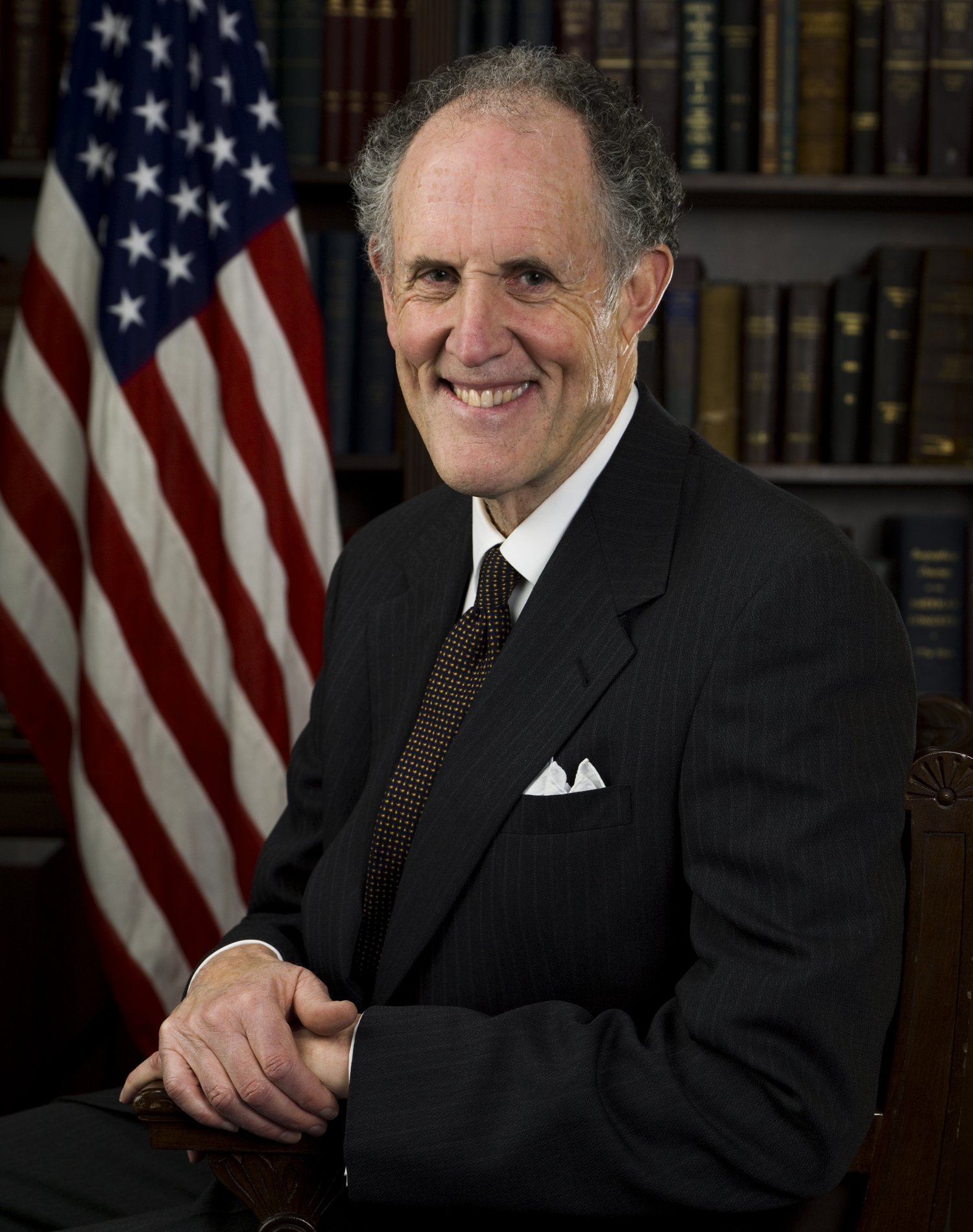
Edward Emmett Kaufman (born March 15, 1939) is a retired American politician and businessman who served as a United States senator from Delaware[1] from 2009 to 2010. He chaired the Congressional Oversight Panel for the Oversight of the Troubled Asset Relief Program; he was the second and final person to hold the position, succeeding Elizabeth Warren. Kaufman is a member of the Democratic Party and a key ally of former president Joe Biden.

Key Information

Kaufman was appointed to the Senate to serve the remainder of longtime senator Biden's term after he was elected vice president in 2008. Before becoming a U.S. senator, Kaufman had served as an advisor to Biden for much of his political career and later served as the head of his presidential transition.[2] On a personal level, Kaufman has been described as Biden's "best friend".[3][4]

Early life, education and business career

[edit]

Edward Emmett Kaufman was born on March 15, 1939, in Philadelphia,[5] the son of Helen (née Carroll), a teacher, and Manuel Kaufman, a social worker. His father was of Russian Jewish ancestry, and his mother was a Catholic of Irish descent.[6] He was raised Catholic, his mother's religion.[7] Kaufman graduated Central High School in Philadelphia, earned a Bachelor of Science degree in mechanical engineering from Duke University, and a Master of Business Administration degree from the Wharton School of the University of Pennsylvania.[5]

Kaufman originally moved to Delaware in 1966 to work for DuPont as an engineer.[8]

Work for Joe Biden

[edit]

In 1972, he joined Joe Biden's U.S. Senate campaign, which was considered a long shot, on a volunteer basis. After Biden's surprise victory in 1972, he took a one-year leave of absence from DuPont to organize and head Senator Biden's Delaware Office.[9] In 1976 he became Biden's Chief of Staff and administrative assistant and served until 1995, also working on Biden's subsequent Senate campaigns.[10] After Biden's victory in the 2020 presidential election, Kaufman was chosen to head Biden's transition team.[11]

Before serving as a U.S. senator, Kaufman was a member of the Broadcasting Board of Governors from August 11, 1995 to December 1, 2008 and was succeeded by Dana Perino.[12] He was appointed to the BBG by Presidents Clinton and Bush and was confirmed by the U.S. Senate for four terms.[13]

U.S. Senate (2009–2010)

[edit]

Appointment

[edit]

On November 24, 2008, Delaware Governor Ruth Ann Minner announced her intention to appoint Kaufman to replace Biden in the Senate.[14] He was appointed on January 15, 2009, the same day Biden resigned his seat, and was sworn in the next day. Kaufman served in the Senate until his successor, Chris Coons, was elected in a special election in 2010 to finish out the term. Kaufman chose not to run for a full term.[15]

Kaufman inherited appointments to the same two committees that his predecessor, Biden, had served on before his resignation – the Committee on Foreign Relations and the Committee on the Judiciary.[16]

Tenure

[edit]

Early in his term, Kaufman supported the American Recovery and Reinvestment Act of 2009 (ARRA). The stimulus package has meant more than $800 million in federal funding to support Delaware's economic recovery.[17]

In July 2009, Kaufman participated in the Senate Judiciary Committee's Supreme Court nomination hearing for Judge Sonia Sotomayor. During the hearing, Kaufman's line of questioning focused on the current Court's recent treatment of business cases and Judge Sotomayor's judicial approach.[18] Kaufman voted to send Judge Sotomayor's nomination to the full Senate for a vote.[19] In June 2010 Kaufman participated in the Senate Judiciary Committee's Supreme Court nomination hearing for Judge Elena Kagan.[20] Kaufman voted to send Judge Kagan's nomination to the full Senate for a vote.[21]

In response to his perception that "people just feel it's perfectly okay to denigrate federal employees", Kaufman gave speeches once a week starting in May 2009 praising a different federal employee until the end of his term.[22] Kaufman was succeeded by Chris Coons, a Democrat, after Coons defeated Republican nominee Christine O'Donnell in November 2010. Kaufman resigned, and Coons took office on November 15, 2010, by Delaware state law and Senate rules.

Financial industry

[edit]

As a member of the Senate Judiciary Committee, Kaufman introduced bipartisan legislation with Senators Patrick Leahy (D-VT) and Chuck Grassley (R-IA) to strengthen tools and increase resources available to federal prosecutors to combat financial fraud. The Fraud Enforcement and Recovery Act of 2009 (FERA) was signed into law by President Obama on May 20, 2009.[23]

Kaufman further sought to restore confidence in the U.S. financial markets by introducing bipartisan legislation to address abusive short selling and other market manipulation.[24] Kaufman urged the Securities Exchange Commission (SEC) to consider reinstating the "uptick rule" – which aids market stability and hampers price discovery. He gave multiple floor statements and wrote numerous letters to the agency with Senate colleagues on this issue and the need for a pre-borrow requirement or a "hard locate" system for short sales.[25]

In 2010, Kaufman, along with Senator Sherrod Brown (D-OH), introduced an amendment to the then-proposed Dodd–Frank Wall Street Reform and Consumer Protection Act, known as the Brown–Kaufman amendment. The amendment would have limited the non-deposit liabilities of banks to two percent of gross domestic product, effectively curtailing the size to which banks could grow.[26] Kaufman stated on the Senate floor his intention to recapture the spirit of the Glass–Steagall Act, passed in 1933, which had been rescinded in 1999.[26] The amendment failed in a Senate vote of 61 to 33 on May 6, 2010.[27]

Foreign affairs

[edit]

In April 2009, Kaufman took his first trip to Iraq, Afghanistan, and Pakistan, where he visited with U.S. troops, foreign leaders, and others to examine U.S. strategy in the region.[28] He is a co-sponsor of the Enhanced Partnership with Pakistan Act of 2009, which will triple non-military aid to Pakistan, providing $1.5 billion per year for development over the next five years.[29] Kaufman has also stressed the need for increased civilian-military training focused on counterinsurgency and stability operations as essential to success in Afghanistan, introducing an amendment to the 2009 Defense Supplemental Appropriations Bill with Senators Richard Lugar (R-IN) and Jack Reed (D-RI).[30] Kaufman has since visited Afghanistan, Iraq and Pakistan twice more.

In May 2009, Kaufman visited Israel, Syria, and Turkey to discuss regional security issues and areas of mutual interest and cooperation. He met with foreign governments, military officials, political leaders, and civil society representatives. During the 2009–2010 Iranian election protests, Kaufman introduced a resolution supporting the protesters that was unanimously passed in the Senate.[31] Kaufman also introduced the Victim of Iranian Censorship Act (VOICE) as an amendment to the 2009 National Defense Authorization Act.[32] The VOICE Act – unanimously adopted by the Senate – supports similar objectives and authorizes funding for the Broadcasting Board of Governors to expand transmission capability and programming on Radio Farda and the Persian News Network. Kaufman spoke out for freedom of the press in China.[33]

Education reform

[edit]

Kaufman sponsored the Science, Technology, Engineering and Mathematics ("STEM") Education Coordination Act[34] to establish a committee to coordinate the efforts of Federal STEM education programs. Kaufman also supported the Edward M. Kennedy National Service Act, which provided increased service opportunities for engineers and scientists to help inspire a new generation of science and technology students.[35] In 2010 Kaufman was presented with the American Society of Mechanical Engineers 2010 President's Award for his work on promoting STEM education.[36]

Committee assignments

[edit]

Congressional Oversight Panel (2010–2011)

[edit]

Senator Harry Reid, the Senate Majority Leader, appointed Kaufman to replace Elizabeth Warren on the Congressional Oversight Panel on October 1, 2010.[38] Three days later, Kaufman was unanimously elected as the panel's second chairman, succeeding Warren in that capacity as well.[39] He remained chairman of the panel despite the expiration of his Senate term.[40]

Post-Senate career

[edit]

Since 1991, Kaufman has taught a course on the United States Congress in the law school of his alma mater, Duke University, as well as "Government, Business, and Public Policy in the Global Economy" for law and business students at Duke.[41] From 1995 to 1999 he was co-chair of the Duke Law School Center for the Study of the Congress.[42]

Kaufman is currently a member of the board of trustees of the Institute of International Education.[43] He is also co-chair of the Delaware STEM Council.[44]

In September 2014, Kaufman joined the board of directors of the National Democratic Institute for International Affairs.[45]

Ahead of the 2020 United States presidential election, Kaufman was made a co-chair of the Biden-Harris Transition Team, which planned the presidential transition of Joe Biden.[46][47]

Personal life

[edit]

Kaufman and his wife, Lynne, have been married since 1960 and reside in Wilmington. They have three daughters and seven grandchildren.[48] He was a member of the Board of Directors of Children and Families First, WHYY, and the Board of Trustees of Christiana Care.[41] Close to Biden for many years, Kaufman has been described as Biden's "best friend" and alter ego.[3][4]

Recognition

[edit]

In January 2025, President Joe Biden named Kaufman as a recipient of the Presidential Citizens Medal, along with nineteen others.[49]

References

[edit]
[edit]
Revisions and contributorsEdit on WikipediaRead on Wikipedia
from Grokipedia
Edward E. "Ted" Kaufman (born March 15, 1939) is an American attorney, political advisor, and former Senator from who served from January 2009 to November 2010. A longtime staffer to Senator , including as chief of staff from 1983 to 1994, Kaufman was appointed by Governor to fill Biden's vacancy after the latter became . He pledged upon appointment not to seek election to a full term, positioning his service as a temporary to maintain 's seniority in the . Kaufman, who earned a BSE from in 1960, an MBA and JD from the in 1966 and 1968 respectively, focused during his Senate tenure on committees including Foreign Relations, Armed Services, , and Homeland Security and Governmental Affairs. His legislative efforts emphasized and , notably sponsoring measures to align executive incentives with long-term , such as requiring corporate executives to hold stock for extended periods post-exercise of options. Post-Senate, Kaufman has continued advocating for curbs on stock buybacks, contending in public commentary that excessive repurchases divert capital from productive investment, inflate executive compensation through earnings-per-share manipulation, and contribute to without commensurate benefits to broader growth—claims supported by analyses showing trillions in buybacks correlating with stagnant wages and reduced R&D spending in affected firms. These positions, drawn from his experience in policy and observed market patterns rather than institutional consensus, have drawn criticism from free-market proponents who argue buybacks efficiently return capital to investors when internal opportunities are limited. Beyond politics, Kaufman served as a charter member of the Broadcasting Board of Governors from 1995 to 2008 and has held roles as a visiting at Duke Law School and columnist for The News Journal. His career reflects a commitment to institutional continuity and reform of short-termism in corporate America, informed by decades in operations and direct observation of impacts.

Early life and education

Family background and upbringing

Edward E. "Ted" Kaufman was born on March 15, 1939, in , . His parents were Helen Carroll Kaufman, a teacher, and Manuel Kaufman, a social worker who later served as of Public Welfare in . Kaufman's father was Jewish, of Russian Jewish ancestry, while his mother was of Irish descent and not Jewish, reflecting a mixed ethnic heritage in a working-class family. Kaufman grew up in Philadelphia alongside three sisters, in an environment shaped by his parents' public service-oriented professions, which emphasized , community welfare, and personal responsibility amid the post-World War II economic recovery period. He attended local schools in the city during his early years, where familial dynamics fostered self-reliance, drawing from his father's background in addressing urban poverty and his mother's role in . This upbringing in a modest, service-minded provided foundational influences on his worldview, prioritizing practical problem-solving over material affluence in Philadelphia's evolving industrial landscape.

Academic achievements

Kaufman earned a in Engineering from in 1960, with a focus on . This undergraduate degree provided foundational training in analytical problem-solving and technical design principles. He later pursued graduate studies in business, obtaining a from the of the in 1966. No specific academic honors, such as distinctions or scholarships, are documented from his time at either institution in official records.

Pre-political career

Business and professional experience

Kaufman earned a in from in 1960. Following graduation, he began his career as a technical marketing representative, often described as a sales engineer, for the American Standard Industrial Division in , working in locations including Charlotte and Raleigh from approximately 1960 to 1965. This role involved promoting products, which provided hands-on experience in applying technical knowledge to commercial applications and client problem-solving. In 1966, Kaufman relocated to , to join E.I. du Pont de Nemours and Company () in various engineering positions. Over the subsequent years leading up to 1972, he advanced through roles in , marketing, and finance at , focusing on technical representation, , and business operations. These positions honed his abilities in quantitative analysis and operational efficiency within a major chemical and materials corporation, emphasizing practical solutions to industrial challenges. During this period, Kaufman pursued and obtained a from the of the , integrating his engineering background with business strategy and management principles. His corporate experience at and earlier at American Standard cultivated skills in cross-functional problem-solving and resource allocation, foundational to subsequent advisory capacities.

Initial involvement in politics

Kaufman's entry into politics stemmed from his involvement in Delaware Democratic activities starting in 1970, when he managed a county executive campaign, leading to his meeting with Joseph R. Biden Jr., a New Castle County councilman preparing a long-shot bid for the U.S. . In early 1972, Kaufman volunteered for Biden's campaign against incumbent Republican , initially expressing skepticism about its viability, as reflected in his remark to Biden: "I’ll be happy to help you, but I’ve got to tell you that you have no chance of winning." His motivations centered on alignment with Biden's positions on substantive issues such as , , fiscal responsibility, and civil rights, prioritizing effective public service over partisan allegiance. As a key volunteer organizer, Kaufman served as Biden's liaison to the state Democratic Party and directed the and turnout operations, collaborating with campaign volunteers to mobilize grassroots support. He emphasized data-informed tactics, including targeted voter analysis to prioritize scheduling in persuadable districts and the distribution of weekly newsprint tabloids for direct outreach, rather than relying primarily on candidate charisma. These efforts proved instrumental in Biden's narrow upset victory on November 7, 1972, securing 116,006 votes (50.48%) to Boggs's 112,844 (49.10%), a margin of 3,162 votes. In the immediate aftermath, Kaufman provided informal advisory support to the newly elected senator during the early 1970s, including taking a leave from his position in 1973 to establish Biden's state office and expand constituent services, all without a formal staff title at the outset. This period involved logistical guidance on campaign remnants and operations, driven by a commitment to practical governance and issue-based influence amid Biden's personal challenges following the election.

Service under Joe Biden

Campaign advisory roles

Kaufman acted as and for 's 1988 presidential campaign, initiating preparations as early as 1984 and assembling a network of consultants including Pat Caddell and John Marttila to prioritize retail politics in and . Fundraising under his oversight exceeded all competitors except in the first quarter of 1987, enabling robust early momentum despite Biden's national polling lag. Amid the allegations stemming from similarities to Neil Kinnock's speeches—amplified by White House-linked media scrutiny—Kaufman directed a response centered on factual transparency and restricted engagement with interest-group press, advising Biden to limit defensive appearances to avoid escalation. This pragmatic containment facilitated Biden's withdrawal in 1987, redirecting efforts to priorities like the confirmation hearings, where Biden's chairmanship of the Judiciary Subcommittee enhanced his profile without further national damage. In Biden's Senate re-elections, Kaufman provided evidence-based strategic input across cycles, including get-out-the-vote coordination and mitigation, yielding consistent victories that strengthened Biden's incumbency. During the 1978 contest amid busing debates, he managed office operations and , navigating potential voter backlash by balancing principled stances with electoral viability, as evidenced by Biden's 16-percentage-point margin over James H. Jr. By 2002, facing a narrower contest against Michael Castle, Kaufman commissioned targeted voter analysis from pollster Mark Gersh to pinpoint persuadable districts, enabling resource allocation shifts that secured Biden's win despite heightened Republican turnout efforts. In 2008, concurrent with Biden's vice presidential bid, Kaufman co-managed advertising and materials production with his wife Valerie, capitalizing on state-level Democratic leans and Biden's national visibility to achieve a decisive outcome. These adjustments reflected a focus on empirical district-level data and localized mobilization over broad messaging, correlating with Biden's margins improving from 10 points in 2002 to over 25 points in 2008.

Chief of staff responsibilities

Edward E. Kaufman served as chief of staff to U.S. Senator from 1976 to 2008, a tenure spanning 22 years during which he directed the operational leadership of Biden's office, including staff coordination, policy prioritization, and legislative strategy execution. In this role, Kaufman managed a team responsible for developing Biden's positions on key issues such as and , ensuring alignment between the senator's priorities and congressional realities through direct oversight of drafting, negotiation, and amendment processes. His approach emphasized practical resource allocation to advance bills amid partisan , as evidenced by Biden's sponsorship of over 1,300 measures during this period, though passage rates varied with Democratic majorities in the yielding higher success on domestic security legislation like the 1994 Control and Law Enforcement Act. Kaufman played a central role in supporting Biden's chairmanship of the during its Democratic-led sessions from 1987 to 1995, 2001 to 2003, and 2005 to 2007, where he coordinated staff preparations for confirmation hearings and substantive oversight on judicial nominations and civil rights matters. This included logistical and strategic handling of high-stakes proceedings, such as the 1991 hearings for nominee , which involved managing witness testimonies—including those from alleging workplace harassment—and navigating subsequent public backlash without altering procedural timelines dictated by rules. Under Kaufman's tenure, the office facilitated Biden's leadership in passing committee-backed provisions incorporated into broader laws, such as enhanced federal sentencing guidelines, though critics noted procedural limitations in vetting allegations that prioritized expedition over exhaustive investigation. In crisis response, Kaufman directed the office's adaptation to unforeseen events, including Biden's personal challenges like family health issues in the , by reallocating resources to maintain legislative productivity—Biden introduced 47 bills in alone despite disruptions—while insulating policy work from external pressures. His management extended to inter-office diplomacy, fostering alliances that enabled Biden's bills to secure co-sponsors across aisles, as seen in bipartisan support for anti-drug initiatives in the , reflecting a focus on causal linkages between targeted and enactment rather than ideological purity. This operational framework sustained Biden's output as one of the Senate's more prolific members, with Kaufman credited internally for streamlining workflows that converted raw ideas into viable .

U.S. Senate tenure (2009–2010)

Appointment process

Following Joe Biden's election as Vice President, Delaware Governor Ruth Ann Minner selected Edward E. "Ted" Kaufman, Biden's longtime chief of staff from 1973 to 1994, to temporarily fill the resulting U.S. Senate vacancy for Delaware. Minner announced the appointment on November 24, 2008, after Biden formally resigned effective January 15, 2009, emphasizing Kaufman's deep institutional knowledge and loyalty to the state without intending a long-term bid. This choice aligned with Delaware law and U.S. constitutional provisions (Article I, Section 3), which empower governors to appoint interim senators until a special election determines the successor for the remainder of the term. Kaufman accepted the role with an explicit pledge not to run in the 2010 special election for the remaining four years of Biden's term, framing his service as a short-term stewardship to preserve Democratic control of the seat during a period of national economic turmoil. The decision drew internal Democratic criticism for potentially sidelining other contenders and facilitating future bids by figures like Beau Biden, but it prioritized stability amid the 2008 financial crisis, which demanded reliable Senate support for incoming President Obama's agenda. He was sworn into office on January 15, 2009, by Vice President Biden, with Governor Minner present, marking the immediate transition without disruption.

Financial regulation initiatives

During his Senate tenure from January 15, 2009, to November 15, 2010, Kaufman prioritized financial regulatory reforms in response to the , emphasizing measures to mitigate systemic risks from oversized institutions and deter fraud. He co-sponsored the Brown-Kaufman amendment to the Dodd-Frank Wall Street Reform and Consumer Protection Act, introduced on April 26, 2010, which aimed to cap the non-deposit liabilities of financial firms at 2 percent of U.S. GDP and prohibit mergers that would exceed this threshold, thereby addressing the posed by "" banks. Although the amendment failed to pass, garnering 33 votes on May 6, 2010, Kaufman argued it was essential for preventing future bailouts by enforcing size limits empirically linked to crisis vulnerability, as larger banks had demonstrated higher leverage and interconnectedness during the downturn. Kaufman supported the broader Dodd-Frank Act, voting in favor on July 15, 2010, but critiqued its provisions as insufficient to fully resolve too-big-to-fail dynamics, noting that megabanks continued to grow post-enactment, with assets of the six largest U.S. banks rising from 17 percent of GDP in 2009 to over 20 percent by 2013. He advocated for enhanced enforcement mechanisms, including stronger incentives for prosecuting financial fraud, and co-sponsored the Fraud Enforcement and Recovery Act of 2009, signed into law on May 20, 2009, which allocated $165 million to the Department of Justice for mortgage fraud investigations and expanded civil penalties for securities violations. Despite these efforts, Kaufman later highlighted the administration's failure to prioritize executive-level prosecutions, observing that by 2013, only low-level offenders faced charges in cases involving mortgage-backed securities fraud, which the Financial Crisis Inquiry Commission estimated contributed to $2.5 trillion in losses. Kaufman frequently warned of , where agency officials aligned too closely with industry interests, citing examples like the Securities and Exchange Commission's delayed response to abusive short-selling practices pre-crisis. In testimony and floor speeches, he linked this capture to lax oversight of and derivatives, which amplified market volatility, as evidenced by the May 6, that erased $1 trillion in equity value intraday. Regarding (TARP) structures, Kaufman voted to extend authorities under the Helping Families Save Their Homes Act of 2009 on May 20, 2009, but consistently flagged risks, arguing that bailouts without size caps or clawbacks incentivized excessive risk-taking, with TARP recipients like repaying funds by December 2009 yet retaining elevated leverage ratios averaging 20:1. These initiatives reflected Kaufman's empirical focus on structural reforms over palliative measures, though he acknowledged persistent enforcement gaps that allowed banks to evade accountability.

Foreign policy and national security positions

During his Senate tenure, Kaufman served on the Senate Foreign Relations Committee and the Senate Armed Services Committee, the first Delaware senator to hold the latter assignment, focusing on national defense policies and ongoing conflicts in the . These roles involved six trips to the region and engagement with issues such as troop deployments, governance challenges, and sanctions regimes. Kaufman endorsed President Barack Obama's 2009 plan to deploy an additional 30,000 U.S. troops to as part of a strategy, testifying that it provided a clear path forward amid escalating threats and emphasizing the need for Afghan governance reforms to undermine insurgent safe havens. Following a September 2009 visit to , he highlighted the urgency of accelerating training for to enable an eventual U.S. transition, while critiquing slow progress in building Afghan police capacity and stressing that effective local government represented the strongest defense against resurgence. His support aligned with assessments prioritizing disruption of networks and stabilization grounded in measurable security gains over indefinite occupation. On Iran, Kaufman advocated multilateral sanctions to counter its nuclear program and regional influence, expressing confidence in 2009 that coordinated measures by the , , and European allies would impose economic pressure without immediate military escalation. He participated in Senate hearings on U.S. policy toward , including post-2010 sanctions discussions, viewing them as tools to incentivize compliance amid threats to and global non-proliferation norms. These positions reflected a pragmatic emphasis on deterrence through isolation rather than unilateral action, consistent with Biden's prior Senate approach to . Kaufman maintained strong support for NATO as a cornerstone of U.S. security, arguing in 2011 that alliance members beyond the U.S. must increase defense spending to meet the 2% GDP commitment amid emerging threats like Russian actions. He viewed 's post-Cold War expansion and burden-sharing as essential for collective defense against authoritarian challenges, without evident reservations about alliance scope during his tenure.

Domestic policy engagements

Kaufman voted in favor of the American Recovery and Reinvestment Act of 2009 on February 10, 2009, supporting its $787 billion in spending and tax cuts aimed at countering the through domestic investments in infrastructure, education stabilization, and state aid. The legislation provided over $100 billion for education, including funds to avert teacher layoffs and support early childhood programs, but empirical assessments showed its multiplier effects on GDP were modest and short-lived, with peaking at 10% in October 2009 despite the infusion; long-term, it added to federal debt exceeding $13 trillion by 2010, contributing to interest payments that crowded out future without proportionally accelerating structural recovery. On healthcare reform, Kaufman cast a yes vote for the Patient Protection and on December 24, 2009, backing provisions to expand coverage to over 30 million uninsured via expansion and subsidies, while projecting $143 billion in Medicare savings over a decade. Post-enactment data revealed national health expenditures rose from $2.6 trillion in 2010 to $4.3 trillion in 2021, with per-enrollee costs increasing faster than in many markets; individual market premiums surged an average 105% from 2013 to 2017 before subsidies mitigated some effects, underscoring causal links between mandates and distorted incentives that failed to fully realize promised cost controls. Regarding with domestic economic implications, Kaufman opposed a April 2009 amendment to compel full debate and vote on cap-and-trade mechanisms within the budget resolution, a stance that preserved procedural flexibility amid debates over integrating emissions caps into recovery efforts. Proposed systems like the House-passed American Clean Energy and Security Act would have capped greenhouse gases, allocating allowances via auction to generate revenue but imposing estimated compliance costs of $100–$200 per household annually through elevated electricity and fuel prices; while intended to spur low-carbon innovation, modeling indicated potential GDP reductions of 0.5–2.5% by 2030 due to higher input costs for and , effects that contributed to the Senate bill's failure to advance. Kaufman's engagements in emphasized STEM initiatives, leveraging his background to co-sponsor bills enhancing curricula amid ARRA's broader K-12 funding. His short tenure yielded few standalone outputs, with party-line support for reform-adjacent measures like competitive grants echoing principles, though empirical resistance from teachers' unions—evident in only 11% of charters unionized by 2020—has empirically correlated with slower adoption of high-performing models, as non-union charters in states like New York demonstrated 10–20% higher proficiency gains in math and reading per studies controlling for demographics. Overall, these positions reflected alignment with Democratic priorities, tempered by fiscal realism in a 22-month term constrained by recessionary priorities.

Committee assignments

Kaufman was assigned to the Committee on the Judiciary and the Committee on Foreign Relations upon his swearing-in on January 15, 2009. In 2010, he received additional assignments to the Committee on Armed Services—the first senator to serve on it—and the Committee on and Governmental Affairs. These placements positioned him to engage in oversight of judicial nominations, formulation, procurement, and government accountability mechanisms, though his brief 22-month tenure limited opportunities for seniority-based influence. On the Judiciary Committee, Kaufman participated in confirmation hearings for Supreme Court nominees Sonia Sotomayor in July 2009 and in June 2010, questioning candidates on constitutional interpretation and judicial philosophy during sessions that shaped public records on nominees' qualifications. He also contributed to impeachment proceedings against federal judges, including oversight of cases involving and G. Thomas Porteous Jr., focusing on evidentiary reviews rather than originating charges. Attendance records indicate consistent participation in committee markups and hearings, with Kaufman sponsoring or co-sponsoring 25 amendments across Senate proceedings during the 111th , 16 of which advanced, reflecting targeted interventions in legislative text without broad roles. In the Foreign Relations Committee, Kaufman attended hearings on U.S. and international nominations, including examinations of diplomatic staffing and policy efficacy in regions like , leveraging his prior staff experience under Biden to probe implementation gaps. He chaired select subcommittee sessions, emphasizing practical assessments over doctrinal shifts. For Armed Services and committees, his roles centered on briefings into defense authorization and cybersecurity threats, with documented questions on procurement efficiencies and federal response coordination, though measurable outputs like passed amendments remained modest given his junior status and term's brevity. Overall, Kaufman's committee work prioritized attendance—evidenced by participation in over 100 hearings across panels—and procedural contributions, serving as conduits for Delaware-specific inputs amid national debates, without evidence of outsized amendment success rates relative to longer-serving peers.

Congressional Oversight Panel (2010–2011)

Role in TARP oversight

In October 2010, Ted Kaufman was appointed chair of the bipartisan Congressional Oversight Panel (COP), established under the Emergency Economic Stabilization Act of 2008 to monitor the $700 billion Troubled Asset Relief Program (TARP). This role followed Elizabeth Warren's departure to advise the Obama administration on consumer protection, with Kaufman's selection occurring on October 4, just after TARP's funding authority expired on October 3. Serving alongside four financial and economic experts until the panel's termination in March 2011, Kaufman oversaw the issuance of monthly reports evaluating TARP's implementation, emphasizing empirical analysis of its effects on financial stability against risks to taxpayers. Under Kaufman's leadership, the COP produced reports and conducted hearings that scrutinized TARP's allocation of $208.6 billion to 18 major banks, which stabilized institutions but entrenched "" dynamics, fostering and market distortions without sufficient structural reforms. These analyses highlighted taxpayer exposure, with estimates revising TARP's net cost to $25 billion—down from initial projections of $356 billion—due to recoveries offset by failures in programs like foreclosure prevention. The panel's work underscored data gaps and unclear goals, which eroded public trust by limiting accountability for how funds mitigated systemic risks versus protecting public interests. Kaufman's tenure focused on TARP's shortcomings in addressing foreclosures and , key areas of bailout efficacy. Reports and hearings, including one on October 21, 2010, examined how Treasury's Home Affordable Modification Program (HAMP) fell short, projecting aid for only 700,000–800,000 homeowners against a 3–4 million target amid persistent housing market distress. Similarly, oversight revealed TARP recipients maintaining elevated executive pay structures, exacerbating perceptions of inequity where financial firms profited while taxpayers bore losses, despite statutory limits intended to enforce restraint. While maintaining a bipartisan framework, the COP under Kaufman critiqued enforcement laxity, advocating for enhanced transparency and data rigor to better align outcomes with fiscal prudence and homeowner safeguards.

Key investigations and recommendations

The Congressional Oversight Panel issued monthly reports analyzing TARP's implementation, emphasizing causal factors in market distortions such as inadequate mitigation and uneven benefits across bank sizes. In its November 2010 report, the Panel examined market failures, including widespread "robo-signing" practices that obscured documentation errors in ownership transfers, contributing to prolonged uncertainty in titles and lending against foreclosed assets. Earlier assessments, such as the June 2009 report, highlighted regulatory agencies' failure to collect comprehensive , which impeded timely interventions and exacerbated defaults amid the 2008-2009 contraction. Regarding small bank disparities, the Panel's February 2010 report documented how large TARP recipients prioritized repayments over expanded lending to small businesses, with data showing minimal increases in such loans despite program mandates; for instance, excluding major acquirers like PNC and , lending by top TARP banks to small firms remained stagnant in millions of dollars from late 2009 baselines. The final 2011 report noted that approximately 90 percent of small banks opted out of TARP participation, facing higher failure rates—318 failures occurred from the third quarter of 2008 through 2010—while large institutions repaid funds swiftly, amplifying competitive imbalances and reducing overall . The Panel recommended enhanced scrutiny of bank lending practices, including mandatory detailed reporting on TARP fund usage to enforce stricter standards for consumer and loans, as outlined in its oversight of Treasury's Capital Purchase Program. It urged probes into potential , such as borrower misrepresentation in originations and irregularities in fund allocation, requesting the Special Inspector General for TARP (SIGTARP) to investigate specific instances like abuses and lending misreporting. However, implementation gaps persisted, with TARP funds yielding limited prevention—contrary to statutory intent—and insufficient redirection toward small bank support, as large banks hoarded capital amid rather than expanding credit. Evaluating TARP's recovery, the Panel acknowledged empirical financial gains, with Treasury recouping principal plus interest on most bank investments, yielding net profits estimated at over $15 billion from the Capital Purchase Program by 2011. Yet it stressed unquantified opportunity costs, including entrenched : by shielding large institutions from failure, TARP incentivized excessive risk-taking, as evidenced by post-program behaviors where "" entities anticipated future bailouts, distorting market discipline and elevating systemic vulnerabilities over mere profitability metrics. The September 2010 report quantified this by noting TARP's role in enshrining such expectations, potentially inflating future crisis probabilities without offsetting reforms.

Post-Senate endeavors

Academic and teaching positions

Following his departure from the U.S. Senate in November 2010, Ted Kaufman resumed and expanded his longstanding academic engagements at , where he had served as a Senior Lecturing Fellow at the since 1991. In this capacity, he taught courses on , congressional process, and , integrating empirical insights from his Senate tenure, including financial regulation and oversight mechanisms. Kaufman also delivered instruction at Duke's and Sanford School of Public Policy, focusing on governance structures and ethical leadership in public institutions, with curricula grounded in data from congressional operations rather than abstract theory. By 2011, Kaufman held the title of Visiting Professor of the Practice at Duke Law School, a role that persisted through at least the mid-2010s, emphasizing practical analysis of legislative drafting and dynamics based on verifiable records. His seminars often examined causal factors in policy implementation, such as the interplay between executive and legislative branches, supported by case studies from his time on the Banking Committee. These positions allowed Kaufman to contribute to academic discourse without formal administrative duties, prioritizing data-driven evaluations of institutional efficacy over broader mentorship activities.

Policy advisory and transition work

Kaufman co-authored the bipartisan "Ted" Kaufman and Michael Leavitt Presidential Transitions Improvements Act of 2015, enacted on March 18, 2016, which directed the president to coordinate transition activities earlier, established and agency transition councils, and required federal agencies to begin planning at least six months before elections to facilitate smoother power transfers and reduce disruptions. The legislation aimed to institutionalize best practices, such as pre-election access for incoming teams, drawing from Kaufman's experience in prior transitions including Barack Obama's in 2008. In June 2020, Kaufman was appointed co-chair of Joe Biden's presidential transition team, a role that positioned him to shape the incoming administration's structure given his service as Biden's from 1972 to 1994 and interim senator in 2009–2010. He assembled a core group of six veterans to oversee personnel vetting and agency preparations, emphasizing bipartisan mechanics to mitigate risks of politicized appointments. However, the 2020–2021 transition encountered empirical delays, with the General Services Administration withholding formal ascertainment until November 23, 2020—over two weeks after election projections—limiting early access to federal resources and compressing vetting timelines to as little as 30 days for some Cabinet nominees, which heightened potential for through reliance on trusted insiders amid rushed processes. Kaufman's advisory influence extended into Biden's presidency through informal policy consultations in , where he maintained a brain trust role, including regular weekend meetings at Biden's Wilmington residence as late as June 2024 to discuss domestic and foreign policy matters. This ongoing engagement underscored his enduring access but also highlighted transition-era risks of entrenched networks favoring loyalty, as evidenced by Biden's initial reliance on long-term Delaware associates for key roles despite the 2015 Act's provisions for broader, merit-based coordination.

Public writings and commentary

Following his Senate service, Kaufman contributed op-eds and commentary critiquing institutional failures across administrations, emphasizing structural incentives and accountability gaps in governance. In a 2013 interview, he argued that Wall Street prosecutions after the were never prioritized by the Obama administration, despite legislation like the Fraud Enforcement and Recovery Act providing resources for the Department of Justice; Kaufman, who helped pass the act, stated that insufficient commitment from leadership led to few high-level indictments, undermining deterrence against future fraud. This view contrasted with administration defenses that systemic complexity justified civil settlements over criminal cases, though Kaufman contended such approaches failed to address causal drivers of by avoiding personal accountability for executives. Kaufman extended similar scrutiny to the Trump administration, writing in 2017 that efforts to "drain the swamp" had instead exacerbated lobbying influence and . In one column, he cited the influx of former industry officials into key roles, arguing that initiatives weakened post-crisis safeguards without curbing , as revolving-door hires prioritized special interests over public accountability. Critics from conservative perspectives countered that such rollbacks spurred by reducing bureaucratic overreach, but Kaufman maintained that from enforcement lapses under prior regimes showed without structural reforms invited repeated instability. On congressional operations, Kaufman's writings highlighted causal mechanisms behind partisan gridlock, defending Senate traditions like the as bulwarks against hasty majority impositions. In a 2015 op-ed, he described a "downward spiral of dysfunction" driven by procedural abuses and media incentives that rewarded obstruction over , urging reforms to restore incentives for cross-aisle without eliminating minority protections. His foreword to Defending the Filibuster: The Soul of the (2012, revised 2021) reinforced this, arguing that eliminating the rule would enable "majority tyranny" by bypassing extended debate, which historically fostered compromise and vetted legislation against unintended consequences—evident in showing filibuster-era bills underwent more scrutiny than post-nuclear option eras. Proponents of , often from progressive circles, claimed the filibuster enabled veto points exploited by minorities, but Kaufman cited historical precedents where its erosion correlated with increased polarization and legislative volatility. Kaufman's commentary on under Biden reflected concerns over deficit trajectories amid recovery efforts. In pre-2020 transition discussions, he warned that expansive spending plans could necessitate restraint to avoid inflationary pressures, a caution echoed in analyses of post-pandemic borrowing where federal debt exceeded 120% of GDP by 2024. While supportive of targeted investments, he advocated evidence-based prioritization over unchecked outlays, critiquing both parties' tendencies to defer fiscal discipline for short-term political gains.

Personal life

Family and relationships

Kaufman has been married to Lynne Mayo since 1960. The couple resides in . They have three daughters—Kelly Lance, Murry Pierce, and Meg Kaufman Hartley—and seven grandchildren.

Residences and personal interests

Kaufman has resided in , since the 1970s, commuting regularly from there to , during his tenure as a Senate staffer to maintain family proximity. He continues to live in the city with his wife Lynne, to whom he has been married since 1960. Beyond his professional commitments, Kaufman has engaged in local community service, serving on boards for Delaware-based social service organizations such as Children and Families First, which supports at-risk youth and families. His involvement underscores a personal dedication to addressing social issues in the state where he has spent decades.

Political legacy

Major achievements

Kaufman's interim Senate service from January 15, 2009, to November 15, 2010, maintained Democratic control of Delaware's seats during the , enabling continuity in support for Biden administration initiatives such as the American Recovery and Reinvestment Act of 2009. As a long-serving Biden aide, his institutional facilitated effective responses to economic challenges without disrupting ongoing legislative efforts. In financial oversight, Kaufman chaired the Congressional Oversight Panel for the , producing monthly reports from April 2009 that scrutinized the $700 billion program's implementation, crediting it with averting a banking collapse while highlighting persistent "" risks and transparency shortfalls. The panel's assessments informed congressional debates, contributing to TARP's ultimate profitability of approximately $15 billion for taxpayers by 2014, though systemic vulnerabilities endured. Kaufman co-sponsored the Fraud Enforcement and Recovery Act (FERA), enacted May 20, 2009, which allocated $165 million over five years to bolster FBI and Justice Department resources for investigating and securities violations, including 10,000 new FBI agents and prosecutors targeted at financial crimes. He voted for the Dodd-Frank Reform and Consumer Protection Act on July 15, 2010, supporting measures for enhanced regulation, though he criticized its insufficient curbs on megabanks and co-sponsored the unsuccessful Brown-Kaufman amendment to limit bank size. Post-tenure, Kaufman advanced presidential transition efficiency through advocacy leading to the Edward "Ted" Kaufman and Michael Leavitt Presidential Transitions Improvements Act of 2015, signed December 28, 2015, which authorized pre-election federal funding for planning and expanded agency preparation timelines to mitigate disruptions in power transfers. This built on a 2010 he influenced, enabling earlier coordination that proved effective in subsequent administrations.

Criticisms and controversies

Kaufman's long tenure as Joe Biden's , spanning from 1976 to the late 1980s, drew scrutiny for its association with Biden's 1987-1988 presidential campaign scandals, including allegations where Biden lifted passages from other politicians' speeches without attribution. As a key adviser during that derailed Biden's bid on September 23, 1987, Kaufman helped manage the fallout, which critics from conservative outlets portrayed as emblematic of insiderism enabling ethical lapses among Democratic elites. This loyalty positioned Kaufman as a fixture upon his 2009 appointment, reinforcing perceptions of a self-perpetuating insulated from voter accountability. During his Senate service from January 15, 2009, to November 15, 2010, Kaufman's role as chair of the Panel for the (TARP) faced right-leaning critiques for failing to dismantle "" institutions despite injecting $700 billion in taxpayer funds starting October 3, 2008. The panel's March 16, 2011, report under Kaufman's leadership acknowledged that TARP's stabilization of major banks like and preserved , advantaging Wall Street giants over smaller competitors without enforcing structural breakups or size caps. Conservative commentators argued this oversight perpetuated , as Kaufman defended the program's execution while large banks repaid funds by 2010, leaving systemic risks intact and foreclosure relief programs underdelivering for $45 billion allocated. Kaufman's advocacy for Wall Street prosecutions post-crisis, including co-sponsoring the Fraud Enforcement and Recovery Act of 2009 signed May 20, 2009, was criticized as performative amid fewer than 100 federal indictments of financial executives by 2013, despite his public frustration. He later conceded in a January 22, 2013, interview that accountability "was not made the priority that I thought it should have been," yet right-leaning analysts viewed his efforts—such as pushing for DOJ resources—as insufficient against entrenched , resulting in civil settlements over criminal convictions for firms like . His defense of the Senate , articulated in a March 9, 2011, speech and co-foreword to the 2012 book Defending the Filibuster, was faulted by reform advocates for obstructing structural changes, including during his TARP tenure when procedural delays hindered breakup proposals. Critics contended this institutional loyalty, emphasizing over , sustained that protected financial incumbents from aggressive post-crisis reforms, aligning with broader establishment resistance to upending bipartisan bailouts.

Enduring influence

Kaufman's decades-long service as chief of staff to Senator Joseph Biden from 1976 to 1994, involving daily collaboration on policy and committee work, instilled an operational emphasis on institutional knowledge, thorough preparation, and staff-driven decision-making that extended to Biden's vice presidential and presidential tenures. This approach prioritized competence and moderation over ideological rigidity, influencing Biden's reliance on a tight-knit advisory circle for policy continuity. In Delaware politics, Kaufman's early involvement in Democratic campaigns since the 1970s and his 2009 appointment to Biden's Senate seat helped maintain the state's Democratic dominance in federal representation, reinforcing a pragmatic political machine focused on long-term electoral stability rather than partisan disruption. Through legislation like the Pre-Election Presidential Transition Act of 2010, which Kaufman authored to provide federal resources to candidates before Election Day, and the 2016 Kaufman-Leavitt Presidential Transitions Improvements Act, co-authored with former Health and Human Services Secretary Michael Leavitt, he formalized structured handover processes, elevating transitions from efforts to institutionalized norms emphasizing early planning and bipartisan agency reviews. These reforms, implemented in subsequent cycles including Biden's 2020 transition which Kaufman co-chaired, enhanced administrative efficiency by mandating pre-inauguration coordination, reducing disruption in federal operations and setting precedents for handling contested handovers through legal and procedural safeguards. Kaufman's Senate-era push for financial reforms, including proposals to cap the non-deposit assets of the largest U.S. banks at 2% of GDP to prevent systemic risks—a measure that would have required breaking up institutions like —sustained public and policy discourse on accountability into the Biden administration and beyond, informing regulator selections and calls for stricter enforcement amid ongoing debates over post-2008 safeguards. While hailed by progressives for challenging financial concentration, these efforts drew conservative critiques for bolstering an expansive regulatory apparatus that entrenches government oversight without addressing underlying market incentives, potentially stifling innovation under the guise of stability. His legacy as a pragmatic Democrat lies in bridging institutional reform with targeted interventions, though empirical outcomes show mixed causal effects, with persistent bank consolidation despite heightened scrutiny.

References

Add your contribution
Related Hubs
User Avatar
No comments yet.