Hubbry Logo
TorhoutTorhoutMain
Open search
Torhout
Community hub
Torhout
logo
8 pages, 0 posts
0 subscribers
Be the first to start a discussion here.
Torhout
Torhout
from Wikipedia

Torhout (Dutch pronunciation: [ˈtɔrɦʌut]; French: Thourout; West Flemish: Toeroet) is a city and municipality located in the Belgian province of West Flanders. The municipality comprises the city of Torhout proper, the villages of Wijnendale and Sint-Henricus, and the hamlet of De Driekoningen. On 29 February 2024 Torhout had a total population of 24,891. The total area is 45.23 km2 which gives a population density of 445 inhabitants per km2.

Key Information

People associated with Torhout

[edit]

Festivities

[edit]

Torhout-Werchter was until 1999 one of the largest annual pop festivals in Europe. Efforts were made to have a world music festival in Torhout after Torhout Werchter became Rock Werchter, held in Werchter only.

Sports

[edit]

The main club of the city is Torhout 1992 KM.

Sights

[edit]

References

[edit]
[edit]
Revisions and contributorsEdit on WikipediaRead on Wikipedia
from Grokipedia

Torhout is a and city in the province of within the of , positioned in the of at coordinates approximately 51°04′N 3°06′E. It functions as the administrative center of the Houtland region, a wooded upland area characterized by its rural landscapes and historical significance. As of 2025 estimates, Torhout has a of 21,159 residents across a total area yielding a density of roughly 468 inhabitants per square kilometer. The town features notable landmarks such as Wijnendale Castle, a medieval fortress, and the Sint-Pietersbandenkerk, a prominent church exemplifying local , alongside a heritage tied to traditional industries like mustard production.

Geography and Environment

Location and Administrative Boundaries


Torhout is situated in the province of West Flanders within the Flemish Region of Belgium, at geographical coordinates approximately 51°03′N 3°06′E. The municipality forms part of the arrondissement of Bruges and encompasses a total area of 45.23 km².
Administratively, the municipality includes the central urban area of Torhout proper, along with the villages of Wijnendale and Sint-Henricus, and the smaller of De Driekoningen. These sub-areas define the municipal boundaries, which border neighboring municipalities such as Lichtervelde to the south and Zedelgem to the north. Torhout's location positions it about 19 km southeast of the city of and 23 km south of , facilitating connections via regional road and rail networks to these coastal and urban centers.

Topography and Natural Features

Torhout occupies gently rolling terrain on the Plateau van Wijnendale in Zandig Vlaanderen, exhibiting the weakly undulating relief typical of central . Elevations range from 9 to 44 meters above , averaging 22 meters, with higher ground in the north and east giving way to shallower valleys. The sandy soils and subtle contours result from post-glacial deposition and , fostering a landscape suited to arable farming. Agricultural fields predominate, covering much of the plateau's expanse, while fragmented woodlands like Groenhovebos and the forests encircling Wijnendale introduce pockets of deciduous cover and support local biodiversity. Stream systems, including narrow valleys draining southwestward via the Handzamevaart—a canalized waterway linked to the IJzer basin—and northeastward through the Velddambeek, define hydrological features and lowest elevations around 9 meters. Floodplain management addresses vulnerabilities in these lowlands, where watercourses can overflow during intense . The Province of widened sections of the Velddambeek by constructing a 1 km winter bed in 2022, enhancing conveyance capacity and safeguarding nearby without altering natural meanders extensively. Such interventions balance drainage needs with ecological integrity in an area prone to waterlogging.

Climate and Weather Patterns

Torhout features a temperate (Köppen Cfb), marked by mild winters, cool summers, and frequent overcast conditions influenced by its proximity to the . Average annual temperatures hover around 10.5 °C, with diurnal ranges typically between 1 °C and 22 °C; the coldest month, , sees average highs of 6 °C and lows of 2 °C, while brings highs of 21 °C and lows of 13 °C. Precipitation averages 847 mm annually, with relatively even monthly distribution but elevated levels from October to December, often exceeding 70 mm per month and contributing 9-10 rainy days during peak periods; this pattern supports local agriculture while raising flood risks during intense autumn storms. Notable extremes include rare cold snaps dipping below -6 °C and summer highs occasionally surpassing 27 °C, as seen in Belgium's 2019 heatwave that reached 40 °C regionally; locally, heavy rainfall has triggered flooding, such as the August 2015 storms that inundated Torhout's town center, prompting emergency responses.

History

Origins and Early Settlement

Archaeological excavations in Torhout's historical core have uncovered evidence of Roman-era activity dating to the 2nd through 4th centuries CE, including pottery shards, structural remains, and a , indicating human presence along a key known as the Zeeweg, which connected coastal sites like Oudenburg to inland routes toward . This positioning on the facilitated limited settlement and resource movement in the region, though no large-scale Roman like villas has been identified specifically at the site. The transition to early medieval settlement is marked by the establishment of a monastery, referenced in sources as early as 654 CE, with the place name Turholt first appearing in records around 683 CE. By circa 830 CE, the Vita Bavonis by Einhard explicitly mentions a monastic cell in Torhout, suggesting organized religious and communal activity amid the Frankish kingdom's consolidation. In 834 CE, Carolingian King Louis the Pious granted Torhout to Ansgar, Bishop of Hamburg-Bremen, further evidencing its emerging significance as a local ecclesiastical center. Initial community development centered on agrarian pursuits, with small-scale farming and monastic self-sufficiency prevailing in the forested landscape of early medieval , where population densities remained low until later centuries. These early settlements lacked urban features, relying on local and proximity to transport routes for subsistence rather than extensive .

Medieval Development and Trade

Torhout's medieval development was closely tied to its integration into the feudal structure of the , where it served as a key nodal point for regional commerce under the patronage of the counts. From the onward, the town expanded as one of ' premier trading centers, driven by the authorization and expansion of annual fairs (jaarmarkten) that attracted merchants from across the and beyond. These fairs, held in cycles synchronized with those , , , and Messines—each typically lasting a month—facilitated the sequential flow of goods and capital, minimizing downtime for traders and bolstering Torhout's role in the county's economic network. Positioned at the crossroads of vital inland routes linking coastal ports to interior agricultural zones, Torhout's markets emphasized staples of the Flemish rural economy, including grains, , and wool-derived textiles processed in nearby urban hubs. Evidence of local minting activity during this era points to the volume of transactions necessitating production, likely tied to these fairs and underscoring the counts' interest in leveraging the site's strategic location for tolls and feudal revenues. The protective oversight of a local fortress (burcht) ensured for these gatherings, reflecting the administrative framework that granted market privileges while maintaining comital authority over trade flows. This prosperity peaked between the 11th and 13th centuries, with archaeological traces of market infrastructure confirming Torhout's "golden age" as an open settlement hub before the ascendancy of maritime commerce redirected Flemish trade toward ports like Bruges, eroding the inland fairs' dominance by the late 13th century.

Early Modern Period and Conflicts

During the 16th century, Torhout encountered religious upheaval amid the broader Protestant Reformation sweeping the Low Countries. The Iconoclastic Fury of 1566, a wave of Calvinist-led destruction targeting Catholic imagery and structures, impacted the town, coinciding with economic facilities like the lakenhalle in its central market area. Local religious sites, including elements of the Sint-Pietersbandenkerk, suffered damage from these godsdienstoorlogen (wars of religion), reflecting the violent suppression of Catholic practices in Flemish territories before Habsburg countermeasures restored order. Protestantism gained limited foothold in West Flanders due to aggressive Counter-Reformation policies under Spanish rule, ensuring Catholic resilience; by the late 16th century, Torhout's community aligned with the predominantly Catholic southern provinces. The (1568–1648) exacerbated economic pressures on Torhout as part of Habsburg Flanders, with Spanish forces quelling revolts and imposing taxes to fund campaigns against northern rebels. Although no major battles occurred directly in Torhout, the conflict disrupted regional trade—vital for its linen markets—and led to sporadic plundering and population displacement across , contributing to demographic stagnation. Reconciliation via the 1579 Union of Arras secured Spanish loyalty in the south, sparing Torhout the prolonged independence struggle of the , but at the cost of heavy military levies and fortified garrisons nearby. Under the (1714–1797), Torhout integrated into centralized Habsburg administration, with reforms under emphasizing fiscal efficiency and Joseph II's edicts in the 1780s targeting monastic properties and privileges, prompting local resistance akin to the . Catholic institutions endured, bolstered by Flemish clerical networks, though Enlightenment-influenced policies strained traditional in rural areas like Torhout-Binnen and Torhout-Buiten. French Revolutionary forces invaded in 1794 after the Battle of Fleurus, occupying the and annexing it as departments in , profoundly altering Torhout's by dissolving feudal courts and introducing metric systems alongside heavy indemnities. Local economy suffered from requisitions of grain and livestock to support invading armies, while dechristianization campaigns closed churches and persecuted clergy, though underground Catholic practice persisted amid demands that depleted rural labor. These shifts ended the dual schepenbanken structure persisting since medieval times, imposing uniform French civil codes by 1797.

Industrialization and Modern Growth

In the early , Torhout participated in the broader Flemish rural industry, centered on cultivation and processing, with local manufacturers producing fabrics alongside emerging wool-based textiles like coatings by 1807. This sector benefited from local and home-based , aligning with Belgium's post-independence emphasis on light manufacturing, though production remained small-scale and vulnerable to market fluctuations. By the mid-, economic revival materialized through diversification, notably the breakthrough of the weighing instruments industry alongside processing and shoe manufacturing in the second half of the century, which capitalized on Torhout's position as a regional hub. Infrastructure improvements underpinned this growth, particularly the arrival of railways that linked Torhout to major ports and markets. The Bruges-Torhout segment of line 66 opened on October 4, 1846, initially serving as the provisional endpoint and enabling efficient transport of goods toward coastal outlets like . In April 1867, line 62 extended connectivity directly to , with stations spaced roughly every three kilometers and a second track added by 1897, facilitating exports of textiles and processed goods while reducing reliance on slower road networks. These developments, combined with stone road enhancements, integrated Torhout into Belgium's burgeoning national economy following independence in 1830. Population dynamics reflected cautious amid these shifts, with modest overall growth under 1% annually in the [19th century](/page/19th century), punctuated by short-term surpluses drawn by industrial opportunities. Post-1830, rural migrants from surrounding Flemish areas sought work in workshops and emerging factories, contributing to social changes such as increased and urban expansion, though Torhout retained a semi-rural character compared to larger centers like . This influx supported labor needs but was tempered by periodic crises, including the subsistence challenges that prompted some outward migration.

Post-World War II and Contemporary Era

During the German occupation of from May 1940 to September 1944, Torhout experienced the disruptions of wartime control, including the influx of retreating Belgian soldiers and refugees during the Eighteen-Day Campaign of May 1940 as forces fled the advancing . The town was liberated in September 1944 amid the broader Allied advance through western , with minimal direct combat damage compared to frontline areas, allowing for relatively swift postwar stabilization. 's national recovery emphasized monetary stabilization and industrial revival, which extended to regional centers like Torhout through infrastructure repairs and economic reintegration, though local records indicate no extensive destruction necessitating large-scale reconstruction. Postwar administrative evolution in reflected growing Flemish cultural and political assertions amid Belgium's shift toward , with reforms addressing linguistic divides and local governance efficiency. On January 1, 1977, as part of a nationwide municipal consolidation wave reducing Belgium's communes from over 2,300 to about 589, Torhout expanded by annexing the bulk of the adjacent , increasing its territorial footprint and incorporating rural enclaves previously under separate administration. This merger aligned with Flemish regional priorities for streamlined services in Dutch-speaking areas, enhancing Torhout's role as a Houtland hub without subsuming entire neighboring municipalities like Aartrijke. Belgium's foundational role in the from 1957 onward facilitated Torhout's alignment with continental markets, bolstering Flemish agriculture and through subsidy programs and , though local effects manifested via provincial development rather than direct EU impositions. In the contemporary era, Torhout's population has trended upward, estimated at 20,965 residents as of 2024, reflecting suburban appeal near . Municipal efforts address modern needs, including parking renewals: the d'Aertrycke domain saw a 2025 overhaul with nearly €790,000 invested in expanded lots, improved access, and integrated green features like play mounds to accommodate visitors while preserving the site's heritage. Additional updates, such as paid zones at Hofstraat and city hall lot resurfacing, aim to manage vehicle congestion amid growth.

Demographics

As of 2024, the of Torhout had a of 20,965 residents, reflecting a modest annual increase from 20,782 in 2023. This figure is derived from official Belgian population register data processed through the Rijksregister, providing a reliable count of registered inhabitants. The spans approximately 45 km², yielding a of about 466 inhabitants per km². Historical records indicate gradual growth over recent decades, with the rising from 20,490 in 2021 amid post-1977 municipal fusions that incorporated adjacent areas and added roughly 900 residents. Population trends in Torhout mirror broader Flemish patterns of low and demographic aging, with local birth rates insufficient to offset mortality. In 2024, the municipality recorded 152 births against 205 deaths, resulting in a natural decline that has been partially countered by net in-migration driven by from nearby cities such as . This aligns with regional data showing ' fertility rate at its lowest in 20 years, approximately 1.5 children per woman, alongside a pronounced aging profile concentrated in cohorts aged 55-69 and over 85. Projections based on Flemish regional models forecast limited expansion, with Torhout's population reaching 21,214 by 2035, indicating relative stability amid ongoing demographic pressures. These estimates account for sustained low birth rates and aging but incorporate moderate migration inflows typical of commuter suburbs in .

Ethnic and Linguistic Composition

Torhout's population is linguistically homogeneous, with Dutch serving as the official and dominant language spoken by nearly all residents. As a within the , Dutch is mandated for administrative, educational, and public services, reflecting Belgium's language area divisions established by the 1962-1963 laws that designated as unilingual Dutch-speaking territory. French influence remains negligible, limited to occasional cross-border interactions with or , but does not constitute a significant linguistic minority. Ethnically, the inhabitants are overwhelmingly of Flemish origin, comprising the vast majority of Belgian nationals in the . Demographic records indicate that foreigners account for approximately 5.8% of Torhout's of around 24,891 as of early 2024, underscoring the area's low diversity compared to urban centers like . The remaining residents are primarily Belgian citizens with native Flemish backgrounds, consistent with regional patterns where 89% hold Belgian . Recent immigration has introduced small numbers of and non- nationals, including from and the , though these groups remain marginal in Torhout's composition. In the broader , non- nationals represent about 5% of the , with inflows driven by labor migration and asylum patterns observed nationally from 2020 to 2025. Specific data for Torhout show no dominant minority ethnic clusters, maintaining the Flemish majority's cultural and demographic predominance.

Migration and Social Dynamics

Since the in 2004, Torhout has seen inflows of economic migrants primarily from and other Eastern European countries, drawn by opportunities in , , and sectors prevalent in . These trends align with broader Flemish patterns of labor migration, where citizens benefit from free movement but often face initial housing and employment . As of recent data, 12.5% of Torhout's residents have a non-Belgian origin, with 5.4% holding non-Belgian nationality, reflecting a modest diversification compared to more urbanized Belgian regions. Integration challenges manifest in overrepresentation of foreign-origin individuals among non-employed groups, as historical local assessments indicate that 2.5% of non-working jobseekers in Torhout were of allochthonous background as of 2013—a small absolute number (17 persons) but signaling barriers like proficiency and credential validation for sustained employment. Such disparities contribute to social strains, including reliance on informal networks for , which can erode trust when leading to unauthorized occupations. A stark example occurred on July 30, 2025, when an urban explorer discovered the body of a 39-year-old Polish man, domiciled in Torhout with his family, in the attic of an abandoned squat; authorities clarified he was not a habitual squatter, yet the incident exposed vulnerabilities in monitoring derelict properties attractive to transients facing economic instability. These dynamics test community cohesion in a low-diversity setting, where the limited scale of migration has generally preserved social bonds through shared Flemish cultural norms, but isolated cases of informality and labor market gaps foster localized concerns over safety and resource allocation. Empirical observations from highlight that while EU migrants integrate via work more readily than non-EU arrivals, pockets of exclusion—exacerbated by asylum-related pressures nationally—can amplify perceptions of uneven burdens on native residents, prompting calls for targeted support without diluting local identity.

Economy and Infrastructure

Primary Economic Sectors

, particularly and cultivation, forms a foundational element of Torhout's economy, consistent with ' prominence in Flemish agricultural output, where the province hosts approximately 8,000 farms representing 35% of ' total. Local operations, including cattle farms and cheese production facilities like Baliehof Dairy Farm, contribute to and value-added products, supporting regional specialties amid Belgium's annual production of around 4 billion liters of from roughly 500,000 dairy cows. production, encompassing grains, potatoes, and for , complements these activities, leveraging the area's fertile soils for both subsistence and commercial farming. Agro-processing extends agricultural strengths through food firms in Torhout, transforming raw , meats, and crops into processed goods, aligning with ' intensive and horticultural focus that generates significant economic value in , , and . Small-scale endures in food-related industries and traces of historical textiles, though the latter has contracted; pharmaceutical production also operates locally, adding a niche industrial layer. Economic diversification has progressed with a pivot to services, as proximity to facilitates commuting for professional roles, reducing reliance on primary sectors while preserving agro-food as a core continuity.

Employment and Labor Market

Torhout's labor market demonstrates high workforce participation, with an employment rate of 81.7% among working-age residents (typically aged 20-64) as of recent assessments, positioning the in the mid-tier among Belgian communes. This figure aligns with broader Flemish trends, where employment rates exceed national averages due to a service-oriented and lower structural . remains subdued, mirroring regional Flemish rates of approximately 4.5% in 2024, supported by active labor policies and proximity to employment hubs. In mid-2025, around 555 Torhout residents received , a number indicative of contained joblessness relative to the municipality's of over 20,000, though reforms limiting benefit duration are set to impact a small subset—such as 10 individuals losing eligibility in early 2026—potentially pressuring local re-employment efforts. Approximately 274 individuals were classified as long-term unemployed by mid-2025, highlighting pockets of persistent disconnection from the job market amid a commuter dynamic where many residents travel to nearby centers like or for work. Skill levels in Torhout's workforce skew toward mid-range qualifications suited to retail, services, and healthcare roles, with local institutions like the AZ Delta hospital campus providing stable entry points that bolster participation among semi-skilled laborers. Challenges persist in adapting to , which erodes routine positions—a regional Flemish issue exacerbating skill mismatches—and youth out-migration, as younger cohorts depart for higher-education or specialized opportunities in urban areas, subtly thinning the local talent pool over time. These dynamics underscore a reliance on to sustain low , though they risk amplifying dependency on external job markets if unaddressed.

Transportation and Urban Development

Torhout maintains connectivity to major Belgian transport arteries primarily through regional roads, with the N32 providing a direct link to , enabling proximate access to the east-west motorway for intercity travel. The municipality's rail infrastructure centers on Torhout railway station, operated by SNCB, which offers frequent services including hourly trains to in approximately 15 minutes, facilitating onward connections to coastal cities like . The station includes 12 parking spaces for persons with reduced mobility and adapted facilities to support accessibility. Reflecting ' regional prioritization of cycling, Torhout integrates into the provincial cycle highway network, with the F33 route extending to and the F35 linking to , enhancing non-motorized transport options for commuters and leisure riders. These infrastructure elements underscore a multimodal approach, though sections of cycle highways remain under adaptation to full standards. Urban development in Torhout emphasizes functional expansions to address and service demands, exemplified by the AZ Delta hospital's new parking tower, which opened on July 23, 2025, and accommodates around 400 vehicles across four floors, including dedicated spaces for disabled users. This structure, part of broader campus renovations, introduces paid parking to manage increased traffic while incorporating sustainable features like aesthetic facades for environmental integration. Complementary planning includes a town center masterplan focused on renewing public spaces and strengthening links between urban cores and surrounding landscapes, with recent phases under the centre+ initiative advancing flexible spatial strategies as of 2024.

Government and Politics

Municipal Governance Structure

Torhout's local administration operates within the standardized framework of , governed by the on Municipalities. The legislative authority resides in the gemeenteraad (municipal council), which consists of 27 members elected directly by residents every six years. This body holds responsibility for approving the annual budget, enacting local ordinances, and overseeing major policy decisions, ensuring democratic representation in administrative matters. The executive functions through the college van burgemeester en schepenen (college of mayor and aldermen), comprising the mayor—designated by the from the council's majority proposal—and several aldermen elected by the council. This college manages daily operations, implements council-approved policies, and coordinates departmental activities, subject to oversight for compliance with regional decrees. Administrative efficiency is supported by specialized departments, including (dienst openbare werken) for maintenance and , and integrated with the openbaar centrum voor maatschappelijk welzijn (OCMW) for welfare provision and community support. These units handle tasks ranging from road repairs and environmental management to assistance programs for vulnerable populations. The 1977 municipal mergers, which incorporated the bulk of Wijnendale into Torhout, resulted in modest administrative streamlining by consolidating services for adjacent areas without extensive , thereby enhancing coordinated in a previously fragmented setup.

Political Landscape and Elections

In the municipal elections of October 13, 2024, the Christen-Democratisch en Vlaams (CD&V) party achieved a decisive victory in Torhout, capturing 55.6% of the valid votes and securing 18 of the 27 seats on the municipal council, thereby regaining an absolute majority. This result strengthened CD&V's position under list leader and incumbent Kristof Audenaert, reflecting sustained voter preference for the party's center-right platform focused on local continuity. The Nieuw-Vlaamse Alliantie (N-VA), a Flemish nationalist party, placed second with 17.4% of the votes and 4 seats, maintaining a secondary but notable presence amid broader regional debates on autonomy. Compared to the 2018 elections, where CD&V held 45.1% and 14 seats while N-VA garnered a similar share, the 2024 outcome demonstrated CD&V's electoral consolidation, with other parties like Groen experiencing seat losses. in Torhout aligned with the Flemish average of approximately 63.6%, the lowest since the abolition of in 2003, indicating reduced participation despite high stakes in local representation. Since the , Torhout's voting patterns have underscored the enduring strength of center-right Flemish parties, with CD&V's dominance limiting breakthroughs by more radical separatist or left-leaning groups, as evidenced by consistent absolute or near-absolute majorities in council compositions. This empirical stability contrasts with national Flemish trends toward fragmentation, prioritizing pragmatic local issues over ideological polarization.

Regional and National Context

Torhout operates as a municipality within Belgium's federal structure, subordinate to the Province of West Flanders and the Flemish Region. The Flemish Parliament exercises legislative authority over devolved competencies including economy, employment, environment, and spatial planning, which directly apply to municipalities like Torhout through regional decrees approved by its 124 members, 118 of whom are elected from the Flemish Region's provincial constituencies encompassing West Flanders. Belgium's federal system divides powers among federal, regional, and community levels, with managing policies that influence municipal funding via and transfers. In this framework, Flemish municipalities have seen the proportion of unconditional regional rise from 52% to 69% between 2014 and 2019, yet dependence on federal fiscal equalization persists, drawing Flemish critiques that the mechanism disproportionately transfers resources to , exacerbating regional economic divergences given ' higher per capita GDP. Such arrangements have fueled arguments against federal over-centralization in , where duplicated institutions and decision-making processes are seen as inflating administrative costs without commensurate benefits for productive regions like . European Union membership further embeds Torhout in supranational governance, notably via the (CAP), whose Flanders-specific strategic plan—approved in December 2022—channels subsidies supporting ' farming sector, including rural economies around Torhout. These funds, totaling hundreds of millions annually for Flemish agriculture, shape local and production but face scrutiny for delivering only limited environmental improvements despite policy objectives.

Culture and Society

Traditions and Local Customs

Torhout's residents commonly employ the in everyday family and social exchanges, referring to the town itself as "Toeroet" and utilizing phonetic shifts, diminutive forms like "-eke," and Ingveonic grammatical traits that differentiate it from Standard Dutch. This linguistic custom sustains local identity amid pressures toward linguistic standardization, as evidenced by dialect studies specific to the Torhout area. The town's Catholic heritage permeates family structures and lifecycle customs, with religious observance integrated into child-rearing through moral instruction drawn from Church doctrine, sacramental preparations for marriage and , and communal wakes for the deceased. Such practices underscore ' retention of rural Catholic norms, where family units prioritize religious continuity over secular , contrasting with faster de-Christianization in urbanized regions. Local customs reflect a broader resistance to rapid modernization, evident in the persistence of extended kin networks that aid agricultural labor and emphasize thrift, diligence, and communal reciprocity rooted in agrarian self-sufficiency. This conservative ethos, tied to ' historical particularism, favors incremental adaptation over wholesale adoption of urban lifestyles, preserving social cohesion in a predominantly rural setting.

Festivities and Events

Torhout co-hosted the inaugural edition of the Torhout-Werchter rock festival on , 1974, as part of a dual-site event that alternated performances between Torhout and to accommodate larger crowds and reduce logistical strain on a single venue. The format featured emerging rock and blues acts, such as Banzai and on the opening day, drawing initial attendance in the thousands and establishing a pattern of one-day events per site that continued annually through the and . By the early , the Torhout leg had evolved to include international headliners, but the consolidated solely in by 1995 due to infrastructure demands and growth, ending the Torhout site's role after two decades. The city maintains traditional fairs through its annual kermis, a multi-day event held in the city center from mid-August, typically spanning to with rides, games, and a ceremonial opening featuring a kermisworp ( toss) at 8 p.m. on the first evening. A smaller edition, the Don Boscokermis, occurs in late May or early near the Don Bosco site, attracting local families with similar attractions over a weekend. These fairs trace roots to medieval market cycles in , where Torhout's gatherings supported regional trade, though modern iterations emphasize recreation over commerce. Religious processions remain modest compared to neighboring , with occasional liturgical marches tied to the Sint-Pietersbandenkerk's patronal feast of in Chains on August 1, involving and parishioners but lacking large-scale or documented historical expansions. Attendance at these events supports local vendors and hospitality, though specific economic figures for Torhout's festivities are not systematically tracked beyond broader Flemish fair contributions to seasonal .

Education and Community Institutions

Torhout maintains a network of Dutch-medium primary and secondary schools, primarily organized under the Scholengroep Sint-Rembert, a Catholic educational group operating 15 basisscholen (primary schools) and 8 secundaire scholen (secondary schools) across the municipality and adjacent areas including Koekelare, Lichtervelde, and Zedelgem. Notable primary institutions include Basisschool De Revinze, serving children aged 2.5 to 12 with a focus on comprehensive early education, and Basisschool Eureka Torhout, emphasizing talent development in a nurturing environment. Secondary options encompass general academic programs at Atheneum Eureka Torhout, an innovative kleinschalige (small-scale) school promoting individualized learning, and Sint-Jozefscollege Torhout, which integrates living and learning components for grades 1 through 3. Specialized education includes Buso De Wissel for students with special needs starting from age 12, addressing type 2 behavioral and emotional challenges through tailored secondary programs. Vocational training aligns with West Flanders' economy, featuring institutions like Vrij Technisch Instituut (VTI) Torhout, which offers three tracks—vakgericht (trade-oriented), technologisch gericht (technology-focused), and wetenschappelijk (scientific)—preparing students for technical professions in and prevalent in the region. Vrij Land- en Tuinbouwinstituut (VLTI) Torhout provides and education, including practical skills in and G-rijbewijs (tractor licensing), supporting the area's rural and sectors. Adult education through CVO Scala complements these, delivering flexible courses in , though primary emphasis remains on compulsory schooling levels. Community institutions foster social cohesion via public resources like Bibliotheek Torhout, located at Ravenhofstraat 9, which lends books, CDs, DVDs, and periodicals while providing an info-afdeling for and geletterdheid () initiatives. Civic and church-affiliated groups, including networks tied to local Catholic traditions, contribute to support services such as volunteer-driven welfare and cultural activities, though formal data on specific organizations remains limited to broader municipal frameworks. These elements collectively reinforce local ties without overlapping into recreational or higher-education domains external to the municipality.

Sports and Recreation

KM Torhout, officially Koninklijke Maatschappij Torhout, competes in the Belgian National Division 2, the fourth tier of Belgian football. The club has experienced fluctuations between national and provincial leagues, including a promotion to national divisions after winning the Provincial League 1 title in 1975. Cycling events draw participants to Torhout, with routes suited to road and gravel riding in the West Flanders landscape. The Omloop van de Westhoek sportive, held annually, features competitive cycling through local terrain. The Koarels Gravel event is scheduled for November 9, 2025, offering gravel routes for enthusiasts. Equestrian pursuits are facilitated by local centers like Groenhove Manege, which provides horse riding lessons, jumping training, and recreational activities for riders of varying levels. West Flanders hosts provincial horse contests, with Torhout-based facilities contributing to regional participation in dressage, jumping, and other disciplines. Public recreation emphasizes outdoor trails and green spaces, including the 8.2-kilometer Moereveld circular trail, rated moderately challenging for walking and amid rural scenery. Additional paths in Torhout support leisure activities such as and casual strolls, with six documented routes available for public use.

Notable Individuals

Historical Figures

Adolph of Cleves (c. 1420–1481), a member of the House of Cleves and Lord of Ravenstein, acquired Wijnendale Castle in Torhout in 1463, initiating its conversion from a medieval fortress into a more residential Gothic mansion that reflected the era's noble architectural preferences. This development under his oversight enhanced the estate's defensive moat and living quarters, contributing to Torhout's role as a regional seat of influence within the . His son, Philip of Cleves, Lord of Ravenstein (1459–1528), succeeded him and oversaw further expansions and refinements to the castle, including aesthetic improvements that blended functionality with Renaissance-influenced design elements. Philip's patronage helped preserve and elevate Wijnendale as a symbol of seigneurial power in the area, though his tenure also intersected with broader Habsburg transitions in the . Earlier, (c. 1033–1093), commissioned the original construction of Wijnendale Castle toward the end of the as a strategic outpost amid the wooded landscapes near Torhout, underscoring the site's importance during the county's consolidation under Flemish rule. This foundational effort laid the groundwork for subsequent lords' investments in the property.

Modern Contributors

Hilde Crevits, born in Torhout on June 28, 1967, has served as a prominent Flemish politician affiliated with the (CD&V) party, holding positions including Flemish Minister of Education from 2019 to 2024 and previously as Minister of Work, Economy, and Employment. Her tenure emphasized vocational training reforms and economic recovery initiatives post-COVID-19, contributing to ' labor market policies with measurable outcomes such as increased enrollments by 15% in targeted sectors during her education oversight. Rudy Aernoudt, born in Torhout, is an economist and professor of corporate finance and European enterprise policy at , where he began teaching at age 28. He founded the European Business Angels Network (EBAN) in 1999, which has facilitated over 1,000 investments in startups across , promoting ecosystems and influencing policy on SME financing through advisory roles to commissioners. Aernoudt has also held chief of staff positions in European, federal, and regional governments, authoring works on economic philosophy that critique interventionist models in favor of market-driven innovation. Karel Van Wijnendaele, born in Torhout in 1882 and active until his death in 1961, pioneered Flemish as editor of Sportwereld from 1912, organizing the inaugural Tour of Flanders race on April 25, 1913, which drew 37 participants and established an annual event now recognized as a UCI WorldTour classic with global viewership exceeding 100 million. His efforts professionalized coverage in , fostering local talent development and cultural significance in a region where the race symbolizes endurance, with empirical growth from a regional contest to an economic driver generating €50 million annually in tourism and sponsorships by the 21st century. Herwig Reynaert, a Torhout native, serves as Vice-Rector for and Innovation at since October 2025 and chairs the Center for Local Politics, researching municipal governance with publications analyzing Flemish electoral trends and policy impacts, such as voter turnout correlations with local autonomy reforms. His work has informed regional political strategies, including contributions to studies on post-2000 effects on community decision-making efficiency.

Landmarks and Attractions

Architectural and Historical Sites

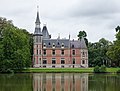
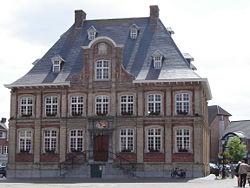
The Sint-Pietersbandenkerk stands as Torhout's primary historical church, originating from a Carolingian central church in the 9th century and elevated by the establishment of a chapter in 1073 under Count Robert I of Flanders. Its tower dates to the late 12th century, while the structure suffered severe damage during 16th-century religious upheavals, necessitating rebuilding from 1617 to 1623. The pointed bell tower was demolished by German forces in 1915 during World War I. Kasteel d'Aertrycke, a , was erected between 1868 and 1871 on commission from industrialist August De Maere d'Aertrycke. Set within a 55-hectare domain featuring ponds and woodlands, the castle preserves its original interiors and serves as a venue for events while integrated into a for public access. Torhout's historic city hall, constructed in the early , embodies German stylistic elements and formerly housed municipal governance functions. Now repurposed partly as a tourist information center, it anchors the city's central square and reflects the architectural transition from medieval to early modern civic buildings in . These sites, including the Sint-Pietersbandenkerk, are cataloged in ' inventory of immovable heritage, underscoring ongoing preservation initiatives to maintain structural integrity against weathering and prior war damage.

Cultural and Natural Points of Interest

The Mosterdmuseum, part of the Mostaard Wostyn facility established in 1869 by Ivo-Jacob Wostyn, preserves artifacts and exhibits on Torhout's traditional mustard production, a that supplied Flemish markets and evolved through family generations into a specialized collection open to visitors. The highlights production techniques using local ingredients like and spices, reflecting 19th-century artisanal methods documented in company records. The Museum Torhouts Aardewerk displays a collection of ornamental produced locally during its peak from the mid-19th to early 20th centuries, showcasing styles influenced by regional clay sources and firing techniques. Housed in a historic setting, it features items like vases and tiles that illustrate Torhout's role in Flemish ceramics, with temporary exhibits integrating to contextualize the craft's decline post-World War II due to industrialization. Ravenhofpark serves as a central green space exemplifying an design, planted with exotic tree species such as sequoias and cedars introduced in the 19th century, providing shaded paths for pedestrian recreation amid urban surroundings. Wijnendalebos, a 285-hectare managed by the Flemish Agency for and since the mid-20th century, encompasses mixed and coniferous stands originating from , with approximately 185 hectares under public conservation to preserve including native oaks and beech trees. The area supports over 5 kilometers of marked trails suitable for and , where visitors observe species like woodpeckers and deer in habitats maintained through selective and habitat restoration efforts. Local trails, such as the Moereveldwandelpad and routes through Groenhovebos, extend outdoor access across Torhout's countryside, linking woodlands with streams like the Spanjaardbeek for seasonal walks amid meadows and hedgerows, with paths totaling over 7 kilometers in documented loops for moderate exertion. These integrate with cultural sites by routing near vicinities, allowing combined visits during events like heritage days that draw on the area's agrarian history.

References

Add your contribution
Related Hubs
User Avatar
No comments yet.