Hubbry Logo
Traditional methodTraditional methodMain
Open search
Traditional method
Community hub
Traditional method
logo
8 pages, 0 posts
0 subscribers
Be the first to start a discussion here.
Contribute something
Traditional method
Traditional method
from Wikipedia

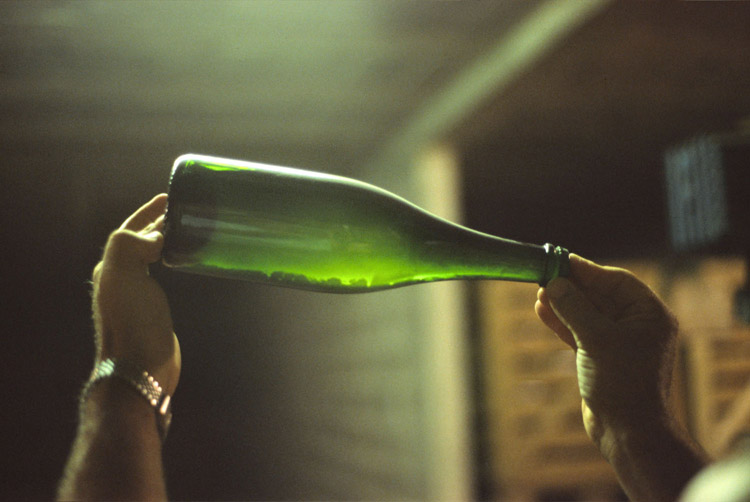
A bottle of undisgorged Champagne resting on the lees. The yeast used in the second fermentation is still in the bottle, which is closed with a crown cap.

The traditional method for producing sparkling wine is the process used in the Champagne region of France to produce Champagne. It is also the method used in various French regions to produce sparkling wines (not called "Champagne"), in Spain to produce cava, in Portugal to produce Espumante and in Italy to produce Franciacorta. The method is known as the méthode champenoise, but the Champagne producers have successfully lobbied the European Union to restrict the use of that term within the EU only to wines produced in Champagne. Thus, wines from elsewhere cannot use the term "méthode champenoise" on products sold in the EU, and instead the term "traditional method" (méthode traditionnelle) or the local language equivalent (método tradicional in Spain and Portugal, metodo classico or metodo tradizionale in Italy, and in Germany klassische Flaschengärung). South African wines from the Western Cape are labelled with the term Methode Cap Classique. Some wine producers in countries outside the EU may disregard EU labeling laws and use méthode champenoise or even "Champagne" on labels for products not exported to the EU, but this usage is decreasing.

As the traditional method is both labour intensive and costly, it is only viable for high-end sparkling wines. The Charmat process is often used instead, in the production of cheaper sparkling wines, while other methods exist as well.

Harvesting

[edit]

Grapes are generally picked earlier, when sugar levels are lower and acid levels higher. Except for pink or rosé sparkling wines, the juice of harvested grapes is pressed off quickly, to keep the wine white.

Fermentation

[edit]

The first fermentation begins in the same way as any wine, converting the natural sugar in the grapes into alcohol while the resultant carbon dioxide is allowed to escape. This produces the base wine. This wine is not very pleasant by itself, being too acidic. At this point the blend, known as the cuvée, is assembled, using wines from various vineyards, and, in the case of non-vintage wine, various years. After primary fermentation, blending (assemblage in Champagne) and bottling, a second alcoholic fermentation occurs in the bottle.

Although known as the Champagne method and associated with the name of Dom Pierre Pérignon in the late 17th century, the phenomenon of bottle fermentation was not unique to the Champagne region; it had already been used in Limoux, south western France since 1531 for the production of Blanquette de Limoux.[1] Effervescence in wine was seen as a fault at the time and Perignon devoted much effort trying to eliminate it from the wines of Champagne.[2] The process of secondary fermentation was first described by Christopher Merrett in a paper to the Royal Society, which included his observation that this could be encouraged by adding sugar to the wine before bottling.[2] Concurrent improvements in glass manufacture in England also permitted the making of more robust wine bottles to contain the effervescence without exploding.[2]

Second fermentation

[edit]

The blended wine is put in bottles along with yeast and a small amount of sugar, called the liqueur de tirage, stopped with a crown cap or another temporary plug, and stored in a wine cellar horizontally for a second fermentation. Under the appellation d'origine contrôlée (AOC), NV (non-vintage) Champagne is required to age for 15 months to develop completely. In years where the harvest is exceptional, a vintage (millesime) is declared and the wine must mature for at least three years.[3]

During the secondary fermentation, the carbon dioxide is trapped in the wine in solution. The amount of added sugar determines the ultimate pressure in the bottle. To reach the standard value of 6 bars[4] (600 kPa) inside the bottle, it is necessary to have 18 grams of sugar; the amount of yeast (Saccharomyces cerevisiae) is regulated by the European Commission (Regulation 1622/2000, 24 July 2000) to be 0.3 gram per bottle. The liqueur de tirage is then a mixture of sugar, yeast and still Champagne wine.

Bottles of Champagne aging in the cellars of Veuve Clicquot

Ageing on lees

[edit]

Non-vintage Champagne wine is legally unsellable until 15 months' in-bottle aging on lees. Champagne's AOC also requires vintage Champagnes age 3 years before disgorgement, but most top producers hold bottles on lees for 6–8 years.[5]

Riddling

[edit]
Le Remueur: 1889 engraving of a man engaged in the laborious daily task of turning each bottle a fraction

After ageing, the lees must be consolidated for removal. The bottles undergo a process known as riddling (remuage in French).[6] In this stage, the bottles are placed on special racks called pupitres that hold them at a 35° angle,[6] with the crown cap pointed down. Once a day (every two days for Champagne), the bottles are given a slight shake and turn, alternatively on right then left, and dropped back into the pupitres, with the angle gradually increased. The drop back into the rack causes a slight tap, pushing sediments toward the neck of the bottle. In 10 to 14 days (8 to 10 weeks for Champagne), the position of the bottle is straight down, with the lees settled in the neck (this time can be shortened by moving the bottle more than once a day,[7] and by using modern, less sticky strains of yeast). Manual riddling is still done for some Prestige Cuvées in Champagne, but has otherwise been largely abandoned because of the high labour costs. Mechanised riddling equipment (a gyropalette) is used instead.

Many stores sell riddling racks for decorative storage of finished wine.

Disgorging

[edit]
Equipment for effecting dosage through the addition of 'liqueur d'expédition

The lees removal process is called disgorging (dégorgement in French), traditionally a skilled manual process where the crown cap and lees are removed without losing much of the liquid, and a varying amount of sugar added. Before the invention of this process by Madame Clicquot in 1816, Champagne was cloudy. Modern automated disgorgement is done by freezing a small amount of the liquid in the neck and removing this plug of ice containing the lees.

Dosage

[edit]

Immediately after disgorging but before final corking, the liquid level is topped up with liqueur d'expédition, commonly a little sugar, a practice known as dosage. The liqueur d'expédition is a mixture of the base wine and sucrose, plus 0.02 to 0.03 grams of sulfur dioxide as a preservative. Some maisons de Champagne (Champagne brands) claim to have secret recipes for this, adding ingredients such as old Champagne wine and candi sugar. In the Traité théorique et pratique du travail des vins (1873), Maumené lists the additional ingredients "usually present in the liqueur d'expédition": port wine, cognac, elderberry wine, kirsch, framboise wine, alum solutions, tartaric acid, and tannins.

The amount of sugar in the liqueur d'expédition determines the sweetness of the Champagne, the sugar previously in the wine having been consumed in the second fermentation. Generally, sugar is added to balance the high acidity of the Champagne, rather than to produce a sweet taste. Brut Champagne will only have a little sugar added, and Champagne called nature or zéro dosage will have no sugar added at all. A cork is then inserted, with a capsule and wire cage (muselet) securing it in place.

Champagne's sugar content varies. The sweetest level is 'doux' (meaning sweet) and then, in increasing dryness, 'demi-sec' (half-dry), 'sec' (dry), 'extra sec' (extra dry), 'brut' (raw), 'extra brut' (very raw), 'brut nature/brut zero/ultra brut' (no additional sugar).

Vintage vs. non-vintage

[edit]
Genuine classical Champagne riddle rack, 60 bottles each side

The majority of the Champagne produced is non-vintage (also known as mixed vintage or multivintage), a blend of wines from several years. This means that no declared year will be displayed on the bottle label. Typically, however, the majority of the wine is from the current year but a percentage is made of reserve wine from previous years. This serves to smooth out some of the vintage variations caused by the marginal growing climate of Champagne, which is the most northerly winegrowing region in France. Most Champagne houses strive for a consistent house style from year to year (largely for reasons related to price-setting and successful marketing), and this is arguably one of the hardest tasks of the house winemaker.

The grapes to produce vintage Champagne must be 100% from the year indicated (some other wines in the EU need only be 85% to be called vintage, depending on their type and appellation). Vintage Champagnes are the product of a single high-quality year, and bottles from prestigious makers can be rare and expensive. To help maintain the quality of vintage Champagnes, a maximum of only half the year's total harvest may be used in the production of a specific vintage. This helps to ensure that the best grapes available are selected for this purpose, leaving the remainder of the harvest for use in non-vintage releases.

Bottle ageing

[edit]

Even experts disagree about the effects of ageing on Champagne after disgorgement. Some prefer the freshness and vitality of young, recently disgorged Champagne, and others prefer the baked apple and caramel flavours that develop from a year or more of bottle ageing. In 2009, a 184-year-old bottle of Perrier-Jouët was opened and tasted, still drinkable, with notes of "truffles and caramel", according to the experts.[8]

See also

[edit]

References

[edit]
Revisions and contributorsEdit on WikipediaRead on Wikipedia
from Grokipedia
The traditional method, also known as méthode traditionnelle, is a labor-intensive winemaking process for producing high-quality sparkling wines, characterized by conducting the secondary fermentation inside the individual bottles rather than in bulk tanks. This technique traps carbon dioxide produced during fermentation, creating the fine bubbles associated with premium sparklers like Champagne, Cava, and Crémant. The method begins with crafting a still base wine from grapes typically high in acidity and low in sugar, followed by bottling with a added mixture of yeast and sugar (liqueur de tirage) to initiate the second fermentation. Subsequent steps include extended aging on the lees—dead cells that impart complex flavors such as and nuts—riddling to consolidate , disgorging to remove it, and final dosage with a sugar solution to balance acidity and determine sweetness levels from brut to doux. This , which can take years, enhances flavor integration and texture through lees contact, distinguishing traditional method wines from those made by tank fermentation methods like the Charmat used for . Regions employing the traditional method, including France's Champagne (where the term méthode champenoise is reserved exclusively), Spain's Cava, and England's sparkling wines, often achieve appellation protections emphasizing this technique for . Historically, the method evolved in the 17th century in the Champagne region of , though evidence suggests English innovations in bottling strong glass and adding sugar influenced its development, predating the popular myth of Dom Pérignon's invention. By the , improvements in bottle strength and corking reduced explosion risks, enabling commercial viability, while 19th-century advancements like precise sugar measurement further refined the process. Today, the traditional method remains prized for yielding wines with superior complexity and aging potential, though its high cost and manual labor limit production scale compared to alternative methods.

History

Origins and early experimentation

The phenomenon of sparkling wine emerged inadvertently in the Champagne region of northeastern during the 16th and 17th centuries, where cold winter temperatures halted primary in bottles, only for it to resume spontaneously in spring, generating pressure that often caused glass bottles—made from fragile, thin-walled local materials—to shatter explosively. This re-fermentation was initially regarded as a defect rather than a desirable trait, complicating storage and transport, particularly for exports to where demand for French wines was high. Winemakers like those at the Abbey of Hautvillers experimented with techniques to prevent such bubbling, including stronger corks and ties, but lacked the means for deliberate control until advancements in glass technology from English coal-fired furnaces produced thicker, pressure-resistant bottles capable of withstanding up to 6 atmospheres. The first documented deliberate application of what would become the traditional method's core process—inducing secondary in the bottle—occurred in in 1662, when physician and fellow Christopher Merret presented a titled "Some Observations concerning the Ordering of Wines" to the society, describing the addition of and to still wines to promote via activity post-bottling. Merret's innovation built on English viticultural experiments and addressed the limitations of weaker French glass, enabling safer production of naturally carbonated wines without reliance on kegs or natural restarts. This predated similar efforts in , where Benedictine monk Dom Pierre Pérignon (c. 1638–1715), cellarer at Hautvillers from 1668, focused on refining still wines through grape blending, early harvesting to retain acidity, and pressing to avoid skin contact, explicitly aiming to eliminate bubbles as they signified poor quality and risk. Early experimentation in the Champagne region persisted despite these challenges, with producers gradually adapting Merret's principles amid ongoing bottle ruptures—estimated at up to 1 in 3 during the late —through trial-and-error adjustments to dosages and strains. The first reliable mentions of intentionally sparkling Champagne wines date to the early , as stronger imported English bottles and empirical tweaks allowed vintners to harness autolysis effects from lees contact, though systematic refinement awaited innovations. Claims attributing the method's invention to Pérignon, including the apocryphal quote "Come quickly, I am tasting the stars," originated as promotional myths in the and lack contemporary evidence, as verified by archival records from the period.

Development in Champagne and standardization

In the early , Champagne producers intentionally developed sparkling wines by harnessing secondary in the bottle, building on accidental observed in prior still wines that underwent incomplete primary followed by springtime refermentation. This shift was enabled by advancements in techniques that produced thicker, pressure-resistant bottles around 1680, reducing explosion risks from buildup, and the adoption of cork stoppers secured with string or wire for better sealing than earlier materials. These innovations addressed the causal challenges of containing the 5-6 atmospheres of pressure generated during in-bottle , allowing consistent production of wines with fine, persistent bubbles prized for their sensory qualities. By the early 19th century, further refinements transformed the method into a scalable process. In 1816, Barbe-Nicole Clicquot Ponsardin of introduced the pupitre, a hinged wooden rack for systematic remuage (riddling), which rotated and tilted bottles to consolidate yeast toward the neck over weeks or months, minimizing wine loss during compared to manual shaking. This mechanical aid, combined with empirical adjustments to dosage—a sugar-liqueur addition post- to balance acidity and stabilize the wine—enabled higher yields and quality consistency, making Champagne commercially viable for export markets like and Britain. Empirical evidence from surviving production records shows reduced breakage rates from over 30% to under 10% with these techniques, underscoring their causal role in industry growth despite outbreaks in the 1870s-1890s that necessitated grafted rootstocks for recovery. Standardization accelerated in the late 19th and early 20th centuries through codified practices and legal protections. In 1884, Armand Walfard pioneered cold disgorging by refrigerating bottle necks to freeze sediment for clean removal, further streamlining operations without compromising effervescence. The French appellation d'origine laws of 1919 delimited the Champagne production zone, with subsequent decrees in 1927 and 1935 enforcing the méthode champenoise—requiring secondary fermentation in the bottle—as mandatory, alongside minimum aging periods (initially 1 year on lees, later extended to 15 months for non-vintage by regulations). regulation in 1994 exclusively reserved the term méthode champenoise for Champagne, prohibiting its use elsewhere to denote the traditional process and reinforcing empirical standards for varieties, yields (up to 13,000 kg/ha), and alcohol levels (11-12.8% ABV post-fermentation). These measures, enforced by the Comité Interprofessionnel du Vin de Champagne (CIVC) since 1941, ensured causal fidelity to the region's terroir-driven quality attributes amid global imitations.

Global adoption and regional adaptations

The traditional method, involving secondary fermentation in the bottle, began spreading beyond Champagne in the mid-19th century as winemakers sought to replicate its quality for and complexity. In Spain's Penedès region, Josep Raventós produced the first sparkling wines using this technique in in 1872, drawing directly from observations of Champagne production during phylloxera outbreaks in . This marked the origin of Cava, which by 1970 received DO status and emphasized local grape varieties such as Xarel-lo, , and Parellada for adaptations suited to warmer Mediterranean climates, yielding fresher acidity through earlier harvesting compared to Champagne's cooler conditions. In , the method was adapted in ’s zone, where Guido Berlucchi released the first metodo classico sparkling wine, Max Rosé, in 1961, building on experimental vintages from 1955 with and grapes akin to those in Champagne. 's DOCG designation in 1995 mandated the traditional method with minimum lees aging of 18 months for non-vintage and 30 months for vintage cuvées, incorporating local influences like glacial soils for enhanced minerality and structure distinct from French originals. Similarly, DOC in Trentino-Alto Adige adopted the metodo classico in the 1950s, using and with mandatory 15-month lees aging, producing wines with alpine freshness from high-altitude vineyards. English sparkling wine production via the traditional method surged from the 1980s onward, enabled by chalky soils mirroring Champagne's Cretaceous geology and a cooling climate shift. Nyetimber pioneered commercial success by planting vines in 1988 explicitly for bottle-fermented sparklers, with its 1992 vintage marking early benchmarks; by 2023, England produced over 7 million bottles annually, often blending Chardonnay, Pinot Noir, and Pinot Meunier for dosage levels emphasizing brut styles suited to the region's marginal ripening. In the New World, California winemakers adopted the method as early as the 1860s at Schramsberg Vineyard, resuming post-Prohibition in 1934 with adaptations like higher alcohol base wines from warmer climates, balanced by extended lees aging up to five years for toasty complexity. Australian producers in and Victoria, starting in the 1980s, incorporated cool-climate sites with and , while South Africa's Cap Classique designation since 1992 requires at least 12 months of bottle aging, adapting to semitropical influences via protective dosage and hybrid strains for consistent effervescence. These regional variations prioritize local cultivars and climate adjustments—such as shorter aging in hotter areas to preserve fruit—while preserving core autolysis-driven flavors like and nuts from extended yeast contact.

Principles and characteristics

Definition and core mechanisms

The traditional method, also known as méthode champenoise or méthode traditionnelle, is a in which a still base wine undergoes secondary inside the individual sealed that will be marketed to consumers, distinguishing it from tank-based methods like the Charmat . This technique, codified in regions such as Champagne since the 19th century and recognized by in 2015 as , relies on the in-bottle production of to achieve effervescence, typically resulting in wines with 5–6 bars of pressure and fine, persistent bubbles. It is mandated for appellations including Champagne, Crémant, and Cava, where base wines—blends of , , and or local varieties—are selected for high acidity ( 3.0–3.3) and low alcohol (10–11% ABV) to support the additional without excessive pressure buildup. At its core, the secondary fermentation begins with the addition of liqueur de tirage—a mixture of sucrose (typically 24 g/L), selected yeast strains (often Saccharomyces cerevisiae or Saccharomyces bayanus), and yeast nutrients—to the clarified base wine, followed by bottling in thick-walled glass vessels sealed with a crown cap or bidule. Yeast consumes the sugars anaerobically over 6–8 weeks at 10–18°C, generating approximately 1.3% additional alcohol and 5–6 volumes of CO₂ (equivalent to 10–12 g/L dissolved gas), which remains trapped due to the seal, creating supersaturated conditions and the signature pétillance upon disgorgement and corking. This biochemical process mirrors primary fermentation but in a confined, high-pressure environment (up to 6 atm), where CO₂ solubility follows Henry's law, ensuring bubble formation via nucleation sites on imperfections in the glass or dosage residues during serving. Lees aging constitutes a pivotal mechanism, with the wine maturing sur lies (on dead yeast cells and mannoprotein debris) for at least 9–15 months (e.g., 12 months minimum for non-vintage Champagne under AOC rules), during which yeast autolysis—programmed cell death triggered by nutrient starvation and ethanol stress—releases , , , and into the wine. These compounds enhance foam stability and through mannoprotein adsorption at bubble interfaces, while contributing reductive aromas like , , and autolytic savoriness via Maillard-like reactions and volatile compound evolution, with extended aging (3+ years for vintage wines) amplifying complexity but risking over-oxidation if not managed in cool, humid cellars at 10–12°C. Empirical studies confirm autolysis's role in aroma development, independent of aging duration, though strain selection influences release rates and sensory outcomes.

Empirical basis for quality attributes

The traditional method's reputation for superior quality in sparkling wines derives from empirical observations of enhanced foam persistence, flavor complexity, and textural attributes, primarily attributed to extended lees aging and yeast autolysis during secondary fermentation in the bottle. Lees aging, typically lasting 15 months to several years, triggers autolysis, wherein yeast cells degrade, releasing mannoproteins, , peptides, and into the wine. These compounds contribute to finer bubble formation and stability; for instance, mannoproteins adsorb to bubble surfaces, reducing coalescence and increasing foam height and drainage time, as demonstrated in studies correlating higher mannoprotein concentrations with improved foaming properties in bottle-fermented wines. Polysaccharides from autolysis further enhance by increasing and reducing astringency, with quantitative analyses showing elevated levels (up to 100-200 mg/L) after 12-24 months of aging compared to base wines. Autolysis also imparts distinctive sensory profiles, including bready, toasty, and nutty aromas from volatile sulfur compounds, nucleotides, and products formed during prolonged contact. Compositional analyses reveal significant increases in these during aging: for example, aging durations of 6-18 months elevate oxidative-flavor compounds like and methionol, independent of initial strain but amplified by time on lees. Lees provide reductive protection by consuming dissolved oxygen—rates decreasing over time but remaining effective up to 24 months—thus preserving freshness and preventing premature oxidation, as measured in base wines aged sur lie. Direct comparisons with tank-fermented methods, when using identical base wines and simulating lees contact, show minimal physicochemical or volatile differences, with sensory panels unable to reliably distinguish profiles after extended aging, suggesting that base wine quality and dosage exert stronger influences than fermentation vessel alone. However, standard traditional method practice mandates bottle-specific aging, inherently yielding autolytic effects absent in typical Charmat production, where shorter tank processing limits such transformations. acceptance studies corroborate preferences for traditional-method wines, attributing higher liking scores to perceived and , though blind tastings emphasize the role of and factors over method in isolation. These attributes underpin regulatory standards, such as the 15-month minimum lees aging for non-vintage Champagne, empirically linked to measurable enhancements in protein-polysaccharide matrices supporting and sensory persistence.

Production process

Grape selection and harvesting

In the traditional method of sparkling wine production, exemplified by Champagne, the primary grape varieties utilized are , Pinot Noir, and , which constitute approximately 99% of vineyard plantings in the Champagne . provides elegance and citrus notes, while the red-skinned Pinot Noir and contribute structure, fruit depth, and resilience to cooler climates, enabling the high acidity essential for sparkling wines. These varieties are selected for their ability to achieve physiological ripeness with balanced sugar levels (typically 17–21° ) and elevated acidity, preserving freshness and preventing premature oxidation during extended aging on lees. Harvesting in Champagne occurs exclusively by hand, as mandated by regulations to minimize cluster damage and ensure only mature, healthy grapes are collected. Pickers work in teams, selecting bunches based on uniform ripeness assessed through , trials, and sugar-acid measurements, discarding any moldy, unripe, or damaged to avoid off-flavors in the base wine. The harvest period spans mid-September to early October, with precise start dates decreed annually by French authorities following ripeness monitoring across vineyards, ensuring grapes retain sufficient acidity (around 7–9 g/L tartaric) for the primary fermentation's alcohol production and the subsequent sparkling process. Yield restrictions cap production at 15,500 kg per for AOC-eligible grapes, prioritizing over quantity by limiting overcropping that could dilute flavors or reduce acidity. Whole clusters are transported promptly to pressing stations in ventilated crates to prevent premature juice extraction or oxidation, a practice that underscores the method's emphasis on purity in the resulting still base wines. This meticulous selection and manual , while labor-intensive—requiring up to 100,000 seasonal workers in peak years—directly influences the wine's finesse, as empirical data from variations show correlations between optimal timing and superior bubble retention and aroma persistence.

Primary fermentation and base wine blending

In the traditional method, primary fermentation converts grape must into still base wines optimized for sparkling production. Harvested grapes, pressed gently to extract clear juice () minimizing skin contact and oxidation, undergo alcoholic fermentation with selected strains in temperature-controlled tanks or neutral vessels. This process, typically conducted at cooler temperatures to preserve freshness and acidity, transforms sugars into alcohol (11-13% ABV) and , which is vented to avoid premature , yielding dry wines with minimal residual sugar. Base wines exhibit high titratable acidity (at least 7 g/L as ), low (below 3.3), and subdued varietal character, prioritizing structural elements like acidity over fruit intensity to facilitate blending and withstand secondary fermentation pressures. These traits, derived from early-harvested grapes emphasizing acidity over ripeness, ensure the wines' neutrality and longevity on lees, countering potential flaws from variable vintages through empirical selection of high-acid lots. Subsequently, cellar masters blend multiple base wines into a , drawing from diverse vineyard parcels, grape varieties (e.g., , , in Champagne), and for non-vintage styles, reserve wines from prior harvests to achieve stylistic consistency. This assemblage often incorporates dozens to over 120 individual lots, balancing acidity, subtle fruit, and structural components to define the producer's house character amid climatic variability. Vintage , by contrast, rely solely on wines from one harvest year, amplifying expression while still blending across varieties and sites for harmony. Blending expertise, honed through blind tastings, mitigates risks like overripe or unbalanced bases, as evidenced by practices at houses like Krug, where multi-year reserves enhance complexity.

Tirage for second fermentation

In the traditional method of sparkling wine production, tirage refers to the critical stage where the blended base wine, or , is prepared for in-bottle secondary fermentation by the addition of a specialized mixture known as liqueur de tirage. This liqueur typically consists of still wine, dissolved cane or beet , and selected strains, with the sugar concentration calibrated at approximately 22-24 grams per liter to generate sufficient pressure, often around 6 bars, during . The yeast component is usually rehydrated beforehand in a diluted base wine solution (around 7% ) with added sugar to activate it, ensuring robust fermentation initiation without compromising the wine's clarity or flavor profile. The is filtered to remove any residual solids, then the liqueur de tirage is dosed into the bottles—typically at a rate that adds about 1-2% potential alcohol—before sealing with a crown cap or similar pressure-resistant closure equipped with a protective bidule (a small plastic cup to capture sediment). This bottling occurs under sterile conditions to prevent oxidation or contamination, as the sealed environment traps the carbon dioxide produced, resulting in . The process leverages specific yeast strains, often variants bred for , which tolerate high alcohol levels (up to 12-13% total) and low temperatures (around 10-15°C) maintained in cellars to control pace and by-product formation. Once bottled, the second fermentation commences as the yeast metabolizes the added sugars, producing ethanol (increasing alcohol by about 1.3%) and carbon dioxide that dissolves under pressure, yielding the characteristic bubbles upon serving. This phase typically lasts several weeks, after which the yeast autolyzes, forming lees that impart complex flavors like brioche or toast during subsequent aging; regulatory minimums, such as 15 months total on lees for non-vintage Champagne, ensure these transformations occur fully. Variations in liqueur de tirage composition, such as the inclusion of nutrients or fining agents, allow producers to influence fermentation kinetics and final wine style, though empirical data from pressure monitoring and sensory trials guide precise adjustments to avoid stuck fermentations or off-flavors.

Lees aging and autolysis effects

In the traditional method of , lees aging occurs after the second in-bottle fermentation, during which the wine remains in contact with the sediment of dead yeast cells, termed lees. This extended maturation phase allows for the gradual process of yeast autolysis, the programmed enzymatic breakdown of yeast cell components following . Autolysis releases intracellular compounds such as mannoproteins, , , peptides, and into the wine, which are primarily responsible for the development of complex aromas and enhanced sensory attributes. The effects of autolysis on wine quality are multifaceted. Mannoproteins and contribute to improved by increasing and providing a creamy texture, while also aiding in the stabilization and finer integration of bubbles, resulting in a more persistent and elegant . Flavor-wise, the released compounds impart distinctive autolytic notes, including , , toasted , and nutty characteristics, which evolve over time and distinguish traditional method sparkling wines from those produced by alternative techniques. Empirical studies confirm that these changes are independent of mere aging duration, with autolysis driving the primary sensory enhancements, though the process is inherently slow, often requiring months to years for substantial release of compounds. Regulatory standards for Champagne, the archetypal traditional method , stipulate a minimum of 12 months on lees for non-vintage wines (with total bottle aging of 15 months) and 36 months for vintage cuvées to ensure baseline autolytic development. Producers often exceed these minima—extending to several years—to maximize benefits, as ultrastructural analyses reveal progressive wall degradation starting around six months but continuing thereafter, correlating with increased free and peptides that bolster aroma complexity. Lees also exhibit oxygen consumption during aging, which helps mitigate and preserves freshness. While autolysis universally enhances traditional method wines, the extent of effects varies with yeast strain, aging conditions, and dosage practices post-disgorgement. Research underscores that natural autolysis outperforms accelerated methods in yielding balanced, integrated profiles, though challenges like inconsistent lees behavior necessitate empirical optimization by producers.

Riddling and sediment management

Riddling, known as remuage in French, consolidates the lees —primarily dead cells and debris from secondary —into a compact plug at the bottle , enabling its removal to achieve wine clarity. Bottles, post-lees aging, are positioned neck-down in pupitres (riddling racks) that hold 60–120 bottles each, angled initially at about 45 degrees from horizontal. The process entails precise, daily manipulations: each bottle is rotated incrementally (typically one-eighth to one-sixteenth of a turn) alternately left and right, while the angle steepens progressively to vertical over 6–8 weeks, dislodging without excessive agitation that could re-suspend particles or oxidize the wine. This labor-intensive technique, requiring skilled remueurs to handle up to 30,000–50,000 bottles daily, ensures the migrates gradually to , minimizing loss of wine and CO₂ pressure during subsequent disgorging. Poorly managed risks persistent haze, bitter flavors from prolonged lees contact, or microbial instability, underscoring riddling's role in . Developed around 1816 by Antoine Müller, cellarmaster at Ponsardin, remuage addressed chronic cloudiness in early 19th-century Champagnes, transforming production efficiency after earlier rudimentary shaking methods proved inadequate. In contemporary operations, manual riddling persists for premium or limited-production wines to preserve finesse, but automated gyropalettes—introduced in the —dominate large-scale facilities, gyrating 500+ bottles simultaneously through programmed cycles equivalent to manual turns, completing the task in 3–5 days with comparable sediment compaction. These machines reduce human error and physical strain, though some producers note subtler lees manipulation in hand-riddled bottles may yield marginally finer clarity. Sediment management culminates in freezing the (to -27°C or lower) to form an ice plug encapsulating the lees, facilitating pressure-ejection upon crown cap removal with minimal wine loss (typically 1–2% of volume). This step, integral to riddling's efficacy, preserves the autolytic flavors from lees aging while eliminating particulates that could otherwise compromise visual and sensory purity.

Disgorging, dosage, and bottling

Disgorging removes the sediment accumulated during lees aging and riddling, clarifying the sparkling wine while preserving carbonation. After riddling positions the lees in the bottle neck, the neck is immersed in a freezing solution, such as a glycol bath at -27°C or using liquid nitrogen, forming an ice plug that encapsulates the yeast sediment. The bottle is then uprighted, and the temporary crown cap is removed under controlled pressure, ejecting the frozen plug and a small volume of wine—typically 5-10% of the bottle's contents—through the force of internal CO2. This manual or automated process, often performed after 15-36 months of aging for non-vintage wines, minimizes foam loss by chilling the bottle beforehand. Dosage follows disgorging to replace lost volume and adjust the wine's final profile. A precisely measured amount—usually 0-6 cl per 75 cl bottle—of liqueur d'expédition is added through the same filling nozzle used for cap removal. This liqueur consists of blended with cane sugar (or occasionally grape must concentrate), with sugar levels determining sweetness categories from driest to sweetest: brut nature (0-3 g/L, very dry); extra brut (0-6 g/L, extremely dry); brut (<12 g/L, often 6-12 g/L, dry and balanced, most common); extra sec (12-17 g/L, slightly sweet); sec (17-32 g/L, sweeter); demi-sec (32-50 g/L, sweet); and doux (>50 g/L, very sweet, rare). Beyond sweetness, dosage balances acidity, enhances , and integrates flavors from autolysis, comprising about 1-2% of the bottle's volume. Final bottling secures the wine for maturation and distribution. Post-dosage, a cork—often composite for larger formats or natural for prestige cuvées—is inserted under , followed by a wire (muselet) twisted to six half-turns for safety, foil wrapping, and labeling. Bottles may then age sur lattes for an additional 3-6 months to integrate the dosage, with some producers noting the date on labels to indicate freshness. This completes the traditional method, yielding a product with sustained and complexity derived from bottle-specific .

Variations in production

Vintage versus non-vintage approaches

In the traditional method of , the distinction between and non-vintage approaches primarily lies in the sourcing and blending of base wines. sparkling wines are produced exclusively from grapes harvested in a single , with the vintage year indicated on the , and are typically declared only in years of exceptional quality. This approach emphasizes the unique climatic conditions, influences, and grape maturity of that specific year, resulting in wines that express and site-specific characteristics more distinctly. Non-vintage (NV) wines, by contrast, incorporate base wines from multiple harvests—often two or three years—to achieve a consistent house style, mitigating annual variations in weather and yield. Regulatory requirements for aging differ significantly, particularly in Champagne, where the traditional method originated. NV Champagnes must undergo at least 15 months of total maturation, including a minimum of 12 months on lees (dead cells from secondary ), to develop complexity and integrate flavors. Champagnes require a minimum of three years on lees, allowing for greater autolysis—the breakdown of cells releasing compounds that enhance texture, aroma, and structure—leading to more pronounced brioche-like notes and finesse. Many producers exceed these minima; for instance, premium vintage cuvées often age four to five years or longer in bottle before release. Outside Champagne, such as in Crémant or traditional method wines, aging rules vary by region but generally follow similar principles without the strict controls. The production process for both remains the traditional method—primary fermentation of base wines, blending (or not, for vintage), bottling with tirage liqueur for secondary fermentation in bottle, lees aging, riddling, disgorging, and dosage—but the blending stage highlights the approaches' divergence. In NV production, the chef de cave (cellar master) meticulously assembles reserve wines to balance acidity, fruit, and structure across vintages, ensuring reliability for commercial volumes, which constitute about 85% of Champagne output. Vintage production skips extensive blending, relying on the year's inherent quality, often yielding fewer bottles and commanding higher prices due to scarcity and extended aging. Vintage wines typically offer superior aging potential, evolving over decades with increased complexity from oxidative notes and tannin integration, while NV wines are designed for earlier consumption, peaking within 3-5 years to preserve vibrancy. Critics note that vintage declarations signal confidence in a harvest's excellence, but poor years force reliance on NV blending, underscoring the method's flexibility in maintaining quality amid climatic variability. Empirical assessments, such as tasting trials, confirm vintage wines' edge in depth for collectors, though NV provides accessible excellence for everyday enjoyment.

Influences from grape varieties and terroir

Chardonnay, Pinot Noir, and Pinot Meunier constitute the principal grape varieties in Champagne produced via the traditional method, each imparting unique attributes to the base wines that endure through bottle fermentation, lees aging, and final assemblage. Chardonnay delivers finesse, high acidity, and aromas of citrus, green apple, and white flowers, enabling elegant, age-worthy blanc de blancs expressions where it dominates. Pinot Noir contributes structural tannins, red berry intensity, and oxidative resilience, fostering body and complexity in blends or blanc de noirs styles, particularly suited to extended lees contact. Pinot Meunier adds plump fruitiness, floral notes, and softer acidity, enhancing approachability in non-vintage cuvées and adapting resiliently to frost-prone sites, though it comprises about 20% of regional plantings as of 2023. These varietal traits influence base wine blending ratios—typically 30-40% Chardonnay, 30-40% Pinot Noir, and 20-30% Meunier in multi-vintage Champagnes—determining the final wine's balance of freshness, power, and fruit persistence post-disgorgement. Beyond Champagne, traditional method sparkling wines in regions like or often mirror these varieties for stylistic fidelity, though local adaptations incorporate alternatives such as or Schönburger, yielding softer profiles less reliant on high acidity. Empirical studies confirm varietal impacts on volatile compounds: base wines exhibit higher esters for floral lift, while elevates phenolics for , with second amplifying these through autolysis without masking intrinsic differences. Rare permitted grapes like Arbane or Petit Meslier, used in under 1% of plantings, introduce niche acidity or but lack due to low yields and vulnerability. Terroir—integrating soil composition, mesoclimate, and aspect—exerts causal effects on grape ripeness, acidity retention, and flavor precursors, underpinning the traditional method's efficacy in cool-climate viticulture. Champagne's dominant Belemnite chalk subsoil, covering 75% of vineyards, provides porosity for deep root penetration and water regulation, mitigating drought while retaining minerals that correlate with elevated malic acid (up to 8-10 g/L at harvest) and low pH (around 3.0-3.2), vital for base wines' fermentation stability and post-sparkling freshness. This calcareous matrix also buffers temperature extremes, storing daytime heat for nocturnal release to promote even ripening in a region averaging 10-11°C annually, where incomplete phenolic maturity without such moderation would compromise quality. Sub-regional terroir variances optimize varietal expression: flourishes on the clay-infused slopes of Montagne de (e.g., 100% clay- in Verzen), yielding robust, earthy bases; excels in the pure of Côte des Blancs (Avize's 90%+ ), producing taut, mineral-driven wines; and Meunier dominates Vallée de la Marne's heavier marls, imparting richer, vinous depth. The marginal climate, with vintage variability (e.g., 2012's frost-reduced yields of 8,000 kg/ha versus 2018's 13,000 kg/ha), necessitates dosage adjustments (0-12 g/L brut nature to 12-17 g/L brut) to harmonize terroir-driven acidity, as evidenced by sensory panels noting -influenced and persistence in blind tastings. In non-Champagne traditional method wines, analogous effects appear in Tasmania's Jurassic mirroring 's drainage for acidity preservation, though empirical data underscore Champagne's unique synergy for superior autolysis integration during 15-36 month lees aging.

Comparative evaluation

Advantages relative to tank and ancestral methods

The traditional method imparts greater flavor complexity to sparkling wines through extended lees aging and autolysis in the bottle, yielding compounds like and mannoproteins that contribute nutty, toasty, and notes absent or minimal in method wines, where lees contact is brief and homogenized across large volumes. This autolytic evolution, often spanning 12–36 months or longer, enhances and oxidative stability, contrasting with the fresher, fruit-dominant aromas typical of Charmat-process wines fermented under in tanks for weeks to months. Empirical analyses confirm higher mannoprotein levels in traditional method wines, correlating with improved sensory persistence. Bottle-specific secondary fermentation in the traditional method produces finer, more persistent bubbles via on yeast lees, resulting in a creamier compared to the larger, shorter-lived from tank , where CO₂ integration lacks per-bottle variability control. Studies using identical base wines show that while extended tank aging (e.g., 22 months) narrows sensory gaps, standard short-duration Charmat yields detectably simpler profiles with higher and residual sugars. Relative to the ancestral method, which completes primary fermentation in the bottle without , the traditional approach ensures clarity and uniformity by removing spent via riddling and disgorgement, preventing cloudiness, sediment-induced bitterness, and inconsistent bottle-to-bottle variation from uncontrolled pressure buildup. Post-disgorging dosage permits precise sweetness adjustment (e.g., brut to doux levels), balancing acidity and fruit without the ancestral method's reliance on residual sugars, which can lead to unpredictable alcohol (often 1–1.5% lower) and . Traditional method wines exhibit superior autolysis-driven concentrations, fostering enhanced texture and aging potential up to decades, whereas ancestral wines remain rustic with potential for harsher CO₂ perception despite smaller bubbles in some trials.

Criticisms and empirical limitations

The traditional method's labor-intensive processes, including manual riddling and disgorging, contribute to significantly higher production costs compared to tank-based alternatives, often requiring skilled workers to handle up to 25,000 bottles per day in hand-riddling alone. These steps extend production timelines to several years, limiting and increasing financial risks for producers outside premium regions. In warmer climates, achieving suitable base wines poses challenges, as grapes must be harvested early to preserve acidity (targeting pH 2.9–3.15 and total acidity 10.0–14.0 g/L), yet this risks producing wines that are overly heavy-bodied, alcoholic, or varietally dominant, with often exhibiting muted freshness and melony notes. Additional risks include protein instability leading to or excessive foaming (gushing), as well as potential disruptions from elevated temperatures accelerating yeast autolysis unevenly. Empirical studies using identical base wines, yeasts, and aging durations (up to 22 months) have found no significant differences in physicochemical parameters (e.g., at 12.4 ± 0.2%, total acidity 3.9 ± 0.1 g/L), volatile compounds, or sensory profiles between traditional and Charmat methods, with over half of trained evaluators unable to distinguish them, particularly after extended lees contact. These results suggest that perceived superiority of fermentation often stems from and prestige rather than inherent quality advantages, as Charmat can replicate outcomes more efficiently without the manual clarifications needed to address traditional method's post-disgorging issues (e.g., 0.8 ± 0.1 NTU vs. higher in alternatives at early stages). -to- variability from individual second fermentations further complicates consistency, contrasting with the uniformity of tank processing.

Recent developments and innovations

Technological advancements in traditional method

The gyropalette, invented in Spain during the 1970s and adopted in Champagne production by 1975, mechanized the traditionally manual riddling (remuage) process by enclosing up to 504 bottles in a rotating cage that programmatically tilts and turns them over 4 to 6 weeks, compacting lees into the neck while minimizing breakage and labor. This advancement, patented initially in 1968 and refined through systems like the Champarex and Giromatic, enabled producers to scale output without compromising sediment consolidation, as manual methods required skilled remueurs to handle 500,000 turns daily across thousands of bottles. Automated disgorging lines, evolving from 19th-century methods, now integrate freezing the bottle neck to -25°C, cap ejection, expulsion via differential, dosage addition, topping up, and corking in continuous or semi-continuous operations, processing up to 1,400 cases per run as demonstrated in facility upgrades by 2019. Machines like the Atlas-M or Alfa models ensure hygienic precision and repeatability, reducing loss to under 1% and oxygen exposure, which preserves reductive aromas compared to manual techniques prone to variability. In lees aging and autolysis, post-2020 research has advanced the use of engineered strains tolerant to and alcohol, enhancing mannoprotein release for improved and stability without altering the bottle-fermentation core. Riddling aids, such as fining agents added during tirage, further optimize sediment for cleaner , as evidenced in peer-reviewed evaluations showing reduced post-processing. These efficiencies have allowed traditional method producers, including those in Cava and regions, to maintain artisanal quality metrics like fine bubble persistence while boosting throughput by factors of 10 to 100 over pre-1970s baselines.

Expansion in new world regions

The traditional method of sparkling wine production began expanding into regions in the mid-20th century, driven by Champagne houses seeking diversification amid growing global demand and suitable cool-climate terroirs for base varieties like and Pinot Noir. Early adopters focused on adapting the labor-intensive process—secondary fermentation in bottle, lees aging, and riddling—to local conditions, often yielding wines with brighter fruit profiles compared to Champagne's earthier notes due to warmer base climates and shorter lees contact. This expansion accelerated in the 1970s and 1980s as French conglomerates invested, establishing benchmarks that encouraged local producers to refine techniques for premium expressions. In the United States, particularly , the method gained traction with the founding of in Napa Valley in 1973 by , marking the first French-owned sparkling wine operation outside . This venture imported expertise and equipment, producing méthode traditionnelle wines from estate-grown grapes, with initial releases in 1976 emphasizing and blends. By the 1980s, other California producers like Schramsberg Vineyards (established 1965 but scaling traditional method sparkling by the 1970s) and Iron Horse Vineyards contributed to a burgeoning industry, with Oregon's cooler emerging as a key site for elegant, acid-driven examples using local Pinot clones. Annual production in California now exceeds several million cases, though traditional method accounts for a premium niche amid tank-fermented alternatives. Australia's adoption emphasized Tasmania's cool maritime climate, where pioneers like Pipers Brook (now House of Arras) began traditional method trials in the late 1970s, releasing the first premium vintages in the 1980s. followed with Green Point estate in the Yarra Valley in 1990, leveraging basalt soils for Chardonnay-dominant cuvées. Other notables include Jansz Tasmania (from 1980s) and producers in Victoria, with over 100 traditional method wines by the , often aged on lees for 3–5 years to develop autolytic complexity. This shift from earlier transfer and methods elevated Australia's sparkling , with exports growing 20% annually in the , though domestic consumption favors sweeter styles. New Zealand's expansion mirrored Australia's, with méthode traditionnelle production centering on Marlborough and since the 1980s, using high-acidity and for citrus-driven, mineral-edged wines. Producers like Cloudy Bay (first sparkling in 1986) and Felton Road have garnered international acclaim, with lees aging typically 2–4 years yielding biscuity aromas and fine persistence. Output remains boutique, under 1% of total wine production, but quality metrics—such as consistent high scores in global tastings—underscore viability in cooler southern latitudes. In , méthode cap classique (MCC) denotes traditional method sparkling, originating in 1971 with Pongracz by Stellenbosch Farmers' Winery, though the term formalized in 1992 to distinguish from Champagne. Key estates like Graham Beck (first MCC in 1983) and Pierre Jourdan expanded the category, focusing on Walker Bay and for Chardonnay-Pinot blends aged 2–5 years on lees. Production surged from niche volumes in the 1990s to over 20 million bottles annually by 2020, with double-digit growth driven by exports to and the , where value-for-money—often under $20 per bottle—competes with Crémant. Empirical tastings highlight vibrant acidity and red fruit from inclusions, adapting the method to local varieties. Argentina and other southern hemisphere regions like Chile have seen later but promising growth, with producers such as Domaine Bousquet employing traditional method since the in high-altitude Patagonian sites for organic, vegan-certified sparklers emphasizing rosés and bases. These adaptations leverage Andean terroirs for elevated acidity, though volumes lag behind leaders, representing under 5% of regional sparkling output. Overall, expansion has democratized access to traditional method wines, with empirical data from blind tastings showing parity in bubble fineness and structure when lees aging exceeds 18 months, albeit with regional divergences in ripeness and dosage preferences.

Post-production considerations

Bottle aging potential

Sparkling wines produced via the traditional method demonstrate substantial bottle aging potential post-disgorgement, attributed to their elevated acidity, content, and derived from extended lees contact, which collectively confer oxidative resistance and evolutionary complexity. In Champagne, the appellation's regulations mandate a minimum of 15 months total aging for non- cuvées (including at least 12 months sur lees) and three years for expressions, fostering autolytic flavors like and nuts that support further maturation after lees removal. Post-disgorgement, non-vintage Champagnes typically reach peak quality within five years of release, while bottlings can evolve favorably for 10 to 20 years, developing toasted, honeyed notes alongside refined . Premium traditional method wines, including prestige cuvées from Champagne houses, exhibit even greater longevity, with historical examples such as the 1892 remaining vibrant after over a century, underscoring the method's efficacy when paired with optimal storage conditions like cool, dark cellars at 10–12°C and horizontal positioning to minimize cork drying. Factors influencing post- aging include the duration of pre-disgorgement lees contact—longer periods enhance stability, with a suggesting consumer aging potential approximates one to three times the lees tenure—and disgorgement timing, as late-disgorged wines offer deeper complexity but may require additional recovery time to reintegrate oxidative elements. Beyond Champagne, other traditional method sparkling wines like premium Cava (e.g., Recaredo with up to 10 years sur lees) and Italian Metodo Classico exhibit analogous potential, often sustaining freshness and structure for five to 10 years post-release, though generally less than Champagne due to variations in base wine ripeness and dosage levels.

Storage and serving guidelines

Traditional method sparkling wines, such as Champagne, require storage in a cool, dark environment with stable conditions to preserve quality and prevent cork degradation. Ideal storage temperature ranges from 10°C to 12°C (50°F to 54°F), as fluctuations can accelerate aging or cause premature oxidation. Bottles should be positioned horizontally to maintain cork moisture and ensure an airtight seal. Humidity levels between 60% and 75% are recommended to avoid cork drying or mold growth, with levels below 50% risking leakage and above 80% potentially damaging labels. Exposure to light, especially UV rays, should be minimized, as it can degrade the wine's flavors and aromas over time. Vibrations from household appliances or foot traffic are detrimental, potentially disturbing and lees in bottle-aged wines. For serving, chill bottles to 6°C to 10°C (43°F to 50°F) prior to opening, allowing the wine to warm slightly in the glass to 8°C to 13°C for optimal aroma and bubble retention. Use tulip-shaped or flute glasses to concentrate effervescence and aromas while minimizing foam loss. Open by holding the cork gently while twisting the bottle, aiming away from people to control the pressure release from the high carbonation levels typical of traditional method production. Serve promptly after opening, as exposure to air diminishes bubbles within 30 to 60 minutes.

References

Add your contribution
Related Hubs
Contribute something
User Avatar
No comments yet.