


Community hub
Recent from talks
Contribute something
Nothing was collected or created yet.
Trick-or-treating
View on Wikipedia
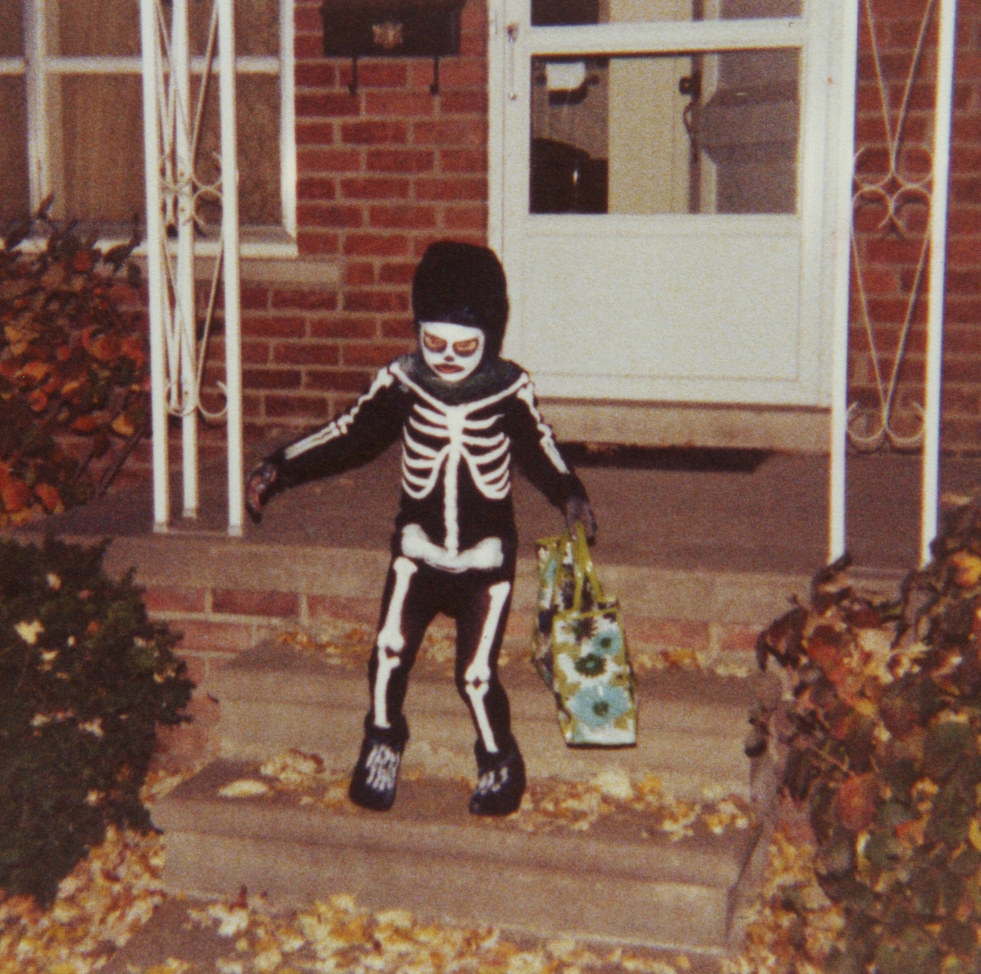
Trick-or-treating is a traditional Halloween custom for children and adults in some countries. During the evening of Halloween, on October 31, people in costumes travel from house to house, asking for treats with the phrase "trick or treat". The "treat" is some form of confectionery, usually candy/sweets, although in some cultures money is given instead. The "trick" refers to a threat, usually idle, to perform mischief on the resident(s) or their property if no treat is given. Some people signal that they are willing to hand out treats by putting up Halloween decorations outside their doors; houses may also leave their porch lights on as a universal indicator that they have candy; some simply leave treats available on their porches for the children to take freely, on the honor system.
The history of trick-or-treating traces back to Scotland and Ireland, where the tradition of guising, going house to house at Halloween and putting on a small performance to be rewarded with food or treats, goes back at least as far as the 16th century, as does the tradition of people wearing costumes at Halloween. There are many accounts from 19th-century Scotland and Ireland of people going house to house in costume at Halloween, reciting verses in exchange for food, and sometimes warning of misfortune if they were not welcomed.[1][2][3] In North America, the earliest known occurrence of guising is from 1898, when children were recorded as having done this in the province of British Columbia, Canada.[4] The interjection "trick or treat!" was then first recorded in the Canadian province of Ontario in 1917.[5] While going house to house in costume has long been popular among the Scots and Irish, it is only in the 2000s that saying "trick or treat" has become common in Scotland and Ireland.[2] Prior to this, children in Ireland would commonly say "help the Halloween party" at the doors of homeowners.[2]
The activity is prevalent in the Anglospheric countries of the United Kingdom, Ireland, the United States and Canada. It also has extended into Mexico. In northwestern and central Mexico, the practice is called calaverita (Spanish diminutive for calavera, "skull" in English), and instead of "trick or treat", the children ask, "¿Me da mi calaverita?" ("[Can you] give me my little skull?"), where a calaverita is a small skull made of sugar or chocolate.
History
[edit]Ancient precursors
[edit]Traditions similar to the modern custom of trick-or-treating extend all the way back to classical antiquity, although it is extremely unlikely that any of them are directly related to the modern custom. The ancient Greek writer Athenaeus of Naucratis records in his book The Deipnosophists that, in ancient times, the Greek island of Rhodes had a custom in which children would go from door-to-door dressed as swallows, singing a song, which demanded the owners of the house to give them food and threatened to cause mischief if the owners of the house refused.[6][7][8] This tradition was claimed to have been started by the Rhodian lawgiver Cleobulus.[9]
Medieval Christian era
[edit]Souling
[edit]
Starting as far back as the 15th century, among Christians, there had been a custom of sharing soul-cakes at Allhallowtide (October 31 through November 2).[11][12] People would visit houses and take soul-cakes, either as representatives of the dead, or in return for praying for their souls.[13] Later, people went "from parish to parish at Halloween, begging soul-cakes by singing under the windows some such verse as this: 'Soul, souls, for a soul-cake; Pray you good mistress, a soul-cake!'"[14] They typically asked for "mercy on all Christian souls for a soul-cake".[15] It was known as 'Souling' and was recorded in parts of Britain, Flanders, southern Germany, and Austria.[16] Shakespeare mentions the practice in his comedy The Two Gentlemen of Verona (1593), when Speed accuses his master of "puling [whimpering or whining] like a beggar at Hallowmas".[17] In western England, mostly in the counties bordering Wales, souling was common.[12] According to one 19th century English writer "parties of children, dressed up in fantastic costume […] went round to the farm houses and cottages, singing a song, and begging for cakes (spoken of as "soal-cakes"), apples, money, or anything that the goodwives would give them".[18] In England, souling remained an important part of Allhallowtide observances until the 19th century, in both Protestant and Catholic areas.[19][20]
The practice of giving and eating soul cakes continues in some countries today, such as Portugal (where it is known as Pão-por-Deus and occurs on All Hallows' Day and All Souls' Day), as well as the Philippines (where it is known as Pangangaluwa and occurs on All Hallows' Eve).[21][22] In other countries, souling is seen as the origin of the practice of trick-or-treating.[23] In the United States, some churches, during Allhallowtide, have invited people to come receive sweets from them and have offered to "pray for the souls of their friends, relatives or even pets" as they do so.[24]
Mumming
[edit]Since the Middle Ages, a tradition of mumming on a certain holiday has existed in parts of Britain and Ireland. It involved going door-to-door in costume, performing short scenes or parts of plays in exchange for food or drink. The custom of trick-or-treating on Halloween may come from the belief that supernatural beings, or the souls of the dead, roamed the earth at this time and needed to be appeased.
Samhain
[edit]It may otherwise have originated in a Celtic festival, Samhain, held on 31 October–1 November, to mark the beginning of winter, in Ireland, Scotland and the Isle of Man, and Calan Gaeaf in Wales, Cornwall, and Brittany. The festival is believed to have pre-Christian roots. In the 9th century, the Catholic Church made 1 November All Saints' Day. Among Celtic-speaking peoples, it was seen as a liminal time, when the spirits or fairies (the Aos Sí), and the souls of the dead, came into our world and were appeased with offerings of food and drink. Similar beliefs and customs were found in other parts of Europe. It is suggested that trick-or-treating evolved from a tradition whereby people impersonated the spirits, or the souls of the dead, and received offerings on their behalf. S. V. Peddle suggests they "personify the old spirits of the winter, who demanded reward in exchange for good fortune".[25] Impersonating these spirits or souls was also believed to protect oneself from them.[26]
Guising
[edit].JPG)
In Scotland and Ireland, "guising" – children going from door to door in disguise – is secular, and a gift in the form of food, coins or "apples or nuts for the Halloween party" (and in more recent times, chocolate) is given out to the children.[2][27][28] The tradition is called "guising" because of the disguises or costumes worn by the children.[3][29] In the West Mid Scots dialect, guising is known as "galoshans".[30] In Scotland, youths went house to house in white with masked, painted or blackened faces, reciting rhymes and often threatening to do mischief if they were not welcomed.[31][32]
Guising has been recorded in Scotland since the 16th century, often at New Year. The Kirk Session records of Elgin name men and women who danced at New Year 1623. Six men, described as guisers or "gwysseris" performed a sword dance wearing masks and visors covering their faces in the churchyard and in the courtyard of a house. They were each fined 40 shillings.[33]
A record of guising at Halloween in Scotland in 1895 describes masqueraders in disguise carrying lanterns made out of scooped out turnips, visiting homes to be rewarded with cakes, fruit, and money.[34] In Ireland, children in costumes would commonly say "Help the Halloween Party" at the doors of homeowners.[2][35]
Halloween masks are referred to as "false faces" in Ireland and Scotland.[36][37] A writer using Scots language recorded guisers in Ayr, Scotland in 1890:
I had mind it was Halloween . . . the wee callans (boys) were at it already, rinning aboot wi’ their fause-faces (false faces) on and their bits o’ turnip lanthrons (lanterns) in their haun (hand).[37]
Guising also involved going to wealthy homes, and in the 1920s, boys went guising at Halloween up to the affluent Thorntonhall, South Lanarkshire.[38] An account of guising in the 1950s in Ardrossan, North Ayrshire, records a child receiving 12 shillings and sixpence, having knocked on doors throughout the neighbourhood and performed.[39] Growing up in Derry, Northern Ireland in the 1960s, The Guardian journalist Michael Bradley recalls children asking, “Any nuts or apples?”.[40] In Scotland and Ireland, the children are only supposed to receive treats if they perform a party trick for the households they go to. This normally takes the form of singing a song or reciting a joke or a funny poem which the child has memorised before setting out.[27][39] While going from door to door in disguise has remained popular among Scots and Irish at Halloween, the North American saying "trick-or-treat" has become common in the 2000s.[2][35]
Spread to North America
[edit]
Author Nicholas Rogers cites an early example of guising in North America in 1911, where a newspaper in Kingston, Ontario, Canada, reported children going "guising" around the neighborhood.[41] The article itself details the practice as such:
Between six and seven o'clock, the children began to appear in the streets, disguised with all kinds of masks and costumes. The usual programme of visiting the corner groecery stores, hotels and private residences was carried out, the youngesters efforts as elecutionists and vocalists being rewarded with money, apples, nuts, etc.[42]
American historian and author Ruth Edna Kelley of Massachusetts wrote the first book length history of the holiday in the United States; The Book of Hallowe'en (1919), and references souling in the chapter "Hallowe'en in America"; "The taste in Hallowe'en festivities now is to study old traditions, and hold a Scotch party, using Burn's poem Hallowe'en as a guide; or to go a-souling as the English used. In short, no custom that was once honored at Hallowe'en is out of fashion now."[43] Kelley lived in Lynn, Massachusetts, a town with 4,500 Irish immigrants, 1,900 English immigrants, and 700 Scottish immigrants in 1920.[44] In her book, Kelley touches on customs that arrived from across the Atlantic; "Americans have fostered them, and are making this an occasion something like what it must have been in its best days overseas. All Hallowe'en customs in the United States are borrowed directly or adapted from those of other countries".[45]
While the first reference to "guising" in North America occurs in 1911, another reference to ritual begging on Halloween appears, place unknown, in 1915, with a third reference in Chicago in 1920.[46]
The interjection "Trick or treat!"
[edit]The interjection "Trick or treat!" — a request for sweets or candy, originally and sometimes still with the implication that anyone who is asked and who does not provide sweets or other treats will be subjected to a prank or practical joke — seems to have arisen in central Canada, before spreading into the northern and western United States in the 1930s and across the rest of the United States through the 1940s and early 1950s.[47] Initially it was often found in variant forms, such as "tricks or treats," which was used in the earliest known case, a 1917 report in The Sault Daily Star in Sault Ste. Marie, Ontario:[48]
Almost everywhere you went last night, particularly in the early part of the evening, you would meet gangs of youngsters out to celebrate. Some of them would have adopted various forms of "camouflage" such as masks, or would appear in long trousers and big hats or with long skirts. But others again didn't. . . . "Tricks or treats" you could hear the gangs call out, and if the householder passed out the "coin" for the "treats" his establishment would be immune from attack until another gang came along that knew not of or had no part in the agreement.[5]
.png)
As shown by word sleuth Barry Popik,[49] who also found the first use from 1917,[48] variant forms continued, with "trick or a treat" found in Chatsworth, Ontario in 1921,[50] "treat up or tricks" and "treat or tricks" found in Edmonton, Alberta in 1922,[51] and "treat or trick" in Penhold, Alberta in 1924.[52] The now canonical form of "trick or treat" was first seen in 1917 in Chatsworth, only one day after the Sault Ste. Marie use,[53] but "tricks or treats" was still in use in the 1966 television special, It's the Great Pumpkin, Charlie Brown.[49]
The thousands of Halloween postcards produced between the start of the 20th century and the 1920s commonly show children but do not depict trick-or-treating.[54] The editor of a collection of over 3,000 vintage Halloween postcards writes, "There are cards which mention the custom [of trick-or-treating] or show children in costumes at the doors, but as far as we can tell they were printed later than the 1920s and more than likely even the 1930s. Tricksters of various sorts are shown on the early postcards, but not the means of appeasing them".[55]
Trick-or-treating does not seem to have become a widespread practice until the 1930s, with the first appearance in the United States of the term in 1928,[56] and the first known use in a national publication occurring in 1939.[57]
Behavior similar to trick-or-treating was more commonly associated with Thanksgiving from 1870 (shortly after that holiday's formalization) until the 1930s. In New York City, a Thanksgiving ritual known as Ragamuffin Day involved children dressing up as beggars and asking for treats, which later evolved into dressing up in more diverse costumes.[58][59] Increasing hostility toward the practice in the 1930s eventually led to the begging aspects being dropped, and by the 1950s, the tradition as a whole had ceased.
Increased popularity
[edit]Almost all pre-1940 uses of the term "trick-or-treat" are from the United States and Canada. Trick-or-treating spread throughout the United States, stalled only by World War II sugar rationing that began in April, 1942 and lasted until June, 1947.[60][61]

Early national attention to trick-or-treating was given in October, 1947 issues of the children's magazines Jack and Jill and Children's Activities,[62] and by Halloween episodes of the network radio programs The Baby Snooks Show in 1946 and The Jack Benny Show and The Adventures of Ozzie and Harriet in 1948.[63] Trick-or-treating was depicted in the Peanuts comic strip in 1951.[64] The custom had become firmly established in popular culture by 1952, when Walt Disney portrayed it in the cartoon Trick or Treat, and Ozzie and Harriet were besieged by trick-or-treaters on an episode of their television show.[65] In 1953 UNICEF first conducted a national campaign for children to raise funds for the charity while trick-or-treating.[66]
Although some popular histories of Halloween have characterized trick-or-treating as an adult invention to re-channel Halloween activities away from Mischief Night vandalism, there are very few records supporting this. Des Moines, Iowa is the only area known to have a record of trick-or-treating being used to deter crime.[67] Elsewhere, adults, as reported in newspapers from the mid-1930s to the mid-1950s, typically saw it as a form of extortion, with reactions ranging from bemused indulgence to anger.[68] Likewise, as portrayed on radio shows, children would have to explain what trick-or-treating was to puzzled adults, and not the other way around. Sometimes even the children protested: for Halloween 1948, members of the Madison Square Boys Club in New York City carried a parade banner that read "American Boys Don't Beg."[69] The National Confectioners Association reported in 2005 that 80 percent of adults in the United States planned to give out confectionery to trick-or-treaters,[70] and that 93 percent of children, teenagers, and young adults planned to go trick-or-treating or participating in other Halloween activities.[71]
Phrase introduction to the United Kingdom and Ireland
[edit]Despite the concept of trick-or-treating originating in Britain and Ireland in the form of souling and guising, the use of the term "trick or treat" at the doors of homeowners was not common until the 1980s, with its popularisation in part through the release of the film E.T.[72] Guising requires those going door-to-door to perform a song or poem without any jocular threat,[39] and according to one BBC journalist, in the 1980s, "trick or treat" was still often viewed as an exotic and not particularly welcome import, with the BBC referring to it as "the Japanese knotweed of festivals" and "making demands with menaces".[73] In Ireland before the phrase "trick or treat" became common in the 2000s, children would say "Help the Halloween Party".[2] Very often, the phrase "trick or treat" is simply said and the revellers are given sweets, with the choice of a trick or a treat having been discarded.
Etiquette
[edit]
Trick-or-treating typically begins at dusk on October 31. Some municipalities choose other dates.[74][75][76][77][78][79] Homeowners wishing to participate sometimes decorate their homes with artificial spider webs, plastic skeletons and jack-o-lanterns. Conversely, those who do not wish to participate may turn off outside lights for the evening or lock relevant gates and fences to keep people from coming onto their property.
In most areas where trick-or-treating is practiced, it is considered an activity for children. Some jurisdictions in the United States forbid the activity for anyone over the age of 12.[80] Dressing up is common at all ages; adults will often dress up to accompany their children, and young adults may dress up to go out and ask for gifts for a charity.
Local variants
[edit]United States and Canada
[edit]Children of both the St. Louis, Missouri, and Des Moines, Iowa, areas are expected to perform a joke, usually a simple Halloween-themed pun or riddle, before receiving any candy; this "trick" earns the "treat".[81] In addition, trick-or-treating in the Des Moines area is arranged on a different night preceding Hallowing, known as Beggar's night, with the expectation it will reduce mischief and keep children safer from adult parties and drunk driving that may occur on Halloween proper.
In some parts of Canada, children sometimes say "Halloween apples" instead of "trick or treat". This probably originated when the toffee apple was a popular type of candy. Apple-giving in much of Canada, however, has been taboo since the 1960s when stories (of almost certainly questionable authenticity) appeared of razors hidden inside Halloween apples; parents began to check over their children's fruit for safety before allowing them to eat it. In Quebec, children also go door to door on Halloween. However, in French-speaking neighbourhoods, instead of "Trick or treat", they will simply say "Halloween", though it traditionally used to be "La charité, s'il-vous-plaît" ("Charity, please").[82]
Trunk-or-treat
[edit]
Some organizations around the United States and Canada sponsor a "trunk-or-treat" on Halloween night (or, on occasion, a day immediately preceding Halloween, or a few days from it, on a weekend, depending on what is convenient). Trunk-or-treating is done from parked car to parked car in a local parking lot, often at a school or church. The activity makes use of the open trunks of the cars, which display candy, and often games and decorations. Some parents regard trunk-or-treating as a safer alternative to trick-or-treating,[83] while other parents see it as an easier alternative to walking the neighborhood with their children.
This annual event began in the mid-1990s as a "fall festival" for an alternative to trick-or-treating, but became "trunk-or-treat" two decades later. This change was primarily due to "discomfort with some of Halloween's themes."[84] Some churches and church leaders have attempted to connect with the cultural phenomenon of Halloween, viewing it as an opportunity for cultural engagement with the Gospel.[85] But some have called for more city or community group-sponsored trunk-or-treats, so they can be more inclusive.[86] By 2006 these had become increasingly popular.[87]
Portugal and Iberian Peninsula
[edit]In Portugal, children go from house to house on All Saints Day and All Souls Day, carrying pumpkin carved lanterns called coca,[88] asking everyone they see for Pão-por-Deus singing rhymes where they remind people why they are begging, saying "...It is for me and for you, and to give to the deceased who are dead and buried"[89] or "It is to share with your deceased"[90] In the Azores the bread given to the children takes the shape of the top of a skull.[91] The tradition of pão-por-Deus was already recorded in the 15th century.[92] In Galicia, particularly in the island of A Illa de Arousa, a similar tradition exists where children ask for alms (usually bread, sweets, fruits, chestnuts, money or small toys) with the phrase "unha esmoliña polos defuntiños que van alá" ("a little charity for the little deceased who are there").[93]
Scandinavia
[edit]In Sweden, children dress up as witches and monsters when they go trick-or-treating on Maundy Thursday (the Thursday before Easter) while Danish and Faroese children dress up in various attires and go trick-or-treating on Fastelavn (or the next day, Shrove Monday). In Norway, the practice is quite common among children, who come dressed up to people's doors asking for, mainly, candy. The Easter witch tradition is done on Palm Sunday in Finland (virvonta).
Europe
[edit]In parts of Flanders, some parts of the Netherlands, and most areas of Germany, Switzerland, and Austria, children go to houses with home-made beet lanterns or with paper lanterns (which can hold a candle or electronic light), singing songs about St. Martin on St. Martin's Day (the 11th of November), in return for treats.[94] Over the last decade, Halloween trick-or-treating has experienced a notable surge in popularity, particularly among children and teenagers in Germany. Austria and the Netherlands have also witnessed a similar trend. The equivalent of 'trick-or-treat' in the German language is 'Süßes oder Saures,' which translates to asking for sweets or threatening something less pleasant, with the direct translation being "sweet or sour".
In Northern Germany and Southern Denmark, children dress up in costumes and go trick-or-treating on New Year's Eve in a tradition called "Rummelpott [de]".[95] Rummelpott has experienced a massive decrease in popularity over recent decades, although some towns and communities are trying to revive it.[96]
Trick-or-treat for charity
[edit]UNICEF started a program in 1950 called Trick-or-Treat for UNICEF in which trick-or-treaters ask people to give money for the organization, usually instead of collecting candy. Participating trick-or-treaters say when they knock at doors "Trick-or-treat for UNICEF!"[97] This program started as an alternative to candy. The organization has long produced disposable collection boxes that state on the back what the money can be used for in developing countries.
In Canada, students from the local high schools, colleges, and universities dress up to collect food donations for the local Food Banks as a form of trick-or-treating. This is sometimes called "Trick-or-Eat".[98]
See also
[edit]References
[edit]- ^ Roger, Tricking (2003). Halloween: From Pagan Ritual to Party Night. Oxford University Press. pp. 28–30. ISBN 0-19-514691-3.
- ^ a b c d e f g "Ten trick-or-treating facts for impressive bonfire chats". The Irish Times. 31 October 2014.
Scotland and Ireland started tricking: A few decades later a practice called 'guising' was in full swing in Scotland and Ireland. Short for 'disguising', children would go out from door to door dressed in costume and rather than pledging to pray, they would tell a joke, sing a song or perform another sort of "trick" in exchange for food or money. The expression trick or treat has only been used at front doors for the last 10 to 15 years. Before that "Help the Halloween Party" seems to have been the most popular phrase to holler.
- ^ a b "Definition of "guising"". Collins English Dictionary.
(in Scotland and N England) the practice or custom of disguising oneself in fancy dress, often with a mask, and visiting people's houses, esp at Halloween
- ^ "Halloween in Canada". www.thecanadianencyclopedia.ca. Retrieved 2024-11-15.
- ^ a b "Hallowe'en and Snow Is Unusual Combination Here". The Sault Daily Star. Sault Ste. Marie, Ontario. November 1, 1917. p. 2. Retrieved October 20, 2022 – via Newspapers.com..
- ^ Turner, Angela (2015). Swallow. London: Reaktion Books Ltd. p. unpaginated. ISBN 9781780235592.
- ^ Mathiesen, Thomas J. (1999). Apollo's Lyre: Greek Music and Music Theory in Antiquity and the Middle Ages. Lincoln: University of Nebraska Press. p. 156. ISBN 978-1597407960.
swallow song of Rhodes.
- ^ Athenaeus. Deipnosophists 8.360b-d.
- ^ Dalby, Andrew (1998). "Homer's Enemies: Lyric and Epic in the Seventh Century". In Fisher, Nick; van Wees, Hans (eds.). Archaic Greece: New Approaches and New Evidence. London: General Duckworth & Co. Ltd. p. 204. ISBN 978-1-910589-58-8.
- ^ Hall, Anna Maria (1847). Sharpe's London Magazine. p. 12.
Aubrey relates that, in his time, in Shropshire, &c., there was set upon the board a high heap of soul-cakes, lying one upon another like the picture of the shewbread in the old Bibles. They were about the bigness of twopenny cakes, and every visitant on the feast of All Souls took one. He adds, "There is an old rhyme or saying, 'A soul-cake, a soul-cake, have mercy on all Christian souls for a soul-cake.'"
- ^ Jackson, Jeanne L. (1995). Red Letter Days: The Christian Year in Story for Primary Assembly. Nelson Thornes. p. 158. ISBN 9780748719341.
Later, it became the custom for poorer Christians to offer prayers for the dead, in return for money or food (soul cakes) from their wealthier neighbours. People would go 'souling' – rather like carol singing – requesting alms or soul cakes: 'A soul, a soul, a soul cake, Please to give us a soul cake, One for Peter, two for Paul, have mercy on us Christians all.'
- ^ a b Hutton, pp. 374–375
- ^ Cleene, Marcel. Compendium of Symbolic and Ritual Plants in Europe. Man & Culture, 2002. p. 108. Quote: "Soul cakes were small cakes baked as food for the deceased or offered for the salvation of their souls. They were therefore offered at funerals and feasts of the dead, laid on graves, or given to the poor as representatives of the dead. The baking of these soul cakes is a universal practice".
- ^ Mary Mapes Dodge, ed. (1883). St. Nicholas Magazine. Scribner & Company. p. 93.
Soul-cakes," which the rich gave to the poor at the Halloween season, in return for which the recipients prayed for the souls of the givers and their friends. And this custom became so favored in popular esteem that, for a long time, it was a regular observance in the country towns of England for small companies to go from parish to parish at Halloween, begging soul-cakes by singing under the windows some such verse as this: "Soul, souls, for a soul-cake; Pray you good mistress, a soul-cake!"
- ^ Santino, Jack (1994). Halloween and Other Festivals of Death and Life. University of Tennessee Press. p. 84. ISBN 9780870498138. Retrieved 28 October 2015.
The begging ritual, taken up by nonindigents and by children, involved the recitation of a souling rhyme, which typically requested "mercy on all Christian souls for a soul cake."
- ^ Miles, Clement A. (1912). Christmas in Ritual and Tradition. Chapter 7: All Hallow Tide to Martinmas.
- ^ The Two Gentlemen of Verona. Act 2, Scene 1.
- ^ Publications, Volume 16 (English Dialect Society), Harvard University Press, p. 507
- ^ Hood, Karen Jean Matsko (1 January 2014). Halloween Delights. Whispering Pine Press International. p. 33. ISBN 9781594341816.
The tradition continued in some areas of northern England as late as the 1930s, with children going from door to door "souling" for cakes or money by singing a song.
- ^ Mosteller, Angie (2 July 2014). Christian Origins of Halloween. Rose Publishing. ISBN 978-1596365353.
In Protestant regions souling remained an important occasion for soliciting food and money from rich neighbors in preparation for the coming cold and dark months.
- ^ Paul Fieldhouse (17 April 2017). Food, Feasts, and Faith: An Encyclopedia of Food Culture in World Religions. ABC-CLIO. p. 256.
- ^ Por Joaquim de Santa Rosa de Viterbó (1865). Elucidario Das Palavras, Termos E Frases, que Em Portugal Antigamente Se Usaram. A. J. Fernandes Lopes. p. 265.
dia dos fieis defuntos.
- ^ Kullstroem, Chris (27 May 2009). Making a Monstrous Halloween: Themed Parties, Activities and Events. McFarland. p. 85. ISBN 9780786444380.
The Halloween tradition of trick-or-treating started as a European Christian custom called souling.
- ^ Nevares, Diana (29 October 2014). "Is Halloween a Christian event?". St. Andrew's Presbyterian Church. Archived from the original on 29 October 2014.
This Allhallowtide at St. Andrew's, we are experimenting with a reverse of the "souling" tradition. As children in the Gregory Gardens neighborhood come to St. Andrew's collect candy, we are offering to pray for the souls of their friends, relatives or even pets. On Sunday, when we celebrate All Saint's Day we will include these prayers and remembrances along with the names of the saints who have passed away in the last year.
- ^ Peddle, S. V. (2007). Pagan Channel Islands: Europe's Hidden Heritage. p. 54
- ^ British Folk Customs, Christina Hole (1976), p. 91
- ^ a b Bannatyne, Lesley Pratt (1998) Forerunners to Halloween Pelican Publishing Company. ISBN 1-56554-346-7 p. 44
- ^ Rogers, Nicholas. (2002) "Festive Rights:Halloween in the British Isles". Halloween: From Pagan Ritual to Party Night. p. 48. Oxford University Press. ISBN 0-19-514691-3
- ^ Sarah Carpenter (December 2001). "Scottish Guising: Medieval And Modern Theatre Games". International Journal of Scottish Theatre. 2 (2). Archived from the original on 2009-09-24. Retrieved 2008-10-06.
- ^ Galoshans at Hallowe'en / News / Talk of the Towns. Greenock Telegraph. 27 Oct 2009. Retrieved 31 October 2011
- ^ Campbell, Oliver Frances (1900, 1902, 2005) The Gaelic Otherworld. Edited by Ronald Black. Birlinn Ltd. ISBN 1-84158-207-7 pp. 559–562
- ^ Arnold, Bettina (2001-10-31). "Halloween Customs in the Celtic World". University of Wisconsin-Milwaukee. Archived from the original on 2011-06-24. Retrieved 2007-10-16.
- ^ William Cramond, The records of Elgin, 2 (Aberdeen, 1903), pp. 176-7
- ^ Leslie, Frank (November 1895). Frank Leslie's popular monthly, Volume 4. pp. 540–543. Retrieved 2012-10-10.
- ^ a b "11 struggles every Irish trick or treater remembers". TheJournal.ie. Retrieved 28 October 2020.
- ^ "Top ten Irish Halloween traditions and memories you may share". Ireland Central. Retrieved 23 October 2018.
- ^ a b "DOST: Hallow Evin". Dsl.ac.uk. Archived from the original on 29 April 2014. Retrieved 13 October 2013.
- ^ John A. Walker (2002) Sergeant Jiggy p. 14. Cosmos Original Productions, 2002
- ^ a b c Stuart Christie (2002) The cultural and political formation of a west of Scotland "baby-boomer", Volume 1 pp. 65–66. Retrieved 2010-11-11
- ^ Bradley, Michael (24 October 2018). "A very Derry Halloween: a carnival of frights, fireworks and parade". The Guardian. Retrieved 25 October 2018.
- ^ Rogers, Nicholas. (2002) "Coming Over:Halloween in North America". Halloween: From Pagan Ritual to Party Night. p. 76. Oxford University Press, 2002, ISBN 0-19-514691-3
- ^ "Halloween was Observed". The Daily British Whig. 1 November 1911. Retrieved 4 November 2024.
- ^ Kelley, Ruth Edna Kelley. The Book of Hallowe'en, Boston: Lothrop, Lee and Shepard Co., 1919, chapter 15, p. 127. "Hallowe'en in America."
- ^ U.S. Census, January 1, 1920, State of Massachusetts, City of Lynn.
- ^ "Kelley, Ruth Edna. Hallowe'en in America".
- ^ Wright, Theo. E., "A Halloween Story," St. Nicholas, October 1915, p. 1144. Mae McGuire Telford, "What Shall We Do Halloween?" Ladies Home Journal, October 1920, p. 135.
- ^ "trick or treat, int. and n.". Oxford English Dictionary (Online ed.). Oxford University Press. (Subscription or participating institution membership required.).
- ^ a b Flood, Alex (October 31, 2022). "Origin of Phrase 'Trick-or-treat' in Print Traced to the Sault". SooToday. Sault Ste. Marie, Ontario. Retrieved November 6, 2022.
- ^ a b Zimmer, Ben (October 31, 2015). "Word on the Street: 'Tricks or Treats' Goes Singular". Wall Street Journal. p. C.4. Retrieved November 6, 2022.
- ^ "Quiet Hallowe'en; Chatsworth Boys and Girls Were on Good Behavior That Night". Owen Sound Sun-Times. Owen Sound, Ontario. November 3, 1921. p. 3. Retrieved November 6, 2022 – via Newspapers.com.
- ^ ""Treat or Tricks" Hallowe'en Slogan Was Out of Place". Edmonton Bulletin. Edmonton, Alberta. November 2, 1922. p. 6. Retrieved November 6, 2022 – via Newspapers.com.
- ^ "Penhold". Red Deer Advocate. Red Deer, Alberta. November 7, 1924. p. 4. Retrieved November 6, 2022 – via Newspapers.com.
- ^ "Chatsworth". Owen Sound Sun. Owen Sound, Ontario. November 2, 1917. p. 2. Retrieved November 6, 2022 – via Newspapers.com.
- ^ For examples, see the websites Postcard & Greeting Card Museum: Halloween Gallery, Antique Hallowe'en Postcards, Vintage Halloween Postcards Archived 2008-07-23 at the Wayback Machine, and Morticia's Morgue Antique Halloween Postcards.
- ^ E-mail from Louise and Gary Carpentier, 29 May 2007, editors of Halloween Postcards Catalog (CD-ROM), G & L Postcards.
- ^ "Tricks or Treats?". The Bay City Daily Times. 1 November 1928. p. 3.
- ^ Moss, Doris Hudson. "A Victim of the Window-Soaping Brigade?" The American Home, November 1939, p. 48. Moss was a California-based writer.
- ^ Nigro, Carmen (November 23, 2010). "Thanksgiving Ragamuffin Parade". New York Public Library. Retrieved January 6, 2017.
- ^ "Ragamuffin Parades Mark Holiday in City" (PDF). The New York Times. November 28, 1947. Retrieved January 6, 2017.
- ^ Morton, Lisa (2012). Trick or Treat a history of halloween. Reaktion Books. p. 64. ISBN 9781780231877.
- ^ "One Lump Please", Time, March 30, 1942. "Decontrolled", Time, June 23, 1947.
- ^ Published in Indianapolis, Indiana and Chicago, Illinois, respectively.
- ^ The Baby Snooks Show, November 1, 1946, and The Jack Benny Show, October 31, 1948, both originating from NBC Radio City in Hollywood; and The Adventures of Ozzie and Harriet, October 31, 1948, originating from CBS Columbia Square in Hollywood.
- ^ "Peanuts Comic Strip on GoComics.com". Comics.com. 2000-02-13. Retrieved 2012-10-10.
- ^ "Halloween Party," The Adventures of Ozzie & Harriet, Oct. 31, 1952.
- ^ "A Barrel of Fun for Halloween Night," Parents Magazine, October 1953, p. 140. "They're Changing Halloween from a Pest to a Project," The Saturday Evening Post, October 12, 1957, p. 10.
- ^ ""Des Moines Register Archived 2013-01-21 at archive.today," Jokes set local Halloween apart , Oct. 2000.
- ^ Editorial, Spokane Daily Chronicle, November 6, 1935, p. 4:
- In plain fact it is straight New York or Chicago "graft" or "racket" in miniature. Certainly it wouldn't be a good idea for youngsters to go in extensively for this kind of petty "blackmail" on any other date than Halloween. Neither police nor public opinion would stand for that.
- As a mother of two children I wish to register indignation at the "trick or treat" racket imposed on residents on Hallowe'en night by the youngsters of this city.… This is pure and simple blackmail and it is a sad state of affairs when parents encourage their youngsters to participate in events of this kind.
- The Commissioners and District of Columbia officials should enact a law to prohibit "beggars night" at Hallowe'en. It is making gangsters of children.… If the parents of these children were fined not less than $25 for putting their children out to beg, they would entertain their children at home.
- I have lived in some 20 other towns and cities and I never saw nor heard of the begging practice until about 1936.… The sooner it becomes obsolete here the better. I don't mind the tiny children who want to show off their costumes, but I resent the impudence of the older children.
- Another year has rolled around and the nightmare of having to put up with the "trick or treat" idea again fills me with dread.
- ^ Recalled a decade later by Martin Tolchin, "Halloween A Challenge To Parents," The New York Times, October 27, 1958, p. 35.
- ^ Trick-or-treaters can expect Mom or Dad’s favorites in their bags this year, National Confectioners Association, 2005.
- ^ Fun Facts: Halloween, National Confectioners Association, 2004.
- ^ “Halloween: trick, treat and a total travesty?”. The Telegraph. Retrieved 28 October 2020
- ^ Coughlan, Sean. "The Japanese knotweed of festivals", BBC News Magazine, 31 October 2007.
- ^ "Trick or Treat to remain on Saturday - Portsmouth Daily Times". www.portsmouth-dailytimes.com. 2021-10-26. Retrieved 2021-11-01.
- ^ HOGAN, VERSHAL (27 October 2021). "Trick-or-treating will be Saturday". Ashley News Observer. Retrieved 2021-11-01.
- ^ KOCO Staff (2021-10-28). "What day are cities in Oklahoma celebrating trick-or-treating?". KOCO. Retrieved 2021-11-01.
- ^ "Saturday officially set for trick-or-treating". The Southwest Times. 2021-10-29. Retrieved 2021-11-01.
- ^ "Saturday, Sunday or both? Here's when North Alabama communities suggest you trick-or-treat". WAAY News. 29 October 2021. Retrieved 2021-11-01.
- ^ 2013 Municipal Trick-or-Treat List, Haunted Wisconsin, dated 2013, copy at archive.org, copy at webcitation.org
- ^ ""What's The Age Limit On Trick Or Treating?", CBS Detroit, October 30, 2011". 30 October 2011.
- ^ Palazzolo, Joe (October 31, 2014). "Did You Hear the One About Frankenstein's Ghoul Friend?". The Wall Street Journal. Retrieved 14 November 2014.
- ^ Halloween in Quebec. provincequebec.com
- ^ "Safe Kids Worldwide" (PDF).
- ^ Lecci, Stephanie (October 31, 2013). "A New Way To Do Halloween: Chocolate Chunks In The Trunk". NPR. Retrieved June 29, 2024.
- ^ Stetler II, Darrell (August 22, 2023). "Trunk or Treat Planning for Churches: A Step-by-Step Guide". NewStart Discipleship Resources, LLC. Retrieved June 28, 2024.
- ^ "'Trunk or treat' doesn't include all children", Standard Examiner, October 11, 2010 Archived December 9, 2014, at the Wayback Machine
- ^ Santos, Fernanda (31 October 2006). "Santos, Fernanda. "Trunk or Treat! Halloween Tailgating Grows"". The New York Times.
- ^ Manuel de Paiva Boléo, Universidade de Coimbra. Instituto de Estudos Românicos. Revista portuguesa de filologia – Volume 12 – Página 745 – 1963
- ^ "A canção ródia da andorinha" (PDF).
- ^ "Revista dos Açores, Volume 1 Sociedade Auxiladora das Lettras Açorianas". 1851.
- ^ Intermuseus Dezembro 2006 nº 7 Direcção Regional da Cultura Archived 2008-03-11 at the Portuguese Web Archive
- ^ "Elucidario das palavras, termos e frases, que em Portugal antigamente se usárão..., Volume 1". 1865.
- ^ ""Unha limosnina os difuntiños": the origin of the traditional "Trick or Treat"". November 3, 2022.
- ^ "St Martin's Day". H2g2.com. 2007-01-13. Retrieved 2012-10-10.
- ^ Christian Roy Traditional festivals: a multicultural encyclopedia, Volume 2
- ^ NDR. "Rummelpott: Eine alte Tradition wird in Horst wiederbelebt". www.ndr.de (in German). Retrieved 2023-10-31.
- ^ "The history of trick-or-treat for UNICEF". Retrieved 31 October 2022.
- ^ Thompson, Jack (29 October 2016). "Trick or Eat: USSU Food Centre brings food to those who need it most". The Sheaf. Retrieved 21 September 2017.
Further reading
[edit]
- Borrelli, Christopher. "The rise and fall of trick-or-treating - North Shore". Chicago Tribune. Retrieved 5 May 2021.
- Kawash, Samira (9 October 2009). "The First Candy Day, 14 October 1916". Candy Professor. Archived from the original on 6 May 2021. Retrieved 5 May 2021.
- Sweetest Day
- “Nation Wide Candy Day,” Candy and Ice Cream July 1916, p. 34
- “Candy Day,” International Confectioner June 1916, p. 39
- International Confectioner Nov. 1916, p. 41
- Kelley, Ruth Edna (1919). The Book of Hallowe'en. Boston: Lothrop, Lee & Shepard. ISBN 9781470161958. OCLC 1041627791.
Public Domain free download
{{cite book}}: ISBN / Date incompatibility (help) - Morton, Lisa (2011). The Halloween Encyclopedia (2 ed.). Jefferson, North Carolina: McFarland, Incorporated, Publishers. ISBN 9781784022006. OCLC 864825770.
- Morton, Lisa (2012). Trick Or Treat: A History of Halloween. London, UK: Reaktion Books, Limited. ISBN 978-1-78914-158-0. OCLC 1089869589.
- Rogers, Nicholas (2002). Halloween: From Pagan Ritual to Party Night. Oxford University Press. ISBN 978-0-19-516896-9. OCLC 1017560275.
- Skal, David J. (2005). Death Makes a Holiday : a Cultural History of Halloween. Living Sacrifice Book Co. ISBN 0756789001. OCLC 877171040.
- Snodgrass, M. Benjamin (2010). "The Specter of Sex Offenders on Halloween: Unmasking Cultural, Constitutional, and Criminological Concerns" (PDF). Ohio State Law Journal. 71 (2). Columbus, Ohio: Ohio State University Moritz College of Law: 417–456. Retrieved 5 May 2021.
- Truwe, Ben. The Halloween Catalog Collection. Portland, Oregon: Talky Tina Press, 2003. ISBN 0-9703448-5-6
- Winick, Stephen. "Research Guides: Halloween & Día de Muertos Resources: Introduction". guides.loc.gov. Library of Congress. Retrieved 5 May 2021.
External links
[edit]- "Ancient Halloween Traditions". Campbell House Museum. 27 October 2016. Retrieved 5 May 2021.
- "LOC Halloween: Chambers of Mystery Bibliography" (PDF). loc.gov. loc. Retrieved 5 May 2021.
The Library of Congress' autumn 2017 pop-up exhibit tells the intriguing tale of Halloween and Día de Muertos (Day of the Dead) through a dazzling range of treasures from across the collections. LOC Halloween: Chambers of Mystery covers the ancient and mysterious traditions behind these autumn holidays through a rich selection of books and archival special collections. Experience the spooky and solemn celebrations through sound and video recordings, prints and photographs, film scores and sheet music, chapbooks, and movie memorabilia.
- “Trick or Treat” ("Trick or Treat for UNICEF"). Web page from etymologist Barry Popik on the history of "trick or treat".
| Main topics |
|
|---|---|
| Traditions | |
| Food | |
| Events | |
| Media | |
| Related events | |
| Other events | |
| Related topics | |

