Hubbry Logo
Versova, MumbaiVersova, MumbaiMain
Open search
Versova, Mumbai
Community hub
Versova, Mumbai
logo
8 pages, 0 posts
0 subscribers
Be the first to start a discussion here.
Versova, Mumbai
Versova, Mumbai
from Wikipedia

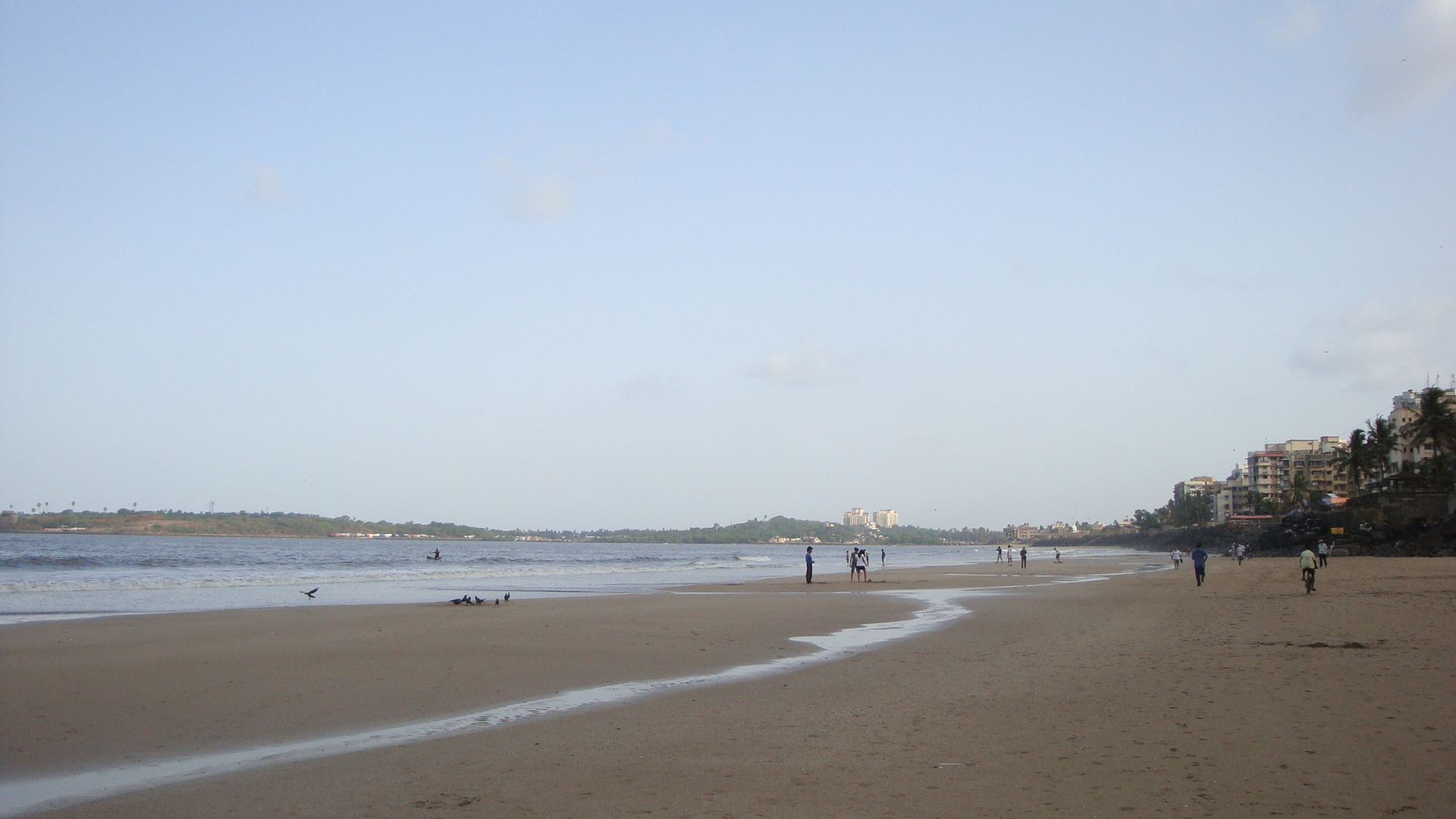
Versova (ISO: Varsovā, pronounced [ʋəɾsoːʋaː]) is an upmarket neighborhood in north-western Mumbai. It is known for its beach and the Versova Fort. The beach of Versova undertook a massive clean-up effort in 2016, labeled as the largest-ever beach clean-up.[1]

Key Information

History

[edit]

Versova, originally named Vesave, is a small fishing village of the Kolis, situated to the north of the old Mumbai city.[2] Britain used to call this vis-a-vis, and locals gave it the name Visava.

The original name of the village is "Visava", which derives from the Marathi word for "rest" (as in resting place).[citation needed] Later, it was pronounced as "Vesava". The village is mentioned in the writings of Gemelli Careri in 1695.

Versova came under the Portuguese rule in the late medieval period. The Portuguese constructed the Our Lady of Health Church in Versova, and a number of Kolis were converted to Christianity during this period. By 1720, it had emerged as a small town, with a small fort and a growing trade in dry fish. In 1739, the Portuguese lost the area to the Marathas, who strengthened the fort. A British force led by Lieutenant-Colonel Henry Keating defeated the Marathas in 1774.[2]

In 1800, the British established a training facility for artillery and engineering cadets. However, the facility was moved to the old Bombay city after a fever epidemic affected nearly all the cadets, and killed many of them. The military establishment was completely removed in 1818.[2] In 1875–86, the exports from the trade amounted to £34,403 and the imports in 1876–77 were worth £14,784.[2]

Administratively, Versova (as "Varsova") is still a village in the Andheri taluka of the Mumbai Suburban district.[3][4] Much of the Versova is now an urban locality, but the original settlement of the fishing community still exists at its north-west corner along the Versova creek, facing the former Madh Island. The creek has now almost turned into a sewage nullah.[5]

Environment

[edit]

The indigenous population are the Kolis people. Shores of the Versova creek area are surrounded by flourishing Mangroves which support different kinds of marine life, especially molluscs, crabs and fish.[6] The native population sells fish at Versova jetty at wholesale prices. They have their own cooperative society of Versova fishermen, wherein they manage all the fishing activities.[7] Kolis are believed to be the oldest and original inhabitants of the land that is now Mumbai.

The Versova Koli Seafood Festival was started in 2006 to help the Koli fishing community with extra income.[8]

Environmental clean-up effort

[edit]

By 2015, Versova beach had become choked with up to 1.7 metres (5.5 ft) of rotting refuse and trash—most of it plastic.[9]

In October 2015, Afroz Shah, a young lawyer and environmentalist in Mumbai moved into the area and along with Harbansh Mathur, an 84-year-old who has since died, began efforts to clean up the beach. Eventually Shah started a volunteer organization, Versova Residents Volunteers, and encouraged volunteers to show up for weekly "dates with the ocean" – so called because of how arduous the work was.[10] Each Sunday the volunteers would gather to remove as much trash as possible. Over the course of 21 months, volunteers removed close to 5,300,000 kilograms (11,684,500 lb) of trash, most of it plastic.[11]

The volunteers also cleaned up 52 public toilets and planted over 50 coconut trees.[11]

In 2016, Shah was honoured with the "Champion of the Earth" award by the United Nations Environment Programme in recognition of his vision and hard work.[10]

In early 2018, Olive Ridley sea turtles returned to the beach for the first time in 20 years to nest and hatchlings were observed heading toward the sea on 22 March 2018.[12]

Recently, Afroz Shah has appeared on several platforms as a champion of the cause to ban plastics and has travelled across the country to several schools in a pledge to refuse, reduce and reuse plastic.[13]

See also

[edit]

References

[edit]
Revisions and contributorsEdit on WikipediaRead on Wikipedia
from Grokipedia

Versova is a coastal neighborhood in Andheri West, , , encompassing the historic Versova Koliwada fishing village, upscale residential enclaves frequented by Bollywood personalities, and the ecologically vital Versova Beach along the .
The locality, administered by the , has undergone rapid urbanization while retaining elements of its traditional economy, with the beach serving as a central feature that drew global attention for severe plastic pollution prior to a transformative cleanup.
Initiated in October 2015 by environmental advocate , the volunteer-driven effort spanned 136 weeks, mobilized thousands of participants including local fisherfolk, and removed vast quantities of —described by the as enabling the return of olive ridley turtle nesting sites after years of absence—earning designation as the world's largest beach cleanup.
This initiative not only mitigated immediate but highlighted systemic failures in urban coastal areas, inspiring similar projects elsewhere while underscoring Versova's shift from polluted wasteland to a symbol of community-led restoration.

Geography

Location and Boundaries

Versova constitutes a locality within Andheri West in the north-western suburbs of , , , situated at approximate geographic coordinates of 19.135°N and 72.813°E . This positioning places it amid Mumbai's western suburban expanse, extending along the coastline. The area's boundaries are defined to the west by the , forming its prominent coastal edge marked by Versova Beach. Adjoining inland neighborhoods include to the east and to the north, integrating Versova into the contiguous urban fabric of Mumbai's suburbs. Versova maintains proximity to major infrastructure, lying about 8.6 kilometers from . To its north-west, across the Versova Creek, lies , underscoring its role as a coastal linkage point in the region's geography. This configuration positions Versova as a key coastal suburb within Mumbai's sprawling western periphery.

Physical Features and Landmarks

Versova features a coastal terrain characterized by sandy stretches along the Arabian Sea, with the prominent Versova Beach extending as a long, narrow expanse of sand separated from Juhu Beach to the south by Versova Creek. The beach faces westward into the Arabian Sea, where tidal influences from the creek system contribute to periodic exposure of intertidal zones during low tide and inundation during high tide, reflecting the area's connection to broader tidal dynamics in Mumbai's coastal geography. The Versova-Madh Creek forms a significant hydrological feature, delineating the boundary between Versova and to the north, with the creek's mouth facilitating water exchange with the and exposing mudflats and mangroves in its vicinity. Geologically, Versova lies within the Deccan Trap volcanic province, underlain by basaltic rocks from the Salsette Subgroup's Madh-Utan Formation, which historically linked the area through shallow tidal inlets to adjacent landmasses before reclamation efforts coalesced Mumbai's islands. Notable landmarks include the remnants of Versova Fort, also known as Madh Fort, constructed by the in the 17th century as a watchtower on a basaltic rocky outcrop at the creek's mouth, providing strategic oversight of the coastline. The fort's surviving walls and structures overlook the creek, underscoring the area's defensive . Adjacent to the beach, Versova Koliwada presents a compact layout with narrow, winding lanes descending directly to the shoreline, integrating residential clusters with the coastal edge.

History

Early Settlement and Koliwada Origins

The indigenous Koli community, recognized as Mumbai's earliest recorded inhabitants, established Versova as a predating Portuguese colonization in the . Historical accounts trace Koli presence in the Mumbai region to at least the , with communities sustaining themselves through coastal using traditional methods such as nets and traps. Versova emerged as a core enclave of this tribal group, originally known as "Vesave," denoting a northern settlement north of the old city core, where Kolis clustered around natural hillocks and creeks for access to . Archaeological findings in the adjacent and Versova area provide evidence of pre-Portuguese habitation, including structural remains and herostones from the Shilahara Dynasty era (circa 800–1265 AD), such as those at Killeshvar Temple on Madh. These artifacts, alongside Gajalaxmi sculptures from the Mukteshvar Temple in nearby Akse, reflect early religious and cultural activity in a multicultural coastal setting likely influenced by indigenous groups. Regional chronicles, including the 15th–17th-century , reference Madh and Versova as established locales under and Shilahara rule, underscoring continuous human occupation tied to maritime economies before European intervention. Fishing dominated early demographics and sustenance, with Kolis forming tight-knit villages like Versova Koliwada, where occupation and social structure revolved around seasonal catches from the Arabian Sea and Versova Creek. This reliance on pisciculture shaped settlement patterns, concentrating populations near tidal inlets for boat access and drying grounds, as evidenced by persistent Koli fishing hamlets documented from medieval times. Early observers, such as 18th-century accounts of "stout fisherman communities" at Versova, affirm the endurance of these pre-colonial patterns into later periods.

Colonial Era to Post-Independence Growth

During the Portuguese colonial period, which extended influence over including Versova from the 16th century, the area saw the establishment of key religious and defensive structures. The Church of Our Lady of Health in Versova was founded as part of Portuguese efforts to consolidate control and promote among local Koli communities. Concurrently, the Portuguese constructed a pentagonal at nearby , locally known as Versova Fort, around the early to serve as a coastal watchtower against Maratha incursions. These developments integrated Versova into early trade routes linking the northern coast to Portuguese holdings in Bombay, fostering limited maritime activity amid its primary role as a outpost. British control over Salsette, encompassing Versova, was established following military victory against the Marathas in , marking the transition from to British administration in the region. Under British rule through the 19th and early 20th centuries, Versova remained predominantly a Koli with minimal infrastructural changes, though pre-reclamation maps from this era depict it as a distinct separated from the mainland, supporting subsistence fishing and salt production. Trade routes persisted, but development focused on broader connectivity rather than localized urbanization, preserving Versova's rural character until the mid-20th century. Following India's independence in 1947, Versova experienced initial suburban expansion driven by migration inflows to Bombay, as the city attracted workers for its burgeoning textile and manufacturing industries, with over 50% of Bombay's population comprising migrants by that time. This period saw the absorption of Versova into the administrative framework of the Bombay Suburban area, formalized as part of the Mumbai Suburban District structure that evolved from the post-partition reorganization of Bombay Province into Bombay State in 1947. Early residential plotting emerged to accommodate influxes, including Partition refugees and laborers, tying Versova's growth to Mumbai's industrialization, though it retained its fishing heritage amid gradual land allocation for housing up to the 1960s.

Recent Urbanization and Infrastructure Expansion

Versova has witnessed accelerated since the 2010s, driven by investments and policy shifts that promoted high-density developments, converting swathes of low-rise fishing hamlets into clusters of luxury high-rise apartments and commercial complexes. This boom, fueled by demand from Mumbai's expanding and migrants seeking proximity to hubs in and , has resulted in over a dozen projects exceeding 20 stories, with property prices surging by more than 150% between 2015 and 2024 due to limited coastal land availability and improved accessibility. Key to this growth was the integration into 's public transit network via Metro Line 1 (Versova-Andheri-Ghatkopar), operational since June 8, 2014, which spans 11.4 kilometers with Versova as the western terminus, facilitating daily ridership of around 400,000 passengers and reducing road congestion by diverting an estimated 150,000 private vehicles. This infrastructure, developed under a public-private partnership with , directly correlated with a spike in residential approvals, as enhanced connectivity lowered commute times to central from 90 minutes to under 30 minutes, attracting professionals in media and IT sectors. A landmark project approved in October 2025 is the Rs 2,395 crore cable-stayed Versova-Madh bridge, granted environmental clearance by the Ministry of Environment, Forest and Climate Change on October 16, spanning 1.5 kilometers to link Versova with and northern coastal zones, potentially slashing the 22-kilometer road journey to 10 minutes and enabling better freight movement for fisheries and logistics. This initiative, proposed since with partial funding from the , addresses longstanding isolation of Madh's villages while raising concerns over diversion and , necessitating compensatory on 10 hectares. These expansions have intensified population pressures, with Versova's mirroring Mumbai's suburban rise from approximately 20,000 persons per square kilometer in 2001 to over 25,000 by 2020, prompting zoning adjustments under the that designate former fishing zones as mixed-use while preserving enclaves through demarcated heritage boundaries to mitigate displacement. However, this transition has strained local resources, exacerbating issues like wastewater overflow into creeks and traffic bottlenecks at key junctions, as rapid vertical growth outpaces sanitation upgrades.

Demographics and Society

Population Composition

The Versova assembly constituency, which includes the Versova neighborhood, recorded a population of 376,912 in the 2011 census, with 100% urban residency and Scheduled Castes comprising 2.9% of residents; Scheduled Tribes form a negligible portion, consistent with broader Mumbai Suburban trends where STs account for under 1%. Extrapolations from Mumbai's metropolitan growth rates suggest a current population exceeding 450,000 as of 2025, driven by urban expansion, though official post-2011 census data remains pending. Ethnically and linguistically, the composition reflects a blend of indigenous Maharashtrian groups, including the Koli fisherfolk native to Versova —a cluster housing approximately 35,000 people primarily engaged in traditional fishing occupations—and migrant workers from northern Indian states speaking as a primary language. Marathi remains the official language and is predominant among locals, while speakers constitute a significant migrant segment attracted to media and service sectors; Kolis, as the original inhabitants, maintain distinct occupational ties to coastal livelihoods amid this influx. Religiously, predominate, aligning with Suburban's overall 65-70% Hindu share, though form a substantial minority estimated at around 33% in Versova based on 2011-derived electoral demographics, with smaller Christian communities tracing to Portuguese-era conversions among Kolis. Occupationally, the breakdown features a core of lower-income households in clusters versus middle- to upper-income professionals in newer developments, including transient media workers skewing the age distribution younger (predominantly 25-45 years) and contributing to a near 's urban average of approximately 900 females per 1,000 males.

Socioeconomic Dynamics and Community Tensions

Versova displays pronounced socioeconomic stratification, with the indigenous Koli fishing enclave of juxtaposed against upscale high-rise developments housing media professionals, celebrities, and affluent migrants. This duality stems from rapid , where traditional fishing yields have declined due to and habitat loss, prompting many Kolis to diversify into land-based income sources amid rising property values. Community tensions frequently arise over coastal commons, particularly access to beaches for boat parking, fish drying, and net repair, which Kolis view as integral to their livelihood and identity. In Versova , Koli mandals have restricted such spaces to prioritize mechanized operations favored by wealthier community members, marginalizing artisanal gill-netters and exacerbating intra-community divides. Broader frictions with developers and planners intensified in the , as seen in 2025 protests by Koli residents against the Versova-Dahisar coastal road extension, which threatens restricted access and traditional usage rights without adequate compensation or relocation safeguards. These disputes highlight causal pressures from urban expansion, where state-backed prioritizes connectivity over indigenous claims, though some Kolis negotiate informal gains through regularization efforts. Counterbalancing displacement narratives, shows socioeconomic mobility for segments of the Koli population via of former , such as renting fish-drying plots for ₹10,000–12,000 annually or partnering with developers for allotments and cash payouts. generates an estimated ₹400 annual turnover from , bolstered by self-regulated pricing to curb exploitation, enabling investments in and alternative employment. Proximity to Mumbai's media and real estate hubs has facilitated job transitions for younger Kolis into service roles, , and informal realty dealings, though active fishers often remain excluded from high-end opportunities. Inequality persists along livelihood lines, with affluent dol-net and trawler-owning Kolis accruing disproportionate benefits from deals and proximity, while artisanal fishers face from restricted and with migrants. This manifests in uneven access to urban amenities, where Koliwada's dense, low-rise structures contrast high-rises offering premium and healthcare, perpetuating a cycle where migrant-driven growth elevates aggregate prosperity but amplifies for traditionalists. Overall Mumbai suburban literacy hovers around 86–90% per 2011 data, but localized disparities in Versova likely mirror broader patterns of lower attainment in fishing enclaves versus educated migrant inflows.

Economy

Traditional Fishing Industry

The traditional fishing industry in Versova , dominated by the indigenous Koli community, plays a central role in supplying to Mumbai's markets, leveraging its location at the confluence of Malad Creek and the for both estuarine and marine operations. With approximately 3,000 active fishermen operating over 300 trawlers, the sector generates an annual turnover of around Rs 400 , supporting direct employment for these workers and indirect jobs for thousands more in processing and distribution. Traditional methods historically involved non-mechanized boats, hand-cast nets, and tidal stake nets in the creek, targeting like pomfret, , and prawns, but these have increasingly given way to mechanized trawlers since the mid-20th century for greater efficiency and range into deeper waters. Key outputs include high-value catches such as silver pomfret (), Maharashtra's state fish and a staple in local , though populations have plummeted due to overexploitation via , which disrupts habitats, and rising sea temperatures from altering migration patterns. Statewide data reflect this trend, with silver pomfret landings dropping from 1,200 tonnes annually four years prior to just 40 tonnes in 2024, driven by juvenile harvesting and mechanized practices outpacing natural replenishment rates. In Versova specifically, Koli fishers report consistently lower hauls, with boats returning half-empty compared to decades ago, as traditional creek-based fishing yields diminish amid competition from larger vessels. Sustainability challenges stem from unchecked extraction exceeding biological limits, where mechanized shifts amplify pressure on finite without corresponding , leading to economic strain on fishers whose daily incomes have halved in similar Koli communities due to reduced catches. This sector's contribution to local GDP remains significant through exports and markets, yet long-term viability hinges on curbing overcapacity—evident in Maharashtra's fleet of 17,000 vessels, 75% mechanized—to allow recovery, as empirical declines underscore the causal link between harvest intensity and collapse.

Real Estate, Media, and Modern Economic Hubs

Versova has experienced rapid characterized by the construction of luxury high-rise apartments, transforming parts of the locality into premium residential zones. In 2025, average property prices in Versova reached approximately ₹34,450 per , with ranges from ₹25,000 to ₹60,000 per influenced by factors such as sea-facing views and proximity to commercial areas. Projects like Lodha offer 4- and 5-BHK luxury flats with amenities including sea-view decks and themed clubhouses, while Rustomjee Sagar Tarang provides 3- and 4-BHK units emphasizing opulent living. This surge is largely driven by Versova's adjacency to Andheri West, which hosts key Bollywood infrastructure like Film City, drawing affluent buyers from media and entertainment sectors seeking coastal accessibility. The locality has solidified its role as a media and creative industry hub, with clusters of houses, agencies, and facilities. Notable entities include Mahak Films Production, Shriss Group, and V-Show Entertainment, among others concentrated in Versova, supporting Bollywood from scripting to filming. Its appeal extends to Bollywood celebrities, ranking Versova among 's top residential areas for industry figures due to convenient access to studios and urban amenities. This concentration has fostered ancillary services like casting agencies and firms, contributing to a localized tied to India's output. Economic expansion in Versova reflects a broader shift toward service-oriented in the (MMR), where services drive 60% of GDP and 40% of jobs, propelled by urban densification and real estate-led growth. In Versova, this manifests as increased white-collar opportunities in media, , and related , with property development acting as a causal multiplier for local prosperity through higher property taxes and investment inflows, rather than reliance on extractive critiques of .

Culture and Lifestyle

Koli Traditions and Fishing Heritage

The Koli community in Versova maintains traditions rooted in their seafaring ancestry, with festivals such as Narli Poornima marking the onset of the fishing season on the full moon day in the month of Shravan, typically August, where fishermen offer coconuts and prayers to the sea for safe voyages and bountiful catches. This ritual underscores the community's dependence on marine cycles and reflects oral narratives passed down generations about navigating Arabian Sea currents and monsoon patterns. Culinary practices form a core of Koli heritage, featuring seafood preparations seasoned with Koli masala—a blend incorporating , , and kokum—emphasizing fresh catches like bombil () and rawas (Indian salmon) in rituals that honor the sea's bounty without excess processing. The annual Versova Koli Seafood Festival, held over three days in January, allows women to demonstrate these recipes, blending preservation of flavors with communal that links current practices to pre-colonial lore. Women play a pivotal role in sustaining these customs, serving as custodians of knowledge through adapted attire and festival organization, countering erosion from urban influx by hosting events that transmit skills to younger members. Initiatives like the Mumbai Koli Project document oral accounts and recipes to archive heritage amid high-rise encroachment, though assimilation pressures persist as younger generations shift toward city jobs, diluting daily engagement with traditional nets and boats.

Contemporary Artistic and Entertainment Scene

Versova has developed a niche ecosystem since the mid-2010s, driven by independent venues that prioritize experimental theater over commercial productions. Harkat Studios exemplifies this shift, offering spaces for contemporary plays that integrate and audience interaction, with regular stagings reported as early as 2018. Nearby outlets like Little Raina and Studio host intimate performances, including devised theater pieces that explore urban themes, attracting Mumbai's theater practitioners seeking alternatives to established or circuits. The indie music landscape in Versova has paralleled this growth, with open-mic events and live gigs proliferating post-2010 amid rising demand from local musicians. Venues such as Leaping Windows and Chaubara by Veda Factory routinely feature acoustic sets and band performances, including immersive folk fusions recorded live in 2025, drawing crowds of 50-100 per event based on promotional listings. This scene benefits from the area's residential density of media professionals, fostering organic collaborations without reliance on large-scale festivals. Integration with Mumbai's bolsters Versova's entertainment profile, as the neighborhood hosts over 8,000 registered production entities, many focused on Bollywood shoots and . Specific locations within Versova have served as backdrops for independent films, such as urban thrillers documented in location databases, though major studio complexes remain concentrated in adjacent . This proximity sustains a steady influx of crew and talent, contributing to an estimated 10-15% of 's ancillary media workforce residing locally, per industry directories.

Infrastructure and Development

Transportation Networks

Versova's road network provides essential connectivity to Mumbai's broader , with direct access to the enabling efficient travel to northern suburbs and the city center. Local roads, including the Link Road, support intra-neighborhood movement, supplemented by BEST-operated buses such as route 340, which connects to Versova Jetty. Auto-rickshaws offer flexible last-mile connectivity, operating on metered fares starting at approximately 21 rupees as of recent updates. The Line 1, commencing at Versova station, delivers eastward to over 11.4 kilometers with 12 stations, achieving journey times of about 12 minutes to . This public-private partnership has boosted ridership, with stations like handling around 100,000 passengers daily, demonstrating efficiency gains over congested roads. Since the 2022 operationalization of interconnected lines like Line 7, overall network integration has further shortened effective commute durations to central via interchanges at , typically totaling under an hour including transfers. Water transport remains constrained, primarily limited to short ferry services from Versova Jetty to for fares of 5-10 rupees per person, catering to local coastal access. Creek pollution, stemming from untreated sewage and waste discharge, hampers expanded viability, as evidenced by high levels and recurrent debris accumulation that degrade and ecological suitability for broader routes.

Major Projects and Urban Expansion

The (BMC) received in-principle environmental clearance from the Ministry of Environment, Forest and Climate Change on October 16, 2025, for the Rs 2,395 crore Versova-Madh , a project first proposed in 1967 but delayed for decades due to bureaucratic hurdles including multiple agency approvals. This 4.2 km structure will link Versova to , reducing current one-hour commutes to approximately 10 minutes and enhancing connectivity to Mumbai's northern suburbs, thereby easing overall urban congestion by diverting traffic from overburdened arterial roads like the . Construction is slated to commence by late 2025 pending final high court and forest clearances, with expected completion generating thousands of short-term construction jobs and long-term trade opportunities through improved access to coastal fisheries and logistics hubs. Extensions to Mumbai's coastal road network, including the Versova-Bandra Sea Link, are advancing to bolster urban expansion. As of August 2025, this 17.17 km, eight-lane bridge linking Versova to the Bandra-Worli Sea Link stood at 60% completion under the Maharashtra State Road Development Corporation, with full operationalization targeted for 2027 despite prior delays from land acquisition and tender processes. The project causally addresses congestion by providing a high-speed coastal corridor that bypasses inland bottlenecks, potentially cutting travel times to Bandra by over 50% and stimulating economic activity through enhanced freight movement and commuter efficiency. Complementary efforts like the Versova-Dahisar link road extension aim to integrate with this network, further distributing vehicular load and supporting projected job growth in construction and ancillary sectors exceeding 10,000 positions. Slum redevelopment schemes under the Slum Rehabilitation Authority (SRA) framework are accelerating in Versova, with the dismissing objections from stable owners on March 23, 2025, clearing the path for rehabilitation of eligible structures dating back to January 1, 2000. These initiatives, involving cluster-based vertical redevelopment on municipal lands, provide free to residents while allowing developers incentives for additional saleable units, as seen in projects like those near Versova village integrating with coastal expansions. By densifying without horizontal sprawl, such schemes mitigate housing shortages—Versova hosts dense informal settlements—and indirectly alleviate congestion via improved and public transit integration, though timelines often extend 2-5 years due to regulatory approvals and developer financing. Over 50 developers have expressed interest in similar SRA proposals citywide, promising sustained employment in building trades.

Environment

Natural Ecosystems and Biodiversity

Versova's coastal ecosystems are characterized by mangrove fringes along Versova Creek, an estuarine waterway linking the and supporting intertidal mudflats. These s, integral to the baseline , include species such as and , which stabilize shorelines by trapping sediments and fostering habitat complexity. The creek's mangroves host elevated molluscan diversity compared to other sites, with surveys documenting multiple gastropod and bivalve taxa adapted to brackish conditions, reflecting the area's inherent productivity prior to extensive urban pressures. Marine biodiversity in the creek and adjacent sea encompasses historical fish assemblages, including Tenualosa ilisha (hilsa shad) and giant herring (Chanos chanos), which thrived in the nutrient-rich estuarine waters emptying at Versova. Intertidal zones along Versova's shoreline sustain macrobenthic communities, with early assessments indicating high —up to hundreds of polychaetes, crustaceans, and molluscs—across Mumbai's coastal stretches, underscoring the region's foundational faunal diversity. These zones, exposed during low tides, provide critical foraging grounds for epibenthic organisms, enhancing trophic linkages in the coastal . Southwest monsoons, delivering heavy seasonal rainfall from to , shape Versova's coastal resilience through upwelling-driven nutrient pulses that bolster primary productivity and regeneration. This climatic forcing maintains sediment dynamics and gradients essential for estuarine persistence, with historical records noting robust ecological responses to annual inundation cycles.

Pollution Sources and Impacts on Livelihoods

Versova's coastal receives substantial from untreated originating in Mumbai's densely populated northern suburbs, which flows untreated through the Versova creek—a narrow serving as a primary conduit for domestic into the . Industrial effluents from nearby manufacturing clusters, including chemicals and , compound this influx, as evidenced by assessments identifying Versova creek among Maharashtra's most degraded bodies due to direct discharges lacking effluent treatment. Urban , transported via stormwater runoff and upstream systems like the Malad creek, accumulates in the creek's mangroves and sediments, with empirical sampling revealing high concentrations of derived from degraded larger debris. These sources trace causally to systemic deficiencies in Mumbai's centralized drainage and treatment , where overload from rapid outpaces capacity, prioritizing volume over filtration and leading to unchecked pollutant migration rather than isolated local dumping. The resulting has driven measurable declines in commercially vital , particularly the silver pomfret (), a staple for Versova's Koli , with average sizes shrinking from historical norms of 30-40 cm to under 20 cm by the early 2020s, linked to toxicant disrupting reproduction and growth. Daily catches have plummeted, reducing active boats in Versova from approximately 400 in prior decades to around 70 as of 2024, forcing many Koli households—dependent on nearshore artisanal methods—to supplement incomes through alternative labor or mechanized deep-sea ventures amid falling yields. Microplastic ingestion by fish, documented in species off with particles detected in gastrointestinal tracts and tissues, further erodes stock viability by impairing feeding and health, while rendering catches less marketable due to consumer concerns over . This economic strain is acute for Koli livelihoods, where pollution-induced scarcity has halved average household earnings from in affected areas, per -reported data corroborated by regional fisheries surveys. Direct exposure compounds these losses, as Koli fishers handling polluted waters and seafood face elevated risks of respiratory ailments, skin infections, and from and endocrine-disrupting chemicals in effluents. Pre-2015 assessments showed creek-adjacent beaches and shallows rendered nearly unusable for due to visible and foul odors, confining operations to riskier offshore zones and amplifying vulnerability for small-scale operators without protective gear. Such impacts underscore how unremedied upstream waste flows causally undermine the of traditional fisheries, prioritizing infrastructural neglect over preservation.

Cleanup Initiatives and Achievements

In October 2015, lawyer initiated a volunteer-led cleanup of Versova Beach in , starting singlehandedly before mobilizing local residents through personal outreach and appeals. Thousands of volunteers, eventually exceeding 12,000 participants, joined weekly efforts using manual tools like shovels, rakes, and wheelbarrows to sift through layers of accumulated waste without heavy machinery. This grassroots initiative transformed a 2.5-kilometer stretch buried under decades of trash into a navigable shoreline over more than 100 weeks of sustained action. The campaign removed approximately 5.3 million kilograms of trash, including plastics, bottles, and flip-flops, earning recognition from the as the world's largest beach cleanup. In 2016, received the UN's award for spearheading this effort, which demonstrated the impact of persistent individual and community action on urban coastal degradation. By late 2017, after 109 weeks, over 9 million kilograms had been cleared, with volunteers documenting progress through before-and-after metrics to sustain momentum. Visible ecological recoveries emerged by 2018, including the return of Olive Ridley sea turtles to nest on the beach for the first time in over 20 years, with at least 80 hatchlings observed entering the . These outcomes stemmed from reduced plastic smothering, allowing sand exposure and safer nesting conditions. Concurrently, the initiative incorporated community workshops on waste segregation at source, educating residents and fisherfolk on separating organics from plastics to curb future dumping, fostering local behavioral shifts toward sustainable disposal.

Criticisms, Recurrence of Issues, and Policy Debates

Despite the initial successes of volunteer-led cleanups, trash accumulation recurred rapidly at Versova beach due to persistent into Mumbai's creeks and the , with plastic waste reappearing weekly as tides redeposited debris from upstream sources. In November 2017, cleanup organizer suspended operations after 109 weeks following assaults on volunteers by local groups, citing and inadequate police protection as key factors halting momentum. This incident underscored government inaction, as municipal authorities failed to enforce regulations or provide sustained institutional support, allowing root causes like untreated and unregulated solid waste disposal to persist. Critics argue that the emphasis on manual beach cleanups represented a superficial response, neglecting upstream governance failures such as the Brihanmumbai Municipal Corporation's (BMC) inconsistent enforcement of anti-dumping laws and inadequate infrastructure serving Mumbai's 21 million residents. Projects like the Versova-Madh , approved for construction in October 2025 at a cost of ₹2,395 , have drawn scrutiny for potential ecosystem disruptions despite design mitigations like reduced piling in zones; the 2.06 km structure spans sensitive Versova Creek, raising concerns over altered tidal flows and for marine species. Similarly, the Versova-Bandra Sea Link has been linked to disruptions in yields across six coastal villages, with construction activities exacerbating and reducing access to traditional grounds. Policy debates center on tensions between fishermen's customary coastal rights and urban development imperatives, with Koli communities claiming that infrastructure expansions violate (CRZ) protections and degrade livelihoods amid declining from and reclamation. Developers and planners counter that such projects yield net economic benefits, including reduced commute times from to 10 for Versova-Madh travel and broader GDP contributions from decongested transport networks supporting Mumbai's ₹4.5 lakh crore annual , often outweighing localized conservation losses when evaluated against empirical data on adaptive shifts. persists regarding stringent CRZ bans, as 2017 amendments permitting limited reclamation have not demonstrably halted environmental decline, with evidence suggesting that partial development enables revenue for abatement over preservationist stasis lacking viable funding mechanisms.

References

Add your contribution
Related Hubs
User Avatar
No comments yet.