Hubbry Logo
Kleist familyKleist familyMain
Open search
Kleist family
Community hub
Kleist family
logo
8 pages, 0 posts
0 subscribers
Be the first to start a discussion here.
Kleist family
Kleist family
from Wikipedia
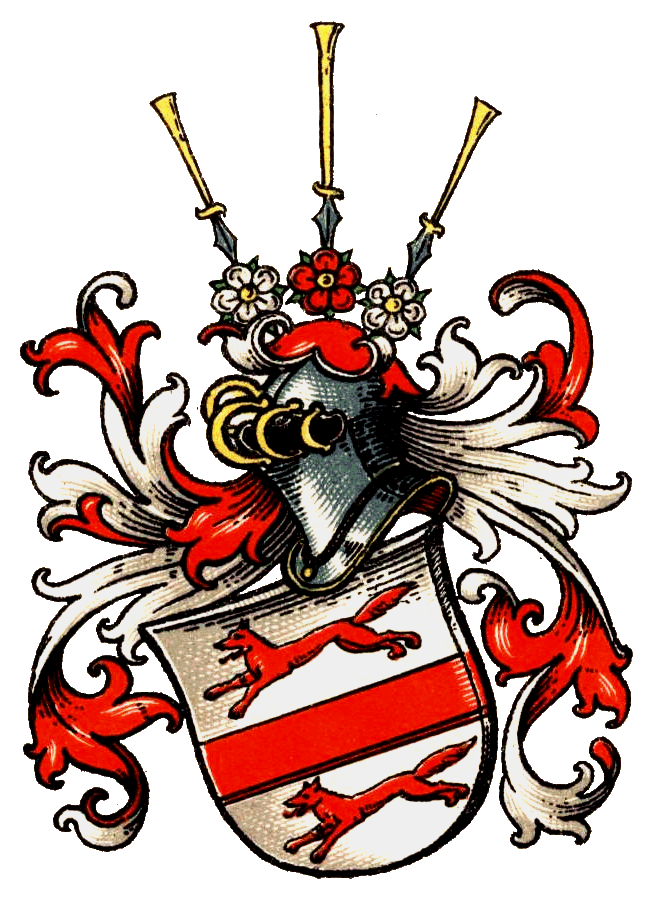
Coat of arms of the Kleist family

The House of Kleist is the name of an old and distinguished Prussian noble family, originating in Pomerania, whose members obtained many important military and administrative positions within the Kingdom of Prussia and later in the German Empire. Members of the family served as officers in Prussian and German conflicts including the War of Spanish Succession, War of the Austrian Succession, Seven Years' War, Napoleonic Wars, World War I and World War II.

The poet and author Heinrich von Kleist is the most famous member of the family.

Notable members

[edit]
[edit]
Revisions and contributorsEdit on WikipediaRead on Wikipedia
from Grokipedia
The von Kleist family is an ancient Pomeranian noble house of Wendish origin, first documented in the 13th century and belonging to the , or ancient nobility tied to land grants. Members of the family have historically served in prominent military, administrative, and intellectual roles within and later , with over 116 Kleists fighting in the wars of alone, suffering significant casualties. The family's estates in formed the basis of their influence, producing civil servants, chancellors, and bailiffs until the extinction of the Pomeranian dukes in 1637. Notable figures include (1777–1811), a dramatist and novella writer born into the Prussian branch, whose works like The Broken Jug and exemplify early Romantic tensions between fate and human agency. (1700–1748) contributed to early electrical science by inventing the , a key capacitor precursor, through experiments in . In military annals, (1881–1954) rose to field marshal during , commanding panzer groups in the invasions of and . The family also featured in anti-Nazi resistance, with (1885–1945) and his son Ewald-Heinrich (1922–2013) plotting against Hitler, the latter attempting assassination in the 20 July 1944 coup. This blend of loyal service and principled opposition underscores the Kleists' enduring Prussian ethos amid shifting regimes.

Origins and Early History

Pomeranian Roots and Noble Status

The von Kleist family traces its origins to , belonging to the region's ancient with Wendish (Slavic) roots documented from the 13th century. Early records confirm their status as , evidenced by consistent land holdings and feudal service to Pomeranian dukes, as preserved in genealogical compilations and Prussian state archives. The family's name likely derives from local Slavic toponyms in the area around Köslin (now ), reflecting their integration as indigenous nobility amid the German eastward settlement () processes of the medieval period. A key early attestation appears in a 1289 document identifying Kleist forebears among Pomeranian landholders, underscoring their pre-Hohenzollern noble pedigree independent of later Prussian elevation. By the late 15th century, the family's estates were formalized in the 1477 Feudal Letter, listing over 60 properties in Pomerania, which affirmed their hereditary rights and obligations under ducal authority. These holdings, centered in Hinterpommern, provided the economic base for their enduring status, with verification drawn from primary charters rather than retrospective noble registries prone to embellishment. The Kleists' transition into the broader -Prussian sphere occurred gradually from the 15th to 16th centuries, facilitated by 's shifting alliances and the family's vassalage to local rulers like Bogislaw X, whose territories bordered electorates. This integration, predating full Hohenzollern control of in 1648, involved kinship ties with other regional noble houses, embedding the Kleists within emerging Protestant Germanic feudal networks while retaining their Pomeranian core identity. Genealogical records from this era, cross-referenced in family chronicles, highlight no abrupt elevation but a continuity of service that aligned their interests with 's expansionist policies.

Initial Land Grants and Feudal Role

The von Kleist family secured initial land grants in from the late onward, primarily as feudal enfeoffments from the Dukes of Pomerania in return for knightly service, as documented in medieval charters and estate records. Early holdings centered on estates such as Dubberow, where 1250s documents record obligations like "Ripengeld" (a ) and "Ripenkorn" ( ), tying the family to regional defense and duties under ducal authority. By 1388, Tessin Cleest resided at Dubberow, and subsequent grants included the 1477 enfeoffment of and Peter Kleist with the same estate, alongside acquisitions like Zanow in 1483 and church rights in Siedkow and Pumlow by 1485, establishing their economic base through inherited and rewarded properties. In their feudal capacity, the Kleists fulfilled obligations centered on military provision and local governance, which reinforced Pomeranian resilience amid territorial threats from the Teutonic Order's expansions and Polish border conflicts during the medieval period. A register of Pomeranian knighthood service lists Bartez the Younger of Tychow as required to maintain one horse for ducal campaigns, a standard levy reflecting their role in readiness; similar duties extended to later members, such as Georg providing one feudal from Crolow in 1626. Family members also acted as bailiffs in districts like Rügenwalde, Bütow, Stolpe, and between 1486 and 1501, overseeing judicial enforcement and troop mobilization, while estate management involved agricultural taxation—such as 12 shillings, 6 bushels of rye, and 6 bushels of oats annually from Tychow to Belgard around 1250—sustaining both familial wealth and regional without reliance on external subsidies. This foundational structure enabled demographic expansion, with family genealogies recording a peak of nearly 200 male members in a single generation by the early , driven by prolific lineages and subdivided estates that distributed obligations across branches while preserving collective knightly commitments.

Rise and Prominence in Prussia

Service Under the Hohenzollerns

The von Kleist family, originating from Pomeranian nobility, aligned with the Hohenzollern dynasty following Brandenburg's acquisition of in the 1648 Treaty of Westphalia, which integrated the region into the expanding n state after the devastation of the . As , family members assumed roles in estate management and local governance, leveraging their landholdings to support the Hohenzollern rulers' efforts in centralizing authority and rebuilding the economy. These positions involved overseeing serf labor on manors, which generated revenues essential for state finances, including indirect contributions to royal tax quotas through agricultural production and labor obligations. In the absolutist framework under Elector Frederick William (r. 1640–1688) and his successors, von Kleists contributed to administrative consolidation by serving as provincial officials and military recruiters, facilitating the Hohenzollerns' control over eastern borders against Polish and Swedish threats. A representative figure was Colonel Andreas Joachim von Kleist (1679–1738), who exemplified advancement by acquiring estates like Stavenow and holding posts that bridged local lordship with state demands, such as coordinating peasant dues and militia musters for Prussian regiments. Such roles reinforced the dynasty's fiscal and defensive apparatus, with like the von Kleists providing reliable manpower—numbering in the hundreds from noble families annually—and logistical support without formal ministerial titles but through entrenched provincial influence. Intermarriages with allied noble houses further solidified these ties, enhancing political and economic networks vital to Hohenzollern ; for instance, in 1775, Joachim Friedrich von Kleist wed Juliane Ulrike von Pannwitz, linking the family to Silesian and expanding influence amid Prussia's territorial consolidations. This pattern of unions, common among , ensured loyalty and resource pooling, as estates interlocked to undergird the dynasty's absolutist ambitions against feudal fragmentation.

Expansion Through Military Contributions

The Kleist family's status elevation in Prussian society was markedly advanced through sustained , where efficacy translated into promotions, noble titles, and land acquisitions within the merit-driven framework of the Prussian officer corps. From 1640 to 1892, family members produced 23 Prussian generals, reflecting a pattern of repeated high command attainments tied to wartime performance rather than mere . The Prussian army's structure, emphasizing tactical competence and loyalty amid resource constraints, rewarded such outputs with upward mobility, enabling like the Kleists—who dominated officer ranks—to parlay operational successes into feudal expansions beyond initial Pomeranian holdings. During the Seven Years' War (1756–1763), Kleist kin furnished substantial contingents to Frederick the Great's forces, with 58 male relatives actively engaged, contributing to defensive campaigns against superior coalitions. A pivotal example involved Friedrich Wilhelm von Kleist, who formed and led the Freikorps Kleist, an irregular unit employing guerrilla tactics such as rapid raids and ambushes to disrupt enemy supply lines, innovations that complemented Frederick's maneuvers and earned commendations for preserving Prussian operational tempo. These exploits yielded direct rewards, including accelerated ranks and estate grants, as Frederick's meritocratic incentives—prioritizing proven valor over static birthright—fostered family-wide ascension amid the war's attrition, where officer casualties exceeded 50% in some Kleist lineages. Postwar consolidations extended into the , where aggregate contributions culminated in titular elevations signaling institutional recognition of merit. Friedrich Heinrich Ferdinand Emil Kleist von Nollendorf, commanding corps in the 1813–1815 campaigns, secured the comital title "Graf" from King Frederick William III in 1814, explicitly for victories like the , which halted French advances and restored Prussian territorial integrity. Such honors, grounded in quantifiable impacts like Kleist's corps maneuvers that inflicted disproportionate casualties on Napoleon's , amplified family prestige, unlocking privileges and additional domains that diversified holdings from agrarian into administrative sinecures. This era's promotions underscored causal links between tactical prowess and socioeconomic gains, insulating the Kleists against reformist threats to privileges.

Heraldry, Branches, and Estates

Coat of Arms and Symbols

The stem coat of arms of the von Kleist family consists of a silver (argent) shield bearing a red (gules) fess, accompanied above and below by a single courant also gules. The crest features three fan-shaped, dexter-oriented hunting spears proper issuant from a helm draped with red-and-silver . This design, indicative of Pomeranian noble origins, is documented in Siebmacher's Wappenbuch, where it appears for the comital branch as plate Gr. 3.2. Branch-specific variations maintain the core elements while incorporating augmentations tied to ennoblements. The Nollendorf line, raised to () status on June 24, 1813, by King for Friedrich Heinrich Ferdinand Emil Kleist's services in the , adopted the arms with a comital coronet above to denote elevated rank. Other lines, such as Kleist von Bornstedt, received Prussian name and arms confirmations on April 11, 1803, preserving the standard with minor helm adjustments. These arms served as identifiers in historical seals from the family's feudal grants in the 13th century and were emblazoned on monuments, such as those commemorating members in Prussian territories, affirming lineage continuity across centuries.

Family Branches and Properties

The von Kleist family originated with three primary lines in stemming from the late 13th-century feudal Klest de Densin: the Tychow-Dubberow line, the Muttrin-Damen line (both extant), and the Villnow-Raddatz line (extinct by the ). These formed the Pomeranian core, with extensions into through inheritance and service under the Hohenzollerns, including the Stavenow branch, which held estates northwest of and emphasized agricultural innovation via family agreements in 1758. lines developed from these, such as the von Nollendorf branch, elevated through titles like von Nollendorf granted to figures from the Zeestow-related lineage in recognition of Prussian campaigns. The family's economic foundation rested on extensive estates in the Köslin (Belgard) region of , where over 60 properties were held by the under feudal grants, with 14 still operational by 1945; these included knight's seats, manors, and patronage rights secured via the "complete hand" privilege of 1477, ensuring among kin. Dubberow, near Belgard and divided into Groß- and Klein-Dubberow, exemplified this, with enfeoffment to and Peter von Kleist in 1477, partial consolidations by 1577 across Dubberow, Damen, and Köslin branches, and later expansions under Bogislaff von Kleist (1744–1818), who added associated holdings like Boissin and built a family in 1792–1793. Prussian acquisitions integrated such Pomeranian assets into broader domains, with additional properties like Tychow, Crolow, and Wendisch-Tychow linked through successions and purchases from the 16th to 19th centuries. Following , all Pomeranian estates, including Dubberow—where the manor was destroyed by Soviet forces in 1945 and family member Elisabeth von Kleist murdered by —were expropriated amid expulsions of from territories ceded to and the , rendering survivors refugees in . This dispersal prompted emigration, with branches establishing presence in by the late , though earlier 19th-century movements were limited.

Military Legacy

Key Figures in Prussian Wars

Ewald Christian von Kleist (1715–1759), a major in the by 1756, exemplified the family's martial service during the Seven Years' War, a conflict in which faced a grand coalition of , , , and others intent on dismembering Frederick the Great's gains in . Kleist had earlier distinguished himself in the First and Second Silesian Wars, fighting at the on April 10, 1741, and participating in the siege of Neisse that same year. At the on August 12, 1759—where Prussian forces suffered catastrophic losses against superior Russian artillery and infantry—Kleist led his battalion from the front lines, sustaining fatal wounds during the assault on entrenched positions; he died on August 24 in Frankfurt an der Oder. His death underscored the high stakes of Prussian defense, as the war's coalitions repeatedly sought to overrun the kingdom, with family dispatches and battle accounts verifying the Kleists' tactical contributions to holding fragile lines amid overwhelming odds. Friedrich Heinrich Ferdinand Emil Kleist von Nollendorf (1762–1823), elevated to Generalfeldmarschall in 1821, commanded the Prussian II Corps during the 1813 War of Liberation against Napoleon's invading forces, a phase rooted in defensive recovery after the 1806–1807 defeats at and Auerstedt. At the Battle of (Grossgörschen) on May 2, 1813, Kleist defended to the north of the main allied defeat, facing numerically superior French attacks before executing a successful at Lindenau that preserved retreating and Russian units from . In the ensuing Battle of Bautzen on May 20–21, 1813, his corps anchored positions at Burk and nearby passages, holding against French assaults to cover the allied withdrawal and limit casualties in another tactical setback turned strategic delay. These engagements, corroborated by contemporary military reports, highlight Kleist family efforts in staving off French domination, prioritizing sovereignty preservation over offensive gains amid coalitions reformed against resurgence. The Kleists' pre-20th-century roles in these wars—verifiable through records and officer dispatches—counter narratives overemphasizing aggression by revealing causal contexts of existential defense: , often outnumbered, repelled invasions that threatened partition, with family officers like these sustaining the state's core territories through disciplined rearguards and frontline sacrifices rather than unprovoked expansion. Over 50 Kleist officers perished in Prussian service between and alone, reflecting a pattern of feudal loyalty tied to territorial survival.

Involvement in World Wars

Members of the von Kleist family, adhering to their longstanding Prussian tradition, served as officers in the during . Paul Ludwig Ewald von Kleist, entering the army in 1900, commanded a cavalry squadron on the Eastern Front, participating in the on August 26–30, 1914, where German forces decisively defeated the Russian Second Army. He later advanced to staff positions, including adjutant roles in infantry brigades by 1916. Berndt von Kleist, born in 1896, also fought in the war, sustaining severe wounds that resulted in the loss of a leg, for which he received the First Class and the . The conflict's heavy casualties among noble families like the Kleists, combined with Germany's post-war economic collapse—including and the —eroded many traditional estates, prompting emigration and dispersal of family branches, particularly to the and elsewhere. In World War II, Paul von Kleist, recalled to active duty in 1939 despite initial reservations about the Nazi regime, commanded the XXII Army Corps during the invasion of Poland starting September 1, 1939, and later the Panzer Group Kleist in the rapid armored thrusts that facilitated the fall of France beginning May 10, 1940—demonstrating the tactical speed and coordination of blitzkrieg maneuvers, though these successes were tied to broader strategic aggression. Promoted to field marshal in 1943, he directed Army Group A on the Eastern Front until disagreements with Hitler over defensive retreats led to his relief in March 1944 following setbacks in Ukraine. Captured by Soviet forces in April 1945 during the retreat from the Vistula, von Kleist was extradited to the USSR, convicted of war crimes in a military tribunal, and sentenced to 25 years' imprisonment; he died of natural causes in Vladimir Central Prison on November 16, 1954, as the highest-ranking German officer to perish in Soviet captivity. Not all family members aligned with Nazi military efforts; , from a Pomeranian branch, served as a lieutenant while participating in the resistance group and the July 20, 1944, bomb plot against Hitler, reflecting early family opposition to the regime dating to his father's arrests after 1933. Such internal divisions highlight the Kleists' varied responses to , contrasting frontline commands with covert opposition that risked execution.

Cultural and Intellectual Contributions

Literary Members

Heinrich von Kleist (October 18, 1777–November 21, 1811), born Bernd Heinrich Wilhelm von Kleist into the Prussian noble family, authored dramas such as (first performed 1808), which depicts unchecked passion leading to destruction through individual choices rather than external impositions, and Der zerbrochne Krug (1808), a comedy exposing human hypocrisy via personal failings. His novellas, including (published 1810), probe themes of pursued by autonomous agents amid societal constraints, and Das Erdbeben in Chili (1810), which illustrates moral resilience in catastrophe through self-directed ethical decisions. Kleist's output reflects a break from Enlightenment certainties, prioritizing empirical observation of human unpredictability and causal chains driven by personal agency, as evidenced in his 1801 essay "Über die allmähliche Verfertigung der Gedanken beim Reden," where he argues knowledge emerges from provisional actions rather than innate structures. Facing financial ruin from failed ventures like the Phöbus journal (1807–1808) and poor reception of early works, alongside health decline and romantic entanglements, Kleist chose on November 21, 1811, at with Henriette Vogel, an act stemming from acute personal despondency rather than broader systemic collapse. His narratives' focus on irony, , and individual moral testing prefigured Romantic emphases on subjective experience, countering dismissals of such noble-origin works as mere elitism by underscoring their universal dissection of agency versus fate—evident in how Die Marquise von O... (1810) hinges on a woman's self-reliant navigation of trauma and truth-seeking. Ewald Christian von Kleist (March 7, 1715–August 24, 1759), an earlier family member, composed the didactic poem Der Frühling (1749) in hexameters, drawing on direct natural observations to fuse empirical detail with Enlightenment and Christian , as in passages extolling seasonal renewal as of divine order discernible through individual . Influenced by James Thomson's The Seasons yet adapted via personal synthesis, the work advances pre-Romantic sensitivity to nature's causal mechanisms, blending sensory with reflective without to collective ideologies. His shorter odes and fables similarly prioritize self-examined virtue over deterministic class narratives, contributing to literary shifts toward introspective realism. These figures' legacies lie in outputs that affirm human cognition and volition as primary drivers, their themes of personal reckoning enduring beyond aristocratic origins to inform Romantic explorations of interior , unmarred by interpretive biases favoring socioeconomic .

Other Intellectual Achievements

Ewald Georg von Kleist (c. 1700–1748), a Prussian jurist and Protestant clergyman from the Kleist family, independently invented the on October 11, 1745, a pivotal early for storing . He achieved this by inserting a brass wire through the cork of a glass medicine bottle partially filled with alcohol, charging it via a frictional electrical machine, and demonstrating its capacity to deliver a powerful shock upon grounding, which facilitated subsequent experiments in across . This device, later refined and popularized by in —hence its common name—enabled quantitative studies of electrical phenomena, influencing developments in physics and early prototypes that relied on similar charge storage. Kleist conducted his demonstrations publicly in 1745 at the home of Georg Matthias Bose in , showcasing the jar's effects to assembled scholars and producing sparks visible in darkness, which underscored its empirical reliability over prior qualitative observations. His work, rooted in hands-on experimentation rather than theoretical speculation, exemplified the family's occasional forays into amid their predominant military orientation, though such pursuits remained exceptional rather than systemic. Certain Kleist branches exhibited Pietistic influences, emphasizing personal and orthodox Lutheran in family education and moral formation, as seen in figures like Hans Ewald von Kleist-Retzow, who integrated these principles into Prussian elite upbringing to foster discipline and virtue over doctrinal innovation. This approach prioritized empirical moral training—drawing from and —over Enlightenment rationalism, aligning with broader 18th-century Prussian Protestant revivals that stressed inner conviction and societal stability.

Modern Descendants and Resistance

20th-Century Figures

(1922–2013), a in the Wehrmacht's 9, participated in the German resistance against , volunteering twice for attempts in 1944, including one plan to detonate a suicide vest during a meeting with the . After the failed 20 July bomb plot led by Colonel , von Kleist was arrested by the , imprisoned in a concentration camp, but survived execution due to the war's end, becoming the last known survivor of the core conspirators. His actions reflected a tradition of Prussian aristocratic opposition to totalitarian rule, influenced by his father , an early Nazi critic arrested multiple times before 1933. Waves of Kleist family to the began between 1880 and 1900, with branches such as Warnin sending siblings to New York, where descendants persist, driven by economic pressures and land constraints in amid Prussian modernization. Post-World War II dispersal accelerated due to territorial losses in and , with one member from the Galten branch relocating to and another from Susten-Gawesen to , preserving familial networks through genealogical records amid East German expropriations. These migrations maintained the family's transatlantic ties, adapting noble heritage to new contexts without documented large-scale restitution successes for confiscated estates.

Post-War Dispersal and Legacy

Following the end of , members of the von Kleist family faced expulsion from their ancestral lands in during 1945–1946, as the region was ceded to under the , resulting in the of approximately 1.5 million Germans from the area. Family estates, including Schmenzin (now Sławno) and properties in Juchowo, were confiscated, leaving figures like homeless and prompting resettlement primarily in , with branches emigrating to the (e.g., a member of the Galten line to ) and . This dispersal fragmented the family's geographic cohesion but did not extinguish its organizational continuity, as evidenced by the persistence of the Familienverband derer v. Kleist e.V., established in and active post-war in compiling genealogies, translating historical biographies for overseas descendants, and maintaining digital archives of family documents. The association, headquartered in , connects over 1,000 registered members across and , facilitating reunions and preservation efforts that document lineages tracing back to Pomeranian origins. Enduring influence manifests in public service and intellectual endeavors, exemplified by Ewald-Heinrich von Kleist-Schmenzin's founding of the in 1963, an annual forum that has convened global leaders on defense and diplomacy, drawing on his family's tradition of statecraft amid tensions. Descendants in the U.S., some adopting the anglicized "Vonkleist," continue in professional fields, sustaining demographic viability with documented lines exceeding 500 living members as of recent genealogical surveys. Such persistence underscores the family's adaptation rather than dissolution, with archival and associative structures preserving Prussian-era virtues of and resilience against post-war upheavals that affected noble houses broadly.

Criticisms and Controversies

Association with Prussian Militarism

The von Kleist family, as a prominent lineage, exemplified the Prussian nobility's deep entanglement with , providing generations of officers who upheld the army's rigid hierarchical structure and expansionist campaigns during the . Critics, drawing from Marxist analyses, have characterized -led as an instrument of class oppression, where the landed enforced feudal labor on serfs while pursuing aggressive wars to expand influence and suppress internal , as evidenced by the Prussian dominance in the Danish War of 1864, of 1866, and of 1870–1871. These conflicts, involving over 1.2 million Prussian troops by 1871, resulted in annexations like and Alsace-Lorraine, which detractors viewed as predatory conquests sustaining privileges amid economic modernization that eroded their agrarian base. Counterarguments rooted in geopolitical realism emphasize defensive imperatives: , hemmed between French post-Napoleonic era and Russian eastward pressures, required unification to forge a consolidated state for survival, with yielding empirical successes such as the rapid defeat of in seven weeks during 1866 and France's capitulation after Sedan in 1870, establishing the on January 18, 1871, and fostering subsequent industrial growth from 2% to 12% of global output by 1913. This , far from mere oppression, enabled causal efficiencies like universal and merit-based promotions post-1807 reforms, transforming a fragmented electorate into a disciplined force that prioritized state cohesion over egalitarian ideals. Within Junker families like the Kleists, internalized discipline—manifest in patrilineal training regimens stressing unquestioning obedience and martial prowess from age six, as documented in estate records—served as a microcosm of Prussian efficiency, correlating with the army's low desertion rates (under 1% annually pre-1870) and high combat cohesion against numerically superior foes. While leftist critiques, often amplified in academic narratives despite institutional biases toward socioeconomic determinism, decry this as perpetuating autocratic order, realist assessments credit such familial and class structures with preventing anarchy in a resource-poor marchland, underpinning Prussia's ascent from 5% of Europe's population to imperial hegemon by 1871.

World War II Entanglements

, a in the , commanded the XXII Army Corps during the 1939 and later led the 1st Panzer Group in the 1941 campaign, where his forces advanced rapidly through and captured on April 12. His units achieved operational successes in mobile warfare, including breakthroughs against Yugoslav defenses, though these contributed to the broader Axis aggression in the region. On the Eastern Front, Kleist directed Panzer Group 1 during , participating in encirclements like the Battle of Brody in June 1941, before assuming command of in 1942 amid advances toward the oil fields. Allegations of war crimes arose from actions under his command, including compliance with orders targeting Soviet political commissars and involvement in atrocities during retreats, leading to his capture by U.S. forces in 1945, extradition to for in 1946, and subsequent transfer to Soviet custody in 1948, where he received a sentence for war crimes and died in Vladimir Prison in 1954. In stark contrast, branches of the Kleist family engaged in resistance against the Nazi regime, exemplified by , who joined the July 20, 1944, plot to assassinate and overthrow the government. Born into a conservative Prussian lineage with deep-seated opposition to National Socialism—his father, , was executed in April 1945 for anti-Hitler activities—young von Kleist grew up amid familial testimonies of loathing for Hitler's dictatorship, intensified by events like the 1934 . Despite serving as a lieutenant and sustaining wounds in 1943 combat, he volunteered for multiple assassination attempts, viewing the regime's as incompatible with German honor and Christian principles. His survival post-plot, unlike many co-conspirators, underscored the family's divided allegiances, with resistance efforts rooted in principled opposition rather than ideological sympathy for the Allies. These entanglements reflect intra-family fissures during , where military service in the did not uniformly imply Nazi endorsement, as evidenced by Kleist's occasional clashes with Hitler over tactical withdrawals, such as his 1944 relief from command for unauthorized retreats in . Post-war accountability varied: proponents like Paul von Kleist faced Allied and Soviet prosecutions for in aggressive wars and reprisals, while resisters like Ewald-Heinrich von Kleist escaped execution, highlighting causal distinctions between operational roles in aggression and active subversion of totalitarian rule, without mitigating the regime's collective culpability.

References

Add your contribution
Related Hubs
User Avatar
No comments yet.