Hubbry Logo
Watergate SevenWatergate SevenMain
Open search
Watergate Seven
Community hub
Watergate Seven
logo
8 pages, 0 posts
0 subscribers
Be the first to start a discussion here.
Watergate Seven
Watergate Seven
from Wikipedia

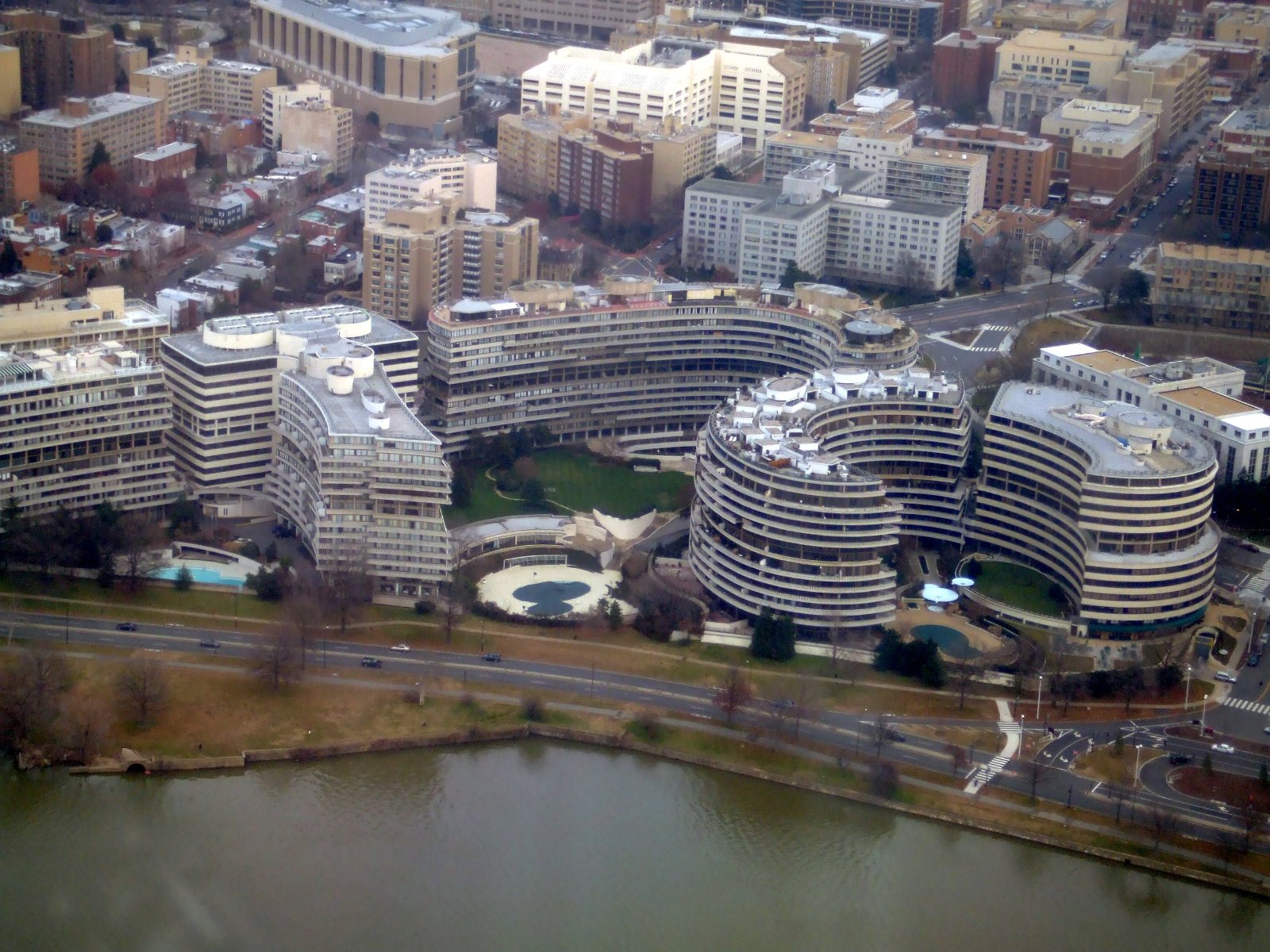
The Watergate Seven has come to refer to two different groups of people, both of them in the context of the Watergate scandal. Firstly, it can refer to the five men caught on June 17, 1972, burglarizing the Democratic National Committee's headquarters in the Watergate complex, along with their two handlers, E. Howard Hunt and G. Gordon Liddy, who were Nixon campaign aides. All seven were tried before Judge John Sirica in January 1973.[1]

The second use of Watergate Seven refers to seven advisors and aides of United States President Richard M. Nixon who were indicted by a grand jury on March 1, 1974, for their roles in the Watergate scandal. The grand jury also named Nixon as an unindicted co-conspirator. The indictments marked the first time in U.S. history that a president was so named.[2]

The period leading up to the trial of the first Watergate Seven began on January 8, 1973.[3] The term "Watergate Seven" was coined a few months later, in April 1973, by American politician, lawyer, and political commentator Rep. Ed Koch (D-NY), who, in response to U.S. Senator Lowell P. Weicker Jr.'s indicating that one of the men in the Watergate bugging case had been ordered in the spring of 1972 to keep certain senators and representatives under surveillance, posted a sign on the door of his United States Congress office saying, "These premises were surveilled by the Watergate Seven. Watch yourself".[4]

Members

[edit]

The original Watergate Seven and their legal dispositions were:[5][6]

  • G. Gordon Liddy – former FBI agent and general counsel for the Committee to Re-elect the President; convicted of burglary, conspiracy, and wiretapping; sentenced to 6 years and 8 months in prison; served 4+12 years in prison.
  • E. Howard Hunt – CIA operative and leader of the White House Plumbers; convicted of burglary, conspiracy, and wiretapping; sentenced to 2+12 to 8 years in prison; served 33 months in prison.
  • Bernard Barker – member of the Plumbers, FBI agent and alleged CIA undercover operative; pled guilty to wiretapping, planting electronic surveillance equipment, and theft of documents, and later to burglary; sentenced to 18 months to 6 years in prison for the first charge; reversed his plea and served 18 months in prison; later sentenced to 2+12 to 6 years in prison for the second charge; served 1 additional year in prison.
  • Virgilio González – Cuban refugee and locksmith; convicted of conspiracy, burglary, and wiretapping; sentenced to 1 to 4 years in prison; served 13 months in prison.
  • Eugenio Martínez – Cuban exile and CIA undercover operative; convicted of conspiracy, burglary, and wiretapping; sentenced to 1 to 4 years in prison; served 15 months in prison; pardoned by Ronald Reagan.
  • James W. McCord Jr. – former CIA officer and FBI agent; convicted on eight counts of conspiracy, burglary, and wiretapping; sentenced to 25 years in prison, reduced to 1 to 5 years in prison after he implicated others in the plot; served only 4 months.
  • Frank Sturgis – CIA undercover operative and guerrilla trainer, military serviceman; convicted of conspiracy, burglary, and wiretapping, and separately on a charge of transporting stolen cars to Mexico; sentenced to 1 to 4 years in prison for Watergate (the sentence for the transport charge was folded into the Watergate sentence, due to his cooperation); served 14 months in prison.

The seven advisors and aides later indicted in 1974 were:[7]

  • John N. Mitchell – former United States Attorney General and director of Nixon's 1968 and 1972 election campaigns; faced a maximum of 30 years in prison and $42,000 in fines. On February 21, 1975, Mitchell was found guilty of conspiracy, obstruction of justice, and perjury, and sentenced to 2+12 to 8 years in prison, which was later reduced to 1 to 4 years; he actually served 19 months.
  • H. R. Haldeman – White House chief of staff, considered the second-most powerful man in the government during Nixon's first term; faced a maximum of 25 years in prison and $16,000 in fines; in 1975, he was convicted of conspiracy and obstruction of justice, and received an 18-month prison sentence.
  • John Ehrlichman – former assistant to Nixon in charge of domestic affairs; faced a maximum of 25 years in prison and $40,000 in fines. Ehrlichman was convicted of conspiracy, obstruction of justice, perjury, and other charges; he served 18 months in prison.
  • Charles Colson – former White House counsel specializing in political affairs; pled nolo contendere on June 3, 1974, to one charge of obstruction of justice, having persuaded the prosecution to change the charge from one of which he believed himself innocent to another of which he believed himself guilty, in order to testify freely.[8] Colson was sentenced to 1 to 3 years of prison and fined $5,000; he served seven months.
  • Gordon C. Strachan – White House aide to Haldeman; faced a maximum of 15 years in prison and $20,000 in fines. Charges against him were dropped before trial.
  • Robert Mardian – aide to Mitchell and counsel to the Committee to Re-elect the President in 1972; faced 5 years in prison and $5,000 in fines. His conviction was overturned on appeal.[9]
  • Kenneth Parkinson – counsel for the Committee to Re-elect the President; faced 10 years in prison and $10,000 in fines. He was acquitted at trial. Although Parkinson was a lawyer, G. Gordon Liddy was in fact counsel for the Committee to Re-elect the President.

References

[edit]
Revisions and contributorsEdit on WikipediaRead on Wikipedia
from Grokipedia
The Watergate Seven were the seven men indicted and convicted for conspiracy, burglary, and wiretapping in connection with the June 17, 1972, break-in at the Democratic National Committee headquarters in the Watergate office complex in Washington, D.C., an operation linked to President Richard Nixon's reelection campaign that ignited the Watergate scandal. The group included five operatives caught during the burglary—Virgilio Gonzalez, Bernard Barker, Eugenio Martinez, Frank Sturgis, and James W. McCord Jr.—along with their supervisors, former CIA officer E. Howard Hunt and White House counsel G. Gordon Liddy, who orchestrated the intrusion to install listening devices and photograph sensitive documents for political intelligence. Their trial before U.S. District Judge John Sirica began on January 8, 1973, resulting in guilty pleas from the four Cuban exiles involved in the break-in, a guilty plea from Hunt, and convictions for McCord and Liddy following a jury trial. McCord's post-sentencing letter alleging perjury by other defendants and a broader cover-up prompted further investigations, revealing White House efforts to obstruct justice, including hush money payments and abuse of executive power, which eroded public trust and culminated in Nixon's resignation on August 9, 1974, to avoid impeachment. The scandal exposed vulnerabilities in political espionage and accountability, with the Seven's actions serving as the initial catalyst for congressional hearings, special prosecutions, and Supreme Court rulings that affirmed the rule of law over partisan interests.

Historical Context

The June 1972 Break-In

On June 17, 1972, at approximately 2:30 a.m., five men were arrested by District of Columbia police inside the headquarters located on the sixth floor of the in The arrests followed a report from building security guard Frank Wills, who discovered adhesive tape on door locks during his patrol and summoned authorities after rechecking the premises. The suspects—James W. McCord Jr., Virgilio Gonzalez, Bernard L. Barker, Eugenio R. Martinez, and Frank A. Sturgis—were found in possession of wiretapping equipment, cameras loaded with film, and tools suitable for burglary, including lock-picks and surgical gloves. McCord, identified as the security coordinator for the Committee to Re-elect the President (CRP), carried identification linking him to that organization, which was managing incumbent President Richard Nixon's re-election efforts amid the ongoing 1972 presidential campaign. Initial police examination of items seized from the scene, including an belonging to Barker, revealed contact information for , a White House consultant, and , counsel to the CRP's finance committee, establishing early connections between the burglars and higher-level CRP figures. The five men faced immediate charges of attempted and unlawful entry, setting the stage for federal involvement as the began tracing financial and operational ties.

Early Investigation and Cover-Up Attempts

The break-in at the headquarters in the on June 17, 1972, prompted immediate responses from the Nixon administration aimed at distancing the from the incident. undertook an internal review, which he later described as limited in scope, concluding by late August that no staff were implicated in the burglary or its planning. This assessment formed the basis for President Nixon's public denial of involvement during a news conference on August 29, 1972, in , where he asserted that Dean's probe had uncovered no evidence of complicity and emphasized that the matter was under active law enforcement investigation. Administration and Committee to Re-elect the President (CRP) officials, including former John Mitchell—who had resigned as CRP chairman on July 1, 1972—sought to contain fallout through coordinated damage control. These efforts included authorizing payments from CRP funds to the arrested burglars to ensure their silence and discourage cooperation with investigators, with disbursements beginning in late June and continuing into September, totaling tens of thousands of dollars channeled through intermediaries like Nixon's personal attorney Herbert Kalmbach. Such financial incentives were intended to portray the defendants as isolated actors motivated by personal gain rather than political directives. The launched its probe immediately after the arrests, tracing connections to CRP through laundered campaign contributions, but encountered attempts to curtail its scope. On June 23, 1972, Nixon instructed aides and to have the inform FBI Acting Director that the inquiry risked exposing sensitive agency operations, effectively seeking to redirect or limit the bureau's focus on the burglary's origins. FBI Associate Director , operating covertly as a source for Washington Post reporters and , provided early leaks about CRP ties and investigative hurdles, amplifying public and prosecutorial pressure without immediate resolution. These containment measures by senior figures—including Dean, Mitchell, Haldeman, and Ehrlichman—laid the groundwork for coordinated obstruction that later crystallized among a core group of administration insiders.

Indictment and Charges

Grand Jury Indictment of March 1, 1974

Following the dismissal of Special Prosecutor during the "Saturday Night Massacre" on October 20, 1973, was appointed as his successor on November 1, 1973, to continue the investigation into the under court supervision. 's office presented evidence to a federal in Washington, D.C., focusing on efforts to conceal involvement in the June 17, 1972, break-in at the headquarters and related obstruction activities. On March 1, 1974, the returned a 10-count indictment against seven senior Nixon administration and campaign officials: , John D. Ehrlichman, , Charles W. Colson, , Robert C. Mardian, and Kenneth W. Parkinson. The charges centered on a conspiracy to defraud the and obstruct justice, including making false statements to the FBI and investigators, before the , and withholding information about the break-in and subsequent cover-up efforts. Specific allegations involved counseling subordinates to provide misleading testimony and destroying or concealing documents tied to the suppression of evidence linking operatives to the burglary. In a sealed report to U.S. District Judge , the grand jury named President as an unindicted co-conspirator, based on derived from tape-recorded conversations and witness testimony indicating his approval of actions to impede the FBI's investigation. Key evidence included Nixon's June 23, 1972, discussion with about directing the CIA to falsely claim concerns in order to limit the FBI probe into the burglars' funding and connections. This designation reflected the grand jury's determination that a sitting president could not be indicted under Department of Justice policy, though sufficient evidence existed for inclusion in the . The and report advanced the probe by formalizing charges against the defendants while highlighting Nixon's implicated role without direct prosecution.

Nature of the Conspiracy Charges

The conspiracy charges against the Watergate Seven were brought under 18 U.S.C. § 371, which prohibits two or more persons from to defraud the or any agency thereof in any manner or for any purpose, requiring proof of an agreement and at least one in furtherance thereof. In this context, the indictment alleged that the defendants—, John D. Ehrlichman, , Robert C. Mardian, John W. Dean III, , and Kenneth W. Parkinson—entered into an unlawful agreement to obstruct the (FBI) and Department of Justice probes into the June 17, 1972, break-in at the headquarters by impeding the due administration of justice. The core allegation involved a coordinated effort commencing immediately after the break-in to conceal the involvement of Nixon administration and Committee to Re-elect the President (CRP) officials in approving, funding, or directing the and prior operations, through acts such as directing subordinates and witnesses to furnish false statements to federal investigators and the grand jury, thereby corrupting evidence-gathering processes. Additional specified means included via "" payments—totaling over $400,000 disbursed from CRP funds between June 1972 and March 1973—to convicted burglars and planners like and , intended to secure their silence or induce perjured testimony denying higher-level authorization. destruction and concealment were also charged, encompassing the shredding or withholding of operational files related to the break-in, such as those originating from Hunt's office, to prevent their disclosure during inquiries. These charges pertained solely to the post-break-in phase, distinct from the , 1972, and January 30, 1973, convictions of the five burglars, Hunt, and Liddy for the substantive offenses of , , and under 18 U.S.C. §§ 241, 371, and 2511, which addressed the planning and execution of the intrusion itself rather than subsequent interference with law enforcement. Prosecutors drew on sources including tape recordings of discussions among senior aides, Dean's June 1973 Senate testimony detailing directives for false narratives and payments, and bank records verifying the flow of funds to ensure participant compliance, to allege a unified scheme spanning from June 1972 into 1973.

Profiles of Defendants

Backgrounds and Roles in the Nixon Administration

served as under President from January 21, 1969, to May 19, 1973, acting as the president's chief administrative assistant and gatekeeper for access to the Oval Office. Prior to this role, Haldeman had worked in advertising and managed Nixon's 1968 presidential campaign, leveraging his experience in organizational efficiency from the agency. John D. Ehrlichman joined the Nixon administration as Counsel to the President on January 20, 1969, later transitioning to Assistant to the President for Domestic Affairs, where he advised on policy implementation and formed part of the administration's inner advisory circle alongside Haldeman. Ehrlichman's pre-administration career included legal practice in and involvement in Nixon's 1968 campaign logistics. John N. Mitchell, born September 15, 1913, in , , held a law degree from St. John's University and practiced as a lawyer in before entering public service. Appointed on January 21, 1969, he served until March 30, 1972, overseeing the Department of Justice during Nixon's first term; afterward, he chaired the Committee to Re-elect the President (CRP) starting in 1972. Mitchell's background included partnership at a firm that merged with Nixon's law practice in the 1960s. Charles W. Colson was appointed Special Counsel to President Nixon on November 6, 1969, handling political and communications tasks within the . A Marine Corps veteran and former Washington lawyer, Colson had advised Nixon during the 1968 campaign through the Key Issues Committee. Gordon C. Strachan worked as a staff assistant to from March 1971, focusing on political projects and serving as a liaison for campaign-related matters. Born July 24, 1943, Strachan was a young attorney from who had been part of Nixon's advance team in prior campaigns. Robert C. Mardian served as Assistant heading the Justice Department's Internal Security Division from 1970 until May 1972. A Republican operative and lawyer, Mardian had prior experience in politics and federal roles before joining the Nixon administration. Kenneth W. Parkinson, a Washington-based private attorney, was hired as outside counsel for the CRP in to handle legal matters for the re-election . Previously a clerk in the U.S. District Court and partner in a local firm, Parkinson had no direct prior White House role but advised on campaign litigation. These individuals collectively formed part of Nixon's close-knit advisory network, with most having roots in his 1968 campaign and providing operational, , and policy support during the administration's early years.

Individual Involvement in Alleged Obstruction

John W. Dean III, , testified in March 1973 that top Nixon aides, including Mitchell, Haldeman, and Ehrlichman, participated in meetings discussing strategies to contain the Watergate investigation, such as paying to defendants and limiting FBI inquiries. Dean specifically recounted a March 21, 1973, conversation with President Nixon where he outlined a "cancer on the presidency" involving obstruction efforts by these individuals, based on prior internal discussions. Prosecutors alleged that former John N. Mitchell, as Committee to Reelect the President (CRP) director, approved disbursements from a CRP "slush fund" to finance hush money payments to Watergate burglars, aiming to impede their cooperation with investigators. Dean's testimony implicated Mitchell in early 1973 meetings where such payments were coordinated to prevent disclosures. Mitchell denied authorizing any illegal activities or prior knowledge of the break-in, claiming his role was limited to campaign oversight without endorsement of cover-up tactics. , , and John D. Ehrlichman, Domestic Affairs Advisor, were accused of coordinating executive branch interference, including directing the FBI to curtail its probe into the burglars' ties to the Nixon campaign. Evidence from testimony and recordings indicated Haldeman relayed instructions to FBI Acting Director to limit the investigation's scope, while Ehrlichman supported efforts to invoke CIA authority to block FBI inquiries. Both defendants maintained they acted to protect interests rather than obstruct justice, denying direct orders to suppress evidence. Charles W. Colson, to the President, faced claims of employing intimidation tactics, such as suggesting the release of sensitive CIA files linked to to deter his testimony against administration officials. Prosecutors argued this constituted psychological pressure to silence witnesses, drawing from Colson's documented "dirty tricks" operations against perceived enemies. Colson countered that his actions targeted political opponents broadly, not specifically to obstruct the Watergate probe, and emphasized no explicit threats were executed. Gordon Strachan, Haldeman's aide, admitted to shredding documents detailing the plan (including wiretap operations) on Haldeman's instructions immediately after the June 17, 1972, break-in arrests, purportedly to eliminate traces of campaign involvement. confirmed Strachan destroyed memos reporting on meetings with , actions prosecutors linked to concealing evidence from investigators. Strachan defended the shredding as routine file management ordered without knowledge of criminality, claiming ignorance of the documents' full context. Robert C. Mardian, former Assistant and CRP counsel, was alleged to have overseen internal CRP investigations that misled authorities by withholding details of payments to defendants and limiting disclosures during early probes. Evidence included his participation in post-break-in strategy sessions where containment of information was prioritized over full cooperation. Mardian asserted he conducted legitimate internal reviews without intent to deceive, attributing any omissions to incomplete information available at the time. Kenneth W. Parkinson, outside to CRP, provided that prosecutors claimed encouraged withholding pertinent records and witness details from the grand jury and FBI, including guidance on non-disclosure of financial links to the burglars. Trial evidence highlighted his communications advising against full revelation of campaign funds used for silence payments. Parkinson denied knowingly facilitating obstruction, insisting his focused on protecting client without endorsing illegal concealment.

Pre-Trial Maneuvers and Plea Deals

In June 1974, , one of the seven indicted defendants, entered a guilty plea to a single count of obstruction of justice related to the unauthorized release of information from Daniel Ellsberg's psychiatrist's office during the Papers case, a charge separate from the Watergate cover-up indictment. This plea agreement, which carried a potential sentence of up to three years, spared Colson from participating in the Watergate conspiracy trial and positioned him to provide testimony against other defendants, thereby reducing the number of individuals facing the full proceedings. Gordon Strachan, a White House aide to H.R. Haldeman, received a grant of immunity in exchange for his testimony before congressional committees and prosecutors, leading to the dismissal of charges against him prior to the trial's commencement. Strachan's cooperation, including details on intelligence-gathering operations and document handling, provided key evidence implicating higher officials, further narrowing the defendant pool by eliminating his participation. Defense teams filed multiple pre-trial motions to dismiss the conspiracy charges, prominently invoking to challenge the admissibility of tapes and related communications subpoenaed by Special Prosecutor . These motions argued that presidential deliberations were shielded from judicial scrutiny, though the U.S. Supreme Court's July 1974 ruling in rejected absolute executive privilege in criminal proceedings, compelling the release of relevant recordings and undermining dismissal efforts. Kenneth Parkinson, the Committee to Re-elect the President (CRP) attorney added to the , pursued a defense centered on attorney-client privilege, asserting that his advisory role insulated communications with CRP officials from disclosure and that he lacked knowledge of any criminal intent. This strategy prompted pre-trial severance of his case from the core group, allowing separate adjudication of privilege claims and avoiding entanglement with the primary allegations. With these resolutions, the cover-up trial proceeded on October 1, 1974, before U.S. District Judge , involving the remaining four defendants: , , , and .

The 1974-1975 Cover-Up Trial

The cover-up trial of the Watergate Seven commenced on October 1, 1974, in the United States for the of Columbia before Judge , with five defendants proceeding after Charles Colson had pleaded guilty prior to trial and Gordon Strachan was severed for a separate proceeding. The prosecution, under Special Prosecutor , opened by outlining a conspiracy among the defendants—, , , , and Kenneth W. Parkinson—to obstruct the FBI's investigation into the June 17, 1972, break-in at the headquarters. Central to the prosecution's case was the testimony of John W. Dean III, former , who had cooperated under a plea agreement and described a chain of obstructive acts, including efforts to pay to the burglars and influence witness testimony, beginning shortly after the break-in. Dean's account detailed meetings and communications linking the defendants, such as Mitchell's approval of funds from the Committee to Re-elect the President and Haldeman's and Ehrlichman's involvement in limiting the probe through CIA intervention suggestions. This testimony formed the narrative backbone, positing a causal progression from post-break-in damage control to systematic interference with federal investigators. Corroboration came from White House tape recordings, released after President Nixon's resignation on August 9, 1974, and the Supreme Court's July 24, 1974, decision in mandating their turnover. Key moments included the in-court playback of excerpts, such as the April 14, 1973, discussion among Nixon, Haldeman, and Ehrlichman referencing risks and containment, and the March 21, 1973, Nixon-Dean exchange estimating a $1 million cost to sustain silence among defendants and witnesses. These audio exhibits provided of awareness and coordination at senior levels, shifting the evidentiary chain from testimonial assertions to recorded admissions. The defense countered by disputing the of a unified , arguing that the demonstrated isolated, responses driven by political loyalty and rather than deliberate criminal to obstruct . Attorneys cross-examined Dean extensively on his motivations, noting his deal reduced his potential exposure and questioning the reliability of his recollections absent contemporaneous notes. They portrayed actions like fund disbursements as legitimate campaign reimbursements and FBI containment efforts as protective of interests, not obstructive, while emphasizing lacks in direct proof of an explicit agreement among all defendants. In closing arguments on December 28, 1974, prosecutors urged the to from Dean's through the tapes to documentary exhibits like logs of meetings and telephone records showing defendant communications in the break-in's aftermath. The defense rebutted by focusing on evidentiary gaps, such as ambiguous tape interpretations and the absence of signed pacts or overt instructions to perjure. The , sequestered, began deliberations on December 30, 1974, methodically reviewing verifiable physical exhibits—including tape transcripts, financial ledgers tracing , and chronological logs of and campaign interactions—to assess the causal links alleged in the charge. These documents anchored the final weighing of intent versus circumstance, culminating deliberations on January 1, 1975.

Convictions, Sentencing, and Appeals

Trial Outcomes and Initial Verdicts

The Watergate cover-up trial, United States v. Mitchell, commenced on January 8, 1975, before U.S. District Judge in , involving five defendants: former John N. Mitchell, H.R. Haldeman, domestic affairs advisor John D. Ehrlichman, former Justice Department official Robert C. Mardian, and defense counsel Kenneth W. Parkinson. Charles W. Colson, originally indicted among the Watergate Seven, had pleaded guilty on October 7, 1974, to a single count of obstruction of justice in a related proceeding and was not part of the trial roster, receiving a reduced sentence in exchange for cooperation. Gordon Strachan, another original indictee, was granted use immunity by the special prosecution force and testified as a government witness, thereby avoiding prosecution in the case. After 46 days of proceedings, including testimony from 30 prosecution witnesses and presentation of tape recordings, the jury deliberated for 26 hours over four days before returning verdicts on January 1, 1975. Mitchell, Haldeman, Ehrlichman, and Mardian were each found guilty on all counts, including to defraud the by obstructing the Watergate investigation and substantive obstruction of justice offenses such as withholding information from federal agencies and perjury before a . Parkinson was acquitted on all charges, with the jury determining insufficient evidence of his knowing participation in the . The convictions rested heavily on Oval Office tape transcripts admitted into evidence, which captured post-June 17, 1972, break-in discussions among Nixon administration principals regarding strategies to limit the investigation's scope, including the use of executive clemency offers, payments to defendants, and perjured testimony to contain fallout from the burglary. Jurors cited these recordings, alongside witness accounts of directives to fabricate stories and influence the FBI probe, as pivotal in establishing the defendants' intent to impede the judicial process.

Sentencing, Imprisonment, and Pardons

On February 21, 1975, U.S. District Judge John J. Sirica sentenced H. R. Haldeman, John D. Ehrlichman, and John N. Mitchell each to concurrent prison terms of two and a half to eight years for their convictions on conspiracy to obstruct justice, obstruction of justice, and perjury in the Watergate cover-up trial. Robert C. Mardian received a concurrent sentence of ten months to three years on the conspiracy and obstruction counts. John W. Dean III, who had entered a guilty plea to obstruction of justice prior to the main trial in cooperation with prosecutors, was sentenced on January 8, 1975, to one to four years but released after four months' confinement at a minimum-security facility due to his substantial assistance. Fred C. LaRue, pleading guilty to conspiracy before trial, drew a five-year suspended sentence with six months in jail, of which he served approximately five months following a brief medical deferral. President Gerald R. Ford's full on September 8, 1974—covering all potential federal offenses from January 20, 1969, to that date—preceded the cover-up and fostered expectations among Nixon's aides that similar executive clemency might mitigate their punishments, as Ford initially contemplated extending pardons to Watergate convicts but retreated amid public backlash. No such broad relief materialized for the Watergate Seven, though the Nixon underscored a perceived disparity in accountability for high-level participants. , the sole defendant among the seven to be acquitted at on January 1, 1975, faced no imprisonment after pleading guilty to one count of obstruction in a related proceeding, receiving without incarceration. Actual time served by the convicted defendants proved far shorter than the maximums imposed, reflecting judicial reductions, eligibility, and federal sentencing practices of the era. Haldeman entered in June 1977 and was released after 18 months in December 1978; Ehrlichman served roughly 16 months from July 1977 to April 1979; Mitchell, imprisoned in June 1977, gained in January 1979 after 19 months, including time on a medical . Mardian, sentenced in February 1975, began serving in June 1976 but spent only a few months incarcerated before his case advanced to appeals. By mid-1979, all surviving Watergate Seven convicts had completed their effective terms, averaging under two years despite initial multi-year minimums. The U.S. Court of Appeals for the D.C. Circuit reversed Robert Mardian's conspiracy conviction on October 12, 1976, ruling that the district court erred in denying his motion for severance from co-defendants, as the evidence against him consisted primarily of uncorroborated testimony from without sufficient independent proof to establish guilt beyond a . The panel held that Mardian was prejudiced by the joint trial, where voluminous evidence against others overwhelmed the limited case against him, and Dean's testimony had been improperly withheld during , violating Mardian's confrontation rights. No retrial occurred, effectively ending prosecution against Mardian. In the same decision, the D.C. Circuit affirmed the conspiracy, obstruction of justice, and perjury convictions of , , and John Mitchell, rejecting claims of evidentiary errors, , and trial court bias. The court upheld Judge John Sirica's handling of , admission of co-conspirator statements, and denial of motions for mistrial or new trial based on Dean's immunity deal or media influence. The U.S. denied for Haldeman, Ehrlichman, and Mitchell on May 23, 1977, leaving their convictions intact. Ehrlichman's separate 1975 conviction for authorizing an illegal entry and wiretap in the Lewis Fielding office (related to the Papers leak but distinct from the Watergate trial) was reversed by the D.C. Circuit in 1982 on grounds that the government's failure to disclose violated ; no retrial followed. Overall, three trial convictions from the Watergate case endured after appeals, with defendants serving reduced sentences—Haldeman 18 months, Mitchell 19 months, and Ehrlichman 18 months—prior to , while prior guilty pleas by and also resulted in short terms without appellate reversal. These outcomes diminished the scandal's punitive scope, as only partial imprisonment occurred amid procedural safeguards against overreach.

Controversies and Debates

Extent of Nixon's Direct Involvement

The "smoking gun" tape, recorded on June 23, 1972, between President Nixon and chief of staff , captured Nixon directing the use of the to impede the FBI's investigation into the Watergate break-in by invoking concerns related to CIA sources. In the conversation, Nixon expressed awareness of the burglary's political implications and sought to limit the probe's scope, stating that the CIA should instruct FBI Acting Director to back off certain aspects, but the tape contains no mention of Nixon authorizing the break-in itself or issuing direct orders for obstruction of justice beyond this containment strategy. No recorded evidence or testimony from tapes, subpoenaed documents, or participant accounts demonstrates that Nixon personally ordered the June 17, 1972, break-in at the headquarters or directed the specific actions of the Watergate Seven—John N. Mitchell, H.R. Haldeman, John D. Ehrlichman, Charles W. Colson, , Robert C. Mardian, and Kenneth W. Parkinson—in planning or executing it. Watergate special prosecutor James later affirmed that Nixon lacked prior knowledge of the burglary, citing the June 23 tape as evidence of post-facto reaction rather than premeditation. Defenders of Nixon have argued that his instructions aimed to safeguard legitimate CIA operational secrets exposed by ' links to agency assets, rather than constituting criminal obstruction, a view supported by the absence of any tape showing explicit commands to fabricate evidence, suborn , or bribe witnesses among . A federal in 1974 named Nixon an unindicted co-conspirator in the for his role in impeding the investigation, but declined to indict him, citing constitutional barriers to prosecuting a sitting president as advised by Special Prosecutor . Nixon's August 8, 1974, resignation occurred amid the House Judiciary Committee's approval of three articles of —obstruction of justice, , and —fueled by the tapes' revelations of efforts, yet empirical records show no proven causal link tying him directly to the Seven's operational crimes, with his departure driven primarily by the political certainty of conviction and removal rather than courtroom validation of personal culpability. This gap underscores that while Nixon participated in containment measures post-break-in, the evidentiary threshold for direct orchestration of the or the Seven's conspiracy remained unmet in judicial proceedings.

Claims of Prosecutorial Bias and Overreach

Critics of the Watergate cover-up trial, which resulted in convictions of several of the Watergate Seven, have alleged prosecutorial overreach by Special Prosecutor , particularly in his pursuit of evidence following the Saturday Night Massacre of October 20, 1973. Jaworski, appointed on November 1, 1973, to replace , adopted an aggressive stance in demanding tapes and subpoenaing witnesses, which some Nixon defenders characterized as exceeding bounds of fairness to secure high-profile indictments. These tactics were seen by detractors as prioritizing political accountability over procedural equity, especially as Jaworski's office coordinated closely with Judge , raising questions about in the judicial process. A focal point of bias claims centered on the reliability of key witness John Dean, whose immunity deal undermined his credibility in the eyes of defense attorneys. Dean, former , pleaded guilty to one count of obstruction of justice on October 19, 1973, in exchange for cooperation, receiving a reduced sentence of time served after testifying against defendants including , John Ehrlichman, and John Mitchell. Critics argued that Dean's self-serving testimony—allegedly motivated by a desire to shift blame and secure leniency—formed the uncorroborated evidentiary backbone for conspiracy charges against several Watergate Seven members, with the White House publicly accusing him of attempted against President Nixon to bolster his own defense. This reliance on a single, incentivized witness was portrayed as emblematic of prosecutorial shortcuts, potentially inflating the scope of the alleged cover-up beyond verifiable facts. Judge John Sirica's role amplified perceptions of an uneven playing field, given his reputation for "Maximum John" sentencing in the original Watergate burglars' trial, where he imposed harsh terms—up to 40 years for some defendants—to coerce cooperation, leading to the pivotal James McCord letter in March 1973. In the cover-up trial starting October 1, 1974, Sirica's meetings with prosecutors and evident pro-prosecution leanings, including badgering defense witnesses, fueled allegations of judicial partiality that prejudiced the Watergate Seven's right to impartial adjudication. These concerns gained substantiation in appellate outcomes, notably the reversal of Robert Mardian's conspiracy conviction on October 12, 1976, by the of Appeals. Mardian, convicted on January 1, 1975, alongside Mitchell, Haldeman, and Ehrlichman, had been absent for two months of due to his lead counsel's illness; the ruled that the judge's denial of a and provision of only summarized —particularly Dean's—deprived Mardian of his Sixth Amendment confrontation rights, exposing weaknesses in the prosecution's case reliant on potentially unreliable and absentee proceedings. This reversal underscored broader critiques of as a "show trial" driven by evidentiary overreach rather than ironclad proof, though other convictions endured appellate scrutiny.

Intelligence Community Connections and Alternative Explanations

Of the seven defendants convicted in connection with the June 17, 1972, Watergate break-in—Bernard L. Barker, Virgilio R. Gonzalez, Eugenio R. Martinez, , Frank A. Sturgis, , and —six had documented ties to the (CIA). had served as a CIA staff employee for 19 years, retiring in 1970 before joining the Committee for the Re-Election of the President (CRP) as security coordinator. had a 21-year CIA career from 1949 to 1970, including roles in covert operations such as the 1961 planning. The four Cuban-American defendants—Barker, Gonzalez, Martinez, and Sturgis—had participated as assets in CIA-sponsored anti-Castro activities, with Barker, Martinez, and Sturgis involved in the operation and subsequent exile training programs. Liddy, a former FBI agent, lacked such affiliations. These connections have fueled theories that the burglary may have represented an intelligence operation intersecting with political goals, potentially aimed at uncovering foreign-linked funding in the rather than routine espionage. Hunt's recruitment of assets through prior CIA channels and McCord's expertise in electronic surveillance align with agency , suggesting the operation could have deviated from or exceeded its intended CRP scope into unauthorized surveillance tied to broader concerns. Revisionist analyses, drawing on declassified tapes and legal files, propose that President Nixon's efforts stemmed from a motive to protect CIA-linked personnel and operations from exposure, beyond mere electoral advantage. In a June 23, 1972, recording, Nixon directed to have CIA Director and Deputy Director Vernon Walters instruct the FBI to limit its probe, citing "" implications from CIA sources involved— a tactic rooted in fears of revealing agency assets compromised by the arrests. Former Nixon defense team member Geoffrey Shepard, in examinations of over 60,000 released documents, claims prosecutors withheld exculpatory materials, including evidence of judicial-prosecutorial communications and alternative intelligence motives, such as tracing DNC funds potentially linked to Castro sympathizers, which could implicate CIA interests. Shepard argues this suppression facilitated a politicized framing the event solely as Republican malfeasance, obscuring deeper agency entanglements. Such interpretations remain contested, with mainstream accounts emphasizing the operation's CRP origins under Hunt and Liddy, yet the defendants' CIA backgrounds and Nixon's invocation of agency prerogatives provide empirical basis for questioning purely partisan causal explanations. No declassified evidence confirms direct CIA orchestration of the break-in itself, but the personnel overlaps and pretexts highlight potential conflicts between political and intelligence imperatives.

Legacy and Broader Impact

Effects on the Nixon Presidency and Resignation

The indictment of the Watergate Seven on March 1, 1974, represented a pivotal intensification of the scandal, directly implicating senior figures in Nixon's administration—including former , Domestic Affairs Advisor , , Special Counsel , and others—in a to obstruct the federal investigation into the June 17, 1972, break-in at the headquarters. The grand jury's decision to name President himself as an unindicted co-conspirator further heightened scrutiny, marking the first time in U.S. history that a sitting president had been so designated based on evidence of involvement in criminal obstruction. This development, occurring amid ongoing congressional probes, eroded Nixon's defenses by publicly linking the to the inner circle and prompting intensified demands for accountability from both Democrats and wavering Republicans. The timing of the indictments coincided with the House Judiciary Committee's preparatory work for proceedings, which formally commenced televised hearings on May 9, 1974, thereby accelerating the fragmentation of Nixon's political base. Empirical indicators of this erosion included a sharp decline in public approval ratings, from 67% in —shortly after Nixon's landslide reelection—to 24% by early 1974, as measured by Gallup polls tracking sentiment amid escalating revelations of executive misconduct. The indictments fueled defections among GOP leaders, with key congressional allies signaling that sustained evidence of high-level complicity would undermine Nixon's viability, as the charges underscored systemic efforts to impede justice rather than isolated errors. These pressures culminated in the House Judiciary Committee's approval of three articles of on July 27–30, 1974, citing obstruction of justice, , and —offenses tied in part to the activities involving the indicted aides. Although the subsequent and convictions of occurred in January 1975, after Nixon's departure from office, the March indictments had already crystallized the narrative of presidential culpability, contributing to the collapse of support that prompted Nixon's resignation on August 9, 1974, to avert near-certain Senate conviction and removal. This sequence demonstrated how the legal jeopardy of top administration officials, independent of their ultimate verdicts, decisively undermined Nixon's capacity to govern amid bipartisan consensus on the scandal's gravity.

Revisionist Interpretations and Media Role

Revisionist scholars, such as Geoff Shepard, a former Nixon administration associate, have argued that the prosecutions of the Watergate Seven were marred by judicial and , including the withholding of from defense teams and unauthorized meetings between U.S. District Judge and Watergate Special Prosecution Force head in November 1974. Shepard's analysis, based on thousands of pages of declassified records obtained via Act requests, posits that these irregularities, such as prosecutors' failure to disclose John Dean's secret cooperation deal and grand jury testimony inconsistencies, invalidated convictions and fueled a narrative of high-level culpability without safeguards. While Shepard's insider perspective invites scrutiny for potential bias, his reliance on primary documents contrasts with earlier accounts that omitted such prosecutorial lapses, suggesting overreach driven by institutional animus toward Nixon rather than unassailable evidence of orchestrated criminality. The 1970s media coverage, spearheaded by The Washington Post's Bob Woodward and Carl Bernstein, amplified a framing of Watergate as a Nixon-directed from its inception, with early stories linking the June 17, 1972, break-in directly to the Committee to Re-elect the President despite initial uncertainties. This portrayal, bolstered by leaks from anonymous sources including FBI Associate Director (revealed as "Deep Throat" in 2005), elevated journalists to heroic status while downplaying alternative explanations, such as the burglars' independent motives tied to prior anti-Castro operations. Revisionists contend this coverage exemplified media predisposition against Nixon's conservative policies, prioritizing over verification, as subsequent tape releases and archival disclosures diminished the press's singular role in "uncovering" the compared to congressional and judicial probes. Nixon White House tapes, totaling over 5,000 hours with transcripts covering roughly 10% of the content, reveal that presidential awareness of the break-in emerged reactively on June 20, 1972, via H.R. Haldeman's briefing, followed by the June 23 "" discussion instructing CIA Director to coordinate with the FBI to contain the probe—actions framed by revisionists as damage control amid ongoing investigations rather than proactive orchestration. Right-leaning interpretations, echoed in outlets like the , view the affair as a politicized "hit job" exploiting institutional biases in a Democratic-leaning media and , which sidelined Nixon's successes—including the February 1972 visit establishing diplomatic ties and SALT I arms limitations signed May 26, 1972—in favor of a monomaniacal corruption narrative. These perspectives underscore causal disconnects in mainstream , where empirical tape evidence and declassified files indicate prosecutorial and media amplification outpaced verifiable White House premeditation.

Comparisons to Later Political Scandals

The Watergate scandal resulted in 69 indictments and 48 convictions or guilty pleas for crimes including , obstruction of justice, , , and , marking an unprecedented scale of accountability for executive branch abuses. In contrast, the Iran-Contra affair, involving illegal arms sales to and funding Nicaraguan in defiance of congressional bans, led to only 14 criminal charges, with 11 convictions initially secured but most overturned on appeal or mitigated by pardons from President on December 24, 1992, resulting in few lasting penalties. This disparity underscores inconsistent application of prosecutorial rigor, as Iran-Contra's covert operations and document destruction mirrored Watergate's cover-up tactics yet faced diminished consequences amid partisan support for the Reagan administration. President Bill Clinton's in the matter, where he falsely denied under oath a sexual relationship during testimony on August 17, 1998, prompted by the on December 19, 1998, for perjury and obstruction of justice but acquittal by the on February 12, 1999, allowing him to complete his term without or criminal conviction. Unlike Nixon's case, where tape evidence and bipartisan pressure forced on August 9, 1974, Clinton's elicited divided media coverage, with some outlets framing it as a private matter rather than a systemic threat to , reflecting emerging partisan selective outrage. Allegations of influence peddling involving the Biden family, including Hunter Biden's receipt of over $20 million from foreign entities in , , and during Joe Biden's vice presidency (2009–2017), have prompted House Oversight investigations revealing 150+ suspicious activity reports but yielded no indictments equivalent to Watergate's scope as of October 2025, despite documented business meetings leveraging Joe Biden's position. President Biden's preemptive pardons for Hunter and family members on January 19, 2025, ahead of potential further probes, further insulated participants, contrasting Watergate's unsparing indictments and highlighting how institutional biases—such as mainstream media's tendency to minimize Democratic-linked improprieties—have eroded post-Nixon norms against executive impunity. From a first-principles view, Watergate's uniqueness lay in its convergence of (e.g., the "smoking gun" tape of June 23, 1972) with unified institutional response, yielding causal that deterred similar abuses temporarily; later scandals demonstrate faded memory, as partisan media fragmentation and normalized lower thresholds for outrage, enabling abuses without equivalent reckonings. This pattern questions the durability of Watergate-era reforms like the of 1978, which expired in 1999 amid reduced enforcement.

References

Add your contribution
Related Hubs
User Avatar
No comments yet.