Hubbry Logo
Bay of PigsBay of PigsMain
Open search
Bay of Pigs
Community hub
Bay of Pigs
logo
8 pages, 0 posts
0 subscribers
Be the first to start a discussion here.
Bay of Pigs
Bay of Pigs
from Wikipedia

The Bay of Pigs (Spanish: Bahía de Cochinos) is an inlet of the Gulf of Cazones, located on the southern coast of Cuba. By 1910 it was included in Santa Clara Province, and then to Las Villas Province by 1961, but in 1976, it was reassigned to Matanzas Province, when the original six provinces of Cuba were re-organized into 14 new Provinces of Cuba.

Key Information

The bay is historically important for the failed Bay of Pigs Invasion of 1961. The area is a site known for its diving, with an abundance of marine fauna, e.g. 30 species of sponges belonging to 19 families and 21 genera,[3] to be found in the bay.[4]

Etymology

[edit]

In Cuban Spanish, cochinos may also mean the queen triggerfish (Balistes vetula), which inhabit coral reefs in Bahía de Cochinos, in addition to the literal meaning, pigs (Sus scrofa).[5][6] [better source needed]

Geography

[edit]
Sunset in Playa Girón in October 2007

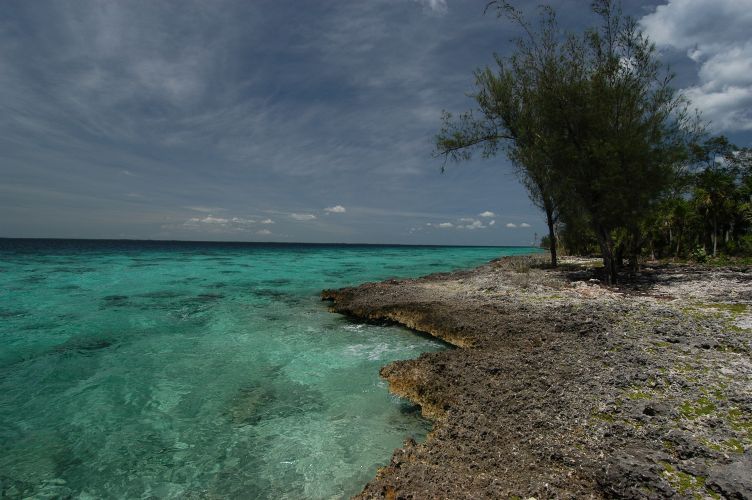
This bay is approximately 30 kilometres (19 mi) south of Jagüey Grande, 70 kilometres (43 mi) west of the city of Cienfuegos, and 150 kilometres (93 mi) southeast from the capital city Havana. On the western side of the bay, coral reefs border the main Zapata Swamp, part of the Zapata Peninsula. On the eastern side, beaches border margins of firm ground with mangroves and extensive areas of swampland to the north and east. At the north end of the bay, the village of Buena Ventura is adjacent to Playa Larga (Long Beach). 35 kilometres (22 mi) southeast of that, Playa Girón (Giron Beach) at the village of Girón, named after the notorious French pirate Gilberto Giron (c. 1604).[7]

History

[edit]
Bay of Pigs in 1961

Playa Girón and Playa Larga were the landing sites for seaborne forces of armed Cuban exiles and the land strip for some American planes (but not many as America did not want Cuba to realize that it was American sponsored) in the Bay of Pigs Invasion, an American CIA-sponsored attempt to overthrow the new government of Cuban Prime Minister Fidel Castro in April 1961.

According to Fidel Castro's former bodyguard, the late Juan Reinaldo Sánchez, Castro lived in great luxury and had a private island called Cayo Piedra in the Bay of Pigs, replete with "mansions, guest houses, a heliport, dolphinarium, turtle lagoon, his luxury yacht Aquarama – a gift from Leonid Brezhnev – and deep-sea fishing speedboat".[8]

Diving

[edit]
Monument honoring five Cuban political prisoners held captive in the United States

The Bay of Pigs is a relatively quiet site for diving. Dive centers exist in Playa Larga, Playa Girón and Caleta Buena. Twelve dive sites in the bay display excellent visibility of 20 to 40 metres (66 to 131 ft), an average water temperature of 22 °C (72 °F) in December and 29 °C (84 °F) in July. Walls of coral, caverns, and a variety of fish (including the barracuda, lionfish, and groupers, among others), coral, and sponges can be found in the Bay of Pigs.[4]

The Caves of the Fishes (Spanish: Cueva de los Peces), with 72 metres (236 ft) depth the deepest cenote of Cuba, is located at 18 kilometres (11 mi) south of Playa Larga.[9]

Biodiversity

[edit]

Surrounding the Bay of Pigs, the endemic wormlizards Amphisbaena barbouri and A. cubana have been noted.[10] The following marine species have been registered along the eastern coast of the Bay of Pigs:

Group Common name Scientific name Image Notes
Fish blue chromis Chromis cyanea
blue tang Acanthurus coeruleus
bluehead wrasse Thalassoma bifasciatum
striped parrotfish Scarus iseri
beau gregory Stegastes leucostictus
bicolor damselfish Stegastes partitus
boga Inermia vittata
Colon goby Coryphopterus dicrus
creole wrasse Clepticus parrae
longfin damselfish Stegastes diencaeus
masked goby Coryphopterus personatus
threespot damselfish Stegastes planifrons
yellowhead wrasse Halichoeres garnoti
French grunt Haemulon flavolineatum
ocean surgeon Acanthurus bahianus
sergeant major Abudefduf saxatilis
slippery dick Halichoeres bivittatus
yellowtail snapper Ocyurus chrysurus
bar jack Caranx ruber
barred hamlet Hypoplectrus puella
brown chromis Chromis multilineata
foureye butterflyfish Chaetodon capistratus
graysby Epinephelus cruentatus
longjaw squirrelfish Holocentrus marianus
redband parrotfish Sparisoma aurofrenatum
royal gramma Gramma loreto
stoplight parrotfish Sparisoma viride
tomtate grunt Haemulon aurolineatum
white grunt Haemulon plumierii
porgies Calamus sp.
banded butterflyfish Chaetodon striatus
buffalo trunkfish Lactophrys trigonus
flat needlefish Ablennes hians
glasseye Heteropriacanthus cruentatus
longspine squirrelfish Holocentrus rufus
plate fish Bothus lunatus
red lionfish (invasive) Pterois volitans
spotfin butterflyfish Chaetodon ocellatus
trumpetfish Aulostomus maculatus
Sponges azure vase sponge Callyspongia plicifera
yellow tube sponge Aplysina fistularis
green finger sponge Iotrochota birotulata
orange icing sponge Mycale laevis
pink vase sponge Niphates digitalis
row pore rope sponge Aplysina cauliformis
touch-me-not sponge Neofibularia nolitangere
demosponges Cliona sp.
Cliona aprica
Cliona delitrix
Cliona varians
Aiolochroia crassa
Ectyoplasia ferox
Ircinia felix
Mycale laxissima
Plakortis angulospiculatus
Scopalina ruetzleri
Smenospongia aurea
Spirastrella coccinea
Corals boulder brain coral Colpophyllia natans
Caribbean sea whip Plexaura homomalla
elkhorn coral Acropora palmata
great star coral Montastraea cavernosa
maze coral Meandrina meandrites
purple sea fan Gorgonia ventalina
sea ginger Millepora alcicornis
Crustaceans Caribbean spiny lobster Panulirus argus
Echinoderms donkey dung sea cucumber Holothuria mexicana
Mollusks queen conch Lobatus gigas

See also

[edit]

References

[edit]

Bibliography

[edit]

Further reading

[edit]
Revisions and contributorsEdit on WikipediaRead on Wikipedia
from Grokipedia
The was a botched amphibious assault launched on April 17, 1961, by roughly 1,400 Cuban exiles comprising , who were trained, equipped, and directed by the (CIA) to topple Fidel Castro's communist regime in . The operation targeted the Bahía de Cochinos () on 's southwestern coast, predicated on the expectation that the landing would trigger a widespread internal revolt against Castro's government, which had seized power in 1959 and aligned with the . Conceived during the Eisenhower administration as part of broader covert efforts to counter Castro's consolidation of power, including nationalizations and suppression of opposition, the plan evolved into a action emphasizing surprise and minimal U.S. footprint for . President Kennedy approved a revised version that curtailed overt U.S. air support, reflecting concerns over escalation and international backlash, though this decision compromised the invaders' tactical advantages. The invasion unraveled rapidly due to flawed assessments that overestimated Cuban discontent and underestimated Castro's defensive preparations, compounded by the of promised airstrikes to neutralize his and the lack of any mass uprising. militia and regular forces, forewarned by radio broadcasts and preliminary skirmishes, encircled and overwhelmed the by April 19, inflicting about 114 fatalities on the while capturing over 1,100 survivors, who were later by the U.S. for $53 million in food and medicine. This foreign policy fiasco humiliated the Kennedy administration, eroded U.S. credibility in the , and fortified Castro's domestic position, accelerating Cuba's military dependence on and contributing to heightened tensions that culminated in the 1962 . Internally, it prompted scapegoating within U.S. intelligence circles, the dismissal of senior CIA officials including Director , and a shift toward more aggressive anti-Castro operations like , though these too yielded limited success.

Geography and Etymology

Location and Physical Features

The Bay of Pigs, or Bahía de Cochinos, constitutes an inlet of the Gulf of Cazones along the southern coast of Cuba in Matanzas Province. It is positioned approximately 180 kilometers southeast of Havana. The bay spans roughly 30 kilometers in width and features shallow waters extending inland. Limited beachheads, including Playa Larga on the eastern side and Playa Girón toward the western end, provide narrow strips of accessible shoreline amid the surrounding terrain. Encircling the bay are extensive mangrove forests and swamps of the Ciénaga de Zapata, Cuba's largest wetland complex, which borders the western approaches. Coral reefs fringe portions of the coastline, particularly along the western margin adjacent to the Zapata Swamp.

Name Origin

The Spanish name Bahía de Cochinos, used since colonial times, derives from the abundance of queen triggerfish (Balistes vetula), locally known as cochinos in Cuban Spanish, which inhabit the bay's coral reefs. While cochinos literally translates to "pigs," in this maritime context it specifically denotes the fish rather than terrestrial swine or historical pig farming activities. This nomenclature reflects the region's marine ecology, with the triggerfish's prevalence noted in local observations dating back centuries. The English term "Bay of Pigs" is a direct, of Bahía de Cochinos that gained international prominence following the U.S.-backed invasion attempt on April 17, 1961. Prior to this event, the bay remained largely obscure beyond , known primarily to fishermen and locals for its fish populations rather than its later historical associations. The mistranslation's ironic —evoking pigs instead of fish—has since overshadowed the original etymological intent in global discourse.

Historical Background

Cuban Revolution and Batista Regime

Fulgencio Batista seized power in a bloodless coup on March 10, 1952, overthrowing President and canceling scheduled elections amid fears of electoral defeat. 's regime restored authoritarian rule, suspending the 1940 constitution and relying on repression through the force known as the Bureau for the Repression of Communist Activities (BRAC), which employed and extrajudicial executions against opponents. Economic growth occurred under Batista, with GDP per capita rising from approximately $350 in 1952 to over $450 by 1958, driven by sugar exports and foreign investment, but stark disparities persisted: affected over 50% of the population, while urban thrived on US-backed and casinos controlled by American figures like , who paid bribes to regime officials. Opposition crystallized around Fidel Castro, who on July 26, 1953, led about 160 rebels in an unsuccessful assault on the Moncada Barracks in , aiming to spark a broader uprising; the attack failed due to poor coordination and superior government forces, resulting in over 60 rebels killed and Castro imprisoned until amnestied in 1955. From exile in , Castro organized the and returned via the overcrowded yacht Granma, departing on November 25, 1956, with 82 fighters and landing near Manzanillo on December 2, where most were ambushed and killed or captured, though Castro, , and Ernesto "Che" Guevara escaped to initiate in the mountains. The revolutionaries built alliances between rural peasants, disillusioned by land inequality, and urban underground networks opposed to Batista's corruption, with the regime's estimated 10,000-20,000 killings through and public executions eroding morale and public tolerance. Batista's forces suffered defeats, including the loss of Santa Clara on December 29, 1958, prompting his flight from on January 1, 1959, and the rebels' triumphal entry on January 2, marking the revolution's victory amid widespread initial support for promised reforms against dictatorship.

Castro's Rise and Communist Alignment

Following the triumph of the Cuban Revolution on January 1, 1959, Fidel rapidly consolidated power by enacting sweeping reforms that targeted foreign and domestic property owners. The Agrarian Reform Law of May 17, 1959, expropriated all landholdings exceeding 402 hectares, redistributing them to peasants and state-controlled cooperatives, with compensation provided via long-term bonds valued at the property's tax-assessed worth, often deemed insufficient by affected parties. This measure dismantled large estates, including those owned by U.S. interests that controlled significant production, without prior or adequate reimbursement, escalating tensions with American businesses. Subsequent nationalizations intensified in 1960; after U.S.-owned oil refineries refused to process discounted Soviet crude, the Cuban government seized them in June, followed by the expropriation of over 160 additional U.S.-linked firms, including mills, by October. Castro's regime simultaneously suppressed opposition through authoritarian measures, establishing revolutionary tribunals that conducted summary trials and executions by firing squad. By mid-1959, at least 600 individuals associated with the prior government had been executed, with public spectacles reinforcing control and deterring . outlets faced closures or , as the government curtailed press freedoms to eliminate critical voices, framing such actions as necessary purges of counterrevolutionaries. Thousands more were imprisoned in early labor camps for perceived disloyalty, contributing to a climate of fear that prioritized regime survival over . Initially denying communist leanings to broaden domestic and international support—Castro had assured U.S. officials in 1959 that his movement was democratic and anti-communist—he publicly embraced on April 16, 1961, declaring the revolution's socialist character amid escalating U.S. hostilities. By December 1961, he explicitly identified as a Marxist-Leninist, aligning ideologically with the Soviet model. This shift facilitated deepening ties with the USSR, including a February 1960 for Soviet purchase of Cuban sugar and provision of oil, followed by initial discussions and the arrival of Soviet advisors by late 1960, as Cuba sought arms to bolster defenses against perceived threats. These policies precipitated economic dislocation, with nationalizations disrupting production and prompting a U.S. embargo in response, leading to shortages that necessitated of essentials by early , though strains were evident earlier through failed harvests and dependencies. A massive exodus ensued, with over 100,000 Cubans fleeing to the U.S. by , primarily professionals and middle-class families disillusioned by the radical turn, facilitated initially by direct flights until curtailed. This alignment and internal repression transformed into a Soviet proxy in the , heightening U.S. security concerns over hemispheric stability.

Planning of the Invasion

Eisenhower-Era Origins

In response to Fidel Castro's regime forging closer ties with the , including a $100 million sugar purchase agreement on February 13, 1960, and subsequent arms deals, the U.S. (CIA) drafted a comprehensive covert action program to destabilize and overthrow the government. This initiative was driven by concerns over Cuba serving as a communist foothold in the , prompting the CIA to propose leveraging Cuban exiles for paramilitary operations to exploit perceived vulnerabilities in Castro's control. On March 17, 1960, President approved the CIA's memorandum "A Program of Covert Action Against the Castro Regime," presented by Deputy Director for Plans , which outlined phased actions including , economic , and the creation of a small force trained outside for potential insertion to spark rebellion. The plan emphasized "" to shield U.S. involvement, relying on exile-led operations disguised as internal Cuban dissent rather than overt American intervention. CIA intelligence assessments at the time projected that an landing would trigger widespread internal uprisings against Castro, based on reports of growing domestic opposition, including underground networks and defections among military and civilian elements, though these estimates later proved overly optimistic due to Castro's effective consolidation of power through repression. Following the approval, preparations advanced with the establishment of training facilities in , including the JMTRAX base near Retalhuleu, where exile recruitment and paramilitary instruction began in June 1960 under CIA oversight, aiming to build a force capable of securing a and rallying popular support.

Kennedy Administration Modifications

Following the inauguration of President on January 20, 1961, the incoming administration received briefings on the covert anti-Castro operation inherited from the Eisenhower era, including the trained Cuban exile brigade and proposed invasion site at the Bay of Pigs. Kennedy approved continuation of the plan in principle during early meetings, such as the January 25 session with the , but imposed key modifications emphasizing Cuban exile autonomy to preserve of U.S. sponsorship and preclude direct American combat involvement. This shift required the operation to rely solely on for ground forces, without U.S. troops, in hopes of portraying the landings as an indigenous uprising against Fidel Castro's regime rather than a foreign intervention. Subsequent reviews, including April 1961 White House discussions, further diluted operational elements to mitigate risks of escalation and international backlash. The Joint Chiefs expressed reservations about the scaled-back parameters, warning that limited air support and exile-only execution heightened failure probabilities amid Castro's growing military capabilities, yet Kennedy prioritized avoiding overt U.S. fingerprints over fuller commitment. A notable adjustment reduced pre-invasion airstrikes from the originally contemplated 16 B-26 bomber sorties to eight, executed on and disguised with Cuban Air Force markings to simulate defections, thereby aiming to neutralize Castro's aviation assets while sustaining deniability. These changes were also shaped by diplomatic considerations, particularly from U.N. Ambassador Adlai Stevenson, who stressed the need to shield U.S. credibility in international forums by minimizing traceable support, even as such optics compromised tactical effectiveness against Cuban defenses. Kennedy's insistence on these constraints reflected a balancing anti-communist objectives with fears of Soviet reprisal and domestic political fallout, ultimately eroding the plan's viability by constraining firepower and reinforcement options.

Assembly and Training of Brigade 2506

was assembled primarily from Cuban exiles recruited by the (CIA) starting in May 1960, drawing from anti-Castro refugees in the United States who had fled following Fidel Castro's 1959 . These recruits included former Batista-era military personnel, defectors from Castro's forces, professionals such as doctors and engineers, and idealistic young men motivated by opposition to communist policies including property expropriations and political repression. The force numbered approximately 1,400 to 1,500 men by early 1961, organized into battalions, , and support units capable of amphibious and airborne operations. The brigade's name honored Carlos Rodriguez Santana, the 2,506th recruit, who died in a training accident. Political oversight came from the Cuban Revolutionary Council, chaired by , a former prime minister under Castro who had resigned in protest against the regime's turn toward and led exile coordination efforts from . Operationally, Manuel Artime served as the brigade's civil and political chief, leveraging his experience as an early anti-Castro organizer inside before defecting. Military command fell to figures like José Pérez San Román, but Artime's role emphasized ideological unity and post-invasion governance planning. Training commenced in mid-1960 at clandestine sites including in and other U.S. locations before shifting to a primary base at Retalhuleu in Guatemala by November 1960, with additional facilities in Nicaragua for final staging from . Exiles underwent rigorous instruction in , weapons handling, , , paratroop jumps, and amphibious assaults using , supplemented by air support exercises with Douglas B-26 bombers maintained by U.S. units. The program, lasting over six months for most, built a force proficient in operations despite limited prior combat experience for many. Participants exhibited high morale driven by personal stakes—many had lost businesses, family members executed or imprisoned, or faced —fostering a commitment to democratic restoration rather than financial incentives, as evidenced by their voluntary enlistment and endurance of harsh conditions. This ideological fervor, rooted in direct experiences of Castro's regime, compensated for youth and inexperience, producing a motivated unit ready for .

Execution of the Invasion

Prelude Air Operations

The prelude to the Bay of Pigs invasion featured initial airstrikes intended to neutralize Fidel Castro's small air force and secure air superiority for the amphibious landings. On April 15, 1961, eight Douglas B-26 Invader bombers, piloted by Cuban exiles and based at , , launched from there at approximately 5:30 a.m. local time, striking three key Cuban airfields: in the east, and near , Ciudad Libertad and de los Baños. The B-26s were painted with markings mimicking those of the Cuban Revolutionary Air Force (FAR) to simulate an internal revolt, with the operation reduced in scale from an originally planned larger assault involving sixteen aircraft, a decision influenced by U.S. President John F. Kennedy's concerns over overt U.S. involvement. To enhance deception, one B-26 pilot staged a by landing at , where he claimed to have bombed Cuban bases after fleeing Castro's regime; this broadcast was amplified via exile radio stations alongside asserting widespread FAR pilot defections to erode public support for Castro. However, Castro quickly discerned the ruse due to discrepancies in the aircraft markings—such as poorly obscured U.S.-style insignia—and issued alerts, prompting the dispersal of his aircraft and minimizing surprise. The strikes destroyed several aircraft on the ground, including at least two B-26s, but assessments varied, with actual damage limited and Castro retaining operational fighters like Hawker Sea Furies and trainers. These incomplete results stemmed from the operation's constrained sorties and lack of follow-up strikes, leaving Castro's —initially comprising about 36 , with roughly 18 combat-ready—capable of mounting effective opposition during the subsequent landings. The surviving Cuban planes, including six T-33s and four Sea Furies, later exploited this air parity to strafe supply ships and paratroop drops, underscoring the prelude's failure to achieve decisive superiority.

Landings and Initial Engagements (April 17, 1961)

The main assault force of , comprising approximately 1,400 Cuban exiles transported aboard seven U.S. Navy (LCIs), initiated landings at two primary sites—Playa Larga in the eastern sector and in the western sector—shortly after midnight on April 17, 1961. These forces, organized into three battalions supported by tanks, , and supplies, aimed to establish secure beachheads for further operations against Fidel Castro's regime. Upon arrival, the invaders encountered sporadic resistance from local Cuban militia units, which were quickly overwhelmed in initial skirmishes, allowing to secure the immediate beach areas by dawn. Concurrently, around 180 paratroopers from the Brigade's 2nd Battalion were airdropped inland near the Central Highway to block reinforcement routes from , disrupting Cuban Army movements and capturing key positions such as road junctions. One paratroop element briefly seized a small radio transmitter at a nearby finca, from which anti-Castro broadcasts were attempted to rally internal support, though the effort was short-lived due to limited equipment and rapid Cuban response. These early actions resulted in light casualties for the invaders, with militia defenders suffering higher losses in the opening firefights. However, the landings were hampered by navigational errors and environmental challenges; offshore coral reefs damaged several LCIs, delaying the unloading of heavy equipment like tanks and ammunition, while the surrounding terrain restricted inland mobility and exposed supply lines to potential interdiction. Despite these setbacks, forward elements of pressed initial advances, destroying a few Cuban armored vehicles in ambushes along access roads and establishing defensive perimeters around the lodgments. By midday, the beachheads held, but growing reports of Cuban mobilization signaled escalating threats beyond the initial militia engagements.

Combat and Cuban Counteroffensive

On April 18, 1961, Cuban forces under launched a counteroffensive against positions at and surrounding beaches, deploying tanks, artillery, and units that rapidly outnumbered the invaders. paratroopers initially blocked key roads, delaying advances, while exile aircraft destroyed seven Cuban tanks and inflicted casualties on approaching . However, shortages plagued the by evening, as supply ships had been sunk and resupply efforts faltered, forcing troops to conserve rounds during intensified ground assaults. Key engagements centered on tank battles near , where anti-tank teams engaged Soviet-supplied T-34s advancing from multiple directions, halting some but unable to prevent the encirclement of beachheads. Efforts to link with Escambray rebels for relief failed, as internal divisions and lack of coordination prevented any significant uprising or support from reaching the isolated force. Castro's rapid mobilization swelled defender ranks to over 20,000 troops and , overwhelming the 's approximately 1,400 men despite initial defensive holds. By , Cuban infantry and armor closed in on Blue Beach and Girón airstrip, with exile radio transmissions pleading for direct U.S. air and naval aid that went unanswered, leading commanders like to order equipment destruction and dispersal into swamps. The surrendered around 1400 hours after exhausting supplies, resulting in 89 deaths and 1,197 captures, marking the collapse of the invasion within 72 hours of landing.

Causes of Failure

Operational and Intelligence Shortcomings

The CIA's planning for the Bay of Pigs operation rested on the flawed assumption that the invading would trigger a widespread popular uprising against Fidel Castro's regime, despite intelligence indicating Castro's growing consolidation of power through purges, nationalizations, and suppression of dissent since 1959. Declassified CIA analyses later revealed that planners dismissed evidence of Castro's effective control over Cuban institutions and the populace, including the regime's success in mobilizing loyalty via agrarian reforms and anti-imperialist rhetoric, leading to overoptimistic projections of internal defections that never materialized. This miscalculation stemmed from in CIA assessments, which prioritized exile testimonies over broader empirical data on Cuban societal cohesion under Castro. Intelligence failures extended to underestimating the scale and readiness of Cuban defense forces, with CIA estimates portraying units as poorly trained and as negligible, ignoring reports of extensive drills and weapon distributions that had equipped over 200,000 reservists by early 1961. overlooked Castro's fortified southern coast, contributing to the selection of as the beachhead—a site chosen for its isolation and swamps to impede armor but flawed due to undetected reefs that grounded and exposed troops to fire during the April 17 landings. Operational execution compounded these errors; declassified 2011 documents detail incidents, including a CIA ground operative mistaking and shooting at U.S.-piloted B-26 bombers supporting the brigade, disrupting air coordination and morale. Logistical shortcomings further doomed the effort, as the freighter Houston, carrying essential ammunition and supplies for sustained fighting, was sunk by Cuban T-33 jets on April 21, 1961, severing resupply lines without adequate contingency plans or naval escorts to protect the improvised invasion fleet. CIA paramilitary coordinators failed to anticipate the vulnerability of the brigade's sole ammunition ship, relying instead on airlifts that were curtailed by weather and enemy action, leaving ground forces ammunition-starved within 48 hours of the main assault. These tactical lapses, rooted in inadequate field validation of plans, highlighted systemic deficiencies in CIA operational rigor, as critiqued in post-invasion internal reviews.

Critical Decisions on US Support

On April 16, 1961, President Kennedy canceled the planned dawn air strikes on D-Day, which were intended to neutralize remaining Cuban air forces ahead of the landings, following recommendations from Secretary of State and National Security Advisor to preserve for U.S. involvement. This decision overrode CIA protests, as Deputy Director for Plans Richard Bissell later attested in interviews that the strikes were essential for securing air superiority and protecting the invasion force from Cuban counterattacks. The cancellation stemmed from Kennedy's concern that overt U.S.-backed operations risked international condemnation, Soviet retaliation, and exposure of American fingerprints after the April 15 preliminary strikes had already drawn scrutiny due to a defector pilot's landing in . Despite the U.S. Navy's proximity, with the carrier USS Essex positioned approximately 300 miles southwest of the invasion site and equipped with jets, no carrier-based strikes were authorized during the initial landings on , prioritizing operational over direct . Executive Committee () deliberations emphasized deniability, with Kennedy rejecting proposals for more aggressive naval air cover to avoid escalating the conflict into overt U.S. intervention, even as reports indicated Cuban aircraft sinking supply ships like the Houston and Barbara J. testified that this restraint reflected a fundamental miscalculation, subordinating military necessities—such as destroying Castro's estimated 10-12 operational aircraft—to political constraints, leaving the exiles vulnerable without adequate suppression of enemy air power. The Taylor Committee, established post-invasion, concluded in its investigation that the absence of sufficient U.S. air support created insurmountable air inferiority, enabling Cuban forces to dominate the skies with T-33 trainers and B-26 bombers, which strafed beachheads and decimated the brigade's logistics. Limited U.S. jet cover authorized on —six unmarked from the Essex for a one-hour window—arrived delayed due to time zone errors and resulted in two shootdowns without altering the outcome, underscoring how high-level hesitancy on direct aid directly contributed to the rapid collapse of the operation by . This prioritization of covert parameters over decisive military requirements, as critiqued in declassified reviews, forfeited the invasion's sole plausible path to success: unchallenged control of the airspace essential for sustaining the lightly equipped exile force.

Castro Regime's Preparedness

The Castro regime received early indications of an impending invasion through intelligence gathered by its (G-2), including reports from Cuban agents monitoring exile activities in the United States and deserters from training camps. These alerts, combined with the detection of unauthorized aircraft over Cuban airspace on April 15, 1961, prompted to declare a state of alert and initiate precautionary measures. By the evening of , Castro ordered the mobilization of the Committees for the Defense of the Revolution (CDRs), neighborhood vigilance groups established in 1960 to detect activity, which rapidly expanded their role to include mass arrests of suspected dissidents and prevention of internal . Cuba's defensive posture benefited from a large, ideologically motivated force. The National Revolutionary , numbering over 200,000 by early 1961, was quickly activated alongside regular army units totaling approximately 25,000 troops, providing overwhelming numerical superiority against the invading Brigade 2506's 1,400 men. These forces were supported by Soviet-supplied weaponry, including T-34-85 tanks delivered in February 1961 and self-propelled guns, which afforded Cuban defenders armored and artillery advantages during counteroffensives. Castro assumed personal command of operations upon learning of the landings at approximately 3:15 a.m. on April 17, 1961, directing responses from through a centralized that coordinated air, ground, and elements. The CDRs' network further stifled potential uprisings by maintaining over rural and urban populations, ensuring loyalty and rapid reporting of any pro-invasion sentiments, which minimized the prospect of widespread defections or guerrilla support for the invaders. This combination of preemptive intelligence, mass mobilization, and fortified military assets enabled Cuban forces to encircle and overwhelm the within 72 hours.

Immediate Aftermath

Casualties, Captures, and Surrender

The Brigade 2506 incurred approximately 100 killed in action during the fighting from April 17 to 19, 1961, with nearly all survivors—around 1,200 men, including the wounded—captured or compelled to surrender by Cuban forces. Among the captured were brigade commander José "Pepe" Pérez San Román and deputy commander , who had directed operations from a forward command post near . Casualties among Cuban government forces remain disputed, with official Cuban reports citing 176 killed and 300 wounded, while accounts, based on observed enemy dispositions and claims of inflicting a 20-to-1 casualty ratio, estimated total Cuban losses at up to 2,000, encompassing killed, wounded, and missing. The end of organized resistance came on April 19, 1961, when ammunition shortages and the arrival of Cuban tanks overwhelmed the brigade's positions at ; San Román transmitted a final radio message stating, "Am destroying all my equipment and communications... Have nothing left to fight with," before formally surrendering to advancing Cuban troops. In the immediate aftermath, Cuban authorities executed several captured individuals, particularly American pilots from the supporting B-26 squadrons who had been taken prisoner after their were downed or forced to land. The International Committee of the Red Cross subsequently participated in efforts to document and account for the captured brigade members, facilitating verification of their conditions prior to prolonged .

Ransom and Release of Prisoners

Following the invasion's collapse on , 1961, approximately 1,180 members were captured by Cuban forces and transported to prisons in and around , including facilities such as the Havana National Hotel and Isla de Pinos prison camp, where they endured harsh conditions including malnutrition and forced labor. Cuban leader initially demanded $28 million in compensation for "damages" from the invasion but later escalated to an equivalent of $62 million in industrial equipment, framing subsequent negotiations around to pressure the indirectly. Negotiations for their release began informally through intermediaries in mid-1961 but gained momentum in via private U.S. efforts, as President John F. Kennedy's administration avoided direct government involvement to prevent legitimizing Castro's regime or appearing to capitulate. James B. Donovan, a New York lawyer known for negotiating the 1962 exchange of Soviet spy for U.S. pilot , was recruited pro bono by the Cuban Families Committee—a group representing relatives of the prisoners—to lead talks with Castro. Donovan made multiple trips to starting in February 1962, conducting direct discussions with Castro and Cuban officials, who exploited the process to extract maximum concessions while publicizing the prisoners' plight to bolster domestic support and embarrass the U.S. The final agreement, signed on December 21, 1962, stipulated the release of 1,113 prisoners (accounting for deaths and prior releases) in exchange for $53 million worth of food and medicine—valued at wholesale prices but equivalent to about $500 million in modern terms—sourced entirely from private U.S. donations raised by exile organizations, businesses, and philanthropists like cereal magnate James L. Dougherty and the Trappist monks of Our Lady of Gethsemane Abbey. This sum represented the largest prisoner ransom in history at the time, underscoring Castro's strategy of monetizing the invasion's failure to fund his regime's needs under the guise of non-lethal aid. The releases occurred in phases via chartered flights from Havana's Rancho Boyeros Airport to and other U.S. sites between December 23 and 29, 1962, with prisoners greeted by Kennedy at the stadium on December 29 amid widespread media coverage. While the deal freed the bulk of captives, a small number of associated individuals remained imprisoned longer, complicating U.S.- backchannels and highlighting Castro's selective enforcement of agreements to retain leverage. The transaction strained private networks but avoided direct U.S. taxpayer , reflecting Kennedy's insistence on deniability despite internal administration frustrations over the prolonged diplomatic humiliation.

Domestic US Reactions

President publicly accepted responsibility for the Bay of Pigs failure in a speech to the American Society of Newspaper Editors on April 20, 1961, declaring, "Victory has a thousand fathers, but defeat is an orphan," while emphasizing that the operation's flaws originated in planning inherited from the Eisenhower administration. This acknowledgment aimed to shield the CIA from sole blame, though Kennedy privately viewed the agency's intelligence assessments as overly optimistic about popular Cuban uprising against . In response to the debacle, Kennedy requested the resignation of CIA Director on November 29, 1961, citing the invasion's mismanagement under Dulles's tenure, though Dulles had defended the operation's feasibility. Similarly, Deputy Director for Plans Richard Bissell, the operation's chief architect, submitted his resignation on February 28, 1962, after Kennedy deemed him accountable for flawed assumptions about Cuban exile forces' capabilities and Castro's vulnerabilities. These personnel changes reflected Kennedy's intent to reform the CIA amid internal reviews exposing operational overconfidence. Congress initiated probes into the invasion's execution, with the Senate Foreign Relations Committee holding hearings in summer 1961 to examine U.S. covert action policies and intelligence failures, revealing bipartisan concerns over the CIA's autonomy in foreign interventions. polls indicated initial support for anti-Castro measures, with 72% favoring U.S. efforts to remove him pre-invasion, but post-failure sentiment shifted toward national embarrassment, though Kennedy's personal approval rating paradoxically surged to 83% by early May 1961 as Americans rallied around their leader amid perceived external threats. The episode galvanized anti-communist critics, including Republican senators and exile advocates, who lambasted Kennedy for withholding decisive U.S. air support, portraying the decision as evidence of administration "softness" toward Soviet influence in the hemisphere and fueling debates over commitment to strategies against . Figures like Cuban survivors accused the president of betrayal, amplifying hawkish calls for more aggressive containment policies in congressional rhetoric and media commentary.

Long-Term Consequences

US-Cuba Relations and Embargo

The failure of the Bay of Pigs invasion in April 1961 intensified the already strained US-Cuba relations, which had deteriorated amid Fidel Castro's nationalization of American-owned properties without compensation, valued at over $1 billion by early 1961. These seizures, beginning in 1960 with key industries like oil refineries and sugar mills, prompted initial US export restrictions in October 1960, but the invasion's collapse—coupled with Castro's public declaration of the revolution's socialist nature on April 16, 1961—solidified his regime's pivot toward Soviet economic and military support to counter perceived existential threats from Washington. In the invasion's aftermath, Castro accelerated nationalizations and deepened dependency on the USSR, receiving substantial aid including $140 million in economic assistance by mid-1961, which offset lost US trade and enabled Cuba to export sugar to Moscow at premium prices. This alignment exacerbated US concerns over Soviet influence in the , leading President Kennedy to authorize covert sabotage operations under in November 1961, aimed at undermining the Cuban economy through actions like contaminating sugar shipments and disrupting industry. US policy hardened further with the imposition of a comprehensive trade embargo on February 3, 1962, prohibiting nearly all exports to Cuba except food and medicine under limited licenses, as a direct response to the regime's consolidation post-invasion and to isolate it economically from the West. The embargo, enforced via Presidential Proclamation 3447, sought to pressure Castro by leveraging Cuba's reliance on imported oil and machinery, previously sourced from the US, though its effectiveness was limited by Soviet subsidies that sustained the regime's stability. By formalizing economic warfare, these measures marked a shift from hopes of regime change through invasion to sustained containment, amid Castro's declarations of unbreakable anti-imperialist defiance. The failed of April 17–19, 1961, intensified Fidel Castro's perceptions of vulnerability to U.S. aggression, prompting him to seek enhanced Soviet military guarantees against future incursions. In the invasion's aftermath, Castro accelerated 's alignment with the , declaring himself a Marxist-Leninist in December 1961 and requesting nuclear weapons for defense. Soviet Premier , motivated by a sense of having failed to protect despite prior assurances that the U.S. would not invade, authorized the secret deployment of medium- and intermediate-range ballistic missiles to the island in early 1962 to deter potential American attacks and counterbalance U.S. nuclear superiority in . The 's collapse, marked by the U.S. withholding overt military support, signaled to Soviet leaders a perceived gap in American resolve for direct confrontation, emboldening Khrushchev to test U.S. reactions with the missile gambit. This miscalculation altered the dynamics of the ensuing October 1962 , as declassified documents reveal Castro's post-Bay of Pigs paranoia fueled his October 26, 1962, telegram to Khrushchev urging a preemptive Soviet nuclear strike on the U.S. if it attempted another , reflecting heightened fears of existential threat. President Kennedy's management of the crisis, opting for a naval (blockade) on October 22, 1962, rather than immediate airstrikes or , demonstrated a resolve tempered by the Bay of Pigs debacle, where incomplete commitment had led to defeat; this approach avoided escalation while forcing Soviet withdrawal of the missiles by October 28. The prior failure thus contributed to a more calibrated U.S. , preventing the crisis from mirroring the invasion's irresolution but underscoring how the 1961 events had escalated Soviet-Cuban defensive postures.

Cold War Strategic Lessons

The demonstrated the practical limits of in proxy warfare, as U.S. involvement became evident despite efforts to frame the operation as a purely initiative; Cuban forces quickly identified American-supplied equipment and tactics, undermining the covert narrative and exposing the operation to international . This failure highlighted how modern intelligence capabilities and logistical footprints in amphibious assaults erode secrecy, compelling policymakers to anticipate rapid attribution in future covert actions. CIA assessments prior to the overestimated popular Cuban discontent with Fidel Castro's regime, projecting widespread internal uprisings that failed to materialize; the Inspector General's post-operation review criticized agency leaders for "rank incompetence" in assuming local support without robust empirical validation, revealing systemic over-optimism driven by testimonies rather than on-ground intelligence. Such miscalculations underscored the risks of in estimating adversary cohesion, where exile perspectives inflated defection probabilities absent broader societal data. The operation empirically validated the decisive role of air superiority in amphibious landings, as the brigade's B-26 bombers failed to neutralize Castro's T-33 jets and Sea Furies—only 18 of which were operational—allowing Cuban aircraft to sink supply ships and isolate ground forces within hours of the April 17, 1961, landings. Without sustained U.S. naval air cover, which President Kennedy withheld to preserve deniability, the invaders lost their sole tactical advantage, contributing to the brigade's encirclement and surrender by April 19. These shortcomings reinforced U.S. commitment to containment by illustrating communism's resilience to incomplete proxy challenges, yet exposed executive overreach perils when half-measures—such as restricted overt support—compromised operational viability without achieving strategic deterrence. The invasion's fallout instilled caution in subsequent escalations, influencing Kennedy's aversion to unchecked CIA proposals and prompting stricter interagency oversight in Vietnam-era planning to mitigate similar airpower and gaps.

Controversies and Viewpoints

CIA and Planner Criticisms

The CIA's report, authored by Lyman B. Kirkpatrick Jr. in and declassified in 1998, attributed the operation's failure primarily to internal agency shortcomings, including "arrogance, ignorance, and incompetence" in planning and execution. It highlighted the agency's dismissal of dissenting assessments, such as warnings from U.S. Marine Corps analysts who, through war games and site evaluations, predicted that the invasion force—, comprising about 1,400 Cuban exiles—lacked sufficient air support and logistical depth to secure a against Cuban and regular forces without overt U.S. intervention. Planners under Deputy Director for Plans Richard Bissell overlooked these inputs, prioritizing covert plausibility over operational realism, which contributed to the rapid collapse of the landings on April 17–19, . Bissell's approach emphasized extreme compartmentalization to maintain , which inadvertently excluded key expertise from the CIA's own Directorate of and broader interagency reviews, fostering and unexamined assumptions about Castro's vulnerabilities. This structure limited critical analysis of Cuban defenses, including the regime's mobilization capabilities, and downplayed evidence of Castro's consolidated control post-1959 . Poor further undermined the effort, as measures—like repainting B-26 bombers to mimic Cuban Air Force models—proved ineffective; the alterations were superficial, with identifiable U.S. markings persisting, and a by pilot Mario Zúñiga on exposed the prematurely, alerting Cuban . Agency assessments underestimated the loyalty of Castro's forces and populace, projecting a spontaneous uprising that never materialized; intelligence reports failed to account for the regime's effective and organization, which rallied over 200,000 defenders by April 19. While some post-operation analyses, including declassified CIA histories released in 2011, acknowledged these executional flaws, they also noted that the planners' underlying intent—to counter Soviet-aligned expansion in the —rested on accurate threat evaluations of Castro's ties to , evident from arms shipments and alliances by 1960, though operational design neglected adaptive contingencies.

Kennedy's Role and Betrayal Claims

President authorized the Bay of Pigs invasion on April 17, 1961, but imposed strict limitations to maintain for U.S. involvement, including the cancellation of planned follow-up airstrikes after the initial raids on April 15 failed to neutralize Fidel Castro's . These constraints stemmed from Kennedy's concerns over direct escalation, which could provoke Soviet retaliation in Europe, particularly in , where U.S. commitments were precarious. Declassified White House recordings from the period reveal Kennedy's deliberations with advisors, emphasizing aversion to overt intervention that might expand the conflict beyond . As the Brigade 2506 forces faced encirclement by Cuban troops on April 19, commander José Pérez San Román transmitted desperate radio pleas for air support to U.S. assets, including the command ship Blagar, reporting critical shortages of ammunition and imminent collapse on the western flank. Kennedy rejected requests for U.S. Navy carrier-based strikes or additional B-26 sorties, prioritizing avoidance of broader confrontation over immediate reinforcement of the exiles. This decision contributed to the brigade's surrender later that day, with over 1,100 captured. Cuban exile veterans of Brigade 2506 have long characterized Kennedy's refusal as a , arguing that assurances of air cover and logistical backing were withdrawn at the moment of vulnerability, abandoning committed anti-Castro fighters to defeat. Survivors' accounts, including those from San Román's command, frame the episode as a of liberty-seeking exiles for geopolitical caution, with the brigade's flag and motto—"Roll back "—symbolizing unfulfilled pledges of support. This narrative persists among exile communities, viewing the abandonment as eroding trust in U.S. commitments to hemispheric allies against .

Necessity Debates: Anti-Communism vs. Interventionism

Supporters of the invasion argued that the establishment of a Soviet-aligned regime in posed an empirical security threat to the and the , necessitating preemptive action to contain communist expansion in line with post-World War II U.S. policies. By late 1960, had formalized ties with the , including a joint communiqué on December 19 announcing economic and technical cooperation that soon encompassed , enabling Castro to consolidate power against domestic opposition. This foothold mirrored earlier communist advances that prompted interventions like the Truman Doctrine's aid to and in 1947 to prevent Soviet domination, underscoring a causal chain where unchecked Soviet proxies could destabilize neighboring states and invite further incursions. The exodus of approximately 200,000 Cubans to the between 1959 and 1962 further evidenced the regime's illegitimacy, as mass flight indicated widespread rejection of Castro's rule rather than popular support. Critics framed the operation as neocolonial interventionism that disregarded Cuban , echoing broader left-leaning accusations of U.S. in by imposing external without regard for . However, such views often overlooked verifiable repression under Castro, including the execution of hundreds of political opponents in summary trials shortly after the 1959 revolution and the imprisonment of thousands more, which contradicted portrayals of the as a benign reformer in some outlets. Empirical data on these abuses—documented by human rights organizations—reveals a systemic suppression of that invalidated sovereignty claims, as a government's legitimacy derives from rather than mere territorial control. Right-leaning analyses contend that the invasion's arose not from inherent overreach but from insufficient commitment, such as withholding decisive air support, which undermined the anti-communist objective without addressing the underlying strategic imperative to neutralize the Soviet beachhead. This perspective aligns with containment's success in , where firmer resolve curbed Soviet influence, suggesting that hesitancy, influenced by domestic liberal pressures, amplified risks rather than mitigating them.

Modern Legacy

Tourism, Diving, and Environmental Aspects

The Bay of Pigs region forms part of the Ciénaga de Zapata Biosphere Reserve, a UNESCO-designated established in 2001 that spans over 6,000 square kilometers of swamps, lagoons, , and coastal habitats, supporting exceptional including endemic . The reserve harbors the critically endangered (Crocodylus rhombifer), with wild populations confined to approximately 300 square kilometers in the and a state-managed breeding facility maintaining up to 4,000 genetically pure individuals for conservation and reintroduction efforts. forests within the reserve, covering significant portions of Cuba's southern coast, enhance by providing nurseries for marine and acting as barriers against , though they face threats from intensifying hurricanes and sea-level rise associated with . Cuban state-organized tourism promotes visits to the area's natural features alongside historical sites, such as guided tours to invasion-related beaches and the Museo de , which exhibits artifacts emphasizing the Cuban government's narrative of repelling foreign aggression. These tours, often integrated into broader itineraries from , highlight the juxtaposition of ecological preservation and commemorative elements, drawing limited international visitors due to restricted access and infrastructure focused on low-impact exploration of the peninsula's wilderness. Diving in the Bay of Pigs attracts enthusiasts to sites around Playa Larga and , renowned for clear waters, vibrant coral reefs, underwater caves, and diverse including species like blue chromis, , and trunkfish amid remnants of 1960s-era . expeditions, such as those operated by Jardines Aggressor I, target the Zapata Biosphere's reefs for multi-day dives, underscoring the area's status as a hotspot despite its remote, swamp-encircled location. Environmental vulnerabilities persist, as evidenced by Hurricane Michelle's 2001 landfall with 216 km/h winds, which damaged coastal ecosystems and highlighted the need for ongoing to sustain diving habitats.

Memorials and Ongoing Cuban Exile Perspectives

The Bay of Pigs Monument in Miami's Little Havana neighborhood, dedicated to the fallen members of Brigade 2506, was unveiled on April 17, 1971, featuring an eternal torch symbolizing the enduring commitment of Cuban exiles to liberate their homeland from Castro's rule. In 2023, the City of Miami renovated Bay of Pigs Memorial Park and unveiled a new monument honoring the surviving veterans of the invasion, underscoring the community's ongoing reverence for the 114 Brigade members killed in action and the prisoners later ransomed. Adjacent to the monument, the Brigade 2506 Museum and Library preserves artifacts, documents, and oral histories from the invasion, serving as a repository for exile narratives that emphasize the operation's strategic viability absent U.S. air support withdrawal. These sites along Cuban Memorial Boulevard form a focal point for exile commemorations, rejecting Castro's longevity as evidence of regime fragility rather than invasion flaws. Annual events on , marking the 1961 landing date, draw hundreds of exiles and descendants to for wreath-laying ceremonies, roll calls of the fallen, and speeches critiquing the Castro regime's persistence despite internal dissent documented in declassified CIA assessments of pre-invasion resistance networks. Participants, including aging veterans, frame the failure as a betrayal by the Kennedy administration's last-minute cancellation of promised airstrikes, which declassified operational histories reveal could have neutralized Castro's air force and enabled inland advances toward . These gatherings reinforce anti-Castro sentiment, with exiles attributing Cuba's post-1961 isolation not to the invasion's defeat but to the regime's suppression of uprisings that U.S. intelligence reports indicated were widespread among rural and urban populations. Cuban exile perspectives persist in revisionist claims, supported by declassified documents, that fuller U.S. backing—such as sustained B-26 strikes—would have sparked a broader revolt, given evidence of 20,000-30,000 anti-Castro guerrillas active in Escambray and other regions at the time. These views fuel debates on regime change ethics, where exiles argue the moral imperative to dismantle socialism outweighed intervention risks, citing empirical outcomes like Cuba's GDP contracting 35% during the 1990-1993 "Special Period" after Soviet subsidies ended, far exceeding embargo effects. Economic data further substantiates this, showing Cuba's per capita income stagnating at around $9,500 in 2023 (adjusted PPP) versus Latin American averages over twice that, with shortages and inflation exceeding 30% annually linked to centralized planning failures rather than external sanctions alone. Exiles maintain that the invasion's truncation preserved a system empirically demonstrated to foster poverty, with 2023 estimates of extreme deprivation affecting over 80% of households, contrasting pre-1959 prosperity under market-oriented policies. This unresolved sentiment underscores a causal view: unchecked communism's incentives distorted resource allocation, perpetuating exile demands for accountability absent in mainstream academic retrospectives often downplaying internal Cuban agency.

References

Add your contribution
Related Hubs
User Avatar
No comments yet.