Hubbry Logo
William B. TravisWilliam B. TravisMain
Open search
William B. Travis
Community hub
William B. Travis
logo
8 pages, 0 posts
0 subscribers
Be the first to start a discussion here.
William B. Travis
William B. Travis
from Wikipedia

William Barret "Buck" Travis (August 1, 1809 – March 6, 1836) was a Texian Army officer and lawyer. He is known for helping set the Texas Revolution in motion during the Anahuac disturbances and defending the Alamo Mission during the battle of the Alamo.[3]

Key Information

During the Mexican siege of the Alamo, Travis wrote a letter pleading for reinforcements that became known as the "Victory or Death" letter. When Travis and the defenders were defeated, killed, and burned by Santa Anna's army, it made him a martyr, and battle cry, for the cause of Texas independence. It is considered one of the most notable last stands in history. The battle cry of "Remember the Alamo" became the official motto of Texas from 1836 to 1930 and remains on the state seal.[3] The Alamo is the number one tourist destination in Texas, a National Landmark, and a UNESCO World Heritage Site.[4]

Fort Travis, Travis Park, Travis County, Lake Travis, Travis High School, Travis Early College High School, Travis Science Academy, William B. Travis Building (Austin), and 12 elementary schools are named in his honor.[3]

Early life

[edit]

Ancestry, early years, and education

[edit]

Travis's grandfather, Berwick (also known as Barrett) Travis, came from Great Britain to the Thirteen Colonies at the age of 12, where he was placed in indentured servitude for more than a decade. Berwick's ancestors came to North America in the late 17th century, and Berwick's grandfather was born in Perquimans County, North Carolina, but went back to Britain for his medical training. A descendant of the Travers of Tulketh Castle in Preston, Lancashire, Berwick had a life that hardly resembled his ancestor's glory and wealth. After working his period of servitude, he traveled southwards to the Province of South Carolina, where he received a grant of over 100 acres of land in what is now Saluda County, South Carolina.[5] A year later, he married Anne Smallwood, and they lived out their lives there. They had four daughters and three sons, including Mark Travis and the Baptist missionary Alexander Travis.

Mark Travis married Jemima Stallworth on June 1, 1808.[6] She gave birth to William Barret Travis on August 1, 1809. Records differ as to whether his date of birth was the first or the ninth of August, but his youngest brother, James C. Travis, who was in possession of the Travis family Bible at the time of his statement, indicated that William was born on the first. Mark and Jemima had nine other children over the next twenty years.

Travis's uncle Alexander migrated to the new territory of Alabama following the War of 1812, settling in modern-day Conecuh County. He urged his brother and family to come join him, where he said that the land was cheap and easy to acquire, so Mark took his family, including young William, then age 9, to Alabama. They settled in the newly forming town of Sparta, where Mark Travis purchased the very first certificate from the Sparta Land company.[7] Young Travis grew up in Sparta, and while his father tended to the farming, his uncle Alexander became prominent, organizing the Old Beulah Church (among other churches), preaching in neighboring counties and nearby Evergreen, Alabama, and leaving a strong influence on young Travis.[8]

During that same time, Alexander also founded the Sparta Academy and served as its superintendent. Travis received his first formal education at the Sparta Academy, studying subjects ranging from Greek and Latin to history and mathematics. After a few years, Travis moved to the academy of Professor William H. McCurdy in Claiborne, Alabama.

After completing his education at the age of 18, Travis gained a position as an assistant teacher in Monroe County, a position he held for less than a year.[9] He met a student, Rosanna Cato, to whom he immediately felt attracted and with whom he began a romantic relationship.[10]

Life in Claiborne, ensuing debt and troubles

[edit]

Eager to get away from farm life, Travis made his move to Claiborne permanent where he began studying law. Famed lawyer James Dellet accepted Travis as his apprentice.[11] At that time, Claiborne was a major city in Alabama that was right next to the Alabama River, where trade and social life seemed to be miles ahead of the still-growing community of Sparta.

Mounting debt and failure

[edit]

Travis and Cato married on October 26, 1828. Cato gave birth to their first son, Charlie, a year later, though there is evidence to support that Charlie was born out of wedlock or possibly even a year beforehand.[12]

While still studying law under Dellet, Travis was eager to resume his professional career and to join the high ranks of Claiborne society. Travis started a newspaper, the Claiborne Herald, which, like many other newspapers of the day, published stories ranging from activities in Congress to stories of adventures across the world, local notices, advertisements and more. Travis essentially operated the newspaper himself, and while it provided a modest income during the first few months of operation, it was hardly enough to support himself, Rosanna and young Charlie. The financial stress led to carelessness at the Herald: advertisements were accidentally printed upside down, the type was not set properly in the printing press, letting words fall out of line, and advertisements that had expired were still published. He struggled to continue the paper, and though he asked for help,[13] he received none.

The home of Travis and Rosanna, relocated to Perdue Hill, Alabama, and restored in 1985

On February 27, 1829, Travis passed his law examination and received permission to legally practice, so he borrowed $55.37 (~$1,674 in 2025) to open a law office,[14] as well as $90 earlier in the year to help pay for the Herald.[15] Now in debt and with no practical income, he took in three boarding students, and to help Rosanna with the workload, he purchased two slaves. Maintaining the slaves increased his expenses, pushing Travis further into debt.

In 1829, the Herald's editions declined; only six issues were published in the fall when it was intended to be a weekly publication. It went from a newspaper to a two-sided sheet. Still, no one helped Travis with his newspaper, and by the end of that year, the Herald stopped being printed.

With hardly any law business coming in, the debts continued to mount. The earlier loans had never been paid, and more came - $192.40 in May 1829, $50.12 in June, and $50.00 in July.[16] His law practice failed to attract any significant clients because men like Dellet continued to be trusted more than Travis. By the end of his law practice in Claiborne, he had had only six cases, and had received less than a total of $4.00. By the spring of 1831, his debt was $834 (~$25,215 in 2025).[17]

Dellet, along with others to whom Travis owed money, had no choice but to file suit for Travis's debts to be repaid. At one point during the suit, Travis filed a plea that the case be dismissed on the grounds of infancy (he was still considered a minor in many parts of Alabama). Dellet responded by forcing Travis to stand, yelling at the courtroom "Gentlemen, I make 'proofest' of this infant!".[18] Travis stood humiliated in a courtroom filled with people who were roaring with laughter, and the Court's clerk issued orders for his arrest on March 31, 1831.[19]

At some point during his time in Claiborne, Travis heard stories of Texas, which was then an outlying state in the First Mexican Republic. In Texas, there was a massive amount of land speculation and immigration, with settlers coming in from the United States and Europe. There was also a strong demand for lawyers to deal with the influx of immigrants and land dealings, so he quickly made the decision to go to Texas. He promised Rosanna (now pregnant with a second child) that, while in Texas, he would earn enough money to pay back all of his debts. Rosanna trusted him to eventually return or send for her and his children. He did neither. Travis avoided arrest and left for Texas.

Texas and the Anahuac disturbances

[edit]
William Barret Travis Historical Marker in Anahuac, Texas
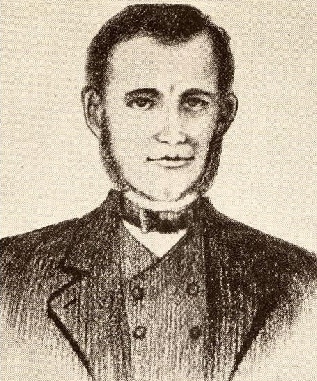
William B. Travis, painted by Henry Arthur McArdle, years after Travis's death, using a stand-in as a model.

In May 1831, upon his arrival in Mexican Texas, a part of northern Mexico at the time, Travis purchased land from Stephen F. Austin, who appointed him counsel from the United States.[20]

He set up a law practice in Anahuac and helped start a militia to oppose Mexican rule.[21] He subsequently became a pivotal figure in the Anahuac Disturbances.[20][22]

The Anahuac disturbances were conflicts that came shortly before the Texas Revolution and were the result of tensions between the Mexican government and Texian militias.

The first disturbance in 1832 was triggered by a dispute around the ownership of escaped slaves that the Mexican brigadier general Juan Davis Bradburn was keeping safe in his compound in Galveston, as well as Bradburn's suspicions around the militia that Travis was part of. In 1832, the slaveowner hired Travis to represent him and try to get the slaves back. He was arrested twice by Bradburn, including for suspicion of sending a threatening letter to Bradburn. Bradburn himself was convinced that Travis was part of a plot to revolt against Mexican rule. When an Anglo-Texian militia came to free Travis, he encouraged them to attack the Mexicans during the negotiation, despite Bradburn threatening to shoot Travis if the militia attacked. While Travis was freed in the negotiation, there was a short conflict that led to six deaths and the Turtle Bayou Resolutions.

A second dispute arose on June 27, 1835, when tensions escalated following anti-tax protests by the Texians, and the organization of a group known as the Citizens of Texas.[23]

Two men of the group, Briscoe and Harris, organized a stunt to test the tax laws and were arrested by Mexican commander Capt. Antonio Tenorio. The soldiers escorting Harris and Briscoe shot and wounded another Texian, young William Smith.

When news of the arrests was heard in San Felipe de Austin, political chief Peter Miller authorized Travis to gather a Texian Militia for a response. Travis commandeered a vessel at Harrisburg, and sailed for Anahuac. His 25-man force quickly gained surrender of the more than 40 Mexican troops. After disarming them, Travis and the company freed the Texians and expelled the Mexican troops.[24][25]

Because Travis had acted without broad community support, he apologized to avoid endangering Stephen F. Austin who was in Mexico City at the time. Later that summer, Mexican military authorities demanded the surrender of Travis for military trial, but the colonists opposed this.

The Texas Revolution and the Alamo

[edit]

Travis was commissioned as a lieutenant colonel of the Legion of Cavalry and became the chief recruiting officer for a new regular Texian army.[20] Governor Henry Smith ordered Travis to raise a company of professional soldiers to reinforce the Texians who were then under the command of James C. Neill at the Alamo Mission in San Antonio.[26] Travis considered disobeying his orders, writing to Smith: "I am willing, nay anxious, to go to the defense of Bexar, but sir, I am unwilling to risk my reputation ... by going off into the enemy's country with such little means, so few men, and with them so badly equipped."[27] James Bowie arrived at the Alamo with 30 men on January 19, 1836.[26] On February 3, Travis arrived in San Antonio with eighteen regulars as reinforcements. A compromise was reached between Bowie and Travis for command of the Alamo, with Bowie in command of the volunteers and Travis in command of the regulars.[22] When Bowie's health began to fail the compromise became irrelevant, and Travis became the official commander of the Alamo garrison.[26] On March 6, 1836, following a thirteen-day siege, Santa Anna ordered the assault on the Alamo during the predawn hours. Travis died fighting to the end, and his remains were burned along with all the other Alamo defenders.[26]

Travis's "Victory or Death" letter from the Alamo

[edit]
Plaque with the contents of the letter in front of the Alamo

On February 24, 1836, during Santa Anna's siege of the Alamo, Travis wrote a letter addressed "To the People of Texas and All Americans in the World":

Fellow citizens and compatriots;
I am besieged, by a thousand or more of the Mexicans under Santa Anna. I have sustained a continual Bombardment and cannonade for 24 hours and have not lost a man. The enemy has demanded a surrender at discretion, otherwise, the garrison are to be put to the sword, if the fort is taken. I have answered the demand with a cannon shot, and our flag still waves proudly from the walls. I shall never surrender or retreat. Then, I call on you in the name of Liberty, of patriotism and everything dear to the American character, to come to our aid, with all dispatch. The enemy is receiving reinforcements daily and will no doubt increase to three or four thousand in four or five days. If this call is neglected, I am determined to sustain myself as long as possible and die like a soldier who never forgets what is due to his own honor and that of his country. VICTORY or DEATH.
William Barret Travis
Lt. Col. Comdt.
P.S. The Lord is on our side. When the enemy appeared in sight we had not three bushels of corn. We have since found in deserted houses 80 or 90 bushels and got into the walls 20 or 30 head of Beeves.
Travis

He gave this letter to courier Albert Martin to deliver. The envelope that contained the letter was labeled "VICTORY or DEATH". The letter, while unable to bring aid to the garrison at the Alamo, did much to motivate the Texian army and helped to rally support in America for the cause of Texas independence. It also cemented Travis's status as a hero of the Texas Revolution.

Alleged burial

[edit]
Cathedral of San Fernando sarcophagus with images of Travis, Bowie and Crockett

A year after the battle, acting upon orders from General Felix Huston, Colonel Juan Seguín oversaw the reclamation of the abandoned ashes of the Alamo defenders from three sites. On March 28, 1837, an official public ceremony was conducted to give a Christian burial to the ashes. It was believed they were buried in the vicinity of the Alamo, but their exact location was forgotten over time. When San Antonio's Cathedral of San Fernando was being renovated for a new altar during the Texas 1936 centennial, human remains believed to be those of the Alamo defenders were found. Because of discrepancies in various accounts in the ensuing century after the burial, public opinion was divided about whether or not these were the remains of the defenders. The recovered ashes were re-interred in a marble sarcophagus inside the cathedral, purportedly containing the bones of Travis, Crockett and Bowie, as well as others.[28] Calls for DNA testing have not been acted upon.[29]

Family

[edit]

Travis married one of his former students, 16-year-old Rosanna Cato (1812–1848), on October 26, 1828. The couple stayed in Claiborne and had a son, Charles Edward, in 1829 and a daughter, Susan, in 1831.[30] They were officially divorced by the Marion County courts on January 9, 1836, by Act no. 115. Rosanna married Samuel G. Cloud in Monroeville, Alabama, on February 14, 1836. They both died of yellow fever during an epidemic which afflicted the state in 1848.

Charles Edward Travis (1829–1860) was raised by his mother and her second husband. He won a seat in the Texas legislature in 1853. In 1855, he enlisted in the United States Army as a captain in a cavalry regiment (which was later renamed the 5th Cavalry Regiment (United States) commanded by Albert Sidney Johnston) but was discharged in May 1856 for "conduct unbecoming an officer and a gentleman," following an allegation that he had cheated at cards.[31] He appealed the decision to no avail. He then turned to studying law, earning a degree from Baylor University in 1859. He died of consumption (tuberculosis) within a year and is buried in the Masonic Cemetery.[32][33]

Susan Isabella Travis (1831–1868) was born after Travis had departed for Texas. Although her paternity has been questioned,[34] Travis did name her as his daughter in his will. She married a planter from Chappell Hill, Texas.[35] Their son, who died young, was William Barret Grissett, and their daughter was Mary Jane Grissett Davidson DeCaussey.[36][37]

Legacy

[edit]

See also

[edit]

Citations

[edit]
  1. ^ McKeehan, Wallace L. "Gonzales Alamo Relief Defenders". Sons of DeWitt Colony Texas. Texas A&M University. Archived from the original on May 29, 2003. Retrieved January 23, 2009.
  2. ^ Davis 1998, p. 262.
  3. ^ a b c McDonald, Archie (March 24, 2017). "Travis, William Barret (1809–1836)". Texas State Historical Association (TSHA). Retrieved May 30, 2023.
  4. ^ "Texas Top 20 Attractions You Can't Afford To Miss". Attractions of America. Retrieved June 1, 2023.
  5. ^ Davis (1998), p. 189.
  6. ^ Davis (1998), p. 190.
  7. ^ Alabama Territory. A List of Taxable Property Taken in the County of Conecuh
  8. ^ Riley, B.F., Makers and Romance of Alabama History, 1951, pg. 98
  9. ^ William Travis Autobiography, 1833. There is no mention of Travis being given a position at the same academy. As McCurdy's academy opened when Travis was 16 and he changed schools to one in Monroe County at 16, it can be assumed that he went there, as well as taught there.
  10. ^ Davis (1998), p. 193.
  11. ^ McMillan Papers; Letford, "Story of William B. Travis". There is no firm evidence that Travis studied under Dellet, though members of his family and also a former probate judge of Monroe County claimed that he did.
  12. ^ Travis Family Bible. Travis wrote in his own handwriting that Charlie was born in 1828; however, that date was later changed in someone else's handwriting, to 1829. That was a very common practice that happened in the 18th and 19th centuries to purify marriages and family bibles from children being born before a wedding or before nine months had passed.
  13. ^ Claiborne Herald, February 27, 1829
  14. ^ Davis (1998), p. 199.
  15. ^ Davis (1998), p. 90.
  16. ^ Davis (1998), p. 201.
  17. ^ Davis, pg. 203
  18. ^ Davis (1998), p. 204.
  19. ^ Davis (1998), p. 205.
  20. ^ a b c Curtis, Gregory (January 1986). "The First Texas". Texas Monthly: 26, 88–89. Retrieved November 10, 2013.
  21. ^ "The Turtle Bay Resolutions". Texas State Library and Archives Commission. Retrieved November 10, 2013.
  22. ^ a b Davis 1966, p. xiv.
  23. ^ Lack, Paul (1992). The Texas Revolutionary Experience: A Political and Social History 1835-1836. USA: Texas A&M University Press. pp. 20–25.
  24. ^ Looscan, AB., "THE OLD FORT AT ANAHUAC", Southwestern Historical Quarterly Online, Volume 002, Number 1, pp. 21 - 28, accessed 28 Oct 2006
  25. ^ Eugene Barker, Excerpted publications Archived 2007-01-01 at the Wayback Machine
  26. ^ a b c d McDonald, Archie P. "William Barret Travis". Handbook of Texas Online. Texas State Historical Association. Retrieved November 10, 2013.
  27. ^ Hardin 1994, p. 117.
  28. ^ Sibley, Marilyn McAdams (October 1966). "The Burial Place of the Alamo Heroes". The Southwestern Historical Quarterly. 70 (2). Texas State Historical Association: 272–280. JSTOR 30236392.
  29. ^ Anderson, Christopher. "Group Targets Remains of Alamo Heroes. Defender's Relatives Want Church Sarcophagus Opened to Study Disputed Bones. San Antonio Express-News February 24, 1996. https://www.tamu.edu/faculty/ccbn/dewitt/adp/archives/newsarch/alamoash.html Archived March 5, 2016, at the Wayback Machine. Accessed August 7, 2016.
  30. ^ Davis 1966, p. xii.
  31. ^ Cutrer, Thomas W. "Charles Edward Travis". Handbook of Texas Online. Texas State Historical Association. Retrieved November 10, 2013.
  32. ^ "Chappell Hill, TX". Texas Escapes. Blueprints For Travel, LLC. Retrieved November 10, 2013.
  33. ^ Texas State Cemetery
  34. ^ Alamo Story
  35. ^ "Heart of San Antonio". Archived from the original on April 26, 2016. Retrieved September 15, 2018.
  36. ^ From Jamestown to Texas
  37. ^ Texas State Cemetery
  38. ^ "Details for William Barret Travis (Atlas Number 5071009135)". Texas Historical Commission. Retrieved May 28, 2023.
  39. ^ "Statues of Heroes". The Alamo. Retrieved May 28, 2023.
  40. ^ Mcphate, Christian (March 10, 2020). "Alamo Commander William Travis' Iconic Statue Rededicated at Collin County Courthouse". Local Profile. Retrieved May 28, 2023.
  41. ^ "'Travis Heritage Trail' designation celebrated". Hays Free Press. September 18, 2019. Retrieved May 28, 2023.

General and cited references

[edit]

Further reading

[edit]
[edit]
Revisions and contributorsEdit on WikipediaRead on Wikipedia
from Grokipedia

William Barret Travis (August 9, 1809 – March 6, 1836) was an American and soldier who commanded the Texian garrison at the in during the Siege of the Alamo in the . Born the eldest of eleven children to Mark and Travis in the Edgefield District of , he received early education in , apprenticed as a , and briefly practiced there after marrying Rosanna Cato in and fathering a son. Facing debts, a , and suspicions of his wife's , Travis abandoned his family and relocated to in 1831, settling in San Felipe de Austin to establish a legal practice amid rising tensions with Mexican authorities.
Travis participated in early revolutionary disturbances, including the 1832 Anahuac crisis, and later served as a scout and recruiter during the Texian of in late 1835. In January 1836, as , he assumed command of about 30 men at the Alamo, a number that grew to around 183 defenders by the time General Antonio López de Santa Anna's Mexican forces arrived and initiated a on February 23. On , amid the bombardment, Travis dispatched his renowned "" letter to "The People of & All Americans in the World," urgently requesting reinforcements and declaring unyielding resolve against surrender or retreat, which helped rally broader Texian support for independence. Travis was killed by a gunshot to the forehead early in the Mexican assault on March 6, along with nearly all his men, in a stand that delayed the enemy advance and symbolized sacrificial defiance central to the Texian victory at San Jacinto weeks later.

Early Life and Education

Ancestry and Childhood in

William Barret Travis descended from English settlers, with the Travis (originally Travers) family tracing its roots to early colonial ; the first known ancestor arrived in Jamestown in 1627, and subsequent generations migrated southward to establish s in the . His paternal line included Barrot (or Barrett) Travis, who founded a in the Edgefield of during the late 18th century. Travis was born on August 9, 1809—according to the family Bible, though some records cite August 1—on Mine Creek near the Red Bank community in the Edgefield District (later part of . He was the eldest of 11 children born to Mark Travis, a farmer and Revolutionary War veteran descendant, and Jemima Stallworth Travis, who hailed from a local family. Travis's early childhood centered on the family farm, where he contributed to agricultural labor alongside his siblings and parents, reflecting the typical rural existence of upcountry households dependent on subsistence farming and modest livestock rearing. The family attended Red Bank Baptist Church, instilling religious influences common to the Baptist-dominated region, and Travis received rudimentary home schooling from his mother, focusing on basic and arithmetic rather than formal instruction, which was limited in that frontier area until the family's relocation to in 1818.

Relocation to Alabama and Early Professional Pursuits

In 1818, the Travis family relocated from Edgefield District, South Carolina, to Conecuh County, Alabama, where Mark Travis had purchased land the previous year; the family contributed to the establishment of the town of Evergreen as the county seat. Seeking advanced education amid limited family resources, young Travis moved to nearby Claiborne in Monroe County, where he attended local academies and briefly worked as a teacher to support his . At age nineteen, in 1828, he commenced studying law in the office of Harry Toulmin, a former judge of the , and soon obtained a license to practice. Following licensure, Travis continued teaching school while apprenticing further under James Dellet, a prominent attorney and Alabama state legislator, through whom he honed his legal skills via extensive readings and oral examinations. Under Dellet's guidance, Travis qualified fully as an attorney, briefly partnering with him and operating a joint law office across the at . These early pursuits in education and law laid the foundation for his professional development in .

Struggles in Alabama

Marriage, Fatherhood, and Family Responsibilities

William Barret Travis married Rosanna Elizabeth Cato, a former student aged sixteen, on October 26, 1828, in Claiborne, . The couple established a in Claiborne, where Travis, then nineteen, continued his transition from to law practice while assuming initial responsibilities as a husband and provider. Their first child, son Charles Edward Travis, was born in 1829. A , Susan Isabella Travis, followed in early 1831, conceived before Travis's departure. As a father, Travis faced mounting financial pressures from professional debts, which strained his ability to fulfill familial obligations, including support for his young wife and children. In early 1831, amid creditor pursuits, Travis abandoned his pregnant wife and infant son, fleeing for without reconciliation or sustained provision for the family. This left Rosanna to raise the children alone initially, highlighting Travis's failure to uphold paternal duties amid personal and economic failures. Rosanna later remarried in 1840 to David Cloud, who assumed care of the children after her death in 1848. Travis studied law under Judge James Dellet in Claiborne, , and gained admission to the bar around at the age of nineteen or twenty. He initially partnered with Dellet but soon established an independent practice in Claiborne, while briefly operating a joint office in nearby . To attract clients, Travis founded the Claiborne Alabama Gazette newspaper, but it quickly failed, yielding minimal revenue from his sparse legal cases. His law practice struggled amid economic pressures and limited clientele, prompting speculative ventures in town lots, cotton, and slaves to support his family after marrying Rosanna Cato on October 26, 1828, and fathering a son in 1829. These efforts instead exacerbated his financial woes, leaving him perennially indebted by early 1831. Creditors, including Dellet, pursued repayment through civil suits, resulting in judgments against Travis for liabilities estimated at approximately $834—an substantial sum equivalent to several months' earnings for a modest professional at the time. Faced with court-ordered liability and impending arrest for nonpayment under Alabama's debtor laws, Travis's conflicts with creditors intensified, alienating associates and culminating in his abandonment of family and flight to in May 1831 to evade imprisonment. This departure resolved immediate creditor pressures temporarily, though he later repaid some obligations from earnings.

Alleged Personal Misconduct and Decision to Flee

In , Travis's to Rosanna Cato, contracted on October 23, 1828, deteriorated amid financial pressures and personal entanglements. By 1830, Travis had developed a romantic interest in Rebecca Cummings, a resident of Mill Creek in Conecuh County, leading to plans for contingent on his from Rosanna; this association strained his existing family ties and contributed to the marital breakdown. In his private diary, written in Spanish, Travis recorded an entry stating he had "f***** 49 women in my life," which historian William C. Davis in "Three Roads to the Alamo" interprets as likely referring to sexual relations with 49 different women, providing further insight into his personal character and behavior during this period. Rosanna later cited and cruel treatment in her 1835 petition, reflecting the interpersonal discord. Compounding these issues were Travis's mounting financial debts from his unprofitable law practice and ventures such as operating a short-lived . By early , he owed approximately $834 to multiple creditors, including local merchant James Dellet, prompting lawsuits and a judgment against him. Incarcerated briefly for nonpayment in January , Travis bonded out but faced imminent arrest and potential , as enforcement mechanisms in offered no viable resolution. Facing these converging personal and legal crises, Travis resolved to relocate to in 1831, abandoning his wife—then pregnant with their daughter , born later that year—and their two-year-old son, Charles Edward. This flight provided escape from creditors, as , under jurisdiction, lacked extradition reciprocity with at the time, allowing debtors a fresh start amid land speculation opportunities. Travis later remitted payments to settle his Alabama obligations after establishing his in , though the initial departure irreparably damaged his family relations.

Settlement and Pre-Revolutionary Activities in Texas

Immigration and Establishment as a Lawyer in Anahuac

Travis immigrated to in early 1831, despite the , which prohibited further Anglo-American settlement in the region to curb growing tensions over land and customs enforcement. He first arrived at the colony's administrative center of San Felipe de Austin, where, on May 21, 1831, empresario formally accepted him as a colonist and granted him a league of land (approximately 4,428 acres) in accordance with colonial empresario contracts. Seeking professional opportunities, Travis relocated to Anahuac, a small port settlement on the Trinity River near , which served as a key customs outpost under Mexican authority. There, he established a law practice in 1831, leveraging his prior experience as an attorney from to represent local settlers in land disputes, debt collections, and minor civil matters. His practice gained traction as colonists, facing bureaucratic hurdles from Mexican officials, sought legal advocacy against customs duties and property claims, though records indicate Travis also engaged in personal pursuits such as and socializing, as noted in his personal correspondence. Anahuac's strategic location near the Gulf Coast positioned Travis's office amid rising frictions over trade policies, but his initial focused on building a client base among the roughly 100-200 residents, including merchants and planters navigating empresario land titles. By late , Travis had secured a foothold in the community, though his unmarried status and outsider origins drew occasional scrutiny from local (mayor) John Austin, who enforced colonial oaths of allegiance to the . This period marked Travis's transition from debtor evasion to tentative professional stability in , albeit under the precarious legal framework of provincial governance.

Involvement in Resistance Against Mexican Authority

Travis immigrated to in early 1831 and settled in Anahuac, where he obtained land and established a law practice by May 21, 1831. There, he aligned with militant settlers, known as the "war party," who opposed the , which imposed trade restrictions and halted most Anglo-American immigration. Travis's legal work often brought him into conflict with local Mexican authorities, particularly over enforcement of customs duties and claims to runaway slaves, fostering early resistance among Texian colonists. In May 1832, Travis was hired by an American slave owner to recover fugitive slaves harbored near Anahuac, but Mexican commander Col. John Davis Bradburn, who had declared the area a customs port, arrested Travis and his law partner Patrick C. Jack on charges of inciting after they protested his actions and demanded the release of a . The two were imprisoned in an unfinished brick kiln lacking proper facilities. In response, approximately 200 armed assembled at Turtle Bayou on June 9, 1832, capturing 19 of Bradburn's cavalrymen as hostages to secure the prisoners' release; Travis actively led this opposition to Bradburn's rule. On June 13, 1832, the group drafted the Turtle Bayou Resolutions, which affirmed loyalty to the Mexican Constitution of 1824, expressed support for federalist Gen. against centralist Pres. , and demanded the prisoners' freedom without declaring outright independence. Col. José de las Piedras intervened from Nacogdoches, replacing Bradburn and releasing Travis and Jack, though the incident escalated into further clashes, including the Battle of Velasco on June 26, 1832. Tensions persisted, culminating in the second Anahuac Disturbance in June 1835, when customs enforcer Capt. Antonio Tenorio arrested trader Andrew Briscoe for refusing to pay duties. Travis raised a volunteer force of about 25 men, marched from the to Harrisburg, and on June 30, 1835, compelled Tenorio's garrison of roughly 40 soldiers to surrender without significant fighting, disarming them and expelling the Mexicans from the post. This action, while successful, drew criticism for lacking broader community backing, prompting Travis to issue a public apology; nonetheless, it heightened and contributed to the outbreak of the later that year.

Military Contributions to Texas Independence

Commission in the Texian Army and Initial Campaigns

Following the outbreak of the on October 2, 1835, with the Texian victory at the , William Barret Travis mobilized volunteers from the Anahuac area and joined the provisional besieging Mexican forces under General in de Béxar. He initially served as a scout in Captain Randall Jones's company during the siege, which began on October 12 and involved Texian forces under and encircling the town and conducting skirmishes to cut supply lines. Travis later assumed command of a cavalry unit and, in November 1835, led a raid that captured approximately 300 Mexican mules and horses grazing beyond the Medina River, depriving Cos's troops of vital resources. Travis did not remain for the siege's climax, departing before the decisive Texian assault from December 5 to 9, 1835, which forced Cos's surrender and expulsion from Béxar on December 10. Returning to San Felipe de Austin, he contributed to military planning by advising on cavalry organization for the revolutionary forces. In late December 1835, Travis accepted a commission as of the Legion of Cavalry, a regular unit in the , and was designated chief recruiting officer to bolster troop strength amid ongoing insurgent operations. In January 1836, Provisional Governor Henry Smith directed Travis to raise a of 100 men to reinforce Colonel Neill's garrison at Béxar, which had been left vulnerable after many volunteers dispersed following Cos's defeat. Travis recruited only about 29 volunteers, reflecting recruitment challenges due to volunteer fatigue and divided Texian priorities between defense and offensive expeditions like the Matamoros campaign. He marched these reinforcements to Béxar, arriving on February 3, 1836, to support Neill's approximately 100-man force in fortifying the former mission of de Valero (the Alamo) and other positions against anticipated Mexican advances. This deployment marked the transition from initial field campaigns to static defense preparations, as Mexican General Antonio López de Santa Anna mobilized centralist armies northward.

Assumption of Command at the Alamo

On February 3, 1836, Lieutenant Colonel William B. Travis arrived at the Alamo in de Béxar with approximately 30 cavalrymen, dispatched to reinforce James Clinton Neill's garrison of about 100 men amid rising tensions with Mexican forces. Neill, who had commanded since December 1835 following the Texian capture of Béxar, briefly transferred authority to Travis as the senior present, though Neill departed on February 11 or 14 to address family matters in Copano, leaving Travis in effective charge of the post. James Bowie, a colonel of volunteer forces who had arrived earlier in January with reinforcements, asserted command over the irregulars, creating friction rooted in the distinction between the provisional regular army under Travis and Bowie's independent volunteers. To avert internal conflict, Travis and Bowie reached a compromise for joint command around mid-February, with Travis overseeing the regulars and fortifications while Bowie handled the volunteers; this arrangement held until Bowie succumbed to severe illness—described in contemporary accounts as pneumonia, "hasty consumption," or possibly typhoid—rendering him bedridden. By February 24, 1836, the second day of the Mexican siege under General , Travis assumed sole command of the Alamo garrison, now numbering roughly 180-200 men including recent arrivals like Davy Crockett's group. This transition solidified Travis's authority over defenses, supply requests, and correspondence, as evidenced by his issuance of appeals for aid under his signature alone thereafter. The assumption reflected practical necessities of leadership amid deteriorating health conditions and escalating bombardment, rather than formal alone, given the ad hoc nature of Texian forces.

Defense of the Alamo

Leadership During the Siege

Upon sighting the vanguard of General Antonio López de Santa Anna's army on February 23, , Travis ordered the approximately 180 Texian defenders to withdraw into the fortified Alamo compound in de Béxar, initiating . He directed the reinforcement of the mission's walls, including the mounting of such as an 18-pounder on the chapel's and the stockpiling of supplies for a prolonged defense against an expected force of several thousand Mexican troops. Travis fired the 18-pounder in defiance shortly after the Mexicans raised their banners, signaling refusal to surrender and prompting Santa Anna to respond with encirclement and bombardment. Travis initially shared command with Colonel James Bowie, whose irregular volunteers rejected subordination to Travis's regular army commission, creating operational tensions that Travis mitigated through compromise to unify the garrison. Bowie's incapacitation by pneumonia on February 24 left Travis in sole authority over the defenders, including the recent arrival of about 30 volunteers under Davy Crockett on February 8, allowing him to centralize decisions on defense and supply management amid dwindling provisions and intermittent Mexican artillery fire that damaged structures but inflicted few casualties. Throughout the 13-day siege, Travis dispatched multiple couriers—such as Albert Martin on February 24 and on February 27—to eastern settlements, including Gonzales and Washington-on-the-Brazos, urgently requesting reinforcements from the and militias, emphasizing the strategic importance of holding the Alamo to delay Santa Anna's advance. These efforts yielded limited success, with only 32 reinforcements from Gonzales arriving on March 1, yet Travis maintained garrison morale through written appeals framing the defense as a stand for Texian liberty against centralist tyranny, while rejecting Mexican truces and parley demands. His leadership focused on active resistance, including skirmishes from the walls and repairs under fire, though outnumbered roughly 10-to-1 and facing superior Mexican engineering for ladders and trenches. As Mexican probes intensified in early March, Travis coordinated shifts for rest and vigilance, adapting to Santa Anna's no-quarter policy signaled by the red flag on February 23, which Travis countered by upholding the defenders' resolve against surrender despite awareness of the encroaching hopelessness. Accounts from survivor Joe, Travis's enslaved courier, describe his direct oversight of and rallying calls during bombardment lulls, underscoring a command style rooted in personal example amid logistical strains like scarce water from the system under disruption. This period highlighted Travis's tactical prudence in fortifying weak points, such as the between the and low , balanced against the causal reality of isolation from broader Texian forces mobilizing elsewhere.

Issuance of the "Victory or Death" Letter

On February 24, 1836, the second day of the siege of the Alamo by Mexican Army forces under General Antonio López de Santa Anna, William B. Travis, commanding the Texian garrison, composed a fervent appeal for reinforcements and supplies. The letter, addressed "To the People of Texas & All Americans in the World," detailed the encirclement of the Alamo mission by an estimated 2,000 to 4,000 Mexican troops, emphasizing the defenders' resolve despite ammunition shortages and the numerical disparity of roughly 200 Texians against superior forces. Travis asserted that the small force would hold the position until reinforcements arrived, declaring, "I shall never surrender or retreat," and concluded with the resolute phrase "Victory or Death," signed as "W. Barret Travis, Lt. Col. comdt." The document was dispatched from the Alamo via courier William Albert Martin, who evaded lines to deliver it to Gonzales, approximately 30 miles away, where it arrived to spur local volunteers. This plea, one of several Travis sent during the siege, was circulated widely, printed in the Telegraph and Texas Register on March 3, 1836, and read aloud at the Convention, galvanizing support for the revolutionary cause despite the ultimate failure to relieve the Alamo. In response, 32 men from Gonzales, known as the Immortal 32, marched to reinforce the garrison on , the only significant aid to arrive before the assault on March 6. The letter's rhetorical urgency and call to arms underscored Travis's strategic intent to buy time for the under to organize, reflecting a calculated defiance rooted in the broader fight against centralist Mexican policies like the abolition of the 1824 Constitution. Preserved as a primary artifact at the Texas State Library and Archives Commission, it exemplifies Travis's leadership in framing the Alamo defense as a pivotal stand for Texian independence, though aid proved insufficient against Santa Anna's overwhelming numbers.

Death in Battle and Immediate Aftermath

During the predawn assault by Mexican forces on , 1836, which commenced around 5:30 a.m. after a thirteen-day , William B. Travis was killed early in the fighting while commanding from the north wall of the Alamo. According to the eyewitness account of Joe, Travis's enslaved servant and one of the mission's few survivors, Travis was struck by a bullet that caused him to fall within the wall onto sloping ground, where he sat up amid the chaos. Joe further recounted that, as Mexican troops scaled the walls following initial repulses, a wounded Travis parried a strike from General Manuel Morales (or Mora in some renderings) with his own weapon before succumbing, likely to bayonet wounds or additional gunfire, as ensued. The assault concluded by approximately 8:00 a.m., with all able-bodied male Texian defenders, numbering between 182 and 257 by various estimates, slain; Travis, aged 26, was among the leadership fatalities that included and . In the hours following the battle, Mexican commander ordered the Texian bodies—including Travis's—collected from the compound, stacked into pyres at several locations around the Alamo, and burned, a measure intended to dispose of potential sources and underscore the . This cremation left no intact remains for identification or recovery, rendering the precise fate of Travis's body uncertain beyond the pyres' ashes, which were reportedly gathered and buried in a shallow pit nearby once the fires subsided. Santa Anna released noncombatant survivors, including Joe and , to carry news of the Mexican success to Texian settlements, an action that inadvertently disseminated details of the defenders' resistance and Travis's final stand. The immediate aftermath saw no formal honors for Travis or his men from the victors; instead, Mexican forces razed parts of the Alamo structure and advanced eastward, claiming a decisive triumph that temporarily demoralized some Texians but ultimately stiffened resolve against centralist rule. Travis's personal effects, such as correspondence and command records, were lost or scattered in the overrun mission, with family notification in Alabama occurring via delayed survivor relays rather than direct recovery. Tradition later ascribed Travis's ashes to a sarcophagus in San Antonio's San Fernando Cathedral, shared symbolically with Bowie and Crockett, though no empirical verification—such as DNA or archaeological confirmation—supports this attribution amid the documented burnings.

Family and Personal Legacy

Relations with Wife, Children, and Extended Kin

Travis married Rosanna Elizabeth Cato, one of his former pupils, on October 26, 1828, in Claiborne, ; he was nineteen years old, and she was sixteen. Their first child, son Charles Edward Travis, was born on August 6, 1829. A daughter, Susan Isabelle Travis, followed in 1831. The marriage collapsed under financial strain from Travis's obligations as surety for others' debts, leading to his arrest threats and eventual flight from creditors. In early 1831, Travis abandoned Rosanna and Charles Edward in Alabama, relocating to Texas without provision for their support; Susan Isabelle was born soon after his departure. Rosanna filed for divorce in 1834 on grounds of desertion, which a court granted in autumn 1835, after which she remarried Samuel G. Cloud in 1836. Travis maintained no documented correspondence or financial aid to Rosanna or the children thereafter, dying at the Alamo on March 6, 1836. Travis was the eldest of eleven children born to Mark Butler Travis and Jemima Stallworth Travis in Saluda County, South Carolina; the family relocated to , Conecuh County, Alabama, around 1818 when he was nine. Little evidence exists of sustained relations with his parents or siblings following his 1831 move to , though his early education included apprenticeship under an uncle, Alexander Travis, a in Sparta. His siblings included several brothers and sisters who remained primarily in , with no records indicating Travis sought or received assistance from extended kin during his Texas years.

Posthumous Care of Dependents and Descendants

Following William B. Travis's death at the Alamo on March 6, 1836, his primary dependents—former wife Rosanna Cato Travis (1812–1848) and their son Charles Edward Travis (1829–1860)—received no documented direct financial support or inheritance from his modest Texas estate, which was encumbered by prior debts and lacked a formal will specifying provisions. Rosanna, whom Travis had abandoned in in early 1831 amid mounting creditors and a duel scandal, had remarried physician Samuel B. Cloud circa 1836 and relocated with him and Charles to New Orleans, Louisiana. There, the family resided until Rosanna's death from during an 1848 epidemic on April 11. Charles Edward Travis, Travis's only confirmed child, was initially raised by his mother and stepfather in New Orleans but returned to following their separation. By the mid-1840s, he independently migrated to , where he enlisted as a Texas Ranger, served under in the Mexican-American War (1846–1848), and leveraged his father's heroic reputation to enter public life. Elected as a Democrat to the from Austin County in 1853, Charles represented the district during the 5th Legislature but died unmarried and without issue on September 1, 1860, in Austin County, leaving no direct descendants. While the enacted general bounty land policies granting 320 to 1,280 acres to heirs of fallen soldiers—including Alamo defenders—to honor their service, no specific records confirm such awards to Travis's non-resident family, possibly due to the prior and their absence from at the time of his death. Charles's later achievements in suggest informal advantages from familial legacy rather than structured state care, as he built his career through and political service without reliance on paternal assets. Rosanna's brief second marriage yielded a , Susan Isabella Cloud (b. circa ), but she predeceased her mother in youth and held no legal claim to Travis's lineage.

Historical Assessment and Enduring Impact

Recognition as a Hero of Liberty and Self-Government

William B. Travis's at the Alamo and his death on March 6, 1836, cemented his status as a and hero of the , symbolizing resistance to centralized tyranny and the pursuit of self-government for Anglo-American settlers in . His February 24, 1836, letter "To the of and All Americans in the World," concluding with "," served as a clarion call for reinforcements, embodying defiance rooted in American ideals of and galvanizing support for independence from Mexico's authoritarian regime. Posthumous honors reflect this recognition, beginning with the establishment of Travis County on January 25, 1840, by the Congress, named explicitly for Travis as commander at the Alamo to honor his sacrifice for Texian liberty. Additional commemorations include a at San Fernando Cathedral in , featuring effigies of Travis alongside and , installed as a tribute to the Alamo's fallen defenders of self-rule. In 2023, the named Travis the "Top Texan" in a public bracket-style tournament, affirming his enduring legacy as a pivotal figure in securing Texas's path to independent . A bronze statue of Travis, sculpted by James Muir, was unveiled at the Alamo on , 2023—marking his 214th birthday—positioned in the Ralston Family Collections Center to celebrate his commander's resolve in the fight for constitutional liberties against Santa Anna's forces. These tributes underscore Travis's role in the causal chain of the Revolution, where the Alamo's stand delayed Mexican advances, enabling Sam Houston's victory at San Jacinto on April 21, 1836, and the founding of the as a sovereign entity committed to self-government. Historical markers across further propagate this narrative, portraying Travis as an exemplar of martial virtue in defense of republican principles.

Empirical Evaluation of Character Flaws and Motivations

Travis's personal conduct revealed significant flaws in responsibility and fidelity. He married Susanna G. Coe on October 23, 1828, in , at age 19, and fathered a legitimate son, Charles Edward, on August 8, 1829. By May 1831, amid accumulating debts from unsuccessful legal and business pursuits in and , Travis deserted his wife—then pregnant or recently separated—and young son, fleeing to to evade creditors and legal entanglements. In Texas, he misrepresented his as single on immigration documents to Stephen F. Austin's colony, enabling settlement despite prohibitions on married applicants without family. Compounding this neglect, Travis engaged in an extramarital relationship shortly after arrival, fathering an illegitimate daughter, Susan Isabella Travis, born around 1831 to a local whose identity remains undocumented in primary records. His personal diary from this period includes an entry in Spanish tallying sexual relations with 49 women, which historian William C. Davis interprets in "Three Roads to the Alamo" (1998) as likely referring to 49 distinct individuals rather than repeated encounters with fewer. He provided no sustained support for either child or former wife, who later divorced him in fall 1835 amid his absence; Susanna remarried and raised Charles with limited aid from Travis's sporadic remittances. These behaviors empirically indicate self-interested flight from obligations, prioritizing individual escape over familial provision, as corroborated by colonial records and his own correspondence admitting "entanglements" back east. Assessing motivations, Travis's relocation to Texas initially aligned with economic opportunism—seeking a fresh start in and speculation amid growth—but evolved into active resistance against Mexican governance. By 1832, he participated in the , smuggling tobacco to defy customs duties under the , and briefly imprisoned by Mexican commander John Davis Bradburn, experiences that fueled his advocacy for Texian rights via Turtle Bayou Resolutions. As a War Party leader, his editorials in the Texas Courier from 1834 onward explicitly decried centralist encroachments on local autonomy, framing independence as essential to self-government rather than mere rebellion for gain. At the Alamo in February 1836, Travis assumed co-command despite internal frictions with , issuing appeals for reinforcements grounded in defense of constitutional liberties against Santa Anna's , culminating in his February 24 "Victory or Death" letter broadcast to municipalities. This resolve—refusing and holding the fort against 1,800-6,000 Mexican troops with fewer than 200 men—suggests motivations rooted in causal commitment to collective sovereignty, as he rejected personal flight options available to officers, per survivor accounts and his dispatches. While impulsivity marked his career (e.g., provocative pranks during Anahuac tensions), no verified evidence supports claims of dueling or , and his aligns with ideological consistency over continued , distinguishing revolutionary zeal from earlier personal defaults.

Countering Revisionist Narratives on the Texas Revolution

Revisionist accounts of the , such as those in Forget the Alamo (2021), assert that the conflict was principally motivated by Anglo-American settlers' determination to preserve slavery, portraying the independence movement as a racial and economic defense of human bondage rather than a struggle against authoritarian centralization. These narratives often downplay or omit the ' primary grievances, including Mexican President de Santa Anna's 1834 dissolution of the federalist Constitution of 1824, which had guaranteed and local akin to the U.S. model. The Turtle Bayou Resolutions of June 1832, drafted amid early unrest, explicitly protested Santa Anna's centralist policies and military overreach, demanding adherence to the 1824 constitution without referencing slavery as a core issue. Similarly, the of 1832 and 1835—in which William B. Travis played a leading role—involved resistance to arbitrary Mexican customs enforcement and the stationing of troops under Lt. Col. John Davis Bradburn, focusing on violations of and local authority rather than enslavement. Travis's involvement stemmed from activities to evade prohibitive tariffs, underscoring economic autonomy and rule-of-law concerns over chattel labor preservation. The , adopted on March 2, 1836, enumerates 1824 constitution abrogation, imposition of military governance, denial of jury trials, and suppression of free speech as principal causes, remaining silent on as a motivating factor. While some Texian leaders owned slaves and Mexico's 1829 abolition decree (partially unenforced) heightened tensions, empirical participation data reveals broad involvement: approximately 70% of Alamo defenders lacked slaveholding ties, and Mexican-born like fought alongside Anglos for federalist restoration. Volunteers from the , often non-slaveholders driven by republican ideals, swelled ranks post-Goliad and Alamo, indicating ideological commitment to self-government over economic self-interest in bondage. Primary documents, including Travis's February 24, 1836, "" letter, frame the Alamo defense as defiance against "a hostile soldiery quartered in our country" and tyranny, invoking principles of traceable to Anglo-American traditions without allusion to . Revisionist emphasis on enslavement aligns with post-1960s historiographical shifts influenced by institutional biases favoring , yet causal analysis prioritizes Santa Anna's 1835-1836 —marked by dissolution and federalist suppression—as the precipitating force, evidenced by contemporaneous Mexican federalist revolts in and elsewhere. This political rupture, not , unified diverse Texian factions against centralized despotism.

References

Add your contribution
Related Hubs
User Avatar
No comments yet.