Hubbry Logo
13141314Main
Open search
1314
Community hub
1314
logo
8 pages, 0 posts
0 subscribers
Be the first to start a discussion here.
1314
1314
from Wikipedia
1314 in various calendars
Gregorian calendar1314
MCCCXIV
Ab urbe condita2067
Armenian calendar763
ԹՎ ՉԿԳ
Assyrian calendar6064
Balinese saka calendar1235–1236
Bengali calendar720–721
Berber calendar2264
English Regnal yearEdw. 2 – 8 Edw. 2
Buddhist calendar1858
Burmese calendar676
Byzantine calendar6822–6823
Chinese calendar癸丑年 (Water Ox)
4011 or 3804
    — to —
甲寅年 (Wood Tiger)
4012 or 3805
Coptic calendar1030–1031
Discordian calendar2480
Ethiopian calendar1306–1307
Hebrew calendar5074–5075
Hindu calendars
 - Vikram Samvat1370–1371
 - Shaka Samvat1235–1236
 - Kali Yuga4414–4415
Holocene calendar11314
Igbo calendar314–315
Iranian calendar692–693
Islamic calendar713–714
Japanese calendarShōwa 3
(正和3年)
Javanese calendar1225–1226
Julian calendar1314
MCCCXIV
Korean calendar3647
Minguo calendar598 before ROC
民前598年
Nanakshahi calendar−154
Thai solar calendar1856–1857
Tibetan calendarཆུ་མོ་གླང་ལོ་
(female Water-Ox)
1440 or 1059 or 287
    — to —
ཤིང་ཕོ་སྟག་ལོ་
(male Wood-Tiger)
1441 or 1060 or 288

1314 (MCCCXIV) was a common year starting on Tuesday of the Julian calendar, the 1314th year of the Common Era (CE) and Anno Domini (AD) designations, the 314th year of the 2nd millennium, the 14th year of the 14th century, and the 5th year of the 1310s decade. As of the start of 1314, the Gregorian calendar was 8 days ahead of the Julian calendar, which was the dominant calendar of the time.

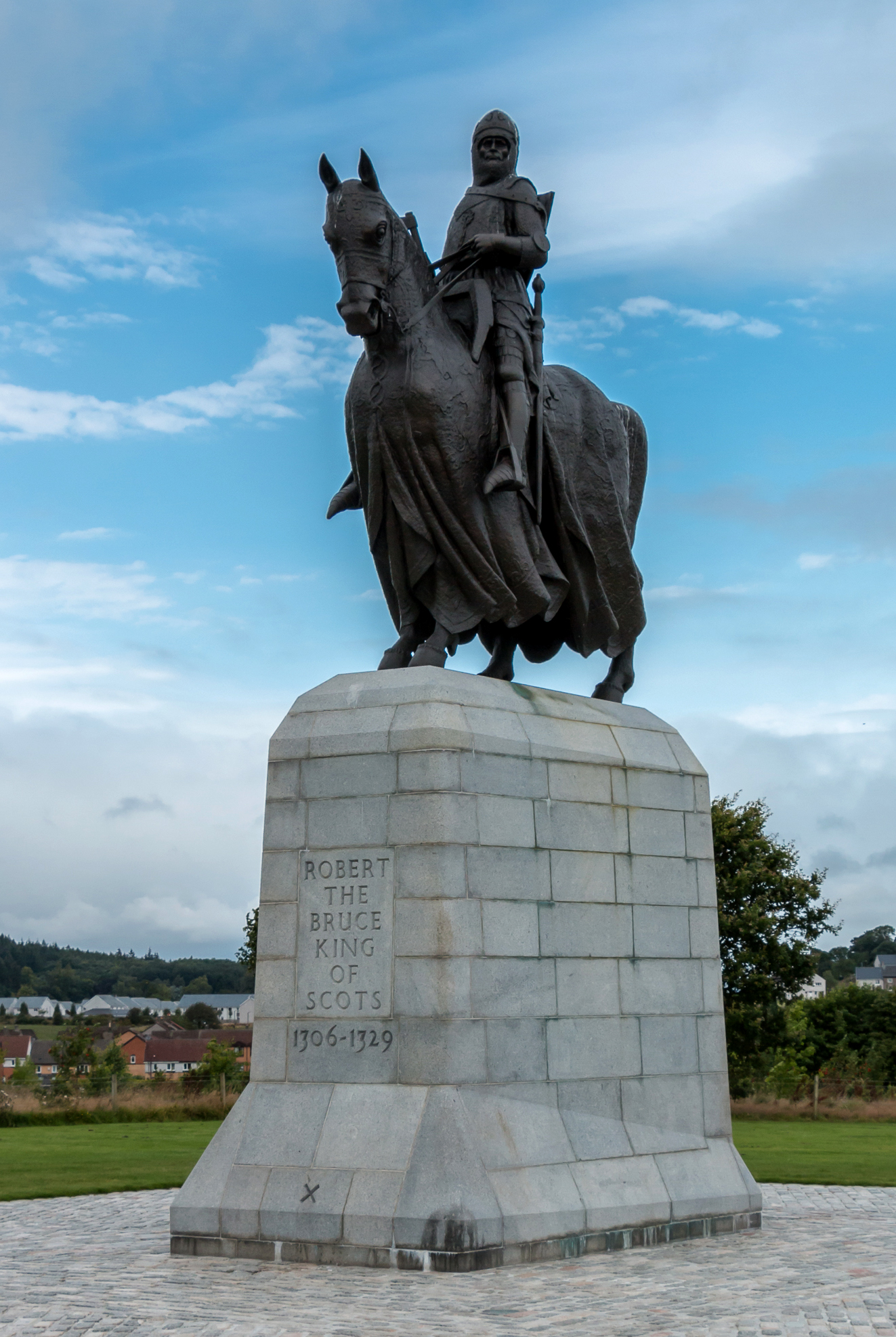
Statue of Robert the Bruce, Scottish victor over England at the Battle of Bannockburn
Battle of Bannockburn — first day
Battle of Bannockburn — second day

Events

[edit]

January – March

[edit]

April – June

[edit]

July – September

[edit]

October – December

[edit]

Undated

[edit]

By topic

[edit]

Religion

[edit]

Natural environment

[edit]

Births

[edit]

Deaths

[edit]

References

[edit]
Revisions and contributorsEdit on WikipediaRead on Wikipedia
from Grokipedia

1314 was the year in which Scottish king secured a decisive victory over English forces at the , fought on 23–24 June near , significantly advancing Scotland's independence from England during the . The battle pitted an outnumbered Scottish army, relying on schiltrons of spearmen and favorable terrain including the burn and marshy ground, against a larger English host under Edward II, resulting in heavy English casualties and the near-capture of the king himself. Earlier that year, on 18 March, , the last Grand Master of the Knights Templar, was burned at the stake in under orders from King , effectively ending the military order amid charges of heresy following its suppression in 1307. These events underscored the era's turbulent power struggles, with exemplifying effective tactical use of against feudal and marking a high point in Bruce's campaign to consolidate rule after his 1306 coronation.

Events

January–March

On March 18, 1314, , the last Grand Master of the Knights Templar, was executed by burning at the stake on the Île aux Juifs in , alongside , the order's preceptor of . The executions followed their public retraction of confessions extracted under torture during investigations ordered by King , who had arrested Templar leaders in 1307 amid charges of , , and immorality to justify seizing the order's extensive financial assets. De Molay and Charney, having initially confessed to pressure the previous year, reaffirmed their innocence before a crowd on the , leading Philip's officials to deem them relapsed heretics warranting death by fire as per inquisitorial procedure. This final act concluded trials that Pope Clement V had reluctantly endorsed under Philip's influence, after the pontiff's 1312 bull Vox in excelso suppressed the Templars without formally convicting them of heresy, transferring their properties to the Knights Hospitaller while allowing individual acquittals or penances. , deeply indebted from wars and seeking fiscal relief, had coerced Clement—who resided in and depended on royal protection—into papal endorsement of the arrests and proceedings, despite earlier Templar absolutions like the 1308 . No other significant dated events in January or February 1314 are recorded in contemporary chronicles, with the Templar burnings marking the quarter's primary occurrence amid ongoing European feudal tensions.

April–June

died on April 20 in Roquemaure, , concluding a pontificate marked by the relocation of the papal court to and the suppression of the Knights Templar under pressure from King . His death, attributed to illness following the ingestion of emeralds as a purported remedy, left the Church without a pope until the election of John XXII later that year. Clement's decisions had laid the groundwork for the , shifting ecclesiastical power northward amid French royal influence. The Battle of Bannockburn occurred on June 23–24 near Stirling, Scotland, where forces led by King Robert the Bruce decisively defeated the English army under King Edward II. Scottish troops, numbering around 6,000–7,000 infantry, utilized schiltron formations—dense pike squares effective for defense—and exploited the marshy terrain and the Bannock Burn stream to disrupt English cavalry charges. The English, with approximately 15,000–20,000 men including heavy cavalry, suffered a rout on the second day after initial clashes. Casualties were starkly asymmetrical: Scottish losses estimated at 500 to 4,000, while English dead reached around 10,000, including numerous knights and the , Gilbert de Clare. This victory secured Scottish control over and bolstered Bruce's campaign for .

July–September

Following the decisive Scottish victory at the on June 23–24, and a small escort fled northward to , held by English allies, before sailing south to and continuing overland to , where he arrived amid mounting domestic criticism from nobles for the campaign's failure. Scottish forces under Robert I pursued stragglers across the battlefield and into , capturing thousands of prisoners, vast quantities of equipment, and supply trains, which materially boosted Scotland's resources and demoralized English garrisons. These actions marked the initial phase of post-battle consolidation, with Bruce prioritizing the forfeiture and reallocation of estates held by English sympathizers to solidify loyalty among his supporters, though detailed records of specific redistributions in this period rely heavily on later Scottish chronicles like John Barbour's The Brus (c. 1375), which emphasize triumphant narratives but reflect evident partisan favoritism toward Bruce's regime. In , the ongoing papal conclave at , —convened since May 1 following the death of —was disrupted on July 14 when Italian cardinals withdrew from the proceedings, protesting harassment and intimidation by French partisans favoring a Gallic pope, a move that exacerbated factional divisions and extended the for two more years until the election of John XXII in 1316. This incident underscored the influence of secular monarchs, particularly the French crown, over ecclesiastical elections during the period's prelude, with primary accounts from cardinal diaries highlighting the pressures but varying in emphasis on versus plague-related dispersal. No major military engagements or territorial shifts were recorded in other regions during this quarter, reflecting a lull amid broader climatic stresses from prolonged wet weather contributing to the onset of the Great Famine.

October–December

On October 20, 1314, Louis, Duke of , was elected by a majority of prince-electors assembled near , securing his claim to the imperial throne vacant since Henry VII's death in 1313. This selection by electors including those of , the Palatinate, , and highlighted Wittelsbach influence amid princely rivalries, though a minority faction simultaneously backed , Duke of , resulting in dual kingships and the German Civil War until Louis's victory at in 1322. The contested vote underscored the electoral college's autonomy from papal oversight, as electors rejected Clement V's arbitration attempts. Philip IV of France died on November 29, 1314, at from complications following a hunting accident, ending his 29-year reign marked by territorial expansion and fiscal centralization. His eldest son, Louis, immediately acceded as Louis X, inheriting a kingdom strained by debts, noble unrest, and the recent suppression of the Templars, with the succession formalized without contest due to under Capetian custom. Louis X's brief rule initiated dynastic instability, as his policies toward serf and fiscal relief aimed to consolidate support but exposed vulnerabilities exploited after his death in 1316. In , the strategic fallout from Robert the Bruce's June victory at persisted into late 1314, with Scottish raids into northern counties prompting Edward II to pursue recovery through military reorganization and overtures to domestic magnates for renewed levies, though baronial divisions hampered unified diplomatic initiatives against . These efforts reflected causal pressures from the defeat, which had dismantled English garrisons and emboldened Bruce's consolidation, forcing Edward to prioritize internal stability over immediate cross-border negotiations.

Undated Events

In , prolonged and excessive rainfall throughout 1314 saturated agricultural lands, leading to waterlogged soils, delayed plantings, and diminished grain yields that foreshadowed the severe harvest shortfalls of 1315–1317, amid significant early 14th-century climate shifts contributing to poor harvests and famine conditions across Europe. Contemporary chronicles from and the documented flooded fields and rotting crops, with initial livestock losses from feed shortages exacerbating rural distress. These conditions, while not yet triggering full , strained food supplies and prompted early royal interventions in grain distribution in regions like and northern France. In , Robert I (the Bruce) advanced territorial consolidation after his June victory at by systematically forfeiting lands from recalcitrant nobles and English sympathizers, reallocating estates to allies who had demonstrated loyalty during the Wars of Independence. This redistribution, lacking precise chronological records within the year, included seizures from Comyn and Balliol adherents, thereby integrating southwestern and border territories more firmly under royal control and diminishing internal factionalism. Scottish forces under Bruce's command also conducted sporadic raids on lingering English-held castles, such as those in , employing guerrilla tactics to harass garrisons and secure supply lines without documented monthly attributions. Across , authorities continued the liquidation of properties following the order's 1312 papal suppression, with royal and ecclesiastical officials auctioning or transferring assets like preceptories and urban holdings to creditors or rival orders amid ongoing legal disputes. In and the , these proceedings involved inventories of Templar financial records and debt settlements, yielding revenues that bolstered secular treasuries but faced resistance from claimants asserting prior loans. Such activities, protracted without fixed timelines in 1314, reflected the incomplete dissolution of Templar economic networks established over centuries.

Events by Topic

Religion

In 1314, the suppression of the Knights Templar reached its final stages, with several high-ranking members, including Grand Master Jacques de Molay, publicly recanting coerced confessions of heresy and facing execution as relapsed heretics under orders influenced by King Philip IV of France. The original charges—encompassing idolatry through alleged worship of a head called Baphomet, denial of Christ during initiation rites, sodomy, and spitting on the cross—stemmed primarily from confessions extracted via torture, such as rackings and threats of burning, with subsequent recantations undermining their validity. Historical analysis indicates these accusations lacked empirical substantiation beyond the inquisitorial process, serving instead as a mechanism for Philip IV to alleviate royal debts to the order and confiscate its extensive assets amid France's fiscal crises. Papal bulls like Vox in excelso had formally dissolved the order in 1312 under Clement V's reluctant approval, but the 1314 events underscored the primacy of monarchical financial imperatives over independent ecclesiastical judgment. Pope Clement V's death on April 20, 1314, at Roquemaure in Provence, marked a pivotal transition, exacerbating the papacy's entanglement with French royal authority. Elected in 1305 as a Gascon cleric, Clement had relocated the papal court to by 1309, a move reflecting his dependence on IV's protection amid Italian unrest and the king's pressures, including over the Templar affair. His pontificate prioritized political accommodation—evident in yielding to Philip's demands for Templar trials despite scant doctrinal evidence of systemic —over traditional papal , setting precedents for the Papacy's prolonged French orientation. The ensuing , commencing with a conclave on May 1, 1314, at , highlighted institutional vulnerabilities, as French cardinals' dominance delayed resolution until 1316 and the election of John XXII. This vacuum prolonged uncertainties in ecclesiastical governance, including unresolved Templar property distributions, where empirical records show allocations favored secular beneficiaries aligned with rather than religious reform. Causal factors point to structural subservience, with Clement's actions driven by survival amid royal coercion rather than theological conviction, as corroborated by contemporary chroniclers noting the absence of corroborative trials elsewhere in .

Warfare and Conflicts

The exemplified , where Robert the Bruce's Scottish forces, numbering approximately 6,000 to 8,000 organized in formations, leveraged terrain advantages and high morale to defeat Edward II's larger English army of 15,000 to 25,000 men, which depended heavily on and longbowmen. Scottish tactics emphasized defensive positioning along the marshy banks of the Bannock Burn, augmented by concealed pits and caltrops that disrupted English charges, while compact squares withstood and assaults through disciplined cohesion. English logistical strains from extended supply lines into hostile territory, combined with internal baronial divisions undermining command unity under Edward II, compounded tactical failures as knights became mired in soft ground and uncoordinated with support. Bruce's leadership capitalized on recent victories, including castle reductions from 1310 to 1314, fostering national resolve and enabling opportunistic maneuvers that exposed English overconfidence in feudal levies ill-suited to Scottish guerrilla precedents. This outcome highlighted causal factors of dictating mobility—favoring lighter Scottish forces over armored English knights—and the morale edge from Scottish agency in reclaiming , rather than inherent English strategic flaws alone. Beyond , Anglo-Scottish hostilities featured opportunistic raids, such as Thomas Randolph's night assault capturing on March 14, demonstrating Scottish emphasis on swift, low-commitment strikes to erode English garrisons without pitched battles. In the , the October 20 election of Louis IV of Wittelsbach as by four electors sparked immediate tensions with Habsburg supporters, who countered with Frederick the Fair's rival claim, setting the stage for civil war through disputed legitimacy and princely rivalries, though major engagements ensued post-1314. These conflicts underscored leadership disputes and electoral logistics as precursors to prolonged strife, privileging factional cohesion over unified imperial authority.

Natural Environment

In , 1314 marked the initial phase of a shift toward cooler and wetter climatic conditions, characterized by excessive rainfall that saturated soils and hindered . Documentary records from chronicles indicate torrential rains during the autumn and winter, leading to widespread flooding of fields in Britain and the , which delayed plowing and compromised seed germination for the following year's crops. Hydroclimatic reconstructions confirm that the summer of 1314 was among the wettest in the region over the preceding centuries, with anomalies exceeding norms across much of and contributing to early signs of yield reductions through waterlogged ground impeding root development. Annals and proxy data further document an uptick in storm activity, including earlier autumn gales that disrupted coastal trade routes and exacerbated inland flooding independently of anthropogenic influences. These events, corroborated by monastic records, reflect heightened atmospheric variability as precursors to broader patterns, rendering medieval agrarian systems—reliant on marginal and limited drainage—particularly susceptible to cascading effects on without invoking later outcomes. Such conditions underscore the vulnerability of pre-industrial ecosystems to short-term climatic perturbations, where persistent reduced aerobic processes essential for nutrient uptake in staple crops like and .

Demography

Births

(c. 1314 – 15 August 1369), born in in the County of Hainault, later married in 1328, serving as and mother to at least twelve children who extended the Plantagenet line amid ongoing Anglo-Continental diplomacy. Ramathibodi I (c. 1314 – 1369), born in what is now , , founded the Kingdom of Ayutthaya in 1350–1351 by consolidating power from Sukhothai and Khmer influences, initiating a dynasty that ruled Siam until its sack by in 1767. Valdemar III of Denmark (1314 – 1375), son of Eric II, , and Adelaide of Holstein, acceded as underage king of from 1326 to 1329 during the following II's deposition, later resuming as and engaging in civil strife over Scanian territories against Valdemar IV. (c. 1314 – 1392), born to a family in Rostov, emerged as a monastic reformer whose bolstered Orthodox spirituality and centralization against Mongol overlordship. Historical records for 1314 births remain fragmentary, confined largely to elites whose lineages were documented in chronicles or charters, with commoner demographics unrecorded absent parish registers that emerged centuries later.

Deaths

On March 18, 1314, , the last Grand Master of the Knights Templar, was burned at the stake on the Île aux Juifs in after recanting a extracted under , formally ending the order's leadership and contributing to its suppression ordered by and King . Pope died on April 20, 1314, at Roquemaure in from a prolonged abdominal illness, amid ongoing controversy over his role in disbanding the Templars and relocating the papacy to , which destabilized ecclesiastical authority in . During the on June 23–24, 1314, English forces suffered heavy noble casualties, including Gilbert de Clare, 7th Earl of Gloucester, trampled in the melee; , struck down by King Robert I of Scotland; and , a veteran knight who perished covering King Edward II's retreat, weakening the Plantagenet aristocracy's military cadre. John Balliol, deposed King of Scots (r. 1292–1296), died in late 1314 at his family estate in Hélicourt, France, eliminating a lingering dynastic rival to Robert I and solidifying Bruce's unchallenged rule amid the Wars of Scottish Independence.

Historical Significance

Immediate Political Impacts

The decisive Scottish victory at the Battle of Bannockburn on June 23–24, 1314, enabled Robert the Bruce to eliminate remaining English garrisons and consolidate royal authority across Scotland by the end of the year, fostering a period of relative internal stability that allowed aggressive cross-border incursions into northern England starting in 1315. These raids, which captured key border castles and disrupted English supply lines, intensified baronial discontent with Edward II's military failures and fiscal demands, contributing to the Ordinances of 1311's enforcement and the king's temporary exile from governance in 1314–1315. This strengthened position under paved the way for the Declaration of , issued on April 6, 1320, by Scottish nobles to , which asserted the nation's sovereign right to and Bruce's legitimate kingship, directly building on Bannockburn's validation of Scottish resistance to English overlordship. The declaration's emphasis on conditional loyalty to the king—revocable if were compromised—reflected short-term political maneuvering to secure papal of excommunicates and diplomatic leverage amid renewed English invasions by 1322. In England, Bannockburn's aftermath eroded Edward II's prestige, fueling alliances among marcher lords and fueling the Despenser regime's unpopularity, which sparked by 1321. The suppression of the Knights Templar, marked by the execution of Grand Master and other leaders in on March 18, 1314, permitted King to confiscate substantial Templar assets, including lands, banking operations, and liquid wealth estimated to alleviate the crown's chronic debts from wars and administrative expansion. Although papal decree under Clement V directed transfers primarily to the Knights Hospitaller via the 1312 bull Ad providam, French royal seizures diverted much to the treasury, providing immediate fiscal bolstering until Philip's death on November 29, 1314, while underscoring the crown's practical override of papal directives and accelerating perceptions of weakened influence over secular monarchs. Louis X's accession upon IV's death on November 29, 1314, inherited a strained by fiscal overreach and noble resentments, prompting revenue-focused reforms like the July 1315 ordinance offering serfs in royal domains freedom upon payment of a fixed sum equivalent to six years' , which freed thousands but prioritized short-term crown income over feudal stability. This measure, alongside readmission of expelled in 1306 upon payment, exacerbated noble opposition by altering traditional labor and structures, intensifying factional strife that persisted through Louis's death in June 1316 and into the minority of V, manifesting in regional revolts and weakened central authority by 1320.

Long-term Legacy and Debates

The Battle of Bannockburn's long-term legacy has been debated among historians, with interpretations emphasizing Scottish tactical innovations, such as the effective use of formations against English cavalry, over narratives of unalloyed moral triumph or exaggerated English defeats. Scottish chronicles, including those compiled under royal patronage, inflated English casualties to over 10,000 while minimizing Scottish losses, figures modern analyses revise downward to around 4,000-6,000 English dead based on logistical constraints and archaeological of limited mass graves, highlighting chroniclers' bias toward glorifying the Bruce's kingship rather than objective accounting. English contemporary accounts, conversely, framed Bruce's victory as stemming from Edward II's overextended supply lines and poor terrain choices rather than inherent Scottish superiority, while underscoring Bruce's prior treachery, including his 1306 stabbing of rival John Comyn in a Dumfries church sanctuary, an act English inquisitions attributed to Bruce's desperation to eliminate opposition to his throne claim amid Comyn's alleged refusal to join his rebellion. Regarding the Knights Templar trials culminating in 1314, a consensus among historians holds that the order's dissolution under reflected political expediency by indebted monarchs like , who orchestrated arrests in 1307 to seize assets amid fiscal strain from wars and devaluations, rather than substantiated esoteric heresies or immorality. Confessions extracted via were later recanted by figures like Grand Master , prompting debates over their reliability as evidence of guilt versus self-preservation under duress, with some scholars questioning the uniformity of recantations as potentially coerced to align with papal suppression at the 1312 . Philip's unvarnished motives centered on liquidating Templar wealth to offset crown debts exceeding 200,000 livres annually by 1307, framing the charges as a mechanism for monarchical consolidation against semi-autonomous military orders. Broader interpretations position 1314 as a hinge in medieval Europe's shift toward centralized monarchies, where pragmatic royal realism supplanted feudal fragmentation and papal universalism, evidenced by Bruce's post-Bannockburn consolidation of Scottish lordships through forfeiture and alliance, paralleling Philip's erosion of ecclesiastical independence. This pivot, however, invites critique of nationalist myths prioritizing "freedom" over causal drivers like Bruce's opportunistic and fiscal opportunism, with English sources decrying his Comyn murder as profane betrayal enabling Bannockburn's logistical edge. Such debates underscore the need to privilege empirical records—like supply manifests and trial depositions—over hagiographic chronicles biased by victors' patronage.
Previous yearNext year

References

Add your contribution
Related Hubs
User Avatar
No comments yet.