Hubbry Logo
Missile guidanceMissile guidanceMain
Open search
Missile guidance
Community hub
Missile guidance
logo
8 pages, 0 posts
0 subscribers
Be the first to start a discussion here.
Missile guidance
Missile guidance
from Wikipedia
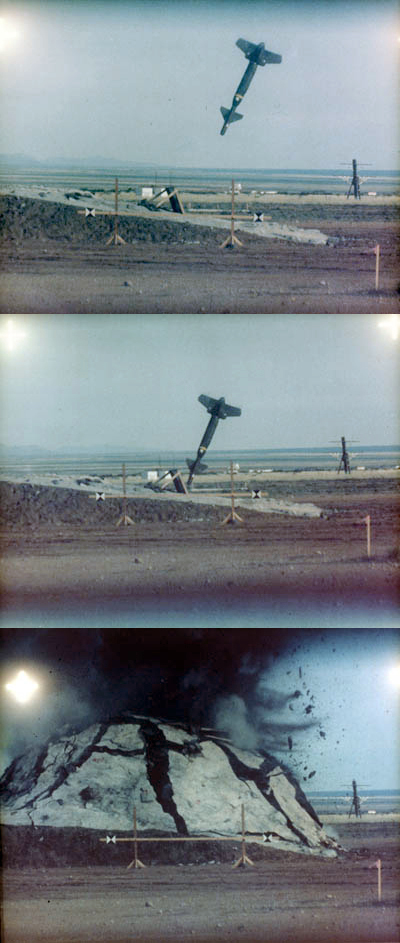
A guided bomb strikes a practice target

Missile guidance methods are used to guide a missile or a guided bomb to its intended target. The missile's target accuracy is a critical factor for its effectiveness. Guidance systems improve missile accuracy by improving its Probability of Guidance (Pg).[1]

These guidance technologies can generally be divided up into a number of categories, with the broadest categories being "command", "homing", and "non-homing" guidance.[2] Missiles and guided bombs generally use similar types of guidance system, the difference between the two being that missiles are powered by an onboard engine, whereas guided bombs rely on the speed of the launch aircraft and gravity for propulsion.

History

[edit]

In the late 1880s, Jules Verne featured in his fiction books a rocket-powered missile with a target seeker, proximity fuze, and a warhead.[3]

During World War I, various nations experimented with guided missiles. Systems were developed for the first powered drones by Archibald Low (the father of radio guidance).[4] In France, Pierre Lorin developed a radio-powered missile with the intention of using it to strike Berlin, but the French military was not interested in the project.[3]

During World War II, guided missiles were developed as part of the German V-weapons program.[2] At the time, Germany was limited by the Treaty of Versailles from developing conventional weapons, so they focused their efforts on new weapons outside the provisions of the treaty. Guided missiles were one such avenue of development. The American Army Air Forces had dozens of various programs experimenting with "flying bombs, glide bombs, and vertical bombs".[3]

Following World War II, in the winter of 1946, President Harry S. Truman ordered funding cuts from programs across the American armed forces, particularly targeted at research and development. In response to these cuts, which became known as "the black Christmas of 1946", the Air Staff reduced the guided missile budget by 55%. By the end of March of the following year, 10 guided missile projects had been cancelled and 19 remained.[3]

Upon the opening of the Korean War, American development of guided missiles was rapidly accelerated.

The first U.S. ballistic missile with a highly accurate inertial guidance system was the short-range PGM-11 Redstone.[5]

Categories of guidance systems

[edit]

Guidance systems are divided into different categories according to whether they are designed to attack fixed or moving targets. The weapons can be divided into two broad categories: Go-onto-target (GOT) and go-onto-location-in-space (GOLIS) guidance systems.[6][7] A GOT missile can target either a moving or fixed target, whereas a GOLIS weapon is limited to a stationary or near-stationary target. The trajectory that a GOT missile takes while attacking a moving target is dependent upon the movement of the target.

Common configurations of missiles
Category Method of navigation Sensors Examples
Active homing
  • Proportional navigation
  • Pure pursuit
  • Deviated pursuit
  1. Radar
  2. Infrared
  3. Imaging infrared
  4. Laser
  5. TV
AIM-120 AMRAAM, R-77
Semi-active homing
  • Proportional navigation
  • Pure pursuit
  • Deviated pursuit
  1. Radar
  2. Infrared
  3. Imaging infrared
  4. TV
  5. Laser
AIM-7 Sparrow, R-27R
Passive homing
  • Proportional navigation
  • Pure pursuit
  • Deviated pursuit
  1. Infrared
  2. Visible light
  3. Electromagnetic energy
FIM-92 Stinger, 9K38 Igla
Command
  • Any method
  1. Radar
  2. Infrared
  3. Visible light
MIM-104 Patriot, S-300P/PT
Beam rider (CLOS)
  • Pursuit (LOS)
  • Preset
  1. Radar
  2. Infrared
  3. Visible light
Seaslug, 9K121 Vikhr

Go-onto-target (GOT) systems

[edit]
Israel's Arrow 3 missiles use a gimbaled seeker for hemispheric coverage. By measuring the seeker's line of sight propagation relative to the vehicle's motion, they use proportional navigation to divert their course and line up exactly with the target's flight path.[8]

Homing guidance

[edit]

Homing guidance systems use sensors within the missile to sense the target and then use that information to generate control commands. Possible sensors include radar, infrared sensors, or light sensors. Homing missiles usually do not need to communicate with a ground station or other launch platform.[9] Homing guidance is useful in situations where a fire-and-forget missile is needed.[2]

Remote control guidance

[edit]

These guidance systems usually need the use of radars and a radio or wired link between the control point and the missile; in other words, the trajectory is controlled with the information transmitted via radio, beam, or wire (see Wire-guided missile). Some missiles will use both command guidance and homing guidance at different phases of flight. Commonly missiles will use command guidance during the boost and middle phases of flight, then switch to homing guidance in the terminal phase.[2]

Command guidance

[edit]

Command guidance is a system in which the guidance commands originate outside the missile.[2] Command guidance requires two links between the missile and the transmitter: the information link and the command link. The information link allows the controller to determine the position of the missile, and the command link allows commands to be transmitted from the controller to the missile. In some systems, both links are accomplished using the same tracking unit (i.e. radar, optical, laser, or infrared), but others have a distinct tracking unit for each system.[9][2] A disadvantage of command guidance is it requires the target to be illuminated by an external energy source, from the launcher or elsewhere. This can alert the target, which could then conduct evasive maneuvers or SEAD.[2]

Beam riding

[edit]

Beam riding missiles use an electromagnetic beam of some sort, typically radar or laser, which is pointed at the target. Sensors on the rear of the missile receive the beam and the control systems of the missile use this information to calculate steering commands, attempting to keep the missile in the beam.[2] These are sometimes considered distinct from command guidance.[9]

Beam riding systems are often SACLOS, but do not have to be; in other systems the beam is part of an automated radar tracking system. A case in point is the later versions of the RIM-8 Talos missile as used by the United States largely during the Vietnam War – the radar beam was used to take the missile on a high arcing flight and then gradually brought down in the vertical plane of the target aircraft, the more accurate SARH homing being used at the last moment for the actual strike. This gave the enemy pilot the least possible warning that his aircraft was being illuminated by missile guidance radar, as opposed to search radar. This is an important distinction, as the nature of the signal differs, and is used as a cue for evasive action.

An advantage of beam riding is multiple missiles may be launched at once using the same beam, due to the reduced tracking load on the launcher.[2] Beam riding suffers from the inherent weakness of inaccuracy with increasing range as the beam spreads out. Laser beam riders are more accurate in this regard, but they tend to be shorter range, and the laser beam can be degraded by bad weather. SARH becomes more accurate with decreasing distance to the target, so the two systems are complementary.[10]

Go-onto-location-in-space (GOLIS) systems

[edit]

Whatever the mechanism used in a GOLIS guidance system is, it must contain preset information about the target. These systems' main characteristic is the lack of a target tracker. The guidance computer and the missile tracker are located in the missile. The lack of target tracking in GOLIS necessarily implies navigational guidance.[11]

Navigational guidance is any type of guidance executed by a system without a target tracker. The other two units are on board the missile. These systems are also known as self-contained guidance systems; however, they are not always entirely autonomous due to the missile trackers used.

Preset guidance

[edit]

Preset guidance is the simplest type of missile guidance. From the distance and direction of the target, the trajectory of the flight path is determined. Before firing, this information is programmed into the missile's guidance system, which, during flight, maneuvers the missile to follow that path. All of the guidance components (including sensors such as accelerometers or gyroscopes) are contained within the missile, and no outside information (such as radio instructions) is used. An example of a missile using preset guidance is the V-2 rocket.[11][9]

Inertial guidance

[edit]
Inspection of MM III missile guidance system

Inertial guidance uses sensitive measurement devices to calculate the location of the missile due to the acceleration put on it after leaving a known position. Early mechanical systems were not very accurate, and required some sort of external adjustment to allow them to hit targets even the size of a city. Modern systems use solid state ring laser gyros that are accurate to within metres over ranges of 10,000 km, and no longer require additional inputs. Gyroscope development has culminated in the AIRS found on the MX missile, allowing for an accuracy of less than 100 m at intercontinental ranges. Many civilian aircraft use inertial guidance using a ring laser gyroscope, which is less accurate than the mechanical systems found in ICBMs, but which provide an inexpensive means of attaining a fairly accurate fix on location (when most airliners such as Boeing's 707 and 747 were designed, GPS was not the widely commercially available means of tracking that it is today). Today guided weapons can use a combination of INS, GPS and radar terrain mapping to achieve extremely high levels of accuracy such as that found in modern cruise missiles.[5]

Inertial guidance is most favored for the initial guidance and reentry vehicles of strategic missiles, because it has no external signal and cannot be jammed.[2] Additionally, the relatively low precision of this guidance method is less of an issue for large nuclear warheads.

A variant of inertial guidance for engaging slow-moving targets is predicted line of sight (PLOS), which flies the missile along a pre-calculated curved path to remain on the line of sight between launcher and target. Since PLOS missiles do not rely on onboard seekers or post-launch command links, they are immune to many countermeasures. This method is employed in anti-tank weapons such as the NLAW and FGM-172 SRAW.[12]

Astro-inertial guidance

[edit]

Astro-inertial guidance, or stellar-inertial guidance, is a sensor fusion-information fusion of inertial guidance and celestial navigation. It is usually employed on submarine-launched ballistic missiles. Unlike silo-based intercontinental ballistic missiles, whose launch point does not move and thus can serve as a reference, SLBMs are launched from moving submarines, which complicates the necessary navigational calculations and increases circular error probable. Stellar-inertial guidance is used to correct small position and velocity errors that result from launch condition uncertainties due to errors in the submarine navigation system and errors that may have accumulated in the guidance system during the flight due to imperfect instrument calibration.

The USAF sought a precision navigation system for maintaining route accuracy and target tracking at very high speeds.[citation needed] Nortronics, Northrop's electronics development division, had developed an astro-inertial navigation system (ANS), which could correct inertial navigation errors with celestial observations, for the SM-62 Snark missile, and a separate system for the ill-fated AGM-48 Skybolt missile, the latter of which was adapted for the SR-71.[13][verification needed]

It uses star positioning to fine-tune the accuracy of the inertial guidance system after launch. As the accuracy of a missile is dependent upon the guidance system knowing the exact position of the missile at any given moment during its flight, the fact that stars are a fixed reference point from which to calculate that position makes this a potentially very effective means of improving accuracy.

In the Trident missile system this was achieved by a single camera that was trained to spot just one star in its expected position (it is believed[who?] that the missiles from Soviet submarines would track two separate stars to achieve this), if it was not quite aligned to where it should be then this would indicate that the inertial system was not precisely on target and a correction would be made.[14]

Terrestrial guidance

[edit]

TERCOM, for "terrain contour matching", uses altitude maps of the strip of land from the launch site to the target, and compares them with information from a radar altimeter on board. More sophisticated TERCOM systems allow the missile to fly a complex route over a full 3D map, instead of flying directly to the target. TERCOM is the typical system for cruise missile guidance, but is being supplanted by GPS systems and by DSMAC, digital scene-matching area correlator, which employs a camera to view an area of land, digitizes the view, and compares it to stored scenes in an onboard computer to guide the missile to its target.

DSMAC is reputed to be so lacking in robustness that destruction of prominent buildings marked in the system's internal map (such as by a preceding cruise missile) upsets its navigation.[5]


See also

[edit]

References

[edit]
[edit]
Revisions and contributorsEdit on WikipediaRead on Wikipedia
from Grokipedia
Missile guidance encompasses the technologies, algorithms, and systems employed to steer a from launch to its target, optimizing accuracy, reliability, and effectiveness against threats in diverse environments such as air, sea, land, and . These systems integrate sensors for target detection, for trajectory computation, and control mechanisms for real-time adjustments, forming a closed-loop process that counters disturbances like , evasion maneuvers, and electronic jamming. The primary goal is to minimize miss distance while conserving energy, often achieving (CEP) values as low as tens of meters for modern precision-guided munitions. The evolution of missile guidance traces back to rudimentary aiming in ancient Chinese rockets around A.D. 1232, but modern systems emerged during World War II with Germany's V-1 pulsejet "buzz bomb" (introduced 1944, range 250 km) and V-2 ballistic missile (range 320 km), which relied on gyroscopic stabilization for the V-1's preset guidance and on an inertial guidance system for the V-2. Postwar advancements in the United States, spurred by captured German technology, led to the development of infrared-homing air-to-air missiles like the AIM-9 Sidewinder (operational 1956) and radar-guided surface-to-air systems such as the Nike Ajax (1954). By the 1960s, inertial navigation systems (INS) using gyroscopes and accelerometers became standard for strategic ballistic missiles, enabling autonomous flight without external signals, while the 1990s introduced GPS integration for enhanced precision in cruise missiles like the Tomahawk (BGM-109, CEP under 10 m). Contemporary systems incorporate advanced computing, with contributions from institutions like Johns Hopkins Applied Physics Laboratory advancing linear quadratic regulators (LQR) in the 1980s and H-infinity control in the 1990s for robust performance. Key types of missile guidance include , where an external source (e.g., ground radar) transmits steering commands via radio or wire, suitable for short-range applications like the Patriot MIM-104; homing guidance, divided into active (missile emits and receives signals, e.g., radar in AMRAAM), semi-active (external illumination, e.g., laser in Hellfire), and passive (detects target emissions, e.g., infrared in ); and inertial guidance, which uses onboard accelerometers and gyroscopes to track position relative to a precomputed , predominant in intercontinental ballistic missiles (ICBMs) for its jam-resistant autonomy. Proportional navigation (PN), a foundational homing since the , commands lateral proportional to the line-of-sight rotation rate (typically an=NVcλ˙a_n = N V_c \dot{\lambda}, where N=35N = 3-5), minimizing energy use against maneuvering targets. Hybrid approaches, such as GPS-aided INS (e.g., in JDAM kits) or terrain contour matching () for low-altitude flight, address limitations like INS drift over long ranges, achieving accuracies improved by factors of 10-100 since the era. Control systems complement guidance by translating commands into physical maneuvers via actuators like aerodynamic surfaces, , or reaction jets, modeled through six-degree-of-freedom dynamics to ensure stability and responsiveness. Challenges include nonlinear , noise, and countermeasures, addressed by modern techniques like nonlinear dynamic inversion for agile exoatmospheric intercepts. Overall, missile guidance underpins strategic deterrence, tactical strike capabilities, and , with ongoing innovations in and multi- fusion driving future enhancements in speed and survivability.

Fundamentals of Missile Guidance

Definition and Principles

Missile guidance refers to the use of onboard or external systems to direct an unmanned, self-propelled toward a predetermined target by continuously adjusting its after launch. This process involves sensors for detecting target position and motion, computers for processing and corrections, and actuators such as control surfaces or mechanisms to execute those adjustments, ensuring the missile intercepts the target with high accuracy despite external disturbances like or target maneuvers. The fundamental principles of missile guidance rely on closed-loop feedback control, where the missile's current state is compared to the desired trajectory, generating error signals that drive corrective actions. Trajectory corrections are based on the kinematics and dynamics of flight, incorporating forces from thrust, aerodynamics (lift and drag), and gravity to alter the missile's path through normal acceleration perpendicular to the velocity vector. Error signals arise from deviations between the actual and intended paths, such as angular or linear displacements from the target, processed to maintain stability and minimize miss distance. A basic model of this feedback loop defines the guidance error as the heading error σ\sigma, the angular difference between the missile's velocity vector direction χ\chi and the line-of-sight (LOS) angle λ\lambda to the target: σ=χλ\sigma = \chi - \lambda This error informs proportional adjustments, often via laws like proportional navigation, where commanded acceleration aM=NVcλ˙a_M = N V_c \dot{\lambda}, with N>2N > 2 as the navigation constant, VcV_c the closing velocity, and λ˙\dot{\lambda} the LOS rate, to nullify λ˙\dot{\lambda} and achieve interception. These principles enable precision across missile types, distinguishing guided systems from unguided ones by allowing trajectory shaping for extended ranges and dynamic targets. For instance, ballistic missiles primarily use inertial guidance during midcourse flight to follow a predictable parabolic arc under gravity, while cruise missiles integrate terrain-referenced navigation for low-altitude, evasive paths, and anti-air missiles employ homing guidance to pursue agile airborne threats in real time. This evolution from unguided projectiles, limited by launch accuracy, to guided variants has dramatically improved hit probabilities, reducing circular error probable from kilometers to meters over operational ranges.

Key Components and Technologies

Missile guidance systems rely on a suite of core components to detect, process, and respond to environmental and target data, enabling precise trajectory adjustments. Sensors form the foundational layer, including , , and optical variants that capture signals from the target or surroundings. sensors, for instance, operate by transmitting electromagnetic waves and measuring reflections to determine range and velocity, while IR sensors detect heat signatures for all-weather operation. Optical sensors, often employing cameras or rangefinders, provide high-resolution imaging for phases. These sensors feed data into onboard computers and processors, which execute real-time algorithms to interpret inputs and compute corrective commands. Actuators, such as aerodynamic fins or thrust vector control mechanisms, then translate these commands into physical maneuvers, altering the missile's flight path by adjusting control surfaces or engine nozzles. Communication links, typically or datalink systems, may also integrate external inputs in certain architectures, though they are secondary to autonomous onboard . Key technologies underpinning these components include inertial measurement units (IMUs) comprising gyroscopes for maintaining attitude orientation and accelerometers for tracking linear motion. Gyroscopes, often or fiber optic types, sense rotational rates to prevent drift in orientation, while accelerometers detect accelerations along multiple axes to estimate position changes. , specialized sensor heads at the missile's nose, are critical for : active seekers emit their own signals for independent operation, whereas passive seekers, like those using IR or semi-active , receive external or reflected signals without transmission to reduce detectability. Signal within onboard digital processors has evolved from analog circuits to high-speed microprocessors, incorporating techniques like Kalman filters to estimate true target states by fusing noisy and predicting trajectories amid uncertainties. This evolution includes integration of for adaptive filtering and , enhancing robustness in dynamic environments. For example, modern seekers increasingly employ fiber optics for rapid transfer between arrays and processors, minimizing latency in high-speed applications. Integration of these components presents significant engineering challenges, particularly in balancing performance with constraints like limitations and for compact warheads. Power systems must sustain high-energy sensors and processors using compact batteries or generators, often under extreme thermal and vibrational stresses. drives the use of micro-electro-mechanical systems () for gyroscopes and accelerometers, reducing size and weight while maintaining accuracy. Moreover, components must resist countermeasures such as electronic jamming, which can overwhelm frequencies, through frequency-agile designs and anti-jam antennas. These challenges necessitate rigorous testing to ensure reliability, with ongoing advancements focusing on resilient architectures that maintain guidance integrity against evolving threats.

Historical Development

Pre-World War II Innovations

The earliest innovations in missile guidance emerged in the late with the development of wire-guided torpedoes, which represented the first practical attempts at for self-propelled weapons. The , invented by Australian engineer Louis Brennan in 1877 and demonstrated to the British Admiralty in 1885, utilized a pair of driven by flywheels, with steering achieved by varying the speed through tension on two thin wires unspooled from the launching station. This system allowed operators on shore or ship to direct the approximately 18-foot-long, 1,300-pound weapon over distances up to 2,000 yards at speeds up to 25 knots, marking a significant departure from unguided projectiles like spar torpedoes. Although limited to naval applications and short ranges, the 's adoption by the Royal Navy in 1887 demonstrated the feasibility of via physical tethers, influencing later remote-control concepts. In the early 20th century, advancements in gyroscopic technology laid the groundwork for stabilizing uncrewed aerial vehicles, adapting naval stabilizers to potential missile applications. American inventor Elmer A. Sperry, who founded the Sperry Gyroscope Company in 1910, pioneered gyrocompasses and stabilizers initially for ships to counteract rolling motions through forces. By the 1910s, Sperry extended these principles to aviation, developing gyroscopic autopilots that maintained course and altitude, which were tested on during . A key milestone came in 1917 when Sperry collaborated with inventor on the , an unmanned equipped with and gyro stabilization, capable of preset flights over 50 miles; this device is recognized as the world's first functional guided missile prototype, though it remained experimental and unadopted for combat. These gyro-based systems provided directional stability essential for longer-range projectiles, bridging maritime and aerial guidance innovations. During the 1930s, both and the pursued experimental rocketry, building on interwar enthusiasm while constrained by treaty limitations and technological immaturity. In , amateur groups like the Verein für Raumschiffahrt (VfR), active from , transitioned to military-backed projects by the mid-1930s, developing early liquid-fuel rockets such as the Repulsor series for propulsion testing at sites like the Raketenflugplatz Berlin. These efforts foreshadowed wartime rocketry programs, though prototypes were unguided. Similarly, in the , the Group for the Study of Reactive Motion (GIRD), founded in , experimented with solid- and liquid-fuel rockets, including the 21-11 hybrid in for test flights up to 400 meters. Later Soviet efforts in the 1930s explored radio-command systems with acoustic tone modulation for commands, enabling rudimentary control of unmanned and rocket gliders by 1938. These pre-World War II innovations were hampered by inherent limitations, including the inaccuracy of analog gyroscopes and radio signals, which caused drifts of several degrees over short ranges, and the absence of real-time target tracking due to rudimentary sensors and communication bandwidth. Wire and radio systems typically confined operations to line-of-sight distances under 5 kilometers, rendering them unsuitable for strategic strikes. Nonetheless, the foundational work on gyro stabilization and directly informed wartime rocketry programs, providing the conceptual and technical basis for more advanced implementations in the .

World War II and Immediate Post-War Advances

During , missile guidance technology advanced from rudimentary mechanical systems to early electronic controls, enabling the first operational long-range guided weapons. The German V-2 rocket, deployed in 1944, represented a pioneering effort in long-range guidance, utilizing basic gyroscopic stabilization for inertial navigation along a preset . This system integrated accelerometers and gyroscopes to maintain orientation and , marking the first capable of reaching targets over 300 km away, though its operational (CEP) reached approximately 17 km at maximum range due to inherent inaccuracies in the analog control mechanisms. Germany also developed the (SAM) in 1944, employing for interception of high-altitude bombers. The system used separate to track the target and missile, with a ground-based computer relaying commands via radio to steer the missile, achieving supersonic speeds up to approximately Mach 2.5. Testing began with a successful launch in February 1944, but the project was canceled in early 1945 after about 30 trials, primarily due to production constraints. On the Allied side, the introduced the in 1944, the first operational radar-homing weapon, featuring active seekers that allowed autonomous terminal guidance against ships. Launched from PB4Y aircraft, it entered combat in April 1945 off , though limited by primitive radar resolution that sometimes caused it to veer toward unintended coastal features. Britain pursued the Brakemine project starting in 1943 as an early SAM effort, incorporating beam-riding guidance where the missile followed a radar beam directed at the target; by late 1944, prototype launches demonstrated feasibility, but it remained experimental amid wartime priorities. In the immediate post-war period, the leveraged captured German expertise through , relocating over 1,600 scientists and engineers, including and his team of about 125 rocketry specialists, to facilities like and later Huntsville by the mid-1950s. This influx accelerated American missile programs, building on V-2 designs to develop early jet-age weapons such as the , introduced in 1956 as the U.S. Air Force's first operational . The Falcon employed (SARH) for the GAR-1 variant, where the launching aircraft's radar illuminated the target while the missile homed on the reflected signals, achieving ranges up to 8 km against slow-moving bombers. These efforts marked a transitional phase, with German gyro and radio technologies informing U.S. advancements. Early guidance systems faced significant challenges, including vulnerability to electronic jamming and strict line-of-sight requirements. Radio command methods, as in and the German , were disrupted by Allied jammers that interfered with control signals, prompting initial countermeasures like wire guidance in later variants. Line-of-sight limits confined operations to visual ranges of 3-5 miles, hampered by weather, terrain, and the need for the controller to maintain direct observation, reducing effectiveness against maneuvering or low-altitude threats. Accuracy remained a persistent issue, with the V-2's gyro stabilization yielding only broad-area impacts, underscoring the era's reliance on mechanical-electronic hybrids. These limitations drove a shift toward more robust electronic guidance, emphasizing inertial systems and integration to reduce dependence on continuous external links and improve autonomy in contested environments.

Cold War to Modern Developments

The Cold War era marked a significant escalation in missile guidance technologies, driven by superpower competition and the need for reliable strategic deterrence. The United States deployed the Polaris A1 submarine-launched ballistic missile (SLBM) in 1960, featuring an advanced inertial guidance system that allowed submerged launches with high accuracy over intercontinental ranges, revolutionizing naval nuclear capabilities. In response, the Soviet Union introduced the S-75 (SA-2 Guideline) surface-to-air missile in 1957, utilizing command guidance via radar beam riding to intercept high-altitude bombers, which demonstrated early effectiveness against Western aircraft during conflicts like the Vietnam War. These developments emphasized self-contained or line-of-sight guidance to counter electronic warfare threats in a nuclear standoff environment. By the 1980s and 1990s, the integration of satellite and electro-optical technologies transformed tactical precision strikes, reducing reliance on inertial systems alone. The U.S. land-attack cruise missile, using inertial and terrain-matching guidance, was employed in over 280 launches during the 1991 with approximately 10-meter accuracy to target Iraqi infrastructure while minimizing pilot exposure; GPS was integrated in later variants. Complementing this, laser-guided bombs such as the series, first combat-tested in in 1972 and widely used in the , used semi-active homing to achieve (CEP) under 10 meters, dramatically increasing hit rates against fixed targets compared to unguided munitions. The (JDAM) kit, introduced in 1998, further democratized precision by retrofitting GPS/INS to existing "dumb" bombs, allowing all-weather operations and boosting U.S. sortie efficiency in subsequent conflicts. Entering the 2010s, advancements in hypersonic and networked systems addressed evolving threats like stealth and saturation attacks, incorporating for adaptive trajectories. Russia's , unveiled in 2018, combines inertial and to achieve speeds exceeding Mach 10, enabling rapid strikes against mobile naval targets with reported CEPs of 10-20 meters. Since 2022, the Kinzhal has been used in the , with several intercepted by Western-supplied systems like Patriot, highlighting vulnerabilities in hypersonic guidance. Hypersonic glide vehicles (HGVs), such as those in U.S. and Chinese programs, leverage AI-driven guidance for mid-course corrections during atmospheric reentry, allowing maneuverability to evade defenses at speeds over Mach 5. Drone swarms, exemplified by initiatives, employ networked homing via collaborative AI algorithms, where individual units share sensor data for distributed targeting and resilience against jamming. Counter-stealth seekers have evolved to multi-spectral / fusion, as seen in advanced air-to-air missiles, enhancing detection of low-observable by combining signatures with low-frequency for improved lock-on probabilities. Contemporary trends in missile guidance prioritize autonomy and robustness, with jam-resistant systems using to counter GPS denial and electronic countermeasures, ensuring operational continuity in contested environments. This shift toward precision has sparked ethical debates, as reduced from systems like JDAM—estimated to lower civilian casualties by up to 90% in urban operations—raises questions about lowering thresholds for lethal force and the moral implications of autonomous target selection.

Classification of Guidance Systems

Go-Onto-Target (GOT) Systems

Go-Onto-Target (GOT) systems are missile guidance classifications designed to direct the weapon toward both stationary and moving targets by continuously adjusting the flight path based on real-time target position data. These systems rely on , guidance, and control elements to track and pursue the target, adapting to its motion throughout the engagement. In operation, GOT systems employ target tracking through external sources, such as an operator or , or onboard seekers like or sensors, which detect the target's signature and generate continuous correction commands to maintain . This process involves sensing deviations from the line-of-sight (LOS) to the target and issuing commands to the missile's control surfaces or thrusters for trajectory adjustments. The mechanics enable high hit probabilities against maneuvering threats but render the systems susceptible to electronic warfare countermeasures, such as or decoys that mimic target signatures like radiofrequency or emissions. Key advantages of GOT systems include their versatility and effectiveness in dynamic scenarios, providing superior performance over alternatives limited to fixed points. Representative examples encompass missiles like the , which uses a passive seeker for autonomous target tracking in air-to-air engagements, and command-guided surface-to-air systems such as the , which employs guidance with command links to line-of-sight for intercepting and ballistic missiles. In contrast to Go-Onto-Location-in-Space (GOLIS) systems, which target predetermined static geographic coordinates without real-time tracking, GOT configurations excel in pursuing mobile threats but require persistent target visibility.

Go-Onto-Location-in-Space (GOLIS) Systems

Go-Onto-Location-in-Space (GOLIS) systems direct s to predetermined fixed coordinates in space, computed and programmed prior to launch, without any capability to adapt to target movements after the is airborne. These systems rely on onboard to follow a precalculated to a specific , making them suitable exclusively for stationary or near-stationary targets such as hardened or fixed infrastructure. Unlike Go-Onto-Target (GOT) systems, which track dynamic targets in real time, GOLIS prioritizes to an abstract point independent of the target's post-launch status. The mechanics of GOLIS involve pre-launch targeting where precise latitude, longitude, and altitude data for the destination are entered into the 's guidance computer, often using inertial measurement units to track acceleration and maintain orientation throughout flight. Onboard computations then generate steering commands to propel the along the designated path, with error accumulation occurring over extended ranges due to drift or environmental factors, potentially degrading accuracy to several hundred meters in long-range applications. This eliminates the need for external signals, enhancing operational independence during flight. Key advantages of GOLIS include high resistance to electronic jamming and interception, as the guidance process operates entirely internally without reliance on radar or datalinks, allowing deployment in contested environments. However, disadvantages encompass vulnerability to inaccuracies from imperfect initial targeting data and the inability to compensate for moving targets, limiting effectiveness against mobile assets and necessitating extensive pre-mission intelligence. Representative examples include the U.S. Minuteman III (ICBM), which employs an inertial GOLIS system to reach fixed locations with a (CEP) of approximately 120 meters, relying on gyro-stabilized platforms for trajectory control. Terrain-following cruise missiles, such as early variants using preset waypoints to approach static buildings, also exemplify GOLIS by navigating to designated impact points via onboard inertial references. The evolution of GOLIS systems has progressed from early analog configurations, which used mechanical gyroscopes and accelerometers for basic stabilization in post-World War II ballistic missiles, to modern digital implementations incorporating solid-state sensors and microprocessors for enhanced computational precision over intercontinental distances. This shift, beginning in the with the integration of digital computers, reduced error rates and enabled more complex trajectory corrections, as seen in upgrades to systems like the Minuteman series.

Types of GOT Systems

Remote Control Guidance

Remote control guidance, a subtype of go-onto-target systems, involves an external controller—typically a , , or vehicle—continuously directing the missile's trajectory through transmitted commands after launch. This method relies on line-of-sight (LOS) tracking, where the controller monitors both the target and missile positions to compute and send corrective signals, ensuring the missile aligns with the LOS to the target. It forms a closed-loop feedback system, contrasting with autonomous onboard guidance by depending on real-time external intervention. Subtypes include command to line-of-sight (CLOS), where an operator or automated tracker maintains the LOS and issues corrections, and wire-guided systems, which use physical cables for . In CLOS, the operator visually or sensorially tracks the target via , , or electro-optical means and sends proportional steering commands to keep the missile on the beam. Wire-guided variants, such as the anti-tank missile, deploy thin spools of wire from the missile to the launcher, transmitting electrical impulses immune to . The TOW employs semi-automatic command to LOS (SACLOS), where the operator aligns a on the target post-launch, and the system automatically generates commands based on missile position relative to the LOS. Mechanically, a transmitter at the control station—using radio, wire, or —sends encoded signals to an onboard receiver, which interprets them to actuate control surfaces or thrusters for trajectory adjustments. This process forms a feedback loop: the controller computes deviations from the desired LOS path, often using or optical sensors to track both entities, and relays commands at high rates. For instance, in radio-based systems, dual radars may separately track the and target, with a computer calculating the intercept and transmitting commands. Wire systems like the TOW use optical tracking of a on the , converting angular errors into wire impulses via differential actuators. Range is constrained by LOS horizon limitations for radio or optical links, typically under 50 km depending on altitude and terrain, and by wire length in spool-based systems, such as the TOW's 3.75–4.5 km effective range. The TOW, introduced in 1970, exemplifies wire-guided precision for anti-tank roles, achieving high hit probabilities against armored vehicles through its SACLOS mechanics. Advantages include simplified missile design without onboard seekers, reducing costs and complexity, and enabling real-time retargeting or evasion countermeasures by the operator. However, effectiveness depends heavily on operator skill for manual variants, and systems are vulnerable to signal interruption from jamming, terrain obstruction, or wire breakage, limiting reliability in contested environments. The command signal in CLOS systems is often proportional to the LOS angular rate λ˙\dot{\lambda}, expressed as θ˙c=Kθ˙LOS\dot{\theta}_c = K \dot{\theta}_{LOS}, where θ˙c\dot{\theta}_c is the commanded angular rate, KK is a gain factor, and θ˙LOS\dot{\theta}_{LOS} is the LOS rate, ensuring the missile nulls the angular deviation.

Homing Guidance

Homing guidance represents a category of go-onto-target systems where the missile employs onboard sensors to autonomously detect, track, and intercept a moving target, relying on real-time measurements of the target's position relative to the missile's own . This method contrasts with by eliminating the need for continuous external commands after launch, enabling capability in many designs. The core principle involves a seeker that identifies the target's signature—such as , reflections, or visual contrast—generating line-of-sight error signals that feed into the missile's to command corrective maneuvers. Homing systems are classified into three primary subtypes based on the energy source used for target detection: passive, active, and semi-active. Passive homing utilizes sensors that detect natural or target-emitted energy without emitting signals from the missile, such as infrared (IR) or electro-optical (EO) seekers that home on the target's thermal emissions or visual profile. These systems offer stealth advantages, as they produce no detectable emissions, making them suitable for man-portable air-defense systems (MANPADS) like the FIM-92 Stinger, which employs a passive IR seeker to track aircraft engine exhaust. Active homing, in contrast, incorporates a self-contained transmitter and receiver within the missile, allowing it to illuminate and track the target independently using its own radar signals during the terminal phase. Examples include the AIM-120 AMRAAM air-to-air missile, which activates its onboard radar seeker for autonomous terminal homing after mid-course inertial guidance. Semi-active homing relies on an external source, typically a ground- or air-based radar, to illuminate the target; the missile then homes on the reflected energy without its own transmitter, balancing complexity and range. In operation, the seeker's detection of the target signature produces angular error signals—deviations in and elevation from the —that the guidance computer processes to generate acceleration commands for the . The adjusts control surfaces or to align the missile's velocity vector with the predicted intercept point, particularly intensifying during phase where rapid maneuvers ensure proximity to the target for warhead detonation. Lock-on can occur before launch for precision in cluttered environments, as with many passive IR systems, or after launch in active designs supported by data links, enhancing flexibility against maneuvering targets. Advanced passive seekers, such as imaging IR in the AIM-9X Sidewinder, use focal plane arrays to form a two-dimensional image of the target, improving against countermeasures like flares by distinguishing the target's extended signature from point-source decoys. The AIM-9X further incorporates helmet-cued high-off-boresight capability, allowing pilots to designate off-axis targets via helmet-mounted displays before launch. Similarly, the exemplifies in naval applications, using an inertial mid-course phase followed by seeker activation in the 1970s-era design to strike sea-skimming profiles against vessels. Despite these advancements, homing guidance faces inherent challenges that can degrade performance. Aspect angle limitations restrict passive IR seekers to rear or side profiles where heat signatures are strongest, though all-aspect capabilities in modern designs mitigate this. Weather effects pose significant hurdles: clouds, rain, or atmospheric attenuation can obscure IR/EO signatures, while radar-based systems suffer less but may encounter clutter from sea returns or precipitation. Countermeasures, including chaff for radar seekers and flares for IR, further complicate terminal homing, necessitating robust signal processing. Overall, these systems achieve high hit probabilities in controlled tests, underscoring their reliability when integrated with proportional navigation laws for error minimization.

Types of GOLIS Systems

Preset and Inertial Guidance

Preset guidance involves programming a missile's flight path prior to launch, using internal mechanisms such as gyroscopes, timers, or precomputed instructions to follow a fixed to a predetermined location without external inputs during flight. This method relies on known data about the launch point and target to set parameters like heading, altitude, speed, and terminal maneuvers, such as a dive after a specified distance or time, making it suitable for attacks on stationary, large-area targets like cities or fixed installations. For instance, the German V-1 "buzz bomb" of employed preset guidance by following a pre-set course and initiating a dive upon expiration of an onboard timer, achieving a range of about 250 kilometers with an accuracy of roughly 20 kilometers. Early cruise missiles similarly used waypoints—predefined coordinates along the path—to guide the vehicle autonomously, ensuring the missile adheres to the programmed route through internal control surfaces and sensors. Inertial guidance, a core component of go-onto-location-in-space (GOLIS) systems, provides self-contained navigation by measuring the missile's motion using onboard gyroscopes and accelerometers, allowing it to compute its position relative to the launch point without reliance on external references. Gyroscopes detect angular rates to maintain orientation, while accelerometers sense linear accelerations, which are integrated to determine velocity and position; this process enables the missile to follow a precomputed trajectory to a fixed geographic coordinate. Two primary configurations exist: gimbaled systems, where sensors are mounted on stabilized platforms using gimbals to isolate them from the missile's body rotations, and strapdown systems, where sensors are rigidly fixed to the airframe, relying on computational algorithms to resolve motion data. The fundamental position update in inertial guidance derives from double integration of measured acceleration, expressed as r(t)=r0+0tv(τ)dτ,v(t)=v0+0ta(s)ds,\mathbf{r}(t) = \mathbf{r}_0 + \int_0^t \mathbf{v}(\tau) \, d\tau, \quad \mathbf{v}(t) = \mathbf{v}_0 + \int_0^t \mathbf{a}(s) \, ds, where r(t)\mathbf{r}(t) is position, v(t)\mathbf{v}(t) is velocity, a(t)\mathbf{a}(t) is acceleration, and subscript 0 denotes initial values; this integration accumulates over time to track displacement. To account for Earth's curvature in long-range flights, inertial systems incorporate , which adjusts the feedback loops in the gyro-stabilized platform to match the natural period of a with length equal to Earth's , approximately 84.4 minutes, preventing erroneous altitude oscillations and ensuring stable over the spherical surface. However, imperfections like gyro drift and bias introduce errors that accumulate, typically resulting in position drift rates of 1-2 kilometers per hour in early systems without corrective updates. The represented an early precursor to full inertial guidance, employing a two-gyro system for pitch and yaw control combined with an integrating to measure and cutoff propulsion at a preset range, achieving a of about 4 kilometers over 200 kilometers. A landmark example is the U.S. Polaris A1 submarine-launched ballistic missile, operational from 1960, which utilized a gimbaled inertial platform with three gyroscopes and accelerometers to guide it to targets up to 2,200 kilometers away, demonstrating the autonomy of GOLIS methods for strategic deterrence.

Astro-Inertial and Terrestrial Guidance

Astro-inertial guidance enhances inertial navigation by incorporating celestial observations to periodically correct for drift errors accumulated during flight, enabling precise long-range targeting in ballistic missiles. This method relies on star trackers that measure the positions of known constellations to update the missile's orientation and position relative to an inertial reference frame. Developed during the , astro-inertial systems were integrated into submarine-launched ballistic missiles (SLBMs) to achieve high accuracy without reliance on ground-based signals. The U.S. Navy's Trident II (D5) SLBM, operational since 1990, employs the Mk 6 astro-inertial guidance system, which combines precision gyroscopes, accelerometers, and a stellar tracker for post-launch fine-tuning. As of 2025, the Trident II D5 Life Extension (D5LE) program includes updates to the Mk 6 guidance subsystem to maintain accuracy and reliability through at least 2042. In operation, the functions similarly to a by capturing images of stars through a small and angular measurements against a pre-programmed star catalog, allowing the system to recalibrate the inertial platform's alignment. These updates occur at predetermined intervals during the boost and midcourse phases, reducing cumulative errors from gyroscope drift and environmental factors. For the Trident II, this results in a (CEP) of approximately 90 meters over ranges exceeding 4,000 nautical miles, demonstrating the method's effectiveness for strategic deterrence. However, challenges include atmospheric interference, such as during low-altitude segments, which can obscure star sightings and limit update frequency, though ballistic trajectories often mitigate this by ascending above weather layers. Terrestrial guidance, in contrast, leverages ground-based references to correct inertial drift, primarily through terrain contour matching () and digital scene matching area correlator (DSMAC) techniques suited for low-altitude cruise missiles. uses a to profile terrain elevations along the flight path, comparing real-time measurements against pre-stored digital contour maps to estimate position corrections. Introduced in the and refined in the , was a key feature in the AGM-86 (ALCM), operational since 1986, enabling it to navigate complex routes over land while hugging the terrain to evade detection. The system samples altitude data at intervals of several kilometers, correlating the profile via algorithms to update the , achieving accuracies of 30 to 90 meters CEP for nuclear variants. DSMAC complements TERCOM by providing terminal-phase refinement through optical or imaging, where an onboard camera captures ground scenes and matches them against reference images using correlation algorithms, further enhancing precision in feature-rich areas. For the , a related system, TERCOM and DSMAC enable navigation over varied , with the providing height-above-ground data integrated with barometric measurements for robust matching. Key limitations include susceptibility to terrain alterations, such as , , or vegetation changes, which can degrade map correlations and introduce errors in updated environments.

Guidance Navigation Methods

Proportional Navigation

(PN) is a guidance law employed in homing systems, where the 's normal command is proportional to the rate of change of the line-of-sight (LOS) angle between the and the target. The basic formulation is given by aMc=NVcλ˙a_{M_c} = N V_c \dot{\lambda}, where aMca_{M_c} is the 's commanded perpendicular to the LOS, NN is the navigation constant (typically 3 to 5 for practical stability and performance), VcV_c is the closing velocity, and λ˙\dot{\lambda} is the LOS angular rate. This directs the to generate in the direction that counters any rotation of the LOS, thereby steering toward a collision course. The mechanics of PN rely on maintaining a constant LOS rate to achieve , effectively nulling λ˙\dot{\lambda} over time under ideal conditions with no dynamics lag. For non-maneuvering targets, the 's velocity vector is rotated proportionally to the LOS rate, confining the engagement to a plane and minimizing lateral deviations from the intercept path. This approach ensures that the pursues a where the relative motion leads to zero miss , assuming constant speeds and accurate LOS measurements. A high-level derivation of classical PN stems from minimizing the zero-effort miss (ZEM), which represents the projected impact point if no further acceleration is applied. Starting from the relative kinematics in the LOS frame, the ZEM is expressed in terms of the LOS rate and closing velocity; the optimal acceleration to drive ZEM to zero for non-maneuvering targets yields the proportional relationship aMcVcλ˙a_{M_c} \propto V_c \dot{\lambda}, with NN scaling the gain for robustness. Augmented variants extend this by adding a term proportional to the target's estimated acceleration, addressing maneuvering targets while preserving the core LOS-rate feedback. PN is widely applied in air-to-air missiles, such as the AIM-120 Advanced Medium-Range (AMRAAM), which uses with PN to engage targets at extended ranges. Its advantages include simplicity in implementation, requiring only LOS rate and closing velocity measurements, and fuel efficiency due to smooth, low-magnitude commands against straight-line targets. However, limitations arise in head-on engagements, where high closing speeds yield small initial λ˙\dot{\lambda}, reducing the effective navigation ratio and demanding precise initial alignment. Additionally, PN exhibits singularities when λ˙=0\dot{\lambda} = 0 but course correction is needed, and it relies on accurate LOS rate estimation, which can be degraded by sensor noise or radome effects.

Pursuit and Deviated Pursuit

Pursuit guidance, also known as pure pursuit, is a fundamental homing in which the missile's velocity vector is continuously directed toward the instantaneous position of the target. This approach aligns the missile's nose directly along the (LOS) to the target, resulting in a lead angle of zero, and relies on bearing-only measurements from the seeker's . Mechanically, the guidance command orients the missile's heading to match the target's current bearing, often expressed through kinematic equations that describe the relative motion, such as the range rate and angular components derived from the and target velocities. However, pure pursuit frequently leads to inefficient tail-chase trajectories, where the follows behind a maneuvering target, consuming excessive due to prolonged curved paths and resulting in larger miss distances, particularly against crossing or fast-moving targets. Deviated pursuit, a variant of pure pursuit, improves intercept performance by introducing a constant angular bias or lead angle offset from the target's current position, directing the missile's velocity vector toward an anticipated point ahead of the target. The guidance command is typically formulated as θc=θt+δ\theta_c = \theta_t + \delta, where θc\theta_c is the commanded heading, θt\theta_t is the target's bearing, and δ\delta is the fixed deviation angle (often around 90° lag or a lead based on target motion). This bias creates a more direct intercept geometry, reducing the curvature of the missile's trajectory compared to pure pursuit and enabling better closure rates, as the relative velocity components form a circular path in the closing plane with interception possible when the target speed is within specific bounds relative to the missile's deviated velocity. Historically, deviated pursuit was employed in early torpedoes during to enhance homing against surface ships by offsetting the pursuit path for lead computation. Applications extended to early homing missiles and some anti-tank guided missiles, where simplicity in seeker implementation allowed effective short-range engagements against slow or predictable targets, though simulations often show reduced miss distances (e.g., tens of meters) over pure pursuit in tail-chase scenarios. Despite these benefits, limitations persist, including high miss distances for high-speed crossing targets due to the fixed bias not fully accounting for maneuvers, and increased fuel expenditure from the offset-induced turns, making it less optimal than for dynamic intercepts.

Predicted Line of Sight

(PLOS) guidance is a method that estimates the future position of a target by extrapolating its based on observed and potential maneuvers, enabling the to direct its path toward a computed intercept point along the anticipated . Unlike simpler guidance laws that react to current rates, PLOS proactively accounts for target motion to reduce miss distance, particularly in scenarios involving non-stationary or accelerating targets. This approach is especially valuable in dynamic engagements where real-time prediction enhances probability. The mechanics of PLOS involve state estimation techniques, such as Kalman filtering, to process sensor data on the target's position, , and , generating an updated estimate of the target's future location. Guidance commands are then issued to align the missile's vector with the predicted line of sight to the intercept point, often through proportional commands or laws that minimize energy expenditure while achieving collision. This predictive element allows the system to handle target maneuvers more effectively than basic , which primarily responds to line-of-sight angular rates without explicit acceleration modeling; however, the reliance on accurate state prediction imposes significant computational demands, requiring onboard processors capable of rapid iterations. A core in is the estimation of time-to-go, defined as tgo=RVct_{go} = \frac{R}{V_c}, where RR is the current range to the target and VcV_c is the closing speed between and target. The predicted intercept point is then calculated as the target's position plus its vector scaled by this time-to-go: Pint=Pt+Vttgo\mathbf{P}_{int} = \mathbf{P}_t + \mathbf{V}_t \cdot t_{go}, with extensions for via higher-order models in the filter. These equations form the foundation for directing the , ensuring it converges on the evolving intercept geometry. PLOS finds application in advanced surface-to-air missile (SAM) systems designed to counter agile , where rapid target maneuvers demand predictive capabilities to maintain engagement envelopes.

Advanced and Hybrid Guidance

Multi-Mode and Terminal Guidance

Multi-mode guidance systems integrate multiple and homing techniques that activate sequentially or in combination across flight phases, enhancing overall mission reliability and precision by leveraging the strengths of each method while mitigating individual weaknesses. These systems typically employ inertial or satellite-aided during the midcourse phase for efficient long-range transit, then transition to active seekers in the terminal for final and impact. This phased approach allows missiles to maintain low and early in flight while achieving high accuracy against dynamic or hardened targets near the endgame. A representative example is the supersonic cruise missile, which uses an (INS) augmented by GPS or for midcourse guidance to follow a pre-programmed trajectory over distances up to 500 km, with an extended-range variant planned for induction with 800 km range by 2027. In the terminal phase, it switches to an active radar seeker for homing, enabling precise strikes on sea or land targets with capability. Similarly, the (also known as SCALP-EG) relies on INS, GPS, and terrain-referenced navigation (TERPROM) during midcourse to navigate low-altitude, terrain-hugging paths while avoiding detection. For , it activates an (IIR) seeker with autonomous target recognition, descending rapidly to strike high-value fixed targets with exceptional precision, often cited as achieving a (CEP) of 1-3 meters. Terminal guidance specifically focuses on the endgame phase, where onboard sensors provide real-time corrections for optimal impact, typically activating within the last few kilometers to counter target maneuvers or environmental factors. The air-to-ground exemplifies this through semi-active homing in its terminal phase, where the tracks reflected energy from a designated target illuminated by ground or airborne designators, ensuring accuracy against armored vehicles or bunkers even in adverse weather. Seeker activation is timed to balance energy management and acquisition range, often incorporating laws for intercept. The mechanics of mode handover involve coordinated transitions between guidance phases, often supported by data links that relay real-time updates from external sources like or satellites to refine the missile's predicted intercept point. During handover, the midcourse system hands off positional data to the terminal seeker, computing parameters such as Doppler frequency and target angles via uplink communications to enable rapid seeker lock-on. This process minimizes disruptions but requires precise to prevent errors in dynamic environments. Multi-mode and offer key advantages, including robustness to midcourse disruptions like GPS jamming—by falling back to inertial or methods—and improved terminal accuracy that compensates for cumulative errors, enabling strikes with minimal . However, challenges arise in achieving seamless transitions, as mismatches in or sensor handover can degrade performance, necessitating advanced onboard processors and robust communication links for reliable operation.

Integration with Modern Sensors

The integration of (GPS) technology into missile guidance systems has revolutionized precision targeting by providing real-time updates to Go-Onto-Location-in-Space (GOLIS) mechanisms, enabling mid-course corrections and enhanced accuracy in diverse environments. Introduced in systems like the (JDAM) during the 1990s, GPS-aided inertial navigation allows unguided bombs to achieve a (CEP) of 5 meters or less when satellite signals are available, significantly outperforming traditional inertial-only methods. To counter jamming threats, modern implementations incorporate M-code, an encrypted military GPS signal rolled out in the 2020s, which enhances anti-jamming and anti-spoofing resilience through and higher power levels, ensuring reliable performance in contested electromagnetic environments. Artificial intelligence (AI) and machine learning (ML) further augment missile guidance by enabling in seekers for target discrimination and adaptive navigation against evasive maneuvers. AI algorithms, such as those based on the YOLO framework, process imaging data to identify and prioritize targets in real-time, reducing false positives and improving hit probability in cluttered scenes. techniques, like Deep Deterministic Policy Gradient (DDPG), allow guidance systems to learn policies from simulated engagements, adapting to dynamic threats with miss distances under 2 meters and success rates exceeding 77% against non-maneuvering targets when incorporating prior navigation knowledge. Multi-spectral sensor fusion combines (IR), , and electro-optical (EO) inputs to provide robust , mitigating limitations of single-spectrum systems in adverse weather or jamming. The Joint Air-to-Surface Standoff Missile Extended Range (JASSM-ER) exemplifies this by integrating GPS/INS for mid-course with an IR seeker for precision end-game targeting, achieving standoff ranges over 500 nautical miles while fusing data for autonomous aimpoint selection. Emerging quantum sensors, researched post-2020, promise further advancements in by offering GPS-denied positioning through atomic-scale measurements of and , potentially enabling sub-meter accuracy in hypersonic regimes where plasma sheaths disrupt traditional signals. Practical implementations highlight these integrations' impact, such as the (NSM), operational since 2012, which employs imaging IR seekers alongside GPS and terrain-referenced navigation for against maritime and land threats, demonstrating seeker-generated aimpoints in littoral environments. In hypersonic applications, multi-spectral fusion of IR, optical, and sensors supports guidance through high-speed phases, addressing plasma-induced blackouts for effective terminal homing. Looking ahead, future trends emphasize swarm coordination via AI-driven networks for collaborative targeting, cyber-resilient data links to withstand electronic attacks, and precision down to centimeter levels through fused GPS-AI systems, enabling scalable operations against time-sensitive threats.

References

Add your contribution
Related Hubs
User Avatar
No comments yet.