
.jpg/250px-Fairfax_July_4th_QD3J0104_(28052772351).jpg)


.jpg/2000px-Fairfax_July_4th_QD3J0104_(28052772351).jpg)
Community hub
Recent from talks
Contribute something
Nothing was collected or created yet.
Scouts BSA
View on Wikipedia
Scouts BSA (known as Boy Scouts until 2019) is the flagship program and membership level of Scouting America for coeducational children and teenagers between the ages of typically 11 and 17. It provides youth training in character, citizenship, personal fitness, and leadership, and aims to develop the skills necessary to become successful adults.[3][4]
Key Information


.jpg)



To foster these skills, Scouting utilizes eight methods of Scouting to guide their educational programing: scouting ideals (as exemplified by the Scout Oath, the Scout Law, the Scout Motto, and the Scout Slogan), the patrol method of working in small groups, participation in outdoor programs, advancement and recognition for achievements, adult leaders, personal growth, leadership development, and the uniform.
The participants, also known as Scouts, are organized into small groups called Scout troops, which are each led by a youth leader, called the Senior Patrol Leader (SPL), as well as adult leaders, called Scouters.[5][6] In February 2019, the program began admitting girls as well as boys, and the name of the program was changed from "Boy Scouts" to "Scouts BSA".[7][8]
Aims and Methods
[edit]
Scouts BSA is focused on developing four skills: Character, Citizenship, Personal Fitness, and Leadership.[9] These qualities are promoted through the eight methods of Scouting: scouting ideals (as exemplified by the Scout Oath, the Scout Law, the Scout Motto, and the Scout Slogan); the patrol method; advancement; adult association; participation in outdoor programs; personal growth; leadership development, and the uniform.[9]
Program and activities
[edit]Troop programs and activities are determined by the senior patrol leader and a council of adults under the oversight of the Scoutmaster. Troops generally hold meetings weekly, although they can be irregular during the summer. Troop meeting activities can include training in Scout skills to planning camping trips or playing games.[10]
Troops may plan outings and activities outside the troop meeting, potentially involving outdoor programs such as camping, backpacking, hiking, canoeing, rafting, climbing, caving, or rappelling. These outings are intended to allow Scouts to work on skills and rank advancement, and have fun.[11]
Most councils own and operate one or more permanent camps, that often host a variety of activities throughout the year. The BSA summer camp program provides a week-long session for troops that includes merit badge advancement and adventure activities. Camp facilities may include ranges for shooting sports (archery, rifle, and shotgun) or for climbing and rappelling.
It is common for several troops within a district or council to gather at least once a year at a special weekend campout called a camporee.[12] A camporee is a district- or council-wide event where several units camp and engage in activities, Scoutcraft competitions and learn specialized skills.[13]
The national Scout jamboree usually occurs every four years and draws more than 30,000 Scouts from across the country and the world.[14] Since 2013, Jamborees have been held at The Summit Bechtel Family National Scout Reserve in West Virginia, which is a new high-adventure base and intended to be a more permanent home for the Jamboree.[15]
Ideals
[edit]Several written elements are cornerstones of the program.
A Scout is
- trustworthy,
- loyal,
- helpful,
- friendly,
- courteous,
- kind,
- obedient,
- cheerful,
- thrifty,
- brave,
- clean,
- and reverent.
— Scouts BSA Handbook
- The Scout Oath[9]
On my honor, I will do my best
- To do my duty to God and my country
- And to obey the Scout Law;
- To help other people at all times;
- To keep myself physically strong, mentally awake, and morally straight.
— Scouts BSA Handbook
- The Scout Motto[9]
Be Prepared!
— Scouts BSA Handbook
- The Scout Slogan
Do a Good Turn Daily
— Scouts BSA Handbook
- The Outdoor Code[16]
As an American, I will do my best:
- to be clean in my outdoor manners,
- to be careful with fire,
- to be considerate in the outdoors, and
- to be conservation-minded
— Scouts BSA Handbook
The goal of the Scouting program is for Scouts to embody these ideals, as well as memorize and understand them.[17]
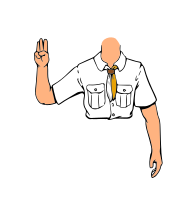
The Scout Sign is used when giving the Scout Law or the Scout Oath and as a signal for silence. The Scout Salute is used when saluting the flag of the United States. The left-handed handshake is used as a token of friendship and forms connections between Scouts worldwide.[18][19]
Emblems
[edit].svg)
Scouting uses a collection of medals and patches with emblems, which represent a Scout's specific achievements. The badge for the Scout rank consists of a simple fleur-de-lis, which symbolizes a compass rose. The compass symbolically points the Scout in the right direction, which is onward and upward.[20] The three points of the fleur-de-lis, along with the three-finger salute represent the three parts of the Scout Oath (duty to God and Country, duty to others, duty to oneself).[21]
The Tenderfoot badge utilizes the fleur-de-lis of the Scout badge and adds two stars and the eagle and shield from the Great Seal of the United States. The stars symbolize truth and knowledge; the eagle and shield symbolize freedom and readiness to defend it. The Second Class badge features a scroll inscribed with the Scout Motto, with the ends turned up and a knotted rope hanging from the bottom. The knot is intended to remind each Scout to remember the Scout slogan and the upturned ends of the scroll symbolize cheerfulness in service. The First Class badge combines the elements of the Scout, Tenderfoot and Second Class badges.[22]
For years, the First Class badge was used as the emblem of the BSA.[citation needed] The Star rank has a First Class symbol on a five-pointed yellow star, which initially indicated the five merit badges required to earn the rank. Life has a First Class emblem on a red heart, and initially symbolized the first-aid and health-related merit badges that the rank required. Now it signifies that the ideals of Scouting have become a part of the Scout's life and character.[23]
Equipment
[edit]In the United States, the Boy Scouts of America functions as a licensor and distributor of official Scout uniforms, camping gear, and other items since the 1920s.[24] These include backpacks, pocket knives, belt knives, tents, sleeping bags, canteens, and mess gear.[24][25][26]
Uniform and insignia
[edit]The uniform and insignia of the Scouts BSA gives a Scout visibility and creates a level of identity within both the unit and the community. While BSA uniforms are similar in basic design, they do vary in color and detail to identify the different programs of Cub Scouts, Scouts BSA, Venturers, and Sea Scouts. The uniform is used to promote equality while showing individual achievement.[9]
Scouts BSA youth and adult leaders wear the Scout uniform.[27] It generally consists of a khaki button-up shirt, olive green pants or shorts, belt, socks, and optional neckerchief. The Scouter dress uniform is appropriate for professional Scouters and Scouting leaders on formal occasions.[28]
Organization
[edit]Troop and patrols
[edit]The scout troop is the fundamental unit of Scouts BSA.[29] The troop size can vary from a minimum of five Scouts to over one hundred. Each troop is sponsored by a community organization such as a business, service organization, private school, labor group, or religious institution. The chartering organization is responsible for providing a meeting place and promoting a good program. A chartering organization representative manages the relationship between the troop, the chartering organization, and the BSA.[30][31]
While both boys and girls are members of Scouts BSA, as of 2024[update] individual troops are single gender. A boys' troop and girls' troop may however share a common Troop Committee made up of adult leaders, parents of Scouts, and other interested parties that manage membership, finances, camping arrangements, and chartering organization relations among other responsibilities.[30]
Each troop is divided into patrols of about eight Scouts led by a patrol leader elected from within the patrol.[32] Patrol meetings are generally held during the weekly troop meeting. The patrol's independence from the troop varies among troops and between activities. Patrols' autonomy becomes more visible at campouts, where each patrol may set up its own camping and cooking area. Divisions between patrols may disappear during an event which only a small part of the troop attends. Patrols may hold meetings and even excursions separately from the rest of the troop.[29]
When a Cub Scout group crosses over from Cub Scouting to Scouts BSA, the "new Scout patrol" method may be used. The new Scouts are kept together as a group, elect their own patrol leader, and are assigned a troop guide—an older Scout who acts as a mentor.[29] Some troops may have an older Scout patrol that experiences more autonomy from the troop and provides older Scouts with expanded social contact and physical challenges.[33]
Other programs
[edit].png)
The Lone Scout program serves youth who cannot take part in a nearby troop on a regular basis because of distance, weather, time, disability, or other difficulties. While the Lone Scout does not participate in troop or patrol activities, they may still participate in the values, and achievements of Scouting.[34]
The Order of the Arrow (OA) is a program of the Scouts BSA, Venturing, and Sea Scouts divisions of the BSA. It is the BSA's national honor society for experienced campers, based on Native American traditions, and dedicated to the ideal of cheerful service.[35] Scouts and Scouters must belong to a troop, crew, or ship to become OA members. The OA is run by youth under the age of 21 with adult Scouters serving as advisers.[36]
From 1984 to 2017, Varsity Scouting was a part of the Scouts BSA division of the BSA. It was an alternative available to boys ages fourteen through seventeen that took basic Boy Scouting and adds high adventure, sporting, and other elements that are more appealing to older youth to accomplish the aims of character development, citizenship training, and personal fitness.[37] Varsity Scouts were organized into teams, which were separate chartered units from a Boy Scout troop. Varsity Scouts participated in the standard Boy Scouting advancement program along with programs unique to Varsity Scouting.[38]
Advancement and recognition
[edit]
Youth advancement
[edit]Scouts BSA has seven ranks that can be earned, grouped into two phases. The first phase of Scout, Tenderfoot, Second Class, and First Class is designed to teach Scoutcraft skills, teamwork, and self-reliance.[39] Scout is the first rank, and requires demonstration of knowledge of Scouting's ideals, the process of rank advancement, troop and patrol structure, and some basic skills (e.g., knot-tying and knife safety). As with all other ranks, a Scoutmaster conference is also required. Further ranks have progressive requirements in the areas of Scoutcraft, physical fitness, citizenship, personal growth, and Scout Spirit. These ranks also require participation in a Board of Review. Scouts with a permanent mental or physical disability may use alternate requirements, based on their abilities and approved by the council.
The second phase of Star, Life, and Eagle is designed to develop leadership skills and encourage the Scout to explore potential vocations and avocations through the merit badge program. These ranks require that the Scout serve in a position of responsibility and perform community service.[39]
The Eagle Scout rank requires, in addition to merit badges and a position of responsibility, a community service project planned and led entirely by the Eagle Scout candidate. After attaining the rank of Eagle, a Scout may earn Eagle Palms for additional tenure and merit badges.[40]
Although Eagle is the highest rank Scouts may achieve, the number of Scouts achieving the rank of First Class within one year of joining is still one of the key measures of unit effectiveness. Studies have shown that if a Scout achieves First Class within a year of joining, they typically stay in Scouting for at least three years. Scouts who do so are more likely to retain Scout values as an adult, thus achieving the BSA's primary mission.[41]
Ranks and other recognition are presented in a troop awards ceremony called the court of honor. The Eagle Scout rank is usually presented in a separate and special court of honor.[41]
Adult recognition
[edit]Scouts BSA leaders who complete training, tenure, and performance requirements are recognized by a system of awards, often represented by "knots" on the uniform, for various accomplishments.[42] One of the more intensive Scout leader training programs is Wood Badge, for which successful participants receive a special neckerchief, woggle and wooden beads on a thong.[43]
Adults may also earn Order of the Arrow ranks and awards in the same manner as Scouts.[44]
Awards
[edit]Several religious emblems programs are administered by various religious institutions and are recognized by the BSA.[45] These are generally recognized by a medal and an embroidered square knot. Other advancements and recognitions—such as the Nova (and Supernova) Awards, 50-miler award, BSA Aquatic Awards, Emergency Preparedness Award, Outdoor Ethics Award and World Conservation Award — are available to Scouts who show proficiency in special areas.[46] These are all awarded at a Court of Honor.[47]
BSA's National Court of Honor is responsible for lifesaving and meritorious awards.[48] All Courts of Honor for Eagle Scout rank also are convened as National Courts of Honor.[49]
Leadership in the troop
[edit]Every troop has two separate leadership structures: one consisting of Scouts and another consisting of adults.[29] The adult leadership manages the logistics of troop activities, administers rank advancement and awards, maintains troop records and finance, and recruits new Scouts and adult leaders. The youth leadership keeps order and coordinates labor at activities. Scouts and adults cooperate to plan agendas for troop meetings, as well as the troop's schedule of outings.[30]
Adult leadership
[edit]The troop committee is made up of responsible adults who are approved by the local council and the chartered organization.[29] The committee chair leads the committee and appoints its members to specific tasks such as treasurer, secretary, advancement, activities, equipment, and membership. The committee and the chartered organization representative are responsible for the selection of the Scoutmaster and assistant Scoutmasters. The Scoutmaster must be at least twenty-one and is directly responsible for training and guiding the youth leaders, working with other adults to bring Scouting to youth, and for using the methods of Scouting to achieve the aims of Scouting.[30] A troop may have a chaplain who helps to provide a spiritual element in the unit program, provides spiritual counseling as needed, and encourage Scouts to participate in the religious emblems program.[50]
Youth leadership
[edit]
The youth leader in charge of the troop is the senior patrol leader (SPL). The SPL "[M]ust be elected by the majority of youth members registered in the troop]".[51][29] The SPL is responsible for the overall performance of the troop, runs troop meetings and ensures that the program for troop meetings and other activities is carried out. They also appoint youth to fill all other positions of leadership and responsibility (with the consent of the Scoutmaster). There may also be one or more Assistant Senior Patrol Leaders (ASPL).[29] Each patrol elects a patrol leader who then appoints an assistant patrol leader and other positions within the patrol. Together, the senior patrol leader, assistant senior patrol leader, and patrol leaders make up the patrol leaders council (PLC), the group of Scouts that is responsible for developing the troop's program with the advice of the Scoutmaster.[29]
There are other youth positions of responsibility in a troop; the use of these positions is dependent on the size of the troop and the program.[29] The junior assistant Scoutmaster (JASM) is a 16- or 17-year-old Scout who performs the same duties as an assistant Scoutmaster; the scribe takes minutes at patrol leaders council meetings and troop meetings and is often responsible for taking attendance and collecting money or dues; the quartermaster maintains the troop's equipment; the librarian maintains the troop library; the chaplain aide works with the troop chaplain and promotes the religious program in the troop; the troop historian maintains photos and records of troop functions, meetings and outings; a den chief works with a den of Cub Scouts, assisting the den leaders and helps retain Cub Scouts when they cross over into Scouts BSA; the troop guide is a senior Scout who provides guidance to new Scout patrols; the Leave No Trace Coordinator ensures the Scouts are trained in and follow Leave No Trace Guidelines; the Order of the Arrow representative provides a line of communication between the Order of the Arrow and the troop; the bugler provides music as needed; the instructor teaches Scout skills. These troop positions are appointed by the senior patrol leader with the advice and counsel of the Scoutmaster, except for the Junior Assistant Scoutmaster, who is appointed by the Scoutmaster. Some positions may also be determined by election.[52]
Development
[edit]
The Scouts BSA has a defined Youth Leadership Training Continuum to provide a growth path for youth leaders. The Scoutmaster provides Introduction to Leadership Skills for Troops (ILST) at the troop level. Youth leaders are encouraged to attend National Youth Leadership Training (NYLT) at the council level and a select few may progress to National Advanced Youth Leadership Experience (NAYLE) at the national level.[53]
New adult leaders are required to attend training for their position.[54] This training provides the essential information they need to provide a safe and successful quality program. In addition to position-specific training, all adults are required to complete Youth Protection Training (YPT). This program covers the BSA policies on preventing child abuse, including types and signs of abuse, how to respond to disclosed abuse and how to report suspected abuse. YPT recertification is required every two years and may be completed online. Introduction to Outdoor Leader Skills (IOLS) is another course that is required for Scoutmasters and Assistants Scoutmasters and furthers instruction in Scouting and outdoor skills. Once completed, the "Trained" emblem may be worn on the sleeve. The troop committee chairman and members should attend the Troop Committee Challenge for instruction in administering the program.[55] This completes Basic Leader Training for these positions and the Trained emblem may be worn on the left sleeve.[56]
Supplemental training modules are designed to provide instruction beyond Basic Leader Training. These shorter training sessions are often provided at the District/Council Roundtable, a monthly meeting of leaders from the district, at a University of Scouting event offered by the local councils, or at National Training Conferences held at the Philmont Training Center and the Florida National High Adventure Sea Base.[55] Additional training events may be held at summer camps, Council events, and various BSA-sponsored events.[6]
At least one leader with current Safe Swim Defense training is required for swimming activities.[57] Boating activities require Safety Afloat and CPR training.[58] Climb on Safely training and CPR certification are required for climbing and rappelling events.[59]
Wood Badge is advanced training for leadership skills for adults in the BSA. Wood Badge consists of five days of training (usually presented as two, nonconsecutive weekends) and an application phase of several months. When training is complete, leaders are recognized with the Wood Badge beads, neckerchief, and woggle.[60] Powder Horn is a high adventure resource course designed to help Scout leaders to safely conduct outdoor activities of a fun and challenging nature, provide an introduction to the resources necessary to successfully lead their youth through a program of high adventure and to understand what is involved in different high adventure disciplines.[52]
Outdoor education
[edit].png)
"A week of camp life is worth six months of theoretical teaching in the meeting room."— Baden-Powell[61]
Since its founding in 1907 by Baden-Powell, the Scouting movement has employed employs non-formal education with an emphasis on practical outdoor activities.[62] Scouts see adventure in nature, and it is this adventure which draws them to learning.[63]
For its members, the Scout method is part of the program to instill typical Scouting values such as trustworthiness, good citizenship, and outdoors skills, through a variety of activities such as camping, aquatics, and hiking. This also represented by the Outdoor Code.[64]
The local councils of the Boy Scouts of America operate several hundred local camps. The national organization operates several high-adventure bases.[65] These include Philmont Scout Ranch, Northern Tier National High Adventure Bases, Florida National High Adventure Sea Base, and The Summit Bechtel Family National Scout Reserve.[6]
Further reading
[edit]- Ray, Mark A. (2003). The Scoutmaster's Other Handbook. Ray Publishing. ISBN 0-9651207-3-2.
- Reed, Jeremy C.; Reed, Heather R. (2011). Beginning Boy Scouts: An unofficial practical guide to Boy Scouting for parents and new leaders. Reed Media Services. ISBN 978-1-937516-01-7.
{{cite book}}: CS1 maint: ref duplicates default (link)
See also
[edit]References
[edit]- ^ Boy Scouts of America Youth Application (PDF). Boy Scouts of America. #28-406B. Archived from the original (PDF) on May 28, 2008. Retrieved March 10, 2008.
- ^ "Scouting America Delivers 2025 Report to the Nation, Highlighting Achievements & Vision". Scouting America Foundation. April 4, 2025.
- ^ On May 7, 2024, BSA announced that the organization will change its name to Scouting America on February 8, 2025. The uniforms will remain the same but will be embroidered with the new name. The change does not affect the name of "Scouts BSA".
- ^ Nicole Chavez (May 7, 2024). "Boy Scouts of America announces rebrand to 'Scouting America'". CNN. Archived from the original on May 7, 2024. Retrieved May 7, 2024.
- ^ "What Is Boy Scouting?". Boy Scouts of America. Archived from the original on May 27, 2008. Retrieved May 29, 2008.
- ^ a b c "Scouting's Adventures for Older Scouts".
- ^ "Boy Scouts allowing girls into Cub program, but will keep them separate". ABC News. October 12, 2017. Retrieved July 20, 2018.
- ^ Domonoske, Camila (May 2, 2018). "Boy Scouts Changing Name To 'Scouts BSA', As Girls Welcomed into Program". NPR.
- ^ a b c d e f "Aims and Methods". Boy Scouts of America. Retrieved November 20, 2018.
- ^ "Training for Youth". BSA. Retrieved October 5, 2013.
- ^ Scouting: An Educational System. World Organization of the Scout Movement. 1998. p. 9. Archived from the original on September 30, 2007. Retrieved July 10, 2006.
- ^ "U.S. Scouting Service Project, Camporee". Retrieved April 4, 2005.
- ^ "Camporee events". U.S. Scouting Service Project. Retrieved May 22, 2008.
- ^ "2005 National Scout Jamboree". Boy Scouts of America. Archived from the original on June 1, 2008. Retrieved June 25, 2008.
- ^ "The Summit Story". The Summit Bechtel Reserve. 2014. Retrieved February 2, 2023.
- ^ "Outdoor Ethics". Boy Scouts of America. Retrieved July 4, 2019.
- ^ "What Is Boy Scouting?". BSA Fact Sheet. Boy Scouts of America. Archived from the original on May 27, 2008. Retrieved February 27, 2006.
- ^ "The Origin of the Left Hand Shake". ScoutXing.com. Archived from the original on August 7, 2007. Retrieved February 14, 2007.
- ^ "The Left-Hand Handshake". The Scouting Pages. Archived from the original on February 7, 2007. Retrieved February 14, 2007.
- ^ Baden-Powell 1933, p. X.
- ^ Baden-Powell, Robert (2005) [1908]. Scouting for Boys. Oxford. p. 37.
- ^ Scout Handbook 1998, p. 10.
- ^ Scout Handbook 1998, pp. 7–9.
- ^ a b Boy Scout Handbook 1925.
- ^ "Scout Knife Reference". Scoutknives.net. Archived from the original on October 18, 2022. Retrieved October 18, 2022.
- ^ "An American History of the Backpack". January 27, 2016. Archived from the original on October 18, 2022. Retrieved October 18, 2022.
- ^ Peterson, Robert (2002). "From Doughboy Duds to Oscar de la Renta". Scouting. Boy Scouts of America. Retrieved January 12, 2006.
- ^ "Boy Scout/Varsity Scout Uniform Inspection Sheet" (PDF). Boy Scouts of America. 2000. #34283. Archived from the original (PDF) on February 27, 2008. Retrieved December 20, 2006.
- ^ a b c d e f g h i "Boy Scouts of America Organization". Boyscouttrail.com. Retrieved February 17, 2007.
- ^ a b c d Committee Guidebook 1990.
- ^ COR Guidebook 2015.
- ^ "The Patrol System". World Organization of the Scout Movement. Archived from the original on September 30, 2007. Retrieved February 14, 2007.
- ^ Wendell, Bryan (October 18, 2016). "The age-old question: How is your troop organized into patrols?". Scouting Magazine.
- ^ "BSA Fact Sheet: What Is the Lone Scout Plan?". Boy Scouts of America. Archived from the original on March 13, 2008. Retrieved February 7, 2006.
- ^ Block 2000.
- ^ Davis 2000.
- ^ Swenson, Jason; West, Camille (May 11, 2017). "Church Replacing Varsity and Venturing Scouting with New Activities Program". The Church of Jesus Christ of Latter-Day Saints. Intellectual Reserve. Retrieved September 1, 2018.
The First Presidency has announced that effective January 1, 2018, the Church will discontinue its Varsity and Venturing Scouting programs for young men ages 14–18 in the United States and Canada, replacing them with a new activities program.
- ^ "BSA Fact Sheet: Varsity Scouting". Boy Scouts of America. Retrieved February 7, 2006.
- ^ a b Guide to Advancement 2021, p. 14.
- ^ "Eagle Rank Requirements". US Scouting Service Project. October 4, 2022. Retrieved September 19, 2023.
- ^ a b Scoutmaster Handbook 1998, p. 119.
- ^ "Square Knot Insignia used by the Boy Scouts of America". October 1, 1999. Archived from the original on May 14, 2010. Retrieved June 10, 2007.
- ^ Barnard, Mike (2002). "Wood Badge Presentation Ceremonies". Woodbadge.org. Archived from the original on June 26, 2007. Retrieved January 7, 2007.
- ^ "Membership". Order of the Arrow, BSA. Retrieved October 11, 2020.
- ^ Insignia Guide 2007.
- ^ "Boy Scout Awards". Boy Scout Trail. Retrieved February 14, 2007.
- ^ Green, Clarke (April 22, 2015). "Court of Honor Ceremony". Scoutmaster CG.
- ^ "National Court of Honor – Lifesaving and Meritorious Awards". U.S. Scouting Service Project. Retrieved April 28, 2008.
- ^ Wendell, Bryan (August 29, 2018). "BSA reinstates Heroism Award, one of three national-level lifesaving awards". Bryan on Scouting. Boy Scouts of America.
- ^ Chaplain Manual 2008.
- ^ "Rules and Regulations of the Boy Scouts of America" (PDF). Scouting. Scouting America. Retrieved September 25, 2025.
- ^ a b "Powder Horn". Training for Youth. Boy Scouts of America. Retrieved June 11, 2018.
- ^ "The Youth Leadership Training Continuum: A Guide for Scout Leaders and Parents". Boy Scouts of America. Archived from the original on March 9, 2008. Retrieved March 22, 2007.
- ^ "Training for Adults". Boy Scouts of America. Retrieved July 26, 2021.
- ^ a b "BSA Online Learning Center". Boy Scouts of America. Retrieved April 12, 2006.
- ^ "When can adult leaders wear the BSA's Trained patch?". November 24, 2015.
- ^ Guide to Safe Scouting 2022, p. 6.
- ^ Guide to Safe Scouting 2022, p. 16.
- ^ Guide to Safe Scouting 2022, p. 45.
- ^ Davis 1990.
- ^ Baden Powell, Robert. "B-P Quotes" (PDF). Boy Scouts of America. Retrieved February 14, 2019.
- ^ "Scouting Education". World Organization of the Scout Movement. Retrieved August 1, 2022.
- ^ BSA FieldBook 2004.
- ^ "The Outdoor Code". outdoorethics-bsa.or. Retrieved July 18, 2019.
- ^ "National High Adventure Bases". Boy Scouts of America. Retrieved June 16, 2022.
Bibliography
[edit]- The Boy Scout Handbook (11th ed.). Irving, Texas: Boy Scouts of America. 1998. ISBN 0-8395-3105-2.
- Boy Scout Handbook (2 ed.). New York: Boy Scouts of America. 1925.
- Baden-Powell, Robert (1933). "10". Lessons from the Varsity of Life. Archived from the original on December 2, 2006 – via pinetreeweb.com.
- Fieldbook: The BSA's Manual of Advanced Skills for Outdoor Travel, Adventure, and Caring for the Land. Boy Scouts of America. 2004. ISBN 978-0839531043. Archived from the original on February 24, 2017 – via BSA Troop 577.
- Guide to Advancement. Boy Scouts of America. 2021. ISBN 978-0-8395-3088-6.
- BSA Troop Committee Guidebook. Irving, TX: Boy Scouts of America. 1990. ISBN 0-8395-6505-4. OCLC 19345019.
- "The Chartered Organization Representative Guidebook" (PDF). scoutingwire.org. Boy Scouts of America. 2015. Retrieved August 15, 2019.
- Insignia Guide. Boy Scouts of America. 2007. ISBN 978-0-8395-3066-4. #33066. Archived from the original on November 29, 2007. Retrieved April 25, 2008.
- "Manual for Chaplain Aides and Chaplains". Boy Scouts of America. 2008. Archived from the original on June 30, 2008. Retrieved June 25, 2008.
- "Guide to Safe Scouting". Boy Scouts of America. February 2022.
- Davis, Ken (2000). Brotherhood of Cheerful Service: A History of the Order of the Arrow (3rd ed.). Boy Scouts of America. ISBN 9780839549987.
- Block, Nelson (2000). A Thing of the Spirit, The Life of E. Urner Goodman. Boy Scouts of America.
- Davis, Kenneth P. (1990). A History of Wood Badge in the United States. Boy Scouts of America. ISBN 9780839501237.
- Scoutmaster Handbook. Irving, Texas: Boy Scouts of America. 1998.
External links
[edit]- "MeritBadge.Org". Archived from the original on October 30, 2019. Retrieved September 24, 2008.

Scouts BSA
View on GrokipediaHistory
Founding and Early Development
The Boy Scouts of America (BSA), the predecessor to Scouts BSA, originated from the British Scouting movement established by Robert Baden-Powell, who organized an experimental camp on Brownsea Island in 1907 and published Scouting for Boys in 1908, emphasizing outdoor skills, self-reliance, and moral development for boys.[9] In the United States, Chicago businessman and publisher William D. Boyce encountered the movement during a 1909 trip to London, where he was reportedly assisted through fog by an unidentified Boy Scout who refused payment and directed him to Baden-Powell's office, inspiring Boyce to import the concept.[3] Boyce incorporated the BSA on February 8, 1910, under the laws of the District of Columbia, aiming to adapt Scouting principles to American youth amid concerns over urbanization's impact on boys' physical and ethical formation.[10][11] Early organizational efforts focused on standardization and expansion. The first official BSA handbook, compiled primarily by Ernest Thompson Seton and incorporating elements from Baden-Powell's works, was published in July 1910, providing guidance on woodcraft, patrol organization, and Scoutcraft skills while establishing the core Scout Oath and Law tailored for U.S. boys.[12] James E. West, a lawyer and advocate for child welfare, was appointed as the inaugural Chief Scout Executive in 1911, professionalizing administration, promoting uniform merit badge systems, and facilitating the formation of local troops sponsored by community institutions.[13] By 1912, over 4,000 troops existed nationwide, reflecting rapid grassroots adoption driven by patriotic appeals and practical training in citizenship and survival amid pre-World War I anxieties.[13] A pivotal milestone came with federal recognition: on June 15, 1916, President Woodrow Wilson signed legislation granting the BSA a congressional charter, affirming its nonprofit status, protecting its insignia, and endorsing its role in fostering "manhood" through disciplined outdoor activities.[14] This charter, lobbied for by West, solidified the BSA's national framework, enabling structured growth and integration with public education systems, though early challenges included competition from rival youth groups like the Woodcraft Indians, which the BSA eventually absorbed or marginalized.[15] By the end of World War I, membership exceeded 300,000, underscoring the program's appeal in building resilient, duty-oriented boys.[13]Expansion and Key Milestones
On June 15, 1916, President Woodrow Wilson signed legislation granting the Boy Scouts of America a congressional charter, providing federal recognition that protected its name, insignia, and emblems while establishing a legal framework for national expansion and uniform organization across the United States.[15] This milestone facilitated the growth of local councils and troops, transitioning the BSA from a nascent entity to a structured nationwide program supported by government endorsement.[16] In 1923, the BSA merged with the Lone Scouts of America, an independent organization founded in 1915 for rural youth without access to traditional troops, integrating approximately 30,000 members and extending Scouting's reach into isolated communities.[13] This consolidation broadened participation beyond urban centers, emphasizing self-reliant Scouting methods suited to remote areas.[13] The launch of Cub Scouting in 1930 represented a pivotal expansion to younger boys aged 9-11, initially as pilot packs before nationwide adoption, which substantially increased overall youth enrollment by targeting elementary-school-aged participants with age-appropriate activities.[17] Complementing this, the Senior Scout program for boys aged 15 and older was introduced in 1935, further diversifying offerings to retain older youth through specialized pursuits like exploring and handcrafting.[18] The first National Scout Jamboree, held June 30 to July 9, 1937, on the National Mall in Washington, D.C., drew over 27,000 attendees, including Scouts from every state, underscoring the BSA's maturation into a cohesive national movement and promoting skills demonstrations, parades, and inter-troop camaraderie.[17] Subsequent jamborees, held quadrennially except during wartime, continued to symbolize growth, with events scaling to tens of thousands by the mid-20th century. In 1939, the donation and opening of Philturn Rocky Mountain Scout Camp—later expanded into Philmont Scout Ranch—established a premier high-adventure facility on over 140,000 acres, hosting thousands annually for backpacking, leadership training, and wilderness skills to support program depth.[17] By its 100th anniversary in 2010, the BSA had registered more than 110 million participants historically, with about 3 million youth members that year alone, reflecting sustained expansion driven by these programmatic and infrastructural developments.[17]Policy Shifts on Membership and Inclusion
In its founding charter of 1910, the Boy Scouts of America restricted full membership to boys aged 11 to 18 who subscribed to the Scout Oath, which includes a duty to God, effectively excluding atheists and those without belief in a higher power; this religious requirement has remained unchanged, with the organization's Declaration of Religious Principle barring non-theists from membership.[19][20] Originally boys-only, the program also prohibited avowed homosexuals from serving as youth members or adult leaders, a stance formalized in 1978 amid concerns over moral fitness aligned with the Scout Oath and Law.[21][22] Facing legal challenges, corporate sponsor pressure, and internal debate following the 2000 Supreme Court ruling in Boy Scouts of America v. Dale that upheld the exclusion of gay leaders under First Amendment rights, the BSA began policy reversals on sexual orientation.[23] On May 23, 2013, the National Executive Board voted 61% to 39% to end the ban on openly gay youth, allowing membership for those under 18 regardless of sexual orientation alone, provided they met behavioral standards. In July 2015, the organization lifted restrictions on openly gay adults serving as leaders or volunteers, citing evolving societal views while emphasizing adherence to Scouting values.[23][24] Gender-related shifts accelerated in the mid-2010s. Limited female participation had existed earlier, such as girls aged 14-20 in Exploring posts from 1969 to 1971 and women as troop leaders from 1988.[24] On January 30, 2017, the BSA announced it would register youth in Cub Scouts and Boy Scouts based on the gender identity indicated on their application, rather than birth certificates or facilities policies, thereby admitting transgender boys effective immediately.[25][26] In October 2017, the organization opened Cub Scouts to girls starting in 2018 with single-gender dens and packs, followed by the February 2019 launch of co-ed eligibility in the core program—renamed Scouts BSA—with separate single-gender troops for boys and girls, enabling girls to pursue Eagle Scout.[27][24] These inclusions expanded access but drew criticism from traditionalists for diluting the program's original focus, while progressive advocates viewed them as necessary adaptations; membership peaked at over 6 million in 1972 but fell to under 2 million by 2019 amid broader cultural shifts, competition from youth activities, and abuse litigation, though causal links to policy changes remain debated.[28] In February 2026, Scouting America reached an agreement with the Pentagon to maintain military support, emphasizing membership based on biological sex at birth rather than gender identity, thereby impacting transgender youth inclusion by requiring registration according to birth sex; this did not constitute a return to boys-only programs, as coeducational participation for boys and girls continues in Scouts BSA with single-gender troops, and DEI elements such as the Citizenship in Society merit badge were removed.[29][30] The policy upholds the religious prerequisite, with units encouraged to respect diverse faiths.[27]Bankruptcy, Settlements, and Rebranding
The Boy Scouts of America filed for Chapter 11 bankruptcy on February 18, 2020, amid escalating liabilities from sexual abuse claims filed by thousands of former participants alleging misconduct by adult leaders and volunteers spanning decades.[31][32] The filing addressed over 82,000 claims, with estimated total exposure exceeding $2 billion, triggered by state law changes extending statutes of limitations for childhood abuse survivors.[33][34] These claims stemmed from historical patterns of abuse within the organization, documented in internal "ineligible volunteer" files—commonly termed "perversion files"—which the Boy Scouts began compiling in 1910 to track and exclude individuals accused of sexual misconduct with youth.[35] Court-ordered releases of these files, such as those covering 1965–1985 revealing over 1,300 expelled volunteers, highlighted instances where allegations were substantiated internally but not consistently reported to law enforcement, allowing some perpetrators to reoffend in Scouting or other youth programs.[36][37] While the organization maintained that the files enabled proactive removal of risks, critics, including survivors' advocates, argued that systemic failures in mandatory reporting and vetting contributed to repeated victimization, as evidenced by repeat abusers identified in the records.[37] The bankruptcy proceedings culminated in a $2.46 billion settlement trust, the largest sexual abuse compensation fund in U.S. history, providing payments to claimants ranging from $3,500 for expedited low-value claims to $2.7 million for severe cases, determined by factors like abuse duration and impact.[34][38] Funding included $250 million from BSA assets, $515 million in cash and property from local councils in exchange for liability releases, and contributions from over 100 insurers, such as an $800 million agreement from one provider.[33][39] The reorganization plan was confirmed by a Delaware bankruptcy judge on September 8, 2022, after contentious negotiations and objections from subsets of claimants; the organization emerged from bankruptcy on April 19, 2023, following district court affirmation and subsequent appellate rulings upholding the plan, including U.S. Supreme Court denial of certiorari in February 2024 and Third Circuit rejection of remaining appeals in May 2025.[40][41][39] In the wake of the bankruptcy resolution, the Boy Scouts of America announced on May 7, 2024, a rebranding of the national organization to Scouting America, effective February 8, 2025—coinciding with its 115th anniversary—to underscore commitments to inclusivity for all youth regardless of gender, following prior program expansions like the co-ed Scouts BSA initiative launched in 2019 amid declining membership from a 1970s peak of over 6 million to under 1 million by the early 2020s.[42][6][43] The change aims to broaden appeal and distance from past controversies, though core Scouting programs, including Scouts BSA, retain their operational focus on character development and outdoor skills.[44]Mission, Aims, and Methods
Core Ideals and Oath
The core ideals of Scouts BSA are embodied in the Scout Oath, Scout Law, Scout Motto, and Scout Slogan, which guide participants in personal development, ethical conduct, and service.[45][46] These elements, adopted by the Boy Scouts of America in 1911 and retained in Scouts BSA following the 2019 rebranding, emphasize duty, self-reliance, and moral character, drawing from the foundational principles established by Robert Baden-Powell in 1908 but adapted to include explicit patriotism and religious commitment suited to the American context.[47][48] The Scout Oath states: "On my honor, I will do my best to do my duty to God and my country and to obey the Scout Law; to help other people at all times; to keep myself physically strong, mentally awake, and morally straight."[45] This pledge, recited during joinings, ceremonies, and daily activities, breaks into three commitments: obedience to divine and national duty via the Scout Law; selfless service to others; and holistic self-improvement in physical, intellectual, and ethical dimensions.[47][49] The inclusion of "duty to God" reflects the organization's charter requirement for religious elements in programming, while "morally straight" has historically connoted traditional virtues like chastity and integrity, though interpretations have varied amid cultural shifts.[16][47] Complementing the Oath, the Scout Law comprises 12 points: "A Scout is trustworthy, loyal, helpful, friendly, courteous, kind, obedient, cheerful, thrifty, brave, clean, and reverent."[45] Each point serves as a behavioral standard, with "trustworthy" demanding honesty and promise-keeping, "reverent" implying respect for spiritual beliefs, and others fostering interpersonal and self-disciplinary traits.[50][51] The Scout Motto, "Be Prepared," underscores readiness for challenges, originating from Baden-Powell's 1907 adaptation of a knot-tying phrase, while the Slogan, "Do a Good Turn Daily," promotes habitual altruism.[45][52] These ideals are not mere recitations but evaluative criteria for advancement, troop leadership, and lifelong application, with empirical studies linking Scouting participation to enhanced civic engagement and resilience among youth.[53][48]Program Methods and Principles
The Scouts BSA program employs eight methods to achieve its core aims of character development, leadership development, citizenship training, and personal fitness.[54] These methods, presented without hierarchical order, provide structured opportunities for youth to engage in hands-on learning, build skills, and internalize values through practical application in troop and patrol activities.[54] Leadership development functions dually as both an aim and a method, reinforcing character and citizenship by encouraging participants to take initiative in group settings.[54] The ideals method centers on the Scout Oath, Scout Law, motto ("Be Prepared"), and slogan ("Do a Good Turn Daily"), which serve as a moral compass for daily conduct and self-evaluation.[54] Youth measure their progress against these standards during meetings, outings, and personal reflection, fostering ethical decision-making and commitment to personal excellence.[54] The patrol method organizes Scouts into small, peer-led groups of six to eight members, each electing a patrol leader and planning their own contributions to troop events.[54] This structure simulates real-world teamwork, teaching responsibility, conflict resolution, and democratic participation while allowing patrols to compete in skills challenges and service projects.[54] Outdoor programs form the experiential backbone, with regular camping, hiking, and nature-based activities emphasizing skills like fire-building, navigation, and environmental stewardship.[54] These pursuits, often conducted under Leave No Trace principles, cultivate resilience, ecological awareness, and collaborative problem-solving in variable conditions.[54][55] Advancement involves a tiered system of ranks (Scout, Tenderfoot, Second Class, First Class, Star, Life, Eagle) and merit badges, requiring demonstrated competencies through tests, projects, and leadership roles.[56] Participants earn recognition for milestones, which builds self-reliance and motivates sustained effort toward tangible goals.[54] Association with adults pairs youth with trained leaders who model positive behaviors and provide mentorship, rather than direct instruction, during troop operations.[54] This interaction offers guidance on ethical challenges and inspires youth to emulate reliable role models in professional and personal spheres.[54] Personal growth emphasizes service initiatives, such as daily good turns and earning religious or community emblems, integrating moral and spiritual dimensions into routine Scouting.[54] These elements promote empathy, civic duty, and holistic self-improvement beyond skill acquisition.[54] Leadership development provides progressive roles, from patrol-level positions to troop-wide responsibilities like senior patrol leader, emphasizing servant-style guidance over authority.[54] Scouts rotate through these to practice planning, delegation, and accountability, preparing them for future societal contributions.[54] The uniform method requires practical field attire, including khaki shirts, trousers or shorts, and insignia, worn during official functions to symbolize equality and organizational belonging.[54] It instills discipline, group pride, and a professional self-image that extends to broader life contexts.[54]Equipment, Uniforms, and Emblems
The field uniform, recognized as the official Scouts BSA uniform, comprises a tan button-up shirt available in short or long sleeves featuring green shoulder loops on the epaulets, paired with olive green pants, shorts, or roll-up trousers, a leather or web belt, and merit badge sash or display options for earned insignia.[57][58] Troops determine preferences for neckerchiefs, which may include a troop-specific design tied with a slide, and headwear such as the iconic campaign hat or baseball cap.[58] This uniform is encouraged for troop meetings, ceremonies, and public events to foster unit identity and discipline, though the activity uniform—consisting of a Scouts BSA T-shirt with shorts or pants—serves for high-movement outdoor pursuits.[59] Insignia placement adheres to strict guidelines outlined in the official Guide to Awards and Insignia, ensuring uniformity across units.[60] The council shoulder patch is positioned on the left sleeve, 1/2 inch below the shoulder seam, while the troop or team numeral appears above the right pocket; rank patches, such as Scout, Tenderfoot, or Eagle, are centered on the right pocket for youth members.[61] Merit badges line the left sleeve in rows of five, with special awards like the World Crest optional on the back of the neckerchief or vest.[60] Adult leaders wear similar configurations, substituting position patches for youth ranks.[62] Central to Scouts BSA emblems is the fleur-de-lis, a stylized lily adopted from the founding Scouting movement by Robert Baden-Powell in 1908, incorporated into rank badges and the universal Scouting emblem to evoke purity, light, and the three points of the Scout Oath—duties to God and country, others, and self.[63][64] The organization's universal emblem, featuring a fleur-de-lis encircled by a rope and eagle, signifies global Scouting unity and American adaptation, mandatory on all official uniforms above the right pocket.[57] Equipment for Scouts BSA emphasizes practical outdoor readiness, with youth trained in the use of totin' chip-certified tools such as pocketknives, axes, and saws through safety courses, alongside standard camping gear like tents, backpacks, and cooking utensils provided or recommended via official supply channels.[65] Uniform policy underscores that while not compulsory, proper attire and insignia promote equality and focus on program ideals over socioeconomic differences.[66]Organizational Structure
Troops, Patrols, and Local Units
In Scouts BSA, the troop functions as the core local unit, chartered annually by a community organization—such as a faith-based group, school, or civic association—whose mission aligns with Scouting principles, enabling the organization to own, operate, and oversee the unit's activities.[67] [68] Over 100,000 such units exist nationwide, with approximately 71.5% chartered to faith-based organizations that often provide meeting facilities and storage at no cost.[68] Each troop is supervised by a unit committee of at least three qualified adults aged 21 or older, who handle administrative support, while a chartered organization representative serves as a liaison to the sponsoring body and participates in local council governance.[69] Troops may be single-gender (boys-only or girls-only) or structured as linked troops sharing a common committee to accommodate separate boy and girl patrols.[70] Within a troop, Scouts are organized into patrols, small teams typically comprising six to eight members who collaborate on skill-building, share responsibilities, and develop leadership under the patrol method emphasized in Scouting.[71] Patrols operate semi-autonomously, planning their own activities and competitions during troop meetings, which fosters youth initiative and peer accountability.[72] Common configurations include regular patrols for experienced Scouts and a new-Scout patrol for recent joiners, mentored by older members to ease transition and teach fundamentals.[73] Troop leadership integrates youth and adult roles to prioritize boy-led operations, with the senior patrol leader—elected by patrol leaders—directing overall troop functions, supported by the scoutmaster as an adult guide rather than director.[72] Patrol leaders, chosen by patrol vote for terms of six months or annually, manage their groups' internal dynamics, while troop positions like quartermaster or chaplain aide rotate among youth to build diverse skills.[74] Elected leaders receive initial leadership skills training to align with troop calendars, such as summer camps, ensuring continuity in program delivery.[72] Troops affiliate with districts—geographical subdivisions of local councils—that deliver resources, training, and commissioner support to sustain unit operations.[75][76]Regional and National Governance
The governance of Scouts BSA operates within the broader structure of Scouting America, formerly the Boy Scouts of America, with national oversight providing policy, program standards, and support services, while regional entities facilitate coordination among local councils. The National Executive Board, comprising 40 to 48 members elected for four-year terms with a maximum of three consecutive terms, serves as the primary governing body, setting strategic direction and ensuring compliance with the organization's charter from Congress.[77] The National Executive Committee, limited to up to 14 members including the National Chair, National Commissioner, and Chief Executive Officer, handles operational management and executes board policies.[77] Professional staff, led by the Chief Scout Executive, supports program delivery, including Scouts BSA advancement requirements and training resources distributed nationwide.[78] At the regional level, Scouting America restructured in June 2021 from four traditional regions and subordinate areas to 16 National Service Territories—later redesignated as Council Service Territories (CSTs) and adjusted to 14 by 2024—to streamline administration, reduce overhead, and enhance support efficiency with minimal dedicated staff and no formal boards at the territorial level.[79][80] Each CST encompasses multiple local councils, coordinating activities such as regional training events, resource allocation, and compliance monitoring for Scouts BSA units, while councils retain autonomy in chartering troops and implementing programs.[81] This territorial framework groups the approximately 248 local councils into geographic clusters, enabling targeted support for Scouts BSA operations like high-adventure bases and youth leadership conferences without duplicating national functions.[82] The transition aimed to address fiscal pressures post-bankruptcy, prioritizing cost savings while maintaining program integrity across diverse regions.Integration with Other BSA Programs
Scouts BSA serves as the primary bridge between the foundational Cub Scouts program and the advanced youth-led initiatives of Venturing and Sea Scouts, facilitating seamless progression for participants aged 11 to 17. Youth completing the Arrow of Light rank in Cub Scouts, typically fifth graders, are prepared through the Webelos program—which emphasizes "We'll Be Loyal Scouts"—to join a Scouts BSA troop upon reaching age 11 or entering sixth grade. This transition involves structured crossover ceremonies that symbolize the shift from den-based activities to patrol-led troop operations, with local councils encouraging joint events between Webelos dens and troops to build familiarity and retention.[83][84][85] Advancement continuity extends upward, allowing Scouts BSA members who achieve First Class rank to transfer primary registration to Venturing or Sea Scouts crews—specialized programs for ages 14 to 20—while retaining eligibility to complete Eagle Scout requirements until age 18. Dual registration across programs incurs no additional fees, enabling youth to participate in multiple units simultaneously and apply leadership roles from one toward requirements in another, such as using Venturing positions for Scouts BSA ranks (excluding Eagle service projects). This design removes barriers to retention, with Venturing updates specifically aimed at easing the shift from Scouts BSA by aligning methods like youth-led planning and high-adventure pursuits.[86][87] All BSA programs, including Scouts BSA, operate under unified local councils that provide shared resources such as campsites, high-adventure bases, and training facilities, promoting cross-program events like council-wide camporees or merit badge workshops. National governance ensures consistent policies on youth protection, advancement tracking via tools like Scoutbook, and access to emblems or awards that recognize multi-program involvement, fostering an integrated ecosystem rather than isolated silos.[88][89]Programs and Activities
Advancement Ranks and Requirements
The Scouts BSA advancement program features seven sequential ranks—Scout, Tenderfoot, Second Class, First Class, Star, Life, and Eagle Scout—designed to build progressive skills in outdoor proficiency, citizenship, personal development, leadership, and service. Youth members earn ranks by completing specific requirements detailed in the official Scouts BSA Handbook, which emphasize hands-on demonstration under adult leader supervision, active troop participation, and adherence to Scout spirit. The process requires unit leader sign-off for completed tasks, a Scoutmaster conference to discuss progress, and—for ranks beyond Scout—a board of review comprising at least three adults to verify readiness and growth. Requirements became effective January 1, 2025, with provisions for alternative paths for youth with disabilities.[90][91] The entry-level Scout rank focuses on foundational knowledge and orientation, requiring recitation of the Scout Oath, Law, motto, and slogan with explanation; demonstration of the Scout sign, salute, and handshake; description of Scout spirit and the patrol method; tying basic knots (square, two half-hitches, taut-line); discussion of pocketknife safety and the Outdoor Code; attendance at a troop meeting; and completion of a Scoutmaster conference and child abuse prevention training. Subsequent ranks—Tenderfoot, Second Class, and First Class—emphasize practical outdoor and survival skills, including camping (e.g., tent setup, overnight stays, fire-building, and meal preparation), first aid (e.g., treating cuts, burns, sprains, and lost persons), physical fitness tracking (e.g., push-ups, sit-ups, hikes), navigation with compass and map, swimming proficiency or water safety if feasible, knot and lashing demonstrations, flag etiquette, and service projects totaling at least one to three hours. These ranks mandate escalating participation in troop/patrol activities (five to ten total, with multiple overnights and hikes), nature identification (plants, animals, weather signs), and safety practices like the buddy system.[90] Higher ranks integrate merit badges—temporary emblems earned through counselor-guided requirements in specialized topics—with leadership and service components. Star rank requires four months' activity as a First Class Scout, six hours of service, four months in a leadership position (e.g., patrol leader or quartermaster), six merit badges (four Eagle-required, such as First Aid or Citizenship in the Community), and demonstration of Scout spirit. Life rank builds on this with six months' activity as a Star Scout, another six hours of service (including conservation), six months in leadership, five additional merit badges (reaching seven Eagle-required total), and teaching skills to others using the Teaching EDGE method. Eagle Scout, the pinnacle rank attained by approximately 6% of participants historically, demands six months' activity as a Life Scout, six hours of service, six months in leadership, ten more merit badges (totaling 21, with 13 Eagle-required including Camping, Swimming or Hiking or Cycling, and Personal Management), an Eagle Scout service project benefiting a community organization (planned, led, and documented via workbook), and a rigorous board of review potentially involving district verification. Eagle applications require reference letters, council advancement committee review, and National Council approval, with no fixed age deadline beyond program eligibility.[90][91] Merit badges, over 130 available, support rank advancement particularly from Star onward and foster expertise in areas like aquatics, citizenship, and vocational skills; Eagle-required ones ensure balanced competencies in preparedness, ethics, and self-reliance. Boards of review for all ranks except Scout provide final affirmation, with Eagle reviews emphasizing project impact and maturity; denials can be appealed within specified timelines, updated in 2025 to include two-week council documentation and two-month Scout appeal windows. Advancement tracking occurs via tools like Scoutbook, with ceremonies recognizing achievements to motivate continued growth.[90][91]Outdoor Skills and Training
Scouts BSA places a strong emphasis on outdoor activities as a core component of its youth development program, fostering self-reliance, practical skills, and appreciation for nature through structured experiences in camping, hiking, and wilderness navigation.[92] Troops typically conduct monthly campouts and annual high-adventure trips, where participants learn essentials such as tent setup, fire building, knot tying, and Leave No Trace principles to minimize environmental impact.[93] These activities align with the program's aim to build character via hands-on challenges that require planning, teamwork, and risk management.[94] Basic outdoor training begins at the troop level, integrated into rank advancements and merit badges. For instance, the Camping merit badge mandates at least 20 nights of camping at Scouting events, including one extended trip of five to six consecutive nights, demonstration of safe campsite selection, and preparation of meals over open fires or camp stoves without repeating menus across requirements.[95] Participants must also explain fire safety, perform a gear inventory, and pack for varying weather conditions, ensuring proficiency in equipment maintenance and emergency preparedness.[95] Complementary badges like Hiking require logging 10 hikes of at least 10 miles each, with elevation gains and map-reading exercises, while First Aid covers wound treatment, splinting, and shock response in outdoor scenarios.[96] Adult leaders receive specialized training through the Introduction to Outdoor Leader Skills course, a hands-on program that covers patrol method application, campsite selection, cooking for groups, and tool use, enabling them to supervise youth effectively in backcountry settings.[97] This training, often conducted over a weekend, emphasizes practical demonstrations using Scouts BSA handbooks and ensures compliance with safety protocols like the buddy system and physical fitness prerequisites.[98] Advanced training occurs at national high-adventure bases, including Philmont Scout Ranch for backpacking treks up to 12 days covering over 100 miles in rugged terrain, Northern Tier for canoeing expeditions in boundary waters, Florida Sea Base for sailing and aquatics, and The Summit Bechtel Reserve for whitewater rafting and rock climbing.[99] These programs, restricted to participants aged 14 and older, incorporate leadership challenges, conservation service, and skill certifications, such as wilderness first aid or Leave No Trace master educator status.[100] The National Outdoor Awards recognize cumulative achievements, requiring 50 hours in categories like trail hiking or aquatics, plus specific feats such as summiting a peak over 10,000 feet or completing a 50-mile backpack.[101]Merit Badges and Special Awards
Merit badges represent a core component of the Scouts BSA advancement system, serving as embroidered emblems awarded to youth members aged 11 to 17 upon demonstrating competence in defined skill areas through hands-on activities, knowledge acquisition, and practical application. As of 2025, Scouting America offers more than 135 merit badges, spanning diverse categories including aquatics, citizenship, communications, environmental science, personal development, STEM fields, trades, and sports.[96] Each badge requires completion of specific requirements detailed in official pamphlets, supervised by a registered merit badge counselor who verifies proficiency via demonstrations, projects, service, or tests.[96] Requirements are periodically updated—effective January 1, 2025, revisions affect badges such as Animal Science, Archery, and Astronomy to align with current safety standards and educational emphases.[102] To advance to higher ranks like Star, Life, and Eagle Scout, participants must earn merit badges as milestones: 10 for Star (including four Eagle-required), 15 for Life (including six Eagle-required), and at least 21 for Eagle (including 14 Eagle-required badges).[103] The 14 Eagle-required merit badges emphasize foundational competencies in citizenship (e.g., Citizenship in the Community, Nation, and World), outdoor skills (Camping, Cooking, Hiking, and Emergency Preparedness or First Aid), personal management (Personal Fitness, Personal Management, and previously Citizenship in Society, discontinued effective February 27, 2026, as part of DEI policy changes), and service (Environmental Science or Sustainability).[103][30] Elective badges allow exploration of interests, such as Aviation, Chess, or Robotics, fostering career awareness and self-reliance. Merit badge counseling occurs at summer camps, troop meetings, or district events, with counselors ensuring ethical completion—no partial credit is awarded, and prerequisites like First Aid certification apply to certain badges.[96] Special awards in Scouts BSA recognize exceptional achievements beyond standard merit badges and ranks, often tied to heroism, outdoor prowess, or specialized service. The Heroism Awards, administered nationally, include the Honor Medal (with or without Crossed Palms) for rare acts of lifesaving at minimum risk to self, the Medal of Merit for actions with risk but no extreme danger, and the Certificate of Merit for significant non-risky assistance in life-threatening situations; these have been conferred since 1911, with pendants, ribbons, and bars for repeats.[104] The National Outdoor Badge, earned through exemplary performance in camping, hiking, and aquatics (via merit badges plus verified high-adventure trips), signifies advanced wilderness proficiency.[105] Other notable recognitions encompass the 50-Miler Award for completing a 50-mile hike or equivalent canoe/ backpack trek with planning and conservation elements, promoting endurance and environmental stewardship.[106] Safety pledges like the Totin' Chip (for safe axe and knife use) and Firem'n Chit (for fire-building responsibility) grant temporary privileges upon passing demonstrations, revocable for misuse. Additional honors include the William T. Hornaday Awards for distinguished conservation efforts, requiring projects benefiting wildlife or habitats, and interpreter strips for bilingual service in troops.[107] These awards, verifiable through council records, underscore Scouts BSA's emphasis on verifiable skill mastery and moral character over participation alone.[108]Leadership Development
Youth Leadership Roles
In Scouts BSA, youth members assume leadership roles within troops and patrols to foster self-reliance, decision-making, and organizational skills, with adults serving primarily in advisory capacities rather than directive ones. Troops divide into patrols of 6-8 Scouts, each functioning as a semi-autonomous unit responsible for its internal operations, while the overall troop structure emphasizes youth-led planning through the Patrol Leaders' Council (PLC). Positions are filled via elections or appointments, typically for six-month terms, allowing rotation to maximize participation and experience.[74][109] Elected positions form the core of troop governance. The Senior Patrol Leader (SPL), chosen by troop vote, presides over meetings, events, and the annual program planning conference; chairs the PLC to coordinate activities; appoints junior leaders with Scoutmaster approval; and models Scout Oath and Law adherence. The SPL acts as the primary youth liaison to adult leaders, ensuring plans align with troop goals while delegating tasks to build collective ownership.[110][111] Patrol Leaders (PLs), elected within each patrol, plan and conduct patrol meetings, assign member duties for outings and advancement, represent the patrol in PLC deliberations, and cultivate patrol esprit de corps through competitions and shared responsibilities.[74][111] Appointed roles support operational functions and skill-building, often assigned by the SPL or PLs to distribute workload. The Assistant Senior Patrol Leader (ASPL) aids the SPL in meeting facilitation, trains appointed youth staff, and assumes command during absences. Other key positions include the Troop Guide, who mentors new-Scout patrols toward First Class rank achievement; Quartermaster, responsible for equipment inventory, issuance, and maintenance; Scribe, who records PLC proceedings, attendance, and advancement records; and Instructor, tasked with delivering targeted skill training like knot-tying or first aid. Additional roles such as Chaplain Aide (coordinating religious observances), Historian (documenting troop history), Librarian (managing resources), and Webmaster (overseeing digital communications) ensure comprehensive troop functionality, with many qualifying as positions of responsibility for Star, Life, and Eagle ranks.[111][109] This structure, formalized in BSA training materials since at least the mid-20th century and refined through ongoing program updates, prioritizes experiential learning over adult intervention, enabling Scouts to navigate challenges like activity planning and conflict resolution independently. Youth leaders receive guidance via resources like Troop Leadership Training, which equips them with tools for effective delegation and evaluation.[74][109]Adult Leader Training and Responsibilities
Adult leaders in Scouts BSA units undergo a rigorous selection process to ensure suitability and commitment to youth safety. Prospective leaders submit an application detailing references, prior addresses, and affiliations, followed by completion of Youth Protection Training, reference checks by the chartered organization, criminal background screening by a third-party provider, and verification against a volunteer screening database to exclude those with prior misconduct.[112] Registration requires approval from the chartered organization, which typically provides the volunteers, and leaders must affirm adherence to the Scout Oath and Law.[112] All registered adult leaders must complete Youth Protection Training, an online course updated periodically to address abuse prevention, renewed every two years.[113] To achieve "trained" status and wear the official emblem, leaders also complete position-specific training; for Scoutmasters and Assistant Scoutmasters, this includes Introduction to Outdoor Leader Skills and Scoutmaster Position-Specific Training, while troop committee chairs and members complete the Troop Committee Challenge e-learning module.[114][113] These requirements apply to direct-contact leaders in Scouts BSA troops, emphasizing skills in outdoor leadership and unit administration.[114] Responsibilities center on safeguarding youth and fostering leadership development without supplanting youth initiative. Two-deep leadership mandates at least two registered adults aged 21 or older at all activities, including meetings, to prevent one-on-one contact between an adult and youth.[115] Units serving female youth require a registered female adult leader, with separate accommodations for males and females to respect privacy.[115] Leaders monitor behavior, enforce prohibitions on hazing, substance use, and abuse, and report violations via the Scouts First Helpline or local executives.[115] Scoutmasters specifically train and guide youth leaders to manage troop operations, coordinate with the troop committee for resources, and model Scouting values, rather than directing activities themselves.[114] Assistant Scoutmasters support these efforts, while committee members handle administrative duties like finances and advancement records, all under the oversight of the chartered organization representative.[114] This structure prioritizes youth-led programs with adult facilitation to build character and skills.[115]Controversies in Leadership Practices
In the early 2000s, several Boy Scouts of America local councils encountered controversies over leadership practices related to fraudulent membership reporting aimed at inflating funding allocations from partners like the United Way. An internal audit of the Greater Alabama Council, serving Birmingham, revealed that its rolls had been padded by over 13,000 purported youth members across 2002–2004, many of whom were not actively involved or verified, triggering an FBI probe into potential fraud.[116] Similarly, the Atlanta Area Council leadership admitted to overstating minority youth participation figures by thousands to meet diversity targets and boost grants, resulting in the 2005 resignation of council executive David deBear.[117] These incidents exposed lapses in executive accountability and verification protocols, eroding trust in council-level oversight.[118] At the national level, executive leadership faced scrutiny for decisions perceived as mismanaging the organization's apolitical image. During the 2017 National Scout Jamboree on July 24, attended by over 40,000 Scouts, President Donald Trump's keynote address included partisan references to political opponents and crowd chants, prompting Chief Scout Executive Michael Surbaugh to apologize on July 27 to the BSA's 110 local councils for any deviation from the group's nonpartisan tradition.[119] The episode fueled debates over whether inviting high-profile political figures aligned with Scouting's youth-focused ethos or risked alienating volunteers and charter partners. The BSA's longstanding practice of requiring adult leaders to affirm belief in a higher power—rooted in the Scout Oath—has sparked controversies over exclusionary standards unrelated to sexual orientation. In 2002, an assistant scoutmaster in Washington state faced expulsion after disclosing atheism during a leadership seminar at Camp Parsons, highlighting tensions between the organization's religious prerequisites and broader inclusivity demands.[120] This policy, upheld as integral to BSA's character-building mission, has been challenged in courts and public discourse as potentially discriminatory, though the Supreme Court in Boy Scouts of America v. Dale (2000) affirmed the group's expressive rights to set such criteria.[121]Controversies and Criticisms
Sexual Abuse Scandals and Institutional Response
The Boy Scouts of America (BSA), predecessor to Scouts BSA, maintained internal "ineligible volunteer" files, also known as perversion files, since at least 1919 to document allegations of sexual abuse by leaders and prevent their re-involvement.[122] These files recorded cases where volunteers were suspected of molesting scouts, often resulting in quiet expulsions without mandatory reporting to law enforcement, allowing some perpetrators to relocate to other troops or youth organizations.[35] In 2012, court-ordered release of files from 1965 to 1985 revealed over 1,300 documented cases of suspected abuse by expelled volunteers.[36] By 2019, internal reviews indicated more than 7,800 former leaders had been credibly accused of abusing over 12,000 victims across 72 years, spanning from the organization's early decades through the 2010s.[123] Lawsuits alleging institutional cover-ups intensified in the 2000s and 2010s, with plaintiffs arguing that BSA's policy of confidential handling prioritized organizational reputation over child safety and legal accountability.[124] The volume of claims escalated dramatically, leading BSA to file for Chapter 11 bankruptcy on February 18, 2020, to address liabilities estimated in the billions.[125] By November 2020, nearly 100,000 survivors had filed claims, far exceeding those in comparable institutional abuse cases like the Catholic Church scandals.[126] A $2.46 billion settlement was reached in 2022 to compensate over 82,000 claimants, approved by a bankruptcy court and upheld by the U.S. Supreme Court in February 2024 despite objections from some victims seeking fuller disclosure and accountability.[34] [38] In response, BSA implemented the Youth Protection program in 1988, mandating training for adults on recognizing and preventing abuse, alongside "barriers to abuse" such as two-deep leadership (no adult alone with youth), no one-on-one contact, and background checks for volunteers.[127] These measures were expanded over time, including mandatory reporting protocols and the Cyber Chip award for youth online safety education, with all adult leaders required to complete annual training by the 2010s.[128] However, critics, including plaintiffs' attorneys, have described pre-bankruptcy responses as grossly deficient, citing instances where known abusers were not promptly barred or reported, enabling continued predation.[124] Post-2020, BSA established a Youth Protection Committee in 2023 to oversee ongoing reforms, though empirical data from claim filings indicates persistent vulnerabilities in decentralized local units, where charter organizations like churches retained significant oversight.[129] The scandals underscore causal failures in institutional design, where volunteer-driven operations and reputational incentives delayed systemic safeguards, contributing to decades of unreported harm despite early awareness via internal files.Policy Changes on Sexuality and Gender
In 2013, the Boy Scouts of America (BSA) National Council voted on May 23 to end its longstanding policy excluding youth members based solely on sexual orientation, with 61 percent of 1,232 delegates approving the resolution.[130][131] This change permitted openly homosexual youth to join while maintaining requirements under the Scout Oath and Law, including being "morally straight" and adhering to youth protection guidelines that prohibit sexual conduct.[132] The policy shift followed internal surveys of over 1 million stakeholders and legal pressures but preserved exclusions for adults.[133] On July 27, 2015, the BSA National Executive Board ratified a resolution removing the national blanket prohibition on openly homosexual adults serving as leaders or employees, effective immediately.[134][135] Under the updated standards, chartered organizations—such as churches and civic groups sponsoring over 90 percent of units—gained authority to apply their own selection criteria for leaders based on religious or moral convictions, allowing exclusions at the local level.[136][137] All leaders, regardless of orientation, remained bound by the organization's expectations of modeling heterosexual marriage as the sole context for sexual relations and complying with youth protection policies barring abuse or exploitation.[134] Regarding gender identity, the BSA announced on January 30, 2017, that it would accept transgender youth into its programs based on the gender indicated by parents on the application form, rather than birth certificates or biological sex.[25][26] This policy applied immediately to both Cub Scouts and the Boy Scouts program (later Scouts BSA), enabling biological females identifying as male to enroll in male-only units while upholding single-gender program benefits like those in outdoor activities.[138] Local councils retained discretion to address privacy and facility accommodations, amid mixed reactions from troops concerned about unit cohesion.[139] Separately addressing biological sex distinctions, the BSA voted in May 2017 to admit girls into its programs, with implementation beginning in 2018 for Cub Scouts and extending to the core youth program—renamed Scouts BSA—in February 2019.[140][141] Girls joined in separate dens or troops initially, with options for integrated units at the discretion of chartered organizations, aiming to expand access while preserving traditional male-focused elements like Eagle Scout pathways.[142] These expansions on sexuality and gender correlated with membership declines, including a departure of over 425,000 youth from the Church of Jesus Christ of Latter-day Saints units in 2019, citing conflicts with doctrinal standards on family and morality.[143]Effects on Traditional Values and Charter Organizations
The inclusion of openly homosexual youth members in 2013, the lifting of restrictions on homosexual adult leaders in 2015 (with accommodations for religious chartered organizations), the admission of girls starting in 2018, and policies allowing transgender participation based on gender identity from 2017 onward conflicted with the doctrinal positions of numerous conservative religious groups that traditionally sponsored Boy Scout units.[144] These shifts were viewed by critics within faith-based communities as diluting the organization's historical emphasis on character formation aligned with traditional moral frameworks, including binary gender roles and sexual conduct standards derived from religious teachings.[145][23] For instance, conservative commentators argued that integrating girls undermined the program's boy-specific developmental model, which had long promoted attributes like self-reliance and outdoor proficiency as counters to perceived societal softening of masculine ideals.[146] Many charter organizations, which operate over 100,000 Scouting units and include a historical majority of faith-based entities (approximately 71.5% pre-2010s), reevaluated affiliations due to perceived incompatibilities.[68] The Church of Jesus Christ of Latter-day Saints (LDS), which sponsored units comprising 18.5% of BSA youth membership (425,000 individuals in 2017), terminated its century-long partnership effective December 31, 2019, citing the need for a youth program more closely aligned with its global doctrinal priorities amid BSA's evolving standards.[147][148] An LDS apostle stated, "We didn't leave Boy Scouts, they left us," reflecting sentiments that policy liberalization had diverged from shared values.[144] This exodus contributed to an 18% immediate drop in overall youth membership.[148] Catholic organizations experienced similar tensions; the Knights of Columbus, which sponsored between one-third and one-half of Catholic-chartered units, ended direct sponsorships by the close of 2016 following the 2015 adult leader policy change, redirecting support to parish-based units to maintain alignment with Catholic teachings on sexual morality.[149][150] Individual dioceses also withdrew: the Diocese of Madison announced termination of support effective end of 2023, while the Diocese of Lansing urged parishes in 2023 to disassociate over BSA's LGBTQ-inclusive stance lacking sufficient religious exemptions.[151][152] Southern Baptist Convention (SBC) leaders opposed the 2013 gay youth policy, resolving to support churches severing ties and exploring alternatives, with some large congregations—such as a 6,000-member church in North Carolina—ending decades-long sponsorships.[153][154] Although not a uniform exodus, these actions reflected broader conservative critiques that BSA's accommodations—such as permitting religious vetoes on leaders—failed to fully mitigate risks of cultural misalignment or legal vulnerabilities for sponsors upholding traditional views.[155][156] By 2024, faith-based charters had declined to around 42% of total units, partly attributable to these policy-driven departures alongside other factors like abuse litigation.[157]Membership Trends and Societal Impact
Historical and Recent Membership Statistics
The Boy Scouts of America (BSA), reorganized as the Scouts BSA program within Scouting America since 2019, achieved peak youth membership of over 6 million in 1972, reflecting widespread participation amid post-World War II family structures and cultural emphasis on outdoor youth programs.[6] Thereafter, total registered youth membership entered a multi-decade decline, dropping to approximately 2.3 million by 2015 amid broader societal shifts toward organized sports, electronic entertainment, and reduced emphasis on traditional fraternal organizations.[158] Key inflection points included a 6% year-over-year membership loss in 2014 following the BSA's 2013 policy permitting openly gay youth members, which some analyses attribute to parental concerns over organizational direction.[159] Further acceleration occurred after the 2018 decision to admit girls to the core scouting program and the 2019 severance of ties with the Church of Jesus Christ of Latter-day Saints—a major chartering partner representing nearly 20% of units—leading to a reported plunge to 762,000 youth by 2020, as disclosed in bankruptcy filings amid mounting sexual abuse litigation.[158]| Year | Total Youth Membership (approximate) | Key Context |
|---|---|---|
| 1972 | 6,000,000+ | Historical peak[6] |
| 2014 | ~2,300,000 (post-6% drop) | After gay youth policy change[159] |
| 2020 | 762,000 | Post-LDS departure and pre-bankruptcy low[158] |
| 2022 | 1,025,000+ | Partial rebound reported by BSA[160] |