Hubbry Logo
Alexei KudrinAlexei KudrinMain
Open search
Alexei Kudrin
Community hub
Alexei Kudrin
logo
8 pages, 0 posts
0 subscribers
Be the first to start a discussion here.
Alexei Kudrin
Alexei Kudrin
from Wikipedia

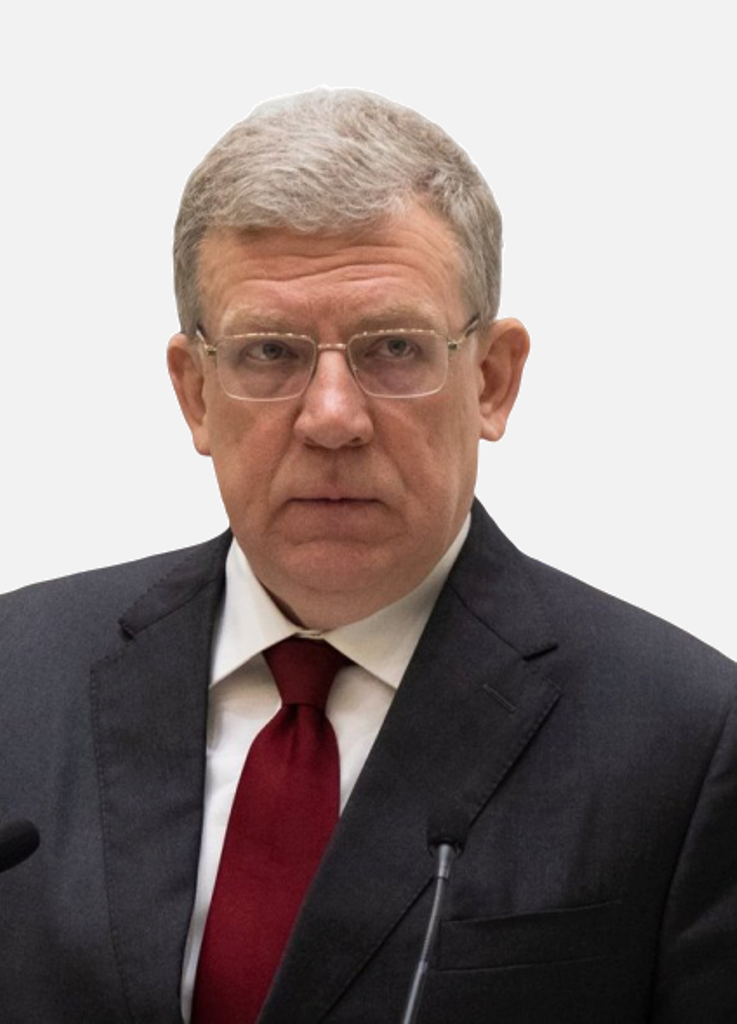
Alexei Leonidovich Kudrin (Russian: Алексе́й Леони́дович Ку́дрин, IPA: [ɐlʲɪkˈsʲej lʲɪɐˈnʲidəvʲɪtɕ ˈkudrʲɪn]; born 12 October 1960) is a Russian liberal[1] politician and economist. Previously he served as the Chairman of the Accounts Chamber from 2018 to 2022 and as Minister of Finance from 2000 to 2011. Since 9 December 2022, he has been a corporate development advisor at Yandex.[2]

Key Information

After graduating with degrees in finance and economics, Kudrin worked in the administration of Saint Petersburg's liberal Mayor Anatoly Sobchak. In 1996, he started working in the Presidential Administration of Boris Yeltsin. He was appointed as Finance Minister on 28 May 2000 and held the post for 11 years, making him the longest-serving Finance Minister in post-Soviet Russia up to that point. In addition, he was Deputy Prime Minister from 2000 to 2004 and again beginning in 2007. As Finance Minister, Kudrin was widely credited with prudent fiscal management, commitment to tax and budget reform and championing the free market.

Under Kudrin, Russia's government paid most of the substantial foreign debt it had accumulated in the 1990s,[citation needed] leaving the country with one of the lowest foreign debts among major economies.[3] Much of the revenue from exports was accumulated at the Stabilization Fund which helped Russia to come out of the 2008 financial crisis in a much better state than many experts expected.[4] During his career, Kudrin has won several awards, including the "Finance Minister of the Year 2010" prize from Euromoney magazine. He was asked to resign from his position on 26 September 2011 by President Dmitry Medvedev.[5][6][7]

From 2011 to 2022, he was the dean of the Faculty of Liberal Arts and Sciences in St. Petersburg State University.[8][9] As of 2016, he is co-chairman of the board of trustees of the Mariinsky Theatre,[25] and the chairman of the board of trustees of the foundation of the European University at St. Petersburg.[26]

He has the federal state civilian service rank of 1st class Active State Councillor of the Russian Federation.[10]

Biography

[edit]

Early life and education

[edit]

Alexei Kudrin was born on 12 October 1960 in Dobele, Latvian SSR to Russian father and Latvian mother.[11] His first job was a motor mechanic and training assistant at the engine laboratory of the Academy of Procurement and Transportation of the Defense Ministry of the Soviet Union, before entering Leningrad State University to study economy. He graduated in 1983, and got an internship at the Leningrad Institute of Social and Economic Problems. In December 1985, he entered the internal postgraduate school at the Institute of Economics of the Academy of Sciences of the Soviet Union, where he later received his PhD.[11] He then worked as a researcher at the Institute of Social and Economic Problems of the Academy of Sciences.[12] Kudrin has authored over 15 scientific works in the fields economics and finance,[11] including topics such as competition and anti-monopoly policy in the Soviet economy of the transition period.[12]

Saint Petersburg administration

[edit]

From 1990 to 1996, Kudrin worked in the Saint Petersburg Saint Petersburg City Administration under the liberal mayor and reformer Anatoly Sobchak. His first position was vice chairman of the Committee for Economic Reform. Until 1993, he worked in various financial positions in the city administration, before he was promoted to deputy mayor, in which position he served from 1993 to 1996.[11] Future president Vladimir Putin was the other top deputy mayor of Saint Petersburg at the time.[13] Kudrin was also chairman of the City Administration's Economic and Finance Committee.[11]

Presidential administration

[edit]

In August 1996, Kudrin was appointed deputy chief of Boris Yeltsin's presidential administration, as well as chief of the Administration on Trade, Economic and Scientific-Technological Cooperation. In March 1997, he became first deputy finance minister, and on 28 May 2000, he was appointed finance minister by the new president Vladimir Putin.[11][14] In addition to his role as finance minister, Kudrin served as one of the deputy prime ministers of Russia from 2000 to 2004 and again beginning in September 2007.[11]

Finance minister

[edit]
Dmitry Kozak, Alexei Kudrin and Mikhail Kasyanov in 2003

Kudrin served as finance minister from May 2000 to September 2011.[15] Kudrin belongs to the group of so-called "St Petersburg economists"—liberal reformers who worked with Putin during his time in the St Petersburg administration—one of the three main informal groups during Putin's presidency.[16] John P. Willerton regards Kudrin and Herman Gref as the leading intellectual forces in crafting of the economic policies of the Putin and Medvedev presidencies.[17] According to Simon Pirani, Kudrin balanced the influence of the siloviki in the government with a financial sobriety.[18]

Prudent fiscal management

[edit]
Kudrin meeting with President Dmitry Medvedev on 27 May 2008

During Putin's presidency, Russia's macroeconomic policies were highly prudent, and extra income from oil exports was put in stabilization funds.[19] The Stabilization Fund of the Russian Federation is widely regarded as Kudrin's idea. Alexander Osin, chief economist at Finam Management, regards the Stabilization Fund as one of Kudrin's main achievements.[20] However, other analysts have described The Stabilization Fund as "dead money", which doesn't benefit the real economy.[20] The Stabilization Fund was split into the Reserve Fund and National Welfare Fund in February 2008.[citation needed]

In 2005, Kudrin and Prime Minister Mikhail Fradkov clashed over a proposal to cut VAT tax from 18% to 13%. Fradkov supported the proposal, but Kudrin argued that lower VAT could endanger stability of the ruble and would cause the government to withdraw money from the stabilization fund.[21] The same year, Kudrin received the "Finance Minister of the Year 2005" award by the Banker magazine.[citation needed]

On 21 August 2006, Russia paid its debts, totalling $23.7 billion to the Paris Club. Simon Pirani, writing for Emerging Markets, praised Kudrin's refusal to be "blown off course by other ministers' whims" in his quest to repay the debt. He also credited Kudrin with sound conduct of the ruble exchange rate and capable fiscal management that has arguably helped to prevent the most serious problems of the so-called Dutch disease.[18] In 2006, Kudrin received the award "Best Finance Minister of a Developing European Country" by the Emerging Markets newspaper, published by the IMF and the World Bank.[20]

As the father and supporter of the prudent fiscal management policies, Kudrin had to endure strong criticism from other members of the government, who believed the money should instead be invested in the country's development. In the end, Kudrin's stance prevailed.[22] The savings later proved crucial in helping Russia to come out of the 2008 financial crisis in a much better state than many experts had expected,[4] and Kudrin was widely credited for his policies.[19][23][24]

Still, the Putin-Kudrin relationship was not all smooth sailing. For example, in September 2007 Kudrin was almost fired but in the end was kept on in Viktor Zubkov's Cabinet.[25]

Early in the Putin years, Kudrin was appointed chair of the state-owned diamond concern, Alrosa.[25]

Other policy stances

[edit]

Although he has often spoken in favour of privatisation and lessening the state role in economy, Kudrin also supported the creation of the so-called national champions.[18] Kudrin has said that the state's role in the oil industry should not be increased, and has indicated that the purchase of Sibneft by Gazprom and the merger of some former Yukos assets to state-controlled oil company Rosneft were taken at a particular stage of the restructuring of the sector. According to Kudrin, "no-one regards state ownership of such assets as an end in itself" and "we are not going to see a continuous strengthening of the state’s position."[26]

As Finance Minister, Kudrin has also supported increasing the retirement age and cutting down on bureaucracy. For his policies, he has often been the target of criticism, especially from the United Russia party, which he has refused to join.[20] According to Renaissance Capital, Kudrin's poll ratings are not favourable as he is seen as responsible for some highly criticized welfare reforms, although economic experts say that the reforms proved to be highly effective.[27]

The Great Recession and its aftermath

[edit]

In the aftermath of the late 2000s global economic crisis, Russia's state budget went into deficit for the first time in years. Kudrin has said that the projected budget deficit is to total 3.6% in 2011, 3.1% in 2012 and 2.9% in 2013. The deficit will be covered primarily through expanded market borrowing.[28] Russia conducted its first international debt sale since 1998 in April 2010, raising $5.5bn on the international markets.[29] According to Kudrin, the government's aim is to attain a deficit-free budget by 2015, based on projected $75–78 oil prices per barrel.[28] Kudrin has said that the Reserve Fund, accumulated before the crisis, will run out in 2011. Consequently, Kudrin warned that Russia will soon have to adjust to being a country, just "like everyone else" and called for a more effective use of state funds.[29]

Finance Minister of the Year 2010

[edit]

In October 2010, Kudrin was declared "Finance Minister of the Year 2010" by the Euromoney magazine. The magazine said that "Kudrin is rightly hailed as a fiscal manager of the highest order" and praised his "championing of the free market and fiscal prudence". According to Euromoney, the Stabilization Fund created and supported by Kudrin also "enabled Russia to pay off its foreign debt early", and noted that "Kudrin is rightly praised for his commitment to tax and budget reform, Russia’s desire to join the World Trade Organization (WTO) and continuing the progress in privatization."[20]

In the award ceremony, Kudrin said: "Russia has already learnt this lesson; it was able to prepare and pass through this period. In this context, this is a result. And when you see your result, you feel satisfied. And when the result is praised by the professional community, it is especially important."[20]

Back to academia

[edit]

Since his retirement from September 2011 to May 2022, Kudrin has been the Dean of the Faculty of Liberal Arts and Sciences of St. Petersburg University. As of 2016, he is co-chairman of the board of trustees of the Mariinsky Theatre,[30] and the chairman of the foundation of the board of trustees of the European University at St. Petersburg.[31]

Political activities

[edit]

Kurdrin is the head of the Civil Initiatives Committee, a Non Governmental Organization which promotes Human Right and development of Civil society in Russia. At the opening of the All-Russian Civil Forum, organized by his Committee, Kudrin said the Law on non-governmental organizations - "foreign agents" should be abolished or completely reworded.[32]

2014 sanctions

[edit]

Kudrin said in November 2014 that "Formal and informal sanctions have already seriously impacted the Russian economy. Bringing back the previous opportunities when it comes to foreign investment and trust in the rouble can be achieved only within seven to 10 years of growth of our economy."[33]

Speculation on future roles

[edit]

During his 2012 presidential campaign, businessman Mikhail Prokhorov said he would appoint Kudrin as Prime Minister, but, Prokhorov lost the election.[34]

2018 presidential campaign speculation

[edit]

On 18 June 2015, Kudrin proposed to hold snap presidential elections. He justified this need for global reform and cited the example of the President of Kazakhstan Nursultan Nazarbayev, who did just that. State Duma deputy from the party A Just Russia Mikhail Emelyanov considered this statement Kudrin's entry into the presidential race. The next day, Kudrin said that he is not going to run for the presidency. However, many experts continued to believe that Kudrin wants to return to the Federal Government, and even take the place of the Prime Minister.[35]

Chairman of the Accounts Chamber

[edit]
Kudrin at his confirmation hearing in the State Duma on 22 May 2018
Kudrin during the inauguration of the President of the INTOSAI

After the 2018 Russian presidential election during the formation of the new government, Prime Minister Dmitry Medvedev nominated Chairwoman of the Accounts Chamber Tatyana Golikova as Deputy Prime Minister.[36] On 10 May, the United Russia party proposed to nominate Kudrin to post of chairman of the Accounts Chamber, instead of Golikova.[37] This was the most anticipated nomination, as pundits observed that Kudrin's role in the new government would set the degree of reformative policies under Putin's fourth term. The low-importance of the position led some observers to speculate that this development signals that the new government has no sizable plans for economic reforms. On 11 May, the party leader Dmitry Medvedev agreed on the candidacy of Kudrin with the parliamentary faction.[38] On 14 May, at a meeting with the Presidium of the faction, Kudrin officially agreed to nominate his candidacy.[39] According to Russian legislation, the State Duma nominates at least three candidates for the post of chairman of the Accounts Chamber, one of whom the President submits to the State Duma for approval.[40] In addition to Kudrin, Anatoly Aksakov from A Just Russia, Yury Sinelshchikov from the Communist Party and Maxim Rokhmistrov from the Liberal Democratic Party also was nominated for this post.[41] On 21 May, Vladimir Putin nominated Kudrin for the chairman.[42] On 22 May, State Duma approved Kudrin in office, with 264 votes in favor.[43] On the same day, the speaker of the State Duma Vyacheslav Volodin introduced Kudrin to the members of the Accounts Chamber.[44]

On 25 September 2019, Russia took over the presidency of the International Organization of Supreme Audit Institutions, and Kudrin took over as president of the organization.[45]

On 29 November 2022, Alexei Kudrin announced his intention to resign as chairman of the Accounts Chamber in order to work in the private sector.[46] On the same day, President Putin submitted to the Federation Council a submission on the dismissal of Kudrin from office.[47]

On 30 November 2022, the Federation Council dismissed Alexei Kudrin from the post of head of the Accounting Chamber.[48]

Kudrin and Yandex

[edit]

In September 2022, the media learned about the offer that Kudrin was made by the founder of Yandex, Arkady Volozh. He offered the head of the Accounts Chamber 5% of the company for help in dividing it into two parts. Volozh plans to separate the business of unmanned vehicles into a separate structure and develop it in Europe. The rest of Yandex will remain in Russia. There were also rumors that Kudrin was offered a leadership position in the Russian part of Yandex.[49] At the end of September, Pavel Demidov, a longtime employee of Kudrin, moved from the Accounts Chamber to Yandex to the position of GR manager.[50] In November 2022, Putin asked the Federation Council to dismiss Kudrin from his position as head of the Accounts Chamber. The Federation Council will hold a vote on November 30.[51] On December 9, 2022, Kudrin started working at Yandex as a Corporate Development Advisor.[52] Kudrin was sanctioned by the OFAC for operating in the technology sector of the Russian Federation economy.[53]

Personal life

[edit]

Alex Kudrin was married to a Moroccan woman, and they had a daughter together. His wife has passed away. His hobbies include tennis, swimming and music.[11][14]

References

[edit]
[edit]
Revisions and contributorsEdit on WikipediaRead on Wikipedia
from Grokipedia

Alexei Leonidovich Kudrin (born 12 October 1960) is a Russian economist and known for his long tenure as Finance Minister from 2000 to 2011, during which he implemented fiscal policies that eliminated Russia's foreign debt, achieved budget surpluses, and amassed exceeding $580 billion by 2011. He also served as Chairman of the Accounts Chamber from 2018 to 2022, resigning to pursue opportunities including an advisory role at focused on corporate development. Kudrin's career, rooted in economic reforms in St. Petersburg under Mayor alongside , emphasized market-oriented prudence amid commodity booms, earning him recognition as a technocratic stabilizer despite occasional clashes with political leadership, such as his 2011 dismissal following public criticism of government spending priorities.

Early Life and Education

Early Life and Family

Alexei Leonidovich Kudrin was born on October 12, 1960, in Dobele, (now ), during his father's service there. His father, Leonid Kudrin, was a Russian in the Soviet , specializing in special communications and as a clerk. His mother, Zinta (née Millere), was Latvian; her family had been subjected to Soviet deportation in 1940 amid the Baltic repressions following the Molotov-Ribbentrop Pact. Due to his father's postings, the family relocated frequently in Kudrin's early years, including to in 1967 and from 1968 to 1971. By the time he entered school, they had settled in Leningrad (now ), where he grew up amid the city's industrial and academic environment. No public records indicate siblings, suggesting he was an .

Academic Training

Kudrin enrolled in the Faculty of Economics at Leningrad State University (now ) in 1978, initially attending the evening division for the first two years while working during the day at the Academy of Rear Services and Transport of the Ministry of Defense of the USSR. He completed his undergraduate studies in 1983, graduating with a in , specializing as an and instructor in . Following graduation, Kudrin pursued , enrolling in the aspirantura (a research program leading to the degree) at the Leningrad Branch of the Institute of Economics of the USSR Academy of Sciences, later known as the Institute of Socio-Economic Problems. In 1988, he defended his dissertation and received the Candidate of Economic Sciences degree, the Soviet-era equivalent of a PhD in , focusing on economic theory. This qualification positioned him for academic and advisory roles, though he soon transitioned into practical administration.

Early Career in Saint Petersburg

Entry into Administration

In late 1990, Alexei Kudrin entered in Leningrad by joining the city's executive committee as deputy chairman of the Committee on Economic Reform, at the invitation of its head, Georgy Khizha, who served as deputy chief of the executive committee. This role focused on initiating market-oriented reforms amid the Soviet Union's dissolution, including efforts to establish free economic zones and privatize state assets in the region. Kudrin's appointment coincided with Anatoly Sobchak's election as chairman of the Leningrad City Soviet in April 1990, positioning the committee within a reformist faction seeking to transition from central planning to decentralized economic management. Between November 1991 and 1992, he also served as vice chairman of the Committee for Management of the Leningrad Free Enterprise Zone, overseeing pilot projects for foreign and enterprise that laid groundwork for post-Soviet . These early positions emphasized fiscal and external partnerships, reflecting Kudrin's academic background in and his prior work at the Leningrad Financial and Economic Institute. By 1993, Kudrin had advanced to and chairman of the Committee for Economics and Finance in the City Administration (following the city's 1991 ), where he managed budgetary stabilization and interfaced with international lenders during and enterprise insolvencies. His tenure in these initial administrative roles, spanning 1990 to mid-1996 under Sobchak's mayoralty, established him as a technocratic figure prioritizing deficit reduction over expansive spending, even as the city grappled with federal subsidies and scandals.

Key Roles in City Government

In late 1990, Alexei Kudrin entered city administration as deputy chairman of the Committee on Economic Reform within the Executive Committee of the Leningrad Soviet, assisting in early post-Soviet economic restructuring efforts under . From November 1991 to 1992, he served as deputy chairman of the Committee on , focusing on policy formulation amid the Soviet Union's dissolution and regional economic instability. Concurrently, he acted as deputy chairman of the Committee on Management of the Leningrad Free Enterprise Zone, promoting initiatives to foster private enterprise in the transitioning economy. By August 1992, Kudrin advanced to chairman of the Main Financial Department of the Mayor's Office—later reorganized as the Financial Committee—where he directed municipal budgeting, revenue collection, and expenditure control during a period of and fiscal scarcity. In 1993, he was appointed deputy mayor and member of the city government under Mayor , overseeing broader administrative functions while retaining financial oversight. From 1994 until June 1996, Kudrin held the position of first deputy mayor and head of the city government, simultaneously chairing the Committee on Economics and Finance, which entailed coordinating economic strategy, investment attraction, and fiscal stabilization in 's administration. These roles positioned him as a key architect of the city's financial framework, emphasizing prudent resource allocation amid national economic turmoil, until Sobchak's electoral defeat prompted his departure.

Presidential Administration Service

Appointments Under Yeltsin and Putin

In August 1996, following Sobchak's electoral defeat in , Alexei Kudrin relocated to and was appointed Deputy Head of the Presidential Administration under President , concurrently serving as Head of the Main Control Directorate (also known as the Central Control Directorate or General Control Office). This dual role positioned Kudrin to oversee financial audits, enforcement of fiscal discipline, and internal oversight mechanisms within the administration, functions that had expanded to combat and inefficiency amid Russia's post-Soviet economic turmoil. Kudrin's tenure in these capacities lasted until March 1997, when , his longtime associate from , succeeded him as head of the Main Control Directorate while Kudrin retained a deputy role in the administration. By late 1997, Kudrin transitioned out of the presidential apparatus to become First of , marking the end of his direct service in Yeltsin's administration amid ongoing efforts to stabilize federal finances. Under President Putin, who assumed office in 2000, Kudrin did not hold formal positions within the Presidential Administration, instead advancing to lead the ; however, his early advisory influence from the Yeltsin-era roles facilitated a seamless continuation of rooted in their shared background. This period underscored Kudrin's role in bridging the administrative transition between the two leaders, prioritizing audit enforcement and budgetary controls that laid groundwork for later fiscal reforms.

Economic Advisory Functions

In August 1996, Alexei Kudrin joined Boris Yeltsin's Presidential Administration as Deputy Chief of Staff, concurrently heading the Administration for Trade, Economic, and Scientific-Technological Cooperation, roles that positioned him to influence early formulations of federal economic strategy amid Russia's post-Soviet fiscal instability. In this capacity, he focused on coordinating economic policy across government bodies, emphasizing fiscal oversight and the alignment of trade initiatives with national priorities, including audits of state expenditures to curb inefficiencies inherited from the 1990s hyperinflation era. Kudrin also led the Presidential Administration's Main Control Directorate until March 1997, when succeeded him in that position, enabling direct advisory input on the enforcement of presidential decrees in economic domains such as budget execution and . This directorate conducted systematic reviews of ministerial compliance, providing Kudrin with leverage to recommend corrective measures for budgetary shortfalls and irregularities, thereby contributing to preliminary stabilization efforts before his transition to the Finance Ministry. These functions underscored Kudrin's emphasis on analytical rigor over expansive spending, as he reportedly prioritized data-driven assessments of economic risks, including debt servicing and foreign balances, in briefings to Yeltsin—advice that later informed broader reforms but drew limited public detail due to the administration's opaque at the time.

Tenure as Minister of Finance

Implementation of Fiscal Discipline

As Minister of Finance from May 2000 to September 2011, Alexei Kudrin prioritized , emphasizing reduction, reserve accumulation, and restrained spending to mitigate Russia's vulnerability to commodity price volatility. He advocated for policies that limited expenditures to non- revenues, channeling windfalls into stabilization mechanisms rather than immediate consumption or outlays. This approach stemmed from the 1998 financial crisis's legacy, where had exceeded 100% of GDP, prompting Kudrin to target a sustainable below 20%. Kudrin spearheaded early tax reforms to broaden the revenue base and enhance compliance, including the introduction of a flat 13% personal income tax rate in , which simplified the system and increased collections from 82 billion rubles in 2000 to 144 billion rubles in . Accompanying value-added tax cuts from 20% to 18% in 2004 further streamlined fiscal incentives without undermining revenue growth, contributing to federal surpluses—for instance, the second consecutive primary surplus in , driven by rising prices and disciplined outlays. These measures helped stabilize finances amid global energy booms, with non- deficits kept below 1.5% of GDP by mid-decade. A cornerstone of his discipline was the 2004 establishment of the Stabilization Fund, capitalized with oil and gas revenues exceeding budgeted levels, which grew to over $150 billion by 2008 before splitting into the Reserve Fund and National Welfare Fund. This insulated the budget from price swings, enabling aggressive repayment: external obligations fell from $161 billion in early 2000 to $41 billion by late 2008, including a $21.6 billion prepayment in that averted billions in costs. Public as a share of GDP dropped to under 10% by 2008, bolstering Russia's from junk status post-1998 to investment grade under agencies like Moody's. Kudrin's fiscal rule, formalized in 2004, mandated budgeting based on conservative oil price assumptions (e.g., $20-25 per barrel initially) and sequestering windfalls, which curbed inflationary pressures from appreciation and limited spending growth to 15-20% annually despite political demands for higher social outlays. Critics within the government, including during 2010 pension reform debates, accused him of excessive , but he defended it as essential for long-term , warning that unchecked deficits could require oil prices above $100 per barrel for balance by 2011. This framework preserved macroeconomic stability, with averaging 9% annually from 2000-2008 compared to 85% in , though it drew fire for underinvestment in and . During his tenure as Minister of Finance from 2000 to 2011, Alexei Kudrin implemented fiscal policies that emphasized surpluses and reserve accumulation, providing a buffer against external shocks. achieved federal surpluses annually from 2001 to 2008, driven by high prices and conservative spending, which enabled early repayment of totaling $21.6 billion and reduced interest burdens. In 2004, Kudrin established the Stabilization Fund to sequester and gas revenues, preventing their immediate expenditure and amassing approximately $200 billion by mid-2008, split later into the Reserve Fund and National Welfare Fund. These measures reflected Kudrin's for fiscal amid commodity price volatility, contrasting with pressures for expansive spending. The 2008 global financial crisis severely tested this framework, with oil prices plummeting from an annual average of $94.4 per barrel to below $40 by year-end, triggering a net private capital outflow of $130 billion and a contraction in the current account surplus from $37 billion in Q1 to $8 billion in Q4. Russia's GDP declined by 7.8% in 2009, exacerbated by overheating from pre-crisis credit expansion and vulnerabilities, though sovereign debt remained low at under 10% of GDP. Gold and foreign currency reserves fell by $45 billion initially, highlighting the economy's dependence on energy exports despite accumulated buffers. Kudrin orchestrated an anti-crisis response totaling 5.2-5.4% of GDP, including RUR 900-1,000 billion in relief such as a four-percentage-point reduction in personal income rates and RUR 1,145 billion in direct budgetary support, like RUR 439 billion for VEB capital injections. Funds from stabilization reserves were deployed strategically, with RUR 180 billion allocated to housing initiatives, RUR 130 billion to Rosnano, and RUR 175 billion from the National Welfare Fund into markets, alongside RUR 300 billion in state guarantees and expanded from RUR 400,000 to RUR 700,000 per account. The provided RUR 1.7 trillion in liquidity to banks by January 2009, while Kudrin prioritized aid to solvent entities over blanket bailouts to mitigate . This approach avoided reliance on international lenders like the IMF, preserving policy autonomy. The strategy facilitated a swift rebound, with GDP growth resuming at 4.3% in , and emerging without systemic banking collapse or , crediting Kudrin's pre-crisis reserve buildup for cushioning the downturn. Budget deficits were contained, projected at 5% of GDP for before narrowing, underscoring the effectiveness of targeted stimulus over unfettered expansion. However, the crisis exposed structural weaknesses, including inflation persistence and debt overhang, prompting Kudrin to stress post-recovery shifts toward private-led financing and efficiency gains.

Major Policy Initiatives and Reforms

As Minister of Finance from 2000 to 2011, Alexei Kudrin prioritized , focusing on revenue stabilization, debt reduction, and tax simplification to mitigate Russia's vulnerability to commodity price volatility following the 1998 financial crisis. His approach emphasized accumulating surpluses from oil windfalls rather than immediate spending, enabling Russia to enter the global crisis with substantial buffers. A cornerstone initiative was the 2000–2001 tax reform package, which Kudrin helped implement, introducing a 13% flat effective January 1, 2001, alongside simplifications to duties and . This replaced a progressive system with rates up to 30%, aiming to reduce evasion and administrative burdens; revenues subsequently rose, with collections increasing by over 25% in 2001, and business registrations growing 11% in the following 18 months. In 2004, Kudrin established the Stabilization Fund to sequester excess and gas revenues beyond budgeted levels, initially capitalized at around 500 billion rubles and growing to over 3 trillion rubles by . The fund was later divided in into the Reserve Fund for short-term liquidity (reaching 1.23 trillion rubles or $39.5 billion) and the National Welfare Fund for long-term investments, providing a buffer that limited the 2008–2009 budget deficit to 5.9% of GDP despite a sharp price drop. Kudrin also drove aggressive sovereign debt repayment, utilizing fund resources to settle $21.6 billion in external obligations, including a 2005 agreement for $15 billion ahead of schedule, which reduced interest payments and restored creditor confidence. By , foreign reserves had accumulated to nearly $600 billion, allowing managed ruble depreciation of 30% during the crisis without default. He consistently advocated for budget deficit caps, targeting reduction to 3% of GDP by 2013, though political pressures often challenged enforcement.

Resignation in 2011

On September 24, 2011, during the party congress, announced his intention to run for president in the 2012 election, with President agreeing to become after the transition. This arrangement, confirming Putin's return to the , prompted immediate speculation about cabinet continuity, particularly regarding key figures like Finance Minister Alexei Kudrin, a close Putin ally known for his . Tensions escalated on September 25, 2011, at the summit in , , where Kudrin publicly stated to reporters that he would not serve in the incoming government under , citing irreconcilable differences over personnel selections and implying criticism of Medvedev's leadership choices. responded swiftly during a televised confrontation, accusing Kudrin of and demanding his immediate resignation, as the minister's comments undermined the president's authority amid the power transition. On September 26, 2011, Medvedev signed an executive order relieving Kudrin of his positions as deputy prime minister and finance minister, effective immediately. Kudrin confirmed the dismissal, stating that his resignation was accepted and framing it as a principled stand to preserve his ability to advocate for budgetary restraint, amid ongoing disputes over increased social and military spending that he viewed as fiscally imprudent. The episode exposed fractures within the Russian elite, with Kudrin's ouster signaling a shift toward accommodating electoral promises of higher expenditures, despite his decade-long emphasis on reserve funds and debt reduction. Kudrin later noted that he had consulted Putin prior to the events, who advised stepping down to avoid further discord, underscoring Kudrin's loyalty to the prime minister over the sitting president.

Interim Activities and Political Engagement

Return to Academia and Research

Following his resignation as Minister of Finance on September 26, 2011, Alexei Kudrin assumed the position of dean of the Faculty of Liberal Arts and Sciences at St. Petersburg State University, a role he held from 2011 until May 2022. In this capacity, he oversaw the development of the faculty, housed within the , which adopted a liberal arts curriculum inspired by Western models, emphasizing interdisciplinary education in , social sciences, and . Kudrin, who holds a Doctor of Economics degree obtained in 1989 from the Leningrad Institute of Socio-Economic Issues, focused on into and fiscal mechanisms during this period, authoring over 30 scholarly articles on topics including and macroeconomic stability. He publicly stated his intent to prioritize academic pursuits and over immediate return to government service, viewing the deanship as an opportunity to apply first-hand policy experience to theoretical analysis. As dean, Kudrin advocated for institutional reforms, including a 2020 proposal to restructure the faculty as an independent entity separate from St. Petersburg State University to enhance academic autonomy and attract international partnerships, though the effort faced resistance from university administration and ultimately did not materialize. He also received honorary professorships, including at the in , recognizing his contributions to economic scholarship. These roles underscored Kudrin's shift toward mentoring future economists while critiquing Russia's structural economic challenges through academic channels.

Formation of the Committee of Civil Initiatives

Following his resignation as Minister of Finance in September 2011 amid tensions with President , Alexei Kudrin shifted focus toward non-governmental initiatives to influence policy through expert input rather than direct state roles. On April 5, 2012, Kudrin formally established the Committee of Civil Initiatives (KGI), a of economists, academics, and civic activists intended to generate alternative policy recommendations on Russia's pressing economic and social issues. The group's founding was announced at a , where Kudrin described it as a "community of citizens" unbound by political affiliations, emphasizing collaboration with authorities to implement pragmatic reforms without partisan agendas. Kudrin positioned the KGI as a bridge between independent experts and the government, drawing on his networks from prior to assemble an initial core of around 20-30 members, including figures like economist and former officials such as , though the roster remained fluid and non-hierarchical. The committee explicitly avoided electoral activities or party formation, with Kudrin stating it would prioritize analytical reports and on topics like fiscal and institutional modernization, reflecting his longstanding advocacy for evidence-based over ideological confrontation. This approach stemmed from Kudrin's assessment that Russia's challenges—such as demographic decline and resource dependency—required technocratic solutions amenable to the ruling elite, rather than oppositional structures prone to marginalization. The formation occurred against the backdrop of post-2011 protests and Putin's impending return to the , positioning the KGI as a moderate liberal outlet for "systemic opposition" within permissible bounds, though it faced from both hardline state elements and radical activists for its perceived proximity to power. Early activities included drafting position papers on and economic diversification, underscoring Kudrin's intent to leverage the committee's credibility—rooted in his fiscal track record—to foster incremental change without risking irrelevance or repression.

Commentary on Sanctions and Economic Policy

Alexei Kudrin has consistently highlighted the tangible economic costs of Western sanctions on , diverging from official narratives that often downplay their effects. In May 2018, as chairman of the Accounts Chamber, he estimated that sanctions imposed following the annexation of would reduce Russia's GDP growth by 0.5 percentage points. This assessment underscored his view that sanctions constrain growth potential through restricted access to capital and technology, even if not immediately catastrophic. Kudrin's analysis emphasized empirical impacts on and , attributing stagnation risks to insufficient domestic countermeasures rather than dismissing external pressures. Following Russia's full-scale invasion of in February 2022, Kudrin forecasted a severe contraction in the Russian economy, predicting a GDP decline exceeding 10 percent for that year—far worse than official projections at the time. He warned of a "full-fledged " exacerbated by sanctions, noting that while broader ruble depreciation stemmed from internal fiscal mismanagement, 25-35 percent of the currency's fall could be linked directly to restrictive measures. In earlier commentary, such as on potential SWIFT disconnection in , Kudrin projected up to a 5 percent GDP hit, illustrating his reliance on quantitative modeling to quantify sanction-induced disruptions in and exports. Kudrin advocated for pragmatic economic policies to mitigate sanction effects, including increased government investment to offset private capital flight and bolster resilience. In September 2014, he criticized the lack of proactive fiscal stimulus, arguing it heightened recession risks amid falling oil prices and sanctions. By 2017, he argued that achieving 3-4 percent annual growth required thawing relations with the West to restore investment flows, as domestic demand alone proved insufficient. His positions reflect a commitment to fiscal discipline alongside structural reforms, cautioning against overreliance on resource exports vulnerable to geopolitical isolation. In 2018, Kudrin publicly contradicted Moscow's minimization of sanctions, asserting their serious economic bite while noting negligible political leverage. These views position him as a voice for evidence-based adaptation, prioritizing long-term sustainability over short-term denial of external constraints.

Leadership of the Accounts Chamber

Appointment and Institutional Role

On May 14, 2018, Alexei Kudrin accepted a nomination to stand for election as Chairman of the Accounts Chamber of the Russian Federation, following an offer extended after his tenure as dean of the St. Petersburg School of Economics and head of the Center for Strategic Research. President nominated Kudrin for the position on May 21, 2018, after the United Russia faction in the formally proposed him nearly a week earlier. The approved the appointment on May 22, 2018, installing Kudrin as the head of the independent parliamentary body responsible for external financial oversight. The Accounts Chamber serves as Russia's supreme external audit institution, tasked with monitoring the execution of the federal budget, evaluating the efficiency of public spending, and auditing the management of state property and assets. In this role, Kudrin directed the chamber's activities to ensure accountability in government expenditures, collaborating directly with executive authorities while maintaining independence as a parliamentary entity. His leadership emphasized reducing corruption in financial spheres and enhancing fiscal discipline through systematic audits and reports to legislative bodies. Kudrin held the chairmanship until November 30, 2022, overseeing the body's operations during a period of and budget reallocations.

Key Audits and Oversight Findings

In , the Accounts Chamber under Kudrin's chairmanship identified violations totaling 772 billion rubles across various audits, prompting the issuance of 408 submissions, 28 mandatory orders, and the initiation of 81 administrative offense cases. These findings encompassed inefficiencies in execution, irregularities, and discrepancies in federal spending. A prominent audit targeted , where 2020 operations revealed violations exceeding 30 billion rubles, including non-compliance with financing standards and improper expenditure documentation, though no direct misappropriation of budgeted funds occurred. responded by committing to address the identified issues in reporting and internal controls, building on prior years' patterns of high violation volumes in the state corporation. Audits of national projects emphasized implementation gaps, such as the unevaluated status of 85 percent of forests under resource protection regulations, alongside broader concerns over synchronized planning between federal entities and regions. In 2022 assessments tied to state programs funding these initiatives, the Chamber exposed violations worth 676 billion rubles, predominantly accounting errors rectified during inspections. Expert-analytical reviews of state programs found that only 25 percent of performance indicators yielded measurable final results or effects benefiting citizens, signaling systemic shortcomings in outcome-oriented spending. Annual control activities from to 2022, including 249 audits in 2021 alone, consistently highlighted procurement flaws and ineffective , contributing to corrective actions and enhanced financial discipline in audited entities.

Anti-Corruption Advocacy

Upon his appointment as chairman of the Accounts Chamber in May 2018, Kudrin identified the fight against corruption, particularly in the financial sector, as one of his primary tasks, emphasizing the need to reduce corrupt practices through enhanced oversight mechanisms. He advocated shifting focus from merely apprehending offenders to establishing preventive systems, stating that anti-corruption efforts should prioritize creating institutional barriers to misconduct rather than reactive enforcement alone. In August 2018, Kudrin pushed for legislative expansion of the Accounts Chamber's authority, noting that its existing mandate in this area lacked clear codification and required formal integration into its auditing powers to enable more systematic detection and deterrence. Under his leadership, the chamber contributed to broader initiatives, including with international audit bodies on guidance for preventing in public debt management and promoting good-faith environments in . Kudrin publicly criticized entrenched corruption in Russia's judiciary during a June 2019 panel at the , arguing that systemic graft in the legal system—rooted in Soviet-era practices—directly impeded by undermining fair dispute resolution and investor confidence. He reiterated combatting as an ongoing priority in meetings with President , aligning the chamber's work with national efforts to curb financial irregularities without specifying prosecutorial outcomes from its audits. This advocacy persisted through his tenure, which ended on December 7, 2022, though concrete metrics on corruption reductions attributable to chamber audits under Kudrin remain limited in public reports.

Private Sector Involvement with Yandex

Departure from Public Office

On November 29, 2022, Alexei Kudrin announced his resignation as chairman of Russia's Accounts Chamber, stating that after approximately 25 years in public service, he sought to pursue private initiatives. He submitted a letter of resignation directly to President Vladimir Putin, emphasizing his desire to shift focus beyond governmental oversight roles. The Federation Council, Russia's upper parliamentary chamber, received the resignation documents on November 28, 2022, and formally approved Kudrin's immediate departure on November 30, 2022, thereby vacating the position without delay. This move ended Kudrin's tenure at the Accounts Chamber, where he had served since 2018, overseeing public spending audits and fiscal accountability mechanisms. Kudrin's exit was interpreted by observers as a strategic transition aligned with priorities, particularly amid Russia's economic restructuring efforts following Western sanctions, though he cited personal career evolution as the primary motivation. No public conflicts or disputes were explicitly linked to the , distinguishing it from his earlier 2011 departure as finance minister. The decision facilitated his subsequent entry into the , underscoring a pattern of Kudrin leveraging public expertise for advisory capacities outside state institutions.

Advisory Role and Corporate Contributions

Following his from the chairmanship of Russia's Accounts Chamber in November 2022, Alexei Kudrin joined N.V. as corporate development advisor effective December 9, 2022. In this capacity, Kudrin focused on restructuring the company's amid geopolitical pressures following Russia's invasion of , which prompted to explore separating its Russian operations from its international assets held by the Dutch parent entity. Kudrin's primary responsibilities included developing the corporate structure for a prospective new holding company to support long-term sustainability, enhancing strategic planning, and bolstering international expansion efforts. He emphasized preserving Yandex's distinctive management and technological culture to maintain its independence as Russia's preeminent technology firm, while advising on governance reforms to shield the company from domestic political interference. This advisory input facilitated negotiations for the company's overhaul, including securing approval from President Vladimir Putin for the divestiture plan, which aimed to delist international units and transfer control of Russian businesses to local investors. Kudrin's involvement extended to coordinating aspects of Yandex's operational split, completed in mid-2024, whereby the Russian segment was sold to a of investors for approximately 475 billion rubles ($5.2 billion at the time), while international AI and cloud assets were rebranded as Nebius Group and relocated abroad. Although initially positioned to oversee the restructured Russian entity, reports indicated his influence waned during final deal negotiations in late 2023, with founder and Kudrin reportedly sidelined in favor of the investor group. His tenure underscored efforts to balance state oversight with private-sector autonomy, drawing on his prior expertise to navigate regulatory and sanction-related challenges.

Controversies and Critical Assessments

Debates Over Austerity Measures

Kudrin has long championed fiscal austerity as essential for Russia's long-term economic stability, emphasizing budget discipline, reserve accumulation, and structural reforms over expansive spending. As Finance Minister from 2000 to 2011, he prioritized saving oil revenues in stabilization funds, maintaining low public debt at around 10% of GDP by 2008, and restraining social expenditures to weather commodity price volatility. This approach buffered Russia during the 2008 global financial crisis, drawing reserves down modestly while avoiding IMF bailouts, but drew criticism from domestic opponents who argued it stifled growth and exacerbated inequality by limiting investments in infrastructure and welfare. Kudrin countered that unchecked spending risked fiscal collapse, as evidenced by his warnings that the budget required $125 per barrel oil prices for balance in 2011, far above market realities. A pivotal debate erupted in leading to Kudrin's resignation, when he publicly opposed President Medvedev's and Putin's commitments to sharp increases—45% in 2010 and an additional 19% in —alongside 50% hikes and public rises tied to impending elections. Kudrin viewed these as populist measures inflating budget deficits and eroding reserves, advocating instead for system overhaul, including raising the women's from 55 to 60, to curb liabilities amid demographic pressures. Critics, including government insiders, accused him of excessive conservatism that prioritized abstract fiscal rules over immediate social needs, potentially fueling ; his dismissal followed direct clashes, signaling a shift toward higher expenditures despite risks of depreciation and exceeding 8%. Post-resignation, debates intensified around Kudrin's role in the pension , which gradually raised retirement ages to 60 for women and 65 for men—a policy he endorsed as Accounts Chamber chairman to sustain payouts amid shrinking workforce and deficits projected at 1-2% of GDP annually without changes. The , framed by Kudrin as enabling 30% higher pensions long-term, sparked widespread protests and accusations of betrayal, with polls showing over 80% opposition and attributions of blame to Kudrin for engineering the cuts under electoral cover. Defenders highlighted its necessity given Russia's gains and funding shortfalls, crediting Kudrin's audits for exposing systemic inefficiencies. Kudrin extended austerity critiques to defense allocations, arguing in 2017 that military spending's rise from 2.5% to 4.4% of GDP between 2011 and 2016 subtracted 0.3 percentage points from annual growth by crowding out social sectors like (down to 3.5% of GDP) and (3.3%). He proposed reallocating 0.3% from defense and 0.5% from to and , potentially boosting growth by 0.4 points over five years, but faced pushback from security hawks prioritizing geopolitical threats over fiscal restraint. These positions underscore ongoing tensions between Kudrin's empirical focus on —evident in Russia's post-2014 sanctions resilience via reserves—and charges of that undervalues stimulus for diversification.

Tensions with Political Leadership

Kudrin's tenure as Finance Minister ended abruptly on September 26, 2011, following a public confrontation with President . At a forum in , on September 24, Kudrin declared he would refuse to serve under as in the anticipated government reshuffle after Vladimir Putin's announced return to the presidency, prompting to demand his immediate resignation for undermining presidential authority. This episode highlighted underlying frictions in Russia's "tandemocracy" system, where Kudrin's loyalty to Putin clashed with formal deference to . The dismissal stemmed from deeper divergences, particularly over fiscal discipline versus expanded state spending. Kudrin had repeatedly warned that proposed modernization and increases—aimed at addressing social unrest and geopolitical priorities—would unbalance the , requiring oil prices of at least $125 per barrel for , far above prevailing levels around $100. He advocated stringent to build reserves and curb , positions that conflicted with the leadership's push for higher expenditures on defense and welfare ahead of elections. Kudrin later described the as premeditated, tied to irreconcilable views on priorities rather than personal animosity. Post-resignation, Kudrin maintained influence as an informal advisor to Putin but voiced persistent critiques of government economic strategies. In November 2014, he cautioned Putin that populist measures, including excessive conservatism in , risked further eroding Russia's economy amid falling oil prices and sanctions. As head of the Accounts Chamber from 2018, he faced sharp rebukes from in June 2019 for publicly questioning the state's sluggish reform pace and overreliance on commodity exports, positioning him as a perceived "liberal" outlier within . These tensions reflected Kudrin's emphasis on structural reforms—such as reducing state intervention and enhancing —against the Kremlin's prioritization of stability and geopolitical assertiveness, even as he avoided outright opposition. In a February 2024 reflection, Kudrin recounted confronting Putin directly on perceived policy excesses during his advisory tenure, underscoring a pattern of candid but contained . Despite such frictions, his expertise ensured periodic re-engagement, as seen in his role crafting reform blueprints for Putin in 2016.

Perceptions of Economic Realism vs. Pessimism

Alexei Kudrin has been perceived by proponents of fiscal discipline as an economic realist who prioritized long-term stability over short-term spending impulses, crediting his tenure as finance minister (2000–2011) with amassing substantial sovereign wealth funds and maintaining low public debt levels amid volatile oil revenues. During the commodity boom, Kudrin's policies ensured budget surpluses and reserve accumulation exceeding $500 billion by 2008, which buffered against the global financial crisis, enabling a quicker recovery than many peers. Supporters, including international analysts, argue this approach reflected causal realism in recognizing Russia's resource-dependent economy's vulnerabilities to price cycles, averting the debt traps seen in other oil exporters. Critics, however, portray Kudrin's outlook as excessively pessimistic, accusing him of underestimating growth potential and advocating that stifled investment in and . His opposition to increased social expenditures during economic downturns, such as in when he clashed with the over and hikes, led to his and perceptions of him as a on expansionary policies needed for diversification beyond hydrocarbons. Domestic observers have highlighted his recurrent dire forecasts—such as predicting a $160 billion capital outflow and sharp GDP contraction in amid sanctions and oil price drops—as fostering undue alarm, potentially exacerbating investor flight despite Russia's eventual adaptation through import substitution and fiscal adjustments. These divergent views intensified post-2011, with Kudrin's role at the Accounts Chamber amplifying scrutiny of . While he warned in that authorities had not adjusted to post-oil boom realities, including persistent low growth around 1-2% annually, President Putin in 2017 dismissed such "gloomy predictions" as unfulfilled, pointing to stabilized like below 4% and under 6%. In 2022, Kudrin forecasted a GDP contraction exceeding 10% due to the conflict's disruptions, aligning with initial war-related output drops in and services, though official figures reported a milder 2.1% decline, fueling debates over whether his estimates captured hidden costs like reallocation or overstated risks relative to wartime resilience. Kudrin himself cautioned against "excessive conservatism" limiting freedoms in a , suggesting a self-aware pivot toward balanced realism, yet perceptions persist of him as a figure whose data-driven warnings prioritize deficit aversion over optimistic structural reforms.

Personal Life and Legacy

Family and Private Interests

Kudrin has been married to Irina Kudrina (née Tintyakova, born 1973), his second wife, since the early 2000s; she previously worked as a press secretary's aide and has maintained a low public profile while engaging in philanthropy. In 2000, Irina established the Northern Crown charitable foundation, focusing on social initiatives in St. Petersburg, and later served as its president. The couple prefers privacy regarding family matters, with limited public details on their personal life. Kudrin has one publicly documented child, a son named Artyom Alexeyevich Kudrin, born in 1998, who was listed as owning a 120 m² apartment in official disclosures during his father's tenure. Reports of a daughter exist but lack verification from primary sources. His first marriage, to a St. Petersburg businesswoman named Veronica, ended prior to his current union, with no children confirmed from that relationship. In terms of private interests, Kudrin engages in sports such as and , alongside appreciation for and , activities he pursues to maintain personal balance amid professional demands. He has voiced support for charitable efforts targeting educational and institutions, emphasizing their role in societal development without detailing personal donations. Kudrin is also listed among founders of the Hermitage Development Foundation in St. Petersburg, which supports cultural preservation, though his involvement appears nominal rather than operational.

Awards, Honors, and Long-Term Impact

Kudrin received the Order "For Merit to the Fatherland" of the third degree from the Russian government for his contributions to conducting state finances and many years of conscientious work. He was awarded the same order in 2005 during his tenure as and finance minister. In 2010, by government decree, he received the Stolypin Medal of the first degree for active participation in socioeconomic development. Internationally, Euromoney magazine named Kudrin Finance Minister of the Year in 2010, recognizing his prudent management of oil revenues and fiscal buffers that mitigated the global financial crisis's impact on . The Banker similarly honored him as Finance Minister of the Year in 2004 for advancing tax and budget reforms. Kudrin's long-term economic impact derives primarily from his 2000–2011 finance ministry role, where he prioritized amid commodity windfalls, reducing Russia's from over 90% of GDP in 1999 to near zero by through early repayments totaling $21.6 billion. He established the Stabilization Fund in —later split into the Reserve Fund and National Welfare Fund—to sequester oil and gas revenues, amassing reserves exceeding $500 billion by and enabling Russia to weather the global crisis without default or heavy borrowing, while keeping sovereign debt below 10% of GDP. These policies contained during the boom, balanced budgets structurally, and reformed taxes by slashing rates and counts from over 50 to 15, fostering initial revenue growth without overheating. Post-tenure, Kudrin's legacy includes influencing budgetary frameworks like the fiscal rule tying spending to long-term oil prices, which curbed procyclical deficits but drew criticism for constraining in non-resource sectors, contributing to structural stagnation risks as commodity dependence persisted. His reform proposals, emphasizing liberalization and spending, highlighted tensions between short-term stability and diversification needs, though implementation lagged amid political priorities; empirically, pre-2014 reserves buffered sanctions shocks, underscoring the enduring value of his buffers against volatility.

References

Add your contribution
Related Hubs
User Avatar
No comments yet.