Hubbry Logo
AnabolismAnabolismMain
Open search
Anabolism
Community hub
Anabolism
logo
8 pages, 0 posts
0 subscribers
Be the first to start a discussion here.
Anabolism
Anabolism
from Wikipedia
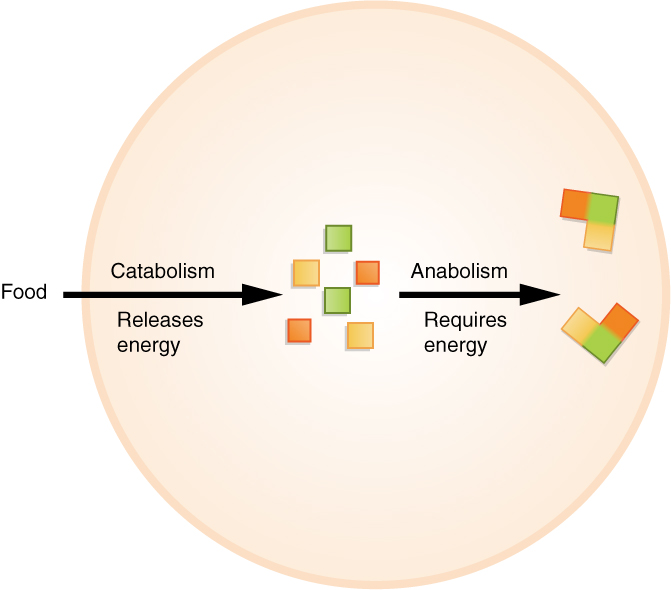
Schematic diagram showing anabolism and catabolism

Anabolism (/əˈnæbəlɪzəm/ ə-NAB-ə-liz-əm)[1] is the set of metabolic pathways that construct macromolecules like DNA or RNA from smaller units.[2][3] These reactions require energy, known also as an endergonic process.[4] Anabolism is the building-up aspect of metabolism, whereas catabolism is the breaking-down aspect. Anabolism is usually synonymous with biosynthesis.

Pathway

[edit]

Polymerization, an anabolic pathway used to build macromolecules such as nucleic acids, proteins, and polysaccharides, uses condensation reactions to join monomers.[5] Macromolecules are created from smaller molecules using enzymes and cofactors.

Use of ATP to drive the endergonic process of anabolism.

Energy source

[edit]

Anabolism is powered by catabolism, where large molecules are broken down into smaller parts and then used up in cellular respiration. Many anabolic processes are powered by the cleavage of adenosine triphosphate (ATP).[6] Anabolism usually involves reduction and decreases entropy, making it unfavorable without energy input.[7] The starting materials, called the precursor molecules, are joined using the chemical energy made available from hydrolyzing ATP, reducing the cofactors NAD+, NADP+, and FAD, or performing other favorable side reactions.[8] Occasionally it can also be driven by entropy without energy input, in cases like the formation of the phospholipid bilayer of a cell, where hydrophobic interactions aggregate the molecules.[9]

Cofactors

[edit]

The reducing agents NADH, NADPH, and FADH2,[10] as well as metal ions,[5] act as cofactors at various steps in anabolic pathways. NADH, NADPH, and FADH2 act as electron carriers, while charged metal ions within enzymes stabilize charged functional groups on substrates.

Substrates

[edit]

Substrates for anabolism are mostly intermediates taken from catabolic pathways during periods of high energy charge in the cell.[11]

Functions

[edit]

Anabolic processes build organs and tissues. These processes produce growth and differentiation of cells and increase in body size, a process that involves synthesis of complex molecules. Examples of anabolic processes include the growth and mineralization of bone and increases in muscle mass.

Anabolic hormones

[edit]

Endocrinologists have traditionally classified hormones as anabolic or catabolic, depending on which part of metabolism they stimulate. The classic anabolic hormones are the anabolic steroids, which stimulate protein synthesis and muscle growth, and especially insulin, which is the main anabolic hormone of the body,[12] regulating the metabolism of protein, carbohydrates, and fats.[13]

Photosynthetic carbohydrate synthesis

[edit]

Photosynthetic carbohydrate synthesis in plants and certain bacteria is an anabolic process that produces glucose, cellulose, starch, lipids, and proteins from CO2.[7] It uses the energy produced from the light-driven reactions of photosynthesis, and creates the precursors to these large molecules via carbon assimilation in the photosynthetic carbon reduction cycle, a.k.a. the Calvin cycle.[11]

Amino acid biosynthesis from intermediates of glycolysis and the citric acid cycle.

Amino acid biosynthesis

[edit]

All amino acids are formed from intermediates in the catabolic processes of glycolysis, the citric acid cycle, or the pentose phosphate pathway. From glycolysis, glucose 6-phosphate is a precursor for histidine; 3-phosphoglycerate is a precursor for glycine and cysteine; phosphoenol pyruvate, combined with the 3-phosphoglycerate-derivative erythrose 4-phosphate, forms tryptophan, phenylalanine, and tyrosine; and pyruvate is a precursor for alanine, valine, leucine, and isoleucine. From the citric acid cycle, α-ketoglutarate is converted into glutamate and subsequently glutamine, proline, and arginine; and oxaloacetate is converted into aspartate and subsequently asparagine, methionine, threonine, and lysine.[11]

Glycogen storage

[edit]

During periods of high blood sugar, glucose 6-phosphate from glycolysis is diverted to the glycogen-storing pathway. It is changed to glucose-1-phosphate by phosphoglucomutase and then to UDP-glucose by UTP--glucose-1-phosphate uridylyltransferase. Glycogen synthase adds this UDP-glucose to a glycogen chain.[11]

Gluconeogenesis

[edit]

Glucagon is traditionally a catabolic hormone, but also stimulates the anabolic process of gluconeogenesis by the liver, and to a lesser extent the kidney cortex and intestines, during starvation to prevent low blood sugar.[10] It is the process of converting pyruvate into glucose. Pyruvate can come from the breakdown of glucose, lactate, amino acids, or glycerol.[14] The gluconeogenesis pathway has many reversible enzymatic processes in common with glycolysis, but it is not the process of glycolysis in reverse. It uses different irreversible enzymes to ensure the overall pathway runs in one direction only.[14]

Regulation

[edit]

Anabolism operates with separate enzymes from catalysis, which undergo irreversible steps at some point in their pathways. This allows the cell to regulate the rate of production and prevent an infinite loop, also known as a futile cycle, from forming with catabolism.[11]

The balance between anabolism and catabolism is sensitive to ADP and ATP, otherwise known as the energy charge of the cell. High amounts of ATP cause cells to favor the anabolic pathway and slow catabolic activity, while excess ADP slows anabolism and favors catabolism.[11] These pathways are also regulated by circadian rhythms, with processes such as glycolysis fluctuating to match an animal's normal periods of activity throughout the day.[15]

Etymology

[edit]

The word anabolism is from Neo-Latin, with roots from Ancient Greek: ἀνά, "upward" and βάλλειν, "to throw".

References

[edit]
Revisions and contributorsEdit on WikipediaRead on Wikipedia
from Grokipedia
Anabolism is the set of metabolic pathways in living organisms that synthesize complex molecules, such as proteins, nucleic acids, , and , from simpler precursor units, requiring energy input to drive these biosynthetic reactions. This process is essential for cellular growth, repair, development, and , contrasting with , which degrades molecules to release energy. Anabolic reactions are mediated by enzymes and occur in specific cellular compartments, such as the , mitochondria, and chloroplasts, ensuring efficient construction of biomolecules under controlled conditions like optimal and temperature. Central to anabolism is the consumption of energy derived from catabolic processes, primarily in the form of (ATP) and reducing equivalents like (NADPH). For instance, NADPH, generated via pathways such as the pentose phosphate shunt, provides the reducing power needed for reductive biosyntheses, including and production from . This energy coupling maintains metabolic , where excess energy from catabolism fuels anabolism to build energy storage forms like through or triglycerides via . Prominent examples of anabolic pathways include the synthesis of proteins from amino acids, which supports tissue building and enzymatic functions; gluconeogenesis, which forms glucose from non-carbohydrate precursors like pyruvate in the liver; and provision of precursors and reducing power for nucleotide synthesis via the pentose phosphate pathway for DNA and RNA assembly. These pathways are highly regulated by hormones—insulin promotes anabolism by enhancing nutrient uptake and synthesis, while glucagon favors catabolism during fasting—to prevent imbalances that could lead to conditions like obesity or muscle wasting. In all organisms, from to humans, anabolism underpins survival by enabling to environmental demands, such as nutrient scarcity or rapid growth in microbes. Disruptions in anabolic processes, often linked to genetic or hormonal factors, can contribute to metabolic disorders, highlighting their in health and disease.

Definition and Fundamentals

Definition

Anabolism refers to the set of metabolic pathways in living organisms that synthesize complex molecules, such as proteins, nucleic acids, , and , from simpler precursor units like , , monosaccharides, and fatty acids. These pathways are endergonic, requiring an input of energy typically in the form of (ATP) or other high-energy equivalents to drive the assembly process./06:_Fueling_and_Building_Cells/6.06:_Anabolism) While the term encompasses a broader range of biological synthesis , specifically denotes the energy-consuming constructive processes to cellular and growth in organisms./09:_Food_to_energy_metabolic_pathways/9.01:_Basics_of_metabolism) This focus highlights 's role in building cellular structures and storing energy, distinguishing it from non-metabolic synthetic mechanisms. As the anabolic phase of , it is often coupled with reduction reactions, involving the addition of electrons or hydrogen atoms to precursors, which further contributes to the formation of more reduced, complex biomolecules./02:_Energy/2.02:_Oxidation_vs_Reduction_in_Metabolism) Together with , anabolism maintains the dynamic balance of metabolic activities essential for life.

Relation to Catabolism

Catabolism serves as the degradative counterpart to within cellular , involving the breakdown of complex macromolecules into simpler molecules while releasing energy, primarily in the form of (ATP). For example, the of glucose through processes like and generates ATP by oxidizing carbon compounds to and water. Anabolic pathways rely on the produced by to synthesize larger molecules from smaller , creating a fundamental interdependence that maintains cellular . This coupling ensures that the ATP and reducing equivalents (such as NADH) from catabolic reactions fuel endergonic anabolic steps, with the overall metabolic balance tilting toward anabolism during growth and proliferation phases to support production and repair. Amphibolic pathways exemplify this integration by functioning in both catabolic and anabolic capacities, allowing efficient resource allocation. The , for instance, primarily catabolizes to yield energy through electron carriers but also provides key intermediates—like for synthesis and oxaloacetate for aspartate production—that branch into anabolic routes for and .

Biological Significance

Anabolism is essential for the growth, development, and maintenance of living organisms, particularly in multicellular , where it drives the construction of tissues, organs, and storage molecules from simpler building blocks, supporting the expansion and maturation of biological structures. By enabling the synthesis of macromolecules such as proteins and , anabolic processes facilitate and differentiation, which are critical for embryonic development and organismal maturation across . This biosynthetic capacity allows organisms to scale from single cells to complex multicellular forms, ensuring the progressive assembly of functional architectures. In terms of maintenance, anabolism underpins the repair of cellular and the ongoing synthesis of enzymes and structural components necessary for tissue integrity and physiological . Following or stress, anabolic pathways promote the regeneration of damaged areas by rebuilding , thereby restoring functionality and preventing degeneration. This role extends to adaptive responses, where anabolism helps organisms cope with environmental challenges by replenishing essential biomolecules, thus maintaining viability under varying conditions. Evolutionarily, anabolism has been pivotal in fostering biological , transforming simple precursors into intricate cellular and organismal systems that characterize from prokaryotes to humans. By optimizing energy allocation for , ancestral mechanisms ensured efficient growth and survival, laying the groundwork for diverse histories and adaptations that persist today. This foundational process underscores anabolism's universal significance, as it balances constructive demands with energetic constraints to sustain evolutionary progress.

Biochemical Mechanisms

General Pathway Features

Anabolic pathways exhibit an endergonic nature, characterized by a positive change in (ΔG > 0), necessitating external energy input to drive the synthesis of complex molecules from simpler precursors. This thermodynamic unfavorability is overcome by anabolic reactions to exergonic processes that release sufficient free energy to shift the overall equilibrium toward product formation. Such ensures the directionality of these biosynthetic routes, which proceed against the natural tendency toward disorder by constructing ordered structures like polymers and macromolecules. A defining feature of anabolic pathways is their stepwise assembly mechanism, wherein monomers are progressively linked through or reactions to form larger biomolecules. These sequential steps allow for precise control and regulation at individual reaction points, facilitating the efficient incorporation of building blocks such as into proteins or into nucleic acids. This modular approach contrasts with spontaneous assembly, enabling cells to harness enzymatic for high specificity and yield in macromolecular synthesis. Anabolic processes are further distinguished by their compartmentalization within specific cellular locales, which optimizes reaction conditions and prevents interference from competing catabolic activities. For instance, occurs in multiple cellular compartments including the , mitochondria, and , while in photosynthetic organisms, key carbon-fixing anabolic reactions take place in chloroplasts to leverage localized energy sources. This spatial organization enhances efficiency by concentrating substrates, enzymes, and cofactors in microenvironments tailored to the pathway's requirements.

Energy Requirements

Anabolic processes are inherently endergonic, requiring energy input to drive the formation of complex biomolecules from simpler precursors. The primary energy source for these reactions is adenosine triphosphate (ATP), which undergoes hydrolysis to release free energy that couples to unfavorable biosynthetic steps. The hydrolysis reaction is given by: ATP+H2OADP+Pi+energy(ΔG30.5kJ/mol)\text{ATP} + \text{H}_2\text{O} \rightarrow \text{ADP} + \text{P}_\text{i} + \text{energy} \quad (\Delta G^\circ \approx -30.5 \, \text{kJ/mol}) This energy release powers processes such as the of substrates and the of building blocks in pathways like protein and synthesis. In certain anabolic reactions, (GTP) or other compounds serve as alternative energy donors, particularly in steps involving ribosomal translocation during protein synthesis or in the . Beyond ATP's role in direct energy provision, anabolic pathways often require reducing power to facilitate carbon-carbon bond formations and other reductive transformations, where nicotinamide adenine dinucleotide phosphate (NADPH) acts as the key . NADPH donates hydride ions (H⁻) and electrons in these steps, maintaining a favorable balance distinct from the oxidative role of NADH in . For instance, in , multiple NADPH molecules are consumed per elongation cycle to reduce β-ketoacyl intermediates to saturated chains, ensuring the pathway's progression. The thermodynamic efficiency of anabolism varies by pathway, with significant energy investments per bond formed to overcome and stabilize products. A representative example is peptide bond formation in protein synthesis, which requires approximately 2 ATP equivalents for alone, though the full elongation process consumes up to 4 bonds overall (including ). These costs highlight the substantial cellular investment in anabolism, often accounting for a major portion of total ATP turnover in growing cells.

Cofactors and Substrates

In anabolism, substrates serve as the fundamental building blocks or precursors that are assembled into complex biomolecules through biosynthetic pathways. These substrates are typically small, simple molecules derived from catabolic processes or dietary sources, providing the carbon skeletons necessary for macromolecular synthesis. For instance, acetyl-CoA acts as a key substrate in lipid biosynthesis, where it is carboxylated to form malonyl-CoA for fatty acid chain elongation and incorporated into cholesterol, triacylglycerols, and phospholipids. Similarly, glucose-6-phosphate, generated from glucose uptake or glycogen breakdown, is converted to glucose-1-phosphate and then to UDP-glucose, serving as the primary substrate for glycogen synthesis in liver and muscle cells. In protein anabolism, free amino acids function as direct substrates, with essential amino acids like leucine and valine being incorporated via ribosomal translation to form polypeptide chains. Cofactors are non-proteinaceous molecules that assist anabolic enzymes by facilitating specific chemical transformations without being consumed in the overall reaction, thereby lowering the required for substrate conversion. Many cofactors are derived from s and play indispensable roles in carbon group transfers or reactions central to . (CoA), synthesized from ( B5), exemplifies this by activating acyl groups as thioesters, such as in , which enables the transfer of two-carbon units during and synthesis. Tetrahydrofolate (THF), the active form of ( B9), functions as a carrier for one-carbon units at various oxidation states, supporting anabolic processes like purine ring assembly and thymidylate formation essential for nucleotide production. Another vital organic cofactor is pyridoxal 5'-phosphate (PLP), derived from , which forms a with to stabilize carbanions, enabling reactions that interconvert and keto acids during . Inorganic cofactors, particularly metal ions, further enhance enzymatic efficiency in anabolic pathways by stabilizing transition states or participating in substrate binding. Magnesium ions (Mg²⁺) are ubiquitous cofactors that coordinate groups in triphosphates like ATP and UTP, facilitating phosphoryl transfers in reactions such as UDP-glucose formation for synthesis and polymerization. These cofactors exhibit specificity to reaction types: for example, PLP is tailored for amino group manipulations, while THF handles methyl and formyl donations, ensuring precise control over anabolic flux without altering the core of substrates.

Major Anabolic Processes

Carbohydrate Anabolism

Carbohydrate anabolism encompasses the biosynthetic pathways that construct complex carbohydrates from simpler precursors, primarily in plants, bacteria, and animals, serving as a fundamental process for energy storage and structural maintenance in cells. In autotrophic organisms, the primary route is photosynthesis via the Calvin cycle, which fixes atmospheric carbon dioxide into glucose, while heterotrophs rely on glycogenesis for glycogen storage and gluconeogenesis for de novo glucose production from non-carbohydrate sources. These pathways are energy-intensive, drawing on ATP and reducing equivalents like NADPH to drive the endergonic assembly of carbon skeletons. The , occurring in the stroma of chloroplasts, represents the core of photosynthetic synthesis in photoautotrophs. It involves the fixation of CO₂ onto 1,5-bisphosphate by the enzyme ribulose-1,5-bisphosphate carboxylase/oxygenase (Rubisco), yielding two molecules of 3-phosphoglycerate, which are then reduced to using ATP and NADPH. Five-sixths of the is recycled to regenerate ribulose 1,5-bisphosphate, while the remainder contributes to glucose formation. To produce one glucose molecule, the cycle requires six turns, consuming 18 ATP and 12 NADPH molecules, as summarized by the overall reaction: 6CO2+18ATP+12NADPHC6H12O6+18ADP+12NADP+6 \mathrm{CO_2} + 18 \mathrm{ATP} + 12 \mathrm{NADPH} \rightarrow \mathrm{C_6H_{12}O_6} + 18 \mathrm{ADP} + 12 \mathrm{NADP^+} This process not only builds carbohydrates but also regenerates the CO₂ acceptor, ensuring continuous carbon assimilation. In animals and other heterotrophs, glycogenesis assembles glucose units into glycogen for storage, primarily in liver and muscle cells. The pathway begins with glucose phosphorylation to glucose-6-phosphate by hexokinase or glucokinase, followed by isomerization to glucose-1-phosphate via phosphoglucomutase. Glucose-1-phosphate then reacts with UTP to form UDP-glucose, catalyzed by UDP-glucose pyrophosphorylase, which serves as the activated donor. Glycogen synthase extends the glycogen chain by adding UDP-glucose via α-1,4-glycosidic bonds, while the branching enzyme, also known as amylo-(1→4)(1→6)-transglycosylase, introduces α-1,6 branches every 8-12 residues to create a highly branched structure that facilitates rapid mobilization. Glycogenin protein initiates the primer with a short glucose chain, enabling efficient polymerization. This process ensures compact storage of up to 10% of liver mass as glycogen in mammals. Gluconeogenesis provides an alternative anabolic route for glucose synthesis from non-carbohydrate precursors such as lactate, , and , occurring mainly in the liver and kidneys during or high demand. The pathway reverses most steps but bypasses the three irreversible reactions using specialized enzymes: converts pyruvate to oxaloacetate (consuming ATP), (PEPCK) forms phosphoenolpyruvate from oxaloacetate (using GTP), fructose-1,6-bisphosphatase hydrolyzes fructose-1,6-bisphosphate, and glucose-6-phosphatase releases free glucose. For example, from lactate, the shuttles it to the liver for conversion, requiring 6 ATP equivalents per glucose molecule produced to overcome the thermodynamic barrier. This maintains blood glucose levels, preventing .

Amino Acid Biosynthesis

Amino acid biosynthesis represents a critical anabolic pathway in which organisms construct the 20 standard proteinogenic from central metabolic intermediates, such as those derived from , the , and the . This process integrates carbon skeletons with nitrogen groups to form , enabling protein synthesis and other nitrogen-containing production. In humans and other animals, not all amino acids can be synthesized de novo due to the absence of certain enzymatic pathways, leading to the classification of amino acids as essential or non-essential based on dietary requirements. Humans can synthesize 11 non-essential amino acids, including , aspartate, , glutamate, , , , serine, , , and (the latter being conditionally essential in certain physiological states), primarily using precursors from and . For instance, glutamate serves as a central intermediate, formed from α-ketoglutarate through processes. These non-essential amino acids are produced via and amidation reactions that do not require dietary intake, allowing the body to meet demands under normal conditions. In contrast, the nine essential amino acids—, , , , , , , , and —cannot be synthesized and must be obtained from the diet to prevent deficiencies./25:_Protein_and_Amino_Acid_Metabolism/25.06:_Biosynthesis_of_Nonessential_Amino_Acids) Nitrogen assimilation is a foundational step in , primarily occurring through the fixation of into organic compounds to prevent from free ions. The catalyzes the of α-ketoglutarate, incorporating to produce glutamate as the primary donor for other . This reaction is reversible and utilizes NADPH as a cofactor: α-ketoglutarate+NH4++NADPHglutamate+NADP++H2O\alpha\text{-ketoglutarate} + \text{NH}_4^+ + \text{NADPH} \rightarrow \text{glutamate} + \text{NADP}^+ + \text{H}_2\text{O} Glutamate can further serve as a substrate for to form , which acts as a non-toxic transport and additional source. These processes ensure efficient incorporation of inorganic into amino acid precursors, with playing a key role in and anabolism in various organisms. Key biosynthetic pathways for non-essential often involve reactions, where an amino group from glutamate is transferred to a carbon via aminotransferases, requiring as a cofactor. For example, is synthesized from pyruvate and glutamate by , yielding and α-ketoglutarate: pyruvate+glutamatealanine+α-ketoglutarate\text{pyruvate} + \text{glutamate} \rightleftharpoons \text{alanine} + \alpha\text{-ketoglutarate} This reversible reaction links glycolytic intermediates directly to amino acid production, facilitating rapid adjustments in amino acid pools during metabolic demands. Similar transaminations produce aspartate from oxaloacetate and other amino acids like serine from 3-phosphoglycerate./18:_Amino_Acids/18.02:_Biosynthesis_of_Amino_Acids) In organisms capable of de novo synthesis of aromatic amino acids, such as plants, bacteria, and fungi, the shikimate pathway provides the branched carbon framework for phenylalanine, tyrosine, and tryptophan, which are essential in humans. This seven-step pathway begins with the condensation of phosphoenolpyruvate and erythrose-4-phosphate from glycolysis and the pentose phosphate pathway, respectively, leading to chorismate as a key intermediate. From chorismate, branch-point enzymes direct flux toward prephenate for phenylalanine and tyrosine, or anthranilate for tryptophan, consuming significant cellular resources—up to 30% of fixed carbon in plants. Animals lack this pathway, relying on dietary sources, which underscores its evolutionary significance in microbial and plant metabolism for adapting to nitrogen-limited environments.

Nucleotide and Nucleic Acid Synthesis

Nucleotide synthesis represents a critical anabolic process in cells, enabling the production of purine and pyrimidine nucleotides that serve as building blocks for DNA and RNA. These pathways operate de novo, assembling nucleotides from simpler precursors such as amino acids, CO₂, and one-carbon units, distinct from salvage pathways that recycle free bases. De novo synthesis is energy-intensive and tightly regulated to meet the demands of cell proliferation and nucleic acid polymerization. De novo purine biosynthesis begins with phosphoribosyl pyrophosphate (PRPP) and glutamine as primary substrates, proceeding through a 10-step pathway to form inosine monophosphate (IMP), the first purine nucleotide. The initial step, catalyzed by amidophosphoribosyltransferase (PPAT), transfers an amino group from glutamine to PRPP, forming 5-phosphoribosylamine. Subsequent steps incorporate glycine (via GAR synthetase, GART), a formyl group from N¹⁰-formyl-tetrahydrofolate (via GAR transformylase, also GART), additional glutamine-derived nitrogen (PFAS), and CO₂ (via AIR carboxylase, PAICS), culminating in IMP synthesis through cyclization (ATIC). This pathway requires six ATP equivalents and two molecules of N¹⁰-formyl-THF for formylation reactions at positions 2 and 8 of the purine ring. From IMP, adenylosuccinate synthetase (ADSS) and lyase (ADSL) convert it to adenosine monophosphate (AMP), while IMP dehydrogenase (IMPDH) and GMP synthetase (GMPS) yield guanosine monophosphate (GMP). Aspartate contributes to the conversion of IMP to AMP as a nitrogen donor. In contrast, de novo pyrimidine biosynthesis assembles the pyrimidine ring before attachment to the ribose moiety, starting from and aspartate to produce (UMP). The pathway comprises six enzymatic steps: (CPS II) forms from , ATP, and CO₂; aspartate transcarbamoylase (ATCase) condenses it with aspartate; dihydroorotase (DHOase) cyclizes the product to dihydroorotate; (DHODH) oxidizes it to orotate using as an ; orotate phosphoribosyltransferase (OPRT) transfers the ribosyl group from PRPP to orotate, forming orotidine monophosphate (OMP); and OMP decarboxylase (ODC) yields UMP. The first three steps are catalyzed by the multifunctional CAD enzyme complex. UMP is then phosphorylated to UTP and converted to CTP using and ATP. Nucleotides are subsequently polymerized into nucleic acids during and RNA transcription. DNA synthesis occurs via DNA polymerases, which catalyze the addition of deoxyribonucleoside triphosphates (dNTPs) to the 3'-hydroxyl end of a growing strand, templated by the sequence and releasing (PPi). This process proceeds in the 5' to 3' direction and requires an RNA primer (synthesized by ) for initiation, with continuous synthesis on the leading strand and discontinuous on the lagging strand. RNA polymerization, mediated by RNA polymerases, similarly incorporates ribonucleoside triphosphates (NTPs: ATP, GTP, CTP, UTP) in the 5' to 3' direction, hydrolyzing PPi to form phosphodiester bonds without a primer, using DNA as the template. These polymerization reactions ensure faithful replication of genetic information and expression of genes essential for anabolic processes.

Lipid Biosynthesis

Lipid biosynthesis encompasses the anabolic assembly of fatty acids, glycerolipids, and steroids from acetyl-CoA-derived precursors, playing crucial roles in through triacylglycerols and in maintaining integrity via phospholipids and . These processes occur primarily in the and (ER), utilizing reducing power from NADPH to build hydrophobic structures essential for cellular function and organismal . Fatty acid synthesis begins with the carboxylation of acetyl-CoA to malonyl-CoA, catalyzed by acetyl-CoA carboxylase (ACC), an ATP-dependent reaction that commits acetyl units to lipogenesis and requires biotin as a cofactor. The malonyl-CoA is then transferred to the acyl carrier protein (ACP) within the multifunctional fatty acid synthase (FAS) complex, a homodimeric enzyme that iteratively elongates the chain through condensation, reduction, dehydration, and further reduction steps. In mammals, this process yields palmitate (C16:0) as the primary product after seven elongation cycles, with the overall stoichiometry requiring eight acetyl-CoA molecules (one as primer and seven via malonyl-CoA), seven ATP (for carboxylation), and 14 NADPH (two per cycle for reductions). The resulting palmitate serves as a building block for longer-chain fatty acids and is esterified into complex lipids for storage or membrane incorporation. Glycerolipid assembly integrates fatty acids into glycerol backbones to form triacylglycerols (TAGs) for energy-dense storage and phospholipids for bilayer membranes, primarily in the ER via the glycerol-3-phosphate pathway. Glycerol-3-phosphate, derived from glycolysis or glyceroneogenesis, undergoes sequential acylation at the sn-1 and sn-2 positions by acyl-CoA synthetases and glycerol-3-phosphate acyltransferases (GPATs), yielding lysophosphatidic acid and then phosphatidic acid (PA). Dephosphorylation of PA by lipins produces diacylglycerol (DAG), which can be further acylated at the sn-3 position by diacylglycerol acyltransferase (DGAT) to form TAGs, neutral lipids stored in lipid droplets. Alternatively, DAG serves as an acceptor for polar head groups in phospholipid synthesis; for example, phosphatidylcholine (PC), the most abundant membrane phospholipid, is produced via the Kennedy (CDP-choline) pathway, where choline is phosphorylated to phosphocholine by choline kinase, activated to CDP-choline by CTP:phosphocholine cytidylyltransferase, and finally transferred to DAG by choline phosphotransferase to yield PC. This pathway ensures asymmetric fatty acid distribution in membranes, supporting fluidity and signaling functions. Steroid biosynthesis diverges from fatty acid pathways at the level of isopentenyl pyrophosphate (IPP) units produced via the mevalonate route, leading to the formation of , a linear C30 precursor that undergoes cyclization to establish the sterol ring structure. In the ER, epoxidase converts to 2,3-oxidosqualene, which is then cyclized by oxidosqualene cyclase (OSC) through a series of rearrangements to form , the prototypical tetracyclic intermediate. is subsequently modified through approximately 19 enzymatic steps, including three oxidative demethylations (at C4α, C4β, and C14), double-bond isomerizations, and reductions to yield , a C27 essential for rafts, precursors, and synthesis. These ER-localized reactions, involving enzymes like 14α-demethylase, ensure precise homeostasis critical for eukaryotic architecture.

Regulation and Hormonal Control

Hormonal Influences

Hormones play a pivotal role in promoting anabolic processes by modulating metabolic pathways that favor synthesis and storage over breakdown. Insulin, a key anabolic secreted by pancreatic beta cells, stimulates in and primarily through the activation of the PI3K-Akt signaling pathway, which facilitates the translocation of transporters to the . This pathway also promotes by enhancing activity, thereby directing glucose toward storage as in liver and muscle cells. Additionally, insulin inhibits in adipocytes by suppressing hormone-sensitive lipase, preventing the release of free fatty acids and promoting storage, all mediated via the same PI3K-Akt cascade. Growth hormone (GH), released from the gland, exerts anabolic effects by binding to its receptor and activating the , which upregulates genes involved in protein synthesis and . GH indirectly stimulates these processes through the induction of (IGF-1) production in the liver and local tissues, where IGF-1 further amplifies anabolic signaling via its own receptor, promoting uptake and ribosomal biogenesis for enhanced protein accretion in muscle and other tissues. This GH-IGF-1 axis is essential for longitudinal growth and maintenance of , with JAK-STAT activation leading to transcriptional changes that support and in target cells. Anabolic steroids, such as testosterone, enhance muscle protein synthesis by binding to receptors in cells, forming a complex that translocates to the nucleus and modulates to favor anabolic pathways. This receptor activation increases the transcription of genes encoding myofibrillar proteins and satellite cell proliferation, resulting in greater and strength gains, particularly when combined with resistance exercise. Testosterone's effects are dose-dependent and primarily genomic, though non-genomic actions may contribute to rapid signaling for protein balance shifts toward net synthesis.

Cellular and Molecular Regulation

Cellular and molecular regulation of anabolic pathways occurs primarily through intracellular mechanisms that sense availability, nutrient levels, and end-product accumulation to fine-tune biosynthetic processes and prevent overproduction. These controls ensure that anabolism aligns with cellular needs, integrating signals from metabolites and carriers to modulate enzyme activities and . provides rapid, reversible control over key anabolic enzymes in response to immediate changes in cellular status. For instance, the ATP/ADP ratio influences the activity of 3-hydroxy-3-methylglutaryl-coenzyme A reductase (), the rate-limiting enzyme in ; high AMP levels (indicating low ATP/ADP ratios) activate (AMPK), which phosphorylates and inhibits , thereby suppressing synthesis during energy scarcity. This mechanism links anabolic flux to overall cellular , prioritizing when ATP is limited. Feedback inhibition represents a common allosteric strategy where end-products directly bind to and inhibit early enzymes in biosynthetic pathways, conserving resources by halting synthesis when sufficient product accumulates. A classic example is the isoleucine biosynthesis pathway in bacteria, where isoleucine acts as an allosteric inhibitor of threonine deaminase (IlvA), the first committed enzyme that converts threonine to α-ketobutyrate; this inhibition prevents unnecessary flux through the pathway when isoleucine levels are high. Similar feedback loops operate in eukaryotic amino acid anabolism, such as the repression of aspartate kinase by lysine and threonine in the aspartate-derived pathway, ensuring balanced production of branched-chain amino acids. Transcriptional control offers longer-term regulation by modulating the expression of anabolic genes in response to nutrient and sterol signals. Sterol regulatory element-binding proteins (SREBPs) are pivotal transcription factors that activate genes involved in lipid biosynthesis; upon low sterol levels, SREBP precursors are cleaved and translocated to the nucleus, where they upregulate over 30 genes encoding enzymes for cholesterol and fatty acid synthesis, including HMG-CoA reductase and fatty acid synthase. Similarly, the mechanistic target of rapamycin (mTOR) pathway integrates amino acid and growth factor signals to promote protein synthesis; nutrient availability activates mTOR complex 1 (mTORC1), which phosphorylates downstream targets like S6 kinase and 4E-BP1, enhancing translation initiation and ribosome biogenesis to support anabolic growth. These regulatory networks, while responsive to hormonal cues such as insulin, operate predominantly at the cellular level to coordinate anabolism with local metabolic demands.

Historical and Etymological Context

Etymology

The term anabolism originates from roots: the prefix ana- meaning "up" or "upward," combined with ballein meaning "to throw," evoking the idea of "throwing up" or building upward to form complex structures from simpler components. This was coined in 1886 by British physiologist Walter Holbrook Gaskell in his work on the involuntary and its role in organic functions, where he used it to denote the constructive phase of involving the synthesis and accumulation of substances. In contrast, —coined concurrently by Gaskell—derives from the prefix kata- meaning "down" or "downward," paired with the same root ballein, highlighting the destructive breakdown of complex molecules into simpler ones, thus underscoring the oppositional yet complementary nature of these metabolic processes. Initially employed in physiological studies to explain dynamics and tissue maintenance under nervous regulation, the term anabolism evolved in the early to become a cornerstone of biochemical , specifically referring to energy-consuming biosynthetic pathways essential for growth and repair.

Historical Milestones

In the mid-19th century, foundational concepts of constructive metabolism emerged through studies in nutritional chemistry. Justus von Liebig's theoretical work in the 1840s emphasized the importance of dietary proteins as a source of for animal tissue building and repair, laying the groundwork for recognizing anabolic processes as distinct from energy-yielding breakdown. In the early 20th century, biochemical pathways linking to anabolism were delineated. The Embden-Meyerhof-Parnas pathway, elucidated in by Gustav Embden, Meyerhof, and Jakub Karol Parnas through experiments on muscle extracts, outlined as a sequence converting glucose to pyruvate while generating ATP; its intermediates, such as glyceraldehyde-3-phosphate and 3-phosphoglycerate, feed into anabolic routes like and . Meyerhof's 1920s-1930s work, earning him the 1922 in Physiology or Medicine, connected these steps to phosphate esterification, revealing how catabolic fluxes support biosynthetic demands. Mid-20th-century advances illuminated specific anabolic mechanisms. In the 1940s, and Edward Tatum's genetic analyses of mutants unable to synthesize essential , such as , supported the one gene-one enzyme hypothesis, showing that single genes encode enzymes critical for biosynthetic pathways and thus anabolic regulation. Their 1941 experiments correlated mutations with blocked steps in amino acid assembly, earning the 1958 Nobel Prize in Physiology or Medicine. Concurrently, photosynthetic anabolism was decoded. Melvin Calvin's team, using radioactive tracing in algal cultures during the 1940s and 1950s, mapped the cycle of CO2 fixation into carbohydrates via ribulose-1,5-bisphosphate carboxylase, a cornerstone of carbon anabolism in autotrophs; this earned Calvin the 1961 . In the 1950s, lipid anabolism progressed with Eugene Kennedy's identification of the CDP-choline and CDP-ethanolamine pathways. Through rat liver microsomal assays, Kennedy demonstrated ATP-dependent activation of choline to cytidine diphosphocholine, followed by its incorporation into , establishing a major route for synthesis essential for membrane formation. This work, published in 1956, integrated nucleotide-assisted mechanisms into cellular lipid building.

References

Add your contribution
Related Hubs
User Avatar
No comments yet.