Recent from talks
All channels
Be the first to start a discussion here.
Welcome to the community hub built to collect knowledge and have discussions related to Army ant.
Nothing was collected or created yet.
Army ant
View on Wikipediafrom Wikipedia
Not found
Army ant
View on Grokipediafrom Grokipedia
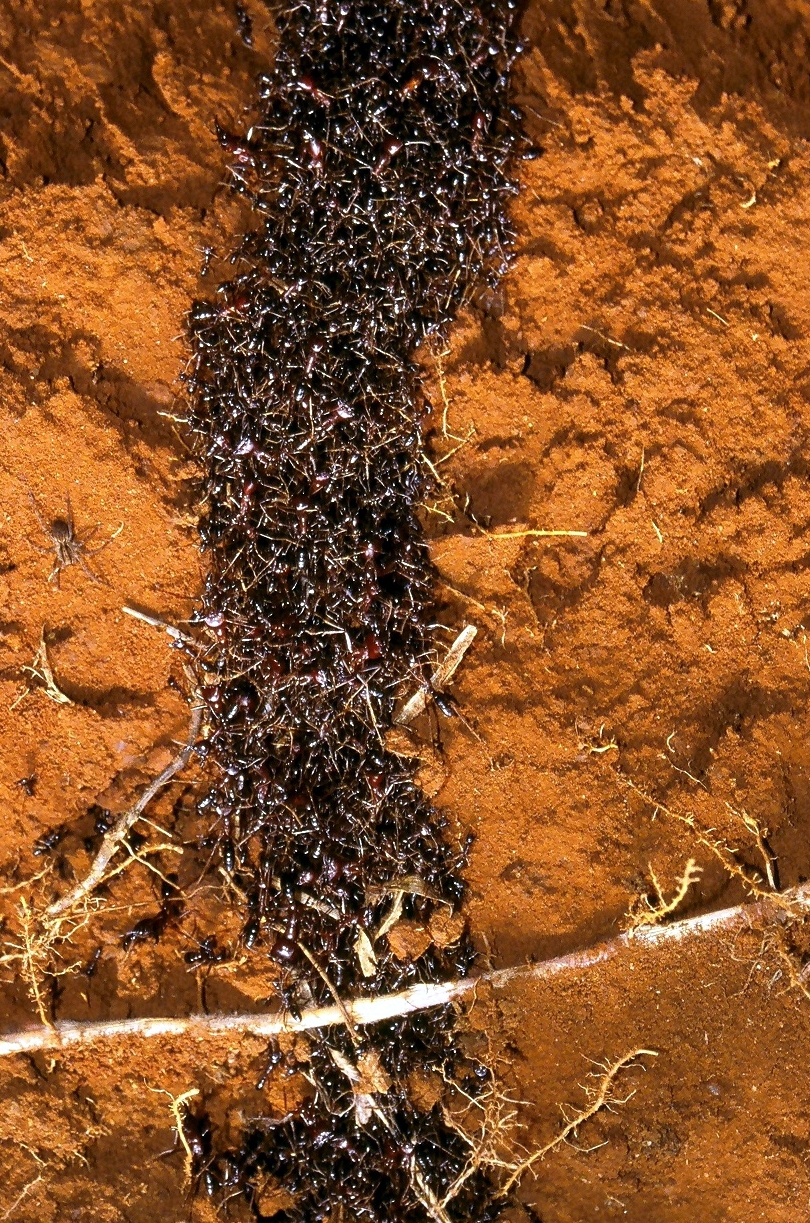
Army ants, also known as legionary ants or driver ants, comprise more than 650 described species of highly social, carnivorous ants in the subfamily Dorylinae, primarily distributed across the tropical forests of Central and South America, Africa, and parts of Asia.[1] These ants are renowned for their nomadic lifestyle and massive colony sizes, which can range from tens of thousands to over a million workers, enabling coordinated swarm raids that overwhelm and dismember prey such as insects, spiders, and even small vertebrates.[2] Unlike many ants, army ants lack permanent nests; instead, they form temporary bivouacs by interlocking their bodies to shelter the queen, brood, and resources, relocating daily or periodically in response to food availability.[3]
Their foraging behavior, characterized by expansive fan-shaped raids guided by pheromone trails laid by scouts, represents a highly evolved form of group predation that originated tens of millions of years ago from simpler group-hunting ancestors.[2] This mass-raiding strategy has been remarkably conserved evolutionarily, with molecular evidence indicating a single origin approximately 100 million years ago, allowing these ants to dominate ecosystems by consuming vast quantities of arthropods and influencing associated species like ant-following birds and myrmecophilous insects.[4] Many species exhibit morphological adaptations, including reduced or absent eyes in subterranean or raiding forms, relying instead on chemical communication and tactile cues, though some surface-dwelling species like those in the genus Eciton have regained functional vision and enlarged optical brain regions after ~18 million years of aboveground evolution.[5]
Ecologically, army ants play a pivotal role as keystone predators in tropical rainforests, supporting over 500 species of associates through kleptoparasitism and commensalism, and demonstrating sophisticated collective intelligence, such as self-assembling living bridges from their bodies to traverse obstacles during raids.[3] Their cyclical nomadism—alternating between raiding and reproductive phases—ensures colony growth and dispersal, underscoring their status as one of nature's most efficient social predators.[2]
Taxonomy and evolution
Classification
Army ants are primarily classified within the subfamily Dorylinae of the family Formicidae in the order Hymenoptera, encompassing a diverse group of predatory ants characterized by their collective foraging behaviors.[4] In earlier taxonomic schemes, such as those proposed by Bolton in 1990, army ants were divided among multiple subfamilies, including Ecitoninae for New World taxa, Aenictinae for Asian and African species, and Hypochilinae for certain Old World forms; however, molecular phylogenetic analyses unified these under the monophyletic Dorylinae in 2014, supported by strong genetic evidence from nuclear and mitochondrial markers.[6][4] Significant advances in understanding their taxonomy came from a 2003 genetic study using three nuclear genes and one mitochondrial gene, which confirmed the monophyly of the army ant clade and demonstrated that the suite of behavioral and reproductive adaptations defining army ants arose once in their evolutionary history, rather than through multiple independent origins.[7] This finding resolved prior debates over convergent evolution and established Dorylinae as a cohesive group within the broader formicoid ants. Subsequent revisions, such as the 2016 generic classification, further refined the subfamily's structure based on morphology and molecular data, emphasizing diagnosable monophyletic genera.[6] The Dorylinae include approximately 775 described species across key genera, with notable diversity in both New World and Old World taxa.[8] In the Americas, prominent genera are Eciton (approximately 12 species, primarily Neotropical swarm raiders), Neivamyrmex (over 120 species, many subterranean foragers), and Labidus (about 7 species, generalized predators). Old World representatives include Dorylus (around 60 species of driver ants in Africa and Asia) and Aenictus (over 220 species, hypogaeic hunters across Asia and Africa).[6][9] The informal designation "army ant" applies to species exhibiting the army ant syndrome—a blind, nomadic lifestyle with mass raids and colony fission—primarily within Dorylinae, though it does not constitute a strict monophyletic taxon beyond this clade, as similar traits have convergently appeared in distantly related ants.Evolutionary history
Army ants, belonging to the subfamily Dorylinae, originated during the mid-Cretaceous period, with the crown group estimated at approximately 87 million years ago (95% confidence interval: 74–101 million years), as evidenced by molecular phylogenetic analyses incorporating fossil calibrations; the divergence of the clade occurred around 100–105 million years ago.[4][7] This timeline aligns with the early diversification of ants following their emergence from a common ancestor with other aculeate Hymenoptera around 140–150 million years ago.[7] Fossil evidence supporting early doryline traits includes specimens like Haidomyrmex cerberus and related species preserved in 99-million-year-old Burmese amber, which exhibit predatory morphologies such as scythe-like mandibular appendages indicative of primitive dorylomorph adaptations. These fossils suggest that specialized predatory behaviors were already evolving in humid, forested environments of the Cretaceous tropics. Phylogenetically, Dorylinae represents a derived, monophyletic clade within the family Formicidae, nested among other predatory subfamilies in the Formicoidae group, with strong support from both molecular and morphological data.[4] The crown age of Dorylinae is estimated at 87 million years (95% confidence interval: 74–101 million years), based on Bayesian divergence dating using ultraconserved elements and mitochondrial genes.[4] Notably, the "army ant syndrome"—encompassing obligate collective foraging, nomadism, and reproductive constraints—has evolved convergently in distantly related subfamilies, such as Leptanillinae, highlighting parallel adaptations to subterranean or litter-dwelling predation rather than a single origin within Dorylinae.[7] This convergence underscores the syndrome's effectiveness in diverse ecological niches, though Dorylinae exhibits the most derived and specialized form.[10] Adaptive radiations within Dorylinae were driven by the expansion of tropical forests during the Late Cretaceous and Paleogene, leading to the divergence of major lineages around 80–105 million years ago.[7] The split between Old World (e.g., Dorylus and Aenictus) and New World (Eciton and allies) clades occurred post-Gondwanan fragmentation, approximately 105 million years ago (±11 million years standard deviation), facilitating independent radiations in Afro-Malagasy and Neotropical biomes.[7] These events involved multiple independent evolutions of enhanced eusociality and nomadic lifestyles, with short basal internodes in phylogenies indicating rapid diversification tied to ecological opportunities in resource-rich understories.[4] Key evolutionary innovations include the loss of compound eyes in workers, adaptation to pheromone-guided navigation in dark habitats; development of polymorphic mandibles for prey capture and colony defense; and the evolution of group raiding strategies as a collective defense against predators in ancestral humid forests.[7] These traits have remained remarkably conserved, demonstrating long-term evolutionary stasis over 100 million years.[7]Distribution and habitat
Geographic range
Army ants are predominantly distributed in tropical and subtropical regions worldwide, exhibiting clear biogeographic divisions between the New World and Old World lineages. In the New World, species of the genera Eciton and Neivamyrmex range from the southern United States to northern Argentina, with the greatest diversity occurring in Central America, particularly in Mexico and surrounding areas. For instance, Eciton species, which include some of the most conspicuous army ants due to their large nomadic colonies, are primarily neotropical and thrive in humid forests from southern Mexico southward, though they do not extend into higher latitudes. This distribution underscores their adaptation to warm, equatorial environments, where colony sizes and foraging behaviors are optimized. The genus Neivamyrmex exemplifies the New World's army ant diversity, comprising over 120 extant species that are the most widely distributed and species-rich among New World dorylines. Many Neivamyrmex species are endemic to Mexico and the southwestern United States, reflecting regional hotspots of endemism driven by varied microhabitats in these areas. Their ranges often overlap with Eciton but extend farther north into arid and semi-arid zones of the southwestern U.S., though overall abundance decreases outside tropical cores. In the Old World, army ants show a parallel but disjunct pattern, with Dorylus (driver ants) centered in sub-Saharan Africa and extending eastward into southern Asia, from India through Indonesia and as far as Borneo.[11] The genus dominates African savannas and forests, with over 50 species recorded there, while only a few reach Asian tropics.[11] Complementing this, Aenictus species are widespread across Old World tropics and subtropics, occurring in Africa, from India through southern China and Taiwan, and south to Australia, often in forested and grassland habitats.[12] These separated New World and Old World distributions trace back to a Gondwanan origin in the mid-Cretaceous, approximately 105 million years ago, when continental drift isolated lineages without subsequent intercontinental dispersal.[13] Consequently, no native army ant species inhabit temperate zones or regions like Europe, where cooler climates and lack of suitable tropical conditions preclude establishment; their strong dependence on warm, humid environments also results in low invasive potential beyond native ranges.[13]Environmental preferences
Army ants predominantly occupy lowland tropical rainforests, with some species extending into savannas, where these environments provide the moist, shaded conditions essential for their large, nomadic colonies. These habitats support the ants' need for consistent resource availability during frequent raids and emigrations. Colonies thrive in regions characterized by high humidity levels above 70% and ambient temperatures ranging from 25°C to 35°C, which are critical for maintaining bivouac integrity and preventing desiccation of workers and brood. Low humidity or extreme heat can be lethal, disrupting colony cohesion and survival.[14][15][16] Within these habitats, army ants exploit ground-level microhabitats, primarily foraging through leaf litter, soil, and the forest understory where prey is abundant. New World species like Eciton burchellii tolerate disturbed areas such as clearings and forest edges, though prolonged exposure to open, fragmented landscapes reduces colony persistence due to increased thermal stress. Old World Dorylus species, by contrast, prefer the denser, more humid interiors of primary forests, where canopy cover buffers against environmental fluctuations. These preferences align with hotspots in Central America for Eciton and African tropics for Dorylus.[17][18][19][20] Elevational ranges typically extend up to 1,500 meters in montane areas such as the Andes or African highlands, beyond which cooler temperatures and reduced prey density limit distribution; however, army ants avoid arid deserts and persistently flooded zones, as their nomadic lifestyle requires stable, non-extreme microclimates for movement and nesting.[21][18][16] Climate change poses risks through increasing temperatures and drying trends in the tropics, potentially causing range contractions; post-2010 studies have documented population declines in fragmented habitats, linked to habitat loss and altered humidity that exacerbate vulnerability in these humidity-dependent species.[22][20][23]Morphology
Worker and soldier castes
In army ant colonies, the worker caste consists primarily of wingless, sterile females that exhibit pronounced polymorphism in body size, ranging from 3 to 12 mm in length in species such as Eciton burchellii.[14] These variations enable division of labor, with smaller workers (minors and medias, under 5 mm) specializing in brood care and trail maintenance, while larger ones (submajors) assist in prey transport.[24] Workers possess reduced compound eyes, typically comprising 1 to 20 ommatidia, which appear as a single large facet due to fusion, limiting their visual acuity and emphasizing reliance on chemical cues. Their antennae feature 10 to 12 segments, facilitating tactile and olfactory sensing essential for navigation and communication.[11] The soldier caste, also comprising wingless, sterile females, represents the largest non-reproductive individuals, reaching up to 12 mm in E. burchellii and 15 mm in some Old World species like Dorylus spp., with oversized, sickle- or sabre-shaped mandibles adapted for defense and capturing large prey.[14][24] Like workers, soldiers have reduced eyes with few ommatidia (often 1–12), further underscoring the colony's dependence on pheromonal trails over vision. These mandibles are specialized for blocking raid trails against intruders or dismembering oversized prey items that workers cannot handle alone. Caste dimorphism in army ants features soldiers making up 5–10% of the colony workforce, with the majority being smaller workers responsible for most foraging and maintenance tasks.[25] This structure contrasts with the extreme size of reproductive castes, such as queens exceeding 50 mm in some species.[14] Key morphological adaptations across both castes include powerful, serrated jaws for efficiently dismembering arthropod prey during raids.[24] Additionally, exocrine glands, including those producing trail pheromones, are distributed throughout the body to coordinate colony movements and foraging efficiency.Reproductive castes
In army ants, the reproductive castes consist of highly specialized queens and males, distinct from the non-reproductive worker and soldier castes in morphology and function. Queens, known as dichthadiigynes, possess a highly elongate abdomen adapted for continuous egg production, with expanded ovaries enabling the laying of up to 3-4 million eggs per month in species like those in the genus Dorylus.[26] These queens are permanently wingless, exhibiting an ergatoid form where the mesosoma resembles that of workers rather than typical winged queens of other ant subfamilies. Their body length ranges from 20 to 50 mm, as seen in Eciton burchellii (approximately 21 mm) and Dorylus species (up to 52 mm), significantly larger than workers but optimized for sedentary egg-laying within the colony.[27] Queens typically have 10-12 antennal segments, varying slightly by species such as Dorylus laevigatus. Males, or drones, are winged alates designed primarily for dispersal and mating, emerging periodically in nuptial flights synchronized with colony cycles. They feature 13 antennal segments, a standard trait distinguishing male ants from females, and possess robust, sausage-like bodies—earning them the colloquial name "sausage flies" in Old World species like Dorylus.[6] Unlike workers and soldiers, males lack defensive mandibles or foraging adaptations, instead having highly modified genitalia adapted for multiple matings within host colonies. Post-mating, males are short-lived, typically dying shortly after fulfilling their reproductive role.[27] Sexual dimorphism in army ants emphasizes reproductive specialization: males are streamlined for flight and gene dispersal without non-reproductive traits like the powerful jaws of soldiers, while queens are adapted for mass egg-laying through their physogastric (enlarged) abdomens and ovaries, contrasting sharply with the smaller, mobile workers (3-14 mm in length). In some doryline species, ergatoid queens resemble workers externally but retain the elongate abdomen for reproduction, blurring caste boundaries while maintaining functional dimorphism. Army ant queens do not undergo typical dealation, as they are apterous from emergence and mate within the natal colony, shedding any vestigial wing rudiments early in development.Behavior and colony life
Army ant syndrome
The army ant syndrome encompasses a convergent suite of behavioral, morphological, and reproductive traits that define army ants, primarily within the subfamily Dorylinae and related groups, including blind or visually impaired workers, nomadic colony life, obligate group raiding for predation, and communal brood care with synchronized development cycles.[4][28] These traits enable colonies to function as highly mobile superorganisms adapted for predatory lifestyles in tropical environments. Central to the syndrome are the absence of permanent nests, heavy reliance on pheromonal trails to coordinate movements and foraging, and aggressive swarm-based foraging that involves thousands to hundreds of thousands of workers overwhelming prey en masse.[29][30] This complex has evolved independently multiple times across ant lineages, reflecting adaptations to exploit ephemeral and abundant resources like arthropods and social insects.[4][28] Unlike harvester ants, which primarily forage solitarily for seeds in arid habitats, or leafcutter ants, which cultivate fungi using harvested vegetation, the army ant syndrome prioritizes collective predation on live prey, allowing rapid depletion of local resources before relocation.[29][31] This specialization contrasts with the more stationary, resource-processing strategies of those groups, highlighting how the syndrome facilitates exploitation of transient, high-value food sources in dynamic ecosystems.[30] Variations in the syndrome's expression occur across genera; it is more intense in Eciton species, featuring frequent daily raids and overt nomadism, whereas in some Aenictus species, it manifests more subtly with subterranean column foraging and less pronounced surface activity.[29][4]Colony cycles and fission
Army ant colonies alternate between two distinct behavioral phases—nomadic and statary—as a core component of the army ant syndrome, enabling synchronized foraging, brood care, and reproduction.[32] The nomadic phase typically lasts around 15 days, during which the colony relocates daily to a new bivouac, moving distances of 100-200 meters each time. This phase is triggered by the development of large, ravenous larvae in the brood, which generate hunger signals that stimulate heightened raiding activity and compel the colony to fan out in search of prey to meet the increased food demands.[29][32] In contrast, the statary phase endures for about 20 days, with the bivouac remaining stationary in a protected location to prioritize brood rearing and colony maintenance. During this period, the queen increases egg production significantly, swelling her abdomen as the colony shifts focus from relocation to nurturing eggs and pupae using reserves from prior raids.[29] These phase transitions are regulated primarily by brood development cycles and queen-derived pheromones, where larval hunger signals initiate nomadism and the emergence of callow workers signals a return to statary conditions.[32][33] Colony reproduction occurs via fission roughly every 2-3 years, when a mature colony generates a brood of virgin queens (gynes) and males; the workforce then divides into multiple daughter units, each rallying around one or more virgin queens to form independent colonies. Success rates for these new colonies are low due to competition and resource limitations.[29] In rare instances during nomadic movements, navigational disruptions in large swarms can produce ant mills—circular processions where detached groups of blind workers follow one another's pheromone trails in endless loops, often leading to exhaustion and death.[34]Foraging raids
Army ant foraging raids are characterized by coordinated, mass expeditions that deploy tens to hundreds of thousands of workers to overwhelm and capture prey across expansive areas. These raids typically emanate from the colony's bivouac in a fan-shaped swarm, guided by pheromones that ants deposit to direct nestmates toward promising foraging zones. In species like Eciton burchellii, the swarm front expands into a broad, dendritic pattern with a fractal structure, allowing efficient coverage of patchy resources while minimizing overlap in searched areas.[35] Workers at the front explore and recruit reinforcements by laying trail pheromones, creating a dynamic network that adapts to prey density, with returning foragers reinforcing successful paths at rates up to 50 times higher than searchers.[35] The scale of these raids is immense, reflecting the colony's large workforce, which often exceeds 1 million individuals in mature Eciton colonies. Swarm raids can span fronts up to 15 meters wide and extend over 100 meters in length, sweeping areas of approximately 1,000 square meters in a single day.[36][37] Transport back to the bivouac occurs along principal trails, where laden workers achieve rates of more than 3,000 prey items per hour, facilitated by self-organized lane formation that separates outbound searchers from inbound carriers to optimize flow.[37] Soldiers play a defensive role, patrolling the flanks and rear of the swarm to deter predators and rival ants, using their enlarged mandibles to protect the foraging front.[38] Prey selection is opportunistic and diverse, targeting a broad spectrum of arthropods such as insects, spiders, and other ants, as well as occasional small vertebrates like lizards, without specialization on any particular type. Raids exploit ephemeral patches in leaf litter and understory vegetation, flushing out hidden prey through sheer numbers and overwhelming them en masse. Individual raids last 2 to 12 hours, aligning with the nomadic phase when larvae demand high protein intake, enabling colonies to harvest up to 40 grams of dry-weight prey daily in E. burchellii.[38][39][40] This foraging efficiency stems from the syndrome's integration of large colony sizes and collective tactics, positioning army ants as keystone predators that structure arthropod communities through intense, episodic predation pressure. In New World species like Eciton, raids are predominantly diurnal to maximize encounter rates in sunlit understories, whereas some Old World Dorylus species conduct nocturnal raids, potentially to evade avian kleptoparasites. Nomadic phases enhance raid success by positioning the bivouac near fresh hunting grounds each day.[19][41][42]Nesting and bivouacs
Army ants form temporary living nests known as bivouacs, which are constructed entirely from the interlocked bodies of workers rather than soil, plant material, or other substrates typical of most ant species. Workers link together using their tarsal claws and mandibles to create a flexible, multi-layered structure that envelops the queen and brood, forming internal chambers and tubular passages that facilitate colony traffic and protect vulnerable members.[43] These bivouacs typically comprise 150,000 to 700,000 workers and can span up to 1 meter in diameter, with a volume reaching approximately 1 cubic meter in larger colonies, scaling directly with colony size.[43] To enhance stability, workers incorporate silk produced by mature larvae, weaving it into the bivouac's framework to reinforce walls and passages, a process that strengthens the otherwise fluid assembly without permanent fixtures.[43] The structure's layered design, with larger soldiers often forming the outer shell, provides adaptations for portability and environmental resilience, including resistance to heavy rain through overlapping body coverage that sheds water like a living thatch.[44] In the nomadic phase, bivouacs are rapidly assembled and disassembled as needed, while during statary phases, they offer prolonged stability for brood development.[43] Variations in bivouac form occur across genera: New World Eciton species, such as Eciton burchellii, typically suspend their bivouacs in foliage or from low vegetation, creating suspended, curtain-like or pouch-shaped enclosures accessible via temporary bridges formed by workers.[43] In contrast, Old World Dorylus species construct subterranean bivouacs in soil, often at the base of trees or roots, using excavated material mixed with refuse to form low mounds that integrate thick walls and tunnels for protection.[45] Unlike many ants that build enduring nests, army ants rely exclusively on these transient bivouacs, enabling their nomadic lifestyle without fixed architecture.[46]Reproduction
Queen biology
The queen of army ants in the subfamily Dorylinae, such as Eciton burchellii, exhibits specialized physiology adapted for high-volume egg production to sustain the colony's large workforce. She continuously lays eggs during the statary phase of the colony cycle, producing up to 120,000 eggs every 36 days, with rates peaking at several thousand per day depending on worker provisioning.[47] Her fertility is directly tied to the diet supplied by workers through trophallaxis, consisting of regurgitated nutrient-rich fluids derived from colony foraging; inadequate nutrition can reduce oviposition rates and impair ovarian development. Additionally, the queen secretes pheromones, often cuticle hydrocarbons and glandular secretions, that suppress ovarian activity in workers, enforcing reproductive monopoly and maintaining colony cohesion. Development of the queen begins as a larva selectively fed a protein-intensive diet by nurse workers, distinct from the carbohydrate-heavy rations given to worker-destined larvae, promoting rapid growth and differentiation into a larger, apterous (wingless) form.[48] This differential nutrition triggers pupation into a wingless virgin queen capable of mating, after which abdominal expansion (physogastry) occurs to optimize egg-laying capacity. Queens typically live more than four years, though exact lifespan varies with colony conditions and is relatively short compared to sedentary ant species due to the nomadic lifestyle.[29] Colony emigration during the nomadic phase plays a key role in queen health by relocating the bivouac to fresh foraging grounds, mitigating resource depletion and parasite accumulation that could overload the queen's reproductive output.[29] If the queen weakens—evidenced by declining pheromone production or reduced egg viability—the colony may trigger supersedure through initiation of a sexual brood, where new queens develop to potentially replace her lineage upon fission.[49] Workers interact closely with the queen via grooming and feeding, and during reproductive events like fission, they exercise sexual selection by preferentially affiliating with the most active and pheromone-emitting virgin queens, favoring vigorous individuals for colony propagation.[49]Mating and colony reproduction
In army ants, mating occurs within the colony rather than through traditional nuptial flights, as queens are permanently wingless and remain in the bivouac throughout their lives. Winged males from other colonies disperse by flight and seek out receptive virgin queens during a brief mating period early in the queen's adult life, navigating worker defenses to access her.[50][51] This process is facilitated by the queen's receptive phase, during which she signals availability, likely via pheromones that attract males to the colony.[52] Queens mate multiply with numerous males, typically 10 to 20, resulting in exceptionally high effective mating frequencies (e.g., 12.8 in Neivamyrmex nigrescens and 18.8 in Aenictus laeviceps).[50][53] This polyandry is obligate and ancestral across army ant lineages, occurring only once early in life with no remating later.[54] Under haplodiploid sex determination, multiple mating reduces the risk of diploid male production from sex locus mismatches while maintaining high average relatedness among workers to the queen's female offspring (sisters at r=0.75).[50] Colony reproduction in army ants relies on fission rather than independent founding by dispersing queens, as mated queens do not leave the parental colony to start new ones claustrally or via adoption into unrelated groups.[50] Instead, mature colonies enter a reproductive phase where the queen produces sexual larvae, leading to the emergence of new virgin queens and males; incoming males then mate with the virgin queens inside the bivouac.[51] When the colony reaches a size threshold (often hundreds of thousands of workers), it undergoes fission, splitting into daughter colonies; workers selectively cluster around and support individual new mated queens, each forming the nucleus of a dependent daughter colony with a portion of the workforce.[55][56] This fission process presents challenges, including potential failure of subcolonies if worker support is unevenly distributed or if new queens prove subfertile, leading workers to abandon or police them through aggression or neglect.[57] Worker policing also targets any eggs laid by reproductive workers, enforcing queen monopoly on reproduction and minimizing conflicts over male production, as under polyandry the average worker relatedness to worker-laid males is low (around 0.25).[58] Generational turnover occurs via fission approximately every 2–3 years, depending on species and environmental conditions, ensuring colony propagation without true eusocial conflicts due to sustained high average relatedness despite polyandry.[50]Ecology
Symbiotic associations
Army ant colonies, particularly those of species like Eciton burchellii, host a diverse array of symbiotic organisms known as myrmecophiles, which exploit the ants' nomadic lifestyle and foraging activities for food, transport, or shelter. These associations include commensals that benefit without harming the ants, mutualists that provide reciprocal advantages, and parasites that impose costs on the hosts. The nomadic nature of army ant colonies, with their frequent raids and emigrations, limits the establishment of many parasites but supports a rich community of mobile guests.[59] Commensal myrmecophiles, numbering over 300 species associated with E. burchellii alone, primarily consist of arthropods that feed on the ants' discarded prey or refuse without significantly affecting colony fitness. Examples include rove beetles (Staphylinidae, such as species in the genera Nymphister and Ecitophya) that mimic ant morphology and behavior to scavenge from raid remnants, silverfish (Zygentoma) that consume detritus in the bivouac, and various mites that phoretically attach to workers for dispersal. These commensals often integrate into the colony during emigrations, with large E. burchellii colonies harboring thousands of such guests, sometimes exceeding 4,000 individuals of a single taxon like phorid flies in refuse piles.[59] Kleptoparasitic associations are exemplified by ant-following birds of the family Thamnophilidae, such as the bicolored antbird (Gymnopithys bicolor), which trail army ant foraging raids to capture insects flushed by the swarm. Army ants tolerate these birds, though the birds reduce the ants' prey capture success. This interaction is particularly pronounced with swarm-raiding species like E. burchellii, where birds aggregate in mixed-species flocks to exploit the disturbed prey.[60][61] Parasitic associations are relatively limited in army ants due to their constant movement and aggressive defenses, which disrupt stable parasitoid life cycles. However, certain flies, particularly phorid species (Diptera: Phoridae, e.g., Apocephalus parvus), parasitize the ants by laying eggs on workers or brood, with larvae developing inside the host and emerging to pupate in the soil.[59] Many of these symbionts achieve integration through chemical mimicry, biosynthesizing cuticular hydrocarbons that closely resemble the ants' pheromones for nestmate recognition, thereby evading aggression. For instance, rove beetles associated with Eciton species match the host's chemical profile to a high degree, allowing them to coexist peacefully within the bivouac. In large colonies, up to tens of thousands of such guests can be present, representing a substantial biomass that underscores the ecological complexity of these associations.[59]Role in ecosystems
Army ants function as keystone predators in tropical ecosystems, particularly species in the genera Eciton in the Neotropics and Dorylus in Africa, where their large-scale foraging raids control arthropod populations and maintain community structure. By preying on abundant invertebrates such as other ants, termites, and small arthropods, they prevent prey overpopulation that could otherwise lead to excessive herbivory on vegetation or imbalances in lower trophic levels.[19][62][63] Their raids, which can cover hundreds of square meters daily, disturb leaf litter and soil, enhancing aeration and accelerating decomposition, thereby recycling nutrients and improving soil fertility for plant growth.[64] These predatory activities influence broader biodiversity by creating dynamic "mosaic" habitats through repeated disturbances, which foster forest regeneration and support diverse understory communities. Army ants prey on pest species like termites, reducing their impact on trees and crops in natural settings, and their presence indirectly benefits kleptoparasitic species such as ant-following birds that scavenge raid remnants.[19][65] In human contexts, African Dorylus swarms are notorious for invading settlements, occasionally damaging crops such as potatoes, though claims of attacks on livestock or humans are largely unsubstantiated. Indigenous groups like the Maasai have traditionally used Dorylus soldiers in wound closure as natural sutures, biting the skin and leaving the head embedded until healing. Ecotourism opportunities arise from observing ant-following birds in Neotropical forests, where guided tours highlight army ant raids as a key attraction.[66][67] Conservation efforts for army ants are challenged by deforestation and habitat fragmentation, which reduce their nomadic range and raid efficacy; for instance, Eciton species require large continuous forests and show sensitivity to edge effects in the Amazon, where broader forest loss exceeds 20% since the 1970s. As umbrella and indicator species for tropical forest health, their declines signal ecosystem degradation, though they pose no significant invasive threats outside native ranges.[19][20]References
- https://antwiki.org/wiki/Dorylinae
- https://antwiki.org/wiki/Aenictus
- https://antwiki.org/wiki/images/0/07/Wilson_1964.pdf
- https://www.antwiki.org/wiki/Aenictus
- https://www.antwiki.org/wiki/The_Ants_Chapter_16
