Hubbry Logo
AzanideAzanideMain
Open search
Azanide
Community hub
Azanide
logo
8 pages, 0 posts
0 subscribers
Be the first to start a discussion here.
Contribute something
Azanide
Azanide
from Wikipedia
Amide anion
Names
Pronunciation /ˈæzənd/
IUPAC name
Azanide
Other names
  • Amide
  • Amide ion
  • Ammonia ion
  • Ammonide
  • Dihydrogen azanide
  • Dihydrogen nitride
  • Monoamide
Identifiers
3D model (JSmol)
ChEBI
ChemSpider
  • InChI=1S/H2N/h1H2/q-1
    Key: HYGWNUKOUCZBND-UHFFFAOYSA-N
  • [NH2-]
  • [N-]
Properties
NH2
Molar mass 16.023 g·mol−1
Conjugate acid Ammonia
Structure
Bent
Related compounds
Other anions
water, fluoronium
Except where otherwise noted, data are given for materials in their standard state (at 25 °C [77 °F], 100 kPa).

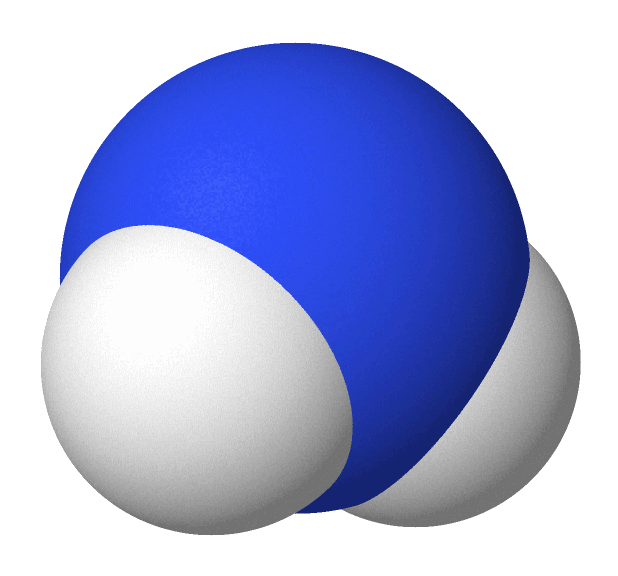
Azanide is the IUPAC-sanctioned name for the anion NH2. The term is obscure; derivatives of NH2 are almost invariably referred to as amides,[1][2][3] despite the fact that amide also refers to the organic functional groupC(=O)−NR2. The anion NH2 is the conjugate base of ammonia, so it is formed by the self-ionization of ammonia. It is produced by deprotonation of ammonia, usually with strong bases or an alkali metal. Azanide has a H–N–H bond angle of 104.5°, nearly identical to the bond angle in the isoelectronic water molecule.

Alkali metal derivatives

[edit]

The alkali metal derivatives are best known, although usually referred to as alkali metal amides. Examples include lithium amide, sodium amide, and potassium amide. These salt-like solids are produced by treating liquid ammonia with strong bases or directly with the alkali metals (blue liquid ammonia solutions due to the solvated electron):[1][2][4]

2 M + 2 NH3 → 2 MNH2 + H2, where M = Li, Na, K

Silver(I) amide (AgNH2) is prepared similarly.[3]

Transition metal complexes of the amido ligand are often produced by salt metathesis reaction or by deprotonation of metal ammine complexes.

References

[edit]
Revisions and contributorsEdit on WikipediaRead on Wikipedia
from Grokipedia
Azanide, with the chemical formula NH₂⁻, is the IUPAC-sanctioned name for the monovalent inorganic anion commonly known as the amide ion; it is a nitrogen hydride that functions as the conjugate base of ammonia (NH₃) and the conjugate acid of the dianion hydridonitrate(2−). This anion exhibits strong basicity owing to nitrogen's electronegativity and the relative stability of its protonated form, ammonia, making it one of the strongest bases in inorganic chemistry. Azanide is rarely isolated in its free form due to its reactivity but is stably incorporated into salts such as sodium amide (NaNH₂) and lithium amide (LiNH₂), which are typically prepared by reacting the parent metal with liquid ammonia. These azanide salts are white to grayish powders with a faint odor and demonstrate high reactivity, particularly with to liberate gas and form metal hydroxides, as well as with acids and certain halogenated compounds. In practice, sodium azanide (NaNH₂) is the most notable derivative, valued in for its role as a potent ; key applications include deprotonating terminal alkynes to generate acetylide ions for further and facilitating double elimination reactions on vicinal dihalides to produce alkynes. Such uses highlight azanide's importance in constructing carbon-carbon bonds, though its handling requires caution due to moisture sensitivity and potential for vigorous reactions.

Properties

Molecular structure

The azanide (NH₂⁻) adopts a bent, pyramidal geometry in its free gaseous form, consistent with valence shell electron pair repulsion (, where the central atom is surrounded by four pairs: two bonding pairs to atoms and two s. The H–N–H bond angle measures 104.5°, slightly compressed from the ideal tetrahedral angle of 109.5° due to greater repulsion from the lone pairs compared to bonding pairs. This angle is nearly identical to that in (NH₃) at 107.0°, reflecting similar electron domain arrangements despite the additional lone pair in NH₂⁻. The N–H is approximately 1.024 , marginally longer than in neutral (1.012 ) owing to increased on , which weakens the bonds slightly. These parameters are derived from high-level calculations, such as quartic force fields at the coupled-cluster level. Electronically, the azanide ion features sp³ hybridization on the nitrogen atom, where one 2s and three 2p orbitals mix to form four equivalent sp³ hybrid orbitals of equal energy. Two of these hybrids form sigma bonds with the hydrogen 1s orbitals, while the other two house the lone pairs, with the negative charge primarily localized on nitrogen. This hybridization enforces the tetrahedral electron geometry and pyramidal molecular shape. In terms of molecular orbitals, the diagram for NH₂⁻ closely resembles that of NH₃, with bonding σ orbitals (primarily N–H interactions) below the non-bonding lone pair orbital on nitrogen; the extra electron occupies this highest occupied molecular orbital (HOMO), a non-bonding p-like orbital perpendicular to the molecular plane, enhancing the ion's nucleophilicity and basicity compared to ammonia. In solid-state derivatives, such as sodium azanide (NaNH₂), the azanide ions integrate into an ionic lattice rather than maintaining isolated pyramidal units. The is orthorhombic with Fddd (No. 70), where each Na⁺ cation is tetrahedrally coordinated by four NH₂⁻ anions, with Na–N distances of 2.40 Å (two shorter bonds) and 2.48 Å (two longer bonds). This coordination arises from electrostatic interactions, distorting the azanide geometry slightly from its free-ion form while preserving the overall ionic character of the compound.

Thermodynamic properties

Azanide, or the amide ion (NH₂⁻), possesses significant thermodynamic stability in the gas phase, characterized by its ΔH_f° ≈ 112 kJ/mol at 298 K. This positive value indicates that the ion is endothermic relative to its elements, reflecting the energy required for its formation from atomic nitrogen and . The gas-phase basicity of NH₂⁻ is exceptionally high, corresponding to a pK_a of approximately 38 for its conjugate acid (NH₃) in , extrapolated from gas-phase measurements; this underscores its role as one of the strongest known bases, with a of about 1689 kJ/mol. In contrast, solvation in polar solvents dramatically influences azanide's : strong ion-dipole interactions stabilize the anion through enthalpic contributions from shells, lowering the effective free energy; however, in protic solvents like or , rapid proton transfer reactions occur due to the high exothermicity of NH₂⁻ + H₂O → NH₃ + OH⁻ (ΔH ≈ -100 kJ/mol). Liquid ammonia undergoes autoionization via 2 NH₃ ⇌ NH₄⁺ + NH₂⁻, with an K ≈ 10⁻³³ at 25°C, indicating extremely low concentrations in pure (~10⁻¹⁷ M). This weak autoionization reflects the high energy barrier for in the condensed phase, where stabilizes neutral more than the ions, resulting in a ΔG° of about 190 kJ/mol for the process.

Spectroscopic characteristics

Azanide (NH₂⁻) is characterized spectroscopically primarily through (IR) and Raman techniques due to its instability in standard conditions, with studies often conducted in gas phase, matrix isolation, or as solid salts like lithium azanide (LiNH₂). In the gas phase, the symmetric N-H stretching mode appears at 3121.93 cm⁻¹, while the asymmetric stretch is at 3190.29 cm⁻¹, as determined by coupled-cluster calculations. In matrix isolation, the asymmetric N-H stretch shifts slightly to 3152 cm⁻¹, and the bending mode (ν₂) is observed at 1523 cm⁻¹ via IR . These frequencies reflect the bent geometry of the anion, with the stretches appearing lower than typical N-H bonds due to the negative charge increasing on . In solid alkali metal azanides, such as LiNH₂, the ionic lattice causes a shift to higher wavenumbers for the N-H stretches owing to the high of the Li⁺ cation. The symmetric and asymmetric modes are observed at 3260 cm⁻¹ and 3315 cm⁻¹, respectively, in IR spectra, with broadening attributed to disorder. Isotopic dilution studies using LiN(H,D)₂ confirm the splitting of these modes, as the two hydrogen atoms become non-equivalent, supporting the absence of strong hydrogen bonding in the structure. Raman spectroscopy of solid LiNH₂ reveals internal modes consistent with the IR data, including the symmetric N-H stretch around 3260 cm⁻¹ and bending vibrations near 1550 cm⁻¹, though external lattice modes dominate the low-frequency region below 300 cm⁻¹. Temperature-dependent Raman measurements from 3.4 K to 673 K show mode softening and broadening upon heating, indicating dynamic reorientation of the NH₂⁻ units without phase changes up to decomposition. In other metal azanides, such as pressure-treated LiNH₂, bending modes shift to higher frequencies (e.g., ~1600 cm⁻¹ at 14 GPa), signaling structural transitions. Nuclear magnetic resonance (NMR) studies of azanide are challenging due to rapid proton exchange and issues, but solid-state ¹⁵N magic-angle spinning (MAS) NMR on isotopically enriched LiNH₂ shows a single peak at approximately -25 ppm (relative to ), reflecting the high electron density on . The ¹H NMR in deuterated or liquid exhibits a broad around 1-2 ppm for the N-H protons, resulting from fast exchange with solvent or impurities, while ⁶Li-¹⁵N constants (¹J_{LiN} ≈ 5-10 Hz) provide evidence of direct Li-N coordination in solution aggregates. Ultraviolet-visible (UV-Vis) of the gas-phase NH₂⁻ anion reveals absorption near 200 nm, attributed to an n → π* transition involving the on , though direct measurement is complicated by . The first (Ã) lies at a term energy of 6220 cm⁻¹ (~1600 nm), accessed via thresholds, confirming the ground state's stability in isolated conditions. (EPR) is not applicable to the closed-shell NH₂⁻ anion, which is diamagnetic, but matrix-isolated studies of related species provide context for radical forms like NH₂•. In matrices, the NH₂• radical shows EPR signals with hyperfine splittings (a_N ≈ 14.5 mT, a_H ≈ 4.0 mT), but for the anion, spectroscopic confirmation relies on IR matrix isolation rather than EPR.

Synthesis

Deprotonation of ammonia

The deprotonation of ammonia represents the foundational chemical process for generating the azanide ion (NH₂⁻), where a proton is removed from (NH₃) by a sufficiently strong base. This reaction is expressed as NH₃ + B⁻ → NH₂⁻ + BH, in which B⁻ denotes a potent base such as an amide ion or hydride . Due to ammonia's weak acidity, characterized by a pKa of approximately 38, the for this deprotonation is extremely low (on the order of 10⁻³⁸), necessitating the use of excess base to drive the reaction forward and achieve meaningful yields of azanide. In practice, the most common method employs alkali metals, particularly sodium, to facilitate deprotonation in liquid ammonia solvent. The reaction proceeds as 2Na + 2NH₃ → 2NaNH₂ + H₂, where the metal acts as a reducing agent, effectively generating the sodamide (NaNH₂) salt containing the azanide anion. This process typically occurs in liquid ammonia maintained at its boiling point of -33°C to minimize side reactions, such as unwanted reductions or decompositions. The reaction is otherwise sluggish and often accelerated by addition of a catalyst such as iron(III) nitrate. Historically, azanide salts were first prepared via in 1811 by and Louis Jacques Thénard, who passed dry gas over heated metals to form the amides. Modern refinements using liquid were developed in the early , with detailed studies on preparation and properties reported in 1921.

From metal nitrides

One method for synthesizing metal azanides involves the of metal nitrides at elevated temperatures, yielding the corresponding azanide and metal . For , the reaction proceeds as Li₃N + 2H₂ → LiNH₂ + 2LiH, typically occurring in two steps: first forming lithium (Li₂NH) and LiH at around 200–300 °C under 0.5 MPa H₂, followed by further to lithium azanide at 300–500 °C. Reactive ball milling of Li₃N under 20 bar H₂ for 4 hours at achieves full conversion without heating, producing a mixture of LiNH₂ and LiH in high purity, as confirmed by powder . High-temperature methods extend to alkaline earth nitrides, where facilitates azanide formation. These processes may involve intermediates and require optimization to minimize impurities. An alternative pathway begins with the of metal azides to generate nitrides, followed by the or ammoniation steps described above. For instance, azide (LiN₃) decomposes to Li₃N upon heating to 300–400 °C under inert conditions via 3LiN₃ → Li₃N + 4N₂, after which the nitride is converted to LiNH₂. This sequential approach is particularly useful for preparing nanoscale or confined nitrides prior to azanide formation. These solid-state routes from nitrides offer scalability for bulk production of lithium azanide, leveraging the availability of nitrides from direct metal-nitrogen reactions and enabling large-scale hydrogen-mediated processing in flow reactors or milling facilities.

Laboratory preparation methods

Laboratory preparation of azanides, such as sodium azanide (NaNH₂), requires strict adherence to inert atmosphere techniques to prevent hydrolysis by moisture or reaction with oxygen. Schlenk line setups are essential for handling these air- and moisture-sensitive compounds, utilizing an inert gas like argon or nitrogen to maintain an oxygen-free and dry environment throughout the procedure. All manipulations should be conducted in a well-ventilated fume hood equipped with appropriate safety features, including emergency eyewash stations and fire suppression tools suitable for pyrophoric materials. Azanides are highly pyrophoric, igniting spontaneously upon exposure to air, and react violently with to release and heat. Personnel must wear flame-retardant laboratory coats, safety goggles, impervious gloves, and closed-toe shoes; avoid generating dust or static sparks, and never handle near ignition sources. Use only anhydrous solvents such as (THF) or liquid , ensuring they are rigorously dried and deoxygenated prior to use. In case of fire, extinguish with dry sand or a Class D extinguisher, as or standard CO₂ extinguishers exacerbate the reaction. For small-scale preparation of NaNH₂, clean sodium metal is dissolved in liquid ammonia under inert conditions, often with a trace of iron(III) nitrate catalyst (0.2–0.3 g per mole of sodium) to accelerate the deprotonation of ammonia. The reaction is typically carried out in a cooled flask (e.g., using an acetone-liquid nitrogen bath) to maintain liquid ammonia at its boiling point of -33°C, with the blue color of solvated electrons fading as NaNH₂ forms. After reaction completion, the ammonia is slowly evaporated under a nitrogen flow in a ventilated hood, followed by brief vacuum application (10–30 minutes) to remove residual solvent, yielding a white solid. This method produces NaNH₂ on a scale of grams suitable for laboratory use. Analogous procedures apply to lithium amide (LiNH₂) using lithium metal in liquid ammonia. Purification of azanides involves decanting any supernatant liquid to remove catalyst residues or impurities, followed by sublimation under high at 200–300°C to obtain pure material, as the compounds sublime without significant decomposition under reduced pressure. The purified product appears as a , amorphous . Storage of prepared azanides must prevent exposure to air or moisture; transfer the dry into flame-sealed glass ampoules under or into tightly sealed containers filled with dry such as or . Store in a cool, dry location away from oxidizers and light, monitoring for discoloration (e.g., yellowing indicates oxidation and potential explosivity upon heating). Properly stored, NaNH₂ remains stable for years.

Derivatives

Alkali metal azanides

Alkali metal azanides are ionic compounds with the general formula MNH₂, where M represents the lithium, sodium, , , or cesium. These materials consist of M⁺ cations and NH₂⁻ anions, characterized by strong arising from the significant difference between the alkali metals and . The ionic nature imparts high reactivity to these compounds, particularly toward protic solvents. They are generally insoluble in non-polar solvents due to their polar character but react vigorously with , liberating via the reaction MNH₂ + H₂O → MOH + NH₃. Sodium azanide (NaNH₂), commonly known as sodamide, appears as a white solid with a of 210 °C and decomposes above 400 °C. Its crystal structure is orthorhombic, belonging to the Fddd , featuring a three-dimensional network where sodium ions are coordinated to four nitrogen atoms. This compound is widely utilized as a strong base in , highlighting its practical significance among azanides. Lithium azanide (LiNH₂) is also a white solid, exhibiting a tetragonal and a higher range of 380–400 °C, with beginning around 320 °C. Compared to its heavier congeners, LiNH₂ demonstrates enhanced reactivity, attributable to the smaller size and higher of the cation, which strengthens its interaction with the azanide anion and facilitates faster kinetics in base-promoted reactions. Potassium azanide (KNH₂) shares similarities with NaNH₂ as a white solid but is notably more hygroscopic, forming yellow-green crystals upon moisture exposure and requiring careful handling under inert conditions. Its structure features multiple polymorphic forms dependent on temperature, with the high-temperature phase adopting a cubic arrangement. and cesium azanides (RbNH₂ and CsNH₂) are less extensively characterized but exhibit analogous properties to their lighter analogs, appearing as colorless crystalline solids with ionic lattices where the larger metal cations lead to increased lattice parameters and potentially lower melting points. These heavier variants maintain the characteristic reactivity with and are primarily of interest in specialized applications like materials.

Alkaline earth azanides

Alkaline earth azanides are binary compounds of the form M(NH₂)₂, where M represents an such as magnesium, calcium, , or . The +2 of the metal ion pairs with two monovalent azanide anions to achieve charge balance, resulting in largely with partial covalent character arising from the difference between the metal and . These compounds generally exhibit increasing thermal stability down the group from magnesium to , influenced by the decreasing of the metal cations. Calcium azanide, Ca(NH₂)₂, is commonly prepared by heating (CaH₂) with gas according to the reaction CaH₂ + 2NH₃ → Ca(NH₂)₂ + 2H₂. This method yields the compound in a crystalline form with an orthorhombic structure, featuring coordinated azanide ions around the calcium centers. Calcium azanide demonstrates moderate thermal stability, decomposing at elevated temperatures to form calcium imide and . Magnesium azanide, Mg(NH₂)₂, is the least thermally stable among the group, often exhibiting a polymeric structure through bonding networks that link the azanide units. It has garnered significant interest in research due to its ability to release under relatively mild conditions when combined with other hydrides, such as in the Mg(NH₂)₂–2LiH system, which operates at around 140–200°C with a capacity of approximately 5.6 wt% H₂. Pure Mg(NH₂)₂ decomposes above 300°C, primarily via stepwise pathways involving evolution. Barium azanide, Ba(NH₂)₂, and strontium azanide, Sr(NH₂)₂, display higher thermal stability compared to their magnesium and calcium counterparts, with decomposition onset temperatures exceeding those of Mg(NH₂)₂ by over 100°C in some cases. These heavier analogs are synthesized similarly via reaction of the metal hydrides or metals with ammonia and maintain the M(NH₂)₂ stoichiometry, benefiting from the larger ionic radii that reduce lattice strain and enhance overall compound integrity. Thermal decomposition of these azanides generally proceeds to the corresponding metal nitride and ammonia, as exemplified by the reaction 3Mg(NH₂)₂ → Mg₃N₂ + 4NH₃ above 300°C for magnesium azanide. This process highlights their role as precursors in nitride synthesis, with the reaction thermodynamics becoming more favorable for lighter metals due to higher exothermicity.

Transition metal azanides

Transition metal azanides encompass a class of coordination compounds in which the azanide ligand (NH₂⁻) binds to d-block metal centers, often through the nitrogen atom in a monodentate fashion, though bridging modes occur in polynuclear species. These complexes are highly reactive due to the strong donor ability and basicity of the azanide ligand, which facilitates coordination but also promotes further reactivity such as deprotonation or insertion reactions. Synthesis typically involves salt metathesis between transition metal halides and alkali metal azanides, or mechanochemical methods under ammonia pressure. For instance, ball milling of potassium metal with manganese in a 2:1 molar ratio under 0.7 MPa NH₃ for 12 hours yields K₂[Mn(NH₂)₄] in high purity, as confirmed by X-ray diffraction (Rietveld refinement R_w = 6.35%). Representative examples include early systems where azanide ligands serve as precursors in vapor deposition processes. Theoretical studies indicate that TiCl₄ undergoes to form Ti(NH₂)₄ as a volatile intermediate, which decomposes to deposit films via (CVD), with the Ti-NH₂ bond energy supporting its role in self-limited surface reactions at temperatures around 400–600°C. Mixed amido complexes, such as those incorporating both NH₂⁻ and bulkier dialkylamido ligands like (iPr₂N)₂Ti(NH₂), stabilize the metal and are used as precursors for catalytic applications, though isolation of pure parent Ti(NH₂)₄ remains challenging due to oligomerization. In late transition metals, parent amido complexes like those of and , e.g., cis- and trans-isomers of (dppe)₂Ir(NH₂)X (X = H or other), are prepared via acid/conjugate base metathesis, exhibiting terminal NH₂ coordination with Ir-N bond lengths around 2.05 in the trans isomer. These complexes are generally air- and moisture-sensitive, requiring inert atmosphere handling, and display thermal stability up to 350–420°C before decomposing to metal nitrides or releasing NH₃. K₂[Mn(NH₂)₄], for example, loses approximately 2 equivalents of NH₃ at ~360°C, with total weight loss of ~35 wt% by 500°C. Applications include materials, where mixtures like K₂[Mn(NH₂)₄]–8LiH release 4.2 wt% H₂ below 400°C and rehydrogenate ultrafast (3 wt%/min) at 230°C under 5 MPa H₂, outperforming binary amide-hydride systems.

Reactivity

Acid-base behavior

Azanide (NH₂⁻) acts as a strong Brønsted base due to the high pKₐ of its conjugate acid ammonia (NH₃), estimated at 38, which renders it capable of deprotonating relatively weak acids such as terminal alkynes with pKₐ values around 25. This proton transfer ability positions azanide as a powerful tool for generating carbanions in non-aqueous media, where its basicity significantly exceeds that of hydroxide (pKₐ of H₂O = 15.7). The large pKₐ difference ensures quantitative deprotonation under appropriate conditions, highlighting azanide's role in selective acid-base equilibria. In liquid , azanide participates in the self-ionization equilibrium 2NH₃ ⇌ NH₄⁺ + NH₂⁻, where it serves as the conjugate base component, analogous to OH⁻ in autoionization. The for this process is extremely small, approximately 10⁻³³ at 223 K, reflecting the weak acidity of NH₃ and the resulting low concentration of ions in pure ammonia. Azanide exhibits superbase character, surpassing alkoxides in basic strength (pKₐ of alcohols ≈ 15–18), which enables it to deprotonate hydrocarbons and generate carbanions for synthetic applications. Its reaction with water is highly favorable and exothermic: NH2+H2ONH3+OH\mathrm{NH_2^- + H_2O \rightarrow NH_3 + OH^-} with the equilibrium driven far toward products due to the pKₐ disparity (ΔpKₐ ≈ 22), yielding a Gibbs free energy change of approximately -30 kcal/mol. In the gas phase, the acidity of NH₃ is characterized by ΔG_acid(NH₃) ≈ 403 kcal/mol, placing it slightly weaker than H₂O (≈ 391 kcal/mol) but stronger than H₂ (≈ 406 kcal/mol) on the gas-phase acidity scale. This value underscores azanide's exceptional basicity in isolated conditions, free from solvation effects that moderate its reactivity in solution.

Nucleophilic reactions

Azanide (NH₂⁻) serves as a strong in substitution reactions with primary , proceeding via an SN2 mechanism to yield primary . The general reaction is represented as NH₂⁻ + R–X → R–NH₂ + X⁻, where R is a primary and X is a . This concerted process involves backside attack by the nitrogen on the carbon atom bearing the leaving group, resulting in inversion of configuration at the .Complete_and_Semesters_I_and_II/Map%3A_Organic_Chemistry(Wade)/07%3A_Alkyl_Halides-_Nucleophilic_Substitution_and_Elimination/7.05%3A_The_S2_Reaction) However, practical application is hindered by over-alkylation, as the initially formed primary amine (R–NH₂) is basic and can be deprotonated by excess azanide to form R–NH⁻, which then acts as a toward additional , leading to secondary and tertiary ./IV%3A__Reactivity_in_Organic_Biological_and_Inorganic_Chemistry_2/04%3A_Aliphatic_Nucleophilic_Substitution/4.17%3A_Nucleophilic_Substitution_in_Synthesis-_Amines) In aromatic systems, azanide participates in (SNAr) with electron-deficient aryl halides, such as those bearing nitro groups ortho or para to the halide. The mechanism involves addition-elimination, where azanide adds to the electron-poor ring, forming a , followed by expulsion of the halide. Recent developments have introduced azanide surrogates, such as silylated variants, that enable safer and more selective of aryl halides under milder conditions, serving as alternatives to transition-metal-catalyzed Buchwald-Hartwig couplings for constructing C–N bonds in electron-deficient substrates. Azanide also undergoes to carbonyl compounds, particularly aldehydes lacking alpha hydrogens, to form carbinolamines (R–CH(OH)–NH₂) upon , which may dehydrate to imines (R–CH=NH). For ketones, this addition is typically precluded by preferential at the alpha position due to azanide's high basicity (pK_a of conjugate NH₃ ≈ 38), forming enolates instead. Direct handling of azanide salts like NaNH₂ is often avoided in these reactions due to their reactivity; instead, mixtures of NaNH₂ with n-BuLi are employed as surrogates to generate the nucleophile under controlled conditions.

Redox properties

Azanide ions exhibit strong reducing character, rendering them highly susceptible to oxidation and limiting their stability in aerobic environments. Metal azanides such as (NaNH₂) react violently with oxidizing agents, including oxygen, and can ignite spontaneously in moist air due to rapid oxidation. Upon combustion in oxygen, NaNH₂ produces , oxides (such as N₂O), and , highlighting the transformation of the azanide to higher nitrogen oxidation states. This pyrophoric behavior, with an autoignition temperature of 450 °C, necessitates inert atmosphere handling to prevent unintended oxidation. In electrochemical settings, azanide undergoes irreversible oxidation, as demonstrated by NaNH₂ in composite electrodes, where it delivers a theoretical capacity of 686 mAh g⁻¹ at approximately 3.8 V vs. Na⁺/Na, liberating N₂ and H₂ gases without leaving residual mass. This process involves the extraction of sodium and oxidation of the NH₂⁻ , underscoring azanide's role in -active materials for . Additionally, in complexes, azanide ligands can participate in multielectron processes; for instance, coupling of two M–NH₂ units via one-electron oxidation of Ni(III)–NH₂ radicals yields (N₂H₄), providing insight into anodic oxidation pathways in aprotic media. Amido ligands in complexes further illustrate azanide's activity, where Ti(IV)/Ti(III) couples facilitate catalytic transformations through ligand-centered . For example, low-valent Ti(IV) amido species can be reduced to Ti(III) chlorides during hydrogenolysis, enabling applications in C–H activation and . These properties collectively emphasize azanide's utility in while highlighting the challenges posed by its oxidative instability under aerobic conditions.

Applications

Organic synthesis

Azanide ions, primarily as alkali metal salts like sodium azanide (NaNH₂), serve as potent bases and nucleophiles in , enabling key transformations in carbon-carbon and carbon-nitrogen bond formation. These derivatives are typically employed in anhydrous liquid ammonia to leverage their high reactivity while minimizing side reactions. A primary application involves the of terminal alkynes. NaNH₂ in liquid ammonia abstracts the terminal proton (pKₐ ≈ 25), generating the acetylide anion RC≡C⁻ Na⁺, which undergoes with primary alkyl halides to extend the carbon chain and form internal alkynes. For example, reacts with ethyl bromide to yield 2-pentyne in good yields under these conditions. This method is particularly effective for constructing conjugated systems in synthesis. Sodium azanide also facilitates reactions from quaternary ammonium salts to produce . In liquid , the strong basicity of NH₂⁻ promotes E2 elimination, favoring the less substituted (Hofmann) product over the more stable Zaitsev isomer due to steric factors from the bulky ammonium . This approach has been applied to cyclic substrates like hexahydro-1,3,5-trinitropyrimidines, yielding enamines alongside elimination products. Amination reactions with alkyl halides utilize the nucleophilicity of the to displace , forming primary amines RNH₂. Primary and unhindered alkyl bromides react in fair yields, but secondary or tertiary often favor elimination over substitution, limiting selectivity. Overalkylation to secondary or tertiary amines can occur if excess halide is present, necessitating careful . Prior to the 1980s, sodium azanide was indispensable in total syntheses of complex molecules, such as polyynes and alkaloids, where its ability to deprotonate weakly acidic sites enabled key coupling steps not feasible with milder bases. Seminal works, including constructions of precursors, highlighted its utility before organolithium and Grignard reagents largely supplanted it for precision control.

Materials science

Azanide compounds, particularly alkali metal azanides like lithium amide (LiNH₂), have garnered significant interest in for their role in systems. A key application involves the reversible dehydrogenation reaction between lithium amide and , represented as LiNH2+LiHLi2NH+H2\mathrm{LiNH_2 + LiH \rightleftharpoons Li_2NH + H_2}, which releases approximately 6.5 wt% at around 250°C under moderate pressure. This two-step process, involving intermediate formation of lithium imide (Li₂NH), enables efficient cycling without significant capacity loss, making it promising for solid-state in vehicles and portable devices. The reaction's and kinetics have been optimized through nanostructuring and doping, enhancing reversibility while mitigating byproduct formation. Metal azanides serve as versatile precursors for synthesizing metal nitrides (MN, where M is a metal) via , yielding high-purity materials for applications. For instance, rare earth amides decompose at elevated temperatures to form nanocrystalline nitrides like and YbN, which exhibit high surface areas and are suitable for optoelectronic devices due to their properties. This method avoids contamination from gaseous byproducts common in other routes, such as , and has been extended to aluminum amides for producing AlN ceramics used in high-power . The process typically occurs under inert atmospheres at 400–800°C, producing stoichiometric MN phases with controlled particle sizes below 100 nm. Recent developments in the 2020s have focused on complex hydrides incorporating azanides for next-generation solid-state , emphasizing improved kinetics and capacity through hybrid systems. Research highlights destabilized amide-borohydride composites that lower desorption temperatures to below 200°C while achieving 8–10 wt% reversible capacity, as demonstrated in lithium-based formulations. These advancements, driven by spectroscopy and computational modeling, target practical integration into fuel cells, with prototypes showing enhanced cycle life under ambient conditions.

Analytical chemistry

Azanide ions, typically generated from salts like (NaNH₂) in liquid , function as a strong base for acidimetric standardization in non-aqueous media. This approach is particularly useful for titrating weak acids that are poorly ionized in aqueous solutions, such as salts. For instance, (NH₄Cl) is titrated against NaNH₂ solutions, where the endpoint is determined by the neutralization reaction: NH₄⁺ + NH₂⁻ → 2 NH₃, often monitored via conductivity changes or indicators adapted for ammoniacal solvents. In qualitative analysis, azanide facilitates the detection of certain metal ions through of insoluble metal amides, especially in liquid ammonia where differences allow selective separation. Alkaline earth metals like magnesium and calcium form sparingly soluble amides (e.g., Mg(NH₂)₂), enabling their identification from mixtures by observing precipitate formation upon addition of azanide sources. This method exploits the low of these compounds in non-protic solvents, providing a distinct visual confirmation for metal presence. Spectroscopic probes employing matrix isolation techniques have been instrumental in studying the gas-phase behavior of azanide anions. By generating NH₂⁻ via electron impact ionization of and trapping it in inert matrices at cryogenic temperatures, reveals key vibrational modes, such as the asymmetric N-H stretch around 3200 cm⁻¹ and bending modes near 1400 cm⁻¹, offering insights into the isolated anion's structure without solvent interference. These studies confirm the pyramidal geometry of NH₂⁻ and its reactivity in isolated conditions. Trace analysis of azanide in solutions relies on conductivity measurements to probe the autoionization equilibrium: 2 NH₃ ⇌ NH₄⁺ + NH₂⁻. Pure liquid exhibits low conductivity (around 10⁻⁸ S/cm at -33°C) due to this self-ionization, with the ion product K = [NH₄⁺][NH₂⁻] ≈ 10^{-33}, determined from of salt solution conductivities to infinite dilution. Addition of trace azanide sources increases conductivity proportionally, enabling quantification at parts-per-million levels via precise resistance bridges, which also validates theoretical models of pairing in this solvent.

References

Add your contribution
Related Hubs
Contribute something
User Avatar
No comments yet.