



Community hub
Recent from talks
Contribute something
Nothing was collected or created yet.
List of BBC television channels and radio stations
View on Wikipedia

This is a list of local, regional, national and international television channels and radio stations owned by the British Broadcasting Corporation (BBC) in the United Kingdom and around the world.
List of television channels
[edit]In the UK, as well as on Freeview, satellite and cable services, the BBC's licence-funded television channels and their programmes can be watched live and on demand via BBC iPlayer. They can also be seen in Ireland and some parts of mainland Europe.
National
[edit]| Name | Logo | Description | Airtime per day |
|---|---|---|---|
| BBC One |  |
Flagship channel. Broadcasts a variety of mainstream programming. | 24 hours |
| BBC Two |  |
Secondary channel. Broadcasts a range of alternative programming. | |
| BBC Three |  |
Broadcasts a variety of youthful programming. | 9 hours (19:00 to 04:00) |
| BBC Four |  |
Broadcasts a range of serious programming. | |
| BBC News | .svg) |
Rolling news and current affairs. | 24 hours |
| BBC Parliament |  |
Parliamentary coverage. | |
| CBBC | .svg) |
Programming for children over the age of six. | 12 hours (07:00 to 19:00) |
| CBeebies |  |
Programming for children under the age of six. | 13 hours (06:00 to 19:00) |
Regional
[edit]| Name | Logo | HD Channel | Language |
|---|---|---|---|
| BBC One Northern Ireland |  |
BBC One Northern Ireland HD | English |
| BBC One Scotland |  |
BBC One Scotland HD | English |
| BBC One Wales |  |
BBC One Wales HD | English |
| BBC Two Northern Ireland |  |
BBC Two Northern Ireland HD | English & Gaeilge (Irish) |
| BBC Two Wales |  |
BBC Two Wales HD | English |
| BBC Scotland | .svg) |
BBC Scotland HD | English |
| BBC Alba |  |
Gàidhlig (Scottish Gaelic) |
S4C
[edit]The Welsh language channel S4C is funded from the BBC-administered TV licence, but is not owned by the BBC and operates independently.[1]
| Name | Logo | HD Channel | Language |
|---|---|---|---|
| S4C |  |
S4C HD | Cymraeg (Welsh) |
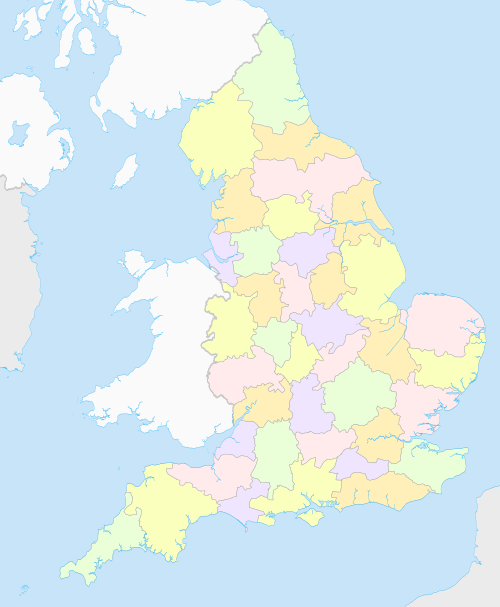
Local (England)
[edit]| Name | Sub-opt | Map |
|---|---|---|
| BBC One East | Previously (1997–2022) East from Norwich and West from Cambridge | 
|
| BBC One East Midlands | ||
| BBC One London | ||
| BBC One North East & Cumbria | ||
| BBC One North West | ||
| BBC One South | Previously (2000-2022) BBC Oxford for Oxford and the surrounding areas | |
| BBC One South East | ||
| BBC One South West | BBC Channel Islands for the Channel Islands | |
| BBC One West | ||
| BBC One West Midlands | ||
| BBC One Yorkshire & Lincolnshire | ||
| BBC One Yorkshire |
List of UKTV channels
[edit]UKTV is a multichannel broadcaster owned by BBC Studios, therefore, the channels are not funded by the television licence, and are operated independently from the BBC-branded channels.
| Name | Description | HD | +1 | Package |
|---|---|---|---|---|
| U&Alibi | Crime drama | U&Alibi HD | U&Alibi +1 | Pay |
| U&Dave | Comedy | U&Dave HD | U&DaveJaVu | Free-to-air |
| U&Drama | Drama | U&Drama HD | U&Drama +1 | |
| U&Eden | Nature | U&Eden HD | U&Eden +1 | |
| U&Gold | Classic comedy | U&Gold HD | U&Gold +1 | Pay |
| U&W | Entertainment | U&W HD | U&W +1 | Free-to-air |
| U&Yesterday | History | U&Yesterday HD | U&Yesterday +1 |
List of international television channels
[edit]Commercially funded BBC Studios and BBC Global News, as well as state-funded BBC World Service operate and distribute these linear television services around the world. These services are not to be confused with the domestic channels operated in the United Kingdom and accessible in the Republic of Ireland.


.svg)




List of BBC television channels and radio stations
View on GrokipediaOverview
Historical Development
The British Broadcasting Company was established on 18 October 1922 by a consortium of wireless manufacturers to coordinate radio transmissions amid growing demand for standardized broadcasting.[4] The first transmission occurred on 14 November 1922 from station 2LO in London, followed by additional stations in Birmingham, Manchester, Newcastle, and Cardiff by mid-1923, marking the initial network of local services.[4] These early efforts focused on experimental content, with daily schedules emerging by late 1922 under the leadership of John Reith, appointed general manager in December 1922.[4] On 1 January 1927, the entity transitioned to the public British Broadcasting Corporation under royal charter, centralizing operations and expanding to national coverage via regional relays.[4] Post-World War II reconstruction saw radio services restructured into three distinct national networks: the Home Service for news and talks, the Light Programme for entertainment launched on 29 January 1945, and the Third Programme for cultural content introduced on 29 September 1946.[5] Educational supplements like Network Three began in 1957.[6] In response to offshore pirate radio's popularity among youth, a major overhaul occurred on 30 September 1967, replacing the prior networks with the enduring structure of Radio 1 (popular music), Radio 2 (light entertainment), Radio 3 (serious music and arts), and Radio 4 (speech and news).[7] Local radio stations commenced with BBC Radio Leicester in 1968, authorized after the 1966 Marine Broadcasting Offences Act curtailed pirates, expanding to 40 stations by the 1990s.[8] Further diversification included Radio 5 Live in 1994 for rolling news and sport.[5] Television development began experimentally in 1929 with John Logie Baird's mechanical system using BBC transmitters, but regular high-definition service launched on 2 November 1936 from Alexandra Palace with 405-line electronic transmissions.[9] Wartime suspension from 1939 to 1946 halted progress, with resumption on 7 June 1946 via the original service, later designated BBC One.[9] BBC Two debuted on 20 April 1964 as the UK's first 625-line UHF channel, enabling colour broadcasting from 1 July 1967, followed by BBC One in 1969.[9] Digital expansion accelerated in the late 20th century, with analogue-only services persisting alongside satellite and cable trials. BBC Choice launched in 1998 as the first digital-exclusive channel before closure in 2003.[10] BBC Four premiered on 2 March 2002 for arts and documentaries, while BBC Three followed on 9 February 2003 targeting younger audiences.[11][12] Children's blocks evolved into dedicated channels CBBC and CBeebies in 2002. Niche services like BBC News (1997, rebranded 2008) and BBC Parliament (1992) addressed specialized content, with high-definition variants from 2006. Regional opt-outs for nations such as BBC Scotland and BBC Wales developed from the 1960s, enhancing localized programming within national frameworks.[9]Funding and Governance
The BBC's television channels and radio stations, as public service broadcasters, are funded primarily through the television licence fee, a compulsory payment required from UK households and institutions for receiving live television transmissions—including BBC content—on any device, or using catch-up services like BBC iPlayer. As of 1 April 2025, the standard colour television licence fee stands at £174.50 per year, following a £5 increase announced in late 2024 and aligned with inflation adjustments until the end of the current Royal Charter period in 2027.[13] [14] This revenue stream, collected via the government-contracted TV Licensing body, totals approximately £3.7 billion annually and accounts for roughly 65% of the BBC's overall income, enabling ad-free domestic services while segregating public funding from commercial revenues generated by subsidiaries like BBC Studios.[15] [16] Licence fee evasion has risen above 10% in recent years, prompting discussions on potential reforms, including a shift toward mixed funding models involving taxation or subscriptions, though the fee remains the core mechanism under the existing framework.[15] [17] Governance of these services operates under the Royal Charter, the BBC's constitutional foundation renewed in December 2016 and running until 31 December 2027, which mandates public purposes such as informing, educating, and entertaining audiences while safeguarding editorial and operational independence from direct government control.[18] [19] The unitary BBC Board, chaired by non-executive member Samir Shah and comprising ten non-executive directors (including regional and nation-specific representatives) alongside four executive directors, holds ultimate responsibility for strategy, risk management, and ensuring television and radio outputs align with Charter obligations, including value for money from licence fee expenditure.[20] The Director-General, Tim Davie, heads the executive committee and oversees content production and delivery for these channels and stations.[20] Appointments to the Board, including the Chair, are made by the government following open competitions, with terms typically lasting four years, though this process has drawn scrutiny for potential political influence despite Charter safeguards.[20] [21] Regulatory oversight is exercised by Ofcom, the independent communications authority, which since 3 April 2017 has served as the BBC's external regulator for television and radio services, issuing an annual operating licence and framework to enforce standards on accuracy, impartiality, harm avoidance, and competition impacts.[22] [23] Ofcom assesses compliance through performance measures tied to the Charter's public purposes, investigates breaches (with powers to impose sanctions), and reviews complaints escalated from the BBC's internal processes, though it does not regulate all online elements as of 2025.[22] This dual internal-external structure aims to balance accountability with creative autonomy, amid ongoing debates about the licence fee's sustainability and the Board's effectiveness in addressing perceived biases in output.[22] [24]Editorial Standards and Controversies
The BBC's Editorial Guidelines, updated in a 2025 edition, establish core standards including impartiality, accuracy, fairness, and editorial integrity, applying to all television channels and radio stations regardless of broadcast location.[25] Impartiality requires avoiding favoritism toward any viewpoint, with "due impartiality" calibrated to the output's context, particularly for political or industrial controversies, while accuracy demands verified facts and appropriate context without misleading audiences.[26] These guidelines underpin public service obligations under the BBC Charter, enforced through an internal complaints framework involving initial executive review, escalation to the Executive Complaints Unit (ECU), and potential oversight by Ofcom for unresolved issues.[27] [28] Controversies over adherence have persisted, with allegations of systemic bias frequently leveled from both political flanks, though empirical analyses reveal inconsistencies rather than uniform patterns. For instance, a 2024 study by the Centre for Media Monitoring identified 1,553 breaches of BBC guidelines on impartiality, accuracy, and editorial values in coverage of the Israel-Hamas war from October 2023 onward, predominantly across BBC News and related channels, citing disproportionate emphasis on Palestinian perspectives and underrepresentation of Israeli viewpoints.[29] Specific breaches include the 2022 case of presenter Martine Croxall, who violated impartiality rules by displaying apparent bias in on-air reactions to a legal ruling, as confirmed by BBC investigation following public complaints.[30] Similarly, in 2023, BBC Sport's Gary Lineker was temporarily suspended for social media posts criticizing UK immigration policy, prompting Director-General Tim Davie to reiterate impartiality as a non-negotiable for on-air figures, amid broader scrutiny of presenter conduct on platforms like BBC Radio 5 Live.[31] Radio services have faced parallel issues, such as ECU rulings against Radio 4's Today programme for inadequate challenge to guests on climate policy in 2021 episodes, breaching due impartiality by failing to balance skeptical viewpoints with consensus claims.[32] Quantitative research, including sourcing pattern analyses, indicates BBC output often amplifies establishment narratives on topics like Brexit and economic policy, with challenges to official claims less rigorous in UK domestic coverage compared to international stories, potentially reflecting institutional pressures rather than deliberate slant.[33] [34] The BBC maintains that such incidents represent exceptions addressed via corrections or sanctions, yet persistent complaints—totaling thousands annually—underscore debates over enforcement efficacy, particularly given staff demographics skewed toward urban, progressive backgrounds that may subtly influence framing on channels like BBC Two documentaries or Radio 3 cultural programming.[35] Ofcom's "BBC First" process has upheld some external validations, as in 2024 reviews of news impartiality, reinforcing accountability while highlighting the tension between journalistic autonomy and public funding mandates.[28]Television Services
National Channels
The BBC's national television channels provide UK-wide programming funded by the television licence fee, encompassing general entertainment, news, children's content, and specialist subjects. These services, distinct from regional opt-outs, include BBC One, BBC Two, BBC Three, BBC Four, CBBC, CBeebies, BBC News, and BBC Parliament. They are broadcast via digital terrestrial, satellite, cable, and online platforms, with availability mandated on public service multiplexes.[1] BBC One, the flagship channel, delivers prime-time schedules featuring news bulletins, dramas, documentaries, sports, and family entertainment. It launched on 2 November 1936 as the world's first regular high-definition television service from Alexandra Palace.[36] BBC Two offers complementary programming to BBC One, emphasizing arts, sciences, comedy, and in-depth current affairs. It commenced broadcasting on 20 April 1964, initially disrupted by a power failure but establishing a reputation for innovative content.[37] BBC Three targets young adults with comedy, documentaries, and reality series focused on contemporary issues. Originally launched on 9 February 2003, it transitioned to online-only in 2016 before relaunching as a linear channel on 1 February 2022.[38] BBC Four specializes in cultural programming, including international acquisitions, arts features, and factual series. It began transmissions on 2 March 2002 as a digital service promoting intellectual engagement.[39][40] BBC News provides continuous rolling news coverage, analysis, and international reporting. The channel debuted as BBC News 24 on 9 November 1997, marking the BBC's entry into 24-hour television news.[41] BBC Parliament broadcasts unedited proceedings from the UK Parliament, devolved assemblies, and select committees, alongside political programming. It was acquired and relaunched by the BBC on 23 September 1998, evolving from earlier cable services.[42] CBBC, aimed at children aged 6-12, features educational shows, dramas, and animations. The dedicated channel launched on 11 February 2002, expanding from previous BBC One and Two strands.[43] CBeebies caters to pre-school viewers with interactive, educational content and storytelling. It started on 11 February 2002, coinciding with CBBC's launch to segment younger audiences.[43]Regional and Local Services
The BBC delivers regional television services across the United Kingdom through variations of its flagship channels and dedicated outlets, adapting content to reflect distinct national and regional identities, particularly in news, current affairs, and cultural programming. These services operate via opt-outs from national feeds on BBC One, supplemented by specific channels for the devolved nations.[44] In Scotland, BBC One Scotland provides tailored programming, including the daily news bulletin Reporting Scotland, while the standalone BBC Scotland channel, launched on 24 February 2019, focuses exclusively on news, sport, and current affairs with extended coverage. BBC Alba, a Gaelic-language service established in 2008 through a partnership between the BBC and MG Alba, broadcasts educational, cultural, and entertainment content available via digital terrestrial, satellite, and cable platforms.[44][45] Wales receives services via BBC One Wales and BBC Two Wales, which feature Welsh-language content and news programs such as Wales Today, emphasizing local politics, events, and cultural matters. These channels integrate bilingual elements to serve both Welsh-speaking and English-speaking audiences.[44] In Northern Ireland, BBC One Northern Ireland and BBC Two Northern Ireland offer region-specific output, including BBC Newsline for news and analysis on local issues, reflecting the unique political and social context.[44] For England, the BBC English Regions division manages programming across 12 defined areas, delivering localised news and weather bulletins through opt-outs on BBC One, such as BBC Look North in Yorkshire and Humber or South Today in the South region. These services, broadcast from regional centers like Leeds, Southampton, and Birmingham, ensure coverage of sub-national events without dedicated full-time channels. Local television initiatives, including short-form news pilots, have been trialled but remain limited, with primary focus on integrated regional slots rather than standalone local channels.[46]International and Niche Channels
BBC World News is the BBC's primary international television channel, delivering 24-hour English-language news and current affairs programming to audiences in over 200 countries and territories worldwide. It emphasizes global reporting, analysis, and documentaries, distinct from the UK-focused BBC News Channel by prioritizing international perspectives and reducing domestic UK content. The channel operates under BBC Global News Ltd., a subsidiary of BBC Studios, and is available via satellite, cable, and digital platforms, with funding derived from a combination of license fee support and commercial revenues.[47] The BBC also maintains niche language-specific television services for targeted international audiences, particularly in South Asia. BBC Hindi TV and BBC Marathi TV provide news, cultural programs, and information in Hindi and Marathi, respectively, serving viewers in India and diaspora communities. These channels integrate BBC journalism standards with regionally relevant content, accessible via digital satellite and online platforms in regions where demand exists for non-English BBC output.[48] Within the UK, niche channels cater to specialized demographics. BBC Parliament offers continuous, unedited coverage of British parliamentary proceedings, including live sessions from the House of Commons, House of Lords, and select committees, alongside related political analysis. Launched as part of the BBC's public service remit, it broadcasts solely on digital platforms such as Freeview channel 232, targeting viewers with interest in governance and policy debates.[49][50] Children's programming is segmented into dedicated niche channels: CBBC targets children aged 6 to 12 with a mix of educational, drama, and entertainment content broadcast from 07:00 to 19:00 daily, while CBeebies serves pre-school audiences under 6 with age-appropriate learning-focused shows emphasizing creativity and basic skills development. Both operate under the BBC's educational charter, funded by the license fee, and are available across UK digital terrestrial, satellite, and streaming services.[44] BBC Alba functions as a niche channel for Scottish Gaelic speakers, delivering news, entertainment, and cultural programming primarily in Gaelic, with some English content. Jointly operated by the BBC and MG Alba, it fulfills public service obligations for minority language preservation and is broadcast on Freeview, Sky, and Freesat in Scotland.[48]Radio Services
National Stations
BBC national radio stations provide UK-wide coverage through a mix of analogue FM/AM transmissions, DAB digital radio, and online platforms such as BBC Sounds, targeting varied listener demographics with specialized programming formats. These services, funded primarily by the television licence fee, include flagship music networks alongside speech-based and niche outlets, with availability extending to approximately 99% of the UK population via digital means.[44] BBC Radio 1 focuses on contemporary popular music, emerging artists, and youth-oriented content, including chart hits, dance, and electronic genres, aimed at listeners aged 15-29. It launched on 30 September 1967 at 7:00 am, hosted by Tony Blackburn, as a response to offshore pirate radio stations playing pop music restricted by BBC needle-time limits on records. The station introduced 24-hour broadcasting on 1 May 1991 and maintains a weekly audience share derived from RAJAR measurements, emphasizing live sessions and festivals like Radio 1's Big Weekend.[51][52] BBC Radio 2, the UK's most-listened-to station, broadcasts adult contemporary music, light entertainment, and specialist shows featuring classic hits, jazz, and folk, appealing to a broad over-35 audience. It commenced on 30 September 1967, evolving from the BBC Light Programme with continuity announcers transitioning the schedule, and has historically included long-running serials like Waggoners' Walk (1969-1970). Programming combines music from artists such as Elton John with cultural discussions, maintaining high listener retention through presenters like Ken Bruce until recent changes.[53][54] BBC Radio 3 specializes in classical music, opera, jazz, world music, and arts programming, including live broadcasts of the BBC Proms from the Royal Albert Hall. Replacing the Third Programme on 30 September 1967, it prioritizes intellectual content with features like Composer of the Week and late-night immersive soundtracks, serving audiences interested in cultural depth rather than mainstream appeal. In November 2024, it extended offerings with BBC Radio 3 Unwind, a 24/7 stream of calming classical tracks for wellbeing.[55][56] BBC Radio 4 delivers news, current affairs, drama, comedy, and factual programming in a speech-led format, featuring flagship shows like Today (weekdays 6:00-9:00) and The Archers. It launched on 30 September 1967 from the Home Service, establishing itself as the BBC's primary outlet for in-depth journalism and storytelling, with the Greenwich Time Signal punctuating hourly news. The station's emphasis on analysis over sensation distinguishes it, though it has faced scrutiny over editorial balance in political coverage.[57][58] BBC Radio 5 Live offers rolling news, live sports commentary, and phone-in debates, covering events like Premier League football and elections with real-time updates. As the BBC's dedicated sports and news network, it provides analysis from experts and integrates digital extras for enhanced coverage, prioritizing immediacy and breadth over music.[59][60] BBC Radio 6 Music curates alternative, indie, and specialist music from rock to electronic, spanning decades with DJ-led shows and live sessions, targeting eclectic tastes beyond commercial charts. Launched in March 2002 as a digital-only service, it has built a niche following through events and playlists like the Alternative Jukebox, emphasizing artist interviews and genre exploration.[61] Wait, wrong; actually from [web:60] but avoid wiki; use BBC site implication. BBC Asian Network targets British Asian communities with music from Bollywood, bhangra, and Asian pop, alongside news and cultural speech in English and South Asian languages. Established nationally on DAB in 2002 after regional AM origins in 1996, it blends entertainment like DJ-led charts with community-focused content.[62] Companion services include BBC Radio 1Xtra for urban, grime, and hip-hop music as a sister to Radio 1, and BBC Radio 4 Extra replaying archived comedy, drama, and quizzes from Radio 4's history, both available digitally nationwide.[44]Regional Stations
The BBC maintains regional radio stations dedicated to Scotland, Wales, and Northern Ireland, delivering nation-specific content including news, cultural programming, and minority-language broadcasts that complement the UK-wide national stations. These services emphasize local relevance, with opt-outs for sub-regions or languages where applicable, funded through the licence fee and governed under the BBC Charter to serve devolved audiences.[44] BBC Radio Scotland broadcasts across Scotland, offering a schedule of news, current affairs, sport, music, and speech programmes tailored to Scottish audiences. It launched as a full-time service in November 1978, replacing previous opt-outs from BBC Radio 4. The station operates on FM frequencies of 92.5–94.7 MHz, medium wave at 810 kHz, and digital platforms including DAB and BBC Sounds. Sub-regional opt-outs exist for areas like Orkney and Shetland, providing localized news bulletins, while integrated Gaelic content links to the dedicated service BBC Radio nan Gàidheal.[63][64][65] BBC Radio nan Gàidheal serves Scotland's Gaelic-speaking community with programming in Scottish Gaelic, focusing on music, news, and cultural features. It complements BBC Radio Scotland through shared infrastructure but maintains distinct output, available on FM 103–105 MHz and DAB. The service supports linguistic preservation amid declining native speakers, estimated at around 57,000 in Scotland as of the 2011 census, though listener reach has stabilized via digital access.[64] BBC Radio Wales provides English-language programming for Wales, covering news, entertainment, sport, and talk with a national perspective. It commenced operations on 13 November 1978, succeeding the Radio 4 Wales opt-out, and transmits on FM 95–104 MHz, medium wave 882/1305 kHz, and DAB. The station includes regional variations for north and south Wales during peak listening hours.[66][64][67] BBC Radio Cymru delivers Welsh-language content, including news bulletins, music, and drama, aimed at preserving and promoting the Welsh language spoken by approximately 538,000 people as of the 2021 census. Launched prior to the English-language counterpart as part of evolving regional services, it airs on FM 92.4–105.7 MHz and DAB, with output centered in Cardiff.[64] BBC Radio Ulster functions as Northern Ireland's primary English-language station, featuring local news, sport, music, and discussion programmes reflective of the region's political and cultural context. It began broadcasting on 1 January 1975, marking the first full-time dedicated service and replacing Radio 4 opt-outs. Coverage spans FM 92–95 MHz, medium wave 1341 kHz, and DAB, with a weekly reach exceeding 400,000 listeners as reported in recent RAJAR data.[68][64][69] BBC Radio Foyle operates as a sub-regional opt-out from BBC Radio Ulster, serving the northwest around Derry/Londonderry with enhanced local news and features. Established in 1979, it uses FM 93.1 MHz and integrates with the parent network for non-local content. This setup addresses geographic and community-specific needs within Northern Ireland.[70][64]Local Stations
BBC Local Radio operates a network of 39 stations across England, plus dedicated services in Jersey and Guernsey, totaling 40 stations that deliver region-specific content including local news bulletins every hour, traffic updates, weather reports, sports coverage, and community features, alongside networked music shows and speech programmes shared from production hubs in London, Birmingham, and Manchester to achieve economies of scale amid licence fee constraints. Launched incrementally from 1968 with BBC Radio London as the pioneer, the network expanded to cover nearly every English county by the 1990s, funded primarily through the television licence fee despite serving only radio audiences. These stations broadcast primarily on FM and DAB digital radio, with some AM relays in rural areas, and emphasise listener interaction via phone-ins and local events, though output has trended toward more automation and shared content since 2019 to reduce costs without fully eliminating distinct local identities.[71][64][72] The stations, grouped by approximate BBC English regions for organisational purposes, are as follows: East of England:- BBC Essex (Essex and parts of East London)[64]
- BBC Radio Cambridgeshire (Cambridgeshire)[64]
- BBC Radio Norfolk (Norfolk)[64]
- BBC Radio Suffolk (Suffolk)[64]
- BBC Radio Derby (Derbyshire)[64]
- BBC Radio Leicester (Leicestershire and Rutland)[64]
- BBC Radio Lincolnshire (Lincolnshire)[64]
- BBC Radio Nottingham (Nottinghamshire)[64]
- BBC Newcastle (North East England)[64]
- BBC Radio Cumbria (Cumbria)[64]
- BBC Radio Tees (Teesside, historically part of the network but integrated)[64]
- BBC Radio Lancashire (Lancashire)[64]
- BBC Radio Liverpool (Merseyside)[64]
- BBC Radio Manchester (Greater Manchester)[64]
- BBC Radio Berkshire (Berkshire)[64]
- BBC Radio Kent (Kent)[64]
- BBC Radio Oxford (Oxfordshire)[64]
- BBC Surrey (Surrey)[64]
- BBC Radio Sussex (Sussex)[64]
- BBC Three Counties Radio (Bedfordshire, Hertfordshire, Buckinghamshire)[64]
- BBC Radio Bristol (Bristol and Bath)[64]
- BBC Radio Cornwall (Cornwall)[64]
- BBC Radio Devon (Devon)[64]
- BBC Radio Gloucestershire (Gloucestershire)[64]
- BBC Hereford & Worcester (Herefordshire, Worcestershire)[64]
- BBC Somerset (Somerset)[64]
- BBC Radio Wiltshire (Wiltshire)[64]
- BBC CWR (Coventry and Warwickshire)[64]
- BBC WM (West Midlands conurbation)[64]
- BBC Radio Shropshire (Shropshire)[64]
- BBC Radio Stoke (Staffordshire)[64]
- BBC Radio Humberside (Humberside)[64]
- BBC Radio Leeds (West Yorkshire)[64]
- BBC Radio Sheffield (South Yorkshire)[64]
- BBC Radio York (North Yorkshire)[64]
- BBC Radio Northampton (Northamptonshire)[64]
Digital and Related Platforms
UKTV and Commercial Affiliates
UKTV is a multi-channel broadcaster and streaming service wholly owned by BBC Studios, the commercial subsidiary of the BBC, operating independently from the publicly funded BBC services.[73] Established in 1997 as a joint venture between the BBC's commercial arm and Flextech (later Virgin Media), UKTV gained full BBC Studios ownership in June 2019 following a £173 million transaction that split assets with Discovery, Inc., with BBC Studios retaining entertainment-oriented channels while Discovery assumed control of lifestyle and factual ones like Yesterday and Really.[74] [75] UKTV channels are funded through advertising and available on free-to-air digital platforms such as Freeview, Freesat, Sky, and Virgin Media, featuring a mix of BBC archive programming, original commissions, and acquired content to monetize BBC intellectual property commercially without relying on the UK television licence fee.[73] In 2022, UKTV rebranded its linear channels under the "U&" prefix (e.g., U&Dave) alongside its free on-demand platform U, emphasizing entertainment genres like comedy, drama, and documentaries, with over 10,000 hours of content accessible via apps and smart TVs.[76] The portfolio targets adult audiences with repeat broadcasts and new series, achieving significant viewership; for instance, U&Dave consistently ranks among top non-PSB channels, drawing millions of viewers monthly through shows like Taskmaster and Would I Lie to You? derived from BBC formats.[77] Current UKTV linear channels include:- U&Dave: Focuses on comedy, entertainment, and panel shows, including BBC originals like Mock the Week.[77]
- U&Drama: Airs classic and contemporary dramas, such as Father Brown and Death in Paradise.[77][78]
- U&W: Features lifestyle, reality, and entertainment programming aimed at female viewers, including acquisitions like Come Dine with Me.[77]
- U&Yesterday: Specializes in historical documentaries, factual repeats, and archival content from BBC libraries.[77]
- Gold: Dedicated to classic British comedy repeats, such as Only Fools and Horses and Fawlty Towers, operating without the U& rebrand but integrated into the U platform.[77]
- Alibi: Centers on crime and thriller series, featuring originals like McDonald & Dodds and international acquisitions.[77]
- Eden: Broadcasts nature, wildlife, and science documentaries, often repurposing BBC natural history content.[77]