


Community hub
Recent from talks
Contribute something
Nothing was collected or created yet.
Bernie Mac
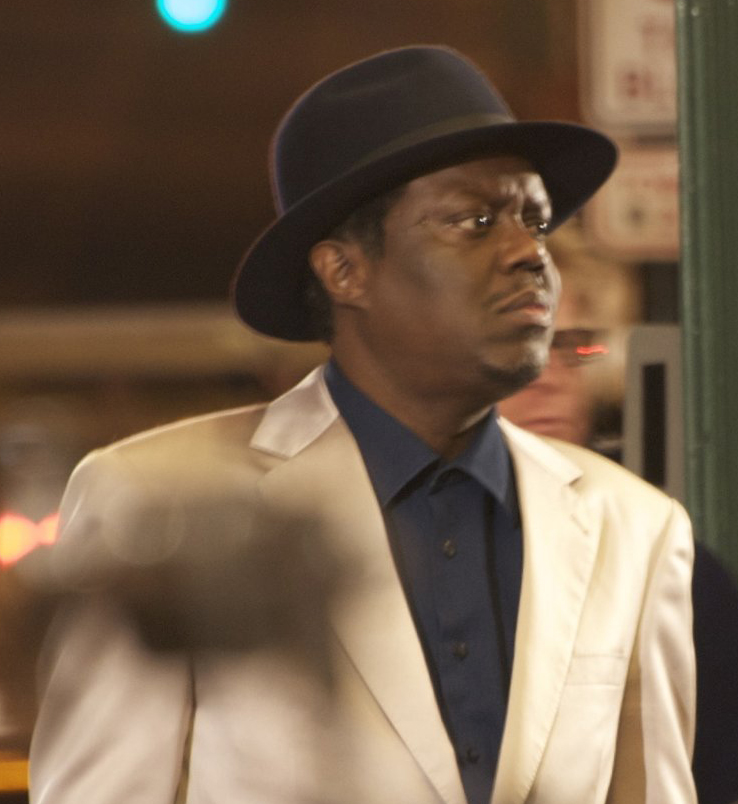
View on WikipediaBernard Jeffrey McCullough (October 5, 1957 – August 9, 2008),[1] known professionally as Bernie Mac, was an American stand-up comedian, actor and film producer. His most noted film roles were as Frank Catton in the Ocean's film series from 2001 through 2007 and as the title character of Mr. 3000. Mac joined Steve Harvey, Cedric the Entertainer, and D. L. Hughley as one of the "Big Four" comedians in the film The Original Kings of Comedy. After briefly hosting the HBO show Midnight Mac, Mac appeared in several films in smaller roles. He was the star of The Bernie Mac Show, which ran from 2001 through 2006, earning him two Emmy Award nominations for Outstanding Lead Actor in a Comedy Series. His other films included starring roles in The Players Club, Head of State, Bad Santa, Guess Who, Pride, and Soul Men. Mac died at 50 years old on August 9, 2008 in Chicago, Illinois of complications from pneumonia.
Key Information


Early life and education
[edit]
Bernard Jeffrey McCullough was born on October 5, 1957 in Chicago, Illinois.[2] Mac was the second child of Mary McCullough and Jeffrey Harrison.[3] Mac was raised by his single mother and his grandparents on the city's south side.[4]
Mac began his high school career at Chicago Vocational High School. During 1973, Mac moved to Tampa, Florida, to attend Jesuit High School following the death of his mother during his sophomore year.[5] Shortly afterward, Mac's older brother and his estranged father both died. Mac later returned to Chicago and graduated from Chicago Vocational in 1975.[6] During his 20s and through his early 30s, Mac worked in a variety of jobs, including janitor, coach, professional mover, cook, bus driver, Wonder Bread delivery man, furniture mover, and UPS agent, while doing comedy on the weekends at clubs and parties.[5]
Career
[edit]Mac's influences were from the Three Stooges and listening to stand-up comedians Richard Pryor and Redd Foxx. Mac started as a stand-up comedian in Chicago's Cotton Club. After he won the Miller Lite Comedy Search at the age of 32, his popularity as a comedian began to grow. In 1992, a performance on the 3rd episode of HBO's Def Comedy Jam thrust him into the spotlight; after Martin Lawrence was unable to calm an increasingly hostile crowd, Mac went onstage and told the audience "I ain't scared o' you mothafuckas" and that he "didn't come here for no foolishness."[7]
The Bernie Mac Show
[edit]
In 2001, the Fox network gave Mac his own television sitcom called The Bernie Mac Show portraying a fictional version of himself. In the show, he suddenly becomes custodian of his sister's three children after she enters rehab. Mac broke the fourth wall to tell his thoughts to the audience. The show contained many parodies of events in Bernie's actual life. Mac, who grew up on Chicago's South Side, was a fan of the Chicago White Sox, and would often sneak a reference to his favorite team in episodes, including enlisting then-White Sox pitcher Jon Garland to make a guest cameo appearance. In the 2005 season he wore a White Sox jacket and cap, and congratulated his hometown Chicago White Sox and their staff members on their recent World Series championship. The show was not renewed after the 2005–2006 season. The series finale aired on April 14, 2006. Among other awards, the show won an Emmy[8] for "Outstanding Writing", the Peabody Award for excellence in broadcasting, and the Humanitas Prize for television writing that promotes human dignity.[9] His character on The Bernie Mac Show was ranked No. 47 in TV Guide's list of the "50 Greatest TV Dads of All Time".[10] During his run on the show, Mac had co-starring roles in the Ocean's trilogy (2001–2007), Head of State (2003) and Bad Santa (2003), as well as starring roles in the baseball-themed film Mr. 3000 (2004) and Guess Who? (2005), a remake of the 1967 film Guess Who's Coming to Dinner.
Later years
[edit]On March 19, 2007, Mac told David Letterman on the CBS Late Show that he would retire from his 30-year career after he finished shooting the comedy film, The Whole Truth, Nothing but the Truth, So Help Me Mac. "I'm going to still do my producing, my films, but I want to enjoy my life a little bit", Mac told Letterman. "I missed a lot of things, you know. I was a street performer for two years. I went into clubs in 1977 and was on the road 47 weeks out of the year."[11] During this time, Mac was having success as a popular film actor, starting with an appearance in the 2007 film Transformers as the car salesman "Bobby Bolivia", and serving as the voice of Zuba, Alex the Lion's long-lost father in Madagascar: Escape 2 Africa. He co-starred with Samuel L. Jackson in the 2008 musical comedy Soul Men. The latter two films were released months after his death. His final film role was as Jimmy Lunchbox in the 2009 film Old Dogs which was released a year after his death.
Personal life, health and death
[edit]Mac married his high school sweetheart Rhonda Gore on September 17, 1977, and together they had a daughter in 1978.[12][13] In the last 20 years of his life, Mac publicly disclosed that he had severe sarcoidosis, a disease of unknown origin that causes inflammation in tissue.[14] On July 19, 2008, Mac was admitted to Northwestern Memorial Hospital in his hometown of Chicago.[15] After being treated in the ICU for three weeks for pneumonia, Mac went into cardiac arrest and subsequently died during the early morning hours on August 9, at the age of 50. However, the complications were not attributed to his sarcoidosis, according to his publicist.[16] Madagascar: Escape 2 Africa and Soul Men were released posthumously and dedicated to his memory.
Legacy and tributes
[edit]Mac's public memorial was held a week after his death at the House of Hope Church, with nearly 7,000 people in attendance.[17] Notable mourners at Mac's funeral were Chris Rock, Chicago Mayor Richard M. Daley, Samuel L. Jackson, Ashton Kutcher, Don Cheadle, the cast members from The Bernie Mac Show, and his Kings of Comedy fellows D. L. Hughley, Cedric the Entertainer, and Steve Harvey. The first two of Mac's posthumous films, Soul Men and Madagascar: Escape 2 Africa, were released three months after his death and were dedicated to him. Mac's third posthumously released and final film, Old Dogs, was released a year after his death; it too was dedicated in part to Mac. The 2008 Bud Billiken Parade, which was held in Chicago on the day of Mac's death, was also dedicated to his memory.[14] On the day of Mac's funeral, his hometown's local television station WCIU-TV aired an exclusive television special, A Tribute to Bernie Mac, and had interviews with his former colleagues including Camille Winbush, Chris Rock, Joe Torry, Cameron Diaz, Don Cheadle, and some of his family members & close friends. During Steve Harvey's television show which aired November 14, 2016, Harvey read a proclamation from Chicago's Mayor Rahm Emanuel proclaiming November 14 as "Bernie Mac Day".[18] Steve Harvey's guests included Bernie's wife Rhonda, their daughter Je'Niece, granddaughter Jasmine, and Bernie's The Original Kings of Comedy co-stars D. L. Hughley, Cedric the Entertainer, and Guy Torry (who was the original host at the beginning of the tour). Mike Epps, appearing via satellite, along with the principal of Bernie and Rhonda's alma mater Chicago Vocational High School (CVS), revealed and unveiled the renaming of CVS Auditorium to the "Bernie Mac Auditorium".[19] On February 14, 2017, Rolling Stone named Bernie Mac #41 of the 50 Best Stand-Up Comics of All Time.[20]
Filmography
[edit]| Year | Title | Role | Notes |
|---|---|---|---|
| 1992 | Mo' Money | Club doorman | |
| 1993 | Who's the Man? | G-George | |
| 1994 | House Party 3 | Uncle Fester | |
| 1994 | Above the Rim | Flip | |
| 1995 | The Walking Dead | Ray | |
| Friday | Pastor Clever | ||
| 1996 | Don't Be a Menace to South Central While Drinking Your Juice in the Hood | Officer Self Hatred | Cameo |
| Get on the Bus | Jay | ||
| 1997 | Booty Call | Judge Peabody | |
| B*A*P*S | Mr. Johnson | ||
| Def Jam's How to Be a Player | Buster | ||
| 1998 | The Players Club | Dollar Bill | |
| 1999 | Life | Jangle Leg | |
| 2000 | The Original Kings of Comedy | Himself | Documentary |
| 2001 | What's the Worst That Could Happen? | Uncle Jack | |
| Ocean's Eleven | Frank Catton | ||
| 2003 | Head of State | Mitch Gilliam | |
| Charlie's Angels: Full Throttle | Jimmy Bosley | ||
| Bad Santa | Gin Slagel | ||
| 2004 | Mr. 3000 | Stan Ross | |
| Ocean's Twelve | Frank Catton | ||
| 2005 | Guess Who | Percy Jones | |
| Lil' Pimp | Fruit Juice (voice) | ||
| Inspector Gadget's Biggest Caper Ever | Gadgetmobile (voice) | ||
| 2007 | Pride | Elston | |
| Ocean's Thirteen | Frank Catton | ||
| Transformers | Bobby Bolivia | ||
| 2008 | Madagascar: Escape 2 Africa | Zuba (voice) | Posthumous release; dedicated in memory |
| Soul Men | Floyd Henderson | ||
| 2009 | Old Dogs | Jimmy Lunchbox |
| Year | Title | Role | Notes |
|---|---|---|---|
| 1996–1999; 2000 | Moesha | Uncle Bernie | 9 episodes |
| 1997 | The Wayans Bros. | Shank | 1 episode |
| 1997 | Don King: Only in America | Bundini Brown | Television film |
| 2001–2006 | The Bernie Mac Show | Bernie "Mac" McCullough | 104 episodes |
| 2003 | King of the Hill | Mack | Voice, 1 episode |
| Saturday Night Live | Himself/host |
Awards and nominations
[edit]| Year | Award | Category | Work | Result |
|---|---|---|---|---|
| 2005 | BET Comedy Awards[21] | Outstanding Lead Actor in a Comedy Series | The Bernie Mac Show | Won |
| 2005 | Black Reel Awards | Best Actor, Musical or Comedy | Mr. 3000 | Won |
| 2002 | Emmy Awards | Outstanding Lead Actor in a Comedy Series | The Bernie Mac Show | Nominated |
| 2003 | ||||
| 2003 | Golden Globe Awards | Best Performance by an Actor in a Television Series – Musical or Comedy | Nominated | |
| 2004 | ||||
| 2003 | Kids Choice Awards | Favorite TV Actor | Nominated | |
| 2004 | ||||
| 2005 | ||||
| 2006 | ||||
| 2002 | NAACP Image Awards | Outstanding Actor in a Comedy Series | Nominated | |
| 2003 | Won | |||
| 2004 | Outstanding Supporting Actor in a Motion Picture | Head of State | Nominated | |
| Outstanding Actor in a Comedy Series | The Bernie Mac Show | Won | ||
| 2005 | Won | |||
| 2006 | Won | |||
| 2007 | Nominated | |||
| 2003 | PRISM Awards | Performance in a Comedy Series | Won | |
| 2003 | Satellite Awards | Best Performance by an Actor in a Series, Comedy or Musical | Won | |
| 2004 | Won | |||
| 2005 | Nominated | |||
| 2002 | Television Critics Association Awards | Individual Achievement in Comedy | Won |
References
[edit]- ^ "Bernie Mac". Biography.com. 27 April 2021. Archived from the original on 23 March 2018. Retrieved 13 December 2017.
- ^ "Bernie Mac Obituary on Legacy.com". Legacy.com. 10 August 2008.
- ^ "Bernie Mac Foundation". www.berniemacfoundation.org. Archived from the original on 2018-01-23. Retrieved 2017-12-13.
- ^ "Bernie Mac". IMDb. Archived from the original on 11 December 2016. Retrieved 2 October 2016.
- ^ a b Savoy Magazine May 2002
- ^ "1975 Chicago Vocational High School Year Book (Chicago, Illinois)". Classmates.com. 1975. Retrieved December 12, 2017.
- ^ "Bernie Mac | Hip Hop History | Official Russell Simmons Website". Russell Simmons. 2018-11-08. Retrieved 2024-02-22.
- ^ "Bernie Mac". Television Academy. Archived from the original on 2013-05-15. Retrieved 2011-12-27.
- ^ Bernie Mac obituary Archived August 13, 2008, at the Wayback Machine
- ^ June 20, 2004 issue
- ^ "Bernie Mac plans to retire his standup comedy act". Gainesville Sun. Retrieved 2021-04-14 – via Associated Press.[dead link]
- ^ "Mac, Bernie 1957". Encyclopedia.com. Archived from the original on 2023-09-23. Retrieved 2023-10-12.
- ^ "Bernie Mac News & Biography - Empire". Empire Online. Archived from the original on 2023-11-02. Retrieved 2023-10-12.
- ^ a b Le Mignot, Suzanne (August 9, 2010). "Actor and comedian Bernie Mac dies at age 52". CBS2Chicago. Archived from the original on October 21, 2009. Retrieved 2012-03-27.
- ^ Bierly, Mandi (2008-08-09). "Bernie Mac dies at 50". Entertainment Weekly. Archived from the original on 2015-04-28. Retrieved 2021-10-05.
- ^ "Actor And Comedian Bernie Mac Dies At Age 50 - cbs2chicago.com". 2009-10-21. Archived from the original on 2009-10-21. Retrieved 2023-03-26.
- ^ "Bernie Mac's Funeral: "The Hottest Ticket in Town"". WhuDat. August 17, 2010. Archived from the original on 2018-07-28. Retrieved 2013-02-21.
- ^ Swartz, Tracy (November 11, 2017). "Late Chicago comedian Bernie Mac to be honored on Steve Harvey's show". Chicago Tribune. Archived from the original on November 16, 2016. Retrieved November 15, 2016.
- ^ "Steve Harvey overcome with emotion as 'Bernie Mac Day' declared in Chicago". WGN. November 14, 2016. Archived from the original on November 16, 2016. Retrieved November 15, 2016.
- ^ Love, Matthew (February 14, 2017). "50 Best Stand-Up Comics of All Time – Slide 41". Rolling Stone. Archived from the original on June 12, 2018. Retrieved August 24, 2017.
- ^ The Bernie Mac Show – IMDb, archived from the original on 2023-01-13, retrieved 2019-09-22
External links
[edit]


Bernie Mac
View on GrokipediaEarly life
Childhood and family
Bernard Jeffrey McCullough, professionally known as Bernie Mac, was born on October 5, 1957, on Chicago's South Side in the Woodlawn neighborhood, and later raised in the Englewood neighborhood, a gang-ridden area known for its challenging conditions.[2][1][6] He was the second child of Mary McCullough, a single mother who raised him amid financial hardships, and Jeffrey Harrison, who left the family early in his life.[7][8] Growing up in a large extended family household that included aunts, uncles, and cousins, Mac experienced a close-knit but demanding environment on the South Side, where community ties were strong despite economic struggles.[1][9] Mac's mother, Mary, provided emotional support and encouragement, often laughing at his early attempts at humor and predicting his future success, but she passed away from cancer in 1973 when he was just 16 years old.[10][11] Following her death, he was primarily raised by his strict maternal grandmother in the same South Side home, where her no-nonsense discipline and vivid storytelling about family life instilled in him a sense of resilience and a foundation for his observational comedic style.[12][9] This extended family dynamic, marked by shared responsibilities and tough love, shaped his early personality, fostering the bold, unfiltered humor that would later define his career. To help support the family after his mother's passing, the teenage Mac took on various odd jobs, including working as a school janitor and at a UPS facility, experiences that honed his work ethic and provided material for his later routines about everyday struggles.[13][14] These formative years in Chicago's urban landscape, amid personal loss and familial duties, built the toughness and wit that propelled him toward comedy as an outlet.Education
Bernie Mac attended Chicago Vocational Career Academy on Chicago's South Side. His high school education was interrupted in 1973 when, following his mother's death, he moved to Tampa, Florida, to live with relatives and attend Jesuit High School. He later returned to Chicago and graduated from Chicago Vocational Career Academy in 1975. There, he honed his performative skills through involvement in school plays and talent shows, where he often entertained audiences with impressions and comedic routines.[15][16] Early exposure to performing arts came via participation in church choirs and community theater, activities that built his confidence in public speaking and stage presence.[2] These experiences intersected with family hardships, including the loss of his mother during high school, which shaped his resilience and focus on humor as an outlet.[17] Encouraged by early successes at local comedy clubs starting in 1977, Mac ultimately pursued stand-up comedy full-time, marking the transition from formal education to his professional path in entertainment.[18][17]Comedy career
Stand-up beginnings
Bernie Mac, born Bernard Jeffrey McCullough, began his stand-up comedy career in the 1970s in Chicago, where he initially performed routines on the city's subway system for spare change to hone his craft.[19] By 1977, he transitioned to professional gigs, starting at local venues like the Cotton Club and establishing a weekly variety show at the Regal Theater, where he showcased impersonations and early comedic material drawn from his life.[7] These appearances marked his entry into the local club circuit, building a foundation amid the vibrant Chicago comedy scene of the era.[1] Throughout the late 1970s and 1980s, Mac supported himself and his family through various day jobs, including driving a school bus, working as a janitor, delivering bread, and laboring at a fish dock, all while performing at night.[20] He adopted the stage name "Bernie Mac," a shortened version of his surname McCullough, to create a more memorable and marketable persona for broader audiences.[19] His early style emerged as distinctly autobiographical and edgy, focusing on themes from his Chicago upbringing, family dynamics, and urban African American experiences, often delivered with raw, profane intensity that set him apart from contemporaries.[18] This approach helped sharpen his storytelling and performance skills during these formative years.[21] Seeking greater opportunities, Mac relocated to Los Angeles in the 1980s, where he performed at prominent venues such as the Comedy Store and the Improv, gradually gaining regional recognition in the competitive West Coast scene.[1] These gigs allowed him to refine his act further, blending humor from his Midwestern roots with the demands of a larger, more diverse audience, though he continued facing financial and professional challenges before national breakthroughs.[19]Breakthrough and tours
Bernie Mac's breakthrough came in 1990 when he won the Miller Lite Comedy Search, a national competition that propelled him from local Chicago stages to broader recognition. This victory marked a pivotal moment, opening doors to performances across the country and establishing his reputation for bold, unfiltered humor drawn from everyday life. Building on his foundation in Chicago comedy clubs like the Cotton Club, where he honed his craft through relentless performances, Mac's win provided the platform needed to transition from regional acts to national exposure.[2] In 1992, Mac made his debut on HBO's Def Comedy Jam, delivering a standout set that showcased his raw, observational style focused on family dynamics, urban struggles, and personal anecdotes, earning immediate acclaim for its authenticity and energy. The appearance, part of the show's early seasons hosted by Martin Lawrence, introduced Mac to a wider audience and solidified his status among emerging Black comedians, with his routine "I Ain't Scared of You" becoming a fan favorite for its direct address to the crowd. This exposure on the influential platform, which highlighted edgy stand-up from talents like Steve Harvey and Chris Tucker, was instrumental in elevating Mac's career trajectory.[11][22] Throughout the 1990s, Mac participated in prominent national showcases. These opportunities allowed him to refine his material and connect with industry figures, further cementing his appeal through high-energy sets that blended storytelling with sharp social commentary. Mac's prominence peaked with his key role in The Original Kings of Comedy tour from 1997 to 2000, alongside Steve Harvey, Cedric the Entertainer, and D.L. Hughley, a massively successful arena tour that drew record crowds for Black comedy acts. The tour, which emphasized collective humor rooted in African American experiences, was later filmed as a 2000 concert movie directed by Spike Lee, capturing the group's dynamic interplay and Mac's commanding presence as the opener. This collaboration not only grossed millions but also highlighted the cultural impact of urban stand-up, influencing a generation of performers.[23][24] In 1995, Mac released material from Def Comedy Jam: All Stars Vol. 3, a compilation featuring his routines alongside other stars, which extended his reach through home video and further showcased his signature voice. That same year, he hosted the HBO special Midnight Mac, a Chicago-based variety show blending stand-up, R&B, and jazz performances with guests like Brian McKnight and Chaka Khan, praised for its soulful energy and Mac's charismatic hosting that fused comedy with musical talent. The half-hour program, taped at the Shelter nightclub, was lauded for its stylish production and Mac's ability to engage audiences with sophisticated yet accessible content.[25]Acting career
Television work
Bernie Mac's early television appearances included guest roles that showcased his comedic timing and family-oriented humor. In 1996, he portrayed Uncle Bernie on the UPN sitcom Moesha, appearing in multiple episodes as the quirky relative of the Mitchell family. He also guested on The Chris Rock Show in 2000, delivering stand-up segments and participating in sketches that highlighted his raw, observational style.[26] Mac made frequent appearances on late-night programs, including Late Night with Conan O'Brien and Late Show with David Letterman, where he shared anecdotes from his stand-up routines.[27] Mac's most prominent television contribution was as the star and co-creator of The Bernie Mac Show, which premiered on Fox in November 2001 and ran for five seasons until April 2006. The semi-autobiographical sitcom depicted Mac as Bernie McCullough, a stand-up comedian and his wife Wanda who take custody of his troubled sister's three children—teenagers Jordan and Vanessa, and young Bryana—relocating them from the streets of Chicago to their suburban Los Angeles home.[28] The series emphasized Mac's signature fourth-wall-breaking monologues, blending his real-life experiences with raising relatives into humorous explorations of family dynamics, discipline, and cultural clashes.[29] Developed and co-created by Larry Wilmore, the show drew directly from Mac's personal anecdotes about family life, transforming his stand-up material into scripted episodes that prioritized authentic, edgy comedy rooted in African American household experiences.[30] Mac served as an executive producer, ensuring the humor reflected his upbringing and comedic voice. The program produced 104 episodes across its run, maintaining a consistent format that mixed laugh-track studio scenes with Mac's direct-to-camera asides.[31] For his lead performance, Mac earned two Primetime Emmy nominations for Outstanding Lead Actor in a Comedy Series in 2002 and 2003. The pilot episode also secured a Primetime Emmy Award for Outstanding Writing for a Comedy Series, awarded to Wilmore, marking a historic win as the first for a Black writer in that category.[30] Complementing his sitcom work, Mac released stand-up specials that extended his television presence, including the HBO variety special Midnight Mac in 1995, where he hosted and performed routines on marriage and urban life.[32] Later, in 2002, he delivered Bernie Mac: Who's the Boss? on HBO, focusing on authority figures and family roles drawn from his tours.[33] The series concluded after its fifth season due to declining ratings, finishing 127th out of 156 programs in viewership for the 2005-2006 season, despite critical acclaim for its innovative format.[34]Film roles
Bernie Mac made his film debut in a small role as the club doorman in the 1992 comedy Mo' Money, marking his initial foray into acting following his stand-up success.[35] His breakthrough came the following year in Who's the Man? (1993), where he portrayed G-George, a barber in the Harlem-based buddy comedy that highlighted his comedic timing in an ensemble cast.[36] Mac continued building his profile with supporting roles in ensemble films throughout the 1990s, including Pastor Clever in the cult classic Friday (1995), a character known for his humorous sermon delivery that resonated with audiences.[37] He followed this with the role of Dollar Bill, the sleazy strip club owner, in The Players Club (1998), a film written and directed by Ice Cube that showcased Mac's ability to blend humor with edgier drama.[38] In the 2000s, Mac gained wider recognition for his supporting turn as Frank Catton, a casino employee and loyal accomplice, across the Ocean's Eleven trilogy—appearing in Ocean's Eleven (2001), Ocean's Twelve (2004), and Ocean's Thirteen (2007)—where his deadpan delivery added levity to the high-stakes heist narratives.[39] He also delivered comedic supporting performances as Jimmy Bosley, the adoptive brother and successor to the original Bosley, in Charlie's Angels: Full Throttle (2003), bringing a fresh, boisterous energy to the action-comedy sequel.[40] In Bad Santa (2003), Mac played Gin Slagel, a foul-mouthed security guard whose profane banter with Billy Bob Thornton's character became one of the film's most memorable elements. Mac's voice work included Zuba, the authoritative lion king and father to Alex, in Madagascar: Escape 2 Africa (2008).[41] His final live-action roles were in Soul Men (2008), where he starred as Floyd Henderson, a retired soul singer reuniting with an old bandmate played by Samuel L. Jackson—the film was dedicated to Mac following his death—and as Jimmy Lunchbox, a quirky dog trainer, in Old Dogs (2009).Personal life
Marriage and family
Bernie Mac married his high school sweetheart, Rhonda Gore, on September 17, 1977, after dating for two years; the couple remained devoted partners until his death in 2008.[2] Their union was marked by mutual support through Mac's rising career, with Rhonda often credited as a stabilizing force in his life.[42] The couple welcomed their only child, daughter Je'Niece McCullough, in 1978.[2] Je'Niece initially pursued opportunities in entertainment, appearing alongside her father in performances and later in the 2011 tribute documentary I Ain't Scared of You: A Tribute to Bernie Mac.[43] She eventually transitioned into managing the Bernie Mac Foundation, serving as its vice president from 2008 to 2011 to honor her father's legacy.[43] Following Mac's breakthrough in comedy and acting, the family relocated to Los Angeles, where they prioritized privacy to shield their personal dynamics from public scrutiny.[44] Rhonda played a key role not only as a caregiver during Mac's health challenges but also as a producer on his projects, including the aforementioned tribute film and other endeavors tied to his career.[45]Philanthropy
Bernie Mac co-founded the Bernie Mac Foundation in 2005 with his wife Rhonda McCullough to raise awareness, fund research, and provide support for individuals affected by sarcoidosis, the inflammatory disease he had battled since 1983.[46][47] The organization, headquartered in Chicago, initially received a donation of over $600,000 from Mac's production company, MacMan Enterprises, to establish its operations focused on advancing scientific understanding and treatment options for the disease, which disproportionately impacts African Americans.[46] The foundation's efforts emphasize education and patient support, particularly for those in low- to moderate-income communities, by bridging gaps between medical professionals, researchers, and affected families.[48] It funds grants for sarcoidosis studies, including research on heart complications, and hosts invitation-only Thought Leadership Conferences to disseminate findings and foster collaboration among clinicians.[46][49] In partnership with organizations such as the American Lung Association and the Respiratory Health Association, the foundation promotes respiratory health awareness and links patients to specialized care through initiatives like the Bernie Mac Sarcoidosis Translational Advanced Research (STAR) Center.[49][50] In 2014, the foundation faced scrutiny over its spending, with reports indicating only 13% of expenditures went to charitable programs from 2007 to 2012, and governance concerns. In response, it overhauled its leadership in 2015, banned board member salaries, and implemented a conflict-of-interest policy.[46][47][51] Following Mac's death in 2008, the foundation has continued under the leadership of Rhonda McCullough, perpetuating his legacy through annual events such as the Purple Carpet Fundraiser and the Kick It Comedy Show, which raise funds for ongoing research and awareness campaigns during National Sarcoidosis Awareness Month in April.[52][53][54]Health and death
Illness
Bernie Mac was diagnosed with sarcoidosis, an inflammatory disease that forms granulomas in the lungs and other organs, in 1983 at the age of 25 while beginning his stand-up comedy career. The condition manifested with symptoms including fatigue, joint pain, respiratory difficulties such as shortness of breath and persistent cough, and skin involvement.[55][56][49] Following the diagnosis, Mac received treatment with corticosteroids, including prednisone, which he took continuously for over three years to control inflammation and symptoms. He managed the disease for over two decades, enabling him to pursue his career.[57][55] In 2004, Mac suffered from double pneumonia and exhaustion, which necessitated reduced touring schedules and a production hiatus for The Bernie Mac Show. This episode prompted renewed steroid treatments and increased his vulnerability to infections due to the disease's impact on lung function and immune response. The sarcoidosis achieved remission in 2005.[58][55][3][59][9] In 2005, Mac publicly disclosed his long-term battle with sarcoidosis through interviews, including one with NPR where he discussed his recovery from pneumonia, thereby raising awareness about the often-misunderstood condition. He continued to manage the illness through regular medical consultations, incorporating elements of his experiences into his comedic routines to cope with and highlight the challenges of living with a chronic disease. His family offered crucial support throughout his treatments.[56][60][57]Death
On July 24, 2008, Bernie Mac was hospitalized at Northwestern Memorial Hospital in Chicago for pneumonia, a condition exacerbated by his underlying sarcoidosis, which had compromised his immune system.[61][9][3] Despite initial reports that he was responding well to treatment and expected to recover, his condition deteriorated over the following weeks.[62] Mac died on August 9, 2008, at the age of 50, from cardiac arrest due to respiratory failure stemming from complications of the pneumonia.[3][9] His publicist, Danica Smith, confirmed the cause as unrelated directly to his sarcoidosis but noted the comedian's long battle with the disease had left him vulnerable.[63] A public memorial service was held on August 16, 2008, at The House of Hope megachurch, affiliated with Salem Baptist Church on Chicago's South Side, drawing nearly 7,000 attendees including fans, family, and celebrities such as Chris Rock, Cedric the Entertainer, Samuel L. Jackson, and Steve Harvey.[64][65] Eulogies highlighted Mac's Chicago roots, family devotion, and comedic genius, with Cedric the Entertainer describing him as "the hottest ticket in town."[64] Mac's family issued a statement through his widow, Rhonda McCullough, emphasizing his enduring legacy of humor and resilience, stating that he "lived life to the fullest" and would be remembered for bringing joy to millions.[4] He was buried at Washington Memory Gardens in Homewood, Illinois.[66] News of Mac's death prompted widespread media coverage and immediate public outpourings of grief, with outlets like The New York Times and People lauding his breakthrough role in The Original Kings of Comedy and his influence on stand-up and television, while fans and peers expressed shock at the loss of a comedy icon at such a young age.[9][61]Legacy
Cultural impact
Bernie Mac pioneered a distinctive "def comedy" style characterized by blending personal anecdotes with sharp social commentary on Black family life, often drawing from his Chicago upbringing to explore themes of resilience, discipline, and cultural norms. His stand-up routines, honed on platforms like Def Comedy Jam, emphasized unfiltered observations about race, relationships, and everyday struggles, resonating deeply within African American communities while challenging broader stereotypes. This approach not only elevated raw, authentic humor but also influenced subsequent generations of comedians who adopted similar personal and relatable storytelling techniques.[67] Through his participation in the 1997–2000 Kings of Comedy Tour and its 2000 Spike Lee-directed film The Original Kings of Comedy, as well as HBO specials like Midnight Mac (1995) and Def Comedy Jam: All Stars Vol. 11 (1999), Mac played a pivotal role in mainstreaming urban Black humor. These projects showcased unapologetic African American perspectives to wider audiences, surprising many outside Black circuits and boosting visibility for performers like Steve Harvey, D.L. Hughley, and Cedric the Entertainer. The tour's massive success, drawing over 20,000 fans per show and grossing millions, helped bridge cultural divides by introducing bold, family-centric comedy to mainstream entertainment.[68][69][67] On television, The Bernie Mac Show (2001-2006) stood as a landmark sitcom for its portrayal of non-traditional family structures, depicting Mac as a childless comedian and his wife Wanda reluctantly raising his sister's three children amid cultural clashes and generational humor. The series flipped conventional roles, with Mac embodying a stay-at-home paternal figure enforcing "tough love" in a blended household, offering a positive, relatable depiction of African American family dynamics that broke from nuclear family tropes prevalent in earlier shows. This innovative format influenced later Black-led sitcoms by prioritizing authentic emotional depth over stereotypes.[70][71][72] In film, Mac added authenticity to ensemble casts in Hollywood blockbusters such as Ocean's Eleven (2001), Bad Santa (2003), and Charlie's Angels: Full Throttle (2003), where his raspy delivery and grounded portrayals of streetwise characters provided comic relief while humanizing diverse group dynamics. His roles often infused real-world edge into high-stakes narratives, enhancing the credibility of multicultural ensembles and paving the way for more nuanced Black supporting performances in major productions.[73] Mac's enduring popularity persists in the digital era through viral clips and memes from his stand-up routines, such as his "America, I love you" opener from The Original Kings of Comedy and family-themed bits, which continue to garner millions of views on streaming platforms and social media. These snippets keep his commentary on Black experiences relevant, introducing his work to younger audiences and solidifying his status as a timeless comedy icon.[74]Tributes and recognition
Following Bernie Mac's death in 2008, several of his final film projects were released posthumously and dedicated to his memory. The comedy Soul Men (2008), in which Mac starred alongside Samuel L. Jackson, included a special tribute acknowledging his contributions and the impact of his passing during production. Similarly, the animated film Madagascar: Escape 2 Africa (2008), where Mac voiced the character Zuba, featured a dedication to him at the end credits, recognizing his voice work completed before his death. His last live-action role in the family comedy Old Dogs (2009) also carried a dedication to Mac, shared with another late figure, highlighting his enduring presence in the project despite its release over a year after his passing.[75] In 2011, the documentary I Ain't Scared of You: A Tribute to Bernie Mac premiered, chronicling his career from Chicago comedy clubs to Hollywood through archival footage, performances, and interviews with peers including Samuel L. Jackson, who reflected on Mac's influence and humor. The film, directed by Robert Small, has since become available on various streaming platforms, serving as a key posthumous celebration of his life and comedic legacy.[76][77] Mac received a star on the Hollywood Walk of Fame in the television category on November 30, 2018, as part of the class of 2018 honorees, with his widow Rhonda McCullough accepting on his behalf and emphasizing his groundbreaking role in comedy. The star, located at 6646 Hollywood Boulevard, stands as a permanent tribute to his contributions across film, television, and stand-up.[78] The Bernie Mac Foundation, established to support sarcoidosis research and awareness in his name, has hosted annual events such as the Purple Carpet Fundraiser, including a 2025 gala in Orland Park, Illinois, that raised funds and honored survivors while educating attendees on the disease that affected Mac.[53] Annual remembrances continue through social media campaigns and specials marking his birthday and death anniversary, with retrospectives on platforms like YouTube in 2023. In 2023, his daughter Je'Niece McCullough launched the Bernie's Daughter Podcast, featuring guests sharing stories of Mac's style and impact, as a personal tribute to his life.[79] Modern media nods include references to his comedic approach in episodes of sitcoms like The Neighborhood and ongoing podcast discussions of his influence. In August 2025, The Original Kings of Comedy was re-released in theaters to celebrate its 25th anniversary, drawing renewed tributes to Mac's role in mainstreaming Black comedy.[80][81]Filmography
Films
| Year | Title | Role |
|---|---|---|
| 1992 | Mo' Money | Club Doorman |
| 1993 | Who's the Man? | G-George |
| 1994 | Above the Rim | Flip |
| 1994 | House Party 3 | Uncle Vester |
| 1995 | Friday | Pastor Clever |
| 1995 | The Walking Dead | Ray |
| 1996 | Get on the Bus | Jay |
| 1996 | Don't Be a Menace to South Central While Drinking Your Juice in the Hood | Officer Self Hatred |
| 1997 | Booty Call | Judge Peabody |
| 1997 | B.A.P.S. | Mr. Johnson |
| 1997 | How to Be a Player | Buster |
| 1998 | The Players Club | Dollar Bill |
| 1999 | Life | Jangle Leg |
| 2000 | The Original Kings of Comedy | Himself |
| 2001 | What's the Worst That Could Happen? | Uncle Jack |
| 2001 | Ocean's Eleven | Frank Catton |
| 2003 | Bad Santa | Gin Slagel |
| 2003 | Charlie's Angels: Full Throttle | Jimmy Bosley |
| 2003 | Head of State | Mitch Gilliam |
| 2004 | Ocean's Twelve | Frank Catton |
| 2004 | Mr. 3000 | Stan Ross |
| 2005 | Guess Who | Percy Jones |
| 2007 | Pride | Elston |
| 2007 | Transformers | Bobby Bolivia |
| 2007 | Ocean's Thirteen | Frank Catton |
| 2008 | Madagascar: Escape 2 Africa | Zuba (voice) |
| 2008 | Soul Men | Floyd Henderson |
| 2009 | Old Dogs | Bernie (posthumous) |
Television
Bernie Mac's television work spanned stand-up specials, guest and recurring roles, and a lead role in his self-titled sitcom, which he also executive produced.[33]| Year | Title | Role | Notes |
|---|---|---|---|
| 1992 | Def Comedy Jam | Himself | Stand-up comedian, multiple appearances |
| 1993 | Hangin' with Mr. Cooper | Mr. Wilson | Guest appearance, 1 episode |
| 1995 | Midnight Mac | Himself | HBO stand-up special |
| 1996–2001 | Moesha | Uncle Bernie | Recurring role, 12 episodes [84] |
| 1997 | The Wayans Bros. | Himself | Guest appearance, 1 episode |
| 1998 | Smart Guy | Monroe | Guest appearance, 1 episode |
| 2001–2006 | The Bernie Mac Show | Bernie McCullough | Lead role, 104 episodes; executive producer [28] |
| 2003 | King of the Hill | Mack | Voice role, 1 episode |
| 2004 | The Proud Family | Luther | Voice role, guest appearance |
| 1999 | The Jamie Foxx Show | Bernie | Guest appearance, 1 episode |
Awards and nominations
Emmy Awards
Bernie Mac earned two Primetime Emmy Award nominations for Outstanding Lead Actor in a Comedy Series for his portrayal of the title character in The Bernie Mac Show, in 2002 and 2003.[85] These nominations highlighted his distinctive stand-up-infused delivery and comedic timing, which contributed to the series' critical acclaim as a fresh take on family sitcoms.[86] Although he did not win, the recognition underscored Mac's breakthrough as a leading comedic performer on television. The series itself received additional Emmy nods for Outstanding Writing for a Comedy Series in 2002 (for the pilot episode) and 2003, further affirming the show's innovative storytelling.| Year | Category | Result | For |
|---|---|---|---|
| 2002 | Outstanding Lead Actor in a Comedy Series | Nominated | The Bernie Mac Show |
| 2003 | Outstanding Lead Actor in a Comedy Series | Nominated | The Bernie Mac Show |