Hubbry Logo
BrazzeinBrazzeinMain
Open search
Brazzein
Community hub
Brazzein
logo
8 pages, 0 posts
0 subscribers
Be the first to start a discussion here.
Brazzein
Brazzein
from Wikipedia
Brazzein
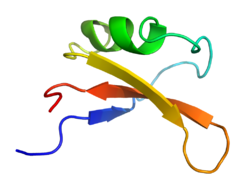
Solution NMR structure of the brazzein protein.[1]
Identifiers
OrganismPentadiplandra brazzeana
SymbolMONA_DIOCU
PDB1BRZ
UniProtP56552
Search for
StructuresSwiss-model
DomainsInterPro

Brazzein is a sweet-tasting protein that occurs naturally in oubli (Pentadiplandra brazzeana), a fruit native to the Atlantic coastal areas of Central Africa. Brazzein was first isolated in 1994 by scientists at the University of Wisconsin–Madison.[2] It is roughly 500 to 2000 times sweeter than sucrose.

Brazzein is found in the extracellular region of oubli fruit, in the pulp tissue surrounding the seeds. After pentadin, discovered in 1989, brazzein is the second sweet-tasting protein discovered in the Oubli fruit.[3]

Like other sweet proteins discovered in plants, such as monellin and thaumatin, brazzein is extremely sweet compared to commonly used sweeteners.[4] The fruit tastes sweet to humans, monkeys, and bonobos, but gorillas have mutations in their sweetness receptors so that they do not find brazzein sweet, and they are not known to eat the fruit.[5][6]

Traditional use

[edit]

The oubli plant (from which the protein was isolated) grows in Gabon and Cameroon where its fruit has been consumed by apes and local people over history. Due to brazzein and pentadin, the berries of the plant have exceptional sweetness. Locals call the berries "oubli" (French for "forgot") in their vernacular language because their taste is said to encourage nursing infants to forget their mother's milk, as once babies eat them, they may forget to return to their mothers.[7]

Protein structure

[edit]

The monomer protein, consisting of 54 amino acid residues, is the smallest of the sweet proteins with a molecular weight of 6.5 kDa.[2] The amino acid sequence of brazzein, adapted from the Swiss-Prot biological database of protein, is as follows: QDKCKKVYEN YPVSKCQLAN QCNYDCKLDK HARSGECFYD EKRNLQCICD YCEY[8]

The structure of brazzein was determined by proton nuclear magnetic resonance (NMR) at a pH of 5.2 and 22 °C. Brazzein has four evenly spaced disulfide bonds and no sulfhydryl groups.

3D analysis of brazzein showed one alpha-helix and three strands of anti-parallel beta sheet. This is not superficially similar to either of the other two sweet-tasting proteins, monellin and thaumatin.[9]

However, a recent 3D study shows that these three proteins possess similar "sweet fingers" believed to elicit the sweet taste.[10]

Residues 29–33 and 39–43, plus residue 36, as well as the C-terminus were found to be involved in the sweet taste of the protein. The charge of the protein also plays an important role in its interaction with the sweet taste receptor.[2]

Based on this knowledge a synthesised improved brazzein, called pGlu-1-brazzein, was reported to be twice as sweet as the natural counterpart.[11]

Sweetness properties

[edit]

On a weight basis, brazzein is 500 to 2000 times sweeter than sucrose, compared to 10% sucrose and 2% sucrose solution respectively.[9]

Its sweet perception is more similar to sucrose than that of thaumatin, with a clean sweet taste, lingering aftertaste, and slight delay (longer than aspartame) in an equi-sweet solution.[12]

Brazzein is stable over a broad pH range from 2.5 to 8,[13] and is heat stable at 98 °C (208 °F) for 2 hours.[2]

As a sweetener

[edit]

Brazzein represents an alternative to available low-calorie sweeteners. As a protein, it is safe for diabetics. It is also very soluble in water (>50 mg/mL).[13]

When blended with other sweeteners, such as aspartame and stevia, brazzein reduces side aftertaste and complements their flavor.[14]

Its taste profile is closer to sucrose than other natural sweeteners (apart from thaumatin). Unlike other sweet-tasting proteins, it can withstand heat, making it more suitable for industrial food processing.[15]

Papers have been published showing it can be made in a laboratory using peptide synthesis[9] and recombinant proteins were successfully produced via E. coli.[16]

The Texas companies Prodigene and Nectar Worldwide were among the licensees to use Wisconsin Alumni Research Foundation patents on brazzein, and genetically engineer it into maize. Brazzein then can be commercially extracted from the maize through ordinary milling. Approximately one ton of maize yields 1-2 kilograms of brazzein. It can also be engineered into plants like wheat to make pre-sweetened grains, e.g. for cereals.[15]

A company was formed to bring it to market as a sweetener in 2008, which initially said it would start selling the product by 2010 once it obtained agreement from the FDA that its brazzein was generally recognized as safe (GRAS).[17]

In 2024, the brand Oobli received the first GRAS certification from the FDA, with no potential concerns for consumption being raised.[18]

See also

[edit]

References

[edit]
[edit]
Revisions and contributorsEdit on WikipediaRead on Wikipedia
from Grokipedia
Brazzein is a naturally occurring sweet-tasting protein isolated from the fruit of the shrub Pentadiplandra brazzeana, native to the tropical rainforests of Central and West Africa. This single-chain polypeptide consists of 54 residues with a molecular weight of approximately 6,473 Da, making it the smallest known protein sweetener. It exhibits exceptional sweetness, ranging from 500 times that of in a 10% solution to 2,000 times in a 2% solution, with a clean, sugar-like flavor profile devoid of bitter aftertastes. Discovered in 1994 through purification from the edible pulp of P. brazzeana fruits, brazzein has been studied for its unique biophysical properties that set it apart from other sweet proteins like and monellin. Its structure includes one α-helix, a short 3₁₀-helix, and three antiparallel β-strands forming a β-sheet stabilized by four intramolecular bonds, which confer high thermal stability—retaining full sweetness after exposure to 80°C for four hours—and resistance to a broad range (2.5 to 8). Highly water-soluble (up to 5% or more), brazzein lacks post-translational modifications such as , simplifying its recombinant expression in systems like or . As a calorie-free, natural alternative to sugar and artificial sweeteners, brazzein holds significant promise for the food industry, particularly in heat-processed products like baked goods and beverages. Recent research has also uncovered its potential bioactivities, including antioxidant, anti-inflammatory, and anti-allergic effects, further enhancing its value as a functional ingredient. Precision fermentation has enabled scalable commercial production as of 2025, with the FDA issuing "No Questions" letters confirming GRAS status in April and September 2025, addressing the limitations of wild harvesting from P. brazzeana.

Discovery and Natural Occurrence

Discovery

Brazzein was first identified in 1994 by Göran Hellekant and Ding Ming during electrophysiological studies of in nonhuman , focusing on traditional West African known for their sweet properties. The researchers extracted the protein from the fresh pulp of the fruit of Pentadiplandra brazzeana Baillon, a native to the , using water-based methods that yielded a thermostable, high-potency sweet-tasting substance. Sweetness was confirmed through nerve response recordings from the nerve in monkeys, such as rhesus macaques, which exhibited strong afferent signals comparable to but absent in like squirrel monkeys, highlighting species-specific taste perception. This initial characterization, published in FEBS Letters in November 1994, described brazzein as comprising 54 residues with a molecular mass of 6,473 Da, marking it as the smallest known sweet protein at the time and approximately 2,000 times sweeter than 2% on a weight basis. Subsequent early research from 1994 to 2000 built on this foundation, including the detailed sequencing reported in a 1995 by Hellekant and Ming, which provided the full primary structure (SEQ ID NO:1) using automated on purified samples. In 1995, recombinant expression of brazzein was achieved in yeast by Guan et al., enabling scalable production and verification of its sweet potency. By 1997, Hellekant and colleagues further validated its taste-eliciting properties across species via behavioral and electrophysiological assays, solidifying brazzein's role as a model for protein-sweetener interactions.

Plant Source

Pentadiplandra brazzeana Baill., a member of the monogeneric family Pentadiplandraceae, is a woody climbing shrub or that can reach heights of up to 15 meters. Native to the tropical rainforests of West and Central Africa, it occurs in countries including , , , the , the , the , and northern . The plant is typically found in upland primary forests dominated by species like Scorodophloeus zenkeri, as well as on riverbanks, forest edges bordering savannas, and in areas. The shrub produces globular, reddish berries, often mottled with grey, that measure 3-5 cm in diameter and contain a sweet, mucilaginous pulp surrounding several hard seeds. This pulp contributes to the fruit's appeal and harbors brazzein at concentrations of approximately 0.05–0.2% by weight, accounting for the exceptional sweetness. The seeds themselves are bitter and have been noted in traditional contexts for potential medicinal applications, though the fruit as a whole is valued for its edibility. Indigenous communities, such as the Baka people in southern , have long incorporated the fruit into their diet for its natural sweetness, consuming the pulp directly or in local foods, while roots and other parts serve broader medicinal purposes. However, the specific identification and isolation of brazzein as a distinct emerged only through modern scientific investigation in the . Cultivation remains challenging due to the plant's sporadic distribution, reliance on facilitated by animal dispersal, and vulnerability to habitat loss from and climate pressures in its native range.

Biochemical Properties

Primary Structure

Brazzein is a single-chain polypeptide composed of 54 residues and has a molecular weight of 6,473 Da. It contains four intramolecular bonds at Cys4–Cys52, Cys16–Cys37, Cys22–Cys47, and Cys26–Cys49, which help maintain its compact structure. The complete sequence of wild-type brazzein, numbered from the , is as follows: Asp¹-Val²-Pro³-Asn⁴-Pro⁵-Gln⁶-Cys⁷-Asn⁸-Gln⁹-Cys¹⁰-Thr¹¹-Glu¹²-Arg¹³-Cys¹⁴-Leu¹⁵-Gln¹⁶-Cys¹⁷-Glu¹⁸-Asn¹⁹-Cys²⁰-Tyr²¹-Asn²²-Phe²³-Leu²⁴-Arg²⁵-Asp²⁶-Gly²⁷-Ala²⁸-Pro²⁹-Asn³⁰-Leu³¹-Cys³²-Arg³³-Asn³⁴-Asn³⁵-Phe³⁶-Cys³⁷-Ser³⁸-Arg³⁹-Glu⁴⁰-Asp⁴¹-Glu⁴²-Met⁴³-Asn⁴⁴-Arg⁴⁵-Phe⁴⁶-Asp⁴⁷-Cys⁴⁸-Glu⁴⁹-Tyr⁵⁰-Cys⁵¹-Leu⁵²-Asn⁵³-Asn⁵⁴. Brazzein exhibits no significant post-translational modifications and exists as a single-chain protein. These structural features contribute to its exceptional across a wide range. In comparison to related sweet proteins such as monellin, which comprises 94 residues, brazzein is notably smaller and more compact.

Three-Dimensional Structure and Stability

Brazzein adopts a compact, single-domain fold consisting of one α-helix and three antiparallel β-strands, which together form a β-sheet structure. This topology is stabilized by four intramolecular disulfide bridges connecting cysteine residues at positions Cys4–Cys52, Cys16–Cys37, Cys22–Cys47, and Cys26–Cys49, contributing to the protein's overall rigidity and resistance to unfolding. The three-dimensional solution structure was determined using nuclear magnetic resonance (NMR) spectroscopy, revealing no significant similarity to other sweet proteins like monellin or thaumatin, but resemblance to plant defensins and certain toxins. The thermal stability of brazzein is notable, with the protein retaining its functional conformation and activity after heating at 80°C for up to 4 hours or at 98°C for 2 hours. Denaturation begins to occur around 90°C, as evidenced by structural perturbations observed in and NMR studies following prolonged exposure at higher temperatures. This heat resistance is attributed to the extensive network and hydrophobic core that maintain under elevated temperatures. Brazzein exhibits broad stability, maintaining its and activity across a range from pH 2.5 to 11.0, with optimal performance near neutral (around 7.0). At extreme values, minor conformational adjustments occur, but the core fold remains intact due to the stabilizing disulfides. The compact tertiary of brazzein confers resistance to degradation by proteases such as , , and , as the tightly packed β-sheet and α-helix limit access to cleavage sites. This proteolytic stability enhances its suitability for applications requiring endurance in biological or processing environments.

Sensory Characteristics

Sweetness Intensity

Brazzein exhibits high sweetness potency relative to , the standard reference sweetener. On a weight basis, it is approximately 2,000 times sweeter than a 2% solution and 500 times sweeter than a 10% solution. On a molar basis, this potency increases substantially due to brazzein's higher molecular weight (approximately 6,470 Da compared to 's 342 Da), reaching up to 37,500 times that of a 2% solution. For instance, a concentration of 10 mg/L of pure brazzein can elicit equivalent to a 2% solution in tests. The sweetness intensity of brazzein has been quantified primarily through psychophysical tests, where trained panels compare its to solutions of varying concentrations. These sensory evaluations involve direct tasting and rating scales to determine relative potency and threshold levels. Animal assays, including electrophysiological recordings from the in rhesus monkeys, have corroborated these findings by measuring neural responses to brazzein solutions, confirming its potent of pathways comparable to high-concentration . Detection thresholds for brazzein's sweetness in humans are reported in the range of 1-3 mg/L, depending on the specific isoform and preparation method, with optimal sweetening effects achieved at concentrations of 1-10 mg/L to match typical levels in beverages and foods. Pure recombinant or isolated brazzein demonstrates more consistent intensity than extracts from Pentadiplandra brazzeana fruit, which may contain varying levels of the protein alongside other compounds. At these low concentrations, pure brazzein produces no significant off-tastes, contributing to its clean profile.

Taste Profile and Receptor Interactions

Brazzein imparts a clean, -like taste with a smooth onset and lingering aftertaste that lacks any bitterness or metallic notes commonly associated with some artificial sweeteners. This sensory quality makes it particularly appealing for applications requiring a natural , as its flavor profile develops gradually and persists slightly longer on the compared to . At the molecular level, brazzein elicits by activating the taste receptor, a heterodimeric G-protein-coupled receptor composed of hT1R2 and hT1R3 subunits. It binds through a multi-point interaction mechanism, engaging key residues such as Arg43 in the loop region and Asp29 near the , which facilitate electrostatic and hydrogen bonding contacts with the receptor's domain on hT1R2 and cysteine-rich domain on hT1R3. This binding exhibits an affinity comparable to but results in substantially higher potency due to the protein's ability to form multiple simultaneous contacts, enhancing efficiency. Perception of brazzein varies across , reflecting evolutionary differences in sweet structure. It activates sweet-responsive neurons in humans and , producing a clear sweet sensation, but fails to do so in and , where receptor variations—particularly in the hT1R3 cysteine-rich domain—prevent effective binding and may instead trigger bitter taste pathways. Brazzein demonstrates synergistic effects with other non-nutritive sweeteners, such as those derived from , by masking lingering off-flavors and amplifying overall sweetness intensity in blends, thereby improving sensory balance without introducing additional calories.

Applications and Development

Traditional Uses

Indigenous communities in West and , particularly in regions such as and the , have long utilized the of Pentadiplandra brazzeana, the source of brazzein, as a natural in their diets. The red pulp of the is commonly eaten fresh as a , especially by children, due to its intense sweetness, or mixed into to enhance flavor. This practice reflects the plant's integration into foraging-based subsistence, where the provides a calorie-sparing sweet treat without the need for processing. Beyond its edible qualities, various parts of P. brazzeana serve medicinal purposes in among these communities, highlighting the plant's broader role in managing infectious diseases. Prior to the scientific isolation of brazzein in the , the fruit's sweetness was generally attributed to simple sugars rather than the protein, which actually contributes the majority of its sweet intensity—up to 2,000 times that of . Despite this, the plant saw limited commercialization, remaining primarily a wild-harvested resource in local diets and until modern interest in its proteins emerged.

Commercial Production and Potential

Brazzein is primarily produced through recombinant expression systems developed since the early 2000s, utilizing microbial hosts such as Escherichia coli and various yeasts to achieve scalable yields. In E. coli, optimized codon usage and fusion protein strategies have enabled production of functional brazzein, with yields reaching up to 52 mg/L in the periplasmic space when using specific signal peptides like HstI. Yeast-based systems, including Saccharomyces cerevisiae and Kluyveromyces lactis, support secretory expression to improve solubility and recovery, with reported yields of around 57 mg/L in Bacillus licheniformis as a comparable bacterial host, though yeast platforms predominate for eukaryotic folding. More recently, Komagataella phaffii (formerly Pichia pastoris) has been engineered for efficient secretion, achieving yields of up to 209 mg/L through signal peptide optimization and co-expression of regulatory elements. These methods facilitate purification to high purity levels, often exceeding 98%, via techniques like affinity chromatography. Despite advances, commercial production faces significant challenges, including high costs associated with downstream purification and achieving food-grade purity at scale. Recombinant systems require optimization to minimize inclusion body formation in E. coli and ensure proper bond formation in yeasts, which can increase processing expenses. As of 2025, while FDA GRAS notices have been issued for specific brazzein preparations—such as GRN 1142 for Oobli's precision-fermented product in 2024 and GRN 1207 for Bestzyme's in April 2025—scaling to industrial volumes remains constrained by the need for stringent and cost-effective bioprocessing. In September 2025, Oobli received an additional FDA "no questions" letter for its brazzein-54 variant. Brazzein's potential as a low-calorie stems from its high intensity (500–2,000 times sweeter than ) and stability, making it suitable for applications in beverages and baked goods where heat processing is involved. Unlike , which degrades above 100°C, brazzein retains under high temperatures and broad ranges, enabling its use in products like soft drinks, yogurts, and without off-flavors. Its natural origin from the Pentadiplandra brazzeana plant enhances consumer appeal in clean-label formulations, often blended with other sweeteners to mimic sugar's . Currently, commercial availability is limited to research-grade supplements and select food ingredients, with companies like Sweegen offering Ultratia brazzein (FEMA GRAS since May 2023) and Oobli launching fermented variants post-FDA approval in 2024. The natural sweeteners market, valued at USD 86.42 billion in 2024, is projected to grow to USD 111.36 billion by 2030, driven by demand for alternatives, positioning brazzein for expanded adoption following recent safety approvals. Market analyses forecast the brazzein segment to reach USD 655.58 million by 2033, reflecting growth in functional foods and beverages.

Research Advances

Mutational Studies

Mutational studies on brazzein have focused on variants to elucidate structure-activity relationships and enhance desirable properties such as potency. Since the early 2000s, researchers have generated over 25 variants through , primarily expressed in heterologous systems like E. coli or , to probe the protein's sweet taste determinants. A seminal study by Hellekant and colleagues in 2005 examined the structural and functional impacts of specific mutations, revealing how alterations in surface residues affect perception and protein dynamics. Key mutations have targeted conserved regions critical for receptor interaction. For instance, the des-pGlu1 variant, which removes the N-terminal pyroglutamic acid residue present in the major native form, results in a 53-residue protein that is approximately twice as sweet as wild-type brazzein. Other notable single-point mutations include substitutions at position 33, such as Arg33Ala, which significantly reduces sweetness—often to less than half of the wild-type level—by disrupting positive charge interactions in a flexible loop region essential for binding the sweet taste receptor. Conversely, mutations like Asp29Ala or insertions at the N-terminus (e.g., D2insII) have been shown to increase sweetness by up to twofold in human assays, highlighting the role of the N- and C-terminal domains in enhancing potency. Structure-activity relationship analyses, often employing (NMR) , have mapped how these alter brazzein's conformation and stability. NMR studies of variants like Arg33Ala demonstrate perturbations in loop regions (residues 29–33 and 39–43), indicating that these areas form critical interaction sites with the T1R2/T1R3 receptor, where disruptions lead to diminished without fully unfolding the protein's cysteine-stabilized scaffold. Double and triple , such as H31R/E36D or combinations at positions 31, 36, and 41, have further refined these insights, showing synergistic effects that can boost beyond single changes while maintaining thermal stability. The primary goals of these efforts include improving brazzein's in aqueous solutions, mitigating species-specific bitterness (e.g., in ), and amplifying potency to levels exceeding 5,000 times that of on a molar basis. For example, targeted mutations in surface loops have enhanced solubility for industrial applications, while charge-neutralizing variants reduce off-tastes in non-human models. Recent advances leverage computational tools, such as protein language models, to predict and design novel brazzein homologs. A 2023 study utilized models like ESM-1b to generate variants with predicted improvements in and , validating several candidates through expression and sensory evaluation that exhibited up to twofold higher potency than wild-type. These approaches accelerate variant discovery beyond traditional , focusing on sequence motifs that optimize receptor affinity.

Safety and Toxicity Evaluations

Brazzein has been evaluated for through studies in . In rats and mice, the (LD50) exceeded 5 g/kg body weight, with no observed mortality, behavioral changes, or pathological alterations in organs at doses up to 5,000 mg/kg. Similarly, no adverse effects were reported in preliminary range-finding studies at 1,000 mg/kg body weight/day over 14 days in rats. Subchronic toxicity assessments involved a 90-day oral dietary study in Sprague-Dawley rats, adhering to Test Guideline 408 under conditions. Doses ranged from 0 to 1,000 mg/kg body weight/day (achieved intakes approximately 0, 245, 490, and 978–985 mg/kg/day across sexes), with no treatment-related adverse systemic effects, including no indications of , carcinogenicity, or impacts on reproductive organs. The (NOAEL) was established at 978 mg/kg/day for males and 985 mg/kg/day for females; minor variations in organ weights, such as decreased epididymides mass, were deemed incidental and not toxicologically significant. was further ruled out via negative results in bacterial reverse mutation (OECD 471) and mammalian cell (OECD 487) assays. Allergenicity evaluations indicate a low potential for brazzein to elicit allergic responses. analyses using databases like AllergenOnline and AllerMatch revealed no structural similarities or IgE with known common food allergens. studies in guinea pigs and mice, including skin sensitization, conjunctival irritation, and mast cell degranulation tests at doses up to 46.4 mg/kg, showed no allergic reactions, , or histopathological changes. Regulatory bodies have affirmed brazzein's safety for use as a . Recombinant brazzein produced in Komagataella phaffii received a "no questions" letter from the U.S. affirming self-GRAS status (FDA GRN 1142) on March 11, 2024, supported by the toxicological data above, rendering it suitable for the general population, including diabetics, due to its non-caloric, protein-based nature with no impact on blood glucose. The Flavor and Extract Manufacturers Association (FEMA) also granted GRAS status in 2023 for its use in flavors. Additional FDA GRAS notices (e.g., GRN 1167 and GRN 1207) were affirmed in for variants from different production strains. A toxicological further confirmed no adverse effects in digestibility, , and subchronic studies up to 1,000 mg/kg/day, supporting its safety as a . Recent 2024 studies also explored brazzein's impacts, showing no disruptions to composition after chronic consumption and potential benefits in models as a .

References

Add your contribution
Related Hubs
User Avatar
No comments yet.