


Community hub
Recent from talks
Contribute something
Nothing was collected or created yet.
Bulakan, Bulacan
View on Wikipedia | This article needs additional citations for verification. (October 2013) |
Bulakan, officially the Municipality of Bulakan (Tagalog: Bayan ng Bulakan), is a municipality in the province of Bulacan, Philippines. According to the 2024 census, it has a population of 83,101 people.[5]
Key Information


.svg)

Bulakan, which is one of the oldest towns in the Philippines, became the encomienda or capital of the Provincia de la Pampanga, and later became the first capital of the Province of Bulacan before it was moved to Malolos early during the American occupation.
With regard to whether to use the letters "c" or "k" to refer to the municipality of Bulakan, the New Provincial Administrative Code of Bulacan (Ordinance no. C-004) of 2007 states on Chapter 2, Section 15 that the word "Bulakan" stands for the municipality and first capital of the province while "Bulacan" refers to the province itself.[6]
Etymology
[edit]The town got its name is from the Tagalog word bulak, which means cotton in English. It was named Bulakan due to the abundance of cotton plant growing in the region.
History
[edit]Foundation
[edit]The Augustinians founded Bulakan as one of the visitas of Convento de Tondo in 1575 under its minister Fray Alonzo Alvarado, OSA. In 1578, it became a town Parish and Convent dedicated it under the patronage of Nuestra Señora de la Asunción with Caluya (now Balagtas, became town in 1599) and Guiguinto (became town in 1641) as its visitas.[7] According to local records, Father Agustin del Alburqueque, OSA is the first Prior of the Town.[8]
In a census of June 1591, the Province of Bulacan had 1,200 tributes or 4,800 persons, one Augustinian convent, one Gobernadorcillo and one alcalde mayor (present day governor) who had jurisdiction over the towns of Bulakan (then capital) Malolos, Calumpit, Guiguinto, Caluya and Meycauayan.
In the heart of the town stands the centuries-old adobe church of Our Lady of the Assumption (Nuestra Señora de la Asunción). In front of the church stands the municipal hall and a park named "Plaza del Pilar", which is dedicated to Revolutionary General Gregorio del Pilar who hailed from Barangay San Jose, Bulakan.
The Parish Church of Our Lady of the Assumption is the second oldest Roman Catholic church in the province and the longest and widest in terms of aisle length and span respectively. It has a baptismal book entry as early as 1578. On the first page of the book, written was the name of the barrio of the town of Bulacan, Bagio, Bulacan (Camino Real), Daan Estacion, Matungao, Cupang, Banban, Dapdap, Parian, Balubad, Pitpitan, Maysantor, Acsajo, Paniqui, San Nicolas, Nagdasig, Calungusan, Taliktik and Sta Ana.
After 400 long years, changes have been made to the old barrios that consist of the town. Bagio became part of Bagumbayan in 1731, Tibig exist in 1735, Dapdap was renamed Santa Ana in 1741, Nagdasig become part of Tab-Ang in 1744 and now San Francisco, Parian was renamed Santa Inez in 1765, Bulacan (Camino Real), Daan Estacion, Paniqui and Calungusan was created into one barrio and was named San Jose, Barrio Pitpitan occupied Acsajo, Cupang was joined to Maysantor now Maysantol, Banban became Bangbang and now Bambang, Perez exists as separate barrio of Taliktik (now Taliptip), and with the same old name of barrios San Nicolas, Matungao and Balubad.
The early Bulaqueños, the residents of Bulakan, were engaged in farming, fishing and handicrafts, especially weaving.
The town of Bulakan, being the first capital of the province, gave the name to the province as customary to the other provinces of the early Philippines (like Cavite, Cavite; Tayabas, Tayabas (now Quezon Province) or Batangas, Batangas). It was the hub of economic activities and the inhabitants enjoyed excellent trade with Manila, primarily due to its proximity to the city and accessibility through its wide and navigable river.
British invasion of Bulacan
[edit]Bulakan was also the scene of battle between the Spaniards led by Simón de Anda y Salazar and the British led by Captain Slay during the short British occupation of Manila. The British sent an expedition of 400 British, 300 Malabar Negroes and 2,000 Chinese allies. The Spaniards, with the natives of Bulacan, made a gallant stand but were defeated. Captain Slay eventually took over the town but did not last long.
A huge group of about 8,000 Filipino guerillas led by Spanish Jose Pedro de Busto made a nine long days battle in front of the church up to the foot bridge against Captain Slay. They made Captain Slay to retreat to Manila. On this fight, Bulaqueños have shown for the first time an extraordinary martyrdom. The British attempt of conquering the rest of the country was gone astray because of the marvelous fight made by Bulakeños. [citation needed]
Bulakan Church
[edit]The Church of Nuestra Señora de la Asuncion is the birthplace of Flores de Mayo, a feast for the Virgin Mary, held throughout the Philippines in the month of May. It is also the birthplace of the traditional song Dalit, a poetic chant for the patrons of a certain barrio or town. For centuries, the Church of the Our Lady of the Assumption served as the bastion of the Catholic faith all over the province. It served as the central church: a cathedral-like church serving as a primus inter pares among the Poblacion churches of Bulakan.
After the erection of the Diocese of Malolos, its former glory slowly faded as the focus turned to the cathedral of the neighboring town Malolos: a church erected 2 years later in 1580. As the former capital of the secular rule, as well as the fortress of Christianity, it is due to give honor to this century-old church. Thus, the faithful along with the incumbent parish priest, Rev. Fr. Manuel Manicad, petitioned a request to the bishop, Jose Francisco Oliveros, Bishop of Malolos, to declare the church as a Diocesan Shrine. On November 28, 2020 the fifth bishop of Malolos, Most Rev. Dennis Villarojo D.D. elevated the parish as a Diocesan Shrine, on the same day, the venerated image of Nuestra Señora de la Asuncion received the Solemn Episcopal Coronation.
The town still enjoys trade and commerce with the neighboring towns and Manila with whom she shares a coastline, a place that is replete with historical and glorious past.
Geography
[edit]The municipality of Bulakan lies in the southwestern part of the province of Bulacan and is surrounded by a number of municipalities. It is bounded to the north by the municipality of Guiguinto, to the south by Manila Bay, to the east by the municipality of Bocaue, to the northwest by the city of Malolos, to the northeast by the municipality of Balagtas, on the southeast by the city of Meycauayan and to the southeast by the municipality of Obando.
It is 35 kilometers (22 mi) north of Manila. Approximately 72.90 square kilometres (28.15 sq mi) or 2.7284% of the total land area of the entire province. It ranks tenth (10th) in terms of land area among other municipalities in the province.
Barangays
[edit]Bulakan is politically subdivided into 14 barangays, as shown in the matrix below. Barangays San Jose and Bagumbayan are classified by the Philippine Statistics Authority as urban, with the rest as rural. Pariahan in Barangay Taliptip was a small village in the municipality suffering from sea level rise and land subsidence.
These barangays are headed by elected officials: Barangay Captain, Barangay Council, whose members are called Barangay Councilors. All are elected every three years. Each barangay consist of 7 puroks and some have sitios.
| PSGC | Barangay | Population | ±% p.a. | |||
|---|---|---|---|---|---|---|
| 2024[9] | 2010[10] | |||||
| 031405001 | Bagumbayan | 4.5% | 3,701 | 3,279 | 0.84% | |
| 031405002 | Balubad | 4.0% | 3,357 | 3,076 | 0.60% | |
| 031405003 | Bambang | 16.4% | 13,604 | 13,566 | 0.02% | |
| 031405004 | Matungao | 14.0% | 11,646 | 9,699 | 1.27% | |
| 031405005 | Maysantol | 3.3% | 2,768 | 2,712 | 0.14% | |
| 031405006 | Perez | 2.9% | 2,381 | 2,152 | 0.70% | |
| 031405007 | Pitpitan | 5.4% | 4,516 | 4,028 | 0.79% | |
| 031405009 | San Francisco | 7.4% | 6,145 | 5,221 | 1.13% | |
| 031405010 | San Jose (Poblacion) | 4.1% | 3,372 | 3,327 | 0.09% | |
| 031405012 | San Nicolas | 7.0% | 5,804 | 5,282 | 0.65% | |
| 031405013 | Santa Ana | 9.8% | 8,122 | 7,685 | 0.38% | |
| 031405014 | Santa Ines | 3.0% | 2,508 | 2,682 | −0.46% | |
| 031405015 | Taliptip | 6.6% | 5,490 | 6,202 | −0.84% | |
| 031405016 | Tibig | 3.8% | 3,151 | 2,840 | 0.72% | |
| Total | 83,101 | 71,751 | 1.02% | |||
Climate
[edit]| Climate data for Bulakan, Bulacan | |||||||||||||
|---|---|---|---|---|---|---|---|---|---|---|---|---|---|
| Month | Jan | Feb | Mar | Apr | May | Jun | Jul | Aug | Sep | Oct | Nov | Dec | Year |
| Mean daily maximum °C (°F) | 29 (84) |
30 (86) |
32 (90) |
34 (93) |
33 (91) |
31 (88) |
30 (86) |
29 (84) |
29 (84) |
30 (86) |
30 (86) |
29 (84) |
31 (87) |
| Mean daily minimum °C (°F) | 19 (66) |
20 (68) |
21 (70) |
23 (73) |
24 (75) |
25 (77) |
24 (75) |
24 (75) |
24 (75) |
23 (73) |
22 (72) |
21 (70) |
23 (72) |
| Average precipitation mm (inches) | 7 (0.3) |
7 (0.3) |
9 (0.4) |
21 (0.8) |
101 (4.0) |
152 (6.0) |
188 (7.4) |
170 (6.7) |
159 (6.3) |
115 (4.5) |
47 (1.9) |
29 (1.1) |
1,005 (39.7) |
| Average rainy days | 3.3 | 3.5 | 11.1 | 8.1 | 18.9 | 23.5 | 26.4 | 25.5 | 24.5 | 19.6 | 10.4 | 6.4 | 181.2 |
| Source: Meteoblue[11] | |||||||||||||
Demographics
[edit]| Year | Pop. | ±% p.a. |
|---|---|---|
| 1903 | 11,589 | — |
| 1918 | 10,423 | −0.70% |
| 1939 | 11,931 | +0.65% |
| 1948 | 13,242 | +1.17% |
| 1960 | 18,395 | +2.78% |
| 1970 | 26,750 | +3.81% |
| 1975 | 28,361 | +1.18% |
| 1980 | 34,920 | +4.25% |
| 1990 | 48,770 | +3.40% |
| 1995 | 54,236 | +2.01% |
| 2000 | 62,903 | +3.23% |
| 2007 | 72,289 | +1.94% |
| 2010 | 71,751 | −0.27% |
| 2015 | 76,565 | +1.24% |
| 2020 | 81,232 | +1.25% |
| Source: Philippine Statistics Authority[12][10] | ||
In the 2020 census, the population of Bulakan, was 81,232 people, with a density of 1,100 inhabitants per square kilometre or 2,800 inhabitants per square mile.[13]
In the 2010 census, the Municipality of Bulakan had a total population of 71,751. Barangay Bambang is the most densely populated with 13,566. It is followed by Barangay Matungao and Barangay Santa Ana with 9,699 and 7,685 respectively, on the other hand, the least populated barangay are Barangay Perez and Barangay Santa Ines with 2,152 and 2,682 respectively.[10]
Compared with the Municipality's population in 1995 which was 54,624, it shows an increase of 10,060 persons from 1995 to 2004. An annual growth rate of 1,117 or an average increase of 18.42% in the span of nine years.
The highest percentage changes in population from 1995 to 2004 was exhibited in Barangay Perez, Pitpitan, Santa Ines, Tibig, Bagumbayan with an increase of 56.33%, 54.74%, 39.73%, 34.66%, and 33.46% respectively.
On the other hand, barangays that shows the least percentage change in population are Barangay San Francisco, Matungao, and Bambang with only an increase of 0.4%, 2.95% and 7.57% respectively.
Number of households
[edit]The Community Base Monitoring System (CBMS) survey as of January 2005 showed 14,523 household. In comparison with the total number of households of 12,488 in 2002 an increase of 2,035 households from 2002 to 2005 is realized.
Gender and age structure
[edit]Like the rest of the country, the population in Bulakan exhibits a pyramidal age structure. The population between the age 0-14 accounts for 18,586 or 35% of the total population. On the other hand, 31,963 or 61% belongs to the 15–64 years old age bracket and only 2,103 or 4% are in the age bracket of 65 years old and above.
In terms of gender distribution, the female population slightly outnumbered the male population by .47% in 2002 Census on Population. There were 31,553 male population as against the 31,702 female population which results to gender ratio of 1 male is to 1.004 female comparatively.
Religion
[edit]The Roman Catholic, remained the dominant religion since its propagation in the town 1572. Out of the 64,684 total population in 2004, 56,436 or 87.25% were Roman Catholics. Other Christians faith that have found their way in the town are Members Church of God International more known as Ang Dating Daan, Iglesia ni Cristo, United Methodist Church, United Church of Christ in the Philippines, Jesus Is Lord Church Worldwide and many others.
Our Lady of Assumption Parish Church
[edit]
The town's parish church, the Iglesia Parroquial de Nuestra Señora de la Asuncion, under the jurisdiction of the Roman Catholic Diocese of Malolos,[14] is one of the oldest and largest churches in the Bulacan Province. It is the site where Gregorio Del Pilar distributed the pamphlets made by his uncle, Marcelo H. Del Pilar who is a member of the Propaganda Movement. The National Historical Commission of the Philippines installed a historical marker in 2007 that declared the Bulakan Church as a Marked Historical Structure.
Language
[edit]Generally, the town of Bulakan is a Tagalog speaking town. About 86.8% speak Tagalog while the rest speak Kapampangan.
Literacy rate
[edit]The 2005 Community Based Monitoring System Survey shows that the Population of 10 years old and above are around 38,164 persons and about 37,822 have a literacy rate of 99.10 percent.
The 2005 Community Based Monitoring System Survey also shows that there are only 219 licensed professionals here, the lowest in the whole province.
Economy
[edit]Poverty incidence of Bulakan
2.5
5
7.5
10
12.5
15
2000
14.63 2003
12.27 2006
5.20 2009
3.63 2012
5.70 2015
6.17 2018
4.00 2021
12.04 Source: Philippine Statistics Authority[15][16][17][18][19][20][21][22] |
The New Manila International Airport is being proposed to be built somewhere in the coastlines of the municipality with target completion and commencement of operations in 2027.
Government
[edit]Local government
[edit]
- Mayor: Vergel Meneses (NPC)
- Vice Mayor: Aron Ronald R. Cruz (PFP)
- Members of the Sangguniang Bayan:
Culture
[edit]Feasts and festivals
[edit]In 2024, Bulakan launched the inaugural “Bangkaripas” festival of Barangay Tibig with the theme, ‘Ang Simula’. The 30-year-old tradition and cultural heritage of the village features colorful toy boats made of plastic or styrofoam competing in the “bangka-bangkaan” along Bulakan River. The boats are powered by hair dryer and the 1990's Tamiya mini 4WD motors.[23]
Education
[edit]The Bulacan Schools District Office governs all educational institutions within the municipality. It oversees the management and operations of all private and public, from primary to secondary schools.[24]
Every barangay has its own day-care for pre-elementary pupils and an elementary school. There are also many private elementary schools situated in different barangays.
Primary and elementary schools
[edit]- Assumpta Academy
- Bagumbayan Primary School
- Bambang Elementary School
- Barnabbas Bulacan Cristian Academy
- Bulacan Central Christian School
- Bulacan Montessori School
- Bulacan San Lorenzo Ruiz Montessori
- Dr. Litao Learning School
- Dr. Manuel S. Tansinsin Memorial School
- Immaculate Conception School of Malolos
- Jesus Reigns Christian Academy Foundation
- Jose L. Perez Memorial School
- Marcelo H. del Pilar Memorial School
- Matungao Elementary School
- Molder of Youth Montessori School
- Pitpitan Elementary School
- Smart Child Multiple Intelligence Academy
- St Stephen School of Bulacan
- Sta. Ana Elementary School
- Sta. Ines Elementary School
- Tabang Elementary School
- Taliptip Elementary School
- Tibig Primary School
- Young Achievers Montessori School
Secondary schools
[edit]- Assumpta Academy
- Doña Trinidad Mendoza Institute
- Bulacan Montessori School
- Bulacan Methodist School
- Bulacan Central Christian School
- Doña Candeleria Meneses Duque Memorial High School
- Doña Trinidad Mendoza Institute
- Romeo Acuña Santos Memorial High School
- San Francisco Xavier High School
- Taliptip National High School
Higher educational institution
[edit]- Bulacan State University - Meneses Campus is a satellite campus of Bulacan State University, situated in Barangay Matungao.
Notable personalities
[edit]- Marcelo H. del Pilar – patriot, lawyer, journalist and activist, he was one of the leaders of the Propaganda Movement during the Spanish period and served as the second editor-in-chief of La Solidaridad; more known by his pseudonym "Plaridel", having him the origin of the name of the neighboring town Plaridel, Bulacan
- Gregorio del Pilar – Katipunero nephew of Marcelo H. del Pilar, served as one of the youngest generals of the Philippine Revolution and the First Philippine Republic; known as the "Hero of Battle of Tirad Pass"
- Tess Lazaro – diplomat and secretary of foreign affairs
- Vicente Lava – Chemist and General Secretary of the Communist Party of the Philippines (1942–1944)
- Francisco Soc Rodrigo – lawyer, educator, broadcaster, journalist, playwright, and statesman having served as a member of the Senate of the Philippines from 1960 to 1972 and as a Commissioner on the 1986 Constitutional Commission. The "Gawad Soc Rodrigo" award was named after him by the Komisyon ng Wikang Filipino and National Commission for Culture and the Arts.
Gallery
[edit]-
 Bulakan Welcome Arch (from Guiguinto)
 -
 Bulakan Wet and Dry Public Market
 -
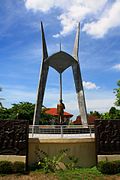 Marcelo H. Del Pilar National Shrine
 -
 Gregorio Del Pilar Monument
 -
 Francisco Soc Rodrigo Ancestral House
 -
 Angkan ni Plaridel Mausoleum
 -
 Museo Del Pilar
 -
 San Isidro Labrador Church, Barangay Bambang
 -
 Santa Maria River beside Bagumbayan Street


See also
[edit]References
[edit]- ^ Municipality of Bulakan | (DILG)
- ^ "2015 Census of Population, Report No. 3 – Population, Land Area, and Population Density" (PDF). Philippine Statistics Authority. Quezon City, Philippines. August 2016. ISSN 0117-1453. Archived (PDF) from the original on May 25, 2021. Retrieved July 16, 2021.
- ^ "2024 Census of Population (POPCEN) Population Counts Declared Official by the President". Philippine Statistics Authority. July 17, 2025. Retrieved July 18, 2025.
- ^ "PSA Releases the 2021 City and Municipal Level Poverty Estimates". Philippine Statistics Authority. April 2, 2024. Retrieved April 28, 2024.
- ^ "2024 Census of Population (POPCEN) Population Counts Declared Official by the President". Philippine Statistics Authority. July 17, 2025. Retrieved July 18, 2025.
- ^ "New Provincial Administrative Code of Bulacan" (PDF). Retrieved June 3, 2014.
- ^ Administracion espiritual de los Padres Agustinos Calzados de la provincia del dulce Nombre de Jesus, by R. P. Fr. Francisco Villacorta, Imprenta de H. Roldan Valladolid, Mayo 1833 p. 39
- ^ Catalogo de los religiosos de N.P.S. Agustin de la Provincia del Smo Nombre de Jesus de Filipinas, Imp. De Ramirez Y Giraudier, Manila 1864. p. 11
- ^ Census of Population (2020). "Region III (Central Luzon)". Total Population by Province, City, Municipality and Barangay. Philippine Statistics Authority. Retrieved July 8, 2021.
- ^ a b c Census of Population and Housing (2010). "Region III (Central Luzon)" (PDF). Total Population by Province, City, Municipality and Barangay. National Statistics Office. Retrieved June 29, 2016.
- ^ "Bulakan: Average Temperatures and Rainfall". Meteoblue. Retrieved May 12, 2020.
- ^ Census of Population (2015). "Region III (Central Luzon)". Total Population by Province, City, Municipality and Barangay. Philippine Statistics Authority. Retrieved June 20, 2016.
- ^ "2024 Census of Population (POPCEN) Population Counts Declared Official by the President". Philippine Statistics Authority. July 17, 2025. Retrieved July 18, 2025.
- ^ Roman Catholic Diocese of Malolos
- ^ "Poverty incidence (PI):". Philippine Statistics Authority. Retrieved December 28, 2020.
- ^ "Estimation of Local Poverty in the Philippines" (PDF). Philippine Statistics Authority. November 29, 2005.
- ^ "2003 City and Municipal Level Poverty Estimates" (PDF). Philippine Statistics Authority. March 23, 2009.
- ^ "City and Municipal Level Poverty Estimates; 2006 and 2009" (PDF). Philippine Statistics Authority. August 3, 2012.
- ^ "2012 Municipal and City Level Poverty Estimates" (PDF). Philippine Statistics Authority. May 31, 2016.
- ^ "Municipal and City Level Small Area Poverty Estimates; 2009, 2012 and 2015". Philippine Statistics Authority. July 10, 2019.
- ^ "PSA Releases the 2018 Municipal and City Level Poverty Estimates". Philippine Statistics Authority. December 15, 2021. Retrieved January 22, 2022.
- ^ "PSA Releases the 2021 City and Municipal Level Poverty Estimates". Philippine Statistics Authority. April 2, 2024. Retrieved April 28, 2024.
- ^ Reyes Estrope, Carmela (October 8, 2024). "'Bangkaripas' revives toy boat racing tradition in Bulacan town". Philippine Daily Inquirer. Retrieved October 9, 2024.
- ^ "Masterlist of Schools" (PDF). Department of Education. January 15, 2021. Retrieved July 15, 2025.
External links
[edit]
Places adjacent to Bulakan, Bulacan | ||||||||||||||||
|---|---|---|---|---|---|---|---|---|---|---|---|---|---|---|---|---|
| ||||||||||||||||


Bulakan, Bulacan
View on GrokipediaEtymology
Name derivation and historical records
The name Bulakan derives from the Tagalog word bulak, meaning "cotton" in English, reflecting the abundance of cotton plants (Gossypium species) that grew wild in the area when Spanish explorers first arrived in the mid-16th century.[3] [6] Local oral traditions and early colonial accounts attribute the designation to this natural feature, distinguishing the settlement from nearby areas lacking such vegetation.[7] The earliest Spanish historical records reference Bulakan as a pre-colonial settlement incorporated into the encomienda system shortly after the conquest of Manila in 1571, serving briefly as the administrative center for the Provincia de la Pampanga due to its strategic location along riverine trade routes.[8] Augustinian friars formalized its establishment as a pueblo and parish on April 30, 1578, under the patronage of Nuestra Señora de la Asunción, with Fray Diego Vivar appointed as the first prior; prior to this, it operated as a sub-parish of Tondo since around 1575.[9] [10] These records, preserved in Augustinian chronicles and diocesan archives, confirm Bulakan's role as one of the province's inaugural Christianized towns, predating the formal provincial organization of Bulacan in 1578.[11] Some provincial accounts cite an informal founding by Augustinians as early as 1572, aligning with the order's broader evangelization efforts in Pampanga and Bulacan regions following Miguel López de Legazpi's expeditions.[3]History
Pre-colonial settlements
Prior to Spanish colonization, the area encompassing modern Bulakan consisted of small, scattered indigenous settlements typical of pre-colonial Tagalog communities in central Luzon. These villages, organized into barangays under local datus, supported subsistence economies centered on wet-rice agriculture in the fertile plains, supplemented by fishing in nearby rivers such as the Angat and fishing in brackish waters, and limited inter-island trade in goods like rice, fish, and forest products.[7][12] Historical accounts indicate these settlements formed part of broader Austronesian networks that had populated the region by at least the late Neolithic period, with evidence of continuity from earlier coastal migrations inland as populations grew. No major archaeological excavations specific to Bulakan have yielded dated artifacts predating European contact, though provincial surveys in Bulacan suggest continuity with widespread Austronesian material culture, including earthenware pottery and iron tools. Oral traditions and early Spanish records describe the inhabitants as pagan Tagalogs practicing animist beliefs, with social structures emphasizing kinship and tribute to chieftains rather than centralized states.[13][14]Spanish colonial foundation and administration
Bulakan was established as a pueblo during the early Spanish colonial period, with records indicating its founding in 1572, deriving its name from the Tagalog word bulak, referring to the cotton plants (Gossypium spp.) abundant in the region due to its fertile soil and riverine environment.[3] The Augustinian Order played a central role in its Christianization and organization, initially administering it as a visita under the Convento de Tondo before elevating it to an independent parish and convent in 1578, dedicated to Nuestra Señora de la Asunción.[15] This ecclesiastical foundation aligned with the Spanish reducción policy, which centralized scattered indigenous settlements into compact towns for easier governance, tribute collection, and evangelization.[16] As the initial capital of the newly formed province of Bulacan—established on August 15, 1578—Bulakan served as the administrative seat, overseeing the alcaldía mayor that encompassed surrounding towns like Calumpit and Malolos.[13] By 1580, under Governor-General Gonzalo Ronquillo de Peñalosa, it was formalized as the provincial capital, reflecting its strategic location along the Angat River for trade and defense against Moro raids.[17] Local administration followed the standard Spanish colonial structure: Augustinian friars held significant influence as parish priests and spiritual overseers, while native gobernadorcillos—elected annually from the principalía class—managed secular affairs, including tax collection via the tributo system and enforcement of the encomienda grants that allocated indigenous labor to Spanish grantees.[18] The town collected polo y servicio (forced labor) for infrastructure like roads and the church, contributing to the province's role in supplying rice and cotton to Manila.[19] Ecclesiastical authority often intertwined with civil governance, with friars mediating disputes and reporting to the Archbishopric of Manila, though tensions arose from the patronato real, granting the Crown oversight of church appointments.[20] Bulakan's prominence waned by the late 18th century as the capital shifted to Malolos in 1850 for better accessibility, but its early role solidified Bulacan's integration into the Galleon Trade network, exporting agricultural goods while importing Spanish administrative edicts.[21] This period saw population growth through indios resettlement, with censuses under the catastro system tracking tribute payers, though records note periodic revolts against excessive corvée labor, as in the 1580s uprisings documented in friar chronicles.[13]Revolutionary and British occupation periods
During the British occupation of Manila from October 1762 to 1764, as part of the Seven Years' War, Bulakan witnessed conflict when British forces under Captain Slay briefly captured the town from Spanish and local defenders.[22] The town was soon reclaimed by guerrillas supporting the Spanish resistance organized by Simón de Anda y Salazar, who established a provisional government north of Manila in Bacolor, Pampanga, with Bulacan province serving as a key area for operations.[23] This episode highlighted Bulakan's strategic position in early colonial resistance efforts against foreign incursion.[13] In the Philippine Revolution against Spanish colonial rule beginning in August 1896, Bulakan contributed significantly through its prominent native sons and provincial alignment with the Katipunan. Bulacan province was one of eight provinces that rallied to Andres Bonifacio's call for insurrection, with revolutionary activities spreading rapidly in the area.[13] Marcelo H. del Pilar, born August 30, 1850, in Bulakan, had been a leading propagandist in the preceding reform movement, editing newspapers like Diariong Tagalog to expose abuses and advocate assimilation, laying ideological groundwork that influenced revolutionaries despite his death from tuberculosis in Barcelona on July 4, 1896.[24] His nephew, Gregorio del Pilar, born November 14, 1875, in Bulakan, joined the Katipunan shortly after the revolution's outbreak, organizing local forces such as the Brigada Pilar and rising to become one of the youngest generals at age 22, leading key engagements before his death at the Battle of Tirad Pass in 1899.[25] Local participation in Bulakan underscored the town's role in fostering revolutionary fervor, though specific battles within its bounds were limited compared to provincial centers like Malolos.[22]American era through Philippine independence
During the Philippine-American War, Bulacan province, including areas near Bulakan, witnessed U.S. military advances, such as the capture of Malolos on March 31, 1899, marking the shift to American control over the region.[26] The subsequent colonial administration reorganized Bulacan's municipalities, reducing them from 26 to 19 while preserving Bulakan's status as a key town. The provincial capital, previously in Bulakan during the Spanish era, was transferred to Malolos by the early 1900s, formalizing administrative focus there by 1917 under Act No. 2711.[27] American governance emphasized education and civil institutions, establishing a free public school system via Act No. 74 of the Philippine Commission in 1901, which extended to towns like Bulakan through the creation of primary and intermediate schools across Bulacan.[28] By 1904, intermediate-level education had taken root in the province, promoting English instruction and vocational training to foster loyalty and development. Local officials transitioned from appointments to elections under frameworks like the 1901 act and later the Jones Law of 1916, though in 1912, Bulacan officials were still largely appointed rather than popularly elected, reflecting gradual democratization.[29] The period from 1935 to 1946, under the Philippine Commonwealth, saw Bulakan integrated into preparations for self-rule, including local elections and economic policies aimed at agrarian reform. Japanese occupation interrupted this from 1942 to 1945, with Commonwealth Army units and guerrillas operating from bases in Bulacan to resist imperial forces. U.S. liberation efforts in 1945 restored American oversight briefly, culminating in Philippine independence on July 4, 1946, at which point Bulakan became part of the sovereign Republic of the Philippines without notable local disruptions.[30]Post-independence development and recent events
Following Philippine independence in 1946, Bulakan underwent reconstruction from World War II damages, with its population rising from 13,242 in the 1948 census to 77,988 by 2015 and 81,232 by 2020, driven by sustained agricultural productivity and spillover urbanization from Metro Manila.[2] The municipality's economy centered on rice cultivation across fertile alluvial plains and aquaculture in coastal fishponds and rivers, yielding consistent output that supported local livelihoods amid national postwar recovery efforts emphasizing rural stabilization.[19] By the late 20th century, proximity to Manila fostered residential subdivisions and small-scale commercial expansion, transitioning Bulakan from a primarily agrarian outpost to a commuter satellite with improved road linkages like the North Luzon Expressway extensions, though agriculture remained dominant with rice and fish comprising key exports to urban markets.[31] Local governance initiated infrastructure enhancements, including port developments and flood mitigation structures, to bolster trade and resilience against seasonal inundations.[32] In the 21st century, Bulakan's development accelerated with mega-projects, particularly the New Manila International Airport (NMIA), a ₱735.634 billion greenfield facility on 2,500 hectares of municipal land, concessioned to San Miguel Corporation via public-private partnership in 2020.[33] Groundbreaking occurred in October 2020, with runway and support infrastructure advancing by 2025; phase one targets 35 million annual passengers by 2028, alongside ancillary developments like toll roads and logistics hubs projected to generate 100,000 jobs and elevate local GDP through aviation-linked industries.[34] [35] Recurrent environmental hazards have tempered progress, as Bulakan's floodplain location exposes it to typhoons and monsoon surges; in July 2025, southwest monsoon rains (habagat) combined with high tides and upstream dam releases from Typhoon Crising caused floodwaters to reach 6 feet in low-lying barangays, displacing residents and damaging crops valued at millions of pesos province-wide.[36] [37] Critics, citing historical flood patterns and climate projections, argue the NMIA site—within a disaster-prone zone—risks operational disruptions and sunk costs exceeding billions without robust elevation or drainage adaptations.[38] Provincial authorities responded with evacuation protocols and relief, underscoring ongoing tensions between infrastructural ambition and geophysical vulnerabilities.[39]Geography
Physical location and boundaries
Bulakan is a municipality located in Bulacan province, within the Central Luzon region of the Philippines, approximately 36 kilometers northwest of Quezon City and 35 kilometers north of Manila.[40][41] Its geographic coordinates are approximately 14°47′40″N 120°52′46″E.[42] The municipality encompasses a land area of 7,290 hectares (72.90 square kilometers), representing 2.62% of the total area of Bulacan province.[3][1] Bulakan's boundaries are shared with neighboring municipalities in Bulacan, including Guiguinto to the east, Baliuag to the north, Bocaue and Balagtas to the south, and Plaridel and Calumpit to the west, as determined by administrative divisions in provincial mapping.[1] The terrain is generally flat alluvial plain, typical of the province's southern municipalities near the coastal influences of Manila Bay to the southwest.[43]Topography, rivers, and climate patterns
Bulakan occupies flat, low-lying terrain characteristic of the western Bulacan plain, with elevations averaging 4 to 8 meters above sea level.[44][1] The landscape consists primarily of alluvial soils deposited by nearby rivers, forming level to gently sloping areas suitable for agriculture but prone to inundation during heavy rains.[43] This topography reflects the broader Central Luzon region's sedimentary basin, lacking significant hills or elevations within municipal boundaries. The municipality is traversed by several rivers and creeks that form its hydrological network, including the Matungao River, San Nicolas River, Bigaa River, and Alilip River.[45] Smaller waterways such as the Pulong Gubat and Kutkot Creeks also contribute to drainage and irrigation. The Santa Maria River, stretching 31 kilometers through Bulacan, borders or flows adjacent to parts of Bulakan, influencing local water supply and flood dynamics. These rivers originate from upstream sources in the province and connect to larger systems draining toward Manila Bay, supporting rice cultivation while posing risks of seasonal overflow. Bulakan's climate follows the tropical monsoon pattern prevalent in Central Luzon, with a pronounced wet season from May to October driven by southwest monsoons and typhoons, and a dry season from November to April.[46] Average annual rainfall exceeds 2,000 millimeters, concentrated in the wet months, while temperatures typically range from 24°C (75°F) lows in the dry season to peaks of 34°C (93°F) in April.[47] This regime aligns with PAGASA's Type I classification for the region, fostering agricultural productivity but necessitating flood mitigation due to the flat terrain and river proximity.[48]Administrative barangays
Bulakan is politically subdivided into 14 barangays, which serve as the basic administrative divisions responsible for local governance, community services, and development initiatives within the municipality.[3] Each barangay is led by an elected barangay captain and a council of councilors, operating under the framework of the Local Government Code of 1991. The barangays, as enumerated in official records, are Bagumbayan, Balubad, Bambang, Matungao, Maysantol, Perez, Pitpitan, San Francisco, San Jose, San Nicolas, Santa Ana, Santa Ines, Taliptip, and Tibig.[1] Population data from the 2020 Census of Population and Housing conducted by the Philippine Statistics Authority reveal varying sizes among the barangays, with Bambang being the most populous at 14,257 residents and Perez the least at 2,047.[49] The total population across these barangays was 81,232, reflecting a density of approximately 1,114 persons per square kilometer given the municipality's land area of 72.90 square kilometers.[1] [49]| Barangay | Population (2020) |
|---|---|
| Bagumbayan | 4,297 |
| Balubad | 3,738 |
| Bambang | 14,257 |
| Matungao | 12,950 |
| Maysantol | 2,955 |
| Perez | 2,047 |
| Pitpitan | 5,077 |
| San Francisco | 7,486 |
| San Jose | 3,570 |
| San Nicolas | 6,279 |
| Santa Ana | 7,998 |
| Santa Ines | 2,399 |
| Taliptip | 5,005 |
| Tibig | 3,174 |
Demographics
Population growth and census data
The population of Bulakan, as enumerated in the Philippine Statistics Authority's (PSA) Census of Population and Housing (CPH), has demonstrated steady expansion, driven by factors including proximity to Metro Manila and local economic opportunities in agriculture and industry. The 2020 CPH recorded a total of 81,232 residents, distributed across an land area of approximately 72.34 square kilometers, yielding a density of 1,123 persons per square kilometer.[1][2] This figure represents a 6.1% increase from the 76,565 residents counted in the 2015 CPH, corresponding to an average annual growth rate of 1.25%.[1] The 2015 total included a household population of 76,526 across 18,307 households, with an average household size of 4.18 members.[1] Earlier, the 2010 CPH reported 71,751 inhabitants, indicating a prior five-year growth of about 6.7% or an annualized rate of roughly 1.3%.[2]| Census Year | Total Population | Absolute Change from Prior Census | Annualized Growth Rate (%) |
|---|---|---|---|
| 2010 | 71,751 | - | - |
| 2015 | 76,565 | +4,814 | 1.3 |
| 2020 | 81,232 | +4,667 | 1.25 |
Household and family structures
In Bulakan, census data indicate a declining average household size over recent decades, from 5.05 persons in the 1990 census to 4.18 persons in the 2015 census, consistent with broader Philippine patterns attributed to urbanization, improved access to education, and shifting socioeconomic priorities that favor smaller family units.[1] This 2015 figure encompassed 18,307 households and a household population of 76,526 individuals, reflecting a gradual shift away from larger extended kin groups common in earlier rural Philippine settings.[1] Household composition in the municipality aligns with national norms where nuclear families—typically comprising parents and dependent children—predominate, though empirical breakdowns specific to Bulakan remain limited in publicly available Philippine Statistics Authority reports beyond size metrics.[51] Provincial-level data from Bulacan suggest that marital status distributions, with a majority of household members aged 10 and over being married or single, further support structures centered on conjugal units rather than solely extended clans, as recorded in earlier censuses. Updated 2020 census household details for Bulakan at the municipal level have not been disaggregated in accessible PSA publications, underscoring a data gap for finer structural analysis such as single-parent or multigenerational prevalence.Ethnic, linguistic, and religious composition
The ethnic composition of Bulakan mirrors that of Bulacan province, where the population is predominantly Tagalog, comprising the majority alongside smaller groups such as Bisaya/Binisaya (2.22%), Bicol/Bikol (1.95%), Ilocano (1.08%), and Cebuano (0.75%) as recorded in the 2000 census.[52] This reflects the historical settlement patterns in Central Luzon, with Tagalog as the core ethnolinguistic group. No significant indigenous or minority ethnic enclaves are documented within Bulakan municipality itself. Tagalog serves as the predominant language spoken in Bulakan, consistent with its status as the primary vernacular across Bulacan province, supplemented by English for official and educational purposes.[53] Kapampangan may be heard in border areas near Pampanga, but Tagalog remains dominant in daily communication, administration, and cultural expression within the municipality.[54] Roman Catholicism is the prevailing religion in Bulakan, aligning with provincial figures indicating 89.44% adherence, underscored by historic churches such as the Church of Our Lady of the Assumption, which has long functioned as a central Catholic institution.[55] The municipality falls under the Roman Catholic Diocese of Malolos, with religious practices centered on parish activities and feast days, though smaller Protestant and other Christian denominations exist amid the overwhelmingly Catholic demographic.[54]Economy
Agricultural and fishing foundations
Bulakan's economy has long been rooted in agriculture and fishing, with these sectors serving as foundational pillars due to the municipality's alluvial soils derived from nearby river deposits and access to waterways like the Santa Maria River. Farming predominates, encompassing rice as a staple crop alongside vegetables, fruits such as mangoes, and livestock rearing, which align with Bulacan's provincial agricultural profile where rice and high-value crops support rural livelihoods.[3][56] The Department of Science and Technology has deployed agri-based projects in Bulakan, including technologies for crop enhancement and farmer training, to bolster production stability amid challenges like variable yields.[57] Fishing and aquatic resources complement agriculture, leveraging inland ponds and riverine systems for aquaculture rather than marine capture, with tilapia and milkfish as key species mirroring Bulacan's regional output where aquaculture accounts for 88.7% of fisheries volume.[3][58] Bulakan's involvement includes proposed hatchery developments for major aquaculture species, positioning it as a hub for tilapia propagation within the province's 15% contribution to regional aquaculture production (6,222.16 metric tons as of recent Bureau of Fisheries and Aquatic Resources data).[59] Small-scale fish farming operations in the area enhance food security and income, though they face vulnerabilities from flooding and water quality issues tied to upstream pollution.[60] These activities collectively underpin household economies, with agricultural and fisheries outputs feeding into local markets and processing industries.[61]Industrial expansion and trade links
Bulakan's industrial sector primarily encompasses light manufacturing activities, including food processing, garments, embroidery, and handicrafts, which complement its agricultural base.[3] These industries rely on local resources such as rice and aquatic products for bakery and processed goods output.[3] Trade links have historically centered on fluvial commerce via the Angat River and coastal access to Manila Bay, facilitating exports of agricultural and processed items to Manila and adjacent municipalities like Obando and Malolos.[3] As of recent assessments, the locality supports 143 active business establishments, reflecting modest economic dynamism with a reported local economy growth index of 0.0351.[62] Industrial expansion is accelerating due to the New Manila International Airport (NMIA) project, underway on a 2,500-hectare site within Bulakan since 2020, with terminal construction slated to commence in 2026.[63][33] This development positions Bulakan as a core component of an aerotropolis integrating industrial zones, expected to attract foreign investments in logistics, manufacturing, and aviation-related industries.[64] The NMIA's integration with the Bulacan Special Economic Zone and Freeport, enacted in 2024, aims to enhance productivity through incentives for exports and technology transfer, potentially generating thousands of jobs in expanded manufacturing.[65][66] These initiatives leverage Bulakan's strategic proximity to Metro Manila, approximately 30 kilometers north, strengthening trade corridors for goods movement via improved road networks and future air freight capabilities.[33] Local governance supports this growth through business facilitation programs, including livelihood packages for micro-enterprises that could scale into industrial suppliers.[67]Contemporary economic challenges and growth drivers
Bulakan faces significant economic challenges from recurrent flooding, which disrupts local commerce, agriculture, and industrial operations, particularly in low-lying coastal barangays like Taliptip. Heavy rainfall and typhoons, compounded by upstream sedimentation and inadequate drainage, have led to prolonged inundation, damaging infrastructure such as roads and markets; for instance, in October 2025, officials warned that worsening floods could deter P200 billion in provincial investments, with Bulakan's vulnerability amplified by its riverside location.[68] The ongoing construction of the New Manila International Airport (NMIA) has intensified these issues, with residents attributing increased flooding to land reclamation and altered hydrology, displacing over 700 fishing families and threatening traditional livelihoods in fishing-dependent communities.[69] [70] Environmental assessments highlight risks of subsidence and habitat loss, potentially raising long-term adaptation costs and undermining investor confidence in a region already prone to climate-related disruptions.[38] Despite these hurdles, NMIA represents a pivotal growth driver, with its 2,500-hectare site in Bulakan poised to generate thousands of jobs in aviation, logistics, and ancillary services upon partial operations in 2028. The P740-billion project, fully funded by San Miguel Corporation, is expected to catalyze an aerotropolis model, enhancing connectivity to Manila and spurring real estate and manufacturing inflows.[71] Complementing this, the Bulacan Special Economic Zone and Freeport (BuZ), encompassing Bulakan, promotes export-oriented industries through incentives like tax holidays, aiming to contribute substantially to national revenues via streamlined regulations under the Bulacan Economic Zone Authority.[72] Private investments underscore Bulakan's appeal as an emerging hub, with developments like Vista Land's 31-hectare Silaya township integrating residential and commercial spaces to support urban expansion. Proximity to Metro Manila and improved infrastructure, including toll roads, further drive trade and industrial relocation from congested urban centers, though realization depends on mitigating flood risks through resilient planning.[73] Provincial data indicate Bulacan's economy growing via such synergies, with Bulakan benefiting from spillover in services and agro-processing, provided environmental safeguards address displacement and ecological strain.[74]Government and Administration
Municipal governance framework
Bulakan functions as a first-class municipality within the province of Bulacan, adhering to the decentralized governance model outlined in Republic Act No. 7160, the Local Government Code of 1991, which delineates powers between executive and legislative branches while granting fiscal and administrative autonomy to local units. The executive authority is vested in the municipal mayor, who oversees policy implementation, appoints department heads, and manages public services such as health, education, and infrastructure development. As of the 2025-2028 term, Vergel C. Meneses holds the position of mayor.[3] The legislative body, known as the Sangguniang Bayan, comprises the vice mayor as presiding officer—currently Aron Ronald R. Cruz for the 2025-2028 term—and ten elected councilors, reflecting the allocation for first-class municipalities with populations exceeding typical thresholds for expanded representation.[3][62] This body enacts ordinances, approves budgets, and exercises oversight on municipal affairs, supplemented by ex-officio members including the president of the Association of Barangay Captains and the Sangguniang Kabataan Federation president. The council's composition ensures representation from Bulakan's 14 barangays, which serve as the smallest administrative units, each governed by an elected barangay captain and council.[3] Administrative operations are supported by key offices such as the Municipal Planning and Development Coordinator (MPDC) and various departments handling treasury, assessment, and engineering functions, all coordinated under the mayor's office located at Poblacion, Bulakan.[3] Bulakan has pursued efficiency benchmarks, achieving compliance with the Ease of Doing Business Act (Republic Act No. 11032) and securing the Seal of Good Local Governance, which incentivizes performance in financial administration and service delivery through funds like the SGLGIF.[75][76] The framework emphasizes participatory governance, integrating civil society input via mechanisms like the Local Development Council to align municipal plans with provincial and national priorities.[77]Elected officials and political history
The municipal government of Bulakan is headed by a mayor elected every three years, assisted by a vice mayor and an eight-member Sangguniang Bayan (municipal council). Following the May 12, 2025, local elections, Vergel C. Meneses serves as mayor, having previously won in the 2022 elections as an incumbent. Meneses, a former Philippine Basketball Association Most Valuable Player, secured re-election based on Commission on Elections data reported on May 13, 2025.[78][79] The vice mayor is Aron Ronald Cruz, proclaimed winner per the final canvass.[80] Bulakan's political history traces to its role as the initial capital of Bulacan province under Spanish rule, a status it held until the transfer to Malolos shortly after the American occupation in 1899–1901.[8] The town also witnessed conflict during the British occupation of Manila in 1762–1763, serving as a battle site on January 18, 1763, between Spanish forces under Simón de Anda y Salazar and British troops.[3] Post-World War II governance began with Evaristo del Rosario as mayor from 1946 to 1955, representing the Liberal Party, followed by acting mayor Captain Pablo Flores in 1955–1956.[81] Local elections since have followed national cycles, with Meneses' tenure marking a shift toward candidates with sports backgrounds in recent terms.Public services and fiscal management
The Municipality of Bulakan provides primary healthcare through its Rural Health Unit, headed by Dr. Ma. Elisa V. Villanueva, which delivers services including HPV vaccinations for eligible girls aged 9-14 on dates such as June 13, 2025, at RHU II in San Jose, and participates in provincial nutrition evaluations.[82][83] The unit integrates routine health programs like anemia detection and treatment as part of standard operations.[84] Water supply and distribution are handled by the Bulacan Water District, located at Calle Estacion corner Molina Street in San Jose, Bulakan, which also promotes conservation initiatives such as handwashing station installations in local schools.[85][86] Public safety infrastructure includes investments in energy-efficient lighting, with PHP 1,153,000 allocated under the 2024 Seal of Good Local Governance Incentive Fund for solar street lights, inspected in July 2025 to enhance visibility and reduce costs.[75] Standard municipal services encompass civil registry functions, managed by the Municipal Civil Registry Office, and community events like mass weddings at the evacuation center, supporting social welfare.[75] In fiscal management, Bulakan's local government unit demonstrates moderate efficiency, ranking 231st overall in the 2024 Cities and Municipalities Competitiveness Index with a government efficiency score of 8.5713 out of 10, excelling in compliance with the Anti-Red Tape Authority Citizens' Charter (1st place) and business permit processing (2nd place).[62] Its capacity to generate local resources ranks 117th, contributing to funding for infrastructure and services alongside national tax allotments.[62] The municipality achieved "Medium Compliant" status in the 2025 Ease of Doing Business audit, indicating structured financial oversight aligned with Department of the Interior and Local Government guidelines.[75]Culture and Society
Religious institutions and practices
![Bulakan Church, Bulacan, Apr 2025.jpg][float-right] The religious life of Bulakan is dominated by Roman Catholicism, reflecting the broader patterns in the Philippines and Bulacan province where approximately 89% of the population adheres to the faith.[87] The principal institution is the Diocesan Shrine and Parish of Nuestra Señora de la Asunción, commonly known as Bulakan Church, located in Barangay San Jose. Established as a parish in 1578 by Augustinian friars, the current Neo-Byzantine-Romanesque stone structure was constructed starting in 1812 under Father Gaspar Folgar, OSA, and later repaired following a 1865 earthquake.[88] Dedicated to Our Lady of the Assumption, the church serves as a focal point for local devotion and was declared a Diocesan Shrine by the Diocese of Malolos.[88] In Barangay Bambang, the Parokya ng San Isidro Labrador operates as a key parish church under the same diocese, established in 1963 and dedicated to Saint Isidore the Laborer, patron of farmers.[89] This parish features a Marian image, Madonna Salus Infirmorum, which draws pilgrims seeking healing, underscoring localized veneration within Catholic practices.[90] Minority Protestant congregations, such as the Moriah Baptist Bible Church, also exist, offering services including Sunday worship and prayer meetings, though they represent a smaller segment of religious activity.[91] Distinct local practices include the "Dakip" penitential rite during Holy Week, unique to Bulakan, where participants carry wooden crosses for about 15 kilometers through the streets, simulating arrest and flagellation to emulate Christ's Passion, observed on Holy Wednesday and Maundy Thursday evenings.[92] This tradition, rooted in extreme acts of self-mortification, draws crowds and highlights intense Catholic piety amid the town's Lenten observances centered at Bulakan Church. Devotion to the parish's patroness, Our Lady of the Assumption, persists through ongoing feasts and processions, fostering community cohesion.[93]Local festivals and community traditions
Bulakan's primary annual celebration is the town fiesta honoring its patron saint, St. Augustine of Hippo, held on August 28. This event features religious processions, masses at the Parish Church of St. Augustine, and communal feasts, drawing residents to reaffirm faith and community bonds through traditional rituals and family gatherings.[94] A distinctive Lenten tradition unique to Bulakan is Dakip, a penitential rite enacted during Holy Week, particularly on the evenings of Holy Wednesday and Maundy Thursday near the parish church. Participants, portraying Roman soldiers or penitents, simulate the arrest of Jesus by "capturing" cross-bearing devotees who walk approximately 15 kilometers in acts of self-mortification, including flagellation and heavy wooden crosses, as expressions of devotion and repentance. This practice, rooted in local Catholic fervor, underscores the town's intense religious observances during the Lenten season.[92][95][96] Another singular custom is Palimusan, performed on September 7, the eve of the Nativity of the Blessed Virgin Mary. Groups of residents, often from barangays like Santa Ana, engage in a form of devotional caroling, singing ancient Tagalog hymns dedicated to "La Niña Maria de Bulakan" while visiting homes to seek blessings and donations. This tradition, preserved across generations, highlights Bulakan's oral cultural heritage and Marian devotion, with lyrics invoking protection and gratitude.[97][98][99] In Barangay Tibig, the Bangkaripas Festival, formalized in 2024 under the theme "Ang Simula," revives a 30-year-old fishing community practice of racing handmade toy boats on local rivers as a thanksgiving for bountiful catches. Evolving from informal backyard races among children and fisherfolk, the event now includes organized competitions and cultural displays, fostering intergenerational ties to Bulakan's riparian heritage. Related observances, such as the Bangkarada Festival, similarly emphasize fluvial processions and boat parades tied to seasonal fishing abundance.[100][101]Artistic heritage and recent cultural milestones
Bulakan's artistic heritage is prominently shaped by its native sons' contributions to Philippine literature and journalism during the late 19th and 20th centuries. Marcelo H. del Pilar, born in Bulakan on August 30, 1850, under the pen name Plaridel, emerged as a leading reformist writer and editor of Diariong Tagalog starting in 1882. His satirical works, including Dasalan at Tocsohan—a parody of Catholic prayers critiquing friar abuses—advanced the Propaganda Movement's literary efforts against Spanish colonial rule, blending sharp wit with calls for reform.[24][102] Francisco "Soc" Rodrigo, born in Bulakan on January 29, 1914, further enriched this legacy as a playwright and poet whose works explored social and political themes, alongside his roles in law and broadcasting. His ancestral house in Barangay San Jose, recognized as a heritage site by the National Historical Commission of the Philippines in 2014, preserves artifacts and memories tied to his creative output, serving as a tangible link to Bulakan's literary past.[103][104] The Marcelo H. del Pilar Shrine and Museo ni Marcelo H. del Pilar in Barangay San Nicolas institutionalize this heritage, featuring galleries that display del Pilar's manuscripts, personal effects, and exhibits on his propagandist writings alongside Bulacan's cultural context. These sites foster appreciation of literary arts through educational programs emphasizing del Pilar's role in shaping Filipino identity via the written word.[105] Recent cultural milestones underscore Bulakan's ongoing commitment to this heritage. On August 30, 2025, the province marked del Pilar's 175th birth anniversary at the shrine with commemorative events themed "Inspirasyon ng Kabataan sa Matatag na Kinabukasan," drawing participants to reflect on his enduring influence on youth and national resilience. Such annual observances, including wreath-layings and cultural programs, highlight the shrine's role in contemporary heritage preservation.[106][107][108]Education and Human Capital
School system and institutions
The educational system in Bulakan operates under the national framework of the Department of Education (DepEd), with schools falling under the Schools Division of Bulacan and specifically Educational District I. Public institutions dominate, providing free basic education from kindergarten through senior high school, aligned with the K-12 curriculum implemented since 2013. These schools emphasize foundational literacy, numeracy, and skills development, with integrated schools offering seamless progression from elementary to secondary levels.[109] Key public elementary schools include Marcelo H. Del Pilar Memorial School (code 104776), Bambang Elementary School (104772), Sta. Ana Elementary School (104780), Taliptip Elementary School (104783), and Bagumbayan Elementary School (158522), among others serving the municipality's barangays. Secondary education is provided by institutions such as Taliptip National High School (300779), Doña Candelaria Meneses Duque National High School (300738), and Gen. Gregorio del Pilar Integrated School (501633), which combines elementary and secondary programs and is noted for its historical naming after a local revolutionary figure. The district oversees approximately 77 public schools in total, focusing on accessibility in rural and urban barangays.[109][110] Private schools are limited but supplement public options, with St. Stephen School of Bulacan in Barangay Bambang offering preschool and elementary education as a member of the Bulacan Private Schools Association (BULPRISA). No higher education institutions are located within Bulakan; residents typically pursue tertiary studies at nearby state universities like Bulacan State University in Malolos. Recent district achievements, such as topping the 2025 Elementary Division Development Indicators Simulation (EDDIS I), highlight performance in enrollment and educational metrics under DepEd oversight.[111][112]Literacy rates and educational outcomes
In Bulakan, literacy aligns closely with provincial patterns in Bulacan, where functional literacy rates reached 93.5 percent in surveys conducted by the Philippine Statistics Authority, reflecting competence in reading, writing, and basic numeracy with comprehension among adults.[113] This figure underscores a solid foundation in basic skills, though functional literacy lags behind simple literacy nationwide at 97.0 percent for persons aged 5 and over per the 2020 Census of Population and Housing.[114] Local efforts prioritize bridging gaps in advanced comprehension and application, particularly in elementary levels where targeted interventions address persistent challenges in rural barangays. Educational outcomes demonstrate resilience and targeted improvements through Department of Education initiatives. The Bulakan school district secured champion status in the 2025 EDDIS I Schools competition for highest pointers, indicating superior aggregate performance across learner assessments, attendance, and instructional quality metrics within DepEd Bulacan's evaluation framework.[112] Complementing this, the "Mulat Sulat" extension program, spanning three years at sites like Bambang Elementary School and Taliptip, yielded measurable gains in reading proficiency and overall literacy indicators via community-assisted learning modules, as evaluated in performance analyses showing enhanced student engagement and skill retention.[115] These results highlight causal links between sustained, localized programming and better outcomes, countering broader regional disparities in post-pandemic recovery.Vocational training and skill development
Vocational training in Bulakan is administered under the Technical Education and Skills Development Authority (TESDA), which accredits local technical-vocational institutions (TVIs) to deliver National Certificate (NC)-level programs focused on practical skills for employment. These programs emphasize competencies in trades such as welding and agriculture, responding to local demands from manufacturing and agribusiness sectors in Bulacan province. As of recent listings, at least four TVIs operate within the municipality, providing short-term courses typically lasting 3-6 months.[116] Key institutions include Global Alliance Technological Institute Corp. in Barangay San Francisco, offering Shielded Metal Arc Welding (SMAW) NC I and NC II, as well as Gas Metal Arc Welding (GMAW) NC II, with training emphasizing hands-on fabrication skills for industrial applications.[117][118] Similarly, Global Titan Institute, Inc. in Barangay Bambang provides Bread and Pastry Production NC II, training participants in food processing techniques relevant to Bulacan's growing hospitality and retail sectors.[119] Calibre Monte Carlo Training School, Inc., also in San Francisco, delivers specialized vocational courses, though specific offerings vary by registration updates.[120] A TVI in Bagumbayan offers Organic Agriculture Production NC II, targeting sustainable farming practices amid Bulakan's rural-urban interface.[121] Skill development initiatives extend beyond formal TVIs through TESDA partnerships and community programs. In November 2020, TESDA upskilled 58 residents near the New Manila International Airport construction site in Bulakan with job-specific training to facilitate immediate employment opportunities in infrastructure projects.[122] Provincial efforts, such as those by San Miguel Corporation since 2020, have provided free TESDA-aligned training in welding, electrical maintenance, and heavy equipment operation to Bulacan residents, including from Bulakan, aiming to address skill gaps in large-scale developments.[123] Legislative proposals, including a 2023 bill to establish a dedicated TESDA training and assessment center in Bulakan, underscore ongoing pushes for expanded local capacity, though implementation remains pending. These programs prioritize certification for labor market entry, with completion rates tied to assessment pass rates monitored by TESDA.[124]Infrastructure and Connectivity
Transportation networks
Bulakan's transportation infrastructure relies predominantly on road networks, with the Manila North Road (a segment of the MacArthur Highway and Pan-Philippine Highway) serving as the primary arterial route passing through the municipality's central areas. This national secondary road facilitates connectivity to southern destinations in Metro Manila and northern links to provinces like Pampanga, handling significant daily traffic volumes including commercial vehicles and commuters. Local feeder roads, such as those branching to barangays like Bagumbayan and Bambang, support intra-municipal movement but often experience congestion during peak hours due to mixed-use traffic.[125] Access to the North Luzon Expressway (NLEX) is provided via the adjacent Guiguinto interchange, located approximately 4-5 kilometers west of Bulakan's poblacion, enabling faster travel to Manila (about 40-50 km south) and beyond. This exit, part of NLEX Segment 8.1, integrates with the expressway's 84-km mainline spanning Metro Manila to Pampanga.[126] Public transportation includes jeepneys operating along the Manila North Road and secondary routes, connecting Bulakan to neighboring municipalities like Guiguinto, Balagtas, and Calumpit, with fares typically ranging from ₱10-20 per short segment. Tricycles dominate local distribution within the 14 barangays, offering flexible, on-demand service for short distances at ₱10-20 per passenger, though they contribute to street-level congestion. Intercity buses, operated by companies such as Precious Grace Transport, ply routes from Bulakan terminals or roadside stops to Manila's northern terminals like Trinoma, with travel times averaging 1 hour and fares around ₱80 as of 2023 data.[127][128] No operational railway lines directly serve Bulakan, though the planned North-South Commuter Railway (NSCR) and extensions of Metro Rail Transit Line 7 (MRT-7) may indirectly benefit the area by decongesting regional roads upon completion targeted for 2027-2030. Water transport is absent, as Bulakan lacks navigable rivers for ferries despite proximity to the Santa Maria River. Emerging infrastructure tied to the New Manila International Airport (NMIA) in Bulakan includes planned bus terminals and the Northern Access Link Expressway (NALEX) Phase 1, with Bulacan segment construction slated to commence in 2025 to link Valenzuela City to the airport site, potentially accommodating up to 60 buses and improving expressway access.[129][130]Utilities, healthcare, and environmental management
Electricity in Bulakan is distributed by Manila Electric Company (Meralco), which has conducted infrastructure upgrades in nearby Bulacan areas to enhance reliability, such as substation improvements in Bocaue and capacitor installations in San Ildefonso.[131][132] Water supply and sanitation services are managed by Bulakan Water Company, Inc. (BWCI), a joint venture involving the Bulacan Water District, with operations based in San Jose, Bulakan; BWCI was divested by Manila Water to a San Miguel Corporation subsidiary in October 2024 for P1.02 billion.[133][85] Healthcare facilities in Bulakan include the Gregorio del Pilar District Hospital in Bagumbayan, a Level 1 government hospital offering services such as internal medicine, pediatrics, surgery, obstetrics-gynecology, pharmacy, laboratory, X-ray, and ECG.[134][134] The Bulakan Rural Health Unit, led by Dr. Ma. Elisa V. Villanueva, provides primary care and public health services.[82] Additional options include the Klinika Bulakan Multispecialty Clinic and Laboratory, offering consultations, laboratory tests, and diagnostics from Monday to Saturday.[135] Residents may also access tertiary care at the provincial Bulacan Medical Center in Malolos for specialized needs.[136] Environmental management in Bulakan addresses waste collection and flooding risks, with the municipality acquiring a new garbage truck in 2024 funded by the Department of the Interior and Local Government’s Seal of Good Local Governance incentive to improve efficiency under Republic Act 9003 guidelines.[137] The area faces recurrent flooding from rivers like the Santa Maria, exacerbated by typhoons and inadequate drainage, as part of broader Bulacan challenges prompting provincial initiatives such as the 2025 Environmental Summit focused on flood control and waste reduction.[138][139] Provincial efforts include exploring waste-to-energy facilities to mitigate landfill pressures and flooding from waste accumulation.[140] Local communities in barangays like Taliptip have engaged in geohazard preparedness amid land reclamation impacts.[141]Notable Individuals
Historical figures from Bulakan
Marcelo H. del Pilar, born on August 30, 1850, in Barrio San Nicolas (now part of Barangay Maysantol), Bulakan, Bulacan, was a key figure in the Propaganda Movement advocating for political reforms in the Spanish colonial Philippines.[24] As editor of the reformist newspaper La Solidaridad from 1889 to 1895, he used the pen name Plaridel to critique Spanish abuses and promote assimilation for Filipinos.[24] A lawyer by training, del Pilar organized opposition to friar estates in Bulacan and faced exile in Spain in 1888 due to his activism, where he continued writing until his death from tuberculosis on July 4, 1896.[24] His nephew, Gregorio H. del Pilar, born on November 14, 1875, in Barangay San Jose, Bulakan, Bulacan, emerged as a military leader during the Philippine Revolution against Spain and later the Philippine-American War.[142] Appointed a brigadier general at age 22, he commanded forces in key engagements, including the capture of Calumpit in November 1899.[142] Known as the "Boy General," del Pilar made his last stand at the Battle of Tirad Pass on December 2, 1899, delaying American pursuit of Emilio Aguinaldo and dying in combat at age 24.[142] His heroism cemented Bulakan's role in producing revolutionary leaders from the del Pilar family lineage.[142]Modern contributors and achievers
Francisco "Soc" Aldana Rodrigo (1914–1998), born on January 29, 1914, in Bulakan, Bulacan, emerged as a prominent Filipino statesman, playwright, lawyer, and broadcaster. He served as a Senator from 1955 to 1967, advocating for the national language, Catholic faith, and democratic principles during his tenure. Rodrigo's early career included work as a radio commentator and legal practitioner, contributing to public discourse on governance and social issues.[103][143] Fortunato T. de la Peña (born November 12, 1949), a native of Bulakan, advanced Philippine science and technology as Secretary of the Department of Science and Technology from 2016 to 2022. An engineer and professor, he focused on innovation in engineering, renewable energy, and STEM education, overseeing initiatives like the Harmonized National Research and Development Agenda. De la Peña's leadership emphasized practical technological solutions for national development, drawing from his roots in Bulakan where he later chaired a local heritage association.[144][145] Ma. Theresa "Tess" Parreño Lazaro, born in Bulakan, Bulacan, became the 29th Secretary of Foreign Affairs in 2025, marking a significant achievement in Philippine diplomacy. As a career diplomat, she previously served as Undersecretary for Bilateral Relations and ASEAN Affairs, contributing to negotiations on regional security and economic partnerships. Her appointment underscores Bulakan's role in producing leaders adept at advancing national interests amid complex international dynamics.[146][147]References
- https://commons.wikimedia.org/wiki/Category:Bulakan%2C_Bulacan_Rivers_and_Creeks_%28Matungao_River%2C_San_Nicolas_River%2C_Bigaa_River_and_Alilip_River_%2526_Pulong_Gubat_and_Kutkot_Creeks%29