

Bursa
View on WikipediaBursa (Turkish pronunciation: [ˈbuɾsa]) is a city in northwestern Turkey and the administrative center of Bursa Province. The fourth-most populous city in Turkey and second-most populous in the Marmara Region after Istanbul.The province has a population of 3,238,618 while the city has a population of over 2.2 million.[3] Bursa is one of the centers of Turkey's automotive production, becoming an industrial center of the country.[4] The city provides various places of interest.
Key Information

.jpg)
.jpg)

.jpg)


Bursa became the capital of the Ottoman Empire (back then the Ottoman Beylik) from 1335 until the 1360s. A more recent nickname is Yeşil Bursa ("Green Bursa") referring to the parks and gardens located across the city, as well as to the vast, varied forests of the surrounding region.
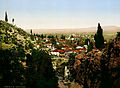
Bursa has a rather orderly urban growth and borders a fertile plain. The mausoleums of the early Ottoman sultans are located in Bursa, and the city's main landmarks include numerous edifices built throughout the Ottoman period. Bursa also has thermal baths, old Ottoman mansions, palaces, and several museums. Mount Uludağ, known in classical antiquity as the Mysian Olympus or, alternatively, Bithynian Olympus, towers over the city and has a ski resort.
The shadow play characters Karagöz and Hacivat, according to some stories, are based on historic personalities who lived and died in Bursa in the 14th century.[5][6]
History
[edit]
The earliest known human settlement near Bursa's current location was at Ilıpınar Höyüğü around 5200 BC.[7] It was followed by the ancient Greek city of Cius, which King Philip V of Macedon granted to Prusias I, King of Bithynia, in 202 BC. King Prusias rebuilt the city with the advice of General Hannibal of Carthage, who took refuge under him after losing a war against the Roman Republic, and renamed it Prusias (Ancient Greek: Προῦσα; sometimes rendered as Prussa).[8] The city was also reverred to as Prusa ad Olympum after its location at the foot of the Bithynian Olympus (present day Uludağ Mountain).[9] After 128 years of Bithynian rule, Nicomedes IV, the last King of Bithynia, bequeathed the entire kingdom to the Roman Republic in 74 BC. An early Roman Treasure was found near Bursa in the early 20th century, composed of woman's silver toilet articles. It is currently reserved in the British Museum.[10]
Under Byzantine rule, The city prospered after the Byzantine Emperor Justinian I built a palace there.[11] the city then became a garrison city in 562, where imperial guards were stationed. Already by the mid-6th century, Bursa was known as a famous silk textile manufacturing centre.[12]
Bursa became the first major capital city of the early Ottoman Empire following its capture from the Byzantines in 1326. As a result, the city witnessed a considerable amount of urban growth such as the building of hospitals, caravanserais and madrasas throughout the 14th century, with the first official Ottoman mint established in the city.[12] After conquering Adrianople (now Edirne) in East Thrace, the Ottomans turned it into the new capital city in 1363. No longer a capital city, Bursa still retained its spiritual and commercial importance in the Ottoman Empire.[13] The Ottoman Sultan Bayezid I built the Bayezid Külliyesi (Bayezid I theological complex) in Bursa between 1390 and 1395[14] and the Bursa Ulu Cami (Bursa Grand Mosque) between 1396 and 1400.[15] After the defeat and capture of Bayezid in the Battle of Ankara by the forces of Emir Timur in 1402, the latter's grandson, Muhammad Sultan Mirza, had the city pillaged and burned.[16] Despite this, Bursa remained as the most important administrative and commercial centre in the empire until Sultan Mehmed II conquered Constantinople in 1453. The population of Bursa was 45,000 in 1487.[17]
| Year | Pop. | ±% |
|---|---|---|
| 1487 | 45,000 | — |
| 1927 | 61,451 | +36.6% |
| 1955 | 128,875 | +109.7% |
| 1980 | 487,604 | +278.4% |
| 2000 | 1,184,144 | +142.8% |
| 2015 | 1,854,285 | +56.6% |
During the Ottoman period, Bursa was a hub of the Ottoman silk trade. The city housed the distributions of silk and other luxury commodities from the east, particularly Ming China, to the rest of the Mediterranean region and to the Italian city-states, particularly Genoa and Florence.[18][19] Bursa was also known for its numerous hammams (bathhouses) built during the reign of Sultan Suleiman I such as the Yeni Kaplıca.[12] The Devshirme system was also implemented in Bursa and its surroundings where it was negotiated between the authorities and the locals. Sometime during a levy in 1603-4, the villagers of Eğerciler (currently called Eğerce), a Christian village in Bursa and also a provider of sheeps to Istanbul, declared that the children of the village were very much needed as shepherds. They also asserted that even though they were not obliged to give any children to the army, the officers took some anyway, and that they should be returned. The villagers' claim of tremendous need of future shepherds was taken seriously by the state, and a decree commanded the return of the children.[20] From 1867 until 1922, Bursa was the capital of Hüdavendigâr vilayet. As it was a significant cultural and trade hub, traders, most of whom were Armenians, became very wealthy.[21]
In July 1915, thousands of Greek Orthodox Christians sought refuge in Bursa after having been forced out of their coastal villages by orders of the Young Turk government. This worsened the situation of the native Greeks of Bursa, who had managed to survive through the attacks and boycotts of 1914. A short time later, deportation orders came for Bursa's Armenians. Protestant Armenians were initially spared from deportation, yet the villagers that lived outside of the city that tried to resist were massacred. Most of the deportees would perish in what became known as the Armenian genocide. Subsequently, large numbers of Kurds and Circassians, as well as Syrians from the south, were settled in the homes and towns of the deported Christians, radically altering the demographic composition of the town and region.[22] According to Mustafa Zahit Oner, in the last days of the Greco-Turkish War in 1922, the Greek Army attempted to burn the center of Bursa however they were stopped by the allied commanders and were only able to burn the train station together with Turkish civilians in it.[23] The Cretan artilleryman Vasilios Moustakis describes the event with the following words: "The Infantry had come through and set fire to the station. We saw an English general on horseback, who ordered the fire to be put out because if Bursa were burned, it would be harming Greece".[24]

Following the proclamation that founded Republic of Turkey in 1923, Bursa became one of the industrial centres of the country. The economic development of the city was followed by population growth, and Bursa became the fourth most populous city in Turkey.
The city has traditionally been a pole of attraction, and was a major centre for refugees from various ethnic backgrounds who immigrated to Anatolia from the Balkans during the loss of the Ottoman territories in Europe between the late 19th and early 20th centuries. The most recent arrival of Balkan Turks took place between the 1940s and 1990s, when the People's Republic of Bulgaria expelled approximately 150,000 Bulgarian Turks to Turkey.[25] About one-third of these 150,000 Bulgarian Turkish refugees eventually settled in Bursa (especially in the Hürriyet neighbourhood). With the construction of new industrial zones in the period between 1980 and 2000, many people from the eastern provinces of Turkey came and settled in Bursa.
Jewish community
[edit]Bursa, initially home to a small Romaniote Jewish community, underwent a demographic shift with the arrival of Sephardic Jews who were expelled from the Iberian Peninsula in the late 15th century. The Sephardic majority quickly absorbed the Romaniotes, leading to a cultural and numerical dominance. Judaeo-Spanish became the daily language, and the community paid its poll tax through the representative, the kahya.[26]
Throughout the Ottoman period, most Jews resided in Kuruçeşme, Bursa's Jewish quarter, home to three synagogues. Etz Chaim (Eṣ Ḥayyim), the oldest, predated Ottoman conquest, while the Gerush and Mayor synagogues were established by Sephardic newcomers. Despite the 1851 fire destroying Etz Chaim, the other two remain, along with the Berut synagogue. Bursa also had a Jewish cemetery until recently.[26]
Though never a major center, Bursa's Jewish population fluctuated. Dubious data suggests 683 families in 1571/72, dropping to 141 by 1696/97. By 1883, there were 2,179 Jews, with an influx of 400 from Akkerman in 1887. Pre-World War I, the population reached 3,500, but emigration reduced it to 140 by the early 21st century.[26]
Engaged in the local economy, Bursa's Jews were shop owners and involved in guilds. In the 16th and 17th centuries, they excelled in textile manufacturing, silk trade, goldsmithing, and finance. Despite economic struggles in the 18th and 19th centuries, a 1886 report highlighted poverty.[26]
Bursa faced blood libels in 1592 and 1865. Despite its size, the community produced renowned halakhic scholars across centuries. Modern schooling arrived in 1886 with Alliance Israélite Universelle, but it closed in 1923 during the secularization program. Jewish children then attended Turkish schools for a modern education.[26]
As of 2021, there are 60 Jews left in Bursa, one active synagogue and one Jewish cemetery.[27][28]
Geography
[edit]
The area covered by Bursa corresponds to 1.41% of Turkey's land area, which makes the city 27th in the country in terms of land area.[30] Bursa stands on the northwestern slopes of Mount Uludağ (known as the Mysian Olympus in classical antiquity), on the banks of the Nilüfer River, in the southern Marmara Region. It is the capital city of Bursa Province, which borders the Sea of Marmara and Yalova to the north; Kocaeli and Sakarya to the northeast; Bilecik to the east; and Kütahya and Balıkesir to the south.
Climate
[edit]Bursa has a Mediterranean climate (Köppen climate classification: Csa) under the Köppen classification, and a dry-hot summer subtropical climate (Csa) under the Trewartha classification. The city has hot, dry summers that last from June until September. Winters are cool and damp, also containing the most rainfall. There can be snow on the ground which will last for a week or two. Air pollution is a chronic problem in Bursa.[31]
| Climate data for Bursa (1991–2020, extremes 1928–2023) | |||||||||||||
|---|---|---|---|---|---|---|---|---|---|---|---|---|---|
| Month | Jan | Feb | Mar | Apr | May | Jun | Jul | Aug | Sep | Oct | Nov | Dec | Year |
| Record high °C (°F) | 25.2 (77.4) |
26.9 (80.4) |
32.5 (90.5) |
36.2 (97.2) |
37.0 (98.6) |
41.3 (106.3) |
43.8 (110.8) |
42.6 (108.7) |
40.3 (104.5) |
37.3 (99.1) |
32.1 (89.8) |
27.3 (81.1) |
43.8 (110.8) |
| Mean daily maximum °C (°F) | 9.8 (49.6) |
11.4 (52.5) |
14.6 (58.3) |
19.2 (66.6) |
24.4 (75.9) |
28.9 (84.0) |
31.5 (88.7) |
31.7 (89.1) |
27.6 (81.7) |
22.2 (72.0) |
16.6 (61.9) |
11.5 (52.7) |
20.8 (69.4) |
| Daily mean °C (°F) | 5.4 (41.7) |
6.5 (43.7) |
9.0 (48.2) |
13.0 (55.4) |
18.1 (64.6) |
22.6 (72.7) |
25.1 (77.2) |
25.2 (77.4) |
20.8 (69.4) |
15.9 (60.6) |
10.7 (51.3) |
7.0 (44.6) |
14.9 (58.8) |
| Mean daily minimum °C (°F) | 1.7 (35.1) |
2.4 (36.3) |
4.1 (39.4) |
7.4 (45.3) |
12.0 (53.6) |
16.2 (61.2) |
18.4 (65.1) |
18.7 (65.7) |
14.8 (58.6) |
10.8 (51.4) |
6.0 (42.8) |
3.3 (37.9) |
9.6 (49.3) |
| Record low °C (°F) | −20.5 (−4.9) |
−19.6 (−3.3) |
−10.5 (13.1) |
−4.2 (24.4) |
0.8 (33.4) |
4.0 (39.2) |
8.3 (46.9) |
7.6 (45.7) |
3.3 (37.9) |
−1.0 (30.2) |
−8.4 (16.9) |
−17.9 (−0.2) |
−20.5 (−4.9) |
| Average precipitation mm (inches) | 79.2 (3.12) |
78.2 (3.08) |
74.9 (2.95) |
68.6 (2.70) |
47.9 (1.89) |
42.8 (1.69) |
14.3 (0.56) |
17.5 (0.69) |
50.1 (1.97) |
84.4 (3.32) |
67.3 (2.65) |
93.9 (3.70) |
719.1 (28.31) |
| Average precipitation days | 14.87 | 13.60 | 13.40 | 11.43 | 9.63 | 7.30 | 3.33 | 3.60 | 6.77 | 10.67 | 10.93 | 14.53 | 119.8 |
| Average snowy days | 5.08 | 3.71 | 1.46 | 0.08 | 0 | 0 | 0 | 0 | 0 | 0.04 | 0.42 | 2.42 | 13.21 |
| Average relative humidity (%) | 75.3 | 72.8 | 70.7 | 69.3 | 67.1 | 63.1 | 59.6 | 61.7 | 67.3 | 74.6 | 75.5 | 75.7 | 69.4 |
| Mean monthly sunshine hours | 81.3 | 82.3 | 122.2 | 158.1 | 210.2 | 262.9 | 300.5 | 274.7 | 209.8 | 144.7 | 109.9 | 72.9 | 2,026.8 |
| Mean daily sunshine hours | 2.7 | 3.2 | 4.0 | 5.5 | 7.0 | 8.8 | 9.7 | 8.9 | 7.0 | 4.7 | 3.7 | 2.5 | 5.6 |
| Source 1: Turkish State Meteorological Service[32][33] | |||||||||||||
| Source 2: NOAA (humidity, sun 1991-2020),[34] Meteomanz[35] | |||||||||||||
Economy
[edit]
Bursa is the largest production centre of the Turkish automotive industry.[36] Factories of motor vehicle producers like Fiat, Renault and Karsan, as well as automotive parts producers like Bosch, Mako, Valeo, Johnson Controls, Delphi have been active in the city for decades. The textile and food industries are equally strong, with Coca-Cola, Pepsi Cola and other beverage brands, as well as fresh and canned food industries being present in the city's organized industrial zones.
Apart from its large automotive industry, Bursa also produces a substantial amount of dairy products (by Sütaş),[37] processed food (by Tat),[38] and beverages (by Uludağ).[39]

Traditionally, Bursa was famous for being the largest centre of silk trade in the Byzantine and later the Ottoman empires, during the period of the lucrative Silk Road. The city is still a major centre for textiles in Turkey and is home to the Bursa International Textiles and Trade Centre (Bursa Uluslararası Tekstil ve Ticaret Merkezi, or BUTTIM). Bursa was also known for its fertile soil and agricultural activities, which have decreased in the recent decades due to the heavy industrialization of the city.
Bursa is a major centre for tourism. One of the most popular skiing resorts in Turkey is located on Mount Uludağ, just next to the city proper. Bursa's thermal baths have been used for therapeutical purposes since Roman times. Apart from the baths that are operated by hotels, Uludağ University has a physical therapy centre which also makes use of thermal water.
Transportation
[edit]
Bursa has a metro (Bursaray), trams[40] and a bus system for inner-city public transport, while taxi cabs are also available. Bursa's Yenişehir Airport is 49 km (30 mi) away from the city centre. The citizens of Bursa also prefer Istanbul's airports such as Istanbul Airport and Sabiha Gökçen International Airport for flights to foreign countries, due to Istanbul's proximity to Bursa. There are numerous daily bus and ferry services between the two cities.

The 8.8 km (5.5 mi) long Bursa Uludağ Gondola (Turkish: Teleferik) connects Bursa with the ski resort areas 1,870 m (6,140 ft) high on the mountain Uludağ.[41]
The only railway station in Bursa is the Harmancık station on the Balıkesir-Kütahya railway, which was opened in 1930.
The average amount of time people spend commuting with public transit in Bursa, for example to and from work, on a weekday is 62 min. 12% of public transit riders ride for more than 2 hours every day. The average amount of time people wait at a stop or station for public transit is 18 min, while 31% of riders wait for over 20 minutes on average every day. The average distance people usually ride in a single trip on public transit is 8.1 km (5.0 mi), while 17% travel for over 12 km (7.5 mi) in a single direction.[42]
Education
[edit]
Bursa has two public universities and one private university. Uludağ University, founded in 1975, is the oldest institution of higher education in the city. Founded first as the Bursa University then renamed Uludağ University in 1982,[43] the university has a student body of 47,000, one of the largest in Turkey. Bursa Technical University[44] is the second public university of Bursa and was established in 2010, beginning education in the 2011–2012 academic year.
The first private university in Bursa was the Bursa Orhangazi University,[45] which started education in the 2012–2013 academic year. However, Orhangazi University was shut down by the Turkish government after the failed coup attempt of July 2016.
Istanbul Commerce University has opened graduate programs in Bursa in 2013.[46]
The vocational high schools, Bursa Sports High School,[47] and Bursa Agriculture Vocational High School,[48] are located in Osmangazi district.
Sports
[edit].jpg)
The city has one professional football club, Bursaspor, which formerly competed in the Süper Lig (Super League), the top-tier of Turkish football, until finishing 16th at the end of the 2018–19 Süper Lig season and being relegated to the TFF First League. A few years earlier, Bursaspor had managed to become the Turkish champions at the end of the 2009–10 Süper Lig season, thereby becoming the second Anatolian club to ever win the Süper Lig championship title after Trabzonspor. Henceforth, Bursaspor was often considered to be one of the five biggest football clubs in Turkey, along with Galatasaray, Fenerbahçe, Beşiktaş and Trabzonspor. The club's relegation to the TFF First League at the end of the 2018–19 season was a major shock for its fans and became a first in the history of Turkish football. Never had a club which had won the Süper Lig championship title been relegated.
Bursaspor plays its home games at the Timsah Arena (meaning "Crocodile Arena", crocodile being the mascot of the team), which has a seating capacity of 45,000.
The city has three professional basketball teams in the Turkish Basketball League, Bursaspor and Tofaş S.K., which is among the most successful teams. The club plays its games at the Tofaş Nilüfer Sports Hall. Also, Final Spor plays in the second division.
Politics
[edit]Bursa district Municipalities Local elections, 2024 | |
|---|---|
| AKP | 9 / 17
|
| CHP | 6 / 17
|
| IYIP | 2 / 17
|
The current mayor of the Bursa Metropolitan Municipality, Mustafa Bozbey [tr], is elected from the main opposition party, Republican People's Party (CHP), in March 2024.
Alinur Aktaş from the Justice and Development Party (AKP) was in office between 2019 and 2024, when the AKP coalition won 49.6% of the vote against the CHP coalition which got 47% of the vote.[49]
Culture and Tourism
[edit]Ulu Cami (Grand Mosque)
[edit]
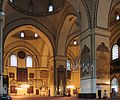
Ulu Cami is the largest mosque in Bursa and a landmark of early Ottoman architecture, which incorporated many elements from Seljuk architecture.
Ordered by Sultan Bayezid I, the mosque was designed and built by architect Ali Neccar in 1396–1400. It is a large and rectangular building, with a total of twenty domes that are arranged in four rows of five, and are supported by 12 columns. Supposedly the twenty domes were built instead of the twenty separate mosques which Sultan Bayezid I had promised for winning the Battle of Nicopolis in 1396. The mosque has two minarets.

Inside the mosque, there are 192 monumental wall inscriptions written by the famous calligraphers of that period. There is also a fountain (şadırvan) where worshipers can perform ritual ablutions before prayer; the dome over the şadırvan is capped by a skylight which creates a soft, serene light below; thus playing an important role in the illumination of the large building.
.jpg)
The horizontally spacious and dimly lit interior is designed to feel peaceful and contemplative. The subdivisions of space formed by multiple domes and pillars create a sense of privacy and even intimacy. This atmosphere contrasts with the later Ottoman mosques (see for example the works of Suleiman the Magnificent's chief architect, Mimar Sinan.) The mosques that were built after the conquest of Constantinople (Istanbul) by the Ottoman Turks in 1453, and influenced by the design of the 6th century Byzantine basilica of Hagia Sophia, had increasingly elevated and large central domes, which create a vertical emphasis that is intended to be more overwhelming; to convey the divine power of Allah, the majesty of the Ottoman Sultan, and the governmental authority of the Ottoman State.


Mosques and külliye complexes
[edit]- Bursa Grand Mosque and külliye
- Yeşil Mosque and külliye
- Bayezid I Mosque and külliye
- Muradiye Mosque and külliye
- Emir Sultan Mosque and külliye
- Orhan Gazi Mosque and külliye
- Hüdavendigar Mosque and külliye
- Koca Sinan Paşa Mosque and külliye
- İshak Paşa Mosque and külliye
- Karacabey Grand Mosque
- Karabaş-i Veli Cultural Centre
- Somuncu Baba Mosque
- Üftade Tekkesi Mosque and complex
- Babasultan Mosque and complex
Bazaars and caravanserais
[edit]Other historic monuments
[edit]- Bursa Castle
- Irgandı Bridge
- İnkaya Sycamore, a massive and impressive 600-year-old tree (Platanus orientalis)
Museums
[edit]- Bursa Archaeological Museum
- Bursa Atatürk Museum,[50]
- Bursa City Museum,[51]
- Bursa Energy Museum
- Bursa Forestry Museum
- Bursa Karagöz Museum
- Bursa Museum of Turkish and Islamic Art
- Bursa Turkish Architecture Museum
- İznik Museum
- Mudanya Armistice House
- Museum of Ottoman House
- Tofaş Museum of Cars and Anatolian Carriages
Parks and gardens
[edit]- Uludağ National Park
- Bursa Zoo and Botanical Garden
- Bursa Hüdavendigar Kent Park
Hot springs and thermal baths
[edit]- Keramet hot spring
- Çekirge hot spring
- Armutlu hot spring
- Oylat hot spring
- Gemlik hot spring
- Çelik Palas thermal bath
Gallery
[edit]-
 Bursa Citadel Main Gate
 -
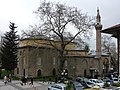 Orhan Gazi Mosque
 -
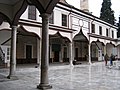
-

-
 Entrance of the Yeşil Cami (Green Mosque)
 -
 Muradiye Mosque and Külliye in Bursa
 -
 Governorate of Bursa
 -
 Mt. Uludağ is a popular ski destination.
 -
 Statue of Atatürk in Bursa
 -
 Şehreküstü Mosque
 -
 Interior of Yeşil Mosque
 -
 Bursa French Catholic Church
 -
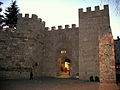 Saltanatkapı (Citadel Main Gate)
 -
 Old City Hall
 -
 Tophane Clocktower
 -
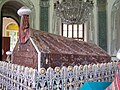 Tomb of Osman Gazi
 -
 Tomb of Orhan Gazi
 -
 Interior of the Grand Mosque
 -
 Koza Han (Silk Bazaar)
 -

-
 A view of Bursa in the late 19th century
 -
 Bursa, c. 1895
 -
 Atatürk delivering a speech in Bursa, 1924
 -
 A view of Bursa from the foothills of Mt. Uludağ


.jpg)
_2.jpg)


Twin towns – sister cities
[edit] Darmstadt, Germany (1971)
 Sarajevo, Bosnia and Herzegovina (1972)
 Oulu, Finland (1978)
 Kairouan, Tunisia (1987)
 Anshan, China (1991)
 Bitola, North Macedonia (1996)
 Ceadîr-Lunga, Moldova (1997)
 Kyzylorda, Kazakhstan (1997)
 Mascara, Algeria (1998)
- Kulmbach, Germany (1998)
 Pleven, Bulgaria (1998)
- Plovdiv, Bulgaria (1998)
 Tirana, Albania (1998)
 Košice, Slovakia (2000)
 Vinnytsia, Ukraine (2004)
 Szentendre, Hungary (2005)
 Pristina, Kosovo (2010)
- Bakhchysarai, Ukraine (2010)
- Momchilgrad, Bulgaria (2010)
 Mogilev, Belarus (2013)
 Hebron, Palestine (2014)
 Herzliya, Israel (2014)
- Veliko Tărnovo, Bulgaria (2017)
 Galkayo, Somalia (2018)


See also
[edit]References
[edit]- ^ https://www.citypopulation.de/en/world/agglomerations/
- ^ "TÜRKiYE STATiSTiK KURUMU". cip.tuik.gov.tr.
- ^ "Major Agglomerations of the World - Population Statistics and Maps". www.citypopulation.de. Retrieved 2025-10-21.
- ^ "The Automatic Industry in Turkey". eraiturkey.com. 12 February 2021. Retrieved 26 August 2025.
- ^ "Karagöz'ün Tarihçesi" [History of Karagöz]. www.karagöz.org.tr (in Turkish). Archived from the original on 22 October 2023.
- ^ Özek, Chengiz (2018). "500 years of Karagöz". Journal of Studies on Theater of Animated Forms. 1 (Móin Móin): 237. doi:10.5965/2595034701152016234. Retrieved 22 August 2025 – via Academic.edu.
According to one of these, Hacivat was a stonemason and Karagöz a blacksmith during the reign of Sultan Osman in the early 14th century. While the pair was working on the construction of a mosque in Bursa they distracted the other workers with their witty repartee, so that the work fell behind schedule and the sultan ordered their execution.
- ^ Roodenberg, J. J. (1995). The Ilıpınar Excavations I. the University of Michigan: Nederlands Historisch-Archaeologisch Institut in het Nabije Oosten te Istanbul. ISBN 90-6258-073-4.
- ^ Strabo. Geography. Book XII. Translated by Jones, Howard Leonard. p. 457.
And Prusias restored them from their ruins and named the city Cius "Prusias" after himself and Myrleia "Apameia" after his wife.
- ^ Anthon, Charles (1851). A Classical Dictionary. New York: Harper. p. 1135. Retrieved 23 August 2025.
- ^ "British Museum - Collection search: You searched for Bursa, tomb". British Museum. Archived from the original on 13 May 2014. Retrieved 25 May 2015.
- ^ "Bursa, Turkey". Encyclopædia Britannica. Archived from the original on 23 March 2025. Retrieved 9 October 2025.
- ^ a b c Dumper, Michael; Stanley, Bruce E. (2007). Cities of the Middle East and North Africa. ABC-CLIO. p. 101. ISBN 978-1-57607-919-5. Retrieved 27 October 2022.
- ^ "Ottoman Capital Bursa". Official website of the Ministry of Culture and Tourism of the Republic of Turkey. Archived from the original on 14 January 2015. Retrieved 19 December 2014.
...in 1363 the Ottoman capital moved from Bursa to Edirne, although Bursa retained its spiritual and economic importance.
- ^ "Bayezid I Complex". ArchNet. Archived from the original on 2011-05-25. Retrieved 2009-06-28.
- ^ "Great Mosque of Bursa". ArchNet. Archived from the original on 2011-09-19. Retrieved 2009-06-28.
- ^ Mohammad Habib, Khaliq Ahmad Nizami, A Comprehensive History Of India Vol.-V: The Delhi Sultanat (1970), p. 128
- ^ The city in the Islamic world, Volume 1, ed. Salma Khadra Jayyusi, Renata Holod, Attilio Petruccioli, André Raymond, page 362.
- ^ Chen, Yuan Julian (2021-10-11). "Between the Islamic and Chinese Universal Empires: The Ottoman Empire, Ming Dynasty, and Global Age of Explorations". Journal of Early Modern History. 25 (5): 443. doi:10.1163/15700658-bja10030. ISSN 1385-3783. S2CID 244587800.
Bursa, a hub of the Ottoman silk trade, imported silk and a variety of other luxury commodities from the east and resold them to the rest of the Mediterranean world.
- ^ Lowry, Heath. Ottoman Bursa in Travel Accounts. Indiana University. pp. 9–10.
- ^ Yılmaz, Gülay (2015-12-01). "The Devshirme System and the Levied Children of Bursa in 1603-4". Belleten. 79 (286): 901–930. doi:10.37879/belleten.2015.901. ISSN 0041-4255. Archived from the original on 16 May 2025.
- ^ Ganjalyan, Tamara (12 March 2019). "Armenian trade networks". ieg-ego.eu. Archived from the original on 2 November 2024. Retrieved 12 May 2021.
- ^ Gingeras, Ryan (2016). Fall of the Sultanate: The Great War and the End of the Ottoman Empire, 1908-1922. Oxford University Press. pp. 171–. ISBN 978-0-19-967607-1. OCLC 1026510365. Retrieved 22 February 2023.
- ^ Mustafa Zahit Öner (2021). Anadolu'da Yunan Zulüm ve Vahşeti (in Turkish). İstanbul, Türkiye: DBY Yayınları. pp. 265–267. ISBN 978-625-7760-27-0. OCLC 1236894121.
- ^ Moustakis, Vasilios (2000). Λόγια του κανονιέρη. 1079 μέρες συνοδοιπόροι με το θάνατο! [Words of the gunner. 1079 days of companionship with death!] (in Greek). New York, USA. p. 64.
Στον σταθμό, είχαν περάσει τα Πεζικά και είχαν βάλει φωτιά. Είδαμε έναν έφιππο, Άγγλο στρατηγό, που διέταξε να σβήσουν τη φωτιά, γιατί αν καιγόταν η Προύσα, θα ήταν εις βάρος της Ελλάδος [At the station, the infantry had passed and set fire. We saw a mounted English general who ordered the fire to be put out, because if Bursa burned, it would be to the detriment of Greece]
{{cite book}}: CS1 maint: location missing publisher (link) - ^ Eminov, Ali, Turks and Other Muslim Minorities in Bulgaria, New York, Routledge, 1997, Höpken, W., "Modernisierung und Nationalismus: Sozialgeschichtliche Aspekte der bulgarischen Minderheitenpolitik gegenüber den Türken" in: SOE 7-8 (1986), Schönfeld, R., ed, Nationalitätenprobleme in Südosteuropa, Munich, Oldenbourg, 1997, p. 255-303, Erdinç, Didar, "Bulgaristan'daki Değişim Sürecinde Türk Azınlığın Ekonomik Durumu", Türkler, Ankara, 2002, s.394–400.
- ^ a b c d e Bornstein-Makovetsky, Leah. "Bursa". In Stillman, Norman A. (ed.). Encyclopedia of Jews in the Islamic World. Brill Reference Online.
- ^ Chitrik, Mendy. "The Blogs: The Expulsion Synagogue". Retrieved 2025-08-19.
- ^ "Discovering the Jewish Heritage of Bursa, Turkey". New York Jewish Travel Guide. Retrieved 2025-08-19.
- ^ "Present and future Köppen-Geiger climate classification maps at 1-km resolution". Nature Scientific Data. DOI:10.1038/sdata.2018.214.
- ^ GLHN (2022-07-23). "Bursa - Coğrafya". Gülhan Sözlük (in Turkish). Archived from the original on 2023-01-30. Retrieved 2023-01-30.
- ^ Kara Rapor 2020: Hava Kirliliği ve Sağlık Etkileri [Black Report 2020: Air Pollution and Health Effects] (PDF) (Report) (in Turkish). Right to Clean Air Platform Turkey. August 2020. Archived (PDF) from the original on 2022-10-09.
- ^ "Resmi İstatistikler: İllerimize Ait Mevism Normalleri (1991–2020)" (in Turkish). Turkish State Meteorological Service. Retrieved 24 April 2021.
- ^ "İllerimize Ait Genel İstatistik Verileri" (in Turkish). Turkish State Meteorological Service. Retrieved 11 April 2024.
- ^ "World Meteorological Organization Climate Normals for 1991–2020: Bursa" (CSV). National centers for Environmental Information. Retrieved 2 August 2023.
- ^ "Bursa - weather data by months". meteomanz. Retrieved 19 July 2024.
- ^ "Turkey: A centre of excellence in automotive industry". Automotive Meetings Turkey. Retrieved 3 October 2020.
- ^ "Sütaş Süt Ürünleri A.Ş." Retrieved 25 May 2015.
- ^ "Tat". Retrieved 25 May 2015.
- ^ Uludağ Beverages
- ^ DVV Media UK. "Bursa circular tramway opens". Railway Gazette. Archived from the original on 24 September 2015. Retrieved 25 May 2015.
- ^ "GD8 Bursa I + II + III - References - Company - LEITNER ropeways". www.leitner-ropeways.com. Archived from the original on 2016-10-12. Retrieved 2016-09-14.
- ^ "Bursa Public Transportation Statistics". Global Public Transit Index by Moovit. Retrieved June 19, 2017.
 Material was copied from this source, which is available under a Creative Commons Attribution 4.0 International Licence.
- ^ "Uludağ Üniversitesi Hakkında". Uludağ Üniversitesi Resmi Websitesi.
- ^ "Bursa Teknik Üniversitesi". Btu.edu.tr. Retrieved 2013-03-26.
- ^ "Bursa Orhangazi Üniversitesi". Bou.edu.tr. Archived from the original on 2013-03-18. Retrieved 2013-03-26.
- ^ "Istanbul Commerce University at Bursa" (in Turkish). Archived from the original on 2012-08-27.
- ^ "Bursa Celal Sönmez Spor Lisesi, geleceğin şampiyonlarını arıyor". Bursada Bugün (in Turkish). 14 June 2020. Retrieved 20 June 2021.
- ^ "Kültür Envanteri Anıt - Tarım Meslek Lisesi - Bursa" (in Turkish). Türkiye Kültür Portalı. 13 May 2013. Retrieved 4 February 2023.
- ^ "Bursa Seçim Sonuçları - 31 Mart Bursa Yerel Seçim Sonuçları". www.haberler.com (in Turkish). Retrieved 2021-08-15.
- ^ "Bursa - Atatürk Museum".
- ^ "Bursa City Museum". Archived from the original on 2019-10-20. Retrieved 2019-04-11.
- ^ "Kardeş Şehirler". bursa.bel.tr (in Turkish). Bursa. Retrieved 2022-01-06.

Further reading
[edit]External links
[edit]

- Bursa Metropolitan Municipality
- Bursa Governorship
- Bursa Son Dakika
- Acil Bildiri Erken Uyarı Sistemi


Bursa
View on GrokipediaHistory
Pre-Ottoman Era
The city of Bursa, anciently known as Prusa, originated from an earlier settlement called Cius, which came under Bithynian control in 202 BC when Philip V of Macedon granted it to King Prusias I.[7][8] Prusias I refounded and renamed the city around 183 BC, possibly with engineering input from Hannibal, who had sought refuge at the Bithynian court after his defeat at Zama.[9][10] As part of the independent Hellenistic Kingdom of Bithynia, Prusa benefited from its strategic location near Mount Olympus and the fertile plains, though ancient sources like Dio Chrysostom, a local native active in the 1st-2nd centuries AD, described it as neither particularly ancient nor large but well-governed.[11] Following the kingdom's bequest to Rome by its last king, Nicomedes IV, in 74 BC, Prusa integrated into the Roman province of Bithynia et Pontus.[7] The city prospered under imperial administration, gaining renown for its therapeutic hot springs, known as the Thermae Prusenses, which attracted visitors for their mineral-rich waters.[12] Roman-era inscriptions and coinage attest to civic institutions, including a boule (council) and honors for emperors, reflecting standard provincial urban development without major historical upheavals recorded specifically for Prusa. Archaeological evidence from the region indicates continuity of Phrygian and earlier Anatolian influences predating the Hellenistic refounding, though Prusa itself lacked monumental remains comparable to nearby Nicaea or Nicomedia.[13] Under the Byzantine Empire, Prusa transitioned into a thema (military district) seat within the Opsikion theme, maintaining its role as a regional center amid the empire's defenses against Arab and later Seljuk incursions.[2] The city experienced relative stability and some fortification enhancements, but Byzantine sources rarely highlight it until the 12th century, when it served as a frontier outpost during the Komnenian restoration.[14] By the early 14th century, Prusa remained under imperial control, its walls and garrison holding against initial Turkish raids until the prolonged Ottoman siege commenced in 1317, culminating in surrender in 1326.[15] Throughout these periods, the city's economy relied on agriculture, thermal tourism, and trade routes linking the Marmara Sea to inland Anatolia, with no evidence of significant demographic shifts or cultural transformations until the Ottoman conquest.[16]Ottoman Foundation and Capital Period
Bursa fell to Ottoman forces on 6 April 1326, following a siege initiated circa 1317 by Osman I and completed by his son Orhan Gazi after Osman's death in 1323 or 1324.[17] [18] The city's surrender, achieved through blockade rather than direct assault, provided the Ottomans with their first major urban center, transitioning it from Byzantine Prusa to the nucleus of the expanding beylik. Orhan immediately designated Bursa as the capital, leveraging its defensible hilltop position and proximity to the Sea of Marmara for strategic advantage.[17] [6] Under Orhan's rule (1324/26–1362), Bursa functioned as the administrative, military, and economic hub from which the Ottomans consolidated power in northwestern Anatolia. Key conquests launched from the city included Nicaea (İznik) in 1331 and Nicomedia (İzmit) in 1337, extending Ottoman influence toward the Bosphorus.[17] Orhan established foundational institutions, including the first Ottoman regular army units (yaya and müsellem) and a proto-administration that formalized tax collection and justice systems. He commissioned the Orhan Gazi Külliye, an early complex integrating a mosque, madrasa, and charitable facilities, emblematic of emerging Ottoman piety and urban planning supported by waqf endowments from peripheral villages.[6] This period also saw Bursa's silk trade flourish, building on Byzantine precedents, with state encouragement of weaving and export to sustain fiscal growth.[17] The capital status persisted until 1365, when Murad I (r. 1362–1389) captured Adrianople (Edirne) and relocated the court there to facilitate Balkan campaigns, though Bursa retained symbolic and religious primacy.[19] During Murad's early reign, the city hosted diplomatic overtures, such as the 1363 marriage alliance with Byzantine Emperor John V Palaiologos, underscoring its role in Ottoman-Byzantine relations. Architectural patronage continued modestly, with madrasas and baths reinforcing civic infrastructure, but the shift in focus diminished direct governance. By 1365, Bursa's population, bolstered by Turkic settlers and converts, numbered in the tens of thousands, reflecting its transformation into a prototypical Ottoman settlement blending Islamic, Byzantine, and Seljuk elements.[6] This foundational era laid the groundwork for the empire's gazi ethos, emphasizing frontier jihad and pragmatic governance over ideological rigidity.[17]Republican and Contemporary History
Following the establishment of the Republic of Turkey on October 29, 1923, Bursa, which had suffered extensive damage from fires and conflict during the Greek occupation (1920–1922) and subsequent liberation on September 11, 1922, underwent reconstruction efforts led by Republican authorities to transform it into a modern urban center.[20] The city was integrated into the new republic's administrative structure as the capital of Bursa Province, with early focus on restoring infrastructure and implementing secular reforms aligned with Mustafa Kemal Atatürk's vision of modernization.[1] Industrialization accelerated in the Republican era, positioning Bursa as a key manufacturing hub. In the 1930s, state-led initiatives included the establishment of textile factories, leveraging the city's historical silk production expertise to support import-substitution policies.[21] Post-World War II economic plans further boosted heavy industry; by the 1960s and 1970s, automotive manufacturing emerged prominently, with factories like TOFAŞ (established 1968 as a Fiat joint venture) and Oyak-Renault contributing to Bursa producing over 30% of Turkey's vehicles by the 2000s.[4] This growth attracted rural migration, driving population expansion from approximately 50,000 in 1927 to over 1 million by 1980, accompanied by urban sprawl and housing transformations in the historic core.[22] In contemporary times, Bursa has balanced industrial expansion with cultural preservation and disaster resilience. The 1999 İzmit earthquake (magnitude 7.6), centered 100 km east, caused significant structural damage and over 100 fatalities in Bursa, prompting enhanced seismic building codes and urban planning reforms.[23] Economic diversification into services and tourism, alongside infrastructure projects like metro expansions and the Uludağ Teleferik cable car upgrades, has supported metro population growth to 3.2 million by 2023.[4] In 2014, UNESCO designated Bursa and Cumalıkızık as a World Heritage Site for Ottoman origins, aiding heritage tourism while the city addresses challenges like environmental pollution from industry and traffic congestion.[24]Geography
Physical Setting and Topography
Bursa is located in northwestern Turkey within the Marmara Region, southeast of the Sea of Marmara, at approximately 40° N latitude and between 28° and 30° E longitude.[25] The city occupies the Bursa Plain, an alluvial lowland formed by sediment deposits from rivers draining Mount Uludağ, with the urban core situated at an elevation of 155 meters above sea level.[25] This plain, enclosed by a 130-meter elevation contour, supports extensive urban and agricultural development while being bordered by hills to the north and the steep southern rise of Uludağ.[26] Mount Uludağ, a massif rising immediately south of the city, dominates the local topography as the highest peak in the Marmara Region and Western Anatolia at 2,543 meters above sea level, with its summit at Kara Tepe located about 36 kilometers from Bursa.[27][28] The mountain's northwestern slopes descend abruptly to the plain, creating alluvial fans and cones from creeks originating in its higher elevations. The Nilüfer River, emerging from Uludağ and spanning 103 kilometers, traverses the plain and city, contributing to the alluvial formation and serving as a key hydrological feature.[25] The broader Bursa Province exhibits diverse topography, with plains comprising 17% of its 10,819 km² area and mountains accounting for 35%, including Uludağ and adjacent ranges like Samanlı and Karadağ.[25] Northern coastal strips along the Sea of Marmara total 135 km in length, with 22 km suitable for use, while inland depressions form lakes such as İznik (298 km²) and Uluabat (1,134 km²).[25] Other rivers, including Gökdere, Koca, and Aksu streams, further shape the provincial landscape through erosion and deposition.[25]Climate and Natural Hazards
Bursa possesses a hot-summer Mediterranean climate (Köppen classification Csa), marked by hot, dry summers and cool, rainy winters influenced by its proximity to the Sea of Marmara and the sheltering effect of Mount Uludağ to the south.[29] [30] Annual average temperatures hover around 12.6–14.4 °C, with summer highs often exceeding 30 °C (86 °F) in July and August, while winter lows dip to near 0 °C (32 °F) in January and February.[31] [32] Precipitation totals approximately 700–900 mm yearly, concentrated in the October–March period, with December typically recording the highest monthly rainfall at about 100–120 mm; summers see minimal rain, averaging under 20 mm per month.[31] [33] The Uludağ massif moderates coastal influences, leading to greater seasonal temperature contrasts and occasional snowfall in elevated urban fringes during winter.[34] Natural hazards in Bursa primarily stem from its tectonic setting along the North Anatolian Fault zone, rendering earthquakes the dominant threat; the region has experienced significant seismic events historically, including a destructive quake in 358 AD that triggered a tsunami in nearby Gemlik Bay and widespread flooding.[35] Modern assessments highlight ongoing vulnerability, with microzonation studies emphasizing soil amplification risks in alluvial plains; tremors from major events, such as the 2023 Kahramanmaraş sequence, have been felt in Bursa, causing minor injuries but underscoring preparedness needs.[35] [36] Flash floods pose a secondary hazard, exacerbated by intense autumnal downpours on steep topography and urban impervious surfaces; notable incidents include the October 2010 deluges that overflowed rivers, damaging informal settlements and infrastructure.[37] Similar events struck in 2020, with heavy rains in Bursa contributing to regional deluges that caused evacuations and economic losses.[38] Dry summers heighten wildfire risks in surrounding forests, as evidenced by outbreaks in July 2025 amid record heat, though these are less frequent than seismic or hydrological threats.[39] Mitigation efforts focus on seismic retrofitting and flood zoning, informed by analyses ranking earthquakes and floods as top perils after national trends.[40]Demographics
Population Dynamics and Urbanization
Bursa's population has exhibited rapid growth since the mid-20th century, driven primarily by internal migration rather than natural increase alone. In 1950, the city's population stood at approximately 148,000, expanding to over 2.1 million in the metropolitan area by 2025, reflecting an average annual growth rate exceeding 3% in earlier decades before moderating to around 1.3% in recent years.[41] [42] This surge correlates with the establishment of major industries, including automotive manufacturing, which drew workers from rural Anatolia and eastern provinces seeking employment opportunities.[43] The province of Bursa recorded a population of 3,238,618 as of December 31, 2024, up from 3,214,571 in 2023, according to data from the Turkish Statistical Institute (TÜİK).[44] [3] Annual provincial growth averaged 1.5% between 2017 and 2023, with net migration contributing significantly, as evidenced by the influx of approximately 50,000 residents yearly in the late 2010s due to economic pull factors.[45] Positive net migration has outpaced natural population increase, which remains below the national average amid declining fertility rates in urban settings.[43] Urbanization in Bursa accelerated post-1950, transforming it from a historical silk-trading center with a 1927 population of about 61,000 into a densely populated industrial metropolis.[46] By the early 21st century, over 75% of the provincial population resided in urban districts, with the core city encompassing high-density zones exceeding 40,000 persons per square kilometer in peripheral wards.[47] This process involved expansive sprawl into surrounding fertile plains, supported by infrastructure like highways and public transit, though it has strained housing supply and led to informal settlements in outer areas. Recent urban transformation projects aim to densify older districts while curbing uncontrolled expansion, aligning with national policies to balance growth with sustainability.[48]Ethnic Composition and Religion
Bursa's population is overwhelmingly ethnic Turkish, a demographic pattern solidified by the 1923 Greco-Turkish population exchange, which relocated over 1.2 million Greek Orthodox Christians from Anatolia to Greece and resettled approximately 380,000 Muslims from Greece into Turkey, including Bursa, displacing prior Greek, Armenian, and other non-Muslim communities.[49] Subsequent waves of Muslim refugees from the Balkans and Caucasus in the 19th and early 20th centuries further reinforced Turkish ethnic dominance in the region. The Turkish Statistical Institute does not collect or publish data on ethnicity, classifying all citizens as Turkish, but national estimates indicate Turks form 70-75% of the overall population, with western industrial hubs like Bursa exhibiting even higher proportions due to limited indigenous non-Turkish groups and migration patterns favoring economic opportunities over ethnic clustering.[50] Internal rural-to-urban migration since the mid-20th century has introduced diversity, particularly Kurds from southeastern Turkey drawn to Bursa's automotive and textile industries; while exact figures are unavailable, such migrants constitute a minority, likely under 15% in urban districts, integrated into the broader Turkish-speaking workforce without official recognition as a separate group.[51] Smaller ethnic minorities include descendants of Caucasian Muslim immigrants, such as Circassians and Georgians settled in rural outskirts since the 19th-century Russo-Circassian wars and Ottoman resettlement policies, numbering in the tens of thousands province-wide, alongside negligible Roma communities concentrated in informal settlements.[52] These groups maintain cultural distinctiveness through private associations but assimilate linguistically and socially into the Turkish majority, with no significant separatist tensions reported in Bursa unlike in eastern provinces. Religiously, Bursa aligns with national patterns, where the government estimates 99% of Turkey's population is Muslim, of which about 78% follow Hanafi Sunni Islam, a figure corroborated by independent surveys despite potential underreporting of non-Sunnis due to secular sensitivities.[53] In Bursa, Sunni adherence predominates, fostering a conservative milieu evident in the province's 1,789 mosques serving over 3.2 million residents as of 2024, higher per capita than in more secular coastal areas. Alevi Muslims, estimated nationally at 10-25% and characterized by heterodox Shia-influenced practices, form a small presence, primarily among migrants from central Anatolia, though they face occasional social marginalization without the institutional support Sunnis enjoy via the state-run Directorate of Religious Affairs.[54] Non-Muslim minorities are vestigial: a tiny Jewish community of Sephardic descent, numbering fewer than 1,000, traces to 15th-century Ottoman expulsions from Spain, while Christian groups—Greek Orthodox, Armenian Apostolic, and Syriac—total under 500, confined to urban pockets with restricted church access amid historical attrition from 20th-century events. Secularism prevails legally, but public life integrates Islamic norms, with no verified data on irreligion exceeding low single digits.Economy
Industrial Base and Key Sectors
Bursa's industrial base centers on manufacturing, which drives much of the provincial economy through export-oriented clusters in organized industrial zones. The city hosts over 10 such zones, including the prominent Bursa Organized Industrial Zone, accommodating thousands of firms and emphasizing sectors like automotive and textiles. In recent rankings, 32 of Turkey's 500 largest companies operate in Bursa, underscoring its role as a key production hub.[55][56][57] The automotive industry forms the core, positioning Bursa as Turkey's primary vehicle manufacturing center. Tofaş, founded in 1968, produces vehicles for Fiat, Citroën, Peugeot, Opel, Vauxhall, and RAM brands at its Bursa facility, achieving "Gold Level" sustainability certification. Oyak Renault, established in 1971, operates one of the group's largest plants with an annual capacity of 390,000 cars, supporting extensive supplier networks. These plants, along with tier-1 suppliers like Valeo and Aptiv (employing over 1,000 in Bursa), generated significant revenues, with Tofaş reporting net sales of 71.9 billion Turkish lira in a recent fiscal year. The sector benefits from proximity to ports and skilled labor, exporting components and vehicles globally.[58][59][60][55] Textiles represent another pillar, tracing origins to Ottoman-era silk production from the 14th century, when Bursa became a silk trade hub via structures like Koza Han. Modern output focuses on cotton weaving, synthetic yarns, knitted fabrics, towels, and apparel, with the sector maintaining high production capacity through advanced factories. Bursa produces a wide range of woven and pile fabrics, contributing to Turkey's textile exports despite global competition.[61][62][63] Machinery-metal manufacturing, food processing, and furniture further diversify the base, leveraging agricultural inputs and metalworking expertise. Food processing draws from regional agriculture, while machinery supports automotive and export needs; these sectors, combined with chemicals, enhance Bursa's value-added production.[56][64]Trade, Agriculture, and Services
Bursa's agriculture leverages its alluvial plains, abundant water resources from the Uludağ foothills, and Mediterranean climate to produce high-value fruits and vegetables, including peaches, cherries, pears, strawberries, blackberries, and artichokes, alongside olives and figs. The Gemlik olive and Bursa black fig varieties are protected by EU geographical indication status, ensuring quality standards for exports. Historically, sericulture dominated, with mulberry groves supporting raw silk production that fueled Ottoman trade routes.[4][65][24][66] Agricultural exports underscore the sector's economic role, with fruit and vegetable products valued at $203 million in 2024, up 12.6% from $181 million in 2023, and olive and olive oil exports reaching $43 million, a 30% increase from $33 million. Grain, pulse, oil seeds, and related products added $117 million in 2024, growing 17% year-over-year, contributing to processed food industries like freezing and canning. These figures represent a subset of Bursa's broader trade, where agriculture supports both domestic supply and international markets, though volumes fluctuate with weather and global demand.[67] Bursa's trade position, rooted in its Silk Road legacy, facilitates substantial foreign exchange through exports totaling $18.2 billion in 2024, a 3.1% rise from $17.6 billion in 2023, with imports complementing industrial needs at around $10 billion annually as of recent data. Agro-food trade forms a vital non-industrial component, channeling products via ports like Gemlik and Gemlik's logistics hubs, though overall volumes are dwarfed by manufacturing but provide diversified revenue amid export quotas and tariffs.[67][4] The services sector leads Bursa's economic structure, comprising 14.95% of chamber-registered enterprises with over 8,500 members, outpacing other categories in commercial activity. Tourism anchors services, drawing visitors for thermal spas in districts like Çekirge, winter sports on Uludağ (elevated to 2,543 meters with cable car access), and Ottoman-era sites, generating ancillary revenue in hospitality and transport despite lacking province-specific visitor tallies. Commerce and logistics further bolster services, integrating with trade hubs and supporting e-commerce growth at 1.2% of registrations.[68][4][68]Recent Developments and Challenges
In 2024, Bursa's exports reached $18.187 billion, marking a 3.1% increase from $17.647 billion in 2023, driven by expansions in chemicals and products (up 23.8% to $861.8 million) and agricultural goods such as olive oil (up 30.0% to $43.5 million).[67] This growth reflects Bursa's role as a manufacturing powerhouse, particularly in automotive components and textiles, amid Turkey's national industrial production rising 5.0% year-on-year in July 2025.[69] The city's economy has benefited from targeted investments in key sectors, with manufacturing projected to expand by 6.7% nationally in 2025, supported by over 95,000 enterprises contributing to export revenues exceeding $190 billion in manufactured goods.[70] Bursa's proximity to Europe and established industrial zones, covering approximately 1,500 hectares, have facilitated resilience in supply chains despite global headwinds.[71] Persistent challenges include Turkey's elevated inflation, which fell to 33.5% in July 2025 from a peak above 80% in mid-2024, exerting pressure on production costs and wage adjustments in labor-intensive factories.[72] Unemployment rose to 8.5% nationally in August 2025, with youth joblessness exceeding 50% in some studies, compounded by a 2% brain drain rate among engineering graduates critical to Bursa's automotive sector.[73][74] Declines in sectors like jewelry exports (down 36.7%) highlight vulnerabilities to fluctuating global demand and domestic currency depreciation.[67]Government and Politics
Administrative Structure
Bursa Province, as one of Turkey's 81 provinces, is administered by a governor (vali) appointed by the President of Turkey, who oversees state institutions, public security, and coordination between central and local authorities within the province. The governor's office handles administrative, judicial, and developmental affairs in alignment with national policies. As of July 2025, the governor is Erol Ayyıldız.[75] Local governance is primarily managed by the Bursa Metropolitan Municipality (Bursa Büyükşehir Belediyesi), designated as such in 1987 under Law No. 3391, which expanded its jurisdiction to cover the entire province rather than just the urban core. The municipality's executive is headed by a mayor elected directly by popular vote for a five-year term, supported by an elected municipal council (belediye meclisi) comprising representatives from the province's districts, responsible for legislative oversight, budgeting, and policy approval. The current mayor, Mustafa Bozbey, assumed office following the March 2024 local elections. An executive committee (encümen), partially elected by the council and partially appointed by the mayor, assists in decision-making on contracts and administrative matters.[76][77][78] The province is subdivided into 17 districts (ilçeler), each governed by a district municipality with its own elected mayor and council, focusing on neighborhood-level services such as local roads, parks, and sanitation. These district entities operate under the metropolitan municipality's umbrella for coordinated services like public transportation, water supply, and urban planning across the province, ensuring unified development while preserving local autonomy. The central urban districts—Osmangazi, Nilüfer, and Yıldırım—house the majority of the population and key administrative functions.[45]Political Landscape and Conservatism
Bursa's political landscape has historically been dominated by conservative forces, reflecting the province's deep Ottoman heritage as the empire's first capital and its predominantly Sunni Muslim population, which fosters adherence to traditional Islamic values intertwined with political conservatism. In Turkey, conservatism is characterized by a resistance to rapid secular changes and a strong affinity for Islamist-oriented policies, distinguishing it from secular variants elsewhere.[79] This orientation has translated into consistent electoral support for the Justice and Development Party (AKP), which governed the Bursa Metropolitan Municipality from 2004 until 2024, emphasizing family values, religious education, and economic development aligned with conservative principles.[80] The AKP's hold was exemplified by Alinur Aktaş's tenure as mayor from 2017, during which policies reinforced conservative social norms, such as promoting Ottoman historical sites and supporting religious tourism. However, the March 31, 2024, local elections marked a departure, with Republican People's Party (CHP) candidate Mustafa Bozbey defeating the AKP incumbent, securing the mayoralty in a province long viewed as a conservative stronghold. Bozbey's victory, confirmed by official tallies showing CHP's edge in voter turnout amid national participation rates exceeding 78%, stemmed primarily from economic grievances including inflation rates surpassing 70% in late 2023, rather than a rejection of underlying conservative sentiments.[81][82][83] Conservatism persists structurally in Bursa, particularly in central and rural districts where religious observance influences voting patterns, contrasting with more secular, urbanized areas like Nilüfer, which has favored CHP governance. National parliamentary elections reinforce this divide, with AKP retaining significant representation from Bursa—10 of 20 seats in the 2023 general elections—indicating that local shifts do not erase the province's conservative base, often mobilized around issues like family policy and anti-secular reforms. This resilience underscores causal factors such as demographic stability, with over 90% of residents identifying as Muslim, sustaining a political ecosystem wary of Kemalist secularism's more rigid impositions.[80][84]Environment
Ecological Features
![Teleferik, Uludağ][float-right] Bursa province encompasses a diverse array of ecosystems, primarily shaped by the Uludağ mountain range, which rises to an elevation of 2,543 meters and supports habitats from lowland maquis shrublands to high-altitude alpine meadows and coniferous forests. The region's flora includes over 1,500 plant species, with Uludağ hosting approximately 700 herbaceous and woody species across 250 genera, featuring prominent oak woodlands, pine stands, and endemic alpine plants. Fauna diversity is notable, with mammals such as roe deer, wild boar, foxes, and brown bears inhabiting the forests, alongside a variety of birds and reptiles adapted to the elevational gradients.[85][86][87] Uludağ National Park, established in 1998 and spanning 12,900 hectares, serves as a critical protected area preserving this biodiversity, including 104 endemic plant species unique to Turkey and the mountain. The park's ecological zones facilitate habitat for soil invertebrates like earthworms, contributing to ecosystem health in beech-fir dominated mid-elevations transitioning to subalpine scrub. Urban green spaces, such as the 150-hectare Atatürk Urban Forest, extend these features into the metropolitan area, supporting bird diversity and mitigating habitat fragmentation amid Bursa's industrialization.[85][88][89] Conservation efforts in Uludağ emphasize soil protection and endemic species habitat mapping to counter pressures from tourism and climate variability, with studies identifying strategies to reduce biodiversity loss in montane soils. Bursa's proximity to the Sea of Marmara influences coastal ecological transitions, though inland montane systems dominate the province's natural heritage, underscoring its role within Turkey's intersection of Mediterranean, Caucasian, and Irano-Anatolian biodiversity hotspots.[90][91]Pollution, Disasters, and Policy Responses
Bursa experiences significant air pollution primarily from industrial emissions, vehicular traffic, and residential heating, with particulate matter (PM2.5 at 29.7 µg/m³ and PM10 at 48.3 µg/m³) often exceeding safe thresholds, contributing to moderate to unhealthy air quality levels.[92] Industrial zones, including automotive and textile factories using outdated technologies, release pollutants that contaminate nearby residential areas and water bodies like the Nilüfer Brook, which has lost its viability as a water source due to heavy metal and chemical discharges.[93] Soil pollution from diffuse sources such as agricultural runoff and traffic exacerbates these issues, with PM10 concentrations averaging 39.32 µg/m³ in summer but exceeding national limits by 3.09% in winter due to seasonal heating.[94][95] Natural disasters in Bursa include recurrent floods, seismic events, and wildfires, driven by its location near fault lines and river systems. The city suffered major floods on October 14 and 17, 2010, when torrential rains overwhelmed rivers, severely impacting informal settlements and causing widespread property damage and displacement.[37] Historical earthquakes along branches of the North Anatolian Fault, including destructive events dating back to 358 BCE, pose ongoing risks, with modern infrastructure vulnerabilities amplifying potential impacts.[96] Wildfires in July 2025 devastated parts of the region, prompting mass evacuations and highlighting seasonal fire hazards in forested areas like Uludağ, while additional floods occurred in 2020.[97][38] Policy responses emphasize emission controls, adaptation planning, and disaster mitigation, though implementation faces challenges from rapid urbanization. The Bursa Metropolitan Municipality's 2050 Environmental Master Plan, announced in 2025, aims to integrate long-term strategies for reducing greenhouse gases and enhancing urban resilience through green belts and pollution monitoring.[98] Complementary efforts include the Sustainable Energy and Climate Change Adaptation Plan, focusing on emission reductions and vulnerability assessments for floods and heat events.[99] Nationally, Turkey's Climate and Disaster Resilient Cities Project addresses seismic and flood risks in Bursa via infrastructure upgrades, while local measures promote gas and dust controls alongside coordinated transport management to curb traffic-related pollution.[100][101] Despite these initiatives, over 92% of Turkey's population, including in Bursa, continues to breathe air below WHO standards, indicating gaps in enforcement against industrial sources.[102]Culture
Historical and Religious Influences
Bursa's cultural landscape was fundamentally shaped by its pre-Ottoman history as a Bithynian foundation known as Prusa, established around the 3rd century BCE, and its subsequent role as a Byzantine frontier city, which facilitated the integration of Greco-Roman, Persian, and local Anatolian elements into its urban and artisanal traditions.[103] These influences persisted in architectural motifs and trade practices, particularly the silk industry, which originated in Byzantine times and evolved into a cornerstone of Ottoman economic culture.[61] The Ottoman conquest of Bursa in 1326 by Orhan Gazi marked a pivotal shift, establishing it as the empire's first capital and infusing its culture with Turkish-Islamic governance and aesthetics.[14] This era saw the construction of dynastic mausoleums, such as those housing the remains of Osman I and Orhan Gazi, which served as focal points for religious pilgrimage and reinforced the legitimacy of Ottoman rule through veneration of founder figures.[104] Religious influences, dominated by Sunni Islam of the Hanafi school, manifested in grand mosques that blended Seljuk, Persian, and Byzantine styles, exemplified by the Ulu Cami (Great Mosque), commissioned by Sultan Bayezid I and completed around 1400, featuring twenty domes symbolizing Quranic cosmology.[105] The Yeşil Cami (Green Mosque), erected between 1413 and 1421 under Mehmed I, highlighted advancements in tilework and spiritual symbolism, drawing artisans empire-wide and embedding aesthetic refinement in daily religious life.[106] Sufi orders, including the Naqshbandiyya, took root in Bursa during the early Ottoman period, promoting mystical practices that influenced poetry, music, and communal rituals, while endowments (waqfs) linked religious institutions to silk production and trade, sustaining cultural patronage.[107][61] This synthesis positioned Bursa as a hub for Islamic scholarship and creativity, laying groundwork for broader Ottoman cultural developments in knowledge dissemination and artisanal guilds.[108]Cuisine and Daily Life
Bursa's cuisine draws from Ottoman traditions and local agriculture, emphasizing grilled meats, fresh fruits, and nuts harvested from the Uludağ foothills and surrounding orchards. The city's signature dish, İskender kebap—also known as Bursa kebap—consists of thinly sliced döner meat served over cubed pide bread, drenched in hot tomato sauce, melted butter, and yogurt, a preparation first developed by İskender Efendi in 1867.[109][110] This kebap, grilled over charcoal for tenderness, exemplifies the region's focus on layered flavors and textures, with variations incorporating beef, lamb, or chicken.[111] Complementing meat dishes are specialties like İnegöl köfte, spiced ground meat patties from the İnegöl district, and desserts such as Kemalpaşa tatlısı, a syrup-soaked semolina sweet.[112] Bursa is renowned for its chestnuts, with kestane şekeri (candied chestnuts) produced from Uludağ-grown varieties dipped in sherbet, featuring in both sweets and savory casseroles like Keles güveç.[112][113] Locally abundant peaches, cultivated since Ottoman times, appear fresh in markets or preserved in compotes, alongside diverse fruits including over 40 pear varieties and unique breads like çakıl pide.[114][115] Daily life in Bursa centers on family and community ties, reflecting broader Turkish norms where extended relatives maintain close proximity and multi-generational support systems predominate, often involving care for elders within the household.[116] Residents balance industrial employment in textiles and automotive sectors with agricultural rhythms, frequenting bustling bazaars for seasonal produce like peaches and chestnuts that inform home-cooked meals.[117] Social interactions occur in tea houses, mosques, and parks, where traditions of hospitality—such as sharing meals and observing Islamic practices—foster communal bonds amid the city's urban expansion.[118] This routine underscores a conservative ethos, prioritizing familial obligations over individualism, with weekends often devoted to outings to thermal springs or Uludağ for recreation.[119]Arts and Festivals
Bursa's artistic traditions draw heavily from its Ottoman legacy, emphasizing crafts such as shadow puppetry known as Karagöz-Hacivat, which originated in the region during the 14th century and features satirical plays using leather puppets illuminated against a screen.[120] The Karagöz Museum in Bursa preserves artifacts and hosts performances of this UNESCO-recognized intangible cultural heritage, showcasing over 100 historical puppets and scripts.[120] Traditional handicrafts include İznik Müşküle needlework from Bursa's Iznik district, involving intricate embroidery on fabric, and Keles folk clothing with embroidered patterns reflecting rural motifs.[121] Metalworking, particularly Bursa-style cutters dating back 700 years to Seljuk influences, remains practiced in workshops producing ornate blades and tools.[122] The Bursa Turkish and Islamic Arts Museum exhibits these alongside tombac metalwork, Ottoman coins, and textiles, highlighting the city's role in Islamic artistic production.[123] Contemporary arts infrastructure supports these traditions through 55 culture centers, 20 art galleries, and 28 museums, fostering puppetry, theatre, and visual arts under organizations like UNIMA Türkiye, which promotes research and international exchange in shadow theatre.[124][125] Bursa's festivals blend historical reenactments with modern performances, with the International Bursa Festival, established in 1962, held annually from late June to July, featuring music, dance, and theatre from global artists at venues like the open-air Bursa City Square.[126][127] The 2025 edition ran from July 5 to 31, drawing performers for symphonic openings by the Bursa Regional State Symphony Orchestra.[128][127] The Bursa Culture Route Festival, part of a national series, occurred from June 28 to July 6, 2025, with 600 events across 71 sites including concerts, exhibitions, and workshops tied to Ottoman heritage routes.[129] Specialized events include the International Bursa Karagöz Puppet and Shadow Theatre Festival, with its 21st edition from November 14-23, 2025, inviting global troupes for competitions and masterclasses.[130] The Bursa International Children and Youth Theatre Festival, Turkey's longest-running in its category since 1997, held its 27th iteration in November 2023 with 30 free performances for audiences of over 10,000.[131] These gatherings emphasize cultural preservation amid urban growth, often organized by the Bursa Metropolitan Municipality's culture and tourism directorate.[131]Tourism and Landmarks
Architectural Heritage
Bursa's architectural heritage exemplifies early Ottoman design, shaped during its tenure as the empire's first capital from 1326 to 1365, with structures integrating Byzantine, Seljuk, and emerging Ottoman elements such as multiple domes and intricate tilework.[6] The city's kulliyes—comprehensive complexes including mosques, madrasas, hospitals, and tombs—demonstrate innovative urban planning that combined religious, educational, and charitable functions, influencing subsequent Ottoman architecture.[6] In 2014, UNESCO designated "Bursa and Cumalıkızık: the Birth of the Ottoman Empire" as a World Heritage site, recognizing 20 components, including eight historic areas with these early monuments, for their role in illustrating the empire's foundational urban and architectural systems.[132] The Ulu Cami, or Grand Mosque, stands as a pivotal example, commissioned by Sultan Bayezid I and constructed between 1396 and 1400 under architect Ali Neccar.[133] This vast rectangular edifice features twenty domes supported by four central pillars, creating a hypostyle hall that accommodates up to 12,000 worshippers, and includes a notable marble mihrab and minbar with intricate wood carvings depicting Quranic verses and natural motifs.[134] Its design marks a transitional style from Seljuk influences, emphasizing grandeur and functionality in early Ottoman religious architecture.[135] The Yeşil Cami, or Green Mosque, commissioned by Sultan Mehmed I and completed between 1419 and 1424 by architect Hacı Ivaz Paşa, represents a refinement in Ottoman aesthetics with its white marble facade and interior adorned with turquoise İznik tiles imported from Persia.[136] As the core of the Yeşil Complex—a kulliye encompassing a tomb, madrasa, soup kitchen, and bathhouse—it introduced the "Bursa arch," a recessed portal design that became a hallmark of later Ottoman portals.[106] The adjacent Green Tomb houses Mehmed I and his family, featuring cuerda seca tiles that highlight the era's advancements in ceramic artistry.[137] Other significant sites include the Orhan Gazi Mosque (circa 1339), built by the empire's co-founder, and the Muradiye Complex (15th century), containing multiple royal tombs with ornate decorations, collectively preserving the mausoleums of early sultans and underscoring Bursa's role as a dynastic necropolis.[132] The Koza Han, a 1491 caravanserai, exemplifies commercial architecture with its central courtyard and dome, supporting the silk trade that bolstered the local economy.[138] These monuments, often restored after earthquakes like that of 1855, maintain structural integrity through ongoing preservation efforts, ensuring the legacy of Ottoman innovation endures.[139]Thermal Resources and Outdoor Sites
![Bursa Teleferik cable car to Uludağ][float-right]Bursa's thermal resources are concentrated in the Çekirge district at the foothills of Uludağ, where springs discharge waters at temperatures ranging from 47°C to 78°C, containing bicarbonate, sulfur, and other minerals suitable for balneological applications.[140][141] These waters have been harnessed since Roman times, with Ottoman-era restorations enhancing their use in public baths and modern spa hotels for therapeutic bathing.[142][143] Historical sites include Eski Kaplıca, constructed in the 14th century by Sultan Bayezid I, and Çekirge Sultan Thermal Spring, a waqf-founded facility from the same period, both still operational for soaking and health treatments targeting rheumatism, skin disorders, and urological conditions.[144][145] Complementing these thermal attractions, outdoor sites in Bursa center on Uludağ National Park, encompassing Mount Uludağ's diverse terrain for year-round recreation. In winter, the park supports skiing, snowboarding, snowshoeing, and sledding on slopes accessible via lifts, with facilities catering to beginners and experts.[146][147] Summer activities include hiking and mountain biking on marked trails of varying difficulty, alongside picnicking and camping at mid-altitude stations like Sarıalan (1,630 meters).[148][149] The Bursa Teleferik cable car provides efficient ascent from the city to the park's upper reaches, facilitating access to panoramic viewpoints and biodiversity-rich areas.[150] Geothermal evaluations indicate Bursa's broader potential for sustainable thermal energy, though primary utilization remains recreational and medicinal.[151]